What's inside
- Key Takeaways
- Quick Picks
- How We Chose These Picks
- Side-by-Side Comparison
- Which Premium Actually Shows Up in Daily Life?
- How Do Sapphire and Titanium Justify Themselves Over Years?
- When Does a Hybrid Belong in a Flagship Conversation?
- What Should You Inspect in Person Before Paying Flagship Money?
- How Does Resale Value Change the Flagship Calculation?
- Which Ongoing Costs Follow a Flagship Home?
- How Should a First-Time Flagship Buyer Choose Between Sport and Platform?
- What Does the Second Month of Ownership Reveal That Reviews Cannot?
- How Should You Care for Premium Materials So They Stay Premium?
- Expensive Errors in the Flagship Tier
- Final Recommendation
- Frequently Asked Questions
- Related Guides
As an Amazon Associate I earn from qualifying purchases. This post may contain affiliate links at no extra cost to you.
widgetverdict.com is reader-supported. When you buy through links on our site, we may earn an affiliate commission.
Premium pricing in this category buys three different things depending on where you look — expedition hardware wrapped in titanium, a flagship phone companion finished to jewellery standards, or old-school watchmaking with sensors hidden inside — and the best high-end smartwatches only make sense once you decide which of those luxuries is actually yours. Shoppers comparing the best high-end smartwatches are rarely short of options; they are short of clarity about what the extra money changes in daily life. A sapphire lens changes how a watch ages. An inReach satellite link changes where it can call for help. A hybrid’s analogue face changes how a room full of colleagues perceives it. The six watches below represent the credible peaks of those different mountains: two Garmin flagships in titanium and sapphire, the current Apple and Samsung flagships, a Swiss-minded Withings hybrid, and Suunto’s featherweight titanium racer. None of them is the sensible budget choice, and this guide says so without decoration — the question here is whether each premium is earned.
Read the tier logic before the individual verdicts. Garmin’s pair sells capability and materials to people whose playground is outdoors; their premium is measured in dive ratings, flashlights and satellite messaging. Apple and Samsung sell integration: their flagships are the finest expression of their phone platforms, and their premium is measured in polish, coaching and ecosystem gravity. Withings sells restraint — a watch that looks inherited rather than purchased this year, with health sensing tucked behind hands and a month-long battery. Suunto sells racing minimalism in titanium. Choosing among them is really choosing an identity for the object on your wrist, and the sections below keep returning to that choice because no specification table can make it for you.
Key Takeaways
- The fenix 8 Pro adds inReach satellite technology to Garmin’s flagship formula, the only pick here that can message beyond phone coverage.
- Sapphire lenses and DLC titanium cases on both Garmin flagships are longevity purchases, not decoration.
- Apple Watch Series 12 and Galaxy Watch 8 are ecosystem flagships first; their premium buys integration and coaching polish.
- The Withings ScanWatch Nova hides its sensors behind a classic green-dial hybrid design with a 30-day battery in its listing.
- Suunto’s Race 3S Ti packs 64GB of storage and dual-frequency positioning into a titanium case built around light weight.
Quick Picks
| Pick | Badge | Why it earns a place |
|---|---|---|
| Garmin fenix 8 Pro 51mm | Satellite flagship | inReach technology, sapphire, DLC titanium and a dive rating in Garmin’s largest flagship case. |
| Garmin fenix 8 Sapphire 47mm | Materials flagship | The sapphire-and-titanium fenix formula at 47mm, with flashlight and speakers aboard. |
| Apple Watch Series 12 GPS 46mm | Apple’s flagship | The 46mm black aluminium flagship with Apple’s full health, fitness, sleep and safety suite. |
| Samsung Galaxy Watch 8 40mm | Android’s flagship | Cushion design, Quick Button, Running Coach and Sleep Coaching in a 40mm graphite case. |
| Withings ScanWatch Nova | Hybrid luxury | A green-dial analogue hybrid with deep health sensing and a 30-day battery figure. |
| Suunto Race 3S Ti | Featherweight racer | Titanium construction, 2000-nit AMOLED, 64GB storage and dual-frequency positioning. |
How We Chose These Picks
High-end is a claim, so this shortlist demanded receipts. A watch qualified only if its listing demonstrated the premium in verifiable ways: named precious or performance materials such as sapphire and titanium, named flagship-only capabilities such as inReach satellite technology or dive certification, a current-generation flagship position in its maker’s line, or a hybrid construction with sensing depth that mass-market hybrids do not attempt. Finishes and marketing adjectives alone did not qualify anything. Each pick was also checked as a current verified listing in the site’s product pool, with the specification language in this guide drawn from the maker’s own listing title rather than launch coverage.
The second filter was coherence: a flagship should know what it is. The two Garmins are unapologetically outdoor instruments whose luxury is durability. The Apple and Samsung flagships are unapologetically phone companions whose luxury is integration and coaching. The Withings is unapologetically a watch first. The Suunto is unapologetically a racing tool that happens to be titanium. Hybrids of purpose — premium-priced watches that are merely shinier versions of mid-range ideas — were left out, because at this level the buyer is purchasing a philosophy as much as a product, and a muddled philosophy ages worst of all.
Finally, we weighed time. High-end watches are kept longer, upgraded less often and repaired more willingly than cheap ones, so materials that age gracefully and platforms with long support histories counted heavily. A flagship that looks tired in eighteen months has failed its only real promise, whatever its launch-day specification said.
We also read each listing for what it pointedly does not claim, because restraint in a listing is information. Where a maker declines to name a dive rating, a satellite link or a battery figure, this guide declines to imply one, and several verdicts below turn on exactly those silences. High-end buyers are the most marketing-resistant readers in the category, and a guide earns them by treating absence honestly rather than papering over it with category assumptions.
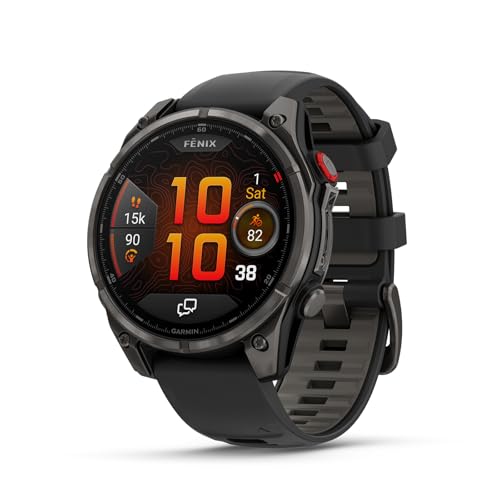
Garmin fenix 8 Pro 51mm — The One That Can Call for Help
One phrase in this listing separates the fenix 8 Pro from every other watch in the guide: inReach technology. Garmin’s satellite communication system, long proven in its handheld devices, lets the watch exchange messages and send an SOS beyond mobile coverage — a capability with genuine consequences for solo hikers, offshore sailors, backcountry skiers and anyone whose work or play leaves signal behind. Satellite features of this kind operate through a subscription service, so budget for the plan alongside the watch, but the hardware being on your wrist rather than in a pack you might be separated from is the entire point. Around that headline sits the full flagship construction: a 51mm case in sapphire and DLC titanium, black over pebble gray, an AMOLED display, a built-in flashlight, a dive rating, and speakers with a microphone for the ordinary connected life back in coverage.
The 51mm size is a statement and a filter. On a large wrist, or over a wetsuit or jacket cuff, it looks purposeful; on a slim wrist it dominates, and no amount of capability changes that geometry. Buyers between sizes should try the 47mm sibling below before committing. Battery expectations follow the flagship pattern — days of heavy connected and satellite use rather than weeks — because the Pro spends its energy on brightness, radios and readiness. What the money buys, ultimately, is consolidation: the watch that trains you, navigates for you, entertains your wrist with calls and music, and still functions as a safety device when the phone in your pack is a paperweight. For the right owner, nothing else on this page is actually a competitor.
Ownership also means feeding the ecosystem: maps to download, satellite plan to maintain, training data accumulating in Garmin’s platform year after year. That depth rewards commitment and punishes dabbling, so the Pro suits buyers who already know the outdoor life is permanent for them. As a first serious watch it is a great deal of machine; as the final watch in a long line of outgrown ones, it feels like arriving.
One scenario clarifies the Pro’s value better than any specification: a twisted ankle, alone, twelve kilometres from the trailhead, with a phone at four percent. In that moment the difference between this watch and its 47mm sibling is not a feature — it is the whole story. Satellite communication converts a wrist computer into a lifeline that travels where you travel, attached to the body part least likely to be left behind. Buyers who have never needed such a link understandably rank it low; buyers who have needed one, or who travel with people who might, rank it above every other line in this guide combined, and the Pro exists for them without apology.
- Case: 51mm, sapphire lens, DLC titanium in black/pebble gray
- Standout capability: inReach satellite technology named in the listing
- Display: AMOLED
- Field hardware: built-in flashlight, dive-rated construction
- Connected life: built-in speakers and microphone
Strengths
- Satellite messaging and SOS move it into safety-equipment territory.
- Sapphire and DLC titanium are the toughest finish pairing here.
- Every flagship Garmin training and navigation tool is present.
Trade-offs
- At 51mm it overwhelms average and small wrists completely.
- Satellite communication needs a paid plan to function.
- The total is the steepest in this guide; check price on Amazon.
Best for: solo backcountry travellers, offshore sailors and expedition athletes who treat communication redundancy as gear, not garnish.
Not suited for: urban athletes who never leave mobile coverage — and it will overwhelm a small wrist.

Garmin fenix 8 Sapphire 47mm — Flagship Materials, Saner Proportions
Strip the satellite link and two millimetres of case from the Pro and you arrive at the fenix most people should buy: the 47mm model in sapphire and DLC titanium, black with pebble gray, carrying the same AMOLED display, the same built-in flashlight, the same dive-rated construction and the same speakers and microphone. This is the configuration that balances presence with wearability — still unmistakably an instrument, yet proportionate on the average wrist and under most cuffs. The sapphire lens is the detail owners appreciate longest, because flagship watches accumulate years of door frames, rock faces and gym equipment, and a lens that emerges unmarked keeps the whole watch feeling new.
As a multisport flagship its brief is breadth: run, ride, swim, ski, hike and dive with one device recording everything into one training history. The listing names GPS as its positioning foundation, and Garmin’s surrounding ecosystem of maps, workouts and analysis runs deeper than any rival here. What the 47mm gives up against the Pro is specific — inReach communication and the largest case’s wrist presence — and for athletes who travel with a phone or a separate satellite communicator already, that sacrifice costs nothing in practice. The money saved against the Pro is real, and the watch on the wrist is, for most builds, the better-fitting flagship.
Longevity thinking applies here with force. Titanium and sapphire are not about luxury signalling; they are about a five-to-seven-year service life in hard use, which at this price tier is the only honest way to justify the purchase. Buy it as equipment with a long arc, keep its software current, and the fenix 8 at 47mm is the high-end pick most likely to still be on its owner’s wrist, unscarred, when today’s mid-range watches are in drawers.
The flashlight, oddly, becomes the feature that sells this watch to sceptics in person. A focused beam from the wrist — hands free, always present — turns out to serve campsite chores, dark hotel rooms, dog walks and power cuts with an ease no phone torch matches, and it is built into both Garmin flagships here. Expedition marketing rarely leads with such a domestic detail, yet owner forums glow about it, because luxury in practice is often a small convenience repeated a thousand times rather than a grand capability used twice. The 47mm fenix is full of these compounded small advantages sitting underneath the headline materials.
- Case: 47mm, sapphire over AMOLED, DLC titanium black/pebble gray
- Positioning: GPS named in the listing, multisport flagship role
- Field hardware: integrated flashlight, dive-rated build
- Audio hardware: speakers and microphone built in
- Position in range: the Pro’s formula minus satellite messaging
Strengths
- The premium materials pairing in the most wearable flagship size.
- Flashlight and dive rating keep its expedition credentials intact.
- Garmin’s training ecosystem is the deepest available here.
Trade-offs
- No inReach satellite communication, unlike the Pro above.
- Still a substantial case for formal shirts and slim wrists.
- Flagship pricing applies in full; check price on Amazon.
Best for: multisport athletes wanting the flagship materials and tools in a size that suits daily wear.
Not suited for: satellite-SOS seekers, and minimalists who find 47mm assertive.

Apple Watch Series 12 GPS 46mm — The Flagship as Ecosystem
Apple’s flagship argument is not materials — this 46mm Series 12 wears a black aluminium case with a black sport band — but gravity. The listing summarises the suite as health, fitness and sleep tracking with heart rate monitoring and safety features, and behind those plain words sits the deepest integration any watch offers an iPhone owner: messages, calls, payments, apps and automations flowing through a device that feels less like a gadget and more like an extension of the phone’s own body. At the high end, that seamlessness is the luxury. Owners do not describe loving a specification; they describe never thinking about the watch at all, because everything simply works where they already live.
The 46mm case gives the display room for maps, workout metrics and readable notifications, and the flagship position in Apple’s line means the full current sensor and feature set rather than the trimmed SE experience. Health tracking here is framed as everyday wellness — trends, sleep, heart rate context — presented in the polished summaries Apple is known for, and the safety features named in the listing extend the watch’s role from tracker to quiet guardian. For athletes, the training features cover road running and gym work thoroughly, though the expedition crowd should note the absence of the dive-and-titanium theatre of the Garmins: this flagship’s arena is the city, the office and the gym, and within that arena it is close to untouchable.
The compromises are structural. It demands an iPhone, it lives on a daily charging rhythm, and its aluminium case — however beautifully finished — will gather the marks that sapphire-and-titanium rivals shrug off. High-end buyers inside Apple’s world accept those terms gladly, because the integration premium compounds daily. High-end buyers outside it should read this pick as a description of a walled garden’s finest room: admirable, and not theirs to enter without switching phones first.
There is also a family dimension to Apple’s flagship that spec sheets omit. Safety features and effortless communication make the Series 12 a common choice for households coordinating teenagers and ageing parents inside one ecosystem, where the watch doubles as a gentle safety net. Its health and sleep summaries give adult children a shared language for wellbeing conversations, and its familiarity lowers the learning curve for relatives who resist new gadgets. A flagship purchased partly as family infrastructure justifies itself differently from a personal toy, and Apple’s polish in exactly these human corners is a considered part of its premium.
- Case: 46mm black aluminium, black sport band (M/L) in this listing
- Suite named in the listing: health, fitness and sleep tracking, heart rate
- Safety features included per the listing
- Platform: Apple’s flagship, iPhone required
- Role: integration flagship rather than expedition instrument
Strengths
- Unmatched polish and app depth for iPhone owners.
- The full flagship sensor and safety suite, no trimmed features.
- Daily experience feels effortless in a way rivals chase.
Trade-offs
- Aluminium case marks more easily than sapphire flagships.
- Daily charging is part of the ownership contract.
- Completely closed to Android households.
Best for: iPhone owners seeking the finest expression of Apple’s watch platform for training, work and daily life.
Not suited for: Android households, expedition athletes, and the nightly-charging averse.

Samsung Galaxy Watch 8 40mm — Coaching Wears the Crown on Android
Samsung’s flagship pitch is guidance. The Galaxy Watch 8 listing names a cushion design in a 40mm graphite case, a Quick Button for fast control, Sleep Coaching, a Running Coach, an Energy Score and the Now Bar interface — a specification that reads less like a sensor list and more like a staff of advisors. That is the premium Samsung sells: not exotic materials, but interpretation. The Energy Score compresses the night and the previous day into a morning verdict; the Running Coach turns that verdict into structured training; Sleep Coaching works on the input side of the equation. For Android owners who found raw data dashboards cold, this coaching layer is the reason to buy the flagship rather than last year’s discount model.
The cushion design deserves its sentence, because Samsung has given the Watch 8 a distinctive case shape that separates it visually from both its predecessors and Apple’s rectangle — a small but real fashion decision at the high end, where sameness is the enemy. At 40mm this configuration suits the smaller half of wrists, a welcome counterweight in a guide dominated by 47mm and 51mm instruments. The listing also notes an Amazon-exclusive extended warranty of two years, an ownership detail worth weighing at flagship prices, where a longer coverage horizon softens the risk of early hardware faults.
As with Apple’s flagship, the boundaries are clear. The richest experience pairs with Samsung’s own phones, the charging rhythm is the daily platform pattern, and expedition athletes will find no dive ratings or satellite links here. Judged on its own terms — the smartest, most coach-like watch for Android daily life — the Watch 8 is a flagship that knows exactly what its premium buys, and spends it on the hours you are awake and training rather than the edges of the map.
The Quick Button deserves more credit than a spec line gives it. Flagship smartwatches increasingly bury their best functions behind swipes, and a physical shortcut — pressed with a sweaty thumb at kilometre nine — restores the immediacy that made people love sport watches in the first place. Samsung pairing that button with a Running Coach suggests the company understands its buyer: someone who trains regularly, wants guidance without a separate app subscription, and resents fumbling with a touchscreen mid-interval. Small ergonomic decisions like this, compounded across a year of workouts, are what separate a flagship that gets used from one that gets admired.
- Case: 40mm graphite, cushion design, Quick Button control
- Coaching named in the listing: Running Coach, Sleep Coaching, Energy Score
- Interface feature named in the listing: Now Bar
- Coverage detail in the listing: Amazon-exclusive two-year warranty
- Platform: Samsung’s flagship for Android households
Strengths
- The coaching suite turns data into decisions better than rivals.
- Distinctive cushion case at a genuinely wrist-friendly 40mm.
- Extended warranty in this listing strengthens the ownership case.
Trade-offs
- Fullest feature set leans on pairing with a Samsung phone.
- No expedition hardware — no dive rating, no satellite link.
- Daily charging rhythm, as with other platform flagships.
Best for: Android and especially Galaxy owners after a flagship that coaches sleep, readiness and running in plain language.
Not suited for: backcountry athletes needing satellite safety tools, and households committed to iPhone.
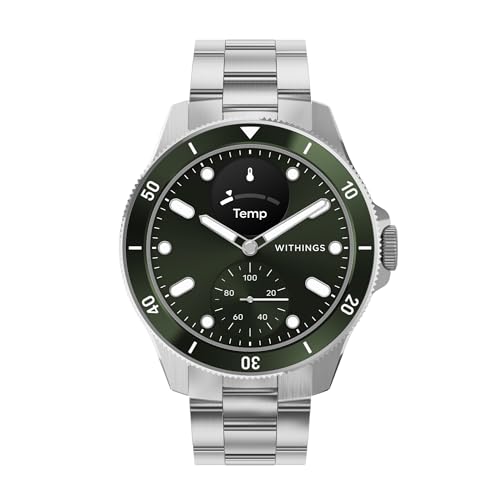
Withings ScanWatch Nova — The Boardroom Hybrid With a Laboratory Inside
The Nova is the high-end pick for people who think smartwatches are ugly. A classic analogue watch with a green dial and physical hands, it conceals a sensor suite that its listing states plainly: ECG capability, oxygen saturation measurement, temperature monitoring, a sleep score and respiratory scanning, alongside the maker’s FDA-cleared AFib detection — features to read as wellness information the watch can surface for your own records, never as a substitute for professional medical assessment. The juxtaposition is the product: across a boardroom table it reads as a handsome traditional watch, while underneath it quietly assembles one of the deeper health records in this guide. A 30-day battery figure in the listing completes the illusion, because a watch that charges monthly never interrupts the performance.
That hybrid architecture imposes familiar limits. Notifications live on a small secondary window, there are no apps to speak of, no speaker for calls, and activity tracking leans on the paired phone for positioning. Withings buyers accept those limits as the price of the format, and the Nova’s premium over its ScanWatch siblings buys the flagship expression of the idea — the richest sensing and the most refined presentation in the line. For the executive, the clinician, the traditional-watch devotee who wants health trends without wearing a screen, no other pick on this page is speaking their language.
Longevity flatters the Nova in a specific way: analogue design does not date the way screen interfaces do. A five-year-old hybrid still looks like a watch, while a five-year-old touchscreen flagship looks like an old phone. Buyers planning a long ownership arc, and valuing discretion over display, will find the Nova the most quietly confident object in this guide.
Gift-giving reveals the Nova’s other strength. A screen flagship given to a traditional-watch wearer often ends in a drawer, defeated by charging habits and interface fatigue; a hybrid given to the same person gets worn, because it asks for almost nothing while giving health trends they did not know they wanted. The green dial in this listing is a considered choice — distinctive without shouting — and the whole object reads as a watch first at exactly the moments when that matters: weddings, interviews, dinners where a glowing wrist would cheapen the room. Premium, in this corner of the guide, means never having to explain your watch.
- Design: analogue hybrid, green dial in this listing
- Battery figure from the listing: 30 days
- Sensing named in the listing: ECG, SpO2, temperature monitoring
- Wellness readouts named in the listing: sleep score, respiratory scan
- Compatibility: Bluetooth with iOS and Android
Strengths
- Traditional looks that survive any dress code or decade.
- Deepest discreet health sensing in the hybrid format.
- A month between charges keeps the illusion complete.
Trade-offs
- Tiny notification window and no app ecosystem at all.
- No speaker, no wrist calls, phone-dependent positioning.
- Training features are minimal beside the sport flagships.
Best for: professionals and traditionalists seeking serious health trends inside a watch that looks inherited, not streamed.
Not suited for: mapped-training athletes, and wrist-call devotees.

Suunto Race 3S Ti — Titanium, Minus the Weight Penalty
Suunto’s flagship racer attacks a contradiction: titanium watches are usually heavy statements, yet the Race 3S Ti’s listing leads with “Ti Feather” — titanium engineered for lightness — wrapped around a 1.32-inch AMOLED display rated in the listing at 2000 nits of brightness. That brightness figure matters on snowfields and summer ridgelines where lesser screens wash out. Under the glass, the listing stacks a serious athlete’s inventory: dual-frequency GPS, 38 hours of it in the stated GPS mode, 125 sports modes, a striking 64GB of storage, offline maps, an AI Coach with ZoneSense analysis, plus a Race Planner and Climb Guidance for structured mountain ambitions. This is not a lifestyle watch with a titanium veneer; it is a racing computer that chose an expensive metal to disappear on the wrist.
The 38-hour dual-frequency figure deserves framing, because it is a tracking-mode number rather than a standby claim — it describes how long the most accurate positioning can run continuously, which is the currency ultrarunners and long-course triathletes actually spend. Sixty-four gigabytes, meanwhile, is storage that changes behaviour: entire map regions and music libraries live on the watch permanently, removing the pre-race download ritual. ZoneSense and the AI Coach signal Suunto’s direction — analysis that adapts to the athlete’s response rather than reciting generic zones — and the Race Planner turns goal events into structured preparation inside the same ecosystem.
Against the Garmin flagships, the Race 3S Ti trades breadth of lifestyle features for focus and lightness; against everything else here, it is simply the most single-minded. Racers who weigh their shoes will understand a watch that weighs its case. Check price on Amazon, because titanium Suuntos occupy a distinctive niche between the mainstream and the expedition flagships, and their value depends heavily on how much of that niche is yours.
Climb Guidance and the Race Planner point at the buyer Suunto courts most precisely: the athlete with a date circled. A mountain objective or an A-race transforms a watch from recorder to project partner, breaking the months before the event into preparation the wrist can supervise. ZoneSense adds a physiological honesty to that supervision, reading how the body is actually responding rather than how the plan assumed it would. Athletes without a circled date will still enjoy the hardware, but the software’s soul is goal-shaped, and it is fairest to say so: this flagship rewards ambition with structure, and charges its premium largely for that partnership.
- Case: titanium “Ti Feather” construction, lightness-led design
- Display: 1.32-inch AMOLED, 2000-nit brightness per the listing
- Positioning: dual-frequency GPS, 38 hours stated in GPS mode
- Storage: 64GB, with offline maps aboard
- Analysis named in the listing: AI Coach, ZoneSense, Race Planner, Climb Guidance
Strengths
- Titanium durability without the usual titanium heft.
- Dual-frequency positioning with a serious 38-hour tracking budget.
- Storage and maps make it a genuinely independent race computer.
Trade-offs
- No satellite messaging or dive flagship theatre.
- Suunto’s lifestyle and app ecosystem trails the phone platforms.
- Its racing focus is wasted on casual step counters.
Best for: ultrarunners, triathletes and mountain racers chasing flagship accuracy in the lightest serious case available.
Not suited for: app-and-polish-first shoppers, with training depth a distant second.
Side-by-Side Comparison
| Pick | Premium expressed as | Case | Battery character | Signature capability |
|---|---|---|---|---|
| fenix 8 Pro 51 | Satellite safety plus materials | 51mm sapphire, DLC titanium | Flagship days-class | inReach satellite technology |
| fenix 8 Sapphire 47 | Materials plus multisport depth | 47mm sapphire, DLC titanium | Flagship days-class | Flashlight and dive rating |
| Apple Watch Series 12 | Ecosystem integration | 46mm black aluminium | Daily charging class | Apple’s full health and safety suite |
| Galaxy Watch 8 40 | Coaching intelligence | 40mm graphite cushion case | Daily charging class | Running Coach and Sleep Coaching |
| ScanWatch Nova | Watchmaking discretion | Analogue hybrid, green dial | 30 days per the listing | Deep sensing behind physical hands |
| Suunto Race 3S Ti | Featherweight racing hardware | Titanium, lightness-led | 38H dual-frequency GPS per listing | 64GB storage and offline maps |
Warranty and support belong in the premium ledger too. A flagship is a computer worn against the world, and the quality of the maker’s service network — how a cracked case is handled in year two, how a battery service is priced in year four — separates brands that sell objects from brands that maintain them. The Galaxy Watch 8’s listing, with its extended two-year warranty through this retailer, makes that support tangible at the point of sale. Elsewhere, read the warranty terms before ordering rather than after a failure, because at flagship prices the support promise is part of what the money buys, and the time to value it is while you can still choose a different flagship.
Which Premium Actually Shows Up in Daily Life?
Rank the luxuries by how often they touch an ordinary Tuesday. Integration touches it constantly: the Apple and Samsung flagships earn their premium in dozens of frictionless moments — a payment, a reply, a glanceable coach’s note — which is why their owners defend them so warmly. Materials touch it quietly: sapphire and titanium do not announce themselves daily, but they accumulate value across years of unmarked survival, visible every time the watch still looks new. Satellite communication touches it almost never, and then all at once, on the one day it matters more than everything else the watch has ever done. The hybrid’s discretion touches it socially, in every meeting where a glowing screen would have said the wrong thing.
None of these frequencies is the correct one; they map to different lives. The exercise worth doing before ordering is imagining your own last month with each premium applied: count the moments integration would have helped, the knocks a sapphire lens would have absorbed, the places a satellite link would have covered, the rooms where an analogue face would have belonged. The premium with the highest honest count is the one worth paying, and it is rarely the one with the longest feature list.
How Do Sapphire and Titanium Justify Themselves Over Years?
Sapphire is the second-hardest common watch material after diamond, which in practice means keys, door frames, rock and gym equipment slide off it rather than carving the fine scratches that slowly fog ordinary glass. A flagship’s screen is its face; keeping that face clear for five years is the difference between a watch that feels premium at year four and one that feels merely expensive at purchase. Titanium contributes differently: strength at roughly half the density of steel, total corrosion indifference to sweat and seawater, and a warmth on skin that steel lacks in winter. DLC coating over titanium, as on both Garmins here, adds a hard, dark shell that resists the bright scuffs raw titanium collects.
The economic argument follows from the physical one. High-end smartwatches are replaced for two reasons — dead platforms and tired appearance — and premium materials attack the second directly. A watch that still looks new is a watch whose owner delays upgrading, spreading a flagship price across more years until the per-year cost undercuts mid-range replacements. That is the unglamorous truth of luxury in this category: the best-dressed watches are also, often, the cheapest to own for a decade.
Gifting at this tier deserves a caution of its own. A flagship smartwatch is partly a platform commitment, and giving one across ecosystems — an Apple Watch to an Android loyalist, a Galaxy flagship to an iPhone household — gifts a problem dressed as generosity. Within the right ecosystem, though, a flagship is a unusually personal present, worn daily for years. The Nova sidesteps the platform trap entirely by pairing with both phone families, one reason it appears so often in premium gift lists. When in doubt, the hybrid or a cross-platform Garmin respects the recipient’s existing life; the platform flagships should only be given to people whose phones you know.
When Does a Hybrid Belong in a Flagship Conversation?
When the buyer’s definition of advanced is invisible. The ScanWatch Nova’s sensing suite, as listed, rivals the health depth of the screen flagships, while its presentation refuses every smartwatch trope — no glowing rectangle, no app grid, no charging cable on the weekly calendar. In professions where visible technology reads as distraction, and in social settings where a traditional watch signals something a gadget cannot, that invisibility is not a missing feature; it is the feature, and it costs flagship money to engineer sensing this deep into a case this conventional. The 30-day battery in its listing is part of the same argument: a luxury object should not demand weekly attention.
The hybrid fails, deliberately, at everything screen-shaped: rich notifications, maps, music control, calls. Buyers who need those should not romanticise the Nova. Buyers who have tried screen flagships and felt their attention colonised often find the hybrid is the first smartwatch that behaves like the watches they already loved — present on the wrist, absent from the mind, quietly compiling a health record they review on their own schedule.
What Should You Inspect in Person Before Paying Flagship Money?
Three things resist online evaluation. The first is case geometry against your own wrist bone: a 51mm flagship that overhangs will announce itself in every photograph and dig in during every push-up, while a 40mm cushion case can vanish so completely that owners forget the premium they paid. The second is screen behaviour in real sunlight — brightness figures like the Suunto’s listed 2000 nits suggest capability, but reflections, font choices and glanceability at arm’s length decide whether a display feels flagship outdoors. The third is strap quality at the lugs, because flagship cases are routinely let down by ordinary straps, and a watch worn eighteen hours a day is mostly strap against skin.
Software deserves an in-person test as well. Scroll the menus, start and stop a workout, find the setting you would change weekly. Flagship hardware with software that fights you becomes a daily tax, and the platforms here have distinct personalities — Garmin’s depth, Apple’s fluidity, Samsung’s coaching, Withings’ near-absence — that no review can rank for your temperament. Twenty minutes of handling answers questions that twenty reviews circle around, and at this tier the cost of a wrong personality match is measured in years, not weeks.
How Does Resale Value Change the Flagship Calculation?
Unusually for consumer electronics, the top of this category holds value with some dignity. Materials-led sport flagships — titanium Garmins especially — find second-hand buyers among athletes who trust the hardware’s durability, and a sapphire lens that kept the face flawless is quite literally visible in a resale photograph. Platform flagships depreciate on the annual cycle their makers impose, yet even they retain meaningful value within the first two years because their ecosystems keep demand broad. None of this turns a watch into an investment, and this guide would not claim otherwise; it does mean the true cost of a flagship is its price minus a realistic resale figure at the point you expect to move on.
That arithmetic quietly favours buying the current generation in a durable configuration over buying last year’s model cheaply. The older watch starts closer to its support horizon, dates faster in photographs of its scratches, and exits for less. Buyers planning a three-year ownership followed by resale should choose the configuration a stranger would want in three years: neutral colours, the tougher lens, the complete box and charger kept safe. High-end ownership, done deliberately, is a system — and the exit is part of the design.
Which Ongoing Costs Follow a Flagship Home?
The purchase price is the down payment. Satellite communication on the Pro runs on a subscription plan, without which its signature capability sleeps. Premium straps in proprietary fittings cost more than generic ones, and a titanium bracelet, if you later want the full metal effect, is a serious second purchase. Battery service eventually enters the picture for any watch kept five years, priced as a fraction of replacement but not trivial. Platform flagships add their own quiet costs — the apps and services that make them shine are increasingly subscription-shaped — while the hybrid’s costs are nearly nil beyond an occasional strap, one more dividend of its simplicity.
None of these costs is hidden, exactly; they are merely unlisted, distributed across the ownership years where brochures do not look. A realistic flagship budget adds a year’s satellite plan where relevant, one good spare strap, and a contingency for battery service in year four or five. Buyers who plan that envelope in advance enjoy their flagships without the low-grade resentment of surprise bills, and the watches in this guide — bought with eyes open about their ecosystems — tend to be kept, used and valued for the long arcs their materials promise.
How Should a First-Time Flagship Buyer Choose Between Sport and Platform?
Run a census of your last thirty days. Count the hours spent training outdoors, the hours in meetings, the calls taken, the places visited without coverage, the nights tracked. Sport flagships win the census when training and terrain dominate; platform flagships win when communication and coordination dominate; the hybrid wins when appearance and health trends dominate and everything else is noise. The census is brutally clarifying because it replaces the buyer you imagine being — the expedition self, the executive self — with the person whose life the watch must actually serve on an ordinary Wednesday.
If the census ties, let charging temperament break it. A person who charges devices happily every night will extract full value from Apple or Samsung polish; a person who finds nightly charging genuinely corrosive should drift toward Garmin’s longer rhythms or the Nova’s monthly one. Temperament outlasts enthusiasm, and the flagship that fits your habits will still be charged, worn and useful in year three, when the flagship that fought them is a beautiful object in a drawer.
What Does the Second Month of Ownership Reveal That Reviews Cannot?
Novelty inflates every flagship for a fortnight. The second month is when the truth files its report: whether the coaching notes changed a single bedtime, whether the satellite plan justified its renewal, whether the titanium case still delights or merely sits there, heavy with unspent capability. Owners discover their real relationship with charging, with notifications, with the app whose dashboards they swore they would study. A flagship that survives the second month as a daily habit has passed the only test that matters, and it usually does so on the strength of one or two features that fused with the owner’s routine — a flashlight, a readiness score, a sleep coach’s nudge — rather than the twenty features in the launch keynote.
This is why the per-pick verdicts in this guide keep returning to single sentences. The right flagship is the one whose one sentence describes your actual life. Everything else — the materials, the storage, the brightness — is supporting cast, valuable exactly insofar as it keeps that one sentence true for years. Buy for the sentence, and the second month will feel like confirmation rather than compromise.
How Should You Care for Premium Materials So They Stay Premium?
Sapphire asks for almost nothing — a soft cloth and the confidence that most of what hits it will lose — but the case around it deserves rinsing after salt water and sweat-heavy weeks, because grit trapped under a rotating element or strap spring bar scratches what the lens itself would shrug off. Titanium’s DLC shell resists scuffs well, yet it appreciates the same rinse-and-dry routine, and leather straps on any flagship should rotate with a sport strap so neither lives permanently damp. The hybrid’s traditional case follows ordinary watch etiquette: keep it from hard knocks despite its sensors, and service seals if you swim with it regularly across years.
Battery care is the invisible half of flagship maintenance. These are expensive cells in sealed cases, and the kind routine — avoiding permanent full charge, avoiding deep depletion, charging in cool rooms — protects the one component no amount of sapphire can save. Owners planning the five-year arc this guide keeps invoking should treat the first year’s charging habits as an investment decision, because the difference between a flagship at eighty percent health in year four and one at sixty is written almost entirely in those early habits.
Expensive Errors in the Flagship Tier
Buying the 51mm Pro for its satellite link and then never leaving coverage is the tier’s signature waste — a superb capability purchased as anxiety insurance and never cashed. The mirror error is buying an aluminium platform flagship for expedition dreams, discovering at altitude that integration does not navigate. Size mistakes run third: flagship cases are large, returns are a hassle, and a 51mm watch on a 16cm wrist will be hated daily regardless of its brilliance, so measure before ordering. Fourth, shoppers forget the ongoing costs of the tier — satellite plans, replacement straps in proprietary fittings, the eventual battery service — and judge only the headline price. Finally, some buyers purchase last-generation flagships at small discounts and lose years of platform support to save very little; at this level, currency of the platform is worth more than a modest saving.
Final Recommendation
Choose by arena. The backcountry arena belongs to Garmin: the fenix 8 Pro for those who roam beyond coverage and want satellite communication on the wrist, the 47mm sapphire model for those who roam nearly as far with a phone or separate communicator already in the kit. The city-and-office arena belongs to the platforms: Series 12 for iPhone owners, Galaxy Watch 8 for Android owners who will actually use a coach. The boardroom arena belongs to the Nova alone. The racecourse arena belongs to Suunto’s featherweight titanium. What unites the six is that each premium can be pointed at — a material, a satellite link, a coaching layer, a hidden laboratory — and pointing is the test any high-end purchase should pass. If you cannot name what the extra money bought in one sentence, you bought the wrong flagship; every pick above lets you name it in five words or fewer.
A closing word on timing: flagship lines refresh on annual or biennial rhythms, and buying at the very end of a cycle can be shrewd if the discount is deep and the platform support horizon still stretches years ahead — or wasteful if the saving is small and the successor is weeks away. Check where each model sits in its maker’s cycle when you check price on Amazon, and let a genuinely large saving, rather than impatience, justify buying the outgoing generation. The watches above were chosen as the current peaks of their respective philosophies; whichever you select, buy it deliberately, size it honestly, and then wear it for the long arc it was built to serve.
Frequently Asked Questions
Is sapphire worth paying for on a smartwatch?
For a watch you intend to keep for years, yes. Sapphire resists the scratching that makes ageing smartwatches look tired, and appearance is a leading reason owners replace devices whose electronics still work. On a two-year upgrade cycle the case for sapphire weakens; on a five-year arc it is close to decisive. The same longevity logic applies to titanium cases, which resist the corrosion and denting that make steel watches look worked-hard, and to the hybrid’s conventional format, which watchmakers have known how to keep handsome for a century. Durability at this tier is a design discipline before it is a materials list, and the picks in this guide were chosen partly for makers who demonstrably practise it across generations of their flagship lines.
What does inReach on the fenix 8 Pro actually require?
An active satellite subscription through Garmin’s service, on top of the watch itself. With that plan, the watch can exchange messages and trigger an SOS through the satellite network where mobile coverage does not exist. Without the plan, the Pro remains a full flagship — the satellite layer simply sleeps. Garmin sells several plan tiers for different activity levels, so occasional hikers are not forced into an expedition-grade subscription; match the plan to your realistic days beyond coverage, and review it annually the way you would any safety-related service, because the month it lapses unnoticed is the month it will be wanted.
Which flagship is best for smaller wrists?
The Galaxy Watch 8 at 40mm is the most accommodating true flagship here, and the ScanWatch Nova’s classic proportions suit traditional tastes. The Garmin flagships at 47mm and 51mm are expedition instruments and wear like it; try before committing if your wrist is slim. Retailers’ size guides translate case diameter poorly, so compare against a watch you already own: lay your current case beside the stated millimetres and judge the overhang honestly, because two millimetres at this scale is the difference between an instrument and an encumbrance.
Do the health features on these watches replace medical check-ups?
No. Features such as ECG capability, oxygen saturation and AFib detection — named on the Withings listing — provide wellness information and trends for your own records. They are not diagnoses, and any concerning reading belongs in a conversation with a clinician, not in a settings menu. Used properly, these features shine as long-term trend records — months of sleep, temperature and heart patterns that you can share at a routine appointment — which is a calmer and more defensible role than moment-to-moment self-diagnosis, and the role this guide recommends for every health feature named in these listings.
Why do the Apple and Samsung flagships use aluminium and standard glass?
Because their premium is spent elsewhere: sensors, displays, processors and the coaching and integration layers described above. Their makers offer harder materials in other lines, but the mainstream flagships optimise for weight, cost and annual upgrade economics rather than decade-long case survival.
Are the platform flagships or the sport flagships better long-term value?
They amortise differently. Sport flagships in sapphire and titanium hold condition and resale well and suit owners who keep devices for many years. Platform flagships deliver more daily convenience per month but follow annual upgrade gravity, so their value peaks for owners who upgrade deliberately and resell while the model is current. Your ownership rhythm, not the sticker, decides which is cheaper across a decade.
How long should a high-end smartwatch realistically last?
Plan on four to six years of useful life for the materials-led picks, with battery capacity gradually declining, and a shorter comfortable arc for platform flagships whose owners tend to follow upgrade cycles. Software support from the maker ultimately sets the ceiling, which is one more reason to buy the current generation.
Related Guides
Materials and satellite links settle the flagship question at the top of the market; golfers shopping at a similar level of seriousness will enjoy the dedicated treatment in the guide to golf watches with course data. Readers whose premium budget is really about independence from the phone should weigh the options in the Android calling watch roundup, and those who prefer their luxury understated can browse the fashion-first smartwatch edit for designs that lead with looks.


