Our Top Picks


What's inside
- Best Cam and Lifter Sets for a Stock 350 Chevy
- Why the Camshaft and Lifters Matter on a Stock 350
- Duration, Lift, and Lobe Separation in Plain Language
- Flat Tappet Hydraulic vs Hydraulic Roller Retro-Fit
- How These Sets Were Selected
- The Nine Cam and Lifter Sets in Detail
- Choosing Between RV Torque and Street Performance
- Break-In and Installation: General Industry Practice
- Frequently Asked Questions
- Conclusion
- Check prices on Amazon
- Disclosure
As an Amazon Associate I earn from qualifying purchases. This post may contain affiliate links at no extra cost to you.
Best Cam and Lifter Sets for a Stock 350 Chevy
A stock Chevrolet 350 small-block is one of the most forgiving engines ever built, and that is exactly why a camshaft and lifter set is such a popular first internal upgrade. The factory camshaft in most 350s was chosen for smooth idling, low emissions, vacuum for power brakes, and durability on ordinary fuel, not for strong mid-range pull or a satisfying exhaust note. Replacing that camshaft, together with a matched set of lifters, changes when the valves open and close, how far they open, and how long they stay open. Those three decisions shape torque, throttle response, idle quality, and the rpm range where the engine feels awake. Done well, a mild cam and lifter set wakes up a stock 350 without demanding new heads, a high-stall converter, or a complete rebuild. Done poorly, an oversized camshaft makes a stock engine lazy at low rpm, hard to tune, and disappointing in a heavy car or truck.
This guide covers nine cam and lifter sets sold for the small-block Chevy family. Most are hydraulic flat tappet kits, which is the valvetrain design the vast majority of original 350s used. One is a hydraulic roller retro-fit kit, which is a different and more expensive path with different installation needs. Some kits include a timing set, and some include only the camshaft and lifters. Those distinctions matter more than a headline number, so each product below is described only on the basis of the specifications published in its own listing title, plus general industry knowledge that applies to any small-block camshaft swap. Where a listing does not publish duration or lift figures, this guide says so instead of filling the gap with a guess.
The intended reader is an owner of a largely stock 350: stock or near-stock cylinder heads, a dual-plane intake or a factory-style intake, an ordinary carburetor or throttle-body setup, stock compression, and an automatic or manual transmission that will mostly see street driving. That includes classic cars, C10 and square-body trucks, RV and towing rigs, and weekend cruisers. If your 350 is already built with aluminum heads, high compression, and a loose converter, your shortlist would look different. For a stock engine, restraint is a virtue, and the best camshaft here is usually the one that adds torque where you actually drive, between idle and about 4,500 rpm.
Why the Camshaft and Lifters Matter on a Stock 350
The camshaft is often called the brain of the engine, and on a pushrod V8 the description is fair. Its lobes, driven by the timing chain at half crankshaft speed, push the lifters upward. Each lifter rides on a lobe and transfers that motion through a pushrod to a rocker arm, which opens a valve against its spring. Change the shape of the lobe and you change the entire breathing character of the engine. A stock 350 camshaft typically has short duration and modest lift, which keeps cylinder pressure high at low rpm, produces strong manifold vacuum, and gives a smooth, quiet idle. It also limits how much air the engine can move as rpm rises, which is why a stock 350 often feels strong off the line and then flattens out.
Lifters are not a minor accessory in this swap. On a flat tappet engine, each lifter face and its cam lobe form a wear pair. Industry practice is unambiguous: a new camshaft should be installed with new lifters, and old lifters should never be placed on a new camshaft. The lifter face is slightly crowned and the lobe is slightly tapered, and together those shapes make the lifter rotate as it rides, spreading wear. Once a lifter has worn in against one lobe, its face carries a pattern that does not match a different lobe. Reusing lifters is one of the most common causes of a camshaft that wipes a lobe shortly after installation. That is why the products in this guide are sold as matched cam and lifter sets rather than as camshafts alone.
Hydraulic lifters add another benefit for a street engine. A hydraulic lifter contains a small internal plunger and a check valve, and it uses engine oil to take up valvetrain clearance automatically. That means no routine lash adjustment, quieter operation, and tolerance for the thermal expansion that happens as the engine warms up. The trade-off is that hydraulic lifters can pump up or bleed down at very high rpm, but a stock 350 that rarely sees the far side of 5,000 rpm is well inside their comfortable range. For the use case in this guide, hydraulic lifters, whether flat tappet or roller, are the sensible default.
Duration, Lift, and Lobe Separation in Plain Language
Three numbers appear again and again in the product titles below: duration, lift, and lobe separation angle. Understanding them at a conceptual level is enough to choose wisely for a stock engine, and it protects you from buying a camshaft on the basis of a single impressive figure.
Duration is how long, measured in crankshaft degrees, a valve is held open. Longer duration generally shifts power upward in the rpm range. A short-duration camshaft builds strong low-rpm torque and a smooth idle, which suits a heavy truck or an RV. A long-duration camshaft can make more top-end power, but on a stock engine it usually costs low-rpm torque, idle vacuum, and drivability. Duration is often quoted at 0.050 inch of lifter rise, which is why you will see paired figures such as 218/218 or 224/224 in the titles below. The first number describes the intake lobe and the second describes the exhaust lobe. When both numbers are equal, the camshaft is a single-pattern design. When they differ, it is a dual-pattern design that usually gives the exhaust side more time to clear the cylinder.
Lift is how far the valve is opened, quoted in inches, such as .447 or .454. More lift can allow more airflow, but only if the cylinder head can use it. Stock small-block heads reach a point where extra lift adds little flow, and excessive lift on stock springs risks coil bind, where the spring compresses solid, and retainer-to-seal interference. That is why the lift figures in this guide cluster in a narrow, street-friendly band. For a stock 350, a lift number in the mid .400s is not a limitation to apologise for; it is a sign the camshaft was ground for exactly this kind of engine.
Lobe separation angle, or LSA, is the distance in camshaft degrees between the intake and exhaust lobe centrelines. A wider LSA, such as 112 or 114 degrees, tends to give a smoother idle, broader torque, and stronger vacuum. A tighter LSA, such as the 110 degrees published for one kit below, tends to concentrate torque in the mid-range and produce a more noticeable idle. Neither is automatically better. On a stock engine with power brakes and an automatic transmission in gear at a stoplight, idle vacuum is a real, practical concern, so LSA deserves as much attention as duration.
Flat Tappet Hydraulic vs Hydraulic Roller Retro-Fit
Eight of the nine sets in this guide are built around flat tappet hydraulic lifters, or are hydraulic sets for the traditional flat tappet small-block. The ninth, the COMP Cams Thumpr kit, is a hydraulic roller retro-fit, and it should not be treated as a direct like-for-like alternative. The difference is in how the lifter meets the lobe. A flat tappet lifter presents a flat, slightly crowned face that slides on the lobe. A roller lifter carries a small wheel that rolls on the lobe. Rolling contact reduces friction and allows lobe shapes that a flat tappet could not survive, which is why modern engines use roller valvetrains.
For a stock 350, flat tappet kits have three practical advantages. They are the design the engine was built around, so they fit the lifter bores, oil system, and distributor gear arrangement the factory intended. They are simpler, with no linked lifter pairs or retro-fit hardware to install. They also cover the widest range of mild RV and street grinds, which is exactly the territory a stock engine needs. Their weakness is break-in. A flat tappet camshaft and its lifters must wear in together under specific conditions, and skipping that procedure is the leading cause of early failure. Modern engine oils also contain less of the zinc and phosphorus anti-wear additive, often called ZDDP, that flat tappet interfaces historically relied on, so a suitable break-in oil or additive is standard industry advice for a new flat tappet installation.
A hydraulic roller retro-fit kit solves the break-in problem in a different way. Because the lifter rolls instead of slides, a roller camshaft does not need the same sacrificial wear-in period, and it is less sensitive to modern oil formulations. The cost is complexity and money. An older flat tappet block has no provision to keep roller lifters from rotating in their bores, so retro-fit lifters are joined in pairs with link bars. Camshaft end play must also be controlled, usually with a cam button, because a roller camshaft is not tapered the way a flat tappet camshaft is. Valve spring requirements are typically more demanding as well. For a mild stock 350 that will live below 5,000 rpm, a roller conversion is a want rather than a need. For an owner who plans further upgrades later, or who simply prefers the roller design and its distinctive idle character in the Thumpr range, it is a legitimate path, as long as the extra installation steps are planned from the start.
While you are planning the mechanical side of the job, it also helps to keep the support gear in the garage organised, since a cam swap generates a lot of small parts that need to stay clean and labelled; the same tidy-up logic applies to the chargers and cables on the bench, which is why many home mechanics also look at guides such as best 10 amp auto battery chargers before a long project weekend.
How These Sets Were Selected
The nine sets below were selected based on published specifications in their own listings, the fitment they claim for the small-block Chevy family, and how their stated purpose lines up with a stock 350. Our research focused on four questions. First, is the set actually intended for a small-block Chevy, and for which displacements? Second, is it a flat tappet hydraulic set or a hydraulic roller retro-fit, and is that made clear? Third, does the kit include only the camshaft and lifters, or does it also include a timing set? Fourth, where duration, lift, or lobe separation are published, do those figures suit a stock engine rather than a race build? Sets that publish no figures are described as such, and no figures have been borrowed from a different kit to fill the gap.
The Nine Cam and Lifter Sets in Detail
1. Enginetech ECK1013R Cam Kit for Small Block Chevy
The Enginetech ECK1013R is listed as a cam kit for the small-block Chevy built around a flat tappet hydraulic camshaft and lifters, with the camshaft made from high carbon steel. That combination makes it the most straightforward kind of product in this guide: a replacement-style hydraulic flat tappet set for an owner who wants to refresh a tired stock 350 rather than reinvent it. Enginetech is widely known as a supplier of engine components for rebuilders, and a kit in that mould is aimed at dependable, ordinary street use.
Because the listing title does not publish duration, lift, or lobe separation figures, this guide does not assign any to the ECK1013R. That is not a criticism, but it does change how you should buy it. Before ordering, read the full specification on the product page or from the supplier, and confirm the grind suits a stock engine, the included lifters are flat tappet hydraulic units matched to the camshaft, and the kit contents are exactly what you expect. In particular, the title describes a camshaft and lifters, so plan on sourcing a timing set separately if yours shows stretch or wear, which on an older 350 is common.
2. Enginetech ES179R Stage 2 HP Camshaft Kit with Double Roller Timing Set
The Enginetech ES179R is the most fully specified Enginetech kit here. Its title publishes a Stage 2 HP profile with 223/223 duration, .447/.447 lift, and a 110 lobe separation angle, and it includes performance lifters plus a double roller timing set. That bundle is a genuine practical advantage. A camshaft swap already requires removing the timing cover, so receiving a new double roller timing set in the same box removes a separate purchase and removes the temptation to reuse a stretched chain on a new camshaft.
The published figures place this kit a step above a pure stock replacement. Duration of 223 degrees on both intake and exhaust is a single-pattern profile that should give a stock 350 a noticeably stronger mid-range than a factory camshaft, while lift of .447 on both sides stays within a range that is friendly to stock-style heads and springs, subject always to checking coil bind and retainer clearance on your own engine. The 110 LSA is on the tighter side, which typically concentrates torque in the middle of the range and gives a more audible idle than a wider separation would. On a stock engine with an automatic transmission, that makes idle tuning and vacuum worth thinking about before you buy, rather than after.
This is a flat tappet performance direction rather than a roller conversion, so the full flat tappet break-in discipline applies. Consider the ES179R if you want one box that covers the camshaft, lifters, and timing set, you want a published specification you can plan springs and tuning around, and your stock 350 lives in a car or light truck where a stronger mid-range is the goal. Owners of heavy towing rigs who prize the smoothest possible low-rpm manners may prefer one of the RV-focused kits below.
3. Melling 22301 Hydraulic Camshaft and Lifter Set
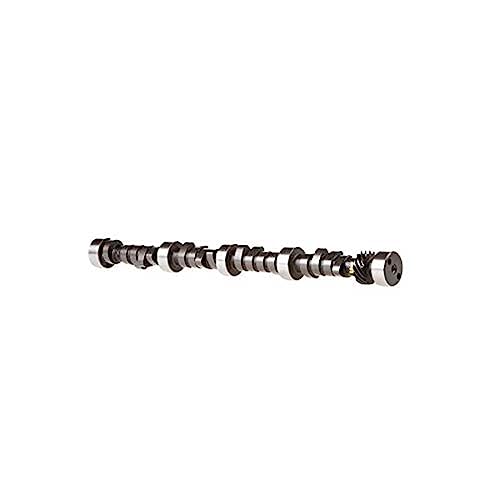
The Melling 22301 is listed simply as a hydraulic camshaft and lifter set for the small-block Chevy. Melling is a long-established name in engine components, particularly oil pumps and valvetrain parts, and its presence in this guide gives buyers an option from a traditional engine-parts manufacturer rather than a performance catalogue brand. As with the first Enginetech kit, the title does not publish duration, lift, or lobe separation, so none are claimed here.
That simplicity cuts both ways. A buyer who wants to plan a build around exact figures will need to obtain the full Melling specification for the 22301 before ordering, including whether the set is intended as a stock replacement or a mild upgrade, what rpm range the maker assigns to it, and what valve spring guidance accompanies it. A buyer who simply wants a hydraulic camshaft and matched lifters from a recognised engine-parts maker, for a stock 350 that is being refreshed rather than hot-rodded, may find that straightforward positioning appealing.
4. Stage 2 MTC-1 RV Torque Cam and DLC Lifters Kit
This kit pairs a Stage 2 MTC-1 RV torque camshaft with DLC lifters, for the small-block Chevy 283 to 350 V8 range. Two ideas define it. The first is purpose: RV torque. An RV or towing camshaft is ground to build cylinder pressure and pulling power at low and moderate rpm, where a heavy vehicle actually works, rather than to chase a peak number at high rpm. For a stock 350 in a motorhome, a camper conversion, or a truck that tows, that is usually the most valuable kind of gain, because it shows up pulling away from a junction and climbing a grade in a high gear.
The second idea is the lifter finish. DLC stands for diamond-like carbon, a hard, low-friction coating applied to the lifter face. On a flat tappet interface, where the lifter face slides on the lobe under heavy load, a hard low-friction surface is a rational engineering response to the wear demands of break-in and everyday running. It does not remove the need for a correct break-in procedure or suitable oil, and this guide does not claim any measured durability figure for it, but as a published feature in the title it is the clearest point of difference between this kit and the conventional lifter sets around it.
The title does not publish duration, lift, or lobe separation for the MTC-1 profile in this kit, so plan as you would for any RV grind: confirm the full specification with the seller, check what springs the maker recommends, and be honest about your gearing. RV torque camshafts reward tall gearing and heavy vehicles; in a light car with a manual gearbox, the same low-rpm emphasis can still be pleasant, but a street performance grind may be more fun. For the heavy, loaded, low-rpm use case, this is one of the most purpose-built options in the list.
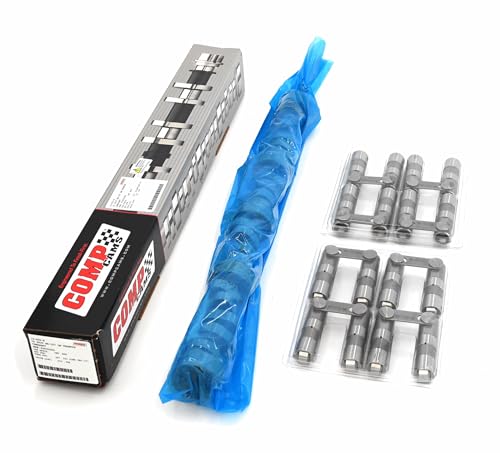
5. COMP Cams CL12-212-2 Magnum 224/224 Hydraulic Flat Cam and Lifter Kit
The COMP Cams CL12-212-2 belongs to the Magnum range and is listed as a 224/224 hydraulic flat cam and lifter kit for the Chevrolet small-block. The CL prefix in COMP part numbering denotes a cam and lifter kit, and the word flat is important: this is a hydraulic flat tappet set, not a roller kit, so flat tappet break-in rules apply in full.
Duration of 224 degrees on both intake and exhaust makes this a single-pattern camshaft at the upper end of what most owners would call stock-friendly. In a stock 350, a profile in this range generally trades some low-rpm softness and idle smoothness for a stronger, more eager mid-range and top end. That trade can be exactly right in a lighter car with sensible rear gearing, where the engine spends more time in the middle of its range. In a heavy truck with tall gearing and an automatic transmission with a stock converter, the same profile can feel less happy at low speed. The listing title does not publish lift or lobe separation for this kit, so do not assume either figure from other Magnum or COMP products; obtain the exact card for the CL12-212-2 before choosing springs.
Documentation habits matter on a job like this, because cam cards, torque sequences, and timing notes pile up quickly; owners who keep build records on a laptop often end up comparing storage and screen options as well, and a guide such as best 500gb sd cards is the kind of side reference that turns up when people organise photos and files from a long engine project.
Choose the Magnum kit if your stock 350 is in a street car, you accept a more noticeable idle and a little less low-rpm polish, and you want an established performance brand’s matched flat tappet set. If your priority is towing torque or the smoothest idle for power brakes, look at the RV and High Energy options instead.
6. COMP Cams 12-210-2 High Energy 218/218 268H Camshaft Kit
The COMP Cams 12-210-2 is a High Energy kit publishing 218/218 duration, the 268H profile designation, and .454/.454 lift, for the Chevrolet small-block, with high-performance lifters included. Of the fully specified flat tappet kits in this guide, this is arguably the most natural fit for a genuinely stock 350. Duration of 218 degrees is a mild step up from factory territory: enough to let the engine breathe better through the mid-range, not so much that low-rpm torque, vacuum, and idle quality are sacrificed. Lift of .454 on both lobes is likewise a measured figure, usable airflow for stock-style heads without wandering into spring and clearance trouble, provided clearances are checked as they should be on any swap.
The High Energy name reflects the intent of the range: improve efficiency and response in a street engine rather than build a race motor. In practical terms for a stock 350 owner, that means a camshaft that should work with a stock or near-stock converter, keep acceptable vacuum for power brakes, and deliver its gains in the rpm band a street car or truck uses every day. It is a single-pattern profile, so intake and exhaust timing are balanced rather than biased toward the exhaust side.
This kit is described in its title as a camshaft kit with lifters, not as a timing set bundle, so budget for a timing set separately if yours is worn. Full flat tappet break-in applies. For a first cam swap on a stock 350, where the goal is a stronger, more responsive engine that still behaves in traffic, the published specification of the 12-210-2 makes it one of the easiest sets in this guide to recommend on paper.
7. Chevy SBC 350 HP RV Stage 1 Camshaft and Lifters Kit with Timing
This kit is listed for the Chevy small-block 350 5.7 litre as an HP RV Stage 1 package publishing 368/398 lift, with a camshaft, lifters, and timing included. The Stage 1 RV label signals the mildest step in its range and a torque-first purpose, similar in spirit to the MTC-1 kit above but presented as a complete bundle for the 350 specifically, rather than for a spread of small-block displacements.
The inclusion of timing components in the title makes this a convenient single purchase for a refresh, in the same spirit as the Enginetech ES179R bundle, though the two kits publish very different specifications and should not be confused with each other. The ES179R publishes 223 duration and .447 lift; this RV kit publishes .368/.398 lift and no duration in its title. Confirm the exact timing set contents and the full cam card with the seller, follow flat tappet break-in practice, and this becomes a sensible choice for a stock 350 in a working truck or RV that needs a matched, mild, complete kit.
8. COMP Cams 12-600-8 Thumpr Hydraulic Roller Camshaft Kit with Redline Retro-Fit Lifters
The COMP Cams 12-600-8 is the outlier in this guide, and its title says why: it is a Thumpr hydraulic roller camshaft kit with Redline retro-fit lifters, for the Chevy small-block 283, 305, 327, 350, and 400. Every other set here works with the flat tappet architecture your stock 350 was almost certainly built with. This one converts that engine to a roller valvetrain, and it should be budgeted and planned as a conversion, not as a simple like-for-like swap.
The Thumpr range is known for prioritising a pronounced, choppy idle character alongside performance, which is a deliberate design goal rather than a side effect. For some owners that sound is the entire point of the project, and there is nothing wrong with admitting it. But on a stock 350, a buyer should think through the consequences: retro-fit roller lifters are linked pairs, camshaft end play must be controlled, spring requirements differ from a flat tappet installation, and total project cost rises well beyond the price of the kit itself once supporting parts are included. The title also associates this kit with the broader Thumpr package approach, so confirm precisely which timing and supporting components are and are not in the box before ordering.
In return, a roller setup removes the flat tappet break-in risk that dominates the other eight installations, and it opens the door to later upgrades that a flat tappet valvetrain would limit. Our research position is simple: choose the 12-600-8 because you specifically want a hydraulic roller conversion and the Thumpr character, with your eyes open about the extra work. Do not choose it as a casual substitute for a flat tappet kit, and do not compare its cost directly with the flat tappet sets without adding the supporting parts it needs.
9. Vroelos Stage 2 RV Camshaft Lifter Kit .443/.465
The Vroelos kit is a Stage 2 RV camshaft and lifter kit publishing split lift of .443 on the intake side and .465 on the exhaust side, fitting the Chevy small-block 350 and 305, and covering the 1957 to 1995 small-block family across 262, 283, 305, 327, and 350 displacements. That long year range reflects the extraordinary production life of the original small-block Chevy, and it makes fitment checking especially important: a range that wide spans many factory variations, so confirm your exact year, lifter type, and any previous machine work before ordering.
As an RV Stage 2 product, its stated purpose is torque for working vehicles, a step above a Stage 1 grind in intent. The published lift figures are higher than the Stage 1 RV kit above and sit in the same general band as the Enginetech ES179R, but with more lift on the exhaust side than the intake. A dual-pattern lift approach like that is commonly used to help the exhaust side of a stock head, which is often the weaker path. The title does not publish duration or lobe separation, so those must come from the seller’s full specification before you choose springs or judge idle behaviour.
Garage projects have a way of spreading across benches, shelves, and spare drives, and engine builders who document each teardown often find themselves sorting external storage too, which is why references like best 1 tb hard drives appear in the same planning conversations as parts lists and workshop manuals.
Consider the Vroelos kit if you run a stock 350 in a truck or RV, want an RV-focused Stage 2 step with published split lift, and are willing to verify the remaining specification details directly. As with every flat tappet style installation in this guide, new matched lifters and a disciplined break-in are part of the deal.
Choosing Between RV Torque and Street Performance
The nine kits above divide most naturally by purpose, and purpose should be decided by how the vehicle is actually used, not by how the owner imagines using it on its best day. If your 350 lives in a truck, SUV, or RV, carries weight, tows, runs tall highway gearing, and spends most of its life between idle and 3,500 rpm, an RV torque profile is the honest choice. The MTC-1 DLC kit, the Stage 1 RV kit with timing, and the Vroelos Stage 2 RV kit all speak that language, at different levels of specification detail and lift. Their gains arrive where a working engine needs them, and they preserve the low-rpm manners that make a heavy vehicle pleasant rather than tiring.
Research for a project like this usually happens in the evenings, comparing cam cards and build threads side by side, and plenty of owners do that shopping and reading on a general-purpose machine, which is why a roundup like best 15 inch laptops tends to sit in the same browser history as timing set listings and break-in oil.
Break-In and Installation: General Industry Practice
For the flat tappet kits in this guide, break-in is not a formality. It is the process by which each lifter face and its lobe establish their wear pattern, and it decides whether the camshaft lives for years or fails in the first hour. General industry practice for a new flat tappet camshaft is consistent across manufacturers, and while you should always follow the specific instructions supplied with your kit, the shared principles are these. Coat the lobes and lifter faces with the assembly lubricant the maker specifies. Use an engine oil appropriate for a new flat tappet camshaft, with suitable anti-wear protection for the break-in period. Prime the oil system before starting so the valvetrain is not dry on first rotation. Arrange the carburetor, ignition timing, and cooling system so the engine starts promptly and does not crank endlessly or overheat on its first run.
Once started, a new flat tappet camshaft is traditionally run at a raised, varying rpm, commonly around 2,000 to 2,500 rpm, for roughly the first twenty to thirty minutes, rather than being left to idle. The reason is lubrication: at idle, the cam lobes depend heavily on splash oil, and low rpm does not throw enough oil onto the interface. Varying the speed changes where oil lands and helps each lifter rotate. After the break-in period, the oil and filter are changed to remove wear particles, and the engine is inspected for leaks, noises, and correct operation. Skipping the oil change, letting a new flat tappet engine idle while you admire it, or using an oil with inadequate anti-wear protection are the classic avoidable mistakes.
The roller kit follows a different logic. Because its lifters roll on the lobes, the 12-600-8 does not require the same wear-in ritual, though its maker instructions still govern first start, oil choice, and the checks for camshaft end play and lifter installation that a retro-fit conversion demands. Never transfer flat tappet assumptions to a roller build, or roller assumptions to a flat tappet build; they are different systems that happen to fit the same engine family.
Frequently Asked Questions
Can I reuse my old lifters with a new camshaft? On a flat tappet engine, no. Each lifter wears in against one specific lobe, and placing a used lifter on a new lobe is a well-known cause of rapid camshaft failure. That is the entire reason matched cam and lifter sets exist, and every kit in this guide follows that logic.
Do I need new valve springs with a mild camshaft? You need springs that are in good condition, correctly matched to the camshaft, and verified for coil bind and retainer clearance at your kit’s published lift. On a high-mileage stock 350, springs are often tired enough that replacement is wise even for a mild grind. Follow the camshaft maker’s spring guidance for the exact kit you buy.
Which kit suits a stock 350 with an automatic transmission and power brakes? Favour moderate duration and preserved idle vacuum. On published figures, the COMP High Energy 218/218 is the clearest paper fit, the RV kits suit heavier vehicles, and the longer-duration street kits and the Thumpr roller deserve extra thought about idle quality and converter behaviour before ordering.
What does DLC on lifters actually mean? DLC is diamond-like carbon, a hard, low-friction coating on the lifter face. In the MTC-1 kit it is a published feature aimed at the sliding interface between lifter and lobe. It complements, but does not replace, correct break-in procedure and suitable oil.
Should a stock 350 owner convert to a hydraulic roller? Only with a clear reason. The Thumpr retro-fit kit removes flat tappet break-in risk and offers a distinctive idle character, but it adds linked lifters, end-play control, different spring needs, and higher total cost. For a mild, stock engine that will stay mild, a flat tappet kit remains the simpler and more proportionate answer.
Conclusion
For a stock 350 Chevy, the best cam and lifter set is the one matched to the vehicle, the gearing, and the rpm range the engine actually uses. RV torque kits serve heavy, hard-working trucks and motorhomes. Mild street kits like the High Energy 218/218 wake up an ordinary street engine without demanding supporting changes. Stronger single-pattern kits like the ES179R and the Magnum 224/224 suit lighter cars that live in the mid-range. Replacement-style kits from Enginetech and Melling refresh a stock engine without changing its character. The Thumpr hydraulic roller retro-fit is a conversion for owners who specifically want it. Decide the purpose first, verify the published specification for the exact kit, plan the timing set, springs, and break-in before the engine comes apart, and a modest camshaft swap will do what it has done for small-block owners for decades: make a good engine feel like itself, only better.
Check prices on Amazon
Live listings for the shortlist in this guide are pulled from Amazon below, so prices and availability are always current at the moment you look.
Melling 22301 Hydraulic Camshaft Lifter for Small Block Chevy

Stage 2 MTC-1 RV Torque Cam & DLC Lifters Kit Small Block Chevy 283-350 SBC V8

COMP Cams CL12-212-2 Magnum 224/224 Hydraulic Flat Cam and Lifter Kit for Chevrolet Small Block

Chevy SBC 350 5.7L HP RV Stage 1 368/398 Lift Cam Camshaft & Lifters Kit Timing

Disclosure
As an Amazon Associate, this site earns from qualifying purchases made through links on this page. That relationship does not change how products are presented here. The sets in this guide were selected based on published specifications from their own listings and on general small-block Chevy practice, using our research into fitment, lifter type, kit contents, and stated purpose. No product was chosen or ranked in exchange for payment from a manufacturer, and specifications that a listing does not publish have been left unstated rather than estimated.