Our Top Picks

What's inside
- Why a 6×9 oval still earns its place in a car door or rear deck
- The three Focal families in 6×9, decoded
- Coaxial versus component: the real decision inside this size
- Power, sensitivity, and the head-unit question
- How cone materials shape the sound each family makes
- Matching a Focal 6×9 to your vehicle and listening habits
- Installation walk-through: what a careful fitting actually involves
- Amplifier pairings that suit each Focal family
- Listening impressions by genre, grounded in the specifications
- Durability in real cabins: heat, ultraviolet, and humidity
- Troubleshooting the five faults owners meet most often
- Final specification summary for quick reference
- How Focal’s home and studio heritage shows up in these car drivers
- Staged builds: growing a system around a 6×9 foundation
- Check prices on Amazon
- Closing perspective for the Focal 6×9 buyer
As an Amazon Associate I earn from qualifying purchases. This post may contain affiliate links at no extra cost to you.
Readers should know this site is reader-supported: purchases made through outbound retailer links on this page may return a small commission to the publisher, which helps pay for continued research into car audio specifications, and that arrangement never alters the technical comparisons or cautions set out in this Focal guide.
Why a 6×9 oval still earns its place in a car door or rear deck
The 6×9 format, nominally six by nine inches and roughly 165 by 235 millimetres in metric listings, survives because its oval cone offers substantially more radiating area than a 6.5-inch round driver while fitting factory openings cut into rear parcel shelves and some front doors of older sedans, pickups, and hatchbacks. More cone area moves more air per millimetre of excursion, which translates into stronger midbass output between roughly sixty and two hundred hertz, the region where kick drums, bass guitar fundamentals, and male vocals carry their weight. For owners who will not add a subwoofer, that extra surface is often the difference between a thin, strained presentation and a system that feels complete at motorway volume.
Focal, the French loudspeaker maker headquartered in Saint-Étienne, applies the same cone-material research across its car ranges that it developed for home loudspeakers. In the 6×9 size the catalogue organises into three recognisable families. Auditor is the entry line, built around cost-efficient cones and simplified crossovers for factory-system upgrades. Access sits in the middle, historically recognised by its Dual Fiberglass Structure woofer cones and aluminium inverted-dome tweeters. Flax Evo occupies the premium step, using a cone sandwich built around woven flax fibre and the maker’s Tuned Mass Damper surround technology. Understanding which family a given model belongs to tells a buyer more than any single wattage figure printed on a carton.
This guide stays deliberately inside that one brand and that one size. Shoppers who want a cross-brand survey of the format can start from best 6 9 speakers and then return here for the Focal-specific detail: how its inverted dome behaves off axis, why its sensitivity figures suit low-powered head units, and where the step from coaxial convenience to a separate component set genuinely pays. Every figure quoted below comes from manufacturer data for the relevant line, and where a range spans several model years, the text says so rather than pretending one number covers every production run.
The three Focal families in 6×9, decoded
Auditor: the straightforward factory replacement path
Auditor 6×9 offerings appear in both coaxial form, commonly listed as ACX 690, and component form under the ASE designation in several markets. The coaxial version mounts an inverted-dome tweeter on a post at the cone centre, angled or fixed depending on production batch, which keeps installation to a single drop-in step using the factory harness and a pair of spade terminals. Woofer cones in this line use a treated cellulose and glass-fibre composite approach that Focal describes as delivering rigidity at low mass, paired with a butyl rubber surround chosen for longevity in hot car interiors. Published sensitivity sits around ninety-two decibels at one watt measured at one metre in maker literature for recent versions, a figure that matters enormously for the head-unit-only systems these speakers usually join.
Power handling in Auditor literature is typically quoted near eighty watts RMS per speaker with a higher short-term maximum, which comfortably exceeds the fifteen to twenty-five genuine watts per channel that most factory and entry aftermarket head units deliver. That headroom is not wasted: a driver loafing well below its thermal limits produces less distortion at a given loudness than a weaker driver straining at its ceiling. Impedance is the standard four ohms, so no unusual amplifier demands arise, and frequency response claims commonly extend from about fifty hertz at the low end to twenty kilohertz at the top, with the realistic in-car low-frequency limit governed more by door or shelf mounting conditions than by the cone itself.
Access: fibreglass structure and a step up in tweeter hardware
The Access 690 AC coaxial has long been the line’s representative in this size, recognised by its woven fibreglass cone with a distinctive textured finish. Focal calls the construction Dual Fiberglass Structure, a humidity-resistant weave that holds its shape under the temperature cycling of a parked car, from frost overnight to cabin temperatures above sixty degrees Celsius in summer sun. The tweeter is an aluminium inverted dome driven through a phase plug arrangement intended to smooth dispersion, and on many Access coaxials the tweeter assembly can be tilted or its level influenced by crossover choices, giving installers a modest tuning lever that Auditor models generally lack.
Maker figures for Access 6×9 variants cluster around seventy-five watts RMS nominal handling, sensitivity near ninety-one to ninety-two decibels, and a mounting depth that remains friendly to shallow rear shelves, an underappreciated virtue when a torsion bar or fuel filler neck lurks beneath the factory cutout. The cone’s stiffness pushes the breakup modes higher in frequency than a plain polypropylene cone of similar mass, which keeps the midrange cleaner through the crossover region around three to four kilohertz where human hearing is most sensitive to harshness. Listeners who found factory speakers shouty at volume usually notice this composure first, before they notice any change in bass quantity.
Flax Evo: the flagship cone in an oval frame
Flax Evo component sets in this footprint, sold under designations such as PS 690 FE in Focal’s line-up, replace the fibreglass recipe with a sandwich: a core of woven flax fibre between thin skins of glass fibre. Flax, a natural linen fibre, brings internal damping that glass alone lacks, while the skins supply bending stiffness, and the composite aims for the classic triad of light, rigid, and well damped that cone designers chase in every material generation. The surround uses Tuned Mass Damper technology, small masses moulded into the suspension profile to suppress resonances in the five hundred hertz to two kilohertz region, stabilising the cone’s motion where the ear detects colouration readily.
The accompanying tweeter, from the TAM family in recent Flax Evo sets, is an aluminium and magnesium alloy inverted dome with a wide surround engineered for dispersion and a low crossover point. Component architecture places that tweeter separately, on a sail panel, A-pillar, or dash corner, raising the soundstage toward ear level instead of leaving vocals trapped at ankle height in a door. External crossover networks, larger and more precisely specified than the inline capacitors of coaxial designs, manage the handover with steeper slopes and level adjustment for the tweeter. Rated handling for the Flax Evo 6×9 set is commonly published around one hundred watts RMS per side with sensitivity near ninety-two decibels, figures that invite a compact external amplifier while still behaving respectably from a strong head unit.
Coaxial versus component: the real decision inside this size
A coaxial 6×9 concentrates both drivers on one axis, which guarantees correct relative positioning, simplifies wiring to a single run, and suits rear shelf locations where listeners sit far from the speakers and stereo imaging is a secondary concern. Its compromise is geometry: the tweeter fires from deep inside the door or shelf, so high frequencies must escape past seat backs, door cards, and the listener’s own legs, losing energy and arriving smeared in time relative to the woofer output. A component set separates the drivers so the installer can place the tweeter where treble actually reaches ears, at the cost of cutting or mounting hardware, routing a second cable, and finding volume for the crossover box inside a door cavity or behind trim.
For a front-door installation in a car the owner drives daily, the component route usually justifies its labour, because soundstage height transforms perceived realism more than small frequency-response differences do. For rear fill, where the goal is supporting ambience and rear-passenger listening rather than a focused stage, a good coaxial such as the Access or Auditor 6×9 is the rational spend, freeing budget for front components or amplification. Mixed systems are therefore normal in Focal builds: Flax Evo components forward, Access coaxials aft, sharing a family resemblance in tweeter character so the tonal balance does not lurch as music pans between front and rear. Readers planning the round-driver equivalent of that layout can compare best 6 5 component speakers for the front stage and best 6 5 coaxial speakers for rear duties.
What an inverted dome tweeter does differently
Most car tweeters use a conventional convex dome; Focal famously inverts the dome, a geometry borrowed from its studio and home monitors. Inverting the profile lets the voice coil attach closer to the dome’s effective radiating area and improves the mechanical coupling between coil and diaphragm, while the small coil diameter keeps moving mass low. The claimed benefits are extended high-frequency response, wide dispersion without elaborate waveguide sculpting, and consistent behaviour at listening angles thirty degrees off axis, which describes nearly every seat in a car. Materials scale with family: mylar or treated fabric at the Auditor level in some markets, aluminium in Access, and aluminium-magnesium alloy in Flax Evo TAM units, each step trading cost for stiffness and a higher first breakup frequency.
Dispersion cuts both ways in reflective car cabins. A wide-spreading tweeter energises glass and hard trim, which can add sparkle or glare depending on placement and level. That is why the level switches on Focal crossovers, typically offering zero, minus three, or plus three decibel steps in component sets, deserve deliberate use rather than a default setting. Start at the middle or lowest position, live with it for several journeys across varied recordings, and only then consider raising it. Treble that impresses in a five-minute driveway audition frequently fatigues across a two-hour drive, a pattern experienced installers warn about consistently.
Power, sensitivity, and the head-unit question
Sensitivity is the specification that decides whether a head-unit-only upgrade succeeds. A speaker rated near ninety-two decibels at one watt will play convincingly from the modest clean output of a factory radio, while a power-hungry design rated several decibels lower would demand four times the wattage for the same loudness and would expose the head unit’s distortion long before reaching satisfying volume. Focal’s 6×9 families all sit in the efficient camp by car audio standards, which is a deliberate positioning: the brand expects many Auditor and Access sets to live behind factory radios in cars whose owners want clarity and bass weight without rewiring the vehicle. Doubling amplifier power adds only three decibels, so chasing loudness through wattage alone is an expensive road compared with choosing efficient drivers first.
RMS ratings still matter for buyers adding an amplifier. Match the amplifier’s per-channel RMS output at four ohms to the speaker’s nominal RMS figure as a ceiling, then set gains conservatively, because distortion from an overdriven amplifier destroys tweeters faster than clean power at the same average level. A compact amplifier delivering fifty to seventy-five clean watts per channel transforms an Access or Flax Evo 6×9 in ways a head unit cannot: bass tightens because the amplifier controls cone motion with authority, and the whole system gains headroom so peaks in orchestral or electronic recordings stop collapsing into harshness. The speakers do not become louder in character so much as calmer at the loudness the owner already used.
Impedance, wiring, and crossover details that installers check
All three families present a nominal four-ohm load, compatible with virtually every head unit and amplifier sold for cars. Polarity discipline matters more than cable extravagance: one reversed speaker in a pair cancels bass through acoustic interference, a fault that masquerades as weak drivers and has embarrassed many first-time installers. Focal supplies grilles, fasteners, and in component sets the crossover housings and tweeter mounting cups for flush or surface installation. Crossover slopes and frequencies vary by family, with component networks generally offering twelve decibel per octave filtering and coaxial models relying on simpler high-pass arrangements for the tweeter, sometimes with the woofer running full range and rolling off naturally.
Door installations benefit from three inexpensive companions: a foam sealing ring that couples the speaker’s output to the grille opening instead of leaking it into the door cavity, butyl sound-deadening sheets on the outer door skin to lower panel resonance, and a rain guard or careful reuse of the factory water shield, because a 6×9 in a front door lives directly in the path of window runoff. Rear shelf cars should check for clearance between the magnet and any boot torsion bars through the suspension’s full travel. None of these details appears in headline specifications, yet together they decide whether the published figures survive contact with a real vehicle. Owners of cars with 6.75-inch factory openings can review best 6 75 component speakers before deciding whether an adapter plate for a 6×9 makes sense in their doors.
How cone materials shape the sound each family makes
Material choice is audible because every cone misbehaves somewhere; engineering decides where and how gracefully. Polypropylene, common in budget drivers, is forgiving and weatherproof but stores energy and softens transients. The Auditor composite stiffens that recipe for cleaner midrange at modest cost. Woven fibreglass in Access pushes stiffness higher, sharpening attack on drums and plucked strings, with damping handled by the weave structure and coatings. Flax sandwich construction adds genuine internal damping from the natural fibre core, so its breakup arrives later and departs more quietly, which listeners describe as smoothness on violins, cymbals, and female vocals at volume. None of these descriptions requires golden ears: the differences concentrate in the upper midrange where recordings carry dense information and where cabin reflections amplify any harshness.
Surrounds and spiders contribute quietly. Butyl rubber tolerates ultraviolet exposure and temperature extremes better than foam, which is why foam surrounds from earlier decades crumble in classic cars while rubber equivalents endure. The Tuned Mass Damper surround in Flax Evo addresses a subtler fault, the surround’s own resonance feeding back into cone motion, by adding precisely placed mass that cancels the unwanted mode. Voice coil diameter and former material set thermal limits: larger coils dissipate heat across more area, sustaining output during long, loud drives. Focal publishes varying coil dimensions across families, and the upward steps track the RMS figures closely, which is exactly the relationship a technically literate buyer should expect.
Frequency response claims, translated honestly
A printed response of fifty hertz to twenty kilohertz conceals the tolerance band, often plus or minus three decibels, and the measurement environment, usually a laboratory baffle rather than a leaky door. In a real car, a 6×9 on a rear shelf using the boot volume as an enclosure may produce useful output into the low fifties, while the same driver in a thin, unsealed door may fade below eighty hertz. Cabin gain, the natural reinforcement of low frequencies inside a small enclosed volume, returns some of that loss at the listening position. The honest expectation for any Focal 6×9 without a subwoofer is satisfying, full-range music with genuine midbass punch, not subterranean extension on organ or synth material that lives below forty hertz. Owners craving that final octave should budget for a subwoofer and high-pass the 6x9s near eighty hertz, which also raises their clean maximum volume noticeably.
Break-in is the last specification-adjacent topic worth deflating. Suspensions do loosen measurably over the first hours of use, and bass response can deepen slightly as the spider and surround settle, but the transformation is incremental, not the night-and-day revelation of enthusiast folklore. Judge a Focal installation after a week of normal driving, with tone controls flat and crossover levels at their starting positions, before changing anything. Most dissatisfaction traced to fresh installations turns out to be a reversed polarity, an over-boosted bass control, or a tweeter level set for driveway sparkle, all correctable in minutes once identified calmly.
Matching a Focal 6×9 to your vehicle and listening habits
Start with location. Rear-deck cars with factory 6×9 cutouts are the format’s heartland: installation is quick, the boot supplies enclosure volume, and a coaxial Access or Auditor delivers a large improvement for rear passengers and overall fullness. Front-door applications demand depth checks and favour component sets where the tweeter can rise to the sail panel. Pickup trucks with rear pillar or under-seat 6×9 provisions sit between those poles, often benefiting from the efficient Auditor coaxial because cab space for amplifiers is scarce. In every case, measure the factory opening and mounting depth before ordering, since nominal 6×9 cutouts vary by several millimetres between car makers and some require spacer rings.
Then consider the rest of the system honestly. A modern head unit with time alignment and a multi-band equaliser extracts more from an Access set than a basic radio extracts from Flax Evo, because alignment and tonal correction address cabin problems that better cones cannot. Conversely, an owner planning a staged build, radio this year, amplifier next, subwoofer later, can buy Flax Evo first and grow into it, since its power handling and crossover sophistication reward each addition. The Auditor line suits a defined endpoint: a tidy, efficient upgrade that will remain head-unit powered for the car’s life. Framing the purchase as a system decision, rather than a single component trophy, is how experienced installers consistently leave owners satisfied.
Installation walk-through: what a careful fitting actually involves
Fitting a pair of 6×9 speakers looks simple from a distance, four screws and two terminals per side, yet the quality of the outcome is decided by preparation. Begin by disconnecting the battery negative terminal if any door wiring will be disturbed, because modern cars route airbag and window circuits through the same looms. Photograph the factory connector before cutting or adapting it; adaptor harnesses exist for most popular models and preserve the ability to return the car to stock at sale time. Test-fit the new driver without fasteners first, checking magnet clearance through the window’s full travel in a door, or against boot springs on a shelf, because a speaker that clears at rest can foul moving hardware by several millimetres.
Sealing deserves the patience most beginners skip. A driver mounted over an uneven factory pressing leaks air around its basket, and that leak behaves like a badly tuned port, weakening bass and letting door-cavity muddiness reach the listener. Closed-cell foam tape under the mounting flange, a foam ring in front coupling output through the grille, and deadening material around the mounting plane together recover output that owners often misattribute to amplifier power. Torque the fasteners evenly in a cross pattern rather than sequentially around the rim, since a warped basket can rub a voice coil at high excursion. Reconnect, verify polarity with a battery pop test or a polarity app before trim returns, and only then reassemble panels, because discovering a reversed connection after the door card clips are seated doubles the labour.
Setting gains and crossover levels without drama
Gain is not a volume knob; it matches the amplifier’s input sensitivity to the head unit’s output voltage so the system reaches full clean power at a sensible volume setting. Set head-unit tone controls flat, disable loudness and any sound enhancers, play a familiar dynamic recording, and raise gain until distortion appears, then back off slightly, a conservative by-ear method that protects tweeters when test equipment is unavailable. Owners with access to an oscilloscope or distortion detector can be more precise, but the conservative method errs in the safe direction. For component crossovers, begin with the tweeter at its lowest or middle step, position the fader to favour the front stage modestly in a front-component and rear-coaxial layout, and resist equaliser boosts above three decibels in any band during the first week.
High-pass filtering protects the investment. Even efficient 6×9 cones suffer when asked to reproduce deep bass at high volume, because excursion rises sharply below the driver’s comfortable range and distortion follows. If the head unit or amplifier offers a high-pass filter, setting it near sixty hertz for shelf-mounted speakers or eighty hertz when a subwoofer is present cleans the midbass audibly. Subwoofer integration then becomes a level and phase exercise: adjust until bass sounds attached to the front stage rather than booming from the boot, flipping subwoofer polarity once to check which position gives fuller output at the driver’s seat. These adjustments cost nothing and routinely deliver more satisfaction than the next hardware tier would have.
Amplifier pairings that suit each Focal family
Auditor owners rarely need more than a healthy head unit, but a small power pack amplifier hidden behind the dash, the kind delivering around forty-five watts RMS per channel from factory wiring looms, lifts the ceiling usefully for owners who listen loudly on long motorway runs. Access sets justify a conventional compact four-channel amplifier in the fifty to seventy-five watt per channel class, bridged channels optionally feeding a future subwoofer. Flax Evo components reward the best amplification in this discussion, seventy-five to one hundred clean watts per channel with a low distortion figure at rated output, because their crossovers and tweeters resolve differences that lesser speakers blur. In all cases the amplifier’s signal-to-noise and distortion specifications at realistic power matter more than a headline maximum wattage measured at punishing distortion.
Digital signal processing changes the hierarchy again. A DSP amplifier can time-align each driver to the driver’s seat, correct the worst cabin peaks with parametric equalisation, and set precise crossover slopes, extracting stage width and tonal neutrality that passive networks cannot. Focal component owners who listen mainly alone often gain more from alignment than from any other single upgrade, because the left speaker may sit half a metre closer to the ear than the right in many cabins, smearing arrival times by well over a millisecond. Even basic head-unit alignment, when available, should be measured with a tape from each tweeter to the listening position and entered honestly rather than left at zero.
Electrical foundations: grounds, alternator noise, and cable sanity
Amplified systems fail socially through noise, not power. A whine that tracks engine speed indicates a ground loop or poor amplifier grounding, cured by a clean chassis ground at bare metal, short ground runs, and signal cables routed away from power wiring. Focal speakers themselves are blameless in such faults, yet owners often blame the newest component. Keep speaker cable gauges sensible, sixteen gauge suffices for short runs at these power levels, with thicker cable justified mainly on long runs to rear shelves in large vehicles. Fuse any new power feed within a short distance of the battery, secure every run against chafing at metal edges, and the system will be as reliable as the factory electrics it joins.
Battery and charging capacity rarely trouble systems at this scale. A four-channel amplifier drawing musical peaks rather than test tones averages modest current, and healthy factory alternators cope without drama. Owners of older vehicles should still confirm belt condition and battery health before adding loads, because a weak battery reveals itself first as amplifier clipping on bass peaks. None of this requires competition-grade electrical work; it requires the same respect for fundamentals that Focal’s own installation documentation repeats across its ranges.
Listening impressions by genre, grounded in the specifications
Rock and indie recordings expose midbass discipline. The Access cone’s stiffness keeps kick drum and bass guitar separated rather than merged into a single thump, while the Auditor presents a warmer, slightly looser balance that many listeners find forgiving on thin vintage mixes. Flax Evo adds low-level detail, the scrape of fingers on wound strings, the room around a snare, because its damped cone and low-distortion tweeter keep quiet information intact at volume. Electronic music tests excursion and tweeter composure simultaneously; here the component tweeter’s placement advantage dominates, keeping hi-hat patterns located and stable while shelf-mounted coaxials smear them across the rear glass.
Classical and jazz material rewards the Flax Evo investment most clearly. Orchestral string sections punish tweeter breakup and cone colouration, and the flax sandwich’s controlled behaviour through the upper midrange preserves the difference between a violin section and a synthesised imitation. Jazz brushes on snare reveal tweeter smoothness at low levels, where the TAM dome’s wide dispersion maintains air without spotlighting. Spoken word and podcasts, an underrated real-world test, favour sensitivity and midrange clarity over extension at either extreme, which is why even the Auditor coaxial represents a conspicuous upgrade over factory paper cones for commuters who live on talk radio and audiobooks.
Volume habits and hearing honesty
Efficient speakers make high volume effortless, which carries a responsibility worth stating plainly. Sustained listening above roughly eighty-five decibels risks hearing damage across long drives, and the cleanliness of a good Focal system removes the distortion cues that normally warn listeners to back off. Enjoy the headroom as clarity at moderate levels rather than as an invitation to sustained maximum output. Passengers, particularly children in rear seats close to shelf-mounted 6x9s, experience higher levels than the driver, so a rear-biased fader setting that feels balanced up front may be genuinely loud behind. A system tuned for balance at conversational-plus levels will satisfy longer than one tuned for demonstration peaks.
Recording quality variance also deserves honesty. A revealing speaker exposes compressed, poorly mastered material rather than flattering it, and some owners initially mistake that honesty for a defect when a favourite low-bitrate stream sounds thinner than it did through forgiving factory speakers. Feed the system a well-recorded reference track before judging, and consider upgrading source quality, lossless files or a better streaming tier, before upgrading hardware again. Focal’s house sound across these families trends toward clarity and neutrality rather than cosmetic warmth, so source honesty is part of the ownership contract.
Durability in real cabins: heat, ultraviolet, and humidity
A car interior is one of the harshest environments any loudspeaker endures. Parked summer cabins can exceed seventy degrees Celsius at the rear shelf, precisely where many 6×9 speakers live under glass, while winter nights in continental climates drop below minus twenty. Adhesives, surrounds, and cone coatings must survive thousands of such cycles without cracking or letting go. Focal’s material choices reflect that reality: butyl surrounds instead of foam, humidity-resistant fibreglass weaves in Access, and flax fibres sealed within glass skins in the Evo sandwich so the natural core never meets cabin moisture directly. Owners in coastal regions should still inspect terminals annually for corrosion and use dielectric protection on connections, because salt air attacks metalwork long before it troubles cones.
Ultraviolet exposure fades and embrittles unprotected materials, another argument for keeping the supplied grilles fitted on shelf installations rather than displaying bare cones to the sun. Grilles cost nothing acoustically at these wavelengths when designed by the maker, and they also guard against cargo strikes in boots that share space with the shelf’s underside. Dust accumulation on cones and tweeter domes should be removed with a soft brush only; compressed air at close range can dent a dome, and household cleaners can attack coatings. A treated cabin, parked in shade when possible, will keep any of these families performing near their specification for a decade, which matches the service life owners reasonably expect at these price tiers.
Warranty, authenticity, and buying channels
Buy from authorised dealers where possible. Focal is a sufficiently desirable brand to attract counterfeit and grey-market stock, and authorised channels provide verifiable serial numbers, correct regional warranty terms, and assurance that a component set’s crossovers and tweeters are matched as the factory intended rather than assembled from mixed returns. Keep the invoice and photograph serial labels before installation buries them inside a door. Warranty periods vary by market and line, so confirm the term in writing at purchase rather than assuming parity with home audio products from the same brand. A legitimate dealer will also confirm whether a given 6×9 is a current production model or a previous generation being cleared, which matters for matching a second pair later.
Previous-generation bargains deserve a balanced word. Focal revises its car lines periodically, and outgoing Access or Auditor models sold through authorised clearance can represent excellent value, since cone and tweeter fundamentals change incrementally between generations. The cautions are practical: confirm that grilles, harnesses, and crossover parts are complete in the box, and that a matching centre or rear pair remains obtainable if your build is staged. Avoid listings where the model designation mixes family names or where published specifications contradict the maker’s own archive pages, both reliable markers of careless or dishonest stock.
Troubleshooting the five faults owners meet most often
- Weak bass after installation usually means one speaker wired in reverse polarity; swap one side’s terminals and listen for the low end to return.
- Harsh treble at volume often traces to a tweeter level set too high or a loudness feature left active in the head unit, not to the dome material.
- Buzzing on bass notes points to a loose grille, a door card clip resonating, or debris resting on the cone, each fixable without replacing the driver.
- One channel cutting out over bumps suggests a spade terminal that lost tension or a crossover connection vibrating loose inside a door.
- Engine-speed whine after adding an amplifier indicates a grounding problem in the new electronics, entirely separate from the speakers themselves.
Working through that list in order solves the overwhelming majority of post-installation complaints reported to dealers, and none of the fixes requires new hardware. Keep the factory speakers until the new system has survived a fortnight of varied driving, because a fault that appears on day nine is far easier to diagnose with a known-good driver available for substitution. Document crossover switch positions and equaliser settings with phone photographs, so an accidental reset during a battery change does not force you to reconstruct a tune you liked from memory.
When a 6×9 is the wrong answer entirely
Honesty requires naming the format’s limits. Cars with shallow doors may physically exclude these drivers regardless of adapter promises, and forcing a fit that fouls the window mechanism is never acceptable. Owners committed to a subwoofer and high sound pressure levels may extract more from a dedicated midbass driver and separate midrange than from any full-range oval, because specialised drivers optimise narrower bands. Electric vehicles introduce a different consideration: with no engine masking cabin noise, the quiet background reveals both the quality of a good Focal set and any installation rattle mercilessly, raising the premium on careful deadening. Finally, listeners whose priority is a precise front soundstage in a car with 6×9 rear openings only should spend on front components first and let the rear ovals serve as efficient fill, rather than expecting shelf speakers to image from behind.
Those caveats refine rather than undermine the format’s appeal. For the large population of cars built around this cutout, a Focal 6×9 remains one of the most direct routes from strained factory sound to composed, full-range listening, with three clearly differentiated families letting the budget decide how far up the materials ladder the build climbs. The Auditor makes the factory radio honest, the Access makes it enjoyable, and the Flax Evo component set makes it genuinely revealing, and choosing among them by location, amplification plans, and listening habits, rather than by carton wattage, is the decision this entire guide has been building toward since its opening paragraph.
Final specification summary for quick reference
| Family | Typical 6×9 form | Cone approach | Tweeter | Best partner |
|---|---|---|---|---|
| Auditor | Coaxial and component variants | Treated composite, butyl surround | Inverted dome, entry materials | Factory head unit |
| Access | 690 AC coaxial widely listed | Dual Fiberglass Structure weave | Aluminium inverted dome | Head unit or compact amplifier |
| Flax Evo | Component set with external crossovers | Flax sandwich, Tuned Mass Damper surround | Aluminium-magnesium TAM dome | Quality external amplifier |
Use that summary as a checklist rather than a verdict: confirm the exact designation and specification sheet for the model year on sale, verify mounting depth and cutout against your vehicle, decide the amplification endpoint before spending, and plan the tweeter placement if you choose components. Do those four things and any of these Focal ovals will repay the effort every time the ignition turns, which is why, for cars that accept this size, the most satisfying upgrade path still begins with a well-chosen 6×9 and ends with music that finally sounds unhurried, detailed, and complete at the volume your daily road actually demands.
How Focal’s home and studio heritage shows up in these car drivers
Focal’s car catalogue cannot be understood apart from its loudspeaker history in living rooms and recording studios. The inverted dome began as a hi-fi signature, the flax cone debuted in home ranges before migrating into dashboards, and the company’s aluminium-magnesium alloys were refined across successive generations of standmount monitors. That lineage produces a recognisable house approach in the car lines: prioritise low distortion and dispersion control, publish honest sensitivity figures, and let materials differentiate the tiers rather than cosmetic trim. It also explains the brand’s restraint with bass emphasis; where some car ranges tune for showroom thump, Focal’s 6×9 voicing aims for neutrality that survives long listening, trusting owners to add a subwoofer for weight rather than baking exaggeration into a full-range driver.
Manufacturing origin forms part of the story buyers pay for at the upper tiers. Focal has historically emphasised design and significant production in France for its premium lines, with flax cones woven from French-grown linen as a point of national industrial pride. Entry families are produced to the same engineering briefs at lower cost points. For a purchaser, the practical translation is consistency: a Flax Evo tweeter behaves like a smaller sibling of the domes in the company’s home speakers, so owners who already know that presentation from a living room system will find the in-car version familiar in the best sense, detailed without aggression when installed and levelled correctly.
Reading a Focal specification sheet line by line
Begin with nominal power and maximum power, and anchor expectations to the nominal RMS figure, since the maximum describes short peaks under the maker’s conditions. Sensitivity, quoted at two point eight three volts or one watt depending on document generation, tells you how loudly the driver plays with modest input; small differences here outweigh large wattage differences in head-unit systems. The frequency response range should be read alongside its tolerance when printed. Voice coil diameter hints at thermal robustness, magnet type and weight hint at motor strength, and the Thiele and Small parameters published for some models let advanced installers model enclosure behaviour for shelf installations where the boot acts as a large sealed volume.
Mounting depth and cutout dimensions are the lines that prevent heartbreak. Measure your opening diagonally and through its narrow axis, because oval cutouts are sometimes stamped asymmetrically, and confirm the basket’s widest point rather than trusting the nominal size. Grille height matters on shelves beneath sloping rear glass. Crossover dimensions matter in doors, where the network must live inside a vapour barrier without chafing window regulators. A specification sheet rewards this literal reading: every number on it answers a question that somebody, at some installation, once learned the expensive way.
Staged builds: growing a system around a 6×9 foundation
A sensible staged plan starts with the front stage if the vehicle allows, or with the 6×9 location if that is the only factory provision, then adds amplification once the speakers have revealed the head unit’s limits, then adds a subwoofer once the full-range drivers are high-passed and composed, and only then revisits source and processing. Each stage should be enjoyed for at least a few weeks, because ears calibrate gradually and because the next most valuable upgrade is only obvious after living with the current one. Focal’s family structure supports this patience: an owner can begin with Auditor coaxials, later move them to rear duty when Flax Evo components claim the front, and keep a coherent tonal signature throughout the car’s evolution.
Budget allocation rules of thumb from experienced installers suggest spending on installation materials and labour a visible fraction of the hardware cost, because a modest speaker fitted superbly routinely outperforms a premium speaker fitted carelessly. Deadening, sealing rings, adaptor harnesses, and proper terminations are unglamorous purchases that protect every subsequent upgrade. Keep a simple log of settings and parts as the build evolves, note crossover positions, gain marks, and equaliser curves, and the system remains reproducible after battery changes or head-unit swaps. That discipline, more than any single component, separates satisfying long-term systems from expensive collections of parts.
Second vehicles, classics, and special cases
Classic cars deserve a specific mention because so many of them carry factory 6×9 rear shelves and owners who refuse to cut original metal. A modern Focal coaxial drops into those openings, runs happily from a discreet modern head unit or a hidden Bluetooth amplifier, and lifts the car from novelty transport to a place where a Sunday drive includes properly reproduced music. Period sensitivity matters here: choose the efficient Auditor or Access, preserve original grilles where possible, and route any new cable through existing grommets. The result respects the car’s fabric while quietly replacing the weakest link in its original audio chain, the loudspeakers themselves, whose paper cones and foam surrounds have rarely survived the decades intact.
Convertibles invert several priorities. With the roof down, wind noise raises the listening floor dramatically, so sensitivity and clean maximum output matter more, while fine soundstaging largely evaporates at speed. A robust Access coaxial, generously amplified and high-passed to protect it from futile deep-bass demands, serves this duty admirably. With the roof up, the same system settles into civilised behaviour at lower settings. Owners of open cars should also weigh ultraviolet and moisture exposure more heavily in placement decisions, favouring protected mounting positions and the corrosion checks described earlier in this guide.
Check prices on Amazon
Live listings for the shortlist in this guide are pulled from Amazon below, so prices and availability are always current at the moment you look.
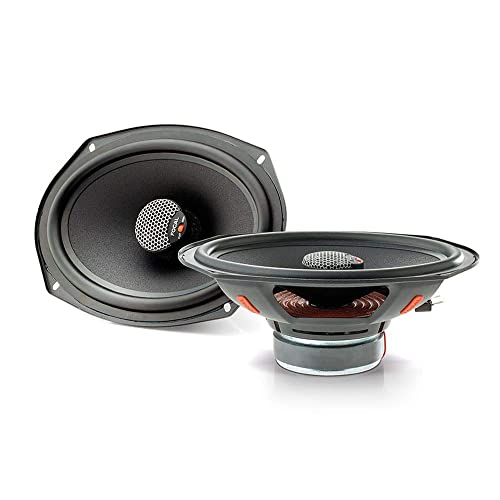
Focal ICU-690 Integration Series 6 x 9 Inch Coaxial Speakers (Pair), RMS: 80W – MAX: 160W

Focal 690AC 6” x 9” Coaxial Kit

Focal ACX690 Auditor EVO Series 6" X 9" 3-Way Coaxial Kit
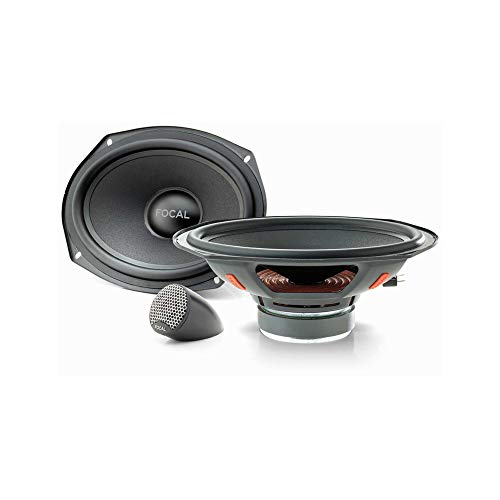
Focal ISU 690 6' x 9 Inch 2-Way Component Kit, RMS: 80W – MAX: 160W

Focal R-690C 6"x9" 160 Watts RMS 3-Way Auditor Series Coaxial Speakers
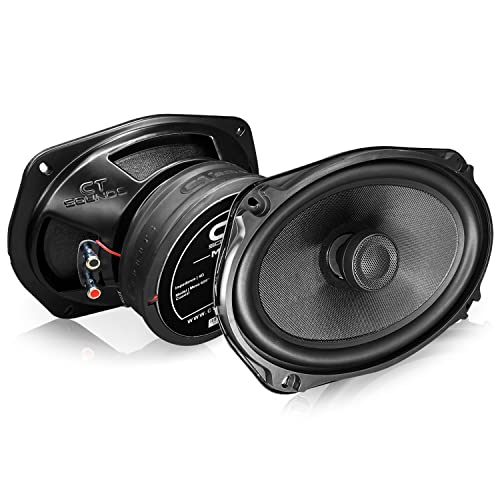
CT Sounds Meso 6×9” 400 Watt 2-Way Premium Coaxial Car Speakers, Pair
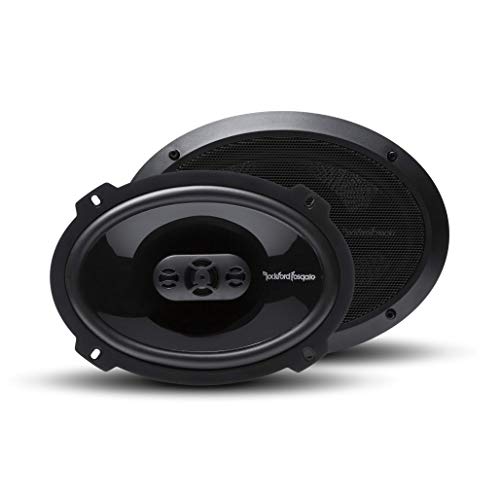
Rockford Fosgate P1694 Punch 6×9 4-Way Coaxial Full Range Speakers (Pair)

BOSS Audio Systems NX694 6 x 9 Car Speakers, 800 W Pair, 4 Way, Full Range
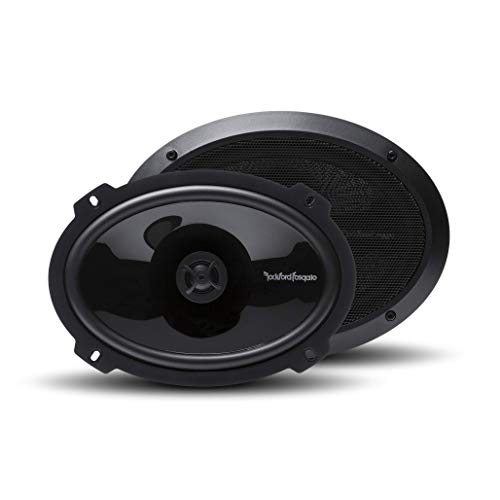
Rockford Fosgate P1692 Punch 6×9 2-Way Coaxial Full Range Speakers (Pair)
Closing perspective for the Focal 6×9 buyer
Strip away the family names and the decision reduces to three honest questions. Where will the speakers live, door or shelf, front or rear? What will power them now, and what might power them in two years? And which matters more in your listening, the placement freedom of components or the simplicity of coaxials? Focal has engineered a credible answer at each combination of those answers, from the Auditor’s efficient practicality to the Flax Evo set’s materials sophistication, without asking buyers to leave the brand or relearn a new house sound at every step. Answer the three questions in writing before visiting a dealer, bring your mounting measurements with you, and the pair you carry home will be the pair your car actually needed.
One more consideration belongs in every buyer’s notebook: model designations drift slightly between regions and model years, so a designation seen in a European catalogue may carry a suffix or a revised crossover in North American stock while sharing the same cone, motor, and essential character. Treat the family identity, Auditor, Access, or Flax Evo, as the stable anchor, then confirm the individual sheet for the exact unit on offer, paying attention to sensitivity, nominal power, mounting depth, and whether the tweeter is fixed or adjustable in that production run. Dealers who stock the brand continuously can usually state from memory which revision sits on their shelf, and that small conversation prevents the only genuinely disappointing outcome in this category, receiving a fine speaker that differs in one detail from the plan you built around it.
Finally, remember that the rear shelf or door you are upgrading was designed around a loudspeaker costing the car maker very little, installed in seconds, and voiced to survive a showroom comparison at low volume. Almost any carefully chosen Focal oval reverses every one of those compromises at once: real cone materials, a tweeter with genuine engineering behind it, crossovers designed rather than improvised, and specifications published for scrutiny. That is why this modest format, unchanged in outline for decades, continues to reward owners who approach it with measurements in hand and patience during fitting, and why a 6×9 upgrade done properly still feels, months later, less like an accessory purchase and more like correcting something the factory simply ran out of budget to finish.
A note on pairing with factory premium systems
Many newer vehicles arrive with branded factory premium audio that routes signals through a manufacturer amplifier with fixed equalisation and sometimes active noise management. Dropping a Focal 6×9 into such a system still helps, because cone and tweeter quality remain the weakest links, but expectations should account for the factory tuning that stays behind: a response curve shaped for the original drivers may emphasise or suppress bands in ways that suit the newcomers imperfectly. Where the factory amplifier applies heavy processing, a line-level interface or DSP correction downstream becomes the enabling upgrade. Owners of such vehicles should research their specific platform’s audio architecture before ordering, since the difference between a simple speaker swap and a system rethink is decided entirely by that hidden electronics package, not by anything printed on the Focal carton.
Lease vehicles add a contractual wrinkle rather than a technical one. A reversible installation using adaptor harnesses, factory mounting points, and no cut metal returns the car to stock in an afternoon, preserving both the speakers for your next vehicle and the lease’s condition terms. Keep every removed part, including the tired factory drivers, in a labelled box. That reversibility is another quiet advantage of staying with a standard size like the 6×9 instead of cutting doors for exotic formats: the upgrade travels with you, the car leaves as it arrived, and the only evidence of the improvement is your reluctance to hand back a vehicle whose stereo finally sounded right on the motorway home from the dealership.
Before the first drive with any new pair, spend ten quiet minutes in the parked car with the engine off, cycling through three recordings you know intimately: one centred on a single voice, one built around acoustic instruments recorded in a real room, and one dense modern production that pushes bass and treble simultaneously. Note where the voice sits, whether cymbals decay naturally or splash, and how the lowest notes behave at the volume you honestly use on the road. That small ritual fixes a personal reference point, so later adjustments to tweeter level, fader balance, or equalisation are measured against evidence rather than mood, and it confirms within one sitting whether the installation delivered what the specification sheets promised when you chose a Focal oval for your particular car.
Keep the packaging, crossover screws, and any unused mounting cups in one labelled bag after fitting, because a future amplifier upgrade, a change of vehicle, or a warranty conversation years from now will each be easier with the complete original kit accounted for and stored together safely indoors.
That habit of retaining small hardware sounds trivial beside cone materials and crossover slopes, yet experienced installers swear by it, because the missing bracket or odd screw is invariably the part a later job suddenly needs most urgently.


