Our Top Picks


What's inside
- What shatterproof means when a display hits concrete
- Inside a layered polymer display stack
- MIL-STD-810 and what its drop procedure actually covers
- Shatter resistance is not scratch resistance
- Handsets that genuinely use shatter-resistant display construction
- How drop survival interacts with water sealing and the frame
- Choosing the right model for your kind of risk
- Living with a polymer screen day after day
- What the next generation of unbreakable displays may bring
- How laboratories measure a fall, second by second
- Polymer families used in unbreakable fronts
- Comparing failure patterns across three display philosophies
- Warranty language: guarantees, exclusions, and fine print
- Use cases where an unbreakable front changes daily life
- Common misconceptions worth retiring
- Balancing the whole package: performance, cameras, and longevity
- Check prices on Amazon
- A short history of the unbreakable idea
As an Amazon Associate I earn from qualifying purchases. This post may contain affiliate links at no extra cost to you.
Some links on this page earn this publication a referral commission when readers buy through them, at no extra charge to the buyer; that support funds our research work and does not change which handsets get covered or how their display claims get scrutinised in the sections below.
What shatterproof means when a display hits concrete
A shatterproof display is engineered so a hard impact deforms the screen stack instead of fracturing it into radiating cracks. Conventional cover glass fails by brittle fracture: energy concentrates at a microscopic flaw, a crack front races outward at roughly a kilometre per second, and the familiar spiderweb pattern appears within milliseconds. Polymer-based stacks behave differently because their outer layers yield under load, spreading force across a wider area and absorbing energy through controlled flexing rather than sudden cleavage. The practical result is a handset that may pick up dents, scuffs, or a shallow gouge after landing on pavement, yet keeps its pixels lit and its digitiser responsive. That distinction matters for field technicians, delivery riders, warehouse staff, and parents whose phones slide off kitchen counters onto tile several times a year.
Manufacturers reserve the strongest wording for stacks that replace the outermost glass sheet entirely. Motorola built its reputation in this niche with a five-layer construction sold under the ShatterShield name, first fitted to the Droid Turbo 2 in 2015 and later carried into the Moto Z Force family. Those panels stacked an aluminium chassis foundation, a flexible AMOLED layer, a dual touch digitiser, a clear interior lens, and a replaceable exterior lens made from a proprietary plastic blend. Because the visible surface was polymer rather than silica glass, dropping the device face-down onto asphalt produced abrasion instead of fragmentation. Readers comparing this category with broader durability roundups can also browse best active rugged smartphones for handsets that prioritise sealing and impact-resistant housings alongside screen survival.
Vocabulary on retail listings deserves scepticism. Phrases such as shatter-resistant, crack-resistant, and ultra-durable glass describe a spectrum, not a single certification. Chemically strengthened aluminosilicate glass, including well-known branded variants, raises the load needed to start a crack and improves survival odds from pocket height, but a sufficiently sharp impact on a corner or a piece of gravel can still split it. True shatterproof construction, by contrast, removes brittle glass from the impact path altogether or buries it beneath a compliant polymer shield thick enough to blunt point loads. Shoppers should therefore read the layer description in the manufacturer specification sheet, not the headline adjective, before assuming a screen cannot break apart.
Inside a layered polymer display stack
Each layer in a multi-part shield performs a separate mechanical job. The outermost lens acts as a sacrificial skin: it is comparatively soft, it takes the scratches and the initial shock of contact, and on several Motorola designs it could be peeled away and replaced without opening the phone. Beneath that skin sits a transparent intermediate layer that prevents a puncture at the surface from reaching the touch sensors. The digitiser itself often uses a redundant grid, so if one trace is severed by a deep cut, a second trace continues reporting finger position. Deeper still, the emissive panel rides on a flexible plastic substrate instead of rigid glass, letting the whole assembly bow a few tenths of a millimetre under impact and then spring back.
Thickness is the unavoidable cost of that architecture. A conventional glass front might measure around half a millimetre, whereas a full polymer shield system can approach or exceed one millimetre once adhesives and air-gap management are included. Engineers compensate by thinning the midframe and by bonding layers with optically clear adhesive that doubles as a shear absorber. That adhesive matters more than marketing suggests: a compliant bond line lets adjacent layers slide microscopically against each other during a bend event, dissipating energy as friction, while a rigid bond would transmit the full stress pulse straight into the emissive film and could delaminate it.
Why flexing beats hardness at the moment of impact
Hardness and toughness are different material properties, and confusing them leads buyers astray. Hardness describes resistance to surface indentation and scratching, measured for minerals on the Mohs scale and for coatings with pencil or Vickers methods. Toughness describes how much energy a material absorbs before fracturing, integrating both strength and ductility. Diamond-hard coatings can be remarkably brittle, while a comparatively soft polycarbonate sheet can survive repeated hammer-scale blows because it stretches. Display designers therefore chase a gradient: a harder outer treatment to slow abrasion, backed by progressively tougher, more compliant layers that arrest any crack that does start. When a crack tip reaches a soft interlayer, its energy is blunted and the fracture stalls instead of branching.
Temperature shifts that balance in interesting ways. Polymers stiffen in deep cold, so a shield that shrugs off a summer pavement drop at thirty-five degrees Celsius may behave less forgivingly after a night in a vehicle at minus fifteen. Conversely, adhesives soften in heat, which can improve energy absorption while slightly reducing edge lift resistance. Reputable makers publish operating ranges, commonly spanning minus twenty to plus sixty degrees Celsius for the assembled device, and validation programmes cycle samples between extremes before drop sequences begin. A buyer working outdoors through winter in northern regions should weigh those published ranges alongside headline drop heights.
MIL-STD-810 and what its drop procedure actually covers
The United States military standard numbered 810, in its H and G revisions, contains Method 516 for shock and a transit drop procedure often cited as 26 drops from 1.22 metres, roughly four feet, onto a plywood-backed concrete surface. The sequence directs impacts onto faces, edges, and corners in a prescribed order, because corner strikes concentrate force and historically cause the highest failure rates. Passing language on a product page usually means a sample set survived that laboratory sequence without functional loss, not that every retail unit is indestructible at any height. Small print sometimes reveals a lower height, a different surface, or a reduced drop count, so the method number and revision letter are worth locating in the full compliance document.
Height alone is a poor predictor of damage. Impact energy scales with mass multiplied by height, yet peak stress depends heavily on contact geometry: a phone landing flat distributes load across its frame, while the same phone landing on a protruding camera corner focuses that energy into a few square millimetres. Surface roughness matters too, since a single embedded stone can act as a punch. Laboratory plywood over concrete produces repeatable results, which is precisely why it differs from gravel driveways, granite kerbs, and steel decking. Honest interpretation treats a military-method pass as evidence of disciplined engineering and sample-level robustness, then adds a margin for real surfaces. Shoppers cross-shopping mainstream handsets with stronger screens may also find best 6 to 7 inch smartphones useful for size and panel comparisons beyond durability claims.
Reading a drop claim like an engineer
Start by identifying the drop height, the surface, the number of samples, and whether the criterion was cosmetic survival or full function including cameras, radios, and touch accuracy. A claim of survival from 1.8 metres onto steel, a figure associated with some reinforced-glass programmes, sounds stronger than 1.22 metres onto plywood, yet steel returns more energy into the device because it barely deforms. Ask whether screens were inspected under magnification for subsurface cracks that could propagate weeks later. Finally, check whether the tested configuration included a case or a factory-fitted protector; results gathered with accessories do not transfer automatically to a bare handset carried in a back pocket.
Repeated low drops deserve as much attention as one dramatic fall. Micro-fractures accumulate in glass, and polymer lenses accumulate fatigue whitening along bend lines. A commuter phone might survive three hundred waist-height slips onto office flooring across a two-year contract while slowly degrading, then fail on an unremarkable drop because prior impacts consumed its margin. Designs with replaceable outer lenses reset part of that clock each time the skin is swapped, which is a genuine ownership advantage rarely captured in launch headlines. Fleet buyers for logistics firms often model exactly this cumulative wear when they calculate replacement budgets across hundreds of devices.
Shatter resistance is not scratch resistance
Owners of polymer-fronted phones discover the trade-off within weeks: the screen refuses to crack, yet it collects fine scratches from keys, sand, and grit far faster than hardened glass would. Quartz sand registers around seven on the Mohs scale and will score most plastics, which sit nearer three or four, while strengthened glass typically resists marking until level six under standardised picks. That is why several shatterproof models shipped with a user-replaceable outer lens and why many owners add a thin sacrificial film. The film is not there to stop breakage; it preserves optical clarity so the unbreakable layer underneath can keep doing its structural job for years.
Glass makers attack the same problem from the opposite direction. Ion exchange baths swap smaller sodium ions in the glass surface for larger potassium ions, crowding the surface into compression. A crack must first overcome that compressive stress before it can open, which raises real-world survival from desk and pocket heights substantially. Microstructure innovations add crack-deflecting crystals within a glass-ceramic matrix, forcing a fracture to zigzag and spend energy. These advances narrow the gap for everyday falls, but they do not change the underlying brittleness: once the threshold is crossed, the pane still fragments. Polymer shields cross no such cliff edge, degrading gradually through abrasion instead.
Optical clarity, brightness, and touch feel
Every extra layer between the emissive panel and the eye taxes light transmission. A well-bonded polymer stack can still pass more than ninety percent of emitted light, yet cheaper assemblies show a faint haze, reduced contrast in bright sun, and slight colour shift at oblique angles. Outdoor readability therefore depends on peak brightness headroom; panels rated above one thousand nits in high-brightness mode compensate for stack losses far better than panels peaking near six hundred. Touch feel changes as well, because a compliant surface yields microscopically under a fingertip, giving a softer glide that some users describe as less precise during fast swiping or stylus work.
Polarised sunglasses reveal another quirk. Certain polymer layers rotate polarisation unevenly, producing rainbow banding or dark patches when the phone is held in landscape orientation behind polarised lenses. Drivers and pilots who glance at navigation screens through such eyewear should check manufacturer notes or retailer return terms. Oleophobic treatment quality also varies: on glass it bonds durably, while on plastic it can wear within months, leaving a draggy, fingerprint-prone surface that needs more frequent wiping. None of these drawbacks cancels the core benefit for a phone that must survive site work, but they shape daily satisfaction long after the first dramatic drop has been forgotten.
Handsets that genuinely use shatter-resistant display construction
The clearest lineage remains the Motorola ShatterShield family. The Moto Z2 Force paired its layered plastic-fronted AMOLED with a metal unibody and modular accessory contacts, and its maker guaranteed the display against cracking for a defined warranty period, an unusually explicit promise in consumer electronics. Earlier, the Droid Turbo 2, sold internationally as the Moto X Force, introduced the same stack with a 5.4-inch Quad HD panel. These models are discontinued as new retail flagships, yet they established the engineering template and still circulate through refurbished channels; buyers considering them should verify battery health, software support status, and availability of replacement outer lenses before purchase.
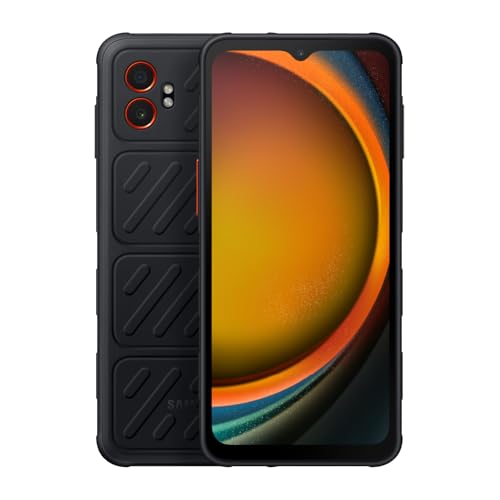
More recent rugged devices take a hybrid route. Several Caterpillar-branded and Kyocera DuraForce models combine thickened strengthened glass with raised elastomer bumpers that keep the pane from ever touching a flat surface directly, plus wet-finger and glove touch modes aimed at industrial users. Their screens can crack under extreme point loads, so purists would call them highly break-resistant rather than strictly shatterproof, but the system-level design, recessed panel, compliant frame rails, sealed ports, often delivers comparable field survival. Samsung’s Galaxy XCover series follows a similar philosophy with a recessed display, MIL-STD-810H validation, and a user-replaceable battery, prioritising serviceability for enterprise fleets across warehousing and healthcare.
Chinese rugged specialists such as Ulefone, Doogee, and Blackview advertise very large batteries, thermal cameras, and reinforced corners, usually over strengthened glass rather than full polymer shields. Their drop figures should be read carefully because test surfaces and sample counts are not always published. Meanwhile mainstream flagships from major brands now advertise proprietary glass-ceramic shields with markedly improved drop survival compared with panels from five years ago. A buyer whose priority is specifically a screen that will not spiderweb should rank construction type above brand familiarity: full polymer front first, recessed reinforced glass second, conventional flagship glass third, regardless of how dramatic the launch video looked.
Software and support questions that outlive the hardware
A phone that survives drops for four years is only useful if its software remains secure for a comparable span. Check the maker’s stated Android version upgrade count and monthly or quarterly security patch commitment in writing. Enterprise-oriented rugged lines frequently promise longer patch windows than consumer fashion models, which suits their deployment cycles. Also confirm spare-part logistics: a replaceable outer lens is valuable only if stock exists in your region at a sane shipping cost. Readers weighing value across categories can compare with best affordable smartphones to see how much of a budget durability engineering consumes relative to cameras and processors.
Display replacement economics differ sharply between constructions. A cracked conventional flagship panel often requires replacing the entire bonded display assembly, including the digitiser and sometimes the midframe, which can approach a large fraction of the device’s residual value. A polymer shield with a sacrificial skin shifts routine damage to a low-cost consumable. Even when the deeper stack is damaged, some rugged models use non-bonded or partially bonded assemblies that a technician can separate with heat and patience. Before buying, locate the maker’s repair guide or an independent teardown summary and note whether the battery is glued in, because battery service will likely be needed before the screen ever fails.
How drop survival interacts with water sealing and the frame
Ingress protection ratings such as IP68 describe resistance to dust and immersion under laboratory conditions, typically still fresh water at a stated depth for thirty minutes. A frame compliant enough to absorb drop energy must still compress its gaskets evenly to maintain that seal, which is a subtle design tension. Elastomer bumpers solve part of it by acting as both crumple zone and seal carrier. After any severe impact, however, a bent frame rail or a nicked gasket can quietly void the practical protection even if the rating printed on the box stays unchanged. Sensible owners treat a phone that has taken a major fall as splash-resistant at best until inspected, no matter how intact the screen appears.
Corner geometry decides many real outcomes. Raised corners that stand a millimetre proud of the glass, chamfered metal that deflects glancing blows, and internal shock mounts that let the display module float slightly all reduce peak acceleration transmitted to the panel. Accelerometer data from instrumented drop rigs show peak decelerations in the thousands of g on hard surfaces, lasting only a few milliseconds; even small amounts of compliant material stretch that pulse and cut its peak dramatically. This is why two phones sharing identical cover material can post very different survival records. The system, frame, adhesives, internal mounting, and mass distribution, matters as much as the headline shield brand.
Choosing the right model for your kind of risk
Risk profiles differ more than spec sheets suggest. A scaffolder faces rare but severe falls onto concrete from height, where total energy is high and a polymer front earns its compromises. A cyclist faces vibration, handlebar mounts, and occasional tumbles onto asphalt mixed with grit, where abrasion resistance and sunlight readability may matter equally. A healthcare worker faces frequent short drops onto hard flooring plus constant disinfection, so chemical resistance of the outer layer and sealed construction move up the list; some cleaning agents cloud certain plastics over time, a detail buried in enterprise datasheets. Matching the dominant hazard to the dominant protection prevents paying for the wrong kind of toughness.
Screen size interacts with survival in a simple mechanical way: larger panes flex more, span wider unsupported areas, and present bigger targets to protruding objects. Compact rugged handsets around six inches therefore hold a quiet structural advantage over sprawling 6.8-inch flagships, even before materials enter the discussion. Weight cuts both ways, since a heavier device hits harder, yet extra mass budget also funds thicker frames and bigger batteries that reduce charging-related handling. Buyers who keep phones for three or more years should also weigh grip: textured backs and lanyard points prevent drops more reliably than any shield prevents damage, and several rugged models include a wrist-strap anchor for exactly that reason.
A practical pre-purchase checklist grounded in specifications
- Confirm the outer display material by name in the official specification, polymer lens versus strengthened glass, rather than relying on retail adjectives.
- Locate the exact drop method, height, surface, and sample outcome in the compliance or support documentation published by the maker.
- Check whether a replaceable outer lens or factory protector programme exists, and whether stock is sold in your country.
- Verify the security patch end date and the number of promised operating system upgrades for the specific regional variant.
- Note peak brightness in nits, since layered stacks lose light and outdoor workers need generous headroom.
- Inspect corner clearance: raised elastomer or metal should stand proud of the display plane on all four sides.
- Confirm glove and wet-touch modes if the phone will be used on sites, in rain, or with protective handwear.
Each item on that list can be answered from manufacturer data without handling the device, which makes shortlisting honest even when shopping remotely. Where documentation is vague, treat the vagueness itself as information: makers with strong validation results tend to publish method numbers prominently, while unsupported adjectives cluster on pages that omit surfaces and heights. Carrier variants occasionally differ in memory, bands, or even housing from the unlocked version, so match the checklist against the exact model code you intend to order. Readers who need broad network compatibility alongside durability can cross-check options in best 4g and 5g unlocked phones before committing to a niche rugged import with incomplete band support.
Living with a polymer screen day after day
Daily care routines adjust subtly. Microfibre cloths remain safe, but abrasive wipes and pockets shared with coins or keys will haze a plastic lens faster than they would glass. Many owners adopt a rhythm of replacing the sacrificial lens every six to twelve months, restoring a like-new surface for a modest outlay and preserving resale value. Screen protectors cut from polyethylene terephthalate film suit these fronts better than rigid tempered glass overlays, which can trap grit at the edges and add their own crackable layer. If a tempered overlay does break, remove it promptly, because its fragments are sharp and can score the soft lens beneath during pocket carry.
Heat management also deserves a mention. Dark rugged housings absorb summer sun, polymer layers expand at different rates from the adhesives beneath them, and prolonged dashboard exposure can encourage edge bubbling on poorly bonded stacks. Quality makers test for this with thermal cycling and humidity ageing, but owners can help by avoiding closed-car charging in direct sun. Wireless charging works through plastic fronts without difficulty, though thick rugged backs sometimes slow coil alignment; check the maker’s stated wireless wattage rather than assuming flagship speeds. None of these habits is burdensome once learned, and together they keep the clarity penalty of an unbreakable front close to zero across the phone’s working life.
When reinforced glass is the smarter compromise
Not every buyer should accept plastic’s scratch behaviour. Photographers who review images critically outdoors, designers checking colour work, and anyone who resells devices frequently may value the enduring polish, optical neutrality, and premium glide of glass-ceramic shields more than absolute fracture immunity, especially now that reinforced glass survives typical pocket-height falls far more reliably than earlier generations did. Insurance or a maker-run accidental damage plan can close the remaining risk for a predictable fee. The honest framing is a spectrum of failure modes: glass fails rarely but catastrophically, polymer degrades gradually but predictably, and your tolerance for each pattern should drive the choice rather than any universal ranking.
Children change the calculus again. A family hand-me-down phone will meet pavement, playground grit, and the occasional throw, and a shattered pane is not merely cosmetic where small fingers explore sharp crack edges. For a handset destined for a young teenager, gradual abrasion is plainly the safer failure pattern, and the replaceable lens model fits allowance economics. Schools and youth organisations issuing devices reach the same conclusion in procurement documents, frequently specifying shatter-resistant fronts explicitly. In that setting the newest models are best judged by lens availability and patch longevity, not by benchmark scores that will be obsolete long before the hardware wears out.
What the next generation of unbreakable displays may bring
Materials research keeps narrowing the historic trade-off. Hard-coat chemistry based on siloxane hybrids now reaches pencil hardness levels that would have been implausible on plastic a decade ago, while retaining flex tolerance underneath. Ultra-thin glass, bendable at thirty micrometres for foldable devices, hints at hybrid futures where a microscopically thin glass skin supplies scratch performance over a polymer energy-absorbing core. Foldables already normalise plastic-fronted daily use for hundreds of thousands of owners, complete with factory films and explicit care guidance, which softens the cultural assumption that a serious phone must present a rigid glass face. Lessons from that category, adhesive science, crease management, film replacement logistics, feed directly back into slab-style shatterproof designs.
Standardisation may improve too. As drop claims proliferate, pressure grows for comparable published protocols covering surface, height, orientation sequence, and pass criteria, similar to how ingress ratings gave buyers a shared vocabulary. Until that arrives, the disciplined reader’s method in this guide, identify the material, find the method, check the consumables, verify the support window, remains the most reliable filter. The newest shatterproof smartphones are not magic; they are a deliberate reordering of priorities that trades a little surface hardness for a screen that bends, scuffs, and carries on working after the kind of fall that ends a conventional display’s life in a single glittering instant, and for the right owner that trade is not a compromise at all but the entire point of the purchase, provided the lens programme, patch promise, and brightness figures for the chosen model are confirmed in the maker’s own documentation before money changes hands.
How laboratories measure a fall, second by second
Instrumented drop rigs reveal events invisible to the naked eye. A handset released from chest height reaches the ground in roughly half a second, striking at close to five metres per second. High-speed cameras recording at ten thousand frames per second show the housing compressing, the display bowing inward by fractions of a millimetre, and stress waves rippling outward from the contact point before reflecting off the frame rails. Strain gauges bonded to prototype panels record where tension peaks, and engineers then thicken adhesive, alter corner radii, or move internal screws away from those hotspots. This iterative loop, drop, measure, redesign, drop again, explains why mature rugged lines improve quietly year after year even when their external appearance barely changes.
Orientation control separates serious rigs from marketing theatre. A proper apparatus releases the device without imparting spin, because unwanted rotation changes which corner arrives first and destroys repeatability between samples. Some laboratories tumble devices inside rotating drums lined with abrasive material to simulate many random falls, a method borrowed from older mobile phone reliability programmes where a set count of tumbles stood in for years of pocket mishaps. Drum outcomes correlate imperfectly with single-drop results, since tumbling emphasises abrasion and edge wear while guided drops emphasise peak shock. Reading which apparatus produced a published figure therefore tells an informed buyer which failure mode the maker worried about most.
The physics of corners, edges, and flat landings
Flat landings look dramatic yet often prove kindest, because the frame perimeter shares the load and the display floats behind a raised lip. Edge landings concentrate force along a narrow rail, testing adhesive shear strength and the bond between shield and chassis. Corner landings are the executioners: two rails meet, stiffness peaks, and the contact patch shrinks to a few millimetres, driving local stress through the roof. That hierarchy is why military drop sequences deliberately include corner orientations rather than letting samples land however gravity pleases. It also explains why a modest raised corner bumper, moulded from thermoplastic polyurethane with a shore hardness tuned to deform without tearing, can outperform a far more exotic panel material fitted flush into a rigid shell.
Mass distribution adds another subtlety. A heavy camera module mounted high in the body shifts the centre of gravity, biasing rotation during a fall so the top corner strikes first. Designers counter by placing dense components lower or by shaping the housing so airborne rotation settles into a flatter attitude. None of this appears on a consumer spec sheet, yet teardown photographs showing internal layout, combined with the maker’s drop orientation list, let a careful reader infer how thoughtfully a particular model was balanced. Phones that repeatedly land screen-first in independent drop footage usually reveal an unfavourable mass bias no shield chemistry can fully forgive.
Polymer families used in unbreakable fronts
Polycarbonate is the workhorse candidate, prized for impact strength roughly two hundred and fifty times that of ordinary glass by weight-normalised measures, and for optical grades that transmit light with minimal tint. Its weakness is surface softness and sensitivity to certain solvents, which is why hard coats are applied above it. Polymethyl methacrylate, familiar as acrylic, offers better inherent clarity and scratch behaviour than raw polycarbonate but shatters more readily under sharp impact, so it appears more often as an intermediate optical layer than as the primary shield. Thermoplastic polyurethane films contribute elasticity and self-adhesion, useful in sacrificial skins that must cling without bubbles and peel without residue.
Newer hybrid coatings blur those categories. Silicone-modified hard coats cure into networks that behave like glass at the surface while flexing with the substrate beneath, reaching pencil hardness grades around 3H to 5H in maker literature while surviving bend radii that would craze a conventional coating. Anti-reflective treatments can be stacked above them, though each additional interface risks delamination under repeated flexing, so premium stacks keep the layer count disciplined. When a specification sheet names its coating family and hardness method, that transparency signals engineering confidence; when it offers only adjectives, the coating is probably an ordinary commodity film.
Adhesives: the invisible layer doing heavy work
Optically clear adhesives must satisfy contradictory demands: bond tenaciously for years, remain transparent under ultraviolet exposure, cushion shock, and release cleanly during repair. Silicone-based formulations excel at temperature range and reworkability, while acrylic formulations offer higher initial tack and lower cost. Thickness is a design variable measured in tens of micrometres; doubling bond-line thickness can measurably reduce peak stress transmitted to the emissive layer, at the price of overall device thickness and slightly reduced touch sensitivity through the stack. Humidity ageing tests, often eighty-five degrees Celsius at eighty-five percent relative humidity for hundreds of hours, exist precisely because a bond that yellows or lifts after one tropical summer would betray the whole concept.
Repair technicians develop strong opinions about these choices. A stack that separates with moderate heat and plastic picks invites affordable refurbishment, extending device life and reducing electronic waste. A stack fused permanently to the frame turns minor damage into a major assembly swap. Sustainability reporting increasingly counts such design decisions, and enterprise tenders sometimes score repairability explicitly. For an individual buyer the translation is simple: before purchase, search for the model’s display replacement procedure and note whether the outer lens, the full front assembly, or the entire housing is the smallest purchasable unit.
Comparing failure patterns across three display philosophies
| Construction | Typical failure after severe fall | Routine wear pattern | Cheapest restoration route |
|---|---|---|---|
| Full polymer shield | Dents, gouges, continued touch function | Fine scratches accumulate steadily | Swap sacrificial outer lens |
| Recessed reinforced glass | Crack possible on direct stone strike | Slow scratching, strong clarity retention | Front assembly replacement |
| Conventional flagship glass | Spiderweb fracture, possible touch loss | Excellent polish for first years | Bonded display assembly replacement |
The table compresses a spectrum, and individual models wander from their row depending on frame design and bond quality, yet the pattern holds across maker literature and repair industry reporting. Polymer fronts fail gracefully and incrementally, glass fronts fail rarely and suddenly, and recessed designs buy glass extra margin by preventing contact in the most common flat and edge landings. Insurance pricing quietly mirrors these patterns: premiums and excess fees for rugged enterprise devices are often lower per incident because the expected repair is a lens or a housing part rather than a complete bonded panel. Fleet managers reading total cost projections should request incident breakdowns by damage type, since screen events usually dominate accidental damage statistics for field-issued handsets.
Touch reliability after damage deserves separate emphasis. A fractured glass digitiser may register phantom inputs from cracked traces, making the phone dial, type, or delete on its own, a failure mode worse than a dead screen because data is at risk. Polymer stacks that avoid fracture also avoid most phantom-touch behaviour, preserving controlled access to backups and two-factor codes after an accident. For a sole trader whose banking approvals live on one handset, that continuity can matter more than any camera specification. It is a strong argument for keeping an unbreakable-fronted device as the primary work phone even when a prettier glass flagship handles photography duties.
Warranty language: guarantees, exclusions, and fine print
Historically, the boldest promise in this category was a multi-year guarantee against display cracking attached to ShatterShield models, covering the internal screen while treating the replaceable outer lens as a consumable. Reading any modern equivalent demands attention to three questions. First, does the promise cover cracking only, or also touch failure and delamination? Second, must the device be registered within a window after purchase for coverage to activate? Third, which events are excluded, commonly liquid damage discovered on inspection, unauthorised repairs, or damage to other components discovered during screen service. A guarantee with narrow terms still signals confidence, but its cash value depends entirely on those answers.
Accidental damage plans sold separately follow different logic, pooling risk across many owners and pricing accordingly. Compare the plan’s excess per claim, the number of permitted claims per year, and whether fulfilment is a repair, a refurbished replacement, or a voucher, because a refurbished swap may arrive with a different storage tier or colour. For polymer-fronted phones the arithmetic often favours self-insurance: the likely incident is a scratched lens costing little, not a catastrophic panel. For reinforced glass flagships the plan can be rational. Running the numbers per model, rather than accepting a checkout upsell by default, is the financially literate approach.
Resale and refurbishment realities
Second-hand graders penalise screen condition heavily, since buyers equate a flawless front with careful ownership. A polymer-fronted phone with a freshly swapped lens can grade surprisingly well despite years of site work, because the visible surface is new and the structure beneath never fractured. Conversely a glass phone with one hairline crack drops a full grade or more, and some trade-in programmes reject cracked units outright or value them near parts price. Owners planning to resell should therefore keep spare lenses and fitting receipts. Refurbishers likewise favour models whose fronts restore cheaply, which supports steadier used prices for the shatterproof niche than its modest new sales might suggest.
Battery ageing interacts with resale too. A four-year-old rugged handset typically needs a cell replacement to be useful, and models with screwed or lightly glued back panels make that service cheap. When screen survival, battery serviceability, and patch longevity align, total service life stretches toward five or six years, an outcome both wallets and waste statistics appreciate. That longevity argument may be the strongest modern case for the category: not surviving one cinematic fall, but remaining economically repairable through many ordinary ones.
Use cases where an unbreakable front changes daily life
Consider a motorcycle courier working twelve-hour shifts in a dense city. The phone lives on a vibrating handlebar mount, comes off that mount forty times a day for signatures and photographs, and works in rain with gloved hands. In that routine the statistically certain event is not one heroic fall but hundreds of small fumbles onto kerbs and loading bays. A polymer front converts those fumbles from potential shift-ending disasters into non-events, while glove touch modes and a bright panel handle the environmental side. The courier’s employer, issuing fifty such devices, sees the benefit compounded: fewer spares held in a drawer, fewer hours lost mid-route, fewer disputes about negligence when a screen does mark up.
Field science presents a different profile. Geologists, ecologists, and surveyors carry phones as data loggers far from repair infrastructure, often with sample bags, hammers, and instruments sharing the same hands. A fractured screen mid-expedition can mean losing a season’s geotagged observations if the device becomes unusable before syncing. Satellite messengers and offline backup routines mitigate that risk, yet the simplest mitigation remains hardware that keeps functioning after being dropped on rock. Weight limits on such trips also favour one durable device over a fragile phone plus a heavy protective case plus a backup unit, a consolidation that shaves real grams from a pack list.
Construction sites, warehouses, and manufacturing floors
Industrial environments add airborne hazards: metal swarf, concrete dust, and dropped tools. A steel tape measure falling from a scaffold strikes with a small contact patch and high local pressure, precisely the insult polymer stacks absorb by denting. Dust complicates charging and speaker function, so sealed ports or port covers pair naturally with shatter-resistant fronts in devices aimed at these trades. Push-to-talk accessories, barcode scanning via the camera, and compatibility with enterprise mobility management platforms often decide procurement alongside durability, which is why the rugged segment sells through specialised resellers rather than fashion retail. Buyers in these sectors should confirm accessory ecosystems, cradles, vehicle mounts, multi-bay chargers, before falling in love with any single model’s screen story.
Warehouse picking adds relentless repetition: a device raised to scan a high shelf label, lowered to a trolley, raised again thousands of times per shift. Grip texture, balance, and a lanyard anchor prevent more damage here than any material, while the unbreakable front forgives the lapses that inevitably occur at hour nine of a night shift. Some operations fit hand straps or pistol-grip sleds, which change drop dynamics again by adding mass at the rear. Evaluating a phone inside its intended accessory, rather than naked on a desk, gives the truest picture of field survival, and pilot deployments of twenty units for a month reveal more than any laboratory certificate.
Common misconceptions worth retiring
One persistent myth claims that a shatterproof screen makes the whole phone indestructible. In reality the display may survive while a camera lens cracks, a frame bends enough to break the water seal, or an internal connector loosens and causes intermittent reboots days later. Another myth equates any phone sold with a military standard mention to a polymer-fronted device, when most such models use strengthened glass and honest but limited protection. A third myth holds that plastic screens feel cheap in a way that ruins ownership; modern hard coats and high-refresh AMOLED panels beneath them have narrowed that gap to a difference most users stop noticing within a week, especially once a sacrificial film is fitted.
A fourth misconception concerns brightness marketing. Peak figures quoted for tiny screen areas during HDR playback do not describe sustained full-screen brightness under summer sun, which is the number outdoor workers actually live by. Sustained output depends on thermal design, and thick rugged housings can either help, by spreading heat across more mass, or hinder, by insulating the panel. Independent measurements of sustained nits after ten minutes are more informative than launch headlines. Finally, buyers sometimes assume an unbreakable front removes any need for care, then discover abrasion the hard way; the correct mental model is a screen that forgives impacts generously while asking modest diligence about grit and pockets.
Questions to ask a seller before ordering an import model
Grey-market rugged phones can look tempting, but diligence pays. Ask which LTE and 5G bands the specific variant supports and compare them with your carrier’s published deployment, because missing low-band coverage ruins rural reception regardless of screen toughness. Ask whether the maker’s lens and battery parts are stocked domestically, and whether warranty claims require international shipping at your expense. Confirm the language and update channel of the installed firmware build, since some regional builds receive patches months later. A seller who answers those questions precisely is likelier to support you after the sale than one who repeats drop-height slogans.
Also ask about sensor honesty. A minority of ultra-cheap rugged devices have historically overstated camera resolution through interpolation or fitted low-grade panels with poor colour calibration. The shatterproof brief does not excuse a dim, washed-out display, because the owner still reads maps and reviews photographs on it daily. Demand the panel’s stated brightness, resolution, and refresh figures in writing, and treat evasive answers as a reason to walk away. The reputable end of this market, enterprise lines and established rugged brands, publishes full datasheets precisely because its buyers are professionals who verify.
Balancing the whole package: performance, cameras, and longevity
It would be a mistake to buy any phone on screen construction alone. Mid-range processors in many rugged models handle messaging, navigation, and photography comfortably but age faster under demanding games or heavy multitasking. Camera systems in this niche historically trail mainstream flagships in low-light processing and video stabilisation, though the gap narrows each generation as computational photography spreads downward. Storage speed, charging wattage, and biometric reliability all shape daily satisfaction. The rational purchase weighs the probability-weighted cost of screen failure against those everyday qualities: a careful office worker may rationally choose glass and speed, while a roofer rationally chooses polymer and patience.
Longevity arithmetic can flip that intuition for keepers rather than upgraders. A slightly slower phone retained for five years, its lens swapped twice and its battery once, often delivers better value per month than a faster fragile phone replaced at year two after one bad fall. Environmental accounting points the same direction, since manufacturing dominates a handset’s lifetime carbon footprint and every extra year of service dilutes that initial cost. Viewed through that lens, the newest shatterproof smartphones are less a novelty for the clumsy than a considered instrument for owners who measure value across half a decade of drops, scuffs, repairs, and reliable mornings where the screen lights up unbroken once again, ready for work.
Check prices on Amazon
Live listings for the shortlist in this guide are pulled from Amazon below, so prices and availability are always current at the moment you look.


A short history of the unbreakable idea
The concept predates modern rugged branding. Early industrial handheld computers for logistics used thick plastic display windows precisely because warehouse floors destroyed glass, accepting low resolution and resistive touch as fair exchange for survival. Consumer smartphones inherited the idea once flexible AMOLED production matured enough to bend without creasing and once hard-coat chemistry made plastic fronts presentable in a flagship showroom. The 2015 ShatterShield launch mattered because it proved a mainstream maker could sell an unbreakable screen on a slim consumer handset, complete with a public guarantee, rather than confining the technology to brick-like terminals with monochrome ancestors.
Subsequent years refined rather than revolutionised the formula. Outer lenses grew harder, adhesives grew thinner, and panels grew brighter, compensating for stack losses that early adopters criticised. Enterprise rugged lines quietly converged on similar priorities from the opposite direction, adding recessed panels and elastomer armour to glass until field outcomes approached polymer territory for common accidents. Foldable devices then normalised plastic display surfaces for a mass audience, complete with factory-applied films and explicit fingernail warnings, which educated millions of owners in the care habits this category had always required. That cultural shift may ultimately matter as much as any single material breakthrough.
What to do in the first week of ownership
Fit the sacrificial film or spare lens on day one, while the factory surface is pristine, because trapped grit under a later application becomes a permanent abrasive sandwich. Register any display guarantee within its stated window and store the proof somewhere other than the phone itself. Photograph the device from all sides as a condition record for insurance or employer asset registers. Set up automatic cloud backup and confirm a restore works, since even an unbreakable screen cannot protect data from loss or theft. Finally, learn the maker’s parts ordering route before you need it, and consider ordering one spare lens immediately while stock is certain, storing it flat in its packaging away from heat.
Those small rituals convert a marketing promise into an ownership system. The screen technology supplies the raw survival margin, the consumables programme preserves clarity, the patch policy preserves security, and the owner’s habits preserve everything else. Judged as a system rather than a slogan, the current generation of shatterproof handsets is mature, well understood, and unusually honest about its trade-offs, which makes a final recommendation refreshingly simple: choose the model whose documentation answers every question in this guide without evasion, and its display will very likely outlast every other component you rely on daily.
One last practical note concerns pockets and workwear. Grit trapped in a pocket seam acts like sandpaper across hundreds of small movements each day, and polymer fronts record that history faster than glass, so shaking out pockets and using a dedicated phone pouch on dusty sites preserves clarity disproportionately well. Belt holsters with a soft lining offer another route, keeping the display facing inward against fabric rather than outward against buckles and tools. Riders should also check mount compatibility, because clamp arms designed for thin glass flagships may grip a thicker rugged housing less securely. Small environmental decisions like these, repeated daily, determine whether an unbreakable screen still looks respectable at year three or merely survives in a scarred but functional state, and they cost nothing beyond a moment of attention during the first weeks of ownership when new habits form most easily.
Keep the original box and lens applicator if your model uses one, because alignment tools designed for a specific housing make replacement noticeably cleaner than freehand fitting at a kitchen table, and retaining packaging also simplifies any later warranty conversation about what was supplied from the factory on day one of ownership.