Our Top Picks
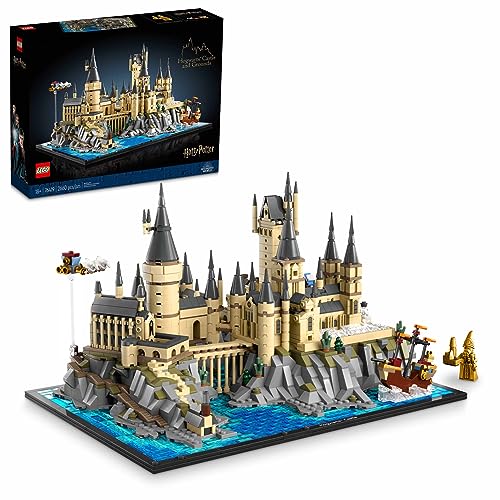 LEGO Harry Potter Hogwarts Castle and Grounds 76419Medium18.9 x 14.9 x 4.4 inches4.95 poundsCheck on Amazon


What's inside
- Why the thousand-piece threshold changes the whole build
- Reading piece count honestly: size, density and repetition
- Build time: planning sessions instead of guessing hours
- SNOT, studs and the techniques that define advanced sets
- Icons: display-first building for adults
- Technic: when the mechanism is the point
- Architecture: small parts, skylines and patience
- Ideas: fan designs with unusual fingerprints
- Display size: measuring the shelf before the box arrives
- Loose pieces, spare parts and the value of what is left over
- Choosing by builder, not by box: matching sets to people
- Instructions, digital tools and error recovery
- Modular buildings and connected displays
- Licensed worlds, accuracy and minifigures
- Budgeting without fixating on price per piece
- Missing pieces, replacements and keeping a build moving
- Caring for a finished model year after year
- A practical shortlist method before you commit
- Colour, light and the small elements that decide realism
- Check prices on Amazon
- When a large set is the wrong purchase
As an Amazon Associate I earn from qualifying purchases. This post may contain affiliate links at no extra cost to you.
Some links in this guide may earn us a commission when you buy through them, at no extra cost to you, which helps keep our buying guides free to read.
Why the thousand-piece threshold changes the whole build
Crossing one thousand pieces does not simply make a set longer. It changes the kind of attention the build demands, the way instructions are organised into numbered bags, and the point at which a half-finished model stops being a casual evening project and becomes furniture in its own right. Below that threshold, most models can be finished in one sitting, sorted on a tray, and carried to a shelf in one hand. Above it, builders start planning sessions, clearing a table that can stay undisturbed for days, and thinking about where the finished object will actually live before the first bag is opened.
That shift matters most for the audience these sets are aimed at. Adults and older teenagers usually buy large sets for the process as much as the result: repetitive but satisfying subassemblies, clever geometry hidden inside a facade, and a display piece that rewards a second look. Younger builders moving up from smaller sets face a different challenge, because stamina and sorting discipline matter more than manual dexterity. A patient twelve-year-old who organises parts carefully will often outbuild an adult who tips three bags into one pile and hunts for every element.
Piece count also interacts with theme in ways the box rarely explains. A thousand pieces in a Technic model might mean a gearbox, linked steering, and a few hundred pins and beams, while a thousand pieces in an Architecture skyline means hundreds of tiny tiles and plates layered into texture. The counts look identical on a shelf label, yet the evenings feel completely different. One build asks you to debug mechanical movement, the other asks you to sustain visual precision across dozens of near-identical layers.
For that reason this guide treats the number on the box as a starting filter, not a ranking. Real difficulty comes from part size, colour separation, technique density, symmetry, and how forgiving the structure is when a mistake is buried twenty steps earlier. A set with many large, distinct elements can feel relaxing at fifteen hundred pieces, while a compact model built from small parts in a single colour can feel demanding well before it reaches the same total.
Reading piece count honestly: size, density and repetition
The most useful question to ask about any large set is what the pieces actually are. Inventory pages at the back of instruction books, and the part lists published by the manufacturer, reveal the distribution quickly. If the inventory is dominated by one-by-one plates, tiles, and round studs, expect slow, detailed surface work. If it is dominated by bricks, slopes, and larger panels, the model will grow visibly with every session and the piece count will fall faster than expected.
Density is the second hidden variable. A sprawling modular building spreads its pieces across a wide footprint, so each wall and floor section feels like a fresh start. A dense sculpture or vehicle packs a similar count into a tight volume, which means more steps per handful of space, more internal structure you will never see again, and more consequences when an internal piece sits one stud off. Builders who enjoy engineering tend to love that density. Builders who want visible progress after forty minutes usually prefer the sprawling kind.
Repetition cuts both ways. Building four identical chair legs, eight identical facade windows, or two mirrored wings can be meditative once the pattern is learned, because hands speed up and the mind relaxes. It can also be where errors breed, since the fourth copy rarely gets the same scrutiny as the first. Experienced builders often batch-check repeated modules against each other before attaching them, lining up mirrored sections to confirm that left and right really are mirror images rather than two lefts.
Stickers and printed elements change the count equation too. A set that reaches its detail through printed tiles tends to build smoothly, because the decoration arrives already applied to the part. A set that relies on a large sticker sheet adds a separate, fiddly discipline: aligning thin decals on small tiles, keeping dust off adhesive, and accepting that a crooked sticker is far more visible than a slightly rotated tile. Shoppers comparing two similar sets should always check whether surface detail is printed or stickered, because that single fact predicts a surprising amount of frustration or pleasure.
Build time: planning sessions instead of guessing hours
Manufacturers do not print build times on boxes, and any single estimate would mislead anyway, because pace varies with sorting habits, interruptions, and familiarity with techniques. A more honest approach is to plan in sessions. Most adults build somewhere between one hundred fifty and three hundred pieces per hour on a first pass through unfamiliar instructions, faster on repetitive sections and slower on mechanical assemblies that need checking as they grow. At that pace, a set just over the thousand mark fills two or three relaxed evenings, while sets several times larger become a week or more of regular sessions.
Teenagers often build in bursts rather than steady sessions, which makes bag boundaries the natural unit of planning. Numbered bags are designed so that each group completes a recognisable stage: a floor of a building, a section of hull, a gearbox and chassis. Stopping at a bag boundary leaves the model stable and the table easy to restart, whereas stopping mid-bag leaves loose sorted piles that invite loss. Teaching a younger builder to finish the bag rather than watch the clock is one of the simplest ways to keep a long build enjoyable.
Sorting strategy has an outsized effect on total time. Tipping each bag into its own shallow tray, keeping a separate small dish for the tiniest elements, and returning unused pieces to the tray instead of the table can cut hunting time dramatically. Some builders sort by colour, others by part type, and part-type sorting generally wins on large sets because a grey two-by-four plate hides easily among grey bricks of every size, while a pile of plates narrows the search instantly. The readers who enjoy other kit hobbies will recognise the same logic that makes organised parts trays valuable in best 3d printers kits, where a build also rewards patience and sequence.
Fatigue errors are the hidden cost of marathon sessions. After a couple of hours, most people start misreading similar colours under warm evening light, skipping a plate in a long run, or pressing pieces together without fully seating them. Those small lapses compound in large builds because later layers depend on earlier accuracy. Shorter sessions with daylight checks, plus a habit of photographing each completed stage, catch problems while they are still cheap to fix.
SNOT, studs and the techniques that define advanced sets
Traditional brick building stacks elements studs-up, layer on layer, and that simple grammar covers most childhood sets. Advanced large sets lean heavily on SNOT, the community shorthand for studs not on top, where brackets, headlight bricks, and sideways plates turn studs to face outward or downward. SNOT is how a spaceship hull becomes smooth, how a building facade gains recessed windows, and how a sculpture achieves a curve that vertical stacking could never produce. It is also the technique most likely to confuse a first-time large-set builder, because instructions suddenly require rotating the model and thinking in three axes at once.
Understanding a few core SNOT elements unlocks most advanced instructions. Brackets shift a connection by half a plate height and present studs on a vertical face. Modified bricks with studs on the side let walls carry decoration without visible seams. Hinges and ball joints appear wherever a surface must angle rather than turn a clean corner, from sloped roofs to articulated limbs. When a step looks impossible, the answer is usually that one of these connector pieces is oriented differently than expected, so rotating the subassembly in your hands and comparing silhouettes beats pressing harder.
Technic elements form the other major technique family. Pins, liftarms, axles, and gears build frames that move, and in mixed sets they often form an invisible skeleton inside a studded exterior. The discipline Technic demands is different: friction pins and free pins look similar but behave oppositely, axle lengths are counted in stud units that must be checked against a printed scale, and a gear meshed one tooth off can make a whole mechanism feel wrong. Builders who enjoy diagnosing those systems often graduate toward purely mechanical kits, a neighbouring hobby explored in our guide to best affordable 3d printers for readers who like making functional objects at a desk.
Advanced sets also use offsetting, where jumper plates shift an element by half a stud so that details sit centred instead of aligned to the grid. Half-stud offsets explain why a doorway can sit in the middle of an even-width wall or why lettering on a facade lines up cleanly. Recognising an offset early matters, because building an entire section on the wrong grid position is one of the most common large-set mistakes, and correcting it means unbuilding back to the jumper plate where the shift began.
Icons: display-first building for adults
The Icons line, aimed squarely at adult builders, treats the finished model as decor first and toy second. Botanical subjects, classic vehicles, retro technology, and landmarks dominate the range, and the building techniques serve the silhouette: curved slopes for fenders, layered plates for foliage, and clever part substitutions where a familiar element becomes something else entirely, such as a frog used as a flower or a life preserver used as ornamentation. Those part-use jokes are a signature pleasure of the line, and they only appear in sets large enough to have spare design room.
Botanical sets deserve special mention because they behave differently from every other large theme. Stems and leaves repeat in clusters, individual flowers can be built as standalone mini-projects, and the finished arrangement can be split across vases or combined with earlier releases. That modularity makes botanicals unusually forgiving for beginners at this scale: a mistake affects one stem, not the structural core, and sessions can be as short as a single flower. They also solve the display problem elegantly, since a bouquet occupies vertical space on a shelf that would otherwise hold a vase anyway.
Vehicle sets in the line reward a different temperament. Long hoods, cabin interiors hidden under removable roofs, and working steering or opening doors concentrate the difficulty in the middle bags, where chassis, interior, and body must converge in the right order. Builders who rush the chassis often discover at the body stage that a seat or dashboard sits a stud too far back. The pleasure here is automotive rather than architectural: proportions, stance, and small details like printed gauges or brick-built mirrors.
Icons sets also tend to include a small printed plaque or a minifigure-scale vignette that anchors the display story. Those finishing touches matter more than their piece share suggests, because they signal to a viewer what the model is and invite closer inspection. When comparing two Icons candidates, look at photographs of the finished model from normal viewing distance rather than close-ups. A set that reads clearly from across a room will satisfy longer on a shelf than one whose detail only appears under a magnifier.
Technic: when the mechanism is the point
Large Technic sets invert the usual priorities. Appearance matters, but the real subject is movement: gearboxes that shift, differentials that distribute rotation, suspension arms that travel, and pneumatics or motors in the largest models. Piece counts here lean heavily on pins and beams, so a two-thousand-piece Technic build may contain fewer traditional bricks than a five-hundred-piece town set. First-time Technic builders should recalibrate expectations accordingly, because progress is measured in functioning subassemblies rather than visible height.
The golden rule of Technic building is to check movement at every stage the instructions allow. A chassis that rolls freely before the body goes on, a gearbox that shifts cleanly before it is enclosed, and a crane that turns before its cab is fitted are all checkpoints the designers built in deliberately. Skipping them turns a thirty-second check into an hour of excavation later. If a mechanism feels stiff, the cause is usually a pin fully driven where a free-spinning connection was intended, or an axle pushed one unit too far through a beam so that it binds against the next layer.
Technic also teaches a vocabulary of mechanical ideas better than almost any other consumer product. Gear ratios become intuitive when a slow, torquey crawler and a fast, light racer use the same motor differently. Linkage geometry stops being abstract when steering arms visibly toe in and out. For teenagers with engineering curiosity, a large Technic set can be a genuine educational instrument rather than a model of one, which is why schools and clubs often pair this kind of building with the hands-on projects discussed in best 3d printers k 12 education.
Shoppers should note that Technic difficulty scales less with count than with drivetrain complexity. A large crane with one motor and straightforward rigging can be gentler than a smaller supercar with a sequential gearbox, paddle shifting, and four-wheel drive. Reading a description of the functions, rather than the piece total, tells you what evenings will actually feel like. If the function list mentions gearboxes with multiple speeds, expect concentrated, unforgiving sections and plan unhurried sessions for them.
Architecture: small parts, skylines and patience
Architecture sets compress famous skylines and landmarks into restrained, mostly monochrome models, and they reach four figures of pieces through accumulation rather than size. Hundreds of small tiles, grilles, and one-wide plates create texture at a scale where a single misplaced element changes a roofline. The finished models are compact relative to their counts, which makes them attractive for desks and bookshelves, but the building itself is among the most exacting in the catalogue precisely because everything is small.
Colour discipline is the central Architecture skill. Skylines built largely in white, tan, and light grey punish builders who work under yellowish lamps, because similar shades swap places unnoticed until a whole tower leans visually. Building these sets in daylight, or under a neutral desk lamp, and keeping each shade in its own tray compartment prevents most errors. The baseplates, usually black with printed tiles naming the location, also show dust and fingerprints more than any other theme, so handling the base by its edges keeps the finished piece looking sharp.
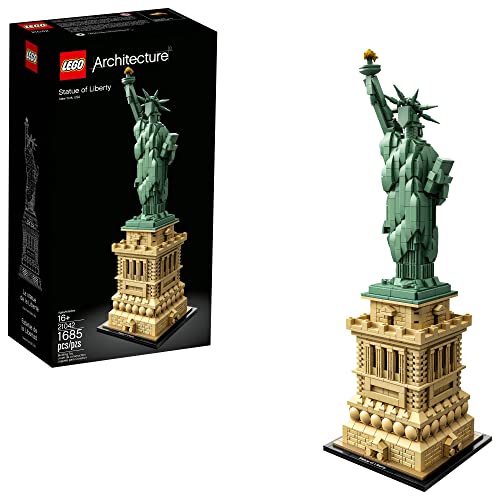
The reward for that precision is a model with unusual density of recognition. A skyline compresses a city trip or a hometown into a strip less than a forearm long, and individual landmarks remain identifiable despite being only a few studs wide. Collectors often display several skylines in a row, which creates a satisfying rhythm of towers and domes. Because the footprint is modest, Architecture is frequently the first large theme that apartment dwellers choose, and the one they can keep collecting longest before space runs out.
Landmark sets in the line, as opposed to skylines, behave more like sculptures. A single building at larger scale allows interior courtyards, layered roofs, and SNOT-heavy facades, and the piece count climbs through detail rather than repetition across towers. Builders choosing between a skyline and a landmark at similar counts should decide whether they prefer breadth, many small recognisable silhouettes, or depth, one subject explored thoroughly. Neither is harder in absolute terms, but the landmark concentrates its hardest techniques in its facade work.
Ideas: fan designs with unusual fingerprints
The Ideas line begins as fan submissions that gather public support before designers refine them for production, and that origin gives the sets a character no in-house theme quite matches. Subjects range from working typewriters and grand pianos to medieval blacksmith shops and television sets, often chosen because a fan loved something the regular catalogue would never have proposed. Large Ideas sets therefore tend to contain one or two signature mechanisms or scenes that justify the whole model, surrounded by lovingly specific details aimed at fellow enthusiasts.
That fan origin also means building styles vary more within Ideas than within other themes. One set may be a straightforward studs-up build with charming accessories, while the next uses sideways building for a playable keyboard or a rotating globe with offset continents. Shoppers cannot assume that enjoying one Ideas set predicts enjoying another at the same count. Reading a description of the techniques and functions, and looking at the inventory character, matters more here than anywhere else in the range.
Ideas sets often carry strong display narratives: a scene, a story moment, or a working gimmick that visitors can operate. A piano whose keys move, a tree house with seasonal leaf swaps, or a ship in a bottle each gives the owner something to demonstrate, which keeps a display piece socially alive long after the build ends. If a set will live in a shared room rather than a private study, that demonstrability is worth weighing alongside size and difficulty, because a model guests can interact with earns its shelf space repeatedly.
Availability patterns differ for Ideas as well. Fan-designed sets are produced in defined runs and retire on schedules that can be shorter than evergreen themes, and popular subjects sometimes return in reimagined forms rather than straight reissues. None of that should pressure a purchase, but it does mean that a builder who has shortlisted a specific Ideas subject should treat it as less permanently available than a standard vehicle or building, and prioritise accordingly when choosing between two favourites.
Display size: measuring the shelf before the box arrives
Every large set eventually asks a physical question that piece count cannot answer: where will it stand? Finished dimensions are printed on packaging and product pages, and they deserve literal measurement against the intended shelf, including height clearance under the shelf above. Long vehicles and wide buildings routinely surprise buyers, because a model that looked modest in photographs turns out to occupy the full depth of a bookcase, leaving no room for the plaque or minifigures that complete the scene.
Depth is the dimension most often misjudged. Shelves that happily hold paperbacks may be shallower than a modular building or a starship, forcing the model to overhang or sit diagonally. Wall-mounted display shelves and deep cube storage solve this for many collectors, and measuring with a tape before ordering is far cheaper than rearranging a room afterwards. Builders who display several large models together should also leave breathing room between them; crowded shelves hide the silhouettes that make each set worth showing.
Lighting transforms large displays more than any accessory. A model lit only from ceiling height throws its own details into shadow, especially dark-coloured Technic frames and Architecture bases. A small lamp angled from the front, or a shelf placed near a window with indirect daylight, reveals texture that the builder spent hours creating. Collectors who already run multi-screen desk setups will appreciate the parallel with arranging a workspace, a topic covered in best 24 inch monitors triple display, where viewing angles and spacing decide whether an impressive setup actually looks good day to day.
Dust is the long-term enemy of open display, and large sets with studded surfaces collect it in every recess. Cases and glass-fronted cabinets reduce cleaning to wiping a smooth surface, while open shelves require periodic work with a soft brush or compressed air used gently from a distance. Botanical sets and dark bases show dust fastest. Buyers deciding between two sets may reasonably favour the one whose surfaces are smoother or whose display spot is enclosed, because a model that looks clean gets admired, and one that looks neglected gets ignored.
Loose pieces, spare parts and the value of what is left over
Every set includes a small number of spare elements, usually the tiniest pieces, included deliberately in case one rolls away during the build. On a large set that spares bag can look surprisingly generous, and new builders sometimes worry they missed steps when pieces remain. A reliable check is size: spares are almost always small, single-stud or accessory-scale elements. A leftover brick, beam, or panel of any size almost certainly belongs somewhere, and the stage photographs in the instructions will usually reveal where.
Beyond the spares, large sets carry a quiet secondary value in their parts inventory. A thousand-plus elements in coordinated colours can seed a personal collection for original creations, and certain pieces, such as rare printed tiles, unusual colours, or specialised Technic components, are sought after by builders who design their own models. This does not make any set an investment in a financial sense, and shoppers should buy to build rather than to speculate. It does mean that a set whose colours and elements suit your own projects gives value twice: once as a guided build, and again as raw material.
Part quality details worth checking include clutch consistency and colour matching across bags. In a well-made large set, bricks of the same colour from different bags should be indistinguishable, and connections should feel uniformly snug without being painful to separate. Builders who plan to disassemble and rebuild, a common pattern in households where a set rotates between siblings, should value that consistency highly, because elements that loosen after two builds undermine every later reconstruction.
Storage of loose elements between builds deserves a plan before disassembly, not after. Photographing the model from several angles, keeping the instruction book or its digital version, and bagging elements by section rather than in one mixed container makes a rebuild genuinely feasible. A large set reduced to an anonymous bin of mixed pieces is, in practice, a set that will never be rebuilt, however good the intentions. Labelled bags and a note about any missing elements turn storage into an asset instead of a guilt pile.
Choosing by builder, not by box: matching sets to people
For adults buying their first large set
A first large set should finish. That obvious goal argues for the lower end of the range, a subject the builder already loves, and techniques that introduce SNOT gradually rather than all at once. Botanical subjects, mid-size vehicles, and scene-based Ideas sets all fit that description, because each delivers a complete, displayable result without a gearbox or a monochrome facade marathon. Success with a first set builds the sorting habits and patience that make a second, larger set pleasurable instead of daunting.
First-time buyers should also be honest about their tolerance for repetition. Some people find building sixteen identical wall panels deeply relaxing, a moving meditation with visible progress. Others lose motivation by the fourth panel and abandon the model for months. Neither reaction is a flaw, but it should steer the choice: repetitive architecture for the meditators, varied scene-building for the novelty seekers. Product descriptions that mention modular sections or varied rooms usually signal variety, while symmetrical structures promise repetition by design.
For teenagers stepping up
Teenagers moving from three-figure piece counts benefit from sets that add one new demand at a time. A Technic model with a single gearbox teaches mechanical checking without overwhelming, while a modular building teaches endurance and section-by-section planning. What tends to fail is the leap to the largest available set as a birthday statement, where difficulty, duration, and display size all spike together and the half-built model becomes a monument to good intentions on a bedroom floor.
Shared building is an underused option for this age group. Two builders alternating bags, or one sorting and checking while the other assembles, turns a long set into a social project and halves the calendar time. Many large sets include enough parallel subassemblies, furniture, accessories, side builds, that two people can work simultaneously without waiting on each other. Households considering a large set as a family gift should look for that parallel structure in descriptions and reviews of the build flow.
For experienced builders seeking a challenge
Veterans who have mastered standard techniques should look for specific challenges rather than raw count: offset-heavy facades, gearboxes with several speeds, sculptures with continuous curves, or models with extensive interior detail hidden inside closed exteriors. Challenge also hides in colour, since a large build in a single dark shade taxes eyesight and sorting far beyond its count. A builder who found a colourful two-thousand-piece set easy may find a monochrome set of half that size genuinely demanding.
Experienced builders also extract more from a set by modifying as they go: lighting an interior, adjusting a colour scheme with elements from their own collection, or rebuilding a section with an alternative technique. Sets with accessible interiors and standard connection points invite that customisation, while tightly engineered display sculptures resist it. Knowing whether you build to follow or build to tinker should influence the shortlist as much as theme does.
Instructions, digital tools and error recovery
Large sets ship with substantial printed instruction books, sometimes split into volumes, and those books are part of the product’s quality. Clear step diagrams add only a few new elements per step, highlight new pieces against faded previous layers, and call out orientation with arrows where a part could plausibly face two ways. When a build feels confusing, the fault is often a diagram that added too much at once, and slowing down to identify each new element by shape, rather than scanning the whole picture, restores the thread quickly.
The manufacturer’s digital instructions app adds tools print cannot offer: zooming into crowded steps, rotating a model view, and tracking progress across devices. For sets above a thousand pieces, zoom alone justifies keeping a tablet nearby, because dense Technic steps and monochrome Architecture layers can be genuinely hard to read at book scale. Digital versions also survive household accidents; a book soaked by a spilled drink ends a build, while a downloaded copy does not. Builders should download the file at the start rather than in a moment of crisis.
Error recovery is a skill large sets teach whether you want the lesson or not. The governing principle is to unbuild in reverse, one layer at a time, keeping removed elements in order on a tray, until the suspect step is exposed. Random disassembly destroys the evidence and usually creates a second error. Most mistakes turn out to be one of three kinds: a piece placed one stud off, a mirrored part built as its twin, or a similar-looking element swapped, such as a plate used where a tile belonged. Naming those three patterns turns panic into a checklist.
Piece separators, the small wedge tools included with many sets, deserve more respect than they get. They lever apart plates without bending them, remove tiles without fingernail damage, and pull Technic pins that fingers cannot grip. On a long build, using the separator routinely prevents the sore fingertips that quietly shorten sessions. Keeping one at each side of the workspace, because they wander, is a small habit with an outsized effect on comfort during the final bags.
Modular buildings and connected displays
Modular buildings occupy a special place above the thousand-piece line because they are designed to connect. Standardised baseplates, pavement edges, and connector pins let separate sets form a street, and each addition changes the display of every earlier purchase. A single modular is a satisfying build with a detailed interior, removable floors, and a story told room by room. Three modulars in a row become a neighbourhood, and that compounding display value explains why this theme converts so many casual builders into collectors.
Interior detail is where modulars spend much of their piece budget, and it creates a distinctive building rhythm. Furniture, tiny appliances, printed artwork, and minifigure accessories arrive in small, varied sub-builds between long stretches of wall construction. That alternation keeps motivation high across a long project, because every session contains at least one charming miniature. Buyers who know they fade during repetitive structural work often thrive with modulars precisely because the theme keeps changing the subject.
The commitment cuts the other way for display space. A street grows in one direction only, and each new building demands another standard width of shelf, plus the depth for pavement and rear detail nobody sees. Collectors should measure for the street they plausibly want in three years, not the single building they want this month. Corner buildings, which turn a street ninety degrees, solve some room layouts and complicate others, so sketching the intended arrangement on paper before expanding prevents expensive geometry surprises.
Retirement cycles matter here too, because modulars are released roughly annually and older entries leave production while the street concept continues. A collector who wants a coherent row should know that waiting indefinitely can mean hunting earlier buildings through secondary channels at less predictable condition. Starting with whichever current modular appeals most, rather than hunting the oldest first, keeps the hobby grounded in building rather than chasing.
Licensed worlds, accuracy and minifigures
Large licensed sets, drawn from films, games, and other fictional worlds, add an accuracy test that original themes escape. Builders arrive with memories of a starship’s silhouette or a castle’s towers, and the model succeeds when it matches that mental image at shelf distance. Designers working at this scale can include greebling, the dense surface detail that makes a fictional hull look engineered, and interior compartments that recreate specific scenes. The piece count in these sets often goes toward that surface richness rather than structural size.
Minifigures carry unusual weight in licensed sets. Exclusive figures included only in a flagship model can be a major reason fans choose that set, and figure detail, printed torsos, dual-moulded legs, and accessories have become a collecting field of their own. Shoppers who care mainly about the build should still check the figure list, because it explains part of what they are paying for, while figure-focused collectors should check whether the figures they want also appear in smaller, cheaper sets in the same wave.
Licensed sets also raise the sticker question sharply, because insignia, control panels, and hull markings are frequently delivered as decals. A builder who dislikes sticker application may prefer a licensed subject whose detail is mostly brick-built, or an original theme where printed elements are more common. Reading whether key markings are printed or stickered, usually stated in detailed product descriptions, prevents the particular disappointment of reaching the finishing stage and facing a large, unforgiving decal sheet.
Scale consistency is the final licensed consideration. Flagship models are built to impress individually, not necessarily to match each other, so two large sets from the same fictional fleet may sit at completely different scales. Collectors imagining a unified shelf should check stated scales or finished dimensions together, because a hangar scene assembled from mismatched scales looks wrong in a way no amount of detail can fix. Displayed separately, each model keeps its dignity intact.
Budgeting without fixating on price per piece
Price per piece is the most quoted and least reliable metric in this hobby. It punishes sets full of large, expensive elements and rewards sets padded with tiny ones, even though a bucket of one-by-one tiles is cheaper to produce than a handful of long beams, printed panels, or specialised Technic components. Licensed sets carry character and artwork costs that original themes do not. Motorised sets carry electronics. Comparing cost per piece across those categories produces confident nonsense, so treat it only as a rough check within a single theme and similar element sizes.
A better budgeting frame is cost per satisfying evening. A set that occupies six evenings of genuine engagement and then displays well for years delivers value on a completely different scale from a set finished in a weekend and forgotten in a cupboard. That frame also justifies choosing the set you truly want over a nominally better deal on a subject that leaves you cold, because the expensive outcome in this hobby is not a pricey set; it is an unfinished one. Half-built models represent the worst value of all, whatever their piece count.
Gift buyers should apply the same logic in reverse. A large set is a substantial gift, and its success depends on the recipient’s themes, stamina, and shelf space far more than on hitting an impressive number. Asking indirect questions, which fictional world is on their wall, whether they prefer vehicles or buildings, whether they have built anything recently, prevents the classic failure of a magnificent set in the wrong theme. When in doubt, a mid-range set in a beloved theme beats a flagship in a tolerated one every time.
Households buying for shared use should also consider rebuild and play value after the first completion. Sets with opening sections, vehicles with interiors, and scenes with figures invite handling, while fragile display sculptures punish it. A family set that children can explore carefully will be touched, moved, and rebuilt, so sturdiness of connections and the availability of replacement elements matter. Checking that a model’s delicate details are decorative rather than structural tells you how gracefully it will survive real life.
Missing pieces, replacements and keeping a build moving
On a thousand-piece build, a genuinely missing element is uncommon but not mythical, and a seemingly missing element is an everyday event. The correct first response is forensic, not frustrated: check the tray corners, the bag the pieces came in, the floor under the chair, and any similar element already placed, because a swapped part is the most common cause of an apparent shortage. Elements hide inside hollow structures, stick to instruction pages, and cling to sleeves with static. A torch swept low across the floor reveals translucent pieces that overhead light misses entirely.
If a piece is truly absent, the manufacturer operates a replacement service for missing and broken elements, typically requested through its customer service pages by set number and element description. While waiting, most builds can proceed around a non-structural gap, leaving a visible marker such as a contrasting temporary piece in the vacant spot. Structural pieces are worth waiting for, because substituting a weaker connection inside a load-bearing section stores up a collapse for the final bags. Note the step number where you stopped so the replacement drops straight back into the sequence.
Broken elements are rarer still with modern production, but older or second-hand sets introduce cracked clips and worn clutch. Buying a used large set demands extra diligence: verify completeness against the inventory, expect to wash dusty elements, and check that the instruction book and sticker sheet survive. A used set missing two percent of its pieces is not a bargain if those pieces are the specialised ones. Sellers who sorted and counted against the inventory deserve more trust than sellers offering an unsorted box described as probably complete.
Keeping a personal record helps across a collection. A simple note for each set, recording its number, where the instructions live, whether spares were kept, and any elements replaced, turns future rebuilds and moves into routine tasks. Collectors with several large models also benefit from photographing each display arrangement before packing for a house move, because recreating a satisfying shelf order from memory is harder than it sounds once twelve models are in boxes.
Caring for a finished model year after year
A large model asks for light housekeeping rather than elaborate conservation. Keep it out of prolonged direct sunlight, because ultraviolet exposure gradually yellows pale elements and fades vivid colours unevenly, with the side facing a window ageing faster than the side facing the room. Rotating a model a few times a year evens that exposure and also refreshes the display, since a familiar object seen from a new angle reveals details the builder forgot building. Heat sources deserve the same caution: a shelf directly above a radiator subjects lower layers to warm, dry air for months at a time.
Cleaning technique should match the model’s fragility. Sturdy buildings tolerate a soft makeup brush or a clean paintbrush worked gently across roofs and pavements, while models with antennae, foliage, or rigging prefer short bursts of air from a hand blower rather than any contact at all. Detaching a model into its designed sections, floors of a building or wings of a craft, makes interior dust reachable without dismantling the structure. Washing loose elements is possible for second-hand purchases, using lukewarm water and thorough air drying, but assembled display models should never be submerged, because trapped water lingers in hollow bricks and studs far longer than patience expects.
Occasional maintenance also means checking connections that gravity loads continuously. Tall towers, cantilevered sections, and heavy Technic bodies can creep almost imperceptibly as connections settle, and a gentle reseating of key joints once or twice a year keeps lines true. If a section begins to lean or a door stops closing cleanly, treat that as information rather than decay: something inside has shifted, and correcting it early is a ten-minute job compared with rebuilding a collapsed wing. A model cared for this lightly will outlast several changes of room, taste, and shelving without losing the crispness it had on the day the last bag emptied.
A practical shortlist method before you commit
Start by naming the room and the shelf, and write down its usable width, depth, and height. That single act eliminates a surprising share of candidates honestly, before affection for a theme can argue with a tape measure. Next, name the builder and the calendar: who will build, in what session lengths, and by when would they like it finished, if a birthday display or a holiday project gives the build a natural deadline. A set that needs ten sessions cannot be a one-week gift project, however appealing the box looks.
Then read for techniques, not totals. Look for mentions of gearboxes, SNOT-heavy facades, offset work, sticker sheets, and repetition, and match those against the builder’s known pleasures and irritations. Check whether detail is printed or stickered, whether interiors exist or the model is a shell, and whether figures are included or the scene stands empty. Each answer moves a candidate up or down more reliably than a few hundred pieces either way.
Finally, picture the model a year after completion. Will it still earn its shelf, invite handling, anchor a growing street or fleet, or will it be the first thing boxed when space tightens? Sets that survive that question are the ones worth their counts. Choose the candidate that passes the shelf test, suits the builder’s temperament, and still excites you in that imagined future, and the thousand-piece threshold becomes what it should be: the start of a long, satisfying project rather than a number to boast about.
Colour, light and the small elements that decide realism
Colour strategy separates sets that look like toys from sets that look like objects. Adult-oriented ranges lean on muted palettes, weathered tones, and limited accent colours placed where a viewer’s eye should land first. A botanical arrangement might spend most of its inventory on several greens, then reserve one vivid shade for a single flower cluster. A vehicle might keep its body in one restrained colour so that chrome, glass, and tyre black supply the contrast. When comparing candidates, study where the accent colour sits and how much of the model it covers, because restraint usually reads as realism at shelf distance.
Translucent elements deserve particular scrutiny in large builds. Windows, water, lamps, and magical effects often depend on transparent or translucent pieces, and those parts behave differently from opaque bricks. They show internal connections through their surfaces, collect visible fingerprints during assembly, and can look cloudy if handled with dusty hands. Builders who care about a pristine finish handle translucent sections with clean hands and place them as late in a step as the sequence allows. Sets with extensive glasshouse or aquarium sections reward that care with depth that opaque construction cannot imitate.
Texture is the third visual lever, built from studs left deliberately exposed, tiles laid smooth, grilles suggesting vents, and slopes breaking up flat walls. A facade made entirely of tiles can look sleek but lifeless, while one that mixes tile, exposed stud, and recessed brick reads as masonry, signage, and shadow. Large sets have the inventory to layer those textures properly, which is a major reason they satisfy visually beyond their size. When product photographs are available from several angles, look for that variation rather than counting details in a single hero shot.
Scale figures and accessories complete the illusion in scene-based sets. A workshop needs tools small enough to imply hands, a cafe needs cups and croissants that read at a glance, and a harbour needs crates that explain why the crane exists. Those micro-builds often consume surprising portions of a large inventory, and they are frequently the sections builders remember most fondly years later. A set whose accessories feel generic will still build perfectly well, but a set whose tiny objects are specific and witty gives the finished scene a story visitors can discover piece by piece.
Check prices on Amazon
Live listings for the shortlist in this guide are pulled from Amazon below, so prices and availability are always current at the moment you look.


When a large set is the wrong purchase
Honest guidance includes the cases where a thousand-piece set should stay on the shelf of the shop. A builder without a stable surface to leave mid-build risks lost pieces and a model warped by repeated moving. A household with toddlers will find small elements migrating toward mouths and vacuum cleaners, and the smallest parts in these sets are genuinely tiny. A recipient who prefers finishing a project in one sitting will experience a multi-evening build as an obligation rather than a pleasure, whatever the subject. Naming those mismatches early saves money and resentment in equal measure.
Physical comfort matters more than marketing admits. Builders with limited hand strength or arthritis may struggle with long runs of tight Technic pins or hundreds of small plates pressed in sequence. Sets dominated by larger bricks and tiles, with fewer pin-heavy mechanisms, are kinder over long sessions, and frequent breaks plus a separator tool help considerably. Teenagers with attention difficulties often do better with varied scene sets than with monochrome endurance builds, because novelty renews focus where repetition drains it. Matching the physical and mental texture of a set to its builder is not a soft consideration; it decides completion.
Finally, consider what completion unlocks. If a finished model will block the only display shelf, gather dust in a hallway, or start an argument about space, a smaller set in the same theme may deliver most of the joy at a fraction of the domestic cost. Large sets are commitments of money, evenings, and cubic footage all at once. The right purchase respects all three budgets, and the wrong one raids each of them while blaming the builder for losing enthusiasm halfway through bag nine.