Our Top Picks
What's inside
- What durable and multifunction should actually mean
- Shock resistance and protective construction
- Water resistance ratings, read literally
- Case materials: resin, steel, and titanium
- Digital and analogue-digital modules
- Altimeter, barometer, and compass sensors
- Solar charging and battery strategies
- Legibility, displays, and backlights
- Straps for hard use
- Size, weight, and wearing a big watch well
- Care and maintenance that keep ratings real
- Choosing by use case instead of by catalogue
- Buying checks, versions, and warranty realities
- Durability myths worth discarding
- Functions in daily rotation, beyond the expedition
- Common questions about tough multifunction watches
- How these watches behave over years of hard service
- Comparing a tough watch with a phone in the field
- Setting up a new watch properly in its first week
- What separates a considered purchase from an impulse buy
- Check prices on Amazon
- A practical shortlist method and closing advice
As an Amazon Associate I earn from qualifying purchases. This post may contain affiliate links at no extra cost to you.
A durable multifunction watch is built for the days when a delicate dress watch would stay in a drawer: site work in the rain, winter hiking above the tree line, swimming drills, travel across time zones, and ordinary weeks full of knocks against door frames and gym racks. Durability alone is not enough, because a tough case around a bare time-only display leaves the wearer reaching for a phone whenever a timer, altitude reading, or second time zone is needed. The useful watches in this category combine a genuinely protective structure with a module that earns its place on the wrist every single day.
Product specifications in this category change between model years and regional releases, so the final listing for a chosen reference deserves a careful read before money changes hands. As an Amazon Associate, this site earns from qualifying purchases. That relationship does not alter the standards applied here, which rest on published resistance ratings, documented sensor functions, case materials, and service practicalities rather than on brand reputation alone. Where manufacturers publish a figure, this guide treats it as a specification to verify, not as a promise to abuse.
What durable and multifunction should actually mean
Durable is a structural claim before it is a marketing word. A watch built for hard use protects its module with a case designed to absorb or deflect impact, seals its case back and buttons against water and dust, and uses a crystal and bezel arrangement that keeps the display readable after contact with rock, tools, or concrete. Some designs suspend the movement inside a resin housing, others rely on a steel case with a raised bezel, and the strongest combine several of those ideas at once. Reading how a specific model achieves protection matters more than accepting a rugged appearance at face value.
Multifunction describes the module, not the case. At minimum, a watch in this category should offer a stopwatch, a countdown timer, multiple alarms, and a calendar that handles month lengths correctly. Stronger examples add world time, sunrise data, tide or moon information for coastal use, and sensor functions such as a compass, altimeter, and barometer. Each added function costs button presses and menu depth, so the best designs keep the most-used tools one or two presses away. A long feature list that buries the timer under four menus will frustrate its owner within a month.
The intersection of the two ideas is where value lives. Sensors are useless if a cracked crystal ends the watch’s season early, and a bombproof case is wasted on a module that only tells the time. Buyers should therefore judge candidate watches as systems: case, seals, crystal, module, battery strategy, and strap all working together. That systems view also explains price differences inside the category, because sensor hardware, solar charging, and sapphire crystals each add cost that a basic tough digital watch avoids.
Shock resistance and protective construction
Shock resistance in purpose-built watches usually starts with separation between the case exterior and the movement inside. Resin outer cases flex on impact and return to shape, hollow or cushioned internal structures isolate the module from direct blows, and raised bezels take the first contact when a watch lands face down. Manufacturers publish their own test standards in brand documentation, and some lines are built to recognised drop and vibration criteria for professional use. The practical result is a watch that survives being dropped on a workshop floor or knocked against a climbing wall without losing time or cracking its display.
Bezel design carries much of the protective load. A high, textured resin bezel shields the crystal from flat impacts and gives the fingers purchase when buttons sit nearby, while a steel bezel resists abrasion better and ages more gracefully. Recessed crystals sit below the bezel line, so sliding contact across a desk or rock face touches the bezel first. Buyers who work with their hands should favour that recessed geometry, because edge-on crystal strikes are the ones most likely to end a watch’s life. Replaceable bezels on some lines turn the most damaged part into a service item rather than a fatal flaw.
Button protection is easy to overlook until grit enters a case. Recessed or guarded buttons resist accidental presses and shield their shafts from side impacts, although deeply guarded buttons can be harder to operate with gloves. Mud resistance, offered on certain professional models, adds seals around button shafts and case openings to keep fine debris out during field work. That feature matters for construction, agriculture, and military users far more than for gym training. Checking whether a model publishes mud or dust resistance tells a buyer which environment the designer truly had in mind.
For readers whose hard use happens alongside connected training features, our guide to best outdoor smartwatches covers the adjacent category where satellite positioning and phone integration join the toughness conversation. Keeping the categories distinct helps, because a sensor watch with a two-year battery and a smartwatch that charges weekly solve different problems even when their cases look equally rugged.
Water resistance ratings, read literally
Water resistance in this category is published in metres or atmospheres, and the numbers separate casual toughness from genuine aquatic ability. A rating of 100 metres generally supports swimming, snorkelling in shallow water, and confident use in heavy rain, provided seals are healthy and buttons are not operated underwater unless the manufacturer explicitly allows it. A rating of 200 metres is the traditional threshold for serious water use, matching the watches divers and lifeguards have relied on for decades. Below those figures, a 50 metre rating handles showers and splashes but deserves caution around sustained immersion.
Ratings describe static laboratory pressure on a new watch, so age and service history modify what the number means in practice. Gaskets dry out, case backs are opened for battery changes, and a hard knock can disturb a seal without leaving visible damage. Owners who swim regularly should treat periodic pressure checking as routine maintenance rather than paranoia. After any battery replacement on a water-rated watch, asking for a seal inspection and pressure check protects the rating the buyer originally paid for. A watch that fogs under the crystal after water exposure needs prompt professional attention, because trapped moisture corrodes modules quietly.
Salt water and chlorinated pools add chemistry to the pressure problem. Rinsing a watch in fresh water after ocean use removes salt crystals that would otherwise work into bezels and button shafts, and drying it away from direct heat preserves the seals. Rotating bezels, where fitted, should be turned gently during rinsing to clear grit from underneath. Straps matter here as well: resin and nylon tolerate repeated soaking, metal bracelets need drying between links, and leather should simply stay out of the water entirely. The toughest case in the world cannot protect a strap that was never designed to swim.
Case materials: resin, steel, and titanium
Resin cases
Resin dominates the toughest end of this market because it absorbs impact, weighs little, and costs less to replace than machined metal. A resin case shrugs off the scuffs that would scar polished steel, and its matte texture hides the evidence of hard seasons. Its weaknesses are long-term rather than immediate: strong solvents can attack it, extreme heat can distort it, and after many years the material can become brittle depending on formulation and exposure. For pure function per unit of weight, resin remains difficult to beat, which is why so many professional and military users accept its utilitarian appearance.
Stainless steel cases
Steel brings abrasion resistance, a more traditional appearance, and the option of a matching bracelet that resin cannot offer. A steel-cased multifunction watch can move from a trail to an office without looking like equipment, and its case can be refinished if life leaves deep marks. The costs are weight and impact behaviour: steel transmits blows rather than absorbing them, so internal shock protection has to work harder, and a heavy watch on a loose strap swings against the wrist during running or climbing. Buyers choosing steel should check total weight with the bracelet fitted, not just the case weight quoted alone.
Titanium and hybrid constructions
Titanium answers steel’s weight problem while keeping a metal case, and its natural corrosion resistance suits salt water and sensitive skin. It scratches in its own soft-looking way and usually costs more, placing it in the premium tier of the category. Hybrid designs combine materials deliberately: a resin core for shock absorption wrapped in metal panels for abrasion resistance, or a carbon-reinforced case that keeps sensor watches light on long expeditions. Carbon composites deserve attention from hikers who count grams, because a lighter watch disappears during a twelve-hour day in a way a heavy steel piece never will.
Crystal choice completes the case story. Mineral glass is the category’s workhorse, acrylic survives on some retro-styled digitals and can be polished, and sapphire appears on premium sensor models where scratch resistance justifies its price. A sapphire crystal over a solar dial must still pass light efficiently, which is one reason solar models historically favoured other materials. Whatever the crystal, a raised bezel remains the cheapest insurance, and buyers should look for that geometry in photographs before reading any other specification.
Digital and analogue-digital modules
Pure digital modules display time and functions as numerals, which makes timers, split times, and sensor readings immediate to read. Their displays can show several data fields at once, such as time, date, and a running stopwatch, without moving a single hand. Negative displays, with pale digits on a dark background, look stealthy but often read worse in bright sun than conventional positive displays. Buyers sensitive to legibility should compare display styles in daylight descriptions rather than studio images, because contrast outdoors decides whether a glance takes half a second or three.
Analogue-digital designs pair physical hands with one or more digital windows, offering quick time reading with function depth behind it. The hands can occasionally obscure a small window, and better designs move the hands aside automatically when a function is selected. Ana-digi watches suit buyers who want a watch that reads as a watch first, in meetings or photographs, while still carrying alarms and world time. Their movements are more complex, so service and battery work should go to technicians familiar with the specific calibre.
Core functions deserve individual scrutiny. A stopwatch should record at least several hours, store split or lap times, and remain readable while running. A countdown timer earns its keep in training, cooking, and work intervals, and a repeating or auto-repeat option multiplies its usefulness. Alarms should be loud enough to hear outdoors or through bedding, with a snooze that does not demand menu diving at dawn. World time becomes genuinely valuable when it swaps with home time in one action and tracks daylight saving rules for the cities a traveller actually visits.
Anyone comparing these traditional modules with phone-connected training watches will find a useful contrast in best adventure smartwatches elsewhere in our library. The distinction is not quality but philosophy: a multifunction watch keeps its tools inside the case and works far from any phone, while a connected watch trades some independence for richer data and software that evolves after purchase.
Altimeter, barometer, and compass sensors
The sensor trio known as ABC turns a tough watch into a field instrument, and each sensor works differently enough to deserve separate understanding. An altimeter infers height from air pressure, comparing current pressure with a reference value the wearer sets at a known elevation. Because weather changes pressure independently of altitude, altimeter readings drift as fronts pass, and regular calibration at trailheads, summits, or mapped points keeps the figures honest. Used that way, an altimeter tracks vertical progress on a climb and warns of overshooting a planned descent in poor visibility.
A barometer measures the same pressure directly and presents its trend, which is the more valuable information for weather judgement. Falling pressure over several hours often precedes deteriorating weather, while a steady rise suggests improvement, and many watches draw a small graph of recent pressure so the trend is visible at a glance. Storm alerts on some models watch for rapid pressure drops and warn the wearer to seek shelter or shorten a route. These are aids to judgement rather than forecasts, and experienced outdoor users combine them with sky observation and official weather information obtained before departure.
A digital compass reads the Earth’s magnetic field and displays bearing in degrees or cardinal points, with declination adjustment on better models to align magnetic and true north. Calibration usually involves rotating the watch through a guided motion away from vehicles, power lines, and large metal objects that distort the field. A compass on the wrist will not replace a baseplate compass for map work, but it excels at quick orientation checks on a trail, confirming a street direction in an unfamiliar city, or keeping a heading between waypoints. Sensor accuracy claims are published by manufacturers, and real-world usefulness depends heavily on that calibration discipline.
Temperature readings from a wrist sensor need honest interpretation, because body heat warms the case during wear. Manufacturers often advise removing the watch for a period before trusting a temperature figure, which suits camp use better than mid-climb checks. Some models add sunrise and sunset times calculated from a set location, genuinely useful for planning daylight on expeditions. Moon and tide data serve anglers and coastal walkers who plan around water movement. The lesson across all sensors is identical: the hardware provides numbers, and the wearer’s understanding turns those numbers into decisions.
Solar charging and battery strategies
Solar charging suits this category beautifully because tough watches are worn outdoors, exactly where light is plentiful. A photovoltaic layer beneath or around the dial converts daylight and strong indoor light into stored energy, and manufacturers publish running times that stretch to many months on a full charge, even in darkness. Power-saving modes extend that further by blanking the display or stopping hands overnight while keeping time internally. The practical benefit is freedom from battery anxiety on long trips, provided the wearer gives the watch regular light rather than hiding it under a cuff all winter.
Solar systems still contain a rechargeable cell, and that cell ages over years of charge cycles and heat exposure. Keeping a solar watch in a dark drawer for months can deep-discharge the cell, so storage on a windowsill or under room light is the correct habit for this technology. When a solar watch shows a low-charge indicator, a few days of deliberate light exposure usually restore it, and the manual for the specific model explains its charge stages. Buyers who work night shifts or wear heavy sleeves should think honestly about whether their routine feeds a solar watch enough light.
Conventional battery models answer with simplicity and predictability. A standard cell can run a digital module for years, costs little to replace, and any competent watch service point can perform the swap with a seal check. The risk is timing: a battery rarely asks permission before dying, and it may choose the first morning of an expedition to do so. Owners of battery models should note the replacement date and act before major trips if the cell is old. Radio-controlled and satellite-synced models add another consideration, since their reception features draw extra power in exchange for automatic accuracy.
Timekeeping accuracy itself varies by design. Standard quartz modules commonly publish accuracy within a modest number of seconds per month, which drifts noticeably over a season. Radio-controlled watches correct themselves against time signals where coverage exists, and Bluetooth models borrow accuracy from a paired phone. For field use, small drift rarely matters, but professionals coordinating with others should value automatic correction. Checking which correction system a model uses, and whether that system works in the buyer’s region, prevents paying for a feature that geography disables.
Legibility, displays, and backlights
A multifunction watch earns its keep in bad light, glare, rain, and motion, so legibility testing in imagination is essential. Large main digits, high-contrast segments, and an uncluttered home screen let a runner or rider read the time without breaking stride. Sub-displays should prioritise the data their function needs rather than shrinking everything equally. On ana-digi models, hand length and lume quality decide night readability, and buyers should confirm whether the digital window has its own illumination or depends on the same backlight.
Backlights divide into simple light-emitting diode systems, electroluminescent panels that glow evenly, and automatic lights that trigger when the wrist turns towards the face. Auto illumination is delightful until it fires accidentally in a cinema or drains power during a restless night, so the ability to disable it matters. Duration settings that keep the light on for a few seconds suit map checks better than a brief flash. Divers and night workers should also consider how a backlight behaves with gloves, because a recessed light button can defeat an otherwise excellent display.
Readers who pair a tough watch with an equally tough phone for field communication may appreciate our coverage of best active rugged smartphones as a companion reference. The pairing logic is practical: the watch handles timing and sensors on the wrist while the phone, protected in a pocket, handles mapping and communication, and neither device has to survive being the other’s backup in every situation.
Straps for hard use
Resin straps are the default in this category because they flex, ignore water, and survive the same impacts as the case. Their weakness appears at the spring bar holes and buckle after years of flexing, where cracks can start quietly and finish suddenly. Inspecting a resin strap against the light during routine cleaning catches early cracking before a watch falls unnoticed. Replacement resin straps are widely available for popular lines, and fitting the correct reference matters because lug geometry on tough watches is often proprietary rather than a plain straight bar.
Nylon straps offer a security advantage that deserves emphasis: a pass-through design keeps the watch attached even if one spring bar fails, because the strap threads under both bars. For kayaking, climbing, and work over water or machinery, that redundancy is worth the slightly bulkier fit. Nylon also adjusts across a huge range, fits over wetsuit sleeves or winter gloves, and washes clean after muddy use. It dries more slowly than resin and can chafe when grit lodges in the weave, so rinsing after beach or trail days is part of the deal.
Metal bracelets on steel or titanium multifunction watches bring durability of a different kind, with links that shrug off abrasion and clasps that lock positively. A bracelet adds weight and can trap grit between links, yet it will not crack with age the way resin eventually does. Divers’ extensions on some clasps allow fitting over a wetsuit, echoing the nylon strap’s versatility in a more formal material. Rubber-lined or fabric-backed hybrid straps attempt a compromise, pairing a tough outer with a softer skin contact layer. Whichever material is chosen, spare spring bars and a strap tool belong in the kit of anyone travelling far with a single watch.
Size, weight, and wearing a big watch well
Tough multifunction watches run large, with case diameters commonly in the mid-forties of millimetres and beyond, because protection, battery volume, and display area all demand space. Lug-to-lug length predicts comfort better than diameter alone, since overhanging lugs make a watch rock on narrow wrists and catch on cuffs. Thickness also matters under jacket sleeves and glove cuffs, where a tall solar sensor watch can fight for room. Buyers with smaller wrists should look for the compact versions many brands now offer within their toughest lines, which preserve the ratings in a reduced footprint.
Weight interacts with activity in ways specifications only hint at. A heavy watch is unnoticeable at a desk, mildly annoying on a long run, and genuinely fatiguing during climbing or racket sports where the wrist flicks constantly. Resin and carbon cases shine precisely there, keeping sensor hardware present without the pendulum effect. Strap tightness mediates much of this: snug enough to keep sensors and case stable, loose enough to allow circulation as the wrist swells with heat. Trying a candidate through a full active day, where returns allow, teaches more than any specification table.
Button layout becomes part of fit once gloves enter the picture. Large, textured buttons spaced around the case can be found by touch and pressed through thin gloves, while small flush buttons demand bare fingers and eyes on the watch. Winter mountaineers, motorcyclists, and site workers in cold climates should weight button design as heavily as sensor lists. Crown guards on ana-digi models protect against accidental time changes when the wrist flexes against a strap or cuff. These ergonomic details separate watches designed by people who wear them outdoors from watches merely styled to look outdoors.
Care and maintenance that keep ratings real
Rinse a hard-use watch in fresh water after mud, salt, or sweat-heavy sessions, using a soft brush around the bezel, buttons, and strap attachments where grit accumulates. Let it dry naturally, away from radiators and hairdryers, because forced heat ages seals and resin alike. Periodically work any rotating bezel through its full turn to keep debris from packing underneath. Check strap screws, spring bars, and clasp action at the same time, since the strap is statistically the most likely part to fail first. A two-minute inspection after a hard weekend is cheaper than a lost watch.
Service intervals depend on use rather than a universal calendar, but water users should think in terms of seal checks every couple of years or at every battery change. Solar models remove the battery deadline yet still rely on the same gaskets, so their seals deserve identical respect. Keep the manual’s water guidance with the watch box, because button operation rules differ between brands and models. If a watch suffers a blow hard enough to chip the crystal or stop a hand, professional inspection should follow even if timekeeping seems to recover, since seal alignment may have shifted invisibly.
Storage between adventures matters more than owners expect. A tough watch stored in a hot car or a damp kit bag ages faster than one kept in a cool, dry place, and solar models additionally need light to maintain charge. Throwing the watch loose into a tool bag invites the very impacts its case was built to survive, consuming its margin for no benefit. A small padded case in the kit bag preserves that margin for the accidents that cannot be planned. Treating a durable watch as durable rather than indestructible is the mindset that lets one piece serve for a decade.
For athletes weighing a traditional tough watch against connected training tools, best active smartwatches sets out the neighbouring options in our library. Many owners end up with both categories eventually, using the multifunction watch for expeditions and work while a connected watch handles structured training blocks at home.
Choosing by use case instead of by catalogue
Construction, trades, and workshop work
Site work punishes watches with vibration, dust, knocks against steel and masonry, and the constant risk of a strap catching on machinery. A resin-cased digital with a recessed crystal, mud-resistant sealing where available, and a strap that can be cut away or replaced cheaply fits that reality. Vibration resistance, published on some professional lines, protects timekeeping around power tools better than shock claims alone. Alarms that vibrate as well as beep help in noisy environments, although hearing protection still defeats most audible signals. Legibility through safety glasses and dust argues for a positive display with large digits over a stylish negative screen.
Mountains, trail, and winter
Altitude work rewards the full ABC sensor set, a barometric trend display, and buttons that accept gloves. Solar charging earns its premium on multi-day routes where resupply is impossible and headtorch batteries compete for pack space. A lightweight resin or carbon case reduces fatigue on long descents, and a nylon strap that fits over layers solves the daily problem of changing insulation. Sunrise data helps a party judge whether a summit attempt fits the available daylight. Weight, sensor calibration discipline, and backlight quality matter more on a mountain than almost any headline about case styling.
Water-led use
Swimmers, surfers, anglers, and sailors should start the search at the water rating and work backwards. A 200 metre rating, screw-down or well-sealed case construction where the brand offers it, and a resin or nylon strap form the sensible baseline. Tide and moon functions move from novelty to genuinely useful for anyone whose launch times follow the water. Countdown timers serve race starts and interval swims equally well. After every salt session the rinse routine described earlier applies, because a water watch dies from neglected seals and gritty bezels more often than from pressure itself.
Travel and everyday toughness
Travellers need world time that swaps cleanly, alarms that survive time zone changes without silent recalculation errors, and a watch tough enough to stay on the wrist through every activity of the trip. A steel or titanium ana-digi model often suits this brief best, looking acceptable at dinner while shrugging off hostel bunks and beach days within its rating. Dual time displayed simultaneously beats a world time mode that hides home time, because jet-lagged arithmetic is nobody’s strength. For everyday owners who simply destroy delicate watches, a mid-sized resin digital with solar power may be the most honest purchase in the entire category.
Buying checks, versions, and warranty realities
Model families in this category span many regional versions, and two watches sharing a marketing name may differ in sensors, band material, or time-signal reception. The reference code on the case back and listing is the reliable identifier, and specifications should be matched against manufacturer documentation for that exact code. A listing that promises a compass on a version the brand sells without one is a listing to leave, however polished its photographs look. Checking the manual’s availability for the reference also reveals how functions are actually operated, which marketing pages rarely explain honestly.
Warranty cover in this category typically addresses movement and manufacturing defects rather than the consequences of hard use. Cracked crystals, torn straps, and water entry after a battery change by an unauthorised shop commonly fall outside cover, which is another argument for authorised service on water-rated pieces. Retaining proof of purchase and service receipts keeps options open if a module fails early. Buyers shopping for professional duties should also confirm that replacement straps and bezels for the chosen line are stocked, because a tough watch with unavailable wear parts has a shorter practical life than its case deserves.
Second-hand purchases can make sense in this category because the watches are built to survive, yet they demand specific checks. Inspect the crystal for chips at the edges, test every button for a positive click, run the backlight, and look for fogging or dust under the glass that betrays a past seal failure. Ask when the battery was last changed and by whom, and whether a solar model holds charge through several dark days. A seller who can answer those questions has probably maintained the watch properly. Factor a service and a new strap into the budget from the start, and the used route often delivers years of reliable use.
Durability myths worth discarding
The first myth is that a high water rating makes a watch waterproof forever. Ratings describe a new watch passing a test, not a lifetime guarantee, and every opening of the case restarts the question of seal integrity. The second myth equates weight with strength, when resin designs routinely out-survive heavier metal cases in drop scenarios because they absorb energy instead of transmitting it. A third myth treats shock resistance as invincibility, although a direct crystal strike at the wrong angle can defeat any consumer watch. Honest specifications describe tested limits, and staying inside them is the wearer’s share of the bargain.
Marketing language also inflates sensor expectations. An altimeter does not know a building’s floor, a barometer does not issue weather forecasts, and a wrist compass will mislead anyone who calibrates it beside a steel vehicle. These tools reward informed use and punish blind trust, exactly like their traditional counterparts. Similarly, solar charging does not mean a watch can be ignored for years in a drawer, because its cell needs light the way a battery model needs timely replacement. Understanding those boundaries converts disappointment into competence, and competent owners extract remarkable service from this category.
Finally, toughness does not excuse neglecting the strap. More watches are lost to failed spring bars, cracked resin straps, and worn buckle holes than to destroyed modules, because owners inspect the glamorous parts and ignore the cheap ones. A pre-trip check that flexes the strap, tugs each end firmly, and examines the holes takes under a minute. Replacing a tired strap before an expedition is among the cheapest insurance available in outdoor equipment. The module may be the brain of a multifunction watch, but the strap is what keeps the brain attached to its owner.
Functions in daily rotation, beyond the expedition
It is easy to buy a multifunction watch for a yearly adventure and forget that its tools justify themselves weekly. The countdown timer manages interval training, darkroom work, parking limits, and the exact steeping of coffee with equal indifference. Multiple alarms separate a weekday wake-up from a weekend one without reprogramming, and a hourly signal quietly structures shift work. A stopwatch with lap memory turns casual runs into comparable data long before any connected platform enters the picture. World time, set once to a relative’s city abroad, answers a small daily question about whether calling now would wake them.
Calendar quality separates thoughtful modules from careless ones. A fully automatic calendar that handles leap years without correction until a distant published year is the standard to expect, while lesser designs demand manual month-end fixes that owners inevitably forget. Displaying day and date together on the home screen sounds trivial until a watch forces a button press for the date during a meeting. Dual time, sunrise data, and a low-battery or charge indicator all belong on the home screen or one press away. When evaluating a candidate, mentally walking through those daily interactions reveals more than admiring its sensor list.
Sound and vibration deserve a final word in daily use. Alarm volume varies widely between models, and a watch that cannot wake its owner or be heard in a workshop fails a basic multifunction promise. Vibration alarms, present on some lines, wake a partner-sparing sleeper and alert workers in loud spaces through skin rather than air. The hourly chime can be silenced on every serious model, and checking that it can prevents irritation with a feature that should be optional. These small behaviours, repeated daily, decide whether a watch feels like a tool or a toy by the end of its first month.
Common questions about tough multifunction watches
Does a bigger case always mean a tougher watch?
Size and toughness correlate loosely because larger cases allow more protective structure, but design matters more than dimensions. A well-engineered mid-sized resin watch with a recessed crystal will outlast a large fashion piece with a proud, exposed glass. Compact versions of established tough lines usually keep the same ratings as their full-sized siblings, which the manufacturer’s documentation will confirm. Buyers with smaller wrists should choose the compact reference with confidence rather than enduring an oversized case for imagined extra strength.
Can buttons be pressed underwater?
The safe default is no, unless the manufacturer documentation for the specific model states otherwise. Pressing a button moves its shaft through the seal, and that motion can admit water that static pressure alone would never force inside. Some designs are engineered and rated for underwater button use, and they say so explicitly because it is a selling point. If the documentation is silent on the subject, treat silence as a prohibition and set timers and modes before entering the water.
How long will a solar model realistically serve?
With regular light and sensible storage, a solar multifunction watch can serve for many years before its rechargeable cell loses enough capacity to matter, and cell replacement through service channels extends that further. Published running times describe a full charge in darkness, not the lifespan of the cell itself, and confusing those two figures leads to unrealistic expectations. Keeping the watch exposed to ordinary room light between outings maintains the cell in its happiest state. A solar watch treated that way usually outlasts several battery-powered equivalents with far less service attention.
Are sensor watches accurate enough for navigation?
They are accurate enough to support navigation decisions when calibrated and interpreted correctly, and not accurate enough to replace a map, a baseplate compass, or satellite positioning in serious terrain. An altimeter that is reset at known points tracks elevation gain reliably, a barometer trend warns of weather change in time to act, and a compass bearing keeps a party moving in the right valley. Used as a cross-check against other information, the sensors add genuine safety margin. Used as a sole authority in whiteout conditions, they would be asked to do a job no wrist instrument should carry alone.
How these watches behave over years of hard service
Long-term ownership reveals a pattern that specification sheets cannot show. Resin cases and bezels accumulate a polished shine on their high points where sleeves and straps rub, while the recessed crystal often remains clear because the bezel has absorbed the casual contact. Buttons loosen very slightly in feel without leaking, provided their seals were respected and underwater pressing was avoided. Owners who rinse and inspect routinely tend to replace straps on schedule and never experience a failure, whereas neglected examples usually fail at the strap or the seal rather than in the module itself.
Electronics age more gracefully than owners expect. A digital module has no gear train to wear and no lubricant to dry, so its main enemies are moisture, battery leakage from an exhausted cell left in place, and cracked solder from an impact beyond the case’s design. Solar cells fade slowly in capacity, conventional cells simply end, and both outcomes are manageable through planned service. Displays can lose contrast after many years of heat exposure, particularly in watches stored on sunny dashboards, which is another argument for cool storage. A multifunction watch that is worn, rinsed, and serviced on rhythm commonly remains accurate and useful long after its styling has stopped looking current.
There is also a sentimental arc to a genuinely tough watch that buyers rarely anticipate. Because it survives the trips, jobs, and accidents that destroy lesser objects, it collects associations: the summit reached in bad weather, the season of night shifts, the coastline walked over a summer. That history is a legitimate part of value in a category built on endurance, and it explains why owners often repair a battered example instead of replacing it with a newer model. Manufacturers that keep straps, bezels, and gaskets available for older references understand this loyalty and earn it deliberately. Choosing a line with that support culture is a quiet form of future-proofing.
Comparing a tough watch with a phone in the field
Many buyers wonder whether a capable phone makes a multifunction watch redundant, and field experience answers clearly. A phone offers mapping, communication, and rich data, but it lives in a pocket, drains visibly during a cold day, demands bare fingers or special gloves, and becomes a serious loss if dropped on rock or into a river. A watch answers timing, direction, altitude, and alarm questions in a two-second glance while the phone stays protected and its battery stays reserved for navigation checks and emergencies. The division is not nostalgia; it is risk management, spreading essential functions across two devices with different failure modes.
The watch also wins on continuity. It works in rain that makes touchscreens unreliable, in cold that throttles phone batteries, and in bright sun that washes out handset displays. Its alarms fire without signal, its sensors need no subscription, and its time remains correct far beyond coverage when a radio or satellite sync model last received its signal at home. None of that diminishes the phone, which remains the better map and the only communicator of the pair. Carrying both, each doing what it does best, is the configuration experienced outdoor users converge on after a few instructive failures.
Setting up a new watch properly in its first week
A multifunction watch rewards an hour of deliberate setup more than almost any other purchase. Work through the manual in order, setting home city, daylight saving behaviour, and time format before touching the interesting functions, because sensors and world time all build on those foundations. Calibrate the compass away from vehicles and steel structures, set the altimeter at a known elevation, and enter local declination if the model allows it. Program the alarms and timer presets that daily life will actually use, and disable the hourly signal and automatic backlight if they do not suit the household or workplace.
During that same week, wear the watch through one genuinely active day and one ordinary day, noting where it catches, whether the strap loosens, and how often the display is consulted without thinking. Adjust strap tightness once, based on the active day rather than the desk day, and practise finding the light and mode buttons by touch in the dark. Read the pressure trend each morning and compare it with the day’s actual weather, because that small habit trains barometer judgement faster than any manual explanation. By the end of the week the watch should feel configured rather than merely owned, and its deeper menus will hold no mysteries when conditions turn difficult outdoors.
Record the practical details somewhere durable while they are fresh: reference code, purchase date, battery or charge expectations, strap reference, and the service channel for seals. Photograph the case back so the reference survives even if paperwork is lost during a house move. Note the date of any initial pressure check if the watch was bought for swimming, establishing the baseline that later checks will extend. These unglamorous records are what separate an owner who can maintain a watch for a decade from one who guesses at every service visit.
What separates a considered purchase from an impulse buy
Tough watches are unusually vulnerable to impulse buying, because their photography is dramatic and their specification lists read like adventure checklists. A considered purchase starts by deleting features: remove every function the buyer cannot imagine using in the next year, and see what remains. If the remainder is time, timer, alarm, and water resistance, a simpler and lighter model will serve better than a sensor flagship worn for its looks. If the remainder still includes altitude trends and compass bearings tied to real plans, the flagship has earned its size and complexity honestly.
The second discipline is to price the whole system rather than the watch alone. A spare strap, a protective storage case for travel, periodic seal checks for swimmers, and an eventual cell replacement all belong in the ownership budget. None of those costs is large individually, yet ignoring them produces the familiar story of an excellent watch retired early by a cracked strap nobody replaced. Buying one tier down and funding the maintenance properly usually delivers more years of service than stretching for the flagship and neglecting it. Durability, in the end, is a partnership between what the factory built and what the owner bothers to maintain.
The third discipline concerns honesty about wrist and wardrobe. A watch bought for expeditions will also be worn to shops, schools, and family dinners, and a piece that embarrasses its owner in ordinary life migrates to a drawer regardless of its ratings. Steel ana-digi designs exist precisely for buyers who need that social flexibility, while unapologetic resin digitals suit owners whose weeks are genuinely dominated by work and sport. Choosing the version that fits the whole of a life, rather than its most photogenic weekend, is the decision that determines whether the watch is on the wrist when it is actually needed.
One final test costs nothing and catches many mistakes: describe the intended watch aloud, in one sentence, to an imaginary sceptical friend. If the sentence names a real environment, a real function, and a plausible frequency of use, the choice is probably sound. If it leans on words like ultimate, extreme, or professional without attaching them to any actual plan, the catalogue has done the choosing instead of the buyer. Step back at that point, return to the environment-first method, and let a plainer model compete again. The watch that survives honest description is the one most likely to still be earning its place five winters from now.
Patience at the point of purchase also protects against version confusion, because a week spent confirming references and reading the actual manual for a candidate costs nothing and prevents months of low-grade dissatisfaction. Manuals reveal the truth about menu depth, alarm behaviour, sensor calibration, and button rules that no advertisement will volunteer. A buyer who has read the manual before ordering already knows whether the timer repeats, whether the backlight can be lengthened, and whether world time swaps cleanly with home time. That knowledge turns delivery day into confirmation rather than discovery, and it is the closest thing this category offers to a guarantee of satisfaction.
That same patience should extend to the first expedition, which ought to be a familiar route rather than the most ambitious objective of the year. Learning a new instrument on known ground lets its owner discover menu habits, strap behaviour, and sensor quirks while navigation remains easy, building the fluency that harder terrain will later demand without negotiation.
Check prices on Amazon
Live listings for the shortlist in this guide are pulled from Amazon below, so prices and availability are always current at the moment you look.


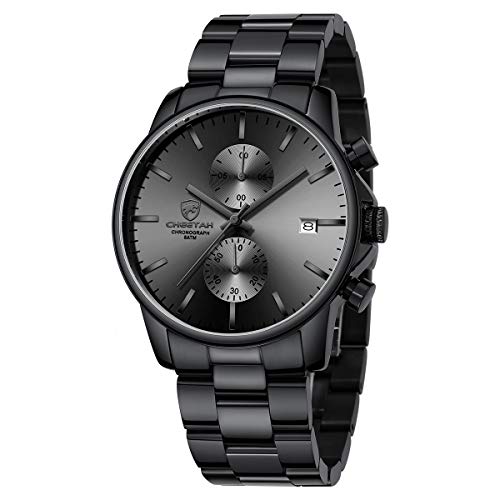
GOLDEN HOUR Men's Nylon Slip-Thru Strap Watch with Military Time Easy Read Dial Glowing Hands in Black
A practical shortlist method and closing advice
Begin a shortlist with the environment, not the brand: water-led use demands the higher ratings, mountain use demands the sensor trio, and site work demands sealing, vibration tolerance, and cheap replaceable straps. Next, choose the power strategy that matches routine, solar for outdoor lives and conventional cells for predictable simplicity. Then settle display style by legibility, positive digital for glare and motion, ana-digi for settings where appearance counts. Finally, test fit on paper through lug-to-lug length and weight, and confirm the exact reference against manufacturer documentation before ordering from any seller.
Judge the surviving candidates on the functions that will actually be touched weekly, because a timer used daily outweighs a tide graph admired twice a year. Check strap replacement availability, button feel descriptions, backlight behaviour, and warranty handling with the same seriousness given to headline ratings. Keep the manual, note battery or charge habits, rinse after hard use, and inspect the strap before every major trip. A watch chosen and kept that way stops being a purchase and becomes equipment, and the best compliment a tough multifunction watch can earn is being forgotten on the wrist until the exact moment its tools are needed in earnest.