What's inside
- Key Takeaways
- Quick Picks
- How Did We Choose These Active Watches?
- What Separates an Active Smartwatch From a Sports Watch?
- How Should You Judge Battery Claims on Active Watches?
- How Should Training Plans and Coaching Features Be Judged?
- Which Active Watches Earned a Detailed Look?
- How Accurate Are Wrist Heart-Rate and GPS, Really?
- What Should Gym and Class Athletes Look For?
- What About Strength Training, Classes and the Gym Floor?
- How Should You Read Sleep and Recovery Data Without Obsessing?
- What Happens When Your Sport Changes?
- How Do These Watches Handle Swimming and Triathlon Training?
- What Should Cyclists and Rowers Ask of an Active Watch?
- A Note on Running Form, Cadence and the Metrics That Matter
- A Note on Trail Running and Winter Training
- One Last Check Before You Spend
- How Should You Set Up an Active Watch in Its First Week?
- Which Active Watch Wins on Your Kind of Training Week?
- What Mistakes Do Buyers Make With Active Watches?
- Final Recommendation
- Frequently Asked Questions
- Related Guides
As an Amazon Associate I earn from qualifying purchases. This post may contain affiliate links at no extra cost to you.
widgetverdict.com is reader-supported. When you buy through links on our site, we may earn an affiliate commission.
Where to buy: you will find the six watches below waiting on Amazon in their case sizes and strap colours, and it is worth opening the Garmin listings in a second tab because their size options change the fit more than the colour does.
The best active smartwatches live a double life that pure sports watches and pure fashion watches both escape: they must survive a threshold session on Tuesday, count a parkrun honestly on Saturday, and still look acceptable in a meeting on Monday. That breadth is exactly what makes the category hard to buy well, because a watch optimised for any one of those jobs quietly sabotages the others — the elegant watch dies by Thursday, the tank of a sports watch bullies a shirt cuff, and the cheap watch loses your long run to a GPS sulk.
Six watches made this guide, and they divide by philosophy rather than price. Garmin sends three contenders because its range genuinely spans the territory: a flagship multisport watch, a runner’s watch with a beautiful screen, and a wellness-leaning watch that still trains seriously. Apple and Samsung represent the phone-ecosystem watches, whose training features now deserve respect rather than indulgence. Fitbit’s Charge 6 closes the list with an honesty note we will repeat in its section: it is a fitness tracker in band form, not a smartwatch, and it is here because many active people are better served by exactly that.
Battery life is the thread running through every verdict below, because an active watch that needs charging every night will eventually be sitting on its charger during the workout it was bought to record. We state realistic expectations rather than brochure figures, and we treat the charger as part of the product: a watch is only as active as the routine its owner can sustain.
Key Takeaways
- Decide whether training or phone features lead; every watch here leans one way.
- Garmin’s range covers the serious-training end at three distinct prices of entry.
- Apple and Samsung watches train well but demand near-nightly charging.
- The Fitbit Charge 6 is a tracker band, not a smartwatch — and that can be ideal.
- A watch left charging during workouts records nothing, however good its sensors.
Quick Picks
| Pick | Badge | Why it earns its place |
|---|---|---|
| Garmin Fenix 8 | Best for serious all-round training | Multisport depth, maps and stamina that still behaves in daily life. |
| Garmin Forerunner 265 | Best for runners | A featherweight running watch with a gorgeous screen and deep run metrics. |
| Garmin Venu 3 | Best wellness-leaning Garmin | Garmin training credibility wrapped in an elegant everyday watch with calls on the wrist. |
| Apple Watch Series 10 | Best for iPhone owners | The finest smartwatch companion made, with training features that now hold their own. |
| Samsung Galaxy Watch 7 | Best for Samsung phone owners | A polished Android smartwatch with strong training and health tools for Galaxy users. |
| Fitbit Charge 6 | Best tracker band — not a smartwatch | A slim fitness tracker with strong health tracking and a week of battery; no apps, no calls. |
How Did We Choose These Active Watches?
We shortlisted for the double life described above. A candidate needed credible GPS and heart-rate tracking for running and cycling, enough water resistance for swimming and weather, a screen readable at a glance mid-effort, and the domestic virtues — notifications, payments, music — that make a watch earn its wrist on rest days. Watches that were superb athletes but hopeless companions, or charming companions that lost satellites in tree cover, were cut regardless of reputation.
Fit shaped the second filter, because an active watch worn twenty-two hours a day must disappear on the wrist. Case size, weight and strap quality all matter more than another training metric, and sleep tracking only works on a watch its owner can bear to sleep in. Several famous multisport watches failed this filter for smaller wrists, and our picks note fit honestly, including where a slimmer sibling in the same range is the smarter buy.
Finally we weighed ecosystems without surrendering to them. An iPhone owner gains real convenience from an Apple Watch, and a Samsung phone pairs most gracefully with a Galaxy Watch, yet neither convenience should drag an athlete away from the training platform they actually analyse. Where you review your data — Garmin Connect, Apple Fitness, Samsung Health, Fitbit — is where your sporting life accumulates, and switching platforms costs more history than switching watches.
What Separates an Active Smartwatch From a Sports Watch?
The honest answer is emphasis. A dedicated sports watch treats notifications as a distraction to be minimised and battery life as a sacred trust; an active smartwatch treats training as one demanding app among many and spends its battery on a bright, responsive screen, voice assistants and third-party software. Neither is superior — they are answers to different questions about what a wrist is for. The watches in this guide sit along that spectrum, with Garmin’s Fenix nearest the sports pole and the Apple Watch nearest the companion pole, and your own answer should be a position on that line rather than a brand loyalty.
Screens embody the trade. The vivid AMOLED displays on most picks are a joy for maps, photos and glancing at a split in bright sun, yet they sip power constantly compared with the memory-in-pixel displays of endurance-focused models. For the active brief — train hard, live normally, charge occasionally — AMOLED is the right compromise for most wrists, provided the battery still stretches across several days. The moment your ambitions turn to multi-day events, the calculus flips, and our adventure-watch guide takes over from this one.
Sensors, by contrast, have largely converged. Every watch here tracks heart rate from the wrist competently for steady exercise, records GPS routes reliably in open sky, counts sleep with varying degrees of interpretation, and estimates the fashionable recovery metrics of the moment. Treat those estimates as trends rather than truths: a readiness score that falls across a hard week is telling you something real, while a single morning’s number, high or low, is weather rather than climate.
How Should You Judge Battery Claims on Active Watches?
Manufacturers quote battery life in the gentlest mode the watch possesses: smartwatch use without GPS, screen waking sparingly, every radio polite. Your life is not that mode. A more useful personal estimate starts from your weekly GPS hours — the true battery eater — and adds a day of ordinary wear for each. A runner training five hours a week on a watch claiming a fortnight of smartwatch life should expect roughly a week, which is still excellent; the same maths applied to a watch claiming two days yields the nightly charging ritual that eventually loses workouts.
Charging speed is the unsung half of the equation. A watch that recovers most of its charge during a shower and a coffee forgives almost any capacity, because topping up becomes a habit attached to an existing routine. A slow charger attached to a proprietary puck that lives in one room is how watches end up dead on the bedside table on long-run morning. When you read the pick sections below, weigh the charging routine they describe as heavily as the headline endurance; in ownership, the routine is what you actually experience.
One more discipline: decide where the watch sleeps. Sleep data is genuinely useful for spotting illness, overtraining and the cost of late nights, but it demands the watch be worn, charged at some other hour, and comfortable enough to forget. Several picks below are slim enough for the job. If you know you will never sleep in a watch, discount every sleep feature in this guide to zero and buy purely on training and daytime virtues — an honest discount that changes at least two of our verdicts for such a buyer.
How Should Training Plans and Coaching Features Be Judged?
Every watch in this guide offers some form of guidance, from suggested daily workouts to full periodised plans, and the honest way to judge them is by adherence rather than sophistication. A plan you follow at eighty percent for twelve weeks outperforms a scientifically perfect plan abandoned in week three, which is why the best coaching feature in this category is the one that adapts gracefully when life intervenes — moving a session, softening a week, forgiving an illness — instead of presenting a missed workout as a moral event. Garmin’s adaptive suggestions handle that forgiveness best here; the ecosystem platforms lean on third-party apps, several of which are superb and most of which cost a subscription the budget should acknowledge.
Set the coaching relationship up deliberately in the first fortnight. Enter your real availability rather than your aspirational one, tell the watch your genuine race date and current longest run, and let the first month be easy enough to complete, because early completion is what builds the habit the plan exists to serve. Review the plan’s suggestions against your own sensations weekly, and override without guilt when the two disagree for reasons a wrist cannot know — a bad night’s sleep with a toddler, a work crisis, a niggle with a history. The athletes who thrive with wrist coaching treat it as a knowledgeable training partner whose advice is heard and weighed, never as a foreman whose instructions are obeyed.
Finally, remember what the coaching cannot see. It does not know your technique is breaking down, your shoes are dead, or your motivation is quietly relocating to another sport. A human coach, a club, or even a training partner with eyes remains the senior partner in any serious campaign, and the watch’s highest calling is to handle the arithmetic so the humans can handle the judgement.
Which Active Watches Earned a Detailed Look?
Six wrist companions follow, from a flagship multisport watch to a tracker band that knows exactly what it is. Each verdict states plainly who should walk past it, because in a category this broad the wrong active watch is usually a good watch bought by the wrong athlete.

Garmin Fenix 8 — Best for serious all-round training
The Fenix 8 is what happens when a sports watch learns manners. Underneath, it remains Garmin’s full multisport instrument: structured training for running, cycling, swimming, skiing and more disciplines than most owners will attempt, proper mapping you can follow from the wrist, multi-band GPS that holds its line between tall buildings, and a built-in flashlight that sounds like a gimmick until a dark trailhead or a midnight kitchen makes it the most-used feature you own. Battery life is measured in weeks of ordinary wear and long days of GPS, which removes charging from your weekly planning altogether.
On the wrist daily, the AMOLED screen and touchscreen make it a far friendlier companion than earlier Fenix generations, while the five-button layout still works with gloves, wet hands and mid-interval desperation. Voice features and phone integration have matured enough that it no longer feels like a sports watch tolerating your messages. It is, however, a substantial watch, and on a slim wrist under a fitted shirt cuff its presence is undeniable. Garmin sells slimmer and smaller variants across its range for a reason; try sizes before ordering if your wrist is narrow.
Buy the Fenix 8 if training is the organising fact of your week and you want one watch for every sport you own shoes for. Its price is flagship money, and its menus reward a month of learning, so casual step-counters should walk past it toward the Venu or the Charge without a flicker of shame. For the athlete it suits, though, nothing else in this guide is as complete.
- Display: bright AMOLED touchscreen with button control
- GPS: multi-band satellite positioning
- Battery: multi-day with regular GPS training
- Water resistance: suitable for swimming and diving-rated builds
- Extras: built-in flashlight, maps, music storage
Strengths
- Complete multisport training with real maps
- Battery measured in weeks, not days
- Buttons and touchscreen cover every condition
Trade-offs
- Flagship price for features many never open
- Large case overwhelms smaller wrists
- Menu depth takes weeks to feel natural
Best for: triathletes and multi-sport athletes who train daily and travel to start lines.
Not suited for: casual movers who mainly want steps, sleep and notifications.

Garmin Forerunner 265 — Best for runners
The Forerunner 265 understands that runners are a tribe with one god — the long run — and a hundred small rituals around it. It is so light that it disappears during sleep, which makes its genuinely useful morning report worth having: sleep quality, recovery state and a suggested workout waiting before your feet touch the floor. On the road it offers the running metrics that matter, from ground contact balance to race-time predictions that are eerily honest, and its AMOLED screen renders split data at a glance without the squint older running watches demanded.
Garmin’s training ecosystem is the deeper reason to buy. Structured workouts sync from plans and coaches, the watch judges whether today should be hard or easy with a credibility built over seasons of data, and everything lands in Garmin Connect, where runners actually live. Music storage means the phone can stay home on easy days. The touchscreen assists rather than replaces buttons, so rain and gloves do not strand you mid-session — a detail runners notice in November and appreciate all winter.
The compromises are a plastic case that feels ordinary at this price, a screen that needs charging discipline its older transflective siblings never asked for, and triathlon depth a step below the Fenix line. None of that troubles the runner it was built for. If your sporting life is measured in miles and your other sports are supporting acts, this is the most focused instrument in the guide.
- Display: AMOLED touchscreen, bright in sunlight
- GPS: multi-band satellite positioning
- Battery: around two weeks of smartwatch wear, far less with heavy GPS
- Focus: running dynamics, race predictions, training readiness
- Build: lightweight polymer case with silicone strap
Strengths
- Featherweight comfort, day and night
- Running metrics and coaching with real depth
- Morning report makes recovery data actionable
Trade-offs
- Polymer case feels less special than rivals
- AMOLED appetite shortens battery versus older Forerunners
- Multisport features trail the Fenix range
Best for: dedicated runners training for races from 5K to marathon.
Not suited for: triathletes and gym-first athletes wanting broader sport profiles.

Garmin Venu 3 — Best wellness-leaning Garmin
The Venu 3 is Garmin’s answer to the person who likes what Apple sells but trains like Garmin means it. It looks like a handsome everyday watch, takes calls through a proper speaker and microphone, offers a wheelchair mode and jet-lag advice among its thoughtful extras, and still records GPS training with the competence you would expect from the badge. Its sleep coaching is the most genuinely useful in this guide, interpreting the night rather than merely scoring it, and the Body Battery energy gauge, once you learn your own patterns, becomes a surprisingly honest mirror.
Daily life is where the Venu quietly wins owners. The case is slim enough for any cuff, the screen is beautiful without shouting about sport, and battery life measured in many days rather than hours changes your relationship with the charger entirely. Workouts are covered for running, cycling, swimming, gym work and the long tail of activities most people actually do, with animated exercise guidance for those who train at home. What it will not do is coach a marathon campaign with the Forerunner’s depth or map a mountain like the Fenix.
That makes the Venu 3 the easiest Garmin to recommend to the broad middle of active people: those who train three or four times a week, care about sleep and health trends, and want their watch to attend a wedding without comment. Athletes should read its limits above as real; everyone else should read them as the price of the most liveable Garmin we test.
- Display: AMOLED touchscreen, slim case
- Calls: built-in speaker and microphone
- Battery: up to roughly two weeks in smartwatch use
- Health: sleep coaching, nap detection, Body Battery
- Sports: GPS training for core activities
Strengths
- Elegant case with calls from the wrist
- Sleep coaching and energy tracking with substance
- Garmin GPS training without the expedition look
Trade-offs
- Training plans lack Forerunner depth
- No mapping for trail navigation
- Speaker calls drain battery noticeably
Best for: active all-rounders who want health insight and a watch for every occasion.
Not suited for: marathon campaigners and trail navigators needing depth or maps.

Apple Watch Series 10 — Best for iPhone owners
For an iPhone owner, the Series 10 is the gravitational centre of this category: nothing else answers messages, handles calls, pays at tills, unlocks the Mac and runs the phone’s app universe with the same frictionless completeness. The case is thinner and the screen larger than earlier generations, which matters during exercise because a split or a heart-rate zone can be read at a true glance, mid-stride, in rain. Apple’s Workout app has grown into a respectable training tool with custom sessions, race-route features and clean metrics, and the third-party ecosystem — from structured run coaching to ski mapping — is the richest on any wrist.
Health is the second pillar. The Series 10 carries Apple’s mature sensor suite, including ECG, blood-oxygen where regionally enabled, sleep staging with apnoea notifications, and temperature trends that feed cycle and recovery insight. None of this diagnoses anything, and Apple is careful to say so; what it does is surface patterns early enough to discuss with a clinician, which is the honest ceiling for wrist health and a genuinely valuable one.
Then the familiar tax: battery life is a day and a bit, so the Series 10 must be charged daily, ideally during a morning routine, and it will not accompany a weekend of camping without planning. It also speaks only to iPhones. If those two facts fit your life — and for millions they plainly do — this is the active watch that integrates most deeply with everything else you own. If they do not, Garmin’s rows in the table below are your home.
- Display: large, bright edge-to-edge screen
- GPS: built-in satellite positioning
- Compatibility: iPhone only
- Health: ECG, sleep apnoea notifications, temperature sensing
- Charging: fast charging, magnetic puck
Strengths
- Seamless iPhone integration and vast app choice
- Superb screen and slim, comfortable case
- Mature health sensing with careful presentation
Trade-offs
- Daily charging is non-negotiable
- iPhone only, with no Android path
- Sleep tracking competes with charging time
Best for: iPhone owners who train regularly and live inside Apple services.
Not suited for: Android users and anyone allergic to nightly charging.

Samsung Galaxy Watch 7 — Best for Samsung phone owners
The Galaxy Watch 7 is the Android counterpart to Apple’s proposition: a smartwatch that completes a phone ecosystem rather than competing with it. Paired with a Samsung handset it is seamless — notifications, calls, camera control, health data flowing into Samsung Health — and its bright, tough display is a pleasure during intervals and intervals of weather alike. Training coverage spans the mainstream sports credibly, GPS performance is dependable in the city canyons where Samsung tests hardest, and the energy-score health summaries give beginners an intelligible daily read on readiness.
Comfort deserves its own sentence, because Samsung’s case shaping and strap system make the Watch 7 one of the easiest watches here to wear to bed, which in turn makes its strong sleep tracking — including apnoea-related features where approved — actually usable rather than theoretical. Two case sizes mean smaller wrists are not an afterthought, and the rotating-bezel charm of older models is survived by a touch bezel that works better than sceptics expect.
The boundaries are ecosystem and endurance. Some headline health features are reserved for Samsung phones, which is an irritating toll on other Android owners, and battery life is measured in a couple of days of active use — generous beside Apple, modest beside Garmin. Choose the Watch 7 as a Samsung owner who trains seriously but lives digitally; choose Garmin if training, not the phone, is the centre of the purchase.
- Display: bright AMOLED with sapphire crystal on many sizes
- GPS: built-in satellite positioning
- Compatibility: Android, best with Samsung phones
- Health: advanced sleep and energy scoring, ECG where enabled
- Sizes: two case sizes with interchangeable straps
Strengths
- Polished pairing with Samsung phones
- Comfortable enough for genuine sleep tracking
- Bright, tough display in two sizes
Trade-offs
- Some health features locked to Samsung handsets
- Battery life trails every Garmin here
- Touch bezel divides opinion versus physical crowns
Best for: Samsung phone owners who train several times a week.
Not suited for: other Android owners wanting every feature, and multi-day adventurers.
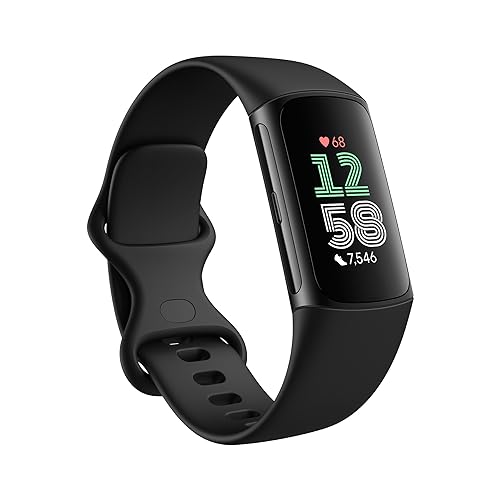
Fitbit Charge 6 — Best tracker band — not a smartwatch
Accuracy in labelling matters, so let this section say it in the first line and without apology: the Charge 6 is a fitness tracker worn as a band, not a smartwatch. It cannot take calls, run an app store or answer messages with anything beyond a glance. It earns its place in a guide to active watches because a large share of active people, examined honestly, want precisely what it does — track exercise, sleep and heart health accurately, last a week, weigh almost nothing, and cost a fraction of the watches above — and are better served by it than by any smartwatch in this list.
In daily wear the Charge 6 is close to invisible, which makes its sleep and all-day heart data the most complete of any device here simply because it is always on the wrist, including the nights when a bulky watch gets taken off. Fitbit’s app presents readiness, stress and sleep with a clarity beginners love, exercise tracking covers the mainstream activities, and the physical side button — restored after a touchscreen-only experiment owners disliked — makes starting a workout a one-press act. GPS borrows the phone’s signal, so phone-free running records no route; that is the tracker’s clearest sporting limit.
Buy it as the honest tracker it is and it will delight you for years. Buy it expecting a smartwatch and every limitation above becomes a grievance. Our verdict is that for steppers, gym-goers, swimmers and health-watchers who carry their phone anyway, the Charge 6 is not the budget compromise in this guide — it is the correctly sized tool, and the watches above it are the extravagances.
- Form: slim fitness tracker band, not a smartwatch
- Battery: up to about a week between charges
- Health: heart rate, sleep, stress and readiness scores
- GPS: connected GPS using your phone
- Extras: contactless payments, music controls for the phone
Strengths
- A week of battery and near-invisible comfort
- Health and sleep tracking presented beautifully
- Physical button and simple, focused interface
Trade-offs
- Not a smartwatch: no calls, apps or replies
- GPS depends on carrying your phone
- Small screen limits mid-workout data
Best for: health-focused movers who always carry a phone and hate charging.
Not suited for: anyone wanting phone-free runs with maps or wrist calls.
How Accurate Are Wrist Heart-Rate and GPS, Really?
Steady-state exercise is the wrist sensor’s home ground: a long, even run or ride gives optical heart-rate tracking clean, rhythmic data, and every watch in this guide performs within a beat or two of a chest strap in those conditions. Intervals, cold weather, rowing and weight training are its examination hall — blood flow shifts, wrists flex, straps loosen — and errors appear exactly when the data matters most. Serious athletes who train by heart-rate zones should budget for a chest strap as an accessory to any of these watches; the watch remains the recorder and coach, the strap becomes its most trustworthy witness.
GPS tells a similar story of conditions. Open sky and steady movement yield routes you could frame; city centres, tunnels, dense forest and the first thirty seconds after pressing start are where every brand’s traces wobble. Multi-band receivers, fitted to the Garmin picks here, genuinely narrow those errors. The practical habits matter as much: let the watch confirm its satellite fix before you start moving, wear it on the wrist rather than in a pocket, and forgive the first corner of any urban route. Judged by those standards, all six devices here are honest instruments.
What Should Gym and Class Athletes Look For?
Gym training exposes a different set of virtues from road running. Rep counting and exercise recognition remain party tricks across the industry — amusing when they work, ignorable when they do not — while the features that earn their keep are a reliable stopwatch and interval timer, a screen that survives chalk, sweat and the occasional kettlebell glance, and heart-rate tracking honest enough to show conditioning trends across a season of classes. The Venu 3 adds animated workout guidance that home trainers genuinely use, and the Apple Watch’s class ecosystem, from rowing to dance, is the broadest in this guide.
Music deserves a gym-specific note. Leaving the phone in a locker removes the scroll temptation and the theft worry, and the watches here that store music or stream over their own connection — Garmin’s trio, Apple and Samsung — make that freedom real with a pair of earbuds. The Charge 6 controls the phone’s music instead, which is fine for the home gym and useless for the locker routine. Match that single feature to your actual training geography before paying for storage you will never fill.
What About Strength Training, Classes and the Gym Floor?
Road metrics dominate watch marketing, yet a large share of active owners train indoors, where the virtues rearrange themselves. What matters on the gym floor is a timer you can start with a sweaty thumb, a screen that survives being glanced at between sets rather than studied, heart-rate tracking honest about trends even when wrist flexion during presses and rows corrupts individual readings, and a strap that rinses clean afterwards. The Venu 3’s guided workouts and the Apple Watch’s class ecosystem serve this world best in our six, while the Forerunner’s discipline shows in a different way: it simply refuses to pretend that rep counting is a science, and records the session cleanly instead.
Classes add a social specification no datasheet prints — discretion. A watch that lights up and buzzes through a yoga session will be left in the locker by week three, so learn your watch’s theatre and do-not-disturb modes before the first class, and set workout screens to dim automatically where the option exists. The Charge 6, being a band with a small face and a week’s battery, is the introvert’s champion here, present for every session and noticed in none. Whichever watch you wear, the class test is the same as the sleep test: the best device is the one still on your wrist when the habit forms, not the one with the longest feature list in the shop.
How Should You Read Sleep and Recovery Data Without Obsessing?
Sleep tracking has quietly become the reason many active people wear a watch at all, and it rewards a particular reading style. Trust the totals — duration, regularity, the shape of your week — because wrist devices measure those credibly, and treat the precise minutes assigned to each sleep stage as informed estimates rather than laboratory fact. The actionable insights are almost always boring: a consistent wake time beats a heroic lie-in, late caffeine and late screens print themselves on the graph within days, and a resting heart rate creeping upward across a week is your body filing a report you should read before your training plan files a louder one.
Recovery scores demand the same maturity. Use them as a weekly weather report — a trend across a hard block, a dip that coincides with travel or illness — and refuse the daily referendum, because athletes who obey a single morning’s number end up training by horoscope. The morning report on the Forerunner 265 and the energy gauges on the Venu and Galaxy are best used as a prompt for one honest question — how do I actually feel? — with the watch’s answer counted as a second opinion rather than a verdict. Owners who hold that line get years of value from these features; owners who do not, get anxiety with a graph attached.
What Happens When Your Sport Changes?
Few athletes stay in one sport for a decade, and an active watch should be bought with a door left open. The runner who discovers triathlon, the gym devotee who takes up trail racing, the swimmer who starts cycling to the pool — each transition tests whether the watch’s sport profiles, sensors and platform grow with them or strand them. Garmin’s pair in this guide handle transitions best, because their sport lists are encyclopaedic and their platform treats a new discipline as a homecoming. The ecosystem watches adapt through apps, which is a different and perfectly respectable kind of growing room.
The practical advice is to audit your watch against your life once a year, in the same spirit as the training review your coach would set. If the watch still records everything you do, still fits the wrist and the week, and still holds its charge, the correct upgrade is none, whatever the launch calendar says. If a new sport has exposed a genuine gap — open-water tracking, structured triathlon transitions, dive capability — that gap, named precisely, is your shopping list. Athletes who buy against named gaps stay equipped; athletes who buy against launch events stay poor.
How Do These Watches Handle Swimming and Triathlon Training?
Pool swimming is now a baseline competence across this guide — every pick tracks lengths credibly and survives the shower afterwards — yet the details separate the triathlete’s tool from the swimmer’s accessory. Lap accuracy depends on push-off consistency more than on brand, open-water swimmers need GPS that tolerates a wrist leaving the water in rhythm, and triathletes need the multisport session itself: one recording that follows swim, bike and run through transitions without a fumble at the rack. The Fenix 8 owns that discipline outright in this guide, the Forerunner covers it in spirit for the run-focused, and the ecosystem watches increasingly offer triathlon modes whose competence surprises owners raised on their predecessors.
The training implication is worth stating for the swim-first athlete: if your week is built around the pool with riding and running as guests, the Apple and Samsung watches’ bright screens and class ecosystems may serve you better than a run-specialist instrument, because pool decks are social, musical, notification-filled places in a way dawn roads are not. Match the watch to the session you repeat most, not the event you enter once, and the multisport question usually answers itself.
Aftercare is the unglamorous footnote that decides whether any of this survives the season. Rinse the watch after sea and pool sessions, dry the charging contacts before the cable touches them, and inspect the strap for the small tears that chlorine begins at the holes. A watch maintained this way outlasts its software; a watch neglected this way becomes a warranty conversation by spring.
What Should Cyclists and Rowers Ask of an Active Watch?
Cyclists expose a watch’s divided loyalties, because the wrist is a poor place to read data at speed and an excellent place to record it. Every pick here records rides honestly by GPS and heart rate, pairs with common sensors where the platform allows, and hands the ride to the apps cyclists actually argue about. The Garmin pair lead on sensor diplomacy — power meters, smart trainers and the whole ANT-and-Bluetooth menagerie — while the Apple and Samsung watches compensate with screens you can genuinely read on the move and navigation that reroutes like a phone’s. Handlebar mounts exist for most of these watches and are the honest answer for riders who want wrist data at eye level.
Rowers, on water and on the erg, test the opposite virtues: stroke-rate sensing, split discipline and heart-rate tracking through a flexing, gripping wrist that corrupts optical readings more than almost any other motion. Expect trends rather than gospel from any watch here during hard pieces, wear the strap a finger higher and tighter than feels polite, and let a chest strap carry the sessions where the numbers will be quoted afterwards. The watch remains the diary and the coach; the strap is its most reliable witness, in rowing above all sports.
A Note on Running Form, Cadence and the Metrics That Matter
Modern running watches generate a small encyclopedia per run, and the mature athlete reads perhaps four numbers from it. Cadence, tracked across months, reveals whether your stride is quickening as fitness grows or lengthening into the overstriding that invites injury. Ground contact time shortens as runners get stronger and tireder within the same session, and its drift late in a long run is a fatigue diary written without opinion. Vertical oscillation — how much of your energy goes up rather than forward — improves so slowly that only a season of data makes it visible, which is precisely why the Forerunner’s patience with trends matters more than any single workout’s report card.
Ignore, by contrast, any metric you cannot act on. A number earns its place on your watch face only if a decision follows from it: slow down, eat, rest, book the physio. Metrics that produce only feelings — pride on good days, gloom on bad ones — are entertainment wearing a lab coat, and the settings of every watch here allow you to demote them from the data screens to the app, where they can be visited occasionally rather than obeyed daily. Curate your four numbers, review them monthly, and let the rest of the encyclopedia wait for the season when it becomes a question you are actually asking.
A Note on Trail Running and Winter Training
Trail running rewrites the active watch’s job description in ways road metrics never mention. Satellite fixes must survive tree canopy and gorge walls, the altimeter becomes a training instrument rather than a curiosity, and a watch that cannot be operated through a muddy, gloved fumbling will be operated not at all. The Fenix 8 was built for exactly this paragraph; the Forerunner 265 handles trail work with more grace than its road-running badge suggests, provided the route is known or the phone rides along as navigator. Winter adds the battery’s cold-weather tax and the sleeve problem — a watch buried under three layers records heart rate beautifully and shows its owner nothing — so trail and winter athletes should wear the watch outside the cuff on a longer strap and accept the fashion verdict of the mountains, which is that nobody is looking.
Recovery after trail and winter sessions also reads differently in the data. Elevation gain masquerades as ordinary mileage in crude training-load figures, and a watch that counts ascent honestly — as the Garmin pair do — will judge a mountain day with the respect it deserves rather than wondering why a short run felt like a long one. Judge your own readiness the morning after by the trend across the week, and let the watch’s arithmetic inform rather than replace the evidence of your legs on the stairs.
One Last Check Before You Spend
Before ordering, perform the wrist test that no review can do for you: borrow, visit a shop, or use a returns window to wear the finalist through one genuine training day and one genuine night. Record the workout you actually do, sleep in the watch, and read the morning’s data with your coffee. If the watch disappeared into the day — present for the session, absent from your attention otherwise — it has passed the only examination that predicts year-two satisfaction. If it nagged, slid, died or dazzled at the wrong moments, believe the evidence of your own wrist over every verdict in this guide, including the ones we feel most strongly about.
How Should You Set Up an Active Watch in Its First Week?
Resist the urge to enable everything on day one. Spend the first session on fit and basics: the strap snug enough that the watch does not slide during arm swings but loose enough for a finger’s width of mercy, notifications limited to the handful of people and apps that genuinely interrupt your life, and the watch face chosen for legibility — time, date, battery and one training shortcut — rather than for novelty. A watch that buzzes forty times a day teaches its owner to ignore it, including during the workout it was bought to serve.
Use the first week as calibration, and tell the watch the truth. Wear it to bed so sleep baselines form, record every workout even the short ones so training-load estimates have honest data, and correct the personal details — age, weight, maximum heart rate if you know it — that every algorithm quietly depends on. At the week’s end, read the summaries with scepticism and curiosity in equal measure: the trends will already be informative, while any single dramatic score deserves a shrug until a month of data stands behind it.
Finally, build the charging ritual before the battery first dies at an embarrassing moment. Choose the existing daily pause — shower, desk hour, morning coffee — that matches your watch’s appetite, put the charger there permanently rather than in a drawer, and set a weekly calendar nudge for longer-charge watches. The athletes who keep their data unbroken for years are not more disciplined than you; they simply attached charging to a habit that already existed.
Which Active Watch Wins on Your Kind of Training Week?
| Pick | Badge | Standout trait | Main compromise |
|---|---|---|---|
| Garmin Fenix 8 | Best for serious all-round training | Full training platform with maps and multi-day stamina | Expensive, and its depth overwhelms casual users |
| Garmin Forerunner 265 | Best for runners | Running-specific metrics in a watch you forget you are wearing | Plastic build feels less premium than its price suggests |
| Garmin Venu 3 | Best wellness-leaning Garmin | Speaker and microphone for calls, with Garmin substance beneath | Training depth is a tier below Forerunner and Fenix |
| Apple Watch Series 10 | Best for iPhone owners | Unmatched iPhone integration and app ecosystem | Battery life is a daily-charging commitment |
| Samsung Galaxy Watch 7 | Best for Samsung phone owners | Deep Galaxy phone pairing and a sharp, bright display | Best features assume a Samsung phone; battery lasts days, not weeks |
| Fitbit Charge 6 | Best tracker band — not a smartwatch | Week-long battery and excellent health basics in a band | It is a tracker: no app store, no wrist calls, small screen |
The table’s real message is that ‘active’ spans two different products wearing one name. The Garmin trio and the Charge 6 treat training and health as the purpose, with smart features in support; the Apple and Samsung watches reverse that priority with great polish. Neither camp is the future of the other. Choose your camp first, and the row chooses itself.
What Mistakes Do Buyers Make With Active Watches?
Buying the flagship when the mid-range fits their sport. A triathlon watch on a parkrunner’s wrist is not harmful, merely wasteful: the extra money bought maps, dive ratings and training depth that will never open, while the larger case actively worsens sleep comfort. Match the watch to the training you did last month, not the expedition you daydream about during sales.
Ignoring case size and strap comfort. Specifications are comparable across a shop shelf in a way wrists are not. A watch that digs, slides or bullies a cuff gets left at home, and a watch at home records nothing. Try sizes in person where possible, and treat the strap as replaceable equipment rather than a fixed fate.
Trusting a single readiness or recovery score. These scores summarise trends; they do not command rest days. Athletes who obey one bad morning’s number skip good sessions, while athletes who ignore a fortnight of decline entirely are the ones who end up injured. Use the trend, question the day, and let how you feel keep its vote.
Charging reactively instead of ritually. Every gap in a training record in this category traces back to a flat battery and good intentions. The fix is embarrassingly small — a charger placed where a daily pause already happens — yet it outperforms every battery specification in this guide over a year of ownership.
Final Recommendation
For most active people who train with intent, the Forerunner 265 and Venu 3 divide the honours: the runner’s watch for those whose week is built around miles, the Venu for everyone whose training shares the wrist with the rest of life. The Fenix 8 stands above both for the athlete who genuinely uses its depth, while iPhone and Samsung loyalists are served best by staying inside their ecosystems and accepting the charging rhythm that choice demands.
And if your honest self-assessment says tracker rather than smartwatch, let the Charge 6 save you money and charging alike — the most active watch is always the one still on your wrist in month six.
Frequently Asked Questions
Can an active smartwatch replace a dedicated sports watch?
For most athletes, yes. The Garmin picks here record training with the depth club athletes need, and even the Apple and Samsung watches handle structured sessions credibly. Specialists — ultrarunners needing multi-day battery, divers needing rated instruments, trail racers navigating by map — should still choose a dedicated sports or adventure watch, which is why this site keeps a separate adventure guide.
How long should an active watch battery last?
Long enough that charging never cancels a workout. In practice that means several days for a training watch, so one missed charge is an inconvenience rather than a lost long run. Ecosystem smartwatches that last a day can still work if their fast charging fits a daily routine you already keep, such as a morning shower.
Is the Fitbit Charge 6 a smartwatch?
No, and we list it as a fitness tracker deliberately. It tracks exercise, sleep and health excellently, shows notifications and handles payments, but it cannot run apps, store music or take calls. Buyers who understand that distinction tend to love it; buyers who miss it tend to return it.
Do I need LTE or cellular in an active watch?
Only if you regularly train without your phone and still need calls or emergency contact from the wrist — some runners and open-water swimmers value exactly that. Cellular costs more, drains battery faster and needs its own plan, so for phone-carrying athletes it is money spent on a scenario that never occurs.
Which active watch is best for small wrists?
The Forerunner 265 and Venu 3 wear smallest among the full smartwatches here, and the Charge 6, as a slim band, suits almost any wrist. The Fenix 8 is the watch to try on in person before ordering, because its capability comes in a case that smaller wrists may find domineering.
Related Guides
Best adventure smartwatches for the outdoors Best smartwatches for everyday wear Best fitness trackers for sleep and recovery


