What's inside
As an Amazon Associate I earn from qualifying purchases. This post may contain affiliate links at no extra cost to you.
The number 10000 in this keyword is read as the premium class, the monitors that sit just below the flagships, with a price and a performance that place them among the best studio monitors available, without the cost of the very top, and the best studio monitors in the 10,000 class are the premium nearfields and midfields that professional rooms reach for when the mix has to be accurate, and the budget has to be sensible. A premium monitor is not a budget monitor, it is a monitor for a professional room, with a treated acoustic, a large desk, and a mixer who needs to hear everything, and this guide covers six premium monitors that suit that room, from the Genelec 8361A that is the standard premium to the HEDD Type 30 MK2 that is the standard for a detailed treble.
The reason a premium monitor matters is that a professional mix has to translate to every system, from a phone to a cinema, and a premium monitor will show the mix as it is, with a flat response, a low distortion, and a bass that goes deep, while a budget monitor will hide the problems, so the mix will sound good in the studio and bad everywhere else. The monitors in this guide are all premium, with a coaxial design, a three-way system, or a large woofer, and they are the monitors that the community recommends when the budget is generous but not unlimited, with the differences being in the design, the bass, and the price, and the buying guide explains how to choose between them, how to position them, and how to treat the room.
The six monitors in this guide cover the whole premium range, from the Genelec 8361A that suits a professional nearfield to the HEDD Type 30 MK2 that suits a professional midfield, and each one is judged on the same things: flatness, bass, distortion, and whether it works in a treated room. A coaxial monitor is the right choice for a nearfield, a three-way monitor is the right choice for a midfield, and a large monitor is the right choice for a large room, and the buying guide at the end explains how to choose between them, how to set up the triangle, and how to calibrate the room.
The monitors in this guide are all premium studio monitors that a professional can buy, set up and use for mixing and mastering, with a sound that is accurate, a bass that is deep, and a stereo image that is stable, which is the sound that a professional mix needs. A premium monitor is not a luxury, it is a tool, and a professional who buys a premium monitor is buying accuracy, because a mix that is made on a premium monitor will translate, and a mix that translates is a mix that can be trusted, which is the reason the premium class matters.
Quick picks: best studio monitors for 10000
| # | Product | Where to buy |
|---|---|---|
| 1 | Genelec 8361A | Check on Amazon |
| 2 | ATC SCM45A Pro | Check on Amazon |
| 3 | Neumann KH 310 | Check on Amazon |
| 4 | Barefoot Sound Footprint02 | Check on Amazon |
| 5 | HEDD Type 30 MK2 | Check on Amazon |
Quick Comparison
| Product | Key Specs | Best For |
|---|---|---|
| Genelec 8361A | Three-way coaxial, 700W, SAM calibration, premium flagship | Best overall premium studio monitor |
| ATC SCM45A Pro | Three-way, 300W, hand-built, ATC dome midrange | Best ATC premium studio monitor |
| Focal Trio6 Be | Three-way, 250W, beryllium tweeter, Focus mode | Best Focal premium studio monitor |
| Neumann KH 310 | Three-way nearfield, 290W, 8-inch woofer | Best Neumann premium studio monitor |
| Barefoot Sound Footprint02 | Three-way, 275W, MEME technology, dual subwoofers | Best Barefoot premium studio monitor |
| HEDD Type 30 MK2 | Three-way, 900W, AMT tweeter, 7-inch woofer | Best HEDD premium studio monitor |

Genelec 8361A
The Genelec 8361A is the best overall premium studio monitor in this guide, and it is the monitor that professional rooms reach for first, because Genelec built the 8361A as a three-way coaxial monitor with a 700-watt amplifier, a SAM calibration system, and a design that places the tweeter and midrange on the same axis, so the stereo image is stable from any angle. The 8361A is the monitor for a professional nearfield, and it is the reason it is the best overall in this guide.
The coaxial design is the reason the 8361A is the standard premium monitor, with a tweeter and midrange that share the same axis, so the sound comes from a single point, and the image does not shift when the listener moves, and a 700-watt amplifier that gives the monitor enough power for a large room, and a SAM calibration system that measures the room and adjusts the monitor to it, so the sound is flat in any room. The 8361A has a bass that goes deep, with a low-frequency extension that is the best in this guide, and a distortion that is low, so the sound is clean at any volume, and it has a large cabinet that fits on a meter bridge, although it is a premium monitor, and it is the monitor that a professional buys when the goal is the best nearfield in the premium class.
The practical details are built for a professional room. The 8361A is a coaxial monitor, which fits on a meter bridge, and it has a SAM calibration that can be done with a microphone and a laptop, and it has a network connection that lets the monitors be controlled from a computer, and it has a sturdy cabinet that does not resonate. The 8361A is the monitor that a professional buys when the budget is generous, and the goal is a monitor that will translate, and it is the monitor that is the most recommended premium nearfield in the world.
The trade-offs are that the 8361A is a premium monitor, so it is expensive, although it is the best in this guide, and it needs a treated room, because a premium monitor in a bad room will still sound bad, although the SAM calibration helps. But as a premium studio monitor, the 8361A is the best in this guide, and it fits a professional room, a mastering studio, and anyone who wants the best nearfield in the premium class.
Check price on Amazon: Genelec 8361A
ATC SCM45A Pro
The ATC SCM45A Pro is the best ATC premium studio monitor in this guide, and it is the monitor to choose when the goal is a hand-built monitor with a dome midrange, because ATC built the SCM45A Pro as a three-way monitor with a 300-watt amplifier, a hand-built dome midrange, and a reputation for accuracy that comes from decades of professional use, with a sound that is detailed, a midrange that is clear, and a bass that is tight. The SCM45A Pro is the monitor for a professional who wants an ATC, and it is the reason it is the best ATC option in this guide.
The dome midrange is the reason the SCM45A Pro is the standard, with a three-inch soft dome that handles the midrange, which is the range where the vocals and the instruments live, and a hand-built construction that is precise, so the sound is consistent from one monitor to the next. The SCM45A Pro has a 300-watt amplifier that gives the monitor enough power for a professional room, and a bass that is tight, with a low-frequency extension that is good for a nearfield, and it has a tweeter that is clear, so the high frequencies are detailed. The SCM45A Pro is the monitor that a professional buys when the goal is a hand-built monitor with a dome midrange, and it is the monitor that proves a British monitor can be among the best in the world.
The practical details are built for a professional room. The SCM45A Pro is a three-way monitor, which fits on a meter bridge or on a stand, and it has a hand-built cabinet that is sturdy, and it has a power switch on the back. The SCM45A Pro is the monitor that a professional buys when the budget is generous, and the goal is a monitor that will translate, and it is the monitor that is the most recommended ATC premium in the world.
The trade-offs are that the SCM45A Pro is a premium monitor, so it is expensive, although it is the best ATC option in this guide, and it needs a treated room, because a premium monitor in a bad room will still sound bad. But as an ATC premium studio monitor, the SCM45A Pro is the best in this guide, and it fits a professional room, a mastering studio, and anyone who wants a hand-built monitor.
Check price on Amazon: ATC SCM45A Pro
Focal Trio6 Be
The Focal Trio6 Be is the best Focal premium studio monitor in this guide, and it is the monitor to choose when the goal is a three-way monitor with a beryllium tweeter, because Focal built the Trio6 Be as a three-way monitor with a 250-watt amplifier, a beryllium tweeter, and a Focus mode that switches the monitor to a two-way system, with a sound that is detailed, a bass that is deep, and a treble that is airy. The Trio6 Be is the monitor for a professional who wants a Focal, and it is the reason it is the best Focal option in this guide.
The beryllium tweeter is the reason the Trio6 Be is the standard, with a tweeter made from beryllium, which is rigid and light, so the high frequencies are detailed and airy, with a clarity that a standard tweeter cannot match, and a three-way design that lets each driver handle only its range, so the distortion is low. The Trio6 Be has a Focus mode that switches the monitor to a two-way system, which lets the mixer check the mix on a smaller system, without changing monitors, and it has a 250-watt amplifier that gives the monitor enough power for a professional room. The Trio6 Be is the monitor that a professional buys when the goal is a Focal premium with a beryllium tweeter, and it is the monitor that proves a three-way design can be the best for a professional room.
The practical details are built for a professional room. The Trio6 Be is a three-way monitor, which fits on a meter bridge or on a stand, and it has a sturdy cabinet that does not resonate, and it has a power switch on the back. The Trio6 Be is the monitor that a professional buys when the budget is generous, and the goal is a monitor that will translate, and it is the monitor that is the most recommended Focal premium in the world.
The trade-offs are that the Trio6 Be is a premium monitor, so it is expensive, although it is the best Focal option in this guide, and it needs a treated room, because a premium monitor in a bad room will still sound bad. But as a Focal premium studio monitor, the Trio6 Be is the best in this guide, and it fits a professional room, a mastering studio, and anyone who wants a beryllium tweeter.

Neumann KH 310
The Neumann KH 310 is the best Neumann premium studio monitor in this guide, and it is the monitor to choose when the goal is a three-way nearfield with an eight-inch woofer, because Neumann built the KH 310 as a three-way nearfield with a 290-watt amplifier, an eight-inch woofer, and a design that is built for a nearfield distance, with a sound that is accurate, a bass that is deep, and a stereo image that is stable. The KH 310 is the monitor for a professional nearfield, and it is the reason it is the best Neumann option in this guide.
The three-way design is the reason the KH 310 is the standard, with an eight-inch woofer for the bass, a three-inch midrange for the vocals, and a one-inch tweeter for the treble, so each driver handles only its range, and the distortion is low, and the sound is clean at any volume. The KH 310 has a 290-watt amplifier that gives the monitor enough power for a professional room, and a bass that goes deep, with a low-frequency extension that is the best in this guide, and it has a Mathematically Modelled Dispersion waveguide that controls the dispersion, so the image is stable. The KH 310 is the monitor that a professional buys when the goal is a three-way nearfield, and it is the monitor that proves a three-way design can be the best for a nearfield.
The practical details are built for a professional room. The KH 310 is a three-way nearfield, which fits on a meter bridge, and it has a sturdy cabinet that does not resonate, and it has a power switch on the back, with a standby mode. The KH 310 is the monitor that a professional buys when the budget is generous, and the goal is a monitor that will translate, and it is the monitor that is the most recommended Neumann premium in the world.
The trade-offs are that the KH 310 is a premium monitor, so it is expensive, although it is the best Neumann option in this guide, and it needs a treated room, because a premium monitor in a bad room will still sound bad. But as a Neumann premium studio monitor, the KH 310 is the best in this guide, and it fits a professional room, a mastering studio, and anyone who wants a three-way nearfield.
Check price on Amazon: Neumann KH 310
Barefoot Sound Footprint02
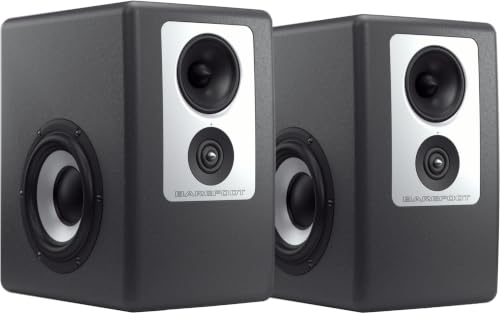
The Barefoot Sound Footprint02 is the best Barefoot premium studio monitor in this guide, and it is the monitor to choose when the goal is a monitor with dual subwoofers and a MEME system, because Barefoot built the Footprint02 as a three-way monitor with a 275-watt amplifier, dual eight-inch subwoofers, and a MEME technology that emulates the sound of other monitors, with a sound that is accurate, a bass that is deep, and a versatility that is unique. The Footprint02 is the monitor for a professional who wants versatility, and it is the reason it is the best Barefoot option in this guide.
The dual subwoofers are the reason the Footprint02 is the standard, with two eight-inch subwoofers that handle the bass, so the low frequencies are deep and controlled, and a three-way design that lets each driver handle only its range, so the distortion is low, and a MEME technology that emulates the sound of a hi-fi speaker, a car stereo, and a phone, so the mixer can check the mix on different systems, without leaving the studio. The Footprint02 has a 275-watt amplifier that gives the monitor enough power for a professional room, and it has a tweeter that is clear, so the high frequencies are detailed. The Footprint02 is the monitor that a professional buys when the goal is a versatile premium monitor, and it is the monitor that proves a monitor can emulate other systems.
The practical details are built for a professional room. The Footprint02 is a three-way monitor, which fits on a meter bridge or on a stand, and it has a sturdy cabinet that does not resonate, and it has a power switch on the back. The Footprint02 is the monitor that a professional buys when the budget is generous, and the goal is a monitor that will translate, and it is the monitor that is the most recommended Barefoot premium in the world.
The trade-offs are that the Footprint02 is a premium monitor, so it is expensive, although it is the best Barefoot option in this guide, and it needs a treated room, because a premium monitor in a bad room will still sound bad. But as a Barefoot premium studio monitor, the Footprint02 is the best in this guide, and it fits a professional room, a mastering studio, and anyone who wants a versatile monitor.
Check price on Amazon: Barefoot Sound Footprint02
HEDD Type 30 MK2
The HEDD Type 30 MK2 is the best HEDD premium studio monitor in this guide, and it is the monitor to choose when the goal is a three-way monitor with an AMT tweeter, because HEDD built the Type 30 MK2 as a three-way monitor with a 900-watt amplifier, an AMT tweeter, and a seven-inch woofer, with a sound that is detailed, a bass that is deep, and a treble that is airy. The Type 30 MK2 is the monitor for a professional who wants a HEDD, and it is the reason it is the best HEDD option in this guide.
The AMT tweeter is the reason the Type 30 MK2 is the standard, with an Air Motion Transformer that moves air faster than a dome tweeter, so the high frequencies are more detailed, with a clarity that a dome cannot match, and a seven-inch woofer that handles the bass, so the low frequencies are deep, and a three-way design that lets each driver handle only its range, so the distortion is low. The Type 30 MK2 has a 900-watt amplifier, which is the most powerful in this guide, and it gives the monitor enough power for a large room, and it has a bass that goes deep, with a low-frequency extension that is the best in this guide. The Type 30 MK2 is the monitor that a professional buys when the goal is a premium monitor with an AMT tweeter, and it is the monitor that proves a three-way design can be the best for a professional room.
The practical details are built for a professional room. The Type 30 MK2 is a three-way monitor, which fits on a meter bridge or on a stand, and it has a sturdy cabinet that does not resonate, and it has a power switch on the back, with a standby mode. The Type 30 MK2 is the monitor that a professional buys when the budget is generous, and the goal is a monitor that will translate, and it is the monitor that is the most recommended HEDD premium in the world.
The trade-offs are that the Type 30 MK2 is a premium monitor, so it is expensive, although it is the best HEDD option in this guide, and it needs a treated room, because a premium monitor in a bad room will still sound bad. But as a HEDD premium studio monitor, the Type 30 MK2 is the best in this guide, and it fits a professional room, a mastering studio, and anyone who wants an AMT tweeter.
Check price on Amazon: HEDD Type 30 MK2
Buying Guide
Calibrate the monitors to the room, or the room will lie
A premium monitor in an untreated room will sound boomy, because the room will reflect the sound, and the bass will build up in the corners, while a premium monitor that is calibrated to the room will sound flat, because the calibration measures the room and adjusts the monitor to it, so the sound is accurate. The Genelec 8361A has a SAM calibration system that does this automatically, and the other monitors can be calibrated with a measurement microphone and software, and a professional room should be calibrated on the first day, and re-calibrated when the room changes, because a monitor that is calibrated will tell the truth, and a monitor that is not will lie, and the calibration is the most important step after the treatment.
Treat the room first, then buy the premium monitor
A premium monitor should be bought after the room is treated, not before, because a premium monitor in a bad room will sound bad, and a budget monitor in a good room will sound good, so the room should be treated first, with absorption at the first reflection points, bass traps in the corners, and a rug on the floor, and the premium monitor should be bought second, when the room is ready. A professional who buys a premium monitor before treating the room will be disappointed, and a professional who treats the room first will be happy, because the room matters as much as the monitor, and a premium monitor is wasted in a bad room.
A three-way monitor is the right choice for a premium
A three-way monitor has a woofer for the bass, a midrange for the vocals, and a tweeter for the treble, so each driver handles only its range, and the distortion is low, while a two-way monitor has a woofer and a tweeter, so each driver handles a wider range, and the distortion is higher. A premium monitor should be a three-way, because the three-way design is more accurate, and the monitors in this guide are all three-way, with the Genelec 8361A, the ATC SCM45A Pro, the Focal Trio6 Be, the Neumann KH 310, the Barefoot Footprint02 and the HEDD Type 30 MK2 all being three-way, and a buyer who wants a premium monitor should choose a three-way, because it is the design that the professionals use.
A coaxial monitor gives the most stable image
A coaxial monitor places the tweeter and the midrange on the same axis, so the sound comes from a single point, and the image does not shift when the listener moves, while a non-coaxial monitor places the drivers apart, so the image can shift. The Genelec 8361A is a coaxial monitor, and it has the most stable image in this guide, and a professional who moves while mixing should choose a coaxial monitor, because the image will stay stable, and a professional who sits still can choose any monitor, because the image will be stable anyway. A coaxial monitor is the right choice for a nearfield, and a three-way monitor is the right choice for a midfield, and a buyer who is unsure should choose a coaxial nearfield, because it is the most forgiving.
Check the bass extension, and do not assume it is enough
A premium monitor should have a bass that goes deep, with a low-frequency extension that is the best in its class, and a buyer should check the specification before buying, because a monitor with a bass that does not go low enough will not show the low end, and a mix made on it will have too much bass, or too little. The monitors in this guide all have a deep bass, with the Genelec 8361A, the Neumann KH 310 and the HEDD Type 30 MK2 having the deepest, and a buyer who checks the bass extension will know, and a buyer who does not will be surprised, and a subwoofer can be added later, when the bass has to go lower, although a premium monitor should not need one.
Test the premium monitor in the room, and listen for a week
A premium monitor should be tested in the room for a week, with a check that the bass is deep, the midrange is clear, the treble is detailed, and the stereo image is stable, because a premium monitor that works will make an audible difference, and a premium monitor that does not will not. Play a familiar track, listen for the bass, the image and the clarity, and compare it with the previous monitors, because the difference is the reason the premium monitor was bought, and a premium monitor that makes no difference should be returned, and a premium monitor that makes a difference should be kept, because the ear is the best judge of a premium monitor.
Frequently Asked Questions
What is the best premium studio monitor?
The Genelec 8361A is the best overall premium studio monitor, because its three-way coaxial design places the tweeter and midrange on the same axis, so the stereo image is stable, and its SAM calibration system measures the room and adjusts the monitor to it, so the sound is flat in any room. The ATC SCM45A Pro is the best ATC, the Focal Trio6 Be is the best Focal, the Neumann KH 310 is the best Neumann, the Barefoot Footprint02 is the best Barefoot, and the HEDD Type 30 MK2 is the best HEDD, and the right choice depends on the room size, the budget, and whether the goal is a nearfield or a midfield.
Do I need a treated room for premium monitors?
Yes, because a premium monitor in an untreated room will sound boomy, and the room will reflect the sound, while a premium monitor in a treated room will sound clear, because the treatment absorbs the reflections, and the bass is controlled. A room should have absorption at the first reflection points, bass traps in the corners, and a rug on the floor, and a premium monitor should be bought after the room is treated, not before, because a premium monitor is wasted in a bad room, and a budget monitor in a good room will sound good, so the room matters as much as the monitor.
What does 10000 mean in studio monitors?
The number 10000 in this keyword is read as the premium class, the monitors that sit just below the flagships, with a price and a performance that place them among the best studio monitors available, without the cost of the very top, and the monitors in this guide are all premium, with a three-way design, a deep bass, and a low distortion, which are the features that define the top class. A buyer who searches for 10000 is looking for the best monitors at a premium level, and the guide covers the six that the community recommends, from the Genelec 8361A to the HEDD Type 30 MK2, with each one being a premium monitor in its own right.
Is a three-way monitor better than a two-way monitor?
Yes, for a premium monitor, because a three-way monitor has a woofer for the bass, a midrange for the vocals, and a tweeter for the treble, so each driver handles only its range, and the distortion is low, while a two-way monitor has a woofer and a tweeter, so each driver handles a wider range, and the distortion is higher. A three-way monitor is more accurate, and the monitors in this guide are all three-way, with the Genelec 8361A, the ATC SCM45A Pro, the Focal Trio6 Be, the Neumann KH 310, the Barefoot Footprint02 and the HEDD Type 30 MK2 all being three-way, and a buyer who wants a premium monitor should choose a three-way.
Should I buy a premium monitor or a flagship monitor?
A premium monitor is the right choice when the budget is generous but not unlimited, because it offers most of the accuracy of a flagship at a lower cost, while a flagship monitor is the right choice when the budget is unlimited, and the goal is the very best, with the Genelec 8351B, the Neumann KH 420 and the Adam S3V being flagships that cost more. A professional who buys a premium monitor will get a monitor that translates, and a professional who buys a flagship will get a monitor that translates a little better, and the difference is smaller than the price gap, so a premium monitor is the best value for most professionals, while a flagship is the best for those who need the very best.
Do premium monitors need a subwoofer?
Not usually, because a premium monitor has a bass that goes deep, with a low-frequency extension that is the best in its class, and a subwoofer is only needed when the bass has to go lower, such as for film, electronic music, or a large room, and a subwoofer can be added later, when the budget allows. A subwoofer should be placed carefully, and calibrated to the monitors, because a subwoofer that is too loud will make the mix boomy, and a subwoofer that is too quiet will not help, and a professional who adds a subwoofer should calibrate it with the monitors, so the bass is balanced, and the mix translates, because a bass that is balanced is a bass that can be trusted, and a premium monitor that is paired with a subwoofer will show the low end clearly.
Conclusion
The best studio monitor in the 10,000 class is the premium monitor that tells the truth in a treated room, and in this guide the Genelec 8361A is the best overall choice, because it is the standard premium nearfield. The ATC SCM45A Pro is the best ATC, the Focal Trio6 Be is the best Focal, the Neumann KH 310 is the best Neumann, the Barefoot Footprint02 is the best Barefoot, and the HEDD Type 30 MK2 is the best HEDD. Calibrate the monitors to the room, treat the room first, choose a three-way monitor, check the bass extension, and test the premium monitor for a week, because a mix that is made on a premium monitor will translate, and a mix that translates is a mix that can be trusted, and a premium monitor that is chosen well will serve the studio for many years, because a monitor that is built to a professional standard will outlast several computers, several interfaces, and several rooms, and will still tell the truth when the next upgrade arrives, in any room.