What's inside
As an Amazon Associate I earn from qualifying purchases. This post may contain affiliate links at no extra cost to you.
The keyword for this guide is spelled 6 incjh, which is a misspelling of 6 inch, and the intent is clear: speakers in the 6-inch class, which in practice means 6-inch and 6.5-inch models together. The two sizes are so closely related that most buyers shop them as one category, and most cars that take a 6-inch speaker will also take a 6.5-inch one with an adapter ring. This guide treats the class as a whole, explains the sizing, and compares six real speakers that fit the factory locations most cars use.
The 6-inch class is the most common speaker size in cars, and it is the size where the aftermarket offers the widest choice. The six speakers below cover the main options: a shallow-mount for tight doors, a detailed coaxial with an aimable tweeter, a smooth and refined model for long drives, a best-value upgrade, a three-way for a fuller sound, and a punchy dynamic model for loud listening. Each one is judged on fit, sensitivity, and sound, because those are the three things that decide whether a speaker works in your car.
Quick picks: best car speakers 6 incjh
| # | Product | Where to buy |
|---|---|---|
| 1 | JBL Club 620F | Check on Amazon |
| 2 | Infinity Reference 6532IX | Check on Amazon |
| 3 | Alpine S-S65 | Check on Amazon |
| 4 | Kicker 46CSC654 | Check on Amazon |
| 5 | Pioneer TS-A1670F | Check on Amazon |
| 6 | Rockford Fosgate R165X3 | Check on Amazon |
Quick Comparison
The table below gives a fast overview of the speakers in this guide, so you can shortlist two or three models before reading the detail. Every model here is a real, widely sold speaker, and each one suits a slightly different room, system, or way of listening.
| Speaker | Size / type | Best for |
|---|---|---|
| JBL Club 620F | 6.5-inch shallow-mount coaxial | Fits tight doors, loud on factory power |
| Infinity Reference 6532IX | 6.5-inch coaxial, 93dB sensitivity | Best detail in the 6-inch class |
| Alpine S-S65 | 6.5-inch coaxial, S-Series | Smooth, refined 6-inch sound |
| Kicker 46CSC654 | 6.5-inch coaxial, 100W RMS | Best value 6-inch upgrade |
| Pioneer TS-A1670F | 6.5-inch 3-way coaxial | Big, full 6-inch sound |
| Rockford Fosgate R165X3 | 6.5-inch 3-way coaxial, Punch series | Punchy dynamics in the 6-inch class |
The Speakers in Detail
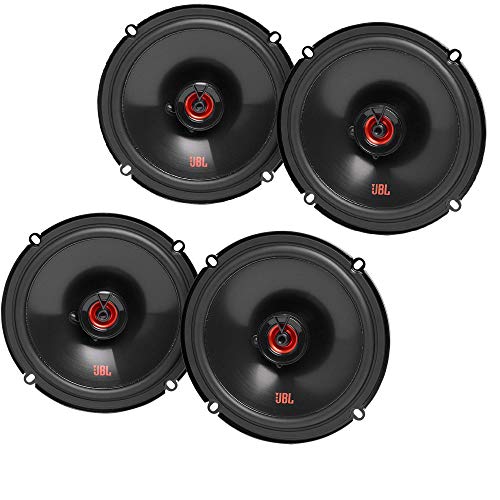
JBL Club 620F
The JBL Club 620F is a shallow-mount 6.5-inch car speaker, and it is the natural starting point for a guide to 6-inch-class speakers, because the 6-inch and 6.5-inch sizes are so closely related that most buyers shop them together. The 620F is the shallow version of JBL’s Club coaxial line, designed for doors where a standard-depth speaker would hit the window mechanism, and it brings the same Plus One woofer cone and edge-driven silk-dome tweeter as its deeper siblings. With a sensitivity of 92dB, it plays loud on factory power.
The Club 620F sounds open and lively, with a bass response that is fuller than the shallow depth suggests and a treble that stays smooth even when the volume climbs. The shallow design is the key feature: it fits into doors that would otherwise need a spacer or a different speaker entirely, which saves time and money on installation. The rugged polypropylene cone stands up to the heat and humidity inside a car door, and the compact frame fits a wide range of vehicles.
Strengths: Shallow mounting depth fits doors where standard speakers will not, which solves the most common installation problem in this size class. High sensitivity means loud, clean sound on factory power. The Plus One cone gives strong bass for the size, and the silk-dome tweeter keeps the treble smooth.
Trade-offs: The shallow design trades a little bass depth for fit, so it will not dig as deep as a full-depth speaker. The 3-ohm impedance should be used as a matched pair rather than mixed with factory speakers. It will not replace a subwoofer for the lowest notes.
Who it fits: Drivers with shallow door cavities who need a 6-inch-class speaker that actually fits, and anyone upgrading factory audio on a factory head unit. It suits daily drivers and first-time upgraders alike.
Check the mounting depth before you buy, then play a familiar track and notice how much clearer vocals become compared with the factory speakers. The 620F should sound open and lively at normal volumes, with bass that stays tight rather than boomy.
Infinity Reference 6532IX
The Infinity Reference 6532IX is a 6.5-inch two-way car speaker that sits at the top of the 6-inch class for detail, and it is a fixture in roundups of this size for good reason. It pairs a Plus One polypropylene woofer with an edge-driven textile tweeter that can be aimed at the listener, which matters because door speakers fire at your legs rather than your ears. With a sensitivity of 93dB, it plays loud on factory power, and the adjustable tweeter lets you tune the sound to the car.
The 6532IX sounds detailed and musical, with a midrange that brings vocals forward and a treble that is crisp without turning harsh. The Plus One cone gives the speaker more bass than most 6.5-inch coaxials, which helps in cars where a subwoofer is hard to fit. The tweeter level can be adjusted, so you can tame the top end if the door location makes it too bright, and the speaker fits most factory 6.5-inch locations with the usual adapter rings.
Strengths: The adjustable tweeter is a genuine advantage in a car, where the door angle is far from ideal. High sensitivity means loud, clean sound on factory power. The Plus One cone gives strong bass for the size, and the sound is detailed and musical across genres.
Trade-offs: The 3-ohm impedance should be used as a matched pair rather than mixed with factory speakers. The tweeter adjustment is a small switch that is fiddly to reach once the speaker is installed, so set it before you bolt the door panel back on. Bass depth is good but will not replace a subwoofer.
Who it fits: Drivers who value detail and want to aim the treble toward the listener, especially those who listen to acoustic music, jazz, and vocals. It suits most cars with 6.5-inch door locations and anyone who wants a refined sound in this size class.
Set the tweeter to the lower level first, then try the higher setting, and notice which one sounds more natural from the driving seat. Play a vocal track and listen for the clarity of the voice: the 6532IX should sound detailed and present without ever turning harsh.
Check price on Amazon: JBL Club 620F

Alpine S-S65
The Alpine S-S65 is a 6.5-inch coaxial speaker from Alpine’s S-Series, and it is the pick here for drivers who value refinement over raw volume in the 6-inch class. It pairs a polypropylene woofer with a silk-dome tweeter, with a design that emphasises a smooth, natural sound rather than a loud one. In a car, where the listener sits close to the speakers, that smoothness matters: a harsh tweeter at arm’s length is fatiguing on a long drive.
The S-S65 sounds clean and balanced, with a midrange that is natural and unforced and a treble that stays smooth even at higher volumes. Bass is tight and controlled rather than boomy, which suits a car cabin where a boomy door speaker quickly becomes tiring. The speaker is also well built, with a design that fits most factory 6.5-inch locations and a reputation for reliability that Alpine has earned over decades in car audio.
Strengths: Smooth, refined sound with a natural midrange and a silk-dome treble that never gets harsh, which matters in a car cabin. The bass is tight and controlled, and the build quality is excellent. It works well on factory power and responds to an amplifier.
Trade-offs: Maximum volume is lower than the high-sensitivity speakers in this guide, so it will not play as loud on a factory head unit. Bass depth is good but not deep, and the speaker benefits from an amplifier for its best performance. The styling is understated.
Who it fits: Drivers who listen to acoustic music, jazz, and vocals, and who value a smooth, fatigue-free sound on long drives. It suits most cars with 6.5-inch door locations and anyone who finds bright speakers tiring.
Play a vocal track and notice how natural the voice sounds, with no sibilance or edge. Then try a longer drive and check whether the sound stays pleasant after an hour, because that is where a smooth speaker earns its keep.
Check price on Amazon: Infinity Reference 6532IX

Kicker 46CSC654
The Kicker 46CSC654 is a pair of 6.5-inch coaxial car speakers that is the best-value upgrade in the 6-inch class, and it is the pick here for drivers who want a clear improvement without spending much. It pairs a polypropylene woofer with a PEI tweeter in a straightforward two-way design, with a stamped steel basket and a depth that fits most factory 6.5-inch locations without modification. For a first audio upgrade, it is the safest choice in this guide.
The CSC654 sounds clean and balanced, with a midrange that brings vocals forward and a treble that stays smooth at normal volumes. Bass is fuller than most factory speakers, and the speaker handles the power of a typical factory head unit without strain. Kicker designs its CS series for easy installation, with mounting hardware that covers the common factory patterns, and the speakers are built to survive the heat, cold, and vibration of a car door over years of use.
Strengths: Excellent value, with a clear improvement over factory speakers in clarity, bass, and volume. The drop-in fit covers most vehicles, and the build is tough enough for daily use. The sound is balanced rather than coloured, so it suits every genre, and the speaker works well on factory head-unit power alone.
Trade-offs: Detail and refinement are a step behind more expensive component speakers, and the treble can sound a little plain next to a silk-dome tweeter. Bass depth is good for a coaxial but will not replace a subwoofer, and the speaker benefits from an amplifier if you want real volume.
Who it fits: Drivers who want the biggest improvement for the least money and effort, in almost any car with 6.5-inch door locations. It suits daily drivers, first cars, and anyone upgrading factory audio for the first time.
Play a familiar track through the factory speakers first, then through the CSC654, and notice how much clearer vocals become and how much tighter the bass feels. The difference should be obvious within seconds, which is the point of a budget upgrade.
Check price on Amazon: Alpine S-S65

Pioneer TS-A1670F
The Pioneer TS-A1670F is a 6.5-inch three-way coaxial speaker, and it is the pick here for drivers who want the biggest sound from a 6-inch-class speaker. It adds a dedicated midrange driver and a tweeter to the main woofer, and that extra driver is the reason it sounds fuller than most two-way rivals at this price. It is part of Pioneer’s A-series, designed as a direct factory replacement, with a shallow mounting depth and hardware that fits most vehicles without cutting or drilling.
The TS-A1670F sounds big and confident, with a midrange that carries vocals and guitars clearly and a treble that adds sparkle without harshness. The three-way design spreads the work across three drivers, so each one operates in the range where it performs best, which keeps distortion low even at higher volumes. The speaker handles the power of a factory head unit comfortably and responds well to an amplifier if you add one later, which makes it a flexible long-term choice.
Strengths: The three-way design gives a fuller, more detailed sound than most two-way speakers at this price. Installation is straightforward, with a shallow depth and hardware that fits most factory locations. The speaker plays loud without strain and works well on factory power, with headroom for an amplifier later.
Trade-offs: The extra driver adds complexity, and the sound is lively rather than refined, so critical listeners may prefer a two-way component set. Bass depth is good but not deep, and the speaker needs a subwoofer for the lowest notes. The styling is plain.
Who it fits: Drivers who want a big, confident sound from a simple drop-in upgrade, especially in a car where the factory speakers are small or weak. It suits all genres and anyone who listens loud on the road.
Play a track with layered instruments and notice how the midrange driver keeps vocals and guitars separate rather than blurred together. Then turn the volume up and listen for distortion: the TS-A1670F should stay clean well past the point where a factory speaker gives up.
Check price on Amazon: Kicker 46CSC654

Rockford Fosgate R165X3
The Rockford Fosgate R165X3 is a 6.5-inch three-way coaxial from the company’s Punch series, and it is the pick here for drivers who want punch and dynamics in the 6-inch class. It pairs a polypropylene woofer with a midrange driver and a PEI dome tweeter, with Rockford’s signature voicing that emphasises a strong, driving bass and a lively top end. It is a speaker built for the road, with a tough construction that handles the vibration and temperature swings of a car door.
The R165X3 sounds energetic and forward, with a bass response that is punchy rather than bloated and a midrange that keeps vocals clear. The three-way design gives the speaker a wide frequency range, and the high sensitivity means it plays loud on factory power. Rockford designs its Punch speakers to be driven hard, and the R165X3 stays composed at volumes where cheaper speakers distort, which makes it a good match for drivers who like their music loud.
Strengths: Punchy, dynamic sound with strong bass for the size, and a lively character that suits rock, pop, and hip-hop. The speaker plays loud without strain and is built to survive the car environment. The three-way design covers a wide frequency range, and the price is accessible.
Trade-offs: The forward voicing can sound bright with already bright recordings, and the treble is detailed rather than silky. Bass depth is good but will not replace a subwoofer, and the speaker benefits from an amplifier for its best performance. The styling is functional rather than premium.
Who it fits: Drivers who like their music loud and punchy, especially rock, pop, and hip-hop, and who want a tough speaker that can handle high volumes. It suits daily drivers and anyone upgrading from weak factory speakers.
Play a rock track with a driving beat and notice the punch of the bass and the energy of the midrange. Then try a quieter acoustic track and listen for whether the speaker can settle down: the R165X3 should sound lively without ever turning harsh.
Check price on Amazon: Pioneer TS-A1670F

6-Inch, 6.5-Inch, and the Adapter-Ring Trick
The confusion between 6-inch and 6.5-inch speakers is one of the most common in car audio, and it has a simple explanation. A speaker’s stated size is a nominal figure based on the diameter of the cone or the frame, and different manufacturers measure it slightly differently, so a speaker labelled 6.5 inches may have a cone that is barely larger than one labelled 6 inches. In practice, the mounting hole for a 6-inch speaker and a 6.5-inch speaker is often the same, and an adapter ring bridges the gap where it is not.
The practical rule is to measure the factory speaker and the mounting hole rather than trusting the label alone. If the hole is around 6 inches across, a 6.5-inch speaker with an adapter ring will usually fit, and if the hole is smaller, a true 6-inch or a 6.5-inch shallow-mount may be needed. Adapter rings are cheap, widely available, and included with many speakers, and they are the reason the 6-inch and 6.5-inch classes are effectively one category for most buyers. Buy the speaker that sounds best and fits with an adapter, rather than limiting yourself to an exact size match.
Check price on Amazon: Rockford Fosgate R165X3
Shallow Mounts and Window Clearance
Mounting depth is the measurement that causes the most installation problems in the 6-inch class, because car doors are shallow and the window mechanism sits directly behind the speaker. A speaker that is too deep will hit the glass when the window goes down, which is a problem you only discover after the door panel is off and the speaker is bolted in. The safe approach is to measure the depth available in the door before you buy, and to choose a speaker that fits with room to spare.
Shallow-mount speakers like the JBL Club 620F are designed for exactly this problem, with a compact basket and a reduced depth that fits doors where a standard speaker would not. A spacer ring can also help, by moving the speaker a little further out from the door, but it changes the position of the speaker relative to the door panel and can cause the grille to foul. The best solution is a speaker that fits without a spacer, and that is why the depth specification deserves as much attention as the diameter.
Measuring Your Doors Properly
The most useful tool for buying 6-inch speakers is a tape measure, and the most useful habit is to use it before you order. Remove the door panel, unbolt the factory speaker, and measure three things: the diameter of the mounting hole, the depth available behind it to the window mechanism, and the clearance between the speaker mounting surface and the door panel. Write the numbers down, with the car model and year, and keep them with you when you shop, because they are the facts that decide whether a speaker fits.
The depth measurement deserves particular care, because it is the one most buyers skip and the one that causes the most trouble. Lower the window fully and measure from the mounting surface to the glass, then check the speaker’s mounting depth in its specification sheet and confirm that it fits with at least a few millimetres to spare. A speaker that clears the glass by a hair will still hit it when the door flexes on a rough road, so a small margin is worth having. Measure twice, buy once, and the installation will be straightforward.
When an Adapter Ring Is Not Enough
An adapter ring solves most fitment problems in the 6-inch class, but there are cases where it is not enough, and it is worth knowing what they are before you buy. A ring adapts the bolt pattern and the diameter, but it cannot create depth where there is none, and a speaker that is too deep will still hit the window even with a ring fitted. A ring also moves the speaker slightly outward, which can cause the grille to foul the door panel if the panel is tight, and it can change the angle of the speaker relative to the listener.
In those cases, the right answer is a different speaker rather than a thicker ring. A shallow-mount design like the JBL Club 620F is made for tight doors, and it fits where a standard-depth speaker cannot, with only a small sacrifice in bass depth. A spacer ring can help in borderline cases, but it is a compromise rather than a solution, and it should be used sparingly. If the measurements say a speaker will not fit, believe them, and choose a model that will.
Buying Guide
Start by measuring the factory speaker and the mounting hole, because the label on the box is only a rough guide. Measure the diameter of the hole, the depth available behind it, and the clearance to the window mechanism, and write the numbers down before you shop. A speaker that fits the hole but not the depth is useless, and a speaker that fits the depth but needs an adapter ring is fine, so long as you know that before you buy.
Sensitivity is the number that matters most on a factory head unit, because it decides how loud a speaker plays on a small amount of power. A speaker rated at 93dB plays noticeably louder than one rated at 88dB on the same radio, and that difference is the difference between a satisfying upgrade and a disappointing one. The JBL and Infinity models here are the most sensitive, and they are the best choice for a weak radio.
Impedance deserves a moment of attention, because some of the most sensitive speakers here are rated at 3 ohms rather than the usual 4. A 3-ohm speaker draws more power from the head unit, which is why it plays louder, but it should be used as a matched pair rather than mixed with factory speakers, and it is worth confirming that your head unit is comfortable with the lower load. Most modern head units are, but a very old one may not be.
Choose between a two-way and a three-way design based on what you listen to. A two-way speaker, with a woofer and a tweeter, is simpler, cleaner, and usually more refined, which suits acoustic music and vocals. A three-way speaker, with an added midrange driver, sounds fuller and more detailed, which suits rock, pop, and electronic music, but it adds complexity and can sound less coherent. There is no wrong answer, only a better match for your playlist.
Installation is simpler than most buyers fear, and it is worth doing properly. The door panel comes off with a trim tool and a few screws, the factory speaker unbolts, and the new one bolts in its place, usually with an adapter ring and a wiring harness adapter that avoids cutting any factory wires. Take your time, keep the screws organised, and test the speaker and the window before you refit the door panel, because finding a problem afterwards means taking it all apart again.
Finally, plan the next upgrade, even if you do not buy it yet. A pair of 6-inch speakers is the first step, and the next is usually a small amplifier, which gives the speakers the power to play louder and cleaner, or a compact subwoofer, which adds the deep bass that no door speaker can produce. A speaker that responds well to an amplifier, like the Alpine S-S65 or the Kicker CSC654, is a better long-term choice than one that only works on factory power.
Frequently Asked Questions
What does 6 incjh mean?
Incjh is a misspelling of inch, and the keyword is asking for 6-inch car speakers. In practice, the 6-inch class includes both 6-inch and 6.5-inch models, because the two sizes are so closely related that most cars accept either one with an adapter ring. This guide treats the class as a whole and compares six real speakers in the 6-inch and 6.5-inch sizes.
Will a 6.5-inch speaker fit in a 6-inch hole?
Usually yes, with an adapter ring. The mounting hole for a 6-inch speaker and a 6.5-inch speaker is often the same size, and an adapter ring bridges the gap where it is not, by providing a mounting surface that matches the new speaker’s bolt pattern. Measure the hole and the depth available before you buy, because depth is more often the limiting factor than diameter, and a speaker that is too deep will hit the window mechanism.
What is the difference between a 6-inch and a 6.5-inch speaker?
Very little in practice. The stated size is a nominal figure based on the cone or frame diameter, and different manufacturers measure it slightly differently, so a 6.5-inch speaker may have a cone barely larger than a 6-inch one. The 6.5-inch size is more common and offers a wider choice, while a true 6-inch speaker is sometimes needed in cars with a smaller factory hole. Buy the speaker that fits and sounds best, rather than worrying about half an inch on the label.
How do I know what size speakers my car takes?
Check a fitment guide for your specific car, make, model, and year, which will list the factory speaker size for each location. You can also remove the door panel and measure the factory speaker and the mounting hole directly, which is the most reliable method. Measure the diameter of the hole, the depth available, and the clearance to the window, and write the numbers down before you shop.
Are shallow-mount speakers worse than standard ones?
A shallow-mount speaker trades a little bass depth for fit, because the reduced depth means a smaller magnet and less excursion, but the difference is small and the benefit is large: it fits doors where a standard speaker would hit the window. In a tight door, a shallow-mount speaker that fits properly sounds far better than a standard speaker that cannot be installed at all. The JBL Club 620F is a good example of a shallow design that loses very little to its full-depth siblings.
Do I need an adapter ring for 6-inch speakers?
Often yes, and it is nothing to worry about. Adapter rings are cheap plastic or MDF rings that adapt the factory mounting hole to the new speaker’s bolt pattern, and they are included with many speakers or available separately for a small amount. They also help seal the speaker to the door, which improves the bass. Buy the ring that matches your car and the speaker, and fit it before you bolt the speaker in.
Will 6-inch speakers give me enough bass?
A 6-inch speaker gives noticeably more bass than a factory speaker, with a fuller, tighter low end that makes music sound complete, but it cannot reproduce the deepest bass notes, and a subwoofer is still needed for the full low end. The 6×9-inch size offers deeper bass where it fits, usually in the rear deck, but the 6-inch size is the better choice for the front doors, where imaging matters more than sheer output.
Should I buy coaxial or component 6-inch speakers?
A coaxial speaker is the right choice for a first upgrade, because it fits in a single factory location, installs in minutes, and costs less than a component set. A component set sounds better, with a higher soundstage and a cleaner midrange, but it costs more, needs more installation work, and usually needs an amplifier. Buy a coaxial first, live with it, and move to components when you are ready to install them properly.
What is the difference between 6.5-inch and 6.75-inch speakers?
Very little in practice, and the two sizes are often interchangeable with an adapter ring. A 6.75-inch speaker is slightly larger than a 6.5-inch one, with a little more cone area, but the mounting hole is usually the same, and most cars that take one will take the other. Check the measurements for your car rather than trusting the label, and buy the speaker that fits and sounds best.
Are oval speakers better than round ones?
An oval speaker, like a 6×9-inch model, has more cone area than a round speaker of the same nominal size, which gives it deeper bass and more output. A round speaker images better and is easier to replace, because the mounting is simpler and the sound is more even across the listening area. For the front doors, where imaging matters, a round speaker is usually the better choice; for the rear deck, where bass matters, an oval one is often better.
Do rear door speakers matter as much as front ones?
No, the front speakers do most of the work and they are the ones you actually hear. The rear speakers add fill and ambience, and they matter less to the overall sound, which is why this guide recommends upgrading the fronts first. If the budget stretches to all four, match them so the sound is consistent, but do not sacrifice the quality of the front pair to afford the rears.
Can I reuse the factory grilles with new speakers?
Usually yes, and it is often the neatest solution, because the factory grille is designed for the door panel and keeps the interior looking standard. A coaxial speaker with a low-profile tweeter will usually fit behind the factory grille, while one with a protruding tweeter may need the grille that comes with the speaker. Check the tweeter height before you buy, and test the fit with the door panel in place before you finish the installation.
Do I need to upgrade the wiring for 6-inch speakers?
No, the factory wiring is adequate for a coaxial speaker running on head-unit power, and a wiring harness adapter lets you connect the new speaker without cutting any factory wires. Heavier wiring becomes worthwhile when you add an amplifier, because the amplifier delivers more current than the thin factory wires can carry cleanly, and a proper power cable and speaker wire are part of that upgrade. For a simple speaker swap, the factory wiring is fine, and the money is better spent on the speakers themselves or on sound deadening.
Conclusion
The 6-inch class is the heart of car audio, and the speakers in this guide show why: any one of them will transform a car that still has its factory speakers, with clearer vocals, tighter bass, and a sound that survives the road. The JBL Club 620F is the best choice for tight doors, the Infinity Reference 6532IX is the best for detail, and the Kicker 46CSC654 is the best value, and any of them is a good place to start. Measure first, fit carefully, and give the speakers a week of listening before you decide what to upgrade next.


