Our Top Picks
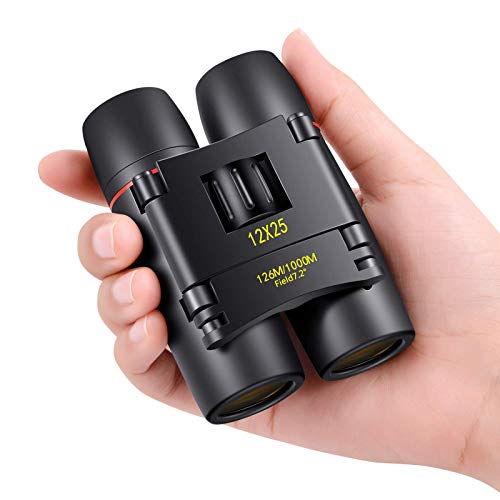 POLDR 12X25 Small Pocket Binoculars Compact for Adults12X253.7 x 2.2 x 0 inches0.4 poundsCheck on Amazon


What's inside
- Why compact glass suits a full match better than big glass
- Exit pupil arithmetic and what your eye can actually use
- Magnification, field of view, and following a moving ball
- Four formats worth considering, and what each one sacrifices
- Roof prisms against reverse-porro designs
- Coatings, layer by layer
- Eye relief, eyecups, and the glasses problem
- Focusing: centre wheels, dioptres, and close focus
- Weather sealing: what the words actually promise
- Weight, straps, shake, and lasting ninety minutes
- Reading listings without being misled
- Matching the binocular to your sport
- Build details that separate seasons of service from a single summer
- A short detour on cleaning and storage
- How to verify a purchase in the first week
- Budget tiers and where the money goes
- Decision summary for the pocket-sized spectator
- Shared binoculars, children, and family outings
- How venue rules and travel habits shape the choice
- Common regrets, gathered from owner reports
- Check prices on Amazon
- A note on binoculars borrowed from other hobbies
As an Amazon Associate I earn from qualifying purchases. This post may contain affiliate links at no extra cost to you.
As an Amazon Associate we earn from qualifying purchases. This guide was built from published specifications, manufacturer documentation, and owner reports rather than from any claim of sideline product trials, and it stays deliberately narrow: pocketable binoculars for watching sport, not the larger glass that birders carry on a chest harness all morning.
Why compact glass suits a full match better than big glass
A stadium seat rewards restraint. You climb stairs with a drink in one hand, squeeze past knees, stand for a goal, sit again, and repeat that cycle for two hours. A binocular that slips into a jacket pocket or hangs flat against a shirt stops being luggage and becomes something you actually lift when play develops. Full-size 8×42 and 10×42 models earn their place at dawn on a marsh, yet inside a bowl of concrete and floodlights their extra bulk mostly buys brightness you rarely need and weight your neck notices by half time.
Consider the simple act of holding an optic steady. A 650 gram instrument magnifies every tremor and tires the small muscles around the shoulders, so viewers lower it, raise it, lower it again, and eventually leave it in a lap. A compact between 200 and 350 grams changes that rhythm. You can keep it raised through a whole passage of play, track a winger down the touchline, drop it for a conversation, and lift it again without negotiating with your own fatigue. That willingness to keep looking is worth more at a match than a marginal gain in twilight performance.
Pocketability also changes security and convenience. Turnstiles, bag checks, and crowded concourses punish dangling equipment. A folded roof-prism compact measuring roughly the length of a phone slides beside a wallet. At a racecourse it fits the inside pocket of a blazer. On a golf course it rides in a side pouch without rattling against clubs. At an athletics meet it can stay around your neck during a long programme of heats without feeling like a medal made of lead.
The trade sits at the edges of the day. Smaller objective lenses gather less light, so an evening fixture under weak floodlights, a winter afternoon fading toward dusk, or a shaded stand will show a dimmer image than a 42 millimetre instrument would deliver. Daytime sport, which describes most football, racing, cricket, baseball, and golf spectating, plays to the compact format instead. Pupils constrict in bright conditions, and a modest exit pupil then fills them completely, which leads directly to the arithmetic that should drive your choice.
Exit pupil arithmetic and what your eye can actually use
Exit pupil is the diameter of the light beam leaving the eyepiece, found by dividing objective diameter by magnification. An 8×21 therefore produces 21 divided by 8, about 2.6 millimetres. A 10×25 gives 25 divided by 10, exactly 2.5 millimetres. Step up to an 8×32 and the result becomes 4 millimetres, noticeably more generous. These are not marketing numbers; they follow from geometry, and any listing that implies otherwise deserves suspicion.
Now place that beam against the human pupil. In bright daylight a healthy pupil narrows to roughly 2 to 3 millimetres. Under stadium floodlights at night it may open toward 4 or 5 millimetres, and in genuine darkness younger eyes can reach 7 millimetres, though that figure shrinks with age. When the exit pupil matches or slightly exceeds the pupil of the eye, the eye receives all the light the optic can pass. When the exit pupil falls short, the image dims and precise eye placement grows fussy, because a small sideways shift clips the beam.
That explains why an 8×21 feels perfectly serviceable at a noon kickoff yet strained during the last twenty minutes of a December fixture. It also explains why the 8×32 occupies a sweet position in this guide: its 4 millimetre exit pupil covers a daylight pupil with room to spare and still behaves respectably as light falls, while the housing remains far smaller than a 42 millimetre body. Shoppers who attend mostly evening events should weight that difference heavily. Shoppers at summer tournaments can ignore it and prioritise pocket size.
Brightness ratings printed on boxes sometimes square the exit pupil and present the result as a relative brightness index. An 8×32 scores 16 by that method, a 10×25 scores 6.25. The comparison is mathematically tidy and practically incomplete, because coatings, glass quality, and internal reflections alter transmission in ways a squared ratio cannot capture. Treat the index as a rough sorting tool between formats, never as a promise about a specific model.
There is a second, quieter consequence. A larger exit pupil forgives imperfect eye position, which matters when you wear sunglasses, when you share the binocular with a child whose interpupillary distance differs from yours, or when you snatch a quick look at a breakaway and cannot settle your eyes carefully into the eyecups. Small-exit-pupil compacts demand a steadier, more deliberate presentation to the eyes. Some viewers adapt within minutes; others find the blackout effect, where part of the view darkens as the eye drifts, persistently annoying.
Magnification, field of view, and following a moving ball
Magnification seduces first-time buyers because a bigger number feels like a straightforward upgrade. Sport punishes that instinct. Every increase in power shrinks the slice of the scene you can see, magnifies hand shake, and makes finding your target slower. Locating a specific player after a long clearance already takes practice at 8x; at 10x the search narrows further, and at the toy zoom figures advertised on some listings the view becomes a trembling tunnel.
Field of view is quoted two ways: linear width at a set distance, commonly feet at 1,000 yards, and angular width in degrees. Divide the linear figure by 52.5 to convert roughly to degrees. A specification of 367 feet at 1,000 yards corresponds to about 7 degrees. Typical 8x compacts land between roughly 330 and 390 feet, while 10x equivalents more often sit between 290 and 340 feet. Individual designs vary, so read the figure for the exact configuration rather than assuming the whole product line shares it.
Why does width beat power for sport? Because play moves laterally. A through ball travels across your view, a horse rounds a bend, a golfer walks from tee to fairway, a point guard pushes a fast break. Inside a wide field you keep both the ball carrier and the developing space around them, which is the context that makes spectating pleasurable. Inside a narrow field you chase the action, overshoot, correct, and miss the pass that mattered. Experienced stadium regulars often describe 8x as relaxing and 10x as busy, and that language maps directly onto field width.
Distance changes the calculation modestly. From the back row of a large arena or the far rail of a racecourse, 10x brings faces, numbers, and saddlecloth colours closer in a way 8x cannot match. The cost remains shake and search time. A practical compromise used by many spectators is to choose 8x for team sports watched from typical seats and 10x for racing or golf, where the subject is farther away and moves along a more predictable line. Neither answer is universal; seat location should decide.
Apparent field of view adds another layer. Multiply the real angular field by magnification and you get the apparent field your eye perceives. A wide apparent field feels immersive, a narrow one feels like looking through a tube even when the real field figures look respectable. Eyepiece design controls this, and it is one reason two binoculars with identical headline numbers can feel strikingly different within ten seconds of raising them.
Four formats worth considering, and what each one sacrifices
The 8×21 pocket format
Nothing else in this category disappears into clothing quite like an 8×21. Folded roof-prism examples approach the size of a matchbox scaled up slightly, weigh close to 200 grams in the lightest cases, and suit spectators who attend casually and value having any magnification over having ideal magnification. The penalties stack up in dim light, in eye comfort during long viewing, and in close focus, which on the smallest bodies can be mediocre. For a sunny afternoon at the cricket or a school sports day, those penalties may never surface.
The 10×25 generalist
Probably the most widely sold compact configuration, 10×25 balances reach against a still-modest body. It serves racing, tennis from the back of a stand, and sightseeing between fixtures. Its 2.5 millimetre exit pupil is the tightest of the formats covered here, so eye placement discipline matters, and the extra power shows hand tremor plainly during a tense final set. Buyers with naturally steady hands and good seats far from the action tend to be happiest with it.
The 8×32 step-up choice
Calling an 8×32 a compact stretches the word slightly, yet beside any 42 millimetre model it remains the smaller, lighter option by a wide margin, and many jackets swallow it without complaint. In return you receive the 4 millimetre exit pupil discussed earlier, usually a broader field, longer eye relief, and eyepieces that feel less like peering through a keyhole. For a season-ticket holder who attends weekly, including night matches, this format repays its extra grams every single week.
The 10×32 distance option
Ten power paired with a 32 millimetre objective yields a 3.2 millimetre exit pupil, a meaningful improvement over 10×25 in fading light while preserving the reach that distance spectators want. Bodies grow chunkier, prices climb, and field width still trails the 8×32 equivalent from the same maker. It fits racegoers and golf followers who found 10×25 dim at evening meetings but refuse to carry full-size glass around a course for five hours.
Roof prisms against reverse-porro designs
Two optical architectures dominate this size class. Roof-prism models run light in a straight line through inline barrels, producing the familiar H shape when folded and the slimmest pockets profile. Reverse-porro models flip the traditional porro arrangement so the objectives sit closer together than the eyepieces, giving a squat, wide body with a distinctive stubby silhouette. Each architecture carries manufacturing and durability implications that spec sheets rarely explain.
Roof prisms demand tight tolerances. The prism surfaces must be ground and aligned precisely, and one surface reflects light in a way that splits it into two polarised components arriving out of step, which softens contrast unless a phase-correction coating is applied. That precision costs money, which is why very cheap roof compacts often disappoint despite attractive numbers, while mid-priced examples with proper coatings perform far beyond their size. The straight barrels also seal well, fold flat, and shrug off knocks in a bag.
Reverse-porro designs achieve good optical correction with looser tolerances, so a modestly priced example can deliver a bright, sharp centre without exotic coatings. The wider body resists pocket carry but offers a steadier two-handed grip, and the greater separation of the internal light path can give an enhanced sense of depth at moderate distances, noticeable when judging how far a fielder stands from the boundary rope. Hinges and housings vary, though, and the format has become less common as roof designs improved at lower prices.
Glass type for the prisms matters in both layouts. BaK-4, a barium crown glass with a higher refractive index, passes the full cone of light without clipping its edges. BK-7, a borosilicate crown, can truncate that cone in short-focal-length compact systems, producing a squared-off or shaded edge to the exit pupil and a subtle vignetting that dims the periphery. Hold a binocular at arm’s length toward a bright wall and inspect the small bright disc in each eyepiece: a clean round disc suggests BaK-4 behaviour, while a disc with flattened, greyish sides points to clipping. Listings that name BaK-4 explicitly are making a verifiable claim; listings that say only premium glass are making noise.
Coatings, layer by layer
Every air-to-glass surface reflects a portion of incoming light. Untreated glass can lose several percent per surface, and a binocular contains many surfaces, so untreated systems waste a large share of the light their small objectives worked to gather and scatter the rest as contrast-killing glare. Anti-reflection coatings exist to claw that light back, and the vocabulary describing them follows an industry ladder worth learning precisely because sellers stretch it.
A lens described simply as coated has one anti-reflection layer on some of its glass, not necessarily all of it. Fully coated raises that to one layer across every air-to-glass surface in the optical path. Multi-coated means at least some surfaces carry multiple layers tuned to different wavelengths. Fully multi-coated, the rung worth seeking, means every surface carries multiple layers. Two models can share identical magnification and objective figures yet differ dramatically in brightness and flare control purely on this ladder, especially when play runs toward a low sun or bright advertising boards.
Phase coating belongs specifically to roof prisms. As noted earlier, the roof surface splits light into components that recombine slightly out of phase, reducing resolution and contrast in a way no amount of anti-reflection treatment fixes. A phase-correction layer on the roof surface realigns those components. In compact roof models, the presence of phase coating separates serious designs from cosmetic ones more reliably than almost any other single feature. Reverse-porro models do not need it, since their prisms avoid the roof geometry entirely.
Additional treatments appear on some models: dielectric mirror coatings on roof prisms raise reflectivity above what aluminium or silver layers achieve, and hydrophobic outer coatings bead rain so a quick shake clears droplets during a shower at an open stadium. Both help at the margins. Neither rescues a design whose basic anti-reflection treatment stops at the bottom rung of the ladder.
Scratch resistance on exposed outer lenses is a separate property from optical coating quality, though listings blur the two. A hard outer layer protects against the grit that accumulates in pockets and bags, which for a pocket binocular is a genuine hazard rather than a theoretical one. Carry any compact in its pouch, however flimsy that pouch seems, because one encounter with loose keys can mark a front element permanently.
Eye relief, eyecups, and the glasses problem
Eye relief is the distance behind the eyepiece at which your eye can still see the entire field. Compact models commonly offer between 9 and 15 millimetres, a range that looks adequate on paper and behaves very differently depending on whether you wear spectacles. Glasses hold the eye farther back, consuming relief. A wearer using a 9 millimetre model will often see a tunnelled image with the edges cut away, no matter how carefully they position the binocular, because their eye physically cannot reach the point where the full field assembles.
If you wear glasses while spectating, treat 14 or 15 millimetres as the practical target and be sceptical of shorter figures. If you do not wear glasses, shorter relief causes no penalty, since your eye settles close to the eyecup naturally. Sunglasses count here too: many spectators who never wear prescription lenses still watch summer sport behind shades, and they run into the same tunnel effect on short-relief models without understanding why the view feels cramped.
Eyecup design decides how repeatably you can find the right distance. Twist-up cups rotate through two or three positive stops, hold their setting while the binocular bounces in a bag, and let glasses wearers lock the cup fully down and everyone else dial in an intermediate stop. Fold-down rubber cups cost less, feel soft against the face, and gradually lose their shape after seasons of folding, sometimes collapsing unevenly so one eye sits closer than the other. For a compact bought to last years of fixtures, positive-stop twist cups are the safer mechanism.
Interpupillary distance adjustment deserves a check as well. The hinge must narrow enough for children and for adults with closely set eyes, and widen enough for broader faces. Compacts usually cover a range near 56 to 72 millimetres, but the smallest double-hinge designs can struggle at the narrow end. If the two circular views refuse to merge into one clean circle, no optical quality elsewhere compensates, because your visual system fights the instrument on every look.
Focusing: centre wheels, dioptres, and close focus
Most compacts in this class focus with a central wheel driving both barrels together, plus a dioptre adjustment, usually on the right eyepiece, that compensates for differences between your own eyes. Set the dioptre once, properly: focus on a distant sign with the left eye through the central wheel while the right eye stays closed, then close the left, open the right, and bring the same sign sharp using only the dioptre ring. After that, the central wheel alone keeps both eyes in step. Skipping this ritual leaves one eye perpetually soft, a common reason new owners wrongly conclude a binocular is faulty.
Wheel feel matters during sport. A wheel that turns too freely overshoots as you track a runner from midfield toward the near touchline, where focus distance changes quickly. A wheel that resists too much makes your whole grip shift. Roughly one to one and a half turns from closest focus to infinity is a workable span; far less feels twitchy, far more feels slow when a wicket falls or a horse jumps a fence and you need the next subject sharp immediately.
Close focus, the nearest distance at which the image stays sharp, typically runs between 2 and 3 metres on decent compacts, though some miniature models manage only 4 or 5 metres. For pure spectating that figure seems irrelevant until you use the binocular to read a scoreboard detail, inspect a player’s boots during a break, or watch a butterfly settle on the outfield rope at a village cricket match. It also governs use in museums, theatres, and concerts, where many compact owners quietly get half their value. A model that focuses to 2 metres serves all those secondary roles; one stuck at 5 metres keeps disappointing outside the stadium.
A small number of compacts use individual eyepiece focusing or fixed-focus designs. Fixed focus sounds convenient and works after a fashion for distant action, but it removes your ability to sharpen the image for your own eyesight and usually pairs with poor close focus and indifferent optical quality. For anyone reading a guide this detailed, a central wheel with a dioptre ring is the configuration to insist on.
Weather sealing: what the words actually promise
Outdoor sport guarantees eventual rain, and internal fogging ends more binocular outings than breakage does. Fog forms when moist air trapped inside the housing condenses on cold internal glass. Manufacturers prevent it by purging the air and filling the body with dry nitrogen, then sealing each opening with O-rings. A nitrogen-filled, O-ring-sealed instrument can move from a cold concourse into warm humid air without misting internally, and it resists dust driven by wind across an exposed terrace.
Vocabulary separates real sealing from suggestion. Waterproof, when used responsibly, means the sealed construction withstands immersion to a stated depth for a stated time, or carries an IPX rating such as IPX7, which corresponds to temporary immersion, while IPX4 covers splashing only. Weather resistant, water resistant, and splash proof describe lesser protection without a defined immersion standard, and some listings use fog proof loosely for models that are merely coated against external misting. Read for the rating digit and the nitrogen mention together; either claim alone tells half the story.
External lens fogging remains possible on any model when warm breath hits a cold eyepiece, and no sealing prevents it. The remedy is patience and a clean microfibre cloth rather than a shirt tail, which drags grit. Rubber armour, common on compacts aimed at outdoor use, adds grip with wet hands and absorbs the knock when the binocular swings against a seat frame, a small but real benefit across a season.
Temperature swings in a parked car harm seals over years, drying O-rings and inviting the moisture the design excluded when new. Store a compact indoors, in its case, away from radiators and dashboards. Owners who follow that dull advice routinely report a decade of clear service from mid-priced glass, while neglected premium models fog early. Care habits outweigh brand tier more often than advertising suggests.
Weight, straps, shake, and lasting ninety minutes
Published weights in this class run from about 200 grams for the smallest 21 millimetre models to around 350 grams for 32 millimetre bodies with armour and larger eyepieces. That spread looks trivial in a specification table and feels decisive around your neck by the second half. Add the strap, case, and lens caps to the true carried figure, because some listings quote a bare body while others include accessories, and the gap between quoting conventions can reach 40 grams on a product whose entire appeal is lightness.
Strap choice shapes comfort as much as mass does. A thin cord strap concentrates load and saws at the neck during a long afternoon; a wider neoprene strap spreads it and adds a little bounce that some wearers love and others find seasickening. Wrist loops suit the smallest compacts carried in a hand or pocket, removing neck load entirely, though they raise the stakes of a fumble over concrete steps. Many regulars thread a compact on a lanyard short enough that the binocular rests on the upper chest, where it neither swings into the seat in front nor tangles with a scarf.
Shake deserves separate attention at 10x. Magnification multiplies the angular size of every tremor, and tremor grows with cold hands, caffeine, standing on tiptoe, and the excitement of a penalty shootout. Bracing helps more than technique slogans: elbows tucked into ribs, the binocular pressed lightly against the brow, a railing or seat back recruited as a rest when one exists. If your hands are unsteady in ordinary life, an 8x model will show you a calmer, more legible image than a 10x model whose theoretical detail dissolves into jitter.
Grip texture and hinge stiffness interact with weight too. A featherweight body with a loose hinge drifts out of alignment for your eye spacing each time it folds into a pocket, forcing a small readjustment ritual on every raise. A slightly heavier body with a firm, smooth hinge holds its setting for months. When owner reports praise a compact for feeling ready the instant it reaches the eyes, hinge behaviour is usually the unglamorous reason behind the compliment.
Reading listings without being misled
The bottom of this market contains products whose specifications collapse under mild questioning, and learning the patterns protects your money. Zoom claims lead the list. A pocket binocular advertised at 20x or 30x, or with a variable zoom sweeping across a huge range, is almost always a toy: at such powers the exit pupil shrinks below 1.5 millimetres, the image darkens to murk, and shake renders detail theoretical. Serious makers stay at fixed 8x or 10x in this size class because physics leaves them no honest alternative.
Field figures get invented next. A listing may quote a field in feet that converts to an implausible angular width for the stated magnification, or copy numbers from a larger model in the same catalogue. Cross-check with the conversion given earlier in this guide and compare against the typical bands for 8x and 10x. A claim far outside those bands is not a breakthrough; it is a copying error at best. Night vision language on an ordinary binocular is another reliable warning. Genuine night vision devices use electronic sensors or image intensifiers, weigh and cost accordingly, and look nothing like a folding compact. A passive binocular gathers existing light; it does not generate a night picture, whatever the headline says.
Inflated objective sizes appear as well, sometimes printed on the housing itself, where a model labelled as 50 millimetre measures closer to 30 across the front element. A ruler settles such questions in seconds after delivery, which is one reason the returns policy matters as much as any specification. Buy where you can return the item after inspecting the exit pupil discs, measuring the objectives, and checking the field claim against a known distant scene. Sellers confident in their optics rarely obstruct that process.
Photographs in listings can mislead about scale. A compact photographed alone against white space might be a 21 millimetre miniature or a chunky 32 millimetre body; only stated dimensions in millimetres, plus weight, resolve the ambiguity. Check those dimensions against a phone or a wallet you own. Several disappointed buyers in owner reports describe expecting pocket size and receiving handbag size because they trusted imagery over numbers.
For readers who split their weekends between the stadium and other kinds of shooting entirely, our research notes also cover action video gear, and anyone comparing optics for fast subjects may want the camera perspective in best 1080 sports cameras before deciding whether magnification or recording matters more on a given day.
Matching the binocular to your sport
Football, rugby, and large stadium codes
Seats in big stadiums sit far from far-side action, which tempts buyers toward 10x, yet the ball crosses the pitch constantly and the wide field of 8x keeps phases of play intelligible. Season-ticket holders in upper tiers lean 10×25 or 10×32; those in mid-tier seats lean 8×25-class or 8×32. Evening kickoffs push the decision toward 32 millimetre objectives regardless of power, purely for the exit pupil margin when floodlights are the only illumination and shadows pool along the far touchline.
Horse racing and outdoor field sports
Racing presents distant subjects moving along a predictable circuit, the scenario where 10x earns its keep. You pick up the field at the far bend, hold one runner, and follow a line you already know. Glare off pale ground and summer haze punish poor coatings here, so the fully multi-coated rung matters more than an extra millimetre of objective. A wrist loop suits racing dress codes better than a broad strap, and a compact that folds truly flat respects the cut of a jacket.
Golf spectating
Following golf means long walks, long waits, and sudden short bursts of action at distances that vary from a green below you to a tee across a valley. Weight discipline dominates: you carry the binocular for five hours to use it for perhaps twenty minutes in total. An 8×21 or a light 8×25 disappears until needed. Close focus helps when play pauses and attention drifts to birds along the rough, a pastime gallery members confess to frequently.
Cricket, baseball, and the long afternoon
Slow sports change the ergonomic equation. Viewing sessions stretch, the same bowler or pitcher is watched repeatedly, and eye comfort across hours outranks momentary reach. Longer eye relief, a larger exit pupil, and eyecups that hold a comfortable position pay off here, which points again toward 8×32 for devotees, while casual attendees at one match a summer will be served happily by the smallest format and a good seat.
Tennis, athletics, and indoor arenas
Shorter viewing distances in tennis and indoor athletics reduce the need for power and raise the value of close focus and a wide field, since a rally crosses the net faster than any focusing wheel turns. Eight power is the ceiling most spectators enjoy; some prefer even less, though lower powers fall outside the formats this guide covers. Bright arena lighting forgives a 21 millimetre objective entirely, making the tiniest compacts a rational choice rather than a compromise.
Travellers who follow sport abroad often pair spectating with sightseeing optics for city breaks, and the travel-camera analysis in best 1 inch sensor travel zoom cameras raises the same reach-versus-size questions from the imaging side, which can clarify how much zoom your trip genuinely needs.
Build details that separate seasons of service from a single summer
Hinge design divides compacts into single-hinge and double-hinge families. A single central hinge, typical of reverse-porro bodies and larger roof models, feels robust and keeps barrels aligned through years of folding. Double hinges let the smallest roof models fold into a remarkably narrow package, each barrel swinging independently, which is brilliant for pockets and slightly fiddly in cold hands wearing gloves. Neither is inherently superior; the right answer follows your carry method.
Focus wheel placement interacts with hinge choice. On double-hinge miniatures the wheel can sit small and recessed, workable for average fingers and awkward for large ones. Trying a friend’s compact for thirty seconds teaches more about wheel ergonomics than any paragraph, and owner reports repeatedly flag tiny wheels as the complaint that grows rather than fades with ownership.
Lens caps on compacts range from thoughtfully tethered objective covers to a single loose cap guaranteed to vanish at the first away match. Tethered or fold-down designs survive; loose designs do not. Similarly, a case with a belt loop changes whether the binocular comes along at all on days when pockets are committed elsewhere. These accessories sound trivial in a buying guide and decisive in lived use, which is precisely why experienced buyers scan the accessory list before the headline specifications.
Alignment, called collimation, is invisible when correct and miserable when wrong. If the two barrels point at slightly different places, your eyes strain to fuse the images, producing headaches that owners often blame on magnification. Quality control at reputable makers checks collimation before shipping; the cheapest no-name products sometimes skip it. A simple check after purchase is to look at a horizontal roofline, then pull the binocular slowly away from your eyes while keeping the line in view: the two images should stay merged rather than splitting apart vertically.
A short detour on cleaning and storage
Compact binoculars live in pockets, glove compartments, and kit bags, environments rich in grit and lint. Blow loose particles off the lenses first, because wiping a dry, dusty lens grinds that dust across the coating. A blower brush, the same inexpensive tool photographers use, costs little and prevents the most common form of owner-inflicted damage. Only after blowing should a microfibre cloth, kept clean in its own small bag, touch the glass, working in gentle circles from the centre outward.
Fingerprints carry oils that etch coatings if left for months, so clean them within days rather than at the end of the season. Lens cleaning fluid formulated for coated optics, applied to the cloth rather than sprayed onto the lens, avoids fluid creeping past seals. Never use household glass cleaner, which can contain ammonia and solvents hostile to optical coatings and to the adhesives holding elements in place.
Straps and cases absorb moisture and stadium spills; let them dry fully before closing the binocular away, or the case becomes a humidity chamber undoing the benefit of nitrogen filling. A small silica gel packet inside a storage box is cheap insurance in damp climates. None of this care is glamorous, and all of it is the difference between an optic that delights in year five and one retired in year two with a haze nobody can polish away.
Water-based spectating raises its own optical questions, and readers who spend off-seasons around boats or pools may find the sealed-housing discussion in best 10 underwater cameras a useful companion on how manufacturers substantiate immersion claims.
How to verify a purchase in the first week
Unbox with a checklist rather than a vague first impression. Confirm the stated dimensions and weight against your own ruler and kitchen scale, allowing small tolerances for strap and caps. Inspect both exit pupil discs against a bright wall for the round, unclipped shape described earlier. Read a distant sign or number plate through each barrel separately by covering the other objective, checking that neither side is obviously softer, then view normally and confirm the merged image feels effortless rather than strained.
Measure the field claim roughly by counting how many known objects fit across the view at a known distance: fence panels, windows on a building, or seats along a row. Precision is unnecessary; a field wildly narrower than promised reveals itself immediately. Work the focus wheel through its full travel listening for gritty patches, set the dioptre using the two-stage method, and fold and unfold the hinge twenty times to feel whether play develops. Check eyecup stops for symmetry.
Then use the binocular at an actual event before the return window closes, because some flaws only appear under real conditions: blackout when you glance sideways at a sudden break, glare when play moves toward the sun, a strap that twists relentlessly. A model that passes the kitchen tests and fails at the ground is still the wrong model for you, and returning it promptly is not fussiness but the process working as intended.
Budget tiers and where the money goes
Without attaching figures to any specific product, the structure of this market is consistent enough to describe in tiers. At the lowest tier, expect BK-7 prisms, partial coatings, fold-down cups, and optimistic specifications; some units perform acceptably in bright light, and quality varies between individual examples of the same model. The middle tier is where value concentrates: BaK-4 prisms, fully multi-coated optics, phase coating on roof models, nitrogen sealing, and twist-up cups appear together, and unit-to-unit consistency improves markedly. The upper tier buys refinement rather than transformation: dielectric coatings, wider fields, smoother mechanics, better flare control, and housings that feel machined rather than moulded.
Spending upward helps most when you attend evening events, wear glasses, or keep the same binocular for many seasons. Spending upward helps least when the binocular will attend two sunny afternoons a year, where a sound middle-tier or even entry model already delivers everything the conditions demand. Matching expenditure to attendance is the least exciting advice in this guide and the advice most likely to leave a buyer satisfied a year later.
Warranty terms belong in the tier comparison. Length of coverage, whether accidental damage is included, and whether the maker services optics domestically all alter the real cost of ownership. A generous warranty on a middle-tier model can outweigh a marginal optical edge from a maker whose repair process involves international shipping and months of waiting during the season you bought the binocular for.
Second-hand compacts tempt with premium names at middle-tier money, but optics hide their history: a dropped unit can hold its looks and lose collimation, and seals age regardless of use. If you buy used, insist on a return option and run the verification checks above immediately. The savings are real when the unit is sound; they evaporate when a repair bill follows.
Readers planning a combined kit for land and shoreline trips sometimes weigh a long-zoom camera instead of separate optics, and the format trade-offs mapped in best bridge cameras with large sensor show how sensor size changes the low-light side of that comparison.
Decision summary for the pocket-sized spectator
Start with your seat and your schedule. Mostly daytime events, distant subjects, steady hands: a 10×25 with fully multi-coated optics and BaK-4 prisms serves well and vanishes into a pocket. Mixed day and evening fixtures, glasses on your face, a season ticket in your wallet: the 8×32 earns its extra size through exit pupil, eye relief, and field width on every visit. Occasional attendance in bright weather, minimal carry above all: an 8×21 does the job honestly, provided its limitations in dim light are accepted before purchase rather than discovered during a winter replay.
Whichever format you choose, hold the specification sheet to account. Verify the field figure against the typical band for its power, demand clarity on coatings rung by rung, look for nitrogen filling paired with a stated water protection level, weigh the complete carried package, and treat zoom claims, invented fields, and night vision language as disqualifying rather than merely optimistic. A compact binocular is a small instrument governed by unforgiving geometry, and the makers who respect that geometry say so in plain, checkable numbers.
Pick the pair that disappears into your matchday routine so completely that, three seasons from now, you will realise you have stopped thinking about the binocular at all and only remember the goals, finishes, and final overs it quietly brought closer.
Shared binoculars, children, and family outings
Many compacts are bought by one spectator and used by a whole row. Sharing exposes design details that solo use hides. A hinge that resists small fingers frustrates a child trying to narrow the barrels to fit a smaller face, while a hinge that moves too freely collapses the setting every time the binocular changes hands. Dioptre settings suffer most from sharing: each new viewer with different eyesight ideally needs the two-stage setup repeated, and in practice nobody performs it mid-match, so a shared compact spends much of its life slightly misadjusted for whoever currently holds it. Families do better choosing a model whose dioptre ring is stiff enough to stay where the primary owner set it, accepting that guests get a nearly sharp view rather than a perfect one.
Children also test durability in unscripted ways. A compact handed to a nine-year-old will be swung, dropped onto concrete, worn backwards, and used to look at the sun unless an adult intervenes quickly, which is why a firm safety talk about never viewing the sun through any binocular belongs in the first five minutes of ownership. Rubber armour, a wrist loop actually attached to a wrist, and a case that closes securely matter more for family use than a final increment of optical refinement. Some parents sensibly buy a modest, sturdy compact as the family unit and reserve better glass for adult-only outings.
Weight interacts with sharing too. A young spectator tires faster and complains louder, and a binocular abandoned on a seat is a binocular at risk of being sat on. The lightest formats earn their keep here even when an adult buyer, shopping alone, might have chosen the larger format for personal use. Thinking about the second and third users before purchase prevents the common outcome where excellent glass stays home because it suits only its owner.
How venue rules and travel habits shape the choice
Some venues restrict bag size, and a few events limit equipment that could obstruct other spectators or be thrown. A pocket compact almost never triggers those rules, which is another practical advantage over larger optics and over cameras with long lenses, categories that security staff scrutinise closely. Checking the venue policy before a major final takes two minutes and prevents the miserable choice between surrendering an item at the gate or missing the start.
Air travel adds its own logic. Optics belong in hand luggage, never in a checked bag that will be thrown, stacked, and subjected to cargo-hold temperatures. A compact in a padded pouch rides safely in a personal item, leaving room for everything else a trip requires. Lithium concerns do not apply to a purely optical instrument, one of the few travel gadgets that crosses borders without paperwork, battery rules, or charging cables. For supporters following a team through a tournament across several cities, that simplicity compounds daily.
Climate at the destination should feed the specification decision as well. A winter tournament in northern latitudes means gloves, early darkness, and breath fogging cold eyepieces, favouring larger focus wheels, generous exit pupils, and twist cups that can be set once and left alone. A summer championship in a hot, bright climate means glare, sweat-slick grips, and pupils stopped down to their smallest, favouring the tiniest formats, textured armour, and coatings that control flare when the sun sits low behind one goal.
Common regrets, gathered from owner reports
Patterns repeat across owner reports with enough consistency to serve as a final filter. The most frequent regret is buying power instead of field: owners describe spending a first season following play through a narrow, shaking view before replacing a 10x miniature with an 8x model and wondering why they waited. The second regret is ignoring eye relief while wearing glasses, discovered within minutes of the first match and endured, grumbling, for years because the binocular was a gift or bought outside a return window.
A third pattern involves sealing that existed only in headline language. Owners recount internal fog appearing during the first rainy fixture on models described with vague water language and no nitrogen mention, after which the instrument never fully recovers its clarity. A fourth involves pocket arithmetic: the binocular technically fits the pocket, but only in a case so tight that extraction takes both hands and half a minute, so it migrates to a bag, then to a drawer. Measuring your actual pocket against the folded dimensions, case included, takes a moment at home and prevents that slow exile.
The final recurring regret is the opposite of the others: buying the cheapest possible option for a genuine enthusiast, whose weekly attendance quickly exposes every shortcut in coatings, mechanics, and sealing. Frequency of use is the multiplier on every specification in this guide. Attend twice a year and modest glass is a rational, even shrewd, purchase. Attend twice a month and the middle tier described earlier stops looking like indulgence and starts looking like the minimum that respects your own time in the seat.
So let the fixture list on your fridge, not the flashiest headline number, settle the purchase, and the little binocular in your coat pocket will still be earning its place when the scarf you bought at the same match has long since faded.
Check prices on Amazon
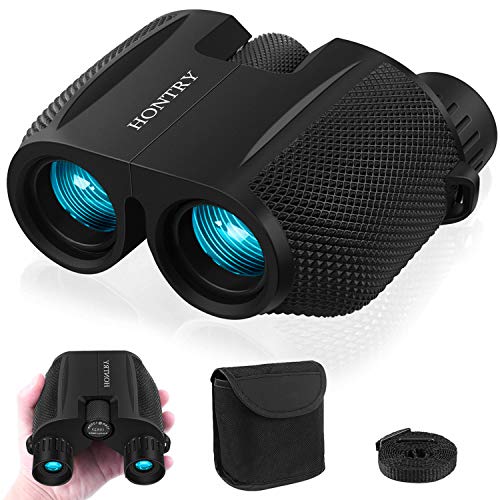
Live listings for the shortlist in this guide are pulled from Amazon below, so prices and availability are always current at the moment you look.
A note on binoculars borrowed from other hobbies
Spectators often arrive at this category owning something else already: a marine binocular kept on a boat, a theatre glass inherited from a grandparent, a hunting optic borrowed for one big match. Each can work in a pinch, and each carries a mismatch worth naming. Marine models are usually heavy, individually focused, and built around a wide, low-power view meant for a moving deck; in a stadium seat they feel cumbersome within twenty minutes. Theatre glasses offer lovely close focus and tiny size but very low power, fine for faces on a stage and frustrating for a far wicket. Hunting optics tend toward large objectives and camouflage finishes, delivering brightness a daytime crowd never needs at a weight a neck quickly resents.
None of that makes the borrowed instrument useless. It makes it a rehearsal. One match with the wrong binocular teaches your hands and eyes exactly which specification hurt: the weight, the narrow view, the short relief behind your glasses, the wheel that turned the wrong way under pressure. Arriving at a purchase with that lived knowledge is far better than arriving with only a specification table, because you can rank the criteria in this guide by the discomfort you personally remember rather than by the order a catalogue prints them.
Keep the borrowed pair as a spare for guests once your own compact arrives, and the row you sit in will quietly become the best equipped in the stand.
One last habit separates satisfied owners from perpetual upgraders: they stop comparing after the purchase and start attending. A compact chosen with honest arithmetic, verified during its first week, and carried without thinking soon stops being equipment and becomes part of the ritual, like the ticket stub kept in a drawer and the particular gate you always enter by, season after season, without ever needing to explain why.