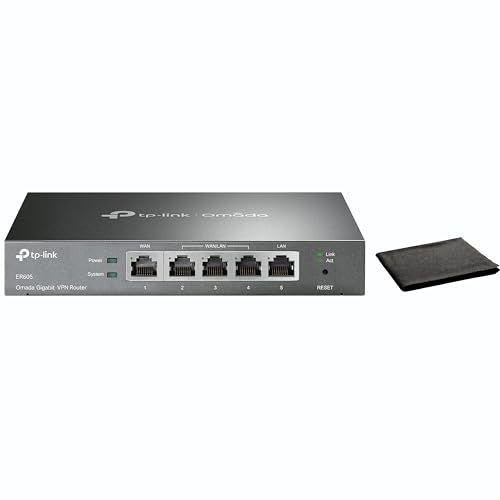
Our Top Picks



What's inside
- Why plaster and lath behaves unlike drywall
- The physics of 2.4, 5 and 6 gigahertz through dense walls
- Reading attenuation numbers without being misled
- Transmit power, EIRP and the limits regulators impose
- Antennas: gain, orientation and the case for external stalks
- Placement geometry inside a plaster house
- Router classes that suit plaster construction
- Settings that recover margin without new hardware
- Interference and hidden obstacles specific to old houses
- Comparing specifications that matter, in one place
- A methodical setup routine for the first evening
- Troubleshooting persistent dead spots
- How wall surveys change the shortlist
- Understanding modulation, sensitivity and why bars lie
- Special rooms: bathrooms, kitchens and extensions
- Questions to ask before spending anything
- What changed with recent Wi-Fi generations for old walls
- Check prices on Amazon
- Longevity, support and value in an old-house purchase
As an Amazon Associate I earn from qualifying purchases. This post may contain affiliate links at no extra cost to you.
This guide may earn a commission when readers follow outbound retailer links and complete a purchase, at no added expense to the buyer. That arrangement keeps our research independent of any single brand, because payment comes from the retailer rather than from a manufacturer seeking favourable placement. Specifications cited here come from manufacturer data sheets, regulatory filings and published radio standards, and readers should confirm current firmware behaviour on the maker support page before committing.
Why plaster and lath behaves unlike drywall
A modern partition built from gypsum board over timber studs presents a comparatively gentle obstacle to radio waves. Two sheets of half-inch board, a hollow cavity and a coat of paint absorb only a modest share of signal energy, especially at lower frequencies. Plaster and lath construction belongs to a different era entirely. Builders nailed narrow wooden strips, called lath, across studs with small gaps between each strip, then forced wet plaster through those gaps so the hardened keys locked the wall together. The finished surface often measures three quarters of an inch thick or more, and its density far exceeds gypsum board.
Density alone would matter, yet composition matters more. Historic plaster mixes contain lime, sand, horsehair in very old work, and later Portland cement blends that cure into a stone-like mass. Moisture retained inside that mass raises its dielectric loss, meaning radio energy converts into tiny amounts of heat instead of passing onward. A wall that feels dry to a palm can still hold enough bound water to punish a 5 gigahertz signal crossing at an oblique angle, where the path length through material stretches well beyond nominal thickness.
The decisive complication arrives with metal lath. From roughly the early twentieth century onward, many builders substituted expanded metal mesh or woven wire for wooden strips, particularly around corners, ceilings and bathrooms. That mesh forms a partial conductive screen. Gaps in expanded metal lath commonly measure only a few millimetres, far smaller than the 125 millimetre wavelength of a 2.4 gigahertz wave and dramatically smaller relative to what a continuous sheet would block. Partial screening is the accurate phrase, because seams, corrosion and irregular installation leave leaks, but even an imperfect screen can strip many decibels from a link budget.
Owners of older houses therefore face a layered problem rather than a single wall problem. A signal leaving a hallway router may cross a plaster ceiling fitted with metal lath, then a second plaster partition, then a chimney breast wrapped in mesh-reinforced render. Each crossing subtracts energy, and the subtractions compound in decibel terms. Understanding that compounding explains why a router that performed brilliantly in a previous apartment suddenly disappoints after a move, despite identical internet service and identical client devices.
Neighbouring guides approach coverage from a floor-area perspective, and readers comparing approaches may find best routers for large homes and multiple devices useful for device-count planning. This page stays narrower. Square footage misleads in plaster housing stock, because two modest rooms separated by mesh-reinforced plaster can isolate each other more thoroughly than distant corners of a large open-plan loft built with lightweight partitions.
The physics of 2.4, 5 and 6 gigahertz through dense walls
Frequency determines wavelength, and wavelength shapes nearly every penetration outcome discussed here. A 2.4 gigahertz transmission has a wavelength near 12.5 centimetres. At 5 gigahertz the wavelength shrinks to roughly 6 centimetres, and at 6 gigahertz it falls close to 5 centimetres. Shorter waves interact more strongly with small surface irregularities, lose energy faster in lossy materials and diffract less effectively around edges. None of that makes higher bands useless; it simply assigns each band a distinct job inside a difficult house.
Free-space path loss already favours the lower band before any wall enters the calculation. Doubling frequency adds about 6 decibels of loss over the same distance in open air, so a 5 gigahertz signal starts its journey through plaster several decibels behind an equivalent 2.4 gigahertz signal transmitted at identical power. Once both signals strike dense plaster, the gap usually widens, because attenuation per centimetre of lossy material tends to climb with frequency across the ranges home networking uses.
Practical consequences show up first at the far bedroom or the kitchen extension. Video calls retreat to the 2.4 gigahertz band and survive, while the 5 gigahertz network name vanishes from the available list entirely. That behaviour is not a fault in the router. It reflects a link budget exhausted by distance plus material loss, leaving insufficient signal-to-noise ratio for the receiver to decode higher-rate modulations. A well-chosen router for plaster walls therefore treats 2.4 gigahertz excellence as the foundation, not as a legacy afterthought included for old printers.
The 6 gigahertz band, introduced for home use with Wi-Fi 6E and expanded under Wi-Fi 7, offers wide clean channels and very low congestion. Its penetration through plaster and lath is the weakest of the three. Regulatory rules in many regions also limit 6 gigahertz operation to low-power indoor use, with standard-power operation requiring automated frequency coordination in some jurisdictions. For a plaster house, regard 6 gigahertz as a same-room performance bonus for nearby laptops and phones, never as the band expected to rescue a distant study.
Channel width interacts with this picture in a way buyers often miss. An 80 or 160 megahertz channel on 5 gigahertz collects more thermal noise than a 20 megahertz channel, which lowers the effective sensitivity for a given transmit power. Narrowing the far-reaching network to 20 or 40 megahertz can recover a few precious decibels of usable margin. The trade is peak speed near the router, yet a stable 40 megahertz link in a back room beats a theoretical gigabit that disconnects whenever a door closes.
Reading attenuation numbers without being misled
Published attenuation tables usually quote a single decibel figure per material, and those figures deserve scepticism when applied to historic construction. A laboratory sample of fresh plasterboard differs profoundly from a century-old wall containing metal mesh, multiple paint layers, foil-backed repairs and embedded electrical conduit. Treat any single number as a directional hint: brick, concrete and mesh-reinforced plaster sit at the punishing end of the scale, timber and gypsum board at the forgiving end, with plain plaster somewhere between depending on thickness and moisture.
Angle of incidence quietly changes outcomes room by room. A signal crossing a wall head-on travels through the minimum material depth. The same signal crossing diagonally may traverse twice that depth, and if the wall contains metal lath, the diagonal path also encounters more mesh intersections. This is why shifting a router two metres along a hallway sometimes transforms a bedroom connection: the geometry changed, shortening the slant path through the worst partition rather than increasing raw power.
Floors deserve equal suspicion. Plaster ceilings frequently used metal lath more consistently than walls, and floor structures add joists, subfloor boards, tile backer, heating ducts and sometimes foil insulation. A router placed directly beneath a bedroom does not guarantee a strong bedroom signal, because the ceiling assembly may be the single most hostile surface in the building. In many terraced and detached houses built before the Second World War, moving a signal horizontally through one plain plaster wall succeeds more often than pushing it vertically through a lath ceiling plus flooring layers.
Seasonal variation adds another wrinkle that surprises new owners. Heating cycles dry interior plaster during winter, while humid summers and condensation-prone corners raise moisture content again. A marginal link balanced exactly at the decoding threshold can therefore drift across seasons. Sensible buying aims for headroom: choose equipment and placement that leave at least 10 decibels of margin beyond the bare minimum, judged by the received signal strength reported in the router interface for the weakest important room.
Received signal strength indicators on phones compress complex measurements into a few bars, so prefer numeric readings where available. Many router dashboards report per-client RSSI in decibel-milliwatts. Values around minus 50 dBm indicate a strong local link, minus 65 dBm generally supports solid mid-range rates, and readings approaching minus 80 dBm warn that only the most robust low-rate modulations remain viable. Those reference points help compare placements objectively instead of relying on impressions gathered while standing in a doorway.
Transmit power, EIRP and the limits regulators impose
Marketing copy loves wattage, but home routers operate under strict radio regulations that cap effective radiated output. In the United States, Federal Communications Commission rules for this low band permit up to 30 dBm of conducted power with a 6 dBi antenna before reductions apply for higher gain, producing a familiar ceiling near 36 dBm EIRP for point-to-multipoint operation. European rules are tighter, generally limiting 2.4 gigahertz EIRP to 20 dBm. A router sold for one region may therefore behave very differently from the same enclosure shipped elsewhere, and imported units set to the wrong region can breach local law.
EIRP, effective isotropic radiated power, combines transmitter output and antenna gain into a single figure describing strength in the favoured direction. That combination explains why simply bolting on a very high-gain antenna does not multiply range without consequence: regulators require conducted power to back off as gain rises beyond a threshold, and the resulting pattern concentrates energy into a flatter disc rather than a sphere. For a single-storey plaster house, a flattened pattern can help. For a tall narrow townhouse, it can starve rooms above and below.
Equally important, Wi-Fi is a conversation rather than a broadcast. A powerful router may shout across three plaster walls, yet the reply from a phone, whose transmitter is far weaker and whose antenna is tiny, may never complete the return journey. Link budgets fail in the uplink direction first for battery-powered clients. This asymmetry is the strongest technical argument against pursuing headline power alone and in favour of placement that shortens both directions of travel for the devices that matter most.
Manufacturer data sheets sometimes list power per band and per region in fine print, and that fine print is worth reading before purchase. Look for whether quoted figures describe maximum capability or typical sustained output, whether power holds across all channels or only mid-band channels, and whether dynamic frequency selection channels on 5 gigahertz carry lower limits. Channels 52 through 144 in the 5 gigahertz range involve radar-avoidance rules in many countries, and some products reduce output or behave cautiously there after detecting radar-like energy.
Thermal design quietly governs sustained performance too. A compact sealed router driven at maximum output for hours of backup traffic or game downloads can throttle radios as internal temperatures climb. Units with generous ventilation slots, a larger chassis and a power supply rated comfortably above typical draw tend to hold their radio behaviour steadier through an evening. None of this appears in a headline speed class, which is precisely why plaster-house buyers should value boring engineering details over peak-rate badges.
Antennas: gain, orientation and the case for external stalks
Antenna gain measured in dBi describes directionality relative to a theoretical isotropic radiator. A typical internal antenna in a slab-style router might achieve 2 to 3 dBi with an uneven pattern distorted by the circuit board and enclosure. External adjustable stalks commonly reach 5 dBi or more on 2.4 gigahertz, and their decisive advantage is not the number itself but the freedom to orient each element deliberately after installation.
Orientation works because most router antennas radiate like a doughnut around their long axis, with nulls off each end. A vertical stalk throws its strongest pattern horizontally, ideal for same-floor coverage. Tilting one stalk to 45 degrees and another horizontally introduces polarisation diversity that can rescue links bouncing around metal lath, studs and appliances, since reflected signals arrive with scrambled polarisation. Experimentation costs nothing: rotate one antenna at a time, wait a minute, then compare numeric RSSI for a laptop parked in the problem room.
Detachable antennas connected through RP-SMA fittings open a further option unavailable on sealed designs. Owners can fit a higher-gain omnidirectional replacement for flat same-floor layouts, relocate an antenna on a short extension lead to peek around a chimney breast, or in specialised cases use a directional panel aimed down a corridor. Each change alters the pattern, so documentation matters: record the original arrangement before experimenting, and change one variable per session so cause and effect stay legible.
Antenna count deserves a calmer reading than retail packaging suggests. Multiple antennas support MIMO spatial streams and beamforming when client and router both implement them, raising throughput at a given signal level. They do not repeal material attenuation. A four-stream router behind two mesh-reinforced walls still loses the same decibels crossing those walls; it simply uses the surviving signal more efficiently. For plaster construction, prioritise antenna quality, placement flexibility and band-specific design over simply counting stalks in a product photograph.
Beamforming deserves its own clarification. Explicit beamforming in Wi-Fi 5, Wi-Fi 6 and Wi-Fi 7 lets the router learn channel feedback from a client and steer energy toward it, gaining a few decibels of effective margin. Through plaster, multipath reflections complicate that steering, yet gains remain real for stationary clients such as desktop computers and televisions. Implicit beamforming on older equipment guesses rather than measures, with less reliable benefit. Either way, beamforming polishes a workable link; it rarely resurrects a link buried 30 decibels below sensitivity.
Readers weighing antenna-forward designs against sleeker sealed units can compare broader range claims in best long range routers, keeping in mind that open-air range figures assume unobstructed paths utterly unlike a lath ceiling. The relevant question for this guide is narrower: does the hardware let an owner reshape, reposition and verify radiation patterns inside a specific difficult building?
Placement geometry inside a plaster house
Placement delivers more improvement per unit of effort than any specification on a box. Begin by mapping the rooms where reliable connectivity genuinely matters: the desk used daily, the bed where tablets stream, the kitchen counter hosting video calls. Then locate the point that minimises total plaster crossings to those rooms, weighted by wall hostility. A central hallway position crossing one plain plaster wall to each bedroom often outperforms a corner office position separated from half the home by a mesh-reinforced bathroom and a brick chimney.
Height changes geometry as well. Raising a router to roughly chest or shelf height clears furniture, radiators and metal appliances that clutter the first metre above floor level. Avoid placing it directly on top of a steel filing cabinet, inside a closed cupboard with a foil-lined door, or behind a large television whose metal backplane shadows the signal. A small open shelf with a few centimetres of air on every side consistently beats a hidden installation chosen purely for tidiness.
Doorways and corridors act as waveguides of a crude sort, carrying signal along open air before it must cross material. Positioning a router where it can see down a hallway exploits that effect: energy travels the corridor cheaply, then makes a single shorter crossing into each adjoining room. Conversely, a router tucked in an alcove behind a stairwell forces every path through the stair structure and its surrounding plaster from the very first metre.
Electrical considerations constrain ideal spots, because the broadband modem or optical network terminal usually sits where the line enters the building. Long Ethernet runs solve that constraint elegantly. A flat Cat6 cable routed along skirting, or a cable passed through an existing void, lets the router live where radio geometry wants it rather than where the installer drilled a hole years ago. Keep the router away from thick masonry flues even when the modem sits beside one; a ten-metre cable costs little signal, while a chimney breast costs a great deal.
Verification should follow every move. Walk the priority rooms with a single test device, record RSSI and run a consistent speed check at the same seated position each time, and note which band the device selected. Change only the router position between rounds. Owners who skip this discipline often credit a new router for improvements actually delivered by a half-metre shift, or blame hardware for a placement that no product could redeem.
Router classes that suit plaster construction
High-power dual-band units with external antennas
The classic answer for a plaster house remains a dual-band router with adjustable external antennas, a strong 2.4 gigahertz radio and honest published power figures. Wi-Fi 6 models in this mould balance modern efficiency features, including OFDMA scheduling and improved target wake time for battery clients, against mature firmware and wide client compatibility. For households whose priority rooms sit one or two walls away, such a unit placed centrally frequently resolves the problem without any additional nodes or wiring projects.
Pay attention to how the maker distributes radios across bands. Some inexpensive designs share a single radio chain cleverly but deliver disappointing simultaneous performance when the 2.4 gigahertz band carries smart-home traffic while laptops crowd 5 gigahertz. A plaster household leans harder on 2.4 gigahertz than most, so that band deserves dedicated capacity rather than leftovers. Check whether the specification lists separate spatial streams per band instead of a combined marketing total that obscures the split.
Tri-band designs and what the extra radio actually buys
A third radio helps when many active clients compete, because one 5 gigahertz radio can serve near rooms while the second handles different channels or a dedicated purpose. In plaster housing, however, both 5 gigahertz radios suffer the same material losses, so tri-band hardware shines mainly in larger households with heavy same-side-of-the-wall demand. Shoppers comparing this class will find channel and band context in best 3 band routers, though the plaster-specific verdict stays consistent: extra radios multiply capacity, not penetration.
Wi-Fi 7 tri-band and quad-band products add the 6 gigahertz band plus multi-link operation, which can bond or rapidly switch links for a compatible client. Multi-link operation has a subtle plaster advantage: a device may hold a resilient 2.4 gigahertz link and a fast 5 gigahertz link simultaneously, failing gracefully between them as the user moves rooms. That resilience is genuinely valuable, provided buyers understand the fast link will still fade first and the purchase premium buys smoothness rather than miraculous reach.
When a single powerful router is the wrong answer
Honesty requires naming the limits of this entire category. A house with metal lath on nearly every partition, three storeys and a reinforced concrete floor may defeat any single legal transmitter, because regulations cap output and client uplinks remain weak regardless. In that architecture, a single router still matters as the central hub, but wired access points fed by Ethernet or a carefully placed additional node become engineering necessities rather than indulgences. This guide deliberately avoids turning into a general discussion of those multi-node systems, yet it will not pretend that buying a larger single box repeals physics.
Clues that a home sits beyond single-router territory include RSSI worse than minus 80 dBm in a priority room after sensible placement, repeated dropouts on low-band links at short distances, and speed collapsing whenever two plaster ceilings intervene. Before concluding defeat, eliminate fixable causes: wrong region settings, a router hidden inside furniture, channel congestion from neighbours, or a failing power supply. Only after those checks should an owner budget for wiring work.
Settings that recover margin without new hardware
Channel selection on 2.4 gigahertz should favour the non-overlapping trio of channels 1, 6 and 11 in North America, or the locally equivalent cleanest option elsewhere. Overlapping channels create adjacent-channel interference that wastes the scarce margin plaster already consumed. Automatic channel selection works well in some firmware and poorly in other builds, hunting restlessly or settling on a crowded choice. A weekly glance at the channel utilisation page, where provided, tells owners whether automation deserves trust in their street.
Fix channel width on the low band at 20 megahertz in dense neighbourhoods. The 40 megahertz mode doubles potential throughput in empty spectrum but occupies two thirds of the usable band and invites interference from nearly every neighbouring network. Through plaster, robustness beats width: a clean narrow channel sustains higher usable modulation for distant clients than a wide channel corrupted by overlapping energy leaking through party walls from next door.
On 5 gigahertz, experiment with both a low UNII-1 channel and a mid-band DFS channel. DFS spectrum is often emptier because fewer neighbours tolerate its radar-vacancy behaviour, and emptiness can outweigh slightly different power limits. If a router logs frequent radar events and vacates channels, revert to a stable non-DFS choice. Stability for a work laptop during calls outranks theoretical cleanliness that evaporates whenever weather radar patterns trigger a channel move.
Band steering, the feature that nudges dual-band clients toward 5 gigahertz, needs tuning in plaster homes. Aggressive steering can push a distant tablet onto a fragile 5 gigahertz link that flaps, while the tablet would have sat contentedly on 2.4 gigahertz. Separate network names per band remain the diagnostic gold standard: connect fixed distant devices explicitly to the 2.4 gigahertz name, reserve the faster band for near-room clients, and only merge names once behaviour is understood. Convenience features should earn their place after the physics works.
Transmit power sliders, where firmware exposes them, should generally stay at maximum for the band serving distant rooms, but lowering 5 gigahertz power occasionally improves whole-home behaviour by discouraging far clients from clinging to it. That counterintuitive adjustment works because roaming decisions often key on apparent strength. A slightly quieter fast band lets devices settle on the resilient band sooner when they wander into plaster-shadowed corners, reducing the sticky-client problem that generates complaints about full bars and frozen video.
Security settings intersect with compatibility for older smart devices common in older houses. WPA3-only mode can strand ageing plugs, cameras and heating controls that speak only WPA2. A mixed WPA2 and WPA3 mode preserves modern protection for recent clients while admitting legacy hardware. Keep the guest network isolated for visitors, enable automatic firmware updates where the maker has a trustworthy record, and disable obsolete WPS PIN entry, which remains a needless vulnerability on any router generation.
Interference and hidden obstacles specific to old houses
Metal lath rarely acts alone. Foil-backed plasterboard patches from later renovations, mirrored wardrobes with metallic backing, cast-iron radiators, steel baths and chain-link-like reinforcing in chimney renders all scatter or block radio energy. Even a large fish tank introduces a dense water mass that absorbs 2.4 gigahertz energy noticeably, a quirk shared with microwave oven leakage physics, since water resonates strongly in that region of spectrum. Survey a failing path literally: stand at the router, walk toward the dead room, and catalogue every dense or metallic object intersecting the straight line.
Neighbour interference behaves differently through plaster than through modern partitions. The same walls that frustrate your signal also mute networks from adjoining homes, sometimes leaving a plaster house surprisingly quiet despite a dense street. Apartments carved from a single historic building break that pattern, because internal conversions may use lightweight stud walls while the original lath survives only in ceilings. Diagnose the actual building rather than assuming either isolation or congestion from its age alone.
Bluetooth devices, baby monitors and wireless video senders crowd that same low spectrum from inside the home. Zigbee and Thread smart-home radios share that spectrum too, usually politely, but a misconfigured high-traffic sender near the router can desensitise its receiver. Physical separation of a metre or more between the router and other radios, USB 3 hubs or noisy switching power supplies reduces self-inflicted interference that no antenna upgrade can cure.
Electrical wiring inside lath walls introduces a final subtlety. Knob-and-tube remnants, later Romex runs and metal conduit all lie within the wall cavity, adding conductive clutter that varies by bay between studs. Two paths crossing the same wall a metre apart can differ measurably because one crosses a conduit cluster while the other passes through plain plaster keys. This explains otherwise baffling results where a tiny lateral router shift outperforms a costly hardware swap, and it rewards patient incremental placement trials.
Comparing specifications that matter, in one place
The table below distils the buying criteria developed across this guide. It describes attributes to verify on a data sheet or support page rather than naming individual products, because model line-ups change frequently while plaster physics does not. A router scoring well across most rows suits this housing type far better than a unit advertising a huge aggregate speed class while failing the antenna and documentation rows.
| Attribute | What to look for | Why plaster homes care |
|---|---|---|
| 2.4 GHz radio | Published power by region, dedicated streams | This band carries distant rooms |
| Antennas | External, adjustable, ideally detachable | Orientation reshapes the pattern |
| Channel control | Manual channel and width settings | Narrow clean channels recover margin |
| Per-client reporting | RSSI shown in the dashboard | Placement trials need numbers |
| Ethernet ports | Several gigabit or faster ports | Relocation and wired clients help |
| Firmware support | Recent updates, clear release notes | DFS and steering behaviour improve |
Aggregate speed labels such as AX3000 or BE9300 sum theoretical rates across every band under laboratory conditions with wide channels and nearby clients. Those numbers help compare siblings inside one product family, but they say almost nothing about a signal crossing mesh-reinforced plaster. A modestly labelled unit with superior antennas, cooling and firmware can deliver a better real experience in an old house than a flagship whose design prioritises sculpted looks and internal antennas sealed at fixed angles.
Ethernet port speed matters for a different reason. If the broadband service exceeds a gigabit, or if a desktop beside the router transfers large files to a network drive, a 2.5 gigabit port removes a wired bottleneck that owners sometimes misdiagnose as weak wireless. Similarly, a USB port for shared storage is a convenience, not a coverage feature, and should never displace radio quality in the decision ranking for this use case.
Quality-of-service controls earn a mention because plaster links fluctuate. Adaptive QoS that prioritises calls and interactive traffic can keep a video meeting intelligible when a cloud backup saturates a weakened link. Traditional device-priority lists work adequately too. What matters is that some mechanism prevents a single bulk transfer from monopolising a connection whose total capacity already shrinks whenever weather, doors or occupants alter the radio environment.
Readers ready to compare current-generation line-ups more broadly can consult best routers with wifi 6 for generation-level differences, then return to the plaster criteria here before deciding. Generation upgrades bring efficiency and capacity; they do not repeal attenuation, and a disciplined buyer keeps those two ledgers separate throughout the comparison process.
A methodical setup routine for the first evening
Start before unboxing by photographing the existing installation and saving the current router configuration if an older unit is being replaced. Note the broadband credentials location, the modem model and which cable connects where. That five-minute record prevents a frustrating evening if the new unit needs returning or the internet service requires a modem restart sequence in a particular order.
Place the new router in the best geometric position identified earlier, using a temporary Ethernet lead across the floor if necessary. Temporary is the operative word: prove the radio position first, then solve cable routing permanently once results justify the effort. Update firmware before configuring anything else, because early firmware revisions frequently alter radio behaviour, DFS handling and steering logic in ways that invalidate careful tuning done beforehand.
Configure separate band names initially, set the low band to a fixed clean channel at 20 megahertz width, and choose a 5 gigahertz channel after scanning the neighbourhood from the router interface. Connect priority devices one at a time, recording RSSI at their normal locations in a simple notebook or phone note. Adjust antenna orientation between rounds, then router position by half-metre steps if a priority room still reports worse than minus 75 dBm.
Only after coverage satisfies should convenience features return: merged band names if steering behaved well during trials, guest access, parental scheduling, QoS priorities and any smart-home integrations. Change one feature, observe for a day, then proceed. Households that enable everything at once cannot tell which feature caused a later complaint, and they often blame plaster for a steering threshold or a buggy automation.
Document the final arrangement with photographs of antenna angles and a note of channels chosen. Plaster houses change slowly, but routers get knocked during cleaning, firmware resets happen, and a written record turns a future outage from archaeology into restoration. Keep the broadband modem and router on a small uninterruptible supply if the home suffers brief power cuts, since repeated hard restarts during storms can corrupt configuration storage on some models.
Troubleshooting persistent dead spots
When one room refuses to cooperate, isolate whether the problem is coverage, congestion or the client device itself. A laptop working flawlessly in the dead room while a phone fails points toward the phone antenna or its band preference. Every device failing only during evening hours suggests neighbour congestion or a household appliance cycling on. Failures at all hours, on all devices, at one location, describe genuine material shadowing that settings rarely fix.
Swap the test direction as well. Run a large upload from the problem room, not merely a download. Because client transmitters are weak, uploads expose uplink exhaustion earlier and more honestly. A connection that streams video inward happily but collapses when sending a video call outward is exhibiting classic asymmetry through plaster, and moving the router closer, not raising download-oriented features, addresses its root cause.
Check for firmware region mismatches on imported hardware, verify that power settings did not revert after an update, and inspect whether a well-meaning household member enabled a scheduling feature that sleeps radios overnight. Inspect cables too: a damaged Ethernet lead negotiating at 100 megabits can masquerade as a wireless failure for every device sharing that backhaul or modem link.
If a single immovable room remains shadowed after honest effort, accept a targeted remedy for that room rather than replacing the whole system impulsively. A wired Ethernet drop installed by an electrician during other work, feeding either the device itself or a small access point, respects the building physics permanently. Such pragmatic acceptance is not defeat; it is the correct engineering response to metal lath behaving like a radio screen.
How wall surveys change the shortlist
Before comparing any models, walk the home with a notebook and grade each internal wall honestly. Tap and listen: plain plaster over wooden strips sounds comparatively hollow and warm, while cement-rich plaster over metal mesh feels colder, rings harder and often reveals its mesh at damaged corners or around electrical boxes where a previous electrician cut an opening. Mark bathrooms, kitchens and chimney breasts separately, because tile, plumbing and reinforced render stack additional loss onto whatever the base wall already imposes.
That survey converts a vague complaint about weak signal into a route map. Count crossings between candidate router positions and each priority room, then weight each crossing by the grade recorded. A route crossing two light partitions may be preferable to a shorter route crossing one mesh ceiling, even when the longer route measures more metres on a floor plan. Radio energy cares about material budgets first and distance second, an ordering that floor plans alone cannot reveal.
Survey results also determine whether detachable antennas deserve top priority. Homes where every route crosses similar plain plaster benefit mainly from strong low-band output and central placement. Homes dominated by one brutal partition, such as a mesh-lined bathroom sitting between router and study, benefit disproportionately from antenna experiments, because a tilted element or a short extension lead can find a leak path around the obstruction edge that a fixed internal array never discovers.
Renters face a constrained version of this problem, since drilling and permanent cabling may be forbidden. Their survey should emphasise furniture-level solutions: bookcase-top placement, door-frame-adjacent positions exploiting corridor paths, and routers whose feet and wall-mount slots permit stable elevated mounting with removable strips. A renter who identifies the single worst wall early avoids wasting a returns window evaluating hardware against an impossible route that no landlord-approved placement could improve.
Owners planning renovation hold one extra card. When plaster is already being repaired, a discreet Ethernet cable or a spare conduit run installed during that work costs a fraction of a later standalone project. Even a cable that merely relocates the router from an entry corner to a hallway cupboard with power can transform coverage permanently. Coordinate with the plasterer as well: replacing a damaged section with modern board changes radio behaviour locally, occasionally opening a useful path where solid historic material once stood.
Understanding modulation, sensitivity and why bars lie
Wi-Fi speed at a given moment depends on the modulation and coding scheme a link can sustain, which in turn depends on signal-to-noise ratio at the receiver. Modern standards define many steps between the most robust low-rate mode, designed to survive appalling conditions at a trickle of throughput, and the highest 1024-QAM or 4096-QAM modes that demand a clean, strong signal. Plaster does not usually sever a link outright; it slides the link down that staircase until streaming buffers, calls pixelate and file transfers crawl.
Receiver sensitivity figures explain the bottom of the staircase. A quality radio may decode its most robust mode near minus 90 dBm or lower under narrow-channel conditions, while the highest modes need levels closer to minus 55 dBm. That 35 decibel span is the playground where plaster houses live. Every wall crossing moves clients down several steps, and every placement improvement that recovers 6 decibels can plausibly double real throughput, because the link climbs to a denser modulation rather than merely reporting a prettier strength number.
Phone signal bars conceal this staircase entirely. One interface may display three bars across a 20 decibel range spanning several modulation steps, so identical icons can hide a fivefold speed difference. Numeric RSSI plus a repeatable local transfer check, such as copying a large file from a wired computer, exposes the truth. Owners evaluating routers should therefore distrust screenshots of bars in reviews and value any source that reports measured throughput at stated distances through stated materials.
Noise matters as much as strength in that ratio. A distant room may receive a router at minus 78 dBm with a quiet noise floor near minus 95 dBm, yielding a workable margin, while a nearer room beside a noisy appliance suffers worse performance despite minus 68 dBm of signal. Plaster complicates noise too, shielding some rooms from neighbour networks while trapping in-home interference sources close to the clients they disturb. Diagnosis that measures only strength will misread such rooms every single time.
Airtime fairness features in current firmware help weaker clients avoid monopolising the channel at their slow rates. Without that protection, one plaster-shadowed tablet transferring at the lowest modulation can consume the airtime that ten strong clients needed, dragging whole-home performance down disproportionately. Confirm that a candidate router implements airtime fairness or equivalent scheduling, particularly in households mixing near-router gaming machines with distant smart televisions.
Special rooms: bathrooms, kitchens and extensions
Bathrooms concentrate nearly every hostile material in one small space: metal lath under tile, cast iron or steel baths, mirrored cabinets, plumbing runs and foil-backed insulation around heated floors. Expecting flawless high-band coverage for a bathroom speaker through two such walls is unrealistic, and the sensible target is a stable low-band link for audio and voice control. If a bathroom renovation is planned, moving a single access point or router-adjacent cable before tiling closes the walls is worth more than any later gadget.
Kitchens add large metal appliances and water mass to the same problem. Refrigerator cabinets shadow signals like filing cabinets, ovens present broad metal faces, and microwave ovens leak energy near 2.45 gigahertz while operating. A router with line of sight down a hallway into a kitchen doorway will serve countertop displays far better than a unit separated from that room by both a plaster wall and the refrigerator standing against it. Test kitchen performance with appliances in their real positions, doors closed, and the microwave running, because that combination represents the honest worst case.
Extensions built in different eras create abrupt transitions. A modern rear extension with gypsum board and a large glass wall may receive superb coverage from a router that cannot reach an original front bedroom through historic material, inverting the usual assumption that farther means worse. Map performance room by room rather than extrapolating, and consider positioning the router near the junction between old and new construction, where routes into both zones cross the fewest hostile surfaces.
Loft conversions introduce sloped ceilings, foil-backed insulation boards and sometimes steel ridge beams, all unfriendly to signals arriving from below. A converted loft used as an office deserves its own RSSI survey at desk height, not at the hatch opening where readings flatter reality. Where the loft sits directly above the router yet still struggles, the ceiling assembly is the culprit, and a cable routed through a cupboard or wardrobe void becomes the dignified long-term answer.
Questions to ask before spending anything
Ask first whether the broadband service itself reaches the home reliably at the modem, measured with a wired computer across several evenings. Plaster receives blame for many faults that originate in a failing line, an overheating modem or an overloaded service tier. Eliminating the supply side first protects the router budget and prevents a new purchase from inheriting an old accusation.
Ask next which three rooms genuinely need high throughput rather than mere connectivity. A doorbell camera needs a dependable trickle; a home-office desk needs sustained two-way capacity for calls and screen sharing; a television needs steady downstream bursts. Ranking rooms by demand focuses placement where economics matter and relaxes requirements elsewhere, often revealing that a single well-placed router already satisfies the real brief once a low-demand device stops dictating the layout.
Ask whether household clients support the features a premium router advertises. A home full of Wi-Fi 5 phones and laptops gains little from 6 gigahertz radios today, though a planned laptop replacement may justify future-proofing. Conversely, a household with several Wi-Fi 6E or Wi-Fi 7 devices in the same room as the router can enjoy those fast bands locally while still depending on low-band reach elsewhere, a mixed reality that mid-priced tri-band hardware handles gracefully.
Finally, ask what evidence would change the decision after purchase. Define success numerically before the box arrives: for example, every priority room holding at least minus 70 dBm on the low band and sustaining a clear video call at the desk during the evening peak. A predefined threshold turns the returns window into an experiment with a verdict, rather than a fortnight of vague impressions followed by keeping an unsuitable router out of inertia.
What changed with recent Wi-Fi generations for old walls
Wi-Fi 6 brought orthogonal frequency-division multiple access, letting one transmission serve several clients in subdivided resource units. Inside a plaster house that efficiency matters most on the crowded low band, where doorbells, plugs and distant laptops all compete for a channel already narrowed by interference discipline. OFDMA does not strengthen any individual signal, yet it reduces the retries and contention that used to punish weak clients sharing airtime with strong ones, so the practical experience in back rooms improves beyond what raw sensitivity figures predict.
Wi-Fi 7 adds wider channels, higher-order modulation and multi-link operation, benefits concentrated near the router where signals are clean. Its 320 megahertz channels exist only on the highest band, the very band least able to cross mesh-reinforced plaster, so plaster-house buyers should read Wi-Fi 7 as a capacity upgrade for open rooms rather than a coverage revolution. The generation still deserves consideration for longevity, because client devices will arrive supporting it for years, and its low-band radios inherit incremental efficiency refinements from each silicon revision.
Target wake time, present since Wi-Fi 6, lets battery clients negotiate sleep schedules instead of listening constantly. In weak-signal rooms that feature carries a hidden coverage benefit: a client that wakes predictably and exchanges data in short organised bursts completes transfers more reliably than one chattering continuously at the edge of audibility. Smart-home sensors scattered through plaster houses, often the devices living on the weakest links of all, gain the most from this scheduling politeness.
One further generational detail deserves attention: newer chipsets often integrate better low-noise amplifiers on the receive side, quietly improving sensitivity by a decibel or two compared with older designs at identical transmit settings. Because reception governs the fragile uplink from phones, that receiver refinement can matter more in a plaster bedroom than a louder transmitter ever would. Data sheets rarely headline receive sensitivity per modulation step, yet support documents and certification filings sometimes publish it, rewarding buyers patient enough to compare those tables before choosing between two otherwise similar models from different silicon generations.
None of these generational features alters the buying hierarchy established earlier. Radio fundamentals, antenna flexibility, placement freedom and firmware quality remain the four pillars, with generation acting as a tiebreaker between otherwise similar candidates. A buyer who keeps that ordering avoids paying a premium for headline capabilities that the building will never allow distant rooms to experience.
Check prices on Amazon
Live listings for the shortlist in this guide are pulled from Amazon below, so prices and availability are always current at the moment you look.


Longevity, support and value in an old-house purchase
A router guarding a difficult house should remain supported for years, because replacement means repeating the entire placement and tuning ritual. Favour makers that publish firmware histories, commit to security update windows and maintain downloadable manuals with full radio specifications. Community size matters as well: widely sold models accumulate searchable knowledge about DFS quirks, steering thresholds and antenna replacements that obscure products never develop.
Budget allocation follows from the physics. Spend first on the router class with external antennas and a strong low band, second on cabling that frees placement, and only later on decorative or speed-oriented upgrades. Households tempted by the highest headline class should ask whether that premium would instead fund an electrician visit for one strategic Ethernet run, which frequently yields a larger permanent improvement in a plaster building than any radio upgrade available legally.
Energy consumption is modest for all home routers, typically in the range of a small LED bulb or two, but always-on operation multiplies across years. Models with scheduled radio sleep can trim that draw in empty houses, provided remote access needs do not require overnight availability. Heat remains the larger concern: a cool-running unit in open air will usually outlive a hotter sealed design cooking inside a media cabinet, regardless of purchase tier.
Warranty handling and return windows deserve a practical note. Buy from a seller whose returns process allows genuine in-home evaluation across several evenings, because plaster behaviour reveals itself during real routines, not during a ten-minute doorstep check. Keep packaging until the priority rooms have survived weekday calls, weekend streaming and a humid day, the three conditions that expose most weaknesses in this housing type.
For a house wrapped in plaster and wire, the winning router is rarely the loudest on paper; it is the one whose low band, antennas and placement you can measure, adjust and trust on the wettest evening of the year.