What's inside
As an Amazon Associate I earn from qualifying purchases. This post may contain affiliate links at no extra cost to you.
A mixing monitor is the last judge a track meets before it leaves the studio, and the difference between a good mix and a great one is usually the monitor, because a speaker that flatters the low end will hide a muddy bass, a speaker that softens the high end will hide a harsh vocal, and a speaker with a vague stereo image will hide a guitar that is sitting in the wrong place. The best speakers monitors for mixing are nearfield speakers with a flat frequency response, a tight low end, and a stereo image that is precise enough to place every instrument, and this guide covers six models that mixing engineers use as their main reference, from the compact Neumann KH 120 II to the eight-inch Kali Audio LP-8 V2.
The word mixing is the key to understanding these monitors, because mixing is not listening, it is judging, and a mixing monitor has to be honest in a way that a listening speaker does not, with a response that adds nothing and hides nothing, so a track that sounds good on the monitor is a track that is genuinely good, and a track with a problem is exposed quickly. A monitor that is too warm will make a mix sound rich when it is actually muddy, a monitor that is too bright will make a mix sound detailed when it is actually harsh, and a monitor with a weak stereo image will make a mix sound wide when it is actually narrow, and the monitors in this guide are all flat, honest and precise, which is why engineers trust them.
The monitors in this guide are all nearfield designs, which means they are meant to be listened to at arm's length, with the direct sound reaching the ear before the reflections off the walls, and that is the only way to hear a mix honestly in a room that has not been fully treated. A large monitor in a small room fails because the listener sits too close for the drivers to blend and because the extra bass excites room modes, while a compact monitor with a five-inch to eight-inch woofer blends its drivers at a metre, produces less low-end energy for the room to fight with, and keeps the stereo image precise. The monitors in this guide range from five inches to eight inches, and the buying guide explains how to choose the size for the room.
The six monitors in this guide span the mixing range, from the five-inch Genelec 8030C that suits a small mix room to the eight-inch Kali Audio LP-8 V2 that suits a larger project studio, and each one is judged on the same things: flatness, low-end control, stereo imaging, and the ability to keep its balance at the low volumes a mix engineer uses for most of the work. A five-inch monitor is the right choice for a small room, a seven-inch monitor is the right choice for a larger room, and an eight-inch monitor is the right choice for a project studio with space and treatment, and the buying guide at the end explains how to choose between them, how to place them, and how to get a mix that translates to every other system.
Quick picks: best speakers monitors for mixing
| # | Product | Where to buy |
|---|---|---|
| 1 | Neumann KH 120 II | Check on Amazon |
| 2 | Genelec 8030C | Check on Amazon |
| 3 | Adam Audio A7V | Check on Amazon |
| 4 | Focal Alpha 65 Evo | Check on Amazon |
| 5 | Dynaudio LYD 7 | Check on Amazon |
| 6 | Kali Audio LP-8 V2 | Check on Amazon |
Quick Comparison
| Product | Key Specs | Best For |
|---|---|---|
| Neumann KH 120 II | 5.25-inch woofer, 1-inch tweeter, 145 W, DSP, AES67 | Best overall mixing monitor |
| Genelec 8030C | 5-inch woofer, 3/4-inch tweeter, 100 W, Iso-Pod | Best compact mixing monitor |
| Adam Audio A7V | 7-inch woofer, X-ART ribbon tweeter, 200 W, DSP | Best mixing monitor for detail |
| Focal Alpha 65 Evo | 6.5-inch Slatefiber woofer, 1-inch tweeter, 80 W | Best mixing monitor for dynamics |
| Dynaudio LYD 7 | 7-inch woofer, 1.1-inch tweeter, 96 W, DSP | Best mixing monitor for balance |
| Kali Audio LP-8 V2 | 8-inch woofer, 1-inch tweeter, 140 W, boundary EQ | Best 8-inch mixing monitor |

Neumann KH 120 II
The Neumann KH 120 II is the best overall mixing monitor in this guide, and it is the monitor that mixing engineers reach for when the mix has to be right, because Neumann built the KH 120 II around a five-and-a-quarter-inch woofer, a one-inch tweeter and a digital signal processor that corrects the response of the speaker itself, with a flat frequency response, a precisely controlled dispersion pattern, and a low end that is tight and honest rather than extended. The KH 120 II is the successor to the KH 120 A, which was the standard nearfield monitor in professional studios for a decade, and the second generation adds a DSP, a more powerful amplifier and a lower distortion, which makes it the monitor that a studio buys when the work has to be right the first time.
The sound is the most accurate in this guide, with a midrange that is exceptionally clear, a high end that is smooth and detailed, and a stereo image that is precise and stable at close range, thanks to the mathematically modelled dispersion waveguide that keeps the direct sound consistent across the listening position. The DSP is the feature that sets the KH 120 II apart: it corrects the response of the drivers, it provides a boundary switch and a low-frequency trim, and with the optional measurement microphone it can measure the room and apply a correction that tames the worst of the room modes, which is a genuine advantage in a small studio where the room is the biggest problem. At low volume the KH 120 II is at its best, with a balance that holds together quietly, which is how most mixing work happens.
The practical details are professional through and through. The KH 120 II has balanced XLR inputs, a volume control on the back, and a compact cabinet that sits well on a desk stand or an isolation pad, with the tweeter at ear height once the stand is in place. The monitor has an AES67 digital input, which is the standard for networked audio in broadcast and post-production, and it is built to a high standard, with a cabinet that is rigid and well damped. The KH 120 II is the monitor that a studio buys when the mix has to translate to every other system, and it is the smallest Neumann that can honestly be called a main monitor.
The trade-offs are the price, which is higher than any other monitor in this guide, and the fact that the room correction needs an optional microphone and software, which adds to the cost. The five-and-a-quarter-inch woofer does not produce deep bass, so the lowest octave still needs a headphone check, and the monitor is best used at arm's length, where its precision is an advantage. But as a mixing monitor, the KH 120 II is the benchmark, and it fits a mixing engineer who needs a reference that can be trusted, a mastering engineer with a small room, and anyone who wants the most accurate small monitor available.
Check price on Amazon: Neumann KH 120 II
Genelec 8030C
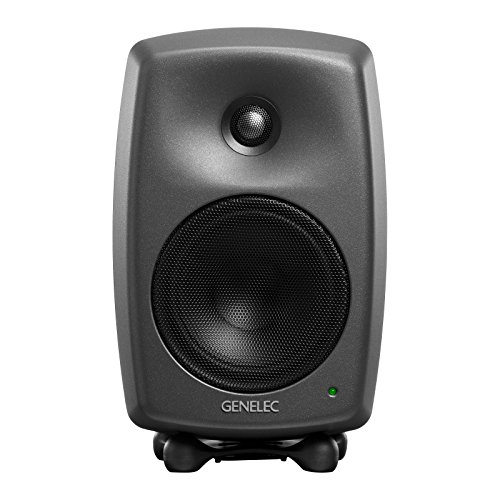
The Genelec 8030C is the best compact mixing monitor in this guide, and it is the monitor that broadcasters, video editors and mixing engineers reach for when the desk is small and the work has to be right, because Genelec built the 8030C as a genuine professional reference in a compact cabinet, with a five-inch woofer, a three-quarter-inch tweeter and a hundred watts of bi-amplified power in a die-cast aluminium enclosure that is rigid enough to keep resonances out of the sound. The 8030C is the monitor for a studio where space is the limiting factor and accuracy is not negotiable, and it is the reason Genelec is the standard in broadcast.
The sound is remarkably honest for a speaker of this size, with a midrange that is clear and uncoloured, a high end that is smooth and extended, and a low end that is tight and controlled rather than extended, which is the right trade in a small room where a bigger woofer would only excite room modes. The 8030C has a flat response that makes it easy to judge the balance of a mix, and the directivity control waveguide keeps the stereo image stable at close range, which matters on a mix desk where the listener sits a metre from the speakers. At low volume the 8030C keeps its balance, and a mix made quietly on these monitors translates well to headphones and larger systems, which is the real test of a reference monitor.
The practical details are built for professional use. The 8030C has a balanced XLR input, a volume control on the back, and bass and treble tilt controls that let the speaker be tuned to the desk and the room, plus an Iso-Pod stand that angles the monitor toward the listener and isolates it from the desk. The aluminium cabinet is tough enough to survive travel, and the monitor is small and light enough to fit in a bag with a laptop and an interface, which makes it a standard choice for a mobile rig. The 8030C is also available in a white finish, and it pairs with the Genelec 7040A subwoofer for a full-range system when the room can handle it.
The trade-offs are that a five-inch woofer cannot produce deep bass, so the 8030C needs a headphone check or a subwoofer for the lowest octave, and the maximum volume is modest, so it suits nearfield work at a desk rather than filling a room. The monitor is more expensive than other five-inch models, and the bass tilt controls are small and fiddly. But as a compact professional mixing monitor, the 8030C has no real rival, and it fits a broadcaster who needs an honest reference on a small desk, a mixer who needs accurate dialogue, and an engineer who needs a monitor that can travel.
Check price on Amazon: Genelec 8030C

Adam Audio A7V
The Adam Audio A7V is the best mixing monitor for detail in this guide, and it is the monitor that buyers choose when the top end of a mix is the priority, because Adam built the A7V around the X-ART ribbon tweeter, a folded-ribbon design that moves air faster and more precisely than a conventional dome, and the result is a high end that is open, detailed and extended, with a sense of air around cymbals, strings and vocals that a dome tweeter struggles to match. The seven-inch woofer is driven alongside the ribbon tweeter by two hundred watts of bi-amplified power, and the combination is a monitor that sounds fast and articulate in a mixing room.
The sound is the most detailed in this guide, with a high end that reveals reverb tails, sibilance and the fine texture of an acoustic instrument, which makes the A7V especially useful for mixing vocals, acoustic music and anything where the top octave matters. The low end is tight and controlled, reaching down to about 40 Hz, which is lower than a five-inch monitor, and the DSP on the back provides voicing options, a low-frequency extension setting and a high-frequency trim, which let the speaker be tuned to the desk and the room. The stereo image is precise, with the ribbon tweeter keeping the soundstage wide and stable at close range, and the monitor sounds balanced at low volume, which is how most mixing work happens.
The practical details are strong for a mixing room. The A7V has balanced XLR and unbalanced RCA inputs, so it connects to an interface or directly to a computer, and the volume control is on the back with a clear scale. The cabinet is compact for a seven-inch monitor, with a bevelled front baffle that reduces diffraction, and the monitor is light enough for a desktop isolation pad, although a dedicated stand is better for a speaker of this size. The ribbon tweeter is protected by a grille, and the build quality is solid, with a finish that looks professional on a desk. The A7V is the monitor that a studio buys when the detail in the top end has to be heard.
The trade-offs are that the rear port means the A7V needs more space behind it than a front-ported monitor, so it suits a desk that can sit away from the wall, and the ribbon tweeter can sound a little forward in a bright, untreated room. The seven-inch woofer produces more low-end energy than a five-inch monitor, so the A7V needs a room that is large enough to handle it. But as a mixing monitor for detailed work, the A7V is excellent, and it fits a producer who mixes vocals and acoustic instruments, an engineer who needs to hear the top end clearly, and anyone who wants a ribbon tweeter with a little more bass.
Check price on Amazon: Adam Audio A7V
Focal Alpha 65 Evo
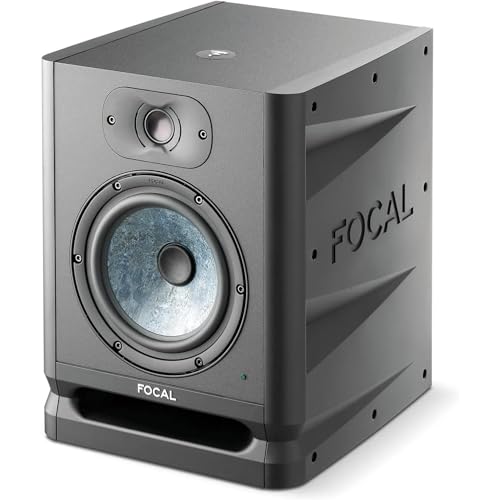
The Focal Alpha 65 Evo is the best mixing monitor for dynamics in this guide, and it is the monitor that buyers choose when the music has to hit hard, because Focal built the Alpha 65 Evo around a six-and-a-half-inch Slatefiber woofer, a composite cone made from recycled carbon fibre and thermoplastic polymer, which is light and rigid enough to start and stop quickly, and the result is a monitor with a punchy, dynamic low end and a midrange that is clear and present. The one-inch aluminium inverted dome tweeter is driven alongside the woofer by eighty watts, and the combination is a monitor that sounds alive and engaging in a mixing room.
The sound is the most dynamic in this guide, with a low end that is tight and punchy rather than bloated, reaching down to about 45 Hz, a midrange that keeps vocals and guitars forward and clear, and a high end that is detailed without being harsh, thanks to the inverted dome tweeter that disperses the sound widely and keeps the stereo image stable. The Alpha 65 Evo has a front-firing laminar port that keeps the bass output away from the wall, which matters in a small room, and a low-frequency trim on the back that lets the bass be adjusted for a desk or a wall position. At low volume the Alpha 65 Evo keeps its punch, and at higher volume it stays clean, which makes it a good choice for a studio that needs to check a mix loudly as well as quietly.
The practical details suit a mixing room. The Alpha 65 Evo has balanced XLR and TRS inputs plus an unbalanced RCA input, so it connects to an interface, a mixer or a computer, and the volume control is on the front, which is a real convenience. The cabinet is compact for a six-and-a-half-inch monitor, with a front port and a solid build, and the monitor sits well on an isolation pad with the tweeter at ear height. The Slatefiber woofer is a distinctive feature, and the monitor looks as good as it sounds, with a finish that suits a professional desk.
The trade-offs are that the Alpha 65 Evo is a little more coloured than the Neumann or the Genelec, with a low end that is punchy rather than flat, so a buyer who wants a ruthlessly flat monitor may prefer a drier speaker, and the six-and-a-half-inch woofer does not reach the deepest bass. The monitor is also a little heavier than some rivals. But as a mixing monitor for dynamic music, the Alpha 65 Evo is excellent, and it fits a producer who works with drums, bass and electronic music, an engineer who needs a monitor that stays punchy at low volume, and anyone who wants a monitor that makes music feel alive.
Check price on Amazon: Focal Alpha 65 Evo
Dynaudio LYD 7
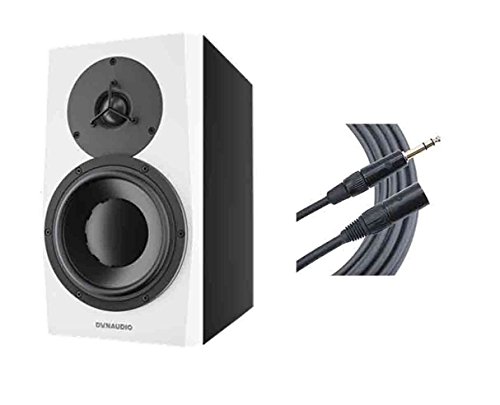
The Dynaudio LYD 7 is the best mixing monitor for balance in this guide, and it is the monitor that buyers choose when the mix has to be balanced across the whole frequency range, because Dynaudio built the LYD 7 around a seven-inch woofer, a 1.1-inch soft dome tweeter, and a DSP that provides a bass extension setting, a brightness setting and a position setting, which let the speaker be tuned to the desk, the wall and the room. The LYD 7 is a monitor that is built for balance, and it is the reason it suits a mixer who needs to hear the whole picture, not just the top or the bottom.
The sound is the most balanced in this guide, with a low end that is tight and controlled, reaching down to about 40 Hz, a midrange that is clear and uncoloured, and a high end that is smooth and detailed, without the forwardness that a ribbon tweeter can have in a bright room. The DSP is the feature that sets the LYD 7 apart, because it provides a bass extension that can be set to full or to a higher cutoff, which is useful when the monitor sits on a desk, a brightness setting that adjusts the top end for a bright or dead room, and a position setting that compensates for a wall or a corner. The stereo image is precise and stable, with the soft dome tweeter keeping the soundstage wide at close range, and the monitor sounds balanced at low volume, which is how most mixing work happens.
The practical details are strong for a mixing room. The LYD 7 has balanced XLR and RCA inputs, so it connects to an interface or directly to a computer, and the volume control is on the back. The cabinet is compact for a seven-inch monitor, with a front port that keeps the bass output away from the wall, and the monitor sits well on an isolation pad with the tweeter at ear height. The build quality is solid, with a finish that looks professional on a desk, and the monitor is light enough for a desktop stand, although a dedicated stand is better for a speaker of this size.
The trade-offs are that the LYD 7 is more expensive than the Kali Audio LP-8 V2, and the seven-inch woofer produces more low-end energy than a five-inch monitor, so the LYD 7 needs a room that is large enough to handle it. The monitor has no digital input, so it needs an analogue connection from the interface. But as a mixing monitor for balance, the LYD 7 is excellent, and it fits a mixer who needs to hear the whole frequency range, an engineer who wants a DSP that tunes the speaker to the room, and anyone who wants a balanced monitor with a soft dome tweeter.
Check price on Amazon: Dynaudio LYD 7
Kali Audio LP-8 V2
The Kali Audio LP-8 V2 is the best eight-inch mixing monitor in this guide, and it is the monitor to choose when the room is large enough for an eight-inch woofer and the mix needs the deepest bass a nearfield monitor can give, because Kali built the LP-8 V2 with an eight-inch woofer, a one-inch soft dome tweeter and a hundred and forty watts of bi-amplified power, plus a boundary EQ that compensates for a wall, a desk or a corner. The LP-8 V2 is the monitor for a project studio with a dedicated room, and it is the largest monitor in this guide.
The sound is the fullest in this guide, with a low end that reaches down to about 35 Hz, which is lower than any other monitor here, a midrange that is clear and present, and a high end that is smooth and detailed, thanks to the waveguide that keeps the direct sound consistent. The eight-inch woofer gives the LP-8 V2 a physical presence that a smaller monitor cannot match, which matters for electronic music, hip hop and anything with a deep bass line, and the boundary EQ on the back lets the low end be trimmed for a desk, a wall or a corner, which is essential, because an eight-inch woofer in a small space needs that control more than any other size. At low volume the LP-8 V2 keeps its balance, and a mix made quietly on these monitors translates well to other systems.
The practical details are strong for a project studio. The LP-8 V2 has balanced XLR and TRS inputs plus an unbalanced RCA input, a volume control on the back, and a cabinet that is compact for an eight-inch monitor, with a front-firing port that keeps the bass output away from the wall. The monitor is heavier than a five-inch model, so it needs a solid stand or a sturdy desk, and the boundary EQ is adjusted with switches on the back, which is straightforward. The LP-8 V2 is the monitor that a studio buys when it wants the most bass a nearfield design can give without moving to a large midfield speaker.
The trade-offs are that an eight-inch woofer produces more low-end energy than any other size in this guide, so the LP-8 V2 needs a room that is large enough to handle it, and in a very small bedroom it will excite room modes that a five-inch monitor would not, which makes the bass sound louder than it is and the mix sound thin elsewhere. The monitor is also larger and heavier, and it needs more desk space and a solid stand. But as an eight-inch mixing monitor, the LP-8 V2 is the best in this guide, and it fits a project studio with a dedicated room, a producer who works with bass-heavy music, and anyone who needs the deepest bass a nearfield monitor can give.
Buying Guide

Buy a monitor, not a speaker
A studio monitor and a hi-fi speaker are built for opposite jobs, and the difference is the flat response: a hi-fi speaker is designed to make music sound pleasant, with a boosted low end and a sweetened top end, while a studio monitor is designed to make music sound honest, with a flat response that exposes a muddy low end, a harsh vocal or a buried guitar. A buyer who mixes on a hi-fi speaker will make a mix that sounds good on that speaker and wrong everywhere else, while a buyer who mixes on a flat monitor will make a mix that translates. Check the frequency response graph before buying, and choose the flattest monitor the budget allows, because flatness is the feature that matters most.
Check price on Amazon: Kali Audio LP-8 V2
Match the monitor to the room size
A three-inch monitor suits a broadcast desk and a tiny bedroom, a five-inch monitor suits a dedicated mix position in a spare room, and a seven-inch or eight-inch monitor suits a project studio with a room large enough to handle the extra bass. A monitor that is too large for the room will excite room modes and make the low end sound louder than it is, while a monitor that is too small for the room will run out of volume and bass before the mix can be judged. Measure the room, measure the listening distance, and choose the smallest monitor that reaches the bass the music needs, because a small monitor in a small room is more honest than a large monitor in the same space.
Use the tuning controls and the DSP
Every monitor in this guide has a low-frequency trim, a boundary switch or a DSP preset, and those controls exist because no studio is the same as any other, so a monitor that sounds flat in the factory will sound bass-heavy on a desk against a wall. Start with the controls flat, play a familiar reference track, and if the bass sounds bloated, trim the low end one step at a time until the track sounds right, then check the same track on headphones to confirm the change. The DSP in the Neumann, Adam and Dynaudio models goes further, with presets that compensate for a wall, a corner or a desk, and a buyer who uses them will get more from a modest monitor than a buyer who buys an expensive monitor and leaves the controls flat.
Place the monitors in a triangle, tweeters at ear height
The monitors and the listening position should form an equilateral triangle, with the tweeters at ear height and the monitors angled inward so they point at the ears, because that geometry puts the listener in the sweet spot where the stereo image is widest and most stable. In a small studio the triangle will be small, often no more than a metre on each side, and that is fine, because nearfield monitors are designed to be listened to at close range. Put the monitors on isolation pads or stands so the desk does not vibrate, keep them away from the corners where bass builds up, and avoid placing one monitor in a corner and the other in free space, because an asymmetric placement makes the stereo image lopsided.
Treat the room before upgrading the monitors
A modest monitor in a treated room will outperform an expensive monitor in a bare room, because the room is the biggest source of error in a small studio, with reflections off bare walls smearing the stereo image and bass build-up in the corners making the low end sound louder than it is. A few panels of acoustic treatment on the wall behind the monitors and on the first reflection points will improve the sound more than a monitor upgrade, and a rug, a bookshelf and a curtain will help as well. Treat the room first, then judge the monitors, because a buyer who upgrades the monitors before treating the room is paying to hear the room more clearly, not to hear the mix more clearly.
Listen quietly, and check the mix elsewhere
A small studio sounds best at low volume, because quiet listening excites the room modes less, reduces the reflections off the walls, and lets the ear hear the balance of the mix without fatigue, and most professional mixers do the bulk of their work quietly for exactly that reason. Once a mix sounds right on the monitors, check it on headphones, in a car and on a phone speaker, because each of those systems exposes a different part of the mix, and a mix that survives all three is a mix that is genuinely finished. The monitors are a tool for judgement, not a system for enjoyment, and the discipline of checking elsewhere is what makes a small-studio mix translate.
Frequently Asked Questions
What is the difference between a studio monitor and a normal speaker?
A studio monitor is built to be flat and honest, with a frequency response that adds nothing and hides nothing, so a mix made on a monitor translates to other systems, while a normal speaker is built to sound pleasant, with a boosted low end and a sweetened top end that flatters the music but hides its problems. A buyer who mixes on a normal speaker will make a mix that sounds good on that speaker and wrong everywhere else, which is why a studio needs a monitor, not a speaker, for mixing.
What size studio monitor do I need for mixing?
A five-inch monitor is the best size for most small studios, because it produces enough bass to judge a mix without producing so much low-end energy that the room modes take over, and a three-inch monitor is the right choice when the desk is very small or the room is a bedroom. A seven-inch or eight-inch monitor suits a larger project studio with a room that can handle the extra bass. Choose the smallest monitor that reaches the bass the music needs, and check the lowest octave on headphones.
Do I need a subwoofer with mixing monitors?
In most cases no, because a subwoofer adds more low-end energy to a space that already has too much of it, and the result is usually boomier and harder to judge, not better. A five-inch monitor reaches low enough for most music, and the lowest octave can be checked on headphones, which is a more reliable way to judge sub-bass in a small room. A subwoofer only makes sense once the monitors are placed well, the room has some treatment, and the subwoofer can be positioned and level-matched carefully.
How should I place mixing monitors in a small room?
The monitors and the listening position should form an equilateral triangle, with the tweeters at ear height and the monitors angled inward so they point at the ears. Put the monitors on isolation pads or stands, keep them away from the corners where bass builds up, and pull them at least a few inches away from the wall behind them. Avoid placing one monitor in a corner and the other in free space, because an asymmetric placement makes the stereo image lopsided.
Why does my mix sound different on headphones?
A mix sounds different on headphones because headphones remove the room entirely, so the bass is tighter and the stereo image is wider, while monitors in a small room add reflections and bass build-up that colour the sound. The remedy is to mix at low volume, use the tuning controls on the monitors, place them in a proper triangle, and treat the room, then check the mix on both systems before calling it finished. A mix that sounds right on both monitors and headphones is a mix that translates.
Conclusion
The best speakers monitors for mixing are the monitors that tell the truth about a mix in the room they actually sit in, and in this guide the Neumann KH 120 II is the most accurate choice, while the Genelec 8030C is the best compact professional monitor, the Adam A7V is the most detailed in the highs, the Focal Alpha 65 Evo is the most dynamic, the Dynaudio LYD 7 is the most balanced, and the Kali Audio LP-8 V2 is the best when the room can handle an eight-inch woofer. Choose a five-inch monitor for a dedicated mix position, a seven-inch monitor for a larger room, place the pair in a triangle with the tweeters at ear height, use the tuning controls on the back, treat the room before upgrading the speakers, and check every mix on headphones before calling it done.
Related guides
- Best Small Video Monitors: Compact On-Camera Displays for Sharp Focus and True Colour
- Best Small Studio Monitors for Studio: Compact Nearfield Speakers for a Real Mix Room
- Best Small Room Audio Monitors: Compact Studio Speakers That Sound Big in Tight Spaces
- Best Recording Monitors Under 1000 Dollars for Home Studios


