Our Top Picks


What's inside
- What factory unlocked actually means for a Motorola phone
- LTE bands: the foundation that still decides rural and indoor coverage
- 5G bands on unlocked Motorola phones: sub-6, C-band and millimetre wave
- Carrier SKUs versus the retail unlocked variant, line by line
- The Moto G family in unlocked form
- The Moto Edge family in unlocked form
- Razr foldables as unlocked purchases
- Checking IMEI and band support before money changes hands
- Dual SIM and eSIM across the unlocked Motorola range
- VoLTE, Wi-Fi calling and the features that silently differ
- Software experience and update reality on unlocked Motorola phones
- Choosing between G, Edge and Razr as an unlocked buyer
- A pre-purchase checklist for unlocked Motorola buyers
- Activation day: getting an unlocked Motorola onto a network cleanly
- Unlocked Motorola phones on smaller carriers and virtual operators
- Travel and roaming with an unlocked Motorola
- Check prices on Amazon
- Long-term ownership on the unlocked path
As an Amazon Associate I earn from qualifying purchases. This post may contain affiliate links at no extra cost to you.
Some links on this page are affiliate links, which means the publisher receives a small payment if a reader buys through them, while the price paid by that reader stays unchanged. Editorial selection here follows published specifications, carrier band documentation and manufacturer variant listings, not retailer preference. Because unlocked phones live or die by network compatibility, every claim below can be checked against the maker specification page and the carrier band list for the exact model number under consideration.
What factory unlocked actually means for a Motorola phone
A factory unlocked Motorola handset ships without a carrier SIM lock, accepting a nano-SIM or eSIM profile from any compatible network whose radio bands the hardware supports. That freedom is contractual and technical at once. Contractually, no carrier controls activation, financing status or permission to leave. Technically, the phone still speaks only the frequencies its antennas and modem were built for, so unlocked never means universal. Confusing those two ideas causes most disappointed purchases in this category.
Motorola sells many models through two parallel channels: a retail unlocked variant sold directly and through general retailers, and carrier variants customised for a specific network. The retail unlocked variant typically carries a model family name followed by an unlocked designation in the maker store, its own SKU and its own software channel, often labelled with a retail or RETUS identifier in the software version string. Carrier variants may share the same marketing name while differing in bands, storage, memory, SIM configuration and update timing.
The distinction matters because a shopper searching a model name alone can land on either variant. Two phones photographed identically, described with the same headline name, may support different 5G bands or offer different eSIM behaviour. The only reliable identifiers are the full model number, the SKU printed on the box label and the band list published for that specific variant. This guide repeatedly returns to that discipline, because it prevents nearly every avoidable mistake in unlocked Motorola buying.
Unlocked status also differs from a carrier phone that was later unlocked after a contract ended. A post-contract unlock removes the SIM restriction but leaves carrier software, carrier band configuration and sometimes carrier update control intact. A factory unlocked retail unit starts clean: no carrier boot branding beyond regulatory requirements, no preloaded carrier application suite competing for storage, and a feature set defined by Motorola rather than negotiated with a network. Buyers comparing a cheap carrier-unlocked unit against a retail unlocked unit should price that difference honestly.
Readers new to unlocked buying may want the wider category context in best affordable unlocked smartphones before narrowing to one brand. This page stays deliberately Motorola-specific, because band tables, update channels and SIM arrangements differ enough between makers that general advice about unlocked phones routinely misleads when applied to a particular Moto G or Razr variant.
LTE bands: the foundation that still decides rural and indoor coverage
Long Term Evolution bands remain the safety net beneath every 5G headline. In the United States, the essential LTE bands for broad compatibility are band 2 at 1900 megahertz, band 4 and its superset band 66 in the AWS range, band 5 at 850 megahertz, band 12 at 700 megahertz, band 13, band 17, band 41, band 48 and band 71 at 600 megahertz. Each major carrier leans on a different subset, and a Motorola variant missing the wrong one loses coverage exactly where a buyer lives or travels.
T-Mobile coverage rests heavily on band 12 and especially band 71 for extended-range rural and indoor reach, alongside bands 2, 4, 66 and 41 for capacity. A Motorola unlocked model lacking band 71 may perform admirably in a city centre while thinning dramatically on inter-state drives or inside large buildings. AT&T relies principally on bands 2, 4, 66, 5, 12, 17, 14 and 30, with band 14 carrying FirstNet spectrum that also benefits ordinary subscribers where deployed. Verizon coverage historically centres on bands 13, 5, 2, 4, 66 and 48, with band 13 providing the deep 700 megahertz backbone across much of the country.
Carrier aggregation complicates the raw band list. Modern Motorola modems combine several LTE carriers simultaneously, and the supported combinations, not merely the individual bands, determine real speeds in congested cells. Specification pages rarely publish full aggregation matrices for retail buyers, which is one reason two phones listing identical bands can perform differently on the same tower. As a practical rule, recent Moto Edge and Razr hardware carries richer aggregation support than entry Moto G hardware, reflecting modem tier rather than any carrier favouritism.
International bands matter for travellers choosing an unlocked phone precisely to swap networks abroad. Bands 1, 3, 7, 8, 20 and 28 dominate much of Europe, Asia and Latin America. North American retail unlocked Motorola models usually include a generous selection of those, but not always band 28 or band 20, both important for rural coverage overseas. A buyer planning extended time abroad should compare the destination network band list against the exact variant, rather than assuming a United States unlocked label guarantees global usefulness.
VoLTE support sits on top of the LTE band question and has become non-negotiable. United States carriers retired their 3G networks, so voice calls now travel over LTE or 5G data bearers. A phone whose bands match but whose VoLTE provisioning profile is absent from a carrier whitelist can register for data yet fail calls, a trap that historically caught imported variants. Retail unlocked Motorola models sold for the United States market are provisioned for VoLTE on the major carriers; grey-import units built for other regions may not be, regardless of band overlap.
5G bands on unlocked Motorola phones: sub-6, C-band and millimetre wave
Fifth-generation support divides into low-band, mid-band and millimetre-wave tiers, and unlocked Motorola variants differ sharply in which tiers they include. Low-band 5G on band n71 for T-Mobile and n5 for AT&T and Verizon mirrors LTE propagation, reaching far and penetrating buildings, at modest speeds. Mid-band spectrum, principally n41 for T-Mobile, n77 C-band for Verizon and AT&T, and n78 internationally, delivers the large speed gains most users associate with 5G. Millimetre-wave bands n258, n260 and n261 offer extreme capacity over very short distances and appear mainly on carrier-specific variants.
The unlocked-versus-carrier divide bites hardest at millimetre wave. Several Motorola generations offered millimetre-wave capability only on a Verizon-specific variant, while the retail unlocked sibling omitted those antennas entirely. A buyer who needs millimetre wave, genuinely useful mainly in dense stadium and downtown deployments, must verify its presence explicitly. Conversely, a buyer who does not need it should not pay a premium for a carrier variant whose extra antennas bring no benefit on their chosen network.
C-band n77 support deserves explicit confirmation for Verizon and AT&T subscribers, because that spectrum now carries much of their metropolitan 5G capacity. Some earlier unlocked models covered n41 for T-Mobile but lacked n77, making them excellent unlocked choices for one carrier and mediocre choices for another despite both being sold as 5G phones. The marketing phrase 5G capable conceals these distinctions; the band table reveals them. Always read the n-band list line by line against the intended carrier.
Standalone versus non-standalone operation adds a subtler layer. Early 5G deployments anchored 5G data to an LTE control connection, called non-standalone mode. Standalone 5G removes that anchor, improving latency and enabling network features such as slicing in enterprise contexts. T-Mobile built a standalone low-band layer early, so an unlocked Motorola intended for T-Mobile benefits from SA support on n71 and n41. Motorola specification pages increasingly list SA and NSA support per band, and that column is worth reading for buyers keeping a phone several years.
Dual SIM operation interacts with 5G in ways covered later in this guide, but one interaction belongs here: on many Motorola models, simultaneous dual SIM operation limits one or both lines to particular band combinations, and some configurations fall back to LTE on the secondary line. A traveller expecting full 5G on two networks at once should confirm the dual SIM 5G behaviour for the specific model rather than extrapolating from single-SIM performance.
Carrier SKUs versus the retail unlocked variant, line by line
Software is the most visible difference. Retail unlocked Motorola phones receive updates on Motorola schedule through the retail software channel, while carrier variants wait for carrier certification of each build, which can delay security patches and major Android upgrades by weeks or months. Neither channel is flawless, but the unlocked channel removes one approval layer. Carrier variants also preload carrier applications, visual voicemail clients and sometimes locked-down hotspot or tethering entitlements that the retail build handles through standard Android interfaces.
Feature availability can diverge in surprising places. Wi-Fi calling and VoLTE are supported on retail unlocked Motorola models across the major United States carriers for recent generations, yet older unlocked generations occasionally lacked Wi-Fi calling on one carrier while the carrier own variant included it. Visual voicemail, RCS messaging profile behaviour and hotspot provisioning have each, at various times, behaved differently between SKUs. Buyers for whom Wi-Fi calling is essential, particularly in buildings with weak cellular signal, should confirm that feature for their carrier and model generation together, not separately.
Hardware differences extend beyond radios. Carrier variants have at times shipped with different storage and memory configurations than the retail unlocked version of the same named model, and occasionally with a single SIM tray where the unlocked version accepts dual SIM or pairs a physical SIM with eSIM. Colour availability also splits by channel, which is trivial cosmetically but useful diagnostically: a colour sold exclusively through one carrier hints strongly that a second-hand unit began life as that carrier variant, whatever the seller claims.
Warranty and support routing differ subtly too. Motorola honours warranty on both channels, but carrier variants are often serviced initially through the carrier store network, while retail unlocked units go directly through Motorola support. For a buyer comfortable dealing directly with the manufacturer, the unlocked route simplifies that relationship. For a buyer who values walking into a local store, a carrier variant holds an appeal unrelated to radio performance, and this guide does not pretend otherwise.
Resale value tends to favour the retail unlocked variant over time. A second owner can use it on any compatible network, widening the buyer pool, and its clean software ages more gracefully than a build tied to a carrier the next owner may not use. Shoppers planning to keep a phone until it fails can ignore this factor; shoppers who upgrade frequently should count it alongside purchase price, especially within the Moto G range where small absolute differences represent a large share of remaining value.
Comparisons with the broader unlocked market, including price-led alternatives, appear in best affordable unlocked android phones. Within Motorola own line-up, however, the unlocked-versus-carrier decision usually matters more than the decision between adjacent Moto G generations, because it shapes updates, features and network freedom for the entire ownership period.
The Moto G family in unlocked form
The Moto G line carries Motorola volume business, and its unlocked variants are the default recommendation for buyers wanting network freedom without flagship expense. Recent generations divide into the standard Moto G, the Moto G Power with a larger battery, the Moto G Stylus with an integrated pen and higher-resolution main camera, and periodic regional siblings. All recent United States retail unlocked Moto G models share a broadly similar LTE foundation, but their 5G band lists and modem capabilities differ by generation and price step.
Battery capacity defines the Power variant appeal: cells around 5,000 milliamp-hours have been typical across generations, paired with efficient mid-range processors that stretch that capacity across two days of moderate use. The trade is weight and charging speed, since larger cells in this class historically charged at modest wattage through USB-C. Buyers who travel between coverage areas, where a phone boosts transmit power hunting for signal, benefit disproportionately from that battery headroom, because weak-signal operation drains any handset faster than specification-sheet screen-on estimates suggest.
The Stylus variant deserves attention from note-takers and from buyers wanting the strongest camera hardware in the G family. Its pen is a passive capacitive stylus rather than an active digitiser pen of the kind found on premium flagships, so it suits sketching, annotation and precise tapping rather than pressure-sensitive artwork. Confirming that distinction before purchase prevents a common disappointment, since marketing imagery rarely explains the underlying pen technology.
Display technology splits the family as well. Higher G variants have adopted OLED panels with high refresh rates in recent generations, while entry variants retain LCD panels. For an unlocked buyer cross-shopping carriers, the display difference is network-independent and therefore easy to overlook amid band tables, yet it shapes daily satisfaction more than a marginal band addition used twice a year on a road trip. Balance both ledgers: bands decide whether the phone works; panel, battery and camera decide whether ownership pleases.
Storage and memory configurations on unlocked Moto G models have generally been generous relative to carrier siblings, sometimes exclusively offering the higher storage tier through the retail channel. microSD expansion remains a family strength across many generations, letting a buyer carry media libraries without paying flagship storage premiums. Verify the expansion slot on the specific generation, because Motorola has trimmed it from some higher-tier lines while retaining it in the G family, and assumptions carried over from a previous G can mislead in either direction.
Update commitments for Moto G models are shorter than for the Edge family, typically promising fewer major Android upgrades while still delivering regular security patches for a defined window. An unlocked G bought near launch extracts the full value of that window; the same model bought late in its cycle, however discounted, may receive only a fraction of the remaining support. Checking the launch date and Motorola published update policy for the generation converts that hidden variable into an informed decision.
The Moto Edge family in unlocked form
Moto Edge models occupy the step above G, bringing stronger processors, OLED displays with high refresh rates across the range, faster charging and more capable camera systems. Their unlocked variants are the natural choice for a buyer who wants Motorola software lightness with performance headroom for several years of use. Modem capability rises with the tier: Edge models generally support broader carrier aggregation, more complete mid-band 5G coverage and, on some generations, Wi-Fi 6E or Wi-Fi 7 connectivity that the G family omits.
Charging speed is a signature Edge advantage, with Motorola TurboPower wired charging at substantially higher wattage than G models and, on several Edge generations, wireless charging that the G family lacks entirely. For unlocked buyers who swap SIMs while travelling, fast top-ups at airports and hotels carry practical value beyond the specification sheet. Confirm whether a given Edge generation includes a charger in the retail box for your region, since packaging policy varies by market and year.
Display curvature gave the Edge line its name, though recent generations have moderated the aggressive curves of early models in favour of gentler edges or flat panels. Buyers sensitive to accidental palm touches or tempered-glass protector fit should note which design a particular generation uses. This is a variant-level detail, identical between unlocked and carrier versions of the same generation, but it influences case selection and long-term satisfaction enough to merit a line in any buying checklist.
Camera systems on Edge models add optical image stabilisation on the main sensor and higher-resolution ultrawide cameras that double as macro cameras on many generations. Motorola image processing favours natural colour over the saturated processing of some rivals, a preference question rather than a quality verdict. For this guide the relevant point is narrower: camera hardware is identical between unlocked and carrier Edge variants of the same generation, unlike radios and software, so camera comparisons can safely use any review of the generation while band checks cannot.
The Edge family also illustrates Motorola naming hazards. Suffixes such as Plus, Pro, Ultra and Fusion have denoted different tiers in different years and different regions, and a model sold under one name in North America may appear under another name internationally with altered bands. An unlocked buyer importing or buying from a marketplace seller must therefore anchor on the model number, typically an XT-prefixed code, rather than the marketing suffix. That single habit eliminates most cross-region confusion in this family.
Razr foldables as unlocked purchases
The modern Razr line folds a full smartphone into a pocketable square, and its unlocked variants carry particular appeal because foldables attract early adopters who change networks and travel frequently. Recent Razr generations divide into a standard model and a Plus or Ultra tier with a larger, more capable cover display. That cover screen is the defining hardware difference: on the higher tier it runs full applications and detailed widgets, while the standard tier handles notifications, quick replies and camera previews in a more limited fashion.
Radio support on unlocked Razr models has been strong for sub-6 gigahertz 5G, covering the principal United States low and mid bands, while millimetre-wave support has varied by generation and variant. eSIM plays a larger role here than in the G family: recent Razr generations sold in the United States have leaned heavily on eSIM, with physical SIM provision differing by generation and region. A buyer whose carrier, travel plan or work line depends on a physical card must confirm the tray configuration for the exact Razr variant, because foldable internal space pressures push makers toward eSIM-only designs sooner than slab phones.
Durability questions follow every foldable, and unlocked buyers should understand the terms before purchase. The flexible inner display uses ultra-thin glass beneath a protective layer that must not be removed, the hinge carries an ingress rating far more modest than the IP ratings of premium slab phones, and screen protector replacement is a manufacturer-channel service rather than a home task. Motorola publishes care guidance and warranty terms for the folding display; read them as part of the purchase, not after the first crease anxiety arrives.
Battery life on Razr models reflects the physics of a folding chassis split into two halves. Capacities are smaller than comparably priced Edge models, and the cover display encourages frequent short interactions that sip power efficiently while unfolded sessions draw more. None of this disqualifies the Razr as an unlocked daily phone, but a buyer whose work involves long days far from chargers should weigh the Edge alternative honestly rather than letting the folding novelty decide alone.
Software support for Razr sits at Motorola flagship tier, with longer update commitments than the G family and features tuned to the cover display and folded postures, such as tent-mode video calls and external-display camera selfies using the main cameras. Those main-camera selfies are a genuine quality advantage unique to the form factor: the best cameras on the phone face the user when folded, outperforming every punch-hole selfie camera in the Motorola range.
Checking IMEI and band support before money changes hands
Every carrier operates an IMEI compatibility checker on its website or through its bring-your-own-device programme. The IMEI, a unique identifier for the handset radio, can be found on the box label, in the phone settings under device information, or by dialling the standard IMEI display code on a working handset. Entering that number into the intended carrier checker answers the whitelist question directly: whether that specific unit, not merely its model family, will be permitted full service including VoLTE.
Run the check before paying whenever buying second-hand, and run it for the exact unit rather than a sibling on the same shelf. IMEI records expose more than compatibility: carrier databases and reputable checking services can reveal whether a device is reported lost, blocked for non-payment on a financing plan, or still attached to an active account. A bargain unlocked Motorola with a compromised IMEI can be refused activation everywhere, and no band table can rescue it.
Band verification complements the IMEI check rather than replacing it. The carrier checker confirms permission; the band table confirms performance. A phone can be whitelisted yet lack band 71 for rural T-Mobile reach or n77 for metropolitan Verizon capacity, passing activation while disappointing daily. Complete both checks: IMEI for eligibility, published bands for the intended carrier for quality of service, and feature confirmation for Wi-Fi calling if that matters to the household.
Marketplace listings require extra scepticism. Sellers frequently describe a carrier variant as unlocked after a carrier unlock was applied, which may be true yet still leaves carrier software and possibly a narrower band set. Ask for the model number and a photograph of the box label or the software channel screen, and compare them against Motorola retail variant identifiers. A seller unable or unwilling to provide the model number is asking the buyer to absorb all the variant risk, and the correct response is to walk away.
For new purchases from general retailers, verify that the listing names the retail unlocked variant explicitly and that the model number in the listing specifications matches the maker store listing for the unlocked version. Retailers occasionally commingle stock or reuse a product page across variants during generation transitions. Checking the delivered unit model number during the returns window, before transferring data and discarding packaging, converts a potential long-term regret into a simple exchange.
Buyers considering two networks at once, perhaps a personal and a work line, should run IMEI checks against both carriers where tools permit. A handset fully welcome on one network may face feature restrictions on another, particularly around Wi-Fi calling provisioning. The dual SIM discussion in best 2 sim smartphones covers general two-line strategy, while the Motorola-specific SIM arrangements are detailed in the next section of this guide.
Dual SIM and eSIM across the unlocked Motorola range
Motorola dual SIM implementation varies more by region and family than almost any other feature in this guide. Many international unlocked Motorola models accept two physical nano-SIM cards. United States retail unlocked models more commonly pair one physical nano-SIM with an eSIM, or on some recent generations rely on a single physical SIM plus eSIM capability that must be confirmed per model. The phrase dual SIM in a listing therefore requires unpacking: it may mean dual standby with one tray and one embedded profile, or two trays, and the difference decides whether a traveller can keep a home physical card installed while adding a travel eSIM.
Dual SIM dual standby is the standard behaviour across the Motorola range: both lines register and receive calls, but only one line carries an active data session or call at a time, and a call on one line typically suspends data on the other unless VoLTE-based switching is supported by both networks. For most two-line users that behaviour is entirely adequate. Users expecting simultaneous independent data on both lines are describing a feature essentially absent from consumer handsets, Motorola included, and should plan around a single active data line.
eSIM transfer and provisioning on Motorola follows standard Android flows: scan a carrier QR code or enter activation details, download the profile, then label the line in settings. Moving an eSIM between phones usually requires carrier involvement or a fresh QR issuance, unlike a physical card that swaps in seconds. Frequent phone changers, reviewers and households sharing a travel line should weigh that friction. Conversely, eSIM excels for adding a local data profile on arrival in another country without hunting for a physical card vendor.
Which line handles data, calls and messages by default is configurable per line in Motorola settings, including per-contact preferences on supported builds. Data switching features can move the data session to the secondary line automatically when the primary loses coverage, a genuinely useful behaviour for travellers, though it can consume a limited travel balance unexpectedly if left enabled without thought. Review those toggles during setup rather than discovering them through a billing surprise.
Work-profile users should note that dual SIM interacts cleanly with Android work profiles on recent Motorola builds, allowing a personal line and a managed work line to coexist with separate application data. Confirm with an employer IT policy whether an unlocked retail device is acceptable, because some organisations restrict enrolment to specific models or require carrier-variant firmware. That administrative check belongs in the pre-purchase list alongside the radio checks, especially for Edge models bought for professional use.
VoLTE, Wi-Fi calling and the features that silently differ
Voice over LTE is mandatory on United States networks following the 3G shutdowns, and retail unlocked Motorola models of recent generations are provisioned for it across the major carriers. The setting usually appears as VoLTE or enhanced calling in network options and should remain enabled permanently. If a newly activated unlocked Motorola drops to no service during calls or shows calling failures while data works, the cause is almost always provisioning: an older SIM, an account feature missing, or a variant whose profile the carrier does not recognise. Resolve it with the carrier using the IMEI rather than by repeatedly toggling handset settings.
Wi-Fi calling deserves separate verification because its support matrix is narrower than VoLTE. Recent unlocked Motorola generations support Wi-Fi calling on T-Mobile and Verizon broadly, with AT&T support present on many but not all generations and models. Since Wi-Fi calling often decides usability inside metal-framed buildings, rural homes and workplaces with poor indoor cellular reach, a buyer on any network should confirm it for the precise model generation. Emergency-call address registration is required for Wi-Fi calling in the United States, and that registration lives on the carrier account, so set it during activation rather than during an actual emergency.
RCS messaging, the modern successor to SMS with read receipts and high-quality media, provisions through carrier and Google Messages infrastructure. Unlocked Motorola phones using Google Messages generally gain RCS on supported carriers without variant drama, though activation can lag for a day after a SIM swap. Visual voicemail varies more: carrier visual voicemail applications may be absent on the retail build, leaving the standard dialler voicemail tab or a carrier application installed manually as the route. Buyers attached to a particular voicemail workflow should expect a small adjustment when moving from a carrier variant to the retail unlocked build.
Hotspot entitlement is another quiet difference. Retail unlocked Motorola phones expose the standard Android hotspot controls, and whether tethering works then depends on the subscriber plan rather than a carrier application gate. Carrier variants may route the same feature through carrier entitlement checks with additional friction. For remote workers who tether a laptop from a phone as a backup connection, the unlocked behaviour is simpler and more predictable, provided the plan itself permits hotspot data at usable speeds.
Emergency alerts, including wireless emergency alerts and earthquake alerts where available, function on retail unlocked models sold for the United States market. Imported variants may lack the correct alert channels or present menus in unfamiliar configurations. This is one more reason the premium for a domestic retail unlocked unit over a grey import is usually money well spent for a primary phone, even when headline specifications look identical between them.
Software experience and update reality on unlocked Motorola phones
Motorola ships one of the lightest manufacturer interpretations of Android among major brands. The interface stays close to Google design, additions concentrate in the Moto application with gesture shortcuts such as the double-chop flashlight action and twist-to-capture camera launch, and there is no duplicate application store or heavy parallel service layer. For unlocked buyers fleeing carrier bloat, that restraint is a central part of the appeal, and it is identical in character across G, Edge and Razr retail builds.
Update cadence remains the honest weakness to acknowledge. Motorola has improved its commitments on recent flagship and Edge generations, promising multiple major Android upgrades and several years of security patches, while G models receive fewer major upgrades. Even so, delivery timing historically trails the fastest rivals, and bi-monthly rather than monthly security patches are common in parts of the range. An unlocked variant removes carrier delay from that equation, which is the portion a buyer can control; the manufacturer portion requires accepting Motorola rhythm or choosing another brand.
Verifying the software channel of a unit in hand is straightforward: the build fingerprint and software version screens reveal channel identifiers, and Motorola publishes update notices by model and channel. A second-hand buyer can use that screen to confirm a phone truly runs the retail channel rather than a carrier channel with an unlock applied. That thirty-second inspection, combined with the model number check, closes the two most common misrepresentation gaps in the used unlocked market.
Storage consumed by the system partition is modest on Motorola builds compared with heavily customised rivals, which matters on 128 gigabyte G models where every gigabyte serves the owner. Motorola also retains a largely standard approach to bootloader unlocking for enthusiast owners through its developer programme, though unlocking the bootloader affects warranty terms and some security-sensitive applications. Mainstream buyers can ignore that programme entirely; its existence simply signals a comparatively open philosophy consistent with the unlocked ethos of the hardware itself.
Choosing between G, Edge and Razr as an unlocked buyer
Start the decision with network facts, not with the handset shelf. Identify the carrier or carriers the phone must serve for the next several years, list their essential LTE and 5G bands from the sections above, and eliminate any variant whose table lacks a critical band. That filter frequently removes one or two tempting options immediately, and it costs nothing. Only after the survivors list exists should display, camera and battery preferences rank the remainder.
Choose a Moto G unlocked model when the priorities are battery endurance, microSD expansion, a headphone jack on generations that retain one, and the lowest cost per year of competent service. The G family serves students, parents buying for teenagers, delivery and field workers who need a dependable second line, and anyone whose previous flagship experience taught them that mid-range performance already covers their actual applications. Its compromises, slower charging, shorter update windows and LCD panels on entry tiers, are visible and predictable.
Choose a Moto Edge unlocked model when the phone is a primary work tool, when camera stabilisation and display quality shape daily satisfaction, or when faster charging and wireless charging fit a desk-based routine. Edge hardware also suits buyers who keep phones longer, because processor headroom and stronger modems age more gracefully as applications grow heavier and networks refarm spectrum toward newer bands. The price step over G buys time as much as it buys specifications.
Choose a Razr when pocket size and the cover-display workflow genuinely change how the phone will be used, and when its eSIM arrangement matches the intended lines. The Razr rewards buyers who check messages, control music, frame selfies and handle quick tasks without opening the phone dozens of times daily. Buyers who rarely exploit the folded modes are paying for a hinge they do not need, and an Edge will serve them better for the same commitment.
Cross-carrier flexibility itself has a quantifiable value worth estimating. A household that changes carriers to chase coverage improvements or household plan economics may save substantially across a phone lifetime by remaining unlocked, dwarfing small price gaps between variants at purchase. Conversely, a carrier promotion on a locked or carrier-variant unit can be rational when the discount is large and the household is certain to stay. Run that arithmetic with real numbers for your household rather than treating unlocked purity as an ideology.
The category context for cross-brand comparisons, including which unlocked phones serve each major carrier best, is maintained in best 4g and 5g unlocked phones. Return here for the Motorola-specific checks, because brand-level variant discipline is where unlocked purchases succeed or fail in practice.
A pre-purchase checklist for unlocked Motorola buyers
The table below compresses this guide into verification steps. Each row names a check, where to perform it and what failure looks like, so a buyer can work through it in minutes before paying or during a returns window after delivery.
| Check | Where to verify | Warning sign |
|---|---|---|
| Model number and SKU | Box label and maker store listing | Listing gives only a marketing name |
| LTE band list | Maker specification page for that variant | Missing band 71, 13 or 14 for your carrier |
| 5G band list | Same specification page, n-band rows | No n41 or n77 where your carrier needs it |
| IMEI eligibility | Carrier bring-your-own-device checker | Checker rejects or limits the unit |
| Wi-Fi calling | Carrier device support page by model | Feature absent for that generation |
| SIM arrangement | Maker specifications, SIM section | eSIM-only where a physical card is required |
| Update window | Maker launch date and update policy | Model near the end of its support |
Beyond the table, confirm the return policy allows activation and real-network evaluation. Band tables predict a great deal, but a specific home or office may sit in a coverage notch that only a live SIM reveals. A returns window that permits a week of genuine use on the intended network is worth more than a small price advantage from a seller offering no such evaluation, particularly for buyers in fringe coverage areas where one band makes the difference between comfort and frustration.
Accessories deserve a final variant-aware glance. Case fit differs between generations sharing a family name, and foldable Razr cases attach and protect in ways unfamiliar to slab-phone buyers. Charging bricks are increasingly excluded from retail boxes in some regions, so confirm box contents and, if buying a fast charger separately, match its wattage and USB Power Delivery or TurboPower compatibility to the model ceiling rather than buying the largest available number blindly.
Data migration from a previous phone, Motorola or otherwise, is handled by standard Android transfer tools over cable or Wi-Fi during setup. Perform migration before deactivating the old line, keep the old handset until banking and authenticator applications are confirmed working on the new unit, and only then factory-reset the old device if it will be traded or sold. That sequencing advice is unglamorous and prevents the most common self-inflicted lockouts in unlocked phone transitions.
Activation day: getting an unlocked Motorola onto a network cleanly
Begin activation with the phone updated on Wi-Fi before inserting or provisioning the line, so carrier settings and the latest modem firmware arrive in an orderly fashion. Then add the physical SIM or scan the eSIM profile, restart once, and allow several minutes for provisioning systems to register the IMEI against the account. Check four things in order: mobile data on the expected band type, an outgoing and incoming call to confirm VoLTE, a text message in both directions, and Wi-Fi calling registration if that feature was part of the purchase rationale.
If data works but calls fail, suspect provisioning rather than hardware and contact the carrier with the IMEI ready, asking specifically for VoLTE provisioning verification. If Wi-Fi calling refuses to register, confirm the emergency address on the account and that the feature is enabled at account level, not merely toggled on the handset. If 5G never appears in an area the carrier maps as covered, confirm the line plan includes 5G access and that the handset preferred network type has not been limited to LTE by a previous owner or a battery-saving setting.
APN settings on retail unlocked Motorola phones normally populate automatically from the SIM for major carriers. Manual APN editing is occasionally required for smaller virtual operators that ride a host network, in which case the operator publishes exact values and the handset exposes them under access point names in mobile network settings. Photograph the working configuration once achieved; a future factory reset or SIM experiment can erase it, and a photograph restores it in a minute.
Keep the previous phone active on its line until the new unit passes a full day of ordinary use, including a commute or a trip through known weak-signal areas. Number transfers and eSIM moves occasionally take time to settle for short-code messages from banks, which may lag behind ordinary texts. Patience during that first day, with the old handset still reachable, turns potential authentication chaos into a minor inconvenience.
Unlocked Motorola phones on smaller carriers and virtual operators
Virtual operators that resell capacity from the three national networks are natural partners for unlocked handsets, because their business model assumes customers arrive with their own hardware. Compatibility follows the host network band requirements in most respects, so a retail unlocked Motorola that serves the host carrier well will usually serve its virtual operators well too. The differences appear in provisioning details: some virtual operators require manual APN entry, some gate 5G access behind particular plans, and some support eSIM while others still ship only physical cards.
Deprioritisation is the trade most often omitted from smaller-carrier marketing. During congestion, a virtual operator customer may be slowed before the host network direct subscribers, which affects a busy stadium or a rush-hour train regardless of handset quality. An unlocked Motorola cannot repeal that policy, but a model with strong mid-band 5G support spends more time on capacious spectrum where deprioritisation bites less often. Buyers in dense cities should weigh that interaction when choosing between an entry G model with limited mid-band coverage and an Edge model with fuller support.
Regional carriers present a different compatibility picture. Some operate their own rural networks with distinctive band combinations, including specialised low-band holdings, and roam onto national networks outside their footprint. A Motorola variant aimed purely at the big three may lack a regional carrier key band, making the IMEI checker for that specific carrier an essential step rather than a formality. Rural buyers in particular should verify home-network bands first and roaming behaviour second, in that order.
Prepaid brands owned by the national carriers occupy a middle position: their compatibility lists mirror the parent network closely, and retail unlocked Motorola models are routinely welcomed. Their support staffs, however, may be less practised at troubleshooting unlocked devices that were never sold through their own channels. A buyer choosing that combination should be comfortable performing basic steps personally, such as confirming APN values, toggling VoLTE and reading the model number to a support agent who may initially assume a carrier-sold handset.
Travel and roaming with an unlocked Motorola
International travel is where unlocked ownership pays its most visible dividend. Arriving in another country, a traveller can add a local eSIM data profile before departure or buy a physical local card on arrival, keeping the home line alive on standby for banking codes and urgent calls. That arrangement avoids roaming charges for data while preserving reachability, and it works precisely because no carrier lock ties the handset to the home network. Confirm before departure that the destination bands appear in the variant table, especially band 28 and band 20 for rural reach in many regions and n78 for mid-band 5G across Europe and parts of Asia.
Roaming on the home line remains the simpler option for short trips, and unlocked status does not alter roaming agreements themselves. What unlocked hardware changes is the fallback: if roaming proves expensive or a destination network is unsupported, the traveller has alternatives instead of a locked handset and a hotel Wi-Fi dependency. Dual SIM settings should be reviewed before boarding, setting the travel profile as the data line and disabling automatic data switching back to the home line, which can silently generate roaming charges when local coverage dips.
Frequency differences also affect emergency calling abroad and the behaviour of location services that combine satellite positioning with network assistance. Modern Motorola handsets handle multi-constellation positioning independently of the carrier, so navigation works on a local data profile just as it does at home. Download offline maps over Wi-Fi before departure as insurance for arrival halls and rural areas where the first local connection may be slow to provision.
Finally, record the handset IMEI and the maker support contact in a place accessible without the phone itself, such as a printed card in a travel document pouch. If the phone is lost abroad, that record enables the home carrier to suspend the line, supports any insurance claim and allows a replacement device to be provisioned faster. Unlocked freedom includes the freedom to replace hardware anywhere; being able to prove exactly which variant was lost makes that replacement a like-for-like restoration rather than a fresh compatibility research project.
One travel detail is routinely forgotten until it causes trouble: some banking and government applications bind authentication to a combination of device identifier and line, so swapping profiles repeatedly during a long trip can trigger verification challenges. Keep the home line active for those services, complete any pending re-verification while still at home after setting up the new handset, and carry a secondary authentication method such as a hardware key or printed recovery codes. An unlocked phone makes line juggling technically easy; disciplined preparation keeps that ease from colliding with account security systems designed to treat sudden changes as suspicious.
Check prices on Amazon
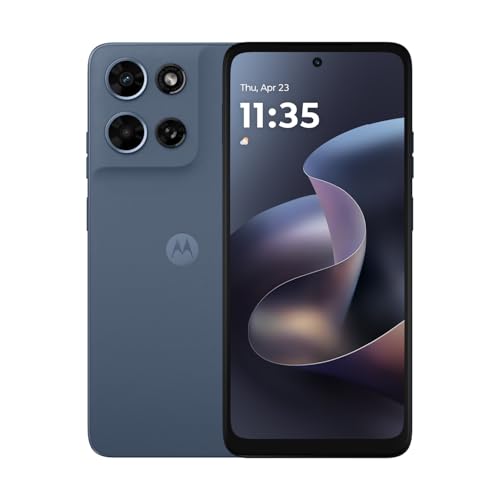
Live listings for the shortlist in this guide are pulled from Amazon below, so prices and availability are always current at the moment you look.

Long-term ownership on the unlocked path
Owning an unlocked Motorola rewards a small maintenance rhythm. Install security updates when they arrive rather than deferring indefinitely, because modem and telephony fixes ride inside those builds alongside Android patches. Revisit carrier band developments annually: networks refarm spectrum, add mid-band layers and occasionally retire configurations, and a phone that was optimal three years ago may gradually lose relative ground even though nothing about the handset changed.
Battery care follows ordinary lithium practice: avoid leaving the phone at full charge in hot environments for extended periods, and do not panic about overnight charging on modern hardware with charge management. Motorola builds include adaptive charging options on many models that learn an alarm time and hold the final portion of charging until shortly before waking. Enabling that feature is one of the simplest longevity wins available, particularly on Edge models whose faster charging otherwise encourages constant full-speed top-ups.
When the time comes to sell or hand down the phone, the unlocked status becomes a feature to document rather than merely claim. Photograph the model number screen, the software channel and an IMEI check result, and state the band highlights relevant to major carriers in the listing. That evidence commands a better price and a faster sale than a bare assertion of unlocked status, and it protects the seller when a buyer later attempts to use the phone on an incompatible network and blames the handset.
Factory reset before transfer, remove the physical SIM, delete eSIM profiles deliberately through settings rather than assuming a reset handles them identically on every build, and unlink the device from the Google account through the account device list. Those steps close the ownership loop cleanly, leaving the next owner the same unencumbered starting point that made the unlocked purchase attractive originally.
The right unlocked Motorola is the one whose band table, SIM arrangement and update window match your networks and habits on paper before it ever reaches your pocket, because freedom only counts when the phone actually connects everywhere your life takes it.