What's inside
- Key Takeaways
- Quick Picks
- How did we choose these picks?
- Why does 1080p still make sense in a second room?
- How far will you actually sit from the screen?
- Which smart platform should a second-room TV run?
- What does sound do in small, hard rooms?
- Which 1080p TVs are worth your money?
- How do the six picks compare side by side?
- How do you place and set up a second-room TV well?
- What mistakes do second-room TV buyers keep making?
- Final Recommendation
- Frequently Asked Questions
- Related Guides
As an Amazon Associate I earn from qualifying purchases. This post may contain affiliate links at no extra cost to you.
widgetverdict.com is reader-supported. When you buy through links on our site, we may earn an affiliate commission.
Where to buy: all six televisions in this guide carry verified Amazon listings, linked in the quick picks table, in each detailed review and again in the comparison table, so whichever size and platform you settle on is one click from its listing.
There is a liberating moment in shopping for the best 1080p TVs when you realise the resolution arms race does not apply to the room you are furnishing. A bedroom, a kitchen, a spare room, a student flat, a workshop wall: these are screens watched from a pillow, a counter stool or a workbench, at distances where the difference between Full HD and 4K dissolves into the programme itself. What remains, once resolution stops shouting, is a much more interesting set of questions. Which smart platform will the household tolerate? How does the set behave at an angle from the side of a bed? Does it wake up fast, remember where the film stopped, and keep its menus simple enough for a guest to drive without a tutorial? This guide is built around those questions, across six verified televisions in the two sizes that dominate the class, 32 and 40 inches.
The six split neatly by platform as much as by brand. TCL appears twice with the same S3 panel philosophy wearing two different operating systems, Google TV at 32 inches and Roku at 40. Hisense appears twice with its A4 series, a 32-inch Fire TV model and a 40-inch Roku model. Samsung brings its F6000 with the company’s own Tizen-based interface, and Westinghouse rounds out the 40-inch group with a Roku set built around casting and voice-assistant compatibility. Read the guide by platform first and size second, because you will interact with the software every single day, while the extra inches are a decision you make once.
Key Takeaways
- At 32 and 40 inches, viewed from bed or counter distance, 1080p is not a compromise; it is the resolution the room actually resolves.
- Platform is the daily decision: Google TV, Roku, Fire TV and Samsung’s Tizen interface each organise the same apps in distinctly different ways.
- TCL’s S3 appears at both sizes with different platforms, and Hisense’s A4 likewise, so brand loyalty and platform loyalty pull in different directions here.
- The 40-inch models suit spare rooms and small living rooms; the 32-inch models fit bedrooms, kitchens and caravans without dominating them.
- Voice remotes and assistant compatibility feature across the list, which matters most in kitchens and for viewers who dislike typing with a remote.
- Every pick is a verified listing, so the guide’s argument is about fit for your room, not about which sets exist.
Quick Picks
| Pick | Badge | Why it earns its place |
|---|---|---|
| TCL 32-inch S3 1080p with Google TV | The Google TV bedroom pick | Full HD at 32 inches with Google Assistant built in and a voice remote, for Android-leaning households. |
| Hisense 32-inch A4 Fire TV | The Alexa household pick | A 2025 Fire TV model with DTS Virtual:X sound processing and a slim bezel design. |
| Samsung 32-inch F6000 Full HD | The polished mainstream pick | HDR support, Object Tracking Sound Lite and Samsung’s Knox security in the most refined package here. |
| Hisense 40-inch A4 Roku TV | The 40-inch value pick | Roku’s simple interface on the larger canvas, with Dolby Audio and both Alexa and Google Assistant compatibility. |
| TCL 40-inch S3 with Roku TV | The Roku loyalist pick | TCL’s S3 at 40 inches wearing Roku, with Alexa, Google Assistant and Apple HomeKit compatibility in its title. |
| Westinghouse 40-inch Roku TV | The casting-friendly pick | Apple AirPlay 2 and broad assistant compatibility on a straightforward 40-inch Roku set. |
How did we choose these picks?
Size came first. The brief for this guide is second-room television, so the pool was limited to the sizes that genuinely serve bedrooms and kitchens: 32 inches, the classic second-set diagonal, and 40 inches, its larger sibling for spare rooms and compact living spaces. Within those sizes, every pick had to be a true 1080p Full HD panel, verified from its listing title, because the class also contains 720p sets that borrow the room sizes without the resolution, and a guide titled 1080p has no business smuggling them in. Smart capability was required too, since a second-room set in 2026 is a streaming screen first and a broadcast screen second.
Platform coverage was the second filter, and it was deliberate. The four interfaces a buyer will actually meet in this class are Google TV, Roku, Fire TV and Samsung’s Tizen-based system, and the final six represent all four, with Roku appearing on three models because that is honestly Roku’s weight in the small-set market. Two brands appear twice with different platforms, which is a gift to the reader: it isolates the platform variable. If you like TCL’s panel philosophy but cannot abide Google TV’s home screen, the same maker will sell you Roku at the neighbouring size, and this guide can compare the experiences without pretending the hardware changed more than it did.
Verification was uniform across the six. Each model below has a confirmed listing whose title states its size, resolution class and platform, and the specifications discussed are drawn from those titles and the makers’ published information for those exact models. Where a title is silent, the review is qualitative rather than inventive. Prices appear nowhere, by house policy, because they fluctuate; the guide ranks by fit for rooms and households, which does not.
Why does 1080p still make sense in a second room?
Viewing distance is the whole argument, and it is arithmetic rather than taste. The human eye resolves detail up to a limit set by the angle each pixel subtends, and at the distances bedrooms impose — six to ten feet from pillow to screen, typically — a 32-inch or 40-inch Full HD panel sits at or beyond that limit for most viewers. Move closer and the calculus changes, which is why this reasoning belongs to second rooms and not to a main living-room screen watched from four feet. In the rooms this guide serves, paying for 4K pixels is paying for detail the seating cannot deliver to your eyes, while the things those rooms do punish — glare from a window, sound bouncing off a kitchen’s hard surfaces, a remote lost in bedding — go unaddressed.
There is also the content itself to consider. Broadcast television, most streaming catalogues’ everyday viewing, local news, sport in standard packages, the cookery video propped beside the hob: the working diet of a second-room screen is overwhelmingly delivered at or below Full HD, and a 1080p panel shows that diet natively, without the upscaling guesswork a 4K panel applies to it. Upscaling has become good, but native is native, and a panel matched to its content looks calm and correct in a way viewers register as picture quality without knowing why.
Finally, small 1080p sets are mechanically kind. They are light enough for one person to mount on a bedroom wall, modest in power draw for a caravan or a kitchen that runs all day, and simple in their demands: one cable for power, a Wi-Fi password, and they are working. The second room rarely gets the household’s best soundbar, its wired ethernet or its calibration afternoon. A class of television that thrives without any of those things is not a lesser class. It is the appropriate one.
How far will you actually sit from the screen?
Take a tape measure to the room before you take a card to the purchase, because the distance between the viewer’s head and the wall decides more than any other variable in this guide. In a typical bedroom the pillow sits between six and nine feet from the opposite wall, and at those distances a 32-inch Full HD picture is effectively flawless for broadcast and streaming; the viewer’s eye blends the pixel structure into the image exactly as it does at the cinema. Bring that distance down to four feet — a small room, a bed pushed close to the wall — and 32 inches still behaves, while 40 inches begins to show its pixel grid in bright, flat scenes and in the fine text of news tickers and game interfaces. Push the distance out beyond nine feet, in a long spare room or a studio flat where the bed and sofa share one wall-to-wall axis, and the argument reverses: 32 inches starts to feel like a postage stamp for sport and film, and the 40-inch picks earn their extra presence.
Kitchens play by different rules because the viewer moves. A cook crosses the room constantly, glancing at the screen from three feet at the counter and ten feet from the table, and the average of those glances is what the size must satisfy. That is why 32 inches is the kitchen’s natural ceiling in most homes: large enough to follow from across the room, small enough to mount under a cabinet run or on the one free wall without colonising the workspace. Workshops, garages and garden rooms follow the kitchen logic; the screen is company and reference, not cinema, and a modest diagonal watched from everywhere beats a large one watched from one chair.
There is a second measurement worth taking: the width of the furniture or wall section the set will occupy. Forty-inch televisions need a stand or wall span noticeably wider than their 32-inch siblings once the feet are accounted for, and bedroom dressers in particular are often shallower than buyers remember. A set whose feet hang at a dresser’s edge is an accident scheduled for a busy morning. Measure the surface, compare it with the set’s footprint at the seller’s specification, and let the furniture veto the size if it must; the guide’s two sizes exist so that the veto rarely costs you the platform you wanted.
Which smart platform should a second-room TV run?
Choose by the household’s existing habits, because a second-room set is used in fragments — twenty minutes with the news, an episode in bed, a match while cooking — and fragments punish friction. Google TV builds its home screen around recommendations drawn from your services, and suits viewers who like the set to suggest rather than to file. Its built-in Google Assistant, with a voice remote, is the strongest hands-free option here for searching across services. Roku takes the opposite philosophy: a grid of apps, minimal editorialising, the same interface on a stick, a soundbar and a television, which makes it the platform guests and grandparents operate without instruction. Fire TV wraps Amazon’s services tightly around the experience and speaks fluent Alexa, the natural choice where the house already runs on Echo speakers. Samsung’s interface on the F6000, One UI Tizen per its listing title, is the polished corporate option, integrated with Samsung’s wider ecosystem and carrying the company’s Knox security branding.
Assistant compatibility muddies the water pleasantly: several Roku and Fire models here declare compatibility with assistants beyond their own platform, so a Google household can still control a Roku set’s basics by voice. But compatibility is not nativeness. Search across your streaming services, the home screen’s organisation and the remote’s microphone behaviour all follow the built-in platform. Buy the platform your household already speaks, and the second-room set disappears into the routine, which is the highest praise a bedroom television can earn.
What does sound do in small, hard rooms?
Bedrooms and kitchens punish sound in opposite ways. The bedroom absorbs it: bedding, curtains and carpet swallow volume, so the set must produce clarity at low levels, the whispered dialogue of a late film intelligible without waking the house. The kitchen reflects it: tiles, glass and worktops bounce sound around until speech smears, and the cook competes with extractors, kettles and running water for the programme’s words. In both rooms the winning quality is not loudness but articulation, which is why this guide reads audio processing claims — DTS Virtual:X on the small Hisense, Dolby Audio on its larger sibling, Samsung’s Object Tracking Sound Lite — as central evidence rather than decoration. Processing that lifts dialogue forward and widens a small speaker’s apparent stage addresses the actual acoustics of the rooms in the title.
Placement can help or sabotage that processing before a note is played. A set pushed back against a headboard wall fires its rear-facing sound into the wall and the bedding; pulling it forward a few inches, or wall-mounting with a slight downward tilt, gives the sound a path to the listener. In kitchens, avoid mounting directly above the hob or beside the extractor if any alternative exists, because grease films a screen and heat ages electronics, and both accumulate invisibly for months. Wherever the set lands, spend one evening scene with the sound modes: most platforms offer a dialogue or clear-voice setting that owners never find, and finding it in week one is the cheapest upgrade in this entire guide.
Which 1080p TVs are worth your money?

TCL 32-Inch Class S3 1080p LED Smart TV with Google TV (32S350G) — The Google TV bedroom pick
TCL’s S3 in its 32-inch Google TV form is the reference point for this entire class, the set against which the others are implicitly compared. The verified title gives the essentials: a 32-inch 1080p LED smart television, Google TV as the platform, Google Assistant built in with a voice remote, compatibility with Alexa declared as well, in the 2023 model-year S350G form. Nothing in that list is exotic, and that is precisely the appeal. This is the small smart TV as a settled product, from the maker that did more than any other to make the category affordable and unremarkable in the best sense.
Google TV’s recommendation-led home screen divides opinion, and in a bedroom it argues its case well. The set learns the household’s services and surfaces the next episode, the unfinished film and the Sunday programme on the first screen, reducing the nightly negotiation with menus to a couple of clicks. Voice search through the remote handles the rest: ask for a title and the platform searches across services rather than inside one app’s silo. For viewers who arrive at a second-room set tired and indecisive, an interface that proposes is kinder than an interface that files.
The panel itself is a straightforward Full HD LED at the size where Full HD is beyond reproach from a pillow. TCL’s small sets have long been praised for looking better than their price class suggests, with colours that stay composed in the dim, warm light bedrooms actually have. Streaming is the set’s native diet and it handles the usual services without drama. The dual-assistant story, Google built in and Alexa compatibility declared, makes it unusually easy to slot into either smart-home camp, a flexibility the more partisan platforms below do not all match.
Who should pass? Roku loyalists who want the same grid they use downstairs, and households that find recommendation rows presumptuous rather than helpful. Everyone else shopping a 32-inch bedroom set should start here and make the others beat it, because as a default answer this S3 is difficult to argue with.
One more household pattern favours this TCL: the mixed-platform home. Many houses run a flagship set of one persuasion downstairs and accumulate second sets opportunistically, and a Google TV bedroom screen integrates with the phones and accounts most of those houses already carry. Chromecast-style casting from Android phones is native to the platform’s world, photographs and clips move to the big screen without a dongle, and the set behaves like a citizen of the household’s existing digital life rather than a colony of a rival one.
- Size and resolution: 32-inch class, 1080p LED, per the verified listing title
- Platform: Google TV, with Google Assistant built in and a voice remote
- Compatibility: works with Alexa as declared in the title
- Model: 32S350G, 2023 model year
Strengths
- Google TV’s recommendations suit tired, indecisive bedroom viewing.
- Voice remote and built-in Assistant make searching across services effortless.
- The class reference point: mature, understood and easy to live with.
Trade-offs
- Recommendation-led home screen will not suit viewers who prefer a plain app grid.
- 2023 model year means newer rivals carry fresher software baselines.
- Small-set sound is serviceable rather than room-filling, as across this class.
Best for: Android and Google households furnishing a bedroom or guest room. Not suited for: Roku loyalists and viewers who want the simplest possible app grid.

Hisense 32-Inch Class A4 Series FHD 1080p Smart Fire TV (32A4NF, 2025) — The Alexa household pick
Hisense’s A4 in 32-inch form is the newest design in this guide, a 2025 model per its verified title, and its identity is built from two phrases in that title: Smart Fire TV, and DTS Virtual:X. The first tells you the set belongs to Amazon’s ecosystem, with Alexa built in. The second is a sound-processing claim, and in a 32-inch television sound processing is not a footnote, because the speakers in sets this size are small, rear-or-downward-facing, and asked to fill bedrooms and kitchens that are acoustically unforgiving. Virtual:X works to widen and clarify what those speakers produce, dialogue especially, and dialogue is what bedroom and kitchen viewing mostly is.
Fire TV’s home experience is the most commerce-forward of the four platforms here, and honesty requires saying so: Amazon’s services sit at the front of the shop. For the household already furnished with Prime Video habits, an Alexa routine for the lights and a Fire TV habit downstairs, that integration is convenience, not intrusion. The set joins the ecosystem the house already speaks, voice control included, and a bedroom set that answers to the same assistant as the kitchen speaker reduces the household’s total number of interfaces, which is a real quality-of-life metric in a fragmented day.
The slim bezel design named in the title matters at this size more than at larger ones. A 32-inch set often lives on a dresser, a kitchen counter or a wall in a small room where the object itself is always in view; thin borders make it read as a screen rather than as an appliance. Hisense’s A4 series has built its reputation on exactly this kind of unshowy competence: correct resolution, current platform, tidy industrial design, no single headline feature purchased at the expense of the basics.
Choose it over the TCL if Alexa runs your house or if dialogue clarity from small speakers tops your list. Choose the TCL if you prefer Google’s search and recommendations, or Samsung below if you want the most polished hardware feel. Within its ecosystem, though, the A4 is the coherent pick, and its 2025 freshness means its software starts from the most recent baseline in this guide.
The 2025 model year deserves emphasis of its own, because in small televisions the model year governs how long the software will be maintained more than it governs picture quality. A set bought from the current model year starts its life at the front of the manufacturer’s update queue, and for a bedroom television expected to serve half a decade on a wall, that head start is a tangible part of the value. Hisense has also been steadily improving its small-set fit and finish, and the A4’s bezel and stand read as products of that effort rather than as leftovers from a larger model’s parts bin.
- Size and resolution: 32-inch class, FHD 1080p, per the verified listing title
- Platform: Fire TV, with Alexa built in
- Sound: DTS Virtual:X processing
- Design and model: slim bezel design; 32A4NF, 2025 model year
Strengths
- Newest model year in the guide, with a current Fire TV baseline.
- DTS Virtual:X processing targets the dialogue clarity small sets struggle with.
- Slim bezels suit dressers, counters and other always-visible placements.
Trade-offs
- Fire TV’s Amazon-forward home screen is not every household’s taste.
- Virtual sound processing improves small speakers; it does not enlarge them.
- Alexa built in is a benefit only where the household uses Alexa.
Best for: Alexa households and viewers who prioritise clear dialogue in a bedroom or kitchen. Not suited for: Google or Roku households wanting platform consistency across rooms.

Samsung 32-Inch Class Full HD F6000 Smart TV (2025) — The polished mainstream pick
Samsung’s F6000 is what happens when the world’s largest television maker bothers to take the 32-inch class seriously. The verified title lists HDR support, Object Tracking Sound Lite, Knox Security and One UI Tizen on a 2025 Full HD model. Each phrase marks a place where Samsung declined to build down to the class’s usual compromises. HDR on a small Full HD panel will not produce the spectacle it does on a flagship, but it steadies highlights and shadow detail in streamed films, and its presence signals a panel and processor specified with some care rather than to a price alone.
Object Tracking Sound Lite is Samsung’s processing that ties audio movement to on-screen action, a diluted descendant of the company’s flagship sound systems. On a 32-inch set the effect is necessarily modest, but the direction of travel is right: sound that feels attached to the picture rather than sprayed from behind it. Knox Security is the enterprise-flavoured item in the title, Samsung’s security platform branding, and while a bedroom television is hardly a corporate endpoint, the underlying point — a set from a maker that patches and maintains its platform with institutional seriousness — has genuine value in a category where abandoned software is the usual failure mode.
The interface, One UI Tizen, is the pick’s dividing line. It is polished, fast and integrated with Samsung’s wider world of phones, soundbars and appliances, and owners inside that world will find the set the most refined here to operate. Viewers outside it may find the platform more curated and more Samsung-shaped than the open grids of Roku or the recommendation engine of Google TV. Neither reaction is wrong; they describe different households. What is not in doubt is the hardware’s finish. Of the six, this is the set that feels like a smaller version of a big television rather than a bigger version of a cheap one.
Buy it if the second room deserves the class’s best manners, or if Samsung already runs your house. The platform commitment is the only real question, and it is a question about your household, not about the television.
Consider the two-audience household, the one where the second set serves a teenager’s gaming as often as a parent’s news. The F6000’s HDR support and Samsung’s gaming-adjacent polish give it a foothold in that dual life that the plainer sets lack, and a console connected in a bedroom is no longer an edge case but the default arrangement in many homes. The set will not rival a dedicated gaming television, and this guide will not pretend otherwise, but as the household’s second screen that must also be its second console screen, the Samsung carries credentials its platform rivals here do not emphasise.
- Size and resolution: 32-inch class, Full HD, per the verified listing title
- Picture and sound: HDR support; Object Tracking Sound Lite
- Platform: One UI Tizen smart TV, with Knox Security
- Model year: 2025
Strengths
- The most polished hardware and platform feel in the guide.
- HDR support steadies streamed films beyond the class norm.
- Samsung’s platform maintenance suits a set bought to be forgotten about.
Trade-offs
- Tizen’s curated interface suits Samsung households more than platform nomads.
- Flagship-derived sound processing remains bounded by small-set speakers.
- Buyers paying for polish should confirm they value it in a second room.
Best for: Samsung households and buyers who want the class’s most refined second-room set. Not suited for: households standardised on Roku, Fire TV or Google TV remotes and habits.
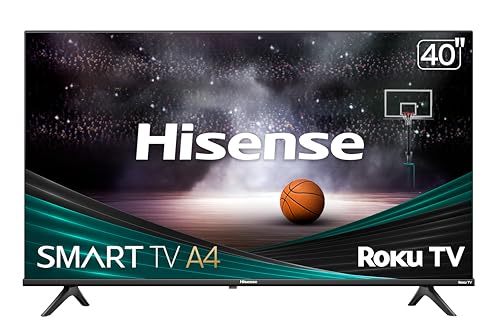
Hisense 40-Inch Class A4 Series FHD 1080p Smart Roku TV (40A4NR) — The 40-inch value pick
Crossing from 32 to 40 inches changes the room the television is for. Forty inches is a spare-room and small-living-room size, big enough to anchor a sofa at moderate distance, still modest enough for a guest room or a studio flat. Hisense’s A4 at this size pairs the larger canvas with Roku, and the verified title adds Dolby Audio, a slim bezel design and compatibility with both Alexa and Google Assistant. That combination — size, the simplest platform, broad assistant manners — makes this the guide’s natural value recommendation for a room that will host guests, children and the household’s overflow viewing.
Roku’s virtues compound with guests. A visitor handed the remote faces a grid of familiar app tiles and a search that treats services even-handedly; nobody needs the household’s accounts explained or its recommendations interpreted. In a spare room, that instant legibility is worth more than any picture-processing feature. The same simplicity serves children and older relatives, the two groups most often exiled to the second set, and a television that never generates a support call from the guest room is a television earning its keep.
Dolby Audio in the title is the set’s sound credential, aimed at the fuller sound a 40-inch room expects. A spare room is still a room, with a sofa’s distance to cover, and the A4’s audio specification acknowledges that its smaller sibling’s kitchen-counter duties are behind it. The slim bezel keeps the larger panel visually light on a wall or a stand, and the dual-assistant compatibility means the household’s existing voice habits, whichever camp they belong to, can drive the basics.
Note the family relationship with the 32-inch A4 above: same series, different platform, Fire TV there and Roku here. Hisense sells the A4 as a panel in two software flavours, and this guide’s pairing of them is the cleanest illustration in the whole list that platform, not panel, is the decision. If you want this size and Roku’s calm, this is your set.
There is a guest-room corollary to the Roku argument that deserves its own paragraph. A spare room’s television is judged by people who did not choose it, in the first ninety seconds of use, often at night. Sets that greet a guest with a personalised recommendation wall built from the host’s viewing history fail that test socially as well as functionally; the Roku grid greets them with neutral, labelled doors. Hosts who care about that small hospitality will find it encoded in this pick’s platform choice, and it is one reason the guide places a Roku set at the head of the 40-inch group.
- Size and resolution: 40-inch class, FHD 1080p, per the verified listing title
- Platform: Roku TV
- Sound and design: Dolby Audio; slim bezel design
- Compatibility: Alexa and Google Assistant, per the title
Strengths
- Roku’s guest-proof interface on the larger, room-anchoring canvas.
- Dolby Audio matches the greater viewing distance of a 40-inch room.
- Compatibility with both major assistants avoids smart-home partisanship.
Trade-offs
- 1080p at 40 inches asks for a sensible seating distance; very close viewing softens it.
- Roku’s plainness offers fewer recommendation smarts than Google TV.
- The series’ Fire TV sibling may tempt Alexa households toward the smaller size instead.
Best for: spare rooms, studio flats and guest spaces where anyone must be able to drive the TV. Not suited for: very close seating, or households wanting recommendation-led software.

TCL 40-Inch Class S3 1080p LED Smart TV with Roku TV (40S350R) — The Roku loyalist pick
Here is the guide’s second TCL S3, and its existence is the argument of the whole article in miniature. Same S3 series as the 32-inch opener, same 1080p LED philosophy, but at 40 inches and running Roku TV instead of Google TV, per its verified title, with compatibility declared for Alexa, Google Assistant and Apple HomeKit. A buyer who admired the first pick’s hardware sense but lives in a Roku household is not asked to compromise; TCL simply sells the neighbouring configuration, and the smart money in this class often spends itself exactly there.
Roku on TCL hardware is a historically important combination — the pairing that taught the market what a smart TV should cost and how simple it should be — and the maturity shows in the details owners mention: fast wake, an uncluttered home screen, search that does not play favourites among services. At 40 inches the set takes on spare-room and small-lounge duties with the same guest-proof manners described for the Hisense above, and the comparison between those two Roku forties is the closest contest in this guide. The TCL counters with its triple-assistant compatibility, HomeKit included, which speaks to households whose smart home is Apple-centred even when their television platform is Roku.
Picture expectations should be set by the class, and within the class the S3 is a known quantity: a Full HD LED panel that flatters broadcast and streaming, watched from a sofa’s sensible distance. The 2023 model year in the title places it a generation behind the 2025 sets here, which in practice means a software baseline that Roku’s platform-wide updates keep current, since Roku maintains its interface across model years more uniformly than most. That uniformity is itself a Roku virtue: the set ages at the platform’s pace, not the panel’s.
Choose this TCL over the Hisense forty if HomeKit compatibility or brand familiarity tips you; choose the Hisense if Dolby Audio branding and the A4’s design appeal more. Either way, you are choosing between two honest versions of the same idea, and the guide is comfortable with both answers.
- Size and resolution: 40-inch class, 1080p LED, per the verified listing title
- Platform: Roku TV
- Compatibility: Alexa, Google Assistant and Apple HomeKit, per the title
- Model: 40S350R, 2023 model year
Strengths
- The classic TCL-plus-Roku combination, matured over many model years.
- Triple-assistant compatibility, including HomeKit, is the broadest here.
- Roku’s platform-wide updates blunt the effect of the older model year.
Trade-offs
- 2023 baseline is the oldest in the guide alongside its 32-inch sibling.
- No branded audio processing in the title, unlike the Dolby and DTS rivals.
- Very close seating will find the 1080p limit at this size.
Best for: Roku households, Apple-centred smart homes and spare-room furnishing. Not suited for: viewers who want the newest model year or branded sound processing.

Westinghouse Roku 40 Inch Smart TV, 1080p Full HD — The casting-friendly pick
Westinghouse is the oldest name in this guide and currently one of its most pragmatic. The verified title for its 40-inch Roku set emphasises connectivity over picture processing: 1080p Full HD, Apple AirPlay 2, Alexa compatibility, Wi-Fi connectivity and a mobile app, with Google Assistant compatibility declared as well. Read that emphasis correctly. This is a television designed for households whose content lives on phones — family videos, a laptop’s second screen, a guest’s streaming app — and whose first question about any set is how easily things get from the small screen to the big one.
AirPlay 2 is the headline for Apple households, and its presence on a value-class Roku set is the pick’s whole case. A visitor with an iPhone can put photographs or a video on the television in seconds, without accounts, cables or the household’s remote. Roku’s own casting and the companion mobile app cover the Android side and add a genuinely useful trick: private listening through the phone, so a spare-room set can play at full clarity to one viewer through earbuds while the house sleeps. In bedrooms and guest rooms, that feature quietly solves the most common second-room conflict there is.
The rest of the proposition is deliberately plain. Roku provides the interface, with its usual guest-proof grid, and the panel is a Full HD flat screen at the size this guide recommends for moderate distances. Westinghouse does not ask you to admire its picture processing or its design language; it asks whether your household casts, and if the answer is constantly, its priorities may match yours better than the more decorated rivals above. The brand’s long history in American homes also means the set’s basics — stands, remote, menus — follow conventions your relatives already understand.
Its trade-offs are the reverse of its strengths. Buyers who never cast and want the richest built-in smart experience should look at the Google TV or Samsung picks; buyers who want branded audio should look at Hisense. For the phone-centric household, though, this is the set that treats the phone as the remote, the source and the private speaker all at once, and that is a coherent philosophy for a second room.
Westinghouse’s value position should be read in the context of the whole room’s budget. A spare room furnished around this set leaves money for the things guests actually remember: blackout curtains, a decent mattress topper, a lamp that does not buzz. Television value in a second room is partly the discipline not to overspend on the screen, and a connectivity-led set at the sensible end of the class embodies that discipline. The household that casts constantly and furnishes sensibly will find this pick less a compromise than a plan.
- Size and resolution: 40-inch, 1080p Full HD, per the verified listing title
- Platform: Roku TV, with Wi-Fi connectivity and mobile app
- Casting: Apple AirPlay 2; compatible with Alexa and Google Assistant
- Character: connectivity-led, deliberately plain elsewhere
Strengths
- AirPlay 2 makes Apple households’ casting effortless at a value position.
- Roku’s app-based private listening solves the sleeping-house problem.
- Assistant compatibility spans both major camps.
Trade-offs
- No branded picture or sound processing in the title to rival Samsung or Hisense.
- Its case rests on casting habits; non-casters pay for a feature they skip.
- Plainest presentation in the guide, for buyers who care about the object.
Best for: phone-centric and Apple households furnishing a spare room or bedroom. Not suited for: viewers who never cast and want maximum built-in processing.
Energy and heat belong in the second-room conversation too, unfashionable as they are. A kitchen television may run from breakfast radio hours through the evening news, and a bedroom set in a student flat can accumulate astonishing hours as background company. Full HD panels at these sizes draw modest power beside their 4K living-room counterparts, run cool in enclosed bedroom furniture, and ask little of a caravan’s or camper’s electrical system. Buyers furnishing a rental property or a holiday let, where the set’s running costs and robustness matter commercially, will find this class’s frugality a genuine line item rather than a footnote.
Durability follows a similar pattern. Small sets are moved: between rooms, between properties, off to university and back again. A 32-inch television is a one-person carry with no drama, its stand detaches in minutes, and its replacement cost in the worst case is a disappointment rather than a disaster. The second-room fleet of a household turns over more often than the main screen, and choosing machines that are cheap to run, easy to move and simple to replace is a strategy, not a surrender. Every pick in this guide was assessed with that lifecycle in mind, and the platforms’ uniformity across sizes means a replacement set in three years will still speak the household’s language.
How do the six picks compare side by side?
| Pick | Size | Platform | Defining trait from its title |
|---|---|---|---|
| TCL 32 S3 | 32-inch | Google TV | Google Assistant built in, voice remote |
| Hisense 32 A4 | 32-inch | Fire TV | DTS Virtual:X, slim bezel, 2025 model |
| Samsung 32 F6000 | 32-inch | One UI Tizen | HDR, Object Tracking Sound Lite, Knox |
| Hisense 40 A4 | 40-inch | Roku | Dolby Audio, dual-assistant compatibility |
| TCL 40 S3 | 40-inch | Roku | Alexa, Google Assistant and HomeKit compatibility |
| Westinghouse 40 | 40-inch | Roku | Apple AirPlay 2 and mobile app |
How do you place and set up a second-room TV well?
Height is the decision bedrooms get wrong. A set on a dresser is usually viewed from a pillow, propped at an angle no living-room formula anticipates, so mount or tilt the screen toward the bed’s actual head position rather than levelling it for the room’s standing eye. Kitchens invert the problem: the viewer stands, moves, and watches from the side while cooking, so place the set where its screen faces the main work zone, not the dining chair, and favour the counter’s end over the splashback’s centre to keep steam and splashes off the panel. In both rooms, run the platform’s setup with the household’s real accounts from the start, arrange the home screen’s first row with the three services actually used, and delete or bury the rest. A second-room set should reach the programme in two clicks from wake; every click beyond that is a small tax paid nightly.
Sound deserves one deliberate act. Run a dialogue-heavy scene, stand where you will actually listen from — the bed, the hob, the workbench — and try the set’s sound modes until voices sit forward. Then set a volume limit if the platform offers one, because second-room sets are the ones that blare at midnight when a film’s quiet scene gives way to an explosion. Finally, teach the household the voice remote or the casting route, whichever the set does best, on the first evening. Second-room televisions fail socially, not technically: the set nobody else can operate becomes one person’s screen and everyone else’s furniture.
What mistakes do second-room TV buyers keep making?
The first is buying resolution for a room that cannot use it, spending on 4K at 32 inches while ignoring the platform the household will fight nightly. The second is the mirror error: buying a 720p set because the size looked right, then discovering that text, sport graphics and streamed detail stay permanently soft. Every pick in this guide is verified Full HD precisely to close that trap. Third, buyers forget viewing geometry. A kitchen set mounted for a seated viewer, or a bedroom set levelled for a standing one, disappoints daily in a way no specification can rescue, so measure from the pillow or the counter, not from the doorway.
Fourth, households standardise accidentally on three platforms across three rooms, multiplying remotes, accounts and support burdens; this guide’s platform-first structure exists to prevent exactly that. Fifth, buyers overlook the sound of small rooms. Kitchens and bedrooms amplify flaws — echoes off tiles, thin speakers against a headboard wall — and the sets here with branded audio processing earned their places partly on that ground. Judge with a dialogue scene at your real distance before the return window closes, not with the demo loop in a shop.
A last word on remotes, because second-room sets live or die by them. The remote for a bedroom television is operated in the dark, half asleep, by touch. Voice remotes, which most of these platforms now supply, solve the search problem elegantly, but button layout still governs the nightly basics of volume, pause and back. When your set arrives, spend one evening learning its remote by feel, and enable any simplified or accessibility remote options for the household members who need them. The best platform in this guide is the one your household can drive with its eyes closed, and only an evening in the actual room can certify that.
Final Recommendation
Start with the room, then the platform, and the pick usually names itself. For a straightforward bedroom set in a Google-leaning house, the TCL 32 S3 remains this guide’s default answer, calm and proven. Where Alexa runs the home, take its Hisense A4 rival at the same size and enjoy the newest software baseline in the class. If the second room deserves the best manners available and Samsung already lives in your pocket, the F6000 is the connoisseur’s small set. At 40 inches, the Hisense A4 on Roku is the spare room’s safest pair of hands, the TCL S3 counters with the broadest assistant compatibility including HomeKit, and the Westinghouse is the one to buy when casting from phones is the household’s native language. None of these rooms needed 4K. All of them needed the right software, at the right size, facing the right pillow or counter — and that is what each of these six was chosen to provide.
Frequently Asked Questions
Can you actually see the difference between 1080p and 4K at 32 inches?
At normal bedroom distances, for most viewers, no — the pixels sit beyond the eye’s resolving power from a pillow six or more feet away. Sit at desk distance and the difference appears, which is why this guide’s reasoning is specific to second rooms and their seating, not a claim about resolution in general.
Which platform is easiest for guests and older relatives?
Roku, by a clear margin in most households’ experience. Its home screen is a plain grid of apps, identical across devices, and its search treats services even-handedly. Three of the six picks run it for exactly that reason, at both sizes in this guide.
Is 40 inches too big for a bedroom?
It depends on the room’s depth. In a compact bedroom watched from four feet, 32 inches is the comfortable choice; in a larger room, or a spare room that doubles as a sitting space, 40 inches anchors the room better. Measure from pillow to wall before deciding, and favour the smaller size when the measurement argues with your ambition.
Do these sets need a soundbar?
Most do not, for their intended duties. Dialogue-led viewing in small rooms is well served by the sets with branded processing here, and Roku models add private listening through a phone for late-night clarity. Add a small soundbar only if the room doubles as a film space with a sofa and regular movie nights.
Why do the same brands appear with different platforms?
Because makers build one panel line and sell it in several software editions. Hisense’s A4 appears here as Fire TV at 32 inches and Roku at 40; TCL’s S3 appears with Google TV and with Roku. The duplication is useful: it lets you choose the platform you want without abandoning a hardware line you trust.
What should I check in the first week of owning one?
Three things: dialogue clarity from your real seat, the home screen’s route to your main service in clicks, and viewing comfort from your real angle — pillow, counter or sofa. All three are room-specific, all three are fixable or returnable inside the first week, and none of them can be judged from a specification sheet.
How long will a small smart TV stay supported?
Platform maintenance is the honest answer. Panels in this class routinely outlast the software attention they receive, which is why this guide favours sets whose platforms are maintained across model years — Roku’s uniform updates, Google TV’s account-tied services, Samsung’s institutional patching — and why the 2025 models here carry an advantage in expected software lifespan. A set that still receives its apps’ updates in year five is a set still doing its job.
Can I use one of these as a monitor or a signage screen?
As an occasional monitor for a laptop presentation or a console, yes; as a full-time desk monitor, a proper monitor serves text better at close range. For a hallway or workshop information screen — weather, a calendar, a camera feed — the 32-inch picks are well suited, provided the platform’s app for the purpose exists. Check that single app before buying for a specialist use.
Related Guides
For neighbouring sizes and sharper classes, see Best 24 Inch TVs for Kitchens, Dorms and Campers, Best 32 Inch Smart TVs for Streaming in Small Rooms and Best 40 Inch 4K TVs: The Size Class That Moved to 42 and 43.


