What's inside
- Key Takeaways
- Quick Picks
- How We Chose These Picks
- Comparison Table
- Which sensor size suits a hybrid shooter best?
- How do you build one kit that shoots stills in the morning and video at night?
- What should a stills photographer check before trusting a camera for video?
- How should a hybrid shooter think about lenses differently?
- What does a hybrid workflow look like after the shoot?
- Common Mistakes When Buying a Hybrid Mirrorless Camera
- Final Recommendation
- Frequently Asked Questions
- Related Guides
As an Amazon Associate I earn from qualifying purchases. This post may contain affiliate links at no extra cost to you.
widgetverdict.com is reader-supported. When you buy through links on our site, we may earn an affiliate commission.
The two-camera household is quietly going extinct. Where a photographer once kept a stills body for photographs and a camcorder for everything that moved, the best hybrid mirrorless cameras now promise one body that shoots a wedding in the morning, a product film after lunch and a livestream by evening — and the six listings below test that promise at three sensor sizes and every level of seriousness. Hybrid is the most abused word in camera marketing, so this guide holds each pick to a simple standard: what does its own listing actually claim for photo and for video, and where does it fall silent?
That standard produces a varied shelf. Panasonic dominates it numerically — four of the six picks wear the Lumix badge, two full-frame and two Micro Four Thirds — because Panasonic has courted the hybrid shooter longer and more deliberately than most. Canon bookends the set with a full-frame kit at the top and a white creator kit at the bottom. Between them, the arguments differ: 6K video against 4K, phase hybrid autofocus named in print against autofocus left unmentioned, stabilization systems described against stabilization left for the documentation to explain.
Read the silences as carefully as the claims. A hybrid camera is two cameras sharing one battery, one lens mount and one budget, and the half of the specification a listing declines to print is usually the half you will spend the second year discovering.
Key Takeaways
- Panasonic’s S5IIX and S5II both print the hybrid creed in their titles — full frame, 6K video, Active I.S. and Phase Hybrid AF — making them the most explicitly hybrid listings in this set.
- Canon’s EOS R6 Mark II kit is the full-frame all-rounder with glass included: a 24.2 megapixel sensor, an RF 24-105mm lens, and photo and video capabilities stated in the listing.
- The Lumix G97 and G100 carry the hybrid idea into Micro Four Thirds, where smaller lenses make one-body photo-video kits genuinely portable; the G100 adds a built-in microphone with tracking.
- Canon’s EOS R50 — in the white 18-45mm kit listed here, ASIN B0BTTWH46K — is the entry hybrid: 24.2 megapixel APS-C, 4K video, and hybrid positioning aimed at vloggers and creators.
- Sensor size is the master trade: full frame for light gathering and depth, Micro Four Thirds for lens size and all-day carrying, APS-C between them.
Quick Picks
| Pick | Badge | Why it made the cut |
|---|---|---|
| Canon EOS R6 Mark II Mirrorless Camera with 24-105mm Lens Kit | Full-frame all-rounder with a lens | A 24.2 megapixel full-frame hybrid with the RF 24-105mm f/4-7.1 IS STM kit — photo and video capabilities stated in the listing. |
| Panasonic Lumix S5 IIX | Video-leaning full-frame hybrid | A full-frame body printing 6K video plus photo, Active I.S. and Phase Hybrid AF in its title. |
| Panasonic Lumix G97 Hybrid Mirrorless Camera with 12-60mm Lens | Micro Four Thirds hybrid with a useful zoom | A compact hybrid Micro Four Thirds camera with a 12-60mm f/3.5-5.6 lens, designed for creators in photo and video. |
| Panasonic Lumix G100 Mirrorless Camera | Smallest hybrid with tracking audio | A 4K Micro Four Thirds camera with 12-32mm lens, built-in microphone with tracking and 5-axis hybrid I.S. |
| Panasonic Lumix S5II Mirrorless Camera | The original full-frame hybrid statement | A full-frame hybrid for photography and 6K video, with Active I.S. and Phase Hybrid AF named in the title. |
| Canon EOS R50 Mirrorless Camera with 18-45mm Lens Kit | Entry hybrid in white | A 24.2 megapixel APS-C hybrid with 4K video and the RF-S 18-45mm kit, in white, for vlogging and content creation. |
How We Chose These Picks
A hybrid shortlist must resist the pull of stills-only thinking, so each candidate was read twice: once as a camera, once as a video tool. The questions were plain. Does the listing claim serious video — a resolution, a frame rate, a stabilization system, an audio feature — or does it gesture at video the way brochures gesture at weather? Does it claim stills depth to match? And does the mount behind it offer the lenses a two-discipline shooter will need, from fast standard zooms to quiet-focusing primes?
The result spans the honest range of the category in 2026: two Canon kits that arrive ready to shoot, two Panasonic full-frame bodies that print their hybrid credentials in full, and two Panasonic Micro Four Thirds cameras that trade sensor area for a kit a single operator can carry all day. Figures are quoted only where a title prints them, and the spec boxes mark the rest as documentation questions, because hybrid buyers — who read specifications professionally — deserve that discipline most of all.

Canon EOS R6 Mark II Mirrorless Camera with 24-105mm Lens Kit — Full-frame all-rounder with a lens
Canon’s listing calls the R6 Mark II a full-frame hybrid camera outright, and then does something several rivals here decline to do: it includes a lens. The RF 24-105mm f/4-7.1 IS STM kit zoom turns this body into a working hybrid outfit on delivery day, spanning the focal lengths where hybrid work actually concentrates — the wide interview frame, the documentary mid-range, the short-telephoto product shot. Behind it sits a 24.2 megapixel full-frame sensor, a resolution that splits the difference between stills detail and video-friendly file sizes with a working professional’s sense of proportion.
The hybrid argument for this kit is balance rather than extremes. Nothing in its title chases a headline resolution for video; instead the listing promises photo and video capabilities as a pair, in a body whose sensor size flatters both — full frame’s depth and low-light grace for the stills portfolio, and a lens whose range means the video half never waits on a lens change during a one-person shoot. Solo operators, who are most hybrid shooters, should weigh that operational completeness heavily: the best hybrid camera is frequently the one that is already wearing the right lens when the moment moves.
Canon’s RF mount deepens the case over time. The kit zoom is the beginning of a bench that includes fast primes for low-light stills, dedicated video-friendly zooms, and the professional glass a growing practice eventually rents or buys. A hybrid shooter is really buying two systems in one mount, and RF’s bench serves both halves without adapters or apologies.
Honest limits live in the kit lens’s aperture, which narrows toward its long end and asks the sensor to work harder in dim interiors, and in the listing’s own restraint: video resolution figures are not printed in this title, so the filmmaker who needs a specific format should confirm it in Canon’s documentation before ordering. Neither point dents the central proposition — the most complete one-box hybrid in this guide, from the mount with the broadest professional runway.
There is a temperament match worth noting. The R6 Mark II kit suits the shooter whose work alternates by the hour — ceremony stills, then speeches on video, then portraits in the garden — and who cannot rebuild a rig between assignments. Photographers whose hybrid life is ninety percent one discipline should look at the specialists flanking it in this guide; the Canon’s gift is the even split, executed without a weak half.
- Body: Canon EOS R6 Mark II mirrorless camera, black
- Sensor: 24.2 Megapixel CMOS sensor, full frame, as listed
- Lens included: RF 24-105mm f/4-7.1 IS STM lens kit
- Positioning per listing: Full-frame hybrid camera, photo and video capabilities
- Video resolution detail: Not stated in the listing title — verify with the manufacturer documentation
- Mount: RF mount, as listed
- Complete hybrid outfit in one box — body and a versatile stabilized zoom.
- Full-frame sensor serves stills depth and low-light video alike.
- RF mount offers the deepest combined stills-and-video lens runway here.
- The kit zoom’s aperture narrows to f/7.1 at the long end.
- The title prints no video resolution figure for format-specific buyers.
- One-lens completeness means specialists will still add discipline-specific glass.
- Body: Panasonic Lumix S5IIX mirrorless camera, black (DC-S5M2XKK9)
- Format: Full frame, as listed
- Video: 6K video plus photo, as listed
- Autofocus named: Phase Hybrid AF
- Stabilization named: Active I.S.
- Lens included: None stated in the listing title
- 6K video headline with reframing headroom for 4K delivery.
- Phase Hybrid AF and Active I.S. both printed in the title — the hybrid systems named, not implied.
- Full-frame stills platform shares the body, so neither discipline is an afterthought.
- No lens in the listing, so the working kit’s cost starts higher.
- Full-frame lenses rebuild the weight the stabilization helps you manage.
- Stills resolution is unprinted in the title and needs Panasonic’s documentation.
- Body: Panasonic Lumix G97 mirrorless camera (DC-G97MK9)
- Format: Micro Four Thirds, compact hybrid, as listed
- Lens included: Lumix G Vario 12-60mm f/3.5-5.6 lens
- Positioning per listing: Designed for content creators in photo and video
- Video resolution: Not stated in the listing title — verify with the manufacturer documentation
- Stabilization detail: Not stated in the listing title — verify with the manufacturer documentation
- The 12-60mm zoom covers hybrid work’s core range without lens changes.
- Micro Four Thirds keeps the whole production portable for solo creators.
- Hybrid positioning is printed in the title, not inferred.
- The title prints no video resolution, so filmmakers must verify the format in documentation.
- Smaller sensor asks more of fast lenses for low-light and shallow-depth looks.
- The kit zoom’s variable aperture limits evening work without an added prime.
- Body: Panasonic Lumix G100 mirrorless camera, black (DC-G100DKK9)
- Format: Micro Four Thirds interchangeable lens system, as listed
- Video: 4K video for photo and video, as listed
- Audio named: Built-in microphone with tracking
- Stabilization named: 5-axis hybrid I.S.
- Lens included: 12-32mm lens, per the listing
- Tracking built-in microphone answers hybrid video’s neglected half — sound.
- 5-axis hybrid stabilization is printed in the title.
- The smallest complete hybrid package in this guide, lens included.
- The 12-32mm kit lens is wide-biased, with little reach for distant subjects.
- Micro Four Thirds low-light and depth limits apply as with the G97.
- Built-in audio, however smart, still yields to a dedicated microphone for studio work.
- Body: Panasonic Lumix S5II mirrorless camera, black (DC-S5M2KK9)
- Format: Full frame, as listed
- Video: 6K video, photography and video hybrid, as listed
- Autofocus named: Phase Hybrid AF
- Stabilization named: Active I.S.
- Lens included: None stated in the listing title
- The balanced hybrid: 6K video and full-frame stills claimed in one title.
- Phase Hybrid AF serves tracked stills and recorded focus equally.
- Active I.S. steadies both the walking shot and the handheld evening still.
- Body-only listing — the first lens is a separate, necessary purchase.
- Full-frame lens weight accumulates for one-person productions.
- Stills resolution is not printed in the title; documentation completes the picture.
- Body: Canon EOS R50 mirrorless camera, white
- Sensor: 24.2 Megapixel CMOS (APS-C) sensor, as listed
- Lens included: RF-S 18-45mm f/4.5-6.3 IS STM lens kit
- Video: 4K video, as listed
- Positioning per listing: Hybrid camera for photo and video, vlogging, content creator
- Mount: RF mount, as listed
- Complete starter kit: hybrid body and lens in one box, ready for both disciplines.
- APS-C format keeps the growing lens collection small and affordable.
- 24.2 megapixels and 4K video meet current publishing expectations head-on.
- The 18-45mm kit lens covers the near field, not distance.
- No audio or stabilization system is named in this title — check Canon’s documentation for those details.
- The white finish that charms creators shows travel wear more readily than black.
Wedding and event shooters will recognise their own workflow in this kit’s proportions. The 24-105mm range is the event photographer’s home territory, and a sensor of this class keeps reception candids graceful after dark; when the speeches begin, the same body on the same lens becomes the video camera without a trip to the car. That continuity — no second body, no re-rigged bag — is the practical meaning of hybrid at a professional event, and it is why kits, not bare bodies, anchor this end of the guide.
Strengths
Trade-offs
Best for: working hybrid shooters who alternate stills and video within the same assignment. Not suited for: confirming a specific video format from the listing alone — this title leaves that figure to Canon’s documentation.
For the most complete single purchase in this guide, review the R6 Mark II kit’s contents on Amazon before pricing lenses around it.

Panasonic Lumix S5 IIX — Video-leaning full-frame hybrid
Panasonic’s S5IIX listing reads like a hybrid manifesto compressed into a title: a mirrorless full-frame camera with 6K video plus photo, featuring Active I.S. and Phase Hybrid AF. Each phrase does work. The 6K claim plants the video flag at a resolution above the delivery standard, which buys reframing room in the edit and downsampled sharpness in the export. Phase Hybrid AF names the autofocus architecture filmmakers actually ask about, because contrast-only systems hunt visibly in recorded footage. Active I.S. addresses the handheld reality of solo production, where the gimbal stays home more often than brochures admit.
The X suffix, in Panasonic’s line, marks the video-leaning sibling of the S5II below, and this review positions it accordingly: the same full-frame hybrid foundation, tilted toward the shooter whose income leans cinematic. Stills are not the apology half — the listing claims photo in the same breath as video, and the full-frame sensor behind both is the line’s established stills platform — but the buying logic differs. Choose the IIX when video leads the brief and stills support it; choose the plain S5II when the disciplines truly split.
Full frame shapes the production reality around this body. L-mount glass includes the fast zooms and primes that low-light video consumes, and the format’s shallow depth is the look clients increasingly request by name. The cost is the familiar one: full-frame lenses are larger, and a one-person hybrid kit built on this body grows heavier than the Micro Four Thirds alternatives below. The stabilization named in the title is partly Panasonic’s answer to that — if the sensor absorbs the shake, the operator can leave some support gear behind.
No lens is named in this listing, and no stills resolution is printed, so both belong to your documentation check before ordering. What the title does establish, unusually completely for this guide, is the hybrid intent and its three supporting systems. A buyer whose checklist reads 6K, phase autofocus, serious stabilization, full frame — in that order — is holding the listing written for them.
Productions grow into bodies like this. A shooter who begins with talking-head and event work on the S5IIX owns a platform that stretches toward commercial and documentary briefs without a change of mount or muscle memory, and that stretch is the economic soul of the hybrid idea: one system, bought once, serving briefs that have not been written yet.
Consider the edit suite’s perspective for a moment, because hybrid cameras are bought by shooters but judged by timelines. Six-thousand-line footage gives the editor a punch-in for the close-up nobody framed, a stabilisation margin for the take that wobbled, and a downsample that flatters every delivery format beneath it. A body chosen for the edit as much as for the shoot is a body whose specification keeps paying after the production wraps — one more reason the IIX’s video emphasis is an economic argument, not a vanity metric.
Strengths
Trade-offs
Best for: video-led hybrid shooters who need 6K, phase autofocus and stabilization in one full-frame body. Not suited for: stills-first work that would pay for video headroom rarely used — the S5II below splits the same foundation more evenly.
Video-first buyers should read the S5IIX’s full listing on Amazon and confirm the lens plan before committing to the body.
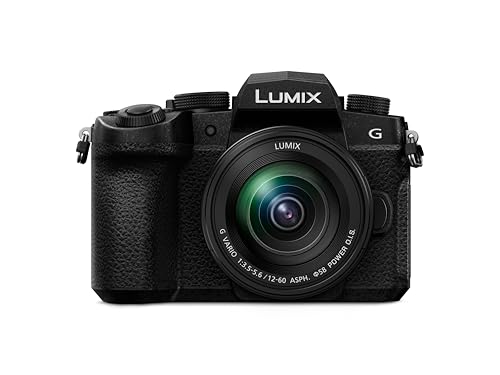
Panasonic Lumix G97 Hybrid Mirrorless Camera with 12-60mm Lens — Micro Four Thirds hybrid with a useful zoom
The G97’s listing uses the category’s own word — a compact hybrid Micro Four Thirds mirrorless camera, designed for content creators in photo and video — and pairs the body with the lens hybrid shooters in this format reach for first: the Lumix G Vario 12-60mm f/3.5-5.6. That zoom’s range is the quiet argument. On Micro Four Thirds it frames like a 24-120mm would on full frame, covering the interview, the walk-and-talk and the detail insert without a lens change, in a package whose total weight full-frame hybrids cannot approach.
Micro Four Thirds is the format that takes the one-person production seriously. Smaller lenses mean a camera bag instead of a camera case, a travel tripod instead of a video tripod, and a gimbal from the smaller class when one is used at all. For creators whose hybrid work happens in real locations — kitchens, workshops, streets, small businesses — that portability is not a lifestyle preference but a production capability: the shoot that fits in a backpack happens; the shoot that needs a vehicle sometimes does not.
The format’s physics present their bill in low light and depth of field, and this review will not hide it. A smaller sensor gathers less light, so evening interiors ask more of sensitivity, and the creamy background separation of full-frame video needs faster lenses to approximate here. The 12-60mm kit zoom, variable in aperture, is a daylight-and-good-light instrument; the creator who films at night will add one of the format’s fast primes, which are mercifully small and numerous.
The listing prints neither a video resolution nor a stabilization system for this model, and both omissions matter to hybrid buyers — check Panasonic’s documentation for the G97’s exact video specification before assuming parity with the 4K-printed G100 below. What the box demonstrably contains is the balanced starter: a hybrid-positioned body, the format’s most useful general zoom, and admission to the deepest small-lens catalogue in mirrorless.
For educators, demonstrators and small-business creators — the cook filming recipes, the maker filming builds, the trainer filming courses — this kit’s shape is close to ideal: one lens, honest quality in good light, and a system that grows by small, affordable steps. It is the hybrid idea at its most democratic, and its limits are the kind that announce themselves early and forgive easily.
There is a teaching dividend in this format that beginners rarely price. Deeper depth of field forgives the new filmmaker’s focus placement, and smaller files forgive the new photographer’s card discipline, so the G97’s owner learns framing, light and story — the transferable skills — instead of spending the first year firefighting technical near-misses. Skills transfer across every future body; the format’s forgiveness is therefore not a lesser ambition but a faster school, and many working creators keep a Micro Four Thirds body in the bag long after a larger one becomes the flagship.
Strengths
Trade-offs
Best for: solo creators whose photo and video work travels in a backpack. Not suited for: confirming the video specification from the listing itself — this title leaves resolution unstated.
Creators weighing the portable route should confirm the G97 kit’s details on Amazon, then check its video specification in Panasonic’s documentation.

Panasonic Lumix G100 Mirrorless Camera — Smallest hybrid with tracking audio
Most hybrid cameras treat audio as an accessory problem; the G100’s listing puts a microphone in the headline. This is a 4K mirrorless camera for photo and video with a built-in microphone with tracking, a 12-32mm lens in the kit, and 5-axis hybrid I.S. — a specification aimed with unusual precision at the vlogger and the one-person creator, for whom the voice is half the product and a camera that listens directionally is a production crew of one.
Audio is the hybrid discipline’s neglected half, and this pick’s identity is built on refusing to neglect it. A tracking built-in microphone follows the subject the frame is following, which suits the walk-and-talk, the market tour, the workshop demonstration — the formats where an external microphone is one more cable between the creator and the moment. Paired with the stabilization the title prints, the G100’s proposition is a camera you can hold at arm’s length, in motion, and still publish from.
The 12-32mm kit lens keeps the outfit at its smallest; on this format it covers the wide self-framing and general scenes vlogging consumes, in a collapsing package that preserves the body’s pocket-adjacent character. Reach is its limit — this is not the lens for compressing a distant subject — and the format’s bench supplies the longer options when a creator’s subjects stop cooperating at close range.
Micro Four Thirds physics apply here as they did to the G97: low light and shallow depth are earned with fast lenses rather than granted by the sensor. The G100’s buyer is trading those for the smallest complete hybrid in this guide, with its audio signature as the deciding flourish. Creators whose work is voice-led — teachers, reviewers, travel vloggers — will find that trade made in their favour; filmmakers chasing a cinematic depth aesthetic should climb to the full-frame Panasonics above.
There is also a beginner’s mercy in this package. A new creator faces simultaneous educations in exposure, focus, framing and sound; a camera that automates the sound’s direction removes one syllabus from the first year. The G100 will not be the last camera a successful creator owns, but it is shaped like the first one they will actually master, and mastery — not specification — is what audiences can hear.
Teachers and demonstrators should pause on this pick a moment longer. A camera that frames a face, keeps it in focus and records its voice directionally is, functionally, a lecture-capture studio that fits in a coat pocket — and the past years have made lecture capture a permanent genre rather than an emergency measure. The G100 was designed for vloggers, but its most devoted professional audience may turn out to be everyone who now teaches, trains or explains for a living, on camera, alone.
Strengths
Trade-offs
Best for: vloggers and voice-led creators filming solo in real locations. Not suited for: productions that record audio separately as a matter of course — the tracking microphone, this pick’s headline, buys nothing there.
If your hybrid work talks to the camera, examine the G100’s listing on Amazon for its audio and lens details.

Panasonic Lumix S5II Mirrorless Camera — The original full-frame hybrid statement
The S5II’s listing is a sentence a hybrid shooter could sign: a full-frame mirrorless hybrid camera for photography and 6K video, featuring Active I.S. and Phase Hybrid AF. Where the IIX above leans toward the cinema brief, this is the even split — the body Panasonic built to prove that one full-frame camera could serve a photographer’s portfolio and a filmmaker’s reel without either feeling like the guest. Its title claims both disciplines in one breath and then names the two systems, stabilization and phase autofocus, that hybrid work leans on hardest.
Phase Hybrid AF deserves its sentence for stills photographers too. The phase component gives the system its subject acquisition speed and its confidence in continuous focus — the difference, in recorded video, between a face held and a face hunted for, and in stills between a tracked subject and a hopeful burst. Hybrid buyers sometimes read autofocus as a video feature; anyone who has photographed a procession, a pitch or a playground knows it is the shared foundation of both halves.
Active I.S. plays the same dual role. For the filmmaker it steadies the walking shot; for the photographer it extends handheld stills into the light where tripods are impractical — the evening street, the church interior, the reception’s dance floor. A hybrid body earns its name in exactly those crossover moments, when the assignment changes medium mid-hour and the equipment must not.
As with its X sibling, no lens and no stills resolution are printed in this title, so the working kit is assembled by the buyer and the specification completed in Panasonic’s documentation. The L-mount bench it opens is the shared inheritance of both S5II bodies — stills primes, video zooms, and the alliance glass of Panasonic’s mount partners. Choose between the siblings by the tilt of your own practice, not by hierarchy: this one is the photographer’s hybrid, the IIX the filmmaker’s, and the titles say so if you read their emphases closely.
Longevity flatters the even split. Practices drift — the stills photographer takes a film commission, the filmmaker is asked for a poster frame — and a body bought for balance absorbs those drifts without a trade-in. In a guide full of specialists and starters, the S5II is the pick most likely to still be the main camera in five years, whichever discipline won.
Renters should note this body’s particular virtue. Because the S5II’s proposition is balance rather than a single headline feature, it is the hybrid most often available in rental houses as the dependable second body — the camera a production adds when another viewpoint is suddenly needed and nobody wants a personality clash between systems. Owning the body your local rental stock matches is an unglamorous, genuinely professional advantage, and it belongs in the ledger beside the printed specifications.
Strengths
Trade-offs
Best for: photographers and filmmakers in genuinely equal measure, buying one body for both. Not suited for: shooting today from a single purchase — this listing is a body, and its first frame waits on glass.
Balanced hybrid buyers should read the S5II’s full listing on Amazon and plan the first L-mount lens alongside it.

Canon EOS R50 Mirrorless Camera with 18-45mm Lens Kit — Entry hybrid in white
The R50 closes this guide where most hybrid careers actually begin. This listing — the white kit, ASIN B0BTTWH46K, with the RF-S 18-45mm lens — describes a 24.2 megapixel APS-C camera with 4K video that calls itself a hybrid camera for photo and video, aimed at vlogging and content creation. Every element of that sentence is a considered mercy for the beginner: a sensor large enough to be taken seriously, video at the resolution audiences expect, a kit lens that makes the box complete, and a white finish that announces this camera lives on desks and in cafés rather than in a press pit.
APS-C is the right classroom for hybrid skills. The crop format’s lenses are smaller and gentler in price, so the creator can add the fast prime for evening vlogs and the wider zoom for travel without the full-frame tariff; its depth of field is forgiving of focus errors that a full-frame beginner would publish; and 24.2 megapixels is resolution enough to crop a still for a thumbnail, a poster or a print without apology. The R50 teaches both disciplines at a scale where mistakes are tuition rather than disaster.
The kit lens’s limits are the familiar ones and they are stated here as plainly as in the bird guide: 18-45mm is a generalist’s range, wide for rooms and streets, short for distance. Hybrid beginners rarely need distance; they need the near field — the desk, the kitchen, the face at arm’s length — and this lens lives exactly there. When a creator’s subjects move further away, the RF mount’s bench is waiting, and every lens bought for this body remains useful if a larger Canon follows it home later.
Colour is not a trivial footnote for this pick’s audience. A white camera photographs differently in the social sense: it reads as a lifestyle object on a creator’s desk, appears in their own behind-the-scenes content without visual heaviness, and draws less of the professional intimidation that makes some subjects perform for a black body. Buyers who prefer discretion can find the R50 in black in other listings; this one is the white kit, and its review judges it as such.
Set against the G100, its nearest rival in spirit, the R50 offers the larger sensor and Canon’s mount at a similar creator brief, while the Panasonic counters with its tracking microphone and printed stabilization. Neither is the other’s defeat; they are two honest answers to the beginner hybrid question, and the FAQ below takes up the comparison directly.
Parents documenting a family in both media are this kit’s quiet majority. The same body that photographs the birthday in the morning films it in the afternoon, and the files land in one archive with one colour character and one set of habits to learn. That household logic — one camera, competently hybrid, always charged — is worth more to most families than the professional distinctions this guide has been drawing, and the R50’s price of admission makes the logic available without a family summit about the budget.
Strengths
Trade-offs
Best for: new creators learning stills and video together inside Canon’s system. Not suited for: audio-led work that needs the audio provisions confirmed in the listing — this title names none.
Beginners comparing starter hybrids should check this white R50 kit’s contents on Amazon against the black listings before choosing.
Comparison Table
| Pick | Format | Video claim in title | Included lens |
|---|---|---|---|
| Canon EOS R6 Mark II Kit | Full frame, 24.2MP | Photo and video capabilities stated; resolution not printed | RF 24-105mm f/4-7.1 IS STM |
| Panasonic Lumix S5 IIX | Full frame | 6K video plus photo | None stated |
| Panasonic Lumix G97 | Micro Four Thirds | Hybrid photo and video positioning; resolution not printed | 12-60mm f/3.5-5.6 |
| Panasonic Lumix G100 | Micro Four Thirds | 4K video | 12-32mm |
| Panasonic Lumix S5II | Full frame | 6K video | None stated |
| Canon EOS R50 Kit (White) | APS-C, 24.2MP | 4K video | RF-S 18-45mm f/4.5-6.3 IS STM |
Which sensor size suits a hybrid shooter best?
Follow the light and the luggage. Full frame — the R6 Mark II and the two S5II bodies — gathers the most light and separates subjects from backgrounds most easily, which is why client video and low-light stills gravitate to it; its lenses are the price, in size as much as money. Micro Four Thirds — the G97 and G100 — inverts the bargain: deeper depth of field that keeps a moving presenter in focus, lenses small enough for a one-bag production, and low light answered by adding fast primes rather than by sensor area. APS-C, represented by the R50, splits the difference for beginners whose budgets and shoulders are both still growing.
A useful test is to name your worst regular condition. If it is a dim hall where you may not add light, full frame earns its weight. If it is a foreign city where the kit must pass as hand luggage and the subject never stops moving, Micro Four Thirds earns its compromises. Hybrid shooters who cannot name a worst condition should buy the balanced option in their price class, because versatility untested by extremes is exactly what balance is for.
How do you build one kit that shoots stills in the morning and video at night?
Anchor the kit on a standard zoom that covers your working range — the kits here model the idea at three sizes, 24-105mm, 12-60mm and 18-45mm — then add light before glass: a small LED panel transforms evening video more than any lens upgrade, and it serves stills as a fill. Audio comes next in the spending order for anyone whose video includes speech, whether that is a camera with a tracking built-in microphone like the G100 or an external microphone matched to your body’s provisions, which the manufacturer’s documentation will specify.
Support and power close the list. A tripod with a fluid head serves the video half and the long-exposure stills half impartially; a monopod serves events. Batteries are hybrid kryptonite — video drains them at a pace stills shooters find comic — so carry twice the stills habit, and media sized for video’s appetite rather than stills’ restraint. Build in that order and a single bag genuinely covers both disciplines, which is the entire promise the word hybrid makes.
What should a stills photographer check before trusting a camera for video?
Three habits of the video half surprise stills shooters most. Focus behaviour on record: a system that is decisive in stills may breathe or hunt in video, which is why the phase hybrid autofocus named in the Panasonic titles matters and why unprinted autofocus claims deserve a documentation check. Heat and duration: long-form recording — ceremonies, interviews, courses — stresses a body differently from bursts of stills, and any limit belongs in the manufacturer’s documentation for the exact model. And monitoring: the screen and outputs you will actually use, since video is composed and judged live in a way stills are not.
None of this argues against hybrid bodies; it argues for reading them as two cameras. The photographer who audits the video half with the same rigour they would give a separate camcorder will find the picks here reward it — the ones that print their video systems in their titles have, in effect, already passed the first interview.
How should a hybrid shooter think about lenses differently?
A stills photographer chooses lenses for aperture and character; a hybrid shooter must add behaviour. Focus motors that are silent and smooth matter when the microphone is listening; focus breathing — the slight reframing as focus travels — matters when a rack focus is the shot; and a zoom that holds its aperture or exposure behaviour across its range matters when a pan crosses from shade to sun mid-take. None of these virtues appears in a focal-length figure, which is why hybrid buyers should read lens descriptions with a filmmaker’s ear and check the manufacturer’s documentation for the terms — silent, smooth, breathing-compensated — that signal video intent in a lens’s design.
The practical consequence is a shorter, more deliberate lens list. Most hybrid practices settle on three: the standard zoom that lives on the body, one fast prime for low light and separation, and one specialty lens — a macro, a wide, a telephoto — chosen by the work that pays. The picks in this guide model the first of those three at every format; the discipline is in refusing the fourth and fifth lenses until a brief, not a review, nominates them.
What does a hybrid workflow look like after the shoot?
Twice the media, one archive — that is the discipline. Ingest stills and clips into a single dated structure, because the assignment was one event and its story will be edited across both media. Back up before formatting anything, since hybrid days produce the irreplaceable in two formats simultaneously. Then cull asymmetrically: stills are judged frame by frame, but clips are judged in seconds — the usable ten inside the hopeful ninety — and marking those seconds during ingest, while memory is fresh, is the habit that separates hybrid shooters who publish from those who accumulate.
Colour deserves a workflow decision early. Stills and video from the same body can be made to match, but only if the shooter standardises picture profiles and white balance habits across both modes rather than treating each mode’s defaults as fate. Decide your look in the quiet weeks, save it, and let both halves of the hybrid inherit it — your future editor, who is also you, will be grateful every single week.
Common Mistakes When Buying a Hybrid Mirrorless Camera
Buying the stills specification and assuming the video. A superb stills body can be a mediocre video tool in focus behaviour, recording stamina and monitoring. The listings here that print their video claims — 6K, 4K, named autofocus and stabilization systems — are telling you where their makers spent the money; the silent ones are telling you to check the documentation before assuming.
Forgetting audio until the first client video. Speech recorded badly cannot be repaired in the edit, and hybrid work is full of speech. The G100’s tracking microphone exists because Panasonic knows this; buyers of the other picks should plan their audio route — and its cost — at purchase time, not at the first wedding.
Starving the kit on batteries and media. Video consumes both at several times the stills rate. A hybrid body bought with one battery and a stills-sized card is a hybrid body for about forty minutes, after which it is a paperweight with excellent specifications.
Choosing sensor size by fashion. Full frame is not the automatic hybrid answer; it is the answer for low light and shallow depth, bought with lens weight. Micro Four Thirds is not a compromise to apologise for; for the mobile solo producer it is frequently the professional choice. Match the format to the work, as the sensor-size section above lays out.
Treating the kit lens as the finished kit. Every included lens here is a starting range, chosen for breadth. The hybrid practice will quickly nominate its second lens — usually a fast prime for the discipline that pays — and the budget that pretends otherwise produces a body waiting on glass.
Final Recommendation
Let the tilt of your work choose. The shooter whose stills and video arrive in the same assignment, in the same hour, should take the R6 Mark II kit for its one-box completeness, or the S5II for the same balance in Panasonic’s mount with 6K printed in the title. When video leads and stills support, the S5IIX’s emphases — 6K, phase autofocus, stabilization, all named — make it the deliberate choice. Solo creators who travel light should build on the G97’s useful zoom or the G100’s audio-led design, accepting the smaller format’s terms with the portability as payment. And the beginner should begin where beginnings are cheapest to correct: the white R50 kit, inside a mount that will still be there when the practice outgrows it. Hybrid done well is not two hobbies sharing a battery; it is one visual practice with two outputs, and each of these six bodies serves that practice at a different scale of ambition and luggage.
Frequently Asked Questions
What makes a camera a true hybrid rather than a stills camera with a video mode?
Intent you can read in the specification: video resolutions claimed in the title, autofocus and stabilization systems designed for recording, and audio provisions taken seriously. The S5II pair print that intent outright; the G100 builds its identity on a tracking microphone; the R50 and G97 carry hybrid in their positioning. A stills camera with a record button claims none of these, and the difference shows in the first long take.
S5II or S5IIX — which Panasonic should I choose?
Read the emphases. Both titles claim full frame, 6K video, Active I.S. and Phase Hybrid AF. The IIX is positioned as the video-leaning sibling for productions where cinema briefs lead; the S5II is the even split for photographers who film seriously. If your income already leans to video, the X is the natural seat; if your practice is balanced or stills-led, the plain II matches it. Confirm the detailed differences in Panasonic’s documentation before ordering either.
Is Micro Four Thirds good enough for professional hybrid work?
For a large class of it, yes — the class where the production is one person, the locations are real and the delivery is online. The G97 and G100 trade the full-frame look for a kit that travels, focuses forgivingly and, in the G100’s case, listens intelligently. Professionals choose formats per brief; the briefs these two serve are numerous, growing and poorly matched to heavy equipment.
R50 or G100 for a first hybrid camera?
The R50 offers the larger APS-C sensor, Canon’s RF runway and a complete 18-45mm kit in the white listing used here. The G100 offers the smaller format’s portability, printed 5-axis stabilization and its signature tracking microphone. Choose the R50 if stills share equal billing and Canon’s system attracts you; choose the G100 if your content is voice-led video on the move. Both are honest first cameras; the tiebreaker is which half of hybrid you will practise daily.
Do I need a gimbal for hybrid video?
Not to begin. The stabilization systems named in these listings — Active I.S. on the Panasonics, 5-axis hybrid I.S. on the G100, stabilized kit lenses on the Canons — cover the walking shot and the handheld frame for most solo work. A gimbal becomes worthwhile when smooth, long, deliberate camera movement is your signature rather than your occasional need, and by then your footage will tell you so.
How long will a hybrid body stay current?
Longer than a stills-only body bought in the format wars, because the hybrid brief changes slowly: resolutions settle at delivery standards, and the systems that matter — autofocus behaviour, stabilization, audio — improve by refinement rather than revolution. The bodies in this guide that print mature hybrid systems are, in effect, buying their owners several quiet years. Spend the savings on the lens the practice nominates; glass ages at a third of the body’s pace and transfers when bodies eventually change.
Should a hybrid shooter care about rolling shutter and similar video artefacts?
Enough to know they exist and where they bite: fast pans across vertical lines, vibrating platforms, strobing light. Slow, deliberate camera movement — the grammar of most solo production — keeps them out of published work on any body here. Buyers whose work is defined by whip pans and action mounts should raise the question in the manufacturer’s documentation for the exact model, where readout behaviour belongs, rather than in a listing title that was never going to carry it.
Can one memory card strategy serve both stills and video?
Size for video and stills will never complain. Video writes continuously and at high rates, so capacity and sustained write performance should be specced from the video half of your practice, using the card types the manufacturer’s documentation specifies for each body. Carry a second card always; hybrid days fail at the fullest moment, not the emptiest.
A parting discipline for whoever buys from this page: give the new body one month of deliberate alternation before judging it. Shoot a stills-only week, then a video-only week, then a genuinely mixed assignment, and keep notes on where the body helped and where it merely accompanied. Hybrid cameras reveal themselves across that alternation, not in a first afternoon, because their virtues are workflow virtues — the unswapped lens, the shared battery discipline, the single colour character across an archive. A month of notes will also name your second lens more accurately than any guide can, since it will be nominated by your own footage rather than by a stranger’s brief. That is the hybrid method in miniature: one body, two media, and decisions made from evidence.
Related Guides
It is worth recording, finally, what this category’s maturity means for a buyer in 2026. A decade ago the hybrid buyer was a gambler, betting that a stills company’s video ambitions or a video company’s stills ambitions would mature before the body aged out. The listings in this guide are what the settled era looks like: hybrid printed in the titles themselves, systems for focus and stabilization named like features rather than rumours, and formats at three sizes each with a coherent two-media story. The gamble is gone; what remains is the honest work of matching a body’s tilt — stills-led, video-led, balanced, beginner — to the practice it will actually serve. Do that matching carefully and any of these six will feel, within a month, less like a purchase than like the obvious shape of your own work. And when the second year asks its harder questions — a faster lens, a second body, a format for the long project — the mount you chose here will answer them in order, which is the deepest sense in which a hybrid camera is not a product at all but a practice with a serial number. Buyers who grasp that tend to stop shopping sooner and start shooting longer — and in a category built for people who make things, that may be the most useful verdict this guide can offer: the right hybrid is the one that returns you to the work fastest, in both media, with the fewest negotiations in between, and stays out of the way once you are there working in real earnest today, on the brief that actually pays rather than the one that merely flatters the portfolio and impresses other photographers at conferences and online forums alike today.
Hybrid bodies sit at a crossroads of this site’s camera coverage. Buyers who find these kits heavier than their travel allows should compare them with the best mid-range mirrorless cameras when the budget climbs a tier, and specialists who can leave video behind for pure landscape work will find their bodies in the best full-frame mirrorless cameras for landscape photography. One link in this article’s map leads outside cameras entirely, to the best wireless receipt printers — included because the solo creators reading this guide so often run the small businesses that need them.


