What's inside
- Key Takeaways
- Quick Picks
- How We Chose These Picks
- Comparison Table
- Where Should You Place a Game Camera for the Best Results?
- How Do Batteries and Cards Decide a Camera’s Real Cost?
- What Is the Difference Between No-Glow, Low-Glow and White Flash?
- How Do You Read Trail Camera Photos Like a Scout Rather Than a Tourist?
- What About Theft, Weather and Other Field Enemies?
- How Should a Beginner Run Their First Season?
- How Do Seasons Change What Your Cameras Should Be Doing?
- What Settings Should You Actually Use?
- How Do Game Cameras Serve Research, Farms and Gardens Beyond Hunting?
- What Does a Card-Checking Day Look Like When It Is Done Well?
- How Will You Know a Camera Has Earned a Second Season?
- Why Do Empty Photographs Happen and How Do You Reduce Them?
- How Do You Choose the Best Affordable Game Cameras for Your Land?
- Common Mistakes
- Final Recommendation
- Frequently Asked Questions
- Related Guides
As an Amazon Associate I earn from qualifying purchases. This post may contain affiliate links at no extra cost to you.
widgetverdict.com is reader-supported. When you buy through links on our site, we may earn an affiliate commission.
All six cameras in this guide carry verified Amazon listings in our pool, so check price on Amazon for each — the word “affordable” in the best affordable game cameras is doing real work here, and it means something specific: a camera cheap enough to deploy in numbers, tough enough to leave in the woods for a season, and honest enough in its images that you can tell a trophy buck from a ambitious raccoon at forty feet. Game cameras — trail cameras, in the other common name — are the only cameras in this entire site that are bought to be abandoned, and that single fact rearranges every buying priority.
Think about what the purchase really is. You are not buying image quality in the photographer’s sense; you are buying information per dollar per month of unattended operation. A camera that takes a marginally prettier picture but eats batteries in three weeks is a worse scouting tool than a plainer camera that runs a whole season, because the weeks it sat dead are weeks of deer movement you will never know about. Battery life, trigger speed, detection range and night illumination decide what you learn. Megapixels, within reason, mostly decide how the box reads.
The six picks divide by connectivity philosophy. Four are traditional cameras that record to a memory card you retrieve on foot — the GardePro E5S, A3S and E8 Pro WiFi (which adds short-range wireless viewing on site, not cellular) and Browning’s Command Ops Elite. Browning’s Strike Force Pro DCL adds dual-lens day/night engineering and 4K video. The sixth, Browning’s Defender Pro Scout Max, is the cellular entry: it sends images to your phone over a mobile network, which requires a paid service plan from the provider — this guide discusses that cost only in terms of whether a plan exists and what it buys you in visits saved, never as a quoted price, because plan pricing changes and static figures would mislead.
One more framing note before the reviews: “affordable” is a strategy, not just a price tier. Two mid-priced cameras on two trails teach you more than one premium camera on one trail, every single season, because deer do not perform for your best equipment — they walk where they walk. This guide is written for the hunter, landowner or researcher building coverage, and it scores accordingly.
Key Takeaways
- Coverage beats beauty: two honest cameras on two trails out-scout one flagship on one trail.
- Battery endurance and trigger speed decide what you learn; megapixels mostly decorate the box.
- The GardePro E5S is the default affordable pick — fast trigger, no-glow night vision, season-long manners.
- Browning’s Strike Force Pro DCL is the image-quality step up, with dual lenses and 4K video.
- The Defender Pro Scout Max is the cellular option — it needs a paid service plan, and buys you zero site visits.
- No-glow infrared is worth choosing where pressured deer or security concerns make visible flash a liability.
Quick Picks
| Pick | Badge | Why it made the cut |
|---|---|---|
| GardePro E5S | Best overall affordable game camera | 0.1s-class trigger, 100ft no-glow night vision, 64MP stills. |
| GardePro A3S | Best for multi-camera coverage | The E5S’s virtues in a simpler, deployment-friendly package with sound. |
| GardePro E8 Pro WiFi | Best for on-site viewing | WiFi/Bluetooth checks from your phone at the tree, 4K video, rechargeable. |
| Browning Command Ops Elite | Best simple workhorse | 40MP Browning reliability in a set-and-forget design. |
| Browning Strike Force Pro DCL | Best image quality step-up | Dual camera lens technology and 4K video for serious scouting. |
| Browning Defender Pro Scout Max Cellular | Best cellular option | Images to your phone, GPS-tagged, 100ft detection — plan required. |
How We Chose These Picks
Selection began with the verified pool for this category and then applied field logic. Trigger speed came first: a camera that wakes slowly photographs tails and rumps, so preference went to models whose listings document fast trigger claims — the GardePro pair headline a 0.1-second-class trigger in their verified titles. Detection and illumination range followed, because a camera that senses at forty feet and lights at thirty owns a smaller world than one reaching a hundred. Night illumination type mattered distinctly: no-glow infrared, invisible to deer and to people, was scored as a genuine feature rather than a luxury wherever pressured game or property security is the mission.
Battery architecture shaped the middle of the list. Cameras that run long on standard AA cells remain the field’s workhorses for a reason — cells are cheap, swappable in seconds and available everywhere — while the rechargeable E8 Pro WiFi argues its case through convenience and its on-site viewing trick. Connectivity was treated as a spectrum rather than a binary: card-only, WiFi-at-the-tree, and full cellular each solve a different visiting problem, and the list deliberately contains all three so the reader’s land, distance and patience can choose.
Finally, every pick had to survive the affordability test as a system: camera, batteries, cards, a lock or cable where theft is plausible, and — for the cellular model — the ongoing service plan that its operation requires. A cheap camera with expensive habits is not affordable, and the reviews say which is which.
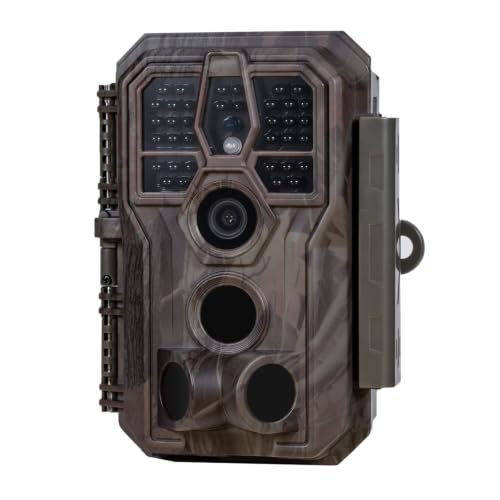
GardePro E5S — Best overall affordable game camera
The E5S is the camera this guide exists to find. Its verified listing documents the specification trio that matters in the field: 64MP photo capture, 1296P HD video, a 0.1-second-class trigger and 100-foot no-glow night vision. Translated from listing language: the camera wakes fast enough to catch a deer entering its detection zone rather than leaving it, sees a genuinely useful distance in darkness, and does so with infrared illumination that neither deer nor trespassers can see. For pressured public-land deer and for property watching alike, that invisibility is the feature owners mention most after a season.
In deployment the E5S behaves like a camera designed by people who have actually hung cameras in February. The housing shrugs off weather, the setup menu is navigable without a manual open on your knee, and the battery appetite on standard cells stretches across the long sits that scouting demands — set it before the season’s pattern shifts and retrieve a card full of answers rather than a dead camera full of apologies. Video mode with its HD resolution adds behaviour to the stills’ census: you learn not just that a buck passed, but how, and whether he was browsing, trailing or fleeing something.
Limits are the honest ones of its tier. The stills’ headline megapixel figure flatters what is fundamentally a scouting sensor — images are for identification and patterning, not for framing — and the screen and menus, while serviceable, lack the polish of the WiFi sibling below. There is no connectivity of any kind: every image waits for your boots. For the core mission of affordable coverage, none of that outweighs the trigger, the range and the manners.
- Photo/video: 64MP stills and 1296P HD video per the verified listing
- Trigger: 0.1-second class, motion activated
- Night vision: 100ft no-glow infrared illumination
- Connectivity: none — memory card retrieval
- Power: standard AA cells, long unattended runs
Strengths
- Fast trigger catches animals entering the frame, not leaving it.
- No-glow illumination stays invisible to deer and people.
- Season-friendly battery manners on ordinary cells.
Trade-offs
- Images serve identification, not enlargement or printing.
- Every check means a walk to the tree.
- Menus and screen are functional rather than refined.
Best for: hunters and landowners building affordable multi-trail coverage. Not suited for: anyone needing remote delivery or print-quality wildlife images.
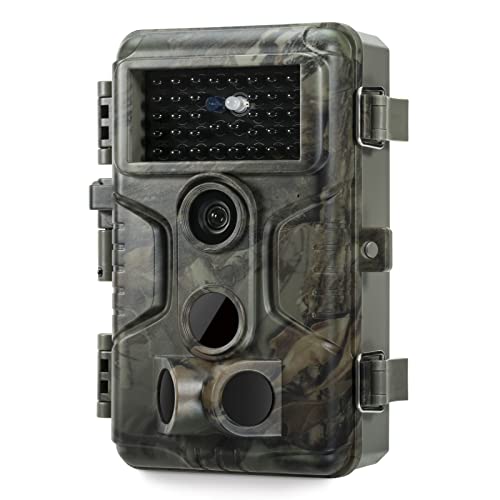
GardePro A3S — Best for multi-camera coverage
The A3S is the E5S’s close sibling, and its verified listing confirms the family resemblance: 1296P HD video — with sound, a detail the listing states and this review will return to — 64MP photos, the same 0.1-second-class trigger and the same 100-foot no-glow night vision. Think of it as the deployment camera: the one you buy in multiples to grid a property, because its virtues are the operational ones — fast, far-seeing, invisible at night and undemanding about power — repeated identically at every tree.
Sound recording is its quiet differentiator. A trail camera with audio captures the grunt, the snort, the turkey’s morning chorus and the trespasser’s vehicle in a way silent cameras cannot, and researchers and landowners alike find that audio turns a photograph into evidence of behaviour. On a multi-camera grid, one or two sound-capable units at scrapes, feeders or gates add a layer of intelligence the silent cameras around them cannot provide.
Why does the E5S rank above it here? The differences are of refinement and positioning rather than capability, and a buyer building a fleet could honestly standardise on either. The A3S asks the same compromises as its sibling — card retrieval, identification-grade images — and returns the same field manners. In a category where consistency across a property matters more than any single camera’s brilliance, that interchangeability is itself a recommendation.
Researchers add a practical endorsement of their own: identical cameras across study plots remove equipment as a variable, so differences in the data can be trusted as differences in the animals rather than differences in the tools. The A3S’s combination of price-tier accessibility and documented, repeatable behaviour is exactly what grant-funded fieldwork orders by the dozen, and the same logic serves a hunting club equipping every member’s favourite ridge with matching eyes.
- Photo/video: 64MP stills and 1296P HD video with sound per the verified listing
- Trigger: 0.1-second class, motion activated
- Night vision: 100ft no-glow infrared illumination
- Connectivity: none — memory card retrieval
- Power: standard AA cells
Strengths
- Audio recording adds behaviour and evidence to stills.
- Identical field manners make fleet deployment simple.
- Same fast trigger and invisible night reach as the E5S.
Trade-offs
- No remote access of any kind.
- Image quality is for patterning game, not publishing.
- Sibling rivalry: overlaps the E5S almost completely.
Best for: property grids, research plots and hunters standardising a fleet. Not suited for: single-camera buyers wanting the most refined option.

GardePro E8 Pro WiFi — Best for on-site viewing
The E8 Pro WiFi attacks the trail camera’s oldest annoyance: the card pull. Its verified listing documents WiFi and Bluetooth connectivity with dual antennas, built for one specific job — standing at the tree with your phone, viewing and downloading what the camera captured without opening it, disturbing the site or carrying a card reader. That is not cellular service and the distinction matters: this camera sends nothing across the countryside, charges no plan, and still requires your visit. It simply makes the visit cleaner, faster and scent-lighter, which experienced hunters will recognise as a real scouting advantage.
The rest of the listing reads like a generational step: 4K video — the highest video specification in this guide — a triple-PIR motion sensor array for detection coverage, and a rechargeable battery in place of the AA ritual. The triple-sensor design widens the detection story, catching movement at the frame’s edges that single-sensor cameras notice late. For a camera guarding a feeder, a gate or a garden, where the owner passes weekly anyway, the combination of on-site phone viewing and rechargeable power is genuinely convenient.
Trade-offs follow from its ambitions. Rechargeable power means the camera comes home or a power bank goes out when it fades, rather than a pocketful of AAs solving the problem at the tree. WiFi range is a stand-near-the-tree affair by design. And 4K trail video, while lovely, writes large files to be reviewed by a human who mostly needs to know what passed and when. Choose it for its workflow, not its biggest number.
Gardeners and smallholders should note a use the hunting marketing undersells: this is a superb wildlife diary camera for a garden or smallholding, where the owner passes daily, the rechargeable battery is a virtue rather than a logistics problem, and the phone check over morning coffee becomes a small ritual of delight. Not every game camera’s destiny is a deer lease, and the E8 Pro’s design may be the most domestic-friendly in this entire guide.
- Photo/video: 4K video per the verified listing
- Detection: triple-PIR motion sensor array
- Connectivity: WiFi and Bluetooth for on-site phone viewing — non-cellular
- Power: rechargeable battery
- Antennas: dual external antennas for the local wireless link
Strengths
- Check footage from your phone without opening the camera.
- No service plan of any kind — the wireless is local only.
- Widest detection story here thanks to triple PIR sensors.
Trade-offs
- You still have to visit the tree; nothing arrives at home.
- Rechargeable pack complicates remote, months-long sits.
- 4K files are heavy for a scouting workflow.
Best for: feeders, gates and gardens you pass regularly. Not suited for: distant properties or season-long unattended deployment.

Browning Command Ops Elite — Best simple workhorse
Browning’s Command Ops line built its name on a promise this 40MP Elite model continues: a camera that does the fundamentals without demanding a relationship. The verified listing is terse — Browning Trail Camera, Command Ops Elite 40MP — and that terseness is almost the review. This is the set-and-forget branch of the family: hang it, aim it, and let a proven detection and illumination system record the season while you think about hunting instead of equipment.
Browning’s field reputation rests on reliability details that listings rarely capture: housings that survive seasons outdoors, detection circuits tuned to avoid the empty-trigger plague of waving branches, and battery behaviour that respects the set-and-forget promise. For landowners monitoring a gate, a barn approach or a remote cabin — where the camera is closer to a security witness than a scouting instrument — that dependability outranks every clever feature in this guide.
What it does not offer is equally clear: no wireless of any flavour, no category-topping specification to quote, and video ambitions below the Strike Force sibling’s. It is the pick for the buyer who has watched feature-rich cameras fail in interesting ways and now prefers a tool that fails in none. In a six-camera guide full of specialities, the Command Ops Elite is the control group — the camera against which cleverness must justify itself.
Its restraint also suits shared-duty situations that defeat cleverer tools: the family farm where three generations swap cards, the hunt camp where the camera must survive being operated by whoever is free. A camera everyone understands gets checked properly and often; a camera with a learning curve gets checked apologetically and late. Browning’s simplest model understands its social environment as well as its physical one.
- Photo: 40MP stills per the verified listing
- Role: card-based, set-and-forget scouting and property watch
- Connectivity: none — memory card retrieval
- Brand: Browning’s established trail-camera line
- Power: standard field battery arrangement for long sits
Strengths
- Proven, uncomplicated reliability across long seasons.
- Equally at home scouting game or watching property.
- Simple operation suits shared and family land duties.
Trade-offs
- No wireless checking — every visit is a card pull.
- Specification sheet is modest beside its sibling.
- Fewer refinements for the technically curious.
Best for: landowners and hunters who value dependability over features. Not suited for: buyers wanting remote delivery or top-tier video.

Browning Strike Force Pro DCL — Best image quality step-up
The Strike Force Pro DCL is where this guide’s image quality lives. Its verified listing documents the engineering: a 26MP camera with dual camera lens technology — separate lenses optimised for day and night, rather than one lens compromising both — infrared illumination, and 4K video. That dual-lens design addresses the trail camera’s oldest image problem head-on, because a lens and filter arrangement tuned for daylight rarely serves the infrared night, and the DCL simply refuses to make one lens do both jobs.
The practical yield is identification confidence at the moments that matter: the pre-dawn buck whose rack you must judge, the night visitor to the feeder whose species decides your response. 4K video — shared in this guide only with the GardePro E8 — records behaviour at a fidelity that turns scouting clips into genuinely reviewable footage rather than impressionistic blurs. For the serious hunter patterning a specific animal, this is the camera whose evidence you can act on.
It remains a card camera: no wireless, no plan, no images until you visit. Its price position within Browning’s range reflects the dual-lens engineering, so the affordability argument is relative — it is the step-up pick, bought singly for a prime location rather than in fleets for coverage. Match it to the scrape, the crossing or the gate where one camera’s evidence quality outweighs two cameras’ geography.
Photographers who keep trail cameras for the images themselves — and there are more every year, as the genre’s best work circulates — will find the DCL the only pick here that respects their ambitions at night. The dual-lens discipline shows in the files: cleaner night detail, fewer of the smeared compromises that mark single-lens infrared work. It will not rival a dedicated camera trap with an external flash, but within a self-contained commercial unit it is the connoisseur’s choice in this guide.
- Photo/video: 26MP stills and 4K video per the verified listing
- Lenses: dual camera lens technology for day and night
- Illumination: infrared night illumination
- Connectivity: none — memory card retrieval
- Position: image-quality step-up within an affordable guide
Strengths
- Dual lenses serve day and night without the usual compromise.
- 4K video records behaviour in reviewable detail.
- Night identification confidence leads this guide.
Trade-offs
- Step-up positioning suits prime spots, not fleets.
- Still a card-pull camera with no remote access.
- 4K video files demand card capacity and review time.
Best for: patterning a specific animal at a prime location. Not suited for: wide multi-camera coverage on a tight budget.

Browning Defender Pro Scout Max Cellular — Best cellular option
The cellular pick changes the relationship between hunter and camera entirely. The Defender Pro Scout Max’s verified listing documents the system: cellular image delivery, a 100-foot image detection range, Smart IR video, GPS-tagged images and adjustable infrared flash. In plain terms, the camera photographs the deer and sends the picture to your phone wherever you are — at work, in another state, in bed — and stamps it with the location it came from. Scouting stops being a visiting schedule and becomes a news feed.
The honesty paragraph, placed here deliberately: cellular service is not free and never has been. This camera requires a paid service plan through the cellular provider arrangement Browning supports, with plan tiers governing how many images transmit — this guide deliberately quotes no plan prices or tier figures, because they change and a stale number in a buying guide is a small betrayal. What can be said truthfully is what the plan buys: every image delivered is a trip not driven, a site not scented, a pattern learned in near-real-time during the exact weeks when patterns shift fastest. For distant land, leased ground or a hunter whose free days are few, that exchange is routinely worth it; for a camera behind the house, it is money spent to avoid a walk you enjoy.
Cellular also imposes its own field disciplines. The camera needs mobile signal at the tree — verify coverage at your exact site before purchase, because a cellular camera without signal is an expensive card camera. Transmission costs battery appetite beyond stills-only operation, so power planning matters more. And adjustable flash plus GPS tagging serve the security-minded as much as hunters: this is the pick that watches remote property and reports in, which for many landowners justifies the plan on its own.
During the rut and the other short windows when patterns invert overnight, that immediacy stops being a convenience and becomes the strategy itself: the hunter who learns at dawn that the buck has shifted to the north plot hunts the north plot that evening, while the card-camera hunter learns it next week. Time-sensitive information is the entire product, and judged as information — priced against fuel, days and scent discipline — the cellular camera’s ongoing plan is simply the subscription fee for being right on time.
- Delivery: cellular image transmission to your phone — paid service plan required
- Detection: 100ft image detection range per the verified listing
- Video: Smart IR video capability
- Tagging: GPS-tagged images for location-stamped evidence
- Flash: adjustable infrared flash output
Strengths
- Images arrive wherever you are — scouting without site visits.
- GPS tags turn photos into located, timestamped evidence.
- Adjustable flash suits both game and security duties.
Trade-offs
- Requires an ongoing paid cellular service plan.
- Useless as a cellular camera where signal does not reach.
- Transmission raises battery consumption noticeably.
Best for: distant or leased land, time-poor hunters, remote property watch. Not suited for: sites without mobile coverage or buyers avoiding subscriptions.
Comparison Table
| Camera | Delivery | Standout trait | Watch out for |
|---|---|---|---|
| GardePro E5S | Card | 0.1s trigger, 100ft no-glow | No connectivity |
| GardePro A3S | Card | Video with sound, fleet-friendly | Overlaps the E5S |
| GardePro E8 Pro WiFi | WiFi at the tree | Phone viewing on site, 4K video | Rechargeable power logistics |
| Browning Command Ops Elite | Card | 40MP set-and-forget reliability | Modest specification sheet |
| Browning Strike Force Pro DCL | Card | Dual lenses, 4K video | Step-up positioning |
| Browning Defender Pro Scout Max | Cellular (plan required) | GPS tags, 100ft detection | Needs signal and a plan |
Where Should You Place a Game Camera for the Best Results?
Placement outranks equipment by a distance no specification can close. Aim along trails rather than across them wherever possible — an animal walking the camera’s axis stays in the detection zone and the frame for seconds, while a crossing animal may trigger one photograph of its shoulder. Height matters in the opposite direction from instinct: chest height on the tree, angled slightly down, frames the body of deer-sized game honestly, while the ground-level placement beloved of dramatic photography fills cards with legs and sky. Face the camera north where you can, so the sun’s daily arc neither blinds the sensor at dawn nor cooks the housing at noon.
Clear the stage without redecorating it. The sapling that waves in every breeze inside the detection zone will generate a thousand empty images and hide the forty that matter, so trim the specific offenders and nothing more — a heavily disturbed site advertises itself to deer and to thieves alike. Then walk the frame yourself at animal height, trigger the camera, and review your own portrait before trusting a season to the setup. Ten minutes of this unglamorous theatre is worth more than any upgrade in this guide.
How Do Batteries and Cards Decide a Camera’s Real Cost?
Because the camera’s purchase is the smallest cheque it will ever write you. A season of operation consumes batteries in proportion to trigger count, night activity and — for the cellular pick — transmission volume; a camera over a busy feeder can eat in a month what a camera on a quiet trail eats in a season. Lithium AA cells cost more per pack and repay it in cold-weather performance and longevity, which is why experienced users standardise on them for the cameras that matter and save alkalines for the feeder cam they visit weekly anyway.
Cards follow the same arithmetic of attention. Video modes and high still counts fill cards faster than optimism predicts, and a full card is a camera on strike. Size cards for the longest interval between your visits, keep a labelled spare in the truck, and format cards in the camera that will use them. Total these consumables across a season and the “affordable” ranking of this guide can shuffle — a thirstier camera bought cheaply may cost more by November than a frugal camera bought dear. Run your own numbers with your own visiting rhythm; the reviews above give you the appetites to calculate with.
What Is the Difference Between No-Glow, Low-Glow and White Flash?
Three answers to the same night problem, with different audiences. White flash — a visible burst like a camera flash — produces colour night images and announces itself to everything in the clearing; deer tolerate it unevenly and people notice it always, which ends its candidacy for pressured game and for security use. Low-glow infrared uses emitters that show a faint red signature when you look directly at the camera; most game ignores it, and it typically reaches further than its invisible sibling. No-glow infrared — the choice of the GardePro pair in this guide — emits beyond the visible edge entirely: nothing to see, for deer or for a trespasser scanning for cameras to steal.
Choose by adversary and by subject. Where deer are hunted hard and educated, or where the camera itself is the theft target, no-glow is worth its modest reach penalty. Where the mission is a backyard census of unpressured animals, low-glow’s extra illumination serves perfectly well. The adjustable flash on the cellular Browning exists precisely because the right answer can differ between the camera’s first site and its second.
How Do You Read Trail Camera Photos Like a Scout Rather Than a Tourist?
Most owners scroll their cards like holiday snaps, counting antlers. Scouts read them as data. Log the direction of travel, because a buck photographed heading north at dawn is telling you where he beds, not where he feeds. Log the wind and weather of the days that produced movement, because patterns tied to conditions repeat when the conditions do. Note the does with the same rigour as the bucks — the herd’s daily geography is the map the rut will be fought over — and record the absences too: the week a reliable trail went quiet is information about pressure, predators or a food source ripening elsewhere.
Time stamps are the archive’s spine. A camera whose clock is wrong by a day corrupts every conclusion drawn from it, so set clocks carefully at deployment and check them at every card pull. Keep the images in dated folders by site rather than by camera, because your questions are about places. Across a season this discipline converts a pile of photographs into the only thing worth owning a game camera for: a trustworthy account of how animals actually use your ground when you are not there — which, the cameras exist to remind us, is nearly all of the time.
What About Theft, Weather and Other Field Enemies?
Theft is the risk owners least like to price and most often pay. The defences are layered and none is sufficient alone: mount higher than a casual reach and angle down, use a cable lock or lock box where the site justifies it, choose no-glow models that never advertise themselves with light, and keep the camera’s existence out of conversation with strangers. On public land, assume the camera will eventually be found and decide in advance that its loss is a budgeted cost of scouting there — the hunters who thrive on public ground treat cameras as consumables with a lifespan, not as heirlooms with a risk.
Weather and wildlife do quieter damage. Bears regard trail cameras as interesting-smelling toys and will redecorate your aim or remove the camera entirely where they are common; a stout mount and low scent discipline help, and some owners simply accept a bear tax per season. Ants colonise warm housings, woodpeckers audition the case, and condensation fogs lenses on the mornings after cold nights — a small desiccant habit and a lens wipe at every visit keep the archive clean. None of this appears in any listing, and all of it decides what your second season looks like.
How Should a Beginner Run Their First Season?
Start smaller than ambition suggests: two cameras, two proven locations, one full season. Place the first where sign is undeniable — the trail junction, the creek crossing, the fence gap worn by use — and the second on the food source or the bedding edge that your hunting will actually use. Resist moving them for the first month whatever the cards show, because a camera moved weekly measures your impatience rather than the deer’s habits, and the baseline month teaches the site’s ordinary rhythm against which every later anomaly becomes readable.
Keep a notebook, paper or phone, with three columns: date, weather, what the cameras saw. By season’s end that notebook will be worth more than any single photograph in the archive, because it is the pattern rather than the portrait. Graduate to more cameras only when a specific question — where does he go after the field? which ridge on a north wind? — demands a new pair of eyes at a named place. That discipline, more than any model choice in this guide, is what separates the hunters whose cameras change their seasons from the ones whose cameras merely document their disappointments.
How Do Seasons Change What Your Cameras Should Be Doing?
A game camera’s job description rotates with the year, and owners who rotate with it extract four seasons of value from one purchase. Spring belongs to turkeys, fawns and the first green patterns — cameras on field edges and strut zones, checked often because the story changes weekly. Summer is the growth census: bachelor groups on food, antlers developing in velvet, the herd’s health written plainly for anyone patient enough to read a hundred ordinary photographs. Cameras sit longer in summer, visits space out, and battery discipline matters most when the heat and the trigger counts both climb.
Autumn is the working season the whole category is marketed for, and the guidance elsewhere in this guide — placement along travel routes, scent-light checks, the cellular camera’s immediacy during the rut — applies with full force. Winter, the season owners forget, may be the most strategically valuable: post-season survival inventories tell you which bucks made it through, yarding patterns reveal the herd’s hard-weather geography, and the quiet trails of January expose the pressure your own hunting applied. A camera pulled in November is a tool used for a third of its potential; the affordable picks in this guide earn that description partly by making year-round deployment cheap enough to be obvious.
What Settings Should You Actually Use?
Fewer and simpler than the menu invites. For stills-led scouting, a burst of two or three images per trigger catches the animal that triggered the camera and the one following it — the following buck is a trail-camera cliché because it is constantly true. Keep the delay between triggers short on trails and longer at feeders, where one relaxed animal can otherwise write a novel of self-portraits. Video is a specialist tool: glorious for behaviour at a scrape, ruinous for card and battery budgets as a default, so enable it at chosen sites rather than across the fleet.
Sensitivity deserves one experiment per site. Set it high and a windy ridge fills the card with vegetation; set it low and the cautious doe at the zone’s edge never registers. Run the first week at the maker’s middle setting, read the card honestly — count the empties, note the near-misses at the frame’s edge — and adjust once with evidence in hand. PIR sensitivity interacts with temperature, too: the detection contrast between a warm animal and a hot summer background shrinks, which is why summer misses surprise owners whose cameras were flawless in October. Settings are a per-site, per-season conversation with the equipment, and the cameras in this guide all speak it fluently enough for a beginner to learn on.
How Do Game Cameras Serve Research, Farms and Gardens Beyond Hunting?
The same unattended patience that patterns deer serves any question about what visits a place unobserved. Farmers learn which fence line the predators use and whether the gate camera’s story matches the stock losses; beekeepers learn what has been investigating the hives; researchers count species that no observer’s presence would ever allow them to see behaving naturally. The affordability of this guide’s picks matters even more in these worlds, where a study or a smallholding may need a dozen eyes and has a budget written in pencil.
Gardeners may be the format’s happiest converts. A no-glow camera on the vegetable patch identifies the actual culprit — deer, rabbit, raccoon or the neighbour’s dog — before money is spent fencing against the wrong animal, and the night archive of a garden across a year becomes a small natural history of the property that owners treasure out of all proportion to its cost. The E8 Pro WiFi’s on-site phone checks suit this domestic rhythm particularly well, while the card cameras’ long sits suit the research plot an hour from the road. Match the delivery system to the visiting rhythm, as ever, and the tool disappears into the question it answers.
What Does a Card-Checking Day Look Like When It Is Done Well?
It looks boring, which is the compliment. You arrive at midday, when deer are bedded and your scent matters least, wearing the boots and gloves the site knows from your ordinary land work rather than a special costume that concentrates your smell into an event. The card swap takes a minute: old card out and into the left pocket, fresh card from the right pocket, a ten-second check of the screen’s count and battery indicator, lens wiped with the cloth that lives in the camera bag, and you are walking away before the site’s birds have finished their alarm. Photographs reviewed at home, never at the tree — lingering to scroll is how a two-minute visit becomes a twenty-minute scent deposit.
Route planning is the day’s real craft. Check cameras in an order that keeps you downwind of the bedding areas you care about, save the most sensitive site for the day’s end or skip it entirely in the final weeks before a hunt, and never let the checking route itself become a trail the deer pattern you by. The cellular owners reading this will smile — their checking day is a phone notification — but the card ritual, done with this discipline, costs a property remarkably little disturbance, and many hunters quietly prefer its excuse for a walk in their own woods.
How Will You Know a Camera Has Earned a Second Season?
By three tests that have nothing to do with its specification. First, the evidence test: did its archive change a decision — a stand moved, a morning chosen, a trespass confronted, a fence repaired in the right place? A camera whose pictures never altered an action was entertainment, however sharp. Second, the survival test: did it run the intervals you asked of it, in the weather you left it in, without the dead weeks that erase its purpose? Third, the honesty test: could you tell what you were looking at, at the range you deployed it, in the dark when it mattered?
Every pick in this guide can pass those tests at its station, which is the real content of the word affordable — not the smallest number at the till, but a tool whose seasons of answers dwarf its costs of purchase, batteries, cards and, where chosen, service. Judge your own fleet by the same three tests each winter, retire what fails without sentimentality, and the cameras you keep will feel less like gadgets and more like staff.
Why Do Empty Photographs Happen and How Do You Reduce Them?
An empty photograph is the camera testifying that something warm moved — a sun-warmed branch cooling at dusk, a squirrel outside the frame’s centre, a deer that crossed faster than the shutter’s story. Some empties are the honest tax of a sensitive detector, and a site with zero empties is probably a site whose sensitivity is set too low to catch the cautious animal at the edge. The goal is a ratio, not a purity: if nine of ten triggers hold an animal, the system is tuned; if nine of ten hold waving grass, the stage needs clearing or the sensitivity needs a notch down.
Read the empties before deleting them, because they carry the site’s diary — the wind’s direction at trigger time, the hours the sun strikes the sensor, the small mammals your framing crops out. Owners who skim their empties learn their sites faster than owners who resent them, and the cellular users among them learn fastest of all, because the pattern of notifications across a week draws the property’s rhythm without a single visit. Deletion is for the archive, after the lesson is taken.
How Do You Choose the Best Affordable Game Cameras for Your Land?
Return to the question the whole guide turns on: what are you trying to learn? If the unknown is singular and located — what is visiting this scrape, this gate, this feeder — then one better camera at that spot, the DCL’s dual lenses or the cellular unit’s immediacy, is the rational purchase. If the unknown is geographical — which trail, which ridge, which end of the property — then two honest cameras beat one brilliant one before the first card is pulled, because geography is answered by presence, not by resolution. Most first purchases are secretly geographical questions wearing a singular disguise, which is why this guide’s default recommendation is a pair of GardePros rather than a single flagship of any badge.
Common Mistakes
The beginner’s classic is checking the camera too often and too noisily, educating every deer in the county that the interesting tree smells of human every Tuesday. Card cameras reward monthly patience; check at midday when deer are bedded, swap cards swiftly, and let the site cool. The second mistake is aiming across a trail at ninety degrees with a slow trigger and concluding the camera is broken when the card holds forty photographs of departing rumps — the geometry was broken, not the camera. Third comes the megapixel seduction: buying the biggest number on the box while ignoring trigger speed and detection range, the two specifications that decide what the camera actually witnesses.
Security-minded buyers make a fourth error — mounting the camera obviously, at grabbing height, without a cable lock, and then being surprised by the one photograph it took of its own thief. Mount high, angle down, lock what you cannot hide, and let no-glow illumination keep the secret.
Final Recommendation
Start with the GardePro E5S if you are buying your first game camera or your next three: its trigger, invisible night reach and season-long manners define what affordable should mean, and its sibling A3S extends the same virtues across a property — with sound where behaviour matters. Step up to Browning’s Strike Force Pro DCL for the one prime location where identification quality decides a season, lean on the Command Ops Elite where simple dependability is the entire brief, and choose the E8 Pro WiFi when your sites are near, your visits are weekly and your phone might as well do the card’s job.
One practical sequencing note for the fleet builders: buy the first camera, run it for a month at your most important site, and let its evidence choose the second camera’s type. If the archive says the site is busier than your visits can serve, the second purchase is cellular. If it says the night images are almost good enough to judge the animal you are after, the second purchase is the dual-lens step-up. Fleets grown from evidence outperform fleets bought from a catalogue, in this category more faithfully than in any other this site covers.
Choose the Defender Pro Scout Max when distance is the problem — land you cannot visit, weeks you cannot spare — accepting its service plan as the price of a camera that reports to you. Count that plan as part of the camera’s cost from the first day, verify signal at the tree before the box is opened, and the cellular bargain will keep its side of the deal all season.
Frequently Asked Questions
How long do trail camera batteries really last?
It depends on trigger traffic, night proportion, temperature and — for cellular models — transmission volume, which is why honest makers quote ranges rather than promises. A quiet trail camera on lithium cells can run a season; a feeder camera shooting nightly video will want attention far sooner. Budget batteries as a per-site, per-season consumable and the surprises stop.
One field habit extends every battery set: turn the camera fully off during transport and storage rather than letting it sit in a standby mode in the truck, and start each deployment with a genuinely fresh or verified set rather than the leftovers of the last site. Battery gauges on trail cameras are optimistic narrators; a small battery tester, or the discipline of rotating sets by date written on tape, tells the truth that a season of evidence depends on.
Will deer be scared by the camera’s flash?
With no-glow infrared, there is no visible flash to fear — the GardePro picks in this guide are built on exactly that principle. Individual animals vary, and a mature buck that has survived several seasons of pressure may react to the camera’s presence, its scent or a faint shutter sound rather than to light at all, which is why placement height, scent discipline and minimal visiting remain part of the answer even with invisible illumination. Low-glow emitters show a faint red point that most deer ignore after initial curiosity. White flash is the only type that reliably educates pressured animals, and none of this guide’s picks relies on it.
Do cellular trail cameras work without a subscription?
The camera hardware works as a card camera, but the cellular delivery — the entire reason for buying it — requires an active paid service plan with the provider the camera is built for. Treat the plan as part of the purchase decision: confirm coverage at your site, understand that tiers govern image volumes, and never rely on a quoted plan figure from any guide, including this one, because providers revise them.
What memory card should I use in a game camera?
A reputable card sized generously for your longest gap between visits, formatted in the camera itself before the season begins. Video-heavy setups and the 4K models in this guide fill cards quickly, so size generously and carry a labelled spare. Cards are the cheapest component in the system and the one whose failure costs a month of information — buy them like it matters. Rotate two cards per camera if your budget allows, so the archive you just collected travels home in your pocket while a fresh card is already working at the tree, and no single card ever holds the only copy of a month of the property’s life.
Can I use a game camera for home or property security?
Yes — several picks here serve double duty honestly. No-glow illumination keeps the camera discreet, GPS tagging on the cellular model turns images into located evidence, and the weatherproof, battery-powered design works where no power or Wi-Fi exists. Mount high, lock the housing, and remember a trail camera is a witness, not an alarm: it records events rather than summoning help. For gates and outbuildings, aim the camera to capture faces and number plates along the natural line of approach rather than across it, and test the framing with your own walk-through at night before trusting it with a real incident.
How many game cameras do I actually need?
For a typical hunting property, two to four well-placed cameras teach more than a dozen scattered carelessly — and the discipline of placing few cameras well is itself a scouting education, forcing you to read sign, wind and terrain before any electronics get a vote — one on the main trail system, one on food, one on bedding edges, and the cellular unit, if any, on the spot you cannot visit. Add cameras when a specific unanswered question names its location, not when a sale appears.
How high should I mount a game camera?
Waist to chest height on the tree, angled slightly downward, frames deer-sized animals most honestly and keeps the camera above casual notice for anyone walking the trail. Higher mounting — beyond comfortable reach, angled down more steeply — trades a slightly less natural portrait angle for real theft resistance, and on public land or security duty that trade is usually correct. Whatever height you choose, trigger-test it at the subject’s height before leaving, and photograph the setup with your phone so next season’s version of you can reproduce the exact placement that worked.
Related Guides
Keep exploring: the best 17 inch business laptops for the office end of your week, our guide to the best 21 mp camera phones, and the best basic cell phones with camera for simple, honest photos.


