What's inside
- Where to Buy
- Introduction
- Key Takeaways
- Quick Picks
- How We Chose These Picks
- Comparison Table
- How to Choose a Camera for Work After Dark
- Does a Fast Lens Matter More Than the Sensor in Low Light?
- Why Does Stabilisation Help Some Night Photographs and Not Others?
- What Does a Night Street Photographer Need That a Studio Shooter Does Not?
- How Should You Verify a Low-Light Claim Before Paying for It?
- Common Mistakes When Buying a Low-Light Camera
- Final Recommendation
- Frequently Asked Questions
- Related Guides
As an Amazon Associate I earn from qualifying purchases. This post may contain affiliate links at no extra cost to you.
[SITE_DOMAIN] is reader-supported. When you buy through links on our site, we may earn an affiliate commission.
Where to Buy
Low-light cameras are bought against the darkest room you regularly work in, so compare these six listings with that room in mind rather than with a showroom. Sony’s a7S III is listed as a black body whose title names its Exmor R BSI sensor, and its page carries the current figure for Sony’s sensitivity-led line. The ZV-E1 is Sony’s compact route to a related idea, a 12.1 megapixel full-frame body in black. Panasonic’s Lumix S5 IIX prints the longest specification of the six titles, including its 5.8K ProRes recording, and rewards a careful read on its own page. Canon’s EOS R8 arrives as a bundle with a 24–50mm lens, a 64GB card and a shoulder bag. Nikon’s Z5 II also pairs its body with a 24–50mm zoom, while Sony’s a7 IV is the body-only hybrid for readers who already hold E-mount glass.
Introduction
The best low light cameras mirrorless shoppers can buy are not the ones with the bravest marketing; they are the ones whose sensors keep working honestly after the room goes dark. Low light is where camera physics stops being negotiable. Photons grow scarce, shutter speeds fall toward the limits of a steady hand, apertures open to their widest and the sensor is left to make a picture out of very little. Every design choice a manufacturer made — sensor size above all, then the balance between resolution and photosite size, then the stabilisation that buys back shutter speed — is audited by a dim venue in a way no daylight test can imitate.
All six cameras in this guide are full-frame, and that uniformity is the first finding. Whatever their other differences, each title confirms the largest sensor format in mainstream mirrorless, which means each starts the low-light argument with the same fundamental advantage: more light gathered per frame than any smaller format can manage at the same settings. The interesting differences begin after that shared foundation — in how the resolution is spent, in which bodies print a stabilisation system, and in how much of the low-light story each listing is willing to state outright.
That last point needs emphasis, because low light attracts inflated language. No title in this set prints an ISO range, and this guide will not supply one from memory. Sensitivity figures quoted without a listing or a manual behind them are how buyers end up comparing one manufacturer’s optimism against another’s. What the titles do support is a physical argument: a full-frame sensor carrying 12.1 megapixels spreads its light across fewer, larger photosites than the same format carrying 24.5, and larger photosites are the classic engineering route to cleaner files when light runs out. The reviews below build on that physics and on each title’s printed facts — a backside-illuminated sensor named on the Sony a7S III, stabilisation systems named on two bodies, recording ceilings named on three — and they mark every gap where a title falls silent.
Low light is also rarely a stills-only problem. The same venues that defeat daylight — evening receptions, candlelit interiors, stage performances, night streets — are filmed as often as they are photographed, so each review weighs the body’s moving-image evidence alongside its stills case, and the buying sections treat lens aperture as part of the camera decision, because in the dark the lens gathers the light the sensor is praised for using.
Key Takeaways
- Every pick is full-frame, so the low-light contest here is decided by how each sensor spends its area, not by format differences.
- The Sony ZV-E1’s stated 12.1 megapixels on a full-frame sensor is the clearest low-light design statement in the set: fewer, larger photosites per frame.
- The a7S III title names an Exmor R BSI CMOS sensor — backside illumination is a light-gathering design — but prints no resolution or ISO figure.
- No listing states an ISO range, so sensitivity comparisons must come from manufacturer documentation, never from this page’s inference.
- Stabilisation is printed on two titles — the ZV-E1’s 5-axis in-body system and the S5 IIX’s Active I.S. — and stabilisation buys shutter speed, which is low-light currency.
- The Panasonic S5 IIX carries the deepest video evidence: 24.2MP full-frame, Phase Hybrid AF, 5.8K ProRes and RAW over HDMI for dark venue filming.
- Two listings include a 24–50mm lens (Canon R8 bundle, Nikon Z5 II kit); kit apertures will still push serious dark work toward a fast prime.
Quick Picks
| Pick | Badge | Why it earns a place |
|---|---|---|
| Sony a7S III | The sensitivity specialist | Full-frame body built around an Exmor R BSI CMOS sensor in Sony’s low-light-first S line. |
| Sony ZV-E1 | The compact dark-room body | 12.1MP full-frame sensor, 4K up to 60p and 5-axis stabilisation in a small creator body. |
| Panasonic Lumix S5 IIX | The dark-venue filmmaker | 24.2MP full-frame with Phase Hybrid AF, Active I.S., 5.8K ProRes and RAW over HDMI. |
| Canon EOS R8 bundle | The kit that starts tonight | 24.2MP full-frame RF body with 4K 60p and Dual Pixel AF II, plus lens, card and bag in the box. |
| Nikon Z5 II with 24–50mm | Nikon’s compact full-frame | 24.5MP full-frame camera with 4K video and a lightweight wide-to-standard zoom included. |
| Sony a7 IV | The balanced hybrid | Full-frame E-mount body for mixed stills and filming in available darkness. |
How We Chose These Picks
The first filter was format, applied strictly: full-frame only. Low-light work is the one genre where sensor area cannot be argued around, because the total light a sensor gathers at a given exposure is set by its physical size before any processing begins. Smaller formats have their virtues and their own guides on this site, but a shortlist answering a low-light keyword with anything less than the largest mainstream format would be evading the question the reader asked.
Within that format, resolution was read as a low-light variable rather than a prestige figure. A sensor’s megapixels divide its area into photosites, and the division runs both ways: more, smaller sites for cropping and print detail; fewer, larger sites for sensitivity. This guide deliberately includes both philosophies — the 12.1 megapixel ZV-E1 at one pole, the 24.2 and 24.5 megapixel bodies in the working middle — because low-light buyers are really choosing where on that trade their venues sit. A candlelit portrait practice and a night-landscape practice are both low-light work, and they spend resolution differently.
Printed stabilisation earned its own pass. In darkness, shutter speed is the variable photographers sacrifice first, and a stabilisation system is the technology that buys it back for static subjects. Two titles name their systems — Sony’s 5-axis in-body stabilisation on the ZV-E1 and Panasonic’s Active I.S. on the S5 IIX — and those claims are credited in full. The other four titles are silent, and their reviews record the silence rather than assuming a system the seller did not print.
Video evidence was weighed because dark venues are filmed constantly. The S5 IIX’s title reads like a filmmaker’s checklist — 5.8K ProRes, RAW over HDMI, IP streaming, phase hybrid autofocus — while the ZV-E1 and R8 both state 4K at 60p. A low-light camera that only convinces as a stills tool answers half the modern brief, so the set favours bodies whose titles support both crafts.
Finally, basket realism: two listings arrive with lenses, four are bodies for system owners. Low-light photography is unusually lens-sensitive — the aperture of the glass in front matters as much as the sensor behind it — so the reviews keep returning to what each basket does and does not include for the dark work ahead.

Sony a7S III — The sensitivity specialist
Sony builds an entire branch of its full-frame family around a single letter, and the S has always stood for sensitivity. The a7S III’s title confirms the essentials of that brief without embellishment: a full-frame mirrorless body in black, built on an Exmor R BSI CMOS sensor. The BSI designation is the technical heart of the matter. Backside-illuminated architecture moves the sensor’s wiring behind the light-sensitive layer, so more of each photosite’s area is given over to gathering light rather than to circuitry — a design decision taken precisely for the conditions this guide is about.
Notice what the title withholds, because the withholding is itself informative about how this guide works. No megapixel figure is printed, and no ISO range is claimed, so neither appears in this review as a fact. The S line’s reputation for a resolution chosen for sensitivity rather than for print size is widely known, but a buyer comparing this body against the ZV-E1’s stated 12.1 megapixels deserves paperwork, and Sony’s documentation is where the a7S III’s figures live. The review’s confidence in the body’s low-light purpose rests on what is printed — the S designation, the full-frame format, the BSI sensor — and that foundation is solid enough to carry the recommendation.
Suits videographers first and stills photographers second: the wedding filmmaker shooting a candlelit reception, the documentary operator filming interviews in subjects’ own dim homes, the stage photographer whose venue forbids flash and whose light is whatever the lighting designer chose for the audience rather than for a camera. In each case the deliverable is a clean, gradeable image made from scarce light, and that is the exact centre of this body’s design brief.
The same specialisation defines its limits. A sensitivity-first body is not the instrument for a practice that prints enormous stills or crops deep into frames, and buyers whose work mixes dark filming with bright, detail-led stills commissions should weigh the hybrid bodies further down this page. The title also names no stabilisation system and no video ceiling, so both join the documentation list — an odd silence for so video-led a body, and one this guide reports rather than repairs. Handheld dark filming in particular should not be planned around a stabiliser the listing never mentions.
There is a discipline to buying a specialist: it should be bought for the work that only it does well. If your calendar is full of lit studios and daylight exteriors, the a7S III’s premium is spent on evenings you never shoot. If your income is made after dark, its current Amazon figure is the price of the tool your competitors are also considering — and in low-light work, the sensor is the one component no amount of editing fully substitutes for.
- Format: Full-frame mirrorless camera body, black
- Sensor: Exmor R BSI CMOS
- Mount: Sony E-mount
- Sensor resolution: Not stated in the listing title — verify with the manufacturer documentation
- ISO range: Not stated in the listing title — verify with the manufacturer documentation
- Stabilisation: Not stated in the listing title — verify with the manufacturer documentation
Strengths
- A BSI sensor architecture designed to give photosites more light-gathering area.
- Sony’s sensitivity-led S line, purposed for dark-venue stills and filming.
- Full-frame format confirmed, on the deep E-mount lens system.
Trade-offs
- No resolution figure is printed for buyers balancing print work.
- No ISO range is stated, so sensitivity comparisons need Sony documentation.
- No stabilisation system is named for handheld dark filming plans.
Best for: a filmmaker or photographer whose paid work happens in flash-forbidden, candlelit or stage-lit venues where sensitivity is the deliverable. Not suited for: a practice selling very large stills prints from the same body, because this listing prints no resolution figure and the S brief spends its design budget on light gathering rather than file density.
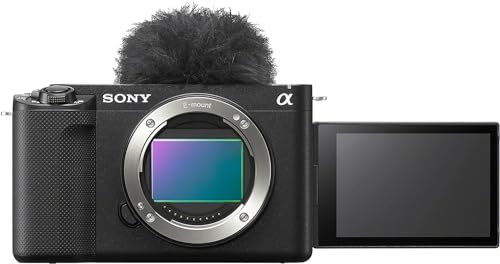
Sony ZV-E1 — The compact dark-room body
The ZV-E1 makes the low-light argument more explicitly than any other title in this guide, because it prints the number the a7S III withholds: 12.1 megapixels on a full-frame Exmor R CMOS sensor. Do the division and the design intent is unmistakable. The full-frame area that rivals divide into 24 or more megapixels is here divided into roughly half as many photosites, each one physically larger, each one gathering more light per exposure. In the physics of sensors, that is the oldest and most reliable recipe for clean images when the light runs out.
The supporting cast in the title suits the same brief. The Bionz XR processor handles the files, 4K recording runs up to 60p for the filmed half of an evening’s work, and 5-axis in-body stabilisation is printed outright — the only Sony in this set whose title names a stabiliser. Stabilisation and sensitivity attack low light from opposite ends: the sensor tolerates the dark, the stabiliser tolerates the slower shutter speeds the dark imposes, at least for subjects that hold still. A creator filming a night market, a musician’s set in a small venue, or a product demonstration under practical lamps is using both halves of that partnership in every clip.
Suits solo creators and small teams whose work is filmed in real rooms under real lighting — restaurants, venues, homes, evening streets — and who carry their kit on their own backs. The compact body matters after midnight in a way it never does at noon: a small full-frame camera on a small gimbal or a tabletop support can keep working in spaces where a full rig would be refused or resented.
Its boundary is the mirror image of its strength. Twelve megapixels is a stills ceiling: cropping is limited, large prints are not the brief, and a photographer whose income includes bright, detail-led commissions will need the hybrid bodies below for that half of the practice. The title states no ISO range, so the sensitivity story rests on the photosite argument and the sensor’s Exmor R designation rather than on a citable figure — sound physics, honestly labelled as such.
Price this body as the filmed half of a low-light practice. Its Amazon figure buys the most explicit sensitivity specification in the guide inside the smallest body here, and for creators whose stills needs are modest — thumbnails, social frames, documentation — it can be the whole camera. For mixed practices it is the dark specialist beside a higher-resolution daytime body, a pairing the shared E-mount makes unusually easy to assemble.
- Sensor: 12.1MP full-frame Exmor R CMOS
- Processor: Bionz XR
- Video: 4K up to 60p
- Stabilisation: 5-axis in-body stabilisation
- Mount: Sony E-mount
- ISO range: Not stated in the listing title — verify with the manufacturer documentation
Strengths
- The largest photosites in this guide, by printed arithmetic: 12.1MP across a full-frame sensor.
- 5-axis in-body stabilisation is stated, buying shutter speed for static subjects.
- Compact body suits discreet filming in venues where large rigs are unwelcome.
Trade-offs
- Stills resolution rules out heavy cropping and gallery-scale prints.
- No ISO figure is printed, so sensitivity rests on the sensor design argument.
- The creator-sized body offers less room for stills-led control layouts.
Best for: a creator filming in unlit-by-choice venues — gigs, restaurants, night streets — who needs full-frame sensitivity in a body that can work discreetly. Not suited for: a stills practice delivering large prints, because the stated 12.1 megapixel sensor fixes a file size those deliverables outgrow.

Panasonic Lumix S5 IIX — The dark-venue filmmaker
Panasonic’s title is the longest in this guide and every clause of it is load-bearing. A 24.2 megapixel full-frame sensor; Phase Hybrid AF; a New Active I.S. stabilisation technology; 5.8K ProRes recording; RAW over HDMI; IP streaming. Read as a low-light specification, it describes a filmmaker’s body that expects to work in the dark and be believed: autofocus that hunts by phase detection when contrast fails, stabilisation named as a headline feature, and recording formats that preserve the maximum information a dim scene can offer for the grade.
The 24.2 megapixel figure places its sensor in the working middle of this guide — twice the ZV-E1’s photosite count, with the print and crop capacity that count buys, at some cost in per-photosite area. For a filmmaker, that balance is often the right one: 5.8K recording oversamples the 4K deliverable, and the stills side of the practice keeps a resolution clients can print. Phase Hybrid AF deserves its own emphasis in a low-light context, because autofocus is the first system darkness defeats; contrast-only hunting in a dim venue is a familiar misery, and a title that prints a phase-based system is making a claim aimed squarely at that misery.
Suits filmmakers and hybrid shooters whose dark work is professional and prolonged: wedding film teams covering receptions end to end, concert and theatre videographers, documentary crews filming in available light because adding light would change the story. The IP streaming and RAW-over-HDMI clauses extend the brief to live and externally recorded production, where the camera is the front end of a chain rather than a self-contained recorder.
Its considerations are those of a serious tool. The X variant’s professional recording features reward a post-production pipeline that can use them — ProRes and RAW workflows are storage and computing commitments, and a buyer whose delivery is straight-to-client files may be paying for headroom they never open. The title states no ISO range, so the sensitivity ceiling joins the documentation list even here. And the L-mount lens wardrobe, while fully professional, is a different shelf from the Sony and Canon glass many dark-venue shooters already own.
A word about the streaming clause, because dark venues increasingly broadcast. A camera that can feed a live production directly — the role the IP streaming line in this title describes — removes a capture chain from the evening’s failure list, and for houses of worship, small theatres and conference venues running hybrid audiences, that removal has operational value beyond image quality. The same body then records the archive copy in a grading-friendly format, which collapses two purchases — the streaming camera and the recording camera — into one line of the budget. Few titles in any camera guide justify themselves on logistics; this one comes close.
Of the six, this is the body whose listing most nearly specifies a complete dark-filming practice, and its Amazon figure should be compared against the cost of assembling the same promises piecemeal elsewhere — recorder-friendly outputs, named stabilisation, phase autofocus — rather than against body prices alone.
- Sensor: 24.2MP full-frame
- Autofocus: Phase Hybrid AF
- Stabilisation: New Active I.S. technology
- Recording: 5.8K ProRes, RAW over HDMI, IP streaming
- Model: DC-S5M2XBODY, black
- ISO range: Not stated in the listing title — verify with the manufacturer documentation
Strengths
- Phase Hybrid AF is printed — the autofocus claim low-light filming most needs.
- Active I.S. stabilisation is named in the title, unlike most rivals here.
- 5.8K ProRes and RAW over HDMI preserve maximum information from dim scenes for grading.
Trade-offs
- ProRes and RAW workflows demand serious storage and editing capacity.
- No ISO range is printed for citable sensitivity comparisons.
- The 24.2MP sensor’s photosites are smaller than the ZV-E1’s sensitivity-first design.
Best for: a professional filmmaker covering dark venues end to end, whose edit pipeline can exploit ProRes and RAW and whose autofocus must hold in poor light. Not suited for: a straight-to-client delivery practice with no grading pipeline, because the body’s headline recording formats are commitments to post-production its workflow would never use.

Canon EOS R8 bundle — The kit that starts tonight
The R8’s listing approaches low light from the direction of access. Its title confirms a 24.2 megapixel full-frame RF sensor, 4K video at 60p, Dual Pixel AF II and a lightweight design, and then it puts a 24–50mm lens, a 64GB card and a Canon shoulder bag in the box. A photographer whose low-light problem is partly a budget problem — full-frame sensitivity has historically been gated behind body-only prices — is being offered the format’s light-gathering in a single delivery that can shoot an evening event the night it arrives.
Dual Pixel AF II, named in the title, is the clause low-light buyers should underline. Focusing in dim rooms is where hunts, misses and pulsing backgrounds multiply, and a named, current-generation autofocus system is a more useful promise in a dark venue than a resolution figure. Combined with the lightweight design the title claims, the R8 reads as a body meant to be carried through long evenings — receptions, venue launches, night markets — where the photographer’s stamina is part of the exposure equation.
Suits Canon newcomers stepping up to full-frame specifically for evening work, event and reception photographers building a first RF kit, and RF owners wanting a lighter second body for the dark half of a two-camera evening. The bundle suits the buyer whose shelf is empty: lens, media and carry are settled, leaving only the fast prime — the natural second purchase for serious dark work — to be chosen with experience.
The kit lens is also the honest limit. A bundled zoom’s aperture character will lean on the sensor’s sensitivity harder than a fast prime would, so the body’s low-light story in its first months is partly a story about high sensitivity doing the work a brighter lens would share. The title states no stabilisation system and no ISO range, so handheld technique and documentation carry those questions. None of this diminishes the bundle’s logic; it defines the upgrade path, which runs lens-first.
Read the listing’s figure as a starting-system price. Against a body-only rival, the honest comparison adds the rival’s first lens and card to its side of the ledger — and for an evening shooter starting from nothing, the R8’s single box can be the difference between photographing this season’s dark venues and reading about them.
- Sensor: 24.2MP full-frame
- Video: 4K 60p
- Autofocus: Dual Pixel AF II
- Bundle contents: 24–50mm kit lens, 64GB memory card, Canon shoulder bag
- Design note in title: Lightweight design
- ISO range: Not stated in the listing title — verify with the manufacturer documentation
Strengths
- Full-frame sensitivity in a box that shoots on delivery night.
- Dual Pixel AF II is named — a concrete promise for focusing in dim rooms.
- Lightweight design suits long evening carries at events and receptions.
Trade-offs
- The kit zoom’s aperture leans on sensor sensitivity until a fast prime arrives.
- No stabilisation system is stated in the title.
- A 64GB card is a modest media plan for 4K evening filming.
Best for: a first full-frame evening kit for events and receptions that must shoot immediately and grow a fast prime next. Not suited for: an RF owner already holding lenses and media, because the bundle’s lens, card and bag duplicate an equipped shelf.

Nikon Z5 II with 24–50mm zoom — Nikon’s compact full-frame
Nikon’s entry makes the same access argument as the Canon bundle with a Nikonian accent: a compact full-frame camera of 24.5 megapixels with 4K video, sold with a lightweight wide-angle-to-standard 24–50mm zoom. The low-light significance sits in the pairing of words compact and full-frame. Darkness work often happens in places where a large kit changes the room — a small restaurant, a family celebration, a place of worship — and a compact body carrying a full-size sensor can be present without becoming the event.
The stated 24.5 megapixel figure is the highest printed in this guide, which cuts interestingly against the sensitivity-first logic elsewhere on the page. More photosites across the same full-frame area means each is smaller, yet 24.5 remains a moderate count by current standards, and the practical dividend is crop room: a low-light frame shot loose for safety can be tightened in the edit, and night landscapes can be printed at sizes the 12.1 megapixel body cannot serve. Buyers are choosing which scarcity they fear — noise or resolution — and this body answers for the second.
Suits photographers whose dark work is stills-led and mobile: night street photography, evening travel, available-light portraiture on location, and Nikon shooters wanting a compact second body for the hours after sunset. The included zoom covers the environmental range such work lives in, from interiors at 24mm to natural portraits at 50mm, in a package light enough to be carried speculatively — brought along on the chance of pictures, which is how much night photography actually happens.
The familiar kit caveats apply with a low-light sharpening. The zoom’s aperture will make the sensor work, and the fast Z prime is the obvious second purchase for a photographer who discovers their night work concentrates at one focal length. The title names no autofocus system and no stabilisation, so a buyer whose night work involves moving subjects or handheld long exposures should take both behaviours from Nikon’s documentation before relying on them.
Its Amazon figure, lens included, is Nikon’s price for entering full-frame darkness without a second order. For a Z-system beginner whose alternative is a body sitting lensless through the winter’s long evenings, that completeness is the feature.
- Sensor: 24.5MP full-frame (compact full-frame camera)
- Video: 4K
- Included lens: 24–50mm wide-angle to standard zoom
- Design note in title: Lightweight zoom
- Autofocus system: Not stated in the listing title — verify with the manufacturer documentation
- ISO range: Not stated in the listing title — verify with the manufacturer documentation
Strengths
- The highest printed resolution here, preserving crop room for night frames.
- Compact full-frame pairing suits discreet work in intimate venues.
- A lens in the box makes the kit complete for a first dark season.
Trade-offs
- Smaller photosites than the sensitivity-first bodies, by arithmetic.
- Kit zoom aperture leans on the sensor until faster glass joins.
- No autofocus or stabilisation behaviour is stated in the title.
Best for: a stills-led night photographer who wants compact full-frame discretion plus the crop room of a stated 24.5 megapixels. Not suited for: a filmmaker specifying autofocus behaviour for dark venue work from the listing, because this title names no autofocus system to specify.

Sony a7 IV — The balanced hybrid
The a7 IV’s title is the plainest here — a full-frame mirrorless interchangeable lens camera — and in a low-light guide that plainness cuts two ways. The confirmed foundation is the one that matters most after dark: a full-frame sensor in the E-mount system, which means access to the widest range of fast lenses any of these mounts offers, including the bright primes that are low-light photography’s other half. A sensor gathers the light a lens delivers; a system with deep fast-glass shelves delivers more of it.
Balance is the body’s real low-light argument. A general practice does not live entirely in the dark: the same camera shoots the daylight portrait session, the bright product work and the evening reception. A sensitivity specialist optimises one end of that calendar at the expense of the other, while a hybrid body keeps the whole week competent and lets the lens choice — a fast prime for the evening, a standard zoom for the day — tune the kit to the light. For many working photographers that is not a compromise but the correct allocation, because income follows the whole calendar, not its darkest hour.
Suits mixed-practice Sony shooters whose evenings are a substantial minority of their work rather than its entirety: wedding photographers whose receptions run late, event photographers, content producers filming interviews in available light. It also serves as the sensible first full-frame for a photographer who knows darkness is coming but cannot yet say it will dominate.
The verification list is long precisely because the title is short. Resolution, autofocus behaviour, stabilisation and ISO range are all unstated, so a buyer whose dark work has specific demands — a venue, a deliverable, a filming format — should confirm each in Sony’s documentation. What can be said without the manual is the system argument and the format, and for a hybrid purchase those are legitimately the headline facts; the figures follow in the paperwork before the deposit.
Judge its Amazon figure against the specialist bodies with a calendar in hand. Count your dark hours honestly: if they are the practice, the S line or the ZV-E1 concentrates the budget where your income is; if they are a third of it, the a7 IV’s evenness — with one fast E-mount prime added — is the low-light purchase that also survives the daylight.
- Format: Full-frame mirrorless interchangeable lens camera
- Mount: Sony E-mount
- Sensor resolution: Not stated in the listing title — verify with the manufacturer documentation
- Autofocus system: Not stated in the listing title — verify with the manufacturer documentation
- Stabilisation: Not stated in the listing title — verify with the manufacturer documentation
- ISO range: Not stated in the listing title — verify with the manufacturer documentation
Strengths
- Full-frame format on the mount with the deepest fast-lens shelves for dark work.
- Balanced hybrid brief keeps daylight commissions equally well served.
- Pairs with the a7S III or ZV-E1 as the general body in a Sony low-light practice.
Trade-offs
- The title prints no low-light figure of any kind to compare.
- Sensitivity specialists above concentrate their design on darkness more fully.
- Every behaviour a dark brief depends on is a documentation check.
Best for: a mixed Sony practice whose evenings matter but whose daylight work pays equally, with a fast prime as the darkness upgrade. Not suited for: a purchase that must cite a sensitivity specification in its paperwork, because this title states no resolution, no ISO range and no stabilisation system to cite.
Comparison Table
| Camera | Sensor as titled | Resolution as titled | Stabilisation as titled | Sold as |
|---|---|---|---|---|
| Sony a7S III | Full-frame Exmor R BSI CMOS | Not stated in the listing title | Not stated in the listing title | Body, black |
| Sony ZV-E1 | Full-frame Exmor R CMOS | 12.1MP | 5-axis in-body | Body, black |
| Panasonic Lumix S5 IIX | Full-frame | 24.2MP | New Active I.S. | Body, black |
| Canon EOS R8 bundle | Full-frame | 24.2MP | Not stated in the listing title | Kit: 24–50mm, 64GB card, bag |
| Nikon Z5 II | Full-frame, compact | 24.5MP | Not stated in the listing title | Kit with 24–50mm zoom |
| Sony a7 IV | Full-frame | Not stated in the listing title | Not stated in the listing title | Body |
How to Choose a Camera for Work After Dark
Begin by naming your darkness precisely, because low light is several different problems wearing one name. A static interior at night is a shutter-speed problem, answered by stabilisation and a tripod. A moving subject in a dim venue is a sensitivity problem, answered by photosite size and fast glass. A mixed reception is an autofocus problem as much as either, answered by a named, current focusing system. The six bodies here divide along exactly those lines — the ZV-E1’s large photosites, the S5 IIX’s printed phase autofocus and stabilisation, the specialists’ sensor designs — and your venue decides which division matters.
Second, budget the lens as part of the camera. In daylight a kit zoom and a fast prime differ by convenience; in darkness they differ by whole exposure stops, which is to say by whether the picture exists. Every body here improves more from one fast prime than from any plausible body upgrade, so a low-light budget that spends everything on the body and nothing on bright glass has its priorities inverted. The two kit listings make a sensible sequence explicit: shoot the included zoom, learn your focal length, then buy that prime.
Third, refuse to compare ISO numbers you cannot source. No title here prints one, and sensitivity claims gathered from forums mix measurement methods until they mean nothing. The citable evidence is physical — format, photosite arithmetic from printed resolutions, BSI architecture where named — plus manufacturer documentation read directly. A buyer who follows that discipline will choose more slowly and regret it less.
Power planning belongs in the choosing too, because darkness and duration arrive together. Evening events run long, cold night air shortens battery endurance, and screens and stabilisation systems draw steadily through a filmed session. A low-light kit is therefore a battery count and a charging rhythm as much as a sensor, and the photographer who has watched a colleague’s camera die during a first dance will forgive this guide for treating spare batteries as a specification. Whichever body you choose, its endurance in your longest session is a fact to establish in the rehearsal, not during the event.
Consider, finally, how the camera behaves at the moment of capture in a quiet room. Ceremonies, classical performances and speeches impose a courtesy constraint that daylight work never meets: the sound and light of the tool itself. A body and lens combination that can work unobtrusively — and a photographer who has rehearsed its quietest configuration before the event — will be welcomed back to venues that quietly stop booking conspicuous operators. No title in this set speaks to shutter behaviour, so the point joins the documentation and rehearsal list, but in the economics of venue work it can outweigh a stop of sensitivity.
Finally, test in your own darkness before the work depends on it. Rent or borrow where you can, shoot your actual venue at your actual settings, and judge the files at delivery size. Low light is the genre where personal tolerance decides — one photographer’s unacceptable noise is another’s atmosphere — and no guide, including this one, can set that threshold for your eye.
Does a Fast Lens Matter More Than the Sensor in Low Light?
They multiply rather than compete, and the multiplication favours whichever is currently weaker in your kit. A fast lens delivers more light to any sensor; a sensitive sensor does more with whatever light arrives. A full-frame body behind a slow kit zoom can be matched in the dark by a lesser body behind a prime two stops brighter — which is why this guide treats the included zooms in the Canon and Nikon kits as starting points and keeps naming the fast prime as the defining second purchase.
The practical sequence follows. Buy the body whose sensor philosophy matches your venues — photosite size for moving darkness, resolution for static darkness that will be printed — then put the next money into the brightest lens at your working focal length before considering any body upgrade. Photographers who follow that order discover their low-light problem was often a lens problem wearing a camera’s clothes, and the discovery is much cheaper than the alternative.
Why Does Stabilisation Help Some Night Photographs and Not Others?
Stabilisation corrects the photographer’s movement, and only the photographer’s. For a static subject — an interior, a landscape, a posed portrait — it converts hand tremor from the limiting factor into a solved one, letting shutter speeds fall and sensitivity stay low, which is why the printed systems on the ZV-E1 and S5 IIX matter to night stills work. For a moving subject — a dancer, a child, a performer mid-gesture — the subject’s own motion sets the shutter floor, and no stabiliser can help; only sensitivity and aperture can. Knowing which kind of darkness you shoot is therefore a purchasing fact: static-dark buyers should weigh stabilisation heavily, motion-dark buyers should weigh photosites and glass, and reception photographers, who shoot both before midnight, should weigh the bodies that print claims on both fronts.
What Does a Night Street Photographer Need That a Studio Shooter Does Not?
Discretion and readiness, in that order. The street photographer’s darkness is public and unposed: scenes assemble and dissolve in seconds, light comes from shopfronts and streetlamps rather than from anything the photographer controls, and a large kit announces itself in ways that change strangers’ behaviour. That is why the compact bodies in this guide — the ZV-E1’s small full-frame form, the Z5 II kit’s light zoom — carry a street argument out of proportion to their specifications. A camera that is present, raised and gone in a moment makes photographs a conspicuous rig never gets offered.
Readiness is the second half. Night street work is shot at whatever settings the last frame needed unless the photographer builds habits against it, and the bodies that serve it best are the ones whose low-light behaviour forgives: sensors that tolerate the sensitivity a fast-changing scene demands, autofocus that finds a face under a streetlamp without a hunting expedition — the quality the S5 IIX’s printed Phase Hybrid AF and the R8’s named Dual Pixel AF II both speak to. The street shooter should also weigh the unglamorous matter of the second battery and the coat-pocket lens, because the night kit is carried for hours on the chance of twenty frames.
Finally, the street photographer edits differently, and the sensor choice should anticipate it. Night street files are graded hard — lifted shadows, tamed highlights from signs and lamps — and the bodies whose recording and file formats preserve the most information reward that treatment. A stills-led street practice can live happily on any sensor here; a practice that pushes its files should read the S5 IIX’s format list and the a7S III’s sensor designation as the two ends of the information-preservation argument, and choose with its own editing habits in view.
How Should You Verify a Low-Light Claim Before Paying for It?
Treat every sensitivity claim as a three-part question: what is claimed, who measured it, and under what conditions. Listing titles, as this guide has shown, mostly decline to claim — which is honest of them — so the verification path runs through manufacturer documentation for the figures, and then through your own test for the meaning of those figures. A documented sensitivity range tells you the territory a sensor can reach; only files from your venue, at your settings, tell you where inside that territory your own tolerance for noise and softness sits.
Structure the test like the work. Shoot the darkest regular scene in your practice — the reception room, the small stage, the unlit street — at the settings you would actually use, with the lens you actually own. Make the moving-subject frames as well as the static ones, because the two fail differently and a body can pass one examination while failing the other. Then process the files exactly as deliverables are processed, including the export and, for print work, a physical print at delivery size. Judgements made on a screen at full magnification systematically overstate flaws that delivery sizes hide, and understate the autofocus and handling problems that actually cost photographs.
Keep the test files. They become the baseline against which the purchased body is judged in its first month, and the evidence if a particular copy behaves below its class. Low-light performance varies enough between individual venues — and matters enough to the photographers who work in them — that a personal archive of reference frames is worth more than any number of published comparisons shot in someone else’s darkness.
Common Mistakes When Buying a Low-Light Camera
Comparing ISO figures gathered from unsourced claims. No title here prints a range. Sensitivity comparisons belong in manufacturer documentation with a stated measurement basis.
Spending the whole budget on the body. In darkness the lens is half the exposure. A fast prime transforms any of these bodies more than a body upgrade would.
Assuming stabilisation freezes subjects. It steadies the camera only. Moving subjects in dim venues still demand sensitivity and aperture.
Judging noise at full magnification only. Files are delivered at sizes, not at pixel level. Audit test files at the reproduction size your clients actually receive.
Buying a specialist for a general calendar. A sensitivity-first body is a poor trade if most of your income is made in daylight; count your dark hours before paying for them.
Final Recommendation
For filmed darkness at a professional level, the Panasonic Lumix S5 IIX is this guide’s most completely specified answer — phase hybrid autofocus, named stabilisation and recording formats that preserve dim scenes for the grade. For sensitivity as a pure argument, the Sony ZV-E1’s printed 12.1 megapixels on a full-frame sensor is the clearest statement here, with the a7S III as the specialist body for photographers and filmmakers whose venues are darker still and whose documentation checks confirm its figures. Canon and Nikon newcomers should start with their respective kits — the R8 bundle’s named Dual Pixel AF II or the Z5 II’s compact 24.5 megapixel pairing — and Sony generalists with the a7 IV plus a fast prime.
One closing observation from the structure of this shortlist itself: the low-light field has matured into philosophies rather than a ladder. The sensitivity specialists, the balanced hybrids and the access kits are not better and worse versions of one camera — they are different allocations of the same physics, and the right allocation is the one matched to a named room, a named subject and a named deliverable. Buyers who can name all three will find their camera quickly on this page; buyers who cannot should name them before spending anything.
Whatever you choose, spend the following money on bright glass before anything else: in the dark, the lens you mount writes the first draft of every photograph, and the sensor merely decides how faithfully the draft survives.
Frequently Asked Questions
Why are all six cameras full-frame?
Because low light is the genre where sensor area is decisive: at equal settings a larger sensor gathers more light. Smaller formats have real virtues, but a low-light shortlist should start from the strongest physical foundation.
Do any of these listings state an ISO range?
None of them does. Sensitivity comparisons should be made from manufacturer documentation, and the citable evidence in the listings is physical — sensor format, printed resolution and named sensor architecture.
Is a lower megapixel count really better in the dark?
On the same sensor size, fewer megapixels mean larger photosites, and larger photosites gather more light each — the ZV-E1’s 12.1 megapixels on full-frame is the printed example. The trade is crop room and print size, which the 24-megapixel bodies keep.
Which pick is best for filming dark venues?
On titled evidence, the Panasonic Lumix S5 IIX: Phase Hybrid AF for focusing in poor light, named Active I.S. stabilisation, and 5.8K ProRes with RAW over HDMI for preserving dim footage into the grade.
Should I buy a fast prime or a better body first?
The prime, in almost every case. Aperture gains are whole stops of light on any body, while body upgrades improve sensitivity incrementally. Learn your focal length on the kit zoom, then buy that prime bright.
Can editing software rescue a noisy low-light file?
Partly, and the boundary matters. Modern processing can suppress noise impressively, but it trades against fine detail, and it cannot restore information the sensor never captured — a face lost to motion blur or a shadow that recorded nothing stays lost. Software raises the floor of a good file; it does not repeal the physics that made the bodies in this guide worth choosing carefully.
Does stabilisation replace a tripod at night?
For static subjects it narrows the gap considerably, and the printed systems here are genuinely useful. For the longest exposures and the most critical sharpness, a tripod remains the reference — and for moving subjects neither helps, since subject motion is the blur that matters.
Related Guides
Darkness is one half of the venue problem; the shoot itself is the other, and the best mirrorless cameras for photoshoots, judged on the deliverables their sensors support covers the commissioned side. When the subject will not sit still for your stabiliser, the best mirrorless cameras with continuous autofocus for moving subjects in poor light takes the focus question further. And the filmed half of an evening is planned in the best mirrorless cameras for video with 4K, read from their stated recording ceilings.


