What's inside
- Where to Buy
- Introduction
- Key Takeaways
- Quick Picks
- How We Chose These Picks
- Comparison Table
- How to Choose a 4K Video Camera for Real Productions
- Is 4K Enough, or Should a Video Camera Oversample?
- Which of These Cameras Should a Wedding Film Team Standardise On?
- What Should a First 4K Rig Budget Include Beyond the Body?
- How Should a Multi-Camera Production Match Its Bodies?
- What Does a Solo Filmmaker Sacrifice With Each Format Tier?
- Common Mistakes When Buying a 4K Video Camera
- Final Recommendation
- Frequently Asked Questions
- Related Guides
As an Amazon Associate I earn from qualifying purchases. This post may contain affiliate links at no extra cost to you.
[SITE_DOMAIN] is reader-supported. When you buy through links on our site, we may earn an affiliate commission.
Where to Buy
Video cameras are bought as the centre of a kit, so let these listings start a basket rather than finish one. Panasonic’s Lumix GH7 is listed under its DC-GH7BODY9 model code with the fullest workflow wording of the six titles, worth reading line by line on its page. Sony’s a6700 is a black APS-C body whose title prints its 26 megapixel and 4K claims together. The Lumix S5 IIX is Panasonic’s full-frame professional entry, again with a specification dense enough to reward slow reading. Fujifilm’s X-H2S keeps its listing to a single line, so its page figure should be weighed alongside Fujifilm’s documentation. Canon’s EOS R6 Mark II sells body only with photo and video capabilities stated, and Panasonic’s Lumix GH6 — the GH7’s predecessor in the same line — prints an unlimited recording promise that remains rare at any price.
Introduction
Shopping for the best mirrorless cameras for video with 4K sounds like a single specification search, and it is actually three different purchases wearing one label. The first is resolution itself: a 4K frame for delivery, for cropping in the edit, for stills pulled from footage. The second is endurance — whether the camera records a wedding ceremony, a conference talk or a theatre act without stopping, heating or hedging. The third is workflow: the colour science, log profiles, monitoring aids and file formats that decide how footage behaves between the sensor and the finished film. A camera can win the first purchase and lose the other two, which is why this guide reads each title for all three and reports the silences as faithfully as the claims.
The six titles here divide instructively. Two Panasonic Micro Four Thirds bodies — the GH7 and GH6 — speak the language of professional video most fluently, one promising enhanced speed, quality and post-production workflow, the other printing unlimited C4K and 4K recording in 4:2:2 10-bit. Panasonic’s full-frame S5 IIX raises the format stakes with 5.8K ProRes and RAW over HDMI. Sony’s a6700 is the only title that says 4K and log shooting in the same breath at APS-C size. Canon’s R6 Mark II confirms photo and video capabilities on a 24.2 megapixel full-frame sensor without printing a video ceiling at all. Fujifilm’s X-H2S prints almost nothing, and is carried here by its flagship position in the X system, with its video figures assigned to documentation where they belong.
That spread is the honest shape of the 4K market. The badge is universal; the engineering behind it is not. Recording limits, colour depth, stabilisation strength and autofocus behaviour vary more between these six bodies than the shared 4K label suggests, and the productions that choose well are the ones that specify their real requirement — a ninety-minute talk, a graded short film, a daily vlog — before they fall for a headline.
One more framing note before the reviews. Sensor format divides this set into three tiers — Micro Four Thirds, APS-C and full-frame — and for video the division cuts differently than it does for stills. Smaller sensors bring smaller lenses, deeper natural focus and rigs one person can carry all day; full-frame brings the shallow-focus cinema look and low-light headroom. Neither is a verdict. The reviews treat format as a production decision, matched to crew size, venues and the look the client is buying.
Key Takeaways
- The Panasonic GH6 is the only title that prints a recording-duration promise: unlimited C4K/4K in 4:2:2 10-bit colour.
- The GH7’s title argues workflow — enhanced video speed and quality, optimised shooting-to-post flow, Adobe Cloud compatibility and real-time LUTs — rather than a single resolution figure.
- The Lumix S5 IIX states the highest recording ceiling here, 5.8K ProRes, plus RAW over HDMI and Phase Hybrid AF on a 24.2MP full-frame sensor.
- Sony’s a6700 is the compact 4K option whose title names log shooting and LUT handling — grading intent in an APS-C body.
- Canon’s R6 Mark II title confirms photo and video capabilities but no 4K figure, so its video ceiling is a documentation check, not a listing fact.
- Fujifilm’s X-H2S title states nothing beyond the body, so every video figure for it must come from Fujifilm’s documentation.
- Stabilisation is printed on two titles only: the GH6’s 7.5-stop Dual system and the S5 IIX’s Active I.S.
Quick Picks
| Pick | Badge | Why it earns a place |
|---|---|---|
| Panasonic Lumix GH7 | The workflow flagship | Micro Four Thirds video body promising enhanced speed and quality with optimised shooting-to-post workflows and real-time LUTs. |
| Sony a6700 | The compact grading body | 26MP APS-C body with 4K video, log shooting and LUT handling in a vlog-friendly form. |
| Panasonic Lumix S5 IIX | The full-frame production tool | 24.2MP full-frame with Phase Hybrid AF, Active I.S., 5.8K ProRes, RAW over HDMI and IP streaming. |
| Fujifilm X-H2S | The X-system flagship | Fujifilm’s top-tier APS-C body for video work inside the XF lens system, figures to be verified in documentation. |
| Canon EOS R6 Mark II | The hybrid professional | 24.2 megapixel full-frame body with photo and video capabilities for mixed practices. |
| Panasonic Lumix GH6 | The endurance specialist | 25.2MP Micro Four Thirds body with unlimited C4K/4K 4:2:2 10-bit recording and 7.5-stop Dual stabilisation. |
How We Chose These Picks
The entry ticket was a credible 4K claim, but credibility was judged on the whole title rather than on the badge alone. Bodies whose titles describe recording formats, colour depth, workflow features or stabilisation in video terms were weighted as video instruments; bodies whose titles merely coexist with a video reputation were included only where their system position justifies the documentation work, and their reviews say so plainly. The result is a set in which the strength of evidence varies — deliberately visible, because a buyer deserves to know which purchases are specified by the listing and which are specified by the manual.
Endurance formed the second filter, and it is the one most buying guides skip. A 4K camera that stops at a limit the title never mentions will end a ceremony recording exactly once before its owner learns to ask the question this guide asks in advance. Only one title here answers it outright — the GH6’s unlimited recording — so endurance for the other five is assigned to documentation checks, and the reviews mark the assignment every time rather than letting a famous badge imply a promise nobody printed.
Colour workflow was the third pass. Footage is finished in an edit, and the titles that speak of log shooting, LUT handling, real-time LUTs, ProRes or RAW are describing how much of that finishing the camera anticipates. The a6700 and GH7 both put LUT language in their titles, which signals an intended pipeline: shoot flat or monitored, grade deliberately, deliver consistently. The S5 IIX goes further into professional formats. Bodies silent on workflow are not condemned — they are simply unexamined on the point by their own listings, and the reviews keep the distinction.
Stabilisation and autofocus were counted where printed and nowhere else. Two titles print stabilisation figures or systems; one prints a phase-hybrid autofocus claim. Handheld operators and autofocus-dependent solo shooters should treat those printed claims as the shortlist within the shortlist, and treat every silent title as an open question for the manual.
Format balance closed the set. Two Micro Four Thirds specialists, one APS-C compact and one APS-C flagship, and two full-frame bodies give productions at every crew size a defensible option, because the right sensor for a one-person documentary and the right sensor for a three-person commercial are rarely the same sensor.
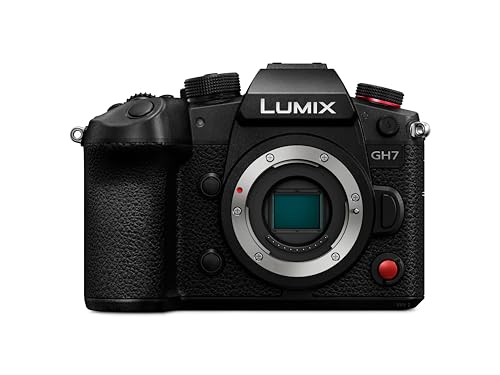
Panasonic Lumix GH7 — The workflow flagship
The GH7’s title reads like a production meeting’s agenda. A Micro Four Thirds mirrorless camera with enhanced video speed and quality, optimised workflows from shooting to post-production, Adobe Cloud compatibility and real-time LUT — Panasonic is not selling a resolution figure here; it is selling the hours around the footage. That emphasis tells an experienced buyer a great deal. The GH line has been the working videographer’s instrument for a generation, and its newest title argues that the bottleneck in modern production is no longer the sensor but the path from the sensor to the delivered file.
Real-time LUT support deserves unpacking, because it changes behaviour on set. A LUT — a colour transformation agreed in advance — applied while filming lets a director, a client or a second shooter see the intended grade on the monitor instead of a flat, washed preview. Decisions about light and exposure get made against the finished look rather than against a promise, and multi-camera shoots hold their match from the first frame. A title that prints this feature is describing a camera designed to live inside a colour-managed production, which is where 4K footage earns professional money.
Suits videographers and small production companies whose deliverables are graded and whose turnaround is part of the product: wedding film teams delivering in days, commercial shooters handing footage into an Adobe-based post pipeline, documentary makers who need a body that keeps pace with an edit rather than merely feeding one. The Micro Four Thirds format supports that working life — deep-focus practicality for run-and-gun coverage, a lens catalogue whose size and weight suit one-person crews, and bodies that can be multiplied into B and C cameras without multiplying the budget in proportion.
The title’s silences are the familiar ones. No recording-duration promise is printed here — that distinction belongs to its predecessor below — and no stabilisation figure or autofocus system is named, so long-form buyers and autofocus-dependent shooters take both to Panasonic’s documentation. Nor does the title print a headline recording format beyond its workflow language; the editor buying against a specific codec requirement should confirm it in the manual before the GH7 is specified into a production’s paperwork.
A careful buyer should register a generational point as well. A flagship video line’s newest body carries the manufacturer’s current thinking on menus, monitoring and file handling, and those refinements compound across hundreds of shooting days in ways a specification table struggles to price. Teams standardising for several seasons should weigh that compounding — the GH7 will be the body assistants learn, the body accessories are made for first, and the body whose workflow documentation is freshest — against the GH6’s proven, printed endurance. Neither consideration is sentimental; both are line items in a multi-year production budget.
Read its Amazon figure as the price of a production system rather than a sensor. The GH7’s case is that the camera, the monitoring look and the post pipeline arrive pre-negotiated, and for a working videographer the hours that negotiation saves across a season are the real specification — one that happens, unusually, to be printed in the title.
- Format: Mirrorless Micro Four Thirds camera
- Video positioning in title: Enhanced video speed and quality
- Workflow: Optimised shooting-to-post workflow, Adobe Cloud compatible
- Colour: Real-Time LUT
- Model: DC-GH7BODY9
- Recording duration limit: Not stated in the listing title — verify with the manufacturer documentation
Strengths
- Workflow is a headline feature: shooting-to-post optimisation and Adobe Cloud compatibility are printed.
- Real-Time LUT support lets sets judge exposure and light against the intended grade.
- Micro Four Thirds lens catalogue keeps one-person rigs small and affordable to multiply.
Trade-offs
- No unlimited-recording promise is printed, unlike the GH6 below.
- No stabilisation figure or autofocus system is named in the title.
- The smaller sensor concedes low-light headroom and shallow focus to full-frame rivals.
Best for: a working videographer whose bottleneck is turnaround — graded deliverables on a deadline inside an Adobe-centred pipeline. Not suited for: a long-form buyer who needs a stated unlimited recording promise in the purchase paperwork, because this title prints workflow claims and no duration guarantee.

Sony a6700 — The compact grading body
Sony’s a6700 packs its argument into one dense title: an APS-C mirrorless body with a 26 megapixel sensor, 4K video, log shooting, LUT handling and vlog-friendly functions, in black. The pairing that matters is log plus LUT. Log recording captures a flat, wide-latitude image designed to be graded; LUT handling lets that flat image be previewed with its intended look applied. A compact body printing both is declaring that its footage is meant to be finished properly — the opposite of the point-and-post philosophy its vlog-friendly label might suggest, and the two ideas together describe the modern creator’s actual workflow: shoot casually, finish seriously.
The 26 megapixel APS-C sensor serves the double life such creators lead. It is a stills resolution with real print and crop capacity, behind a video specification that headlines the title, in a body small enough to live on a desk mount, a small gimbal or a travel bag’s side pocket. For the one-person production — presenter, camera operator and editor in a single chair — that size is a production feature: the camera that is already set up films more than the better camera still in its case.
Suits creators, educators, reviewers and small-channel producers who film themselves and grade their footage; travel videographers who need 4K and a real colour pipeline inside a carry-on kit; and stills photographers adding a serious video B-body to an APS-C or full-frame Sony bag, since the E-mount keeps lenses common across the system.
Its limits follow its format and its title’s restraint. APS-C gathers less light than the full-frame bodies here and renders deeper focus at equivalent framing, so the shallow-focus cinema look takes faster lenses to reach. The title names no stabilisation system and no recording-duration promise, and prints no colour-depth figure — a grader buying against a specific bit-depth requirement must find it in Sony’s documentation rather than infer it from the log claim. Vlog-friendly functions, finally, are a label rather than a specification; what they include is a manual question.
The a6700’s Amazon figure should be judged as a complete creator station’s core: body, one fast prime for the presenting frame, and the small support it lives on. Against full-frame rivals it will usually win that basket arithmetic while conceding the low-light and focus-rendering extremes — a trade its intended owner, filming tonight at a desk, makes correctly.
- Sensor: 26MP APS-C
- Video: 4K video
- Colour workflow: Log shooting, LUT handling
- Positioning in title: Vlog friendly functions
- Mount: Sony E-mount
- Recording duration limit: Not stated in the listing title — verify with the manufacturer documentation
Strengths
- Log shooting and LUT handling are both printed — a grading pipeline in a compact body.
- A 26MP sensor keeps stills work fully credible beside the 4K brief.
- Small APS-C form suits desks, gimbals and travel kits that film daily.
Trade-offs
- APS-C format concedes low-light headroom to the full-frame picks.
- No colour-depth figure is printed for codec-specific buying.
- No stabilisation system or duration promise is named in the title.
Best for: a solo creator who films daily and grades deliberately, needing 4K with a log and LUT pipeline in a body that lives on the desk. Not suited for: a long-form event buyer who needs a stated recording-duration guarantee, because this title prints none and the ceremony will not pause for the check.

Panasonic Lumix S5 IIX — The full-frame production tool
The S5 IIX’s title is a professional’s checklist written by someone who expects to be audited: 24.2 megapixel full-frame sensor, Phase Hybrid AF, New Active I.S. stabilisation, 5.8K ProRes recording, RAW over HDMI and IP streaming. For a 4K production, the significance of a 5.8K ceiling is oversampling — footage captured above the delivery resolution and finished down into a cleaner, more flexible 4K master — together with recording formats, ProRes internally and RAW externally, that preserve the maximum information a scene can offer an editor.
Phase Hybrid AF is the clause solo operators and small crews should underline. Autofocus is the crew member a one-person production does not have, and in video its failures are public: a hunting lens during an interview answer cannot be edited around. A title that names a phase-based hybrid system is claiming focus behaviour designed for moving subjects and changing light, and it is the only autofocus claim printed anywhere in this set of six — a fact that says as much about the other listings as about this one.
Suits professional filmmakers and hybrid teams working at full-frame: commercial and narrative crews who grade everything, wedding film teams who need autofocus they can trust through a reception, and production companies standardising on bodies that record internally in ProRes and externally in RAW without a model change. The IP streaming clause extends the same body into live production — houses of worship, conferences, hybrid events — where the recording camera and the streaming camera can finally be the same purchase.
The costs are pipeline costs. ProRes and RAW files are large, and a production that adopts them adopts the storage, backup and computing capacity they demand; a buyer delivering straight-to-client compressed files may never open the headroom they paid for. The title prints no recording-duration promise, so long-form buyers still owe Panasonic’s documentation a visit. And the L-mount lens wardrobe, while professional and growing, is a commitment distinct from the Sony and Canon shelves.
Its Amazon figure competes against a different basket than the other five: not body against body, but body against body-plus-recorder-plus-streaming-encoder assemblies that rival setups need to match its printed claims. Priced that way, the S5 IIX is frequently the economical professional in this guide.
- Sensor: 24.2MP full-frame
- Autofocus: Phase Hybrid AF
- Stabilisation: New Active I.S. technology
- Recording: 5.8K ProRes, RAW over HDMI, IP streaming
- Model: DC-S5M2XBODY, black
- Recording duration limit: Not stated in the listing title — verify with the manufacturer documentation
Strengths
- A stated 5.8K ProRes ceiling oversamples 4K deliverables with grading-grade formats.
- Phase Hybrid AF is the only autofocus system named in any title here.
- RAW over HDMI and IP streaming cover external recording and live production in one body.
Trade-offs
- ProRes and RAW workflows impose real storage and computing budgets.
- No duration promise is printed for uninterrupted long-form recording.
- Active I.S. is named without a stop figure, unlike the GH6’s printed 7.5 stops.
Best for: a professional production standardising on full-frame bodies that record ProRes internally, RAW externally and stream live without changing models. Not suited for: a deliver-straight-from-camera practice with no grading pipeline, because its headline formats are post-production commitments that workflow would never redeem.

Fujifilm X-H2S — The X-system flagship
For the third time in this batch of guides, Fujifilm’s flagship arrives with a title that says only that it is a mirrorless camera body — and for a video guide, that silence must be handled with particular care, because video specifications are where assumptions cost productions money. Nothing in this review credits the X-H2S with a recording format, a frame rate, a colour depth or a duration limit. Its inclusion rests on its verifiable position: the flagship-tier body of the X system, the camera Fujifilm’s own shooters build video work upon, presented here as a documentation-led purchase for readers already invested in that system.
That position is not nothing. A Fujifilm photographer with a bag of XF lenses — including the fast primes that give the system its following — faces a real economic question when video work arrives: build the filming practice on the flagship body their glass already fits, or strand the wardrobe and start again in another mount. For most working shooters the first answer is correct, provided the body’s video chapter, read in Fujifilm’s documentation, covers their deliverables. The review’s job is to insist on the reading, not to pre-judge its contents.
Suits Fujifilm-system photographers and small teams whose video brief has grown out of a stills practice — editorial filmmakers, travel documentarians, wedding hybrids — and who will specify the body from its manual with the same care they once specified their lenses.
The verification list is total: recording resolutions and frame rates, colour depth, log availability, stabilisation, autofocus behaviour in video, and duration limits all live outside the title. A production buying this body for a named deliverable should extract each figure from documentation and keep the printout with the purchase paperwork, because the listing itself offers nothing to cite if a specification is ever disputed. Buyers who find that burden unreasonable have two Panasonic titles above that print their promises — the market offers both philosophies, and this guide simply refuses to blur them.
Its Amazon figure is therefore best read by the audience it serves: for the XF owner, the price of keeping a system whole while adding a flagship filming body; for the uncommitted, a reminder that a camera purchase is a lens-system marriage, and that the ceremony should be preceded by reading the manual of the body you are actually marrying.
- Format: Mirrorless camera body
- Mount: Fujifilm X system
- Video ceiling: Not stated in the listing title — verify with the manufacturer documentation
- Recording formats: Not stated in the listing title — verify with the manufacturer documentation
- Stabilisation: Not stated in the listing title — verify with the manufacturer documentation
- Autofocus system: Not stated in the listing title — verify with the manufacturer documentation
Strengths
- Flagship-tier body position within a mature, video-capable lens system.
- Keeps XF lens investment working as a practice turns to film.
- Body-only listing suits system owners building a dedicated filming position.
Trade-offs
- No video figure of any kind is printed; the manual carries the entire specification.
- APS-C format concedes sensor area to the full-frame bodies here.
- Codec-specific productions cannot specify this body from its listing.
Best for: a Fujifilm-system shooter adding a flagship filming body after extracting its full video specification from Fujifilm’s documentation. Not suited for: a production that must cite recording formats in its paperwork before purchase, because this title states no format, frame rate or duration to cite.

Canon EOS R6 Mark II — The hybrid professional
Canon’s title confirms a 24.2 megapixel full-frame CMOS sensor in a body-only mirrorless camera with photo and video capabilities — and stops exactly there. In a guide about 4K video, that stopping point must be reported before anything else: this listing does not print a video resolution, a frame rate, a colour depth or a duration limit. The R6 Mark II is included because it is Canon’s working hybrid body, the camera RF-system professionals reach for when stills and filming share one bag — but its video specification, for the purposes of a purchase, lives in Canon’s documentation.
What the confirmed specification does support is the hybrid pattern itself. A 24.2 megapixel full-frame sensor is a considered filming foundation — the resolution class whose readout and file behaviour suit high-volume work — and a body that shoots the stills commission and the accompanying film from one position saves a second body, a second lens set and a second learning curve. Wedding and event practices live on that economy: the photographer filming the speeches is the photographer who shot the ceremony, and the camera that serves both without a system change is worth a documentation session.
Suits Canon-system professionals whose filming is one strand of a stills-led business — weddings, events, brand work — and who will verify the video chapter before promising a client a format. RF owners adding a B-body for locked-off filming angles join the same audience, with the mount’s lens sharing doing the economic work.
The discipline is identical to the Fujifilm’s, and consistency matters: no autofocus system is named, no stabilisation is claimed, no codec is printed. A buyer whose production specifies any of those must extract them from Canon’s manual and, if the figures matter contractually, keep them with the job paperwork. The body’s reputation among working hybrids is a reason to do that reading with optimism; it is not a substitute for the reading.
Its Amazon body figure should be compared inside the RF economy: beside the lenses already owned, it is often the cheapest route on this page to a full-frame filming position, because the glass — the expensive half of any video kit — is already on the shelf.
- Sensor: 24.2 Megapixel CMOS, full-frame
- Format: Mirrorless camera, body only
- Brief: Photo and video capabilities
- Mount: Canon RF system
- Video ceiling: Not stated in the listing title — verify with the manufacturer documentation
- Autofocus system: Not stated in the listing title — verify with the manufacturer documentation
Strengths
- A full-frame hybrid body whose stills and video briefs are both confirmed.
- 24.2 megapixel files suit high-volume hybrid pipelines.
- RF lens sharing makes it an economical B-body for Canon practices.
Trade-offs
- No 4K figure is printed, so the guide’s headline specification is a manual check.
- No codec, colour depth or duration promise appears in the title.
- Video-led buyers get less listing evidence here than from either Panasonic.
Best for: an RF-system hybrid professional whose filming supports a stills-led practice and who will confirm the video specification in Canon’s documentation. Not suited for: a codec-specified production buying from listing text, because this title prints no resolution, format or duration for the production’s paperwork.
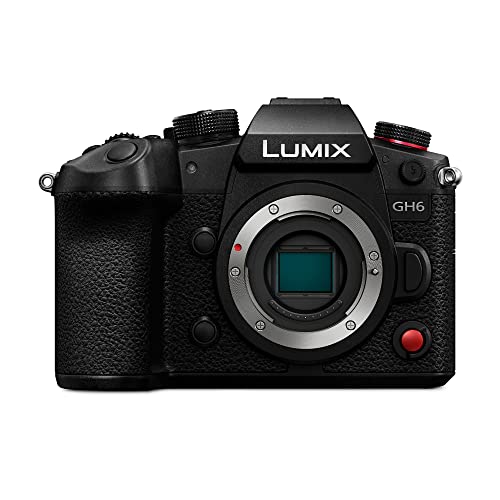
Panasonic Lumix GH6 — The endurance specialist
The GH6’s title contains the single most valuable sentence in this guide: unlimited C4K and 4K video recording, in 4:2:2 10-bit, from a 25.2 megapixel Micro Four Thirds sensor with a 7.5-stop 5-axis Dual image stabiliser. Every clause answers a failure that ends productions. Unlimited answers the ceremony that runs long. The 4:2:2 10-bit format answers the grade that has to rescue mixed venue lighting. The printed stabilisation figure answers the handheld B-camera angle. A buyer could specify a long-form production from this title alone, and that is a distinction none of the other five listings earns.
Colour depth deserves its moment, because 4:2:2 10-bit is the clause casual readers skip. It describes how much colour information each frame keeps — enough that footage can be pushed in grading, keyed cleanly and matched across cameras without the artefacts that thinner formats reveal under pressure. For event films delivered with a look, for interviews shot under whatever light the room offered, that headroom is the difference between footage that accepts correction and footage that merely survives it.
Suits long-form videographers above all: conference and ceremony recordists, theatre and concert filmmakers, interview producers whose sessions run to hours, and multi-camera teams who need matched, gradeable files from bodies that can be afforded in pairs. The Micro Four Thirds system’s compact lenses serve the same brief — smaller rigs, faster resets between setups, a B-camera that can live on a monopod all day.
Age and format are its honest costs. The GH6 is the previous generation beside the GH7 above, and buyers choosing between them are weighing this title’s printed endurance against the newer body’s workflow promises — a genuinely close call that the documentation for both should settle. The smaller sensor concedes low-light extremes and shallow focus to the full-frame bodies, and the title names no autofocus system, so focus-critical solo work takes that question to Panasonic’s manual.
Its Amazon figure often makes the endurance argument decisive: the only stated unlimited 10-bit recording in this guide, at a previous-generation price position, behind a lens catalogue that keeps the whole rig modest. Productions that film long and grade hard should start their comparison here and make the others argue them away.
- Sensor: 25.2MP Micro Four Thirds
- Recording: Unlimited C4K/4K, 4:2:2 10-bit
- Stabilisation: 7.5-stop 5-axis Dual image stabiliser
- Model: DC-GH6BODY, black
- Autofocus system: Not stated in the listing title — verify with the manufacturer documentation
- External output: Not stated in the listing title — verify with the manufacturer documentation
Strengths
- Unlimited recording is printed — the long-form guarantee this guide values most.
- 4:2:2 10-bit colour gives footage real grading and keying headroom.
- A stated 7.5-stop Dual stabiliser supports handheld and light-support angles.
Trade-offs
- Previous generation beside the GH7’s workflow-focused successor.
- Micro Four Thirds sensor concedes low-light extremes to full-frame bodies.
- No autofocus system is named for focus-critical solo filming.
Best for: long-form productions — ceremonies, conferences, stage work — that need a stated unlimited 10-bit recording promise from an affordable-to-multiply body. Not suited for: a shallow-focus, low-light narrative brief that depends on full-frame rendering, because the 25.2MP Micro Four Thirds sensor is the smallest format in this guide.
Comparison Table
| Camera | Format as titled | Video as titled | Colour/workflow as titled | Stabilisation as titled |
|---|---|---|---|---|
| Panasonic Lumix GH7 | Micro Four Thirds | Enhanced video speed and quality | Real-Time LUT, Adobe Cloud compatible | Not stated in the listing title |
| Sony a6700 | APS-C, 26MP | 4K video | Log shooting, LUT handling | Not stated in the listing title |
| Panasonic Lumix S5 IIX | Full-frame, 24.2MP | 5.8K ProRes, RAW over HDMI | IP streaming, Phase Hybrid AF | New Active I.S. |
| Fujifilm X-H2S | Not stated in the listing title | Not stated in the listing title | Not stated in the listing title | Not stated in the listing title |
| Canon EOS R6 Mark II | Full-frame, 24.2MP | Photo and video capabilities | Not stated in the listing title | Not stated in the listing title |
| Panasonic Lumix GH6 | Micro Four Thirds, 25.2MP | Unlimited C4K/4K | 4:2:2 10-bit recording | 7.5-stop 5-axis Dual |
How to Choose a 4K Video Camera for Real Productions
Specify the longest uninterrupted take your work contains, and let that number lead. A channel of five-minute pieces never meets a recording limit; a ceremony, talk or performance meets it in the worst possible minute. If your longest take is long, the GH6’s printed unlimited recording is the safest sentence in this guide, and every other candidate owes you a documentation answer before it is trusted with the same session.
Next, decide how the footage will be finished, because the finishing decides the format requirements. Graded work wants colour depth and log or RAW headroom — the GH6’s 10-bit promise, the S5 IIX’s ProRes and RAW, the a6700’s log and LUT pairing, the GH7’s real-time LUT monitoring. Straight-to-delivery work wants the opposite virtues: pleasing colour from the camera and files the client can open. Buying grading headroom you never use is a storage tax; buying thin files for a graded deliverable is a quality ceiling. Match the camera to the edit you actually run.
Crew size comes third. A one-person production needs autofocus it can trust and a rig it can carry — the S5 IIX’s printed Phase Hybrid AF and the compact bodies argue here. A crewed production can trade those conveniences for format extremes. Be honest about which production you are; the camera bought for an imagined crew will be operated, resentfully, by one person.
Support gear deserves a line in the choosing, because 4K footage is judged at magnifications that expose every tremor. A body with printed stabilisation — the GH6’s 7.5-stop figure, the S5 IIX’s named Active I.S. — can work from lighter supports and still deliver calm frames, while a body silent on stabilisation should be budgeted with the tripod, monopod or gimbal its footage will require. The support is part of the camera’s real price, and comparing bodies without it systematically flatters the ones whose titles say least.
Think, too, about the second angle before you need it. Most paid video eventually wants two viewpoints, and the cheapest professional pattern is a matched pair bought across a season — the same body twice, sharing lenses, batteries, media and colour behaviour. Candidates differ in how gracefully they pair: the GH6’s endurance and format make it a natural locked-off partner, the a6700’s size makes it the natural roaming one. A first body chosen with its future twin in mind saves the colour-matching and accessory duplication that mixed fleets pay forever.
Finally, cost the media and the machine. High-format recording consumes cards and archive space at rates stills photographers underestimate, and an edit computer that previews your chosen format at half speed taxes every project. The camera is the visible price of a 4K practice; the pipeline is the recurring one.
Is 4K Enough, or Should a Video Camera Oversample?
For delivery, 4K is the present standard and likely to remain a safe master for years. The case for capturing above it — the S5 IIX’s stated 5.8K — is about what happens before delivery: oversampled footage finishes cleaner, reframing in the edit costs nothing in resolution, and stabilisation in post has material to work with. A locked-off single-camera production delivering as shot gains little; a one-camera production that must manufacture its close-ups in the edit gains a second lens it never carried.
The counterweight is arithmetic. Higher capture resolutions multiply media, backup and rendering time on every project, forever. Oversampling is a quality investment with a recurring subscription attached, and the productions that benefit are those whose editing style — reframing, punching in, heavy grading — actually spends the extra information. Choose by your edit’s habits, not by the ladder of available numbers.
Which of These Cameras Should a Wedding Film Team Standardise On?
A wedding film team needs three things in tension: endurance for the ceremony, discretion for the venue, and files that grade into a consistent film across bodies. On titled evidence the GH6 answers the first and third directly — unlimited 10-bit recording that can be matched across a pair of bodies at a workable total cost. The S5 IIX answers with full-frame rendering, printed phase autofocus for the reception’s chaos, and formats that support a flagship film, at a pipeline cost the team’s storage must honour. The R6 Mark II serves the hybrid practice where the same hands shoot stills all day and film in the gaps, provided its video chapter is verified before the season is booked.
The deciding exercise is a full wedding rehearsal on the candidate pair: ceremony length, reception light, the team’s real edit. Weddings forgive nothing and repeat nothing, so the standardisation decision deserves the same seriousness as the booking itself — and a team that rehearses its cameras as carefully as its timelines will deliver the film the couple was promised.
What Should a First 4K Rig Budget Include Beyond the Body?
Start with the lens the work actually uses: a fast standard zoom for events, or a bright prime for controlled pieces, priced into the same basket as the body from the beginning. Add media sized by your longest session at your chosen format — do the arithmetic from the format’s data rate, not from optimism — and a second set of media so a card can be backing up while its twin records. Power follows: batteries or mains arrangements for the full session length, tested, not assumed.
Support and sound complete the honest budget. A tripod or monopod matched to the body’s weight, a monitor if focus judgement at arm’s length matters to your work, and a microphone arrangement that respects how much of a film’s quality audiences actually judge by ear. The bodies in this guide span a wide price range, but the rig around each converges toward a similar total — which is why the wisest 4K purchases begin with the full basket written down, and let the body be chosen inside it.
How Should a Multi-Camera Production Match Its Bodies?
Matching begins with the file, not the badge. Two cameras whose footage must intercut need compatible colour behaviour and formats the edit can treat identically, which is why productions standardise on one model where budgets allow — the GH6’s case for being bought in pairs rests exactly here — and why mixed-body shoots should be tested with a chart and a face under the venue’s real lighting before the production day. A mismatch discovered in the edit costs a colourist’s hours on every sequence; a mismatch discovered in rehearsal costs an afternoon.
Roles should follow evidence. The body with the printed endurance promise takes the uninterrupted wide shot; the body with the named autofocus takes the roaming angle where focus judgement is continuous; the compact body takes the position space forbids to the others — the balcony rail, the car interior, the overhead mount. Assigning roles by titled strengths, as this guide has catalogued them, turns a mixed fleet from a compromise into a division of labour, and it is how small teams with heterogeneous bags produce films that look deliberately made.
Power and media logistics scale with body count in ways first-time multi-camera buyers underestimate. Three bodies mean three battery rotations, three media sets and a charging station that travels with the production, plus a labelling discipline that survives tired operators at midnight. Budget the multiplication honestly when the second body is bought, because the difference between a two-camera production and a one-camera production with a spare is exactly that logistics — and productions that skip it discover the difference during the ceremony, not before it.
Audio and timecode discipline complete the match. However the picture bodies divide, the production needs one sound plan and one synchronisation plan that every operator follows, because multi-camera footage that cannot be aligned is several single-camera problems delivered simultaneously. None of the titles here describes its audio or sync provisions, so both belong on the documentation checklist beside the recording limits — unglamorous lines that decide whether the edit begins with organisation or with archaeology.
What Does a Solo Filmmaker Sacrifice With Each Format Tier?
Every tier taxes the solo operator differently, and naming the taxes honestly is more useful than ranking the formats. Micro Four Thirds taxes the look: shallow focus takes effort, and the darkest venues lean on fast lenses and lighting the one-person crew must also carry. What it repays is stamina — smaller rigs, cheaper multiplication into second bodies, deeper natural focus that forgives a solo operator who cannot watch every plane of the frame at once. The GH bodies’ video-first design exists because that repayment suits working videographers.
APS-C taxes low light moderately and rewards with size, as the a6700’s desk-and-gimbal life shows. Full-frame taxes everything logistical — lens size, rig weight, the cost of the second body — and repays in rendering: the shallow-focus, low-light image that clients describe as cinematic without knowing why. The solo filmmaker’s real question is which tax their calendar can pay weekly. A wedding filmmaker carrying twelve hours of kit pays the weight tax in their shoulders; a documentary maker filming in subjects’ homes pays the discretion tax; a studio narrative crew pays neither and should buy rendering. The formats are not a ladder, and the solo operator who treats them as one will own the wrong camera beautifully.
Common Mistakes When Buying a 4K Video Camera
Treating the 4K badge as a specification. Recording limits, colour depth and formats decide productions; two titles here print no video figure at all, and their manuals must be read before they are booked.
Discovering the recording limit at a ceremony. Duration is a documentation fact for five of these six bodies. The one printed promise — the GH6’s — shows what certainty looks like.
Buying grading formats without a grading pipeline. ProRes, RAW and 10-bit files are storage and computing commitments. Match the format to the edit you run.
Ignoring autofocus because the stills specification looked strong. Video focus is a separate discipline; only one title here names its system, and solo operators should verify the rest.
Underbudgeting media and backup. A 4K practice consumes cards and archive space at rates that surprise stills photographers every season.
Final Recommendation
For long-form certainty, the Panasonic Lumix GH6 remains the guide’s anchor: unlimited 4:2:2 10-bit recording and a printed 7.5-stop stabiliser make it the body a production can specify from its listing alone. For a modern workflow with monitoring and post built into the pitch, the GH7 is its natural successor. Full-frame productions should standardise on the S5 IIX, whose printed autofocus, stabilisation and format list is the most complete here. Creators working solo will film most with the a6700’s compact log-and-LUT package, while Canon and Fujifilm system owners should take the R6 Mark II and X-H2S into a documentation session and buy them, if they buy, on verified figures.
One last discipline ties the six together: rehearse the production before selling it. Record your longest take, grade your worst-lit scene, and hand the files to the person who will actually edit them. Every body in this guide has passed professional muster somewhere; the rehearsal establishes whether it passes yours, in your venue, with your pipeline — the only examination whose results you will ever have to deliver to a client.
A 4K badge will fade from memory by the second production; what remains is whether the camera stopped, whether the files graded, and whether the film was delivered — choose the body whose evidence answers those three, and the resolution will take care of itself.
Frequently Asked Questions
Which camera here guarantees unlimited recording?
Only the Panasonic Lumix GH6 states it, printing unlimited C4K/4K recording in its title. Every other body’s duration behaviour must be confirmed in manufacturer documentation before a long session depends on it.
What does 4:2:2 10-bit actually buy a filmmaker?
Colour information that survives grading, keying and cross-camera matching. Footage shot in mixed venue light can be corrected hard without falling apart, which is why the GH6’s printed format matters more than its resolution figure.
Is the GH7 simply better than the GH6?
They argue different cases in their titles: the GH7 promises enhanced video quality and an optimised shooting-to-post workflow with real-time LUTs, while the GH6 prints the unlimited recording guarantee. Long-form buyers may rationally prefer the older body’s promise; workflow-led teams the newer one’s.
Why is a 5.8K camera in a 4K guide?
Because oversampling is a 4K production technique: the S5 IIX’s stated 5.8K ProRes capture finishes down into a cleaner 4K master with reframing room in the edit. The deliverable stays 4K; the capture headroom is the point.
Can the Canon and Fujifilm bodies shoot 4K?
Their listings do not say. The R6 Mark II’s title confirms photo and video capabilities without a resolution, and the X-H2S title states nothing — so both bodies’ video ceilings are documentation questions this guide declines to answer from reputation.
Should a stills photographer buy a video-first body?
Only if the filming is real and recurring. A video-first body spends its design budget on recording, monitoring and workflow features a stills practice touches rarely, while a hybrid body keeps both crafts served. Photographers who film monthly should buy the hybrid and rent video muscle for the exceptional production; photographers who film weekly have already answered the question with their calendar.
How much storage does a 4K production really consume?
More than stills intuition suggests, and the honest way to size it is from your chosen format’s data rate multiplied by your longest session, then doubled for the backup discipline professional work requires. High-format recording — ProRes, RAW, 10-bit — multiplies the figure again. Media and archive belong in the camera’s purchase basket, sized before the first production, because a card that fills during a ceremony is a specification failure, not bad luck.
What matters more for video, sensor size or recording format?
Format decides whether the production finishes; sensor size decides how it looks. A stopped recording or an ungradeable file ends a project outright, while format differences among these three tiers are matters of look and logistics — secure the finish first.
Related Guides
A filming kit is completed by its output chain, and the best mirrorless cameras to use for HDMI out, with connector questions answered honestly plans that side of the rig. Focus during filming is treated in the best mirrorless cameras with continuous autofocus for subjects in motion. And when the venue goes dark, the best low-light mirrorless cameras, chosen on sensor physics rather than sensitivity claims is the companion shortlist.


