What's inside
- Where to Buy
- Key Takeaways
- Quick Picks
- How We Chose These Picks
- Comparison Table
- How to Choose an SXRD Projector
- What Makes SXRD Different From Other LCoS Panels?
- Does Native 4K Matter at Cinema Seating Distances?
- Should You Still Buy a 1080p SXRD Projector?
- Common Mistakes When Buying an SXRD Projector
- Final Recommendation
- Frequently Asked Questions
- Related Guides
As an Amazon Associate I earn from qualifying purchases. This post may contain affiliate links at no extra cost to you.
[SITE_DOMAIN] is reader-supported. When you buy through links on our site, we may earn an affiliate commission.
Where to Buy
SXRD machines are bought through cinema channels as often as through carts, so read each listing as the start of a specification conversation. Sony’s VPL-XW5000ES page is where to confirm the black finish and the laser wording match the unit offered. The BRAVIA Projector 7 listing should be checked for its white finish, since this generation sells colour as a room decision. Sony’s BRAVIA Projector 8 page is the place to verify the XW6100ES model code inside the new naming. The VPL-XW6000ES listing deserves a careful read alongside its younger BRAVIA-badged sibling, because the two overlap in role. Sony’s VPL-HW45ES page is where to confirm what a used-era 1080p listing actually includes. JVC’s DLA-NZ7 listing must be read for its discontinued status, since support and availability follow from that single word.
Sony’s SXRD panel is one of the longest-running ideas in home cinema: a reflective liquid crystal design, refined across generations, that built its reputation on deep native contrast and a filmic smoothness its devotees describe the way vinyl listeners describe warmth. The best SXRD projectors today are laser-lit, native 4K machines wearing two generations of Sony naming — the VPL-XW line and the newer BRAVIA Projector badges — plus one beloved 1080p ancestor that refuses to leave the conversation. A sixth machine joins them under a flag of honest opposition, and its label matters, so it comes now: the JVC DLA-NZ7 is a D-ILA projector, JVC’s own reflective technology, and it is not an SXRD model in any sense. It is here because no SXRD shortlist is complete without the rival its buyers cross-shop, and it is reviewed as a rival throughout — never as a member of the family it competes with.
Native 4K is the phrase that organises the modern end of this guide. Four of the Sony titles state it outright — a native 4K SXRD panel — which distinguishes them from the pixel-shifted designs that dominate the wider 4K market. For cinema purists, the distinction is philosophical as much as technical: the panel holds every pixel the format promises, all the time, without temporal construction. Whether a given viewer can see the difference at their seating distance is a fair question, and the how-to-choose section asks it; that the claim itself is printed, checkable and consistent across the line is the starting fact.
Laser light is the second organising fact. Every modern Sony title here names it, which converts the SXRD proposition from the lamp era’s bargain — sublime contrast, recurring bulb — into a fit-and-calibrate permanence that suits the dedicated rooms these machines are bought for. The one exception proves the history: the VPL-HW45ES, a 1080p machine from the lamp generation, whose title names its three SXRD imagers and a stated 1,800 lumens, and whose presence in this guide is a lesson in how far the family has travelled and what its founding virtues were.
Naming generations need untangling for buyers meeting the line today. The XW5000ES and XW6000ES carry the established VPL naming; the BRAVIA Projector 7 is identified in its own title as the VPL-XW5100ES, and the BRAVIA Projector 8 as the VPL-XW6100ES, which tells the attentive reader that the new badges map onto the line’s continuing steps rather than replacing its engineering. A buyer comparing across the naming change should compare model codes and documented specifications, not badge novelty.
Colour of cabinet, of all things, earns a line in two titles — black for most, white for the BRAVIA Projector 7 listed here — because dedicated rooms are designed objects and a white machine on a dark ceiling is a visible decision. It is a small detail that signals the class correctly: at this level, everything about the installation is intentional, including the box.
Key Takeaways
- Four Sony models state a native 4K SXRD panel with laser light in their titles: the XW5000ES, the BRAVIA Projector 7, the BRAVIA Projector 8 and the XW6000ES.
- The BRAVIA Projector 7 is the VPL-XW5100ES and the Projector 8 is the VPL-XW6100ES, per their own titles.
- The VPL-HW45ES is the 1080p ancestor, stating three SXRD imagers and 1,800 lumens, from the line’s lamp-era design generation.
- JVC’s DLA-NZ7 is a D-ILA machine, included as the LCoS rival for comparison and never counted as an SXRD model.
- The NZ7’s title states 2,200 lumens, native 4K with 8K e-shift, Frame Adapt HDR and a discontinued status.
- No Sony title here prints a brightness figure, so output comparisons must come from manufacturer documentation.
Quick Picks
| Pick | Badge | Why it is here |
|---|---|---|
| Sony VPL-XW5000ES | The Native 4K Entry | Laser light behind a native 4K SXRD panel, in black, at the line’s established first step. |
| Sony BRAVIA Projector 7 (VPL-XW5100ES) | The New Badge in White | The current generation’s step, wearing BRAVIA naming and a white finish. |
| Sony BRAVIA Projector 8 (VPL-XW6100ES) | The New Badge Step Up | The higher BRAVIA-badged step, in black, for rooms asking more of the line. |
| Sony VPL-XW6000ES | The Established Step Up | The VPL-named higher step, native 4K SXRD with laser light. |
| Sony VPL-HW45ES | The 1080p Ancestor | Three SXRD imagers at 1080p with a stated 1,800 lumens and 3D, from the lamp-era generation. |
| JVC DLA-NZ7 | The D-ILA Rival — Not SXRD | JVC’s competing LCoS design: native 4K, 8K e-shift, Frame Adapt HDR, listed as discontinued. |
How We Chose These Picks
SXRD membership was the first and strictest filter, applied by panel rather than by brand loyalty: a pick belongs in the family only if its title names an SXRD panel or imagers. Five Sony machines pass that test across two eras. The sixth pick fails it deliberately and is labelled accordingly — JVC’s D-ILA is a rival reflective technology, and including it under honest labelling serves the buyer better than pretending the cross-shop does not happen.
Within the family, the guide organises by generation and step rather than by invented performance tiers, because the Sony titles are unusually disciplined: they state the panel, the light source and the cabinet colour, and they withhold brightness, contrast and lens figures almost uniformly. That uniformity forces an honest method — the reviews compare positioning, naming lineage and documented next steps, and they send output questions to the manufacturer’s documentation where they belong, instead of laundering outside knowledge into apparent research.
The ancestor was retained on purpose. A guide to a technology that hides its history misleads new buyers about what the technology’s virtues cost at each resolution, and the HW45ES’s stated figures — 1080p, three imagers, 1,800 lumens — give readers a fixed point against which the laser native 4K generation can be measured. It also serves the real market, where that model still changes hands among enthusiasts who know exactly what it is.
The rival was held to the same evidentiary standard as the family. The NZ7’s title is the most forthcoming in this guide — brightness, HDR system, input count, input formats and discontinued status all printed — and its review credits that forthcomingness while maintaining the categorical boundary. A buyer who finishes this guide unable to say which machines are SXRD and which is not has been failed by it; the labels are repeated until they cannot be missed.

Sony VPL-XW5000ES — The Native 4K Entry
The XW5000ES is where the modern SXRD story starts: a 4K HDR laser home theatre projector built on a native 4K SXRD panel, finished in black. Every word of that title is load-bearing. Native separates it from the pixel-shifted crowd. Laser separates it from its own ancestors. SXRD names the contrast-rich reflective panel that gives this guide its subject. A buyer who wants the current Sony cinema idea in its purest, first-step form is looking at it.
What the first step means in a dedicated room is a particular kind of confidence. The machine’s job is to disappear: to start instantly, hold its calibration, render a night exterior with the depth the panel technology is famous for, and ask nothing of its owner between films. Laser light is what makes that disappearance permanent rather than seasonal, because the lamp era’s slow dimming and eventual bulb ceremony were the one domestic note in an otherwise cinematic experience.
The title’s silences define the buyer’s homework with unusual clarity. No brightness figure is printed, so the room’s size and darkness must be matched against the manufacturer’s documented output before ordering. No lens description is printed, so throw and shift questions go to the same documentation. None of this is unusual in the dealer channel these machines travel through, but a buyer ordering without that homework is buying a badge, and badges project nothing.
HDR is claimed without a format suffix in the title, which places format verification on the same list. A household whose library leans on a particular dynamic format should confirm the machine’s handling of it in documentation and demonstration, ideally with their own discs, because tone mapping is where projectors in this class most visibly differ in taste even when their panels share a philosophy.
Against its own siblings, the XW5000ES argues by position: it is the step where native 4K SXRD and laser first meet, and the steps above it — in both namings — must justify themselves in documented figures and features during the buyer’s dealer conversation. Against the JVC below, it argues by panel philosophy, a contest this guide frames honestly at the end. Either way, this is the machine against which the rest of the family is priced in the mind.
- Panel: native 4K SXRD, as printed in the title
- Light source: laser
- HDR: claimed in the title without a format suffix
- Finish: black
- Brightness: Not stated in the listing title — verify with the manufacturer documentation
Strengths
- A native 4K SXRD panel states the family’s core claim without qualification.
- Laser light removes the lamp cycle from a dedicated room’s calendar.
- The established VPL naming carries a deep base of installer experience.
Trade-offs
- No brightness figure is printed, so room matching requires documentation.
- HDR format handling is unspecified in the title.
- Steps above it in the line must be compared through dealer documentation.
Best for: a dedicated cinema room entering the native 4K SXRD line at its first step.
Not suited for: listing-only purchases, since the title supplies neither a brightness figure nor lens details.
Every family needs its reference point, and in the current SXRD line this black, quiet, native 4K machine is the one the others are measured against.
Screen choice deserves a paragraph in any SXRD discussion, because a panel famous for native contrast is betrayed by a screen that scatters light back into its own blacks. Matte surfaces with honest gain figures, sized to the documented output the buyer obtains, are the conservative pairing; exotic high-gain materials should be auditioned with night scenes before commitment. The projector’s reputation will be judged nightly by whatever surface it lands on, and owners owe the panel a fair jury.

Sony BRAVIA Projector 7 (VPL-XW5100ES) — The New Badge in White
Sony’s BRAVIA Projector 7 wears the company’s television badge into the projection room, and its title performs a useful act of translation: BRAVIA Projector 7, 4K HDR laser, native 4K SXRD panel, model VPL-XW5100ES, in white. The model code is the anchor. It tells the buyer that beneath the new consumer-facing name sits the continuing XW line, one step along from the XW5000ES, and it gives dealers, reviewers and documentation a common language across the renaming.
The white finish is the title’s most domestic detail and should not be skimmed. Dedicated cinema rooms are usually dark in every sense, ceiling included, and a white projector is a deliberate aesthetic position — for lighter rooms, for design-led media spaces, for installations where the machine is meant to be seen as an object rather than hidden as infrastructure. A buyer whose ceiling is black should note that this listing is the white one and confirm finish before ordering, because at this level the cabinet is part of the room’s composition.
BRAVIA naming carries a promise about picture philosophy that a Sony television owner will recognise: processing taste, colour handling and a certain restraint with enhancement, translated from the panel world to the projection world. The title itself claims no specific processing features, so this review credits the lineage as context rather than as specification, and sends feature questions — tone mapping behaviour, gaming support, motion handling — to the documentation, where a buyer spending at this level should insist on answers.
Position within the family is the Projector 7’s other honest description: a step in a line, with the Projector 8 above it and the XW5000ES as its close relation below. Steps in a mature line are rarely about transformation; they are about increments of output, lens and processing that only documentation and demonstration can price. The buyer who auditions the 7 against the 8 in the same room, on the same screen, with the same night scene, will learn more in ten minutes than any badge can convey.
Laser light and the native panel complete the shared foundation, and they are the reasons the naming conversation can be conducted calmly: whatever the badge, the machine underneath is a native 4K SXRD laser projector, which is the sentence the whole guide is built around. The BRAVIA name simply invites a wider audience to consider it.
- Panel: native 4K SXRD, as printed in the title
- Light source: laser
- Model identity: VPL-XW5100ES, stated in the title
- Finish: white
- Brightness: Not stated in the listing title — verify with the manufacturer documentation
Strengths
- The title itself maps the new BRAVIA badge to its XW model code.
- A white finish serves lighter, design-led rooms deliberately.
- Native 4K SXRD with laser light continues the family’s core specification.
Trade-offs
- White is the wrong finish for a black-ceiling dedicated room.
- No brightness or lens figures are printed in the title.
- Its step above the XW5000ES must be priced from documentation, not from the badge.
Best for: a design-conscious media room wanting current-generation SXRD in a white cabinet.
Not suited for: a blacked-out cinema ceiling, where this listing’s white finish works against the room.
Renamings confuse markets for a season and then become the market; the model code in this title is Sony handing the buyer a map through its own renaming, and the map should be used.
There is a generational comfort in buying the first step of a mature line: the accessories fit, the installers have opinions formed by dozens of rooms, and the owner’s questions have all been asked before by somebody. First steps in young lines are adventures; first steps in this line are inheritances, and a buyer furnishing a first dedicated room may rationally value the inheritance over any increment a higher step could offer.

Sony BRAVIA Projector 8 (VPL-XW6100ES) — The New Badge Step Up
The BRAVIA Projector 8 completes the new naming’s pair: 4K HDR laser projection on a native 4K SXRD panel, identified in its title as the VPL-XW6100ES, finished in black. The model code again does the honest work — this is the XW line’s higher step under its new badge, the counterpart to the XW6000ES reviewed below, and a buyer should treat the two listings as one step wearing two generations of name, to be separated by documentation, availability and the dealer’s demonstration rather than by mystique.
Higher steps in a cinema line earn their place in the unglamorous ledger: more light for larger screens, finer lens work, deeper processing. The title prints none of those figures, which is consistent with the family’s discipline throughout this guide and equally limiting. What can be said from positioning alone is that Sony maintains the step because dedicated rooms exist whose screens and ambitions exceed the first step’s documented reach — and the buyer whose room is such a room should arrive at the dealer with screen size, throw and seating distance written down, ready to have the step justified in numbers.
Black finish returns here, aligning the Projector 8 with the dedicated room’s default aesthetic: invisible infrastructure above a dark ceiling, attention reserved for the screen. In a guide where one sibling’s whiteness was a design statement, this one’s blackness is the complementary statement — the machine as absence, which is the traditional cinema position and the one most installers will assume unless told otherwise.
The step-up question deserves a general answer that this pick forces into the open. In projector lines, the visible difference between adjacent steps is usually smaller than the difference between a calibrated machine and an uncalibrated one, or between a treated room and an untreated one. A buyer choosing the Projector 8 should therefore budget the room and the calibration with the same seriousness as the step itself; the machine’s increments show themselves only where the room lets them.
Laser permanence underwrites the whole proposition. A higher-step machine is a longer commitment by price and by intent, and a light source that holds its character across the commitment protects the calibration and the owner’s satisfaction in equal measure. The Projector 8 is bought for a room expected to serve for many years, and its specification — native panel, laser light, flagship-adjacent step — is coherent with that horizon.
- Panel: native 4K SXRD, as printed in the title
- Light source: laser
- Model identity: VPL-XW6100ES, stated in the title
- Finish: black
- Brightness: Not stated in the listing title — verify with the manufacturer documentation
Strengths
- The higher BRAVIA-badged step for rooms that outgrow the line’s first step.
- Black finish suits the dedicated room’s invisible-infrastructure aesthetic.
- The title maps badge to model code, keeping the lineage legible.
Trade-offs
- The increments over the step below are not quantified in the title.
- No brightness or lens figures are printed for room matching.
- Its advantages need a treated, calibrated room to become visible.
Best for: a larger dedicated room stepping up within the current BRAVIA-badged SXRD generation.
Not suited for: a modest room, where the step’s increments would go unseen and its budget would serve the screen better.
Buy the step for a reason the room can name — screen size, throw, ambition — and the Projector 8 will justify itself nightly; buy it for the number on the badge and it will spend its life being compared to its cheaper sibling.
Trade-in culture is worth a mention at this step, because dedicated rooms evolve by increments and dealers in this class often treat yesterday’s step as currency toward tomorrow’s. A buyer entering at the Projector 8’s level should ask how the channel handles upgrades, since the answer converts a purchase into a relationship — and relationships, in the cinema trade, are how rooms stay calibrated, current and honestly advised across decades.

Sony VPL-XW6000ES — The Established Step Up
Before the BRAVIA badges arrived, the XW6000ES was the step up, and its title is identical in structure to its sibling’s: 4K HDR laser home theatre projection, native 4K SXRD panel, black. That identity of wording is itself the review’s first finding. Under the established naming, this machine and the XW5000ES are separated by step rather than by any claim their titles are willing to print, and the same is true across the renaming, where the Projector 8 now carries the corresponding position. Four listings, two names, two steps — and a buyer who understands that geometry has understood the modern SXRD line.
Why maintain the older-named listing in a current guide? Because the market does. Established models remain in channels, in dealer stock and in the second-hand conversation, and a buyer will meet the XW6000ES name in quotations long after the BRAVIA badge became the storefront. Meeting it here, labelled with its step and its specification, arms that buyer against the confusion of being sold yesterday’s badge as today’s novelty — or of dismissing a perfectly current step because its name predates a rebrand.
The step-up logic mirrors its BRAVIA counterpart’s: increments of documented output, lens and processing that belong in a dealer conversation, priced against the room’s actual demands. A buyer with a larger screen, a longer throw or a more ambitious calibration in mind is the step’s natural customer. A buyer with a modest room should take the XW5000ES’s review as their own and spend the difference on the room, where it will be visible.
Native 4K and laser light, the family’s twin foundations, are present in the same words as everywhere else in the modern line, and repetition here is information: Sony’s SXRD proposition does not change its essentials across steps or namings. What changes is degree, and degree is demonstrated, not titled. The discipline this guide applies — credit the printed, document the rest — is nowhere more useful than across these four near-identical titles.
Installer familiarity is the XW6000ES’s quiet asset. A model that has been specified, mounted and calibrated by the trade for longer carries a thicker base of room knowledge: which screens flatter it, which throws suit it, which settings its owners settle on. A buyer working with an experienced dealer may find that accumulated knowledge worth as much as a badge generation, and should ask for it explicitly.
- Panel: native 4K SXRD, as printed in the title
- Light source: laser
- Finish: black
- Position: the established naming’s higher step, counterpart to the BRAVIA Projector 8
- Brightness: Not stated in the listing title — verify with the manufacturer documentation
Strengths
- An established step with deep installer and dealer familiarity behind it.
- Native 4K SXRD and laser light in the line’s proven formulation.
- Black finish matches dedicated-room convention.
Trade-offs
- Its title is worded identically to its sibling’s, so step differences need documentation.
- Buyers must ensure they are not paying new-badge prices for the established name.
- No brightness or lens figures are printed in the title.
Best for: a buyer stepping up within the SXRD line through a dealer who knows this model deeply.
Not suited for: a badge-led purchase, since its title offers no printed figure to separate it from the XW5000ES.
The XW6000ES and the Projector 8 are best understood as one step photographed in two seasons; choose between them by channel, documentation and demonstration, and the SXRD line becomes simple again.
Demonstration etiquette matters more at this level than in any other category in this guide, because the differences being sold are the kind that vanish under showroom lighting and sales patter. A serious buyer brings a night scene, a skin tone and a subtitle-heavy passage, insists on the room being darkened to something resembling their own, and watches in silence. Any dealer in this class who respects the product will respect that ritual; one who resists it has answered a question the buyer did not ask.

Sony VPL-HW45ES — The 1080p Ancestor
The HW45ES is the machine that taught a generation what SXRD meant, and its title is a small museum of the lamp era’s language: a 1080p Full HD home theatre projector with three SXRD imagers, a stated 1,800 lumens, and 3D compatibility, sold for television, movies and gaming. Three imagers — one per colour — was the architecture’s founding arrangement, and the contrast and colour smoothness it produced at 1080p made this model’s reputation among enthusiasts who still speak of it the way drivers speak of a beloved older car.
Context is the whole review, so let it be plain. Against the native 4K laser machines above, the HW45ES concedes resolution, light source modernity and a decade of processing. What it retains is the family’s essential character at the resolution most broadcast and much legacy content still uses, in a machine whose used-market life is long and whose foibles are documented by years of owner experience. A buyer meeting one today is buying a known quantity, and known quantities have a value that specification tables cannot express.
The stated 1,800 lumens is, pointedly, the only brightness figure any Sony title in this guide prints, and it calibrates the ancestor’s room: a darkened space, a moderate screen, an evening audience. In that room, at 1080p, with the panel technology doing its quiet work on contrast, the HW45ES still produces the picture its reputation describes. In a bright room or on a vast screen, time has simply passed it by, and no affection should be allowed to argue otherwise.
Ownership arithmetic differs from the laser machines in kind. A lamp-era projector carries a consumable at its heart, with output that ebbs and a replacement that restores it, and a second-hand buyer should price lamp state, availability and the machine’s total hours into any transaction, alongside the usual checks on panel health that used reflective projectors deserve. None of that is a warning against the model; it is the standard diligence its generation requires, stated once here for every listing of its era.
3D compatibility closes the title and serves the collectors whose shelves still hold the format. For the film society with a 3D archive, the enthusiast finishing a period-correct room, or the buyer who wants SXRD character at 1080p without the modern line’s commitment, the ancestor remains a rational, affectionate choice — provided it is bought as what it is, and not as a discount substitute for what its descendants became.
- Panel arrangement: three SXRD imagers, as printed in the title
- Resolution: 1080p Full HD
- Brightness figure in the title: 1,800 lumens
- 3D: compatible, per title
- Light source: Not stated in the listing title — verify with the manufacturer documentation
- Named uses: television, movies and gaming, per title
Strengths
- The founding SXRD character — three imagers, deep contrast manners — at 1080p.
- A stated 1,800 lumens makes its room requirement unusually explicit for this family.
- Years of owner documentation make it the guide’s most knowable machine.
Trade-offs
- 1080p resolution sits two generations behind the native 4K line above.
- Lamp-era ownership brings a consumable and an ebbing output curve.
- Used examples need panel and lamp diligence before any affection is indulged.
Best for: enthusiasts wanting SXRD character for 1080p libraries and 3D collections in a darkened room.
Not suited for: a 4K library on a large screen, where its 1080p panel and 1,800 lumens are both outmatched.
Ancestors earn their place in a guide when they explain the descendants, and the HW45ES explains everything above it: the contrast religion began here, at 1080p, by lamplight.
Second-hand ancestors carry one more quiet virtue: community. Owner forums, calibration threads and spare-part knowledge accumulate around beloved models until the machine is supported by its own culture. A buyer who joins that culture gains troubleshooting wisdom no manual contains. The same is true, in fairness, of the modern line’s popular steps — but the ancestor’s culture has had a decade to mature, and it shows.
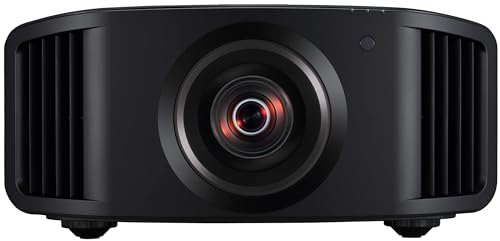
JVC DLA-NZ7 — The D-ILA Rival, Not an SXRD Machine
Begin with the boundary, stated as plainly as this guide can state it: the JVC DLA-NZ7 is not an SXRD projector. Its panel technology is D-ILA, JVC’s own reflective liquid crystal design — a cousin of SXRD in the LCoS family, a rival in the market, and a different product in every catalogue. It closes this guide because SXRD buyers cross-shop it more than any other machine, and a comparison conducted under correct labels serves those buyers better than an omission that leaves them to compare alone.
On its own considerable merits, the NZ7’s title is the most forthcoming in this guide: a D-ILA laser home theatre projector stating 2,200 lumens, native 4K with 8K e-shift technology, Frame Adapt HDR, two HDMI inputs, support for 8K at 60p and 4K at 120p, a gaming suitability claim, HDR10+, and the word discontinued. That final word matters commercially — a discontinued flagship trades in a different market, with support and availability questions a buyer must weigh — and its presence in the title is a credit to the listing’s honesty.
Native 4K with 8K e-shift is a hybrid claim worth parsing. The panel is native 4K, matching the Sony family’s founding claim; the e-shift layer constructs an 8K-addressable image above it, which serves the rare 8K sources its inputs accept and the marketing of its generation. A buyer should credit the native panel as the substance and the shifting as headroom, exactly as this guide credits pixel shifting elsewhere — by seating distance and content, not by badge arithmetic.
Frame Adapt HDR is JVC’s named answer to the tone mapping question, analysing content frame by frame, and it represents the philosophical divide in this class: two makers, two reflective panels, two processing tastes, each with devoted witnesses. The honest verdict of the wider world is that rooms, screens and calibration decide more than allegiance does, and a buyer at this level should audition both philosophies on the same night scene before converting. This guide’s loyalty is to the label, not to either panel.
Gaming support at 4K and 120p, printed in a cinema flagship’s title, acknowledges the modern dedicated room’s second life, and the two HDMI inputs set a practical boundary a rack-building buyer should note against their source count. Discontinued status, finally, converts the NZ7 into a value question: a flagship philosophy available on closeout and secondary terms, with the diligence about warranty and support that such terms demand.
- Panel: D-ILA — JVC’s reflective technology; this is not an SXRD panel
- Resolution: native 4K with 8K e-shift stated
- Light source: laser
- Brightness figure in the title: 2,200 lumens
- HDR: Frame Adapt HDR and HDR10+ stated
- Inputs: two HDMI stated; 8K at 60p and 4K at 120p support stated
- Status: discontinued, per title
Strengths
- The most completely specified title in this guide, including its discontinued status.
- Native 4K D-ILA panel with Frame Adapt HDR offers the rival philosophy at full strength.
- Stated 4K at 120p support serves the gaming side of a dedicated room.
Trade-offs
- It is not an SXRD machine, so it cannot satisfy a buyer committed to Sony’s panel.
- Discontinued status raises warranty and support questions to settle before purchase.
- Two HDMI inputs may constrain a large source rack without a switch or receiver.
Best for: a dedicated-room buyer cross-shopping the two LCoS philosophies on merit and demonstration.
Not suited for: an SXRD loyalist, since the NZ7’s D-ILA panel is a different technology by design.
Every family is defined partly by its great rival, and the NZ7 — labelled correctly, credited fully — is the comparison that makes the SXRD choice an informed one rather than a tribal one.
The NZ7 also reframes what flagship means in this guide’s terms. Its title spends words the Sony titles save — lumens, inputs, formats, status — and the contrast in listing styles mirrors the contrast in sales channels: one maker selling through specification, the other through consultation. A buyer fluent in both styles can extract full value from either; a buyer fluent in neither should bring a dealer they trust and let the demonstration decide.
Comparison Table
| Pick | Headline facts from its listing title | Position |
|---|---|---|
| Sony VPL-XW5000ES | Native 4K SXRD panel, laser, black | The modern line’s first step |
| Sony BRAVIA Projector 7 | Native 4K SXRD panel, laser, white; model VPL-XW5100ES | Current badge, first step |
| Sony BRAVIA Projector 8 | Native 4K SXRD panel, laser, black; model VPL-XW6100ES | Current badge, higher step |
| Sony VPL-XW6000ES | Native 4K SXRD panel, laser, black | Established badge, higher step |
| Sony VPL-HW45ES | Three SXRD imagers, 1080p, 1,800 lumens, 3D | The lamp-era ancestor |
| JVC DLA-NZ7 | D-ILA panel — not SXRD — native 4K, 8K e-shift, 2,200 lumens, discontinued | The LCoS rival |
Read down the middle column and the family’s discipline becomes visible: Sony prints its panel and its light source and withholds nearly everything else, while the rival prints almost everything including its own discontinuation. Neither habit is a verdict on the machines; both are instructions for how each should be bought.
How to Choose an SXRD Projector
Start with the room, because this class forgives nothing. Screen size, throw distance, seating position and — above all — light control decide which step of the line a buyer belongs on, and none of those answers appears in any title here. A buyer should arrive at the family with the room measured and treated, or with a credible plan to treat it, because SXRD’s native contrast is a quality that ambient light taxes more cruelly than any other: the better the blacks, the more visible their dilution.
Choose the step by documented figures, obtained in the dealer conversation the titles keep pointing toward. Brightness against screen size, lens range against throw, processing features against the library’s formats — those comparisons, in writing, are how the XW5000ES is separated from the Projector 8 in practice. A buyer who cannot obtain the figures should delay rather than guess, because at this level the wrong step is an expensive decade.
Decide the naming question last and cheaply. Badge generations are marketing seasons; model codes are engineering lineage. The Projector 7 is an XW5100ES and the Projector 8 an XW6100ES, and a buyer who shops by code — comparing code against code across channels and model years — will never pay a novelty premium or dismiss a current machine for wearing last season’s name.
Calibration budgeting belongs in the step decision as well. A professional calibration costs a fraction of a step upgrade and routinely delivers a larger visible improvement, because it aligns the machine to the actual screen, the actual room and the actual sources rather than to a showroom’s assumptions. Buyers torn between steps should price the lower step plus calibration against the higher step alone; the arithmetic surprises most people who run it.
Finally, hold the rival honestly in the process. Audition the D-ILA philosophy beside the SXRD one if the budget allows the comparison, on the same screen and the same scenes, and let the room arbitrate. Allegiance chosen by demonstration survives buyer’s remorse; allegiance inherited from forums rarely does.
What Makes SXRD Different From Other LCoS Panels?
LCoS is the family name — liquid crystal on silicon, a reflective architecture in which light bounces off a mirrored panel rather than passing through it or reflecting off mirrors alone. SXRD is Sony’s implementation of that idea, and D-ILA is JVC’s, and the two have been refined in parallel for decades with different priorities in processing, optics and taste. The shared inheritance explains the family resemblance buyers notice: reflective panels are prized for smooth, filmlike images and deep native contrast, without the pixel grid asserting itself.
Panel ageing is the long-horizon question both technologies invite. Reflective panels have earned their longevity reputation across decades of cinema and home installations, and a buyer planning a ten-year room should ask each maker’s channel about panel warranty terms with the same seriousness they bring to the light source. The answers belong in the purchase file beside the calibration report.
The practical consequence for a buyer is that SXRD-versus-D-ILA is a contest of implementations, not of categories. Both projectors in that comparison deserve the same room, the same screen and the same calibration seriousness, and the decision properly belongs to demonstration. What this guide insists on is only the labelling: the technologies are cousins, the products are rivals, and neither is the other.
Does Native 4K Matter at Cinema Seating Distances?
It matters most where the image is largest and the seating closest — the front rows of ambitious rooms, and any setup where viewers sit nearer than the classic ratios assume. At those geometries, a native panel’s full-time pixel fidelity is a real, visible asset, and it is the claim four titles in this guide print in identical words. At longer distances with film content, the gap between native and well-executed shifting narrows considerably, which is why the wider market’s shifted machines remain credible.
The filmmaker’s answer is therefore geometric rather than tribal: measure the screen, measure the seats, and let the ratio speak. Buyers whose rooms press the ratio should weight the native claim heavily; buyers in gentler geometries may find the step, the lens and the room itself offering more visible returns than the panel’s construction. Either way, the claim’s presence in the title makes the conversation possible, which is more than vague 4K wording allows.
Should You Still Buy a 1080p SXRD Projector?
Only with a library that agrees. A household whose shelves are broadcast recordings, DVDs, early Blu-rays and 3D discs will find the HW45ES’s panel showing that material at its native best, in a dark room, with the family’s characteristic contrast. The used market’s pricing of such machines reflects their era, and a knowledgeable buyer can assemble a genuinely cinematic 1080p room around one for a fraction of the modern line’s commitment.
The counter-case is equally plain: a household buying new 4K discs and streaming in 4K today will outgrow the ancestor immediately, and its lamp-era running costs will tax the saving that justified it. The HW45ES is a connoisseur’s answer to a specific question about a specific library, and it should be bought by people who can state that question in one sentence.
Common Mistakes When Buying an SXRD Projector
Confusing the rival for a member is the mistake this guide was written to prevent. D-ILA and SXRD are different panels from different makers, and a buyer who orders the JVC believing they have bought into Sony’s line — or who dismisses it for not being SXRD when they meant to buy the best LCoS picture — has been failed by somebody’s labelling. Read the panel line of every title first.
Buying the step by badge rather than by documentation follows closely. Four modern titles here print nearly identical words, and the differences that justify their steps live in specification sheets and demonstrations. A buyer who pays for a higher step without seeing its figures has purchased a numeral, and numerals project nothing.
Starving the room to feed the projector is the expensive classic of this class. SXRD contrast in an untreated white room is a talent in exile; the same budget split between a lower step and blackout, paint and a proper screen routinely produces the better picture. The machine is the final component of a room, and it should be bought in that order.
Neglecting the used-market diligence on older or discontinued machines completes the set. Lamp state and hours on the ancestor, warranty and support terms on the discontinued NZ7, panel health on any second-hand reflective projector — these are the purchases’ real conditions, and they are settled by questions asked before money moves, not by discoveries made after.
Final Recommendation
Enter the modern line at the step your room’s measurements justify: the XW5000ES or its BRAVIA-badged relation, the Projector 7, for the classic dedicated room; the XW6000ES or the Projector 8 where screen size and ambition are documented to demand the step. Keep the ancestor for the 1080p library it still flatters, and keep the NZ7 in the process as the honestly labelled rival whose demonstration will either confirm the SXRD choice or overturn it — both outcomes being victories for the buyer.
Whichever panel wins the room, the purchase completes itself in calibration and darkness. An SXRD machine, aligned in a treated room and fed material it was built for, delivers the particular pleasure this technology has promised for decades: an image that feels less projected than revealed, night after night, with the laser’s quiet permanence underneath it all.
Hospitality is the final, unlisted specification of a dedicated room: the best seat is given away, the calibration is checked before guests arrive, and the machine’s owner becomes a projectionist in the old, honourable sense. SXRD rooms tend to produce that kind of host, because the technology’s pleasures are communal ones — contrast is a thing an audience feels together, in the held breath of a dark scene, in a room that has gone properly quiet.
Frequently Asked Questions
Is the JVC DLA-NZ7 an SXRD projector?
No. The NZ7 uses JVC’s D-ILA panel, a different implementation of reflective LCoS technology. It is included in this guide as the principal rival that SXRD buyers cross-shop, and it is labelled as a rival in its heading, badge, spec box and verdict.
What is the difference between the BRAVIA Projector 7 and the XW5000ES?
Their titles state the same core — native 4K SXRD, laser — while the Projector 7 carries the newer BRAVIA badge, a white finish in this listing, and the model code VPL-XW5100ES against the XW5000ES. The step between them must be priced from manufacturer documentation and demonstration, since neither title prints brightness or lens figures.
Why do the Sony titles print no brightness figures?
Because these models are sold substantially through cinema and dealer channels, where output is matched to a specific screen during consultation. The spec boxes in this guide record the omission rather than borrowing figures, and buyers should obtain the documented output for their screen size before ordering.
Is the VPL-HW45ES still worth buying?
For a 1080p and 3D library in a darkened room, bought with lamp-era diligence about hours and consumables, yes — its three SXRD imagers still deliver the family’s characteristic picture at that resolution. For a modern 4K library it is outmatched by every laser model above it in this guide.
Which finish should I choose, black or white?
Match the ceiling, not the catalogue. A dedicated dark room wants the black cabinet of the XW5000ES, the Projector 8 or the XW6000ES to disappear overhead; a lighter media room may prefer the BRAVIA Projector 7’s white finish as a deliberate object. Confirm the finish on the specific listing, because the same model family sells both.
Does discontinued mean the NZ7 should be avoided?
Not automatically. It means warranty, support and availability terms become part of the purchase price’s meaning, and should be confirmed in writing. A discontinued flagship bought with open eyes can be the value pick of this entire guide.
A closing word about patience, which this class rewards more than any other in the projector world. Dedicated rooms are built in seasons: the screen one year, the treatment the next, the machine when the room is ready to honour it. The buyers who love their SXRD projectors a decade later are almost always the ones who refused to rush that sequence — who let the room become worthy of the panel before the panel arrived, and who have been repaid every single evening since by an image that asks for nothing and gives the film back whole.
Keep the calibration report with the house documents, beside the screen receipt and the installer’s final measurements. Rooms outlive their owners’ memories, panels outlive their first calibrations, and the next person to love that room — a buyer, a child, a friend who inherits the Friday film night — will thank you for a folder that explains exactly how the picture was made perfect, and how to make it perfect again.
Related Guides
SXRD ownership continues into our filmmaker projector guide, where these panels’ colour arguments meet the wider cinema field, and our guide to projectors that can serve as a television, for households splitting their viewing between a cinema room and a daily screen.


