Our Top Picks
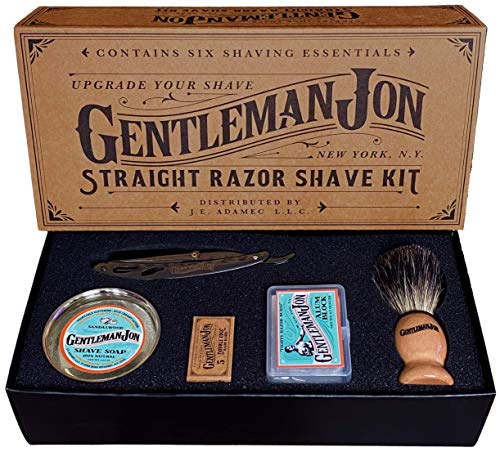
 Grandslam Straight Razor Shaving Kit for Men Badger7 Piece Set6.49 x 4.13 x 5.51 inchesCheck on Amazon


What's inside
- Anatomy of a set
- The blade
- The edge question
- Stropping as a daily craft
- Brush and lather
- The routine and upkeep
- Safety and household fit
- Buying checks for sets
- Scales, pivots and the parts nobody photographs
- Lather troubleshooting and skin comfort
- Cost, longevity and the honest case for a set
- Check prices on Amazon
- Second razors, shared bathrooms and realistic expectations
As an Amazon Associate I earn from qualifying purchases. This post may contain affiliate links at no extra cost to you.
A straight razor set promises a complete ritual in one box: razor, strop, brush, soap, stand, perhaps a mug, all matched and ready. Some boxes keep that promise. Others deliver a handsome razor and a brush, then quietly leave out the one item a carbon steel blade needs every single day it is used. Buying a set well means knowing what each part does, what happens when it is missing, and which published figures on steel, width and grind actually predict how a razor will behave on a face.
This guide reads straight razor sets the way a careful buyer should, through maker documentation, steel and hardness figures published by manufacturers, honing guidance issued by sharpening suppliers, and the contents lists printed on set packaging. It gives practical guidance for readers who shave with these tools, while being plain about its own basis: documents and research, not a shelf of razors handled at a desk.
Anatomy of a set
The razor at the centre
Every set is built around the razor itself, a folding tool with two main parts: the blade, and the scales, which form the handle and fold over the edge to protect it and the user when closed. A pivot pin joins them. The tang, the narrow extension of the blade behind the pivot, gives the fingers purchase while the razor is open. When judging a set photograph, look first at whether the razor is a true straight razor with a fixed blade that must be stropped and honed, or a shavette-style tool that takes replaceable half blades. Both appear in sets, both are legitimate, and they demand entirely different upkeep. A set that blurs that distinction in its description is telling you something about its seller.
The strop, and the set that omits it
A strop is a strip of leather, usually paired with a fabric side, used to realign and polish the blade edge before and after shaving. It does not sharpen in the way a stone does. It maintains. A straight razor edge is so fine that normal use bends and roughens it at a microscopic level, and stropping restores that edge for the next shave. Without a strop, a new razor’s edge declines within a handful of shaves, however good the steel is.
So a set that omits the strop leaves the buyer to source one alone, and that errand is not optional or postponable. It must arrive before the razor has been used more than a few times, it must be wide enough for the blade, and the buyer must learn the stroke before the edge suffers. Set listings that headline a low headline offer while omitting the strop are not cheaper in any honest accounting. Price the strop into the comparison, add the wait for a second delivery, and the apparent bargain usually dissolves.
Brush, soap, stand and mug
The brush whips soap or cream into lather and lifts beard hair while applying it. The soap or cream itself cushions the blade and softens hair. A stand holds razor and brush off wet surfaces, letting both dry and keeping the edge away from taps, bottles and curious hands. A mug or bowl gives lather a place to be built, though many shavers build lather on the face or in an ordinary bowl and treat the mug as the least vital piece in the box.
Judge these supporting pieces by material and size rather than shine. A brush knot that sheds hairs from the first week, named in many buyer reports across the category, turns every shave into picking bristles off lather. A stand that fits the included razor but no other teaches you its limits the day a second razor arrives. A soap puck in a scent the buyer dislikes will be endured daily or wasted entirely, so an unscented or mildly scented puck is the safer inclusion for a gift set.
What else sometimes appears
Some sets add a leather travel pouch, a small tin of blade oil, a styptic pencil, pre-shave oil or a spare set of scales. Of these, the pouch and the oil earn their place for carbon steel owners, and the styptic pencil earns its place for everyone. Pre-shave oil divides opinion; some faces love it, others find it adds a step without adding comfort. Extra scales are a hobbyist pleasure, useful only to a buyer happy to repin a razor or pay someone who can. A long accessory list should never distract from the core question of whether blade, strop and brush are each sound.
The blade
Carbon steel and stainless steel
Carbon steel is the traditional blade material, valued for taking a very fine edge and for the feedback it gives during honing. Its weakness is water. Carbon steel rusts, and it can begin to spot within hours if a blade is put away damp or stored in humid bathroom air. Owners of carbon razors dry blades carefully, oil them for storage and accept that vigilance as part of the craft. In return, many experienced shavers find carbon edges easier to hone keen and smoother in use, a judgement repeated across maker literature and honing guides.
Stainless steel trades a measure of that honing ease for calm. A stainless blade shrugs off a damp morning, tolerates a forgotten wipe and suits a buyer whose bathroom steams daily and whose storage options are limited. Stainless can be harder work on stones, taking longer to hone, and some published honing guidance notes that it may need a slightly different touch to reach the same keenness. For a first set bought by someone still building the drying habit, stainless often proves the forgiving choice. For a buyer who enjoys maintenance as ritual, carbon remains the classic path.
Widths: 5/8 and 6/8
Blade width is measured from spine to edge, in inches, and the two sizes that dominate sets are 5/8 and 6/8. A 5/8 blade is lighter, nimbler around the nose and upper lip, and easier for a beginner to see past while learning angles. A 6/8 blade carries more weight, holds more lather before needing a rinse, and steadies some hands through a stroke by its own momentum. Larger widths exist, as do smaller, but sets aimed at general buyers settle on these two for sound reasons.
Hand size and beard pattern should guide the pick. Coarse, dense growth often pairs well with the heft of a 6/8. Fine growth and detailed work around a moustache or beard edge often suit a 5/8. Neither width shaves closer by itself; closeness comes from edge condition and technique. A listing that presents width as a closeness dial is selling, not informing.
Points: round, square and French
The point is the shape of the blade’s front end, and it changes both safety and precision. A round point curves the corner away, forgiving a stray movement and sparing the skin the tiny nicks a sharp corner delivers. It is the sensible default for a first razor. A square point ends in a distinct, sharp corner that traces crisp lines around facial hair and demands respect; that corner is also the part most likely to catch an ear or a nostril during an unsteady pass. A French point curves in an arc with an angled tip, prized for detail work and for its looks, and it sits between the other two in forgiveness while asking the most care during stropping near the tip.
Beginners sometimes choose a square point for its handsome profile and spend their first month collecting small corner nicks. The published guidance from most makers steers new shavers to round points, and that advice is worth following even when the square point photographs better.
Grinds: full hollow, half hollow and wedge
Grind describes how the blade’s sides curve from spine to edge. A full hollow grind is ground thin and concave, light on the face, loud in feedback, singing faintly as it cuts hair, which is why such blades are often called singing razors. That thinness makes the edge flexible and keen, and also more delicate during honing and stropping. A half hollow grind leaves more metal behind the edge, giving a sturdier feel, quieter cutting and a blade many beginners find calmer. A wedge grind is nearly flat-sided and heavy, ploughing through coarse growth with authority, rare in modern sets and prized by a minority who love its weight.
Grind interacts with beard type. Fine to medium growth and a learner’s hand suit full or half hollow. Very coarse growth can make a full hollow edge feel skippy, where a half hollow’s extra mass settles the stroke. Honing documents also note that heavy wedge grinds take longer on stones simply because more metal meets the surface. A set description that names the grind is a good sign; one that hides it leaves a defining trait to chance.
Hardness figures and edge retention
Makers publish hardness for some blades, usually on the Rockwell C scale, with many razor steels falling in the high fifties to low sixties. Higher hardness generally supports an edge that holds longer between honings, because the steel resists deformation. It can also make honing slower and, if pushed too far, leave an edge prone to micro-chipping rather than smooth wear. Lower hardness hones readily and forgives clumsy stropping angles, at the cost of more frequent returns to the stone.
Read hardness as one factor among several, never as a score. Two blades at the same published hardness can behave differently because grind, heat treatment and edge finishing differ. What a buyer can fairly conclude from a published figure is the maker’s intent: a blade aimed at long edge life, or a blade aimed at easy maintenance. Sellers who quote hardness without naming the scale, or who promise that a figure guarantees a year without honing, are stretching a real measurement into a slogan.
The edge question
Factory edges and professionally honed edges
Most razors leave a factory with an edge that is sharp by ordinary standards and unfinished by shaving standards. Factory edges are formed for consistency and safe handling in transit, and many will drag, skip or demand pressure on a first shave. A professionally honed edge, by contrast, has been taken through a full progression of stones or films by a person who finishes blades for shaving, then stropped and checked. The difference on the face is not subtle. A honed edge cuts hair with the weight of the blade alone; a dull one invites the hand to push, and pushing is where irritation and cuts begin.
Some sellers hone each razor before dispatch and say so plainly, naming the process or the person. Others ship factory edges inside sets whose other pieces are excellent. Neither approach is dishonest by itself. Trouble starts when a buyer assumes a set is ready to shave with on arrival and blames their own technique for a miserable first week that the edge caused.
What shave ready means, and why it shifts
The phrase shave ready carries no single enforced standard, and different sellers load it with different meanings. To one seller it means honed by hand, stropped and genuinely fit for a comfortable shave. To another it means the factory edge passed a paper or arm-hair check at a warehouse bench. Both use the same two words on the listing. Buyers should look for the detail behind the claim: who honed it, on what progression, and whether the seller will re-hone a blade that arrives below standard. A seller who answers those questions in the product description has usually done the work. A seller who repeats the phrase in larger type has usually done the marketing.
Households comparing everyday carry and charging gear meet a cousin of this problem in listings such as best 5 port chargers, where one word on a box can describe very different real performance, and the specification sheet, not the slogan, settles what a buyer is getting.
Stone and film progressions in honing documents
Honing guidance published by stone and film suppliers follows a shared logic. A coarse stage, often around one thousand grit, sets the bevel, the two flat facets that meet at the edge. Middle stages, commonly in the four to eight thousand range, refine scratches and build keenness. A finishing stage, at ten thousand grit and beyond, polishes the edge for comfort. Lapping film follows the same staircase in microns rather than grit numbers, laid on a flat plate, and suits owners without room for a bench of stones.
Two lessons from those documents matter to set buyers. First, honing is a system, not a single magic stone; a set that includes one fine finishing stone gives an owner edge maintenance, not full honing from dull. Second, pressure ruins more edges than grit choice ever does. Published progressions repeat the same counsel: light strokes, even contact, patience at the bevel-setting stage, because every later stage only polishes the geometry the first stage built.
Learning to judge an edge
New owners need a way to judge an edge without using their face as the instrument. Honing literature describes several checks, each imperfect. Hanging hair checks, where a strand is drawn across the edge, suggest keenness when the hair severs cleanly, though hair type skews results. Arm-hair shaving at skin level, done carefully on a forearm, gives a rougher signal. The thumbpad check, taught in many guides, reads the edge’s bite through a moistened thumb moved across, never along, the edge, and it belongs in the hands of someone who has been shown the motion properly.
The honest signal remains the shave itself, performed with good lather and no pressure. An edge that tugs on a well-prepared first pass is not ready, whatever the listing claimed, and the correct response is honing or a return to the seller, not a firmer hand.
Stropping as a daily craft
Hanging strops and paddle strops
A hanging strop is a length of leather with a hook or handle at one end and a grip at the other, hung from a hook and pulled taut during use. It offers a long stropping surface and a supple feel that experienced shavers love. A paddle strop mounts leather on a flat wooden paddle, giving a firm, table-stable surface that many beginners control more easily, since tension is built in and cannot sag. Paddles travel better and store in a drawer. Hanging strops need a fixing point at the right height and room to swing the blade.
Sets include both kinds. A wide hanging strop, around three inches across, lets the whole blade length sit on the leather in each pass for many blade widths. A narrower strop demands an X-pattern, described below, which is a fine skill but one more skill in a beginner’s first month. Paddle strops in sets are often narrower still, and their leather may be pasted on one side, which changes its role from daily maintenance to edge refresh.
Leather, linen and the order of work
Most strops pair a fabric side, linen or cotton, with the leather side. The fabric comes first in the usual routine, warming and cleaning the edge and removing moisture and soap residue after a shave. Leather follows, for the finer realignment that prepares the edge. Published care guides commonly suggest a modest count on fabric and a longer count on leather, counted in round trips, though exact numbers vary by source and by blade. What does not vary is the insistence on rhythm over speed. Fast stropping impresses nobody and folds edges.
The stroke itself runs spine-first, always. The blade travels with its spine leading and its edge trailing, is lifted or rolled over the spine at the end of the pass, and returns the same way. Rolling over the edge, the natural instinct of a newcomer, cuts leather and dulls steel in one motion. Pressure stays feather-light. The strop does its work through contact and repetition, and a heavy hand bends the fine edge over, undoing the very alignment the routine exists to restore.
Tension and the X-pattern
A hanging strop must be pulled taut, firm enough that the leather barely gives under the blade. A slack strop wraps around the edge and rounds it, a fault honing guides call a dubbed edge, and the shave that follows tugs until the blade is honed again. Anchor height matters: roughly waist height lets the arm work level without shrugging, and a door hook that flexes will steal tension on every stroke.
On a strop narrower than the blade, the X-pattern moves the blade diagonally as it travels, so heel and point each receive contact across a full pass. The motion is a slow diagonal drift, heel leading on one pass and the pattern mirrored on the return. Beginners should learn it dry-eyed and unhurried, at walking pace or slower, because the pattern’s benefit vanishes when haste turns the drift into a scrape.
Nicked strops and paste compounds
Nearly every strop in daily use collects a nick sooner or later, usually at the far end where a tired hand flips the blade carelessly. Small nicks can be sanded smooth with fine abrasive paper and the leather fed with a suitable dressing, following the strop maker’s care notes. A deep cut near the middle of the stropping run is more serious, since the blade will cross it on every pass; such a strop may need its leather replaced, one reason better strops are sold with replaceable components.
Paste compounds, applied to a fabric side, a paddle or a separate balsa or leather bench strop, add fine abrasive action that refreshes a fading edge between honings. Chromium oxide is the classic mild option named in many care documents. Pastes belong on a dedicated surface, never on the daily leather, because once leather is pasted it can no longer serve as a clean finishing surface. Owners who paste their only strop discover that they have traded daily maintenance for occasional refresh and now own neither properly.
Brush and lather
Badger knots and synthetic knots
Badger hair is the traditional brush knot, prized for soft tips, strong water holding and the way its hairs splay into a plush face feel. Grades within badger vary widely, and maker descriptions use grade names that are not standardised across brands, so two brushes sold under the same grade word can feel quite different. Badger needs a gentle break-in, sheds a few hairs early, and should be rinsed and dried with care to protect the knot at its base.
Synthetic knots have improved to the point where many shavers now choose them on merit. Modern synthetic fibres whip lather quickly, dry fast, ask almost nothing in upkeep, suit travel and avoid animal products entirely, a deciding factor for many buyers. Their tips can feel springier than badger, and they hold water differently, letting it go more readily into a bowl. A set that includes a good synthetic brush is not a lesser set. For a first set in a humid home or a gym bag, synthetic may be the wisest inclusion of all.
Knot size, loft and handle fit
Knot size is the diameter where the fibres enter the handle, commonly in the low to mid twenty millimetre range for set brushes, and loft is the height of fibre above the handle. A larger knot builds lather fast and covers the face generously, while drinking more soap. A smaller knot gives precision and frugality. Loft shapes feel: a high loft splays softly, a low loft feels firmer and scrubs more. Handle length and weight decide whether the brush stays comfortable during a slow, careful lather, and a handle that slips when soapy is a design fault no knot quality can excuse.
Puck, cream and bowl lathering
Hard pucks reward patience. A damp brush, shaken to leave it wet but not dripping, loads soap from the puck with swirling strokes until the bristles carry a pasty load, then water is added a little at a time in a bowl or on the face until the lather turns glossy and holds soft peaks. Creams start softer and forgive a heavier hand with water, which is why many tutors hand a cream to a beginner for the first month. Croaps, the soft soaps between the two, split the difference.
Bowl lathering gives control and a visible read on consistency, helpful while learning. Face lathering gives extra beard preparation, since the brush works the skin and hair for longer. Both are correct. What fails is a rushed lather of any kind: big, airy bubbles that look impressive and collapse under a blade, leaving thin, dry foam where cushion should be. Good lather looks like softly whipped yoghurt, feels slick between finger and thumb, and rinses off the blade in a sheet rather than clinging in clumps.
Water, washing and softening the beard
Preparation decides more shaves than razors do. Beard hair softens with water and time; a shower, or a few minutes with a warm wet towel, or a thorough wash at the sink with warm water, all weaken hair far more than any blade upgrade can. Soap or a facial cleanser during that wash strips oil that would otherwise repel water from the hair shaft. Hot water is not required and very hot water dries skin; warm and patient beats scalding and quick.
Readers building a morning station often sort their charging at the same counter, and guides such as best 65 watt usb c chargers follow the same principle as lather building: the unglamorous preparation, done properly, decides whether the headline tool performs as promised.
The routine and upkeep
Angle, grip and stretching the skin
Reader guidance from maker manuals and long-established shaving tutors converges on a few steady points. Hold the razor with the scales folded back, fingers on the tang, thumb beneath, in a grip that feels balanced rather than clenched. Lay the blade nearly flat, then lift the spine until the edge meets the skin at roughly thirty degrees, about two spine widths of lift, and let short strokes do the work. Long strokes invite angle drift. The free hand stretches the skin gently behind the stroke, flattening the surface and lifting hair, and that stretching hand should stay dry or grip through a flannel so it does not slide.
Shave with the grain first. A second pass across the grain, after fresh lather, suits most faces once technique settles. Against-the-grain passes are an advanced choice, optional forever, and a close, comfortable two-pass shave outranks a raw three-pass shave on every measure that matters at breakfast. Rinse the blade under running water or swish it in the sink between strokes; wiping lather off on a towel risks the edge and the towel.
Rinsing, drying and the scales
After the shave, rinse the blade in hot water, then dry it with care, moving a soft towel or tissue along the spine and sides, away from the edge, never across it. Water left sitting inside the pivot and between the scales is the quiet source of most rust and most stained scales, so many care guides suggest a gentle blow through the pivot area and a few careful strops on fabric or leather to dry the edge itself. Never soak a straight razor. Soaking floods the pivot, swells some scale materials and invites corrosion in the one place a cloth cannot reach.
Scales made of wood, horn or other natural materials dislike prolonged wetting even more than steel does. Wipe them, dry them, and store the razor somewhere other than the steamiest corner of the room. Synthetic scales forgive more, yet the pivot still traps moisture regardless of scale material, so the drying habit matters for every razor in every set.
Oil, storage and rust spots
Carbon steel kept for more than a few days between shaves benefits from a whisper of suitable oil along the blade, applied thinly and wiped before the next use. Daily shavers in dry homes may never need it. Storage should be dry, ventilated and physically safe: a stand on a bedroom shelf, a pouch in a drawer, or a case, rather than a mug beside a steaming shower. Humidity is cumulative. A blade can survive one steamy week and spot during the second.
Rust spots, when they appear, announce themselves as orange freckles or dark stains near the edge or pivot. Light surface spots away from the edge can often be polished away with a mild metal polish on a cloth, worked gently and kept off the edge itself. Spots on or near the edge are a honing matter, since polishing there changes the edge geometry, and deep pitting is a job for a professional restorer or a lesson filed under experience. Prevention, in the form of drying and sane storage, costs a minute a day and saves all of that.
How often honing returns
With sound stropping, a well-honed edge serves for weeks to a few months of regular shaving before it needs a stone again, though beard coarseness, technique and steel all move that window. The signal is tugging that stropping and a pasted refresh no longer cure. Owners who learn to hone their own razors gain independence and a satisfying skill, at the price of stones or films and a learning curve during which edges may get worse before they get better. Owners who send blades out gain certainty and lose their razor for a spell, which is why many keep a second razor, a fact set makers know well and design gift sets around.
Safety and household fit
Storage away from children
A straight razor is an exposed blade that folds, and folding is not locking. Most razors have no lock at all; the scales cover the edge by friction and habit. In a home with children, the razor belongs in a locked box, a high locked cabinet or another place that small hands genuinely cannot reach, closed, every time, without exception for a quick rinse or a busy morning. The same rule covers the strop hook, spare blades for a shavette and any honing kit left mid-task. Accidents in this category do not come from shaving. They come from storage that relied on a child not noticing, not climbing or not being curious that day.
Visitors matter too. A razor left on a guest bathroom shelf invites an unfamiliar hand to pick it up by the wrong end. When guests stay, the razor moves to its locked home, and the set’s stand can hold the brush alone without anyone needing an explanation.
Travelling with a straight razor
Air travel rules in most jurisdictions bar straight razors and loose razor blades from cabin baggage, while safety razors and shavettes may travel only under conditions that vary by place and carrier, so current carrier and security guidance must be checked before any trip rather than assumed. Checked baggage, a rigid protective case and a blade wrapped and secured are the usual pattern for those who take a straight razor at all. Many owners instead travel with a different razor entirely and leave the straight at home, a choice that also removes worries about strops, humidity in hotel bathrooms and a honed edge meeting a suitcase drop.
Road travel is simpler: case closed, razor packed flat where it cannot spring open, strop rolled or hung on arrival rather than creased in a bag for days. A creased strop can sometimes be coaxed flat again under weight and dressing, but prevention is kinder.
Cuts, nicks and styptic basics
Small nicks are a normal part of learning, and basic care is uncomplicated. Rinse the cut with cool water, apply gentle pressure with a clean cloth, and use a styptic pencil or alum block, wetted, dabbed on the spot, to help stop minor bleeding; both sting briefly and work quickly on the small nicks this hobby produces. A cut that keeps bleeding, a deep cut, or any cut showing signs of infection needs proper medical attention rather than another dab of styptic, and readers should treat that boundary as firm. Anticoagulant medicines and some health conditions change bleeding risk, and anyone in doubt should talk to a clinician before taking up an open blade at all.
Technique prevents most cuts before first aid is needed. No pressure, short strokes, skin stretched, attention undivided, and never a pass over a spot whose lather has dried. A ringing phone can wait until the razor is closed. That single rule, razor closed before any distraction is answered, may be the most valuable sentence in any safety section ever printed for this craft.
Who should start with a shavette instead
A shavette-style razor folds like a straight razor and holds a replaceable half blade, giving a similar grip, angle and ritual with no stropping and no honing. It suits several kinds of beginner honestly and well: the reader unsure whether the ritual itself appeals, the reader whose living situation leaves no room for strops and stones, the reader who travels constantly, and the reader who wants to learn angle and stretching before investing in steel and its upkeep. Shavette edges are very sharp and less forgiving of pressure than a honed straight edge, so the learning is real, not diluted.
Barbers in many places use shavettes for hygiene reasons, since each client receives a fresh blade, and that professional pattern tells a home user something useful: the format is not a toy version of the craft. A set built around a good shavette, a sound brush and proper soap can be the right set, full stop, for a buyer who values the ritual and the result over the romance of maintaining an edge.
Readers who keep a shavette kit in a gym bag often pair it with compact charging gear reviewed in roundups like best affordable fast wireless chargers, since a small kit that dries fast, packs flat and needs no bench of extras suits a locker-room routine better than a full home station.
Buying checks for sets
Build the true comparison
Compare sets on a single written list: razor type, steel, width, point and grind; strop type and width, or its absence; brush knot material and size; soap or cream and its weight; stand and bowl; and whether the edge is honed before dispatch or factory-finished. Two sets that look alike in photographs separate quickly on that list. The set missing a strop must carry the price and effort of adding one. The set with a factory edge must carry the price of a first honing unless the buyer hones. Add those honest extras before comparing totals, and the ranking of most line-ups changes.
Questions a good seller answers in print
Strong listings volunteer specifics: steel type, hardness with its scale, grind, point shape, strop leather and width, knot diameter, and the name or method behind any shave-ready claim. Weak listings lean on atmosphere, heritage language and photographs of leather and wood. Heritage is pleasant and some makers have genuinely long histories, but a famous name on the box does not hone a blade, and a buyer should let the specification list outrank the story every time.
Returns and edge guarantees deserve a read before money moves. A seller who will re-hone or replace a razor whose edge falls short is underwriting their own claim. A seller whose terms make an opened set unreturnable, while promising readiness in the headline, is asking the buyer to carry all the risk of that promise.
Gift buying without guessing wrong
A straight razor set is a bold gift, wonderful for the person who has spoken about wanting one and awkward for the person who has not. Confirm the wish first. Then favour a round point, a 5/8 or 6/8 width, a complete kit with strop included, and an edge honed before dispatch, so the recipient’s first shave reflects the craft rather than a warehouse. Add a styptic pencil if the set lacks one. Skip surprise engraving until the recipient knows the razor suits their hand, since a returned engraved blade helps nobody.
For a recipient who travels weekly or shares a small bathroom, the shavette set is the kinder gift, and presenting it as a considered choice rather than a lesser one is both honest and accurate.
The first month, planned
New owners do better with a plan for the first month than with a pile of enthusiasm. Week one: cheeks only, with the grain, finishing the rest of the face with whatever razor was used before, while stropping slowly and badly lit corners are forgiven. Week two: add the neck with care and keep strokes short. Week three: a second pass across the grain where the skin tolerates it. Week four: the difficult terrain around chin and mouth, at a calm time of day, never in a rush before an event. This graduated pattern appears in tutor guidance across many sources because it works: each area is learned while confidence is fresh, and no single morning carries the whole learning curve at once.
Keep a brief note of what tugged, what nicked and what felt smooth. Patterns emerge within a fortnight, usually pointing at preparation or angle rather than at the blade, and a note stops a frustrated owner from blaming, honing or replacing a sound razor.
Scales, pivots and the parts nobody photographs
Scale materials and balance
Scales look like a style choice and behave like a handling choice. Wooden scales feel warm, weigh little and dislike soaking. Horn has a natural grain, a welcome heft and a sensitivity to dry heat, which can warp it over years if a razor lives beside a radiator. Modern resin and acrylic scales shrug off water, offer colours wood cannot, and can feel slick if their finish is highly polished. Metal scales add real weight at the handle end, shifting balance toward the hand, which some shavers enjoy on a heavy blade and others find clumsy on a light one.
Balance is read in the hand, not on a specification sheet, yet published weights still guide a remote buyer. A razor whose total weight suits its width, with the balance point near the pivot, tends to feel neutral during a stroke. A blade-heavy razor pulls the hand forward and can encourage pressure at the edge. A handle-heavy razor feels dead at the edge and tempts the fingers to steer from the tang too firmly. Set descriptions that publish total weight, rather than blade weight alone, give the buyer the figure that matters.
Pivot tension and centring
A well-set pivot opens with smooth resistance and holds the blade at the angle the hand leaves it, without flopping or grinding. The blade should also centre between the scales when closed, its edge clearing both sides. A blade that closes off-centre can strike a scale, chipping the edge and scarring the scale in one careless moment. Better sets are checked for centring before dispatch, and careful sellers say so. A buyer receiving an off-centre razor should contact the seller rather than forcing the blade straight by hand, since pivot work involves pins that crack scales when handled without the right tools and touch.
Over months, pivots can loosen slightly with daily opening and closing. Some designs allow gentle adjustment by a knowledgeable hand or a professional. Most owners should treat pivot trouble as a service job. The cost is modest, the alternative is a cracked scale, and a razor out of service for a week returns safer than one repaired at a kitchen table with a hammer meant for picture hooks.
Lather troubleshooting and skin comfort
Thin, dry and vanishing lather
Most early shaving discomfort blamed on a blade is lather failure in disguise. Lather that vanishes on the face within a minute was built with too much air and too little soap. Lather that feels dry and drags needs water, added in small amounts and worked in, not sloshed. Lather that slides off wet skin in sheets may be too wet, a soup rather than a cushion, and more loading from the puck restores its body. Each fault has a fix measured in seconds, and learning those fixes improves every shave more reliably than any change of razor.
Hard water complicates the lesson. Mineral-heavy water resists lather building with many traditional soaps, producing a thinner foam and a scummy residue on blade and bowl. Cream formulas often cope better, and some shavers in hard-water homes keep a jug of softened or distilled water for lather alone. A set’s soap should not be judged harshly until it has been tried with decent water, since the same puck can perform like two different products in two different towns.
Razor burn, ingrown hairs and pressure
Razor burn is the skin’s complaint about friction, and friction comes from pressure, repeated passes over one spot, dry lather or an edge past its best. The remedies mirror the causes: lighten the hand, re-lather before any repeat pass, shorten the session rather than polish a stubborn patch raw, and strop or refresh the edge before blaming the soap. Ingrown hairs trouble some faces, particularly where hair curls tightly, and for those readers a single with-the-grain pass and gentle skin care may serve better than any pursuit of a glass-smooth finish. A straight razor’s single edge can suit such skin well, because one considered pass disturbs less than several hurried ones.
Aftershave choices belong to personal comfort rather than to set quality, yet a word helps. Alcohol-heavy splashes sting on a raw shave and can dry skin through winter. Balms without strong fragrance calm most faces and reveal, by how little they sting, how gentle the shave truly was. Let the balm be the report card. A shave that needs heavy soothing was not a good shave, whatever the mirror said.
Learning honing without ruining a good razor
Owners drawn to honing should learn on an inexpensive second razor bought for the purpose, not on the prized blade from a good set. Honing documents from stone suppliers describe tape on the spine to protect its finish during learning, consistent stroke counts per side, and frequent checks of the bevel under bright light, where a dull or uneven facet shows as a bright line. Progress feels slow for the first sessions and then arrives quickly, a pattern familiar from stropping itself.
Lapping film on a flat plate offers a tidy school for the skill: no stones to soak or flatten, a clear progression of grades, and a modest outlay. Whichever medium is chosen, the discipline is the same. Set the bevel fully before moving on, keep strokes light, and stop when tired. More edges are spoiled in the last ten impatient minutes of a session than in all the careful work before them.
Readers who charge a small travel kit at the same sink often favour the compact end of roundups such as best 20 dollar portable chargers, and the honing lesson mirrors that taste for simple systems: fewer pieces, each understood, beat a bench crowded with gear nobody has mastered.
Cost, longevity and the honest case for a set
A good straight razor, kept dry and honed as needed, can serve for decades and be handed on. Brushes wear out in years, strops in years to decades depending on nicks and care, and soap is consumed by design. A set should therefore be judged as a durable core wrapped in consumables. Money spent on the blade and strop keeps paying. Money spent on a grand mug pays once, in pleasure, which may still be worth it, as long as the buyer knows which kind of spending it is.
The case against a set is fragmentation. A buyer who already owns a beloved brush gains little from a second one bundled in. A buyer with a honing service they trust may prefer a factory-edge razor at a lower total and pay for honing locally. Sets serve the newcomer and the gift buyer best, because they gather compatible pieces and remove a dozen small decisions at the moment when the buyer knows least. Experienced owners usually assemble their stations piece by piece, and sets know it; that is why so many are written, priced and photographed for a first Christmas, a milestone birthday or a deliberate change of routine.
Whichever route a reader takes, the order of priorities stays constant. Edge first, strop second, lather third, and everything else after. A modest set that honours that order will out-shave a lavish set that reverses it, on the first morning and on the five hundredth.
Check prices on Amazon
Live listings for the shortlist in this guide are pulled from Amazon below, so prices and availability are always current at the moment you look.


Second razors, shared bathrooms and realistic expectations
Many owners buy a second razor within a year, and the reason is practical rather than greedy. One blade can rest while the other travels to a honing service, a coarse-growth day can meet a heavier grind while a lighter blade handles the rest of the week, and a learner gains a comparison that teaches faster than any article. Sets make a sensible second purchase for exactly this reason: the spare brush and strop that seemed redundant in a first kit become the travel kit, the guest kit or the parts that let one station live at home and another at a partner’s flat.
Shared bathrooms demand small diplomacy. A strop needs a hook, a stand needs counter room, and a honing film plate needs a drawer. Agreeing on that territory before a set arrives prevents the slow resentment of a razor station colonising a shelf that held someone else’s belongings. A compact set, honestly sized from its published dimensions, fits shared homes better than a grand one that must be unpacked and packed away daily, because a ritual that requires ten minutes of setup quietly stops happening.
Expectations deserve the same honesty. A straight razor will not make a first shave magical. It will probably make it slower, patchier and more interesting than the shave it replaces, and the closeness most owners boast about arrives over weeks as angle, lather and stropping settle into habit. Readers who can enjoy that learning curve tend to keep the craft for years. Readers who want a flawless result tomorrow morning should buy the shavette set, or none, and feel no failure in the choice.
Disclosure: everything in this guide comes from reading manufacturer specifications, steel and honing documents, care instructions and set contents lists, and from weighing those papers against one another; the razors, strops and brushes discussed were never held, stropped or used by anyone who wrote it, and the text claims no such experience. As an Amazon Associate we earn from qualifying purchases. Fold the blade away, hang the brush to dry, and let tomorrow’s lather be a little better than today’s.