Our Top Picks
 Spellbinders BetterPress Letterpress Machine for Cardmaking and Paper1.5 x 6.75 x 1.5 inchesCheck on Amazon
 Lounsweer Block Printing Press Linocut Hand Letterpress Machine10.43 x 10.04 x 4.72 inchesCheck on Amazon


What's inside
- Three machine families, explained clearly
- Pressure, rollers, felt and height adjustment
- Formats: A5, 6 inch and 9 inch openings
- Printing Press, Basic Etching Machine, Letterpress Machine, All Metal Structure, Durable Professional Printing Machine for Monochrome Printing (B0CQF2MS7N)
- Spellbinders BetterPress Letterpress Machine for Cardmaking and Paper Crafts BP-001 (BetterPress Letterpress System) (B0GR232C26)
- Zhehao 3 Pack A5 Linocut Printing Press Machine, Hand Lever Press Machine with Rubber Roller & Felt Pad Adjustable Height for Linocut (B0G8YDTZ3J)
- Lounsweer Block Printing Press Linocut Hand Letterpress Machine, Adjustable | Steel Frame with Adjustable Height (B0G255J3S1)
- 6inch Manual Die Cutting Machine Kit, A5 Embossing Machine with Beginner Accessories for Scrapbooking Starter, Cardmaking, Paper Crafts (B0CQG8WFJ7)
- Joelver Maker Manual Die Cutting Machine, 9″ Opening, Scrapbooking Machine Starter kit (B0CQJLH1LD)
- How to choose the right press or cutting machine
- Common mistakes with letterpress and hand press machines
- Setup, use and care
- Deeper practical considerations for hand printing sessions
- Disclosure
- Check prices on Amazon
- Conclusion
As an Amazon Associate I earn from qualifying purchases. This post may contain affiliate links at no extra cost to you.
The phrase letter press printer covers several different machines in online listings, and buying the wrong family is the most common disappointment in this category. A true letterpress system inks a plate and presses it into paper. A linocut hand press squeezes a carved block against paper with a lever, a roller or both. A manual die cutting machine pushes dies and embossing folders through a roller gap. All three make cards and paper crafts, but they do different jobs, and this guide keeps those jobs separate while comparing six machines using only the details published in their titles.
Sizes in this group are stated as A5, as 6 inch and as a 9 inch opening, and those figures describe the working width or format a sheet or plate must fit, not the overall footprint of the machine on the table. That distinction matters when a craft desk is small or when an existing collection of dies, folders and blocks must fit the new machine.
Three machine families, explained clearly
Readers who also print finished cards and inserts on a conventional machine can compare the wider printer category in best 100 dollar printers before deciding how much of the workflow should be hand pressed and how much should be digitally printed.
Pressure, rollers, felt and height adjustment
Pressure is the shared language of every machine in this guide, but the way pressure is created differs. A lever multiplies hand force. A roller gap applies pressure progressively as material passes through. A letterpress system applies pressure across a plate and paper pairing. Understanding which mechanism a title describes is the fastest way to predict whether a machine will suit carved blocks, letterpress plates, dies or embossing folders.
Formats: A5, 6 inch and 9 inch openings
A5 is a standard paper size widely used for cards and inserts, and two titles in this group use that format language. A 6 inch machine suits standard card fronts and many common dies and folders in that size range as a general category truth. A 9 inch opening accepts wider material than the smaller formats in this group, which can reduce the need to trim sheets before they pass through. None of these figures guarantees that a specific third-party plate, die or folder will fit, so the physical width and thickness of existing supplies should be measured before ordering.
For larger sheet work on a digital machine, best 11×17 color laser printers covers a completely different, office-scale approach that some craft sellers pair with hand finishing.
Printing Press, Basic Etching Machine, Letterpress Machine, All Metal Structure, Durable Professional Printing Machine for Monochrome Printing (B0CQF2MS7N)
The Printing Press, Basic Etching Machine, Letterpress Machine, All Metal Structure, Durable Professional Printing Machine for Monochrome Printing (B0CQF2MS7N) is described in its published title by an all metal structure, a durable professional positioning and a stated purpose of monochrome printing, with etching and letterpress language both present in the title. Those details define the family this machine belongs to and the kind of project it is positioned for, and they are the basis for the comparison in this section.
This is the broadest title in the group, so its best use is single-colour work where the metal construction is the priority. Keeping that point in focus helps a buyer avoid expecting a die cutting machine to ink a letterpress plate, or expecting a linocut press to cut intricate shapes without a die.
In practice, a session with this type of machine follows the same careful rhythm regardless of family. Prepare the plate, block, die or folder first. Prepare the paper second, cut or trimmed to a consistent size. Apply ink only where the process requires ink, and keep uninked die cutting work on a clean area of the table so paper stays free of stray colour. Make a first impression on scrap material from the same stack, judge the pressure and coverage, and only then move to the finished sheets.
Storage also shapes long-term results. Blocks and plates should be stored flat and clean, rollers should not rest under load for long periods, and small accessories from a starter kit should be kept together so the machine is ready to use without a search through craft drawers. A machine that is easy to set up again is a machine that gets used more often.
- Best suited role: projects that match the family named in the title, whether that is monochrome printing, letterpress cardmaking, linocut, block printing, die cutting or embossing.
- Check before ordering: the working format against your paper, blocks, plates, dies and folders, measured physically rather than assumed.
- Table note: allow clear space on both sides of the machine for material entering and leaving, especially for wider openings.
Spellbinders BetterPress Letterpress Machine for Cardmaking and Paper Crafts BP-001 (BetterPress Letterpress System) (B0GR232C26)
The Spellbinders BetterPress Letterpress Machine for Cardmaking and Paper Crafts BP-001 (BetterPress Letterpress System) (B0GR232C26) is described in its published title by the BetterPress Letterpress System name, the BP-001 model reference and a stated focus on cardmaking and paper crafts. Those details define the family this machine belongs to and the kind of project it is positioned for, and they are the basis for the comparison in this section.
This is the clearest true letterpress entry in the group because the system name itself is built around letterpress plates and inked impressions. Keeping that point in focus helps a buyer avoid expecting a die cutting machine to ink a letterpress plate, or expecting a linocut press to cut intricate shapes without a die.
In practice, a session with this type of machine follows the same careful rhythm regardless of family. Prepare the plate, block, die or folder first. Prepare the paper second, cut or trimmed to a consistent size. Apply ink only where the process requires ink, and keep uninked die cutting work on a clean area of the table so paper stays free of stray colour. Make a first impression on scrap material from the same stack, judge the pressure and coverage, and only then move to the finished sheets.
Storage also shapes long-term results. Blocks and plates should be stored flat and clean, rollers should not rest under load for long periods, and small accessories from a starter kit should be kept together so the machine is ready to use without a search through craft drawers. A machine that is easy to set up again is a machine that gets used more often.
- Best suited role: projects that match the family named in the title, whether that is monochrome printing, letterpress cardmaking, linocut, block printing, die cutting or embossing.
- Check before ordering: the working format against your paper, blocks, plates, dies and folders, measured physically rather than assumed.
- Table note: allow clear space on both sides of the machine for material entering and leaving, especially for wider openings.
Zhehao 3 Pack A5 Linocut Printing Press Machine, Hand Lever Press Machine with Rubber Roller & Felt Pad Adjustable Height for Linocut (B0G8YDTZ3J)
The Zhehao 3 Pack A5 Linocut Printing Press Machine, Hand Lever Press Machine with Rubber Roller & Felt Pad Adjustable Height for Linocut (B0G8YDTZ3J) is described in its published title by a pack quantity of three as stated in the title, an A5 format, a hand lever action, a rubber roller, a felt pad and adjustable height for linocut work. Those details define the family this machine belongs to and the kind of project it is positioned for, and they are the basis for the comparison in this section.
The roller and felt pad in the title mark this out as a relief printing press rather than an inked letterpress plate system. Keeping that point in focus helps a buyer avoid expecting a die cutting machine to ink a letterpress plate, or expecting a linocut press to cut intricate shapes without a die.
In practice, a session with this type of machine follows the same careful rhythm regardless of family. Prepare the plate, block, die or folder first. Prepare the paper second, cut or trimmed to a consistent size. Apply ink only where the process requires ink, and keep uninked die cutting work on a clean area of the table so paper stays free of stray colour. Make a first impression on scrap material from the same stack, judge the pressure and coverage, and only then move to the finished sheets.
Storage also shapes long-term results. Blocks and plates should be stored flat and clean, rollers should not rest under load for long periods, and small accessories from a starter kit should be kept together so the machine is ready to use without a search through craft drawers. A machine that is easy to set up again is a machine that gets used more often.
- Best suited role: projects that match the family named in the title, whether that is monochrome printing, letterpress cardmaking, linocut, block printing, die cutting or embossing.
- Check before ordering: the working format against your paper, blocks, plates, dies and folders, measured physically rather than assumed.
- Table note: allow clear space on both sides of the machine for material entering and leaving, especially for wider openings.
Lounsweer Block Printing Press Linocut Hand Letterpress Machine, Adjustable | Steel Frame with Adjustable Height (B0G255J3S1)
The Lounsweer Block Printing Press Linocut Hand Letterpress Machine, Adjustable | Steel Frame with Adjustable Height (B0G255J3S1) is described in its published title by block printing and linocut language, a hand press action, a steel frame and adjustable height. Those details define the family this machine belongs to and the kind of project it is positioned for, and they are the basis for the comparison in this section.
The steel frame and height adjustment are the defining published details, and they matter for thicker blocks and layered paper. Keeping that point in focus helps a buyer avoid expecting a die cutting machine to ink a letterpress plate, or expecting a linocut press to cut intricate shapes without a die.
In practice, a session with this type of machine follows the same careful rhythm regardless of family. Prepare the plate, block, die or folder first. Prepare the paper second, cut or trimmed to a consistent size. Apply ink only where the process requires ink, and keep uninked die cutting work on a clean area of the table so paper stays free of stray colour. Make a first impression on scrap material from the same stack, judge the pressure and coverage, and only then move to the finished sheets.
Storage also shapes long-term results. Blocks and plates should be stored flat and clean, rollers should not rest under load for long periods, and small accessories from a starter kit should be kept together so the machine is ready to use without a search through craft drawers. A machine that is easy to set up again is a machine that gets used more often.
Adjustable height, where a title names it, allows the press to accommodate blocks, plates and paper stacks of different thicknesses without forcing the mechanism. Manual die cutting machines use pressure to push a die through paper or to emboss a pattern into it, and that cutting action is distinct from printing even though the machines sit in the same craft category. Paper choice changes every result in this category, because thicker card absorbs an impression differently from thin paper and may need a different pressure setting or an extra packing sheet.
Registration, meaning the alignment of the design on the sheet, improves when the paper is placed against a consistent guide and the same placement routine is followed for every print in a run. Ink should be applied in thin, even layers for relief and letterpress work, because excess ink fills fine detail and produces a heavier, less crisp edge. Cleaning rollers, plates and blocks promptly after a session prevents dried ink from building up and changing the surface for the next project.
- Best suited role: projects that match the family named in the title, whether that is monochrome printing, letterpress cardmaking, linocut, block printing, die cutting or embossing.
- Check before ordering: the working format against your paper, blocks, plates, dies and folders, measured physically rather than assumed.
- Table note: allow clear space on both sides of the machine for material entering and leaving, especially for wider openings.
6inch Manual Die Cutting Machine Kit, A5 Embossing Machine with Beginner Accessories for Scrapbooking Starter, Cardmaking, Paper Crafts (B0CQG8WFJ7)
The 6inch Manual Die Cutting Machine Kit, A5 Embossing Machine with Beginner Accessories for Scrapbooking Starter, Cardmaking, Paper Crafts (B0CQG8WFJ7) is described in its published title by a 6 inch manual die cutting format, an A5 embossing description, beginner accessories and a starter positioning for scrapbooking, cardmaking and paper crafts. Those details define the family this machine belongs to and the kind of project it is positioned for, and they are the basis for the comparison in this section.
This machine belongs to the die cutting and embossing family, which shares the paper craft table with letterpress without being the same process. Keeping that point in focus helps a buyer avoid expecting a die cutting machine to ink a letterpress plate, or expecting a linocut press to cut intricate shapes without a die.
In practice, a session with this type of machine follows the same careful rhythm regardless of family. Prepare the plate, block, die or folder first. Prepare the paper second, cut or trimmed to a consistent size. Apply ink only where the process requires ink, and keep uninked die cutting work on a clean area of the table so paper stays free of stray colour. Make a first impression on scrap material from the same stack, judge the pressure and coverage, and only then move to the finished sheets.
Storage also shapes long-term results. Blocks and plates should be stored flat and clean, rollers should not rest under load for long periods, and small accessories from a starter kit should be kept together so the machine is ready to use without a search through craft drawers. A machine that is easy to set up again is a machine that gets used more often.
- Best suited role: projects that match the family named in the title, whether that is monochrome printing, letterpress cardmaking, linocut, block printing, die cutting or embossing.
- Check before ordering: the working format against your paper, blocks, plates, dies and folders, measured physically rather than assumed.
- Table note: allow clear space on both sides of the machine for material entering and leaving, especially for wider openings.
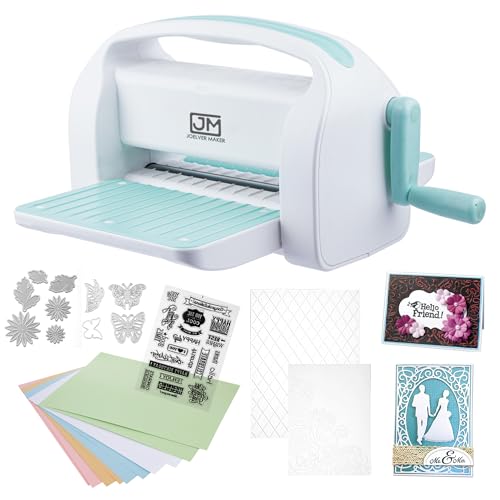
Joelver Maker Manual Die Cutting Machine, 9″ Opening, Scrapbooking Machine Starter kit (B0CQJLH1LD)
The Joelver Maker Manual Die Cutting Machine, 9″ Opening, Scrapbooking Machine Starter kit (B0CQJLH1LD) is described in its published title by a manual die cutting action, a 9 inch opening and a scrapbooking starter kit positioning. Those details define the family this machine belongs to and the kind of project it is positioned for, and they are the basis for the comparison in this section.
The 9 inch opening is the widest format stated in this group, which changes the size of material that can pass through the machine. Keeping that point in focus helps a buyer avoid expecting a die cutting machine to ink a letterpress plate, or expecting a linocut press to cut intricate shapes without a die.
In practice, a session with this type of machine follows the same careful rhythm regardless of family. Prepare the plate, block, die or folder first. Prepare the paper second, cut or trimmed to a consistent size. Apply ink only where the process requires ink, and keep uninked die cutting work on a clean area of the table so paper stays free of stray colour. Make a first impression on scrap material from the same stack, judge the pressure and coverage, and only then move to the finished sheets.
Storage also shapes long-term results. Blocks and plates should be stored flat and clean, rollers should not rest under load for long periods, and small accessories from a starter kit should be kept together so the machine is ready to use without a search through craft drawers. A machine that is easy to set up again is a machine that gets used more often.
- Best suited role: projects that match the family named in the title, whether that is monochrome printing, letterpress cardmaking, linocut, block printing, die cutting or embossing.
- Check before ordering: the working format against your paper, blocks, plates, dies and folders, measured physically rather than assumed.
- Table note: allow clear space on both sides of the machine for material entering and leaving, especially for wider openings.
How to choose the right press or cutting machine
Choose the family first and the brand second. If the goal is an inked impression pressed into card, look to the letterpress entries. If the goal is printing from a carved linoleum or wood block, look to the hand press entries with rollers, felt and height adjustment in their titles. If the goal is cutting shapes and embossing patterns, look to the manual die cutting entries and their stated opening sizes. Only after the family is settled does it make sense to compare frame material, format and kit contents.
Crafters who produce photographic inserts for handmade cards may also find best 12 x 12 photo printers relevant for the digital side of a mixed workflow, alongside the hand processes covered here.
Paper choice changes every result in this category, because thicker card absorbs an impression differently from thin paper and may need a different pressure setting or an extra packing sheet. Registration, meaning the alignment of the design on the sheet, improves when the paper is placed against a consistent guide and the same placement routine is followed for every print in a run. Ink should be applied in thin, even layers for relief and letterpress work, because excess ink fills fine detail and produces a heavier, less crisp edge.
Cleaning rollers, plates and blocks promptly after a session prevents dried ink from building up and changing the surface for the next project. Letterpress printing presses an inked, raised surface into paper so the design leaves both colour and a tactile impression, and that pressed-in feel is the quality most card makers are seeking from the process. Linocut and block printing work differently, because the carved block itself carries the ink on its raised surface and a press or roller transfers that image onto paper or fabric.
Manual die cutting machines use pressure to push a die through paper or to emboss a pattern into it, and that cutting action is distinct from printing even though the machines sit in the same craft category. Paper choice changes every result in this category, because thicker card absorbs an impression differently from thin paper and may need a different pressure setting or an extra packing sheet. Registration, meaning the alignment of the design on the sheet, improves when the paper is placed against a consistent guide and the same placement routine is followed for every print in a run.
Common mistakes with letterpress and hand press machines
- Expecting a die cutting machine and a letterpress machine to be interchangeable, when one cuts and embosses and the other inks and impresses.
- Applying too much ink and filling the fine lines of a plate or block, which produces a blurred impression instead of a crisp one.
- Using paper that is too thick or too thin for the format without a scrap trial first, wasting finished card stock.
- Forcing material through a roller gap or under a lever when the height or sandwich thickness is wrong, risking damage to the machine and the project.
- Leaving ink to dry on rollers, felt, plates and blocks, making the next session harder to clean and less even.
- Assuming a stated A5, 6 inch or 9 inch format automatically fits every existing die, folder or plate without measuring it.
Paper choice changes every result in this category, because thicker card absorbs an impression differently from thin paper and may need a different pressure setting or an extra packing sheet. Registration, meaning the alignment of the design on the sheet, improves when the paper is placed against a consistent guide and the same placement routine is followed for every print in a run. Ink should be applied in thin, even layers for relief and letterpress work, because excess ink fills fine detail and produces a heavier, less crisp edge.
Cleaning rollers, plates and blocks promptly after a session prevents dried ink from building up and changing the surface for the next project. Letterpress printing presses an inked, raised surface into paper so the design leaves both colour and a tactile impression, and that pressed-in feel is the quality most card makers are seeking from the process. Linocut and block printing work differently, because the carved block itself carries the ink on its raised surface and a press or roller transfers that image onto paper or fabric.
A hand lever press gives controlled, repeatable pressure across a block, which helps produce more even prints than pressing entirely by hand with the back of a spoon or a baren. A felt pad and a rubber roller, where a title names them, cushion the block and spread pressure, and they should be kept clean so old ink does not transfer onto the next sheet. Adjustable height, where a title names it, allows the press to accommodate blocks, plates and paper stacks of different thicknesses without forcing the mechanism.
Setup, use and care
Set the machine on a stable, level table with enough clearance for the lever swing or for material to pass through without catching on storage boxes. For a press, set the height for the block or plate and paper combination and confirm the setting on scrap. For a die cutting machine, build the layer combination recommended for cutting or for embossing as a general category practice, and never force a combination that resists the handle. Work in a consistent order, keep finished prints in a flat stack away from wet ink, and allow impressions to dry before stacking them face to face.
Double-sided digital printing for card inserts and instruction sheets is a separate consideration, covered in best 2 sided printers for readers building a combined hand and digital setup.
Manual die cutting machines use pressure to push a die through paper or to emboss a pattern into it, and that cutting action is distinct from printing even though the machines sit in the same craft category. Paper choice changes every result in this category, because thicker card absorbs an impression differently from thin paper and may need a different pressure setting or an extra packing sheet. Registration, meaning the alignment of the design on the sheet, improves when the paper is placed against a consistent guide and the same placement routine is followed for every print in a run.
Ink should be applied in thin, even layers for relief and letterpress work, because excess ink fills fine detail and produces a heavier, less crisp edge. Cleaning rollers, plates and blocks promptly after a session prevents dried ink from building up and changing the surface for the next project. Letterpress printing presses an inked, raised surface into paper so the design leaves both colour and a tactile impression, and that pressed-in feel is the quality most card makers are seeking from the process.
Linocut and block printing work differently, because the carved block itself carries the ink on its raised surface and a press or roller transfers that image onto paper or fabric. A hand lever press gives controlled, repeatable pressure across a block, which helps produce more even prints than pressing entirely by hand with the back of a spoon or a baren. A felt pad and a rubber roller, where a title names them, cushion the block and spread pressure, and they should be kept clean so old ink does not transfer onto the next sheet.
Adjustable height, where a title names it, allows the press to accommodate blocks, plates and paper stacks of different thicknesses without forcing the mechanism. Manual die cutting machines use pressure to push a die through paper or to emboss a pattern into it, and that cutting action is distinct from printing even though the machines sit in the same craft category. Paper choice changes every result in this category, because thicker card absorbs an impression differently from thin paper and may need a different pressure setting or an extra packing sheet.
Deeper practical considerations for hand printing sessions
Proofing is the habit that separates occasional success from repeatable results in every family covered by this guide. A proof is a first impression made on scrap material that matches the finished stock as closely as possible, and it reveals ink coverage, pressure and alignment before valuable card is committed. Keeping successful proofs, annotated with the ink, paper and setting used, builds a personal reference library that is more useful than general advice because it reflects the exact machine, materials and room conditions on the craft table where the work happens.
Paper grain and surface texture influence hand printing more than many beginners expect. Smooth card takes a fine letterpress impression cleanly, while heavily textured stock can break up solid areas and soften fine lines in a way that may be attractive for some designs and disappointing for others. Cutting paper so the grain runs consistently through a batch also helps sheets behave predictably under pressure. When a project mixes printed and die cut elements, preparing all the paper to its final size before printing begins keeps registration consistent and prevents a finished print from being trimmed off centre later.
Ink handling rewards patience. A thin film rolled out until it looks even and sounds faintly tacky will transfer more cleanly than a thick layer applied quickly, and adding ink in small amounts is easier than removing an excess that has already filled a plate or block. Different colours should be worked in a planned order, with the workspace cleaned between them when purity matters, or deliberately overlapped when a layered effect is the goal. Allowing each printed batch to dry flat, separated from the next batch, protects the surface of the work during its most vulnerable period.
Edition discipline helps when more than a handful of cards or prints are needed. Numbering the back of each finished piece lightly in pencil, recording how many acceptable impressions were produced, and setting aside seconds honestly rather than mixing them into the main batch all protect the quality of a set intended as gifts or for sale. Working in shorter, focused runs with breaks between them also keeps pressure and inking more consistent than a single long session in which tired hands gradually change the way a lever is pulled or a handle is turned.
Safety with manual machines is straightforward and worth stating plainly. Fingers should stay clear of roller gaps, lever paths and cutting edges, long sleeves and jewellery should be kept away from moving parts, and a machine should be operated on a surface where it cannot slide mid-action. Children who are invited to join a craft session need close supervision and tasks matched to their age, such as choosing paper colours or stacking dried prints, rather than operating a press or a cutting machine themselves. A calm, unhurried table is both safer and more productive.
Storage of finished work deserves the same care as storage of the machines. Prints and cards should be kept flat, dry and away from direct sunlight, with plain paper interleaved between inked surfaces when they must be stacked. Blocks should be cleaned and wrapped so their carved surfaces are not dented by other tools, plates should be kept separated so their raised designs are not scratched, and dies should be returned to their packaging or a dedicated folder so their cutting edges stay protected and easy to find.
Lighting at the craft table affects judgement of colour and coverage. A bright, neutral light positioned to the side of the work reveals uneven inking and missed areas that a dim overhead light can hide, and judging a proof under the light in which the finished card will most often be viewed gives a more honest preview. Photographing finished pieces for an online listing or a portfolio should be done only after the ink is fully dry, with the piece flat and the camera directly above it to avoid distortion.
Project planning ties these habits together. Listing the materials, the order of operations and the drying time before starting prevents the common situation in which printed sheets are ready but the inserts, envelopes or die cut elements are not. Building a small buffer of extra sheets into every batch absorbs the inevitable imperfect impressions without pressure to accept them. With that system in place, the manual machines in this guide become reliable tools for repeatable, personal work rather than occasional experiments.
Disclosure
This comparison is based on the published titles of the six machines and on general, widely understood principles of letterpress, relief printing and die cutting. As an Amazon Associate we earn from qualifying purchases. That means qualifying purchases made through links in this article may support this site, and the disclosure is included here in the interest of transparency about how the site is funded, separate from the craft guidance in the sections above.
Check prices on Amazon
Live listings for the shortlist in this guide are pulled from Amazon below, so prices and availability are always current at the moment you look.
Conclusion
Registration, meaning the alignment of the design on the sheet, improves when the paper is placed against a consistent guide and the same placement routine is followed for every print in a run. Ink should be applied in thin, even layers for relief and letterpress work, because excess ink fills fine detail and produces a heavier, less crisp edge. Cleaning rollers, plates and blocks promptly after a session prevents dried ink from building up and changing the surface for the next project.
A felt pad and a rubber roller, where a title names them, cushion the block and spread pressure, and they should be kept clean so old ink does not transfer onto the next sheet. Adjustable height, where a title names it, allows the press to accommodate blocks, plates and paper stacks of different thicknesses without forcing the mechanism. Manual die cutting machines use pressure to push a die through paper or to emboss a pattern into it, and that cutting action is distinct from printing even though the machines sit in the same craft category.
The best machine in this group is the one whose family matches the work: letterpress for inked, impressed type and motifs, a hand press for carved blocks, and a die cutting machine for shapes and embossed texture. Match the format to the materials already on the craft table, keep pressure and ink under control, and these simple manual machines will produce consistent, satisfying results project after project.