Our Top Picks




What's inside
- Start with the tag, not the machine
- Print technologies and what each one really offers
- Media materials, from flexible synthetics to metal and wood
- Weather resistance in honest, practical terms
- Throughput, print width, and the daily rhythm of a nursery
- Software, templates, and turning plant lists into tags
- Legibility outdoors: typography that survives real gardens
- Running costs that hide behind the purchase price
- Matching a printer to each growing setting
- Setup, calibration, and habits that prevent bad batches
- Durability planning across seasons and plant lifecycles
- Common mistakes and how experienced growers avoid them
- Portable printers, bench stations, and labelling on the move
- Check prices on Amazon
- A calm buying checklist before any money moves
As an Amazon Associate I earn from qualifying purchases. This post may contain affiliate links at no extra cost to you.
A plant tag looks simple until a whole bench of seedlings depends on it. One faded name, one cracked stake, or one label that peels away after the first watering can turn careful propagation records into guesswork, and that problem grows quickly when dozens of varieties share the same tray, shelf, or polytunnel bay. Plant tag printers exist to solve that quiet but persistent headache, producing legible, weather-tolerant identification exactly when plants are potted, moved, priced, or divided. Unlike a handwritten marker pen that varies with handwriting and fades unevenly, a printed tag delivers consistent type, repeatable layouts, and the option to add sowing dates, variety codes, care symbols, or inventory marks in the same pass. For a commercial nursery the benefit is speed and uniformity across thousands of pots. For a home grower the benefit is calmer organisation, fewer mystery seedlings in spring, and beds that can be planned rather than reconstructed from memory each season.
Some links in this guide may earn this site a commission if a reader later makes a purchase, and that possibility never decides which printer types get covered or how their trade-offs are described here. Coverage follows published specifications, media compatibility, and the practical needs of nurseries and gardeners, so a modest desktop unit and a heavy-duty bench model can both earn a place when each serves a different labelling job well. Readers should compare running costs and tag supplies for their own setting before buying, because the right choice depends far more on growing conditions than on any single headline feature.
The category is broader than it first appears. At one end sit compact thermal label printers that handle narrow adhesive labels and small pot tags, useful for seed trays and herb pots. In the middle are thermal transfer machines built for synthetic tag stock on rolls, with cutters that separate each tag cleanly during long production runs. At the other end are wide-format or flatbed-capable setups and adapted inkjet or laser printers that accept thicker sheets, hanging tags, or specialty media for retail display. Choosing among them starts with the tag itself rather than the printer, because tag size, material, and placement dictate print width, ribbon choice, and durability far more than brand preference ever will.
Start with the tag, not the machine
Every successful labelling setup begins with a physical object that must survive where the plant lives. A stake pushed into damp compost faces constant moisture from below, grit that abrades its surface, and handling each time a pot is lifted or rotated. A hanging tag on a young tree faces wind movement, rubbing against bark or stems, and direct sun on one side for months. An adhesive label on a smooth plastic pot faces curved surfaces, condensation in a greenhouse, and peeling forces whenever trays are stacked or washed. Picturing those stresses first makes printer selection much easier, because it reveals whether flexibility, stiffness, tear resistance, or surface grip matters most for a particular collection or crop.
Tag dimensions shape the decision just as strongly. Narrow tags suit seed rows and small herb pots where a wide stake would overwhelm the plant and disturb roots. Medium stakes, often used for perennials and bedding plants, leave room for a variety name plus a sowing or potting date without crowding the text. Larger display tags carry longer cultivar names, flowering colours, mature height notes, and retail information, and they need a printer with sufficient print width to avoid cramped sideways layouts. Growers who mix several tag sizes through the year should look for adjustable media guides, sensor settings that recognise gaps between tags, and software templates that switch formats without rebuilding every design from scratch.
Colour deserves a practical mention at this stage too. White and pale yellow tags remain popular because dark text reads clearly against them in bright light, while coloured tag stock helps staff sort varieties at a glance in a busy propagation house. Green tags blend into foliage for display gardens, black tags with white print create strong contrast for modern retail presentation, and orange or red tags often mark sale stock, trial plants, or plants needing attention. A printer that handles only one stock colour may still be perfect for a single-purpose operation, yet growers who colour-code by season, species, or destination usually need media handling that tolerates several roll types without constant recalibration.
Print technologies and what each one really offers
Direct thermal printing uses heat-sensitive media and no separate ink or ribbon, which keeps the machine simple and reduces consumable changes during busy potting weeks. That simplicity suits short-season labels, seed tray markers, and indoor propagation records that only need to stay legible for weeks or a few months. The trade-off sits in longevity, because heat-sensitive coatings can darken or fade with strong sunlight, high temperatures, and prolonged outdoor exposure. Manufacturer specifications for direct thermal media usually describe indoor or sheltered performance, so growers planning year-long outdoor identification should read those limits carefully rather than assuming every thermal tag behaves alike.
Thermal transfer printing melts ink from a ribbon onto the tag surface, and ribbon formulation changes the result dramatically. Wax ribbons are economical and produce crisp text on smoother stocks, though published guidance generally places them lower for abrasion and moisture resistance. Wax-resin blends improve durability for greenhouse and sheltered outdoor work, balancing cost against stronger resistance to handling and splashes. Full resin ribbons are the category’s durability leaders, bonding firmly to synthetic tags and resisting water, many chemicals, ultraviolet exposure, and rubbing far better than lighter formulations. The printer, ribbon, and tag stock must be compatible as a trio, because a premium ribbon cannot rescue a tag material that softens, cracks, or rejects the ink layer outdoors.
Inkjet and laser approaches occupy a useful niche, especially where colour graphics, logos, or photographic elements matter for retail presentation. Some nurseries print colourful display tags, bench signs, and promotional pot labels on adapted desktop machines using weather-resistant sheets. Laser toner tends to resist water well once fused, though thick or rigid tag sheets can challenge paper paths and fuser temperatures. Inkjet results vary widely with ink type, and pigment-based inks generally publish better water and light resistance than dye-based alternatives. Readers comparing office-style machines for occasional garden work may also find the discussion in best affordable wifi printers helpful for understanding connectivity and running-cost trade-offs beyond the greenhouse.
Print resolution influences more than beauty. Fine text for botanical names, which often include long Latin words and cultivar epithets in quotation marks, stays legible at smaller sizes when resolution is higher and print alignment is accurate. Barcodes and QR codes also benefit from clean edges, because a scanner in a stock area needs consistent contrast and quiet zones around the code. That said, resolution alone cannot compensate for poor contrast, glossy glare, or a typeface chosen too small for reading at arm’s length among wet foliage. Sensible layouts use generous letter spacing, avoid condensed fonts for critical names, and reserve tiny text for secondary details such as batch codes tucked near the bottom edge.
Media materials, from flexible synthetics to metal and wood
Synthetic plastic tags dominate commercial labelling for good reason. Polypropylene and similar materials bend without snapping, resist tearing when a stake is pushed into firm compost, and shrug off repeated watering that would soften paper or card within days. Their surfaces accept thermal transfer printing well when matched with the correct ribbon, and they remain readable through a full growing season in many settings described by manufacturers. Thickness matters within this family: thinner stock feeds smoothly and suits wrap-around pot tags, while thicker gauges stand upright in exposed beds and resist bending in wind or under the weight of wet soil clinging to the stake.
Rigid tags bring a different set of strengths. A stiff stake stays vertical in loose compost, presents text at a consistent angle for customers viewing a sales bench, and feels substantial in larger pots where a flimsy marker would disappear behind foliage. Rigidity can become a weakness in cold weather if a brittle formulation snaps during handling, so growers in frost-prone regions should check published temperature ranges and favour materials described as impact-resistant. Rigid hanging tags also protect printed faces slightly better when they hang flat against a pot rim rather than flexing and folding with every movement of the plant.
Aluminium and other metal tags appeal to gardeners who think in decades rather than seasons. Tree collections, rose gardens, and permanent perennial borders often use metal markers because the material itself resists rot, ultraviolet damage, and soil organisms indefinitely under normal garden conditions. Printing on metal usually involves specialised coated tags, embossing systems, or engraved plates rather than standard roll printers, so this route suits permanent collections more than fast-changing nursery stock. Paint-filled engraved letters remain readable even after surface oxidation, while printed metal-look synthetics offer a lighter compromise for growers who want the appearance without specialised equipment.
Wood and bamboo tags occupy the decorative, short-season corner of the category. They look at home in herb gardens, gift plants, and market stalls where natural materials reinforce the presentation, and they accept handwriting, stamping, and some printed transfers with charming if variable results. Moisture eventually swells, splits, or darkens most untreated wooden tags, and soil contact accelerates that process considerably. Growers who love the look can still use them sensibly for indoor plants, seasonal vegetables, or photographed displays, while keeping synthetic or rigid tags for records that must survive winter, storage, and repeated reuse across several crops.
Adhesive labels versus insert and hanging formats
Adhesive labels excel when pots, trays, or glass jars provide a smooth surface and plants move through production quickly. They apply fast, sit flat for scanning, and allow colour coding along a tray edge where stakes might crowd seedlings. Their weakness appears on textured pots, dusty surfaces, or containers washed and reused repeatedly, because adhesive performance drops when the bonding surface is rough or contaminated. Cold greenhouse mornings can also affect initial tack, so production guidance often recommends applying labels to clean, dry pots at moderate temperatures and pressing them firmly rather than relying on a quick slap-and-go motion during a rushed potting session.
Insert stakes remain the workhorse format for bedding plants, vegetables, and perennials sold in individual pots. The pointed end anchors the tag, the upper panel carries the name, and the whole unit moves with the plant from propagation bench to customer garden without extra string or clips. Hanging and loop tags serve shrubs, climbers, and young trees whose value depends on correct variety identification over several years. A loop that is too tight can damage growing stems, so thoughtful growers choose generous loop sizes, check them during the season, and replace restrictive ties before bark or cambium suffers. Each format asks slightly different things from a printer, especially around media thickness, hole placement, and whether a cutter or tear-off edge finishes the job.
Weather resistance in honest, practical terms
Outdoor durability is a system property, never a single specification. Ultraviolet light attacks inks, coatings, and the tag material itself, and it does so unevenly depending on orientation, shade, and season. A south-facing display yard in midsummer stresses a tag far more than a shaded propagation tunnel, even when both sites sit on the same nursery. Water arrives as gentle irrigation, driving rain, overhead misting, and condensation that forms overnight and creeps under label edges. Soil adds grit, microbial activity, and fertiliser salts that splash upward during watering. Any buying decision that weighs only one of those forces will disappoint somewhere in the growing calendar.
Published resistance figures help when they are read as comparisons rather than promises. Manufacturers describe ribbon and media combinations with terms covering water immersion, abrasion cycles, chemical exposure, and lightfastness under controlled conditions. Those controlled conditions rarely match a muddy allotment in November, yet they still reveal useful ordering: resin on synthetic stock sits at the durable end, wax on paper sits at the fragile end, and many greenhouse setups thrive happily in between. Owner reports add another layer, describing which combinations stayed readable after a winter outdoors or a summer of daily overhead watering, and patterns across many reports are more trustworthy than any single glowing anecdote.
Fading deserves special attention because it can destroy information while the tag itself looks perfectly intact. Black text on white synthetic stock generally retains contrast longest, since carbon-based black pigments resist light well and the pale background shows little change. Coloured inks, especially reds and light blues, tend to lose intensity sooner under strong sun, which matters for colour-coded systems that rely on hue as well as words. A robust approach prints the critical variety name in black regardless of decorative colour elsewhere on the tag, ensuring that even a faded accent panel never takes the essential identification down with it.
Temperature swings test tags in ways that summer-focused buying guides often overlook. Plastic that performs beautifully in June may stiffen in January, adhesives may loosen during a heatwave inside a closed polytunnel, and condensation followed by frost can work moisture into tiny edge gaps. Nurseries storing labelled stock outdoors year-round should favour media with published low-temperature flexibility and ribbons rated for outdoor exposure. Home gardeners in mild climates have wider freedom, though even a sheltered balcony can produce fierce reflected heat that shortens the life of heat-sensitive direct thermal prints left facing afternoon sun.
Throughput, print width, and the daily rhythm of a nursery
Speed figures on a specification sheet describe a printer running steadily under ideal conditions, yet nursery labelling happens in bursts between other jobs. A propagation team might need several hundred tags before cuttings go into trays, then nothing until the next batch is ready days later. In that rhythm, warm-up behaviour, ease of loading a fresh roll, and how quickly the first clean tag emerges can matter more than a headline pages-per-minute claim. Machines that remember media settings, detect tag gaps automatically, and resume cleanly after a pause reduce the fiddling that quietly eats staff time during the busiest weeks of spring.
Print width sets a hard boundary that no software trick can stretch. A narrow printer handles seed labels and small stakes elegantly, but it cannot produce a wide retail display tag or a bench sign without splitting the design across pieces. Wider models accept broad tag stock, larger type, and layouts that combine a plant name with care icons and a scannable code side by side. Growers should measure their largest intended tag, add a small margin for layout breathing room, and choose a print width that covers that size comfortably. Buying extra width for a single rare job may be wasteful, though, when a separate pre-printed sign could handle display duties more cheaply.
Cutters, peelers, and rewinders sound like minor accessories until volume enters the picture. An automatic cutter separates tags during long runs so staff can collect finished stacks without tearing each piece by hand, which also protects printed edges from ragged handling. A peeler presents adhesive labels one at a time for fast application to pots moving along a bench. External rewinders gather printed tags into a tidy roll for later use in another location. None of these additions improves print quality directly, yet each can transform how a labelling station feels during a deadline-driven afternoon when several thousand plants wait for identification before dispatch.
Connectivity shapes workflow in equally practical ways. USB connections suit a single dedicated computer beside the potting bench, keeping setup simple and dependable. Wired network connections let several workstations share one robust printer placed centrally, which suits larger nurseries with separate propagation, sales, and dispatch areas. Wireless models offer placement freedom in greenhouses where cabling is awkward, though damp structures, metal frames, and distance from access points can affect reliability. Staff who print variety lists from tablets while walking the benches will value mobile printing support, while operations with strict record keeping may prefer a fixed workstation where templates and data files stay controlled and backed up.
Where general label printers fit the picture
Not every grower needs a dedicated horticultural machine on day one. General-purpose label printers already used for shipping, shelving, or office organisation can often produce serviceable pot labels and tray markers with suitable media, especially for indoor or short-season growing. That overlap is worth exploring before buying a second device, and the comparisons in best address label printers illustrate how compact label models handle small formats and everyday adhesive work. Similarly, operations that already run a heavy-duty unit for cartons may find useful context in best commercial label printers, where duty cycle, media handling, and service support receive the attention they deserve for production environments.
The limits of a general machine appear when outdoor durability, thick tag stock, or unusual tag shapes enter the requirements. Many office-oriented printers accept only thin adhesive media, lack resin ribbon options, and use sensors tuned for rectangular labels rather than shaped stakes with notches or holes. Trying a sample roll before committing a whole season’s labelling to an adapted machine is simply prudent buying, framed here as ordinary compatibility checking rather than any claim about specific models. A short trial with the actual pots, compost, and watering regime reveals more about adhesion and legibility than a catalogue photograph ever could, and it costs little compared with reprinting a nursery’s entire spring output.
Software, templates, and turning plant lists into tags
Label software quietly determines whether a printer feels effortless or exasperating. Good design tools offer templates matched to common tag dimensions, guides that keep text away from stake points and hanging holes, and easy control over font size, alignment, and line spacing. Botanical names present a particular challenge because they mix capitalised genus names, lowercase species epithets, and cultivar names that can run long on narrow tags. Software that supports automatic text shrinking, careful word wrapping, and italic styling for Latin names helps those conventions survive the journey from plant database to plastic stake without manual correction on every single line.
Data import separates occasional labelling from true production work. A nursery rarely types each variety by hand during peak season; instead, names, codes, and dates flow from spreadsheets, inventory systems, or propagation schedules into a print queue. Software that maps spreadsheet columns to template fields, handles duplicate rows sensibly, and previews the full batch before printing saves both media and embarrassment. A single misaligned column can otherwise print prices where dates belong across hundreds of tags. Preview screens, batch counts, and a clear pause-and-resume process are therefore not luxuries but safeguards, particularly when seasonal staff rotate through the labelling station with varying levels of experience.
Barcodes and QR codes add a bridge between physical plants and digital records. A code on a tag can link to a variety page, an internal stock record, a batch history showing sowing date and compost mix, or customer-facing care guidance. Thermal transfer printing produces the sharp contrast these codes need, provided the design leaves adequate blank margins and avoids printing across tag curves or textured areas. Growers should decide early what a scanned code should actually open, because a code that leads nowhere useful quickly becomes decoration. Retail nurseries often point codes toward care instructions and flowering information, while production growers usually reserve them for internal tracking that speeds stock counts and order picking.
Mobile and cloud features divide opinion in horticulture, and both sides have merit. A grower labelling rare plants in a distant polytunnel may love sending a corrected name from a phone straight to a portable printer waiting on the bench. A larger operation may prefer templates locked on a local computer so that layouts, logos, and legal wording stay identical across every batch. Neither preference is wrong; the deciding factor is control. Whatever route a nursery chooses, template files and variety lists deserve regular backups stored away from the damp, dusty environments where printers themselves often live and work.
Legibility outdoors: typography that survives real gardens
A tag succeeds when a person can read it while holding a watering can, wearing gloves, or crouching beside a crowded border in flat winter light. That everyday reality argues for bold, open letterforms, generous spacing between lines, and a strict hierarchy where the plant name dominates everything else on the tag. Sowing dates, batch codes, and supplier references matter to the grower, but they should never compete visually with the variety name that a customer or colleague needs first. Placing secondary details in a smaller size near the base, separated by a rule line or a clear gap, keeps the layout calm and scannable even when mud splashes across the lower portion.
Contrast interacts with weather in subtle ways. Glossy tag surfaces can reflect low sun directly into a reader’s eyes, hiding text that looked perfect under workshop lighting. Matte or satin finishes reduce that glare and also show scratches less dramatically over a long season. White text on a dark tag looks striking on a sales bench, yet heavy rain spots and pale compost dust show more obviously against dark backgrounds, sometimes eroding contrast faster than expected. Growers choosing fashionable dark tags should plan slightly larger type and bolder strokes, and should expect to wipe display tags occasionally if presentation standards are high.
Abbreviations save space but can sow confusion months later. A shortened genus name that seems obvious during a busy potting week may baffle a colleague, a customer, or the same grower returning after a holiday. Where space forces compromise, abbreviate care notes or dates before touching the plant name itself, and keep a written key for any internal codes printed on tags. Consistent date formats prevent another classic muddle, especially where day-first and month-first conventions differ among staff or suppliers. A tag reading 03/04 can mean two different sowing dates, and seedlings do not forgive calendar ambiguity when pricking-out schedules depend on accurate age.
Care symbols, colour bands, and multilingual labels
Simple symbols for sun, shade, watering, and hardiness help retail customers choose plants confidently, and they help staff position stock correctly on benches organised by growing conditions. Printed symbols stay consistent across thousands of tags in a way that hand-drawn icons never will, provided the symbol set remains small and genuinely intuitive. Overloading a tag with a dozen tiny pictograms defeats the purpose, turning helpful shorthand into visual noise. Colour bands offer a faster signal still: a coloured stripe for tender plants, another for fully hardy stock, and perhaps a third for plants needing sharp drainage can guide handling at a glance during frost warnings or heatwaves.
Garden centres serving multilingual communities sometimes print common names in two languages, or pair a botanical name with a local name that customers actually use when asking for help. That extra line demands careful layout planning and slightly larger tags, but it reduces mis-selling and returns caused by name confusion. Botanical names remain the anchor because they identify a plant precisely across languages and regions. A printer and software combination that handles accented characters, non-Latin scripts where needed, and mixed font sizes within one template gives retailers that flexibility without resorting to handwritten additions that undermine an otherwise tidy presentation.
Running costs that hide behind the purchase price
The printer itself is only the opening chapter of the cost story. Ribbons, tag rolls, replacement printheads, cutters, and cleaning supplies accumulate steadily, and their per-tag cost varies dramatically with tag size and print coverage. A large display tag with a dense logo and a full colour band consumes more ribbon than a sparse name-only stake, even though both pass through the same machine. Growers comparing models should calculate cost per thousand tags using their own typical layout, media size, and expected seasonal volume, because a cheap printer fed with expensive proprietary rolls can outspend a pricier machine using widely available supplies within a single busy year.
Media waste hides in plain sight as well. Printers that require long leader sections before the first usable tag, sensors that misread gaps and skip labels, or software that lacks accurate previews all send perfectly good stock into the bin. Calibration routines, adjustable sensors, and a test-print habit before long runs reduce that waste substantially. Staff training matters here too: loading a roll correctly, threading ribbon without wrinkles, and storing partially used rolls in labelled bags prevents the slow drip of spoiled media that never appears in a purchase comparison but shows up clearly in a nursery’s annual consumables bill.
Printhead life deserves respectful attention because it influences both quality and cost. Abrasive tag stocks, dusty environments, and excessive heat settings wear printheads faster, producing faint lines or dead dots that streak through text. Manufacturer guidance typically covers cleaning intervals, approved cleaning materials, and heat settings matched to ribbon type, and following that guidance extends service life considerably. A faint vertical line through every tag is often a cleaning or printhead issue rather than a software fault, so troubleshooting guides that start with inspection and cleaning save money before anyone orders parts. Keeping a spare printhead may suit a nursery that cannot pause labelling during peak dispatch, while smaller growers can usually order replacements as needed.
Energy and standby behaviour rarely decide a purchase, yet they matter in structures where power circuits are shared with heaters, fans, and irrigation controllers. A printer that wakes quickly from sleep supports intermittent bench work without tempting staff to leave it fully powered all day. In solar-supported or off-grid growing spaces, modest power draw becomes a genuine selection factor. These practical details rarely headline a product page, but they shape daily satisfaction, and daily satisfaction determines whether a labelling system becomes a trusted routine or an avoided chore that staff quietly replace with a marker pen.
Matching a printer to each growing setting
Commercial propagation nurseries live by volume, consistency, and traceability. Their ideal setup usually centres on a thermal transfer printer with resin or wax-resin ribbon, synthetic roll media, an automatic cutter, and software that imports production lists without manual retyping. Tags must survive misting benches, heated propagation zones, outdoor hardening-off areas, and transport in stacked trays. Redundancy planning matters at this scale: a second compatible printer, or at least spare ribbons, tags, and a printhead on the shelf, protects dispatch schedules when a machine falters during the short window when thousands of young plants must move.
Retail garden centres balance durability with presentation. Their tags sell the plant as much as they identify it, carrying flowering colour, mature size, aspect, and sometimes a short evocative description alongside the name. Slightly larger tags, colour accents, and scannable codes linking to care guidance suit this setting well. Print quality and layout polish carry extra weight here because customers read the tag while deciding, and a smudged or cramped label quietly undermines confidence in the plant behind it. Centres that reprice or relabel seasonal promotions also value printers that handle small urgent batches gracefully, not only marathon production runs.
Greenhouse specialists and orchid or houseplant growers work in warm, humid air where condensation forms daily and labels sit close to misting lines. Adhesive labels on smooth pots can perform beautifully indoors if the adhesive tolerates humidity, while small stakes suit plants in bark or coarse mixes where labels would peel from damp pot rims. Light levels indoors are gentler, so direct thermal printing often lasts long enough for crops that sell within a season. Ventilation, spacing, and the constant movement of plants for inspection mean tags also need to survive frequent handling with wet hands, a detail that favours synthetic media over any paper-based shortcut.
Home gardeners and allotment growers benefit from a calmer, more flexible approach. A compact printer that produces seed tray labels, vegetable row markers, and perennial stakes in modest batches can bring order to a whole garden without demanding commercial infrastructure. Many home growers mix printed tags for permanent plantings with handwritten or reusable markers for fast-rotating vegetable sowing, and that hybrid habit is entirely sensible. The printed element earns its keep where memory fails most often: which apple variety was grafted, which dahlia tuber sits in which storage crate, or which tomato seedlings on a crowded windowsill are destined for the greenhouse rather than the patio pots.
Community gardens, schools, and therapeutic growing projects add accessibility to the selection criteria. Large, high-contrast tags help participants with low vision, clear symbols support growers who find dense text difficult, and sturdy stakes withstand enthusiastic handling by many hands. A simple printer with locked templates prevents accidental layout changes while still letting coordinators update variety lists each term. In these settings the social value of a reliable label is easy to underestimate: a correctly named plant becomes a teaching moment, a shared reference point, and a small source of pride for whoever sowed, tended, and finally harvested it.
Roll-fed production versus sheet-fed flexibility
Roll-fed printers dominate serious tag production because rolls store compactly, feed consistently, and support continuous runs with minimal reloading. Die-cut rolls present each tag at a predictable pitch that sensors can track, while continuous rolls let a cutter decide tag length in software, which suits operations printing variable information on plain stock. The discussion of roll handling in best black and white roll shipping label printers offers useful parallels for anyone weighing roll capacity, core sizes, and loading design, even though horticultural media brings extra thickness and stiffness into the equation.
Sheet-fed approaches shine for mixed media, display pieces, and occasional batches where a roll commitment makes little sense. A grower can print a sheet of hanging tags today, bench signs tomorrow, and colourful promotional labels next week on the same adapted machine. The compromises involve slower handling, greater risk of misfeeds with thick stock, and less predictable outdoor durability depending on ink or toner and sheet coating. Neither feeding style wins universally; the honest question is whether a growing operation prints similar tags relentlessly or varied pieces occasionally, and the answer usually points clearly toward one camp or the other.
Setup, calibration, and habits that prevent bad batches
First setup rewards patience. Loading media so it tracks straight, setting sensor type for gapped, notched, or continuous stock, and calibrating the printer to the actual tag dimensions prevents the drifting, half-printed, or double-fed tags that frustrate new owners. Heat and speed settings need balancing for each ribbon and media pairing: too little heat produces pale, fragile print, while too much can wrinkle ribbon, blur fine text, or distort thin tag stock. Manufacturer presets offer a starting point, after which small adjustments based on sample prints produce the crisp, durable result that a full production run deserves.
A pre-flight routine saves more media than any single feature. Before a long run, a sensible operator prints a handful of tags, checks alignment, inspects text under bright light, rubs a printed area firmly, and runs water over a sample to confirm the ribbon and stock pairing behaves as expected. That small ritual, described here as standard production practice, catches wrong ribbons, reversed rolls, outdated templates, and corrupted data files while the cost of a mistake is still a few tags. Nurseries that formalise the check into a sign-off step for large batches report fewer dispatch errors in owner forums and trade discussions, a pattern that rings true for any print production environment.
Storage conditions for blank media quietly influence results months later. Tag rolls stored in hot sheds, damp potting tunnels, or direct sunlight can arrive at the printer already compromised, with adhesives softened, edges curled, or thermal coatings partially activated. Cool, dry, shaded storage in original packaging keeps stock predictable, and labelling each opened roll with its material and ribbon pairing prevents mix-ups that produce mysterious fading later. Ribbons deserve similar care, since a creased or dusty ribbon prints unevenly and can deposit debris on the printhead. These housekeeping details sound mundane, yet experienced growers treat media storage as part of print quality rather than an afterthought.
Durability planning across seasons and plant lifecycles
Annual vegetables ask little of a tag beyond a single season, and that modest demand opens the door to economical media and simpler printing methods. A tomato, courgette, or bean label needs to survive watering, sun, and handling from sowing to harvest, then it can be discarded or, for reusable stock, cleaned and stored. Perennials raise the stakes considerably, returning year after year while their tags endure winter soil, frost heave, slug trails, and the gardener’s fork during division. Choosing perennial-grade media for permanent beds avoids the dispiriting spring discovery that every label in a border has faded just as shoots emerge and identification matters most.
Trees, shrubs, and fruit bushes represent the longest commitment of all. A variety name attached at planting may need to remain readable for a decade, through pruning, grafting records, and changes of ownership or staff. Printed synthetic hanging tags can serve the early years well, but long-term collections often pair them with a more permanent marker as backup, such as an engraved or embossed tag fixed to a stake rather than the plant itself. That belt-and-braces approach reflects hard-won experience in botanical collections, where losing a cultivar name can mean losing provenance information that no amount of later detective work fully restores.
Seed saving and breeding work introduce another layer of record keeping. Tags in this world carry parentage, cross dates, generation numbers, and selection notes that must remain linked to a specific plant or row without ambiguity. Printers help by producing duplicate tags for field and storage, consistent codes that match notebook or database entries, and replacement labels when an original is damaged mid-season. A clear convention, such as printing a fresh tag whenever a selected plant moves to a new bed, prevents the gradual drift between physical labels and written records that undermines breeding programmes over successive generations.
Cleaning, reuse, and reducing plastic waste
Reusable tags appeal to growers who dislike discarding plastic after a single crop, and many synthetic stakes can serve several seasons when print is applied as a removable label or when a fresh printed strip covers an earlier one. Cleaning protocols matter: compost residue, algae, and disease risk should be removed before tags move between plant groups, using washing and, where appropriate, disinfection consistent with the nursery’s hygiene policy. Tags that carried diseased stock deserve particular caution, because a label is a fomite like any other tool. Growers balancing sustainability against plant health often reuse tags within the same crop area while retiring any that contacted serious disease.
Recycling and material choice are evolving parts of the category conversation. Some tag stocks now publish recycled content or recyclability guidance, though local facilities vary in what they accept, especially for mixed or printed plastics. Wooden and bamboo options compost more readily but last a shorter time, while durable synthetics reduce replacement frequency at the cost of longer material persistence. There is no universally correct answer, only informed trade-offs matched to growing style. A printer that produces exactly the number of tags needed, without minimum-run waste, already contributes something practical by ending the era of ordering a thousand pre-printed tags for a variety that sells two hundred plants.
Common mistakes and how experienced growers avoid them
The most frequent mistake is choosing a printer before deciding on tag size, then discovering that the favourite stake or hanging tag simply does not fit the machine’s media path. The second is pairing a durable tag with a fragile ribbon, creating a label whose weakest element fails first despite an otherwise sound purchase. A third is printing text too small in pursuit of fitting everything onto one tag, when a larger tag or a scannable code linking to fuller information would serve readers far better. Each error shares a root cause: treating labelling as an afterthought rather than a small system whose parts must agree with one another.
Data mistakes cause quieter damage. A misspelled cultivar name printed five hundred times looks authoritative and spreads confidently through sales benches, customer gardens, and future propagation lists copied from those tags. Proofreading templates, locking approved variety names in software, and importing from a single maintained plant list rather than retyping names each season all reduce that risk. Botanical nomenclature changes occasionally as taxonomy is revised, so nurseries with large collections should review master lists periodically and update templates deliberately, keeping older synonyms noted in records where customers may still use familiar former names.
Placement errors waste otherwise perfect tags. A stake pushed too deeply buries half the printed panel in compost, while one left too proud catches sleeves, hoses, and watering cans until it snaps or vanishes. Hanging tags twisted behind a pot rim hide their message from the very people meant to read them. Adhesive labels applied over dusty, wet, or textured surfaces begin peeling within days and are often blamed on the printer rather than the preparation. Brief staff guidance on placement, delivered when a new labelling system launches, prevents these small failures from masquerading as equipment problems throughout the season.
Portable printers, bench stations, and labelling on the move
Some labelling happens far from a desk, out among stock beds, mother plants, and trial rows where names change as selections are made. Portable printers answer that geography, running on rechargeable batteries and accepting commands from a phone or tablet carried along the row. Their media capacity is smaller and their print width narrower than a bench station, yet their value lies in immediacy: a corrected tag printed beside the plant eliminates the notebook entry, the walk back to the office, and the second walk out again with a tag that may still end up on the wrong pot. Growers working alone in large gardens feel that saving most keenly, because every avoided round trip returns minutes to pruning, watering, or dispatch work waiting elsewhere.
Battery life and environmental protection decide whether a portable unit thrives outdoors or becomes a fair-weather accessory. Published operating ranges reveal how a battery behaves on cold mornings, while casing design and port covers indicate how well a machine tolerates drizzle, compost dust, and the occasional knock against a bench leg. A lanyard point, belt clip, or sturdy case sounds trivial in a catalogue, but a printer carried all day needs secure handling with gloved or muddy hands. Charging routines also belong in the plan, since a portable printer left flat after a long weekend helps nobody during a Monday propagation session, and a labelled charging spot near the potting shed quietly prevents that familiar disappointment.
A fixed bench station offers the opposite virtues: larger rolls, faster sustained output, mains power, and a stable computer holding the master plant list. Many nurseries sensibly run both styles together, with the bench machine producing scheduled batches and the portable unit handling corrections, replacements, and new arrivals at the point of need. Shared media between the two reduces stock complexity, though shared templates matter even more, because a variety name should look identical whether it was printed in the office or beside a polytunnel door. When templates diverge, customers notice inconsistent tags across a bench and may wonder, unfairly but understandably, whether plant quality control drifts in similar ways behind the scenes.
Replacement tags and the discipline of keeping records current
Tags break, fade, wander off with sold plants, and occasionally end up in the compost heap after a vigorous repotting session. A good system expects those losses and makes replacement effortless, which means keeping print files, variety lists, and batch codes organised long after the original run finished. Reprinting a single tag should take moments, not an archaeological dig through old folders named by forgotten abbreviations. Nurseries that assign one person ownership of the master list, however informal that role may be, avoid the chaos of competing spreadsheets where the same cultivar appears under three spellings and two different codes across different benches.
Seasonal audits turn replacement into improvement. Walking the beds at the end of a season, noting which tags faded, cracked, peeled, or vanished, produces concrete evidence for the next media or ribbon decision. Patterns usually emerge quickly: adhesive labels failing only on one textured pot type, stakes snapping only in the coldest yard, or print fading only where a particular ribbon batch met the strongest sun. Recording those observations beside dates and locations transforms anecdote into purchasing intelligence. Over several seasons a nursery builds a private knowledge base about its own microclimates and handling habits that no manufacturer chart, however detailed, could ever supply from outside.
Home growers can borrow that audit habit in miniature. A short note in a garden journal about which markers survived winter, which seed labels stayed readable under cloches, and which stakes snapped during border tidying will guide the next purchase far better than memory alone. Photographing labelled beds at peak season also preserves a backup record, letting a gardener reconstruct names after storms, animals, or enthusiastic helpers rearrange the physical tags. Printed labels, digital photographs, and a simple planting plan reinforce one another, and together they make a collection resilient against the small accidents that every garden eventually delivers without warning.
Check prices on Amazon
Live listings for the shortlist in this guide are pulled from Amazon below, so prices and availability are always current at the moment you look.


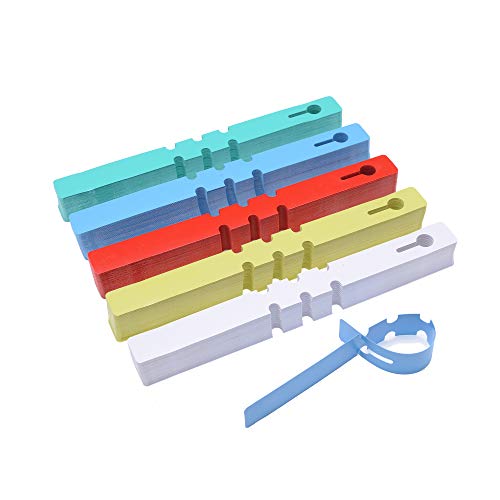
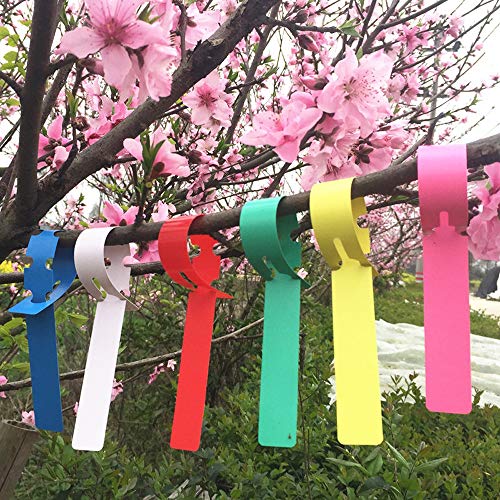
500 Pcs Plastic Plant Labels 5" Plant Name Tags for Seedling, Green
A calm buying checklist before any money moves
Begin by listing every tag format the operation genuinely uses, with dimensions, material preference, and expected life for each one, then confirm that a candidate printer accepts those sizes and thicknesses without adapters or compromises. Next, match ribbon or ink technology to the harshest environment each tag will face, not the mildest, because a label is only as durable as its worst week outdoors. Check software against real data: import a sample plant list, build a template for the longest cultivar name available, and confirm that barcodes, dates, and colour bands all fit without squeezing the main name into unreadable small print.
Then examine the ownership picture in full. Price the ribbons and tag rolls that will actually be consumed, confirm that replacement printheads and cutters are obtainable, and read warranty and service terms with the scepticism any production tool deserves. Consider where the printer will live, who will maintain it, how media will be stored, and what happens to labelling if the machine stops during the busiest fortnight of the year. Growers who can answer those questions clearly tend to buy once and settle into a routine, while rushed purchases often lead to a second machine, a drawer of incompatible rolls, and a lingering suspicion that printing tags is harder than it ought to be.
Finally, remember that the best plant tag printer is the one whose output disappears into the background of a well-run garden or nursery, present on every pot, readable in every weather, and so dependable that nobody talks about labelling any more because the names are simply always there, season after season, exactly where a hand or an eye goes looking for them among the leaves.