Our Top Picks

What's inside
- Why Soft Start Matters More Than Most Router Features
- What Soft Start Actually Does at the Switch
- Variable Speed and Bit Diameter: The Rule That Protects the Work
- Power in Context: Horsepower, Amps, and the Work Each Class Does
- The Four Physical Formats in This Guide
- Collets: Why the Half-Inch Shank Is the Working Standard
- BORA 3.25HP Soft Start Router Motor PM-6200: Dedicated Power for a Lift or Table
- DEWALT DW618PKB Fixed and Plunge Base Kit: The Versatile Mid-Size Core
- SpinRite 3.25HP Router Motor: Remote Speed Control for Lifts, Shapers, and CNCs
- DEWALT DW618D D-Handle Router: Control Through the Driving Hand
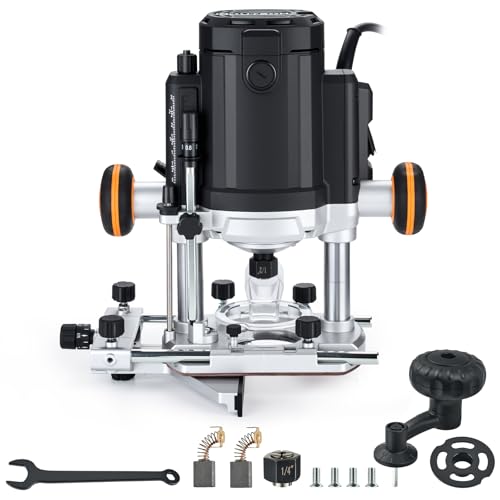
- ROUTECH RT-004 Plunge Router: Full-Size Plunge Power With Table Compatibility
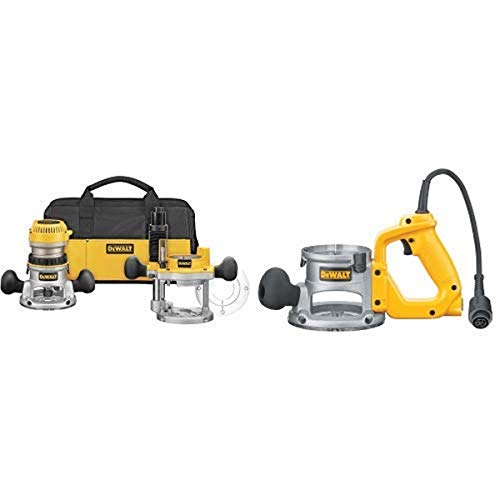
- DEWALT DW618PKB Combo Kit With DW6183 D-Handle Base: The Whole Platform in One Box
- Choosing by the Work: A Practical Sorting of the Six
- Setup, Technique, and Safety With Soft Start Routers
- Care, Storage, and Getting Years From the Motor
- How the Products in This Guide Were Selected
- Check prices on Amazon
- Disclosure
As an Amazon Associate I earn from qualifying purchases. This post may contain affiliate links at no extra cost to you.
Why Soft Start Matters More Than Most Router Features
A woodworking router is one of the few shop tools that asks for full commitment the instant it switches on. A bit that will spin at well over twenty thousand revolutions per minute has to get there from a standstill, and the way a motor makes that journey shapes everything that follows. A router without soft start delivers its torque almost all at once. The motor twists in the hands, the base can jump sideways on the workpiece, and a large bit can chatter against the edge of the stock before the cut has even begun. A router with soft start ramps up to speed gradually over a second or so, and that short, controlled climb changes the character of the tool completely.
Soft start is an electronic feature, not a mechanical clutch. Inside the tool, a control circuit meters power to the motor during startup so that rotational speed builds in a smooth curve rather than a spike. The bit still reaches the same top speed, and the motor still delivers the same power once it is running. The difference is confined to the first moments, but those moments are exactly when a cut is most vulnerable. The bit is entering the wood, the operator is establishing a grip and a stance, and any sudden reaction torque works directly against accuracy and safety.
For woodworking specifically, the benefits compound. Edge profiles start cleanly instead of beginning with a small gouge where the router lurched. Mortises and dadoes begin where the layout lines say they should begin, because the tool is not skating across the surface as it wakes up. Template work becomes calmer, since a pattern bit that spins up gently is far less likely to bounce off a template edge. In a router table, soft start reduces the jolt transmitted through the mounting plate and fence, which helps settings stay where they were dialed in. None of this replaces good technique, but it removes an unnecessary fight at the start of every single cut.
This guide covers six soft start routers and router motors chosen from published specifications and manufacturer descriptions. The group spans three distinct families. Two are bare router motors designed for router lifts, router tables, shapers, and CNC applications. Three are different configurations built around the same DEWALT DW618 platform, a 2-1/4 horsepower mid-size router system offered with fixed and plunge bases, with a D-handle base, and as a combo kit that adds that D-handle base. One is a full-size 3.25 horsepower plunge router from ROUTECH that is also described as router table compatible. Understanding which family fits the work matters more than chasing the largest horsepower figure, and the sections below work through that decision in detail.
What Soft Start Actually Does at the Switch
When a universal motor starts, it draws a surge of current and produces a burst of torque. In a router, that torque reaction is felt as a twist opposite the direction of bit rotation. With a small trim router and a small bit, the twist is a nuisance. With a mid-size or full-size router turning a panel-raising bit, a wide profile bit, or a large-diameter straight bit, the twist can move the tool noticeably. Soft start electronics stretch the startup over a brief interval, limiting the initial surge so torque builds progressively. The operator feels the tool come alive rather than kick.
Soft start is often paired with variable speed and electronic speed control, and the six products in this guide follow that pattern. Variable speed lets the operator match bit speed to bit diameter and material. Electronic control, where fitted, works to hold the selected speed as load changes during a cut. These are separate features from soft start, but they belong to the same electronic package and they are usually bought together. A buyer comparing routers should confirm all three independently: a router can have variable speed without soft start, and the listings in this guide were selected because soft start is named in the published title or description for each one.
Variable Speed and Bit Diameter: The Rule That Protects the Work
Router speed is not a case of faster always being better. The cutting edge of a bit travels at a speed determined by both revolutions per minute and bit diameter. A small straight bit at full speed presents a reasonable edge speed, while a wide panel bit at the same revolutions would be moving its outer edge far faster, generating excess heat, stressing the bit, and increasing the consequences of any imbalance. Published guidance across the industry follows a consistent pattern: small bits can run at or near maximum speed, medium bits call for a reduction, and large-diameter bits call for substantially lower speeds.
Variable speed also serves the material. Dense hardwoods, figured stock, and end grain respond better to a controlled feed at an appropriate speed than to a bit screaming at maximum revolutions. Too much speed for the cut can burn the surface, especially in cherry and maple, leaving marks that sanding struggles to remove. Too little speed for a small bit can produce a rougher cut and encourage the operator to push harder, which creates its own problems. The practical approach is to set speed by bit diameter first, then adjust within a modest range based on how the cut sounds and feels and how the chips look. Healthy routing produces chips and shavings; routing that produces only fine dust is often a sign that the bit is rubbing rather than cutting.
Among the products below, speed control takes several forms. The DEWALT DW618PKB listing cites 24,000 RPM and a variable speed trigger in its title, placing its top speed in the expected range for a mid-size router. The ROUTECH plunge router lists six variable speeds, which gives stepped, repeatable settings. The SpinRite motor lists variable speed with remote control, a format that suits a motor mounted under a table or in a lift where the motor body itself is out of easy reach. The BORA motor is described as a variable speed router motor in its title. Each format answers the same need in a different physical setting, and the right format follows from where the motor will live.
Power in Context: Horsepower, Amps, and the Work Each Class Does
Router power is published in two currencies: horsepower and amps. Horsepower figures for universal-motor routers are peak ratings and are best used for comparing classes rather than as laboratory measurements. Amperage describes current draw and gives a second view of the same picture. What matters for buying is matching the class to the cut. A 2-1/4 horsepower, 12-amp mid-size router is the classic all-purpose woodworking class: strong enough for the full range of handheld work and for many table tasks with bits of moderate size, yet light and balanced enough to control freehand for hours of edge work. A 3.25 horsepower, 15-amp motor is the full-size class, intended for sustained heavy cuts, large bits at reduced speed, and production-style work in a table, lift, or CNC where the machine carries the weight and the motor simply has to keep pulling.
The six products divide cleanly along that line. The BORA PM-6200 is listed at 3.25HP and 15 amp. The SpinRite motor is listed at 3.25HP. The ROUTECH RT-004 is listed at 3.25HP and 2400W on 120V 60Hz power. The three DEWALT configurations sit in the mid-size class: the DW618PKB kit is listed as 12-amp, and the D-handle and combo kit listings state 2-1/4 HP for the DW618 platform. Neither class is better in the abstract. A full-size motor handheld on a small edge profile is tiring and clumsy, while a mid-size router asked to swing a very large bit all day in hard stock will feel the strain. The honest question is where most of the work will happen, and the product sections below keep returning to that question for each model.
The Four Physical Formats in This Guide
A fixed base router holds the motor at a set height in its base, with depth adjusted by moving the motor within the base and locking it. Fixed bases excel at edge work, where the bit projection is set once and the router rides along the stock, and they are the traditional choice for mounting under a router table, where depth is adjusted from the base. A plunge base lets the motor and bit travel vertically on spring-loaded columns, so the bit can be lowered into the middle of a workpiece with the base already resting flat and registered. Plunge bases are the natural choice for stopped cuts, mortises, grooves that begin away from an edge, sign work, and template routing where the cut starts inside the outline.
A D-handle base replaces one of the usual knob handles with a pistol-style handle, typically carrying the switch in or near the grip. The format gives a low, driving hand position that many woodworkers find steadier for edge profiling and for guiding a router along a fence or straightedge. Control feels closer to pushing the tool through the cut, and switching the tool off without shifting grip is a genuine safety and convenience point. In this guide the D-handle appears twice: as the DW618D, a router sold in D-handle configuration, and as the DW6183 D-handle base included in the combo kit listing, which adds that base to the fixed and plunge bases of the DW618PKB package.
The fourth format is the bare router motor. A router motor has no base of its own in the handheld sense; it is a motor body designed to be clamped into a router lift, mounted in a table, fitted to a shaper setup, or integrated into a CNC machine. The SpinRite listing states this territory directly, naming router lifts, shapers, and CNCs, and describes an easy mount 4.2 inch body. The BORA listing presents the PM-6200 as a router motor for woodworking, the format used in lifts and tables. A motor-only purchase assumes the buyer already owns, or is separately choosing, the lift or machine that will hold it. That is not a drawback; for a dedicated table setup it is often the cleanest path, because the lift provides the height adjustment and the motor provides replaceable, dedicated power.
Readers planning a broader shop electronics bench alongside the woodshop may also find our computing guides useful for the office corner, including best 15 inch laptops for a machine that handles design files and project plans comfortably.
Collets: Why the Half-Inch Shank Is the Working Standard
The collet is the split sleeve that grips the bit shank when the collet nut is tightened. Routers in these classes commonly accept both 1/2 inch and 1/4 inch shanks, and the listings reflect that. The ROUTECH title names a 1/2 inch and 1/4 inch collet pairing directly. The SpinRite motor goes further, listing three included ER20 collets in 1/2 inch, 1/4 inch, and 8mm sizes, along with an offset wrench set. ER20 is a widely used collet system in CNC and spindle work, and its presence signals the SpinRite motor’s orientation toward lifts and machines as much as toward conventional tables.
Given a choice for the same bit profile, the 1/2 inch shank is the working standard for full-size and mid-size routing. A thicker shank is stiffer, so the bit deflects less under load, runs truer, and is less prone to vibration that shows up as chatter marks on the cut surface. Large bits are generally only available with 1/2 inch shanks for exactly these reasons. The 1/4 inch shank remains useful because a wide range of small profile, straight, and specialty bits are made in that size, and older bit collections are full of them. The practical rule is simple: buy new bits in 1/2 inch shank whenever the profile is offered, keep the 1/4 inch collet for the small bits that need it, and never force a shank into a collet of the wrong size or use a split adapter sleeve as a substitute for the correct collet.
Collet care is part of cut quality. A collet and the inside of the spindle taper should be clean and dry; dust packed into the collet slots can prevent even gripping and allow a bit to creep. Bits should be inserted so the shank is well engaged in the collet but not bottomed out against the inside of the spindle, since a small gap allows the collet to tighten properly and avoids transferring heat into the shank end. A bit that changes height during a cut, or a cut that suddenly deepens, is a warning to stop and inspect the collet, the nut, and the shank for damage or contamination.
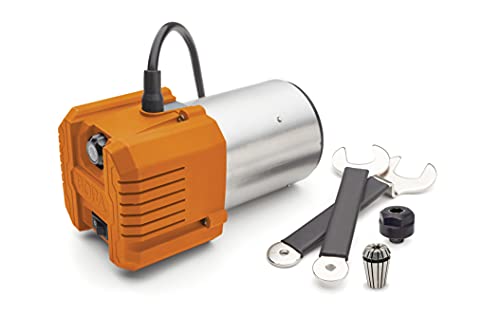
BORA 3.25HP Soft Start Router Motor PM-6200: Dedicated Power for a Lift or Table
The BORA PM-6200 listing describes a 3.25HP soft start router motor with variable speed, rated at 15 amp, presented as a variable speed router motor for woodworking and characterized by powerful, consistent routing. Every element of that description points the same direction. This is a motor bought to live in a router lift or a table mount, where its full-size power can be applied to large bits at reduced speed, wide stock, and long sessions of table work without the operator supporting the tool’s weight or managing its cord position by hand.
In a lift, soft start earns its keep every time the motor is switched on. The assembly under the table receives no jolt, the fence setting is undisturbed, and the bit climbs to the selected speed while the operator’s hands stay on the stock or the fence rather than on the tool. Variable speed completes the table picture, because table work is where the largest bits in a typical shop are used: panel raisers, large lock-miter and drawer-lock bits, wide rabbeting and profiling bits. Those bits demand reduced speed, and a 3.25HP motor has the torque to keep them cutting at those lower settings when the feed is sensible and the depth is taken in passes.
The buyer for this motor should already have the mounting question answered. A bare motor needs a lift or a table plate system that accepts its body, a table and fence worthy of the power, and dust collection that can keep up with table routing, which produces chips in volume. For a woodworker building a serious router table station, or replacing a tired motor in an existing lift, the BORA’s published combination of 3.25HP, 15 amp draw, soft start, and variable speed is the specification set that matters, and it is stated plainly in the listing. For a woodworker who mainly routs freehand at the bench, a based router from the DEWALT group below is the more direct tool, because it arrives ready to hold.
DEWALT DW618PKB Fixed and Plunge Base Kit: The Versatile Mid-Size Core
The DEWALT DW618PKB listing describes a router with fixed and plunge base kit, soft start, 12-amp power, 24,000 RPM, a variable speed trigger, and corded operation. This is the configuration that covers the widest range of handheld woodworking from a single motor. The fixed base handles edge profiles, roundovers, chamfers, and flush work with the bit height set and locked. The plunge base handles mortises, stopped dadoes and grooves, inlay recesses, and template work where the bit must enter and leave the cut vertically. Swapping one motor between two bases is the long-established mid-size system approach, and it remains popular because it works.
Honesty about the platform matters here. This kit, the D-handle router below, and the combo kit that follows are three configurations of the same DW618 platform, not three unrelated routers. The motor unit is the common heart; what changes is which bases are in the box and therefore which grips and motions are available at the bench. A buyer should choose between them by base preference, not by imagining three different levels of performance. The 12-amp rating and 24,000 RPM top speed in this listing define the class: full capability for handheld work and for moderate table use, in a package sized for control.
The variable speed trigger noted in the listing deserves attention because trigger-based speed control shapes how the tool is handled during a cut. Combined with soft start, the startup sequence is doubly gentle: the electronics ramp the motor, and the operator’s own trigger hand is part of the control loop. For freehand sign work, edge treatments on assembled pieces that cannot go to a table, and site work where the workpiece is fixed and the tool must travel, this kit format is the natural fit. Corded operation, also stated in the listing, means sustained power without battery management, which suits long bench sessions.
As a first serious router or as the central router of a small shop, the fixed and plunge kit is the configuration most woodworkers will reach for most often. It can also serve under a table in its fixed base for shops that route at the table only occasionally, accepting that a dedicated lift and motor, like the BORA or SpinRite above and below, is the more specialized answer for heavy table work. Readers outfitting the digital side of a workshop office might pair this research with best 500gb sd cards for camera and machine storage used to document builds and store project files.
SpinRite 3.25HP Router Motor: Remote Speed Control for Lifts, Shapers, and CNCs
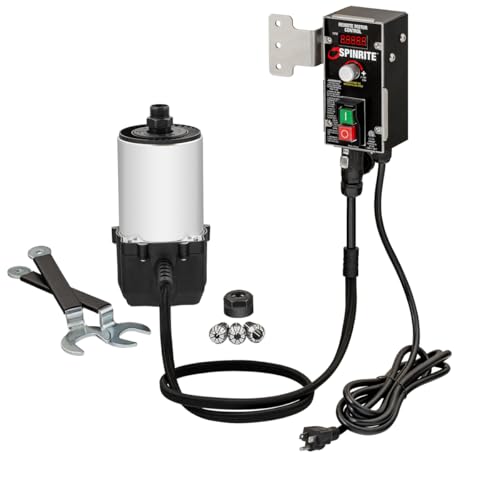
The SpinRite listing is the most explicitly machine-oriented in this guide. It describes a 3.25HP router motor for router lifts, shapers, and CNCs, with variable speed remote control, soft start, an easy mount 4.2 inch body, three included ER20 collets in 1/2 inch, 1/4 inch, and 8mm, and an offset wrench set. The intended homes for this motor are named in the title itself, and the included hardware follows from those homes. A motor that lives inside a lift or a CNC gantry cannot be adjusted like a handheld tool, so its controls and its bit-changing arrangements have to suit remote, mounted operation.
Variable speed remote control is the headline feature for practical reasons. When a motor is under a table in a lift, reaching the motor body to change speed is awkward at best. A remote control places speed adjustment where the operator actually stands. In a CNC setting, the same logic applies at the machine. Soft start in a mounted motor protects more than the workpiece: it protects the lift mechanism, the CNC structure, and any spindle mounting hardware from repeated startup shock, thousands of cycles over the motor’s life.
The ER20 collet set is the other telling detail. ER collets are a machine-shop standard, gripping the shank around its circumference with excellent concentricity when clean and properly tightened. Including 1/2 inch, 1/4 inch, and 8mm covers the shank sizes a lift or CNC user is most likely to meet, including the metric shanks common on some CNC tooling. The offset wrench set, also listed, addresses the tight clearances of mounted operation, where a straight wrench may not reach or swing. These inclusions describe a motor packaged by people thinking about installed use, and a buyer comparing it with the BORA should weigh exactly these installation details alongside the shared 3.25HP class rating.
DEWALT DW618D D-Handle Router: Control Through the Driving Hand
The DEWALT DW618D listing describes a variable speed router with a D-handle, soft start, and 2-1/4 HP. As noted earlier, this is the DW618 platform in its D-handle configuration. The motor class is the same mid-size class as the kit above; the difference is entirely in how the tool is held and controlled, and for a meaningful group of woodworkers that difference decides the purchase.
The D-handle puts a pistol grip behind the motor, giving the operator a driving hand aligned with the direction of travel and a supporting hand on the base or knob. For long edge profiles, for routing along a straightedge or fence guide, and for work on large panels where the router travels a long path, that grip reduces wrist strain and makes the feed feel deliberate. The handle format also typically places switching at the grip, so the tool can be started and stopped without releasing hold, which pairs naturally with soft start: the motor ramps up while both hands are already in their working positions, and the cut begins from a stance of full control rather than from a scramble to get both hands set as the bit reaches speed.
Where the D-handle gives ground is plunge work. A D-handle base is a fixed-depth format, so stopped cuts that begin in the middle of a board, mortises, and other plunge-first operations belong to the plunge base of the kit configurations. A woodworker whose work is dominated by edge treatments, joinery guided by fences and jigs at fixed depth, and table-adjacent freehand tasks may find the D-handle the most comfortable single configuration. A woodworker who cuts mortises weekly will want plunge capability in the shop, whether from the DW618PKB kit or the combo kit below.
ROUTECH RT-004 Plunge Router: Full-Size Plunge Power With Table Compatibility
The ROUTECH RT-004 listing describes a plunge router at 3.25HP and 2400W, with 1/2 inch and 1/4 inch collets, 120V 60Hz power, soft start, six variable speeds, and router table compatibility. This is the only full-size handheld plunge router in the guide, and its specification set combines the two worlds the other products treat separately: the plunge base format for handheld work that starts inside the workpiece, and enough power, with table compatibility stated, for serious table use.
A full-size plunge router earns its place on specific jobs. Deep mortises in thick stock, large template-guided work, wide grooves and housings, and heavy profiling where the plunge action controls entry all benefit from a motor that does not strain as the bit reaches full depth. The six variable speeds give repeatable settings across the bit-size range, which matters when the same tool swings both small straight bits for mortising and large bits at reduced speed for table work. The named collet pair, 1/2 inch and 1/4 inch, matches the standard discussed earlier, with the 1/2 inch collet doing the heavy work.
The stated electrical figures deserve a plain reading. The listing gives 3.25HP alongside 2400W and specifies 120V 60Hz, the standard North American shop supply. A tool of this class asks for a circuit in good condition and, in a table setup, a switch arrangement that lets the operator control power without reaching under the table. Soft start is particularly valuable at this size handheld, because a 3.25HP motor’s startup torque reaction is the largest in this guide, and the plunge format means the tool is often started while positioned over the middle of a workpiece, balanced on its base with the bit not yet in the cut. A gentle ramp protects that moment.
For storage of the large design and reference files that accompany big furniture and cabinet projects, some readers will also be reviewing best 1 tb hard drives alongside their tool research, since shop computers accumulate plans, photographs, and CNC files quickly.
The ROUTECH’s trade-off is the mirror of the mid-size DEWALTs. Full-size power brings full-size presence in the hands, and for delicate edge work on small parts, a smaller router is easier to finesse. The woodworker who regularly works thick stock, cuts deep mortises, and wants one powerful plunge tool that can also serve at the table will read this listing as aimed at them. The woodworker doing mostly cabinet edge profiles and light joinery will likely find the DW618 class more pleasant over a full day.
DEWALT DW618PKB Combo Kit With DW6183 D-Handle Base: The Whole Platform in One Box
The final listing describes the DEWALT DW618PKB 2-1/4 HP EVS fixed base and plunge router combo kit with soft start, supplied with the DW6183 D-handle base for DW616/618 routers. Read plainly, this package gathers the platform’s three base formats around the one motor: fixed base, plunge base, and the D-handle base as an included addition. EVS in the listing denotes electronic variable speed, the speed control system that pairs with soft start in this motor class.
This is the configuration for the woodworker who does not want to predict which grip the next project will demand. Edge work can be done from the fixed base or the D-handle, according to preference and path length. Mortises, stopped cuts, and template work go to the plunge base. The motor moves between them. Compared with buying the DW618PKB kit alone, the addition named in this listing is the DW6183 D-handle base, and compared with the DW618D alone, this package retains the plunge and fixed bases the D-handle-only configuration lacks. That is the whole comparison, and it is a comparison of bases, because the platform and its 2-1/4 HP class are shared.
Workshop planning often runs in parallel across categories, and readers speccing a display for design work at the shop desk may want best 27 1440p 120hz monitors open in another tab while they decide on tooling.
Choosing by the Work: A Practical Sorting of the Six
Start with where the router will spend its life. If the answer is installed in a lift, table, shaper setup, or CNC, the choice narrows to the two motors. Pick between the BORA PM-6200 and the SpinRite by mounting fit and control style: the SpinRite listing states its 4.2 inch body, remote variable speed control, and ER20 collet set for machine contexts, while the BORA listing states its 15 amp rating and presents the motor for woodworking routing consistency. Confirm body diameter against the lift or mount before anything else, because a motor that does not fit the mount is not a bargain at any specification.
If the answer is handheld at the bench, sort by base need. Predominantly edge work at fixed depth, especially long runs, points to the DW618D D-handle configuration. A mix of edge work and plunge work points to the DW618PKB fixed and plunge kit. Unwillingness to choose, or a shop that genuinely does all three grips’ work, points to the combo kit with the DW6183 D-handle base included. Heavy handheld plunge work in thick stock, with table use also in view, points to the ROUTECH RT-004 and its full-size power.
- Router table or lift as the main home: BORA PM-6200 or SpinRite motor
- Lift, shaper, or CNC with remote speed needs: SpinRite motor
- General handheld work, edge plus plunge: DEWALT DW618PKB kit
- Long edge runs with a driving grip: DEWALT DW618D
- Every DW618 base format in one purchase: DW618PKB combo kit with DW6183
- Full-size handheld plunge work and table compatibility: ROUTECH RT-004
Budget thinking should follow the same sorting. Money spent on bases that match the work returns value on every project, while money spent on unused horsepower or an unmounted motor returns little. Conversely, under-buying power for a table that will run large bits daily is a false economy that shows up as slow feeds, heat, and shortened tool life. The six listings cover the realistic spread for a woodshop, and most shops will find their answer is one handheld configuration plus, eventually, one installed motor, rather than a single tool forced to do everything.
Setup, Technique, and Safety With Soft Start Routers
Soft start improves the first second of a cut; the remaining minutes still belong to setup and technique. Before any cut, confirm the bit is sharp, undamaged, and correct for the material, and that the collet and nut are clean. Set the bit height or plunge depth deliberately, lock it, and make a trial cut on scrap of the same material whenever the setup is new. Route a test piece through the full path, including entry and exit, because exit tear-out and entry marks are setup problems best discovered on scrap.
Feed direction is foundational. For handheld routing around an edge, the router is conventionally fed so the bit’s rotation pulls the tool into the work in a controlled way, which for outside edges means moving counterclockwise around the workpiece and for inside edges means moving clockwise, keeping the cutting action stable rather than climb cutting. Climb cutting, feeding with the rotation, can pull the router forward suddenly and is reserved for very light, deliberate corrective passes by experienced hands, if used at all. In a router table, stock is fed against the bit’s rotation, from right to left past a bit spinning counterclockwise as viewed from above, with hands kept clear using push blocks and featherboards where appropriate.
Personal protection is not optional with a tool that spins this fast and throws chips this hard. Eye protection is the baseline on every cut, hearing protection is appropriate for sustained work, and a dust mask or respirator matters especially with manufactured boards and fine dust. Loose clothing, jewelry, and gloves near a spinning bit are hazards; gloves in particular should not be worn while operating a router. The workpiece must be clamped or otherwise secured, since a router can move a loose board as readily as a loose board can spoil a cut. Both hands stay on the tool for handheld work, the cord is routed so it cannot snag or cross the cut path, and the bit must come to a complete stop before the router is set down or adjusted.
Depth discipline protects both the work and the operator. Deep profiles and wide cuts are taken in multiple passes, increasing depth gradually, with the final pass light enough to leave a clean surface. Listening to the motor is part of the skill: a motor that bogs is asking for a shallower pass or a slower feed, and a motor that screams unloaded through the cut may be feeding too slowly, rubbing and heating the bit. Dust extraction, whether a shop vacuum on a handheld base or a collector at the table fence, keeps the cut line visible, reduces airborne dust, and helps bits run cooler.
Plunge work has its own sequence. Set the depth stop system before the cut, position the base flat and fully registered on the work or template, start the motor and let soft start bring the bit to speed above the surface, then plunge smoothly to the stop and move into the cut. At the end, stop the feed, let the bit clear by raising the plunge while the motor is still running where the setup allows, switch off, and wait for a full stop before lifting the tool away. Mortising benefits from clearing chips between passes, since packed chips overheat bits and walls.
Care, Storage, and Getting Years From the Motor
Routers ask for modest but regular care. After work, blow or brush dust from the motor vents, the collet area, and the base mechanisms; fine dust works into plunge columns and depth mechanisms and makes them gritty. Plunge columns should move freely and return fully; a column that sticks invites uneven depth and sudden releases. Keep collets clean and inspect them for cracks or scoring, replacing a damaged collet rather than trusting it to hold a bit at full speed. Store bits separately in a case or block so edges cannot strike each other, and handle bits by the shank, since freshly sharpened edges cut skin as readily as wood.
How the Products in This Guide Were Selected
The six products here were selected from published specifications and manufacturer descriptions, with soft start named for every model, variable speed available across the group, and the two collet standards of the category represented. The selection deliberately spans the category’s real structure: two installed motors, one mid-size platform in three base configurations, and one full-size plunge router with table compatibility. Specifications quoted in the product sections come from the published listing titles for each product, and general statements reflect standard practice for the router category as a whole.
Check prices on Amazon
Live listings for the shortlist in this guide are pulled from Amazon below, so prices and availability are always current at the moment you look.

DEWALT Router, Variable Speed, D-Handle, Soft Start, 2-1/4 HP (DW618D)
Disclosure
This site participates in the Amazon Associates program and is reader-supported: as an Amazon Associate, this site earns from qualifying purchases made through links on this page, at no additional cost to the reader. Products in this guide were selected based on published specifications and manufacturer descriptions, using our research into the soft start router category, including stated power ratings, speed control formats, collet sizes, and base or mounting configurations as published by the manufacturers and sellers. No product was supplied for evaluation, and selection was not influenced by commission rates.