Our Top Picks


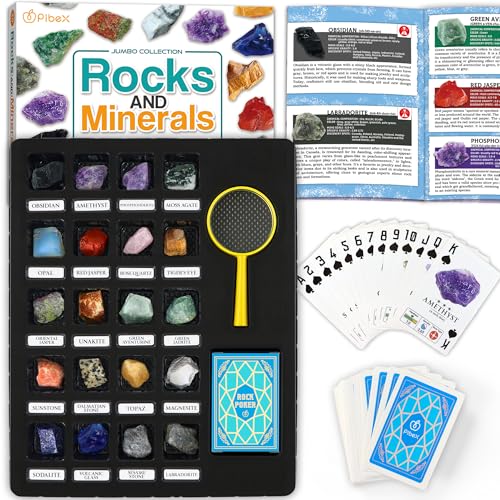
What's inside
- Why a box of rocks holds a child’s attention
- Counting specimens honestly
- Real stone versus plastic and resin imitations
- The Mohs hardness scale, explained for small hands
- Magnifiers, hammers and safety-first tools
- Identification books and cards that actually teach
- Age bands and what changes between them
- STEM activities at home that extend the kit
- Using a set in the classroom
- Reading listings and reviews like a geologist reads rock
- Care, display and growing the collection
- Minerals, rocks and fossils: three words worth separating
- The three rock families through specimens
- Safety and materials, calmly considered
- A four-week starter plan for families
- Rough specimens versus tumbled polish
- Comparing two sets side by side: a worked example
- Check prices on Amazon
- Final thoughts for parents and teachers
As an Amazon Associate I earn from qualifying purchases. This post may contain affiliate links at no extra cost to you.
Why a box of rocks holds a child’s attention
Few gifts survive contact with a curious eight-year-old as well as a tray of real stones. Each specimen can be weighed in the palm, tilted under a lamp, scratched against a tile and compared with its neighbours, so the play is investigation rather than repetition. A child who would not sit through a page about geology will happily spend an hour deciding which of two grey lumps is heavier, shinier or stranger. Good sets feed that instinct with genuine variety: glassy crystals, banded stones, fossil-bearing pieces and metallic-looking minerals that each reward a different kind of looking.
Transparency belongs at the start of any guide written for parents spending real money, so here is the honest version before anything else. Pages like this one may include links to retailers, and if a reader buys through such a link, a commission may come back to support the research behind the guide while the price paid stays exactly the same. Nothing below depends on direct handling of the kits; the comparisons draw on published specifications, stated contents lists and patterns across aggregated buyer feedback, which is why every section ends in checks you can repeat at your own kitchen table.
The market, unfortunately, mixes excellent educational kits with boxes that are mostly packaging. Photographs exaggerate specimen size, counts quietly include fragments and chips, and the word collection can describe twelve thumbnail pebbles as easily as thirty substantial pieces. Parents therefore need a reading method before they need a recommendation: verify how many specimens are real, how large they actually are, what tools are included, and whether the identification material teaches a method or merely names answers. The sections below build that method piece by piece, from specimen counts through the Mohs scale to classroom-ready activities.
Age fit threads through every judgement that follows. A set that thrills a ten-year-old with a streak plate and a hardness kit will frustrate a five-year-old who mainly wants to sort by colour and build small stone towers. Neither response reflects quality; both reflect matching. Throughout this guide, suggestions are tagged by the skills they assume, reading level, hand strength, patience for multi-step tasks, so you can align a purchase with the child in front of you rather than the child in an advertisement.
Counting specimens honestly
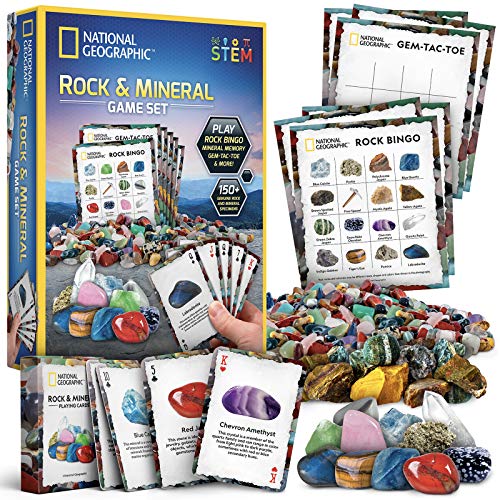
Start with the number that headlines every box, then interrogate it. A stated count of forty pieces might combine twenty named specimens, ten assorted tumbled stones and ten fragments too small to identify, while a rival set’s thirty pieces might all be labelled, display-sized specimens. Neither is automatically better, but they are different products wearing similar numbers. Look for a contents list that names each specimen individually; makers confident in their material usually enumerate it, and an enumerated list lets you check for duplicates hiding under synonyms or colour variants of the same mineral.
Size matters as much as count for young investigators. Specimens around two to four centimetres across can be gripped, turned, examined with a magnifier and tested without tweezers, while thumbnail fragments defeat small fingers and bore older children. Listings that give a size range in centimetres deserve more trust than those relying on photographs of a child’s hand, which can make almost anything look generous. Buyer feedback patterns confirm the point: disappointment clusters around unexpectedly tiny pieces far more than around any other single feature of these kits.
Variety inside the count is the third check. A strong educational spread includes examples from the three rock families, igneous, sedimentary and metamorphic, alongside a selection of minerals chosen for contrast: something glassy, something banded, something that sparkles, something surprisingly heavy, something with visible fossil traces. Thirty pieces spanning those categories teach more than sixty pieces dominated by dyed tumbled stones in assorted colours. When a contents list reads like variations on one theme, expect sorting games to exhaust themselves quickly.
Labelled, numbered or loose?
How specimens connect to their names shapes the learning. Individually labelled pieces suit beginners, because identification succeeds immediately and confidence builds. Numbered specimens paired with a key invite a guessing game first, which older children often prefer, provided the key is printed clearly and the numbers survive handling. Completely loose, unlabelled stones demand a good guidebook and adult support; in a classroom with a confident teacher they become excellent assessment material, while at home without support they risk becoming pretty gravel within a week.
Storage compartments influence this more than expected. A divided tray that assigns each specimen a home makes returning pieces an act of matching, quietly reinforcing names every time the box is tidied. A single jumbled pouch does the opposite. If a set ships in a flimsy tray, transferring it to a compartmented craft box with handwritten labels is a worthwhile first project to do together, and the relabelling itself, done from the guide rather than copied, is a genuine identification exercise in disguise.
Real stone versus plastic and resin imitations
Authenticity is the fault line of this product category. Real specimens carry irregularities no mould reproduces convincingly: uneven crystal faces, tiny pits, colour that changes with angle, and a coolness to the touch that plastic never quite imitates because stone conducts heat away from skin differently. Weight is the simplest home test, since most real minerals feel noticeably denser than a same-sized resin copy. A set that mixes a few resin pieces among real ones without saying so undermines the entire exercise, because a child learning identification deserves material that behaves honestly under every test in the guide.
Plastic has one legitimate role: the very youngest children. For toddlers and preschoolers, oversized lightweight replicas remove choking and throwing hazards while still supporting colour sorting and imaginative play. The problem is only deception, marketing replica kits with photography and language implying genuine geology. Read listings for explicit material statements. Phrases naming actual minerals, describing natural variation between pieces, or warning that specimens differ from photographs because they are natural all signal real stone; uniform perfection across every buyer’s photographs signals moulding.
Dyed and enhanced stones sit between the categories and deserve honest discussion with older children. Some inexpensive sets include genuine stones whose colour has been intensified by dye, which collects visibly in cracks under a magnifier. That discovery need not ruin the kit; it can launch a superb conversation about how gems are treated commercially and why disclosure matters. Similarly, tumbled stones are real but shaped by abrasion, trading the sharp educational detail of a rough specimen for safety and shine. A balanced set includes both rough and tumbled examples so children can compare what polishing reveals and what it erases.
Simple authenticity checks at home
Three quick checks need no equipment beyond a lamp and a fingernail. First, temperature: rest a specimen on the back of the hand and notice the initial coolness real stone usually shows. Second, light: turn the piece slowly and watch for the irregular sparkle of many tiny crystal faces rather than the uniform gloss of a coating. Third, sound: tap two specimens together gently and listen for the dense click of stone rather than a hollow plastic tick. None of these proves identity alone, yet together they teach a habit of evidence that transfers to every later science topic.
Families who document these checks turn a kit into a keepsake. Photographing each specimen beside its label builds a personal catalogue, and children who enjoy that process often graduate naturally to recording finds outdoors. Parents planning that step may find the camera guidance in best instant cameras for kids useful, because instant prints labelled by hand make a field notebook feel satisfyingly official to a young collector.
The Mohs hardness scale, explained for small hands
Hardness sounds abstract until a child discovers that one stone can write on another. The Mohs scale ranks minerals from softest to hardest across ten reference points, beginning with talc, which a fingernail can mark, and ending with diamond at the top. The scale is relative rather than evenly spaced: each step simply means the harder material scratches the softer one. For children, the practical anchors matter more than the full list. A fingernail, a copper coin, a steel nail and a ceramic tile form a pocket testing ladder that sorts most kit specimens into meaningful groups within minutes.
Good sets teach this ladder explicitly, either with a printed chart or with included tools such as a streak plate and a steel file. When a kit includes a few reference specimens of known hardness, the activity becomes self-checking: the child predicts, tests on an inconspicuous edge, and records the result. Quartz, present in many collections, becomes a hero specimen because it scratches glass and resists a steel file, giving young testers one clear, memorable victory. Softer stones such as gypsum or calcite provide the opposite lesson, marking easily and reacting to careful observation in other ways described by the guide.
Scratch testing needs two ground rules to stay educational rather than destructive. Test on the least visible face, press lightly at first, and always wipe the mark before declaring a scratch, because a soft mineral often leaves a powder trail on a harder surface that looks like damage but brushes away. That single distinction, true scratch versus transferred powder, is a beautiful early lesson in not trusting first appearances. Supervise the steel tools, store them separately from the stones, and the scale becomes the backbone of weeks of structured play.
Streak, lustre and other friendly tests
Hardness has companions that round out a beginner’s toolkit. Rubbing a mineral across unglazed ceramic leaves a streak whose colour sometimes surprises: a grey-black stone may streak reddish brown, revealing iron content the surface hid. Lustre vocabulary, glassy, pearly, metallic, dull, gives children precise words for what their eyes already see, and guides that include a simple illustrated glossary make those words stick. Cleavage and fracture, whether a mineral breaks along flat planes or in rough curves, suit older children who can handle specimens carefully and compare broken faces under supervision.
Density offers a kitchen-scale experiment with real mathematical flavour. Weigh a specimen, then weigh it again suspended in water, or simply compare equal-sized pieces by hand and rank them before checking with scales. Children are reliably astonished that a small dark stone can outweigh a larger pale one, and that surprise opens the door to talking about what rocks are made of at a level no worksheet matches. Record results in a notebook with dates; repeated measurements that agree teach reliability better than any lecture about the scientific method.
Magnifiers, hammers and safety-first tools
A magnifying glass transforms specimens more dramatically than any other accessory. Crystal faces invisible at arm’s length become landscapes at five or ten times magnification, and a child who thought a stone was simply brown discovers flecks, bands and tiny cavities lined with sparkle. Hand lenses beat toy magnifiers here: look for a stated magnification, a glass or quality acrylic lens, and a size small fingers can hold steady. Dual lenses, one stronger than the other, let children zoom in stages, while an attached cord prevents the inevitable drop onto hard floors from ending the tool’s career early.
The geology hammer requires the most adult judgement in any kit. Real hammers, even small ones, are tools for splitting rock outdoors under supervision, not toys for the living room, and reputable sets frame them that way with clear age guidance. For most home buyers, a hammer adds value only if the family genuinely plans supervised field trips; otherwise it adds risk and storage bulk while contributing nothing to table-top identification. Chisels raise the stakes further and belong with older children, eye protection and an adult who has used one. When in doubt, choose the kit with the better lens and book over the kit with the bigger hammer.
Safety glasses are the unglamorous accessory that signals a serious maker. Any striking, splitting or scratch-testing programme should pair tools with impact-rated eyewear sized for children, plus a rule that glasses go on before hammers come out. Equally important is what kits should not contain: no loose powders to inhale, no sharp-edged specimens for young age bands, and no instructions encouraging children to taste minerals, an old field habit that modern guidance firmly retires. Wash hands after handling sessions, keep specimens away from food preparation surfaces, and store everything in a closed box between uses.
Dig and excavation kits are a different animal
Plaster-block dig kits, where specimens hide inside a brick to be chipped away, deliver a thrilling afternoon but a thinner education. The excavation is the entertainment, and the few stones inside are often small and similar. Such kits make fine gifts and party activities, yet they should not be mistaken for reference collections: the learning-per-hour after the block is gone drops sharply. Families choosing between the two formats should ask whether the child loves process or accumulation. Process-lovers deserve the dig; collectors deserve the tray of labelled specimens they will revisit for years.
Break-your-own geode kits occupy a middle position. Splitting a geode outdoors with adult help produces a genuine reveal, since nobody knows the crystal interior in advance, and the two halves become permanent display pieces. Mess and unpredictability are the costs: some geodes prove nearly solid, and the splitting step needs a hard surface, eye protection and patience. A set combining a few geodes with a conventional specimen tray hedges both ways, giving one dramatic event plus a collection that keeps teaching afterwards.
Identification books and cards that actually teach
The guide included with a set decides whether specimens become a curriculum or a curiosity. Strong guides organise each entry around observable features first, colour range, hardness, streak, lustre, special clues, and only then attach the name, modelling how identification actually works. Weak guides print a paragraph of trivia per stone, interesting once and useless at the moment a child holds an unknown piece found at the park. Judge a guide by whether it contains a key or flowchart of any kind; even a simple one trains reasoning that outlasts the kit itself.
Photography quality matters enormously for visual matching. Specimens photographed in flat, honest light with a size reference let children compare confidently, while glamorous images shot wet, backlit or enlarged can make the same mineral unrecognisable on a bedroom carpet. Field-guide-style books included with premium sets sometimes outvalue the stones, because a good book serves every future find. Cards have their own advantage: a single card can travel outdoors with its specimen’s portrait, and a shuffled deck becomes a quiz game for siblings or classmates.
Reading level should match the intended child, not the purchasing adult. Dense text in small type excludes the very readers the kit claims to serve, whereas guides with short entries, clear headings and a glossary invite independent use by ages eight and up. For younger children, picture-led charts with one fact per specimen work better than books at all. Digital companions vary widely; a simple offline reference is preferable to an app demanding accounts and connections, and families comparing screens for reference use may also appreciate the guidance in best affordable tablets for kids on choosing durable, readable devices for children.
Building a home reference shelf
One kit guide is a start, not a library. A single borrowed or bought field guide to rocks and minerals, a chart of the rock cycle on the wall, and the child’s own notebook of observations form a reference corner that grows with the hobby. Library systems are an underused ally here, since geology titles circulate slowly and are often available for long loans. Encourage children to annotate their kit guide with dates and personal notes, where a specimen was tested, what surprised them, because a marked-up guide becomes a record of thinking rather than a pristine object nobody dares to open.
Age bands and what changes between them
For ages four to six, the goals are sensory and organisational: sorting by colour, size and sparkle, matching stones to picture cards, and hearing the names spoken aloud during play. Specimens should be large, smooth-edged and few enough to memorise, around eight to twelve pieces, with tumbled stones earning their keep through safety and shine. Adult narration supplies the science at this stage. Any kit advertising scratch testing or small tools for this band is aiming at the gift-buyer’s eye rather than the child’s development, and small parts demand the usual supervision and mouthing awareness for the youngest users.
Ages seven to nine are the sweet spot for first true collections. Reading is strong enough for short guide entries, hands can manage a hand lens and a supervised scratch ladder, and the fairness-obsessed mindset of this age group adores tests with clear outcomes. Sets of twenty to thirty labelled specimens, one unglazed ceramic streak tile and a decent magnifier match this band beautifully. Sorting matures into classifying: children this age can grasp the three rock families when each is introduced through one memorable example rather than a definition recited in advance.
From ten upward, children are ready for method. Unknown specimens, written records, density comparisons and simple field collection become realistic, and a kit should stretch rather than entertain them. Reference specimens of known hardness, a proper guide with a key, and tools that respect their competence keep the hobby alive into secondary school. This is also the band where a smartwatch reminder to bring the collection box on a family hike is not a joke but a system; parents exploring that territory will find best kids smartwatches for 11 and up a relevant detour for older children’s independent outings.
When siblings share one set
Shared kits survive when roles rotate. One child tests hardness while the other records, then they swap for the next specimen, which doubles engagement and halves squabbles over the magnifier. Duplicate the cheap consumables, notebooks, pencils, sorting trays, rather than the specimens themselves. A house rule that the tray returns complete before dinner turns tidying into a counting ritual, and a missing piece triggers a search while memory is fresh. Families who photograph the full tray on day one possess both an inventory and a baseline for spotting the inevitable substitution of a garden pebble for a lost favourite.
STEM activities at home that extend the kit
The rock cycle becomes tangible with crayons before it makes sense with diagrams. Shave crayons into fragments, press the shavings into layers, apply warmth and pressure, then break the result: sediments, sedimentary rock, metamorphic change and melting all appear in one kitchen demonstration that mirrors what a specimen tray shows in finished form. Afterwards, children sort their real specimens by which stage of the cycle each represents, and the abstract wheel on the classroom wall suddenly has handles. Adult supervision covers the warm steps, and the crayon rock itself joins the collection as a labelled model.
Crystal growing offers the slow counterpart to instant dig kits. A saturated solution, a string or pipe cleaner, and a week of patience produce visible crystal structures whose growth can be photographed daily and measured. Comparing home-grown crystals with the quartz points or clusters in a kit teaches the difference between a demonstration and a geological timescale, since nature’s versions grew over spans no child can intuit without help. That contrast, a week versus millions of years, is one of the most valuable perspective shifts early science can offer.
Mapping and graphing smuggle mathematics into the hobby painlessly. Children can chart their collection by hardness, colour family or rock type, producing bar graphs from their own tray. A hardness histogram of thirty specimens sparks genuine questions: why do so many cluster in the middle ranges? Weighing and ranking specimens by density adds a second dataset. These activities answer the perennial parental question of what to do after the box is opened, and they require nothing beyond paper, pencils and the collection itself, refreshed occasionally by a found stone from a walk.
A first field trip, done properly
Local outings convert kit knowledge into fieldcraft. Riverbanks, gravel paths, eroded cuttings and shorelines all yield legal, low-impact collecting in many areas, but rules vary by landowner and protected status, so check before pocketing anything, and never hammer at protected sites or take material where collection is prohibited. A small bag, the hand lens, a notebook and a camera are sufficient equipment. Back home, the ritual is washing finds, letting them dry, testing them against the kit’s references and assigning each a label with place and date, because provenance is what separates a collection from a pile.
Evening extensions keep momentum between trips. Projecting photographs of specimens onto a wall turns identification into a family quiz, and households that enjoy that format will find kindred ideas in best projectors for kids, where big-screen viewing is adapted for children’s spaces and shared activities.
Using a set in the classroom
Teachers need durability, duplicates and activities that fit inside a lesson, and the best home kits adapt well when bought with those constraints in mind. Thirty unique specimens teach one child deeply but cannot serve thirty pupils simultaneously; classroom value rises when a set’s specimens can be grouped into stations, hardness at one table, streak at another, sorting and drawing at a third, through which small groups rotate. Laminated instruction cards per station free the teacher from repeating directions and let confident pupils self-serve while support goes where it is needed.
Assessment hides naturally inside play. Ask each group to identify one mystery specimen using only the tests at their station and to defend the verdict in two sentences; the reasoning, not the answer, reveals understanding. A class collection box, built gradually from the kit plus approved pupil finds, becomes shared property that models curation. Labelling standards, name, finder, place, date, teach record-keeping across the whole year, and the box itself can anchor a display that visiting classes genuinely stop to examine.
Hygiene and logistics deserve a teacher’s planning minute. Specimens should be washed before first use and periodically afterwards, small pieces counted out and back in with a tray inventory, and scratch tools kept in the teacher’s drawer rather than the shared box. Timings work best in short bursts: fifteen focused minutes of testing outperform an unstructured hour, after which stones migrate into pockets and plant pots. A closing routine where each table reports one surprise finding consolidates vocabulary and gives every group an audience for its best observation.
Reading listings and reviews like a geologist reads rock
Begin with the contents list and a ruler. Convert every size claim into centimetres, note whether counts include fragments, and search the text for the words real, natural or genuine attached to specific specimens rather than floating in adjectives. Then examine what the kit omits: no streak plate, no hardness references and a twelve-page leaflet suggest a novelty product wearing educational clothes. Conversely, a modest specimen count paired with a serious guide and proper tools usually signals a maker who spent the budget on learning rather than on the appearance of abundance.
Buyer feedback should be mined for recurring specifics. Repeated comments that specimens arrived smaller than expected, that labels detached, or that the magnifier was a toy tell a consistent manufacturing story. Isolated complaints about a single cracked piece say little, since natural stone can chip in transit. Photographs from buyers are especially revealing in this category because they show true scale against hands and trays, true colour without studio enhancement, and whether the storage survived a month of family life. Weight those images over promotional ones every time.
Age recommendations on boxes are marketing as much as guidance, so translate them into skills. If a kit claims suitability from age six but its core activities require reading dense text and wielding a steel file, the honest band is higher. If a kit aimed at older children consists mainly of sorting tumbled stones by colour, the honest band is lower. Matching the activity list to your child’s reading, patience and hand control predicts satisfaction far better than the number printed beside a birthday-cake icon on the packaging.
Questions to answer before buying
Five questions settle most purchases. How many specimens are individually named, and how large is the smallest size stated? Are the stones real throughout, with any dyed or tumbled pieces disclosed as such? Which tools are included, and are they functional versions or decorative miniatures? Does the guide teach a method with a key, chart or test sequence, or only supply facts? Finally, where will the collection live, and does the included storage make returning every piece easy enough to become a habit? A listing that answers all five clearly has earned serious consideration; one that dodges three of them has answered in its own way.
Care, display and growing the collection
Stones ask little: a rinse in plain water, drying on a cloth, and protection from being dropped onto hard floors, which chips even hard minerals along their weak planes. Keep dyed pieces out of prolonged soaking, since colour can bleed, and store soft specimens away from quartz and other hard neighbours that will scratch them in a jumbled box. Divided trays solve most of this automatically, which is why storage keeps returning as a theme: the container is not an accessory to the hobby, it is the hobby’s daily infrastructure.
Display turns private enthusiasm into conversation. A shallow shelf, a windowsill row ordered by colour gradient, or a small cabinet with labels facing outward invites questions from visitors and gives the collector an audience. Rotating displays prevent visual clutter: feature ten specimens, store the rest, and swap monthly with great ceremony. Museums work exactly this way at scale, and children who curate their own tiny exhibitions absorb ideas about selection and storytelling that no worksheet delivers. Photograph each arrangement before dismantling it, and the collection gains a visual diary.
Growth should be deliberate rather than acquisitive. Add specimens that fill a gap, the first fossil, the first local find, a mineral harder than anything currently owned, instead of repeating easy favourites. Birthday additions chosen against the existing inventory teach curation, and a written wishlist pinned inside the box lid gives gift-buying relatives excellent direction. Over years, a tray that began as a purchased kit becomes a personal archive mixing bought, found and traded pieces, each with a story the owner can tell. That transformation is the real product; the box was only the seed.
Minerals, rocks and fossils: three words worth separating
Children use the word rock for everything in the tray, and a good kit gently separates the vocabulary. A mineral is a single naturally occurring substance with a consistent internal structure, like quartz or calcite. A rock is a mixture, a natural combination of minerals or other materials, like granite with its visible flecks of several ingredients. A fossil is neither exactly: it is evidence of past life preserved in stone, a shell’s shape, a leaf’s imprint or a piece of ancient wood replaced by minerals over immense time. Keeping the three ideas apart makes guide entries clearer and lets children ask sharper questions about each new piece.
Granite is the perfect teaching specimen for the mixture idea because its ingredients remain visible: pale glassy grains, pinkish or white chunks and dark sparkling flakes sit side by side, each a different mineral contributing colour and hardness to the whole. Compare it with a piece of pure quartz, uniform from every angle, and the contrast explains itself without a diagram. Sets that include at least one clearly mixed rock alongside several pure minerals give this lesson physical form, which is one more reason to read contents lists for range rather than raw count.
Fossils deserve special handling rules. They are often more fragile than they look, since the preserved shapes may sit in soft sedimentary stone that splits along layers. Teach children to hold fossils over the tray, support them with two hands, and never scratch-test them, because their value lies in surface detail that a file would erase in seconds. A kit containing one genuine fossil alongside a magnifier creates a natural hierarchy of care in the collection, and children rise to it: the fossil becomes the piece they show visitors first and handle most gently, an early experience of stewardship.
The three rock families through specimens
Igneous rocks arrive from cooled molten material, and their texture tells the cooling story. Slow cooling deep underground grows large visible crystals, as in granite, while rapid cooling at the surface freezes tiny crystals or even glass, as in the dark, dense basalt and the natural glass obsidian that some advanced sets include as a carefully edged piece. Children grasp the idea instantly with a kitchen analogy: fudge stirred and cooled slowly forms a different texture from the same mixture chilled fast. A set holding both a coarse-grained and a fine-grained igneous example carries the whole lesson in two stones.
Sedimentary rocks form from layers of sand, mud, shells or plant material pressed and cemented over time. Sandstone shows its grains like solidified beach, conglomerate traps rounded pebbles in a natural concrete, and limestone may hide fossil fragments that reward the magnifier. These are the friendliest specimens for young children because their stories are visible and their edges are often softer. They are also the most likely to shed grit, so a tray and a soft brush belong with them, and scratch tests should be gentle since several sedimentary stones are softer than the tools used on them.
Metamorphic rocks are the transformers: existing rocks changed by heat and pressure until their minerals rearrange into new patterns. Marble begins as limestone and emerges polishable and pale; slate starts as mudstone and splits into flat sheets; banded gneiss shows wavy stripes that look almost poured. Children who have pressed layered crayon shavings in the rock-cycle activity recognise the family resemblance immediately. A kit that includes one banded metamorphic piece gives the collection a visual climax, because nothing else in a typical tray looks remotely like it, and identification practice becomes easy to motivate.
Colour: the most misleading clue of all
Beginners identify by colour first, and every good guide works to break that habit kindly. Quartz alone appears colourless, white, pink, purple, grey and smoky brown depending on trace impurities and conditions during growth, while dozens of unrelated minerals share an ordinary white or grey. Colour narrows possibilities; it never settles identity. Teach children to treat colour as the first question rather than the answer, then move to hardness, streak and lustre for the verdict. This discipline, learned on a bedroom tray at age nine, is precisely the habit that later prevents misidentification outdoors, where wishful thinking about a glittering pebble runs strong in every generation.
Lighting changes colour judgements too. A specimen examined under warm evening lamplight can look noticeably different beside a window at noon, and wet stone deepens in colour dramatically, which is why dishonest listing photographs are often shot wet. Establish a family habit of identifying under the same ordinary white light each time, dry, and disagreements between siblings drop sharply. When a found stone’s identity is disputed, run the tests rather than debating appearances; the tray’s whole philosophy is that evidence outranks impression, a principle with applications well beyond geology.
Safety and materials, calmly considered
Natural specimens are generally safe handled as directed, and a few calm routines keep them that way. Wash hands after sessions, especially before eating, because stones carry dust from storage and soil from their origins. Avoid creating dust: no grinding, sanding or vigorous hammering indoors, and any supervised splitting belongs outside with eye protection and an adult directing. Keep specimens out of the mouths of younger siblings, store small pieces in the closed box rather than on open shelves at toddler height, and retire any piece that develops a genuinely sharp edge into the display-only category.
Parents sometimes ask about unusual contents. Reputable children’s sets avoid radioactive minerals entirely and keep to common, well-documented material, which is another reason to prefer makers who publish full contents lists over anonymous assortments. Metallic-looking specimens in children’s kits are typically iron-based minerals such as hematite or pyrite, both staples of school geology, and guides name them plainly. If a listing cannot tell you what is in the box, that silence is the risk, not any particular stone. Transparency, again, is the safety feature that matters most at purchase time.
Allergies and sensitivities rarely intersect with stone collecting, although the glues, paints and coatings on novelty kits are another matter. Dyed stones can transfer colour to damp hands, which is harmless but worth knowing before a white sofa hosts a sorting session. Work over a tray or cloth, keep water cups used for density experiments away from drinking cups, and treat the kit’s tools with the same respect as kitchen tools: used for their purpose, cleaned afterwards, and stored where small children cannot help themselves unaccompanied.
A four-week starter plan for families
Week one belongs to looking. Spread the tray, sort the specimens three different ways on three different days, by colour, by size, then by sparkle, and read one guide entry aloud each evening for the piece that caught the child’s eye that day. No tests yet; observation is the skill being built, and the magnifier is the week’s star tool. By Sunday the child will have favourites and questions, both of which are fuel for everything that follows. Resist the urge to correct sorting choices, because the categories are the child’s own and ownership drives return visits.
Week two introduces the hardness ladder with its ground rules, one new test at a time. Begin with fingernail and coin on the softest-looking pieces, graduate to the streak tile, and record every result in the notebook with a simple tick chart. End the week with a prediction game: before testing each remaining specimen, the child forecasts hard or soft and explains the guess from appearance. Scored kindly, with explanations valued over correct guesses, this game teaches hypothesis in its most natural form, and it costs nothing beyond the kit already on the table.
Week three turns outward. Take the field trip described earlier, even if it is only to a gravel path in a local park, and bring home no more than three finds so the identification ritual stays thorough. Wash, dry, test and label each find, then place it beside its closest relative in the purchased tray and write one sentence about how they differ. That single sentence per stone, repeated across a childhood of walks, builds a descriptive vocabulary that teachers notice. Photograph the expanded collection at week’s end to mark its growth.
Week four is for sharing and display. The child curates a small exhibition for family or friends, chooses an order, writes the labels and answers questions as the resident expert. Teaching is the deepest form of learning, and even a ten-minute show for grandparents consolidates a month of facts into confident knowledge. Close the month by choosing, together, one gap in the collection to fill next, and write it on the wishlist inside the lid. The hobby now has a past, a present and a planned future, which is exactly the structure that keeps it alive through the school year.
If enthusiasm dips
Interest in any kit ebbs, and the remedy is novelty of task rather than novelty of purchase. Set a mystery specimen challenge using a stone borrowed from a friend’s collection, stage a timed sorting race, or move the whole tray to a new setting, a garden table, a grandparent’s house, where fresh eyes and questions revive it. Connect the stones to a story: a documentary about volcanoes makes the igneous corner of the tray suddenly important again. Above all, keep the box accessible rather than precious, because collections that require permission and ceremony quietly stop being used, while a tray that lives within reach gets opened in odd ten-minute gaps that add up to real expertise.
Rough specimens versus tumbled polish
Walk into any discussion of children’s collections and the rough-versus-tumbled question surfaces within minutes. Tumbled stones are genuine minerals smoothed in rotating drums with abrasive grit over days or weeks, emerging glossy, rounded and pleasant to hold. Their weakness is educational: tumbling erases the crystal faces, fracture patterns and surface textures that identification depends on, reducing many species to coloured ovals that even adults struggle to name without labels. Their strength is emotional: children bond with beautiful objects, carry them in pockets, trade them and sleep with them under pillows, and a hobby loved is a hobby continued.
Rough specimens keep every clue nature gave them. Crystal points show their geometry, banded stones display their layers in cross-section, and a broken face reveals interior colour honestly. They are less pocket-friendly and occasionally dusty, and a few edges need the display-only rule, yet for the testing programme at the heart of this guide they are irreplaceable. The wisest sets blend the two forms deliberately: tumbled pieces for sorting, trading and pure pleasure, rough pieces for magnifier work, hardness ladders and streak tests. When a listing offers only one form, let the child’s age arbitrate: younger children thrive on tumbled, older investigators deserve rough.
A home tumbler is a possible later chapter, not a starting point. Tumbling takes weeks of continuous running, consumes grit and electricity, and produces noise that households underestimate at purchase. Children who have spent months identifying rough stones appreciate what the drum does and why; children handed a tumbler first often treat it as an appliance rather than a process. Sequence matters in this hobby as in most: observe, test, collect, and only then transform. The kit that builds those early stages well sets up every later purchase, including the tumbler, to land on prepared ground.
Comparing two sets side by side: a worked example
Imagine two candidate boxes at a similar tier. The first advertises fifty pieces, a plastic magnifier and a colourful leaflet; its contents list, once located, names only a handful of minerals and describes the rest as assorted gemstones, with sizes given as a single photograph beside a coin. The second offers twenty-eight specimens, each named, a glass hand lens, a streak tile, a hardness chart and a guide with an identification key, stored in a divided tray. On headline numbers the first box wins; on every measure this guide has built, the second wins by a distance, because its twenty-eight pieces can sustain months of testing while the fifty dissolve into a pretty pile within a fortnight.
Now adjust one variable: the intended child is five. The verdict flips, or at least softens, because the second box’s tools and text overshoot her reading and patience, while the first box’s bright tumbled assortment matches her sorting games perfectly, provided an adult confirms the pieces are large and the play is supervised. This is why the guide has insisted on matching before ranking. Specifications describe objects, but birthdays, reading levels and household routines decide outcomes, and a purchase judged against the wrong child fails even when the product itself is honestly made.
Carry the same side-by-side habit into the shop or listing page: contents named or vague, sizes in centimetres or in photographs, tools functional or decorative, guide a method or a pamphlet, storage divided or jumbled. Five contrasts, noted on paper, take four minutes and reliably separate the educational instruments from the novelty boxes wearing their clothes. Retailers who respect young geologists answer those contrasts plainly in their descriptions, because their customers are exactly the parents who ask.
Trading, gifting and the social life of a collection
Collections become social quickly. Children trade duplicates at school, compare finds with cousins and present a chosen stone as a serious gift, and these exchanges teach valuation more honestly than any adult lecture: a traded piece’s worth is whatever two collectors agree it is, shaped by rarity in their small market, beauty and story. Encourage fair dealing and the keeping of promises in trades, and let children experience mild regret when a hasty swap sends a favourite away, because that regret is the tuition fee for judgement. A small stock of duplicate tumbled pieces, kept specifically as trading currency, protects the core labelled collection from being negotiated away in a playground moment.
Gifting stones onward has its own etiquette worth modelling. A specimen given with its label, a note about where it was found or why it was chosen, arrives as knowledge rather than gravel. Children who receive such a gift often start collections of their own, which is how this hobby has propagated for generations: one tray, patiently explained by its owner, recruiting the next owner. The purchased set that began this guide’s discussion thus ends up doing cultural work far beyond its box, seeding curiosity in households its maker will never hear about.
Check prices on Amazon
Live listings for the shortlist in this guide are pulled from Amazon below, so prices and availability are always current at the moment you look.


Final thoughts for parents and teachers
A worthwhile rocks and minerals set rests on four pillars: genuine specimens of honest size, tools that perform real tests, a guide that teaches identification as a method, and storage that keeps the collection intact between sessions. Counts impress on packaging but variety teaches, plastic belongs only where it is openly a toy for the youngest children, and the Mohs ladder plus a hand lens will generate more learning than any novelty gimmick. Match the kit to the child’s reading level and patience, plan two or three activities in advance, and the box will keep giving long after most gifts have been forgotten. If a decision still feels uncertain after applying every check in this guide, borrow patience from the hobby itself: choose the set whose guide and tools you would still value if half the specimens were swapped tomorrow, because methods and instruments endure while individual stones, however beloved this year, eventually make room for new finds.
One practical closing tip: on the day the set arrives, resist opening every compartment at once. Reveal the tray, choose three specimens together, read their entries, run one simple observation with the magnifier, and then close the box while curiosity is still rising rather than fading. A collection introduced gradually, a few pieces and one new test at a time, can structure an entire season of evenings, whereas a set exhausted in a single afternoon of frantic unwrapping often joins the toy shelf by the following week. Pacing is the cheapest educational upgrade available, and it is entirely in the adult’s hands.
Somewhere between the first scratch test and the first labelled find from a muddy path, a child stops collecting stones and starts reading the ground itself, and that shift in attention is the souvenir no other present in the box can match.