What's inside
As an Amazon Associate I earn from qualifying purchases. This post may contain affiliate links at no extra cost to you.
A studio monitor that costs around the 150-dollar class has to do the same job as a monitor that costs three times as much, with a flat response that shows the mix as it is, a bass that is tight, and a stereo image that is stable, and the best studio monitors for 150 dollars are the budget nearfields that do that job well, with a sound that is accurate enough to mix on, and a price that a beginner can afford. A budget monitor that is coloured will lie about the mix, and a mix made on it will sound good in the studio and bad everywhere else, while a budget monitor that is flat will tell the truth, and this guide covers six monitors in the 150-dollar class that tell the truth, from the JBL 305P MkII that is the standard budget nearfield to the Edifier MR4 that is the cheapest monitor in this guide.
The reason a budget monitor matters is that a beginner has to learn to mix, and a beginner who learns on a coloured monitor will learn the wrong lessons, while a beginner who learns on a flat monitor will learn to hear the mix as it is, and the monitors in this guide are all nearfields with a flat response, a clear stereo image, and a bass that is tight, and they are the monitors that the community recommends for a first studio, with the differences being in the size, the bass, and the features, and the buying guide explains how to choose between them, how to position them, and how to get a mix that translates.
The six monitors in this guide cover the whole budget range, from the JBL 305P MkII that suits a bedroom studio to the Edifier MR4 that suits a tiny desk, and each one is judged on the same things: flatness, bass, stereo image, and whether it works in a small room. A five-inch monitor is the right choice for a small room, a 3.5-inch monitor is the right choice for a tiny desk, and a monitor with a front port is the right choice for a desk against a wall, and the buying guide at the end explains how to choose between them, how to set up the triangle, and how to treat the room on a budget.
The monitors in this guide are all studio monitors that a beginner can buy, set up and use for mixing, with a sound that is accurate, a bass that is tight, and a stereo image that is stable, which is the sound that a mix needs. A budget monitor is not a compromise, it is a starting point, and a beginner who buys a budget monitor and learns to use it will make better mixes than a beginner who buys an expensive monitor and does not learn, because the ear matters more than the monitor, and a flat budget monitor is the best tool for training the ear.
Our Top Picks
 JBL Professional 305P MkII 5-Inch 2-Way Powered5-inch Speaker14 x 12.2 x 13.93 inches10.43 poundsCheck on Amazon
Quick picks: best studio monitors for 150 dollars
| # | Product | Where to buy |
|---|---|---|
| 1 | JBL 305P MkII | Check on Amazon |
| 2 | Yamaha HS5 | Check on Amazon |
| 3 | PreSonus Eris 4.5 | Check on Amazon |
| 4 | Mackie MR524 | Check on Amazon |
| 5 | Edifier MR4 | Check on Amazon |
Quick Comparison
| Product | Key Specs | Best For |
|---|---|---|
| JBL 305P MkII | 5-inch nearfield, 82W, Image Control Waveguide | Best overall studio monitor for 150 dollars |
| KRK Rokit 5 G4 | 5-inch nearfield, 55W, front port, DSP EQ | Best home studio monitor for 150 dollars |
| Yamaha HS5 | 5-inch nearfield, 70W, white cone, flat response | Best flat studio monitor for 150 dollars |
| PreSonus Eris 4.5 | 4.5-inch nearfield, 50W, front port, budget | Best 4.5-inch studio monitor for 150 dollars |
| Mackie MR524 | 5-inch nearfield, 50W, front port, budget | Best Mackie studio monitor for 150 dollars |
| Edifier MR4 | 4-inch nearfield, 42W, compact, budget | Best compact studio monitor for 150 dollars |
JBL 305P MkII
The JBL 305P MkII is the best overall studio monitor for 150 dollars in this guide, and it is the monitor that beginners reach for first, because JBL built the 305P MkII as a five-inch nearfield with an 82-watt amplifier, an Image Control Waveguide, and a sound that is detailed, with a stereo image that is wide and stable, and a price that sits in the budget class. The 305P MkII is the monitor for a first studio, and it is the reason it is the best overall in this guide.
The waveguide is the reason the 305P MkII is the standard budget monitor, with an Image Control Waveguide that controls the dispersion of the tweeter, so the stereo image is wide and stable, and the listener can move without the image collapsing, and a five-inch woofer that is rigid, so the bass is clean, and an 82-watt amplifier that gives the monitor enough power for a small room. The 305P MkII has a boundary EQ that adjusts the bass for a desk against a wall, and a high-frequency trim that adjusts the treble, and it has a rear port, so it should sit a little away from the wall, although it can still work close to it. The 305P MkII is the monitor that a beginner buys when the goal is a value monitor with a wide image, and it is the monitor that proves a budget monitor can still be accurate.
The practical details are good for a budget monitor. The 305P MkII is a five-inch monitor, which fits on a desk, and it has a sturdy cabinet that does not resonate, and it has a power switch on the back, with an auto-standby mode. The 305P MkII is the monitor that a home studio buys when the budget is the limiting factor, and the goal is still an accurate monitor, and it is the monitor that is the best value for a five-inch nearfield in this class.
The trade-offs are that the 305P MkII has a rear port, so it should sit a little away from the wall, although it can work close to it, and it is a budget monitor, so the finish is less refined than a more expensive model, although the sound is as good. But as a studio monitor for 150 dollars, the 305P MkII is the best in this guide, and it fits a bedroom studio, a student, and anyone who wants an accurate monitor for the lowest price in this class.
Check price on Amazon: JBL 305P MkII
KRK Rokit 5 G4
The KRK Rokit 5 G4 is the best home studio monitor for 150 dollars in this guide, and it is the monitor that home studios reach for first, because KRK built the Rokit 5 G4 as a five-inch nearfield with a 55-watt amplifier, a front port, and a yellow woofer that is the most recognisable in the studio, with a sound that is clear, a bass that is solid, and a price that sits in the budget class. The Rokit 5 G4 is the monitor for a home studio, and it is the reason it is the best home studio option in this guide.
The sound is the reason the Rokit 5 G4 is the standard, with a flat response that is accurate enough for mixing, and a bass that is tight, because the front port lets the monitor sit close to a wall without the bass becoming boomy, and a Kevlar woofer that is rigid, so the bass is clean, and a tweeter that is clear, so the high frequencies are detailed. The Rokit 5 G4 has a DSP with 25 EQ settings, which lets the monitor be tuned to the room, and it has a boundary control that adjusts the bass for a desk against a wall, and it has a volume control on the front, which is convenient. The Rokit 5 G4 is the monitor that a home studio buys when the goal is a reliable nearfield that will last, and it is the monitor that proves a five-inch monitor can be enough for a small room.
The practical details are built for a home studio. The Rokit 5 G4 is a five-inch monitor, which fits on a desk, and it has a front port, so it can sit against a wall, and it has a sturdy cabinet that does not resonate, and it has a power switch on the back, with an auto-standby mode that saves power. The Rokit 5 G4 is the monitor that a home studio buys when the budget is moderate, and the goal is a monitor that will translate, and it is the monitor that is the most recommended home studio monitor in the world.
The trade-offs are that the Rokit 5 G4 is a five-inch monitor, so the bass does not go as low as a larger monitor, although a subwoofer can be added, and it is a home studio monitor, so a professional room may want a larger model, although the Rokit 5 G4 is accurate enough for most work. But as a studio monitor for 150 dollars, the Rokit 5 G4 is the best home studio option in this guide, and it fits a bedroom studio, a home studio, and anyone who wants the standard home studio monitor.

Yamaha HS5
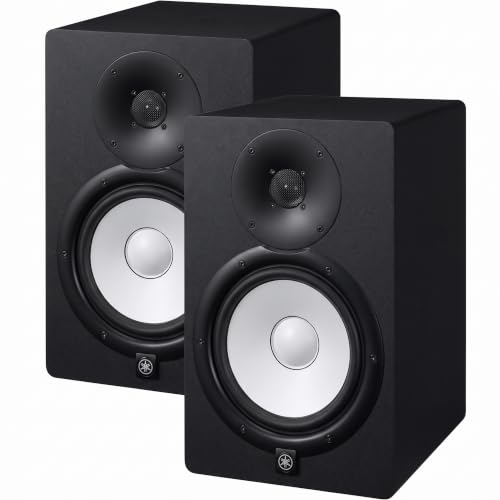
The Yamaha HS5 is the best flat studio monitor for 150 dollars in this guide, and it is the monitor to choose when the goal is a flat response that tells the truth, because Yamaha built the HS5 as a five-inch nearfield with a 70-watt amplifier, a white cone, and a reputation for honesty that goes back to the NS-10, with a sound that is clear, a midrange that is detailed, and a bass that is tight. The HS5 is the monitor for a mixer who wants the truth, and it is the reason it is the best flat option in this guide.
The flatness is the reason the HS5 is the standard, with a response that is flat from the midrange to the treble, so the mix is heard as it is, without colour, and a five-inch woofer that is rigid, so the bass is clean, and a tweeter that is clear, so the high frequencies are detailed. The HS5 has a room control that adjusts the bass for a desk against a wall, and a high trim that adjusts the treble, and it has a rear port, so it should sit a little away from the wall, although it can still work close to it. The HS5 is the monitor that a mixer buys when the goal is a monitor that does not flatter the mix, and it is the monitor that proves a flat monitor is the best tool for mixing.
The practical details are built for a mixing desk. The HS5 is a five-inch monitor, which fits on a desk, and it has a sturdy cabinet that does not resonate, and it has a white cone that is the most recognisable in the studio, and it has a power switch on the back. The HS5 is the monitor that a mixer buys when the budget is moderate, and the goal is a monitor that tells the truth, and it is the monitor that is the most recommended flat monitor in the world.
The trade-offs are that the HS5 is a five-inch monitor, so the bass does not go as low as a larger monitor, although a subwoofer can be added, and it has a rear port, so it should sit a little away from the wall. The HS5 is also a flat monitor, so it may sound less exciting than a coloured monitor, although that is its job, because a monitor that flatters the mix will hide the problems. But as a flat studio monitor for 150 dollars, the HS5 is the best in this guide, and it fits a mixer who wants the truth, a home studio, and anyone who wants a monitor that does not lie.
Check price on Amazon: Yamaha HS5

PreSonus Eris 4.5
The PreSonus Eris 4.5 is the best 4.5-inch studio monitor for 150 dollars in this guide, and it is the monitor to choose when the desk is small and the monitor has to be compact, because PreSonus built the Eris 4.5 as a 4.5-inch nearfield with a 50-watt amplifier, a front port, and a price that sits in the budget class, with a sound that is clear enough for a beginner. The Eris 4.5 is the monitor for a small desk, and it is the reason it is the best 4.5-inch option in this guide.
The size is the reason the Eris 4.5 is the standard compact monitor, with a 4.5-inch woofer that fits on a crowded desk, and a one-inch tweeter that is clear, and a 50-watt amplifier that gives the monitor enough power for a small room, and a front port that lets the monitor sit against a wall without the bass becoming boomy. The Eris 4.5 has a high-frequency control that adjusts the treble, and a low-frequency control that adjusts the bass, and it has a headphone output on the front, which is convenient for a late-night session, and it has an auxiliary input on the front, for a phone or a tablet. The Eris 4.5 is the monitor that a beginner buys when the goal is a compact monitor on a budget, and it is the monitor that proves a small monitor can still be useful.
The practical details are built for a small desk. The Eris 4.5 is a 4.5-inch monitor, which fits on a crowded desk, and it has a compact cabinet that does not take up much space, and it has a volume control on the front, which is convenient. The Eris 4.5 is the monitor that a student buys when the budget is the limiting factor, and the goal is a first monitor, and it is the monitor that is the best value for a compact nearfield.
The trade-offs are that the Eris 4.5 is a 4.5-inch monitor, so the bass does not go low, and the volume does not go loud, although it is enough for a small room, and it is a budget monitor, so the sound is less detailed than a five-inch monitor, although it is clear enough for a beginner. But as a studio monitor for 150 dollars, the Eris 4.5 is the best 4.5-inch option in this guide, and it fits a beginner, a student, and anyone who wants a compact monitor for the lowest price in this class.
Check price on Amazon: PreSonus Eris 4.5

Mackie MR524
The Mackie MR524 is the best Mackie studio monitor for 150 dollars in this guide, and it is the monitor to choose when the buyer trusts Mackie and wants a budget nearfield, because Mackie built the MR524 as a five-inch nearfield with a 50-watt amplifier, a front port, and a price that sits in the budget class, with a sound that is clear and a bass that is solid. The MR524 is the monitor for a home studio that wants a Mackie, and it is the reason it is the best Mackie option in this guide.
The sound is the reason the MR524 is the standard Mackie budget monitor, with a five-inch woofer that is rigid, so the bass is clean, and a one-inch tweeter that is clear, so the high frequencies are detailed, and a 50-watt amplifier that gives the monitor enough power for a small room. The MR524 has a front port, so it can sit against a wall without the bass becoming boomy, and it has a high-frequency control that adjusts the treble, and a low-frequency control that adjusts the bass, and it has a sturdy cabinet that does not resonate. The MR524 is the monitor that a home studio buys when the goal is a Mackie nearfield on a budget, and it is the monitor that proves a budget Mackie can still be accurate.
The practical details are built for a home studio. The MR524 is a five-inch monitor, which fits on a desk, and it has a front port, so it can sit against a wall, and it has a volume control on the front, which is convenient, and it has a power switch on the back. The MR524 is the monitor that a home studio buys when the budget is the limiting factor, and the goal is a Mackie monitor, and it is the monitor that is the best value for a five-inch Mackie nearfield.
The trade-offs are that the MR524 is a five-inch monitor, so the bass does not go as low as a larger monitor, although a subwoofer can be added, and it is a budget monitor, so the sound is less detailed than a more expensive model, although it is clear enough for a beginner. But as a studio monitor for 150 dollars, the MR524 is the best Mackie option in this guide, and it fits a home studio, a student, and anyone who wants a Mackie monitor for the lowest price in this class.
Check price on Amazon: Mackie MR524
Edifier MR4
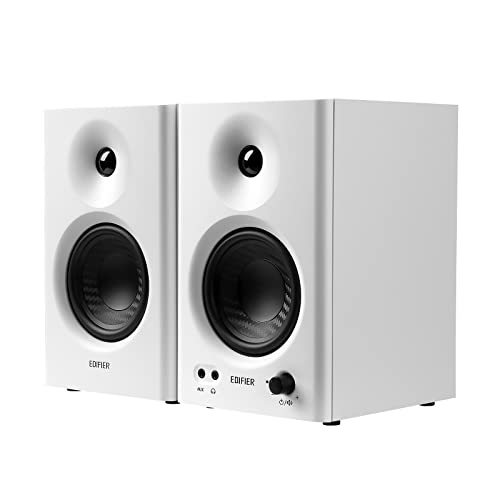
The Edifier MR4 is the best compact studio monitor for 150 dollars in this guide, and it is the monitor to choose when the budget is tight and the desk is tiny, because Edifier built the MR4 as a four-inch nearfield with a 42-watt amplifier, a compact cabinet, and a price that is the lowest in this guide, with a sound that is clear enough for a beginner. The MR4 is the monitor for a tiny desk, and it is the reason it is the best compact option in this guide.
The size is the reason the MR4 is the standard compact monitor, with a four-inch woofer that fits on a crowded desk, and a one-inch tweeter that is clear, and a 42-watt amplifier that gives the monitor enough power for a small room, and a front port that lets the monitor sit against a wall without the bass becoming boomy. The MR4 has a high-frequency control that adjusts the treble, and a low-frequency control that adjusts the bass, and it has a headphone output on the front, which is convenient for a late-night session, and it has an auxiliary input on the front, for a phone or a tablet. The MR4 is the monitor that a beginner buys when the goal is a first monitor on the tightest budget, and it is the monitor that proves a tiny monitor can still be useful.
The practical details are built for a tiny desk. The MR4 is a four-inch monitor, which fits on a crowded desk, and it has a compact cabinet that does not take up much space, and it has a volume control on the front, which is convenient. The MR4 is the monitor that a student buys when the budget is the limiting factor, and the goal is a first monitor, and it is the monitor that is the best value for a compact nearfield.
The trade-offs are that the MR4 is a four-inch monitor, so the bass does not go low, and the volume does not go loud, although it is enough for a small room, and it is a budget monitor, so the sound is less detailed than a five-inch monitor, although it is clear enough for a beginner. But as a studio monitor for 150 dollars, the MR4 is the best compact option in this guide, and it fits a beginner, a student, and anyone who wants a first monitor for the lowest price in this class.
Check price on Amazon: Edifier MR4
Buying Guide
A five-inch monitor is the right size for a small room
A five-inch monitor is the right size for a small room, because it has enough bass for a nearfield, without overwhelming the room, while a larger monitor in a small room will have too much bass, and the bass will build up, and the mix will be boomy. A five-inch monitor is the standard for a bedroom studio, a home studio, and a small room, and a larger monitor is the right choice for a larger room, with more space, and a subwoofer is the right choice when the bass has to go lower, because a subwoofer can be placed and tuned separately. A buyer who is unsure should buy a five-inch monitor first, because it is the standard, and it can be supplemented with a subwoofer later.
Use a front port when the desk is against a wall
A monitor with a rear port should sit a little away from the wall, because the port needs space to breathe, and a monitor with a rear port against a wall will have a boomy bass, while a monitor with a front port can sit against a wall, because the port faces the listener, not the wall, and the bass will be tight. A desk that is against a wall should have a front-ported monitor, such as the KRK Rokit 5 G4, the PreSonus Eris 4.5, the Mackie MR524 or the Edifier MR4, and a desk that is away from the wall can have a rear-ported monitor, such as the JBL 305P MkII or the Yamaha HS5, and a buyer who checks the port before buying will not be surprised after.
Set up the triangle, and the image will be stable
A studio monitor should be set up in a triangle, with the two monitors and the listener forming an equilateral triangle, with the monitors at ear height, and the tweeters pointing at the ears, because a triangle that is correct will give a stable stereo image, while a triangle that is wrong will give an image that is narrow or unstable. The monitors should be at arm's length, with the listener sitting upright, and the monitors should be angled inward, so the tweeters point at the ears, and the distance from each monitor to the listener should be the same, because a triangle that is uneven will give an image that is off-centre. A monitor that is set up correctly will sound better than the same monitor set up wrong, and the triangle is the first thing to check.
Treat the room on a budget, or the room will treat the mix
A studio monitor in an untreated room will sound boomy, because the room will reflect the sound, and the bass will build up in the corners, while a studio monitor in a treated room will sound clear, because the treatment absorbs the reflections, and the bass is controlled. A room can be treated on a budget, with a rug on the floor, a bookshelf on the wall, and a thick curtain over the window, because those three things will make a difference, and a room that is treated cheaply is better than a room that is not treated at all. A monitor that is accurate in a bad room will still sound bad, and a monitor that is average in a good room will sound good, so the room matters as much as the monitor, even on a budget.
Listen to the monitors before buying, when the choice is close
A studio monitor that is heard in person can be compared with another, with the sound, the image and the bass all checked, while a monitor that is bought online cannot be heard, so a buyer who is choosing between two monitors should visit a store, and hear both, before buying, because the difference in sound is audible in person, and the specifications alone do not tell the whole story. A buyer who hears the monitor will make a better choice, and a buyer who does not will have to rely on reviews, which are useful but not the same as hearing it, and a store that has monitors on display is the best place to compare.
Test the mix on other systems, and check that it translates
A mix that sounds good on the monitors should be tested on headphones, on a car stereo, and on a phone, because a mix that translates will sound good everywhere, while a mix that does not will sound good only in the studio, and the test is the way to check. Play the mix on the monitors, then on headphones, then in the car, and note what changes, because a bass that is too loud on the monitors will be too loud everywhere, and a treble that is too bright will be too bright everywhere. A mix that is tested on other systems will be a mix that can be trusted, and a mix that is not tested will be a guess, and the monitor is the tool that makes the mix, but the test is the tool that checks it.
Frequently Asked Questions
What is the best studio monitor for 150 dollars?
The JBL 305P MkII is the best overall studio monitor for 150 dollars, because its five-inch nearfield has an 82-watt amplifier, an Image Control Waveguide that gives a wide and stable stereo image, and a sound that is detailed, at a price that sits in the budget class. The KRK Rokit 5 G4 is the best home studio monitor, the Yamaha HS5 is the best flat, the PreSonus Eris 4.5 is the best 4.5-inch, the Mackie MR524 is the best Mackie, and the Edifier MR4 is the best compact, and the right choice depends on the room size, the desk, and whether the goal is a flat response or a front port.
Can you mix on a budget studio monitor?
Yes, because a budget monitor with a flat response will show the mix as it is, and a mix made on it will translate, while a budget monitor that is coloured will hide the problems, so the mix will sound good in the studio and bad everywhere else. The monitors in this guide are all flat enough to mix on, with the JBL 305P MkII, the KRK Rokit 5 G4 and the Yamaha HS5 all being used by beginners and professionals alike, and a beginner who learns on a flat budget monitor will learn to hear the mix as it is, which is the most important skill in mixing, and the monitor is the tool that trains the ear.
What size studio monitor do I need for a small room?
A five-inch monitor is the right size for a small room, because it has enough bass for a nearfield without overwhelming the room, while a larger monitor in a small room will have too much bass, and the bass will build up, and the mix will be boomy. A 4.5-inch or four-inch monitor is the right choice for a tiny desk, such as the PreSonus Eris 4.5 or the Edifier MR4, and a buyer who is unsure should buy a five-inch monitor first, because it is the standard, and it can be supplemented with a subwoofer later, when the bass has to go lower.
Should studio monitors be placed against a wall?
A monitor with a front port can sit against a wall, because the port faces the listener, while a monitor with a rear port should sit a little away from the wall, because the port needs space to breathe, and a monitor with a rear port against a wall will have a boomy bass. The KRK Rokit 5 G4, the PreSonus Eris 4.5, the Mackie MR524 and the Edifier MR4 have front ports, so they can sit against a wall, while the JBL 305P MkII and the Yamaha HS5 have rear ports, so they should sit a little away from the wall, and a buyer who checks the port before buying will not be surprised after.
Do I need a subwoofer with budget studio monitors?
Not necessarily, because a five-inch monitor has enough bass for most mixing, although a subwoofer is useful when the bass has to go lower, such as for electronic music, hip hop, or film, and a subwoofer can be added later, when the budget allows. A subwoofer should be placed carefully, and tuned to the monitors, because a subwoofer that is too loud will make the mix boomy, and a subwoofer that is too quiet will not help, and a buyer who adds a subwoofer should calibrate it with the monitors, so the bass is balanced, and the mix translates.
How do I treat a room on a budget?
A room can be treated on a budget, with a rug on the floor, a bookshelf on the wall, and a thick curtain over the window, because those three things will absorb reflections and reduce the echo, and a room that is treated cheaply is better than a room that is not treated at all. A mattress against the wall behind the monitors can help, and a few cushions in the corners can help, and a buyer who treats the room cheaply will hear the monitors more clearly, and the mix will be better, because the room matters as much as the monitor, even on a budget, and a treated room makes any monitor sound better.
Conclusion
The best studio monitor for 150 dollars is the budget nearfield that tells the truth in a small room, and in this guide the JBL 305P MkII is the best overall choice, because it is the standard budget nearfield. The KRK Rokit 5 G4 is the best home studio monitor, the Yamaha HS5 is the best flat, the PreSonus Eris 4.5 is the best 4.5-inch, the Mackie MR524 is the best Mackie, and the Edifier MR4 is the best compact. Set up the triangle, use a front port against a wall, treat the room on a budget, and test the mix on other systems, because a mix that is made on a flat budget monitor will translate, and a mix that translates is a mix that can be trusted, and a beginner who learns on a good budget monitor will make better mixes than a beginner who does not, because the ear learns faster on a flat monitor.