What's inside
- Key Takeaways
- Quick Picks
- How We Chose These Picks
- What Kind of Print Business Are You Actually Starting?
- Which Machines Can Carry a Business?
- How Do the Six Business Machines Compare Side by Side?
- How Should a New Business Run Its First Ninety Days?
- What Mistakes Sink New Print Businesses?
- How Should You Cost a Printed Product Honestly?
- What Does Quality Control Look Like in a One-Person Factory?
- How Do You Win Repeat Customers in a Printed-Parts Business?
- When and How Should the Business Add More Machines?
- What About Designs, Licences and Other People’s Work?
- How Should the Workspace Itself Be Arranged?
- How Do You Market a Print Business Without Hype?
- What Do Seasons and Cash Flow Do to a Print Business?
- How Do You Validate the First Offer Before Scaling It?
- What Records Should a Tiny Print Business Keep?
- How Do You Know When to Retire a Product or Change Direction?
- A Word on Patience: What the First Year Usually Looks Like
- Final Recommendation
- Frequently Asked Questions
- Related Guides
As an Amazon Associate I earn from qualifying purchases. This post may contain affiliate links at no extra cost to you.
widgetverdict.com is reader-supported. When you buy through links on our site, we may earn an affiliate commission.
Where to buy: all six picks below carry verified Amazon listings, which matters more than usual here, because a business buys its second and third machines, its spare nozzles and its replacement plates through channels that must still exist next year.
A printer bought for pleasure can be forgiven almost anything. A printer bought for business is an employee, and it is interviewed accordingly. The best 3d printers to start a business are not necessarily the fastest or the most impressive machines in this batch; they are the ones whose output a stranger will pay for, whose failures arrive rarely and announce themselves honestly, and whose running costs stay predictable enough to price a job before printing it. This guide therefore judges every pick as a small production asset: reliability across long unattended hours, consistency from the first part of a batch to the fiftieth, the cost and availability of the parts it wears out, and the discipline its owner will need to run it as a business rather than a hobby with invoices.
One promise before the picks, because this corner of the internet needs it: this guide prints no income claims. It will not tell you a printer pays for itself in a month or that a shelf of machines prints money, because earnings depend on what you sell, to whom, at what quality, in which market, and any guide quoting figures without knowing those answers is selling the guide, not informing the buyer. What it offers instead is the operational truth a real print business runs on: which machines behave like production equipment, where the costs actually hide, and how the owners who last in this trade think about their printers. The money part remains, properly, your business.
Key Takeaways
- Reliability is the business specification: a printer that finishes long jobs predictably earns more than a faster one that occasionally fails them.
- The Prusa MK4S brings print-farm heritage and owner-serviceable everything, the classic foundation machine for a small operation.
- Bambu Lab’s P1S Combo and P2S Combo suit product businesses whose catalogue is colourful, repeatable and sold on finish.
- The Creality K1 Max and Anycubic Kobra 3 Max V2 Combo serve businesses whose products are large, where volume per job decides viability.
- The Prusa CORE One+ Kit opens the engineering-materials catalogue, functional parts in serious filaments, for technical customers.
- Budget for spares, filament stock and your own time as real operating costs; the printer’s price is the smallest number in the business.
Quick Picks
| Pick | Badge | Why it earns its place |
|---|---|---|
| Prusa MK4S (assembled) | Best foundation machine | Farm-proven reliability and total owner serviceability; the printer small operations are built on. |
| Bambu Lab P1S Combo | Best for colourful products | Enclosed multi-colour production with automatic manners, for repeatable consumer goods. |
| Bambu Lab P2S Combo | Best current platform | The newest enclosed colour system, for businesses standardising on one modern machine. |
| Creality K1 Max | Best for large products | A 300mm enclosed chamber for the oversized goods smaller machines cannot sell. |
| Prusa CORE One+ Kit | Best for technical parts | Managed chamber and open materials for functional work customers specify by name. |
| Anycubic Kobra 3 Max V2 Combo | Best for very large colour work | Enormous volume plus multi-colour feeding, for statement products and batch oversize jobs. |
How We Chose These Picks
Business criteria reorder the usual virtues, so the scoring here differs from this batch’s other guides. Uptime came first: how a machine behaves across long prints, how its failures present, and whether its owner can return it to service with parts and knowledge available the same day. Consistency came second, because a business sells the fiftieth part as confidently as the first, and a printer whose quality drifts with its mood is a returns department waiting to open. Consumables economics came third, in structure rather than figures: standard filament from competing suppliers, wear parts that are listed and obtainable, no proprietary toll booths between the business and its materials.
Fourth came the support shape behind the machine: documentation deep enough to self-serve, a community large enough to have met every failure before you do, and a maker whose parts pipeline looks like a going concern. Raw speed was scored last and almost apologetically, because in production the relevant speed is finished, sellable parts per week, and that number is governed by reliability, batch discipline and the owner’s workflow far more than by a travel-speed headline. A machine that prints quickly and fails occasionally is, in the only arithmetic a business cares about, slower than the calm machine that simply finishes.
What Kind of Print Business Are You Actually Starting?
The honest answer shapes the right first machine, so ask it before the catalogue opens. One common shape is the product business: you design or license objects, gifts, gaming accessories, homeware, cosplay pieces, and sell them repeatedly, which prizes colour, finish and batch consistency. A second shape is the service bureau: customers bring files and problems, prototypes, replacement parts, one-off fixtures, which prizes material range, reliability and the owner’s engineering judgement. A third is the niche manufacturer: a defined catalogue for a defined community, drone parts, cycling accessories, model-railway components, where depth in one material and one part family beats breadth.
Each shape interviews the picks differently. Product businesses lean toward the colour Combos and their repeatable polish. Service bureaux lean toward the Prusas, whose documentation and material openness let an owner say yes to unfamiliar jobs with confidence. Niche manufacturers split by part size and duty, toward the big Creality and Anycubic chambers for scale, toward the CORE One+ when the niche specifies engineering filaments. None of these shapes requires a warehouse of machines to begin; nearly every durable print business started with one printer, one product or service that strangers actually wanted, and the discipline to deliver it consistently. The machine is the easy purchase. The discipline is the business.
Which Machines Can Carry a Business?

Prusa MK4S (assembled) — Best foundation machine
There is a reason the world’s best-known print farm grew up on Prusa machines, and a small business feels that reason in its first month: the printer treats production as its native language. The MK4S runs long jobs with a consistency that lets an owner schedule around it, its automatic first layer removes the commonest cause of batch failure, and when something eventually wears, the part is documented, orderable and replaceable by the owner’s own hands the day it arrives. In business terms that serviceability is not a hobbyist virtue; it is the difference between a machine down for an afternoon and a machine down for a shipping cycle, multiplied by every incident across the machine’s working life.
Its boundaries are equally clear. The open frame keeps the engineering filaments and the warp-prone work for the enclosed picks, and single-colour printing is its native mode, so a catalogue built on colour belongs to the Combos below. What the MK4S offers instead is the foundation pattern: buy one, learn production on it, and when demand proves itself, buy its twin, because a farm of identical, understood machines is easier to run than a menagerie of individually brilliant ones. More small print businesses run on that pattern than on any other in this guide, and they run for years.
- Motion system: open Cartesian frame with input shaping
- Build volume: 250 × 210 × 220 mm
- First layer: automatic via toolhead loadcell sensor
- Service model: every part documented and owner-replaceable
- Business note: identical-unit scaling suits small farms
Strengths
- Production reliability with a farm heritage behind it
- Downtime measured in hours, fixed by the owner
- Standard filament and parts from the whole market
Trade-offs
- Open frame excludes the engineering catalogue
- Single-colour native printing
- Speed is honest rather than headline-grabbing
Best for: service bureaux and first production machines. Not suited for: colour-led product catalogues or engineering filaments.
Bambu Lab P1S Combo — Best for colourful products
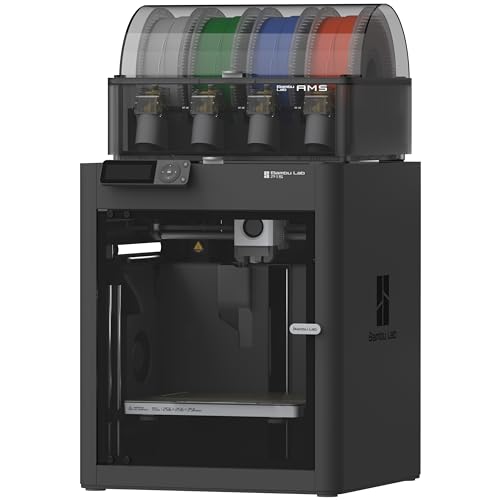
A product business sells the same delightful object a hundred times, and the P1S Combo is built for that sentence. The AMS colour system turns multi-colour designs into a routine rather than a craft project, the enclosed chamber keeps batch quality steady across a day of back-to-back jobs, and the machine’s automatic manners let one owner supervise production while doing the designing, packing and customer-answering that constitute the rest of the business. Finish quality is the quiet headline: parts come off this machine looking like products, which is the whole requirement when a stranger’s money is involved.
The operational notes are the ones this batch has recorded before, now with business consequences. Abrasive or brittle specialty filaments belong on the external feed path rather than through the colour unit, purge waste is a real material cost to design around, and the ecosystem’s polish comes with the maker’s software gravity, which a business should accept knowingly rather than discover. None of it dents the central case: for colourful consumer goods produced by a small team or a solo owner, this is the most complete production package in the guide, and its many hours of unattended competence are, in effect, staff.
- Motion system: enclosed CoreXY
- Build volume: 256 × 256 × 256 mm
- Colour system: AMS multi-colour unit included
- Calibration: automatic routines throughout
- Business note: batch consistency for repeat products
Strengths
- Colour products without colour labour per part
- Enclosed consistency across long batch days
- Automatic operation frees the owner for the business
Trade-offs
- Colour changes consume purge material on every job
- Specialty filaments prefer the external feed path
- Ecosystem polish ties workflow to the maker’s software
Best for: colourful consumer product businesses. Not suited for: engineering-parts services or abrasive-material catalogues.

Bambu Lab P2S Combo — Best current platform
Standardising a young business on a current platform is a defensible strategy, and the P2S Combo is the current platform in this guide: the newest enclosed Bambu, the newest colour system, and a parts and accessories pipeline at the start of its life rather than the end. For a business planning to buy the same machine again next year and the year after, that timing matters, because identical units share profiles, spares and operator knowledge, and a platform early in its cycle promises the longest runway of all three. Its production manners match its sibling’s, enclosed, automatic, finish-led, with the generational refinements a new model brings.
The counterweight is record: the P1S has years of accumulated owner knowledge behind it, while the P2S is still writing its own, and a business that values proven folklore over current silicon may reasonably choose the elder. Neither answer is wrong, and this guide’s ordering reflects strategy rather than superiority. If your business plan spans several machines bought over several years, begin on the platform you can keep buying. If it spans one machine bought once and sweated thoroughly, the proven sibling argues just as hard. Either way, the colour-product case that justifies both remains the strongest in this category.
- Motion system: enclosed CoreXY, current generation
- Build volume: 256 × 256 × 256 mm
- Colour system: latest AMS generation included
- Detection: current-generation error monitoring
- Business note: platform runway for identical future units
Strengths
- Longest support runway for a growing fleet
- Colour production with current refinements
- Shares the line’s enclosed batch consistency
Trade-offs
- Owner knowledge base still accumulating
- Premium over the proven sibling’s street position
- Colour hardware underused by single-colour catalogues
Best for: businesses planning a multi-year, multi-unit fleet. Not suited for: buyers who prize proven folklore over current platforms.

Creality K1 Max — Best for large products
Some catalogues are large by definition: cosplay armour, oversized homeware, RC and drone bodies, display pieces, garden and workshop goods that laugh at a 256mm cube. The K1 Max is the business machine for those catalogues, an enclosed 300mm chamber at an effort price that lets a small operation sell size itself as the product. One-piece large goods carry margins that assembled sections cannot, because the customer’s alternative is a factory, and the Max’s chamber, hot end and monitoring make those long, valuable prints a schedulable routine rather than a gamble repeated weekly.
Creality ownership in a business context means the owner is the service department, which this guide counts as a fair trade when it is chosen knowingly: parts are obtainable, knowledge is everywhere, and the machine rewards the checking and tuning habits that production owners develop anyway. The risk profile differs from the Prusas mainly in polish, not in viability, and plenty of working print businesses run Creality fleets profitably on exactly that basis. Choose the Max when the catalogue is big, keep its maintenance diary like a business asset, and it will hold up its end of the operation.
- Architecture: sealed CoreXY frame, generous chamber
- Build volume: 300 × 300 × 300 mm
- Hot end: high-temperature, all-metal design
- Monitoring: smart camera features for long prints
- Business note: one-piece large goods as the catalogue
Strengths
- Large enclosed volume at a working business’s effort price
- One-piece products smaller machines cannot offer
- Parts and knowledge widely available for self-service
Trade-offs
- Owner-as-service-department ownership model
- Long large prints concentrate risk in single jobs
- Refinement trails the premium enclosed picks
Best for: large-product catalogues and size-led niches. Not suited for: owners who want the machine fully managed for them.

Prusa CORE One+ Kit — Best for technical parts
Technical customers buy differently: they name materials, specify tolerances and return to suppliers whose parts survive service. The CORE One+ is the pick for a business courting those customers. Its actively managed chamber prints the engineering catalogue, the nylons, the filled blends, the warp-prone serious materials covered in this batch’s carbon-fibre guide, with the consistency that repeat technical orders demand, and Prusa’s open material ecosystem lets the business source those filaments competitively rather than ceremonially. A service bureau with this machine on the bench can accept jobs its competitors decline, which is the oldest definition of a market niche.
The kit form deserves its business reading: assembling the machine is unpaid hours, and this guide will not pretend otherwise, but it buys the deepest possible knowledge of the asset the business will maintain for years, and in a technical service that knowledge is billable competence wearing overalls. Buyers who cannot spare the build should weigh the same philosophy in assembled form elsewhere in the Prusa line. What is not optional is the discipline the machine rewards: dried filament, logged profiles, measured first articles. Technical customers audit their suppliers by the parts they receive, and this printer, run properly, passes audits.
- Motion system: enclosed CoreXY
- Build volume: 250 × 220 × 270 mm
- Chamber: enclosed with active temperature management
- Materials: open profiles across engineering filaments
- Business note: technical catalogue as competitive niche
Strengths
- Engineering materials with managed-chamber consistency
- Open sourcing keeps technical filament costs competitive
- Documentation supports auditable, repeatable process
Trade-offs
- Kit build is unpaid setup time for a business
- Premium positioning among these picks
- Colour catalogue work belongs to the Combos
Best for: technical parts services and engineering niches. Not suited for: colour-led consumer product businesses.

Anycubic Kobra 3 Max V2 Combo — Best for very large colour work
At the far end of the size argument sits a machine whose bed reads like a small tabletop: the Kobra 3 Max V2 Combo pairs a genuinely enormous build volume with multi-colour feeding, a combination aimed at statement products, oversized décor, event and display work, and batch layouts that fill the plate with a day’s production in one arrangement. For a business whose catalogue is big and bright, it collapses two purchases into one and turns “we can make it bigger, in colour” into a sentence competitors with ordinary chambers cannot say. Scale, in the right niche, is not a specification. It is the marketing.
Scale also concentrates every operational truth in this guide. A failed print at this size is a day and a meaningful amount of filament, so the owner’s process discipline, first-layer certainty, filament dryness, realistic scheduling, stops being advice and becomes the business model. The open bed-slinger format, for all its volume, also returns this pick to the friendly-materials league, so the engineering catalogue stays with the enclosed machines. Buy the Kobra Max when the products demand its geography and your workflow can honour it, and it will produce a catalogue that photographs like nothing else in this guide.
- Motion system: open bed-slinger, very large format
- Build volume: 420 × 420 × 500 mm
- Colour: multi-colour combo feeding included
- Hot end: full-metal, high-speed rated
- Business note: oversize colour products as the niche
Strengths
- Volume and colour in a single production machine
- Batch layouts fill one plate with a day’s output
- Statement products smaller chambers cannot attempt
Trade-offs
- Failures at this scale cost a day, not an hour
- Open format limits it to friendly materials
- Footprint demands a dedicated production corner
Best for: oversized colour products and display work. Not suited for: engineering materials or space-poor startups.
How Do the Six Business Machines Compare Side by Side?
| Pick | Business shape | Enclosure | Build volume | Scaling character |
|---|---|---|---|---|
| Prusa MK4S (assembled) | Service bureau, foundation | Open | 250 × 210 × 220 mm | Identical twins, owner-serviced |
| Bambu Lab P1S Combo | Colourful products | Enclosed | 256 mm cube | Proven colour workhorse |
| Bambu Lab P2S Combo | Colourful products, growth | Enclosed | 256 mm cube | Current platform runway |
| Creality K1 Max | Large products | Enclosed | 300 mm cube | Size at an effort price |
| Prusa CORE One+ Kit | Technical parts service | Enclosed, managed | 250 × 220 × 270 mm | Engineering niche depth |
| Anycubic Kobra 3 Max V2 Combo | Oversize colour products | Open | 420 × 420 × 500 mm | Geography as marketing |
How Should a New Business Run Its First Ninety Days?
Days one to thirty belong to process, not promotion. Print the catalogue samples, measure them, photograph them honestly, and establish the profiles, drying routines and inspection habits that will still be in force when order fifty arrives. Learn each machine’s sounds and failure signatures while the stakes are imaginary, and write the maintenance diary’s first pages. Businesses that skip this month spend their first real orders learning the same lessons at their customers’ expense, and the market charges interest on that tuition in reviews and returns.
Days thirty to sixty belong to a deliberately small launch: a narrow catalogue, a defined customer, prices built from your real costs, filament, time, failures, packaging, platform fees, rather than from a competitor’s listing copied in hope. Sell fewer things than you can make, deliver them with embarrassing consistency, and let the reviews accumulate around reliability before range. Days sixty to ninety belong to the first honest review of the numbers: which products consumed the machine hours, which generated the reorders, which customers were profitable to serve. Expand toward the answers, add the second machine only when the first one’s calendar, not your optimism, demands it, and the business will be built on the only foundation this industry respects, which is evidence.
What Mistakes Sink New Print Businesses?
The fatal one is pricing by imitation: copying a marketplace price without costing the filament, the failures, the owner’s hours and the platform’s cut, then discovering at volume that every sale loses a little money efficiently. The second is catalogue sprawl, forty products launched before four have been mastered, each one a profile half-tuned and a photograph half-lit. Third is the single-machine dependency with no spares on the shelf, where one worn nozzle converts a thriving order book into an apology tour. Fourth is treating the printer as the business, when the business is actually design, marketing, service and trust, with printing as its factory floor.
A quieter mistake deserves naming because this guide’s readers are researchers by temperament: over-investing in machinery before the first sale. A second printer bought to celebrate a first order is a story told at makerspaces with feeling. Buy capacity when the calendar of a working machine proves the demand, keep the reserve for filament stock and the inevitable surprises, and remember that in this trade the glamorous asset is not the printer at all. It is the repeat customer, and repeat customers are manufactured by consistency, which is a discipline before it is ever a machine.
How Should You Cost a Printed Product Honestly?
Build the price from the part outward, in the order the costs actually occur. Material first, counted generously: the part’s filament plus its supports, its purge where colour changes apply, and a failure allowance drawn from your own diary’s evidence rather than from hope. Machine time second, because a printer occupied for nine hours cannot print anything else in them, and time is the inventory a print business actually holds. Labour third and without embarrassment: design or file preparation, setup, inspection, finishing, packing and the messages customers send at midnight are work, and a price that pretends they are free manufactures a job that pays in compliments.
Overheads complete the structure: energy, wear parts, packaging materials, marketplace and payment fees, the occasional refund absorbed gracefully, and the business’s registrations and cover. Only after that honest stack exists should a margin be added, because margin added to a fantasy cost is a fantasy twice over. Owners who cost this way discover two liberating things. First, some products they loved are not businesses, and it is better to learn that from a spreadsheet than from a season of busy losses. Second, the products that survive honest costing can be priced with a calm confidence that customers somehow detect, because a seller who knows their numbers answers questions differently from a seller who is hoping.
What Does Quality Control Look Like in a One-Person Factory?
It looks like a ritual small enough to survive busy days. Every sellable part gets the same short examination: dimensions checked where the design says they matter, surfaces read for the defects your customers would find, moving or mating features tested against their counterparts, and a photograph taken when an order is unusual enough to argue about later. First articles after any profile change get the full ceremony, measurement against the design’s intent, because batch fifty inherits whatever batch one was allowed to become. Keep the inspection tools as calibrated as the printer, and keep the rejects, for a month at least, in a labelled box; a reject box reviewed monthly is a process-improvement meeting that requires no agenda.
The deeper habit is traceability without bureaucracy. Note the spool and profile on the order record, so that a customer’s question in month three can be answered from evidence, and a material problem can be isolated to the batch it touched. Small businesses imagine quality systems belong to factories with clipboards, but the essence scales down gracefully: know what you made, from what, with which settings, and check it before a stranger does. That is the whole system. Everything else is stationery.
How Do You Win Repeat Customers in a Printed-Parts Business?
By being boring in the ways customers love. Orders acknowledged promptly, dispatch dates stated plainly and then met, parts arriving as photographed, and problems, when they occur, surfaced by you before the customer discovers them. A printed part is easy to comparison-shop and hard to trust, so trust becomes the product behind the product: consistent tolerances, consistent finish, consistent communication. Businesses in this trade that last are rarely the cheapest or the fastest. They are the ones whose second order requires no thought, because the first order removed every doubt a buyer can have.
There is also a craft to saying no, and repeat customers are partly built from it. Decline the job your materials cannot honestly do, the deadline your calendar cannot meet, the design whose failure would wear your name, and explain each refusal in the customer’s interest rather than your own. Buyers remember the supplier who talked them out of a bad purchase long after they forget a dozen smooth transactions, and in niche communities, where your customers all know each other, that memory is your advertising department. Reputation compounds exactly like the reliability this guide keeps praising, because in a small business they are the same substance.
When and How Should the Business Add More Machines?
The trigger is evidence, and it has a specific shape: a sustained queue of paid work that one machine cannot clear without heroic hours, measured across weeks rather than felt across one exciting weekend. When that evidence exists, the second machine’s first virtue is familiarity. An identical twin shares the profiles you have tuned, the spares you already stock, the failure signatures you already recognise, and it doubles capacity without doubling the knowledge the business must carry. Divergence earns its place later, when the catalogue itself splits, a big chamber for the oversize line, a managed chamber for the technical line, and each new machine arrives to fill a named gap rather than a general optimism.
A small farm also changes the owner’s job, and the change should be planned rather than discovered. Machines multiply the small disciplines: filament stock to rotate, dry boxes to maintain, plates to cycle, a print calendar to conduct. The owners who scale gracefully build the calendar and the stock system while the fleet is still two machines arguing quietly in a corner, because systems installed under low pressure survive high pressure, and systems improvised during a rush become the rush’s permanent texture. Grow the fleet the way the first ninety days taught you to grow the catalogue, narrowly, measurably, and always one step behind proven demand rather than one step ahead of hoped-for demand.
What About Designs, Licences and Other People’s Work?
A print business stands on designs, and designs have owners. Your own designs are your cleanest asset, and many durable businesses are built on a handful of originals refined relentlessly. Licensed designs are the second road, and the licence terms are the business: some designers sell commercial licences that explicitly permit selling printed parts, others permit personal printing only, and the difference is not a technicality to be waved at but the legal ground the catalogue stands on. Read every licence as if a competitor will, keep the paperwork with the product records, and treat a designer’s terms with the respect you would want for your own work, because the ecosystem that produces licensable designs survives only while licensing pays its creators.
Customer-supplied files carry their own version of the duty. A service bureau printing a customer’s file should satisfy itself, reasonably and without paranoia, that the customer has the right to have it made, and should be especially careful with branded goods, protected characters and parts whose manufacture is regulated where you operate. None of this requires a law degree; it requires the adult habit of asking whose work this is before the machine starts. Businesses that build the habit early never have to rebuild a catalogue, a shopfront or a reputation after learning the lesson the expensive way, and in small markets reputation is the asset everything else borrows against.
How Should the Workspace Itself Be Arranged?
Like a small factory, because it is one. Machines want stable benches at working height, power that is not shared with a kettle’s ambitions, and ventilation appropriate to the materials in the catalogue, with the engineering filaments’ needs treated as the design case rather than an afterthought. Filament wants its dry storage within arm’s reach of the machines it feeds, spares want a labelled home, and packing wants a clean zone that production dust never visits, because a customer’s first physical impression is the box, not the part. None of this requires premises; it requires zones, and zones can be declared on a single bench with tape and intent.
Safety scales with the business in ways hobby habits underestimate. Printers running long and unattended hours deserve the respect due to any heating appliance: sound electrical practice, machines kept clear of clutter, monitoring where the models offer it, and a workspace whose fire precautions have been thought about in daylight rather than at 3 a.m. Customers will never see this side of the operation, and insurers and landlords will ask about little else. Arrange the room as if both audiences matter, because both do, and the discipline will quietly improve the production it surrounds, the way a tidy bench improves every job that crosses it.
How Do You Market a Print Business Without Hype?
With evidence, photographed well. A printed product’s best advertisement is the object itself, shown in its real context, in a customer’s hands, on the machine it serves, in the game it completes, with the fit and finish visible enough to survive scrutiny. Listings that describe materials, tolerances and care honestly attract the buyers who value them and repel the buyers who would have returned the product, and both effects are profits wearing different clothes. In niche communities, contribute before you sell: answer the material question, share the failure you fixed, become a citizen of the place your customers live, and let the shop link ride quietly in your profile until trust does the marketing that advertising cannot.
Pricing communication deserves the same honesty. A business that can explain, briefly and without defensiveness, why a printed part costs what it costs, design time, machine time, material, inspection, the small-batch reality that no factory is amortising this over a million units, educates its market while it sells to it. Some readers of that explanation will buy elsewhere and were never your customers. The ones who stay become the repeat base this guide keeps circling back to, because they are buying the thing a small print business uniquely sells: a specific object, made properly, by a person who answers for it.
What Do Seasons and Cash Flow Do to a Print Business?
They govern it, quietly. Demand in most printed-product niches breathes with the calendar, gift seasons, hobby seasons, the school year, the weather that sends people indoors to their projects or outdoors away from them, and a one-machine business feels each breath at full strength. The operational answer is stock and scheduling intelligence: build inventory of proven sellers during the troughs, when machine time is cheap and the calendar forgiving, so the peaks are served from the shelf rather than from a queue of apologies. The financial answer is a reserve, because filament, spares and fees arrive on their own schedule regardless of when customers choose to pay, and the businesses that survive their first year are usually the ones that kept a boring cushion of cash between the two rhythms.
None of this requires forecasting genius. It requires the diary habit this guide has recommended for the machines, extended to the money: record what sold, when, at what machine cost, and review the record quarterly with the same honesty you would give a warped part. Patterns that feel like weather from inside a single month resolve, across a year of records, into a climate you can dress for. That is as close to a secret as this trade contains, and it is not a secret at all, which is rather the theme of every section above: the durable print business is a set of unglamorous disciplines, performed consistently, on machinery chosen to reward them.
How Do You Validate the First Offer Before Scaling It?
By selling a small number of real things to real strangers and listening with unusual care. A prototype admired by friends is market research of the weakest kind, because friendship subsidises honesty. A stranger’s purchase, followed by their unprompted words about fit, finish and delivery, is data. Make the first offer narrow enough to perfect: one product, one material, one machine profile, produced until its quality stops varying, then watch whether the strangers return, recommend and reorder. Those three behaviours, in that order, are the validation ladder, and a business that climbs it with one product can climb it with ten, while a business that launches ten products at once usually validates nothing except the difficulty of launching ten products at once.
Price discovery belongs to the same small-scale honesty. Rather than guessing a number from a competitor’s page, offer the product at your honestly costed price and observe the market’s answer over a sensible run of listings and weeks. Silence is information, questions about specification are better information, and a sell-out at a sustainable price is the best information a young business can own, because it means the second machine discussion can begin from evidence. Validation is not a ceremony performed before the business starts. It is the business, in its first and purest form, and the printers in this guide were chosen to keep their side of it, consistent, serviceable, predictable, while you perform yours.
What Records Should a Tiny Print Business Keep?
Fewer than a corporation, more than a hobby, and all of them useful. The order record, what was made, from which spool and profile, when it shipped, is the spine; the maintenance diary hangs from it, because a machine’s history explains a month’s quality better than memory ever will. The cost record, filament bought, parts replaced, fees paid, hours honestly estimated, turns the quarterly review from a mood into a measurement. Customer notes complete the set: preferences, reorder dates, the specification a regular always asks for, kept with the same care and privacy you would want your own details kept with. Four small records, maintained in minutes a week, and the business can answer nearly every question its future will ask, from “can you remake the part from March exactly?” to “which product actually carried last winter?”
Keep the records where the work happens and in the format you will actually maintain, a notebook by the bench, a simple spreadsheet, a page per machine, because a perfect system abandoned in February loses to a humble one still alive in November. Review them on a rhythm, monthly for operations, quarterly for money and catalogue, annually for the whole shape of the enterprise. That annual review is where the printers in this guide re-enter the story: whether the fleet still matches the catalogue, whether a chamber or a colour system has become the missing capability, whether the business has earned its next machine or its first premises. Businesses that keep records get to make those decisions from evidence, and evidence, as this guide has argued in every section it could find an excuse to, is the entire game.
How Do You Know When to Retire a Product or Change Direction?
The records tell you, if you let them speak plainly. A product that consumes machine hours out of proportion to its orders, that generates questions instead of reorders, that survives only by being discounted toward its honest cost, is sending a message the sentimental owner files under “next season.” Retiring it is not failure; it is the catalogue being edited by its most informed editor, and the freed hours flow to the products whose numbers argue for them. The same discipline applies at the scale of the whole business. A niche that has taught you its ceiling, a service line whose customers have consolidated or vanished, a material whose moment has passed: each deserves a review conducted with the quarterly numbers open, and a decision made from them rather than from attachment to the machine hours already spent.
Pivoting, in a print business, is cheaper than in almost any other manufacturing trade, and that is the final operational gift of the printers in this guide. The factory is reconfigurable by definition: a new catalogue asks for profiles, materials and discipline, not for new plant. Owners who internalise that lightness treat direction changes as the business breathing rather than the business ending, and they keep the assets that matter through every pivot, the machines, the records, the reputation and the hard-won knowledge of what their market actually buys. Start narrow, measure honestly, retire without drama, expand on evidence: a business run on those four verbs can change its products a dozen times and remain, recognisably and profitably, itself.
A Word on Patience: What the First Year Usually Looks Like
It looks slower than the videos promised and sturdier than the fears predicted. The first months are mostly learning disguised as trading: profiles settling, a catalogue finding its shape, the first repeat customer arriving quietly and meaning more than the first ten strangers. Machine hours accumulate into competence, the diary fills with the small knowledge that makes the second year faster, and the business’s centre of gravity shifts, almost without announcement, from the printer to the customers. Owners who expect that rhythm endure it comfortably. Owners who bought a machine expecting it to behave like a lottery ticket tend to sell it, cheaply and slightly bitterly, to the first kind of owner, which is one more reason the second-hand market in the picks above is worth a new business’s attention. Begin with the year’s honest shape in mind, fund it calmly, measure it kindly and exactly, and the printer on your bench has every chance of becoming what the best ones become: not the business itself, but the reliable floor the business stands on.
One practical habit ties the year together: a weekly half hour with the diary and the order book, coffee permitted, phone elsewhere. Owners who keep that appointment catch the drifting profile, the thinning spare-parts shelf and the quietly rising queue while each is still a note rather than a crisis. It is the smallest meeting in the business and, across a first year, very likely the most valuable one, because everything this guide has recommended, costing, inspection, records, patience, is really just that half hour wearing different clothes.
Bring the same half hour to the year’s end and the pattern completes itself: the diary shows what the machines did, the order book shows what the market wanted, and the gap between the two, read honestly, is next year’s plan already written. Few businesses are handed their strategy so plainly. A print business that keeps its records is, every single year, which is a rarer advantage than any specification in this guide.
Final Recommendation
Match the machine to the business shape, then run the shape with discipline. A service bureau or a first production step belongs on the MK4S and its owner-serviced reliability. Colourful consumer products belong on the P1S Combo for proven manners or the P2S Combo for platform runway. Large catalogues point to the K1 Max, technical catalogues to the CORE One+, and oversize colour work to the Kobra 3 Max. Whichever you choose, cost your time as money, stock your spares before you need them, launch narrower than your ambitions, and let the machine’s calendar, not a salesperson’s promise, tell you when the business has earned its second printer.
Frequently Asked Questions
How many printers do I need to start?
One, plus the discipline to run it well and the spares to keep it running. Nearly every durable print business began as a single machine proving a single offer to real customers. The second printer should be purchased by evidence, a calendar full of paid work and a queue the first machine cannot clear, not by optimism. When that evidence arrives, buy the twin of the machine you know unless your catalogue has changed shape, because identical units share profiles, parts and hard-won knowledge.
What are the real running costs I should plan for?
Plan in categories rather than figures, because your catalogue decides the numbers. Filament is the obvious one, including the purge, supports and failures that honest costing counts as material consumed. Wear parts follow: nozzles, build plates, belts and fans on a schedule your maintenance diary will reveal. Then energy, packaging, platform and payment fees, software or design assets, and the cost most beginners omit entirely, your own hours, which must be priced into products if the business is ever to pay you rather than merely employ your printer.
Should I quit my job when I buy the printer?
No, and any guide suggesting otherwise should be read as entertainment. A print business grows through evidence: first orders, reorders, a catalogue that strangers find without you pushing it. Keep the income that lets you make calm decisions, run the business in the hours around it, and let the numbers, accumulated over months rather than imagined over an evening, make the employment argument when they genuinely can. The owners still trading in year three are disproportionately the ones who never bet the rent on a hot end.
Which products sell best from a 3D printer?
The durable pattern across niches is specificity: objects designed for a defined community’s defined need, where the buyer cannot find the thing in an ordinary shop. Personalised and made-to-order goods, hobby components with a knowledgeable audience, replacement and upgrade parts for beloved equipment, and décor with a genuine design point of view all fit the pattern. Generic trinkets compete with factories; specific solutions compete with nothing, and a small printer’s economics live in that difference.
Do I need a business licence and insurance to sell prints?
Requirements vary by place and by what you sell, so treat this as a prompt to check rather than an answer: most jurisdictions expect a business to register in some form, collect applicable taxes and carry appropriate liability cover, and products touching safety, children, food contact or vehicles attract stricter duties. A short conversation with a local accountant or small-business adviser before the first sale is among the cheapest professional purchases a new owner can make, and marketplaces increasingly ask for the paperwork anyway.
How do I handle a failed print on a customer order?
Absorb it into the price structure before it happens, because failures are a cost of production, not an anomaly: honest businesses build a failure allowance into their costing, inspect before dispatch, and reprint without drama when a part falls short. What customers remember is rarely that a deadline moved by a day; it is whether the seller communicated early and delivered a part that was right. Reliability of character, like reliability of machinery, compounds, and in a small business the two are the same asset viewed from different ends.
Can I run a print business from a flat or a garage?
Most begin in exactly those places, and the arrangement works when the household and the building are treated as stakeholders: noise and hours agreed, ventilation and electrical safety handled properly, and any tenancy, insurance or local rules about home businesses checked before the orders grow. A garage or spare room with zones for production, storage and packing, as the workspace section describes, is a legitimate factory at this scale. The address matters far less than the discipline practised inside it, which customers experience as reliability and neighbours experience as peace.
Related Guides
Business builders often pair this guide with the best 3d printers that will print carbon fiber for the technical catalogue, the best 3d printers that use generic filament for material cost control, and the best 3d printer kits when a second machine will be built as well as bought.


