What's inside
- Key Takeaways
- Quick Picks
- How Did We Choose Cameras for Beginners?
- What Does a Beginner Actually Need in a First Camera?
- How Much Should a First Mirrorless Camera Cost, in Total?
- The Six Best Amateur Mirrorless Cameras, Reviewed
- How Do the Six Beginner Cameras Compare?
- How Should a Beginner Spend the First Month With a New Camera?
- What Mistakes Do First-Time Camera Buyers Make?
- How Do You Choose Between These Six as a Beginner?
- What Do Sensor Sizes Mean for a Beginner, in Plain Language?
- How Does a Beginner Move From a Phone to a Real Camera?
- What Does the First Year of Lens Buying Look Like?
- How Should a Beginner Care for a First Camera?
- Which Camera Suits Each Beginner Subject?
- How Do You Practise Deliberately in the First Year?
- What About Weather, Travel and Everyday Toughness?
- How Do the Brands’ Beginner Ecosystems Differ?
- What Should a Beginner Photograph in Each Season?
- What If You Are Buying a First Camera as a Gift?
- How Do You Know When You Have Outgrown a Beginner Camera?
- Final Recommendation
- Frequently Asked Questions
- Related Guides
As an Amazon Associate I earn from qualifying purchases. This post may contain affiliate links at no extra cost to you.
widgetverdict.com is reader-supported. When you buy through links on our site, we may earn an affiliate commission.
Your first mirrorless camera should make photography easier to learn, not more intimidating. Yet beginners face the most confusing shelf in the shop: bodies that look identical, specification lists written in code, and advice that assumes you already know what an f-stop is. The best amateur mirrorless cameras solve a beginner’s actual problems — they focus reliably so your early photos are sharp, they explain themselves through friendly menus and guided modes, they are light enough to carry on the days when photography actually happens, and they leave room to grow so the camera is not replaced the moment your skills improve. This guide ranks six, from Canon’s friendly EOS R100, the gentlest starting point here, up to cameras like Sony’s a6700 and Fujifilm’s X-T5 that a beginner can buy once and grow into for years.
Where to buy: each pick links to a checked Amazon listing. Note carefully whether the listing includes a kit lens — the R100, Z30 and ZV-E10 picks here are kits that let you shoot the day the box arrives, while the a6700, X-T5 and a7C II listings are bodies that need a lens added. Confirm the configuration on the listing, and check the live price there before ordering.
Key Takeaways
- The Canon EOS R100 is the easiest true starting point: the lowest cost here, a guided interface, and a kit lens in the box.
- Nikon’s Z30 is the beginner pick for video and vlogging, with no recording-limit anxiety and a screen made for self-filming.
- Sony’s ZV-E10 suits beginners whose photography leans toward content creation, with autofocus that forgives inexperience.
- The a6700 is the buy-once choice: more camera than a beginner needs today, in the best way, at a size that never gets left behind.
- Fujifilm’s X-T5 teaches photography through its physical dials and rewards beginners with beautiful colour straight from the camera.
- Sony’s a7C II is the full-frame step for the committed beginner who knows this hobby is sticking.
Quick Picks
| Pick | Badge | Why it earns its place |
|---|---|---|
| Canon EOS R100 with 18-45mm Kit | Best first camera | The friendliest, most affordable route into real interchangeable-lens photography. |
| Nikon Z30 with 16-50mm Lens | Best for beginner video | A compact vlogging-ready kit with a flip screen and long recording confidence. |
| Sony ZV-E10 with 16-50mm Lens | Best for new creators | Autofocus and creator features that make early videos look competent immediately. |
| Sony a6700 | Best buy-once pick | Advanced autofocus and video in a small body a beginner will not outgrow quickly. |
| Fujifilm X-T5 | Best for learning photography | Dials that teach exposure by touch and colour that makes early photos sing. |
| Sony a7C II | Best full-frame step | Full-frame quality and stabilisation in the smallest body of its class. |
How Did We Choose Cameras for Beginners?
We judged these cameras by how they treat someone in their first year. Forgiveness ranked first: autofocus that finds faces and eyes without being asked, auto modes that produce good results while the owner learns, and metering that rescues imperfect light. A beginner’s scarcest resource is confidence, and a camera that returns sharp, pleasing photos early is a camera that keeps getting used. Handling ranked second — a first camera must be carryable all day and operable without a manual in hand — and menu design counted heavily, because a setting you cannot find is a setting you do not own.
Growth room was the third criterion, and it is where cheap cameras often fail quietly. Each pick here belongs to a lens system with affordable next steps: a fast prime for portraits, a telephoto for wildlife and school sports, a wider lens for interiors. We also checked the video basics a modern beginner inevitably wants — competent 4K, a microphone input where possible, screens that help rather than hinder — and the secondhand and accessory ecosystems that keep a first system affordable to expand. Price mattered, but as cost-per-year-of-use rather than sticker shock: a camera outgrown in eight months is the expensive one, whatever it cost.
What Does a Beginner Actually Need in a First Camera?
Less than the marketing implies, but specific things. You need a sensor large enough to forgive high-ISO mistakes and produce the background separation that makes photos look different from a phone’s — every camera here qualifies, from the R100 upward. You need autofocus with face and eye detection, because beginners photograph people, and people move. You need a kit lens that covers the everyday range from group photos to mild telephoto, which is why three of these picks are kits. And you need a screen and controls that encourage experimentation: a touchscreen for tap-to-focus, a mode dial with a genuine automatic setting for the overwhelming days, and manual controls waiting patiently for the curious ones.
What you do not need yet: the highest resolution, the fastest burst rate, weather sealing rated for expeditions, or a lens collection. Beginners also overvalue megapixels — the 24MP-class sensors in the starter picks print beautifully at any size a home produces — and undervalue the humble virtues: a camera that charges conveniently, transfers photos to a phone without a wrestling match, and fits the bag you already own. The X-T5’s 40MP and the a6700’s video depth are growth features, valuable because you will grow into them, not because your first month needs them.
One more need hides in plain sight: a camera whose photos look good before editing. Beginners rarely have a colour-grading workflow, and may not want one. Canon’s and Fujifilm’s straight-from-camera colour are famously kind, Sony’s modern colour is accurate and pleasing, and Nikon’s is natural — all six here produce JPEGs a beginner can share proudly, which matters more to a first year’s morale than any RAW specification.
How Much Should a First Mirrorless Camera Cost, in Total?
Budget for the system, not the body. The honest starter total includes the camera with a kit lens, a memory card, a small bag or insert, and — within the first months — one fast prime lens, the single purchase that most transforms a beginner’s photos by unlocking low light and blurred backgrounds. Framed that way, the R100 kit is the gentlest entry: it leaves the most room in the budget for that prime and for the trips where photos happen. The mid-priced picks consume more upfront and repay it in years of headroom.
Resist two budget traps. The first is buying a body-only bargain and discovering the lens costs as much again; the second is the reverse, spending everything on the body and having nothing for the card, bag and prime that complete the experience. A useful discipline is to hold back roughly a third of the total for everything that is not the camera body. It feels conservative in the shop and wise by the second month, when the beginner wants the prime, the spare battery and the weekend away — the accessories and occasions where photography actually grows.
The Six Best Amateur Mirrorless Cameras, Reviewed

Canon EOS R100 with 18-45mm Kit — Best First Camera
The R100 is Canon’s simplest RF-mount camera, and its simplicity is a considered feature. It arrives with an 18-45mm kit lens covering the everyday range, a guided user interface that explains settings in plain language with example images, and a 24.1MP sensor paired with Canon’s dependable autofocus and colour. A beginner can shoot in full auto on day one, get sharp and pleasing results, and peel back one layer of manual control at a time as curiosity grows — aperture priority for portraits, shutter priority for the school sports day — without the camera ever feeling like an exam.
Canon’s colour science does quiet morale work here: skin tones and skies come out of the camera looking like the day felt, which encourages a beginner far more than technical perfection would. The body is light, the grip is secure, and the whole kit travels in a small bag without negotiation. Video is competent 4K with a crop to be aware of, fine for family films and early experiments, and the RF system above it — lenses and bigger bodies sharing the same mount — means nothing bought for the R100 is wasted if the hobby deepens.
The compromises define its tier honestly. The screen is fixed rather than tilting, which selfie-style video shooters will feel immediately; there is no in-body stabilisation, so care with shutter speeds matters; the viewfinder and burst speeds are basic; and the kit lens is a daylight companion rather than a low-light tool. None of this prevents a wonderful first year. The R100 is the camera we recommend when the question is simply “where do I start?”
- Sensor: 24.1MP APS-C
- Lens included: RF-S 18-45mm kit zoom
- Interface: guided mode for beginners
- Video: 4K with a crop, Full HD strong
- Mount: Canon RF, full upgrade path
Strengths
- Lowest-cost true starting point here
- Guided interface teaches as you shoot
- Beautiful colour without editing
Trade-offs
- Fixed screen limits self-filming angles
- No in-body stabilisation
- Basic burst speed for fast action
Best for: complete beginners and families buying a first real camera.
Not suited for: aspiring vloggers who film themselves daily.

Nikon Z30 with 16-50mm Lens — Best for Beginner Video
The Z30 is Nikon’s small camera with a creator’s brief, and for the beginner whose ambitions lean toward video — a first channel, family films with intent, school or club projects — it is the most natural starter here. There is no viewfinder, a deliberate omission that keeps the body tiny, and in its place sits a fully articulating touchscreen made for framing yourself. The 20.9MP sensor records sharp 4K, the kit’s collapsible 16-50mm lens makes the whole package genuinely pocketable by camera standards, and Nikon designed the camera to record long sessions without the time-limit anxiety that haunts rivals.
Beginners underestimate how much of early video success is framing and focus confidence, and the Z30 supports both: eye-detection autofocus that behaves, a tally lamp so you know it is recording, and straightforward audio via its microphone input and capable built-in stereo microphones for quiet rooms. For stills it remains a real camera — the same sensor family as Nikon’s respected APS-C line — with pleasing, natural colour and a control layout that teaches the exposure basics cleanly.
Its limits are the flip side of its focus. Photographers who compose through a viewfinder will miss one on bright days; there is no in-body stabilisation, so walking footage leans on the lens’s vibration reduction and a steady hand; and stills burst performance is modest. For the video-leaning beginner it was designed for, the Z30 is the most frictionless start in this guide.
- Sensor: 20.9MP APS-C
- Lens included: collapsible 16-50mm kit zoom
- Screen: fully articulating touchscreen
- Video: 4K, long-recording friendly
- Design: no viewfinder, ultra-compact body
Strengths
- Flip screen built for self-filming
- Long video takes without fuss
- Tiny kit that travels anywhere
Trade-offs
- No viewfinder for bright-day stills
- No in-body stabilisation
- Modest burst shooting for action
Best for: beginners whose first love is video and vlogging.
Not suited for: viewfinder traditionalists or action photographers.

Sony ZV-E10 with 16-50mm Lens — Best for New Creators
Where the Z30 courts the beginner videographer, the ZV-E10 courts the beginner creator — someone whose camera work mixes video, product shots, livestreams and social content from the first week. Its 24.2MP sensor and Sony’s autofocus pedigree deliver the guide’s most reassuring focus at this tier: faces and eyes tracked calmly, a product-showcase mode that snaps focus to whatever you hold up to the lens, and a background-defocus control that gives beginners the blurred-background look without teaching them aperture first. The kit power-zoom lens keeps the rig small and its zooming smooth for video.
The supporting details are creator-literate: a vari-angle screen, a directional microphone capsule and windscreen included, easy USB streaming for the desk setup, and the entire E-mount lens ocean waiting when the kit zoom’s limits appear. Stills are very much part of its life — the sensor is a strong one — though the absence of a viewfinder and the video-first control layout tell you where its heart lies.
Accept its known limits with open eyes. Without in-body stabilisation, handheld walking footage needs the lens’s help and a gentler pace; rolling shutter punishes fast pans; 4K tops out at 30 frames per second; and there is no headphone socket for monitoring audio. Beginners filming at desks, on tripods and in controlled setups will rarely meet these limits — which is exactly the audience this camera serves so well.
- Sensor: 24.2MP APS-C
- Lens included: 16-50mm power zoom
- Creator tools: product showcase, defocus button
- Video: 4K30, strong USB streaming
- Audio: directional mic capsule included
Strengths
- Autofocus that forgives beginner technique
- Creator features useful from day one
- Enormous lens upgrade path
Trade-offs
- No in-body stabilisation
- Rolling shutter on quick pans
- No headphone socket
Best for: new content creators filming products, desks and talking-head videos.
Not suited for: handheld adventure filming or viewfinder purists.

Sony a6700 — Best Buy-Once Pick
The a6700 is the answer for the beginner who suspects — correctly — that they will be serious within a year, and who would rather buy once. Its 26MP sensor, AI-driven autofocus that recognises subjects from people to birds to trains, 4K video up to 120 frames per second and in-body stabilisation place it closer to professional tools than starter cameras, yet it remains a small, friendly body that a beginner can operate in full auto on day one and explore for years. This is headroom as a feature: every technique you learn next — manual exposure, log video, action tracking — the camera already supports.
Practically, it behaves like the picks above, only more so. The autofocus does not merely find eyes, it holds them through movement that defeats lesser systems, which rescues beginners’ photos of children, pets and sport. The larger battery outlasts a full day of learning. The lens ecosystem is the deepest in this guide, including affordable third-party primes that make the classic beginner upgrade — a fast portrait lens — painless. Weather sealing and a proper grip mean it travels as confidently as it performs.
The costs are money and a little intimidation. It is the priciest APS-C body here before lenses, its menus reward a weekend of setup, and high-end video modes can heat-limit on very long takes. A beginner who will shoot casually forever is over-buying; a beginner on a trajectory will call it the cheapest camera they ever owned, because it is the one they never replaced.
- Sensor: 26MP APS-C
- Autofocus: AI subject recognition
- Video: 4K120 and 4K60, 10-bit colour
- Stabilisation: in-body system
- Battery: large cell, all-day endurance
Strengths
- Headroom for years of skill growth
- Autofocus that rescues beginner shots
- Compact body with professional depth
Trade-offs
- Highest APS-C price in the guide
- Menus take a weekend to learn
- Overkill for purely casual shooting
Best for: committed beginners who want one camera for the long term.
Not suited for: tentative buyers unsure the hobby will stick.

Fujifilm X-T5 — Best for Learning Photography
The X-T5 teaches photography by touch. Its top plate carries physical dials for shutter speed, ISO and exposure compensation, so the exposure triangle — the core skill of the craft — is learned with your fingers and eyes rather than through menus. Beginners who shoot on the X-T5 tend to understand their camera sooner, and they are rewarded by Fujifilm’s film simulations: colour recipes, refined over decades of film heritage, that make straight-from-camera photos look intentional and beautiful, which keeps a learner shooting through the frustrating months.
Under the retro skin sits serious capability: a 40MP sensor with detail to spare, in-body stabilisation rated to 7 stops that forgives beginner shutter speeds, strong 6.2K and 4K video for the day the hobby expands, and a lens system full of characterful, high-quality primes at sensible sizes. The tilting screen serves photography at odd angles gracefully, and the whole camera has an heirloom quality that makes it the pick owners keep longest.
Its beginner frictions are real. The dials that teach so well can bewilder in week one before they enlighten; the tilting screen is not the selfie-friendly flip design video beginners may want; autofocus, though capable, is less set-and-forget for erratic subjects than Sony’s; and the body-only price is a commitment. Choose the X-T5 when the goal is to become a photographer, and accept that it asks a little more of you in return for teaching you the most.
- Sensor: 40MP APS-C
- Controls: physical exposure dials
- Stabilisation: in-body, up to 7 stops
- Colour: film simulations for JPEGs
- Video: 6.2K and 4K capability
Strengths
- Dials teach exposure fundamentals naturally
- Film simulations flatter beginner photos
- Resolution and stabilisation forgive mistakes
Trade-offs
- Learning curve steeper in week one
- Tilt screen not ideal for vlogging
- Premium price for a first body
Best for: beginners who want to learn photography properly and love its craft.
Not suited for: video-first creators needing a flip screen.
Sony a7C II — Best Full-Frame Step
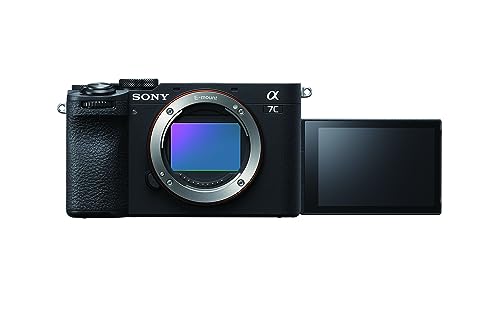
The a7C II is the connoisseur’s beginner camera: a 33MP full-frame sensor and 7-stop in-body stabilisation inside the smallest full-frame body in this guide, with Sony’s AI autofocus unit watching subjects the way the a6700 does. For the beginner who has already fallen for photography — perhaps upgrading from a phone and certain of the commitment — it skips the APS-C chapter entirely and lands on the format whose low-light cleanliness and background separation define the look they have been admiring in others’ photos.
Its beginner virtues are the full-frame ones made friendly. In dim rooms and evening streets, the big sensor keeps photos clean at sensitivities that would muddy smaller formats, which forgives the beginner’s most common error — not enough light. The compact body means this full-frame camera actually gets carried, the decisive practical virtue, and the E-mount system offers everything from affordable primes to professional zooms on the same mount. Video is strong, with 4K and 10-bit colour for the creator-leaning owner.
Honesty about the step: full-frame lenses are larger and costlier, so the system total grows faster than any other pick here; the small body pairs awkwardly with the biggest zooms; and a single card slot and compact viewfinder mark its enthusiast rather than professional station. For the committed beginner, it is a magnificent place to land. For the merely curious, it is an expensive way to discover curiosity’s limits — the R100 exists precisely for that discovery.
- Sensor: 33MP full-frame
- Stabilisation: in-body, up to 7 stops
- Autofocus: AI subject recognition
- Body: smallest full-frame class here
- Video: 4K with 10-bit colour
Strengths
- Full-frame low-light quality, beginner-friendly size
- Stabilisation forgives slow shutter speeds
- Autofocus shared with flagship thinking
Trade-offs
- Full-frame lenses raise system cost
- Single card slot
- Small grip with large lenses
Best for: committed beginners certain they want full-frame quality from the start.
Not suited for: tentative first-time buyers testing the hobby.
How Do the Six Beginner Cameras Compare?
| Camera | Sensor | Lens included | Screen | Best beginner role |
|---|---|---|---|---|
| Canon EOS R100 | 24.1MP APS-C | Yes, 18-45mm | Fixed | Gentlest first camera |
| Nikon Z30 | 20.9MP APS-C | Yes, 16-50mm | Fully articulating | Beginner video and vlogging |
| Sony ZV-E10 | 24.2MP APS-C | Yes, 16-50mm | Vari-angle | New content creators |
| Sony a6700 | 26MP APS-C | No | Vari-angle | Buy-once growth pick |
| Fujifilm X-T5 | 40MP APS-C | No | Three-way tilt | Learning photography craft |
| Sony a7C II | 33MP full-frame | No | Vari-angle | Full-frame from the start |
How Should a Beginner Spend the First Month With a New Camera?
Week one belongs to automatic mode, unashamedly. Shoot everything — the house, the street, the dog, the family enduring your practice — and study what the camera chose and what you wish it had chosen. That gap between the camera’s choices and yours is your personal curriculum. In week two, move to aperture-priority mode and one idea: aperture controls background blur. Photograph the same subject at the widest and narrowest settings and watch the background melt and sharpen; you have just learned the most-used creative control in photography.
Week three adds shutter speed: freeze a cyclist, then blur one deliberately, and learn that motion in a photo is a choice rather than an accident. Week four is for light — shoot the same scene at morning, noon and dusk, and notice that the hour changes the photograph more than any setting. Throughout the month, keep the camera somewhere visible and charged rather than boxed away; the beginners who improve are the ones whose cameras are within reach when the light does something interesting through the kitchen window. Review your photos weekly, delete ruthlessly, and keep a small folder of favourites — watching that folder grow is the engine of the whole hobby.
What Mistakes Do First-Time Camera Buyers Make?
Buying the camera their favourite professional uses leads the list, because professional bodies are optimised for speed and durability under deadline, not for learning — they are heavier, costlier and less forgiving of a beginner’s unsettled technique. The second mistake is lens neglect: spending the entire budget on a body and shooting for a year through a kit zoom in poor light, then blaming the camera for dull photos that a fast prime would have transformed. Third is accessory fever in the wrong order — a tripod, filters and a large bag before the spare battery and the prime lens that daily shooting actually calls for.
A quieter mistake is spec-sheet comparison without a subject in mind. Beginners who know what they photograph — children, travel, birds, products, friends — choose well almost automatically, because each subject points at its camera in this guide. Those who buy “the best camera” in the abstract often buy the wrong excellence. Finally, many beginners underuse the camera’s teaching tools: guided modes, in-camera tips and the manufacturer’s free tutorials exist precisely for the first year, and pride is the only reason to skip them.
How Do You Choose Between These Six as a Beginner?
Answer three questions honestly. First, what will you photograph most in the next year — if the answer is “my family and our trips,” the R100 or Z30 will delight you; if it is “content for a channel,” start at the ZV-E10 or Z30; if it is “everything, seriously,” the a6700 and X-T5 are your shortlist. Second, how do you feel about editing — Fujifilm and Canon reward the no-edit photographer most, while Sony’s depth rewards the future editor. Third, how certain is the commitment — tentative hobbies deserve the gentle prices at the top of this guide, and certain ones justify buying the camera you will grow into rather than the one you will sell.
Hold the finalists, if you can. Beginners consistently underestimate handling: the camera whose grip, dial placement and menu logic feel obvious in your hands is the camera you will operate fluently under the pressure of a fleeting moment. Specifications separate these six on paper; in the hand, the decision often makes itself in ninety seconds.
What Do Sensor Sizes Mean for a Beginner, in Plain Language?
Five of these cameras use APS-C sensors and one, the a7C II, uses a full-frame sensor roughly half again as large in each dimension. In practice the bigger sensor collects more light, which buys two things a beginner can see: cleaner photos in dim conditions, because the camera can raise its sensitivity with less noise, and shallower depth of field at the same settings, which is the blurred-background portrait look. Those are real advantages, and they are also the only two that matter at this level — the APS-C cameras here are not “worse cameras,” they are cameras that trade those two edges for smaller size, lighter lenses and lower cost across the whole system.
The hidden variable is the lenses. An APS-C system’s lenses are designed for the smaller sensor, so a complete beginner kit — camera, standard zoom, portrait prime, travel telephoto — stays compact and comparatively affordable. Full-frame lenses are bigger because they must cover a bigger sensor, and the a7C II owner’s bag grows heavier and costlier with every addition, even though the body itself is tiny. Beginners should therefore compare systems, not sensors: the question is never “which sensor wins” but “which complete kit, at my budget, will I actually carry.” For most first-year photographers the honest answer is an APS-C kit from this guide, with the a7C II reserved for those whose low-light ambitions and budgets both point the same way.
One related myth deserves retiring: megapixels are not image quality. The 20.9MP Z30 and the 40MP X-T5 both make beautiful prints; the difference appears when cropping aggressively or printing very large, neither of which defines a beginner’s year. Choose on autofocus, handling, lenses and the look of the photos — the things you will notice weekly — rather than a resolution figure you will notice almost never.
How Does a Beginner Move From a Phone to a Real Camera?
The transition has a rhythm worth knowing about, because the first fortnight confuses almost everyone. Your phone has been making a hundred invisible decisions per photo — exposure blending, sharpening, colour correction — so your first camera photos may look flatter than your phone’s, especially in harsh light. This is not the camera failing; it is the training wheels coming off. The camera is showing you what the light actually was, and learning to work with real light is the entire craft. Beginners who push through this fortnight, shooting deliberately rather than comparatively, emerge with skills no phone teaches.
Practical bridges help. Set the camera to its most pleasing colour profile — Fujifilm’s simulations and Canon’s standard picture style exist for exactly this — and shoot JPEG while your eye develops, so the photos reward you immediately. Use the camera’s phone app to transfer a few favourites each evening; the ritual of reviewing the day’s real-camera photos, larger and more deliberate than the phone’s stream, is where the learning consolidates. Keep the phone for what it does best and stop asking the camera to be one: no camera here will match a phone’s instant sharing or its computational night modes, and none needs to, because they are playing a longer game — teaching you to make photographs rather than collect them.
By the second month the balance usually tips. The camera’s photos of people — real optical blur, honest skin tones, no smeared computational texture — start to embarrass the phone’s, and the beginner understands what they bought. Every pick in this guide reaches that moment; the starter kits simply reach it at a gentler price.
What Does the First Year of Lens Buying Look Like?
Year one has a natural lens story, and following it saves beginners from the two classic errors — buying three zooms that overlap, or collecting lenses for subjects they do not photograph. Start with the kit zoom and shoot it for at least a few months, paying attention to which end of its range you live at: your own photos are the market research for your second lens, and they are more honest than any forum. Most beginners discover they shoot wide for places and long for people, and that discovery points at the second purchase.
The second lens, for nearly everyone, is the fast prime discussed in the questions below — the portrait-and-low-light lens that produces the look that made you want a camera. The third purchase splits by subject: the traveller adds a lightweight telephoto or an all-in-one travel zoom; the wildlife and school-sports photographer adds the longest telephoto the budget tolerates; the interiors and landscape shooter goes wider. Notice what is absent from this story — nobody needs a macro lens, a fisheye or a specialist tilt lens in year one, however charming the shop display. Systems matter here too: the reason this guide favours cameras in deep lens ecosystems is that the affordable version of each of these steps exists in E-mount, RF, Z and X mount alike, new and used.
Buy lenses in the order your photographs ask for them, keep them few and used often, and remember that a lens bought for a named subject gets carried, while a lens bought for a hypothetical one becomes furniture. The beginners with the best year-two portfolios usually own two lenses and know them completely.
How Should a Beginner Care for a First Camera?
Cameras are hardier than their owners fear, and care is mostly a handful of habits. Keep a lens cloth in every bag and clean glass with it rather than a sleeve; change lenses with the camera facing downward and switched off, so dust falls away from the sensor rather than onto it; and store the camera somewhere dry and ordinary — a shelf, not a sealed box in a damp garage. A rocket blower handles the dust spots that eventually appear in skies; anything more invasive can wait for a service visit, and beginners should resist the internet’s enthusiasm for home sensor cleaning in year one.
Batteries reward simple discipline: charge after a day’s shooting rather than storing the camera flat, keep the spare in the bag rather than the drawer, and replace a battery that swells or misbehaves without nostalgia. Firmware updates, which beginners ignore, genuinely improve autofocus and add features on these modern bodies — check the manufacturer’s page a few times a year and follow its instructions exactly. Finally, insure or at least register the camera, photograph its serial number, and back up your photos in two places from the very first month. The photos are the irreplaceable part of the system; everything else is equipment, and treating it that way from the start is the mark of a photographer rather than a collector.
Which Camera Suits Each Beginner Subject?
Subjects choose cameras more reliably than budgets do, so walk through the common ones. For family life — children, gatherings, holidays — the deciding features are eye autofocus and a camera small enough to be present; the R100 covers the budget version of this brief beautifully, the a6700 is its buy-once form, and both will outperform any phone the moment the light drops at a birthday dinner. For travel, weight rules: the Z30 kit and the a6700 with a compact zoom disappear into a day bag, and the traveller who carries their camera photographs ten times more than the one who leaves a heavy body at the hotel.
For a beginner drawn to landscapes and architecture, resolution and a tilting screen rise in value, and the X-T5’s 40MP and tripod-friendly handling make it the natural home — its dials also suit the slow, deliberate pace of that work. For wildlife and sport at the school and amateur level, autofocus tracking and burst depth matter most, pointing again to the a6700, with the lens budget reserved for telephoto reach. For products, crafts and online selling, the ZV-E10’s showcase focus and streaming ease were designed for the desk where that work happens. And for the beginner who simply wants beautiful objects and beautiful photos — the hobbyist in the purest sense — the X-T5’s pleasure-in-use is a legitimate deciding factor, because joy is a specification when the purchase is a pastime.
Notice that no subject in this list requires the most expensive option, and several point firmly at the cheapest. That is the shape of the beginner market when it is described honestly: the starter cameras are not failed versions of the advanced ones, they are the right answers to the most common questions.
How Do You Practise Deliberately in the First Year?
Improvement follows structure more than talent, and a light structure beats an ambitious one you abandon. Give each month a theme — portraits in one, street scenes in another, the garden in macro-like close-up with the kit lens pushed to its limits — and shoot the theme weekly rather than daily, because review time matters as much as shooting time. End each session by choosing your three best frames and writing one sentence about why each works; that sentence, repeated for a year, becomes your photographic judgement, the asset no camera purchase includes.
Copy the photographers you admire, literally: take a photo you love and recreate its light, distance and composition with your own subject. The exercise exposes how much of a great photo is position and patience rather than equipment, which is the most valuable and cheapest lesson in the craft. Join something social if you can — a local club, an online challenge with weekly deadlines — because external rhythm carries beginners through the plateau months when self-motivation thins. And print a few photographs. A printed photo ends the pixel-peeping phase of a beginner’s education in an afternoon: at print sizes anyone displays, every camera in this guide is magnificent, and the differences that remain are the photographer’s, which is exactly where a beginner wants them.
What About Weather, Travel and Everyday Toughness?
Beginners worry about fragility in the wrong places. These cameras shrug off ordinary life — being carried daily, used in light drizzle briefly, knocked gently against a doorframe — and the failures that actually occur are almost all lens-related or liquid-related rather than body failures. The a6700 and X-T5 add weather sealing that, paired with a sealed lens, tolerates rain photography with reasonable confidence; the starter kits ask for more care, and a cheap rain cover or even a well-deployed plastic bag closes most of the practical gap for the occasional wet day.
Travel toughness is more about system than sealing. A camera kit that fits the bag you already travel with survives trips; an oversized one gets left behind and “protected” out of usefulness. Batteries travel in hand luggage, cards travel in two places, and the camera travels around your neck or in the cabin bag, never in checked luggage where impacts and theft both live. Cold drains batteries faster than beginners expect — carry the spare warm, in an inside pocket — and heat asks only that the camera not bake in a parked car. None of this requires expedition equipment; it requires the same calm habits as caring for the camera at home, applied in a different postcode.
How Do the Brands’ Beginner Ecosystems Differ?
A first camera is also a first relationship with a manufacturer’s ecosystem, and the four systems here have distinct personalities worth choosing knowingly. Canon’s RF system offers the smoothest beginner on-ramp — the R100’s guided experience, kind colour, and a ladder of bodies above it that all speak the same menu language — with a lens range that is excellent though historically more closed to third-party autofocus options. Nikon’s Z system pairs the Z30’s creator focus with superb glass and a reputation for natural colour and comfortable ergonomics.
Sony’s E-mount is the maximalist choice: the deepest lens catalogue in the industry, enthusiastic third-party support at every price, and bodies from the ZV-E10 to flagships sharing one mount — the system for the beginner who wants every future option open. Fujifilm’s X system is the aesthete’s: fewer bodies, a coherent philosophy, film simulations no rival replicates, and lenses designed as a matched set rather than a catalogue. None of these is the wrong door. The beginner’s real risk is not choosing the “wrong” system — all four will serve a decade — it is choosing none of them carefully and drifting between mounts, selling at a loss each time. Pick the personality that matches yours, commit, and spend the saved deliberation on photographs.
What Should a Beginner Photograph in Each Season?
A year of subjects, planned loosely, carries a beginner further than a year of random shooting. Spring offers the forgiving classroom of gardens and longer evenings: practise aperture on flowers and portraits in soft light, and learn how quickly good light arrives and leaves. Summer is for travel and events — the kit zoom earns its keep, burst mode meets its first sports day and festival, and the beginner learns the discipline of carrying the camera daily rather than ceremonially. The Z30 and ZV-E10 owners will film as much as they photograph in these months, which is as it should be.
Autumn is the portrait season, with low golden light doing half the work for you, and the moment the fast prime — if bought — justifies itself in a single evening. Winter is the honest teacher: short days force the low-light skills, high ISO stops being frightening, and indoor family photography becomes the main arena, where the stabilised bodies and full-frame a7C II show their worth and every beginner learns flash-free available-light technique. A beginner who shoots all four seasons has, almost by accident, built a portfolio and a complete basic education. The camera that gets you through that year with enthusiasm intact is the right camera, and it is why this guide weights pleasure and forgiveness alongside every technical measure.
What If You Are Buying a First Camera as a Gift?
Gift-buying changes the risk calculation, because the giver guesses at a commitment the recipient has not yet proven. The safe and generous answer is a complete kit — camera, lens, card and a small bag — so the recipient photographs on the day itself rather than admiring an incomplete system; that points directly at the R100, Z30 and ZV-E10 kits, chosen by the recipient’s leanings toward stills, video or content creation respectively. Include the receipt discreetly and buy from somewhere with painless returns, because hands differ and the recipient may legitimately prefer another grip or system — a gift that can be exchanged is a gift without pressure.
Resist upgrading the gift beyond the kits unless the recipient has named the ambition themselves. A teenager who asked for “a camera for videos” will be thrilled by a Z30 and quietly burdened by an a7C II whose lenses they cannot afford to feed. The most appreciated camera gifts pair the kit with an experience — a day out shooting together, a beginner’s workshop place, a photobook voucher — because what a new photographer actually needs is photographs to take. The giver who supplies the first occasion along with the camera has understood the hobby better than the one who simply spends more.
How Do You Know When You Have Outgrown a Beginner Camera?
Later than you think, and for specific reasons rather than general restlessness. The honest signals are named frustrations repeated across months: you consistently lose action shots to autofocus or burst limits your technique cannot fix; your subjects have moved into light your sensor and lenses genuinely cannot handle; your video work needs the frame rates or colour depth your body lacks; or a paid opportunity requires a feature — dual card slots, tethered shooting — that your camera does not offer. Each of those is a specification-shaped hole, and it points at its own upgrade, often within the same system so your lenses carry over.
The dishonest signals are boredom, a new launch, and comparison with photographers whose advantage is a decade rather than a device. Test the suspicion cheaply first: rent the lens you believe you need, borrow a body for a weekend, or take a workshop — if your photographs leap, the gear was the ceiling; if they do not, the ceiling was practice, and it lifts for free. Beginners who upgrade on evidence build systems that serve them for a decade. Beginners who upgrade on restlessness build a shelf. This guide’s starter picks were chosen so that either way, the lenses and habits from year one remain assets rather than sunk costs.
Final Recommendation
Most beginners should start with the Canon EOS R100 kit: it is the kindest, cheapest honest beginning in real photography, and nothing it teaches or accepts is wasted later. Choose the Z30 if video leads, the ZV-E10 if creating content is the point, and step up to the a6700 or X-T5 when you know the hobby has you — the a6700 for capability that disappears into reliability, the X-T5 for the pleasure of learning the craft properly. The a7C II waits for the beginner who is not really a beginner in commitment, only in experience. Whichever you choose, remember the beginner’s secret that this whole guide is built on: the camera you carry is the camera that improves you, so favour the one that will be in your bag on an ordinary Tuesday. Order it with a card and a bag, charge it the night it arrives, and take it out the next morning before the manual is finished — the first hundred photographs teach more than the first hundred pages, and every camera in this guide was chosen to make those photographs good enough to keep you going.
Frequently Asked Questions
Is a mirrorless camera much better than a phone for a beginner?
For learning photography and for results in difficult light, yes — the larger sensor, real lenses and manual control teach and deliver things a phone’s computational tricks cannot, particularly background separation and clean low-light photos. A phone remains unbeatable for convenience. Many beginners keep both: the phone for the everyday, the camera for the occasions and the craft.
What is a kit lens, and is it good enough to start?
A kit lens is the general-purpose zoom bundled with the camera, covering wide group shots to mild telephoto. It is absolutely good enough to start — every photo in your first months can be made with it — and its limitations in low light and background blur are precisely what will teach you why photographers buy other lenses. Treat it as your training lens, not a compromise.
Which second lens should a beginner buy first?
A fast prime lens in a standard or short-telephoto focal length for your system — the classic portrait-and-everything lens. Its wide aperture transforms indoor and evening photos and produces the blurred backgrounds beginners crave, at the lowest price of any major upgrade. Every system in this guide offers an affordable one, and it is the purchase owners consistently name as the moment their photos changed.
Do beginners need to shoot RAW and edit?
Not at first, and not necessarily ever. The JPEGs from these cameras — especially Canon’s and Fujifilm’s — are genuinely good, and learning to see light and compose matters more than learning software. Shoot JPEG while you learn the camera; add RAW later if you find yourself wanting to rescue skies or push colours, ideally shooting RAW plus JPEG so the choice costs nothing.
How important is in-body stabilisation for a beginner?
It is a forgiving friend: it rescues handheld shots at slower shutter speeds, which beginners use constantly indoors. The a6700, X-T5 and a7C II include it, and their owners feel the benefit daily. The starter kits without it remain perfectly usable — their lenses carry optical stabilisation for video and stills care — but if your photography is handheld and indoors, weight stabilisation in your decision.
Should a beginner buy used to save money?
Used bodies from reputable sellers can stretch a budget a tier upward, and cameras are durable goods. The cautions are shutter count, sensor condition and battery health, plus the value of a warranty in your learning year when confidence is fragile. A sensible pattern: buy the body new if the saving is small, buy lenses used freely, and never buy a used camera you cannot return after testing.
Which of these cameras is best for photographing children and pets?
The ones whose autofocus you can trust at floor level and in the garden: the a6700 leads, because its subject recognition holds a running child’s eye or a dog’s face through the erratic movement that defines the subject, and its burst and stabilisation support the attempt rate this photography demands. The ZV-E10 and R100 serve the same subjects happily in good light at gentler prices, with the Canon’s colour flattering family skin tones. Whichever you choose, the technique matters as much as the body: get down to the subject’s eye level, use the fastest shutter the light allows, and take more frames than feels reasonable — children and pets are the subjects where the delete key earns its keep and the keeper rate surprises everyone.
Can a beginner learn on a fully manual approach from day one?
They can, and a few thrive on it, but most learn faster by automating one variable at a time — aperture first, then shutter, then ISO — which is what these cameras’ semi-automatic modes exist for. Full manual is a destination for specific situations like studio flash or night skies, not a moral requirement. The X-T5’s dials make the manual path unusually tactile when you are ready for it, but every camera here will let you take control in stages, and staged control is how the understanding actually sticks.
Related Guides
Next steps: read our guide to the best first lens upgrades for mirrorless beginners, learn the basics in how to get off auto mode on your first camera, or compare smaller options in best compact cameras for travel.



[…] with our guide to the best lenses for mirrorless video work, compare audio options in best microphones for mirrorless cameras, or read how to set up a […]