What's inside
- Key Takeaways
- Quick Picks
- How We Chose These Picks
- What Makes the Best Battery Life Mirrorless Cameras Different?
- Which Mirrorless Cameras Last the Longest on a Charge?
- How Do the Six Picks Compare on Endurance and Charging?
- How Can You Make One Charge Last Even Longer?
- How Should You Read a CIPA Battery Rating Before Trusting It?
- Are Battery Grips and Power Banks Worth Carrying?
- What Are the Most Common Battery Mistakes Mirrorless Owners Make?
- Which Endurance Profile Fits Your Kind of Shooting Day?
- What Should You Check Before Buying a Spare Battery?
- How Does Weather Change the Battery You Thought You Bought?
- Should You Judge a Camera by Its Battery Door and Gauge?
- Final Recommendation
- Frequently Asked Questions
- Related Guides
As an Amazon Associate I earn from qualifying purchases. This post may contain affiliate links at no extra cost to you.
widgetverdict.com is reader-supported. When you buy through links on our site, we may earn an affiliate commission.
Where to buy: every camera body below links to a checked Amazon listing, and each one ships as a body-only purchase unless the listing title says otherwise, so budget for a lens and at least one spare battery alongside the camera itself.
Nobody shopping for the best battery life mirrorless cameras dreams about batteries. You dream about the wedding that runs long, the ridgeline that takes all day to reach, the street festival that only gets interesting after dark. The battery is simply the thing that decides whether the camera is still awake for those moments, and mirrorless cameras have a complicated history here. Removing the mirror removed the optical viewfinder too, which means an electronic screen or finder now draws power every second the camera is on. Early mirrorless bodies were notorious for dying before lunch. The six cameras in this guide represent how far the class has come: modern cells with far higher capacity, processors that sip instead of gulp, USB-C charging that lets a power bank rescue a flat afternoon, and power management menus that reward owners who learn them.
One warning before the rankings. Battery figures in this category get quoted carelessly all over the internet, often mixing viewfinder and screen ratings, economy and normal modes, or stills ratings with video runtimes that obey completely different rules. Where a CIPA stills figure is widely published and stable for a model, we describe it in plain terms; where firmware updates and shooting modes move the number around, we describe endurance qualitatively instead, because a precise-looking figure that collapses in real use helps nobody. What matters more than any single rating is how a camera behaves across a long day: how fast it wakes, how aggressively it sleeps, whether it can top up from the same power bank that charges your phone, and how much a second battery costs you in money and pocket space.
Key Takeaways
- The Canon EOS R6 Mark II pairs the largest endurance reputation in this class with fast USB-C Power Delivery charging, making it the easiest long-day recommendation.
- Sony’s a7 IV and a7C II share the high-capacity Z battery ecosystem, so spare cells and chargers carry across bodies.
- The Fujifilm X-T5 stretches a smaller APS-C cell remarkably far thanks to an efficient processor and a useful economy mode.
- Nikon’s Z6 III and Panasonic’s S5IIX trade some stills endurance for serious video stamina features, including active cooling on the Panasonic.
- Charging speed, sleep behaviour and screen brightness habits change real endurance as much as the printed capacity does.
- Every pick here charges over USB-C, so one good Power Delivery bank in your bag covers camera, phone and headphones together.
Quick Picks
| Pick | Badge | Why it earns its place |
|---|---|---|
| Canon EOS R6 Mark II | Best overall endurance | The long-day benchmark in this class, with fast charging and a grip option for marathon events. |
| Panasonic LUMIX S5IIX | Best for video-heavy days | A fan-cooled full-frame body that records for hours and sips power sensibly between takes. |
| Sony a7 IV | Best battery ecosystem | The Z battery platform, huge third-party support and strong all-round endurance for hybrid shooters. |
| Nikon Z6 III | Best for fast action days | A partially stacked sensor and rapid wake behaviour that waste little power between bursts. |
| Fujifilm X-T5 | Best APS-C endurance | Proof that a crop body with an efficient processor can outlast bigger full-frame rivals. |
| Sony a7C II | Best compact endurance | Full-frame stamina in a body small enough that you actually carry it all day. |
How We Chose These Picks
We started from the specification that matters most for this keyword: the size of the cell each camera carries and the efficiency of everything that drains it. A big battery in a power-hungry body loses to a modest battery in a disciplined one, so we weighed rated capacity alongside processor generation, viewfinder resolution and refresh behaviour, and the quality of each camera’s power-saving menu. Cameras that force you to dig through six menu pages to set an auto-off timer lost marks against rivals that surface those controls quickly.
Charging was the second filter. Every finalist here accepts USB-C Power Delivery, but the details differ: some bodies charge quickly while switched off yet barely sip when running, others can operate indefinitely from a wall adapter or large power bank, and one or two still ship with no charger in the box, which is a hidden cost we flag in the individual reviews. We also considered the price and availability of genuine spare batteries, because the cheapest endurance upgrade is always a second cell, and an ecosystem with affordable spares beats a sealed spec-sheet victory.
Finally, endurance only matters if the camera deserves to stay switched on. Each pick had to earn its place as a camera first: credible autofocus, a sensor worth carrying, handling that survives a long day in the hands, and either strong stills, strong video or a persuasive blend of both. Two otherwise long-lasting bodies were cut at this stage because their image quality or focus systems had fallen a generation behind the six that remain.
What Makes the Best Battery Life Mirrorless Cameras Different?
The electronic viewfinder is the obvious culprit, and it does draw more than the rear screen at high refresh rates, but the full picture is more interesting. A mirrorless camera spends power on the sensor itself, which must run continuously to feed the finder a live image; on the processor, which handles autofocus calculations, face and subject detection and image processing for every frame; on stabilisation, which keeps sensor or lens elements floating against your hand movement; and on radios, because Wi-Fi and Bluetooth transfers in the background are silent battery thieves that many owners never think to disable.
Shooting style rearranges those costs completely. A landscape photographer who composes carefully, shoots thirty frames at dawn and reviews them over coffee will get several days from a charge in any of these bodies. A sports shooter holding the finder to their eye for four hours, tracking subjects with continuous autofocus and firing long bursts, can flatten the same battery before half-time. Video sits in its own category: recording keeps the sensor, processor and stabilisation working at full stretch with no idle gaps, which is why this guide treats video runtime separately from stills ratings wherever a pick is aimed at hybrid shooters.
The practical lesson is that endurance is partly bought and partly behaved. The picks below were chosen for generous hardware, but the how-to section later in this guide covers the settings that stretch any of them further: finder and screen management, sleep timers, airplane mode, and the brightness habits that quietly cost a fifth of a charge.
Which Mirrorless Cameras Last the Longest on a Charge?

Canon EOS R6 Mark II — Best overall endurance
Canon’s LP-E6NH cell has been refined across several generations of EOS bodies, and in the R6 Mark II it meets a processor efficient enough to make this the camera wedding photographers reach for when a second body would just be one more thing to carry. Owners routinely describe finishing full-day events on one battery with charge to spare when the camera is allowed to sleep between moments, and Canon’s published stills ratings for this body sit at the top of the full-frame class, particularly when the rear screen does most of the work. The rating falls when the electronic finder runs constantly, as it does on every rival too, but the starting point is high enough that the fall rarely matters in practice.
Charging behaviour strengthens the case. The body accepts USB-C Power Delivery and refills at a genuinely useful rate from a decent wall adapter, and it can also run from a sufficiently capable power source during long timelapse or streaming sessions. For event shooters who want the ultimate safety net, Canon’s battery grip doubles the cell count and adds vertical controls, turning the R6 Mark II into a two-day camera at the cost of the size and weight the grip inevitably brings. We would not buy the grip for travel, but for paid work it removes battery anxiety from the day entirely.
None of this would matter if the camera itself were ordinary, and it is not. The 24.2-megapixel sensor is a sweet spot for event work: large files without being unwieldy, excellent high-ISO behaviour for candlelit venues, and rolling shutter performance that makes the electronic shutter usable far more often than on earlier bodies. Subject detection covers people, animals and vehicles, the in-body stabilisation is rated up to eight stops with compatible lenses, and the burst rate reaches forty frames per second electronically for the moments that decide a sports assignment. Battery life is the headline here, but this is simply a very complete camera that happens to sip power.
- Sensor: 24.2MP full-frame CMOS
- Battery: Canon LP-E6NH rechargeable lithium-ion
- Charging: USB-C with Power Delivery support
- Stabilisation: in-body, up to 8 stops with compatible lenses
- Video: 4K60 oversampled from 6K
- Mount: Canon RF
Strengths
- Class-leading stills endurance that survives full wedding and event days on one cell.
- Fast USB-C charging plus an optional grip for shooters who want two batteries in the body.
- Forty-frame bursts, deep subject detection and strong stabilisation make the endurance worth having.
Trade-offs
- No charger in some regional boxes, so a USB-C Power Delivery adapter becomes an early extra purchase.
- The grip that unlocks two-day shooting also erases the size advantage over larger rivals.
- Video recording draws the battery far faster than the stills rating suggests, as on every hybrid body.
Best for: wedding, event and sports photographers who need one body to stay awake from morning preparations to the last dance.
Not suited for: minimalists counting grams, or filmmakers who need unlimited recording without thinking about cooling and power together.

Panasonic LUMIX S5IIX — Best for video-heavy days
Panasonic built the S5IIX for people whose shooting day is measured in hours of footage rather than frames, and its battery story starts with a fan. Active cooling inside the body means recording sessions end when the card fills or the battery fades, not when a thermal warning appears, which already separates it from most of this list. The DMW-BLK22 cell it shares with the wider S-series line delivers respectable stills endurance, and the camera’s power management is unusually honest: the finder and screen settings are easy to reach, and an economy mode trims consumption when the camera idles between setups on a tripod.
For filmmakers, the more important trick is external power. The S5IIX runs happily from USB-C Power Delivery sources while recording, so a large power bank in a cage pocket or a wall adapter in a studio turns battery capacity into a non-issue for locked-off work. Panasonic also sells a dummy-battery coupler arrangement for permanent installations. Handheld shooters will still swap cells across a long day, but the swap is quick, the batteries are shared with the S5II and GH6 family, and the camera reports remaining charge with more granularity than most rivals manage.
As a camera, the X variant adds the video extras its name implies: recording to external SSD over USB, ALL-Intra codecs, and streaming-friendly features, on top of the phase-detect autofocus that finally brought Panasonic’s full-frame line level with Sony and Canon for moving subjects. The 24.2-megapixel sensor will not win resolution contests, and stills shooters may find the body slightly video-first in its control layout, but for a hybrid creator whose channel depends on long recording days, the combination of cooling, external power options and sensible consumption is unmatched at this level.
- Sensor: 24.2MP full-frame CMOS
- Cell: Panasonic DMW-BLK22 pack
- Charging: USB-C Power Delivery, supports operation while powered
- Cooling: built-in fan for extended recording
- Video: 6K open gate and 5.9K recording options
- Mount: L-Mount
Strengths
- Active cooling removes the thermal ceiling that ends recording on rival bodies.
- Runs from USB-C power while filming, so studio and tripod work never touch the internal cell.
- Shares batteries with other Panasonic bodies, simplifying a two-camera creator kit.
Trade-offs
- Stills endurance is good rather than class-leading; the Canon outlasts it for pure photography days.
- The fan and video-first layout add bulk that stills-only shooters do not need.
- Autofocus, while vastly improved, still trails the best Sony and Canon systems in chaotic action.
Best for: video creators, streamers and hybrid shooters whose working day is measured in recording hours.
Not suited for: stills purists who want maximum frames per charge and no interest in the video toolset.

Sony a7 IV — Best battery ecosystem
Sony’s NP-FZ100 is arguably the most successful mirrorless battery ever made, and the a7 IV is its natural home. The cell is physically large, its capacity is generous, and Sony’s published stills rating for this body sits comfortably in the upper half of the full-frame class — roughly six hundred frames per charge in favourable screen-based shooting, fewer through the finder, and considerably more in the hands of owners who let the camera sleep between compositions. Real-world reports from wedding and travel shooters consistently describe full days on one cell with a second carried as insurance rather than necessity.
The ecosystem argument goes beyond the cell itself. Because the same battery serves the a7 III, a7R series, a7C series, a9 and a1 families and several cinema bodies, spares are everywhere: genuine Sony cells, credible third-party options with capacity readouts the camera accepts, dual chargers in every price band, and rental houses that stock them by the tray. If you shoot Sony alongside a colleague, you already share batteries. The a7 IV also charges over USB-C and can run from external power for studio tethering or long interviews, and its battery door and grip ergonomics make swaps a five-second, eyes-up operation.
As the camera underneath the battery, the a7 IV remains the default hybrid recommendation for good reason: a 33-megapixel sensor with excellent dynamic range, autofocus that finds eyes on humans, animals and birds with eerie reliability, ten frames per second with the mechanical shutter, and 4K60 video that crops slightly but looks superb. It is not the fastest body here and its rolling shutter asks for care with electronic shutter panning, yet as a complete package whose battery platform will serve you across future bodies, nothing else in this guide is as easy to build a kit around.
- Sensor: 33MP full-frame BSI CMOS
- Cell: Sony NP-FZ100 high-capacity pack
- Power input: USB-C, charges in body and runs from external power
- Stabilisation: in-body, up to 5.5 stops
- Video: 4K60 with 10-bit colour
- Mount: Sony E
Strengths
- The FZ100 platform is shared across Sony’s range, so spares, chargers and rentals are effortless.
- Strong real-world endurance backed by a large cell and mature power management.
- A genuinely complete hybrid camera, so the battery life serves stills and video equally well.
Trade-offs
- Finder-based shooting trims the rating noticeably, as the high-resolution EVF is thirsty.
- Third-party batteries vary in quality; the cheapest no-name cells rarely match their printed claims.
- The body is due a successor generation, so menu design and screen articulation feel a step behind newer rivals.
Best for: hybrid shooters building a Sony kit they intend to keep and expand for years.
Not suited for: action specialists who need stacked-sensor speed, or buyers who want the smallest possible full-frame body.

Nikon Z6 III — Best for fast action days
The Z6 III makes its endurance argument differently. Its EN-EL15c battery is a known quantity shared across Nikon’s Z range, and its rated stills count is not the headline figure in this guide. What earns the Nikon its place is how little power it wastes. The partially stacked sensor reads out quickly, the camera wakes from sleep almost instantly when the shutter button is half-pressed, and that combination changes behaviour: you can let the camera sleep aggressively between plays at a match or between sightings on a safari drive, confident that waking it costs you nothing. A camera that sleeps confidently often outlasts a camera with a bigger cell that its owner never dares to let rest.
Nikon also deserves credit for battery continuity. The EN-EL15 line reaches back through several generations of Z and DSLR bodies, so many upgraders already own compatible spares, and the Z6 III charges over USB-C and runs from external power for studio or streaming work. The optional grip extends runtime for vertical-heavy sports work. Where the Nikon asks for honesty is video: 6K raw recording and high-frame-rate modes draw hard on the cell, and filmmakers should plan external power for anything beyond short clips, a caveat Nikon shares with every high-performance hybrid body.
Performance is the reason to accept merely good endurance rather than demand the best. The Z6 III’s autofocus borrows deeply from Nikon’s flagship Z8 and Z9, its viewfinder is exceptionally bright, the electronic shutter is fast enough for most action, and 6K raw plus 240p slow motion in HD give video shooters serious tools. For the wildlife or sports photographer whose day is a series of short, intense bursts separated by waiting, this camera’s sleep-and-wake discipline is a more useful kind of battery life than a big number earned in continuous shooting.
- Sensor: 24.5MP partially stacked full-frame CMOS
- Cell: Nikon EN-EL15c pack
- Charging: USB-C Power Delivery, external power supported
- Stabilisation: in-body, up to 8 stops at the focus point with compatible lenses
- Video: 6K raw internal recording, high-frame-rate options
- Mount: Nikon Z
Strengths
- Near-instant wake from sleep rewards aggressive power-saving settings on stop-start shooting days.
- EN-EL15 compatibility means many Nikon upgraders already own working spare batteries.
- Flagship-derived autofocus and a superb finder make the camera worth keeping awake.
Trade-offs
- Rated stills endurance trails the Canon and Sony picks; carry a spare for continuous-shooting days.
- 6K raw and high-frame-rate video drain the cell quickly without external power.
- The brightest finder settings, tempting outdoors, measurably shorten a charge.
Best for: sports, wildlife and event shooters whose days alternate between waiting and intense bursts.
Not suited for: photographers who shoot continuously for hours and want the largest possible frames-per-charge figure.

Fujifilm X-T5 — Best APS-C endurance
An APS-C camera outlasting full-frame rivals sounds like a misprint until you handle the X-T5. Fujifilm’s NP-W235 is a high-capacity cell for the format, the X-Processor 5 is frugal, and the camera’s economy mode genuinely works: owners who engage it and shoot through the finder in a measured way report endurance figures that embarrassed several bigger cameras in our comparison research. Fujifilm’s published ratings for the X-T5, around five hundred frames in normal mode and higher in economy, understate what patient shooters achieve, because the CIPA method involves constant power cycling and screen use that a dial-driven film-style workflow avoids.
That workflow is the other half of the story. The X-T5’s shutter speed, ISO and exposure compensation dials mean the camera spends its life switched on but idle at your side, settings visible without waking a screen, ready the moment you raise it. Photographers who came from film bodies often find they shoot fewer, better frames with this camera, which stretches a battery in the most old-fashioned way possible. USB-C charging is present, the cell is shared with the X-T4, X-S20 and GFX100 II among others, and third-party spares are plentiful and inexpensive compared with full-frame ecosystems.
The camera itself is a stills photographer’s delight: a 40.2-megapixel sensor that resolves fine detail beautifully, seven-stop in-body stabilisation, Fujifilm’s film simulations for those who prefer finished colour straight from the camera, and a tilting screen in place of the fully articulating one some vloggers want. Video reaches 6.2K and is far from token, though long recording sessions are where its smaller body and cell feel their limits first. For travel, street and documentary work measured in frames per day rather than frames per second, the X-T5 might be the most efficient camera in this entire guide.
- Sensor: 40.2MP APS-C X-Trans CMOS 5 HR
- Cell: Fujifilm NP-W235 pack
- Charging: USB-C Power Delivery
- Stabilisation: in-body, up to 7 stops
- Video: 6.2K30 and 4K60 recording
- Mount: Fujifilm X
Strengths
- Economy mode and an efficient processor deliver endurance beyond what the format suggests.
- Exposure dials reduce screen time, quietly saving power all day long.
- Affordable, widely available spare batteries shared across several Fujifilm bodies.
Trade-offs
- Continuous autofocus for erratic sport still trails the Sony, Canon and Nikon systems here.
- Long video sessions heat the compact body sooner than the fan-cooled Panasonic.
- The three-way tilt screen suits stills shooters better than selfie-style filming.
Best for: travel, street and documentary photographers who shoot deliberately and travel light.
Not suited for: professional sports shooters or video-first creators planning hour-long recordings.
Sony a7C II — Best compact endurance
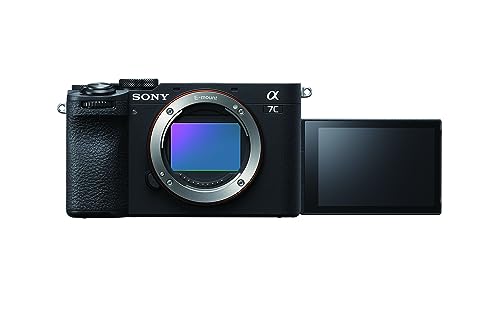
The a7C II performs a trick that should not work: it fits the same large NP-FZ100 battery as Sony’s full-size bodies into a rangefinder-style shell barely bigger than an APS-C camera. The result is a full-frame body you can carry on a strap for a twelve-hour city day that still has charge left at dinner, partly because the battery is big for the body and partly because small cameras get carried more and fussed with less. Its rated stills endurance mirrors the a7 IV’s healthy figures, and the smaller, lower-draw finder and screen help in real use.
Portability changes battery behaviour in a second way. Because the a7C II slips into a small sling with one prime lens, owners take it on days when a larger body would stay home, and a camera that is present with sixty percent charge beats a rested flagship in a hotel room. Charging is USB-C, external power works for desk and streaming setups, and every FZ100 spare or charger bought for this body remains useful if you later add a larger Sony. The single card slot and compact grip are the honest prices of the size, and we list them plainly below rather than pretend they do not exist.
Inside, this is substantially the a7 IV’s imaging core with newer intelligence: the same 33-megapixel sensor, an AI processing unit that sharpens subject detection and adds reliable auto-framing for video, improved stabilisation rated up to seven stops, and ten-bit 4K video. For travel photographers, couples documenting family life, and street shooters who want full-frame quality without full-frame presence, the a7C II’s combination of stamina and discretion is the most persuasive in this guide. It is the camera most likely to be with you, charged, when the light turns beautiful.
- Sensor: 33MP full-frame BSI CMOS
- Cell: Sony NP-FZ100 pack, shared with full-size bodies
- Charging: USB-C, external power supported
- Stabilisation: in-body, up to 7 stops
- Video: 4K60 with 10-bit colour
- Mount: Sony E
Strengths
- Full-size battery capacity inside the smallest full-frame body in this guide.
- Shares the entire FZ100 ecosystem of spares and chargers with bigger Sony bodies.
- Newer AI-assisted autofocus and stronger stabilisation than the a7 IV offers.
Trade-offs
- A single memory card slot rules it out for some paid work where dual recording is mandatory.
- The compact grip cramps larger hands during genuinely long handheld sessions with big lenses.
- The small viewfinder is less immersive than the finders on the Z6 III or R6 Mark II.
Best for: travellers, street photographers and everyday carriers who want full-frame stamina without the bulk.
Not suited for: wedding professionals who require dual card slots, or shooters with large hands using long telephoto lenses.
How Do the Six Picks Compare on Endurance and Charging?
| Camera | Battery platform | USB-C charging | Grip option | Endurance character |
|---|---|---|---|---|
| Canon EOS R6 Mark II | LP-E6NH | Yes, Power Delivery | Yes | Class-leading stills stamina |
| Panasonic LUMIX S5IIX | DMW-BLK22 | Yes, runs while powered | Yes | Built for long recording days |
| Sony a7 IV | NP-FZ100 | Yes | Yes | Strong all-round, huge ecosystem |
| Nikon Z6 III | EN-EL15c | Yes, Power Delivery | Yes | Sleep-and-wake efficiency |
| Fujifilm X-T5 | NP-W235 | Yes, Power Delivery | No dedicated grip with cell | Economy-mode overachiever |
| Sony a7C II | NP-FZ100 | Yes | No | Big cell, tiny body |
How Can You Make One Charge Last Even Longer?
Start with the sleep timer, the single most valuable setting on any mirrorless camera. Set the body to sleep after one minute, or even thirty seconds if your shooting rhythm allows it, and learn to half-press the shutter as you raise the camera so it wakes during the motion rather than after it. Photographers who resist sleep timers because of one missed frame years ago routinely sacrifice a third of every battery to that memory. Modern bodies, the Z6 III above all, wake so quickly that the trade has flipped: aggressive sleep is now free endurance.
Next, manage the displays. The rear screen at full brightness in midday sun is a serious draw, and the finder at its highest refresh rate costs more than its standard mode. Use the finder for bright conditions, where its shade makes a lower brightness usable, and reserve high-refresh modes for the fast action that actually benefits. Review images sparingly in the field; chimping through two hundred frames on a large bright screen to delete three is a habit measured in percentage points. Review at the hotel, on a tablet, with the camera plugged in.
Then silence the radios. Airplane mode, or manually disabling Wi-Fi and Bluetooth, stops the camera hunting for networks and maintaining connections you are not using. Geotagging through a phone link is genuinely useful for travel archives, so treat it as a deliberate choice rather than a default. Stabilisation modes deserve the same thought: continuous stabilisation while walking between locations spends power floating a sensor for nobody’s benefit, while the standard mode that activates on half-press covers the shot itself.
Finally, charge like you mean it. A USB-C Power Delivery bank of the size you would carry for a phone can return a meaningful fraction of a camera battery during a lunch stop, and topping up from sixty to ninety percent is far kinder to lithium cells than nightly deep drains. Keep batteries warm in cold weather — an inside pocket, not the outer bag — because a cold cell reports empty long before it truly is, and often recovers a surprising amount of charge simply by warming in your hand. Retire cells that swell, overheat or lose charge on the shelf; a failing battery is a safety issue, not an economy.
How Should You Read a CIPA Battery Rating Before Trusting It?
The CIPA standard exists because manufacturers, left alone, would each invent a flattering test of their own. The method prescribes a pattern: the camera powers on, zooms, focuses, fires with flash on a proportion of frames, powers down, and repeats, until the battery can no longer keep the camera working. Frames captured during that cycle become the published figure. Understanding the recipe explains both why the number is useful and why your mileage will never match it exactly. Flash firing, for instance, is built into the test, yet most mirrorless shooters rarely fire a flash; that alone can push a careful photographer’s real count above the rating. Zooming a power-zoom lens back and forth, by contrast, may describe a kit-lens owner’s day better than a prime shooter’s.
Manufacturers also publish separate figures for screen and viewfinder use on many bodies, and the gap between them teaches you something real about your own habits. The finder figure is almost always lower, sometimes dramatically, because a high-resolution OLED panel running at speed is one of the hungriest components in the camera. If you shoot with the finder glued to your eye at a sports event, plan around the finder figure and then discount it further for continuous autofocus and cold weather. If you shoot landscapes from a tripod with the screen tilted up, the screen figure is your starting point, and long sleep intervals between compositions will carry you well past it.
Video runtimes follow a different test again, usually quoting continuous recording until the battery ends under controlled temperatures. Treat those figures as ceilings. Real filming involves the camera idling while you direct, reposition lights and review takes, and idling on a modern body still draws a meaningful fraction of recording power. The honest way to compare two cameras for a video day is to compare their battery capacities in watt-hours, check whether each can run from external power, and ask whether cooling limits the session before the battery does. On the S5IIX, cooling never gets a vote; on several rivals, it decides first.
One more subtlety: battery capacity is printed on the cell itself in milliamp-hours and watt-hours, and watt-hours are the figure that travels across brands, because voltage differs between platforms. A cell with a modest milliamp-hour number at a higher voltage can store more energy than a bigger number suggests. When a third-party spare advertises a strikingly high milliamp-hour figure at a bargain price, compare watt-hours against the genuine cell before celebrating; chemistry has not secretly advanced in a discount warehouse.
Are Battery Grips and Power Banks Worth Carrying?
A battery grip is the oldest endurance accessory in photography and still the most decisive. It doubles the cells in the camera, moves the swap from mid-ceremony to never, and adds vertical controls and a second shutter release that portrait-orientation shooters genuinely use. The costs are equally real: the combined body becomes the size of a flagship, the grip itself is a significant purchase, and travel photographers who chose mirrorless partly to escape bulk may find they have rebuilt the DSLR they left behind. Our view is that grips belong to working professionals in fixed genres — weddings, sport, studio portraiture — while travellers gain more from two loose spares that distribute weight between pockets and bags.
Power banks solve a different problem. They cannot help mid-burst, but they transform downtime: the camera tops up in the bag while you walk between locations, refills over lunch, and shares its supply with your phone, earbuds and action camera. For that system to work, three details matter. The bank must deliver USB-C Power Delivery at a wattage the camera respects; the cable must be short, rated for that delivery and kept with the bank rather than borrowed from a drawer each trip; and your camera must be one that charges while switched off at a decent rate, which all six picks here do. A bank that lives permanently in your camera bag, checked monthly, is infrastructure. A bank you remember at the airport is a souvenir.
There is also the question of battery health across years. Lithium cells age by cycles and by time spent full and hot. Photographers who rotate two or three spares evenly, store them partly charged, and keep them out of hot cars will find the same cells serving a second body years later — one more reason the shared platforms in this guide, Sony’s FZ100 above all, repay loyalty. Number your batteries with a paint pen, rotate them in order, and retire any cell whose runtime collapses suddenly; a battery that fades fast is telling you something about its internal state, and believing it is cheaper than learning the hard way during a job.
What Are the Most Common Battery Mistakes Mirrorless Owners Make?
The first is trusting a single number. Buyers compare CIPA ratings as if they were fuel economy figures measured on one test track, then feel cheated when a day of video or finder-heavy sport halves the figure. The rating is a comparison tool between cameras tested the same way, nothing more, and your shooting pattern is the real specification. The second mistake is buying one battery because the rating looked good. Every professional workflow in every genre carries spares; the rating decides whether you carry one spare or three, not whether you carry any.
Third, owners ignore the charger situation until the night before a trip. Several bodies in this class ship without a wall charger in some regions, and discovering that at midnight with a USB cable and a laptop port — which may charge the camera slowly or not at all while it is on — is an avoidable misery. Fourth, shooters leave a camera in a hot car or a freezing bag and blame the cell for the chemistry of temperature. And fifth, many owners never update firmware, missing the quiet power-management improvements manufacturers ship in the first year of a body’s life.
Which Endurance Profile Fits Your Kind of Shooting Day?
Wedding photographers live the harshest battery day in stills photography: twelve hours, two venues, mixed light, constant readiness and no acceptable moment to be swapping a cell. For that day, the arithmetic favours the largest rated endurance plus a grip, which is why the R6 Mark II leads this guide and why its owners talk about batteries so little. The camera disappears into the job. If your weddings lean toward video coverage as well, the calculus shifts toward the S5IIX and external power at the reception, where a locked-off camera can run from a wall outlet while you roam with a second body.
Travel photographers should optimise for a different failure mode. Your risk is not a flat battery at a ceremony; it is a charger left in another country, a long bus day with no outlet, a cold mountain morning that makes a healthy cell read empty. For that life, USB-C charging from the same bank that feeds your phone is worth more than a hundred extra rated frames, and a compact body you carry constantly, like the a7C II, quietly wins days that bigger cameras spend in the hotel safe. Carry the spare in an inside pocket in winter, rotate it at midday, and let body warmth do what no specification can.
Wildlife and sports shooters should think in bursts and waits. Your camera may fire three thousand frames in a morning yet spend most of its hours asleep against your chest, which rewards the Z6 III’s instant wake and punishes any body that needs a long boot or a menu visit before it is ready. Set sleep aggressively, disable the rear screen with a button assignment, and judge endurance by mornings completed rather than frames promised. Parents and everyday shooters, finally, should simply buy the camera whose battery they can charge from the cable already in the kitchen drawer; the best endurance system is the one a tired person actually uses at midnight.
There is one more profile worth naming: the long-exposure and astrophotography shooter, whose camera sits open-shuttered on a tripod while the sensor and processor work steadily and the night air steals capacity. For that work, external power is not an accessory but the main supply, with the internal cell as backup, and a dew-warm battery matters more than a big one. Every pick here accepts external power gracefully, which is no accident; it was one of the quiet filters that shaped this shortlist from the start.
What Should You Check Before Buying a Spare Battery?
Start with the exact cell designation, not the camera name. Manufacturers reuse similar names across generations, and a battery that fits a predecessor may power a newer body with reduced reporting or refuse to charge in its cradle. The six platforms in this guide are well established — LP-E6NH, DMW-BLK22, NP-FZ100, EN-EL15c, NP-W235 — and each has a small family of predecessors that partially overlap. Partial overlap is where mistakes breed: an older cell might work yet show no percentage, charge slowly, or disable a high-power mode. For a spare you will trust on a paid day, buy the current designation printed in your camera manual.
Next, decide genuine versus third-party with clear eyes. Genuine cells cost more because their capacity claims are conservative, their protection circuits communicate properly with the body, and their quality control is consistent from batch to batch. The best independent brands now approach that standard and often include useful extras like a USB-C port on the cell itself, letting a spare charge from any cable without a cradle — a genuinely clever travel feature. The bottom of the market remains a lottery of overstated capacity and early failure. A sensible middle path many working photographers take is genuine cells for the first two positions in rotation and one reputable third-party cell as the third emergency reserve.
Chargers deserve the same thirty seconds of thought. A dual charger that reports per-cell status and draws from USB-C Power Delivery replaces two wall warts in your travel kit and refills a pair overnight from the same adapter that charges your laptop. Verify that the charger supports your exact cell generation; some older cradles charge newer high-capacity cells slowly or incompletely. And when you buy a used camera, treat its included battery as an unknown: check for swelling by spinning the cell on a flat surface, watch its first three charge cycles, and budget for a fresh genuine cell if anything about its behaviour feels hurried or hot. The battery is the one component whose failure you can schedule in advance, simply by replacing it before it asks.
How Does Weather Change the Battery You Thought You Bought?
Cold is the great falsifier of battery ratings. Lithium chemistry slows as temperature falls, internal resistance rises, and the camera’s voltage gauge reads a cell as exhausted while a meaningful share of its charge remains locked behind that resistance. The practical consequences play out identically on every brand in this guide: a battery that would deliver a full summer day may show the empty warning after a fraction of that work on a frozen hillside. The recovery is equally brand-blind. Warm the cell — an inside pocket against your body is the classic mountaineer’s answer — and much of the missing capacity returns, which is why experienced winter shooters rotate two cells between camera and pocket all day, treating warmth as a consumable resource alongside charge itself.
Heat attacks from the other direction. A camera recording video in direct summer sun is fighting ambient temperature, its own processor and a battery that ages faster for every hour it spends hot. Shade the body when it waits, open the screen away from the body where the design allows it, and never leave spare cells on a dashboard. Long-term, heat is the quiet reason a two-year-old battery disappoints: capacity lost to hot storage never returns, even though the cell still charges to a cheerful full reading. Photographers in hot climates should store their working cells in the coolest room of the house, not the gear cupboard beside a sunlit wall.
Altitude and travel days combine both problems with a third: opportunity. Long flights, airport delays and remote trailheads stretch the interval between outlets, which is where the shared USB-C charging across this entire shortlist earns its keep. One high-capacity bank and one good adapter cover camera, phone, headlamp and tablet, and a photographer who builds that habit stops reading battery gauges with anxiety at all. That, more than any single model’s rating, is the destination this guide is steering toward: a power system boring enough to forget, underneath a camera interesting enough to remember.
Should You Judge a Camera by Its Battery Door and Gauge?
It sounds like a joke until you have changed a battery in sleet, in the dark, wearing gloves, while a client watches. Small physical details decide whether endurance systems work under pressure: whether the battery door opens without removing the camera from a tripod plate, whether the cell ejects with a positive spring or must be shaken out, whether a locking tab keeps it from dropping into snow when the door opens downward. The bodies in this guide mostly behave well — Sony and Canon doors are models of the form — but test the motion in a shop if your work is gloved or rushed, because a dropped battery in mud is a zero-percent battery regardless of its rating.
The remaining-charge display deserves the same scrutiny. A percentage readout lets you plan: swap at the break, not during the vows. A four-bar icon forces guesswork inside each bar, and the last bar on many cameras conceals a wide range of remaining work. Several picks here report percentage once you enable it in the menu, and enabling it on day one is free accuracy. Pair that with the habit of glancing at the gauge whenever you lower the camera, and battery surprises become rare enough to be memorable — which is the entire point of choosing a camera from this particular list.
Final Recommendation
Buy the Canon EOS R6 Mark II if one recommendation must serve most people: its combination of class-leading stills endurance, fast charging, an optional grip and a complete hybrid feature set makes it the camera least likely to end a shooting day early. Choose the Sony a7 IV if you are building a system, because its battery platform will follow you across bodies for a decade, or the a7C II if the best battery is the one inside the camera you actually carried out the door. The S5IIX owns video days, the Z6 III rewards burst-and-wait shooters, and the X-T5 proves a crop sensor with dials and discipline can embarrass them all. Whichever body you choose, spend the small extra on one genuine spare cell the same week — endurance you can hold in a pocket beats endurance argued about in a spec sheet, every single time.
Frequently Asked Questions
How many spare batteries should I actually carry?
For a full day of stills on any pick here, one spare covers most photographers comfortably, and two spares cover wedding and event professionals who cannot pause. Video shooters should think in hours instead: plan a battery per major recording block, or move to USB-C external power for static setups and keep internal cells for handheld work.
Why does my camera get fewer frames than the rating promises?
The CIPA test mixes screen and finder use, power cycling and flash firing in a fixed pattern that rarely matches a real day. Heavy finder use, continuous autofocus tracking, cold weather, image review and wireless connections all pull the real figure down, while deliberate shooting with long sleep periods often pushes past the rating instead.
Is USB-C charging a real substitute for a wall charger?
For topping up, yes; for refilling from empty overnight, a proper Power Delivery adapter matches or beats most bundled chargers. The weak link is usually the source, not the camera: laptop ports and old phone adapters deliver little current, while a modern high-wattage USB-C adapter fills these bodies at their best rate.
Do third-party batteries perform as well as genuine ones?
The best third-party brands come close and report charge accurately in-camera, but the cheapest cells routinely overstate capacity and age quickly. For a spare that your paid work depends on, genuine batteries from the camera maker remain the safer spend; for a third emergency cell, a reputable third-party brand is a reasonable compromise.
Does in-body stabilisation drain the battery quickly?
It draws power whenever it is active, but the cost is modest beside the finder and sensor. Modes that stabilise only at the moment of exposure save a little; switching stabilisation off entirely saves slightly more and costs you sharpness at slow shutter speeds, which is a bad trade for most handheld work.
How should I store batteries between shoots?
Store lithium cells partly charged rather than full or empty, in a cool dry place, and top them up the night before a shoot rather than the month before. Cells stored full for long periods age faster, and cells stored empty can discharge below the point where their protection circuits will accept a charge.
Related Guides
Keep exploring with our companion guides: best mirrorless cameras for travel, best camera strap for mirrorless cameras and best cameras to use for day and night mirrorless.



[…] the broader picture, read our guide to the best backpack for mirrorless cameras, compare carry options in best camera straps for two-body shooting, or learn the workflow in how to […]