What's inside
- Where to Buy
- Introduction
- Key Takeaways
- Quick Picks
- How We Chose These Picks
- Comparison
- How to Choose a Vlogging Camera
- Do You Actually Need a Flip Screen and Face Autofocus?
- Should a Beginner Vlogger Buy a Kit, a Bundle or a Body Only?
- How Much Does Sensor Size Matter for a Vlogging Channel?
- What Should Your First Month of Shooting Teach You?
- Common Mistakes When Buying a Vlogging Camera
- Final Recommendation
- Frequently Asked Questions
- Related Guides
As an Amazon Associate I earn from qualifying purchases. This post may contain affiliate links at no extra cost to you.
widgetverdict.com is reader-supported. When you buy through links on our site, we may earn an affiliate commission.
Where to Buy
The six cameras below reach Amazon in different states of completeness, and each name here links to its own listing. The Sony ZV-E1 body leads — its page shows the live figure for the full-frame creator flagship. The Sony ZV-E10 II bundle with the 16-50mm lens follows, and because it packs accessories alongside the camera, read its listing carefully to see exactly what the box holds before comparing its number with body-only prices. The Canon PowerShot V1 is the fixed-lens entry; its Amazon page carries the current ask for the complete camera. The Panasonic Lumix G100 kit and the Canon EOS R50 V body sit at opposite ends of the lens question — one includes its zoom, the other includes none — so check each page in that light. The OM System OM-3 with the 12-45mm F4.0 PRO lens closes the list as the premium styled kit, its figure waiting on its own listing.
Introduction
The best mirrorless vlogging cameras are not simply cameras that shoot video; they are cameras designed around the peculiar geometry of one person being both the crew and the subject. The screen must face the presenter. The focus must find a face and stay there while its owner waves products, walks backward and talks continuously. The microphone question must have an answer that does not involve a radio mic and a prayer. Every pick in this guide was chosen against that working picture, and every claim in the reviews is read from the camera’s own listing title.
Two entries bend the category’s edges, and both bends are declared. The Canon PowerShot V1 carries a built-in ultra-wide-angle zoom lens — it does not take interchangeable lenses, so calling it mirrorless describes its electronic design rather than a lens mount; it is included because Canon built it explicitly for vlogging and live streaming, and shoppers meet it on every vlogging shortlist. At the other edge, the OM System OM-3 is a stills-styled body with a creative dial and a weather rating in its title, included because its 4K 60p video and compact kit lens have made it a genuine walk-and-talk tool. The four between them — two Sony ZV bodies, the Lumix G100 and Canon’s EOS R50 V — are the video-first heart of the category.
Specifications are handled as strictly here as across this batch. The G100’s built-in microphone with tracking is affirmed because its title prints it. Stabilisation is claimed only where a title names it: 5-axis IBIS on the ZV-E1, 5-Axis Hybrid I.S. on the G100, 5-axis stabilisation on the OM-3. Where a title is silent — screen details on several bodies, microphone arrangements on most — the spec boxes record the silence rather than dressing the camera in features borrowed from its maker’s other models.
One habit separates channels that outgrow their first camera gracefully from those that stall: keep a shooting log for the first month. Note the lens or zoom setting each video actually used, the rooms that defeated your light, and the moments focus or audio failed you. That log converts the upgrade question from folklore into evidence — you will know whether your channel needs wider glass, better sound or a bigger sensor, and in which order. Every camera in this guide is a reasonable first answer; the log is how you discover your own second question, and it costs nothing but a notebook beside the tripod.
Key Takeaways
- Two picks are dedicated video-first designs with V in the name: Canon’s PowerShot V1 (built-in lens) and EOS R50 V (interchangeable, body only).
- Full-frame quality tops the set in the Sony ZV-E1: a 12.1MP Exmor R sensor with 4K up to 60p and 5-axis IBIS confirmed in its title.
- The Lumix G100 is the only title here that confirms a tracking built-in microphone — the solo presenter’s audio shortcut.
- Bundle arithmetic varies wildly: the ZV-E10 II listing includes a lens, memory card, tripod and more, while the R50 V and ZV-E1 are bodies alone.
- The OM-3 is the only pick whose title states weather sealing — IP53 — making it the all-weather walk-and-talk option.
Quick Picks
| Pick | Badge | Why it earns a place |
|---|---|---|
| Sony ZV-E1 | Full-frame creator flagship | 12.1MP full-frame sensor, 4K up to 60p and 5-axis IBIS in a body-only V-series body. |
| Sony ZV-E10 II Bundle | Complete starter box | 26MP APS-C camera with 16-50mm lens, 64GB card, tripod and accessories bundled. |
| Canon PowerShot V1 | Fixed-lens simplicity | Built-in ultra-wide zoom, 4K video and a vlogging-and-streaming brief in one compact body. |
| Panasonic Lumix G100 | Tracking microphone kit | Built-in mic with tracking, 12-32mm lens and 5-Axis Hybrid I.S. in a Micro Four Thirds kit. |
| Canon EOS R50 V | Canon’s video-first RF body | 24.2 megapixel APS-C body built for vlogging and live streaming kits, body only. |
| OM System OM-3 | Styled all-weather kit | 20.4MP body with 12-45mm PRO lens, 4K 60p video, creative dial and IP53 sealing. |
How We Chose These Picks
The selection began with the solo test: could one person, alone in a room or on a street, frame themselves, be heard clearly and stay in focus without help? Cameras were scored against that scene before any specification was admired. It is why a fixed-lens compact with an ultra-wide built-in zoom earns a place beside interchangeable flagships — the ultra-wide lens is the solo presenter’s framing insurance, holding face and room in frame at arm’s length without a lens purchase or a second thought.
Title verification ran second, with the discipline this batch applies everywhere. Video ceilings were taken as printed: 4K up to 60p on the ZV-E1 and OM-3, plain 4K on the PowerShot V1 and G100, and — notably — no video figure at all in the R50 V’s title, which instead confirms its sensor, its autofocus claim and its vlogging-and-streaming kit positioning. A guide that invented a frame rate for the Canon would be doing its readers the exact disservice the spec boxes exist to prevent.
Bundle honesty ran third. This category is sold in wildly different boxes — a bare flagship body, a camera buried in a bundle of accessories, a complete kit with a quality zoom — and comparing their shelf figures without unpacking them is meaningless. Each review therefore states what its listing actually contains and judges value on the complete working kit: body, lens if any, and the accessories a vlogger will use in the first month rather than the ones that pad a bundle photograph.
The final filter was growth. A vlogging camera is a business tool for most of its buyers, and channels change: today’s desk presenter is next year’s travel vlogger. Interchangeable systems scored for their lens futures, the fixed-lens V1 for its completeness today, and the OM-3 for a stills capability that lets one camera serve a channel and a photography habit together. The six below are the survivors of those four passes.
Sony ZV-E1 — Full-frame creator flagship
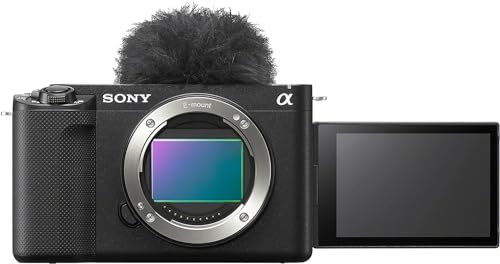
The ZV-E1 puts a full-frame sensor into Sony’s presenter-first V series, and its title confirms the specification that matters: a 12.1MP full-frame Exmor R CMOS sensor, the Bionz XR processor, 4K at up to 60p, the E-mount, and 5-axis IBIS. Twelve megapixels reads low beside the stills cameras elsewhere in this batch, and for video it is a deliberate virtue — a sensor whose pixels are sized for footage, gathering light generously in the dim interiors where most vlogging actually happens. A bedroom studio at night, a restaurant review, a hotel-room update: the full-frame look, with its shallow depth of field and clean shadows, is this body’s entire argument.
That look is what separates flagship vlogging from competent vlogging. Backgrounds melt behind a presenter in a way APS-C and smaller formats cannot match at the same framing, faces hold modelling in mixed window-and-lamp light, and the channel acquires a visual signature viewers recognise in a thumbnail before they read a title. Channels monetise recognition; the ZV-E1 is the only camera in this guide that sells it at the sensor level, which is why it sits at the top of the price logic while sitting mid-table on resolution.
Suits the established creator whose channel is an income and whose set is a room they control. It also suits the filmmaker-presenter who shoots client work with the same body, since the E-mount opens Sony’s entire lens catalogue — the fast wides for arm’s-length framing, the standard zooms for events. The 5-axis IBIS named in the title steadies the handheld walk-to-the-shop segments that desk-bound channels use for texture, without a gimbal’s setup tax on a shooting day.
The costs are structural. Body only means the true price includes a lens, and full-frame E-mount glass is the most expensive in this guide per millimetre of focal length. The title states no screen details and no microphone arrangement, so presenter ergonomics and audio must be verified in Sony’s documentation rather than assumed from the V badge. And a 12.1 megapixel stills ceiling, irrelevant to video, will pinch the creator who also sells photographs or crops thumbnails aggressively from frames.
Plan the lens with the body, in the same order. The arm’s-length mathematics of vlogging demand wide glass on a full-frame sensor — wider than stills photographers habitually buy — and the presenter’s room decides how wide. Measure the set, note the camera-to-chair distance, and let those two numbers choose the lens; the body will reward the arithmetic every single upload.
- Sensor: 12.1MP Full-Frame Exmor R CMOS
- Processor: Bionz XR
- Video: 4K up to 60p
- Stabilisation: 5-Axis IBIS
- Mount: Sony E-Mount, body only
- Screen and microphone details: Not stated in the listing title — verify with the manufacturer documentation
Strengths
- Full-frame sensor delivers the shallow-focus signature look for presenters.
- 4K up to 60p and 5-axis IBIS are both confirmed in the title.
- The E-mount opens the deepest lens catalogue in this guide.
Trade-offs
- Body only, and full-frame lenses are this guide’s priciest glass.
- 12.1MP limits stills cropping and large photographic prints.
- Screen and microphone details are absent from the title.
Best for: an established creator filming presenter-led content in controlled indoor light. Not suited for: a stills-led hybrid who needs to crop photographs hard, because the 12.1 megapixel sensor leaves little spare resolution beyond the frame as shot.
Cost the channel, not the camera. If your uploads earn, the full-frame look is a production investment with a visible return in every thumbnail; if they do not yet, the APS-C bodies below deliver most of the workflow for a fraction of the system cost. When the business case is written, the ZV-E1’s Amazon listing will show the body’s current figure — add your chosen wide lens beside it before you judge the total against any kit on this page.
Low-light manners deserve a paragraph in any full-frame discussion, because vlogging light is rarely studio light. Kitchens at night, cars at dusk, hotel rooms with one lamp: the Exmor R sensor’s large pixels are built for exactly those exposures, keeping faces clean where smaller sensors smear detail into noise reduction. A creator whose format involves evenings — food, nightlife, events — will see the difference in every upload, and it is the practical core of the flagship premium, more than any depth-of-field romance.

Sony ZV-E10 II Bundle — Complete starter box
This listing solves the beginner’s real problem, which is rarely the camera and usually the everything-else. The ZV-E10 II itself brings a 26MP APS-C sensor, and the bundle wraps it with the 16-50mm OSS lens, an HDMI cable, a 64GB memory card, a tripod and a hand strap — the contents are printed in the title, so the buyer can see the shape of the deal. A new channel can, in principle, unbox this on a Friday and publish on a Sunday, and that completeness is the product being sold as much as the sensor is.
Judge the bundle in two layers. The camera layer is strong: the second-generation ZV-E10’s 26 megapixel sensor is the newest APS-C chip in Sony’s creator line as this guide’s inexpensive-cameras chapter also records, and the 16-50mm kit zoom covers the desk-presenter range with optical stabilisation in the lens. The accessory layer is convenience rather than quality leadership — a starter tripod and card that will serve a first season and be upgraded piece by piece as the channel finds its feet. Bundles should be bought for the camera they contain and forgiven for the accessories they include; this one survives that test because the camera is current.
Suits the first-time creator who wants one decision instead of nine, and the gift buyer equipping a young channel without a parts list. It also suits the presenter who films at a desk in one room, where the bundled tripod’s modest ambitions match the set, and where the kit zoom’s range covers the framing the room allows. The HDMI cable in the box nods at the streaming use case — camera to computer for live sessions — which many starter channels grow into within their first year.
Read the title’s silences before ordering. No video ceiling is printed for this bundle listing — the camera’s 4K figures live in Sony’s documentation and in the body-only listing’s title elsewhere — and no screen description is given. The tripod’s height and the card’s speed class are likewise bundle-typical unknowns; a creator planning overhead rig shots or high-rate recording should verify both rather than discovering their limits on a shooting day. None of this breaks the deal; all of it belongs in the notebook.
There is a discipline worth adopting with any bundle: inventory it against your own list on arrival. Keep what serves the channel, shelve what does not, and resist letting a padded box convince you the kit is finished — a microphone, notably absent from the contents the title lists, remains the first upgrade every presenter should budget, because audiences forgive soft pictures long before they forgive hard-to-hear speech.
- Sensor: 26MP APS-C Sensor
- Kit lens: 16-50mm OSS Lens
- Bundle contents: HDMI cable, 64GB memory card, tripod, hand strap (as listed in the title)
- Video ceiling: Not stated in the listing title — verify with the manufacturer documentation
- Screen: Not stated in the listing title — verify with the manufacturer documentation
- Positioning: For photography and video
Strengths
- A current 26MP APS-C creator camera with its kit lens included.
- Card, tripod, HDMI cable and strap in the box enable a first upload fast.
- The OSS kit lens steadies handheld presenter footage.
Trade-offs
- Bundle accessories are starter grade and will be upgraded over time.
- No microphone is listed among the bundle contents.
- Video and screen specifications are absent from this listing’s title.
Best for: a new channel that wants camera, lens and basics in a single purchase. Not suited for: a creator who already owns tripods, cards and cables, because the bundle’s convenience premium buys duplicates of gear already on their shelf.
Compare this box against the body-only route honestly: price the ZV-E10 II body, the same kit lens, a card and a tripod separately, and let the arithmetic — not the photograph of the pile — decide. If the bundle wins, it wins on evidence. Its Amazon listing shows the current figure for the whole package; check it in the same sitting as the separates, because bundle pricing moves independently and the gap is the entire argument.
The bundle format itself teaches a useful shopping habit. Read any bundle title as two documents: the camera’s own specification, which ages well, and the accessory list, which ages like milk. Cards grow, tripods wobble, straps fray — but a current-generation sensor and a stabilised kit lens serve for years. Buyers who learn to separate those layers stop overpaying for padded boxes across every category, not just cameras, and this listing is an unusually clear specimen to practise on because its camera layer is genuinely strong.

Canon PowerShot V1 — Fixed-lens simplicity
The PowerShot V1 rejects the central anxiety of mirrorless buying — which lens? — by answering it permanently. Canon’s title describes a hybrid camera with a built-in ultra-wide-angle zoom lens, 4K video, and an explicit brief: vlogging, live streaming, content creation, in a compact design. The ultra-wide built-in zoom is the solo creator’s geometry solved at the factory. At arm’s length, a wide lens holds the presenter’s face, shoulders and a meaningful slice of the room behind them; nobody has to back a tripod into a hallway to frame a kitchen segment.
Fixed-lens ownership has a discipline of its own, and it is mostly liberation. There is no lens mount to admit dust during changes, no second purchase to research, no bag of glass to insure and carry. The camera that results is the one a creator grabs for the unplanned segment — the reaction, the unboxing, the walk to the location — because it is always ready in its shooting configuration. Channels are built from accumulated small uploads as much as from flagship productions, and a camera that removes friction from the small ones compounds its value weekly.
Suits the presenter whose content is themselves and their immediate surroundings: desk channels, kitchen channels, travel diaries filmed at walking pace, streamers who want a proper camera’s image without a lens cabinet. It also suits the second-camera role in a larger kit — the always-ready B-camera for cutaways and behind-the-scenes — where its compact completeness is a feature rather than a compromise.
The limits are the mirror image of the virtues, and the title states the governing one plainly: the lens is built in. Its range is fixed at whatever Canon chose, its aperture is fixed, and when a creator outgrows it there is no upgrade path short of a different camera. The title also prints no sensor size, no stabilisation system and no screen description, so those must come from Canon’s documentation; buyers comparing sensor classes across this guide should note that the V1’s title simply does not play that game. Buy it for the brief it prints — vlogging, streaming, creation — and it is honestly sold.
There is also a streaming-specific comfort here. A compact, single-unit camera with a wide lens is the natural desk citizen: it mounts above a monitor, frames a chair-and-shoulders shot without rearranging the room, and asks nothing of the streamer mid-session. Live work punishes complexity more than any other format, because there is no edit to hide a fumble in, and the V1’s entire design is a reduction of things that can be fumbled.
- Lens: Built-in ultra-wide-angle zoom lens (fixed)
- Video: 4K Video
- Brief: Vlogging, live streaming, content creation
- Design: Compact design, hybrid camera
- Sensor size: Not stated in the listing title — verify with the manufacturer documentation
- Stabilisation: Not stated in the listing title — verify with the manufacturer documentation
Strengths
- The built-in ultra-wide zoom solves arm’s-length framing with no lens purchase.
- One complete unit — no mount, no lens changes, no dust path.
- The vlogging and streaming brief is stated outright in the title.
Trade-offs
- The fixed lens cannot be changed or upgraded as a channel grows.
- Sensor size and stabilisation are not stated in the title.
- Specialist work — telephoto reach, fast portrait glass — is outside its design.
Best for: a solo presenter or streamer who wants a complete vlogging camera in one compact unit. Not suited for: a creator planning a lens-based growth path, because the built-in zoom fixes the camera’s optical range for its entire working life.
Judge it against your room and your reach. If your content lives within a wide lens’s worldview — and most presenter content does — the V1’s completeness is not a compromise but a correct specification. The moment your channel’s ideas start needing glass this camera cannot wear, the interchangeable bodies around it take over the conversation. Until then, its Amazon listing carries the current figure for the whole camera, lens included, which makes it the easiest total on this page to compare.
Streaming deserves one more sentence in the V1’s favour. Live audiences judge a stream in its first ten seconds, on framing and stability rather than on resolution, and a compact wide-lens camera that is always mounted, always framed and always ready gives a streamer a permanently professional opening shot. The interchangeable bodies can match it, but only after a lens choice, a mount position and a focus routine have been settled — work the V1’s buyer simply never has to do.

Panasonic Lumix G100 — Tracking microphone kit
Audio is where amateur vlogging announces itself, and the G100 is the only camera in this guide whose title attacks the problem directly: a built-in microphone with tracking, on a 4K mirrorless camera with a Micro Four Thirds interchangeable lens system, a 12-32mm lens and 5-Axis Hybrid I.S. The tracking microphone follows the subject the camera is following, so a presenter walking through a market, a workshop or a kitchen keeps their voice centred in the recording without wearing a transmitter or trailing a cable. For run-and-gun creators, that single feature can retire an entire category of setup friction.
The rest of the kit coheres around mobility. Micro Four Thirds keeps body and lens small — this is among the most carryable complete kits in the guide — and the 12-32mm lens leans wide, which is the direction vlogging lenses should lean: faces at arm’s length with context around them. The 5-Axis Hybrid I.S. printed in the title steadies the walking segments that give travel and lifestyle channels their texture, combining body and lens stabilisation approaches in a way few titles at any level bother to confirm.
Suits the mobile creator above all: the market vlogger, the travel diarist, the presenter whose set is wherever they are standing. It also suits the audio-pragmatist who knows their content will be filmed in uncontrolled spaces — echoing halls, windy streets, busy kitchens — where a tracking built-in microphone earns more audience retention than a resolution figure ever will. Beginners benefit doubly, because the kit is complete in the box and the lens system behind it is the most affordable to grow in this guide.
The format’s physics set the boundaries, as they did in the inexpensive-cameras guide. The Micro Four Thirds sensor trails the full-frame ZV-E1 and the APS-C bodies in low-light headroom and background separation, so candlelit-restaurant content will look different here — sharper in focus depth, noisier in the shadows. The title prints no megapixel count and no screen description, both recorded as unstated below. And serious audio productions will still graduate to dedicated microphones; the tracking built-in unit is a superb default, not a recording studio.
Consider the upgrade path the mount provides. A G100 owner whose channel matures can add the system’s small fast primes for a shallower look, or graduate to the G9II-class bodies in this batch while keeping every lens. Few starter cameras offer a growth route that preserves the whole cabinet, and for a creator treating the channel as a business, that continuity is worth money that never appears in a specification comparison.
- Format: Micro Four Thirds interchangeable lens system
- Kit lens: 12-32mm Lens
- Audio: Built-in microphone with tracking
- Video: 4K
- Stabilisation: 5-Axis Hybrid I.S.
- Model code: DC-G100KK (Black)
Strengths
- The tracking built-in microphone is unique among these six titles.
- 5-Axis Hybrid I.S. is confirmed for walking footage.
- Body and wide-leaning 12-32mm kit form a genuinely pocketable rig.
Trade-offs
- The smaller sensor trails APS-C and full-frame in dim interiors.
- No megapixel figure is printed in the title.
- Studio-grade audio still requires a dedicated microphone eventually.
Best for: a mobile creator filming walk-and-talk content in uncontrolled, noisy places. Not suited for: a low-light restaurant reviewer who needs full-frame depth and shadow cleanliness, because the Micro Four Thirds sensor cannot match the ZV-E1’s light gathering at the same framing.
Test the microphone promise in your own loudest location during the first week — a station concourse, a street market — and listen on headphones before deciding anything else about the camera. If the tracking audio holds your voice the way the title promises, the G100 has solved your channel’s hardest problem at kit price. Its Amazon listing shows the current figure for the complete kit; weigh it against rivals plus the microphone purchase they would demand of you.
There is a travel-specific pleasure in the G100’s scale that desk-bound comparisons miss. A camera this small changes what a presenter films, because it is present for the unplanned material — the street performer’s last song, the bakery queue conversation, the viewpoint reached an hour after the planned shoot ended. Channels grow on that surplus footage; it is where a presenter’s personality lives. A larger, finer camera back at the hotel contributes nothing to it, which is why so many working travel creators keep a kit of exactly this class in the bag beside their flagship.
Canon EOS R50 V — Canon’s video-first RF body
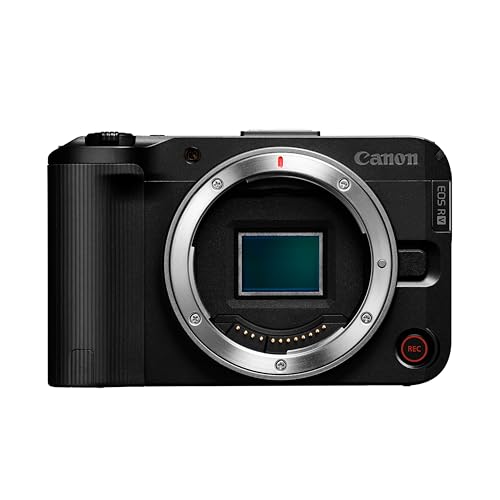
Canon’s R50 V is the company’s declaration that the vlogging body is its own category, and the title reads like a positioning statement: a mirrorless camera body only, with an APS-C sensor of 24.2 megapixels, an ultra-wide zoom reference, fast autofocus, and a vlogging and live streaming kit brief for content creators. The V suffix does the same work as Sony’s ZV badge — it tells the buyer the design priorities were set by presenters, not by stills tradition — and it plugs those priorities into Canon’s RF system, with its colour science and its growing creator lens shelf.
Note what the title does not print, because this guide’s discipline matters most exactly here: no video resolution or frame rate is stated. A buyer should therefore source the recording specification from Canon’s documentation before comparing ceilings with the Sony bodies above, whose titles do print their 4K figures. What the title does confirm — sensor size and resolution, fast autofocus as a claim, the streaming-kit positioning — is enough to shortlist the camera for any Canon-leaning creator, provided the paperwork evening happens before the purchase, not after the first shoot.
Suits the Canon-ecosystem creator: the photographer with RF lenses already in the bag who wants a dedicated video body that shares them, and the new creator who prefers Canon’s handling and colour and wants the video-first model rather than a stills body pressed into service. Live streaming is named in the brief, and Canon’s creator-kit positioning implies the desk-streaming workflow — camera as the stream’s eye, session after session — is a design centre here, not an afterthought.
Body only is the budget fact, as it was for the ZV-E1. The first RF lens belongs in the same basket, and for presenter work it should lean wide, since APS-C framing at arm’s length crops tighter than full-frame at the same lens. The title’s ultra-wide zoom reference suggests Canon expects exactly that pairing. Stabilisation is not named in the title either, so handheld walk-and-talk buyers should verify the arrangement — body, lens or digital — in the documentation before planning a gimbal-free workflow.
The strategic reading is about Canon’s direction. A dedicated V body in the RF line tells creators the mount intends to compete for their work seriously, with lenses and accessories following the badge. Buying into a line at the moment its maker commits to your genre is historically a good trade: the ecosystem grows around the early adopters, and their first lenses appreciate in usefulness with every release.
- Sensor: APS-C Sensor, 24.2 Megapixels
- Kit lens: None — body only
- Brief: Vlogging and live streaming kit for content creators
- Autofocus: Fast Autofocus (as stated in the listing title)
- Video ceiling: Not stated in the listing title — verify with the manufacturer documentation
- Stabilisation: Not stated in the listing title — verify with the manufacturer documentation
Strengths
- A video-first V body inside Canon’s RF lens system.
- 24.2 megapixel APS-C sensor confirmed for hybrid stills work.
- Live streaming is named in the design brief, not implied.
Trade-offs
- No video resolution or frame rate is printed in the title.
- Body only — the first lens is a mandatory second line in the basket.
- Stabilisation arrangements are unstated and need documentation.
Best for: a Canon-system creator who wants a dedicated vlogging and streaming body sharing RF lenses. Not suited for: a buyer comparing 4K frame-rate ceilings from listings alone, because this title prints none and the specification must be confirmed in Canon’s documentation first.
Do the documentation pass, then price body plus a wide RF zoom as one product. That combined figure is the honest rival to the Sony kits on this page, and Canon’s colour and handling are legitimate reasons to pay it. The R50 V’s Amazon listing carries the body’s current ask — read it with the lens’s listing open beside it, and let the pair, never the body alone, stand in your comparison.
Canon’s colour is the unquantifiable line in this review, and it should be named as such. No title prints a colour science, and this guide invents no measurements — but creators choose Canon bodies generation after generation for the skin tones its processing produces, and a vlogging body is judged on skin more than on any other subject. Treat that reputation as a reason to test the R50 V’s footage with your own eyes before purchase, in your own room’s light, rather than as a specification to be believed or dismissed from a page.

OM System OM-3 — Styled all-weather kit
The OM-3 is the romantic of this guide, and its title is unembarrassed about it: a silver mirrorless camera with an M.Zuiko Digital ED 12-45mm F4.0 PRO lens, a 20.4MP sensor, 4K 60p video, a creative dial, and IP53 weather sealing. Read that list as a vlogger and a distinctive proposition forms — a camera beautiful enough to be part of the channel’s visual identity, sealed for the weather a travel diary cannot dodge, shooting 4K at 60p, and wearing a quality PRO zoom whose constant F4.0 aperture across its range is a specification the kit zooms elsewhere in this guide do not offer.
The creative dial deserves translation for creators. It is the body’s stills-heritage colour and look control, and for a vlogger it offers something channels chase constantly: a repeatable in-camera look. A presenter who films daily cannot grade every clip like a feature; a dial that lands the same colour character at the touch of a control is a production tool disguised as a nostalgia feature. Combined with the PRO lens’s consistent aperture, the kit promises visual consistency across a whole trip’s footage, which is the quiet substrate of a professional-looking channel.
Suits the travel creator whose camera appears in frame — in mirrors, in hands, in the thumbnail — and whose routes run through real weather. The IP53 rating is stated in this title, one of only two sealing confirmations in this batch’s vlogging set, and the Micro Four Thirds format keeps the complete sealed kit at day-bag weight. It also suits the photography-first creator who vlogs second: the stills specification here is a complete camera’s, not a video body’s apology.
The boundaries are the format’s and the positioning’s. Twenty-point-four megapixels on a Four Thirds sensor will not melt backgrounds like the full-frame ZV-E1, and low-light interiors will show the format’s ceiling sooner than the Sony bodies. The title names no microphone arrangement and no screen articulation, so presenter ergonomics go to OM System’s documentation for verification. And the styled, PRO-lens kit sits at a premium shelf where a purely pragmatic buyer will ask whether beauty is a line item — for a camera that appears on camera, it legitimately is.
Think of the OM-3 as the kit for the creator whose brand is a journey. The sealed body and lens shrug off the mountain pass and the harbour wall; the creative dial keeps a hundred clips looking like one story; the 60p ceiling smooths the walking footage that travel formats live on. Channels sell coherence over time, and this is the most coherence a single box in this guide can buy.
- Sensor: 20.4MP Four Thirds
- Kit lens: M.Zuiko Digital ED 12-45mm F4.0 PRO Lens
- Video: 4K 60p Video
- Weather sealing: IP53 Weather-Sealed (stated in the listing title)
- Controls: Creative Dial
- Microphone and screen details: Not stated in the listing title — verify with the manufacturer documentation
Strengths
- IP53 sealing is printed in the title — rare in a vlogging body.
- The 12-45mm F4.0 PRO lens holds a constant aperture across its range.
- 4K 60p and a creative dial serve smooth footage with a repeatable look.
Trade-offs
- The Four Thirds sensor trails full-frame for shallow focus and dim rooms.
- No microphone or screen details are stated in the title.
- The styled premium kit prices above pragmatic APS-C rivals.
Best for: a travel creator filming in real weather who wants one styled, sealed kit for video and stills. Not suited for: a studio presenter chasing the thinnest depth of field behind their chair, because the Four Thirds sensor cannot separate a subject from a background the way the full-frame ZV-E1 does.
Price it as the complete article it is: sealed body, PRO zoom, no accessory hunt. Against a body-plus-lens basket assembled elsewhere in this guide, the OM-3’s single figure often looks less extravagant than its shelf suggests. Its Amazon listing shows that figure today — check it with your route map in mind, because this is the camera whose value is decided by the weather and the miles, not by the studio wall.
The silver finish invites one last, surprisingly practical reflection. A camera that appears in its owner’s videos is a prop as well as a tool, and channels with strong visual identities understand that a distinctive body — like a distinctive set or a signature jacket — becomes part of the brand the audience recognises. The OM-3’s retro silver design is therefore not vanity pricing; for the travel formats it suits, it is set dressing that also happens to shoot 4K at 60 frames per second through a PRO lens in the rain.
Comparison
| Pick | Format | Video from title | In the box | Distinguishing title claim |
|---|---|---|---|---|
| Sony ZV-E1 | Full-frame | 4K up to 60p | Body only | 5-Axis IBIS, 12.1MP Exmor R |
| Sony ZV-E10 II Bundle | APS-C | Not stated in the listing title | Lens, 64GB card, tripod, cables | 26MP sensor, complete starter bundle |
| Canon PowerShot V1 | Compact, sensor not stated | 4K Video | Complete camera, fixed lens | Built-in ultra-wide-angle zoom |
| Panasonic Lumix G100 | Micro Four Thirds | 4K | 12-32mm kit lens | Built-in microphone with tracking |
| Canon EOS R50 V | APS-C | Not stated in the listing title | Body only | Vlogging and live streaming kit brief |
| OM System OM-3 | Four Thirds | 4K 60p Video | 12-45mm F4.0 PRO lens | IP53 sealing, creative dial |
The table’s lesson is that vlogging value hides in the box column and the claim column, not in the sensor column alone. Two listings print no video ceiling at all; one camera cannot change its lens; one includes a tripod; one includes a tracking microphone; one includes a weather rating. A buyer comparing only megapixels would rank this set almost exactly backwards for the work these cameras are bought to do.
Choose by failure mode. The channel that fails on audio takes the G100. The channel that fails on framing takes the V1’s ultra-wide or a wide lens on the bodies. The channel that fails on look takes the ZV-E1. The channel that fails on weather takes the OM-3. Every camera here is the right answer to one of those sentences and a mediocre answer to the others.
How to Choose a Vlogging Camera
Start with the room, the route or the desk — the place your content actually happens — and let it veto cameras before specifications seduce you. A desk channel needs screen articulation, streaming manners and a wide-enough lens for a small room. A walking channel needs stabilisation that a title confirms and audio that survives a street. A travel channel needs a kit small and sealed enough to be present. Write your setting in one sentence and hold every candidate against it.
Audio second, always. Audiences leave bad sound faster than soft pictures, so rank the microphone story of each candidate before its sensor: the G100’s tracking built-in microphone is confirmed in its title; the others require a documentation check and, most likely, a dedicated microphone in the basket. Budget that microphone from the start rather than discovering it in your first upload’s comments.
Then price the working kit. Body-only listings — the ZV-E1 and the R50 V — are foundations, not cameras, until a lens joins them; bundle and kit listings are cameras on day one. The honest comparison is total against total: body plus lens plus microphone plus the card and support each setup needs. Under that accounting the set reorders itself, and the fixed-lens V1’s single figure becomes a serious argument rather than a limitation.
Finally, choose for the channel you will have in eighteen months. Interchangeable systems grow with a format change; fixed-lens completeness serves a stable format perfectly and a changing one not at all. Neither answer is wrong — but they are answers to different futures, and the time to name yours is before the first purchase, while the choosing is still free.
Do You Actually Need a Flip Screen and Face Autofocus?
For solo work, they are the difference between a workflow and a lottery. A presenter without a facing screen frames by hope, discovers the cropped forehead in the edit, and reshoots or publishes the flaw. Face-priority autofocus performs the same rescue continuously: the solo creator moves, leans, holds products toward the lens, and the camera’s one job is to keep the eyes sharp through all of it. Every design in this guide exists because those two rescues are the genre’s foundation.
The honest caveat is that titles confirm these features unevenly, which is why this guide’s spec boxes record screen and focus details as unstated wherever a listing omits them. A buyer whose shortlist depends on a specific screen movement or a named autofocus mode should verify it in the maker’s documentation for that exact model. The V-badged and ZV-badged designs are built around the presenter use case, but a badge is a positioning claim, and the paperwork is the proof.
Should a Beginner Vlogger Buy a Kit, a Bundle or a Body Only?
The kit and the bundle exist for the beginner’s actual bottleneck, which is decisions, not equipment. The G100’s box and the ZV-E10 II bundle both allow a first upload within days, and the lessons of that upload — your framing distance, your room’s light, your voice’s behaviour — are worth more than a month of specification research. Beginners learn their requirements by publishing, and complete boxes shorten the distance to the first lesson.
Body-only purchases belong to buyers who already know their lens answer: the Canon shooter with RF glass waiting, the Sony upgrader whose E-mount cabinet is built. For them the bare body is efficiency, not economy. The beginner who buys a body only to save money has usually bought a delay instead, followed by a lens decision made in a hurry — the two most expensive outcomes in the category, purchased in the name of thrift.
How Much Does Sensor Size Matter for a Vlogging Channel?
It matters most in the two places vlogging is hardest: dim rooms and background separation. The full-frame ZV-E1 holds clean shadows in a lamp-lit bedroom studio and melts a cluttered background behind a presenter, giving a channel a signature look that smaller formats approximate but do not equal. For a monetised channel, that look is a genuine commercial asset, visible in every thumbnail the algorithm serves.
It matters least where most beginner content lives: daylight, desk lamps and arm’s-length framing, where APS-C and Micro Four Thirds footage is clean, sharp and entirely publishable. The G100’s audience will never know its sensor’s dimensions; they will know whether they could hear the presenter in a windy market, which is why its tracking microphone outranks sensor size in this guide’s ordering. Buy the big sensor when your light is bad or your look is the product; buy the workflow when it is not.
What Should Your First Month of Shooting Teach You?
Treat the first month as the camera’s probation, staffed by your real content rather than by test scenes. Publish a desk piece, a walking piece and one low-light piece, because those three formats exercise the screen, the stabilisation and the sensor in the proportions your channel will demand all year. A camera that passes all three in your rooms and on your streets has earned its place; a camera that fails one has told you exactly which accessory or which different body the second month requires, while returns and exchanges are still simple.
Keep the accessories question open during that month and closed after it. The microphone, the second battery and the wider or faster lens should be bought against evidence from published videos, not against anxieties from unboxing videos. Channels waste their early budgets on gear for problems they never had, while the problems they do have — a humming room, a backlit chair, a card that fills mid-segment — announce themselves plainly in the first four uploads to anyone willing to rewatch them critically.
Common Mistakes When Buying a Vlogging Camera
Comparing a body-only price with a complete kit price. The ZV-E1 and R50 V need lenses before they can record a frame. The V1 and the kits are cameras on day one.
Spending the whole budget on the camera and nothing on sound. Only the G100’s title confirms a serious built-in microphone. Everyone else should hold back money for audio.
Assuming a video ceiling the title never printed. Two listings here state no 4K frame rate. Verify recording specifications in manufacturer documentation before a format depends on them.
Buying full-frame glass economics by accident. The ZV-E1’s look is real, and so is the cost of every lens behind it. Price the second lens before the first body.
Ignoring the weather your format will meet. Travel channels film in rain. The OM-3’s stated IP53 is the only title-confirmed sealing here, and it is not a decorative detail.
Final Recommendation
Match the camera to the channel’s failure mode and the choice narrows quickly. Take the Sony ZV-E1 for the full-frame look when the channel already earns. Take the ZV-E10 II bundle or the Lumix G100 for a first channel that must publish this week — the bundle for completeness, the G100 for its tracking microphone and mobility. Take the Canon PowerShot V1 for fixed-lens streaming simplicity, the EOS R50 V for a Canon-system creator’s dedicated video body, and the OM-3 when the channel is a journey and the weather is a co-author.
Whichever body starts your channel, publish the imperfect first video within a week of its arrival — the audience you build while learning the camera will teach you more about your next purchase than any guide, including this one, ever could.
Frequently Asked Questions
Which of these is best for a complete beginner?
The two complete boxes: the Sony ZV-E10 II bundle, whose title lists lens, card and tripod, and the Panasonic Lumix G100 kit with its tracking microphone. Both allow a first upload without further purchases, which is the beginner’s real requirement.
Is full-frame worth it for vlogging?
When the channel earns or the light is poor, yes — the ZV-E1’s sensor delivers background separation and shadow quality the smaller formats cannot match. For daylight desk content, APS-C and Micro Four Thirds footage is entirely publishable and far cheaper to equip.
Can the PowerShot V1 really be called mirrorless?
It has no interchangeable lens mount — its ultra-wide zoom is built in — so it sits at the category’s edge. It is included because Canon designed it explicitly for vlogging and streaming, and shoppers compare it against these bodies directly.
Which camera handles bad weather best?
On title evidence, the OM System OM-3: IP53 Weather-Sealed is printed in its listing, and its PRO kit lens completes the sealed chain. The others state no sealing in their titles.
Do I still need an external microphone?
Eventually, for most channels — but the G100’s built-in microphone with tracking, confirmed in its title, is the strongest starting audio here. Budget a dedicated microphone as the first upgrade for every other pick.
Related Guides
The creator’s kit branches outward from the camera. Presenters who also photograph their subjects should compare the best mirrorless street cameras for the candid, everyday content that fills a channel’s gaps. The small-format system behind two of these picks is mapped in full in the best mirrorless micro 4 3 cameras, from vlogging kits to flagships. And the desk half of a streaming setup is completed by the best xbox series x monitors, whose fast screens double as creator preview displays.


