What's inside
- Where to Buy
- Introduction
- Key Takeaways
- Quick Picks
- How We Chose These Picks
- Comparison
- How to Choose a Micro Four Thirds Camera
- Is Micro Four Thirds Still Worth Buying Into?
- Which Matters More in This System: the Body or the Lenses?
- Should You Buy the Original G9 or Save for the G9II?
- What Does the Shared Mount Mean at the Checkout?
- Common Mistakes When Buying a Micro Four Thirds Camera
- Final Recommendation
- Frequently Asked Questions
- Related Guides
As an Amazon Associate I earn from qualifying purchases. This post may contain affiliate links at no extra cost to you.
widgetverdict.com is reader-supported. When you buy through links on our site, we may earn an affiliate commission.
Where to Buy
The six cameras below reach Amazon as bodies, kits and one generous bundle, and each name here links to its own listing. The Panasonic Lumix GH7 body leads the set — its page shows the live figure for the video flagship. The OM System OM-1 Mark II with the 12-40mm F2.8 PRO II lens follows as the professional kit, its number covering body and flagship zoom together. The OM System OM-5 Mark II with the 14-150mm lens in black is the travel kit of the group; read its listing for the current ask. The Panasonic Lumix G9II body sits at the stills-flagship shelf, its figure waiting on its own page. The Panasonic Lumix G97 bundle with the 12-60mm lens and camera bag packs accessories alongside the camera, so unpack its contents before comparing numbers. The original Panasonic Lumix G9 closes the list as the previous-generation flagship, its listing carrying the value figure of the set.
Introduction
The best mirrorless micro 4 3 cameras defend a proposition the rest of the camera market keeps having to answer: that a smaller sensor, honestly engineered, buys more camera per kilogram than any larger format can. Micro Four Thirds is the original mirrorless system, shared by two makers — Panasonic’s Lumix line and OM System — whose bodies all accept the same lenses. That shared mount is the format’s founding bargain: a lens bought for one brand’s body serves the other’s, and the accumulated catalogue behind these six cameras is deeper than either maker could have built alone.
This guide spans the system’s full modern range. At the top stand two flagships with opposite temperaments — Panasonic’s GH7, a video-led flagship whose title speaks of enhanced video speed and optimised workflows, and OM System’s OM-1 Mark II, the stills-and-field flagship with a stacked sensor and a printed IP53 rating. Between them sit the G9II, Panasonic’s stills flagship with phase-detection focus; the OM-5 Mark II, the compact sealed traveller sold here as a complete travel kit; the G97 bundle, the system’s welcoming front door; and the original Lumix G9, a previous-generation flagship presented honestly as exactly that — yesterday’s top model at today’s value position.
Specifications are read from the titles with this batch’s usual strictness. Resolutions are quoted where printed — 25.2 megapixels on the G9II, 20.4 on the OM bodies, 20.3 on the G97 bundle and the original G9 — and the GH7’s title, which prints no megapixel figure at all, is reported as silent rather than filled from launch coverage. Stabilisation, sealing and high-resolution modes are claimed only in the words each title uses. The result is a map of the system as its sellers actually describe it, which is the only map a buyer should spend money from.
Keep one field habit whichever entry point you choose: maintain a single lens cabinet list, shared across bodies, noting which lens serves which craft. On a shared mount the cabinet is the asset register of the whole practice, and photographers who track it buy fewer duplicates, lend more confidently between their own bodies, and notice the genuine gaps — usually a fast wide or a true macro — a full season before a body upgrade would have occurred to them. The mount rewards the organised; be organised.
Key Takeaways
- One mount serves all six cameras: every lens in this guide fits every body here, across both Panasonic and OM System.
- Two flagships split the system’s crown — the GH7 for video workflow, the OM-1 Mark II for field stills with a stacked sensor and IP53 in its title.
- The G9II carries the format’s highest stated resolution at 25.2MP and its Phase Hybrid AF; the OM bodies state 20.4MP.
- Only the two OM kits print an ingress rating — IP53 Weather-Sealed appears in both OM-1 Mark II and OM-5 Mark II titles.
- The original Lumix G9 is a previous-generation flagship: 20.3MP, an 80 megapixel high-resolution mode and 5-Axis Dual I.S. 2.0, at a value position.
Quick Picks
| Pick | Badge | Why it earns a place |
|---|---|---|
| Panasonic Lumix GH7 | Video flagship | Enhanced video speed and quality with optimised shoot-to-post workflows and Real-Time LUT. |
| OM System OM-1 Mark II Kit | Field flagship kit | 20.4MP body with 12-40mm F2.8 PRO II lens, 5-axis stabilisation and IP53 in the title. |
| OM System OM-5 Mark II Kit | Sealed travel kit | 20.4MP body with 14-150mm lens, IP53 and 5-axis stabilisation in one travel box. |
| Panasonic Lumix G9II | Stills flagship focus | 25.2MP sensor with Phase Hybrid AF and flagship G-series positioning. |
| Panasonic Lumix G97 Bundle | Complete beginner bundle | 20.3MP camera with 12-60mm lens, bag, extra battery, 64GB card and photo software. |
| Panasonic Lumix G9 | Previous-generation value | The original flagship: 20.3MP, 80MP high-resolution mode and 5-Axis Dual I.S. 2.0. |
How We Chose These Picks
The shortlist had to map the system as a buyer actually meets it: two makers, three tiers, one mount. Flagship representation was split deliberately between the video-led GH7 and the field-led OM-1 Mark II, because Micro Four Thirds is the rare system whose two parents optimise for different crafts, and a guide that crowned one philosophy would misdescribe the mount. The G9II holds the stills-flagship brief for Panasonic owners, and the OM-5 Mark II holds the travel brief for OM owners.
Completeness of kit shaped the middle of the set. The OM-1 and OM-5 listings chosen here are kits — flagship zoom and travel zoom respectively — because this format’s buyers disproportionately purchase working systems rather than bare bodies, and the reviews should price and judge what actually arrives. The G97 listing is the fullest bundle in the guide, accessories and all, and it is judged as a bundle: on the camera’s merits first, with the extras weighed as convenience.
The original G9’s inclusion required the honesty test this batch applies everywhere. A previous-generation flagship earns a place only if the guide says plainly what it is — and its title cooperates, stating a specification (20.3 megapixels, 80 megapixel high-resolution mode, 5-Axis Dual I.S. 2.0, a 3-inch LCD) that remains respectable in absolute terms. Presented as value rather than as current flagship, it is one of the most rational purchases in the system. Presented as anything else, it would have been excluded.
Title verification did the final pass, and its fingerprints are on the spec boxes: the GH7’s unstated resolution, the G9II’s stabilisation figure left unprinted, the G97 bundle’s accessory list quoted exactly as the title gives it. A system’s devotees know these figures by heart; a guide’s job is to show a newcomer which of them the seller will actually confirm.
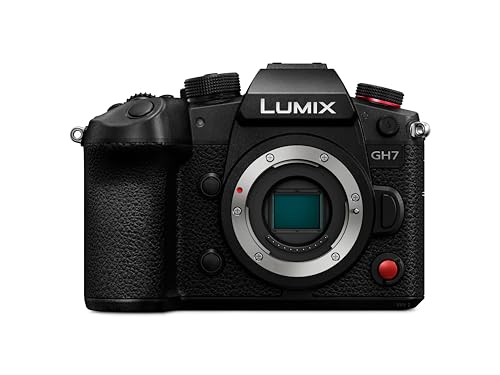
Panasonic Lumix GH7 — Video flagship
The GH7’s title refuses to talk like a stills camera, and that refusal is its identity. Panasonic describes a mirrorless Micro Four Thirds camera with enhanced video speed and quality, optimised workflows from shooting to post-production, Adobe Cloud compatibility and Real-Time LUT. Every phrase points at the working videographer: speed in capture, discipline in workflow, and — in the Real-Time LUT — the ability to bake a chosen look into footage as it is recorded, so that what the client sees on the day is what the edit delivers. For production work on deadlines, that pipeline thinking is worth more than a resolution figure.
Notice, then, what the title withholds: no megapixel count, no frame-rate table, no stabilisation system. This guide records the silence plainly below. The GH line’s reputation will supply those numbers from memory for experienced buyers, but a flagship purchase should still be verified against Panasonic’s current documentation, model code DC-GH7BODY9 and all, because video specifications are precisely the figures that firmware and regional variants rearrange. Shortlist the GH7 on its stated workflow brief; confirm it on the documents.
Suits the professional and semi-professional video shooter whose deliverables are films: wedding cinematographers working the format for its lens economy, documentary makers who travel with a two-body kit that larger formats would make a three-person carry, and production houses standardising on a mount whose lenses are small, fast and comparatively affordable at every focal length. The Micro Four Thirds video ecosystem — cages, rigs, adapted glass — has had a decade and a half to mature around this line, and the GH7 inherits all of it.
The format’s trade applies in its video form. Depth of field runs deeper than full-frame at the same aperture, which filmmakers split on: run-and-gun shooters prize the forgiveness, portrait-look cinematographers rent faster glass to compensate. Low-light ceilings sit where the format’s physics put them. And a stills-first photographer should note the title’s priorities — this flagship’s budget was spent on the moving image, and the stills-led buyer is better served by the G9II or the OM-1 below.
There is a system-economics coda. A GH7 body anchors a video kit whose lenses, bought once, also serve the stills bodies in this guide — the wedding filmmaker who adds a G9II for photographs is spending on one cabinet, not two. Cross-craft economy is the shared mount’s deepest advantage, and the GH7, as the video pole of the system, is where that advantage compounds fastest for a growing production practice.
- Format: Mirrorless Micro Four Thirds camera, body only
- Brief: Enhanced video speed and quality (as stated in the listing title)
- Workflow: Optimised workflows from shooting to post-production, Adobe Cloud compatible
- Colour: Real-Time LUT
- Sensor resolution: Not stated in the listing title — verify with the manufacturer documentation
- Model code: DC-GH7BODY9
Strengths
- A video-first flagship brief stated plainly in the title.
- Real-Time LUT serves deadline production with an in-camera look.
- Workflow and Adobe Cloud compatibility target working filmmakers.
Trade-offs
- No megapixel or frame-rate figure is printed in the title.
- Body only — the video lens cabinet is a separate, serious budget.
- Stills-led buyers are better served by the G9II or OM-1 Mark II.
Best for: a working videographer building a Micro Four Thirds production kit around workflow speed. Not suited for: stills-first work planned around a sensor resolution confirmed on the listing, because this title prints no megapixel figure at all.
Verify the recording specification in Panasonic’s documents, then price the body inside a real kit — one standard zoom, one fast prime, the rigging your productions use — because the GH7’s value only exists at the system level. Its Amazon listing carries the body’s current figure; set it against the full-frame video bodies elsewhere in this batch with the lens cabinets included, and the format’s economy argument makes itself.
The depth-of-field character of the format deserves a filmmaker’s nuance. At the same aperture, Micro Four Thirds keeps more of a scene in focus, which documentary shooters experience as mercy — a walking interview stays sharp through its depth, a product table reads front to back — while narrative shooters reach for the system’s fastest primes when they want separation. Both camps are served by the same cabinet, and the GH7’s buyer should decide which camp their productions inhabit before the lens list is written, because it changes which three lenses constitute the working kit.

OM System OM-1 Mark II Kit — Field flagship kit
This listing pairs the OM-1 Mark II body with the lens its maker intends for it: the M.Zuiko Digital ED 12-40mm F2.8 PRO II. The title confirms the system’s flagship hand in one breath — a 20.4MP sensor, 4K video, 5-axis image stabilisation and IP53 weather sealing — and the kit format matters, because a sealed flagship body behind a PRO zoom is a complete weather system in a single box, the chain this batch’s weather guide keeps insisting on, assembled by the manufacturer rather than left to the buyer’s homework.
The constant F2.8 aperture across the 12-40mm range is the lens’s professional signature. Zooms that hold their aperture let a field photographer expose by habit — the settings at the wide end are the settings at the long end — and F2.8 on this format gathers the light that dawn hides, dawn shoots and forest interiors demand. Combined with the body’s stacked-sensor generation (the body-only listing in the weather chapter states the stacked BSI architecture; this kit’s title rests on the resolution and rating), the kit is aimed at the photographer whose subjects move and whose weather does not consult them.
Suits the outdoor professional and the serious wildlife, sport and expedition amateur. The format’s telephoto economy completes the argument the kit begins: the long lenses this photographer will add next are half the weight of their full-frame equivalents, so the flagship system stays a one-person carry into mountains and hides. Bird photographers in particular have made this mount their standard for exactly that arithmetic, and this kit is the current flagship expression of it.
The boundaries are the flagship tier’s usual ones. The kit’s price reflects two professional components at once, and a buyer who already owns the 12-40mm class of zoom should price the body-only route instead — it appears in this batch’s weather guide. The title of this kit does not repeat the body’s stacked-sensor wording, a small lesson in why this guide quotes each listing separately rather than merging a model’s paperwork. And 20.4 megapixels, while ample for the field, trails the G9II’s stated 25.2 for the crop-heaviest work.
Longevity is the kit’s quiet claim. PRO zooms of this class serve a decade; flagship bodies anchor a system through several lens generations; and the IP53 rating, printed on the listing, is the kind of documented specification that insurers and expedition clients increasingly ask to see. Buyers purchasing for a working life, rather than for a season, should weigh that documentation as part of the kit’s value.
- Sensor: 20.4MP Four Thirds
- Kit lens: M.Zuiko Digital ED 12-40mm F2.8 PRO II Lens
- Weather sealing: IP53 Weather-Sealed (stated in the listing title)
- Stabilisation: 5-Axis Image Stabilization
- Video: 4K Video
- Format: Micro Four Thirds, body and lens kit
Strengths
- A complete sealed flagship system — rated body and PRO zoom in one box.
- The constant F2.8 zoom serves low-light fieldwork across its range.
- IP53 is printed in the title for documented weather work.
Trade-offs
- The kit prices two professional components in a single figure.
- Owners of an equivalent zoom should price the body-only listing instead.
- Resolution trails the G9II’s 25.2MP for aggressive cropping.
Best for: an outdoor professional who wants the flagship body and its intended PRO zoom as one sealed kit. Not suited for: a shelf that already holds a 12-40mm-class F2.8 zoom, because the kit charges for a second copy of that lens.
Read the kit as the system in miniature: this body, this zoom, and the format’s small telephotos ahead of you. If that trajectory is your photography, the kit’s single figure on its Amazon listing is the honest entry price — check it against body-only plus the same lens bought separately, and let the comparison, not the bundle’s convenience, have the final word.
Field photographers add one more consideration in this kit’s favour: redundancy within the box. A body and a standard zoom that covers the professional walkaround range is a complete assignment camera — the kit a photojournalist can grab when the second bag stays in the vehicle. Systems earn their reputations on such days, when the plan collapses to whatever is in the hand, and a flagship that arrives with its intended lens is a plan that survives contact with the morning.

OM System OM-5 Mark II Kit — Sealed travel kit
The OM-5 Mark II appears in this guide as a complete travel system: the black body with the M.Zuiko Digital ED 14-150mm F4.0-5.6 II lens, and a title that confirms 20.4MP, 4K video, 5-axis image stabilisation and IP53 weather sealing. The lens choice defines the kit’s philosophy. A 14-150mm range on this format covers the traveller’s whole day — wide streets, portraits, distant details — in one barrel that never leaves the body, which means the sealed system stays sealed: no lens changes in the rain, no dust invited in at the viewpoint, no bag of glass to manage on a train.
Travel is the genre where the chain rule and the carry rule become the same rule. A kit light enough to be carried all day and sealed enough to stay out in the weather will out-photograph a superior system left in the hotel, and this kit is engineered at exactly that intersection. The OM-5 body is the compact sibling of the flagship above, sharing its sensor resolution and its rating while shedding the size and the price — the traveller’s version of the same evidence.
Suits the one-lens traveller, the hiker-photographer and the everyday carrier who wants flagship weather evidence without flagship bulk. It also suits the OM-1 owner’s household as the shared second kit: same mount, same rating language, a lens that covers the family holiday without borrowing the professional’s zooms. The all-in-one zoom’s convenience compounds across a trip — every day starts with the camera ready, which is the state in which travel photographs actually get taken.
The superzoom’s compromises are honest and visible in the title itself. The aperture range, F4.0 narrowing to F5.6, is the price of the span: dusk at the long end will lean on the stabilisation and the sensitivity. A single zoom covering everything also resolves less, corner to corner, than the PRO glass above — the trade every travel kit makes knowingly. And the body’s own ceiling sits below the flagship’s for the fastest action; travellers photographing sport should read the OM-1 review before settling.
There is a packing dividend worth stating in numbers of objects rather than specifications. This kit is three objects: body, lens, charger. It fits the corner of a carry-on, survives the itinerary’s weather on a printed rating, and asks for no decisions at 6 a.m. in a strange city. Travel photography is lost to friction more than to any technical limit, and three objects is close to frictionless.
- Sensor: 20.4MP Four Thirds
- Kit lens: M.Zuiko Digital ED 14-150mm F4.0-5.6 II Lens
- Weather sealing: IP53 Weather-Sealed (stated in the listing title)
- Stabilisation: 5-Axis Image Stabilization
- Video: 4K Video
- Finish: Black, body and lens kit
Strengths
- A complete sealed travel system — the lens never has to come off.
- The 14-150mm range covers a whole trip in one barrel.
- IP53 and 5-axis stabilisation are both printed in the title.
Trade-offs
- The superzoom narrows to F5.6 at the long end for dusk work.
- One-lens convenience trades corner sharpness against PRO glass.
- Action ceilings sit below the OM-1 flagship’s class.
Best for: a traveller who wants one sealed, stabilised lens-and-body system for an entire journey. Not suited for: low-light work at long focal lengths under a constant fast aperture, because the kit zoom’s F5.6 long end cannot hold exposure the way the F2.8 PRO zoom above does.
Price it against the alternative honestly: a body, two zooms and the bag to hold them is the traditional travel kit, and this listing exists to retire it. If the one-lens philosophy matches your itineraries, the kit’s Amazon page carries the single figure for the whole system — the simplest total in this guide, and for many travellers the most persuasive.
The travel kit also reframes the upgrade conversation for OM owners. Because the mount is shared and the rating language is consistent across the OM line, the OM-5 kit can serve as the household’s complete camera for years and then step aside into the second-body role without a single lens being stranded. Purchases that degrade gracefully into the next configuration are the ones a system should be built from, and this kit degrades more gracefully than anything else in the guide.

Panasonic Lumix G9II — Stills flagship focus
The G9II is Panasonic’s stills flagship, and its title assembles the modern flagship hand: a 25.2MP sensor — the highest resolution stated anywhere in this guide — with Phase Hybrid AF, image stabilisation, high-speed performance and flagship G Series positioning, in black, model DC-G9M2BODY9. The phase-detection autofocus is the generational headline. Panasonic’s stills shooters waited years for it, and its arrival means the Lumix flagship finally tracks birds, athletes and children with the decisive acquisition the genre demands, on the mount whose small telephotos make those subjects reachable.
Resolution deserves its street-and-field reading. Twenty-five point two megapixels on a Four Thirds sensor gives the wildlife photographer crop room that functions as extra focal length — the bird that filled two-thirds of the frame can be printed from the centre third — and gives the landscape photographer files with genuine large-print presence. In a format whose lenses are small, resolution is the compensating currency, and the G9II holds more of it than any rival in this set.
Suits the Lumix-system stills photographer completely: the existing G-lens cabinet gains its flagship, and the photographer’s investment is honoured rather than stranded. It also suits the cross-format action shooter who wants a second, lighter system for the field — the G9II plus a compact telephoto is the birding kit that fits under an airline seat. Photographers whose work is stills-led and speed-fed will find this title’s emphases — sensor, focus, performance, flagship rank — arranged in exactly their order of priorities.
The title’s restraint sets the homework. Stabilisation is claimed without a stop figure in this listing, and no sealing language or IP rating is printed, so both items sit below in the standard wording for verification in Panasonic’s documentation — the same discipline the weather chapter applied to this model. Video specifications are likewise unstated here; hybrid buyers should source them from the documents rather than assuming GH-line parity, because Panasonic deliberately builds its two flagships to different briefs.
There is a maturity dividend in choosing the stills flagship of a shared system. Every lens either maker has released for the mount serves this body, the accessory ecosystem is a decade deep, and the used market can furnish a second body for the price of a lens. A flagship is a platform decision disguised as a camera purchase, and the G9II’s platform is the oldest and broadest in mirrorless.
- Sensor: 25.2MP Sensor, Micro Four Thirds
- Autofocus: Phase Hybrid AF
- Stabilisation: Image Stabilization (stop figure not stated in the listing title)
- Positioning: Flagship G Series
- Weather sealing: Not stated in the listing title — verify with the manufacturer documentation
- Model code: DC-G9M2BODY9, black
Strengths
- 25.2MP is the highest stated resolution in this guide.
- Phase Hybrid AF gives Lumix stills flagship-grade subject tracking.
- Flagship G-series rank anchors the deepest lens cabinet in mirrorless.
Trade-offs
- No stabilisation figure or sealing claim is printed in the title.
- Video specifications are unstated here; the GH7 owns that brief.
- Body only, so the first lens joins the basket immediately.
Best for: a stills-led action and wildlife photographer invested in the Lumix G system. Not suited for: expedition contracts that need a printed weather rating on the listing, because this title states none and Panasonic’s documentation must carry that evidence.
Shortlist it against the OM-1 kit as the format’s two flagship philosophies — Panasonic’s resolution and phase focus against OM’s printed rating and PRO kit — and let your subjects arbitrate. The G9II’s Amazon listing shows the body’s current figure; price it with the telephoto your work actually uses, because on this mount the lens, not the body, is where the field system’s weight and cost are won.
One more flagship trait deserves naming: the used-market gravity of the G9II’s tier. Current flagships hold their value in a way entry bodies do not, because the professional second-body market waits beneath them. A photographer who buys the G9II today is also buying the option to sell it into that market at the next generation — an unglamorous financial fact that belongs in a flagship ledger beside the autofocus and the resolution, and one the value picks below exploit from the other side.
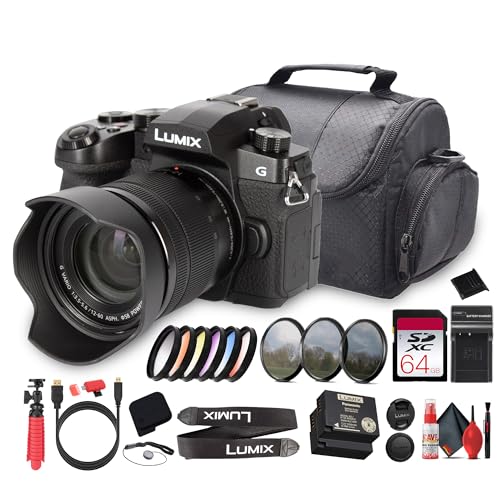
Panasonic Lumix G97 Bundle — Complete beginner bundle
The G97 bundle is the friendliest front door into this system, and its title reads like a packing list: a mirrorless camera with a 12-60mm lens and a camera bag, a 20.3MP MFT sensor, 4K video under model code DC-G97MK, photo software, an extra battery, a 64GB memory card and more. Judge it in the two layers this batch applies to every bundle. The camera layer is a genuine hybrid body with the widest kit zoom range in the inexpensive chapter’s analysis — 12-60mm covers a beginner’s whole first year. The accessory layer is a starter’s logistics solved in advance: the spare battery and the card are the two items every new owner otherwise buys in a panic before the first trip.
The extra battery deserves its sentence, because bundle accessories are usually filler and this one is not. Mirrorless cameras are power-hungry by design, and a second battery is the difference between a full day’s shooting and an afternoon of rationing. Whoever assembled this bundle has evidently sold cameras to beginners before. The bag and software round out a box that takes its owner from delivery to a weekend of shooting without a single supplementary order — the completeness a first system purchase should aspire to.
Suits the beginner who wants the system’s value proposition — small lenses, shared mount, hybrid stills and video — in one decision, and the gift buyer equipping a young photographer properly. It also suits the second-system buyer: a full-frame professional curious about the format can enter it completely here, with a lens range that demonstrates the mount’s size advantage honestly, before committing to flagship bodies.
The bundle discipline still applies. Accessory quality beyond the battery and card is bundle-typical and unquoted in the title — the trailing “and more” is doing unspecified work — so the purchase should be justified by the camera and lens alone, with everything else treated as a bonus. The title prints no stabilisation system for the G97, as the inexpensive chapter also recorded, so handheld video buyers should verify the arrangement in Panasonic’s documentation. Resolution at 20.3 megapixels matches the format’s working standard and trails the G9II’s flagship figure, which is the correct hierarchy for an entry body.
Growth from this door is the system’s promise kept. Every lens the beginner adds later fits the flagships above; the G97 itself becomes the second body or the travel-light option when a G9II or GH7 eventually arrives. Few entry purchases in any camera system preserve their value as a working component of the mature kit, and that continuity is worth more than the bundle’s accessories combined.
- Sensor: 20.3MP MFT Sensor
- Kit lens: 12-60mm Lens
- Video: 4K Video (DC-G97MK)
- Bundle contents: Camera bag, photo software, extra battery, 64GB memory card and more (as listed in the title)
- Stabilisation: Not stated in the listing title — verify with the manufacturer documentation
- Brief: For photography and video
Strengths
- The 12-60mm kit zoom covers a beginner’s whole focal range.
- An extra battery and 64GB card solve real first-month logistics.
- Every future lens fits the flagships — the entry body stays useful.
Trade-offs
- Bundle extras beyond battery and card are unspecified in the title.
- No stabilisation system is named in the title.
- Resolution trails the G9II flagship’s 25.2MP.
Best for: a beginner who wants a complete Micro Four Thirds hybrid kit in a single purchase. Not suited for: an order placed on a confirmed stabilisation specification, because the title names none and the point belongs in Panasonic’s documentation.
Compare the bundle against the separates with a pencil: body-and-lens kit, a second battery, a card and a bag, priced individually. Bundles that survive that arithmetic deserve their convenience premium; this one’s camera layer is strong enough that the extras are rarely carrying the deal. Its Amazon listing shows the whole box’s current figure — the only homework left is the stabilisation check in the documents.
The bundle’s camera also carries the hybrid brief that defines the G line’s middle: a body intended for photography and video together, in the title’s own framing. Beginners rarely know their ratio of stills to footage in advance, and a hybrid body forgives that uncertainty — the channel idea and the photography habit can grow from the same box in whichever order they arrive. Specialisation can come later, at flagship prices, when the ratio is known; the G97’s job is to make sure both doors stay open until then.

Panasonic Lumix G9 — Previous-generation value
Begin with the honest label, because this guide insists on it: the Lumix G9 is the previous generation’s flagship, the model the G9II above replaced. Its title states the specification that made it a flagship in its day — a 20.3 megapixel Micro Four Thirds sensor, 4K video, an 80 megapixel high-resolution mode, 5-Axis Dual I.S. 2.0 stabilisation and a 3-inch LCD, model DC-G9 in black — and the interesting fact is how much of that hand still plays. Twenty megapixels remains the format’s working resolution, the high-resolution mode still serves landscape and product work that no moving subject troubles, and Dual I.S. stabilisation still steadies handheld frames.
The value logic is the mirror image of the flagship logic. A superseded top model carries its build quality, its control depth and its lens mount forward; what it surrenders is the newest autofocus generation and the longest future of firmware attention. For a photographer whose subjects are landscapes, travel, family and still life — the majority of the photographs actually taken — that surrender costs little. For the bird photographer, the G9II’s phase-detection focus is precisely the advance that matters, and this review will not pretend otherwise.
Suits the value-led entrant to the system who wants flagship handling at an entry outlay, the landscape photographer who will live in the high-resolution mode, and the existing owner seeking a second body that shares every lens and battery habit. It also suits the student: a previous flagship is the finest teaching camera a budget can buy, because its controls teach professional habits while its price forgives the learning process.
Read the generational gaps without flinching. The title claims no phase-detection autofocus — this is the contrast-era flagship — and no sealing or IP rating is printed, so wet work goes to the documentation like every unstated item in this guide. The 3-inch LCD is the only screen detail given. None of these gaps is hidden by this review, because the G9’s case does not need hiding: it is the system’s depth chart made visible, a flagship’s bones at a fraction of a flagship’s current figure.
There is a final, practical elegance to the previous flagship as a system entry. Its price leaves budget for the lenses that actually determine a kit’s character — a fast prime, a telephoto — and lenses outlive bodies by decades. A photographer who enters Micro Four Thirds through the G9 with two good lenses owns a system; one who enters through a flagship body alone owns a camera. When the upgrade day comes, the lenses walk forward onto the new body and the G9 becomes the backup that every working kit needs.
- Sensor: 20.3 Megapixel Micro Four Thirds
- Video: 4K Digital Camera
- High-resolution mode: 80 Megapixel High-Resolution Mode
- Stabilisation: 5-Axis Dual I.S. 2.0
- Screen: 3-Inch LCD
- Model code: DC-G9 (Black), previous-generation flagship
Strengths
- Flagship build and controls at a previous-generation position.
- The 80 megapixel high-resolution mode serves landscape and product work.
- 5-Axis Dual I.S. 2.0 is confirmed in the title.
Trade-offs
- It is the previous generation — no phase-detection AF is claimed.
- No sealing or IP rating is printed in the title.
- Firmware attention now belongs to the G9II generation.
Best for: a value-led photographer who wants flagship handling and the high-resolution mode for still subjects. Not suited for: birds-in-flight work that depends on phase-detection subject tracking, because that advance belongs to the G9II and this title claims no such system.
Do the lens-first arithmetic the review recommends: this body plus the prime and telephoto your work needs, against a current flagship body alone. For still-subject photographers the older flagship’s basket usually wins on photographs per pound spent, which is the only league table that matters. The G9’s Amazon listing carries its current figure — read it as the entry price of a complete system, not as a compromise.
There is a coda about support that value buyers should hear. A model sold in flagship volumes leaves behind a deep residue of batteries, grips, cases, repair knowledge and forum wisdom, all of which remain available long after the launch cycle moves on. The original G9’s ecosystem is fully mapped territory — every quirk documented, every accessory priced by competition — and for a photographer who values predictability over novelty, that mapped territory is itself a feature no new flagship can offer on its first day.
Comparison
| Pick | Sensor from title | In the box | Stabilisation from title | Sealing from title |
|---|---|---|---|---|
| Panasonic Lumix GH7 | Not stated in the listing title | Body only | Not stated in the listing title | Not stated in the listing title |
| OM System OM-1 Mark II Kit | 20.4MP | 12-40mm F2.8 PRO II lens | 5-Axis | IP53 Weather-Sealed |
| OM System OM-5 Mark II Kit | 20.4MP | 14-150mm lens | 5-Axis | IP53 Weather-Sealed |
| Panasonic Lumix G9II | 25.2MP | Body only | Claimed, figure not stated | Not stated in the listing title |
| Panasonic Lumix G97 Bundle | 20.3MP | 12-60mm lens, bag, battery, card | Not stated in the listing title | Not stated in the listing title |
| Panasonic Lumix G9 | 20.3MP | Body only | 5-Axis Dual I.S. 2.0 | Not stated in the listing title |
The table maps a system, not a ladder. The two OM kits are the only listings that complete themselves — body, lens, rating — while the Panasonic flagships ask to be built around. Resolution peaks at the G9II, workflow language at the GH7, completeness at the G97 bundle, and historical value at the original G9. Every row shares every lens with every other row, which no comparison table in the full-frame chapters of this batch can claim.
That shared mount is the comparison’s real conclusion. Choosing within this guide is choosing an entry point and a temperament, not a destiny: the beginner’s G97 and the professional’s GH7 are stops on one line, and the lenses bought at any stop remain valid at all the others.
How to Choose a Micro Four Thirds Camera
Start with your craft’s centre of gravity. Film-led buyers begin at the GH7 and weigh the OM bodies second; stills-led buyers begin with the G9II and OM-1 Mark II and let subjects arbitrate — phase focus and resolution for action, the printed rating and PRO kit for weather. Travellers start at the OM-5 kit and argue upward only if a specific flagship feature names itself in their work. Beginners start at the G97 bundle or the original G9 and spend the savings on lenses.
Exploit the shared mount deliberately. Because every lens fits every body here, the rational purchase sequence is glass first, flagship later: enter at the tier your budget allows, build the lens cabinet your subjects require, and let the body tier rise when the work demands it. No other system in this batch rewards that patience so completely, because no other system in this batch is one mount shared by two makers across a decade and a half.
Weigh the format’s physics once, honestly, and then stop relitigating it. Micro Four Thirds gives up low-light headroom and shallow-focus drama to larger formats, and collects small lenses, deep focus for video and macro, and complete kits a person can carry all day. Photographers whose work lives in daylight, travel, wildlife reach and hybrid production collect more than they surrender. Photographers whose work is candlelit portraiture should buy the larger format and accept its bags.
Rent or borrow before the flagship step if your region allows it: a weekend with a G9II or an OM-1 on your own lenses, shooting your own subjects, settles questions that a month of comparison reading cannot, and on a shared mount the experiment costs nothing in compatibility — the cabinet you already own is the test rig. Finally, price the system across five years, not the body across a weekend. Two bodies and four lenses is the mature shape of a Micro Four Thirds kit, and its total — against the equivalent full-frame cabinet — is where this format’s famous economy becomes undeniable. The six entry points above are six doors into that one long arithmetic.
Is Micro Four Thirds Still Worth Buying Into?
The evidence of this very guide says yes, on the only terms that matter: both makers are fielding current flagships — a GH7, a G9II, two OM generations — the mount’s lens catalogue is the deepest in mirrorless, and the used market lets a beginner assemble a serious cabinet for the price of one new full-frame zoom. A system is alive when its flagships are new, its lenses are plentiful and its entry doors are cheap. By those tests this is among the healthiest systems a buyer can join.
The honest caveat is about emphasis rather than survival. The format’s makers develop for their strengths — video workflow, field portability, computational features — rather than chasing the low-light extremes of larger sensors. A buyer whose ambitions point at those strengths is buying into a living roadmap. A buyer waiting for the format to become something else should buy the something else now, in a larger mount, and save everyone the disappointment.
Which Matters More in This System: the Body or the Lenses?
The lenses, and the shared mount is why. Bodies in this guide span a decade of generations, yet a lens bought for the oldest of them mounts the newest without an adapter or a compromise. That longevity inverts the usual purchasing anxiety: spend on glass with confidence, treat bodies as the renewable component, and the system’s economics reward you at every upgrade. The original G9’s review makes the same point from the value end — yesterday’s flagship plus today’s lenses is a working professional kit.
Bodies still decide specific capabilities, and the guide’s flagships mark them clearly: phase-detection focus for action, the GH7’s workflow for production, the OM bodies’ printed rating for weather. The correct sequence is therefore lenses for the subjects, body for the capability gap. Photographers who reverse it — flagship first, kit lens forever — own impressive cameras and ordinary photographs, in this system and every other.
Should You Buy the Original G9 or Save for the G9II?
Let your subjects vote. Still subjects — landscape, travel, product, family, the high-resolution mode’s whole constituency — will never know which G-series body made their photograph, and the original’s savings convert directly into the lenses that will visibly improve it. Moving subjects reverse the verdict: the G9II’s Phase Hybrid AF, printed in its title, is the single capability in this system that cannot be bought later as an accessory, and the action photographer should save for it without resentment.
There is also a two-body answer that the shared mount makes elegant: the G9II as the action body when funds allow, the original G9 bought first as the teacher and retained as the backup. Systems thinking dissolves many either-or questions, and this is one of them. What neither answer permits is pretending the two bodies are the same camera — the generation gap is real, it is priced, and this guide has labelled it on both listings so the choice can be made with open eyes.
What Does the Shared Mount Mean at the Checkout?
It means the bravest sentence in camera buying: buy the lens, keep it forever, and let bodies come and go. A Micro Four Thirds photographer who purchases a fine prime this year can mount it on next decade’s flagship from either maker, on the travel body, on the video body, on the used backup bought for a song. No adapter, no crop penalty, no asterisk. That permanence changes the emotional arithmetic of the checkout — lenses stop feeling like expenses and start feeling like the collection itself, with bodies as its rotating custodians.
It also disciplines the second-hand market in the buyer’s favour. Because demand for the mount’s lenses comes from two brands’ worth of owners, good glass holds its value and stays findable; because supply is equally broad, prices stay sane. A beginner can assemble a three-lens cabinet from the used shelves with confidence that every piece will fit the flagship they eventually buy — a claim no single-maker system in this batch can make with a straight face.
Common Mistakes When Buying a Micro Four Thirds Camera
Judging the format by its sensor alone. The system’s value lives in lens size and the shared mount. A buyer who never prices the complete kit has not evaluated the format.
Assuming the GH7’s stills specification from its video reputation. Its title prints no megapixel figure. Verify in Panasonic’s documentation.
Treating the original G9 as the current flagship. It is the previous generation, labelled as such here. Buy it for value and still subjects, not for phase-detection action work.
Ignoring which listings are kits. The OM pair and the G97 arrive with lenses; the GH7 and G9II are bodies. Basket totals, not shelf figures, are the comparison.
Forgetting the second maker’s cabinet. Every lens from either brand fits your body. Shopping only one maker’s catalogue halves the system’s chief advantage.
Final Recommendation
Crown your craft and the choice follows. Filmmakers take the Panasonic Lumix GH7 and build the production cabinet around it. Field photographers take the OM System OM-1 Mark II kit for its sealed flagship completeness, or the Panasonic Lumix G9II for resolution and phase focus inside the Lumix line. Travellers take the OM-5 Mark II kit and never change a lens in the rain again. Beginners take the G97 bundle for completeness or the original G9 for flagship bones — and spend what they saved on the lenses that will outlive both.
Whichever door you enter by, buy your second lens before your second body — on a mount this deep and this shared, glass is the investment and bodies are the rent, and the photographers who understand that early build the kits the rest of us envy. Start with the body your craft names, add the lens your subjects demand, and let the system compound quietly for a decade behind you.
Frequently Asked Questions
Do Panasonic and OM System lenses really fit each other’s bodies?
Yes — that is the founding bargain of Micro Four Thirds, and it is why this guide can recommend six cameras from two makers as one system. Every lens mentioned here mounts every body here, which is also why the used market for this format is so deep.
Which of these is best for video?
On title evidence, the Panasonic Lumix GH7: its listing is written entirely around enhanced video, optimised shoot-to-post workflow and Real-Time LUT. The OM bodies and G9II shoot 4K as part of hybrid briefs, but the GH line is the video flagship.
Which has the highest resolution?
The Panasonic Lumix G9II, at 25.2MP as printed in its title. The OM bodies state 20.4MP, the G97 and original G9 state 20.3MP, and the GH7’s title states no figure — a silence this guide preserves rather than fills.
Is the original G9 too old to buy?
Not for still subjects. Its title confirms 20.3 megapixels, an 80 megapixel high-resolution mode and 5-Axis Dual I.S. 2.0 — a working flagship specification. Action photographers should choose the G9II for its phase-detection focus instead.
Which of these can handle rain?
The two OM kits print IP53 Weather-Sealed in their titles. Fit sealed lenses to complete the system. The Panasonic titles state no rating, so their weather use should be verified in manufacturer documentation.
Related Guides
The system’s neighbours in this batch complete the picture. The desk displays a Micro Four Thirds photographer edits on are covered by the best xbox series x monitors, whose fast panels suit hybrid photo and video work. The immersive end of the editing desk continues in the best sim racing monitors for ultrawide wrap-around screens. And the long-session comfort of the editing chair is addressed by the best programmers monitors for sharp text and all-day coding and culling.


