What's inside
- Where to Buy
- Key Takeaways
- Quick Picks
- How the picks were chosen
- Comparison table
- How should a buyer choose among the best cameras that shoot 240fps?
- Light, shutter and the physics of 240fps
- From bursts to cinema: matching modes to subjects
- Notes from the slow-motion field
- Session craft: planning a 240fps shoot day
- Common mistakes
- Frequently asked questions
- Final recommendation
As an Amazon Associate I earn from qualifying purchases. This post may contain affiliate links at no extra cost to you.
[SITE_DOMAIN] is reader-supported. When you buy through links on our site, we may earn an affiliate commission at no extra cost to you. Prices and availability change; check the Amazon listing for the current details.
Where to Buy
GoPro HERO12 Black – View on Amazon
GoPro HERO13 Black – View on Amazon
OM System OM-1 Mark II Body – View on Amazon
Sony RX100 VII – View on Amazon
Sony ZV-E1 Body Black – View on Amazon
Sony Alpha FX3 Cinema Line Camera – View on Amazon
Every camera in this guide is sold through Amazon, and the six lines above lead straight to each listing so the exact bundle, body-only configuration and included accessories can be checked before ordering. Configurations differ sharply in this class: one pick arrives as a bare cinema body, another as a creator bundle with batteries and a card, and a third as a waterproof action camera that needs nothing else to start shooting. Reading the listing contents carefully matters more here than in most camera categories.
The best cameras that shoot 240fps all make the same quiet bargain, and honest shopping starts with naming it: the headline frame rate almost never arrives at the headline resolution. A body advertised around a large 5.3K or 4K badge typically records its 240 frames per second at a reduced frame size, often in the 2.7K or full HD class on action cameras and in full HD on mirrorless and cinema bodies, with some models offering the rate only in short super-slow-motion bursts. None of that makes 240fps a gimmick. Played back at 24 or 30 frames per second, eight to ten seconds of real time unfold from a single second of action, and a skateboard trick, a hummingbird pass or a splash crown becomes legible in a way ordinary footage never allows. The trade is simply resolution, light and sometimes clip length, exchanged for time itself.
This guide compares six cameras that genuinely reach 240fps, spanning three very different families. Two GoPro action cameras bring the rate to a waterproof, mount-anywhere body. A Micro Four Thirds flagship from OM System brings it to a weather-sealed stills-and-video system camera. Sony contributes three distinct answers: a premium compact with a built-in zoom, a full-frame creator body, and a dedicated cinema-line camera. Readers weighing a different kind of patience-based shooting may also enjoy our guide to cameras to Film Time-Lapse cameras to Film Time-Lapse, where the craft runs in the opposite direction. The right choice depends on where the camera will live, how much light the subject allows, and whether slow motion is the whole job or one tool among many.
One warning applies to every pick below. High frame rates devour light, because each frame gets a fraction of the exposure time available at normal speeds, and they punish weak lighting with noise long before they punish it with darkness. They also fill memory cards at a startling pace and demand fast media. Each review states the resolution compromise plainly, in qualitative terms drawn from how these modes behave, without inventing specification tables the listings themselves do not publish.
Slow motion also rewards a different relationship with failure. At normal speeds a missed moment can often be repeated casually, but a 240fps session built around a single athlete, a single tide or a single product pour deserves rehearsal takes, marked positions and a card discipline closer to film production than to holiday video. The cameras below differ in how gracefully they support that discipline, from pre-planned cinema bodies to pocket devices that improvise beautifully, and the wisest purchase is the one whose working rhythm matches the shoot days actually being planned this season.
Key Takeaways
- 240fps always trades resolution for speed: expect reduced frame sizes, commonly full HD or the 2.7K class, rather than each camera’s headline 4K or 5.3K mode.
- The two GoPros are the only picks here that combine 240fps with a waterproof, mountable action body.
- The OM-1 Mark II pairs its high-frame-rate modes with IP53 weather sealing and a stacked sensor built for fast readout.
- Sony’s RX100 VII reaches extreme slow motion in short bursts, which suits single tricks and moments rather than long sequences.
- The ZV-E1 and FX3 bring 240p recording to full-frame sensors, where low-light headroom softens the usual high-speed noise penalty.
- Light is the real budget in slow motion: plan for bright conditions or strong lamps before blaming any camera for grainy 240fps footage.
Quick Picks
| Pick | Badge | Why it earns a place |
|---|---|---|
| GoPro HERO12 Black | Waterproof slow-motion benchmark | A 5.3K60 action camera whose high-speed modes bring 240fps to a waterproof, mountable body with HDR video and a 1/1.9-inch sensor. |
| GoPro HERO13 Black | The fully stocked action kit | The newer GoPro flagship sold here as a complete kit with three Enduro batteries, a dual charger, a 64GB card and a 47-piece accessory set. |
| OM System OM-1 Mark II Body | Weather-sealed speed system | A 20.4MP stacked-sensor Micro Four Thirds flagship with 5-axis stabilisation and IP53 sealing, whose high-speed video reaches 240fps in full HD. |
| Sony RX100 VII | Pocket super-slow-motion | A 20.1MP 1-inch stacked-sensor compact with a 24-200mm zoom, reaching extreme slow motion in short super-slow-motion bursts; sold here as a creator bundle. |
| Sony ZV-E1 Body Black | Full-frame creator speed | A 12.1MP full-frame creator body with 4K up to 60p in the listing title and 240p high-frame-rate recording in full HD, plus 5-axis stabilisation. |
| Sony Alpha FX3 Cinema Line Camera | Cinema-line high-speed body | Sony’s full-frame Cinema Line body, built for production workflows, with high-frame-rate recording to 240p in full HD alongside its cinema video toolset. |
How the picks were chosen
Sensor size was weighed as a slow-motion feature in its own right, because larger sensors gather more light per frame during the very short exposures high frame rates impose. Audio received a modest weighting, reflecting that most 240fps clips are muted or rescored in the edit, yet location sound still helps sync and atmosphere. The shortlist deliberately includes one premium compact, because pocketable slow motion is a real category that interchangeable-lens advice often overlooks. Weather sealing mattered for the outdoor subjects that dominate slow-motion work, from mountain bike trails to surf breaks and rainy sidelines. Lens flexibility was scored separately from the body, since a fixed-lens compact and an interchangeable-lens system diverge completely after purchase day.
Stabilisation earned explicit credit, since handheld footage played back at one-eighth speed exaggerates every tremor into a slow, seasick sway. The final six were ordered by the breadth of shooter each serves best, not by a single laboratory number, because use case decides this category. The result is a ladder from pocketable to professional, with each rung honest about the resolution its 240fps mode actually delivers. Selection began with a hard filter: a camera only entered consideration if its high-speed mode genuinely reaches 240 frames per second, rather than stopping at 120 and relying on software interpolation afterwards. Two action cameras were kept rather than one, since the newer bundle’s included batteries and accessories change the ownership proposition materially.
Interpolated slow motion was treated as a different product entirely, because frame generation invents motion that the sensor never recorded and fine detail smears in ways optical capture avoids. Star ratings and review counts were likewise ignored, for the same reason: they describe a moment, not a camera. Media demands were considered, as high-frame-rate recording punishes slow cards with stopped clips and corrupted takes at the worst moments. Where a listing title stayed silent about a specification, the review says so directly instead of borrowing numbers from sibling models or earlier generations. From the cameras passing that filter, the shortlist was balanced deliberately across body types, since a waterproof action camera and a cinema body answer the same frame-rate question for completely different shooters.
Cinema features such as timecode-friendly workflows counted only for the FX3, where the intended owner will actually use them. Each camera’s normal-speed video was checked as well, because a 240fps specialist that disappoints at 24fps becomes a second body few owners actually carry. Prices were excluded from scoring entirely, since they move constantly and a verdict built on a shifting figure helps nobody a month later. Readers comparing monitoring rather than motion may prefer the very different trade-offs in baby Monitors With Two Pan-Tilt-Zoom Cameras baby Monitors With Two Pan-Tilt-Zoom Cameras, where frame rate barely matters at all. Bundle contents were read line by line, because a kit with batteries, a charger and a card changes the true starting position compared with a bare body.

1. GoPro HERO12 Black
Waterproof slow-motion benchmark
- Sensor: 1/1.9-inch image sensor, 27MP photos
- Video: 5.3K60 Ultra HD video with HDR
- High-speed modes: 240fps at reduced resolution – Not stated in the listing title – verify with the manufacturer documentation
- Body: Waterproof action camera design
- Extras: Live streaming and webcam functions, stabilisation
The HERO12 Black is the camera most shooters picture when slow motion leaves the studio and heads for a handlebar, a helmet or a surfboard leash. Its listing leads with 5.3K60 Ultra HD video, 27MP photos and HDR, built around a 1/1.9-inch sensor, and its high-frame-rate modes extend to 240fps at reduced resolutions in the 2.7K and 1080p class rather than at that headline 5.3K size. Stated plainly, that is the correct bargain for an action camera: the frame shrinks, the moment stretches, and the footage remains more than sharp enough for the screens where action clips actually live.
At 240 frames per second, a one-second gesture becomes roughly ten seconds of screen time at a 24fps timeline, and micro-expressions invisible in real time suddenly carry the whole shot. The strongest 240fps clips usually run short, entering the edit as punctuation rather than as the whole sentence. Light metering can mislead at high speeds, so exposing manually protects a sequence from brightness pumping between frames. Even experienced shooters misjudge how dark 240fps looks until the first review on a dim monitor, so chimping early is wisdom, not weakness. Slow playback also slows camera shake, turning a small handheld wobble into a long, drifting sway that stabilisation must tame.
A splash, a balloon burst and a golf impact all share one trait: the decisive instant lasts milliseconds, and only a genuinely high frame rate samples it densely enough. For web delivery, a clean full HD slow-motion clip usually pleases viewers more than a noisy attempt at a larger frame. Battery drain accelerates during high-speed capture, and spare cells stop being optional on a full day of action shooting. Some subjects, like hummingbirds and table-tennis smashes, still outrun 240fps, pointing toward specialist burst modes instead. Under stadium lights or office fluorescents, flicker can ripple through high-frame-rate footage, and anti-flicker settings deserve a test before an important shoot.
Stabilisation is the quiet hero of GoPro slow motion, because playback at one-eighth speed turns every knock into a long drift, and the HERO12’s smoothing keeps mounted footage composed instead of queasy. The waterproof body removes the case-versus-courage dilemma that stops other cameras at the water’s edge, and webcam plus live-streaming functions give the same little box a weekday job on a desk. Owners stepping up from older action cameras will feel the HDR video most in contrasty trail light, where shadows under trees finally hold detail.
Treat 240fps as this camera’s special-occasion mode rather than its default. Battery appetite and heat both climb at high rates, so short, deliberate bursts on the decisive run, jump or wave will outshoot an afternoon of indiscriminate high-speed recording, and they will fill cards far more slowly.
Strengths
- 240fps slow motion inside a genuinely waterproof, mount-anywhere body
- 5.3K60 headline video and 27MP stills cover ordinary shooting with ease
- Stabilisation keeps slowed footage composed on rough mounts
Trade-offs
- 240fps records at reduced resolution, not at the 5.3K headline size
- Small sensor gathers less light than the mirrorless picks at short exposures
- High-speed sessions drain batteries and fill cards quickly
Best for: a rider, paddler or skier seeking waterproof 240fps slow motion from a body that mounts anywhere
Not suited for: a studio shooter seeking full-frame shallow focus, because the small fixed-lens sensor cannot deliver that look
For the waterproof route into genuine 240fps capture, with HDR video for ordinary days, Check price on Amazon and compare its bundle contents against the newer kit below.
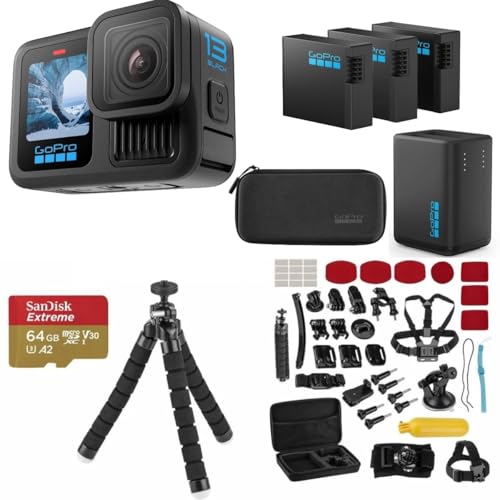
2. GoPro HERO13 Black
The fully stocked action kit
- Sensor: 27MP photos – sensor size Not stated in the listing title – verify with the manufacturer documentation
- Video: 5.3K HDR video
- High-speed modes: 240fps at reduced resolution – Not stated in the listing title – verify with the manufacturer documentation
- Body: Waterproof design with HyperSmooth stabilisation
- In the box: 3 Enduro batteries, dual charger, 64GB SD card, 47-piece accessory kit, 1-year warranty
This HERO13 Black listing is less a camera than a ready-built slow-motion station. The camera itself records 5.3K HDR video and 27MP photos with HyperSmooth stabilisation in a waterproof design, and its high-speed modes reach 240fps at reduced resolutions, again in the class below the headline frame size. What transforms the proposition is everything around it: three Enduro batteries, a dual charger, a 64GB SD card and a 47-piece accessory kit mean the box contains the mounts, power and media that high-frame-rate shooting consumes so greedily.
Others, like a pitcher’s delivery or a dancer’s leap, sit perfectly inside what 240fps reveals. A fast lens at a wide aperture buys back the light that the frame rate took away, at the cost of thinner focus depth. A polarising filter, tempting for skies and water, steals light that 240fps footage can rarely spare, so use one deliberately. Rain covers and sealed bodies earn their keep when slow motion chases spray, mud and powder near the lens. Focus tracking faces a stern test when subjects cross the frame in a fraction of a second, and the best systems here keep faces locked surprisingly well.
Shutter speed discipline matters more than the frame-rate badge, because a lazy shutter leaves motion blur smeared across frames that were supposed to freeze detail. Cards fill quickly at these rates, so a disciplined shooter offloads between sessions rather than discovering a full card mid-event. The resolution step down at 240fps shows most on large screens, while phone-sized playback hides it almost completely. Most shooters pair 240fps with a shutter near double the frame rate, accepting the light cost as the price of crisp slow motion. The edit is where 240fps justifies itself: speed ramping from real time into deep slow motion inside one continuous take never stops feeling luxurious.
Three batteries is not a luxury at 240fps; it is the difference between filming the last run of the day and watching it. The dual charger keeps the rotation organised overnight, and the accessory assortment covers the helmet, chest, handlebar and tripod mounts that action slow motion rotates through. A one-year warranty is also stated in the listing, a reassurance worth having on a camera bought to be knocked about. For a first-time action buyer, this kit removes the usual week of follow-up orders.
The honest caveat mirrors its sibling: 240fps here lives at reduced resolution, and the small-sensor look remains an action-camera look, with deep focus and limited low-light grace. Buyers who understand that trade receive the most complete starting kit in this guide.
Strengths
- Kit includes three batteries, dual charger, card and 47 accessories
- 5.3K HDR video with HyperSmooth stabilisation in a waterproof body
- 240fps slow motion ready to shoot on the day the box arrives
Trade-offs
- 240fps mode steps down from the 5.3K headline resolution
- Accessory breadth may exceed what a single-sport shooter ever uses
- Action-camera audio and low-light footage trail the mirrorless picks
Best for: a first-time action shooter seeking a complete 240fps kit with batteries, mounts and media included
Not suited for: a filmmaker seeking interchangeable lenses, because the fixed action lens defines the look permanently
When the plan is to shoot slow motion on the first weekend rather than after a week of accessory orders, Check price on Amazon and note the three-battery supply that high frame rates demand.

3. OM System OM-1 Mark II Body
Weather-sealed speed system
- Sensor: 20.4MP Four Thirds stacked BSI sensor
- Video: 4K video; 240fps high-speed recording in full HD class – frame rate detail Not stated in the listing title – verify with the manufacturer documentation
- Stabilisation: 5-axis image stabilisation
- Body: IP53 weather-sealed body only – lens required
- Mount: Micro Four Thirds interchangeable lenses
The OM-1 Mark II approaches 240fps from the system-camera side: a 20.4MP Four Thirds stacked BSI sensor, 4K video, 5-axis stabilisation and an IP53 weather-sealed body. Its high-frame-rate recording reaches 240fps in the full HD class, a clear step down from its 4K mode and the standard honesty this category requires. What the smaller frame buys is a stacked sensor with very fast readout, which keeps fast pans and vibrating platforms calmer than slower sensors manage, plus a lens catalogue deep in compact, fast glass that suits travel-heavy action work.
Pre-recording buffers, where offered, rescue moments that begin before the operator reacts, a genuine gift at sporting events. Bright midday sun, so hostile to ordinary video, becomes an ally here, feeding the short exposures that high-speed recording demands. Tripods help static subjects, but following a moving athlete at 240fps usually rewards a gimbal or a well-practised handheld stance. Colour depth narrows in some high-speed modes on some bodies, a quiet compromise worth checking in the manual before a paid shoot. Manual focus, pre-set at the known distance of a trick or a feeder, remains the old reliable answer when autofocus hunts.
Testing a new body’s high-speed mode at home, on a dripping tap or a bouncing ball, teaches its limits before the stakes rise. Sound recorded at 240fps is rarely used directly, since stretching it produces eerie drones, yet a clean scratch track still guides the edit. Viewers forgive a softer frame during a dramatic slow-motion beat far more readily than they forgive a missed moment entirely. Rolling shutter skew shrinks as readout speeds climb, which is one reason stacked sensors feel calmer when the camera pans across fast action. Frame-rate labels describe capture, not delivery, and conforming 240fps material to a slower timeline is a deliberate editorial choice.
IP53 sealing changes where slow motion can happen. Spray at a regatta, dust at a motocross track and drizzle on a fell run all become shootable conditions rather than reasons to pack up, provided the mounted lens carries comparable sealing. The 5-axis stabilisation earns its keep in slowed playback, ironing the tremor that eight-times-slower footage would otherwise magnify. As a body-only listing, though, the camera asks its owner to choose glass deliberately, and the total system deserves planning rather than impulse.
Micro Four Thirds sensors gather less light than the full-frame Sonys below, so 240fps under floodlights will show more noise than those bodies produce. In daylight, which is where most action slow motion lives, the OM-1 Mark II’s speed, sealing and size form a coherent and very portable argument.
Strengths
- Stacked sensor readout keeps fast, high-frame-rate action composed
- IP53 weather sealing suits spray, dust and drizzle at events
- 5-axis stabilisation steadies footage that slow playback would expose
Trade-offs
- 240fps recording is a full HD class mode, below the 4K headline
- Body-only listing means a lens purchase is required before shooting
- Four Thirds sensor trails full-frame picks for low-light slow motion
Best for: an outdoor sports shooter seeking weather-sealed 240fps capture in a compact interchangeable-lens system
Not suited for: a night-event videographer seeking the cleanest possible high-speed footage, because the smaller sensor concedes low-light ground
For sealed, system-camera slow motion that travels light on wet start lines, Check price on Amazon and factor a weather-sealed lens into the same order.

4. Sony RX100 VII
Pocket super-slow-motion
- Sensor: 20.1MP 1-inch stacked CMOS sensor
- Lens: 24-200mm built-in zoom lens
- High-speed modes: Super-slow-motion bursts up to 240fps class and beyond in short clips – duration Not stated in the listing title – verify with the manufacturer documentation
- Bundle: Creator bundle with 2x 64GB memory cards and case
- Body: Compact fixed-lens camera (DSC-RX100M7)
The RX100 VII is the slow-motion camera that fits in a jacket pocket. Its 20.1MP 1-inch stacked CMOS sensor sits behind a genuinely useful 24-200mm zoom, and its super-slow-motion modes reach the 240fps class and beyond, but only in short bursts rather than sustained recording. That burst character defines the pick honestly: this is a camera for the single decisive instant, the skateboard landing, the dog’s catch, the champagne cork, captured in a brief, dense slice of time and then done. This listing bundles two 64GB cards and a case, sensible companions for a camera whose clips are small but numerous.
Heat follows data, and long high-speed sessions in summer sun deserve shade breaks for the camera as much as for the operator. Some subjects, like hummingbirds and table-tennis smashes, still outrun 240fps, pointing toward specialist burst modes instead. Light metering can mislead at high speeds, so exposing manually protects a sequence from brightness pumping between frames. Focus tracking faces a stern test when subjects cross the frame in a fraction of a second, and the best systems here keep faces locked surprisingly well. Even experienced shooters misjudge how dark 240fps looks until the first review on a dim monitor, so chimping early is wisdom, not weakness.
A splash, a balloon burst and a golf impact all share one trait: the decisive instant lasts milliseconds, and only a genuinely high frame rate samples it densely enough. When a venue bans flash and floods the scene with mixed colour temperatures, white balance discipline saves hours of correction later. Pre-recording buffers, where offered, rescue moments that begin before the operator reacts, a genuine gift at sporting events. Rain covers and sealed bodies earn their keep when slow motion chases spray, mud and powder near the lens. Slow motion flatters preparation: marking the spot, rehearsing the move and briefing the subject all show up on screen.
The 1-inch stacked sensor is the largest here outside the system cameras, and it shows in cleaner high-speed frames than phone footage or small action sensors deliver at the same dim exposures. The zoom range quietly matters for slow motion, because filling the frame optically at a safe distance beats cropping a wide shot of a distant subject. Autofocus in this Sony generation is famously sticky on eyes and faces, which rescues bursts that manual focus would miss at pocket-camera distances.
Burst length is the compromise to accept with open eyes. Anyone planning long slow-motion sequences, full sports plays or extended product pours should look to the mirrorless and cinema picks below, which sustain their high rates far longer. For moments, though, nothing else in this guide disappears into a coat pocket.
Strengths
- 1-inch stacked sensor delivers clean slow-motion frames from a pocket body
- 24-200mm zoom frames distant subjects without cropping
- Creator bundle adds two 64GB cards and a case
Trade-offs
- Extreme frame rates arrive in short bursts, not sustained recording
- Fixed lens cannot be changed for faster apertures in dim light
- Small body offers limited grip and controls for long sessions
Best for: a traveller seeking pocketable super-slow-motion bursts with a versatile built-in zoom
Not suited for: an event videographer seeking sustained 240fps sequences, because burst recording ends each take quickly
If slow motion should live in a coat pocket and surface for single perfect instants, Check price on Amazon and confirm the bundled cards and case in the listing contents.
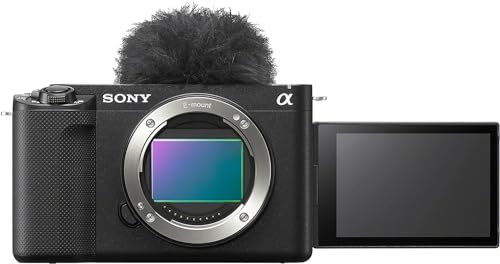
5. Sony ZV-E1 Body Black
Full-frame creator speed
- Sensor: 12.1MP full-frame Exmor R CMOS with Bionz XR processing
- Video: 4K up to 60p; 240p high-frame-rate recording in full HD class
- Stabilisation: 5-axis in-body image stabilisation
- Mount: Sony E-mount, body only in black
- Frame rate ceiling in title: 4K up to 60p as titled; high-speed detail beyond that Not stated in the listing title – verify with the manufacturer documentation
The ZV-E1 brings 240fps to a full-frame sensor, and that pairing changes the slow-motion equation more than any other in this guide. Its listing states a 12.1MP full-frame Exmor R CMOS sensor, Bionz XR processing, 4K up to 60p and 5-axis in-body stabilisation, with high-frame-rate recording reaching 240p in the full HD class. The resolution step down from 4K remains, and this review states it plainly, but the full-frame sensor’s light gathering means those full HD frames stay unusually clean at the short exposures 240p demands, including indoors and at dusk where smaller sensors begin to fray.
Sound recorded at 240fps is rarely used directly, since stretching it produces eerie drones, yet a clean scratch track still guides the edit. At 240 frames per second, a one-second gesture becomes roughly ten seconds of screen time at a 24fps timeline, and micro-expressions invisible in real time suddenly carry the whole shot. A polarising filter, tempting for skies and water, steals light that 240fps footage can rarely spare, so use one deliberately. For web delivery, a clean full HD slow-motion clip usually pleases viewers more than a noisy attempt at a larger frame. Viewers forgive a softer frame during a dramatic slow-motion beat far more readily than they forgive a missed moment entirely.
A fast lens at a wide aperture buys back the light that the frame rate took away, at the cost of thinner focus depth. Colour depth narrows in some high-speed modes on some bodies, a quiet compromise worth checking in the manual before a paid shoot. Bright midday sun, so hostile to ordinary video, becomes an ally here, feeding the short exposures that high-speed recording demands. Others, like a pitcher’s delivery or a dancer’s leap, sit perfectly inside what 240fps reveals. Most shooters pair 240fps with a shutter near double the frame rate, accepting the light cost as the price of crisp slow motion.
The 12.1MP count, modest on a stills specification sheet, is a deliberate video-first design: larger photosites, strong low-light behaviour and manageable file sizes. Creator-focused handling, a fully articulating screen and Sony’s mature subject-recognition autofocus make the ZV-E1 as capable at ordinary vlogging speeds as at high ones, which matters because most owners shoot most minutes at normal rates. E-mount glass, from fast primes to versatile zooms, lets the slow-motion look evolve with the owner.
Body-only pricing logic applies here too, since no lens is included, and full-frame E-mount lenses deserve a planned budget. Compact full-frame bodies also ask care with heat on very long recording days. Neither point dents the central appeal: this is the cleanest 240p image in the guide short of the cinema body below.
Strengths
- Full-frame sensor keeps 240p frames clean in weak light
- 5-axis in-body stabilisation and strong subject-tracking autofocus
- E-mount system grows from vlogging to serious production glass
Trade-offs
- 240p recording is full HD class, not the 4K headline mode
- Body-only listing requires a separate lens investment
- Compact body needs heat awareness on marathon recording days
Best for: a creator seeking full-frame 240p slow motion that stays clean under indoor and evening light
Not suited for: a stills-first photographer seeking maximum megapixels, because the 12.1MP sensor is tuned for video
For creators whose slow motion happens under real room light rather than midday sun, Check price on Amazon and plan the first E-mount lens alongside the body.

6. Sony Alpha FX3 Cinema Line Camera
Cinema-line high-speed body
- Sensor: Full-frame sensor – resolution Not stated in the listing title – verify with the manufacturer documentation
- Line: Sony Cinema Line camera (ILME-FX3)
- High-speed modes: 240p high-frame-rate recording in full HD class – detail Not stated in the listing title – verify with the manufacturer documentation
- Body: Cinema body with mounting points and production handling
- Lens system: Interchangeable-lens body – lens Not stated in the listing title – verify with the manufacturer documentation
The FX3 is where this guide stops talking about a feature and starts talking about a profession. Sony’s Cinema Line body carries a full-frame sensor and a production-oriented design, and its high-frame-rate recording reaches 240p in the full HD class, again below its headline cinema resolutions and stated here without decoration. On a set, that mode serves the same purpose as everywhere else, slowing a product pour, a stunt beat or a machine cycle, but it does so inside a body built for rigs, crews, repeatable settings and long days.
Under stadium lights or office fluorescents, flicker can ripple through high-frame-rate footage, and anti-flicker settings deserve a test before an important shoot. Cards fill quickly at these rates, so a disciplined shooter offloads between sessions rather than discovering a full card mid-event. Testing a new body’s high-speed mode at home, on a dripping tap or a bouncing ball, teaches its limits before the stakes rise. Tripods help static subjects, but following a moving athlete at 240fps usually rewards a gimbal or a well-practised handheld stance. Battery drain accelerates during high-speed capture, and spare cells stop being optional on a full day of action shooting.
Frame-rate labels describe capture, not delivery, and conforming 240fps material to a slower timeline is a deliberate editorial choice. The strongest 240fps clips usually run short, entering the edit as punctuation rather than as the whole sentence. Storage budgeting belongs in pre-production, because an afternoon of high-speed clips can outweigh a week of ordinary footage. The resolution step down at 240fps shows most on large screens, while phone-sized playback hides it almost completely. The edit is where 240fps justifies itself: speed ramping from real time into deep slow motion inside one continuous take never stops feeling luxurious.
Cinema Line membership brings the unglamorous virtues professionals actually bill for: robust recording media options, extensive mounting points, tally awareness, and a control layout designed around external monitors and follow-focus work. The full-frame sensor delivers the same low-light slow-motion advantage as the ZV-E1, with a body far better suited to sustained production. Handing an FX3 a wedding or a commercial job feels different from handing it a holiday, and the camera is priced and built accordingly, in qualitative terms the flagship tier of this guide.
Casual shooters should weigh whether cinema infrastructure will ever surround this body, because without rigs, crew workflows or client deliverables, much of its design goes unused. For working videographers, though, it is the natural top rung: 240p slow motion with no apologies about the body around it.
Strengths
- Cinema Line body built for rigs, crews and long production days
- Full-frame sensor keeps high-frame-rate footage clean in low light
- 240p slow motion integrates with professional cinema workflows
Trade-offs
- 240p mode records in the full HD class, not full cinema resolution
- Body-only purchase begins a significant lens and rig investment
- Cinema-focused controls are more than casual shooting requires
Best for: a working videographer seeking 240p slow motion inside a full cinema production body
Not suited for: a casual shooter seeking one small camera for trips, because the FX3 expects lenses, rigging and intent
When slow motion is billable work rather than a weekend experiment, Check price on Amazon and review the cinema body’s exact configuration before ordering.
Comparison table
| Pick | Headline specification | Defining trait |
|---|---|---|
| GoPro HERO12 Black | 5.3K60 video, 27MP photos | Waterproof action body, 1/1.9-inch sensor |
| GoPro HERO13 Black | 5.3K HDR video, 27MP photos | Kit with 3 batteries and 47-piece accessory set |
| OM System OM-1 Mark II Body | 4K video, 20.4MP stacked sensor | IP53 sealing, 5-axis stabilisation, body only |
| Sony RX100 VII | 20.1MP 1-inch stacked sensor | 24-200mm zoom, burst slow motion, bundle |
| Sony ZV-E1 Body Black | 4K up to 60p, 240p high-speed | Full-frame 12.1MP sensor, E-mount body only |
| Sony Alpha FX3 Cinema Line Camera | Full-frame Cinema Line body | 240p high-speed, production handling |
How should a buyer choose among the best cameras that shoot 240fps?
Remote and unattended work, like the setups in barn Cameras Without Wi-Fi barn Cameras Without Wi-Fi, rewards entirely different virtues than handheld slow motion. Think about lenses early: fixed-lens picks freeze the look forever, while system bodies let the slow-motion aesthetic evolve. For client work, prioritise reliability features, dual recording options and repeatable settings over novelty modes. Decide how long each slow-motion take must run, since burst-mode cameras and sustained-recording cameras divide sharply on exactly that line. Test any finalist on a humble subject first, a dripping tap or a staircase bounce, and judge the footage on the real delivery screen.
Budget batteries as a system, especially for action cameras, where a three-cell rotation transforms a day’s shooting. Consider the normal-speed camera underneath the headline feature, because it will record ninety percent of lifetime footage. Consider audio only after image, because most high-speed clips are muted, rescored or paired with separately recorded sound. Count the light honestly at the usual venue, then match sensor size to it, because no stabiliser or codec rescues starved exposures. Start with the subject, not the specification sheet, because a mountain bike and a product pour impose opposite demands on the same frame rate.
Choose the mount ecosystem with the sport, since chest, helmet and bar mounts each flatter different kinds of motion. Look at heat behaviour for summer events, where direct sun and high data rates stress small bodies hardest. Read bundle contents literally, line by line, since included chargers, cards and mounts change the real starting cost between listings. Finally, buy for the footage planned this season, not an imagined production three years away. Match autofocus expectations to the subject’s speed and path, and favour pre-focusing when the action crosses a known point.
Keep one generation of perspective: last year’s flagship often serves a learner better than this year’s entry body. Plan media before the first shoot, as high-speed recording consumes fast cards at a rate that surprises even experienced owners. Weigh size against attendance: the camera carried daily records more great moments than the superior body left at home. Ask where the camera must survive: water, dust and vibration point toward sealed or action bodies, while controlled studios reward sensor size instead. Check the resolution the 240fps mode truly uses, and imagine it on the largest screen the footage will ever meet.
Light, shutter and the physics of 240fps
Reflectors and pale walls bounce precious light back into shaded subjects without any electrical help at all. Adding light is the only free lunch: a bright panel or a move toward a window improves 240fps footage more than any setting. Opening the aperture helps until focus depth thins to a ribbon, after which missed focus replaces noise as the main defect. Shutter angle discipline keeps motion crisp, while a slow shutter smears the very detail the frame rate was bought to reveal. Flicker from mains-powered lamps can band across frames at high speeds, and venues deserve a short test clip before the real event.
Shooting a touch brighter, within highlight limits, usually grades down more gracefully than rescuing shadows later. The physics never negotiates, so the craft lies in arranging subject, light and camera until the arithmetic works. Exposure should be locked manually for a sequence, preventing the brightness pumping that auto modes introduce between frames. Noise reduction in the edit has improved enormously, yet it still works best on footage that was nearly clean when recorded. Golden hour flatters colour but steals exposure quickly, so the best high-speed light often arrives earlier than photographers prefer.
Raising sensitivity helps until texture dissolves, and each sensor size in this guide reaches that wall at a different point. Daylight remains the great equaliser, letting even small action sensors produce clean, confident slow motion. A scene that looks bright to the eye can still starve a high-speed sensor, particularly indoors where lighting is designed for people, not cameras. Monitoring with a histogram or zebras beats trusting a bright rear screen under a brighter sky. Every frame at 240fps receives roughly one tenth of the exposure time available at 24fps, and that arithmetic explains most disappointing slow-motion footage.
From bursts to cinema: matching modes to subjects
Action cameras excel when the camera itself moves with the subject, a perspective mirrorless bodies rarely survive attempting. The subject list on a phone, written before shopping, remains the cheapest and most accurate buying tool in this entire category. Speed ramping, gliding from real time into slow motion inside one clip, needs enough recorded duration on both sides of the ramp. Sustained high-frame-rate recording suits plays and processes, where the interesting part might arrive several seconds into the take. System cameras excel when the viewpoint is chosen and defended, from a tripod at a finish line or a hide near a feeder.
Editors think in beats, and a three-second window of deep slow motion often carries an entire sequence’s emotional weight. Ultimately the best mode is the one whose limits the owner understands before the important day arrives. A pitcher’s full delivery, a machine cycle or a dancer’s phrase all reward cameras that keep recording at speed. Travel compresses every decision, favouring small systems and fixed lenses until a specific assignment argues otherwise. Burst slow motion suits instants: a cork leaving a bottle, a skateboard deck snapping down, a droplet crown rising and collapsing.
Cinema bodies excel when the shot must repeat identically across takes, with marks, focus pulls and matched settings. Compacts excel at readiness, being present in a pocket at the unrepeatable second a flagship would still be in its bag. Demo footage online flatters every camera with perfect light, so judging by difficult-light examples gives a truer ranking. Hybrid shooters should weigh stills honestly, because a slow-motion body that also delights as a stills camera gets carried more. Choosing the mode family first, and the brand second, prevents the common error of buying specifications instead of outcomes.
Notes from the slow-motion field
Rental houses report that high-frame-rate bodies return with the fullest cards in their fleets, a statistic every owner recognises. A neutral density filter, used thoughtfully, can restore a cinematic shutter angle when midday light overwhelms even fast exposures. Slow-motion portfolios age well, because the subjects that justified 240fps rarely stop being spectacular. Teaching a second operator the session’s marks multiplies the usable angles without multiplying the budget. The humble dripping tap remains the finest free test subject in the entire slow-motion world.
A camera’s slow-motion menu layout, learned by muscle memory, decides whether the unrepeatable moment gets caught. Protecting the lens during spray and powder work is a habit that separates long-lived bodies from short-lived ones. Editors privately rank reliability above resolution when a shoot cannot be repeated. Every generation of these cameras narrows the resolution compromise a little further, which rewards owners who buy for today’s footage. The moment itself remains the senior partner in every slow-motion production, with the camera as its fortunate witness.
Session craft: planning a 240fps shoot day
Wind, invisible in stills, choreographs hair, spray and clothing at high frame rates and deserves a place in the plan. A shot list ordered by light, rather than by enthusiasm, protects the best angles for the best hours. The operator’s stance is equipment too, and a braced position outperforms an expensive stabiliser used carelessly. Costume and colour choices read differently in slow motion, where fabric movement becomes a visible performance. Props that shatter, splash or pour deserve multiples, because the perfect take rarely arrives first.
Playback review after the first real take is the cheapest insurance in the entire production. Ending the day with a few normal-speed clips gives the edit its connective tissue between slow-motion peaks. Cards should be formatted in the camera at the day’s start, never borrowed from yesterday’s half-finished session. Backup media and a laptop offload at midday turn a card crisis into a coffee break. A short written note on what the light did, kept with the footage, teaches the next session more than any review video.
Sound, even when destined for replacement, should be recorded cleanly for the editor’s reference. A second person calling the action gives the operator a half-second of warning that 240fps converts into whole usable seconds. Marking the performer’s start and finish points on the ground turns autofocus guesswork into a solved problem. A shoot day built around slow motion begins with the light plot, not the camera bag, because the sun’s position decides the schedule. Rehearsal takes at ordinary speed let athletes and operators agree on marks before the expensive frames begin.
Common mistakes
Leaving the shutter on automatic smears motion across frames, wasting the clarity that justified the purchase. Buying a body-only camera without budgeting its first lens turns an exciting delivery into a paperweight week. Assuming the headline resolution applies at 240fps is the category’s defining disappointment, and it is avoidable by reading modes before money. Chasing every play at 240fps fills cards with ordinary moments and buries the genuine highlights in an editing backlog. Skipping practice sessions means the first real attempt doubles as the first lesson, and the footage shows it.
Filming a first high-speed session indoors under household bulbs teaches the light lesson the hard way, with grain in every frame. Judging slow-motion quality on a phone screen alone hides softness that a television will expose immediately. Slow cards announce themselves by stopping recordings mid-take, usually during the one attempt that mattered. Forgetting spare batteries ends more action days than any technical failure, because high rates consume power relentlessly. Over-tightening digital stabilisation crops and warps edges, so the gentlest effective setting usually wins.
Ignoring heat warnings in summer sun can end a recording session entirely, long after the light turned perfect. Trusting autofocus on a subject crossing at close range, without a pre-focused backup plan, gambles the decisive instant. Mounting an action camera loosely adds a buzzing vibration that slow playback stretches into an unwatchable wobble. Treating slow motion as a substitute for a good viewpoint fails, because time-stretching cannot fix a badly placed camera. Neglecting a quick flicker test in a new venue risks banding across an entire evening’s footage.
Frequently asked questions
Does 240fps always mean lower resolution?
In this guide, yes in practice: each pick records its 240fps mode at a reduced frame size compared with its headline mode, commonly in the full HD or 2.7K class on action bodies and full HD on the mirrorless and cinema picks. The reviews state that trade per camera rather than letting the headline figure imply otherwise.
Is 240fps noticeably smoother than 120fps?
Played back at the same timeline rate, 240fps stretches time twice as far, so a one-second action becomes about ten seconds at 24fps instead of five. For very fast subjects the difference is obvious; for gentle motion, 120fps often suffices and costs less light.
Which pick handles low light best at high frame rates?
The full-frame Sony bodies, the ZV-E1 and the FX3, hold the advantage because their sensors gather far more light per short exposure. The action cameras and the burst compact perform best in daylight, which is where their intended subjects usually live.
Can these cameras record 240fps continuously?
The mirrorless, cinema and action picks sustain high-frame-rate recording far longer than the RX100 VII, whose extreme modes work as short bursts designed around single instants. Card speed, heat and battery state still limit every camera on long sessions.
Do I need special memory cards for 240fps?
Fast cards are strongly advisable, because high-frame-rate modes write data quickly and slow media can stop a take. Two of the listings here include 64GB cards, which is a sensible starting point rather than an extravagance.
Is an action camera or a mirrorless body better for sports slow motion?
Mounted, moving and risky viewpoints favour the waterproof GoPros, while defended viewpoints, longer lenses and low light favour the system cameras. Many serious shooters eventually run both, because their slow-motion strengths barely overlap.
Final recommendation
The honest summary is a ladder rather than a single winner. The GoPro pair own mounted, waterproof slow motion, with the HERO13 kit adding the batteries and accessories the mode devours. The OM-1 Mark II serves the weather-beaten system shooter, the RX100 VII hides cinema-grade instants in a pocket, and Sony’s full-frame pair, the ZV-E1 for creators and the FX3 for productions, deliver the cleanest 240p frames when light runs short.
The wrong rung is rarely a bad camera; it is a good camera matched to the wrong kind of moment. Pocketability has its own gravity, and the RX100 VII proves a burst can be worth more than a sequence. Resolution compromises at 240fps are real but proportionate, shrinking on the phones and laptops where most clips play. Bundles and body-only listings change true starting positions, so the final comparison should read box contents literally. Every camera here was judged against the same unforgiving arithmetic of light, resolution and duration.
Choose the camera whose limits align with the footage already being imagined, and the frame rate will deliver. Water, dust and impact push it just as firmly toward the action cameras and the sealed OM body. A buyer who maps the usual subject, venue and screen size will find the right rung quickly. Slow motion rewards rehearsal, and the first practice clips teach more than any specification table. Low-light ambitions should push the decision toward the full-frame bodies without hesitation.
When the shutter opens 240 times in a single second, an ordinary leap becomes a small ballet, and the right camera is simply the one whose compromises disappear behind that moment.


