What's inside
- Where to Buy
- Key Takeaways
- Quick Picks
- How the picks were chosen
- Comparison table
- How should a buyer choose the best cameras to film time lapse?
- Intervals, flicker and exposure discipline
- Power, weather and the long deployment
- What the long watch teaches
- Accessories and habits that protect a long project
- Project diaries: what finished sequences teach
- Common mistakes
- Frequently asked questions
- Final recommendation
As an Amazon Associate I earn from qualifying purchases. This post may contain affiliate links at no extra cost to you.
[SITE_DOMAIN] is reader-supported. When you buy through links on our site, we may earn an affiliate commission at no extra cost to you. Prices and availability change; check the Amazon listing for the current details.
Where to Buy
Brinno BCC300-M Time Lapse – View on Amazon
Brinno BCC5000 4K Time Lapse – View on Amazon
Brinno TLC300 Time Lapse – View on Amazon
Time Lapse Camera WiFi 4K – View on Amazon
Dsoon Time Lapse Camera 4K – View on Amazon
Sony Alpha a7 III Mirrorless Camera with 28-70mm Lens Black – View on Amazon
All six cameras below are sold through Amazon, and each line above opens the exact listing so bundle contents, included cards and mounting hardware can be verified before ordering. Time-lapse listings vary quietly: one includes a wall mount, another a 32GB card, another neither, and those details decide whether a camera can be deployed the day it arrives.
The best cameras to film time lapse begin with a small correction that honest guidance owes every reader: despite the keyword’s wording, nothing in this guide loads film. The credible modern shelf is digital through and through, built from dedicated time-lapse cameras that sip power for months, seal themselves against weather and wake on schedule to take one frame at a time, plus one full mirrorless camera whose interval mode serves photographers who also shoot everything else. Searching for a film body to shoot time-lapse in the traditional sense would lead to motor drives, intervalometers and laboratory processing; the tools below deliver the same compressed-time magic directly, as video files ready to watch.
Five of the six picks are specialists. Three come from Brinno, the brand that effectively defined the construction and plant-growth time-lapse niche, spanning a jobsite bundle, a 4K flagship with cloud access and a compact 1080p model. Two further dedicated cameras, one carrying WiFi and a 4K badge, one from Dsoon, compete on battery life, waterproof housings and included storage. The sixth pick, Sony’s a7 III with its kit lens, is the generalist: a respected full-frame mirrorless camera whose interval shooting produces time-lapse raw material of far higher stills quality, at the price of far more attendance. Readers setting up unattended monitoring of a different kind may also compare baby Monitors With Two Pan-Tilt-Zoom Cameras baby Monitors With Two Pan-Tilt-Zoom Cameras, though those watch in real time rather than compressing it.
Time-lapse shopping inverts ordinary camera logic. Resolution matters less than endurance, autofocus sophistication matters less than a lens that will not fog, and the decisive specifications become battery life measured in months, housing ratings, interval flexibility and how gracefully a camera handles the transition from noon glare to dusk. Each review below judges its pick on those terms.
Finished time-lapse projects share a personality trait: their owners all describe the same surprise at how much of the craft is logistics rather than photography. The frame is chosen once, but the visits, the battery swaps, the storm checks and the small mid-course corrections accumulate into the real work, and the cameras in this guide differ mainly in how kindly they treat that long tail of attention. A project diary, even a few lines per visit, turns a second project from a repeat into a refinement, and it costs nothing but honesty about what the weather and the batteries actually did.
Key Takeaways
- The modern time-lapse shelf is digital: dedicated interval cameras plus one mirrorless body, not film cameras.
- Battery endurance is the headline specification, with dedicated models claiming months of unattended shooting.
- Brinno’s three models split the niche by budget and ambition: jobsite bundle, 4K cloud flagship and compact 1080p unit.
- Housing ratings from IPX4 to IP66 decide whether a camera survives a season outdoors or a single storm.
- The Sony a7 III offers the finest individual frames and full creative control, but demands power and attendance the specialists avoid.
- Interval choice shapes the story: seconds for clouds and crowds, minutes for construction, hours for plants and seasons.
Quick Picks
| Pick | Badge | Why it earns a place |
|---|---|---|
| Brinno BCC300-M Time Lapse | Jobsite-ready bundle | An outdoor construction and plant time-lapse camera with LCD screen, extended battery life, IPX4 resistance and a wall mount in the bundle. |
| Brinno BCC5000 4K Time Lapse | 4K cloud-connected flagship | Brinno’s 4K WiFi flagship bundle with remote cloud access, HDR imaging, IP65 housing, mobile app and up to six-month battery life with extended slots used. |
| Brinno TLC300 Time Lapse | Compact 1080p workhorse | A professional HDR FHD 1080p time-lapse camera with LCD screen, 118-degree field of view and extended battery life for construction and indoor use. |
| Time Lapse Camera WiFi 4K | Waterproof 4K with card included | A WiFi 4K time-lapse camera in an IP66 waterproof case with 110-degree wide angle, rechargeable power and a 32GB card for construction and plant recording. |
| Dsoon Time Lapse Camera 4K | Six-month battery value | A Dsoon 4K FHD time-lapse camera with IP66 waterproofing, six-month battery life and a 32GB TF card included, for construction, weather and plant subjects. |
| Sony Alpha a7 III Mirrorless Camera with 28-70mm Lens Black | The photographer’s interval route | A full-frame mirrorless camera with 28-70mm kit lens and 3-inch LCD, whose interval shooting produces time-lapse source frames of far higher quality than the dedicated units. |
How the picks were chosen
Selection started by correcting the category itself, gathering the dedicated digital time-lapse cameras that construction firms, gardeners and researchers actually deploy. Interval flexibility was assessed qualitatively from each model’s purpose, since listings describe outcomes more than menu trees. Each review states plainly what its camera cannot do, particularly around connectivity and resolution ceilings. Low-light behaviour was weighed for dawn and dusk transitions, where time-lapse sequences often look their best and sensors struggle most. Battery claims were read carefully, noting where a headline life depends on extended battery slots being filled, as one flagship states openly.
Mounting provisions mattered, with one Brinno bundle including a wall mount in the box. Included storage earned credit, as two picks bundle a 32GB card and begin working immediately. Where a title omitted a detail, the spec box says so rather than borrowing figures from a sibling model. Star ratings and review counts played no part, since they fluctuate and say nothing about a six-month deployment. Field of view was compared across listings, because a fixed wide lens decides how much of a site or garden fits in frame from one mounting point.
Dedicated cameras dominate the list deliberately, reflecting how the craft is actually practised today. Prices were likewise excluded from judgement, keeping the verdicts tied to endurance, sealing and image character. Any camera whose endurance was measured in hours rather than days was excluded, because serious time-lapse subjects unfold over weeks. Housing and weather ratings were treated as primary specifications, since a fogged or flooded camera records nothing at all. The result favours cameras that disappear into a project and simply keep working.
The same patience that governs unattended shooting also governs the setups in barn Cameras Without Wi-Fi barn Cameras Without Wi-Fi, where power and coverage decide everything. The mirrorless pick was admitted on different terms: unmatched frame quality and lens choice for attended, shorter projects. Screen presence was noted, because an LCD for framing saves the guesswork that plagues screenless deployment. The final ordering runs from jobsite practicality to photographic ambition, so readers can stop at the rung matching their project. Remote access counted for the connected models, letting owners check framing and progress without disturbing a mounted camera.

1. Brinno BCC300-M Time Lapse
Jobsite-ready bundle
- Purpose: Outdoor construction jobsite and plant time-lapse
- Screen: LCD screen for framing and review
- Weather resistance: IPX4 water-resistant
- Power: Extended battery life – exact duration Not stated in the listing title – verify with the manufacturer documentation
- Mounting: Wall mount included
The BCC300-M is the pragmatic heart of the Brinno range: a dedicated time-lapse camera aimed squarely at construction jobsites and plant projects, with an LCD screen for honest framing, extended battery life and IPX4 water resistance, bundled with a wall mount so deployment starts immediately. The LCD deserves emphasis, because aiming a screenless camera for a three-month project is an act of faith this model spares its owner. IPX4 resistance shrugs off splashing rain rather than immersion, a fair rating for a camera usually mounted under eaves or on a sheltered wall.
Night transitions expose sensor limits, and the strongest sequences often end gracefully at dusk rather than forcing darkness. Condensation inside a housing can ruin a dawn sequence, so desiccant and ventilation deserve thought at setup. The interval is the director of every time-lapse, deciding whether clouds boil, crawl or merely drift. A time-lapse of a renovation becomes a record owners treasure and contractors respect in equal measure. A construction time-lapse compresses months of scaffolding, cranes and concrete into a minute of inevitable-looking progress.
Time-lapse flatters subjects with inherent rhythm: tides, markets, workshops, gardens and building sites. Power planning begins with the honest question of how often anyone will realistically visit the camera. Long intervals suit slow subjects yet risk missing the brief event that gave a scene its drama. The edit usually discards nothing, because time-lapse assembles every frame, which makes capture discipline unusually important. Seasonal projects demand housings and batteries rated for the worst month, not the pleasant week of installation.
Flicker, the pulsing brightness between frames, haunts sequences shot under changing light and rewards careful exposure settings. Short intervals smooth motion but multiply frames, storage and processing time in equal measure. The first day of frames should always be reviewed before leaving a camera for a month. A test sequence over a single day reveals framing, flicker and interval errors while they are still cheap. The craft’s deepest skill is choosing where to stand once, well, for a very long time.
For builders and renovators, the appeal is documentation without a workflow: mount it, set the interval, and return to find the project compressed into a watchable record. Plant growers get the same simplicity pointed at a greenhouse bench or a garden bed. The bundle logic is the story here, since the included wall mount removes the accessory hunt that delays other deployments by a week.
Buyers needing driving-rain exposure without shelter should note the IPX4 ceiling and look at the harder-sealed picks below. Within its intended sheltered-outdoor role, the BCC300-M is the guide’s most straightforward route from box to building site.
Strengths
- LCD screen makes framing a mounted camera straightforward
- Wall mount included for immediate deployment
- Extended battery life suits month-long projects
Trade-offs
- IPX4 rating resists splashes rather than driving rain or immersion
- Resolution detail beyond its class Not stated in the listing title – verify with the manufacturer documentation
- Fixed-purpose design offers no general photography role
Best for: a contractor or gardener seeking a bundled, screen-guided time-lapse camera for sheltered outdoor projects
Not suited for: a coastal installer seeking full storm immersion protection, because IPX4 sealing stops at splash resistance
For a jobsite camera that can be mounted and framed on the day it arrives, Check price on Amazon and confirm the bundle contents match the project plan.

2. Brinno BCC5000 4K Time Lapse
4K cloud-connected flagship
- Resolution: 4K time-lapse with HDR imaging
- Connectivity: WiFi with remote cloud access, mobile app and Bluetooth
- Weather resistance: IP65 housing
- Power: 6-month battery life with extended slots used, as titled
- Class: Construction time-lapse system bundle
The BCC5000 is the flagship expression of dedicated time-lapse: 4K capture with HDR imaging, an IP65 housing, WiFi with remote cloud access, a mobile app and Bluetooth, and battery life stated at six months when the extended battery slots are used. Each element answers a real long-project pain. The 4K frame survives cropping and large-screen playback, HDR holds detail across harsh noon-to-shadow site contrast, IP65 sealing faces dust and rain jets directly, and cloud access ends the era of climbing a ladder to learn whether the camera still lives.
Solar assistance helps in open sites, while shaded gardens and winter latitudes test its limits. A sturdy mount matters more than any setting, because a two-millimetre shift becomes an earthquake at playback. Human activity compresses into choreography, and a busy site at high compression looks almost balletic. Storage cards should be sized for the whole project, since swapping media mid-run risks moving the camera. Plant growth sequences reveal movement no patient observer could witness directly, as stems track light across the frame.
Weather sequences reward high vantage points and patience through many unremarkable days for one spectacular front. Framing wider than the subject seems to need protects the sequence against small knocks and growing plants. A camera that emails or uploads progress changes the psychology of long projects, replacing anxiety with quiet confidence. Locking exposure and white balance before a long run prevents the restless breathing that automatic modes introduce. Labelling start dates, intervals and positions sounds dull until the second camera joins the project.
The edit usually discards nothing, because time-lapse assembles every frame, which makes capture discipline unusually important. Flicker, the pulsing brightness between frames, haunts sequences shot under changing light and rewards careful exposure settings. Human activity compresses into choreography, and a busy site at high compression looks almost balletic. Labelling start dates, intervals and positions sounds dull until the second camera joins the project. Condensation inside a housing can ruin a dawn sequence, so desiccant and ventilation deserve thought at setup.
The battery claim deserves its titled precision: six months arrives with extended slots used, so owners should plan the cell load accordingly rather than expecting half a year from a minimal configuration. Remote checking changes project management, letting a site manager verify framing after a storm or share progress with a client from the same footage the camera is quietly assembling.
This is the premium tier of the dedicated class, in qualitative terms, and its connectivity assumes WiFi reach at the mounting point. A remote barn or off-grid plot without a network will waste its finest features, a mismatch the later picks address through sheer endurance instead.
Strengths
- 4K HDR capture with IP65 dust and rain protection
- Remote cloud access and app monitoring for mounted cameras
- Six-month battery potential with extended slots filled
Trade-offs
- Headline battery life depends on using the extended battery slots
- Cloud features require WiFi coverage at the mounting point
- Premium positioning within the dedicated time-lapse class
Best for: a site manager seeking 4K time-lapse with remote cloud checking across a long build
Not suited for: an off-grid grower seeking a camera beyond network reach, because the cloud features need WiFi at the mount
When the project deserves 4K frames and the reassurance of checking in from anywhere, Check price on Amazon and verify the bundle’s battery configuration in the listing.

3. Brinno TLC300 Time Lapse
Compact 1080p workhorse
- Resolution: FHD 1080p with professional HDR
- Field of view: 118-degree field of view
- Screen: LCD screen
- Power: Extended battery life – exact duration Not stated in the listing title – verify with the manufacturer documentation
- Use: Outdoor construction and indoor use
The TLC300 keeps the Brinno formula compact: FHD 1080p capture with HDR, an LCD screen, a wide 118-degree field of view and extended battery life, aimed at outdoor construction and indoor projects alike. The wide field is the practical headline, letting one camera cover a whole room renovation or a broad slice of a building site from a single corner mount. HDR earns its place at the day-night boundaries and under mixed site lighting, where a lesser dynamic range would crush shadow detail in half the frames.
A sturdy mount matters more than any setting, because a two-millimetre shift becomes an earthquake at playback. Seasonal projects demand housings and batteries rated for the worst month, not the pleasant week of installation. A camera that emails or uploads progress changes the psychology of long projects, replacing anxiety with quiet confidence. A construction time-lapse compresses months of scaffolding, cranes and concrete into a minute of inevitable-looking progress. Weather sequences reward high vantage points and patience through many unremarkable days for one spectacular front.
Storage cards should be sized for the whole project, since swapping media mid-run risks moving the camera. Solar assistance helps in open sites, while shaded gardens and winter latitudes test its limits. Time-lapse flatters subjects with inherent rhythm: tides, markets, workshops, gardens and building sites. Plant growth sequences reveal movement no patient observer could witness directly, as stems track light across the frame. Framing wider than the subject seems to need protects the sequence against small knocks and growing plants.
Short intervals smooth motion but multiply frames, storage and processing time in equal measure. A time-lapse of a renovation becomes a record owners treasure and contractors respect in equal measure. Power planning begins with the honest question of how often anyone will realistically visit the camera. The craft’s deepest skill is choosing where to stand once, well, for a very long time. Night transitions expose sensor limits, and the strongest sequences often end gracefully at dusk rather than forcing darkness.
Indoor suitability widens this model’s life beyond the building season: shop refits, studio builds, exhibition installations and classroom projects all compress beautifully at 1080p. The smaller resolution also means gentler storage demands across very long runs. Owners who know their footage will live on laptops, reports and social clips will rarely miss the flagship’s 4K, while owners planning cinema-screen playback should step up the range instead.
The listing positions the TLC300 as a 2023 model, and its blend of screen, width and endurance explains its staying power. It is the dedicated class in its most balanced form, neither stripped down nor extravagant.
Strengths
- 118-degree field covers wide scenes from one mount
- HDR FHD capture suits mixed site and indoor lighting
- LCD screen simplifies precise framing
Trade-offs
- 1080p ceiling trails the 4K flagship for large-screen playback
- Battery duration figure Not stated in the listing title – verify with the manufacturer documentation
- No connectivity features are claimed in the listing title
Best for: a renovator seeking one wide-view camera for indoor refits and sheltered site work
Not suited for: a producer seeking 4K masters for cinema screens, because the TLC300 tops out at FHD 1080p
For wide, dependable coverage of a room or a site corner without flagship complexity, Check price on Amazon and check the current bundle details before ordering.

4. Time Lapse Camera WiFi 4K
Waterproof 4K with card included
- Resolution: 4K time-lapse
- Connectivity: WiFi
- Weather resistance: Waterproof case rated IP66
- Field of view: 110-degree wide angle
- Storage: 32GB included – card format Not stated in the listing title – verify with the manufacturer documentation
This WiFi 4K time-lapse camera competes with the Brinno flagship on the specifications that matter outdoors: a waterproof case rated IP66, a 110-degree wide angle, rechargeable power and a 32GB card in the box, aimed at construction recording and plant growth. IP66 is a serious rating, resisting powerful water jets, so exposed mounts on open sites and unsheltered garden posts fall within its comfort. The included card sounds modest until a project start is saved by it, since a camera without media is a camera recording nothing.
Locking exposure and white balance before a long run prevents the restless breathing that automatic modes introduce. The first day of frames should always be reviewed before leaving a camera for a month. The interval is the director of every time-lapse, deciding whether clouds boil, crawl or merely drift. A test sequence over a single day reveals framing, flicker and interval errors while they are still cheap. Long intervals suit slow subjects yet risk missing the brief event that gave a scene its drama.
A test sequence over a single day reveals framing, flicker and interval errors while they are still cheap. A camera that emails or uploads progress changes the psychology of long projects, replacing anxiety with quiet confidence. Seasonal projects demand housings and batteries rated for the worst month, not the pleasant week of installation. Labelling start dates, intervals and positions sounds dull until the second camera joins the project. Long intervals suit slow subjects yet risk missing the brief event that gave a scene its drama.
Condensation inside a housing can ruin a dawn sequence, so desiccant and ventilation deserve thought at setup. Power planning begins with the honest question of how often anyone will realistically visit the camera. Storage cards should be sized for the whole project, since swapping media mid-run risks moving the camera. Flicker, the pulsing brightness between frames, haunts sequences shot under changing light and rewards careful exposure settings. The edit usually discards nothing, because time-lapse assembles every frame, which makes capture discipline unusually important.
WiFi pairing brings the remote-checking convenience the category increasingly expects, letting owners confirm framing and battery state from ground level. The rechargeable design suits projects within reach of occasional servicing, trading the multi-month disposable-cell endurance of some rivals for a tidier, repeatable power routine. For a single-season build or a growing season in the garden, that trade will suit many owners perfectly.
Long, truly unattended deployments measured in many months remain the Brinno flagship’s territory, and buyers should match the power plan to the project calendar honestly. As an exposed-position 4K camera with media included, this pick is easy to recommend.
Strengths
- IP66 waterproof case suits fully exposed mounts
- 4K capture with WiFi remote checking
- 32GB card included for immediate recording
Trade-offs
- Rechargeable power implies periodic servicing on long projects
- Brand ecosystem and app maturity are less established than Brinno’s
- Battery duration figure Not stated in the listing title – verify with the manufacturer documentation
Best for: a builder seeking an exposed-mount 4K time-lapse camera with media included
Not suited for: a researcher seeking a full year of untouched deployment, because rechargeable power expects scheduled visits
If the mounting point faces open weather and the project starts this week, Check price on Amazon and confirm the included card and case in the listing.
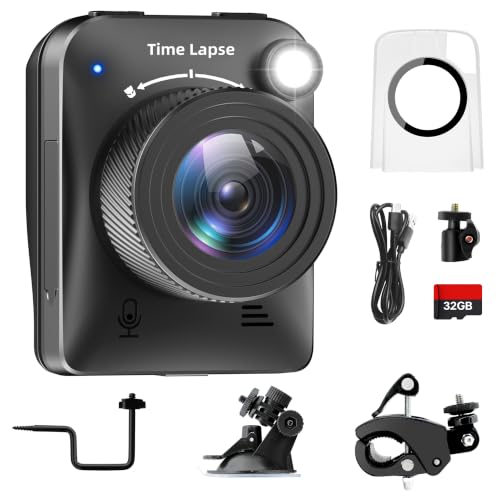
5. Dsoon Time Lapse Camera 4K
Six-month battery value
- Resolution: 4K FHD time-lapse – as titled
- Weather resistance: Waterproof level IP66
- Power: 6-month battery life, as titled
- Storage: 32GB TF card included
- Subjects: Construction, weather and plant recording
Dsoon’s entry leads with the two numbers long-project buyers crave: six-month battery life and IP66 waterproofing, wrapped around 4K FHD time-lapse capture with a 32GB TF card included. The listing names its subjects plainly, construction, weather and plants, which is precisely the dedicated class’s home ground. Six months of endurance spans a full growing season or a major build phase between visits, and IP66 sealing means the camera can hold an exposed post through the same storms it is busy compressing.
A construction time-lapse compresses months of scaffolding, cranes and concrete into a minute of inevitable-looking progress. The interval is the director of every time-lapse, deciding whether clouds boil, crawl or merely drift. Human activity compresses into choreography, and a busy site at high compression looks almost balletic. Framing wider than the subject seems to need protects the sequence against small knocks and growing plants. Plant growth sequences reveal movement no patient observer could witness directly, as stems track light across the frame.
Weather sequences reward high vantage points and patience through many unremarkable days for one spectacular front. A time-lapse of a renovation becomes a record owners treasure and contractors respect in equal measure. Night transitions expose sensor limits, and the strongest sequences often end gracefully at dusk rather than forcing darkness. A sturdy mount matters more than any setting, because a two-millimetre shift becomes an earthquake at playback. Short intervals smooth motion but multiply frames, storage and processing time in equal measure.
The craft’s deepest skill is choosing where to stand once, well, for a very long time. Locking exposure and white balance before a long run prevents the restless breathing that automatic modes introduce. Solar assistance helps in open sites, while shaded gardens and winter latitudes test its limits. The first day of frames should always be reviewed before leaving a camera for a month. Time-lapse flatters subjects with inherent rhythm: tides, markets, workshops, gardens and building sites.
The included TF card completes the out-of-box story, and the straightforward feature set keeps setup approachable for first-time time-lapse owners who find flagship connectivity menus more burden than blessing. Weather recording deserves a word: a camera sealed and powered for half a year can wait through weeks of ordinary skies for the one front that makes the whole sequence worthwhile, which is the essential economics of sky photography.
The title’s ‘4K FHD’ phrasing is reproduced in the spec box as written, and buyers wanting a precise resolution figure should verify it in the manufacturer’s documentation. Judged on endurance, sealing and completeness, the Dsoon is the value anchor of the dedicated five.
Strengths
- Six-month battery life covers a full season unattended
- IP66 waterproofing for exposed positions
- 32GB TF card included in the box
Trade-offs
- Resolution wording in the title is ambiguous and needs verification
- No WiFi or cloud access is claimed in the listing title
- App and ecosystem depth trail the Brinno range
Best for: a gardener or weather watcher seeking six-month endurance in a sealed, ready-to-run camera
Not suited for: a manager seeking remote progress checks, because no connectivity is claimed in the title
For a season-long watch over a garden, a roofline or a rising structure, Check price on Amazon and verify the resolution wording against the manufacturer documentation.

6. Sony Alpha a7 III Mirrorless Camera with 28-70mm Lens Black
The photographer’s interval route
- Sensor: Full-frame – resolution Not stated in the listing title – verify with the manufacturer documentation
- Lens: 28-70mm kit lens included
- Screen: 3-inch LCD
- Time-lapse method: Interval shooting for time-lapse assembly – built-in movie mode Not stated in the listing title – verify with the manufacturer documentation
- Class: Interchangeable-lens mirrorless camera
The a7 III plays a different sport. Where the dedicated cameras optimise for disappearance, Sony’s full-frame mirrorless body optimises for the frame itself: large-sensor stills gathered through interchangeable lenses, with interval shooting supplying the raw material from which time-lapse sequences are assembled. Paired here with a 28-70mm kit lens and a 3-inch LCD, it produces individual frames with the dynamic range, low-light grace and lens character that no fixed-lens specialist in this guide can approach. Dawn transitions, city nights and astrophotography-flavoured sequences belong to this camera alone.
Storage cards should be sized for the whole project, since swapping media mid-run risks moving the camera. Framing wider than the subject seems to need protects the sequence against small knocks and growing plants. The interval is the director of every time-lapse, deciding whether clouds boil, crawl or merely drift. A time-lapse of a renovation becomes a record owners treasure and contractors respect in equal measure. A construction time-lapse compresses months of scaffolding, cranes and concrete into a minute of inevitable-looking progress.
The edit usually discards nothing, because time-lapse assembles every frame, which makes capture discipline unusually important. Labelling start dates, intervals and positions sounds dull until the second camera joins the project. Human activity compresses into choreography, and a busy site at high compression looks almost balletic. Flicker, the pulsing brightness between frames, haunts sequences shot under changing light and rewards careful exposure settings. A test sequence over a single day reveals framing, flicker and interval errors while they are still cheap.
A camera that emails or uploads progress changes the psychology of long projects, replacing anxiety with quiet confidence. Time-lapse flatters subjects with inherent rhythm: tides, markets, workshops, gardens and building sites. Solar assistance helps in open sites, while shaded gardens and winter latitudes test its limits. Weather sequences reward high vantage points and patience through many unremarkable days for one spectacular front. A sturdy mount matters more than any setting, because a two-millimetre shift becomes an earthquake at playback.
The costs are equally clear. A mirrorless body drinks power at a rate that turns month-long unattended runs into a mains-power engineering project, its weather sealing trails the IP-rated housings, and its value as a stills and video camera makes leaving it on a rooftop for a season feel very different from deploying a dedicated unit. Assembly of frames into a finished sequence also asks for software and involvement the specialists skip by recording ready-made video.
For projects measured in hours or days, with the photographer nearby and quality paramount, the a7 III is not a compromise but the correct tool. It also remains a superb everyday camera between time-lapse assignments, which none of the dedicated five can claim.
Strengths
- Full-frame frame quality far beyond the dedicated units
- Interchangeable lenses shape the look and reach of sequences
- Doubles as an outstanding everyday stills and video camera
Trade-offs
- Battery endurance is measured in hours, not months, without external power
- Sequence assembly requires software and involvement after shooting
- No IP-rated housing for season-long exposed deployment
Best for: a photographer seeking the finest interval frames for attended, quality-first time-lapse projects
Not suited for: a site owner seeking months of unattended recording, because the a7 III expects power and supervision
When the frames themselves matter more than the camera’s ability to be forgotten, Check price on Amazon and note the included 28-70mm lens in the listing.
Comparison table
| Pick | Headline specification | Defining trait |
|---|---|---|
| Brinno BCC300-M Time Lapse | LCD screen, wall mount included | IPX4 water-resistant |
| Brinno BCC5000 4K Time Lapse | 4K HDR, WiFi cloud access | IP65 housing, 6-month battery with extended slots |
| Brinno TLC300 Time Lapse | FHD 1080p HDR | 118-degree view, LCD screen |
| Time Lapse Camera WiFi 4K | 4K, WiFi | IP66 case, 110-degree view, 32GB included |
| Dsoon Time Lapse Camera 4K | 4K FHD as titled, 6-month battery | IP66, 32GB TF card included |
| Sony Alpha a7 III Mirrorless Camera with 28-70mm Lens Black | Full-frame interval shooting | 28-70mm kit lens included |
How should a buyer choose the best cameras to film time lapse?
For weather, favour exposure flexibility and the patience of a power system that outlasts dull weeks. The rhythms of unattended recording echo those in cameras to Record a Golf Swing cameras to Record a Golf Swing only in reverse, patience replacing frame rate as the governing virtue. When in doubt between two dedicated models, the one already understood beats the one with the longer feature list. For plants, favour endurance and gentle intervals measured in minutes, and protect the lens from greenhouse condensation. Begin with the project’s calendar, because a weekend renovation and a year-long build belong to different camera classes entirely.
A second camera angle often enriches a project more than a single flagship, a point worth weighing at the value end. Photographers torn toward quality should count the attendance a mirrorless body demands, in batteries, visits and assembly time. Storage for the finished archive matters too, as a year of frames deserves better than a forgotten card. Mounting hardware deserves its own line in the plan, because improvised mounts shift, and shifted cameras ruin months. Verify ambiguous title wording, particularly around resolution, against manufacturer documentation before ordering.
Check what the box includes, since mounts and cards decide whether deployment happens this week or next. Plan the end of the project at the start, including where the camera goes next, since dedicated units serve for years. Match battery endurance to the realistic visiting rhythm, not the optimistic one imagined at purchase. Consider field of view against the mounting distance available, especially indoors where retreat space is limited. Decide whether remote checking matters; a camera two hours away argues for connectivity that a garden camera never needs.
Test the chosen camera on a one-day sequence before committing it to a season. Choose the camera whose routine fits the owner’s real habits, because the best system is the one actually maintained. Choose resolution for the final screen, letting phone and report playback forgive 1080p while exhibition screens reward 4K. For construction, favour sealing, wide coverage and the progress-sharing features clients increasingly expect. Read housing ratings against the actual mounting exposure, distinguishing sheltered walls from open posts in driving rain.
Intervals, flicker and exposure discipline
Shadows of the camera and mount itself creep into wide frames at certain hours, a detail worth checking at setup. Locking exposure for the duration of a run is the classic cure, accepting that noon and dusk will differ naturally. Reviewing the first hours of frames exposes flicker while the project can still be restarted cheaply. Clouds reward intervals of a few seconds, crowds a similar cadence, and construction a stately few minutes between frames. Intervals can sometimes change mid-project as a subject accelerates, such as a build moving from foundations to framing.
Plants move on a scale of minutes to hours, and an interval too short wastes power on imperceptible change. White balance locked to a fixed value prevents the colour wandering that auto settings introduce under mixed light. Flicker arises when automatic exposure re-decides brightness for every frame under drifting light. Some sequences breathe intentionally, using gradual exposure ramps to carry the viewer through a sunset. The interval translates real duration into screen duration, and choosing it is the most creative decision in any project.
The mathematics is simple: frames divided by playback rate equals seconds of film, and planning backwards from a target length disciplines everything. The sun’s path across a scene should be scouted, since a frame that begins perfectly can end staring into glare. A neutral density approach to harsh noon sun can tame the contrast that HDR modes then handle gracefully. Deflicker tools in editing software rescue mild cases, but prevention remains cheaper than cure. Consistency usually beats cleverness, and a steady interval gives the finished sequence its hypnotic evenness.
Power, weather and the long deployment
For unconnected cameras, a mid-project frame check balances disturbance risk against the cost of discovering failure at the end. Power banks and mains adapters extend mirrorless deployments, provided weatherproofing follows the cable run. Rain ratings describe resistance, not invincibility, and a small drip shield above any housing repays its trivial cost. Cable ties and security wire protect against wind, wildlife and opportunistic hands in public places. Battery chemistry sulks in deep cold, so winter projects deserve the generous end of every endurance estimate.
The deployment plan belongs on paper: position, interval, start date, service dates and the story the sequence should tell. Spiders adore warm housings near lights, and a web across the lens has ended more sequences than any electronic fault. Condensation follows temperature swings, and a camera acclimatised slowly at setup fog less often at dawn. Marking the mount with tape or a pencil line makes accidental shifts visible before they ruin continuity. Checking a connected camera after each storm becomes a reassuring ritual rather than a chore.
Owners who write that plan finish projects; owners who improvise finish anecdotes about nearly finishing projects. Dust on construction sites infiltrates everything eventually, favouring sealed housings and minimal opening during service visits. Extended battery slots, where offered, convert a good deployment into a season-long one for the price of extra cells. A time-lapse camera’s real specification sheet is written by its worst month outdoors. A service visit should change media and cells without moving the camera body by a single degree.
What the long watch teaches
Greenhouse growers learn to read a season the way editors read a rough cut, finding the week the story turned. A harbour sequence gathered across a year becomes a portrait of weather itself, with boats as punctuation. The camera that survives its first project earns a name in many households, and the honour is rarely given twice. A north-facing window ledge is the beginner’s perfect first studio, offering soft light that never blasts a plant sequence. Construction sequences gain power when a fixed landmark, a tree or a neighbouring roof, anchors the changing site.
Intervalometers built into dedicated cameras remove the laptop tether that plagued earlier generations of the craft. A sequence’s first public showing usually happens on a phone, which forgives 1080p and rewards strong framing. Owners who name their projects, rather than their folders, curate archives they actually revisit. The moon crossing a construction frame is an accident worth planning for and impossible to schedule. Battery anxiety fades after the first successful month-long retrieval, replaced by a craftsman’s calm.
A secondhand dedicated camera often carries a previous project’s lessons in its settings, worth clearing before deployment. Time-lapse of a family home renovation becomes, unexpectedly, one of the household’s treasured documents. Weather archives gathered for pleasure have settled real disputes about storms and drainage. The craft scales gracefully from a windowsill herb to a harbour’s year, with the same three virtues throughout. Patience, sealing and power: every failed project in the genre traces to one of the three being slighted. A finished sequence compresses not only time but the owner’s own memory of waiting for it. Future projects inherit the diary, the mounts and the confidence of the first. The genre’s deepest pleasure is retrospective: the world was moving beautifully all along, at a speed nobody could see.
Accessories and habits that protect a long project
Sunscreen for the photographer and shade for the camera are both legitimate installation equipment. Photographing the installed camera from several angles documents the setup for exact restoration. Spare cards, rotated rather than reused immediately, protect the only copy of a month’s frames. Gaffer tape and cable ties belong in the installation kit beside the camera itself. The habits cost almost nothing, which is precisely why they are skipped until a project teaches them. A weather radio or forecast habit schedules service visits ahead of the worst fronts.
Keeping the packaging until the first successful sequence ends protects the return option. A marker line across mount and camera body reveals any shift at a glance. A test retrieval after the first week validates the whole chain while stakes remain low. Experienced owners speak of their cameras the way farmers speak of fences: maintained, therefore trusted. A second mounting option scouted in advance rescues the project if the first position fails. A spirit level at installation prevents the slow horizon tilt nobody notices until playback.
A spare set of batteries, bought with the camera, removes the commonest reason a project starts late. A lens cloth on every visit keeps the front element honest without disturbing the mount. A simple rain shield fashioned above the housing costs little and repays itself in the first storm. Numbering multiple cameras and their positions prevents archive confusion when projects multiply. Desiccant sachets inside housings fight the condensation that dawn temperature swings invite. A small notebook in a sealed bag at the site keeps the project diary where the work happens.
Project diaries: what finished sequences teach
Construction clients respond to sequences shared at milestones, which turns the camera into a communication tool. The diary’s final entry, what would be done differently, is the most valuable page a time-lapse owner owns. The retrieval day deserves the same planning as installation, with backups made before any card is reused. Battery swap dates, logged without fail, convert endurance claims into personal knowledge by the second project. A mid-project angle adjustment, made deliberately and logged, is craft rather than failure.
Weather sequences benefit from a note of the forecast on spectacular days, linking the film to its meteorology. Recording the interval and the reasoning behind it saves the mid-project temptation to change it without cause. A project diary begins with the installation photograph, showing the mount, the view and the sky in one frame. A second camera added mid-project should match the first’s rhythm rather than compete with it. Labelling each card with project, camera and dates prevents the archive confusion that grows with every added camera.
Sharing the outtakes teaches collaborators why the boring weeks were necessary. Garden projects teach patience with scale, since a frame that bores in week two astonishes in week ten. Storm visits deserve their own entries, noting what the housing shrugged off and what it merely survived. The first retrieved frames usually reveal one framing regret, and naming it early prevents its repetition. Watching the finished sequence at full length, without skipping, reveals flicker and drift the highlights hide.
Common mistakes
Setting an interval by guesswork wastes either power or drama, depending on the direction of the error. Mounting loosely, then trusting a shifted camera for three months, converts a project into a slow pan nobody wanted. Underestimating battery needs ends more sequences than every other failure combined. Ignoring condensation in greenhouses and at dawn fogs the exact hours when growth sequences look best. Choosing a housing rating for the weather hoped for, rather than the weather the season actually delivers, floods good cameras.
Treating the mirrorless route as maintenance-free surprises owners at the first dead battery, a day into a month-long plan. Neglecting to label cards and dates turns a triumphant retrieval into an archaeological dig. Ending a project without archiving the full frame set discards future editing options that storage would have preserved cheaply. Pointing a wide lens at a scene with a dull foreground wastes the frame’s most persuasive territory. Leaving exposure on automatic invites flicker that no amount of editing fully forgives.
Placing the lens where the camera’s own shadow falls at noon writes the equipment into the film. Skipping the first-day frame review risks discovering a framing error after the subject has changed forever. Buying a film-era answer for a digital craft tops the list, since the modern dedicated cameras outperform improvised rigs for long projects. Assuming WiFi features work beyond the network’s real reach strands a connected camera in silent isolation. Forgetting the included-card question leaves a new camera recording nothing during its first project days.
Frequently asked questions
Are any of these actually film cameras?
No, and the guide says so openly: every pick is digital. Dedicated time-lapse cameras record frames digitally and assemble them into video, while the Sony a7 III shoots digital stills on an interval for later assembly. That digital route is how time-lapse is practised today.
How long can a dedicated time-lapse camera run unattended?
The strongest claims here reach six months: the Brinno BCC5000 with its extended battery slots used, and the Dsoon as titled. Real endurance depends on interval, temperature and frame count, so planning a service visit inside the headline figure is prudent.
What interval should a first project use?
Clouds and skies suit a few seconds, construction a few minutes, and plants several minutes to an hour. A one-day test sequence at the chosen interval reveals more than any chart, and it costs nothing but a day.
Can the Sony a7 III replace a dedicated time-lapse camera?
For attended projects measured in hours or days, its frame quality makes it the best tool here. For months of unattended outdoor deployment, its power appetite and lack of an IP-rated housing make the dedicated cameras the honest choice.
Does WiFi matter on a time-lapse camera?
It matters when the camera is mounted somewhere awkward or distant, because remote checking confirms framing, battery and progress without a ladder. For a garden camera visited weekly anyway, connectivity adds little.
Which pick suits a full construction project?
The Brinno BCC5000 leads for long, client-facing builds thanks to 4K HDR, IP65 sealing and cloud access, while the BCC300-M bundle covers sheltered sites simply and the Dsoon offers sealed six-month endurance at the value end.
Final recommendation
The dedicated cameras own this category because the craft rewards disappearance: seal the housing, fill the battery slots, set the interval and let months pass. Brinno’s trio covers the spectrum from the bundled BCC300-M through the balanced TLC300 to the cloud-connected 4K BCC5000, the WiFi 4K generic and the Dsoon press endurance and value, and the Sony a7 III stands apart as the quality-first instrument for photographers who will attend their sequences personally.
A camera abandoned for a season must win on power and weather protection alone. The project’s calendar, more than any specification, should steer the final choice. The finished sequence will outlive the project it records, which justifies care at the mounting stage. Included mounts and cards are small print with outsized effects on deployment day. Every pick was judged on endurance, sealing and honesty about what its title does and does not claim.
Testing for a single day before the real run remains the cheapest insurance in the entire guide. Frame quality crowns the Sony, while operational simplicity crowns the dedicated five. Flicker, shift and fog are preventable failures, and the reviews above name their cures. A camera visited monthly can trade endurance for connectivity or resolution. Choose the camera that fits the project’s rhythm, and time itself will do the filming.
A year of growth, weather and building can fold into a single minute of film, and the right camera is the quiet witness that never once asked to be noticed while it happened.


