Our Top Picks
 Canon EOS R100 Mirrorless Camera RF-S18-45mm F4.5-6.3 IS2.7 x 4.6 x 3.4 inches0 poundsCheck on Amazon
 Canon EOS R6 Mark II Mirrorless Camera RF24-105mm5.45 x 3.87 x 3.48 inches3.48 x 5.45 x 3.87 inches2.17 poundsCheck on Amazon
 Canon EOS RP Mirrorless Camera RF24-105mm Lens F4-7.1105mm2.8 x 5.2 x 3.3 inches1 poundsCheck on Amazon
 Canon EOS R50 Mirrorless Camera RF-S18-45mm F4.5-6.3 is2.71 x 4.58 x 3.37 inches1 poundsCheck on Amazon

What's inside
- Kits That Name STM Versus Bodies That Leave the Choice to You
- Where Quiet Autofocus Earns Its Keep
- Canon EOS R100 Mirrorless Camera with RF-S18-45mm F4.5-6.3 IS STM Lens Kit (B0C5PGRP7V)
- Canon EOS R6 Mark II Mirrorless Camera with RF24-105mm F4-7.1 IS STM Lens Kit (B0BL7X3KLV)
- Canon EOS RP Mirrorless Camera with RF24-105mm F4-7.1 IS STM Lens Kit (B086TTTZR5)
- Canon EOS R50 Mirrorless Camera with RF-S18-45mm F4.5-6.3 IS STM Lens Kit (B0BTTV6CT1)
- Canon EF 50mm f/1.8 STM Lens (B00X8MRBCW)
- Canon RF100-400mm F5.6-8 IS USM Lens (B09FFV6WF5)
- Canon EOS R6 Mark II Mirrorless Camera Body Only (B0BL7ZVY78)
- Canon EOS R5 Mirrorless Camera Body Only (B08C68F2DX)
- How to Choose, Common Mistakes, and Care
- Disclosure
- Check prices on Amazon
- Extended Field Notes and Practical Routines
As an Amazon Associate I earn from qualifying purchases. This post may contain affiliate links at no extra cost to you.
Focus noise is a recording problem before it is a photography problem. A still image carries no soundtrack, but a video of a wedding, a service, an interview, or a lesson places a microphone near the camera, and every mechanical sound the lens makes can enter the recording. This guide compares Canon cameras and lenses using only the specifications stated in their published titles, organised around one industry principle: the focus motor type named in the lens, STM or USM, is what determines how quietly and smoothly focus moves during recording.
STM identifies a stepping motor. Across the camera industry, stepping motor lenses are understood to move focus in small, controlled steps, producing smooth transitions and very low operating sound, which is why STM kit lenses are so often recommended for video. USM identifies an ultrasonic motor, likewise understood for fast and quiet focus movement, and it appears here in a long telephoto zoom. Readers comparing broader camera categories can also browse best 1 inch sensor travel zoom cameras for compact travel context.
Kits That Name STM Versus Bodies That Leave the Choice to You
Four options in this list are kits whose lens titles include IS STM, which settles the quiet-focus question inside the box. Two options are body-only cameras, which settle nothing about focus sound until a lens is chosen. One option is a standalone STM prime lens for DSLR cameras, and one is a USM telephoto zoom for EOS R series cameras. That mix is deliberate: it shows both routes to quiet autofocus, buying the motor in a kit or choosing the motor as a separate lens decision.
Sensor and video wording in the titles still matters. The list spans APS-C and full-frame sensors, 24.1 and 24.2 megapixel counts on most models, a 45 megapixel sensor on the EOS R5, 4K video on the APS-C kits, and 8K video on the EOS R5. Those stated figures shape image detail, file sizes, and editing demands. For colour and recording format depth, the companion guide at best 10 bit cameras is a useful next read.
Where Quiet Autofocus Earns Its Keep
Weddings and places of worship punish noisy gear twice: the sound distracts people present, and the microphone preserves the distraction. Interviews punish it differently, because the microphone is deliberately close and the room is deliberately quiet. Classrooms and lectures sit between the two, with a single voice carrying a room and a camera recording from a fixed position. In each setting, smooth focus movement matters as well as quiet movement, because video focus changes are visible as well as audible. Event shooters who also record action may compare best 1080 sports cameras for a different set of priorities.
Canon EOS R100 Mirrorless Camera with RF-S18-45mm F4.5-6.3 IS STM Lens Kit (B0C5PGRP7V)
The Canon EOS R100 Mirrorless Camera with RF-S18-45mm F4.5-6.3 IS STM Lens Kit (B0C5PGRP7V) earns its place in this guide through the motor, sensor, and format wording in its published title. A 24.1 megapixel CMOS APS-C sensor and 4K video, paired with an RF-S18-45mm lens whose name includes IS STM. Because the kit lens is an STM lens as stated, this is a self-contained quiet-autofocus starting point: the motor type that matters for recording sound is named right in the kit. The APS-C format and standard zoom range suit everyday recording, classes, and travel documentation.
Judge this option by the recording situations you face most often: vows and readings in quiet rooms, interviews where the microphone sits close to the subject, lessons where focus sounds would compete with a teacher voice, or event coverage where repeated lens changes are impractical. The published specifications set the boundaries of what can be claimed, and our research stays inside those boundaries for every model in this list.
Where a title names a kit lens, read the lens name word by word. Where a title says body only, treat the lens shortlist as part of the same purchase decision. That single habit, checking for STM or USM in the lens title before ordering, is the practical core of buying a camera for quiet autofocus work.
Canon EOS R6 Mark II Mirrorless Camera with RF24-105mm F4-7.1 IS STM Lens Kit (B0BL7X3KLV)
The Canon EOS R6 Mark II Mirrorless Camera with RF24-105mm F4-7.1 IS STM Lens Kit (B0BL7X3KLV) earns its place in this guide through the motor, sensor, and format wording in its published title. A full-frame hybrid camera with a 24.2 megapixel CMOS sensor, paired with an RF24-105mm lens whose name includes IS STM. The kit again names the STM motor directly, so a buyer seeking quiet focus for video does not need a separate lens decision on day one. The wider zoom range in the title covers more framing options without a lens change during a ceremony or event.
Judge this option by the recording situations you face most often: vows and readings in quiet rooms, interviews where the microphone sits close to the subject, lessons where focus sounds would compete with a teacher voice, or event coverage where repeated lens changes are impractical. The published specifications set the boundaries of what can be claimed, and our research stays inside those boundaries for every model in this list.
Where a title names a kit lens, read the lens name word by word. Where a title says body only, treat the lens shortlist as part of the same purchase decision. That single habit, checking for STM or USM in the lens title before ordering, is the practical core of buying a camera for quiet autofocus work.
Canon EOS RP Mirrorless Camera with RF24-105mm F4-7.1 IS STM Lens Kit (B086TTTZR5)
The Canon EOS RP Mirrorless Camera with RF24-105mm F4-7.1 IS STM Lens Kit (B086TTTZR5) earns its place in this guide through the motor, sensor, and format wording in its published title. A full-frame interchangeable lens camera described as compact and lightweight, with the same RF24-105mm IS STM kit lens naming. The STM designation in the lens title is the key point for this guide: quiet, smooth focus movement for recording is a lens property, and this kit states it. The compact and lightweight wording suits operators who move between rooms or venues.
Judge this option by the recording situations you face most often: vows and readings in quiet rooms, interviews where the microphone sits close to the subject, lessons where focus sounds would compete with a teacher voice, or event coverage where repeated lens changes are impractical. The published specifications set the boundaries of what can be claimed, and our research stays inside those boundaries for every model in this list.
Where a title names a kit lens, read the lens name word by word. Where a title says body only, treat the lens shortlist as part of the same purchase decision. That single habit, checking for STM or USM in the lens title before ordering, is the practical core of buying a camera for quiet autofocus work.
Canon EOS R50 Mirrorless Camera with RF-S18-45mm F4.5-6.3 IS STM Lens Kit (B0BTTV6CT1)
The Canon EOS R50 Mirrorless Camera with RF-S18-45mm F4.5-6.3 IS STM Lens Kit (B0BTTV6CT1) earns its place in this guide through the motor, sensor, and format wording in its published title. A 24.2 megapixel CMOS APS-C sensor, 4K video, and a vlogging designation, paired with the RF-S18-45mm IS STM kit lens. Vlogging places a microphone close to both speaker and camera, which is exactly the situation where STM focus behaviour earns its place. The kit states the motor type, the sensor size, and the video resolution, giving a complete quiet-recording proposition in one title.
Judge this option by the recording situations you face most often: vows and readings in quiet rooms, interviews where the microphone sits close to the subject, lessons where focus sounds would compete with a teacher voice, or event coverage where repeated lens changes are impractical. The published specifications set the boundaries of what can be claimed, and our research stays inside those boundaries for every model in this list.
Where a title names a kit lens, read the lens name word by word. Where a title says body only, treat the lens shortlist as part of the same purchase decision. That single habit, checking for STM or USM in the lens title before ordering, is the practical core of buying a camera for quiet autofocus work.
Canon EF 50mm f/1.8 STM Lens (B00X8MRBCW)
The Canon EF 50mm f/1.8 STM Lens (B00X8MRBCW) earns its place in this guide through the motor, sensor, and format wording in its published title. An STM lens for Canon EOS DSLR cameras, with a 7-blade aperture and close focus named in the title. This is the only standalone prime lens in the list and the clearest illustration of the guide principle: the letters STM in the lens name are what a quiet-recording buyer is shopping for. Its stated DSLR compatibility matters, so confirm your camera system before treating it as a pairing for any body here.
Judge this option by the recording situations you face most often: vows and readings in quiet rooms, interviews where the microphone sits close to the subject, lessons where focus sounds would compete with a teacher voice, or event coverage where repeated lens changes are impractical. The published specifications set the boundaries of what can be claimed, and our research stays inside those boundaries for every model in this list.
Where a title names a kit lens, read the lens name word by word. Where a title says body only, treat the lens shortlist as part of the same purchase decision. That single habit, checking for STM or USM in the lens title before ordering, is the practical core of buying a camera for quiet autofocus work.
Canon RF100-400mm F5.6-8 IS USM Lens (B09FFV6WF5)
The Canon RF100-400mm F5.6-8 IS USM Lens (B09FFV6WF5) earns its place in this guide through the motor, sensor, and format wording in its published title. A mirrorless telephoto zoom lens for EOS R series cameras, with IS USM in its name. USM, the ultrasonic motor designation, is known across the industry for fast and quiet focus movement, which suits distant subjects recorded on video, from a speaker at the far end of a hall to wildlife-style framing at events. The long focal range in the title defines its role: reach, with a quiet motor type stated.
Judge this option by the recording situations you face most often: vows and readings in quiet rooms, interviews where the microphone sits close to the subject, lessons where focus sounds would compete with a teacher voice, or event coverage where repeated lens changes are impractical. The published specifications set the boundaries of what can be claimed, and our research stays inside those boundaries for every model in this list.
Where a title names a kit lens, read the lens name word by word. Where a title says body only, treat the lens shortlist as part of the same purchase decision. That single habit, checking for STM or USM in the lens title before ordering, is the practical core of buying a camera for quiet autofocus work.
Canon EOS R6 Mark II Mirrorless Camera Body Only (B0BL7ZVY78)
The Canon EOS R6 Mark II Mirrorless Camera Body Only (B0BL7ZVY78) earns its place in this guide through the motor, sensor, and format wording in its published title. A full-frame camera with a 24.2 megapixel CMOS sensor, sold as body only. Body only means the quiet-autofocus decision is entirely yours to make through the lens you attach. Pair it with an STM kit-style lens or a USM lens such as the telephoto above, both motor types named in this guide, and the combination addresses recording sound; pair it without checking motor type and nothing in this title protects your soundtrack.
Judge this option by the recording situations you face most often: vows and readings in quiet rooms, interviews where the microphone sits close to the subject, lessons where focus sounds would compete with a teacher voice, or event coverage where repeated lens changes are impractical. The published specifications set the boundaries of what can be claimed, and our research stays inside those boundaries for every model in this list.
Where a title names a kit lens, read the lens name word by word. Where a title says body only, treat the lens shortlist as part of the same purchase decision. That single habit, checking for STM or USM in the lens title before ordering, is the practical core of buying a camera for quiet autofocus work.
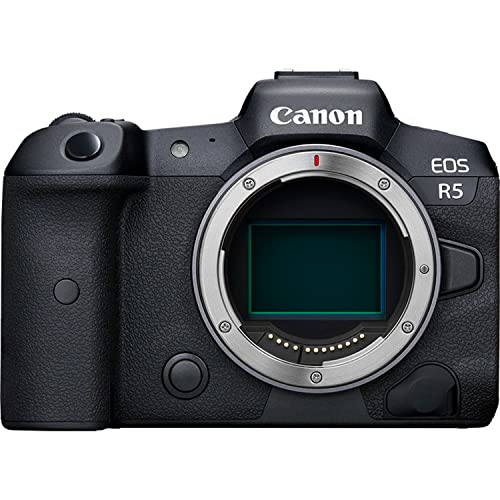
Canon EOS R5 Mirrorless Camera Body Only (B08C68F2DX)
The Canon EOS R5 Mirrorless Camera Body Only (B08C68F2DX) earns its place in this guide through the motor, sensor, and format wording in its published title. A full-frame hybrid camera with 8K video, a 45 megapixel CMOS sensor, and DIGIC X, sold as body only. The stated resolution figures are the highest in this list, and they raise the stakes for focus accuracy and lens choice. As with the other body-only option, silent autofocus here is a pairing decision: choose STM or USM lenses, as named in the lens titles in this guide, when quiet recording is the goal.
Judge this option by the recording situations you face most often: vows and readings in quiet rooms, interviews where the microphone sits close to the subject, lessons where focus sounds would compete with a teacher voice, or event coverage where repeated lens changes are impractical. The published specifications set the boundaries of what can be claimed, and our research stays inside those boundaries for every model in this list.
Where a title names a kit lens, read the lens name word by word. Where a title says body only, treat the lens shortlist as part of the same purchase decision. That single habit, checking for STM or USM in the lens title before ordering, is the practical core of buying a camera for quiet autofocus work.
How to Choose, Common Mistakes, and Care
Choose the route first and the model second. If you want the quiet-focus decision made for you, shortlist the kits whose lens titles name STM and then compare their stated sensors, formats, and zoom ranges. If you want a specific body, including either body-only model here, build the lens shortlist at the same time and require STM or USM in the lens title. If you need reach, the USM telephoto in this list states both its focal range and its motor type, which is exactly the combination to look for.
The most common mistake is assuming a camera body itself is silent, when the audible focus behaviour comes from the attached lens. A second mistake is reading only the front of a kit lens name and missing the IS STM wording at the end of it. A third is pairing across systems without checking stated compatibility, a real risk with the DSLR lens in this list. A fourth is recording an important quiet event without first listening to a short rehearsal recording through headphones, which is the simplest way to learn what your own microphone hears.
- Require STM or USM in the lens title when quiet recording is the goal.
- Treat body-only purchases and lens purchases as one combined decision.
- Compare stated sensor format, megapixel count, and video resolution before motor type debates.
- Listen to a rehearsal recording through headphones before any unrepeatable event.
- Confirm system compatibility wording, especially for the DSLR lens in this guide.
For care, keep lenses capped and stored dry, clean contacts gently, and never force a focus ring against its motor. Support the camera so handling noise stays out of recordings, position microphones thoughtfully where the format allows, and keep a consistent pre-event routine. Readers who record around water or travel with hybrid kits may also find best 10 underwater cameras relevant as a companion reference.
Disclosure
This article was written for widgetverdict.com readers who record in quiet settings, and it draws only on published product titles plus general industry understanding of STM and USM motor designations. As an Amazon Associate we earn from qualifying purchases. Titles and specifications can be updated by the manufacturer, so verify the exact lens name and motor designation for the ASIN you choose before completing a purchase.
Check prices on Amazon
Live listings for the shortlist in this guide are pulled from Amazon below, so prices and availability are always current at the moment you look.


Extended Field Notes and Practical Routines
Silent autofocus matters because a microphone does not distinguish between intentional sound and mechanical sound. Dialogue, vows, lectures, and ambient room tone all sit close to the camera in many real setups, so a lens motor that moves smoothly and quietly protects the recording without demanding extra work in editing. That is why the motor designation in a lens name deserves attention alongside sensor size and video resolution.
Stepping motors, identified by the STM marking, are widely described across the industry as designs that move focus elements in small, controlled steps. That controlled movement suits video, where focus changes should appear gradual rather than abrupt, and it suits still photography in quiet rooms where repeated focus sounds would distract subjects and listeners alike.
Ultrasonic motors, identified by the USM marking, are likewise known across the industry for fast and quiet focus movement. In a long telephoto lens, that combination helps when following a subject at a distance while recording, because the operator can adjust framing and focus without adding a layer of mechanical noise to the soundtrack.
A body-only camera makes no promise about focus noise on its own, because the sound in use comes from the lens that is attached. Readers comparing the body-only options in this guide should therefore plan the lens pairing at the same time as the body choice, favouring STM or USM lenses when quiet operation is the reason for the purchase.
Kit lenses simplify that decision when the kit already names an STM lens. The kits in this list pair a body with a standard zoom whose name includes IS STM, which tells the reader two separate things from the title alone: image stabilisation is part of the lens name, and the focus motor type is STM. Reading the full lens name, rather than only the body name, prevents a common buying mistake.
Recording technique supports quiet gear. Place an external microphone closer to the speaker when the setting allows it, keep the camera and lens supported so handling noise stays low, and rehearse focus transitions before a ceremony or interview begins. Even the quietest motor benefits from an operator who plans movements instead of correcting them repeatedly.
In classrooms and places of worship, courtesy is part of performance. Quiet focus movement, a restrained shutter workflow, and minimal handling all reduce distraction. Position yourself before the session starts, choose a focal length that avoids repeated lens changes, and let the subject come to the planned framing whenever the format permits that patience.
For interviews, consistency matters more than spectacle. Lock down the framing, confirm that the chosen lens covers the seating position without constant refocusing, and record a short rehearsal to listen for room noise through headphones. That listening step, based on your own recording, tells you more about your setup than any general claim could.
Video resolution and sensor format, both stated in the product titles in this guide, shape the rest of the workflow. Larger sensors and higher resolutions place greater demands on storage, editing hardware, and focus accuracy, while compact APS-C kits can be easier to carry between locations. Match those stated specifications to the delivery format you actually need.
Maintenance for quiet operation is mostly about cleanliness and care. Keep lens contacts clean, update your handling so grit never reaches moving rings, store lenses capped in a dry bag, and avoid forcing a focus ring against a motor. Careful handling preserves the smooth movement that made the lens suitable for recording in the first place.
Silent autofocus matters because a microphone does not distinguish between intentional sound and mechanical sound. Dialogue, vows, lectures, and ambient room tone all sit close to the camera in many real setups, so a lens motor that moves smoothly and quietly protects the recording without demanding extra work in editing. That is why the motor designation in a lens name deserves attention alongside sensor size and video resolution. Small, repeatable habits compound over many outings.
Stepping motors, identified by the STM marking, are widely described across the industry as designs that move focus elements in small, controlled steps. That controlled movement suits video, where focus changes should appear gradual rather than abrupt, and it suits still photography in quiet rooms where repeated focus sounds would distract subjects and listeners alike. Small, repeatable habits compound over many outings.
Ultrasonic motors, identified by the USM marking, are likewise known across the industry for fast and quiet focus movement. In a long telephoto lens, that combination helps when following a subject at a distance while recording, because the operator can adjust framing and focus without adding a layer of mechanical noise to the soundtrack. Small, repeatable habits compound over many outings.
A body-only camera makes no promise about focus noise on its own, because the sound in use comes from the lens that is attached. Readers comparing the body-only options in this guide should therefore plan the lens pairing at the same time as the body choice, favouring STM or USM lenses when quiet operation is the reason for the purchase. Small, repeatable habits compound over many outings.
Kit lenses simplify that decision when the kit already names an STM lens. The kits in this list pair a body with a standard zoom whose name includes IS STM, which tells the reader two separate things from the title alone: image stabilisation is part of the lens name, and the focus motor type is STM. Reading the full lens name, rather than only the body name, prevents a common buying mistake. Small, repeatable habits compound over many outings.
Recording technique supports quiet gear. Place an external microphone closer to the speaker when the setting allows it, keep the camera and lens supported so handling noise stays low, and rehearse focus transitions before a ceremony or interview begins. Even the quietest motor benefits from an operator who plans movements instead of correcting them repeatedly. Small, repeatable habits compound over many outings.
In classrooms and places of worship, courtesy is part of performance. Quiet focus movement, a restrained shutter workflow, and minimal handling all reduce distraction. Position yourself before the session starts, choose a focal length that avoids repeated lens changes, and let the subject come to the planned framing whenever the format permits that patience. Small, repeatable habits compound over many outings.
For interviews, consistency matters more than spectacle. Lock down the framing, confirm that the chosen lens covers the seating position without constant refocusing, and record a short rehearsal to listen for room noise through headphones. That listening step, based on your own recording, tells you more about your setup than any general claim could. Small, repeatable habits compound over many outings.
Video resolution and sensor format, both stated in the product titles in this guide, shape the rest of the workflow. Larger sensors and higher resolutions place greater demands on storage, editing hardware, and focus accuracy, while compact APS-C kits can be easier to carry between locations. Match those stated specifications to the delivery format you actually need. Small, repeatable habits compound over many outings.
Maintenance for quiet operation is mostly about cleanliness and care. Keep lens contacts clean, update your handling so grit never reaches moving rings, store lenses capped in a dry bag, and avoid forcing a focus ring against a motor. Careful handling preserves the smooth movement that made the lens suitable for recording in the first place. Small, repeatable habits compound over many outings.
Silent autofocus matters because a microphone does not distinguish between intentional sound and mechanical sound. Dialogue, vows, lectures, and ambient room tone all sit close to the camera in many real setups, so a lens motor that moves smoothly and quietly protects the recording without demanding extra work in editing. That is why the motor designation in a lens name deserves attention alongside sensor size and video resolution. Consistency matters more than complicated technique.
Stepping motors, identified by the STM marking, are widely described across the industry as designs that move focus elements in small, controlled steps. That controlled movement suits video, where focus changes should appear gradual rather than abrupt, and it suits still photography in quiet rooms where repeated focus sounds would distract subjects and listeners alike. Consistency matters more than complicated technique.
Ultrasonic motors, identified by the USM marking, are likewise known across the industry for fast and quiet focus movement. In a long telephoto lens, that combination helps when following a subject at a distance while recording, because the operator can adjust framing and focus without adding a layer of mechanical noise to the soundtrack. Consistency matters more than complicated technique.
A body-only camera makes no promise about focus noise on its own, because the sound in use comes from the lens that is attached. Readers comparing the body-only options in this guide should therefore plan the lens pairing at the same time as the body choice, favouring STM or USM lenses when quiet operation is the reason for the purchase. Consistency matters more than complicated technique.
Kit lenses simplify that decision when the kit already names an STM lens. The kits in this list pair a body with a standard zoom whose name includes IS STM, which tells the reader two separate things from the title alone: image stabilisation is part of the lens name, and the focus motor type is STM. Reading the full lens name, rather than only the body name, prevents a common buying mistake. Consistency matters more than complicated technique.
Recording technique supports quiet gear. Place an external microphone closer to the speaker when the setting allows it, keep the camera and lens supported so handling noise stays low, and rehearse focus transitions before a ceremony or interview begins. Even the quietest motor benefits from an operator who plans movements instead of correcting them repeatedly. Consistency matters more than complicated technique.
In classrooms and places of worship, courtesy is part of performance. Quiet focus movement, a restrained shutter workflow, and minimal handling all reduce distraction. Position yourself before the session starts, choose a focal length that avoids repeated lens changes, and let the subject come to the planned framing whenever the format permits that patience. Consistency matters more than complicated technique.
For interviews, consistency matters more than spectacle. Lock down the framing, confirm that the chosen lens covers the seating position without constant refocusing, and record a short rehearsal to listen for room noise through headphones. That listening step, based on your own recording, tells you more about your setup than any general claim could. Consistency matters more than complicated technique.
Video resolution and sensor format, both stated in the product titles in this guide, shape the rest of the workflow. Larger sensors and higher resolutions place greater demands on storage, editing hardware, and focus accuracy, while compact APS-C kits can be easier to carry between locations. Match those stated specifications to the delivery format you actually need. Consistency matters more than complicated technique.
Maintenance for quiet operation is mostly about cleanliness and care. Keep lens contacts clean, update your handling so grit never reaches moving rings, store lenses capped in a dry bag, and avoid forcing a focus ring against a motor. Careful handling preserves the smooth movement that made the lens suitable for recording in the first place. Consistency matters more than complicated technique.
Silent autofocus matters because a microphone does not distinguish between intentional sound and mechanical sound. Dialogue, vows, lectures, and ambient room tone all sit close to the camera in many real setups, so a lens motor that moves smoothly and quietly protects the recording without demanding extra work in editing. That is why the motor designation in a lens name deserves attention alongside sensor size and video resolution. Keep notes so the next outing starts from experience.
Stepping motors, identified by the STM marking, are widely described across the industry as designs that move focus elements in small, controlled steps. That controlled movement suits video, where focus changes should appear gradual rather than abrupt, and it suits still photography in quiet rooms where repeated focus sounds would distract subjects and listeners alike. Keep notes so the next outing starts from experience.
Ultrasonic motors, identified by the USM marking, are likewise known across the industry for fast and quiet focus movement. In a long telephoto lens, that combination helps when following a subject at a distance while recording, because the operator can adjust framing and focus without adding a layer of mechanical noise to the soundtrack. Keep notes so the next outing starts from experience.
A body-only camera makes no promise about focus noise on its own, because the sound in use comes from the lens that is attached. Readers comparing the body-only options in this guide should therefore plan the lens pairing at the same time as the body choice, favouring STM or USM lenses when quiet operation is the reason for the purchase. Keep notes so the next outing starts from experience.
Kit lenses simplify that decision when the kit already names an STM lens. The kits in this list pair a body with a standard zoom whose name includes IS STM, which tells the reader two separate things from the title alone: image stabilisation is part of the lens name, and the focus motor type is STM. Reading the full lens name, rather than only the body name, prevents a common buying mistake. Keep notes so the next outing starts from experience.
Recording technique supports quiet gear. Place an external microphone closer to the speaker when the setting allows it, keep the camera and lens supported so handling noise stays low, and rehearse focus transitions before a ceremony or interview begins. Even the quietest motor benefits from an operator who plans movements instead of correcting them repeatedly. Keep notes so the next outing starts from experience.
In classrooms and places of worship, courtesy is part of performance. Quiet focus movement, a restrained shutter workflow, and minimal handling all reduce distraction. Position yourself before the session starts, choose a focal length that avoids repeated lens changes, and let the subject come to the planned framing whenever the format permits that patience. Keep notes so the next outing starts from experience.
For interviews, consistency matters more than spectacle. Lock down the framing, confirm that the chosen lens covers the seating position without constant refocusing, and record a short rehearsal to listen for room noise through headphones. That listening step, based on your own recording, tells you more about your setup than any general claim could. Keep notes so the next outing starts from experience.
Video resolution and sensor format, both stated in the product titles in this guide, shape the rest of the workflow. Larger sensors and higher resolutions place greater demands on storage, editing hardware, and focus accuracy, while compact APS-C kits can be easier to carry between locations. Match those stated specifications to the delivery format you actually need. Keep notes so the next outing starts from experience.
Maintenance for quiet operation is mostly about cleanliness and care. Keep lens contacts clean, update your handling so grit never reaches moving rings, store lenses capped in a dry bag, and avoid forcing a focus ring against a motor. Careful handling preserves the smooth movement that made the lens suitable for recording in the first place. Keep notes so the next outing starts from experience.


