Our Top Picks



What's inside
- Why Record From Your Sunglasses Instead of Your Phone?
- How to Choose Sunglass Video Cameras
- The Eight Models, One by One
- AI Smart Glasses with Camera and Bluetooth — 8MP Photos and POV Video
- 4K Smart Camera Sunglasses — Lightweight POV Recording for Sport and Travel
- AI Smart Glasses with Camera — 4K Video, Two Lenses, and 139+ Language Translation
- AI Smart Glasses with Camera — 4K Recording, 32MP Sports Sunglasses, and 6-Axis EIS
- Mazhala AI Smart Glasses with Camera — POV Recording Sunglasses for Sports
- KPEP AI Smart Glasses — 5MP Camera, HD Video, and Two Lenses
- Meta Ray-Ban (Gen 2) Wayfarer Smart AI Glasses — The Premium Anchor
- AI Smart Glasses with Camera — 8MP HD 1080P Video for Everyday Wear
- Comparing the Lineup in Plain Terms
- Privacy, Legality, and Good Manners When Recording in Public
- Care, Storage, and Everyday Habits
- Frequently Asked Questions
- Conclusion
- Check prices on Amazon
- Disclosure
As an Amazon Associate I earn from qualifying purchases. This post may contain affiliate links at no extra cost to you.
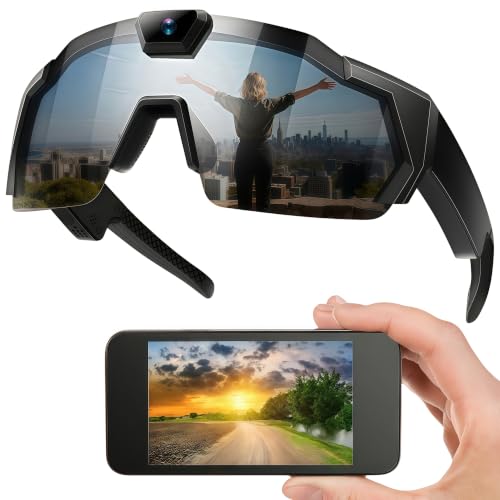
There is a particular kind of moment that a phone in a pocket and an action camera on a chest strap both tend to miss. It is the descent that suddenly opens onto a valley, the fish that rises exactly where you were already looking, the street market stall you turn toward because something caught your eye, or the play your child makes while both of your hands are busy clapping, carrying, or steering. Sunglass video cameras exist for those moments. By putting a small camera at eye level, between or beside the lenses you are already wearing, they record roughly what you see, in the direction you are already facing, without asking you to hold, mount, aim, or even think very much about a separate device.
That simplicity is the whole appeal, and it is also the source of every compromise in this category. A camera hidden inside a sunglasses frame will never have the sensor size, battery volume, or lens freedom of a dedicated action camera. The frame has to stay light enough to wear for hours and balanced enough not to slide down your nose. Everything in this guide follows from that tension: how much video quality, stabilization, battery life, and extra intelligence can fit into an object that still has to work, first and foremost, as sunglasses?
This roundup covers eight current models that take that challenge in noticeably different directions. Some chase maximum video resolution and electronic stabilization for sport. Some lean into artificial intelligence features such as voice assistants, object recognition, and real-time translation across well over a hundred languages. One, the Meta Ray-Ban Wayfarer in its second generation, approaches the category from the opposite end, starting with a classic sunglasses silhouette from an established eyewear brand and building the camera and audio experience around everyday wearability. Others keep things simpler, with high-definition rather than 4K recording, in exchange for a lighter brief and a more straightforward feature set.
None of these products is an augmented reality display, and that distinction matters before you read any further. The glasses in this guide do not project navigation arrows, messages, or video into your field of view. They are recording sunglasses: they capture photos and point-of-view video, they play audio through open-ear speakers that leave your ears uncovered, and in most cases they connect to a phone for controls, transfers, and voice features. If you want a screen in front of your eyes, this is the wrong category entirely. If you want your eyes and hands free while a camera quietly keeps up with where you look, this is exactly the right one.
Why Record From Your Sunglasses Instead of Your Phone?
A modern phone records excellent video, often better video than anything discussed here. The problem is not quality but posture. Phone footage is filmed from wherever your hand happens to be, usually a little below eye level, often at an angle you only notice later, and always at the cost of one occupied hand. On a bicycle that hand belongs on the bars. On a trail it might be holding a pole, a leash, or a child. While driving, filming with a phone is not just awkward but dangerous and, in many places, unlawful. Sunglasses move the camera to the one place that is always pointed at the action: your head.
Head-mounted footage has a distinctive character that viewers tend to describe as immersive, and the reason is simple geometry. The camera sits close to the line between your eyes, so turns of the head become natural pans, glances become reframing, and the viewer experiences the scene at a human height and pace. For cycling, hiking, skiing, fishing, baseball practice, and first-person vlogging, that perspective communicates speed, gradient, and attention in a way that a handlebar mount or a selfie stick rarely matches. The trade-off is that every head movement is recorded too, which is why stabilization, discussed below, matters so much in this category.
Compared with a conventional action camera, sunglass cameras win on friction and lose on flexibility. There is no mount to attach, no housing to seal, and no separate device to remember to charge and carry. Starting a recording is typically a matter of pressing a button on the temple arm or issuing a voice command. What you give up is the ability to reposition the camera, swap lenses, or rely on the deep accessory ecosystems and large batteries that action cameras enjoy. Many outdoor users treat the two as complements: the action camera for deliberate, planned filming, and the glasses for everything in between.
How to Choose Sunglass Video Cameras
Start with the recording you actually need, not the largest number on the box. Video resolution in this category runs from 1080p high definition through to 4K, and the gap matters most if you plan to watch footage on a large screen, crop into the frame while editing, or pull still frames from video. For social clips, training review, and travel diaries viewed on a phone, well-implemented 1080p can look clean and has the side benefits of smaller files and gentler battery demands. For cycling descents and ski runs that you intend to keep and rewatch, 4K gives you detail and editing headroom that you cannot add later. Photo resolution follows a similar logic: figures such as 8MP, 5MP, and 32MP appear across this lineup, and while a higher count can help with cropping a still, lighting, lens quality, and processing shape the final image at least as much as the headline number.
Stabilization deserves even more of your attention than resolution, because head-mounted cameras move constantly. Every step, pedal stroke, and glance introduces small shakes, and on rough ground those shakes compound. Electronic image stabilization, usually shortened to EIS, counteracts that motion in software, and the more sophisticated multi-axis implementations — two models in this guide specify 6-axis EIS — are designed to smooth footage across more directions of movement at once. No electronic system makes a running trail look like a drone shot, and stabilization often works by cropping slightly into the frame, but for sport-focused buyers it is arguably the single feature that separates watchable footage from a headache. If your main use is walking tours, markets, and conversation, basic stabilization is usually sufficient and you can prioritize other features.
Battery expectations should be set by physics. A sunglasses frame can only hide a small cell in each temple arm, so recording time is modest compared with larger cameras, and heavy use of 4K recording, live translation, or continuous voice assistance will shorten it further. A pattern of short clips captured across a day suits these devices best. Buyers planning long continuous sessions should check how each model handles charging and recording limits, and treat carrying the charging case or cable as a normal part of the kit.
Water and dust resistance is described by IP ratings, and two appear repeatedly in this lineup: IP65 and IP66. Both indicate strong protection against dust and water jets, with the second digit describing the water test the device passed. Practically, these glasses are built to shrug off sweat, rain showers, trail dust, and splashes. They are not dive equipment, and an IP rating is not an invitation to swim in them. For cycling in changeable weather, hiking, baseball, and general outdoor sport, either rating is the right neighborhood of protection — paired with simple habits such as drying the frames before charging.
Do not overlook the sunglasses half of the product. Ultraviolet protection is the core job of any pair of shades, and one model here specifies UV400 lenses, the designation for blocking UVA and UVB rays up to 400 nanometers. Polarized lenses, offered on the Meta Ray-Ban model, cut glare from water, wet roads, and windscreens, which many drivers, anglers, and cyclists strongly prefer. Fit matters just as much: a frame that pinches will not be worn, and a frame that slips will record the sky or the ground. Lightweight construction is emphasized by the sport-focused models here for exactly that reason.
Audio is the quiet strength of this category. Open-ear speakers in the temple arms play music, calls, and prompts without blocking your ears, so you can still hear traffic, trail partners, and the environment. For cyclists and runners, that awareness is a safety feature, not a convenience. Microphones matter equally: they capture commentary on your videos, carry your voice on calls, and feed the voice assistant. Dual-microphone setups with environmental noise cancellation, specified by a couple of models here, aim to keep your voice intelligible when wind and crowd noise compete with it — a real concern at riding speed.
The newest layer in this category is artificial intelligence, and it varies widely across these eight products. Voice assistants let you start recording, take a photo, place a call, or ask a question without touching the frames. Object recognition features aim to identify what you are looking at and answer questions about it, useful when traveling, shopping, or working with your hands full. Real-time translation is the most striking claim: several models here advertise translation across 139 or more languages, delivered through the open-ear speakers and a connected phone. Set expectations sensibly — it depends on a phone connection, performs best with clear speech and short phrases, and suits menus, directions, and simple exchanges rather than nuanced negotiation — but for travelers it can change the character of a trip.
Finally, consider storage and workflow. Sunglass cameras record to internal storage and transfer through a companion app, so ask how much footage you can hold before offloading and how quickly clips move to your phone. A camera that is effortless to wear but painful to empty will slowly stop being used, so buyers who record daily should treat the app experience as a first-order feature.
The Eight Models, One by One
The models below are presented in the order of the verified lineup for this guide. Each entry sticks to what the manufacturer states about that product — its recording capability, stated photo resolution, named features, and intended uses — and then considers the kind of buyer those facts point toward. Where a model does not publish a particular specification in its listing, this guide says nothing about it rather than guessing, and you should treat that silence as a prompt to check the product page for the detail that matters to you.
AI Smart Glasses with Camera and Bluetooth — 8MP Photos and POV Video
This model frames itself as an all-rounder built around an 8MP camera for photos and point-of-view video recording, paired with a set of connected features that go well beyond filming. Bluetooth connectivity, open-ear speakers, and a voice assistant form the everyday layer: music and calls without earbuds, and hands-free control when your hands are occupied. On top of that sit two artificial intelligence features that define its character — real-time translation and object recognition — which push it toward travel and curiosity-driven use as much as sport.
The IP66 waterproof rating is a meaningful part of its pitch. As described above, that level of protection is aimed at rain, sweat, and splashes, which makes the glasses a plausible companion for outdoor training, wet-weather walks, and travel days that do not go to plan. A pair of glasses you are afraid to wear in a shower of rain is a pair that stays in its case, so a strong stated rating supports the whole point of the category: a camera that is actually on your face when something happens.
Who does it suit? A buyer who wants one device to cover casual POV clips, photos taken at eye level, calls and audio on the move, and a first experience of translation and object recognition through their eyewear. If your priority list starts with connected and AI features and your recording needs are about capturing the moment rather than producing polished sport edits, this is a coherent, well-rounded place to begin. Buyers whose main goal is maximum video resolution for action footage should compare it carefully with the 4K models below before deciding.
4K Smart Camera Sunglasses — Lightweight POV Recording for Sport and Travel
This model leads with the two words sport buyers look for first: 4K and lightweight. It is described as a hands-free video recording wearable camera built into sunglasses, aimed squarely at cycling, hiking, baseball, driving, and skiing, and at vloggers who want first-person footage without a separate camera rig. That list of activities is informative in itself. It spans smooth and rough motion, bright snow and shaded trail, and both deliberate filming and capture-it-now moments, which tells you the design brief was breadth of outdoor use rather than a single niche.
The emphasis on lightweight construction deserves to be taken seriously rather than read as filler. On a long ride or a full day of hiking, small differences in frame weight and balance decide whether glasses stay on comfortably or get pushed up onto a hat by midday. A sport camera that lives on your face has to disappear as an object while it works as a device, and a manufacturer that designs around that constraint is designing around the right problem. For skiers and cyclists in particular, who already manage helmets, eyewear straps, and layers, a self-contained pair of recording sunglasses removes several small frictions at once.
This is the natural shortlist entry for the outdoor generalist: the rider, hiker, or weekend vlogger who wants 4K point-of-view footage as the headline capability, in a frame light enough for all-day wear, without needing the glasses to double as a translation device or an AI showcase. If your filming is mostly your own movement through the world — descents, trails, slopes, and road trips — its priorities line up closely with yours.
AI Smart Glasses with Camera — 4K Video, Two Lenses, and 139+ Language Translation
The defining detail of this model is in its name: two lenses. It offers 4K video recording and 8MP photos, and the dual-lens arrangement is paired with a feature set that leans heavily into intelligence — AI recognition, a voice assistant, Bluetooth open-ear audio, and real-time translation covering more than 139 languages. An IP65 rating covers the outdoor side of the brief, providing the dust and water-jet protection discussed earlier for everyday weather and active use.
Think of this as the traveler-technologist entry in the lineup. The combination of 4K capture with recognition and translation suggests a day that mixes filming with figuring things out: recording a street scene, asking what a sign or a dish is, and holding a simple conversation across a language barrier, all without repeatedly taking out a phone. Open-ear audio supports that pattern, because translation prompts arrive privately while your ears stay open to the person in front of you.
It suits buyers who travel internationally, work with international colleagues or customers, or simply enjoy being early adopters of wearable AI and want that capability without giving up 4K video. The IP65 rating, a step below the IP66 figures elsewhere in this guide on paper, still represents solid protection for rain and splashes, but buyers who train hard in harsh weather may weigh that difference alongside the feature advantages. As always with translation claims, plan on using it for the practical exchanges of travel, with your phone connected and your expectations calibrated.
AI Smart Glasses with Camera — 4K Recording, 32MP Sports Sunglasses, and 6-Axis EIS
If one model in this guide is aimed most directly at the serious sports filmer, it is this one. The specification stacks the features that action footage depends on: 4K recording, HD video and photo capability, a stated 32MP figure for its sports sunglasses camera, and 6-axis electronic image stabilization to keep head-mounted footage composed when the ground is not. Add dual-microphone environmental noise cancellation for clearer voice pickup, UV400 lens protection, and an IP66 rating, and the picture is of a device designed to be worn hard, outdoors, in bright conditions, while moving fast.
The 6-axis EIS is the headline for anyone who has reviewed their own running or riding footage and found it unwatchable. Stabilization across more axes addresses not just up-and-down bounce but the twists and tilts that head movement produces, and for sports review — checking your line down a trail, your form at the plate, your position on the ski slope — steadier footage is more useful footage. The dual-microphone noise reduction works the same territory from the audio side: commentary recorded at speed is only valuable if the wind lets it be heard.
Layered over the sports core are live translation and an AI voice assistant, so this is not a single-purpose device. It suits the athlete or coach who films training and competition first, but also travels to events and appreciates connected features when off the field. Buyers comparing it with the Mazhala model below will notice a close family resemblance in the specification, and the decision between them will likely come down to brand preference, fit, current listing details, and which companion experience appeals more.
Mazhala AI Smart Glasses with Camera — POV Recording Sunglasses for Sports
Mazhala’s entry mirrors much of the sports-first recipe: POV recording sunglasses for sports, 32MP photos, 6-axis EIS, dual-microphone noise reduction, and an IP66 rating, together with an AI voice assistant and real-time translation. That combination tells a consistent story. The camera and stabilization are specified for movement, the microphones are specified for noisy environments, the sealing is specified for weather and sweat, and the intelligence features are there for everything that happens before and after the activity itself.
Seeing two models converge on similar specifications suggests the category is settling on a known formula for sports recording glasses — high stated photo resolution, multi-axis stabilization, twin microphones, strong water resistance. That makes the baseline clear, but it also means specification sheets alone will not separate close rivals. Fit, the feel of the controls with gloves or sweaty hands, and the companion app’s polish become the real differentiators, worth investigating on the product pages before you commit.
The Mazhala suits the same buyer as its closest rival: a sports-focused recorder who wants stabilized POV footage and clear audio, in a sealed frame, with translation and voice assistance available when traveling to train or compete. If that description fits you, put both models on your shortlist, compare the fine print of their current listings, and let fit, lens options, and the details of recording limits and storage — the practicalities that shape daily use — make the final call.
KPEP AI Smart Glasses — 5MP Camera, HD Video, and Two Lenses
The KPEP model takes a different balance. Its camera is specified at 5MP with HD video recording and photo taking, and it arrives with two lenses, which gives the buyer flexibility in how the glasses look and perform in different light. Around that simpler camera core sits a full connected feature set: Bluetooth calls, open-ear audio, a voice assistant, object recognition, and real-time translation. In other words, the emphasis here falls on the smart-glasses half of the product as much as the camera half.
That balance suits a recognizable buyer: someone whose day is calls, walking, errands, and work on the move, with occasional eye-level photos and clips, rather than dedicated sports filming. HD video is entirely adequate for documenting a site visit, recording a process with your hands in frame, or keeping a visual record of a walk. Meanwhile the translation and recognition features serve the traveler and productivity uses described elsewhere in this guide.
Choose the KPEP if your honest priority order puts everyday smart features first and action footage second, and if the flexibility of two lenses appeals to you. Sports-first buyers who know they want 4K and multi-axis stabilization should look at the models above instead. There is no virtue in buying camera capability you will not use, and no saving in buying a camera below the level your main activity demands — this model is a clear example of matching the tool to the actual job.
Meta Ray-Ban (Gen 2) Wayfarer Smart AI Glasses — The Premium Anchor
Every category has a reference point, and in camera sunglasses it is the collaboration between Meta and Ray-Ban. The second-generation Wayfarer pairs the most recognizable sunglasses silhouette in the world — the Wayfarer shape, here in black with a matte black finish and polarized lenses — with Meta’s smart AI glasses platform. The priorities are visibly different from the sport-focused models above. This is a pair of glasses designed to be worn all day, in ordinary life, by people who would not wear a gadget-looking frame, with camera, audio, and AI capability integrated into that familiar form.
The polarized lenses are a fitting emblem of that approach. Polarization is a wearer’s feature before it is a filmer’s feature: it cuts reflected glare and improves comfort and visibility around water and roads. Choosing it signals that looking through the glasses matters as much as recording through them. The same logic applies to the Wayfarer styling itself — a design with decades of familiarity lowers the social barrier to wearing smart glasses at all, which is a real and underrated specification.
The Meta Ray-Ban suits the buyer who wants the most established ecosystem in the category, an everyday frame they would happily wear with the camera switched off, and AI assistance integrated into a mainstream platform. It is the premium anchor of this lineup, and it earns that place through design, brand support, and wearability rather than through chasing the longest specification list. Buyers whose main use is hard sport should compare its recording and durability specifications carefully against the dedicated sports models, just as sports buyers should honestly ask themselves whether they would wear a purely functional frame to lunch. The best camera glasses are the ones still on your face at the interesting moment, and for many people, that is this pair.
AI Smart Glasses with Camera — 8MP HD 1080P Video for Everyday Wear
The final model in the lineup keeps its brief clear and accessible: an 8MP camera with HD 1080P video, Bluetooth connectivity, open-ear earbuds-style audio, real-time translation, and a voice assistant, in sunglasses styled for women and men. It does not chase 4K, and it does not present itself as dedicated sports equipment. Instead it offers the core camera-glasses experience — eye-level photos and video, hands-free audio and calls, and AI assistance including translation — in an everyday package.
There is a sensible case for 1080p as the center of such a product. Files are smaller, transfers are quicker, and the footage matches how most people actually watch it: on a phone screen, shared with family, friends, or followers. For walking tours, school events, market days, and work documentation, 1080p from eye level delivers the perspective that makes this category special without the storage and battery costs of higher resolutions.
This model suits the first-time buyer who wants to find out whether camera sunglasses fit their life before committing to a specialist or premium model, and the everyday user who already knows their filming is casual. It also suits gift buyers, because its feature set is easy to explain and use. If you later discover that your descents and training sessions demand 4K and advanced stabilization, you will know exactly what to upgrade to — and several models above will be waiting.
Comparing the Lineup in Plain Terms
Stepping back, the eight models divide along three axes, and locating yourself on each axis makes the choice straightforward. The first axis is recording ambition. At the top sit the 4K models — the lightweight sports sunglasses, the dual-lens AI model, and the two 6-axis EIS sports models — built for footage you intend to keep, edit, and watch closely. In the middle and everyday tier sit the 1080p and HD models, built for capture that is quick, shareable, and woven into the day. Neither tier is better in the abstract; they answer different questions about what you will do with the footage afterward.
The second axis is intelligence. Translation across more than 139 languages, object recognition, and voice assistance appear, in various combinations, across most of this lineup, and for travelers and hands-busy professionals those features may matter more than any camera figure. The third axis is identity: whether the glasses present themselves as sports equipment, as a tech-forward gadget, or — in the Meta Ray-Ban’s case — as classic eyewear that happens to be smart. That choice sounds cosmetic but is deeply practical, because it determines where and how often you will actually wear them.
A few pairings deserve direct comment. The two 6-axis EIS, 32MP sports models are the closest rivals here and should be compared on fit, app, and listing details. The dual-lens 4K AI model and the KPEP share the two-lens idea but aim it at different buyers, one pairing it with 4K and the other with an everyday HD brief. And the Meta Ray-Ban stands apart from all of them as the design-led premium choice.
Privacy, Legality, and Good Manners When Recording in Public
A camera at eye level, in an object people associate with fashion rather than filming, creates obligations that a visible camera does not. Laws on recording vary considerably by country, state, and setting, and this guide cannot substitute for local legal advice. As a starting point, recording video in genuinely public places is treated differently from recording in places where people have a reasonable expectation of privacy — changing rooms, restrooms, medical settings, private homes, and many workplaces — where filming may be unlawful regardless of the device. Audio is often regulated more strictly than video, and some jurisdictions restrict recording conversations without the consent of the people involved. Workplaces, schools, gyms, and venues may also impose their own rules, and some employers and event organizers prohibit smart glasses outright.
Good practice goes beyond the legal minimum. Use the recording indicator rather than trying to defeat or conceal it. Mention that you are recording when filming identifiable people at close range, especially children who are not your own, and stop when someone asks you to. Be particularly careful around schools, pools, and healthcare settings. When sharing footage, think about who appears in it — bystanders, license plates, house numbers, and screens can all carry information that strangers did not agree to publish.
Driving deserves a specific word. Several models here list driving among their intended uses, meaning hands-free capture and audio while your hands stay on the wheel and your eyes stay on the road. Interacting with any device while driving undermines that entirely. Set the glasses up before you set off, use voice control if you use anything at all, and leave everything else until you are parked. The same principle applies on the bike and on skis: the camera is supposed to remove distraction, not relocate it.
Care, Storage, and Everyday Habits
Camera sunglasses ask for slightly more care than ordinary sunglasses, because the frame now contains lenses of two kinds, microphones, speakers, batteries, and charging contacts. Clean the spectacle lenses with a soft microfiber cloth, and give the camera lens the same gentle treatment — a smudged camera lens quietly ruins footage while the world looks fine to your eyes, so a quick wipe before an activity is a worthwhile ritual. Avoid abrasive cleaners and household chemicals on any of the optics, and never leave the frames on a hot dashboard or in other extreme heat, which is unkind to both batteries and lens coatings.
After wet or sweaty use, dry the frames thoroughly before charging or casing them, and keep charging contacts free of sunscreen, dust, and moisture. Store the glasses in their case rather than loose in a bag, and treat the temple arms gently when folding — they are hinges attached to hardware now, not just plastic. Offload footage regularly so storage is free when you need it, keep the companion app and firmware updated, and check the battery before a long day out.
Frequently Asked Questions
Do sunglass video cameras replace an action camera? For casual and spontaneous filming, they can, and for many owners they become the camera that gets used most simply because it is already being worn. For planned filming that needs mounts, maximum durability, swappable setups, or long continuous recording, a dedicated action camera remains the better tool. The two overlap rather than cancel each other out.
Is 4K worth it in a pair of sunglasses? It is worth it if you will watch footage on a large screen, edit and crop your clips, or film fast sport that you intend to keep. If your footage lives on your phone and in messages to friends and family, 1080p models deliver the same eye-level perspective with smaller files and simpler handling. Judge by your viewing habits, not by the specification alone.
Can these glasses be worn in the rain? Models rated IP65 or IP66 are built to resist dust and water jets, which covers rain, sweat, and splashes during normal outdoor use. That is not the same as being designed for swimming or submersion, and you should dry any pair thoroughly before charging it. Always follow the specific guidance in your model’s documentation.
How does open-ear audio work, and can other people hear it? Small speakers in the temple arms direct sound toward your ears without anything in or over them, so you can hear music, calls, and prompts while still hearing traffic and conversation around you. At modest volumes in normal environments it is a largely private experience, though in a silent room at high volume some sound will escape — the same social rule as any speaker applies.
What do the translation features actually do? On the models that offer them, you speak or let the glasses hear speech in another language, and the connected system plays back a translation through the open-ear speakers, with the phone typically handling the heavy processing. Coverage claims in this lineup run to 139 or more languages on some models. Expect a tool for travel essentials — directions, menus, prices, greetings, simple questions — and plan on clear speech, short phrases, and a data connection for the best results.
Will people know I am recording? These products include recording indicators, and the honest answer is that you should behave as if everyone should know. Beyond the indicator, tell people when it matters, respect requests to stop, and follow the rules of the places you are in. Discretion in design is meant to make filming less disruptive, not to make it secret.
Conclusion
Sunglass video cameras make a simple promise: the camera is where your eyes already are, ready in the second a moment happens, asking nothing of your hands. The eight models in this guide keep that promise with different priorities. Choose the 4K, 6-axis stabilized sports models if movement is your subject and footage quality is your purpose. Choose the dual-lens and AI-rich models if travel, translation, and recognition will shape your days. Choose the KPEP or the everyday 1080p model if calls, audio, and casual eye-level capture are the real job. And choose the Meta Ray-Ban Wayfarer if you want the category’s premium, design-first expression — glasses you would wear for their own sake, with the camera as a powerful extra. Whichever direction you take, match the glasses to the life you actually lead, wear them often, record considerately, and the perspective they give you — your own, exactly as you saw it — will repay the choice.
Check prices on Amazon
Live listings for the shortlist in this guide are pulled from Amazon below, so prices and availability are always current at the moment you look.


Disclosure
As an Amazon Associate we earn from qualifying purchases. The recommendations in this guide are based on manufacturers’ published specifications and research into product documentation, listings, and category references; they are not based on personal use or individual handling of these products. Specifications and features can change as manufacturers update their models and listings, so please confirm the details that matter to you on the product page before buying.


