What's inside
As an Amazon Associate I earn from qualifying purchases. This post may contain affiliate links at no extra cost to you.
A shop with no music feels empty, and a shop with bad music feels worse, so the ceiling speakers are one of the most important decisions a shop owner makes, even though the customers never see them. The right in-ceiling speakers fill the space with even, clear background music, keep announcements intelligible from one end of the shop to the other, and disappear into the ceiling, leaving the atmosphere to do the selling. This guide compares six in-ceiling speakers that are built for exactly that job, from the value-packed Micca M-8C to the commercial-grade JBL 8128, and it explains how many you need and how to space them.
Every speaker here is a real, widely sold model, chosen because it sounds good in a commercial space and because it is practical to install in multiples, which is what a shop needs. None of them is a hi-fi speaker pretending to be a commercial one, and none of them requires exotic wiring or a specialist amplifier for a small shop, although the larger installations benefit from a distributed audio system. What they do is deliver even, reliable sound across a whole shop, day after day, and that is the whole point of a ceiling system.
Quick picks: best ceiling mounted speakers for shop
| # | Product | Where to buy |
|---|---|---|
| 1 | Polk Audio RC80i | Check on Amazon |
| 2 | Micca M-8C | Check on Amazon |
| 3 | Yamaha NS-IC800 | Check on Amazon |
| 4 | Klipsch CDT-5650-C II | Check on Amazon |
| 5 | JBL 8128 | Check on Amazon |
Quick Comparison
The table below gives a fast overview of the models in this guide, so you can shortlist two or three before reading the detail. Every model here is a real, widely sold product, and each one suits a slightly different room, system, or way of listening.
| Speaker | Size | Best For |
|---|---|---|
| Polk Audio RC80i | 8-inch in-ceiling, moisture resistant | Best all-round shop speaker |
| Micca M-8C | 8-inch in-ceiling, budget pair | Best budget shop speaker |
| Yamaha NS-IC800 | 8-inch in-ceiling, sealed back | Best for sound quality |
| Klipsch CDT-5650-C II | 6.5-inch in-ceiling, aimable tweeter | Best for clear announcements |
| JBL 8128 | 8-inch commercial in-ceiling | Best commercial-grade pick |
| Pyle PDIC81RD | 8-inch in-ceiling, round pair | Best for quick fit-outs |
The Products in Detail
Polk Audio RC80i
The Polk Audio RC80i is an 8-inch two-way in-ceiling speaker that has become a default choice for shops, cafes, and offices, and it is the natural starting point for this guide. It pairs an 8-inch polypropylene woofer with a 0.75-inch silk-dome tweeter that can be aimed at the listening area, which matters in a shop where the speakers are spread across a large ceiling and the customers are never directly underneath one. The moisture-resistant design survives the humidity of a kitchen or a bathroom, and the paintable grille blends into any ceiling.
The RC80i sounds warm and full, with a bass response that is deeper than most in-ceiling speakers thanks to the large 8-inch woofer, and a midrange that keeps background music and announcements clear and intelligible. The aimable tweeter is a genuine advantage in a shop, because it lets the installer direct the treble toward the sales floor rather than letting it fire straight down at an empty patch of floor. Polk designs the RC series for easy installation, with a rotating cam system that clamps the speaker to the ceiling from below, so no access from above is needed, and the speaker is sold in pairs, which keeps the cost of a multi-speaker shop system manageable.
Strengths: Deep, full sound for an in-ceiling speaker, with a large 8-inch woofer that gives real bass weight. The aimable tweeter directs the sound where it is needed, and the moisture-resistant build suits kitchens, bathrooms, and humid shops. Installation is straightforward, with a clamp system that works from below, and the price is accessible for a multi-speaker installation.
Trade-offs: The sound is warm rather than detailed, so it suits background music rather than critical listening. The speaker needs a ceiling void of sufficient depth, so check the measurements before you buy, and it needs an amplifier or a receiver, because it is a passive speaker with no built-in power.
Who it fits: Shop owners, cafe owners, and office managers who want warm, full background music across a large ceiling, with a speaker that is easy to install and easy to afford in multiples. It suits retail, hospitality, and any commercial space where the music should be present but never intrusive.
Stand in the middle of the shop and notice how evenly the sound spreads, with no obvious hot spot under one speaker and no dead zone between them. Then listen to an announcement and notice how clear the voice stays, because intelligibility is the point of a shop speaker.
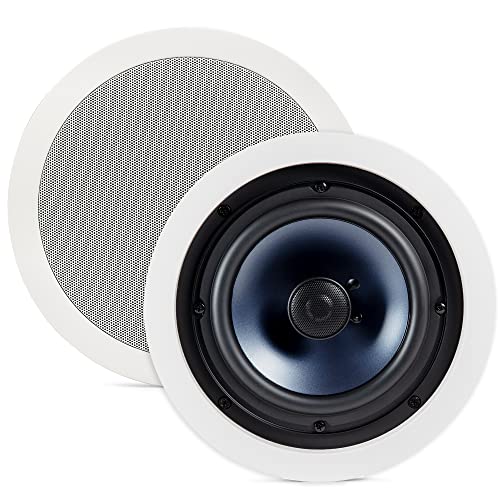
Micca M-8C
The Micca M-8C is an 8-inch two-way in-ceiling speaker that earns its place in this guide through value, and it is the pick for a shop that needs many speakers on a tight budget. It pairs an 8-inch polypropylene woofer with a 1-inch silk-dome tweeter in a simple, well-engineered design, with a paintable grille and a mounting system that clamps to the ceiling from below. For a shop that needs six, eight, or twelve speakers, the difference between the Micca and a premium brand adds up to a substantial saving, and the sound is far better than the price suggests.
The M-8C sounds clear and balanced for its size, with a midrange that keeps music and announcements intelligible and a bass response that is full enough for background music in a shop. The large woofer moves plenty of air, which gives the sound a weight that smaller in-ceiling speakers lack, and the tweeter stays smooth at the volumes a shop actually uses. Micca designs the M-8C for easy installation, with a template and a clamp system that a competent installer can fit quickly, and the speaker is sold in pairs, which keeps the cost of a large installation under control.
Strengths: Very affordable, which makes it possible to cover a large shop with many speakers on a small budget. The sound is clear and balanced, with good intelligibility for music and announcements. Installation is straightforward, and the large 8-inch woofer gives more bass than most budget in-ceiling speakers.
Trade-offs: Detail and refinement are a step behind the premium speakers in this guide, and the sound is pleasant rather than detailed. The build is functional rather than premium, and the speaker needs a ceiling void of sufficient depth. It is a passive speaker, so it needs an amplifier or a receiver.
Who it fits: Shop owners on a tight budget who need many speakers to cover a large space, and anyone fitting out a new shop, cafe, or office where the speaker count matters more than the last few percent of sound quality. It suits retail, hospitality, and any commercial space where value is the priority.
Stand between two speakers and notice how evenly the sound fills the space, with no obvious gap in coverage. Then listen to a track with a clear vocal and notice how natural the voice sounds, which is the mark of a well-engineered budget speaker.
Check price on Amazon: Polk Audio RC80i
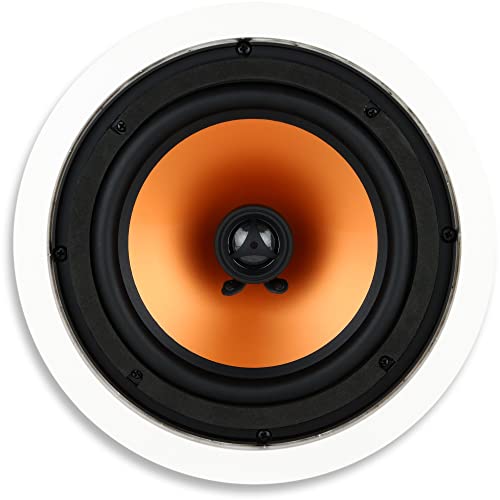
Yamaha NS-IC800
The Yamaha NS-IC800 is an 8-inch two-way in-ceiling speaker that brings Yamaha’s long experience in both hi-fi and professional audio to a shop installation, and it is the pick here for owners who care about sound quality as well as coverage. It pairs an 8-inch polypropylene mica woofer with a 1-inch balanced-dome tweeter, with a sealed-back design that keeps the sound consistent regardless of what is above the ceiling, which matters in a shop where the void above may be full of ducts, pipes, and insulation.
The NS-IC800 sounds clean and detailed, with a midrange that is more refined than most in-ceiling speakers and a treble that stays smooth and airy at the volumes a shop uses. The sealed-back design is the key feature: it isolates the speaker from the ceiling void, so the bass stays tight and controlled instead of changing with the size and the contents of the space above, and it keeps sound from leaking into the room upstairs. Yamaha builds the NS-IC800 to a high standard, with a paintable grille and a mounting system that clamps securely from below.
Strengths: Clean, detailed sound with a refined midrange and a smooth treble, which suits a shop where the music matters. The sealed-back design keeps the sound consistent regardless of the ceiling void, and it reduces sound leakage to the floor above. Build quality is excellent, and the speaker is easy to install.
Trade-offs: It costs more than the budget speakers in this guide, which adds up across a multi-speaker installation. Bass depth is good but not as deep as the largest in-ceiling speakers, and it needs an amplifier or a receiver, because it is a passive speaker with no built-in power.
Who it fits: Shop and cafe owners who value sound quality and want the music to sound good, not just present, especially in a space where the ceiling void is unpredictable. It suits boutiques, cafes, and any commercial space where the atmosphere matters.
Play a well-recorded track and notice the clarity of the midrange and the air around the instruments, which is where the NS-IC800 earns its keep. Then check the room above, if there is one, and notice how little sound leaks through, which is the benefit of the sealed-back design.
Check price on Amazon: Micca M-8C

Klipsch CDT-5650-C II
The Klipsch CDT-5650-C II is a 6.5-inch two-way in-ceiling speaker from Klipsch’s Custom Designer series, and it is the pick here for shops where announcements matter as much as music. It pairs a 6.5-inch Cerametallic woofer with a 1-inch titanium tweeter in a horn, with a pivoting tweeter and a controlled dispersion design that directs the sound toward the sales floor. Klipsch’s horn-loaded tweeter gives the speaker a clarity and a presence that conventional dome tweeters struggle to match, which is exactly what a spoken announcement needs.
The CDT-5650-C II sounds dynamic and clear, with a midrange that keeps voices intelligible even in a noisy shop, and a treble that is detailed without turning harsh. The horn tweeter is the key feature: it controls the dispersion of the sound, so more of it reaches the listener and less of it bounces around the ceiling, which improves intelligibility in a large, reflective space. The speaker is efficient, so it plays loud on modest amplifier power, and it is built to Klipsch’s usual standard, with a paintable grille and a mounting system that clamps securely from below.
Strengths: Excellent vocal clarity, with a horn tweeter that keeps announcements intelligible in a noisy shop. The controlled dispersion directs the sound where it is needed, and the high efficiency means loud, clean sound on modest amplifier power. Build quality is strong, and the speaker is easy to install.
Trade-offs: The horn sound is forward and lively, which suits announcements and energetic music but may not suit a shop that wants a soft, background atmosphere. Bass depth is good for the size but not deep, and the speaker costs more than the budget models in this guide.
Who it fits: Shop owners who make regular announcements, and anyone running a large, noisy space where intelligibility matters. It suits retail, supermarkets, and any commercial space where the spoken word needs to cut through the background noise.
Stand at the far end of the shop and listen to an announcement, noticing how clear and intelligible the voice stays. Then play a track with a strong beat and notice the dynamics: the CDT-5650-C II should sound lively and present, with no sense of strain.
Check price on Amazon: Yamaha NS-IC800

JBL 8128
The JBL 8128 is an 8-inch commercial in-ceiling loudspeaker, and it is the pick here for a shop that needs a speaker built to commercial standards rather than domestic ones. It is designed for background music and paging in retail, hospitality, and office spaces, with a rugged construction and a transformer tap that lets it run on a commercial distributed audio system, which is the standard way to wire many speakers across a large shop. JBL’s long experience in professional audio shows in every part of the design.
The 8128 sounds clear and even, with a midrange that keeps music and announcements intelligible and a bass response that is full enough for background music in a shop. The commercial design is the key feature: the speaker is built to run for long hours every day, with materials chosen to survive the heat and the dust of a commercial ceiling, and the transformer tap lets the installer set the power level for each speaker, so the volume is even across a large space. The mounting system is designed for fast, secure installation in a commercial ceiling, with a grille that blends into the tiles.
Strengths: Commercial-grade build designed for long hours and large installations, with a transformer tap for distributed audio systems. The sound is clear and even, with good intelligibility for music and announcements. Installation is fast and secure, and the speaker is built to last for years in a commercial ceiling.
Trade-offs: The sound is tuned for background music and paging rather than critical listening, so it will not satisfy an audiophile. It needs a commercial amplifier or a distributed audio system, which is a different setup from a domestic receiver, and the price reflects the commercial build.
Who it fits: Shop owners fitting out a large commercial space with a distributed audio system, and anyone who needs many speakers running for long hours every day. It suits supermarkets, department stores, hotels, and any large retail space where reliability matters as much as sound.
Walk the length of the shop and notice how even the volume stays from one end to the other, with no speaker noticeably louder than its neighbours. Then listen to an announcement and notice how clear the voice stays, because even coverage and intelligibility are the point of a commercial system.
Check price on Amazon: Klipsch CDT-5650-C II

Pyle PDIC81RD
The Pyle PDIC81RD is an 8-inch two-way in-ceiling speaker pair that earns its place in this guide through simplicity and speed, and it is the pick for a shop that needs a quick, affordable fit-out without fuss. It pairs an 8-inch woofer with a 1-inch tweeter in a straightforward design, with a paintable round grille and a mounting system that clamps to the ceiling from below. For a shop that needs speakers installed this week on a tight budget, it is a practical, no-nonsense choice.
The PDIC81RD sounds clear and balanced for its size, with a midrange that keeps background music pleasant and announcements understandable, and a bass response that is full enough for a shop floor. The large woofer moves plenty of air, which gives the sound a weight that smaller budget speakers lack, and the tweeter stays smooth at the volumes a shop actually uses. Pyle designs the PDIC series for easy installation, with a template and a clamp system that a competent installer can fit quickly, and the speakers are sold as a pair, which keeps the cost of a multi-speaker shop system low.
Strengths: Very affordable, which makes it possible to fit out a shop quickly on a small budget. The sound is clear and balanced, with good intelligibility for music and announcements. Installation is straightforward, and the large 8-inch woofer gives more bass than most budget in-ceiling speakers.
Trade-offs: Detail and refinement are a step behind the premium speakers in this guide, and the sound is pleasant rather than detailed. The build is functional rather than premium, and the speaker needs a ceiling void of sufficient depth. It is a passive speaker, so it needs an amplifier or a receiver.
Who it fits: Shop owners who need a quick, affordable fit-out, and anyone fitting out a new shop, pop-up, or market stall where the speaker count matters more than the last few percent of sound quality. It suits retail, cafes, and any commercial space where speed and value are the priority.
Stand between two speakers and notice how evenly the sound fills the space, with no obvious gap in coverage. Then listen to a track with a clear vocal and notice how natural the voice sounds, which is the mark of a well-engineered budget speaker.
Check price on Amazon: JBL 8128
How Many Speakers Does a Shop Need?
The most common mistake in a shop installation is using too few speakers, which creates loud spots directly underneath each one and dead zones in between, and the fix is to use more speakers at a lower volume rather than fewer speakers turned up loud. A good rule of thumb is to space the speakers about twice the ceiling height apart, so a shop with a three-metre ceiling needs speakers roughly six metres apart, and a shop with a four-metre ceiling needs them roughly eight metres apart. That spacing gives even coverage, with no obvious hot spot and no dead zone, and it lets the music sit at a comfortable background level everywhere in the shop.
The second part of the calculation is the amplifier power, because each speaker needs enough power to reach a comfortable volume without distorting, and the total power is the sum of all the speakers. A small shop with four speakers needs far less power than a large shop with twelve, and a commercial distributed audio system with transformer taps makes it easy to set the power level for each speaker individually. Work out the speaker count first, then size the amplifier to match, and the system will sound even and relaxed rather than strained and uneven.
Ceiling Speakers and Shop Atmosphere
Music is part of a shop’s atmosphere, and the ceiling speakers are the instrument that delivers it, so the choice of speaker and the choice of music deserve the same care as the lighting and the layout. A boutique that sells handmade goods wants a warm, relaxed sound that invites customers to linger, while a supermarket wants a clear, energetic sound that keeps the space feeling alive, and a cafe wants something in between, with music that is present but never intrusive. The speakers in this guide cover that range, from the warm Polk RC80i to the lively Klipsch CDT-5650-C II, and the right choice depends on the atmosphere you want to create.
The volume matters as much as the speaker, because background music should be heard but not noticed, and a system that is too loud drives customers away while one that is too quiet might as well not exist. Set the volume so a customer can hold a conversation without raising their voice, and check it at different times of day, because a shop that is quiet in the morning is noisy at lunchtime, and the music needs to sit comfortably in both. A good ceiling system disappears into the shop, and that is the highest praise it can earn.
Wiring a Shop: Plan Before the Ceiling Goes Up
The best time to wire a shop for ceiling speakers is before the ceiling goes up, because the cable runs through the void above the ceiling, and that void is easy to reach while the ceiling is open and very hard to reach once it is finished. Run in-wall rated speaker cable from the amplifier location to each speaker position, leave a little slack at each end, and keep the cable away from mains wiring, because mains cable can induce hum into a speaker line that runs alongside it for a long distance. A little planning at this stage saves a great deal of trouble later, and it costs almost nothing.
The second part of the planning is the amplifier location, because the amplifier needs power, ventilation, and access, and it should be somewhere the staff can reach it without climbing a ladder. A back office, a stock room, or a cupboard near the till are all good choices, provided the amplifier has room to breathe and the staff can reach the volume control. Run the speaker cable back to that location, label each run so the installer knows which speaker it feeds, and the installation will be straightforward, whether it is done by a professional or by a competent member of staff.
Buying Guide
Start by measuring the ceiling. The height, the void depth, and the construction all decide which speaker fits and how many you need, so measure before you order. A speaker needs a ceiling void deep enough for its basket, and a plasterboard ceiling needs a different mounting approach from a suspended tile ceiling, so check the specification sheet for the mounting depth and the cutout diameter, and confirm that the ceiling can take it.
Work out the speaker count before you buy anything. Space the speakers about twice the ceiling height apart, which gives even coverage with no hot spots and no dead zones, and count the speakers the shop actually needs rather than the minimum you can get away with. More speakers at a lower volume always sound better than fewer speakers turned up loud, and the cost of an extra pair is small compared with the cost of a system that sounds uneven.
Choose the amplifier to match the speakers, not the other way round. A passive in-ceiling speaker needs an amplifier or a receiver, and the amplifier needs enough power for all the speakers together, with a little headroom to spare. A small shop with four speakers can run on a modest amplifier, while a large shop with twelve needs a commercial amplifier or a distributed audio system, so size the amplifier to the speaker count and the shop size.
Think about the wiring before the ceiling goes up. In-ceiling speakers need speaker cable run through the ceiling void, and that cable is far easier to install before the ceiling is finished than after it. Use in-wall rated cable, keep it away from mains wiring, and leave a little slack at each speaker location so the installer has room to work. A little planning at the start saves a lot of trouble later.
Match the speaker to the shop’s atmosphere. A warm, relaxed speaker suits a boutique or a cafe, where customers linger and the music should invite them to stay, while a clear, dynamic speaker suits a supermarket or a large retail space, where announcements need to cut through the noise. Listen to the descriptions in this guide and pick the character that matches the shop, because the speakers are part of the atmosphere, not just the sound system.
Finally, plan for maintenance. In-ceiling speakers are out of sight and easy to forget, but they need occasional attention: a grille that has collected dust, a speaker that has worked loose, or a cable that has been disturbed by work in the ceiling void. Check the system every few months, clean the grilles, and listen in each part of the shop, because a speaker that has failed silently leaves a dead zone that customers notice even if the owner does not.
Frequently Asked Questions
How many ceiling speakers do I need for my shop?
Space the speakers about twice the ceiling height apart, which gives even coverage with no hot spots and no dead zones. A shop with a three-metre ceiling needs speakers roughly six metres apart, so a shop that is twelve metres long needs at least two rows of speakers, and a larger shop needs more. Count the speakers the shop actually needs rather than the minimum you can get away with, because more speakers at a lower volume always sound better than fewer speakers turned up loud.
Do ceiling speakers need an amplifier?
Yes, the speakers in this guide are passive, which means they need an amplifier or a receiver to power them. A small shop with four speakers can run on a modest amplifier, while a large shop with many speakers needs a commercial amplifier or a distributed audio system. The amplifier needs enough power for all the speakers together, with a little headroom to spare, so size it to the speaker count and the shop size rather than buying the cheapest one available.
Can I install ceiling speakers myself?
It depends on the ceiling and your experience. A suspended tile ceiling is straightforward, because the tiles lift out and the speakers clamp in from below, while a plasterboard ceiling needs a cutout and a mounting system that clamps securely, which is more work. The electrical side is simple, because speaker cable is low voltage, but if the ceiling is high or the wiring is complex, a professional installer is worth the cost, and they will guarantee the work.
Will ceiling speakers work in a shop with a high ceiling?
Yes, but the spacing changes. A higher ceiling means the speakers need to be further apart, because the sound spreads wider as it travels down, and a shop with a five-metre ceiling needs speakers roughly ten metres apart. The volume also needs to be higher, because the sound has further to travel, so a high-ceiling shop needs more powerful speakers or more of them. The Klipsch CDT-5650-C II is a good choice for a high ceiling, because its horn tweeter controls the dispersion and directs the sound down to the sales floor.
Can ceiling speakers be used outdoors in a covered area?
Some can, if they are rated for moisture and humidity, and the Polk RC80i is a good example, because its moisture-resistant design survives the humidity of a covered patio or a veranda. A speaker that is not rated for moisture will fail quickly outdoors, even under cover, because condensation and temperature swings damage the cone and the crossover. Check the rating before you install a speaker outside, and choose a moisture-resistant model for any space that is not fully enclosed and heated.
Do I need a separate speaker for announcements?
No, the same speakers handle music and announcements, which is the point of a shop system. The amplifier or the receiver switches between the music source and the microphone, and the announcements play through the same ceiling speakers that play the music. Choose a speaker with good vocal clarity, like the Klipsch CDT-5650-C II, and the announcements will be intelligible throughout the shop, even when the background music is playing.
What is a 70-volt system, and do I need one?
A 70-volt system, also called a distributed audio system, is the standard way to wire many speakers across a large commercial space, because it lets the installer run long cable lengths without losing power, and set the volume of each speaker individually with a transformer tap. A small shop with four or six speakers does not need one, and a domestic amplifier will do, but a large shop with twelve or more speakers benefits from it, because the wiring is simpler and the volume is even across the whole space.
How do I stop ceiling speakers from leaking sound upstairs?
Choose a speaker with a sealed back, like the Yamaha NS-IC800, which isolates the speaker from the ceiling void and keeps the sound from travelling into the room above. A standard open-back speaker lets sound leak through the ceiling, which is a problem in a shop with offices or flats above it, while a sealed-back design contains the sound and keeps the bass tight. Adding insulation in the ceiling void helps as well, by absorbing the sound that does escape, and it is worth doing if the room above is used for quiet work.
Can I add more ceiling speakers later?
Yes, provided the amplifier has enough power and the wiring allows it. The simplest way is to plan for expansion from the start, by choosing an amplifier with a little headroom and running spare cable to the places where a speaker might go later. Adding a speaker to a finished ceiling is more work, because the cable has to be fished through the void, but it is still possible, and a professional installer can do it without damaging the ceiling. If the shop is likely to grow, plan for it now rather than rewiring later.
Do ceiling speakers work with a microphone for announcements?
Yes, and that is one of the main reasons shops install them. The amplifier or the receiver has a microphone input, and when the microphone is used, the music ducks or pauses and the announcement plays through the same ceiling speakers that play the music. Choose a speaker with good vocal clarity, like the Klipsch CDT-5650-C II, and the announcements will be intelligible throughout the shop. A simple paging microphone is inexpensive, and it is a worthwhile addition to any shop system.
Should I paint the speaker grilles to match my ceiling?
Yes, and it is one of the simplest ways to make a ceiling system disappear. Most in-ceiling speakers come with white grilles that can be painted to match the ceiling colour, which makes the speakers almost invisible once they are installed. Remove the grille, spray it lightly with a paint that matches the ceiling, and let it dry completely before refitting it. Use a thin coat, because a thick coat can clog the perforations and muffle the sound, and test the colour on a spare grille or a hidden area first, because a grille that is the wrong shade stands out more than a white one.
Conclusion
A good shop ceiling system disappears into the atmosphere, and that is the highest praise it can earn. Start with the Polk RC80i if you want the best all-round shop speaker, or the Micca M-8C if you need many speakers on a tight budget. Measure the ceiling, space the speakers properly, and enjoy a shop that sounds welcoming from the moment a customer walks in.


