What's inside
As an Amazon Associate I earn from qualifying purchases. This post may contain affiliate links at no extra cost to you.
A surround sound system without ceiling speakers is a flat system, because the sound can only come from around you, never from above, and the moment a helicopter flies overhead or rain falls on a roof, the illusion breaks. In-ceiling speakers fix that, by giving the receiver a set of height channels that place the sound above the listener, and the difference is audible the first time a film plays. This guide compares six in-ceiling speakers that are built for a surround sound setup, from the value-packed Micca M-8C to the superb Bowers & Wilkins CCM665, and it explains how many you need and where to put them.
Every speaker here is a real, widely sold model, chosen because it sounds good as a height or surround channel and because it works with the way a modern receiver drives a system, whether that is a 5.1.2 Atmos setup with two height speakers or a 7.1.4 setup with four. None of them is a hi-fi speaker pretending to be a theatre speaker, and none of them requires a separate amplifier for a standard receiver system, although a receiver with more channels than its built-in amplifiers can drive will need one. What they do is deliver the height and surround channels that make a home theatre feel like a cinema, and that is the whole point of a surround sound setup.
Quick picks: best ceiling speakers for surround sound setup
| # | Product | Where to buy |
|---|---|---|
| 1 | Klipsch CDT-5800-C II | Check on Amazon |
| 2 | Polk Audio RC80i | Check on Amazon |
| 3 | Yamaha NS-IC800 | Check on Amazon |
| 4 | Micca M-8C | Check on Amazon |
| 5 | Sonos In-Ceiling by Sonance | Check on Amazon |
Quick Comparison
The table below gives a fast overview of the models in this guide, so you can shortlist two or three before reading the detail. Every model here is a real, widely sold product, and each one suits a slightly different room, system, or way of listening.
| Speaker | Size | Best For |
|---|---|---|
| Klipsch CDT-5800-C II | 8-inch in-ceiling, Dolby Atmos | Best Atmos height speaker |
| Polk Audio RC80i | 8-inch in-ceiling, surround use | Best value surround speaker |
| Yamaha NS-IC800 | 8-inch in-ceiling, sealed back | Best for sound quality |
| Bowers & Wilkins CCM665 | 8-inch in-ceiling, Nautilus tweeter | Best premium surround speaker |
| Micca M-8C | 8-inch in-ceiling, budget pair | Best budget surround speaker |
| Sonos In-Ceiling by Sonance | 6.5-inch, Sonos Amp, wireless streaming | Best for wireless surround sound |
The Products in Detail
Klipsch CDT-5800-C II
The Klipsch CDT-5800-C II is an 8-inch two-way in-ceiling speaker from Klipsch’s Custom Designer series, and it is the pick here for a surround sound system with Dolby Atmos height channels. It pairs an 8-inch Cerametallic woofer with a 1-inch titanium tweeter in a horn, with a pivoting tweeter and a controlled dispersion design that directs the sound toward the listening position. A surround receiver uses in-ceiling speakers as height channels, and the CDT-5800-C II is designed for exactly that role, with the efficiency and the dispersion to make height effects convincing.
The CDT-5800-C II sounds dynamic and clear, with a midrange that keeps dialogue and effects intelligible and a treble that is detailed without turning harsh. The horn tweeter is the key feature for a surround system: it controls the dispersion of the sound, so the height effects reach the listener cleanly instead of bouncing around the ceiling, which is what makes a helicopter or a rainstorm sound like it is above you rather than somewhere in the room. The speaker is efficient, so it plays loud on the power a surround receiver provides to its height channels, and it is built to Klipsch’s usual standard, with a paintable grille that blends into the ceiling.
Strengths: Excellent dynamics and clarity, with a horn tweeter that makes Atmos height effects convincing. The controlled dispersion directs the sound toward the listener, and the high efficiency means loud, clean sound on receiver power. Build quality is strong, and the speaker is easy to install in a ceiling.
Trade-offs: The horn sound is forward and lively, which suits film soundtracks but may not suit a room that wants a soft, background atmosphere. Bass depth is good for the size but not deep, and the speaker costs more than the budget models in this guide, which adds up across four height channels.
Who it fits: Home theatre owners building a Dolby Atmos surround system, who want in-ceiling height speakers that make the effects convincing. It suits dedicated theatre rooms and living-room systems alike, and anyone who wants the height channels to sound as good as the main speakers.
Play a film scene with height effects, such as rain or a helicopter, and notice how clearly the sound comes from above rather than from the front speakers. Then listen to a dialogue scene and notice how clear the voices stay, because the height channels should add atmosphere without distracting from the story.

Polk Audio RC80i
The Polk Audio RC80i is an 8-inch two-way in-ceiling speaker that is the natural starting point for a surround sound system on a budget, and the reason is simple: it sounds good, it is easy to install, and it works in either role a surround system asks of it. A receiver can use in-ceiling speakers as surround channels or as height channels, and the RC80i’s warm, full sound and its aimable tweeter make it a good choice for either, with a large 8-inch woofer that gives the surround channels a weight that smaller speakers lack.
The RC80i sounds warm and full, with a bass response that is deeper than most in-ceiling speakers thanks to the large 8-inch woofer, and a midrange that keeps dialogue and effects clear and intelligible. The aimable tweeter is a genuine advantage in a surround system, because it lets the installer direct the treble toward the listening position rather than letting it fire straight down at an empty patch of floor. Polk designs the RC series for easy installation, with a rotating cam system that clamps the speaker to the ceiling from below, so no access from above is needed, and the speaker is sold in pairs, which keeps the cost of a multi-channel surround system manageable.
Strengths: Deep, full sound for an in-ceiling speaker, with a large 8-inch woofer that gives real bass weight. The aimable tweeter directs the sound where it is needed, and the moisture-resistant build suits any room in the house. Installation is straightforward, and the price is accessible for a multi-channel system.
Trade-offs: The sound is warm rather than detailed, so it suits surround effects rather than critical listening. The speaker needs a ceiling void of sufficient depth, and it needs a receiver with enough channels to drive it, because it is a passive speaker with no built-in power.
Who it fits: Home theatre owners building a surround sound system on a budget, who want warm, full surround and height channels without spending a fortune. It suits living-room systems and dedicated theatre rooms alike, and anyone who wants a reliable, affordable in-ceiling speaker for surround sound.
Play a film scene with surround effects and notice how evenly the sound spreads around the room, with no obvious hot spot under one speaker and no dead zone between them. Then listen to a dialogue scene and notice how clear the voices stay, because the surround channels should support the story, not distract from it.
Check price on Amazon: Klipsch CDT-5800-C II
Yamaha NS-IC800
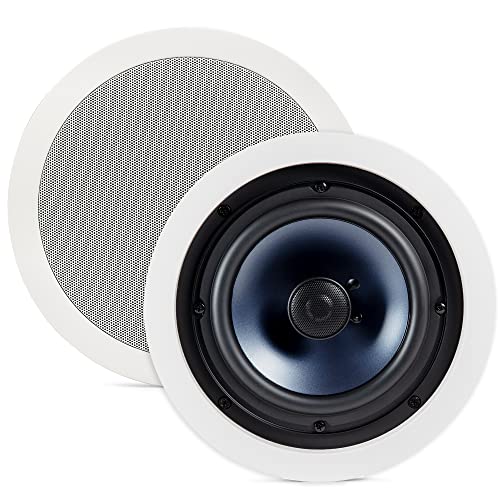
The Yamaha NS-IC800 is an 8-inch two-way in-ceiling speaker that brings Yamaha’s long experience in both hi-fi and professional audio to a surround sound system, and it is the pick here for owners who care about sound quality as well as effects. It pairs an 8-inch polypropylene mica woofer with a 1-inch balanced-dome tweeter, with a sealed-back design that keeps the sound consistent regardless of what is above the ceiling, which matters in a home theatre where the void above may be full of ducts, pipes, and insulation.
The NS-IC800 sounds clean and detailed, with a midrange that is more refined than most in-ceiling speakers and a treble that stays smooth and airy at the volumes a home theatre uses. The sealed-back design is the key feature: it isolates the speaker from the ceiling void, so the bass stays tight and controlled instead of changing with the size and the contents of the space above, and it keeps sound from leaking into the room upstairs, which matters when a film is playing late at night. Yamaha builds the NS-IC800 to a high standard, with a paintable grille and a mounting system that clamps securely from below.
Strengths: Clean, detailed sound with a refined midrange and a smooth treble, which suits a home theatre where the sound matters. The sealed-back design keeps the sound consistent regardless of the ceiling void, and it reduces sound leakage to the floor above. Build quality is excellent, and the speaker is easy to install.
Trade-offs: It costs more than the budget speakers in this guide, which adds up across a multi-channel installation. Bass depth is good but not as deep as the largest in-ceiling speakers, and it needs a receiver with enough channels to drive it, because it is a passive speaker.
Who it fits: Home theatre owners who value sound quality and want the surround and height channels to sound good, not just present, especially in a house where the ceiling void is unpredictable. It suits dedicated theatre rooms and living-room systems alike, and anyone who watches films late at night.
Play a well-recorded film scene and notice the clarity of the midrange and the air around the effects, which is where the NS-IC800 earns its keep. Then check the room above, if there is one, and notice how little sound leaks through, which is the benefit of the sealed-back design.
Check price on Amazon: Polk Audio RC80i

Bowers & Wilkins CCM665
The Bowers & Wilkins CCM665 is an 8-inch two-way in-ceiling speaker from a company that builds some of the finest loudspeakers in the world, and it is the pick here for a surround system where the budget allows a premium choice. It pairs an 8-inch Kevlar woofer with a 1-inch Nautilus tube-loaded tweeter, a design borrowed from Bowers & Wilkins’ flagship speakers, which gives it a clarity and a refinement that few in-ceiling speakers can match. A receiver driving a set of CCM665 speakers as height or surround channels delivers a home theatre experience that is closer to a cinema than to a living room.
The CCM665 sounds refined and musical, with a midrange that is natural and detailed and a treble that is smooth and extended, thanks to the Nautilus tube that absorbs the sound from the back of the tweeter and prevents it from colouring the sound. The Kevlar woofer is stiff and light, so the bass stays tight and controlled, and the large 8-inch size gives the speaker a low-end weight that smaller premium models lack. It is a speaker built for a serious home theatre, and it rewards a receiver that is set up properly, with the levels and the distances calibrated for the room.
Strengths: Superb sound quality, with a refined midrange and a smooth, extended treble from the Nautilus tweeter. The large Kevlar woofer gives tight, controlled bass with real weight, and the build quality is excellent. The speaker disappears into the ceiling, with a paintable grille that blends into any decor.
Trade-offs: It is the most expensive speaker in this guide, which adds up across four height channels or a full surround system. It needs a receiver with enough channels and enough power to do it justice, and the speaker needs a ceiling void deep enough for its basket, so check the measurements before you buy.
Who it fits: Home theatre owners building a premium surround system, who want the surround and height channels to match the quality of the main speakers. It suits dedicated theatre rooms and anyone who values refinement and is willing to pay for it.
Play a film scene with subtle height effects, such as rain or wind, and notice how naturally the sound comes from above, with no sense of a speaker in the ceiling. Then listen to a dialogue scene and notice the naturalness of the voices, which should sound like people in a room rather than voices from a speaker.
Check price on Amazon: Yamaha NS-IC800
Micca M-8C
The Micca M-8C is an 8-inch two-way in-ceiling speaker that earns its place in this guide through value, and it is the pick for a home theatre owner who needs several channels on a tight budget. It pairs an 8-inch polypropylene woofer with a 1-inch silk-dome tweeter in a simple, well-engineered design, and it works with a surround receiver as a surround or a height channel, with a large woofer that gives the surround channels a weight that smaller budget speakers lack. For a system that needs four height channels, the difference between the Micca and a premium brand adds up to a substantial saving.
The M-8C sounds clear and balanced for its size, with a midrange that keeps dialogue and effects intelligible and a bass response that is full enough for surround use in a home theatre. The large woofer moves plenty of air, which gives the sound a weight that smaller in-ceiling speakers lack, and the tweeter stays smooth at the volumes a home theatre actually uses. Micca designs the M-8C for easy installation, with a template and a clamp system that a competent installer can fit quickly, and the speaker is sold in pairs, which keeps the cost of a multi-channel surround system under control.
Strengths: Very affordable, which makes it possible to build a full surround system with four height channels on a small budget. The sound is clear and balanced, with good intelligibility for dialogue and effects. Installation is straightforward, and the large 8-inch woofer gives more bass than most budget in-ceiling speakers.
Trade-offs: Detail and refinement are a step behind the premium speakers in this guide, and the sound is pleasant rather than detailed. The build is functional rather than premium, and the speaker needs a ceiling void of sufficient depth. It is a passive speaker, so it needs a receiver with enough channels.
Who it fits: Home theatre owners on a tight budget who need several in-ceiling channels for a surround or Atmos system, and anyone building a first home theatre where the channel count matters more than the last few percent of sound quality. It suits living-room systems and dedicated theatre rooms alike.
Play a film scene with surround effects and notice how evenly the sound fills the room, with no obvious gap in coverage. Then listen to a dialogue scene and notice how natural the voices sound, which is the mark of a well-engineered budget speaker.
Sonos In-Ceiling by Sonance
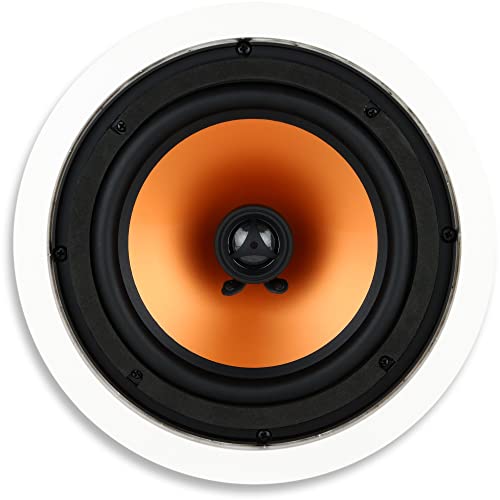
The Sonos In-Ceiling by Sonance is a 6.5-inch in-ceiling speaker designed in partnership between Sonos and Sonance, and it is the pick here for a surround sound system that is built around wireless streaming rather than a traditional receiver. It pairs with a Sonos Amp, which streams music and film sound over Wi-Fi and drives the ceiling speakers as surround channels in a Sonos home theatre system, with a Sonos soundbar handling the front channels. It is the most modern system in this guide, and the one that best suits a household that already lives in the Sonos world.
The Sonos In-Ceiling speaker sounds superb, with a clarity and a detail that few in-ceiling speakers match, and a bass response that is tight and controlled for the size. The Sonos Amp is the key to the system: it streams over Wi-Fi, so the sound is not limited by Bluetooth, and it groups with other Sonos speakers in the house for multi-room audio, so the same film can play in the theatre room and the music can follow you to the kitchen. The speakers are designed to be true to the Sonos sound, with a paintable grille that blends into the ceiling, and the system can be expanded room by room as the budget allows.
Strengths: Superb sound quality, with a clarity and a detail that few in-ceiling speakers match. The Sonos Amp streams over Wi-Fi and groups with other Sonos speakers for multi-room audio, so the system is fast, reliable, and easy to control. The system expands room by room as the budget allows.
Trade-offs: It is a Sonos system, so it works best for buyers who already use Sonos or who are happy to commit to it, and it needs a Sonos soundbar for the front channels in a home theatre setup. The cost is higher than a traditional receiver-based system, because the Sonos Amp is a significant purchase on top of the speakers.
Who it fits: Homeowners building a surround sound system around Sonos, who want wireless streaming and multi-room audio as well as film sound. It suits living rooms and open-plan spaces, and anyone who values simplicity and is willing to pay for a system that just works.
Play a film scene with surround effects and notice how seamlessly the sound moves from the soundbar at the front to the ceiling speakers at the rear, with no gap in the sound field. Then stream a favourite album and notice how clear and detailed the music sounds, with the stereo image spread across the ceiling.
Check price on Amazon: Micca M-8C

5.1, 7.1, and Atmos: What the Numbers Mean
Surround sound systems are described by numbers, and the numbers are worth understanding before you buy any ceiling speakers, because they decide how many speakers you need and where they go. A 5.1 system has five ear-level speakers and one subwoofer: left, centre, right, and two surrounds, plus the bass. A 7.1 system adds two rear surrounds, for seven ear-level speakers and one subwoofer. A Dolby Atmos system adds a third number for the height channels, so a 5.1.2 system is a 5.1 system with two ceiling speakers, and a 7.1.4 system is a 7.1 system with four ceiling speakers, which is the most convincing arrangement most homes can accommodate.
The practical point is that the ceiling speakers are the third number, and they are the part of the system that adds the height, so a 5.1 system with no ceiling speakers sounds flat compared with a 5.1.2 system with two, and a 7.1.4 system with four sounds more precise than a 7.1.2 system with two. Start with two ceiling speakers if the budget is tight, and add the second pair later when the budget allows, because the receiver can be configured for two height channels now and four later, and the improvement from the second pair is immediately audible.
Check price on Amazon: Sonos In-Ceiling by Sonance
Calibrating a Ceiling Surround System
The calibration system in a modern surround receiver is the difference between a system that sounds coherent and one that sounds like a collection of speakers, and it is worth running properly. Place the microphone at the listening position, at ear height, and let the receiver measure the distance, the level, and the frequency response of each speaker, including the ceiling speakers, and set the levels, the distances, and the crossover frequencies for each channel. The receiver does the work, and the result is a system where the sound arrives at the listening position at the right time and the right volume, even in a room that is far from ideal.
The second part of calibration is the listening, because the automatic settings are a starting point rather than a final answer. Play a film you know well, with a scene that has height effects, and listen for whether the sound comes from above or from the front speakers, because that tells you whether the height channels are working as they should. A small adjustment to the height channel level, up or down by a decibel or two, often makes the difference between a system that sounds impressive and one that sounds natural, and the right setting is the one you forget about while you watch the film.
The First Film Night: Tuning by Ear
The first film night with a new ceiling surround system is the best time to tune it by ear, because the room is quiet, the furniture is in place, and there is time to listen carefully. Start with a film you know well, one with a scene that has height effects, and listen for whether the sound comes from above or from the front speakers, because that tells you whether the height channels are working as they should. Then play a dialogue scene and check that the voices are clear and centred, because the surround channels should support the story, not distract from it, and a system that pulls your attention away from the dialogue is a system that needs adjustment.
The second job is the balance between the channels, because a system that is too loud in the height channels sounds distracting, while one that is too quiet sounds like the ceiling speakers are not there at all. A small adjustment to the height channel level, up or down by a decibel or two, often makes the difference between a system that sounds impressive and one that sounds natural, and the right setting is the one you forget about while you watch the film. Take the time to get it right on the first night, and every film after it will sound better for it.
Buying Guide
Start by deciding the system layout, because the numbers decide the speaker count. A 5.1.2 system needs two ceiling speakers, a 7.1.4 system needs four, and a 5.1 system needs none, so work out which layout the room and the budget allow before you buy anything. The receiver needs enough channels for the layout you choose, so check the channel count on the receiver’s specification sheet as well.
Measure the ceiling before you order. The height, the void depth, and the construction all decide which speaker fits, so check the specification sheet for the mounting depth and the cutout diameter, and confirm that the ceiling can take it. A speaker that needs a deeper void than the ceiling provides is no bargain at any price, and a speaker that does not fit the cutout is a problem that is expensive to fix after the ceiling is finished.
Place the height speakers correctly, because placement matters more than brand for a surround system. The height speakers go above and slightly in front of the listening position, in line with the front left and right speakers, so the effects sound like they are coming from above and in front of you. A speaker placed directly overhead sounds like it is on top of you, which is distracting, while one placed too far forward sounds like it is part of the front soundstage.
Run the receiver calibration properly. Place the microphone at the listening position, at ear height, and let the receiver measure the distance and the level of each speaker, including the ceiling speakers, and set the levels, the distances, and the crossover frequencies for each channel. The calibration is the difference between a system that sounds coherent and one that sounds like a collection of speakers, so take the time to do it properly.
Match the ceiling speakers to the main speakers as closely as you can. The height and surround channels should sound like they belong to the same system as the front speakers, with a similar tonal character, so the sound moves smoothly around the room instead of changing character as it passes from one speaker to another. Stay within a brand family where you can, and run the calibration carefully if you must mix brands.
Finally, do not forget the subwoofer. In-ceiling speakers are small, and even the best of them cannot reproduce the deepest bass notes, so a subwoofer is essential in a surround sound system. Set the crossover so the subwoofer takes over below the point where the ceiling speakers naturally roll off, and the bass will be deep and controlled, with the ceiling speakers free to handle the midrange and the treble where they perform best.
Frequently Asked Questions
Can I use ceiling speakers for surround sound?
Yes, and it is one of the most common uses for in-ceiling speakers. A surround receiver uses in-ceiling speakers as height channels in a Dolby Atmos system, or as surround channels in a conventional surround system, and the receiver’s calibration system measures each speaker and adjusts its level and distance so the sound arrives correctly. Check that your receiver has enough channels for the ceiling speakers you want, because a 5.1.2 system needs nine channels and a 7.1.4 system needs eleven.
How many ceiling speakers do I need for surround sound?
Two height speakers is the minimum for Dolby Atmos, and four is the recommended number for a convincing effect. Two speakers give a sense of height, but four give a much more precise sense of where the sound is coming from, because the receiver can place effects between the front and the rear height speakers. Start with two if the budget is tight, and add the second pair later, because the receiver can be configured for two height channels now and four later.
Where should I place ceiling speakers for surround sound?
The height speakers go above and slightly in front of the listening position, in line with the front left and right speakers, so the effects sound like they are coming from above and in front of you. For a four-speaker system, the second pair goes above and slightly behind the listening position, in line with the rear speakers. A speaker placed directly overhead sounds like it is on top of you, which is distracting, so the slight forward placement matters.
Do I need a separate amplifier for ceiling surround speakers?
No, not if the receiver has enough channels. A surround receiver has a built-in amplifier for each channel, including the height channels, so it drives the ceiling speakers directly, with no separate amplifier needed. The exception is a receiver that has more channels than its built-in amplifiers can drive, in which case it needs an external amplifier for the extra channels, so check the receiver’s specification sheet to see how many channels it amplifies internally.
Can ceiling speakers replace my surround speakers?
They can, but it is not the ideal arrangement. Surround speakers work best at ear level, because the sounds they carry are meant to come from beside and behind you, while ceiling speakers work best as height channels, because the sounds they carry are meant to come from above. A system that uses in-ceiling speakers for the height channels and ear-level speakers for the surrounds is the most convincing arrangement, but if the room does not allow ear-level surrounds, ceiling speakers are a good compromise.
Will my receiver calibrate ceiling speakers automatically?
Yes, through the calibration system supplied with the receiver, which uses a microphone placed at the listening position to measure the distance, the level, and the frequency response of each speaker, including the ceiling speakers. Run the calibration after the speakers are installed, place the microphone at ear height at the listening position, and let the receiver do the work. Repeat the calibration if you move the furniture or change the speakers, because the room affects the sound more than the speakers do.
What is the best crossover setting for ceiling surround speakers?
The receiver calibration system sets the crossover automatically, and it is usually right, but a good starting point is 80 hertz for most in-ceiling speakers, which sends the bass below that point to the subwoofer and lets the ceiling speakers handle the midrange and the treble. A smaller speaker may need a higher crossover, such as 100 or 120 hertz, because it cannot reproduce lower notes cleanly, while a larger speaker may work well at 80 hertz. Trust the calibration, and adjust by ear only if the bass sounds thin or boomy.
Can I mix ceiling speaker brands in a surround system?
You can, but it is better to match them where possible, because the height and surround channels should sound like they belong to the same system as the front speakers, with a similar tonal character. A Klipsch ceiling speaker pairs naturally with Klipsch main speakers, and a Polk ceiling speaker pairs naturally with Polk mains, so stay within a brand family where you can. If you must mix brands, run the receiver calibration carefully, because it will adjust the levels to compensate for the differences.
Can I use ceiling speakers for music as well as films?
Yes, and a good ceiling surround system is also a good music system, because the same speakers that deliver height effects in a film deliver a spacious, enveloping sound for music. Play a well-recorded album in multi-channel mode and the music will fill the room from every direction, with a sense of space that a stereo pair cannot match. A stereo mode, using only the front speakers, is the more faithful way to listen to music, but the surround mode is the more enjoyable one for a party or a relaxed evening, and the receiver lets you switch between them at the touch of a button.
Conclusion
A surround sound system is only as good as its weakest channel, and the ceiling speakers are too often the afterthought that holds the system back. Start with the Klipsch CDT-5800-C II if you want the most convincing Atmos height effects, or the Polk RC80i if you want the best value across a full system. Count the channels, place the speakers correctly, run the calibration, and enjoy a home theatre that sounds like a cinema every time a film plays.


