What's inside
- Key Takeaways
- Quick Picks
- How We Chose These Picks
- Why Is True Cross-Platform Wireless Harder Than It Sounds?
- What Should You Check Before Trusting a Multi-Platform Claim?
- What Should You Know About Each of These Cross Platform Wireless Gaming Headsets Picks?
- Cross-Platform Headsets Compared: Which One Covers Your Consoles?
- How Do You Set Up One Headset Across Two Consoles Cleanly?
- How Do These Headsets Behave in a Real Multi-Console Household?
- What Role Do Phones and PCs Play in a Console Headset’s Life?
- How Should You Future-Proof a Cross-Platform Purchase?
- How Do You Decide Between a Docked System and a Dongle Headset?
- What Should You Test During the First Week Across All Your Consoles?
- How Do Game Chat and Streaming Fit a Cross-Platform Setup?
- Which Accessories and Habits Complete a Cross-Platform Setup?
- A Final Word on Buying Coverage You Can Point To
- What Else Is Worth Knowing Before You Decide?
- What Trips Up Multi-Console Buyers Most Often?
- Final Recommendation
- Frequently Asked Questions
- Related Guides
As an Amazon Associate I earn from qualifying purchases. This post may contain affiliate links at no extra cost to you.
widgetverdict.com is reader-supported. When you buy through links on our site, we may earn an affiliate commission.
Where to buy: cross-platform claims live or die by the exact console list in the listing, so each headset below links to its checked Amazon page; read the platform line in every spec box before anything else, because that line is the whole subject of this guide.
Owning two consoles used to mean owning two headsets, and the best cross platform wireless gaming headsets exist to retire that absurdity. The six sets in this guide each promise, in their own listing titles, to span some combination of Xbox, PlayStation, PC, Switch and mobile without wires, but the combinations differ in ways that decide purchases: one leans Xbox-first with an 80-hour battery, one switches audio between consoles from a base station, and one stretches its battery to 120 hours while covering multiple platforms.
The fault line in this category is the Xbox question. Microsoft’s wireless ecosystem has historically demanded specific licensing, which is why several famous multi-platform headsets quietly exclude it, and why the titles here that name Xbox Series X|S and Xbox One explicitly, from Turtle Beach, SteelSeries, Logitech G and HyperX, deserve close reading. A headset that covers PlayStation and PC beautifully is still the wrong purchase for an Xbox household, and no amount of battery life compensates for a console the dongle cannot talk to.
Single-brand shoppers can compare ecosystems through best headsets corsair and best gaming headsets razer, while tuning obsessives may enjoy the detour into best gaming headsets for bass. This guide stays on its own question, though: which wireless headset honestly covers the machines you actually own, with the battery, microphone and switching behaviour to make that coverage pleasant rather than merely possible.
Key Takeaways
- Every pick here names Xbox in its title except where noted, which is rarer than marketing suggests and worth verifying model by model.
- Battery claims span 24 hours on the Astro A50 to 120 hours on the HyperX Cloud III S, the widest spread in this guide.
- Logitech’s PLAYSYNC switcher on the A50 and A20 X exists to move one headset between consoles without re-pairing rituals.
- The Turtle Beach Stealth 600 pairs an 80-hour battery with 50mm drivers and a flip-to-mute mic across Xbox, PlayStation, PC and mobile.
- SteelSeries adds mobile app control on the Arctis Nova 3X, with a 40-hour battery and neodymium magnetic drivers.
- Bluetooth appears beside the 2.4GHz link on most models, keeping phones connected while the console link runs.
Quick Picks
| Pick | Badge | Why it earns its place |
|---|---|---|
| Turtle Beach Stealth 600 Wireless Headset (Xbox) | The 80-hour Xbox anchor | Xbox-first naming with PlayStation, PC and mobile alongside, 50mm drivers and an 80-hour battery. |
| SteelSeries Arctis Nova 3X Wireless Headset | The app-controlled traveller | 2.4GHz and Bluetooth across Xbox, PS5, PC, Switch and mobile, with mobile app control and a 40-hour battery. |
| Logitech G Astro A50 Wireless Gaming Headset | The PLAYSYNC flagship | A base-station flagship with PLAYSYNC audio switching between PS5, Xbox and PC, and stated per-platform audio figures. |
| Logitech G Astro A20 X Wireless Headset | The lighter PLAYSYNC sibling | PLAYSYNC switching across PS5, Xbox, PC and both Switch generations, with a 48kHz microphone. |
| HyperX Cloud III S Wireless Gaming Headset | The 120-hour marathoner | A 120-hour battery with 2.4GHz and Bluetooth, multi-platform compatibility and a detachable microphone. |
| Turtle Beach Stealth 500 Wireless Headset (Xbox) | The camo Xbox all-rounder | Xbox and PC wireless with Bluetooth, 40mm drivers, a 40-hour battery and memory foam in Arctic Camo. |
How We Chose These Picks
Admission to this guide required the listing title itself to argue the cross-platform case: named consoles, named wireless paths, or a switching system described in the headline. Claims were then graded strictly as written, so a model whose title names three platforms gets credit for three, and battery or driver details were only used where printed. That discipline exposes the category’s real structure, in which coverage breadth, battery endurance and switching convenience trade against each other in every design.
The six divide into philosophies. Turtle Beach fields two Stealth models that treat Xbox as home turf and stretch battery life generously. Logitech G’s Astro pair treats the base station and its PLAYSYNC switcher as the product, selling effortless movement between consoles. SteelSeries and HyperX field the traveller and the marathoner respectively, one app-controlled and compact in its claims, the other quoting a 120-hour battery that reframes charging as a monthly event. Your household’s console map picks the philosophy; the reviews then pick the model.
Why Is True Cross-Platform Wireless Harder Than It Sounds?
Consoles do not share one wireless language. PlayStation and PC accept a wide range of USB dongle headsets, Switch adds its own handheld quirks, and Xbox has historically required licensed wireless hardware, which is why so many headsets advertise multi-platform support and then whisper a PlayStation-and-PC reality.
Switching is the second hidden difficulty. A headset can technically support three consoles and still be miserable to move between them if every move means re-pairing, re-plugging and re-checking settings. Logitech’s PLAYSYNC audio switcher, named on both Astro models here, attacks exactly that friction by letting the base or headset hop between sources deliberately.
Battery is the third difficulty, because wireless freedom that dies mid-session is just a cable with extra steps. The spread in this guide runs from the Astro A50’s 24 hours to the HyperX Cloud III S’s 120, and neither figure is a typo: they reflect different design bets about docks, weight and how owners charge. A base-station headset that sleeps on its dock every night experiences 24 hours as infinity, while a dongle headset carried between rooms needs the marathon figure.
What Should You Check Before Trusting a Multi-Platform Claim?
Check the console list against your shelf, literally. The Stealth 600 names Xbox Series X|S, Xbox One, PlayStation and PS4 alongside PC and mobile; the Arctis Nova 3X names Xbox, PS5, PC, Switch and mobile; the Cloud III S speaks of multi-platform compatibility with 2.4GHz and Bluetooth without enumerating consoles in its headline, which is a cue to verify the exact list on the product page before ordering.
Check the second connection, because modern ownership is dual. Bluetooth beside the 2.4GHz link, present on the Stealth models, the Nova 3X and the Cloud III S, keeps a phone paired for calls and notifications while the game runs on the low-latency path. The Astro A50 pairs its 2.
Check the microphone’s manners, since cross-platform players talk across networks constantly. Flip-to-mute designs on both Turtle Beach models make muting a gesture, the Astro A20 X quotes a 48kHz microphone, and the Cloud III S detaches its mic entirely for travel or pure listening.
What Should You Know About Each of These Cross Platform Wireless Gaming Headsets Picks?
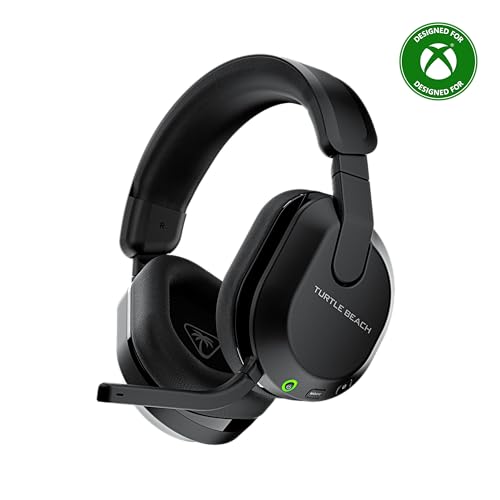
Turtle Beach Stealth 600 Wireless Headset (Xbox) — The 80-hour Xbox anchor
The Stealth 600 leads this guide because its title performs the category’s essential trick in one sentence: Xbox Series X|S and Xbox One named first, PlayStation and PS4 beside them, then PC and mobile, all wireless with Bluetooth in support. Around that coverage sit 50mm drivers for scale and an 80-hour battery that stretches charging intervals across weeks of evening play. For the two-console household that spawned this entire category, this is the specification that ends the two-headset era most directly.
The flip-to-mute microphone suits cross-platform social play, where muting needs to be instant and physical when the room intrudes, and the Bluetooth path keeps a phone in reach during long sessions. Switch is the notable absentee from the platform list, so Nintendo households should compare the Nova 3X or Astro models before committing. Judged on its stated ground, though, the Stealth 600 assembles coverage, endurance and driver size into the guide’s most complete all-round argument.
- Platforms named: Xbox Series X|S, Xbox One, PlayStation, PS4, PC, mobile
- Connection: wireless plus Bluetooth
- Drivers: 50mm
- Battery: 80 hours
- Microphone: flip-to-mute
Strengths
- Xbox, PlayStation, PC and mobile named in one title
- Eighty-hour battery minimises charging across busy weeks
- 50mm drivers give big games appropriate scale
Trade-offs
- Switch is not named among the platforms in the title
- No base station or switching system is described
- App control is not mentioned in the headline
Best for: two-console households built around Xbox and PlayStation who want one wireless headset with marathon battery life
Not suited for: Switch-centred players needing Nintendo named in writing, since this title’s platform list passes it by
Dual-console households can check the Stealth 600 on Amazon to confirm the Xbox wireless details.

SteelSeries Arctis Nova 3X Wireless Headset — The app-controlled traveller
The Arctis Nova 3X fields the broadest console list in this guide, adding Switch to the Xbox, PS5, PC and mobile spread, and then adds a feature none of its rivals state: mobile app control. Tuning a headset from the phone in your pocket, rather than from a PC utility you must boot to reach, changes how often owners actually adjust their sound, and SteelSeries clearly knows it. Neodymium magnetic drivers headline the acoustic side of the specification.
Its battery claim, 40 hours, is the modest middle of this guide’s range: plenty for a week of evenings, unremarkable beside the Stealth 600’s 80 or the HyperX’s 120. That is the Nova 3X’s honest bargain, breadth and control in exchange for endurance, and for the player whose headset migrates between a Switch on the train and an Xbox at home, breadth is the scarcer resource. Microphone details stay unstated in the title, so voice-first buyers should verify before ordering; platform-first buyers have found their model.
- Platforms named: Xbox, PS5, PC, Switch, mobile
- Connection: 2.4GHz plus Bluetooth
- Drivers: neodymium magnetic
- Battery: 40 hours
- Control: mobile app control, per the listing title
Strengths
- Widest platform list here, including Switch and Xbox
- Mobile app control makes tuning genuinely convenient
- 2.4GHz and Bluetooth cover console and phone together
Trade-offs
- Forty-hour battery trails the marathon models
- Microphone specification is not stated in the title
- No dock or base station for desk tidiness
Best for: players whose week rotates through Xbox, PlayStation, Switch and phone and who enjoy tuning from an app
Not suited for: endurance-first buyers wanting the longest stated battery, a contest the Cloud III S wins decisively here
Rotating-platform players can check the Arctis Nova 3X on Amazon for its per-console connection notes.
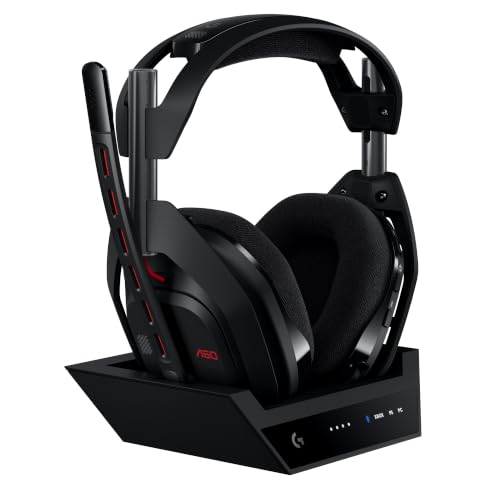
Logitech G Astro A50 Wireless Gaming Headset — The PLAYSYNC flagship
The Astro A50 treats switching itself as the luxury. Its PLAYSYNC audio switcher exists for the desk where a PS5, an Xbox and a PC share one monitor and one chair, letting the headset hop between them as a deliberate act rather than a re-pairing ceremony. The title even publishes different audio figures for console and PC paths, a transparency about cross-platform reality that this guide wishes more brands would copy, because it treats buyers as adults who can handle nuance.
The battery figure, 24 hours, looks small beside rivals until the base-station lifestyle enters the calculation: a headset that sleeps on its dock nightly never experiences its battery as a limit. That is the A50’s coherent philosophy, a flagship appliance for a fixed multi-console desk, with Bluetooth keeping the phone in the loop. Travellers and sofa-migrators should look elsewhere in this guide; the desk-bound three-console owner will recognise the A50 as the only pick designed around their exact furniture.
- Platforms named: PS5, Xbox, PC
- Switching: PLAYSYNC Audio Switcher
- Audio figures: under 16-bit/48kHz console, under 24-bit/48kHz PC, per title
- Battery: 24 hours
- Connection: 2.4GHz and Bluetooth
Strengths
- PLAYSYNC switching serves three-console desks directly
- Per-platform audio figures are stated with unusual honesty
- Base-station life makes the battery figure painless
Trade-offs
- Switch and mobile are not named in the platform list
- Twenty-four hours trails rivals away from the dock
- Flagship desk focus suits one room, not a travelling life
Best for: desk-based owners of PS5, Xbox and PC who switch between them daily and value ceremony-free movement
Not suited for: mobile players carrying a headset between rooms and houses, where a base-station flagship stays behind
Three-console desks can check the Astro A50 on Amazon to confirm the PLAYSYNC base station arrangement.

Logitech G Astro A20 X Wireless Headset — The lighter PLAYSYNC sibling
The A20 X carries the Astro switching idea to a wider, lighter audience. PLAYSYNC appears again, but the platform list grows to include both Switch generations alongside PS5, Xbox and PC, making this the only model here whose title spans the full modern console map in one breath. A 48kHz microphone specification gives voice a stated quality figure to stand on, which the talkative cross-platform player will appreciate when callouts cross networks nightly.
Battery hours are absent from the title, and the spec box records that rather than borrowing the A50’s figure, because sibling headsets do not inherit each other’s endurance by family resemblance. What the A20 X documentedly offers is switching breadth with Nintendo included, at a tier below the flagship’s base-station ceremony. Households whose console map includes a Switch beside the big two should shortlist it immediately; households without Nintendo can weigh the A50’s docked flagship life against the Stealth 600’s battery instead.
- Platforms named: PS5, Xbox, PC, Switch 1 and 2
- Switching: PLAYSYNC audio switcher
- Microphone: 48kHz, per the listing title
- Design: multi-platform wireless
- Battery: not stated in the listing headline
Strengths
- Fullest console span here, including both Switch generations
- PLAYSYNC switching without flagship ceremony
- 48kHz microphone figure is stated in the title
Trade-offs
- Battery hours are not stated in the listing title
- No Bluetooth mention appears in the headline
- Driver details are not described in the title
Best for: households owning PlayStation, Xbox, PC and Switch who want one switching headset across the whole map
Not suited for: shoppers ranking a stated battery figure as essential evidence, since this headline leaves endurance undocumented
Full-map households can check the Astro A20 X on Amazon to verify its Switch generation support.

HyperX Cloud III S Wireless Gaming Headset — The 120-hour marathoner
One hundred and twenty hours changes what a battery is. On the Cloud III S, charging stops being a weekly habit and becomes something closer to a monthly utility task, which suits owners who carry a headset between rooms, houses and setups and cannot build a dock ritual around any of them. The connection set supports that roaming life: 2.4GHz for the low-latency gaming path, Bluetooth for everything else, and multi-platform compatibility as the title’s stated promise.
The discipline of this guide requires noting that the title asserts compatibility in general terms rather than enumerating consoles, so the exact platform list deserves verification on the product page before an Xbox or Switch purchase rides on it. The detachable microphone, meanwhile, is stated plainly and suits the traveller who listens more than they talk on some days. Endurance plus flexibility is a powerful combination; verify the console list, and the Cloud III S becomes the roaming player’s strongest argument in this guide.
- Battery: 120 hours, per the listing title
- Connection: 2.4GHz plus Bluetooth
- Compatibility: multi-platform, per the title
- Microphone: detachable
- Design: wireless headphones form
Strengths
- 120-hour battery dwarfs every rival figure here
- 2.4GHz and Bluetooth cover gaming and everyday devices
- Detachable mic suits mixed listening and playing days
Trade-offs
- Consoles are not enumerated in the listing title
- No switching system or dock is described
- Driver specification is not stated in the headline
Best for: roaming players who move between setups and want charging to become a rare, almost forgettable event
Not suited for: buyers needing their exact consoles enumerated in the headline itself, a standard the Turtle Beach and SteelSeries titles meet
Marathon seekers can check the Cloud III S on Amazon to confirm the enumerated console list.

Turtle Beach Stealth 500 Wireless Headset (Xbox) — The camo Xbox all-rounder
The second Turtle Beach in this guide narrows the Stealth formula toward Xbox and PC, and says so honestly in its title. Xbox Series X|S and Xbox One are named, PC stands beside them, Bluetooth keeps the phone connected, and the hardware story runs through 40mm drivers, a rechargeable 40-hour battery, memory foam cushions and a flip-to-mute microphone, finished in Arctic Camo for players whose setup has a sense of humour.
PlayStation and Switch do not appear in this title, which makes the Stealth 500 a specialist rather than a universalist despite its multiplatform wording, and the comparison table records that plainly. Within its stated territory it is well judged: the battery doubles the Astro A50’s figure, the cushions suit long sessions, and the flip-to-mute gesture serves social Xbox play. Xbox-and-PC households that found the Stealth 600’s PlayStation coverage unnecessary can take this narrower, characterful route without feeling short-changed.
- Platforms named: Xbox Series X|S, Xbox One, PC
- Connection: wireless plus Bluetooth
- Drivers: 40mm
- Battery: rechargeable 40 hours
- Microphone: flip-to-mute; memory foam cushions
Strengths
- Xbox generations and PC are named explicitly
- Forty-hour battery with memory foam comfort
- Flip-to-mute mic suits social console play
Trade-offs
- PlayStation and Switch are not named in the title
- 40mm drivers trail the Stealth 600’s 50mm set
- Camo finish will not suit every desk’s taste
Best for: Xbox and PC households wanting wireless coverage of their two platforms with comfortable, social-play hardware
Not suited for: PlayStation or Switch owners needing those platforms covered, which this title’s narrower list does not promise
Xbox-focused buyers can check the Stealth 500 on Amazon to confirm its PC connection method.
Cross-Platform Headsets Compared: Which One Covers Your Consoles?
Coverage claims blur after six reviews, so the table restates each title’s platform list, battery figure and switching story in one view, with gaps left visible on purpose.
| Pick | Connection | Coverage / focus | Headline figure | Signature trait |
|---|---|---|---|---|
| Turtle Beach Stealth 600 Wireless Headset (Xbox) | Wireless + Bluetooth | Xbox, PS, PC, mobile | 80 hours | 50mm drivers |
| SteelSeries Arctis Nova 3X Wireless Headset | 2.4GHz + Bluetooth | Xbox, PS5, PC, Switch, mobile | 40 hours | App control |
| Logitech G Astro A50 Wireless Gaming Headset | 2.4GHz + Bluetooth | PS5, Xbox, PC | 24 hours | PLAYSYNC + base |
| Logitech G Astro A20 X Wireless Headset | Wireless, PLAYSYNC | PS5, Xbox, PC, Switch 1 and 2 | Not stated in title | 48kHz mic |
| HyperX Cloud III S Wireless Gaming Headset | 2.4GHz + Bluetooth | Multi-platform, per title | 120 hours | Detachable mic |
| Turtle Beach Stealth 500 Wireless Headset (Xbox) | Wireless + Bluetooth | Xbox, PC | 40 hours | 40mm drivers |
Battery and coverage pull in opposite directions across this table, and seeing them together prevents the classic error of buying the biggest number. The Cloud III S pairs the longest endurance with the least enumerated platform list, while the A20 X pairs the fullest console span with an unstated battery.
Switching is the table’s quiet third axis. Only the two Astro models name a switching system, because only Logitech treats console-hopping as a feature worth headlining.
How Do You Set Up One Headset Across Two Consoles Cleanly?
Give each console a permanent home in the system rather than re-creating the setup nightly. Keep the dongle or base where your primary console lives, label the second console’s path, whether that is the same receiver moved deliberately, a PLAYSYNC switch or a Bluetooth pairing, and write the pairing order on a note inside the headset case. Cross-platform friction is almost never electronic; it is the human forgetting which mode the headset woke up in, and a fixed routine dissolves it within a week.
Set volumes per platform once and record them. Consoles output at different levels, so a headset that is perfect on PlayStation may shout on PC; walk each machine through the same familiar game scene, set its output so your normal headset volume lands identically, and stop re-adjusting thereafter. Do the same for microphone monitoring where the platform offers it, because your own voice level in your ears is the setting that most affects how loudly you speak to everyone else.
Finally, build the charging habit around your furniture, not your intentions. Dock headsets like the Astro A50 belong on the dock every single night without exception, while dongle headsets like the Cloud III S or Stealth 600 suit a cable kept at the seat where you play most. The right habit is the one that survives a tired evening, and a cross-platform headset that is charged and findable beats a theoretically superior one that is neither.
A word about dongle discipline, the unglamorous skill this category rewards. Every wireless headset here depends on a small receiver that is trivially easy to lose in a move, a drawer or a console swap, and a lost dongle can strand an otherwise perfect headset on Bluetooth alone. Keep the receiver in the console it serves, use the headset’s storage for spares where provided, and treat the dongle as part of the product when lending or reselling, because the next owner certainly will.
It is also worth planning for the household’s next console rather than only its current ones. Platform lists in these titles already span generations, Xbox One beside Series X|S, PS4 beside PS5, Switch beside Switch 2, which means a well-chosen headset can survive a console upgrade intact. Buying for the map you expect in two years, not just the shelf you own today, is the cheapest form of future-proofing this category offers.
How Do These Headsets Behave in a Real Multi-Console Household?
A real multi-console household runs on rituals nobody designed: the headset lives wherever it was last dropped, the dongle migrates with it, and the first five minutes of a session are spent reconstructing the last one. The models in this guide fight that entropy in different ways. The Astro pair answer with a base and a switcher, giving the headset a home and a deliberate hop between machines. The Turtle Beach and HyperX models answer with battery, forgiving the headset wherever it sleeps by simply never being flat when found.
The second household reality is contention. Two players, one headset, three consoles: cross-platform coverage turns a shared headset from a compromise into a plan, because the same unit serves the Xbox in the lounge and the PlayStation in the bedroom without a negotiation about whose device it is. Households should still expect to buy a second set eventually, but coverage breadth delays that day and makes the eventual pair identical, which simplifies every dongle and dock in the house.
Visitors expose the third reality. A friend arriving with a different console tests whether your headset’s platform list was evidence or decoration, and the enumerated titles in this guide, Stealth 600, Nova 3X, the Astros, pass that test in writing. The Cloud III S’s general compatibility claim may pass it too, but the household that hosts often should prefer the promise printed in the headline to the promise implied by the category.
None of this household texture appears in a specification table, yet it decides satisfaction more than driver diameter ever will. The right cross-platform purchase is the one whose daily behaviour, docked or roaming, switched or simple, matches the choreography of the rooms it will live in, and this guide’s reviews were written to surface exactly that behaviour rather than to crown a universal champion.
What Role Do Phones and PCs Play in a Console Headset’s Life?
The modern headset’s second job is the phone, and Bluetooth is the hiring requirement. Most models here carry it beside their gaming link, which means a call interrupts nothing, a podcast fills a loading screen, and the same unit that serves a console at night serves a commute or a kitchen the next morning. Buyers should notice the exception discipline again: the A20 X title does not mention Bluetooth, so phone-centric buyers verify there first, while the Stealth models, Nova 3X, A50 and Cloud III S all state the pairing plainly.
The PC is the third platform hiding inside the phrase cross-platform, and it changes the headset’s social life. Discord communities, work calls and PC game libraries all flow through the same unit once a PC enters the list, and microphone quality suddenly matters in meetings as well as matches. The A20 X’s stated 48kHz microphone and the detachable design on the Cloud III S speak to that dual citizenship, one optimising voice, the other letting the headset become pure headphones when the working day wants music instead.
App control is the PC-and-phone era’s quiet differentiator, and the Nova 3X states it outright: tuning from the phone removes the boot-the-computer step that stops most owners from ever adjusting their sound. Households should weigh that convenience realistically. A headset whose settings are easy gets set; a headset whose settings require a pilgrimage stays on factory tuning forever, and several excellent features in this guide live or die by exactly that friction.
The synthesis is that cross-platform no longer means consoles alone. The complete modern claim spans consoles, PC and phone, with switching or battery behaviour that makes the span livable, and the six titles here each cover a different honest subset of that claim. Shoppers should map their own device week, all of it, before choosing, because the headset that covers Tuesday’s commute and Saturday’s console marathon in one unit is worth more than a marginally better headset that covers only one of them.
How Should You Future-Proof a Cross-Platform Purchase?
Start by reading the platform lists generationally. The titles here already span Xbox One beside Series X|S, PS4 beside PS5, and Switch beside Switch 2, which means a well-chosen unit survives the household’s next console upgrade without replacement. Buyers mid-generation should deliberately favour the model whose list covers both their current machine and its likely successor, even at the cost of a feature they want today, because headsets outlive consoles more often than the reverse.
Protect the small parts, because they are the future’s weak points. Dongles get lost, cables fray, earpads age, and a detachable microphone, as on the Cloud III S, at least makes one vulnerable component replaceable by design. Store the receiver with its console, keep the charging cable where the headset sleeps, and register the product while the box is still on the table; future-you, mid-move with a headset and no dongle, will be grateful for every one of those dull decisions.
Finally, buy the coverage you can verify rather than the coverage you hope firmware will add. Platform support occasionally expands after launch, but a purchase justified by a promised update is a loan made to a manufacturer at your own risk. Every recommendation in this guide rests on what the title states today, and that conservatism is the most reliable future-proofing available in a category where compatibility is written in licensing as much as in code.
How Do You Decide Between a Docked System and a Dongle Headset?
The docked pattern, represented here by the Astro A50’s base-station life, converts charging and storage into furniture. The headset has an address, the address is beside the consoles, and readiness stops being a question. That pattern suits the fixed entertainment centre and the tidy temperament, and it fails the household whose gaming migrates between rooms, because a base station anchors its headset as firmly as it serves it. Buyers should choose the pattern by floor plan before comparing a single specification inside it.
The dongle pattern, carried by the Stealth models, the Nova 3X and the Cloud III S, converts the same functions into habits instead of furniture. Its freedom is real: the headset travels to the sofa, the spare room, the other house. Its cost is also real: readiness depends on memory, and the 80-hour and 120-hour batteries in this guide exist precisely to make that memory less load-bearing. A dongle headset with a short battery is the worst of both patterns, which is why endurance figures deserve such weight in this branch of the category.
Hybrid households can read the A20 X as the negotiation between the patterns: PLAYSYNC switching without the flagship’s full base-station ceremony, breadth across both Switch generations, and a design that assumes movement between machines as the normal case. The negotiation will not satisfy a dock devotee or a pure roamer completely, and it is not meant to; it is meant for the household whose consoles cluster in one room but whose headset still leads a travelling life within it.
Whichever pattern wins, buy its supporting furniture in the same order: the hook, the cable, the spare spot on the power strip. Cross-platform headsets fail domestically through logistics far more often than through electronics, and a five-minute logistics plan at purchase time outperforms a year of good intentions. The pattern is the product, in this category more than most, and choosing it consciously is the buyer’s main job.
What Should You Test During the First Week Across All Your Consoles?
Pair everything, in writing. Work through the platform list in the title one console at a time, note which mode or receiver position each machine needs, and keep the note with the headset. The exercise feels pedantic on day two and priceless on day forty, when a visiting console or a reset system asks questions nobody remembers answering. Cross-platform ownership is ninety percent this kind of dull, successful administration, and the first week is when the administration is cheapest to build.
Test chat on every platform separately, because each network treats voice differently and a microphone praised on one service can disappoint on another. The flip-to-mute designs here make one variable easy, but levels, monitoring and echo behaviour belong to the platforms as much as to the headset. A cross-platform player who skips this audit will eventually have the miserable session that teaches it, usually during the match that mattered.
Test the switch itself under realistic impatience. Time the move from one console to another as you will actually perform it, mid-evening, controller in hand, friend waiting. PLAYSYNC owners will feel their purchase justify itself in seconds; dongle owners will learn their true ritual and can streamline it while the return window still offers alternatives. Switching friction is the category’s defining daily experience, and it should be measured, not imagined.
Close the week with the battery truth test: use the headset as you intend to live with it, docked nightly or charged occasionally, and see whether the rhythm holds without effort. The Stealth 600’s 80 hours and the Cloud III S’s 120 forgive almost any rhythm, while docked designs demand the rhythm they were built for. A rhythm that requires willpower is a rhythm that will break in month three, and week one is when that can still be admitted cheaply.
How Do Game Chat and Streaming Fit a Cross-Platform Setup?
Cross-platform play has made the headset the household’s diplomatic corps, carrying one voice across networks that barely speak to each other. That role rewards microphone clarity and muting speed above almost everything, which is why the flip-to-mute designs on both Turtle Beach models and the A20 X’s stated 48kHz microphone deserve their prominence in this guide. A player whose voice arrives cleanly on every platform becomes the friend every squad routes around, in the best sense.
Streaming raises the stakes on the same equipment. A creator playing across consoles needs the headset to behave identically on each machine, because the audience hears inconsistency as unprofessionalism. Base-station and switching designs serve creators by making the setup reproducible, while Bluetooth’s phone path handles the alerts and calls that orbit a stream. Creators should audition their own broadcast recordings per console during setup week, since the platform that flatters voice least is the one the audience will judge.
Households that watch as much as they play should note how many of these headsets moonlight gracefully. Detachable microphones, memory foam comfort and Bluetooth media pairing turn a gaming unit into the evening’s film headset without a second purchase, and the broader the platform list, the more screens that moonlighting covers. Cross-platform, fully understood, is not a console feature at all; it is the claim that one well-chosen object can serve a household’s whole audio life, and these six titles each stake that claim in their own dialect.
The buyer’s task is to pick the dialect their household speaks. Enumerated lists for the literal-minded, switching systems for the multi-console desk, marathon batteries for the roamers, app control for the tuners. The guide has graded each dialect on its stated evidence, and the remaining decision is the pleasant one: recognising your own evenings in one of the portraits and buying the headset that was plainly drawn from them.
Which Accessories and Habits Complete a Cross-Platform Setup?
A labelled spare cable is the highest-value accessory in this category, because the night a headset dies mid-session in a two-console house is the night everyone’s patience is shortest. Keep the charging lead where the headset sleeps, keep a second where it travels, and treat the dongle’s location as household knowledge rather than personal trivia. These are logistics, not luxuries, and they decide whether cross-platform convenience survives its first busy month.
A stand or hook earns its place for the same reason: a headset with a home is a headset that can be found, charged and grabbed in the dark. Docked models solve this by design, which is part of their price; dongle models ask the owner to solve it with furniture, which is part of theirs. Either way the problem must be solved deliberately, because a headset that lives on the floor lives a shorter and more irritating life than its electronics ever intended.
Case discipline matters for the travelling models, the Nova 3X and Cloud III S especially. A headset that migrates between houses should migrate in protection, with its dongle stored in the same case every time, so the kit reassembles itself by habit. The category’s saddest failure mode, a superb headset stranded on Bluetooth by a lost receiver, is prevented by exactly this unglamorous routine and by almost nothing else.
A Final Word on Buying Coverage You Can Point To
Cross-platform is a promise about the future as much as the present: the next console, the friend’s machine, the PC that joins the household next year. Promises deserve paperwork, and this guide’s method has been to accept the promise exactly where a title writes it down, console by console, and to mark every place where the writing stops. That method produced a guide in which the most versatile claims and the most honest gaps sit side by side, and in which a buyer can point, literally, at the sentence that justifies the purchase.
Pointing matters because compatibility failures are uniquely miserable: they arrive after the unboxing, in front of an audience, at the start of the session the purchase was meant to crown. Every safeguard in these pages, the enumerated lists, the switching audit, the dongle discipline, the battery matched to furniture, exists to move that discovery back to the shopping stage, where it costs an hour of reading instead of an evening of goodwill.
The six designs that survived the method each embody a defensible philosophy of shared life: Turtle Beach’s enumerated breadth and endurance, SteelSeries’ app-guided travelling, Logitech’s switching ceremony abolished two ways, HyperX’s month-scale battery. A household cannot buy all six philosophies, and should not try; it should recognise its own reflection in one of them and commit, because a cross-platform headset fully inhabited beats a theoretically broader one perpetually half-configured.
Commitment, in this category, looks like small, finished things: the note of pairings kept with the case, the dock or hook installed the same weekend, the chat tested on every network before it matters. Owners who finish those things stop thinking about compatibility entirely, which is the state the entire category exists to sell, and which no specification, however broad, delivers on its own.
There is a generosity hidden in the purchase too. A household with one genuinely universal headset becomes the house where any friend’s console works, where a borrowed machine joins the evening without an audio negotiation. Cross-platform done well is hospitality, engineered, and the headsets in this guide are its current best instruments.
So read the list, match the map, build the routine, and then let the subject close. The next time a new console arrives in the house, the correct response should be a shrug and a pairing, and that shrug is what you are actually buying.
Keep the dongle with its console, keep the note with the case, and keep the receipts with the box. Three dull habits, and the whole promise holds for years.
One headset, every screen, no ceremony. Written down, that is a short sentence; lived nightly, it is the category’s entire achievement, and it is available in this guide at six different addresses.
Choose the address that matches your street.
What Else Is Worth Knowing Before You Decide?
Second-hand buyers form a quiet constituency in this category, and the titles here serve them unusually well because compatibility can be re-verified from the listing language years later. A used Stealth 600 or Nova 3X arrives with its platform promise still readable, provided the dongle travels with it, which is why sellers should treat the receiver as part of the product and buyers should treat its absence as a material defect. The cross-platform premium survives resale only when the small parts survive the drawer.
Households should also expect the map to keep moving. A child’s first console, a partner’s new handheld, a work laptop that becomes a gaming machine at night: each redraws the coverage question, and the headsets that age best are the ones whose stated lists had slack in them from the start. Buying one platform of headroom, where the titles offer it, is the most economical safeguard in this entire guide.
That headroom principle explains several recommendations that might otherwise look like excess. The Nova 3X’s fifth platform, the A20 X’s second Switch generation, the Stealth 600’s mobile line: each is a small bet on a future the household has not scheduled yet, priced into a purchase made today. Cross-platform shopping, done at its best, is partly logistics and partly foresight.
And when the future arrives, as it reliably does, the household that bought with slack will perform the category’s favourite trick: nothing at all. No emergency purchase, no borrowed headset, no session postponed. Just a pairing, a shrug, and the game.
That anticlimax is the product. Everything in this guide, the lists, the batteries, the switchers and the docks, exists to manufacture it reliably.
It is also worth remembering that coverage compounds socially in ways a specification cannot price. The headset that works on a nephew’s console during a holiday, on a partner’s PC during a work trip and on your own two machines every ordinary week has not merely saved two extra purchases; it has removed a small friction from a dozen relationships and gatherings, and households feel that removal as a general sense that the technology in the house is on their side. That feeling, unquantifiable and entirely real, is the return this category pays on a careful purchase, and it is why the enumerated titles in this guide deserve the close reading they were given.
Coverage, verified in writing, is freedom that survives contact with real households.
What Trips Up Multi-Console Buyers Most Often?
Trusting a compatibility logo over a console list. Multiplatform wording means different things on different boxes. The titles here that enumerate Xbox, PlayStation or Switch are the evidence; anything vaguer deserves a product-page check.
Buying battery you cannot use. A 120-hour headset on a nightly dock and a 24-hour headset carried between houses are both mismatches. Match endurance to where the headset sleeps.
Forgetting the phone. A headset without Bluetooth beside its gaming link forces re-pairing every time a call matters. Most models here include it; the A20 X title does not mention it, so verify if that path matters to you.
Ignoring switching friction until it annoys daily. Re-pairing between consoles twice a day gets old within a fortnight. Frequent switchers should pay for a switching system rather than endure the ritual.
Assuming microphone quality travels across platforms. Chat ecosystems process voice differently per console and app. Test your voice on each platform you use, not just the first one that pairs.
Final Recommendation
For the classic two-console household, Xbox beside PlayStation, the Turtle Beach Stealth 600 is this guide’s central recommendation: both families named, PC and mobile included, 80 hours of battery and 50mm drivers underneath. It is the model whose title most completely describes the life the category promises. The SteelSeries Nova 3X runs it close for households that add a Switch and value app control over raw endurance.
The specialists complete the map honestly. Choose the Astro A50 for a fixed three-console desk where switching is a daily ceremony worth abolishing, the A20 X when Nintendo must join that switching life, the Cloud III S when charging rarity matters most and its platform list checks out for your machines, and the Stealth 500 when Xbox and PC are the whole world. One headset for every console you own is a real, purchasable thing in this guide, provided your consoles are the ones its title names.
Frequently Asked Questions
Do these headsets really work on both Xbox and PlayStation?
The ones whose titles name both, yes. The Stealth 600, Arctis Nova 3X, Astro A50 and Astro A20 X each enumerate Xbox and PlayStation platforms in their headlines, which is the evidence this guide trusts. The Stealth 500 names Xbox and PC only, and the Cloud III S claims multi-platform compatibility in general terms, so its exact list needs a product-page check. Always match the printed list against your own shelf before ordering.
Why do some famous headsets exclude Xbox?
Xbox wireless has historically required platform-specific licensed hardware, while PlayStation and PC accept a broader range of USB dongle devices. That is why multi-platform marketing so often resolves into PlayStation, PC and Switch in the fine print. The models in this guide were selected because their titles confront the Xbox question directly, either naming the consoles or, in the Cloud III S case, inviting verification of the full list.
Is a longer battery always better in this category?
Not once ownership patterns enter the picture. The Cloud III S quotes 120 hours and the Stealth 600 quotes 80, figures that transform life for players who move between rooms and setups. The Astro A50 quotes 24 hours yet lives on a base station, so its owner never meets that limit. Judge battery against where the headset sleeps: docked nightly, small numbers vanish; carried everywhere, large numbers rule.
What does PLAYSYNC actually do on the Astro models?
PLAYSYNC is Logitech’s audio switching system, named on both the A50 and the A20 X, designed to move one headset between consoles and PC deliberately rather than through re-pairing. On the A50 it works with the base-station setup across PS5, Xbox and PC; on the A20 X it spans those plus both Switch generations. For a desk where three machines share one chair, it removes the category’s most repetitive daily friction.
Can I take calls while gaming on these headsets?
Where Bluetooth sits beside the gaming link, yes: the Stealth 600, Stealth 500, Nova 3X, Cloud III S and Astro A50 all list Bluetooth, letting a phone stay connected while the console path carries the game. The A20 X title does not mention Bluetooth, so callers who value that dual life should verify its phone options before buying. Flip-to-mute microphones on the Turtle Beach models make managing those interruptions a one-gesture affair.
Which pick covers the Nintendo Switch as well as Xbox?
Two titles name both worlds: the SteelSeries Arctis Nova 3X lists Xbox, PS5, PC, Switch and mobile, and the Logitech G Astro A20 X lists PS5, Xbox, PC and both Switch generations. Between them, the Nova adds app control and a stated 40-hour battery, while the A20 X adds PLAYSYNC switching and a 48kHz microphone figure. Households with the full console map should start their comparison with exactly these two.
Related Guides
Brand-by-brand comparisons continue in best headsets corsair and best gaming headsets razer, while best gaming headsets for bass covers the tuning opposite of positional clarity.


