What's inside
- Key Takeaways
- Quick Picks
- How We Chose These Picks
- Comparison Table
- Does full-frame or APS-C matter more than brand when choosing a DSLR?
- Why do photographers still choose an optical viewfinder over an electronic one?
- What should you check before buying an end-of-line DSLR body?
- How do the three lens mounts here compare for a used-lens hunter?
- How do you build a sensible first lens set around a DSLR body?
- How do you get the sharpest results from an optical-viewfinder DSLR?
- How does a DSLR behave differently on a long trip than a mirrorless camera?
- What makes the D850 a landscape photographer’s enduring favourite?
- How do Pentax owners build a working outfit around vintage K-mount glass?
- What should a returning photographer do with an old DSLR lens collection?
- How do you test a DSLR body’s shutter and sensor before committing to it?
- Where does the DSLR still beat mirrorless outright, without qualification?
- How do you photograph wildlife with a crop-sensor DSLR and a mid-range zoom?
- What does weather sealing actually protect, and what does it not?
- How should a DSLR owner maintain batteries across a decade of service?
- How do you compose through an optical finder differently than on a screen?
- What is the second-hand etiquette for testing a DSLR at a seller’s door?
- How does the D7500 serve as a family camera despite its enthusiast badge?
- What role do DSLRs now play in photography education?
- How should you insure and document a DSLR kit that still earns its keep?
- Common Mistakes
- Final Recommendation
- Frequently Asked Questions
- Related Guides
As an Amazon Associate I earn from qualifying purchases. This post may contain affiliate links at no extra cost to you.
widgetverdict.com is reader-supported. When you buy through links on our site, we may earn an affiliate commission.
Searching for the best digital dslr cameras now means shopping inside a technology the industry has largely stopped developing, and that fact shapes every honest recommendation in this guide. Mirrorless cameras took the development budgets years ago. What remains on the DSLR shelf is a distilled set of mature bodies from Nikon, Canon and Pentax — cameras whose designs were refined over many generations and whose weaknesses are as well documented as their strengths.
The case for choosing one anyway rests on the optical viewfinder. Looking through glass at the actual scene, with no screen lag, no electronic preview and no battery drain while composing, remains a distinct photographic pleasure that many experienced shooters refuse to surrender. Add long battery endurance, rugged mature bodies and a used lens market of extraordinary depth, and the DSLR case writes itself for a particular kind of photographer.
The six bodies below span that case honestly: a versatile Nikon DX kit, Nikon’s full-frame flagship body, Canon’s beginner Rebel kit, two Pentax bodies carrying that brand’s weather-sealed identity, and the Nikon D7500 again as a body-only purchase. Sensor format is labelled per pick, because the gap between APS-C and full-frame matters more than any brand loyalty when real money is being spent.
Key Takeaways
- Every body here is a mature, end-of-development design — buy for what it does today, not for a future upgrade path inside its mount.
- The Nikon D850 is the only full-frame body in this set; the Nikon, Canon and Pentax alternatives use APS-C or DX sensors.
- The Nikon D7500 appears twice — as an 18-140mm kit and body-only — because existing lens owners and new buyers need different boxes.
- Pentax remains the DSLR loyalist brand, and its two bodies here carry the weather-sealed, backward-compatible identity Pentax owners prize.
- Optical viewfinders, long battery life and deep used lens markets are the durable reasons this class still earns buyers.
Quick Picks
| Pick | Badge | Why it made the cut |
|---|---|---|
| Nikon D7500 with 18-140mm Kit | Most versatile crop-sensor kit | The 20.9MP D7500 paired with the AF-S DX NIKKOR 18-140mm f/3.5-5.6G ED VR lens covers wide scenes to moderate telephoto in one mounted lens. |
| Nikon D850 Body | Full-frame flagship, body only | Nikon’s FX-format flagship DSLR sold as a body, aimed at photographers who already own — or will deliberately choose — full-frame Nikon lenses. |
| Canon EOS Rebel T7 Double Zoom Kit | Beginner two-lens Canon kit | Canon’s Rebel T7 with both EF-S 18-55mm and EF 75-300mm lenses, 24.1 megapixel APS-C sensor, Full HD video and Wi-Fi. |
| Pentax K-50 Two-Lens Kit | Weather-sealed value with two lenses | The Pentax K-50 sold with 18-55mm WR and 55-300mm lenses — the WR marking signals the weather-resistant kit lens Pentax built its reputation on. |
| Pentax K-3 II Body | Pentax enthusiast body, body only | The Pentax K-3II sold as a body-only DSLR for K-mount owners who already hold the lenses they intend to use. |
| Nikon D7500 Body | The same enthusiast body, lens not included | The DX-format D7500 sold as a body alone — the route for Nikon owners whose lenses already wait in the bag. |
How We Chose These Picks
Bodies were shortlisted for maturity rather than novelty: each design here represents the settled end of a long development line, with known reliability, extensive owner knowledge and accessories that remain easy to source. Formats were deliberately mixed so readers can weigh full-frame against crop-sensor value with real listings rather than theory.
Kit contents decided several inclusions. A body sold with a genuinely useful zoom serves a newcomer; the same body sold alone serves an owner whose lens shelf is already stocked. Both forms appear below where the market offers them. Listings that blurred their condition or format were set aside, because a cross-brand guide lives or dies on whether its labels can be trusted at a glance.

Nikon D7500 with 18-140mm Kit — Most versatile crop-sensor kit
The D7500 kit is the thinking person’s middle path through this guide: a serious enthusiast body whose 20.9 megapixel DX sensor, weather-resistant construction and deep Nikon feature set sit well above beginner Rebels, matched with a single zoom that covers most of what a travelling photographer actually shoots. The 18-140mm range means the lens rarely needs changing, which keeps dust off the sensor and moments in front of the camera.
That convenience carries the usual superzoom compromises — it is not the fastest glass in low light, and committed prime-lens shooters will eventually want more — yet as a one-lens DSLR outfit it is remarkably complete. Owners stepping up from phone photography get a viewfinder, real controls and room to grow, without inheriting a bag of lenses on day one.
- Body: Nikon D7500 DSLR camera
- Sensor: 20.9MP, DX format, as listed
- Lens: AF-S DX NIKKOR 18-140mm f/3.5-5.6G ED VR
- Stabilization: VR in the kit lens name, as listed
- Colour: Black
- Configuration: Camera with lens kit
Strengths
- One lens spans wide-angle through portrait and moderate telephoto ranges
- Enthusiast body offers far more control depth than beginner models
- Nikon’s DX lens back catalogue gives inexpensive room to expand
Trade-offs
- Kit zoom apertures limit low-light work without raising ISO
- A single do-everything lens is heavier than a small prime setup
- DX format crops the field of view compared with the full-frame D850 here
Best for: an advancing hobbyist who wants one serious body and one lens that stays mounted through an entire trip.
Not suited for: a wedding shooter building a low-light prime kit, who should start from a body-only purchase and faster glass.

Nikon D850 Body — Full-frame flagship, body only
The D850 is the summit of the DSLR era from any manufacturer: an FX-format, full-frame body that professional and advanced amateur photographers adopted for landscapes, studio work and events, and which still anchors serious Nikon F-mount collections. Sold here as a body only, it assumes the buyer either owns full-frame Nikon glass already or intends to select each lens deliberately rather than accept a kit compromise.
That assumption defines its audience precisely. A first-time camera buyer would strand themselves with an expensive body and nothing to mount on it, while an established Nikon shooter gains the finest optical-viewfinder body the F mount ever received. In a guide that labels formats per pick, this is the one full-frame entry, and its price and purpose sit in a different league from the crop-sensor kits surrounding it.
- Body: Nikon D850 digital SLR camera body
- Format: FX-format (full-frame), as listed
- Configuration: Body only — no lens included
- Mount: Nikon F mount system
- Intended level: Advanced and professional use
- Listing notes: Sold as camera body
Strengths
- Full-frame sensor area gathers more light than any crop body here
- The most capable optical-viewfinder body Nikon produced for the F mount
- Rewards owners of existing full-frame Nikon lenses immediately
Trade-offs
- Body-only sale means the first lens is a significant second purchase
- Size and weight exceed every other body in this guide
- Its capability is wasted on casual shooting that a kit would serve equally
Best for: an established Nikon F-mount photographer who wants the definitive full-frame DSLR body while it remains available.
Body-only sale is the barrier here: this full-frame flagship arrives with no lens attached, so no photograph is possible until glass is bought separately.

Canon EOS Rebel T7 Double Zoom Kit — Beginner two-lens Canon kit
Within a cross-brand guide, the Rebel T7 Double Zoom Kit represents the beginner’s on-ramp: two lenses that together teach the full everyday focal range, a 24.1 megapixel APS-C sensor, Full HD video and Wi-Fi for sharing, all in Canon’s friendliest body. A new photographer learns composition, exposure and lens choice from this box in a way no single-lens kit fully replicates.
Its limits are equally clear beside the Nikons here. The T7 is an entry-level body with entry-level live-view focusing, and Canon has ended DSLR development, so the kit is a self-contained education rather than the first step of an expanding Canon system. Judged as exactly that — a complete, affordable photography course in a box — it earns its place.
- Body: Canon EOS Rebel T7
- Sensor: 24.1 Megapixel CMOS (APS-C), as listed
- Lenses: EF-S 18-55mm and EF 75-300mm
- Video: Full HD, as listed
- Connectivity: Wi-Fi
- Positioning: Beginner photographers, per the listing
Strengths
- Two lenses cover the focal lengths a beginner most needs to learn
- Canon’s menu system is famously approachable for first-time owners
- EF-S and EF used lenses remain cheap and plentiful
Trade-offs
- Entry-level body with slower live-view focusing than rivals here
- Fixed rear screen limits video and awkward-angle work
- Canon DSLR mount has no future bodies coming
Best for: a complete beginner who wants the two-lens education at the gentlest price in this guide.
Not suited for: an enthusiast planning a decade-long system build, since Canon’s DSLR line ends with this generation.

Pentax K-50 Two-Lens Kit — Weather-sealed value with two lenses
Pentax built its modern identity on giving working photographers weather sealing and rugged bodies at prices rivals reserved for delicate equipment, and the K-50 kit expresses that philosophy neatly. The 18-55mm WR lens carries weather resistance in its very name, the 55-300mm adds genuine telephoto reach, and the pairing covers a hiker’s or traveller’s range without a lens change at every viewpoint.
The K-50 is an older design now, and buying one means choosing the Pentax ecosystem knowingly: a smaller lens catalogue than Nikon’s or Canon’s, offset by legendary backward compatibility with decades of K-mount glass. For outdoors photographers who shoot in drizzle and dust, that trade has always been the Pentax bargain, and this kit states it plainly.
- Body: Pentax K-50 DSLR camera
- Lenses: 18-55mm WR and 55-300mm included
- Format: APS-C class Pentax body
- Weather resistance: WR kit lens, as listed
- Configuration: Two-lens kit
- Mount: Pentax K mount
Strengths
- Weather-resistant kit lens suits outdoor shooting rivals leave at home
- Two lenses span everyday to telephoto subjects in one purchase
- Decades of K-mount lenses fit, making used bargains easy to find
Trade-offs
- An older body design beside the Nikon entries here
- Pentax’s lens and accessory catalogue is the smallest in this guide
- Video was never the K-series’ strongest suit
Best for: a hiker or outdoor shooter who wants a sealed, two-lens outfit without flagship money.
Not suited for: a sports photographer chasing the fastest continuous shooting, where Nikon’s enthusiast bodies pull ahead.

Pentax K-3 II Body — Pentax enthusiast body, body only
The K-3 II was Pentax’s enthusiast flagship line in DSLR form, and this body-only listing speaks directly to the brand’s loyal base: photographers with shelves of K-mount lenses, including manual-focus classics the mount still welcomes, who want the most capable Pentax APS-C body of its generation. Selling the body alone respects that audience instead of forcing another kit zoom into the cupboard.
Newcomers should read the listing’s honesty as a filter. Without a lens, the K-3 II is a paperweight, and Pentax’s smaller retail presence means accessories are sourced more deliberately than Nikon’s. For the committed Pentax shooter, though, this is the natural summit of the APS-C K-mount system — weather-sealed, densely featured and built like field equipment.
- Body: Pentax K-3II DSLR (body only), as listed
- Configuration: Body only — no lens included
- Format: APS-C class Pentax body
- Mount: Pentax K mount
- Intended level: Enthusiast Pentax owners
- Listing notes: Sold for use with existing K-mount lenses
Strengths
- The enthusiast-grade Pentax body for existing K-mount collections
- Weather-sealed construction matches the brand’s outdoor identity
- Accepts an enormous historical range of Pentax lenses
Trade-offs
- No lens included, so newcomers face an immediate second purchase
- Pentax accessories and service are less widespread than Nikon’s
- APS-C format, despite the flagship positioning within its own line
Best for: a Pentax owner with good K-mount glass who wants the strongest APS-C body that system produced.
Glass comes first with this listing: the D7500 body alone cannot take a photograph, and a lens budget must precede any shooting at all.
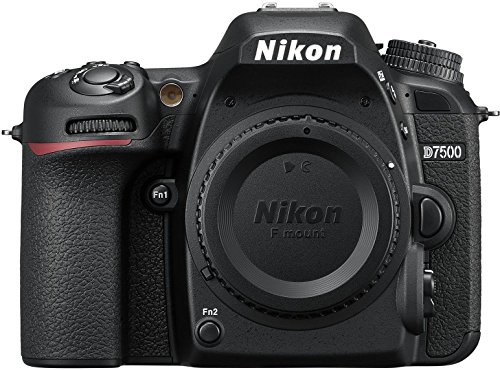
Nikon D7500 Body — The same enthusiast body, lens not included
This listing is the kit at the top of the guide with the lens unbolted, and its audience is the mirror image of that kit’s buyer. A photographer upgrading from an older Nikon DX body, or returning to the system with F-mount lenses in storage, gains nothing from paying for another 18-140mm zoom. The body-only route puts the entire budget into the camera itself.
The D7500 rewards that focus: a mature enthusiast body with the handling depth, viewfinder and feature set that made it the DX line’s long-running sweet spot. Pair it with a fast prime for low light or a telephoto for wildlife and it becomes a specialist tool no kit zoom would have produced. Just confirm any lens you plan to mount suits the DX format’s field of view.
- Body: Nikon D7500 digital SLR body
- Format: DX-format, as listed
- Configuration: Body only — no lens included
- Mount: Nikon F mount
- Intended level: Enthusiast upgraders and returning Nikon owners
- Listing notes: Body-only counterpart to the D7500 kit
Strengths
- Full budget lands on the body when lenses are already owned
- Lets the buyer pair the camera with specialist glass immediately
- Same enthusiast feature depth as the kit version above
Trade-offs
- Useless until a lens is bought or borrowed
- No bundled zoom for general-purpose shooting
- DX lenses and full-frame lenses need a moment’s thought about coverage
Best for: a Nikon owner upgrading an ageing DX body while keeping the lenses they already trust.
Not suited for: a beginner starting from zero equipment, for whom the kitted version of this same body makes far more sense.
Comparison Table
| Pick | Badge | Headline fact from its listing |
|---|---|---|
| Nikon D7500 with 18-140mm Kit | Most versatile crop-sensor kit | Nikon D7500 20.9MP DSLR Camera with AF-S DX NIKKOR 18-140mm f/3.5-5.6G ED VR Lens, Black |
| Nikon D850 Body | Full-frame flagship, body only | Nikon D850 FX-Format Digital SLR Camera Body |
| Canon EOS Rebel T7 Double Zoom Kit | Beginner two-lens Canon kit | Canon EOS Rebel T7 DSLR Camera Double Zoom Lens Kit |
| Pentax K-50 Two-Lens Kit | Weather-sealed value with two lenses | Pentax K-50 DSLR Camera with 18-55mm WR and 55-300mm Lenses |
| Pentax K-3 II Body | Pentax enthusiast body, body only | Pentax K-3II Pentax DSLR (Body Only) |
| Nikon D7500 Body | The same enthusiast body, lens not included | Nikon D7500 DX-Format Digital SLR Body |
Does full-frame or APS-C matter more than brand when choosing a DSLR?
Format shapes photographs more than badges do. A full-frame sensor — the D850’s FX format here — collects more light per frame, holds cleaner images at high sensitivities and renders shallower depth of field with the same lens, which is why event and landscape professionals gravitated to it. It also demands larger, costlier lenses to exploit that larger image circle.
APS-C and DX sensors, used by every other body in this guide, trade some of that low-light and depth-of-field headroom for smaller bodies, cheaper lenses and a useful side effect: the crop magnifies telephoto reach, so a 300mm lens frames like a much longer one. Wildlife and sports shooters on budgets have exploited that crop for decades.
Brand decides the lens mount, the control layout and the used market you will shop in. Those matter greatly over a system’s life, but they operate within the ceiling the format sets. Choose format for the photography, then brand for the lenses and handling you prefer.
Why do photographers still choose an optical viewfinder over an electronic one?
An optical viewfinder shows the scene through the lens via a mirror and prism: no refresh rate, no preview exposure, no blackout lag beyond the mirror’s own movement, and no power drawn while composing. Photographers raised on that immediacy often find electronic previews distracting, and in bright sunlight a good optical finder stays clear where screens wash out.
Electronic finders answer with information — exposure simulation, focus peaking, review without lowering the camera — and mirrorless design has won the industry’s future. The DSLR buyer’s position is not that optical finders are superior in every respect; it is that the trade suits their subjects and habits, and that mature DSLR bodies now sell at prices that make the preference inexpensive to honour.
Battery endurance follows from the same design. A DSLR composing optically can shoot for days of travel on a charge that a mirrorless body spends in a day of screen-based work, a practical advantage on trips far from sockets.
What should you check before buying an end-of-line DSLR body?
Confirm the format first, in the listing’s own words — FX, DX, APS-C or full-frame — and refuse any listing too vague to state it. Then confirm exactly what the box contains: body-only listings in this guide are honest about it, and a buyer who misses that line owns a camera they cannot use until a lens arrives.
Condition language deserves the same literal reading as in any closeout class. New, renewed and used bodies circulate side by side in discontinued lines, with shutter counts and warranty backing varying accordingly. A slightly dearer listing with clear condition and returns terms usually beats a bargain that hides both.
Finally, price the system, not the body. A cheap body orphaned by expensive lenses costs more over two years than a dearer body entering a lens market you already own or can buy into cheaply second-hand.
How do the three lens mounts here compare for a used-lens hunter?
Nikon’s F mount offers the deepest pool: decades of autofocus and manual lenses, with the caveat that older screw-drive autofocus designs need a body with a focus motor to autofocus. Researching a specific lens’s compatibility before purchase is a five-minute job that saves real disappointment.
Canon’s EF mount is similarly vast, and every EF lens works on every Canon DSLR in this guide, with EF-S lenses restricted to crop bodies like the Rebel T7. Canon’s used market is liquid and prices are transparent, which beginners benefit from when adding a fast prime or a longer zoom.
Pentax’s K mount is the connoisseur’s option: the smallest pool of the three, yet uniquely welcoming to vintage glass, with in-body stabilization historically steadying even decades-old manual lenses. Pentax hunters trade breadth for character and value.
How do you build a sensible first lens set around a DSLR body?
Start with coverage, not prestige. A standard zoom handles the everyday range; a fast prime near the middle of that range teaches low-light and depth-of-field craft; a telephoto completes the classic trio when distant subjects enter your photography. Bought used in a mature mount, that trio can cost less than one fashionable new lens.
Resist duplicating ranges early. Owners often accumulate three overlapping zooms while lacking any fast lens for evenings, then blame the body for noisy indoor shots. One deliberate prime changes indoor photography more than any body upgrade in this guide’s price territory.
Protect the investment mechanically: a padded bag, caps kept on, and a blower in the kit. Mature DSLRs reward owners who maintain them, and the used market pays noticeably more for clean, complete equipment when upgrade day eventually arrives.
How do you get the sharpest results from an optical-viewfinder DSLR?
Autofocus through a DSLR viewfinder uses a dedicated phase-detection system that can drift slightly out of calibration with a given lens, showing as consistently front- or back-focused images. Enthusiast bodies like the D7500 and D850 offer autofocus fine-tuning for exactly this; learning to test and adjust it is a rite of passage that repays itself in sharper files forever.
Technique matters as much as calibration. Brace elbows, roll the shutter release rather than jabbing it, and choose shutter speeds that respect the lens’s focal length — telephoto work at slow speeds is where beginners lose the most frames. Stabilized lenses help, but they steady the camera, not the subject.
Review at full magnification occasionally, not obsessively. Checking critical sharpness on the rear screen after an important frame is a professional habit; chimping after every shot is how moments get missed.
How does a DSLR behave differently on a long trip than a mirrorless camera?
A fortnight of travel exposes the DSLR’s character more honestly than any specification table. The optical viewfinder draws no power while composing, so a body like the D7500 can work for days between charges where a screen-dependent camera demands nightly attention. In remote accommodation with one contested socket, that endurance is not a convenience but a schedule: the phone charges, the camera simply continues. Photographers returning from trekking routes and rural road trips consistently rank battery independence among the reasons their older DSLR still earns its place in the bag.
The weight ledger runs the other way. A DSLR body and zoom generally outweigh a mirrorless equivalent, and mountain itineraries invoice every gram by the third day. The mature DSLR owner’s answer is ruthless lens selection — one versatile zoom, as in the D7500 kit in this guide, rather than a hopeful trio — accepting that the photograph not attempted costs less than the shoulder that gives up. Travel also flatters the DSLR’s robustness: mature bodies with proven shutters and deep used markets can be risked in rain, dust and crowds with a calm that a costly new system rarely inspires.
By the journey’s end the pattern settles. The DSLR traveller shoots fewer frames than the mirrorless companion and reviews them less often, because the viewfinder shows no instant preview worth studying. Many describe the resulting archive as calmer and better edited at the source. Whether that temperament is a limitation or a discipline depends on the photographer, but it is a real behavioural difference that belongs in any honest cross-system comparison.
What makes the D850 a landscape photographer’s enduring favourite?
Landscape work rewards exactly the virtues a flagship full-frame DSLR concentrated: a large sensor with enormous resolving power, a bright optical finder for composing in harsh light where screens fade, and weather-sealed construction that treats a dawn gale as a working condition rather than an emergency. The D850 became the reference body for serious Nikon landscape shooters because it removed the old compromises — resolution no longer required a slow specialist body, and speed no longer required surrendering resolution.
The tripod is the landscape photographer’s true interface, and the D850 was designed around that relationship: deep controls operable with gloves, a viewfinder that stays useful as light collapses, and files that tolerate the aggressive shadow recovery sunrise shooting demands. Paired with the F mount’s legendary wide-angle and tilt-shift back catalogue, much of it available used at prices mirrorless equivalents have not reached, the body anchors a landscape outfit whose total cost surprises photographers pricing new systems.
Judge the D850 by the work in front of it, not by nostalgia. For a Nikon shooter whose subject is terrain, weather and patient light, the D850 remains a rational primary tool whose only genuine rival is the photographer’s own decision to change mounts entirely. Bought knowingly at closeout-era value, it may be the best cost-per-decade proposition in the entire DSLR story.
How do Pentax owners build a working outfit around vintage K-mount glass?
The Pentax method begins in classified listings and camera fairs, where decades of K-mount lenses — manual primes of superb optical quality, early autofocus zooms, specialist macros — sell for sums that make Nikon and Canon hunters envious. Because the mount’s registration has welcomed generation after generation of glass, a K-50 or K-3 II owner can assemble a working outfit of characterful primes for the price of one modern kit zoom, accepting manual focus as the tuition fee for that economy.
The craft that follows is slower and, its devotees argue, better. Manual focusing through a DSLR’s optical finder, aided by the body’s focus confirmation, teaches anticipation: zones pre-focused for street work, apertures chosen for depth rather than decoration, and a photographer’s eye trained on the moment before it forms. Weather sealing on bodies like those in this guide extends the method outdoors, where vintage glass on a sealed modern body becomes a genuinely rugged field outfit.
Risks deserve their sentence. Old lenses carry fungus, stiff focus rings and coatings that flare in backlight, and the inspection habits described elsewhere in this guide apply with double force. Resale values are thinner than Nikon’s, so the Pentax outfit is a working tool rather than an investment vehicle. Judged as a tool — characterful, sealed, inexpensive and unmistakably individual — the vintage K-mount route remains one of photography’s great bargains.
What should a returning photographer do with an old DSLR lens collection?
Attics and parents’ cupboards across the country hold F-mount, EF and K-mount lenses bought decades ago, and their owners regularly ask whether the glass justifies buying a body to match. The answer begins with an inventory: list each lens, research its reputation and condition honestly, and total what replacing that coverage would cost in a new mount. A shelf holding a fast standard prime, a portrait telephoto and a wide zoom is a system waiting for a body, and the body-only listings in this guide exist precisely for that shelf.
Condition decides the exceptions. Lenses with fungus, seized apertures or damaged mounts should be valued at zero in the calculation, however fond the memories attached. Autofocus compatibility needs checking too, particularly with older Nikon screw-drive lenses whose focusing depends on a motor in the body. Ten minutes of research per lens converts a sentimental collection into a priced asset with a clear verdict.
When the arithmetic favours revival, the result is one of photography’s most satisfying purchases: a mature body, bought alone, that wakes an entire dormant outfit in an afternoon. When it does not — when the shelf holds one tired kit zoom — the honest answer is to start fresh in whichever system the new photography demands. Sentiment is a fine reason to keep a lens on a shelf and a poor reason to build a system around it.
How do you test a DSLR body’s shutter and sensor before committing to it?
Begin with the shutter, the DSLR’s beating heart. Fire a sequence at a fast shutter speed and listen: the mirror and shutter should sound crisp and even, without hesitation or a laboured second curtain. Photograph a plain, bright surface — a clear sky or a lit white wall — at a small aperture, then examine the file enlarged. Sensor dust appears as soft grey blobs that sharpen as the aperture closes; a few are normal and cleanable, while scratches, dead columns or a darkened corner are grounds to walk away.
Shutter count is the odometer reading, and many bodies in this guide can report it through file metadata or service menus. Entry-level bodies are commonly rated for fewer actuations than flagships, so interpret the number against the body’s class rather than an absolute scale. A high count on a flagship with service history may be safer than a low count on a neglected amateur body that sat in a damp drawer for six years.
Finish with the interfaces: mount and unmount a lens to feel the lock, charge the battery fully to confirm it holds, and shoot a card’s worth of frames to check writing. These ten minutes of methodical testing, applied to any listing in this guide’s class, separate the honest closeout bargains from the problems being quietly passed along.
Where does the DSLR still beat mirrorless outright, without qualification?
Three territories remain the DSLR’s without argument. The first is viewfinder endurance: composing optically for a full day costs a DSLR almost nothing in power, while an electronic finder spends the battery continuously, and in expedition conditions that arithmetic decides which camera is still working at the summit. The second is the used market’s depth per pound spent — no mirrorless mount yet matches the F, EF and K catalogues’ combination of quality, quantity and price at the budget end.
The third is repairability through familiarity. Independent technicians have serviced these bodies for decades; parts, donor cameras and accumulated knowledge form a support ecosystem that newer systems are still building. A working photographer in a small city can often have a mature DSLR serviced locally while a current mirrorless body travels to a distant service centre. Longevity is an ecosystem property, not just a build-quality one, and the DSLR’s ecosystem is the most complete photography has ever produced.
None of this reverses the industry’s direction, and DSLR buyers should weigh that direction honestly. It simply records that a technology’s final generation, bought at final-generation prices by photographers whose work matches its strengths, can be the most rational purchase in the entire market — which is precisely the opportunity the six bodies above represent.
How do you photograph wildlife with a crop-sensor DSLR and a mid-range zoom?
Crop-sensor wildlife work is the D7500 kit’s home ground, because the DX format’s crop turns the 18-140mm’s long end into a genuinely useful birding and zoo reach while the body’s enthusiast autofocus tracks movement a beginner camera would surrender. Work from hides, cars and garden chairs rather than on foot — animals tolerate structures they have already accepted, and a patient hour inside one produces closer encounters than a morning of stalking ever will.
Set the camera before the subject arrives: continuous autofocus, a burst mode you can feather in short groups, and the fastest shutter speed the light funds. Small birds in bright feeders’ light are the training ground; deer at field edges and herons on morning rivers are the graduation. The files will not match a flagship telephoto’s, and they will astonish anyone who believes wildlife begins at five-figure budgets.
Respect closes the method. Baiting, chasing and nest disturbance buy photographs at a price no image justifies, and the crop DSLR’s reach exists precisely to make that price unnecessary. The ethical wildlife photographer’s kit — patience, distance, early light — costs nothing and cannot be upgraded, which is why this mature equipment serves the pursuit so well.
What does weather sealing actually protect, and what does it not?
Weather sealing is a system of gaskets at buttons, dials, doors and lens mounts that resists rain, spray and dust under working conditions. On the Pentax bodies in this guide and their WR kit lens, it means a shower during a landscape session is an inconvenience rather than an evacuation, and a dusty trail does not invoice the sensor. It is one of the DSLR era’s most practical inheritances, and Pentax built its identity by offering it where rivals charged flagship prices.
It is not waterproofing. Sealed bodies are not immersion equipment, battery doors and hot shoes remain entry points, and a sealed body behind an unsealed lens is a chain with its weakest link exposed — which is why the K-50 kit’s WR lens matters as more than a badge. After wet sessions, dry the equipment with doors open in moving air, and treat seals as consumables that age, harden and eventually want a service visit.
Judged correctly, sealing buys working time in marginal weather, and marginal weather is where landscape and travel photography live. The photographer who keeps shooting through the shower’s edge gets the rainbow; the one who fled gets the car park. That, in one sentence, is the Pentax proposition, and it survives every specification comparison in this guide.
How should a DSLR owner maintain batteries across a decade of service?
Lithium batteries age by calendar as much as by use, and a discontinued system’s owners should think like archivists. Keep spares at partial charge for storage, top them before outings, and rotate them so no pack sits flat for a year — a flat-stored lithium battery is the one most likely to refuse resurrection. Label each pack with its purchase month in marker; the two minutes that takes ends the guesswork about which battery faded first on a trip.
Buy replacements while the system is popular rather than after it is forgotten. Third-party packs for mature bodies are inexpensive and well reviewed precisely because millions of owners created the market, but counterfeit cells hide inside famous names at suspicious prices. A battery is a fire-adjacent object; the saving that skips a reputable seller is the worst economy in photography.
With that modest discipline, a DSLR’s power system outlasts its owner’s ambitions. Bodies in this guide sip power through optical finders, so two healthy packs cover a long weekend, and the charger’s small size makes it a permanent resident of the travel bag rather than a nightly negotiation. Plan power like film photographers planned rolls — in advance, with margin — and the camera simply never becomes the reason a day ended early.
How do you compose through an optical finder differently than on a screen?
The optical finder shows the scene, not a simulation of the file, and that difference reorganises the photographer’s attention. Exposure must be imagined rather than previewed, which sounds like a handicap until it becomes a skill: the DSLR shooter learns to read light itself — the brightness of a face against a window, the cost of a white dress in noon sun — instead of reading the camera’s opinion of it. Chimping declines, because the rear screen is a review tool rather than a viewfinder, and the photographer’s eyes stay on the world during the moments that matter.
Composition tightens correspondingly. The finder frame is fixed and honest, its focus points mark the sensor’s true attention, and the edges of the frame demand the same discipline film photographers practised: check the corners, watch for the intruding branch, level the horizon against the grid. Photographers raised on screens often describe their first optical-finder month as learning to see all over again, more slowly and more completely.
None of this makes screen composition lesser — for video, macro and awkward angles it is plainly superior, and mirrorless previews are a genuine gift. It makes the DSLR’s method distinct, and for photographers whose subjects are people and places rather than products and performances, that distinction remains a reason to choose these bodies with open eyes and no apology.
What is the second-hand etiquette for testing a DSLR at a seller’s door?
Bring your own card, a charged battery if the model is arranged, and a short printed checklist — the presence of method reassures honest sellers and discourages the other kind. Test in daylight where possible: the sky shot for sensor spots, a detailed subject for focus accuracy, a burst for the shutter’s sound, and the lens mount’s lock for wear. Ten unhurried minutes, conducted politely, is the community’s accepted ritual and no genuine seller resents it.
Ask the provenance questions plainly. How long owned, why selling, any drops or repairs, and is the charger original — the answers matter less than the seller’s comfort in giving them. A photographer selling an honest body talks like an owner; a fence or a flipper talks like a listing. Trust the conversation as much as the camera, and walk away from either when it feels wrong, because the used market’s depth means another example is always coming.
Complete the sale like an adult: a written note of the serial number and price, payment through a traceable channel, and the accessories photographed into the record. The DSLR used market runs on this mutual professionalism, and every clean transaction is a small deposit in the system that lets the next buyer — perhaps you, upgrading — shop with confidence.
How does the D7500 serve as a family camera despite its enthusiast badge?
Enthusiast bodies frighten families unnecessarily. The D7500’s automatic modes work exactly as a beginner camera’s do, and its deeper controls wait silently until someone in the household grows curious — at which point the camera, unlike an entry body, has answers ready. That growth path is the family argument: buy the camera the household will need in three years, at the moment its closeout price matches the beginner body it replaces, and let one purchase serve the whole apprenticeship.
The kit lens completes the family brief. Its 18-140mm range covers the toddler’s first steps and the teenager’s distant stage solo without a lens change, which in family logistics means the photograph exists at all. Weather resistance forgives the beach and the rainy match; the optical finder forgives the bright playground sun that defeats rear screens; the battery forgives the forgotten charger on the weekend away.
Families who outgrow it do so upward, into lenses rather than a replacement body, and the camera’s second life as the household’s risk-it spare is built into its construction. Judged across a decade of family service, the enthusiast kit’s higher first price dissolves into the lowest cost per photograph in this guide — the arithmetic that makes it, quietly, the family pick.
What role do DSLRs now play in photography education?
Schools and clubs keep buying DSLRs for reasons that have nothing to do with nostalgia. The controls are physical and labelled, the exposure triangle is demonstrated by dials rather than buried in menus, and the optical finder forces the composition lesson that screens postpone. A student who learns on a DSLR learns photography’s mechanics in their bones, and those mechanics transfer to every system invented since — including the phone, whose automatic confidence looks different to eyes that understand what it is automating.
Economics reinforce pedagogy. A class set of mature DSLRs costs a department what two current mirrorless bodies would, repairs are local and understood, and the used lens market lets a school build a shared glass library across years of budgets. The bodies in this guide — Rebels for beginners, D7500-class bodies for advanced classes, Pentax for the outdoor programme — are effectively a curriculum written in equipment.
The graduate’s path matters too. A student leaving with DSLR skills and a cheap personal body owns a complete photographic education for the price of a textbook bundle, and the hobby’s retention problem — beginners priced out at the second purchase — quietly disappears. Technologies are rarely retired by their teaching generation, and the DSLR’s afterlife in education may prove its longest chapter.
How should you insure and document a DSLR kit that still earns its keep?
Documentation begins with a ten-minute inventory: photograph every body and lens beside its serial number, save receipts or listing confirmations in the same folder as your image archive, and record the kit’s replacement value from current used listings rather than original prices. Insurers and police reports both run on exactly this evidence, and the owner who assembles it on a quiet evening never has to reconstruct it in a crisis.
Household insurance commonly covers cameras at home, with travel and professional use as the clauses worth actually reading. A kit that earns money — the D850 at a wedding, the Pentax on a commissioned landscape trip — may need a specific rider, and discovering that after a loss is the expensive way to learn it. The mature DSLR’s modest replacement value is again an advantage: cover is cheap because the numbers are sane.
Finally, treat the archive as part of the insured estate. The cameras are replaceable at closeout prices; the decade of family photographs on a single drive is not replaceable at any price. Two backups, one off-site, reviewed yearly — that sentence, obeyed, is worth more than every policy discussed above it.
Common Mistakes
Buying a body-only flagship as a first camera
The D850 and K-3 II listings here assume lens collections. A beginner who spends the whole budget on a prestigious body owns an ornament until glass arrives, and the glass such bodies deserve is not cheap. Start with a kit; upgrade the body when the kit lens, not the internet, tells you to.
Ignoring sensor format when comparing prices
A crop-sensor kit priced near a full-frame body is not automatically a rip-off, nor is the full-frame body automatically the bargain — they are different tools with different lens economics. Compare within a format first, then decide whether stepping up a format suits your subjects and your lens budget.
Assuming a discontinued line means unavailable support
End of development is not end of service. Batteries, chargers, straps, screens and independent repairs remain widely available for the bodies in this guide, and owner communities are enormous. The genuine risk is paying new-era prices for closeout equipment, not being stranded with it.
Letting brand loyalty override the lens shelf at home
The best DSLR for many buyers is the one matching lenses already in the house — a parent’s Nikon glass, a sibling’s Canon kit. Mount compatibility with existing equipment routinely outweighs small specification differences between rival bodies, and ignoring a free lens collection is an expensive form of brand romance.
Final Recommendation
The DSLR’s final chapter contains no bad cameras, only mismatched purchases. Match format to subject, kit to experience, and brand to the lenses within reach, and any body here will produce years of serious photography. The D7500 kit is the balanced default, the D850 the full-frame summit for those already invested, the Rebel kit the beginner’s classroom, and the Pentax pair the outdoor loyalist’s answer.
Choose with that map in hand and the end of the DSLR era stops looking like a clearance risk. It becomes what it actually is: the one moment when the most refined optical-viewfinder cameras ever built sell for the least they ever will, to buyers clear-eyed about exactly what they are getting.
One last word belongs to the photographers who already own one of these bodies and arrived here wondering whether loyalty is foolish. It is not. A camera that is known completely — its focusing temperament in backlight, its battery’s honest remaining life, the exact sound of its shutter on a cold morning — produces photographs that a technically superior stranger cannot, because none of the owner’s attention is spent on the instrument. The bodies in this guide reward that familiarity for years, and the used market stands ready to replace any of them at sane prices if one finally fails. Upgrading is a decision; so is staying, and staying with a mastered tool has put more great photographs on walls than every launch cycle of the last decade combined. Choose either way with your eyes open, but do not let a development roadmap written in another country tell you that the camera in your hands has stopped being able to see. If a single sentence in this guide deserves underlining, it is that one: the end of a product line is a fact about a manufacturer’s plans, not a verdict on the photographs already being made with its tools, and the six bodies above will go on making theirs for exactly as long as their owners keep picking them up.
Frequently Asked Questions
Is it sensible to buy a DSLR when mirrorless has taken over?
Yes, when the reasoning is honest. Mature DSLRs offer optical viewfinders, outstanding battery life, rugged bodies and access to vast used lens markets at closeout prices. The purchase fails when made expecting future development in the mount. Buy the finished tool for the work in front of you and it remains a rational choice.
Which body here suits a beginner best?
The Rebel T7 Double Zoom Kit, because it teaches the widest range of photography from a single box and its controls assume no prior knowledge. The D7500 kit suits a beginner with serious intent and a larger budget, offering far more growing room. Both beat any body-only listing for a first purchase, since a lens is not optional equipment.
What is the difference between Nikon’s DX and FX labels?
DX is Nikon’s name for its APS-C crop format; FX denotes full-frame. The D7500 is a DX body, the D850 an FX body. DX lenses are designed for the smaller sensor, while FX lenses cover full-frame and also work on DX bodies with a cropped field of view. The listing titles in this guide state the format for each Nikon pick.
Why does Pentax still matter in a DSLR guide?
Pentax committed to the DSLR when rivals left, and its bodies carry that conviction: weather sealing, field-ready construction and a K mount that welcomes decades of lenses. For outdoor photographers and vintage-glass enthusiasts, the K-50 kit and K-3 II body here are not nostalgia picks but tools matched to a way of working.
How long can a discontinued DSLR realistically serve?
Indefinitely, in mechanical terms — these are mature designs with huge parts and knowledge bases. The practical limits are an owner’s evolving ambitions and, eventually, battery sourcing for very old models. Photographers routinely shoot fifteen-year-old DSLRs today; the bodies in this guide are younger and better supported than most of those.
Related Guides
Keep exploring with the guide to Canon’s remaining PowerShot compacts, then compare our breakdown of optical zoom claims on compact cameras, and finish with the coat-pocket compact camera shortlist.


