What's inside
- Key Takeaways
- Quick Picks
- How We Chose These Picks
- Comparison Table
- Kit, body-only or two-lens bundle: how should you price the real cost of starting?
- Why does APS-C remain the sweet spot for most photographers?
- Canon RF, Sony E or Nikon Z: how do the three ecosystems compare for a new buyer?
- Video-first or all-round: which body shape matches a creator’s actual output?
- How do you choose a first lens for a body-only APS-C camera?
- How should you set up an APS-C mirrorless camera for hybrid stills and video?
- What does a photographer’s second year on APS-C look like, and which body serves it best?
- How do you build a streaming desk around the R50 V?
- How does the a6700 serve a working hybrid creator’s week?
- What lenses should a Z50 II owner add after the two in the box?
- How do you protect an APS-C investment when formats and mounts keep shifting?
- Why do experienced photographers keep recommending APS-C to their own families?
- How do you light a small room for streaming on an APS-C body?
- How do you photograph a family event on an APS-C kit without becoming the event’s photographer?
- What does the jump from kit lens to first prime actually look like in photographs?
- How should a creator back up footage and stills from a hybrid shoot?
- How do you choose between the R50 kit and the a6400 as a five-year camera?
- What accessories does a Nikon Z50 II owner actually need in the first month?
- How do you keep an APS-C sensor clean when lenses change in the field?
- Common Mistakes
- Final Recommendation
- Frequently Asked Questions
- Related Guides
As an Amazon Associate I earn from qualifying purchases. This post may contain affiliate links at no extra cost to you.
widgetverdict.com is reader-supported. When you buy through links on our site, we may earn an affiliate commission.
The case for the best apsc mirrorless cameras is written in the failures of the formats around them: full-frame systems whose lenses empty wallets and shoulders, and small-sensor compacts whose files dissolve in evening light. APS-C sits between them with a sensor large enough for serious photography and bodies small enough to carry daily, and the six cameras below map the territory from Canon’s gentlest starter to Sony’s flagship crop body.
Three of the six are Canons, two are Sonys and one is a Nikon, and their configurations differ as much as their badges. Two Canon kits arrive with the RF-S 18-45mm lens. The Sony a6400 brings its 16-50mm kit lens, while the a6700 and Canon’s video-first R50 V are body-only purchases whose true cost includes the first lens. Nikon’s Z50 II takes yet another route, bundling two lenses in a single kit.
That configuration question — kit, body-only or two-lens bundle — is the honest axis of this guide, because the body is merely the entry ticket to a lens ecosystem whose prices govern the next decade of ownership. Read each review for what the box actually contains, and the final sections for what the ecosystem beyond the box will ask of your wallet.
Key Takeaways
- Kit configuration is the first decision: the Canon R100, R50 and Sony a6400 include a lens; the a6700 and R50 V are body-only; the Nikon Z50 II includes two lenses.
- The Canon R50 V is a video-first variant of the R50 idea, sold as a body for creators building a streaming and vlogging setup.
- Sony’s a6700 is the premium body-only anchor at 26MP with log shooting and LUT handling named in its listing.
- Canon’s R100 is the gentlest entry: 24.1 megapixel APS-C sensor, 4K video and an RF-S 18-45mm kit lens for beginners and creators.
- Lens ecosystem cost after the body is the long-term expense — every review and the buying guide price that reality in.
Quick Picks
| Pick | Badge | Why it made the cut |
|---|---|---|
| Canon EOS R100 Kit | Gentlest entry into mirrorless | The R100 with RF-S 18-45mm f/4.5-6.3 IS STM lens kit, 24.1 megapixel APS-C sensor, 4K video, Wi-Fi and Bluetooth for beginners and creators. |
| Canon EOS R50 Kit | Creator kit with growing room | The R50 with RF-S 18-45mm f/4.5-6.3 IS STM lens kit, 24.2 megapixel APS-C sensor and 4K video, aimed at vlogging, content creation and photography. |
| Sony a6400 | Established E-mount all-rounder kit | The a6400 with real-time Eye Auto Focus, 4K video, flip screen and 16-50mm lens — Sony’s compact APS-C interchangeable-lens camera on the E mount. |
| Sony a6700 | Premium body-only flagship | The a6700 body at 26MP with 4K video, log shooting, LUT handling and vlog-friendly functions — Sony’s APS-C flagship, sold without a lens. |
| Canon EOS R50 V Body | Video-first body for streaming setups | The R50 V mirrorless camera body only, with APS-C sensor, 24.2 megapixels and fast autofocus, built as a vlogging and live streaming kit foundation. |
| Nikon Z50 II with Two Lenses | Two-lens value kit | The Z50 II sold with two lenses as a compact mirrorless stills and video camera, with easy colour presets, wireless photo sharing and USA model status. |
How We Chose These Picks
Bodies were selected to span the APS-C mirrorless market as buyers actually meet it: the entry kit, the creator kit, the established mid-range kit, the premium body, the video-specialist body and the two-lens value kit. Three mounts are represented so the ecosystem comparison rests on real, purchasable alternatives rather than abstract mount wars.
Configuration was verified from each listing title and is stated in every spec box, because body-only pricing beside kit pricing is the oldest confusion in this category. Where a title names a feature — log shooting on the a6700, real-time eye autofocus on the a6400, colour presets on the Z50 II — the review builds on it; where a title is silent, the review stays silent too.

Canon EOS R100 Kit — Gentlest entry into mirrorless
The R100 is Canon’s answer to a precise question: what is the least intimidating real camera a beginner or new creator can buy? Its kit answers completely — the RF-S 18-45mm IS STM lens mounted and ready, a 24.1 megapixel APS-C sensor far beyond phone territory, 4K video for the creator ambitions its listing names, and Wi-Fi with Bluetooth for the phone workflow beginners expect as a birthright.
Compromises keep the price gentle. The kit lens’s modest apertures ask the sensor to work harder as light falls, and the body is a starting point rather than a destination — which is exactly its honesty. A first camera should teach, travel and survive mistakes, and the R100’s simplicity does all three while introducing Canon’s RF ecosystem at its lowest admission price.
- Body: Canon EOS R100 mirrorless camera
- Sensor: 24.1 Megapixel CMOS (APS-C), as listed
- Lens included: RF-S 18-45mm f/4.5-6.3 IS STM kit lens
- Video: 4K video, as listed
- Connectivity: Wi-Fi and Bluetooth
- Positioning: Beginner photographers and creators, per the listing
Strengths
- Complete kit with lens, ready to shoot from the box
- APS-C sensor quality at the gentlest entry price here
- Bluetooth and Wi-Fi support a phone-first sharing habit
Trade-offs
- Kit lens apertures limit low-light flexibility
- Entry-level body leaves keen learners wanting an upgrade sooner
- RF-S lens selection is younger than Sony’s E-mount range
Best for: a first-time camera buyer who wants a complete, gentle introduction to interchangeable-lens photography.
Not suited for: an experienced photographer seeking a long-term primary body, who would outgrow its entry brief within a season.

Canon EOS R50 Kit — Creator kit with growing room
The R50 takes the R100’s formula and aims it squarely at the creator economy its listing names: vlogging, content creation and photography in one kit. The 24.2 megapixel APS-C sensor and 4K video headline a body designed to be filmed with as much as filmed from, and the same RF-S 18-45mm IS STM kit lens keeps the box complete for a buyer upgrading from a phone in a single step.
Against its smaller sibling, the R50 is the Canon to grow inside: a more creator-centred body whose ambitions match the channels and feeds its owners are building. Against the R50 V below, it is the stills-and-video all-rounder with a lens included. Buyers choosing within Canon’s trio should decide by output — photographs and general video here, streaming-first production on the V.
- Body: Canon EOS R50 mirrorless camera
- Sensor: 24.2 Megapixel CMOS (APS-C), as listed
- Lens included: RF-S 18-45mm f/4.5-6.3 IS STM kit lens
- Video: 4K video, as listed
- Positioning: Vlogging, content creation and photography
- Colour: Black
Strengths
- Creator-focused body with a complete lens kit included
- Strong all-round brief across stills and 4K video
- Sits in Canon’s RF system with room to add lenses
Trade-offs
- Shares the kit lens’s modest low-light apertures
- Video specialists may prefer the R50 V’s focused brief
- Premium over the R100 must be justified by creator intent
Best for: an aspiring creator who shoots photographs and video in roughly equal measure and wants one kit for both.
Not suited for: a pure stills photographer on a tight budget, for whom the R100 kit delivers the essential sensor for less.

Sony a6400 — Established E-mount all-rounder kit
The a6400 is the mature choice in this guide: a compact APS-C body whose headline feature, real-time Eye Auto Focus named in its listing, transformed portrait and family photography by locking onto eyes and holding them as subjects move. Paired with 4K video and a flip screen for self-framing, it covers the hybrid stills-and-video brief that defines modern APS-C ownership, and it arrives with the 16-50mm lens that makes the kit complete.
Its deeper argument is the mount. Sony’s E mount carries the widest APS-C lens selection in this guide, built over the longest mirrorless history here, with third-party makers adding affordable primes and zooms yearly. A buyer choosing the a6400 is choosing that catalogue’s gravity — the knowledge that almost any lens the next five years demand already exists for this camera.
- Body: Sony Alpha a6400 mirrorless camera (ILCE-6400L/B)
- Sensor format: Compact APS-C interchangeable lens, as listed
- Autofocus: Real-time Eye Auto Focus, as listed
- Video: 4K video, as listed
- Screen: Flip screen, as listed
- Lens included: 16-50mm lens — E mount compatible
Strengths
- Real-time Eye AF makes people photography reliably sharp
- E mount offers the deepest APS-C lens catalogue here
- Flip screen and 4K video cover creator duties well
Trade-offs
- An established design beside the newer a6700 flagship
- Kit lens is compact rather than optically ambitious
- Sony’s menu generations vary, so switchers face a learning curve
Best for: a family and portrait photographer who wants eye-focused sharpness and the widest future lens choice.
Not suited for: a filmmaker building a colour-graded workflow, where the a6700’s log and LUT features are the deliberate upgrade.

Sony a6700 — Premium body-only flagship
The a6700 is the connoisseur’s entry in this guide, and its listing reads like a filmmaker’s checklist: a 26MP APS-C sensor, 4K video, log shooting for colour grading, LUT handling for monitoring that grade while filming, and vlog-friendly functions rounding out a body aimed at serious hybrid creators. It is sold as a body only, which its audience will read correctly — as an invitation to choose glass deliberately, not as an omission.
That positioning demands honesty about total cost. Add a capable first lens and this becomes the most expensive route into APS-C in this guide, a price its sensor and video toolkit justify for owners who will use them weekly. Occasional shooters would be paying for headroom they never open. For the committed hybrid creator, though, this is the crop body that stops being a compromise.
- Body: Sony Alpha a6700 APS-C mirrorless camera body
- Sensor: 26 MP sensor, as listed
- Video: 4K video with log shooting and LUT handling, as listed
- Configuration: Body only — no lens included
- Positioning: Vlog-friendly functions, per the listing
- Colour: Black
Strengths
- 26MP sensor leads this guide’s resolution figures
- Log shooting and LUT handling serve graded video workflows
- E-mount flagship body with the deepest lens catalogue behind it
Trade-offs
- Body-only price is only the beginning of the true cost
- Its video depth is wasted on stills-only shooting
- Premium tier beside every kit in this guide
Best for: a committed hybrid creator who grades footage, shoots stills seriously and will choose lenses deliberately.
Starting from zero is expensive here: this premium body-only flagship includes no lens, so the first photograph waits until glass is bought as well.
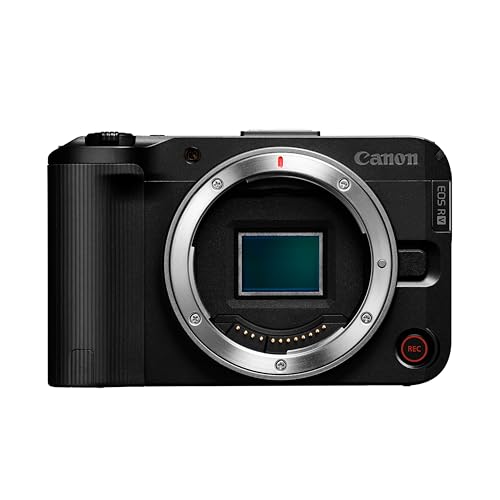
Canon EOS R50 V Body — Video-first body for streaming setups
The R50 V is Canon’s specialist: a body-only, video-first variant in the R50 family, aimed at vlogging and live streaming rather than general photography. Its listing emphasises fast autofocus — the feature streamers live or die by when presenting alone — alongside its 24.2 megapixel APS-C sensor, and its ultra-wide zoom mention signals the wide framing that desk and studio setups demand once a lens is chosen.
Body-only is the correct way to sell this camera, because streaming rigs are personal: one creator needs a wide lens for a small room, another a portrait lens for a studio corner, a third already owns RF glass. Judged as a stills camera it would seem narrow; judged as the foundation of a streaming setup, its focus is its virtue. Photographers should buy the regular R50 kit instead, without hesitation.
- Body: Canon EOS R50 V mirrorless camera (body only)
- Sensor: APS-C sensor, 24.2 megapixels, as listed
- Autofocus: Fast autofocus, as listed
- Configuration: Body only — lens chosen separately
- Positioning: Vlogging and live streaming kit, per the listing
- System: Canon RF ecosystem
Strengths
- Video-first design matches streaming and vlogging briefs exactly
- Fast autofocus supports solo presenting without a camera operator
- Body-only sale lets creators pair it with their room’s ideal lens
Trade-offs
- No lens included, so the working cost starts higher than the tag
- Specialist brief makes it a poor general-photography choice
- Stills-led buyers are better served by the standard R50 kit
Best for: a streamer or vlogger building a dedicated desk or studio setup around Canon’s RF system.
Not suited for: a family photographer wanting a complete camera in one box, where the standard R50 kit is the obvious answer.

Nikon Z50 II with Two Lenses — Two-lens value kit
Nikon’s entry takes the value argument furthest on paper: a compact mirrorless body for stills and video, sold with two lenses rather than one, so the box covers a genuine focal range from the first day instead of promising a second purchase. Easy colour presets speak to the social-first shooter who wants finished-looking images without editing software, and wireless photo sharing feeds the phone workflow those images are destined for.
The listing’s USA model designation deserves the same respect as a stated warranty in any closeout class — it identifies the intended-market version of the camera plainly. Nikon Z-mount APS-C is the youngest ecosystem in this guide, so the two-lens generosity also functions as Nikon’s answer to catalogue depth: start the owner with coverage, and the system’s future lenses become additions rather than necessities.
- Body: Nikon Z50 II compact mirrorless camera
- Configuration: Sold with two lenses, as listed
- Use: Stills and video camera, per the listing
- Features: Easy colour presets and wireless photo sharing, as listed
- Market version: USA model, as listed
- System: Nikon Z mount
Strengths
- Two lenses included cover more subjects from day one
- Colour presets deliver shareable images without editing
- USA model status is stated plainly in the listing
Trade-offs
- Z-mount APS-C lens catalogue is the youngest here
- Two-lens kit price must be compared against single-lens rivals carefully
- Preset-led workflow may not satisfy photographers who edit everything
Best for: a social-first shooter who wants two-lens coverage and finished-looking colour without an editing habit.
Not suited for: a lens collector planning an exotic glass library, where Sony’s E-mount depth is the safer long-term bet.
Comparison Table
| Pick | Badge | Headline fact from its listing |
|---|---|---|
| Canon EOS R100 Kit | Gentlest entry into mirrorless | Canon EOS R100 Mirrorless Camera RF-S18-45mm F4.5-6.3 IS STM Lens Kit |
| Canon EOS R50 Kit | Creator kit with growing room | Canon EOS R50 Mirrorless Camera RF-S18-45mm F4.5-6.3 is STM Lens Kit |
| Sony a6400 | Established E-mount all-rounder kit | Sony Alpha a6400 Mirrorless Camera: Compact APS-C Interchangeable Lens Digital with Real-Time Eye Auto Focus, |
| Sony a6700 | Premium body-only flagship | Sony Alpha a6700 APS-C Mirrorless Camera Body 26MP 4K Black |
| Canon EOS R50 V Body | Video-first body for streaming setups | Canon EOS R50 V Mirrorless Camera (Body Only) |
| Nikon Z50 II with Two Lenses | Two-lens value kit | Nikon Z50 II with Two Lenses |
Kit, body-only or two-lens bundle: how should you price the real cost of starting?
Add the first lens to every body-only price before comparing anything. The a6700 and R50 V listings are honest about containing no lens, but a comparison that forgets the glass understates their true starting cost by the price of the lens their buyers will inevitably choose. Kits should be compared as complete systems; bodies as body-plus-lens systems.
Then price the second year. A fast prime for low light, perhaps a longer zoom for travel — the lenses an owner’s photography demands next are ecosystem purchases, and their prices and availability differ by mount. Sony’s E mount offers the broadest and often cheapest third-party selection here; Canon’s RF and Nikon’s Z ranges are younger and still filling in, with the Z50 II’s two included lenses softening that youth.
The arithmetic usually surprises body-focused shoppers: over three years, lenses commonly outspend the body they mount on. Choosing the mount is therefore the real purchase, and the camera in the box is best understood as its first instalment.
Why does APS-C remain the sweet spot for most photographers?
Sensor area drives low-light quality, depth-of-field control and file richness, and APS-C offers several times the area of the small sensors in compacts and phones while keeping bodies and lenses at half the full-frame burden. For prints at household sizes, social publishing and even serious enthusiast work, that area is simply sufficient — the point where more sensor buys refinement rather than transformation.
Lens economics complete the argument. APS-C lenses are smaller, lighter and cheaper than full-frame equivalents covering the same angles, so a complete travel set fits a small bag and a mortal budget. Photographers who actually carry their cameras daily — the strongest predictor of good photographs — feel that difference in their shoulders, not their spreadsheets.
Full-frame retains real advantages for professionals in extreme light and shallow-focus portraiture. The sweet-spot claim is narrower and stronger: for the largest number of serious hobbyists, APS-C delivers the most photography per unit of money and weight, and the six bodies here are its current evidence.
Canon RF, Sony E or Nikon Z: how do the three ecosystems compare for a new buyer?
Sony’s E mount is the elder: the longest mirrorless history in this guide, the deepest APS-C lens catalogue, and a thriving third-party scene that keeps prices honest. A buyer prioritizing lens choice above all lands here almost by gravity, and both Sony bodies in this guide benefit from that inheritance.
Canon’s RF system is the fast-growing challenger, with Canon’s own RF-S lenses aimed at exactly the R100 and R50 buyers in this guide and a colour and handling tradition many photographers refuse to leave. Its APS-C lens list is shorter today, so buyers should confirm their intended next lenses exist before committing.
Nikon’s Z mount is the youngest of the three at APS-C level, and the Z50 II’s two-lens kit reads as Nikon’s compensation: generous glass in the box while the catalogue matures. Nikon’s handling and colour science carry loyal followings of their own. In all three cases, checking your three most-wanted lenses against the mount’s current catalogue is the five-minute task that prevents years of frustration.
Video-first or all-round: which body shape matches a creator’s actual output?
Count last month’s output honestly. A creator publishing three streams and a vlog weekly lives inside the R50 V’s brief: fast autofocus for solo presenting, a body designed around video, and a lens chosen for one room’s geometry. The same creator shooting family photographs on weekends would still be served — but a stills-led buyer copying that setup buys specialization they never use.
All-round bodies — the R50 kit, the a6400 — split their design budgets across stills and video and serve mixed output gracefully. The a6700 adds professional video depth, log recording and LUT handling for creators whose colour grading is part of their signature, at a body-only price that assumes commitment.
The mistake to avoid is aspirational buying: purchasing the specialist body for the creator you intend to become, then shooting birthdays with it. Buy for the output you already produce, and let success — not hope — fund the specialist upgrade when the audience actually arrives.
How do you choose a first lens for a body-only APS-C camera?
Start with the photograph you take most. Streamers and vloggers need width — a wide zoom that frames a face and a room from a desk’s distance, which is the thinking behind the R50 V’s ultra-wide positioning. General photographers need a standard zoom covering everyday angles. Portrait lovers need a fast prime whose wide aperture melts backgrounds in a way no kit zoom imitates.
Buy one lens and shoot it for a season before adding another. A single-lens discipline teaches framing, distance and light faster than any rotation of glass, and it reveals — from your own files, not a forum — which focal lengths your photography actually visits. The second lens should answer evidence, not anticipation.
Protect the purchase with the boring accessories: a padded bag sized for growth, a quality card, and a spare battery. Mirrorless bodies drink power faster than the DSLRs many buyers arrive from, and the spare battery is the accessory whose absence is felt most sharply and earliest.
How should you set up an APS-C mirrorless camera for hybrid stills and video?
Build two habits rather than two menus. For stills, assign your preferred autofocus mode to people — eye detection on the Sony bodies here exists precisely for this — and shoot in a flexible priority mode that lets you steer depth of field. For video, set your frame rate and picture profile deliberately per project rather than accepting defaults, especially on the a6700 where log recording rewards a planned grading step.
Keep the phone workflow warm: pair the camera’s Wi-Fi or Bluetooth at home, test a transfer, and decide which images travel immediately and which wait for the computer archive. Every body in this guide offers wireless sharing in some form, and the creators who use it well set it up before the first real shoot, not during it.
Finally, format cards in the camera, label batteries by purchase order, and back up after every significant session. Hybrid creators generate irreplaceable files at a rate stills-only photographers rarely match, and storage discipline is the unglamorous skill their whole catalogue rests on.
What does a photographer’s second year on APS-C look like, and which body serves it best?
The first year on any system is vocabulary: the owner learns what aperture does to a portrait, what a longer lens does to a landscape, and which of their photographs they actually care about. The second year is grammar — combining those elements deliberately — and it is the year equipment limits begin to speak with specific voices. The kit lens’s slow apertures announce themselves at every indoor event. The body’s focusing, flawless on still subjects, starts missing the children’s sport and the dog at full sprint. These are not failures; they are the curriculum arriving on schedule.
Bodies differ in how much second-year headroom they hold. The R100 teaches the first year beautifully and begins to pinch in the second, which is an acceptable design for a camera whose graduates hand it down. The R50 and a6400 hold their owners longer, because their creator and autofocus ambitions were specified a level higher. The a6700 was built for owners who already know their second-year answers and intend to skip the intermediate step entirely, paying flagship crop money to avoid a mid-journey upgrade.
The lens purchases of the second year matter more than any of this. A fast prime transforms indoor photography on any body in this guide; a dedicated telephoto opens sport and wildlife. Owners who spend the second year’s budget on glass keep their body contentedly for a fourth and fifth year, while owners who swap bodies annually with the same kit lens report a mysterious absence of progress. The mount you chose on day one decides what that glass costs — the quiet argument underneath every review in this guide.
How do you build a streaming desk around the R50 V?
A streaming setup is a small television studio pretending to be a desk, and the camera is only its first component. The R50 V’s contribution is a video-first APS-C body with fast autofocus, designed to hold a presenter’s face in focus as they lean, gesture and glance at notes — the unglamorous reliability that separates a professional-looking stream from a distracting one. Around it, the builder assembles light first: a soft key light at forty-five degrees transforms the sensor’s output more than any menu setting, and it should be bought before any other accessory.
The lens choice follows the room. A small desk in a small room needs width to frame the presenter and a suggestion of the space behind; a larger studio allows a longer lens and the background separation audiences read as production value. Because the R50 V is body-only, that choice is made deliberately per room rather than inherited from a kit — the specialist logic of its sale format working exactly as intended. A capture device or direct connection to the streaming computer, a microphone closer to the mouth than any camera can sit, and acoustic softening on the walls complete the classic quartet.
Test the whole chain before the first public stream, at the hour the stream will run, because daylight through a window changes a room’s exposure completely between morning rehearsal and evening broadcast. Streamers who rehearse their failures in private build the calm that audiences interpret as charisma, and the camera’s job in that calm is simply to never be the problem.
How does the a6700 serve a working hybrid creator’s week?
Picture the week the a6700 was designed for. Monday is a client shoot: stills in the morning, where the 26MP sensor’s files go to print and web alike, and interview footage in the afternoon, recorded in log so the grade can match the brand’s established look. The LUT handling its listing names earns its keep here, letting the creator monitor an approximation of the finished colour on set rather than imagining it — the difference between confidence and hope when the client is watching the same screen.
Wednesday is the creator’s own channel: vlog segments filmed with the body’s vlog-friendly functions, cutaways of the workspace, and a product sequence where the E mount’s lens catalogue supplies exactly the specialist glass the shot requires, rented or owned. Friday is delivery, and the week’s files — stills and graded footage from one body, one bag, one battery system — move through a single workflow the creator has refined to muscle memory.
No other body in this guide is specified for that week, and the a6700’s body-only premium is priced against it precisely. A creator living that schedule recovers the difference in rentals avoided and second bodies unpurchased. A photographer shooting birthdays recovers none of it, which is why this guide insists on matching the body to the output you already produce. The a6700 is not the best camera here. It is the best week, for the person whose week it describes.
What lenses should a Z50 II owner add after the two in the box?
A two-lens kit answers the coverage question generously, so the Z50 II owner’s next lens should answer a quality question instead. The classic third lens is a fast prime near the standard range: it opens the evening world the kit zooms cannot enter, teaches fixed-focal discipline, and produces the background separation that makes portraits look intentional. On a body whose listing emphasises easy colour presets and sharing, that prime also produces the images most likely to be mistaken for a much larger camera’s work.
The fourth lens depends on the evidence of the owner’s own archive. Telephoto shooters who find themselves cropping the long kit lens’s files are asking for reach; travellers whose groups never fit the frame are asking for width. Nikon Z’s APS-C catalogue is the youngest in this guide, so the owner’s research should confirm the intended lens exists and is priced kindly before the desire hardens — the ecosystem homework this guide assigns every buyer, applied here at the second purchase rather than the first.
What not to buy is a duplicate: a third zoom overlapping the kit pair’s range adds weight without vocabulary. The two-lens kit’s generosity creates a specific discipline — every addition must open a new kind of photograph, not repeat an existing one at marginally better quality. Owners who hold that line build small, complete outfits; owners who break it build cupboards.
How do you protect an APS-C investment when formats and mounts keep shifting?
Begin by refusing the premise that protection means permanence. Camera systems are tools with working lives, and an APS-C outfit bought for the photography of the next five years has succeeded even if the industry’s centre of gravity moves meanwhile — the photographs remain, fully made, whatever the mount’s market share does. The R100 graduate’s album does not devalue when a new mount launches. Judged that way, every body in this guide is a safe investment in the only currency that matters, which is pictures.
Financial protection is a narrower, achievable goal. Buy lenses with broad demand, because liquid glass holds value; keep boxes, caps and receipts, because complete outfits resell at a premium; and avoid paying launch premiums for bodies, whose prices settle predictably within a season or two. The mature mounts in this guide — E mount above all — offer the deepest used markets, letting an owner buy the second lens used and sell the first body kindly, recycling capital through the system rather than stranding it.
The final protection is behavioural: insure the kit if it travels, back up its files as though the mount’s future depended on it, and maintain batteries and firmware with boring regularity. More photographic value is destroyed by lost archives and dead batteries than by every mount transition in history combined. The system will look after its resale price if the owner looks after the work.
Why do experienced photographers keep recommending APS-C to their own families?
Ask photographers what they buy for a sibling, a parent or a graduating niece, and the answer converges with suspicious consistency on this format. The reasoning is protective rather than sentimental: APS-C is the largest sensor class whose total system cost — body, two lenses, bag, batteries — stays inside a gift’s or a starter’s honest budget, while still producing files the recommending professional would not be embarrassed to print. Anything smaller invites the beginner to blame the tool; anything larger invites the budget to end the hobby early.
The bodies in this guide map that recommendation’s price ladder precisely. The R100 for the cautious first step, the R50 and a6400 for the relative whose intent is already proven, the Z50 II for the one who wants it all in one generous box. The professional making the recommendation knows the second-year truth as well: if the hobby catches, the mount’s lens catalogue is where the money will go, and steering family into an ecosystem with affordable glass is the real gift inside the gift.
There is also a quieter motive. Photographers recommend the format they can advise on, lend lenses into, and troubleshoot over the phone. A shared mount turns a solitary purchase into a family resource — borrowed primes, inherited zooms, a spare body at weddings. APS-C’s balance of quality, cost and carry makes it the format whole families can standardise on, and that network effect, unlisted in any specification table, may be its most durable advantage of all.
How do you light a small room for streaming on an APS-C body?
Light is the streamer’s first lens. A single soft source — a panel or a window with a diffuser — placed at forty-five degrees to the presenter and slightly above eye level models the face the way audiences read as professional, while the room’s practical lights fill the background with depth rather than competing for the key role. The APS-C sensor’s size forgives a modest lighting budget gracefully: it gathers enough that a presenter need not sit under studio wattage to look clean, which is one reason this format, and bodies like the R50 V, became the streaming standard.
Colour discipline follows. Mixed light — daylight from a window against a warm household bulb — paints a face two colours and no white balance setting can fully arbitrate, so choose one family of light and extinguish the other. Consistency across sessions matters more than perfection within one: audiences forgive a slightly warm room they recognise weekly and distrust a perfect room that changes temperature between streams.
Test on the schedule the stream keeps, because a room lit beautifully at noon rehearses a lie about its eight-o’clock self. Record a private minute at the real hour, watch it on the platform’s own compression rather than the pristine local file, and adjust once. That single honest rehearsal is worth a shelf of lighting accessories bought on hope.
How do you photograph a family event on an APS-C kit without becoming the event’s photographer?
The family photographer’s trap is promotion: arrive with a serious camera and the household appoints you its documentarian, and your own memories of the day become viewfinder-shaped. The APS-C kit’s defence is its size — an R50 or a6400 with its compact kit lens reads as a guest’s camera rather than a production — and the working method should match that camouflage. Photograph in chapters: the arrivals, the meal’s first ten minutes, one golden sequence outdoors, and the cake or toast. Between chapters, the camera hangs from your shoulder and you are a relative again.
Assign the autofocus the work it is good at. Eye detection on the Sony bodies, face tracking on the Canons — these systems exist so the photographer can watch faces instead of focus points, and family photography improves in direct proportion to the attention returned to the room. Shoot generously inside each chapter and ruthlessly never outside them, because the discipline that protects your day also edits your archive at the source.
Deliver a small set quickly — a dozen frames within days, printed for the grandparents within the month — and resist the three-hundred-file data dump that buries good photographs under their own abundance. Families treasure the editor’s dozen for decades. The APS-C kit, used this way, produces the best family archive of any equipment class: professional files, amateur presence, and a photographer who was actually at the party.
What does the jump from kit lens to first prime actually look like in photographs?
The difference announces itself indoors first. A fast prime gathers several times the light of the kit zooms in this guide, so the evening portrait that needed a grainy high sensitivity on the kit lens suddenly sits at a clean one, with shutter speed to spare for a moving child. Skin smooths, colours deepen, and the background — rendered at an aperture the kit lens cannot open to — separates into the soft wash that makes a face the photograph’s undisputed subject. Owners routinely describe the first prime’s files as looking like a different camera’s, and they are nearly right: they are the same sensor finally fed.
Outdoors the change is subtler and more educational. A fixed focal length removes the zoom’s lazy option, so the photographer moves — closer for intimacy, back for context — and discovers that feet compose better than rings. Within a month the prime’s single view becomes a signature: the owner’s photographs acquire a consistent perspective that zooms, varying daily, rarely produce. Teachers assign primes for exactly this reason, and the lesson survives every later lens purchase.
Buy the prime your archive asks for. Review a season’s files, find the focal length the kit zoom kept choosing, and buy the fast prime nearest it — on E mount the choice is wide and often third-party affordable, on RF and Z younger but growing. That evidence-led purchase is the single most reliable upgrade in APS-C photography, on any body in this guide.
How should a creator back up footage and stills from a hybrid shoot?
Hybrid files are heavier and more perishable than stills alone, and the backup ritual must match their value before the shoot, not after the scare. The working rule is three copies on two kinds of storage with one elsewhere: the card, the editing drive, and a cloud or off-site copy that a house fire cannot reach. Cards are never formatted until two copies exist and have been spot-checked by actually opening files, because a copy that was never verified is a rumour, not a backup.
During the shoot itself, swap cards at natural breaks rather than filling one heroic card with the entire day. A failed card should cost a chapter, never the book, and the a6700-class creator shooting client work should treat that discipline as part of the fee’s justification. Label cards by date and project in marker on the case, and keep shot and unshot cards in different pockets — the oldest field convention in photography, un improved by any app.
At the week’s end, the archive gets its second layer: project folders named by client and date, selects separated from rushes, and the log footage’s grade recorded while memory is fresh. Creators discover that their back catalogue becomes an asset — b-roll libraries, portfolio stills, the clip a client relicenses — only when it is findable. The camera made the files; the archive makes them a business.
How do you choose between the R50 kit and the a6400 as a five-year camera?
Five-year ownership reframes the comparison from bodies to trajectories. The R50 kit enters Canon’s RF system at its creator-focused tier, with a young lens catalogue that is growing quickly and a colour and handling tradition its owners describe as home. The a6400 enters Sony’s E mount at its mature tier, with the deepest APS-C lens shelf in this guide and a third-party market that keeps second and third lenses affordable. The bodies are close; the five years of glass in front of each are not the same five years.
The buyer’s own evidence should arbitrate. Photographers whose next lenses are exotic or specialised — macro, long telephoto, fast wide primes — will find E mount’s catalogue answers today, while RF’s answers are scheduled. Photographers whose next lenses are the standard fast prime and travel zoom will find both systems stocked, and should then decide by handling: which body’s grip, menus and viewfinder disappear fastest in their hands during a shop test.
Either answer, honestly reached, is a good five years. The failure mode is not choosing the lesser system — there isn’t one at this level — but choosing by the launch reviews of the month rather than by the lens shelf of the decade. Bodies are replaced; mounts are married. This guide’s insistence on ecosystem arithmetic exists because five-year owners live its consequences longest.
What accessories does a Nikon Z50 II owner actually need in the first month?
The two-lens kit’s generosity changes the first month’s list from glass to logistics. A bag sized for the body with one lens mounted and the second beside it, because a kit that travels in two pieces travels as one lens in practice. Two fast cards, so the second lens’s subjects are never rationed by storage. A spare battery, because mirrorless bodies spend power on screens and sharing in ways the DSLR generation never taught its owners to expect, and the Z50 II’s wireless photo sharing — a headline feature of its listing — is exactly the habit that spends it.
Protection follows: a clear protector for the rear screen, a blower for the sensor that mirrorless design exposes at every lens change, and straps or mounts that suit how the camera will actually be carried. The colour presets that headline this body’s social brief reward a small, always-ready kit over a large, sometimes-ready one, so every accessory should be interrogated for whether it makes the camera quicker to the eye or merely heavier in the cupboard.
What the first month does not need is the third lens. The kit’s two lenses are a curriculum — learn their ranges, their light limits and your own preferences across a season of real photographs — and the prime or telephoto that eventually joins them should be chosen from that evidence. Nikon’s two-lens generosity is an invitation to learn before spending, and the owners who accept it build the most coherent outfits in this entire guide.
How do you keep an APS-C sensor clean when lenses change in the field?
Mirrorless sensors sit exposed behind the mount whenever a lens comes off, and field changes are where the dust gets in. The discipline is choreography: choose the lee of a wall or your own body against the wind, hold the camera mount-down, have the next lens’s rear cap already loosened, and complete the swap in one unhurried motion rather than a fumble. Never set an uncapped lens or an open body down on any surface, however briefly — the photograph of the rare bird is not improved by the grit that joined during the change.
Back at base, the blower is the first and usually only tool: mount down, shutter open in the camera’s cleaning mode, short puffs rather than a gale. Examine the result with a small-aperture shot of a plain bright surface, the sensor’s portrait that makes every speck testify. Wet cleaning is a learnable skill with proper swabs sized to APS-C, and owners who shoot professionally learn it; owners who shoot monthly can rationally pay a shop and spend their own time photographing.
Judge cleanliness by prints, not by panic. A speck that appears only at the smallest apertures against a blank sky is an editing chore of seconds; a colony visible in ordinary frames is a cleaning appointment. APS-C sensors have survived a decade of amateur lens changes with nothing more than this proportionate care, and the format’s smaller area is, for once, the easier patient.
Common Mistakes
Comparing a body-only price against a kit price
The a6700’s tag buys no photographs until a lens joins it, while the R50’s tag includes one. Shoppers who rank by those raw numbers systematically undervalue kits and underbudget bodies. Convert every option to a working system price — body plus the first lens you would actually buy — before any ranking begins.
Ignoring the lens ecosystem until after the body arrives
A body is a mount with a sensor attached. Buyers who fall for a camera and then discover their dream lens does not exist for its mount face years of workarounds. Spend five minutes confirming your three most-wanted lenses exist, at prices you accept, inside the ecosystem you are about to join.
Buying the video specialist for a stills life
The R50 V is an excellent foundation for streaming and a lopsided choice for family photography, where its body-only, video-first design gives back little. Match the body’s brief to your real output. Specialization is a feature only when your work is actually specialized.
Assuming APS-C lenses will follow you to a full-frame body later
Crop-sensor lenses are designed for crop sensors. Owners who later step up to full-frame within the same mount generally replace their APS-C glass rather than carry it forward at full value. Buy APS-C lenses happily for APS-C photography — just do not finance them as a future full-frame investment.
Final Recommendation
APS-C mirrorless rewards buyers who shop for a system rather than a camera. The R100 kit is the gentle door in; the R50 kit and a6400 are the all-round rooms most owners will happily inhabit for years; the a6700 is the premium body for creators whose grading workflow justifies it; the R50 V serves streamers specifically; and the Z50 II makes Nikon’s case with two lenses and honest colour. Every one of them is a good camera. Only some of them are your camera.
Decide by the box’s contents, the mount’s catalogue and the output you already produce, and the sweet spot this format is famous for stops being a slogan. It becomes the practical truth your shoulder and your bank account will confirm on every shoot that follows.
Frequently Asked Questions
Which camera here is best for a complete beginner?
The Canon EOS R100 kit. It includes its lens, keeps operation gentle, and still delivers a 24.1 megapixel APS-C sensor and 4K video, so its files shame no one. Beginners who already know they will create video seriously should compare the R50 kit, but the R100 is the kindest first step in this guide.
What does body only actually mean on the a6700 and R50 V?
Exactly what it says: the box contains a camera body and no lens, so no photograph can be taken until a compatible lens is purchased and mounted. Budget the lens into the purchase from the start. Body-only sales suit owners with existing lenses and specialists building a deliberate setup; they are a trap for anyone expecting a complete camera.
How does the R50 V differ from the regular R50?
Intent. The regular R50 is an all-round kit for photography and video together, sold with its 18-45mm lens. The R50 V is a video-first body — vlogging and live streaming, per its listing — sold without a lens so creators can build a streaming rig around it. Same family, different jobs.
Why does the Nikon Z50 II include two lenses when rivals include one?
To cover a wider focal range from day one and to offset a younger lens catalogue with generosity in the box. Its listing also names easy colour presets and wireless photo sharing, marking its social-first brief. Buyers should still compare its total against single-lens kits plus a separately bought second lens.
Is APS-C good enough for professional work?
For a great deal of it, yes — APS-C files print large, grade well and serve commercial publishing daily, and bodies like the a6700 add professional video tools including log shooting. Specialists in extreme low light or maximum background separation may still choose full-frame, but APS-C stopped being a consolation format years ago.
Related Guides
Keep exploring with the portable monitor guide for a creator desk setup, then compare our 4K portable monitor picks for reviewing footage, and finish with the gaming portable monitor shortlist for a hybrid desk.


