What's inside
- Key Takeaways
- Quick Picks
- How We Chose These Picks
- Comparison Table
- What does a 1-inch sensor actually change in a compact camera?
- How should you compare two listings for the same camera in different bundles?
- Is a 2012 camera design ever a sensible purchase?
- Optical zoom, megapixels and video: which numbers on these listings can you trust?
- How do you get phone-quality convenience from a PowerShot?
- How do you keep a slim compact alive for years of travel?
- Which PowerShot suits a family that photographs everything from toddlers to school plays?
- How do you photograph a holiday entirely on a compact, and leave the phone in the hotel safe?
- What should you check on a new-old-stock compact before the returns window closes?
- How does the G7 X line serve a creator who films alone?
- When does the SX740 HS’s zoom beat the G7 X’s sensor in a direct choice?
- How long do PowerShot compacts realistically last, and what usually ends them?
- How do you shoot a child’s birthday party on a compact and actually enjoy it?
- What makes a compact the right camera for a grandparent?
- How should you pack a compact camera kit for a city break?
- How do you photograph food and markets with a small-sensor compact?
- What should a compact owner do when the camera’s zoom mechanism starts to hesitate?
- How do two-camera households divide work between a compact and a phone?
- How do you buy a PowerShot as a gift without knowing the recipient’s photography?
- What will the second-hand market for PowerShot compacts look like in a few years?
- Common Mistakes
- Final Recommendation
- Frequently Asked Questions
- Related Guides
As an Amazon Associate I earn from qualifying purchases. This post may contain affiliate links at no extra cost to you.
widgetverdict.com is reader-supported. When you buy through links on our site, we may earn an affiliate commission.
Looking for the best canon point and shoot cameras means sorting a PowerShot range that stretches from a premium 1-inch-sensor creator camera to a slim ELPH that has been a birthday-party staple for years — and, at the bottom of this list, to a design from 2012 still circulating as new-old stock. Canon’s compact line is no longer the sprawling catalogue it once was, so each surviving model earns scrutiny rather than assuming the badge guarantees relevance.
Two listings below are the same camera wearing different bundles, and this guide says so where they appear rather than pretending Canon sells twin ELPH models. That repetition is itself useful information about this class: popular compacts now reach buyers through bundle sellers as often as through factory boxes, and the value question becomes what the bundle adds rather than which camera it is.
Ranked honestly, the range separates into three tiers. The G7 X Mark III and Mark II are premium compacts built around a 1-inch sensor. The SX740 HS is the travel-zoom flagship with 40x optical reach. The ELPH 360 pair and the elderly A2400 IS serve buyers who want the simplest possible camera that is not a phone. Each tier answers a different brief, and the reviews below keep those briefs separate.
Key Takeaways
- The G7 X Mark III and Mark II are the premium tier here, built around a 1-inch sensor for better low-light results.
- Two of the six listings are the same ELPH 360 camera in different bundles — judge them on bundle contents, not as rival models.
- The SX740 HS carries the longest reach in this guide with 40x optical zoom and 4K UHD video, per its listing.
- The PowerShot A2400 IS is a 2012-era design sold as new-old stock; its price must reflect that age to make sense.
- Wi-Fi appears across most of the range, so phone transfer is a baseline expectation rather than a premium extra here.
Quick Picks
| Pick | Badge | Why it made the cut |
|---|---|---|
| Canon PowerShot ELPH 360 HS | The slim everyday ELPH, camera-only listing | Canon’s ELPH 360 with 12x optical zoom and image stabilization, Wi-Fi and NFC enabled, in black — the straightforward factory-style listing. |
| Canon PowerShot G7 X Mark III | Premium creator compact | Canon’s G7 X Mark III with Wi-Fi and NFC, LCD screen and 4K video — the creator-focused flagship of the PowerShot compact line. |
| Canon PowerShot SX740 HS | Travel-zoom flagship bundle | The 20.3MP SX740 HS with 40x optical zoom, 4K UHD video, Wi-Fi and Bluetooth, bundled with a 64GB card and bag. |
| Canon PowerShot G7 X Mark II | 1-inch sensor predecessor, still capable | The G7 X Mark II with Wi-Fi and NFC, LCD screen and a 1-inch sensor stated in its listing — the previous generation of Canon’s premium compact. |
| Canon PowerShot A2400 IS | 2012-era design, new-old stock | The A2400 IS with 16.0 MP, 5x optical image-stabilized zoom, 28mm wide-angle lens, 720p video and 2.7-inch LCD, in blue — a 2012 design still on sale. |
| Canon PowerShot ELPH 360 HS A Bundle | The same ELPH 360, silver bundle | The ELPH 360 HS A at 20.2MP in silver, bundled with a 64GB memory card and case — the same camera as the black listing, in bundle form. |
How We Chose These Picks
Models were chosen to map the real PowerShot landscape rather than its marketing memory: the current creator flagship, its predecessor, the travel-zoom line, the slim ELPH line and the legacy budget design still in circulation. Where the market offered the same camera through two bundles, both were kept and labelled, because bundle comparison is a genuine shopping task in this class.
Only facts stated in each listing title are treated as specifications. Where a title gives a sensor size, a zoom figure or a video resolution, the review uses it; where it stays silent, the review stays qualitative. That discipline matters in a range whose model names span more than a decade of Canon compact history.
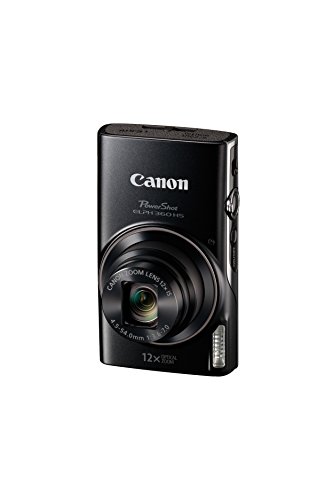
Canon PowerShot ELPH 360 HS — The slim everyday ELPH, camera-only listing
The ELPH 360 HS is the compact camera as appliance: slim enough for a jacket pocket, simple enough to hand to a relative, and equipped with a 12x optical zoom that reaches subjects a phone’s digital crop merely smears. Image stabilization steadies that reach, and Wi-Fi with NFC moves pictures to a phone without cables or card readers, which is where most ELPH photographs are destined to live anyway.
This listing is the plain camera in black, and it matters because a second ELPH 360 listing further down this guide bundles the same camera with accessories. Compare the two as one camera with two boxes. On its own merits, the ELPH suits buyers who want a dedicated camera for trips and family events — one that can be lent, dropped-risked and left in a glovebox in ways a flagship phone cannot.
- Model: Canon PowerShot ELPH 360
- Zoom: 12x optical zoom, as listed
- Stabilization: Image stabilization, as listed
- Connectivity: Wi-Fi and NFC enabled
- Colour: Black
- Configuration: Camera listing without bundle extras named
Strengths
- Genuinely pocketable body with reach a phone cannot match optically
- Wi-Fi and NFC make phone sharing straightforward
- Simple operation suits lending to family members confidently
Trade-offs
- Small-sensor image quality trails the 1-inch G7 X models here
- Same camera appears again in this guide as a bundle — compare before buying twice over
- No 4K video is claimed in this listing
Best for: a traveller who wants a slim, lendable camera for daylight trips and family gatherings.
Not suited for: a parent filming evening school concerts, where the G7 X models’ larger sensor holds up far better.

Canon PowerShot G7 X Mark III — Premium creator compact
The G7 X Mark III is where the PowerShot range stops apologizing to phones. Built as the line’s premium compact — the G7 X family is Canon’s 1-inch-sensor creator series — it pairs serious stills with 4K video and the connectivity, through Wi-Fi and NFC, that a posting workflow demands. Its LCD serves the selfie-and-presenting style of shooting this camera was designed around.
Creators adopted this model for a reason: it behaves like a small production tool rather than a souvenir camera, and it slips into a coat pocket between shoots. Buyers who only need daylight snapshots will find it more camera than their brief requires, and its price tier reflects that. For vlogging, travel content and high-quality family documentation, it is the strongest Canon compact in this guide.
- Model: Canon PowerShot G7 X Mark III
- Video: 4K video, as listed
- Display: LCD screen, as listed
- Connectivity: Wi-Fi and NFC
- Colour: Black
- Series: G7 X premium compact line
Strengths
- 4K video matches the creator brief this model was built for
- Premium compact build and controls reward regular use
- Connectivity supports a fast phone-based publishing workflow
Trade-offs
- Premium pricing beside the ELPH and A-series models here
- Zoom reach is modest next to the SX740 HS travel zoom
- More capability than a casual snapshot buyer will ever open
Best for: a content creator who wants one pocketable Canon for stills, 4K clips and daily posting.
Not suited for: a safari traveller counting on distant wildlife framing, where the SX740 HS’s 40x reach matters more.

Canon PowerShot SX740 HS — Travel-zoom flagship bundle
The SX740 HS answers the question the G7 X cannot: what if the subject is simply far away? Its 40x optical zoom — a figure stated in the listing and genuinely optical, not a digital marketing number — pulls distant landmarks, wildlife and stage performers into the frame from a body that still travels in a jacket pocket. The 20.3MP sensor and 4K UHD video complete a travel specification that reads like a checklist of holiday needs.
This particular listing bundles the camera with a 64GB card and a bag, the two accessories a traveller actually uses, and adds Bluetooth alongside Wi-Fi for phone pairing. The small sensor behind that long zoom means low-light results will not trouble the G7 X models, but daylight reach is this camera’s entire argument, and on a bright trip it wins that argument daily.
- Model: Canon PowerShot SX740 HS
- Sensor: 20.3MP, as listed
- Zoom: 40x optical zoom, as listed
- Video: 4K UHD video, as listed
- Connectivity: Wi-Fi and Bluetooth
- Bundle: 64GB card and bag included
Strengths
- 40x optical zoom reaches subjects no other pick here can frame
- 4K UHD video covers travel filming without a second device
- Bundle includes the card and bag a trip actually requires
Trade-offs
- Small sensor behind the long zoom limits evening image quality
- Long-zoom shooting demands steady hands or support at full reach
- Bundle price should still be compared with the camera sold alone
Best for: a holidaymaker who photographs distant landmarks, wildlife and performances from a pocketable body.
Not suited for: a food blogger shooting dim restaurant interiors, where the 1-inch-sensor G7 X models are the right tool.

Canon PowerShot G7 X Mark II — 1-inch sensor predecessor, still capable
The Mark II is the listing that states its credentials most plainly: a 1-inch sensor, named outright in the title. That sensor is the dividing line in Canon’s compact range — substantially larger than the sensors in the ELPH and A-series cameras here, gathering more light and delivering the low-light and background-blur quality that made the G7 X name among creators in the first place.
As the predecessor to the Mark III above, it lacks that model’s 4K video headline, and buyers focused on filming should weigh the gap honestly. For stills-led use — travel, family, street photography — the Mark II’s proposition remains strong, particularly when its price undercuts the newer model. It is the value route into 1-inch Canon compact quality, provided the saving is real on the day you check.
- Model: Canon PowerShot G7 X Mark II
- Sensor: 1-inch sensor, as listed
- Display: LCD screen, as listed
- Connectivity: Wi-Fi and NFC
- Colour: Black
- Listing code: 100-1066C001, as listed
Strengths
- 1-inch sensor delivers the low-light quality smaller compacts cannot
- Established model with a deep base of owner knowledge
- Often the cheaper route into Canon’s premium compact tier
Trade-offs
- No 4K video headline, unlike the Mark III above it
- An older generation, so stock and bundle quality vary by seller
- Zoom reach is short beside the SX740 HS
Best for: a stills-first photographer who wants 1-inch Canon quality without paying the newest model’s premium.
Not suited for: a vlogger whose channel depends on 4K uploads, where the Mark III is the correct spend.

Canon PowerShot A2400 IS — 2012-era design, new-old stock
Honesty about dates matters here: the PowerShot A2400 IS is a design from 2012, and the units on sale now are new-old stock — cameras manufactured for a market that has since moved on. Its specification reads accordingly: 16.0 megapixels, a 5x optical zoom starting at a usefully wide 28mm, image stabilization, 720p video recording and a 2.7-inch LCD. None of that embarrasses itself as a simple snapshot specification, but none of it belongs to this decade either.
Why include it at all? Because a genuinely simple, inexpensive, dedicated camera still serves real briefs — a child’s first camera, a worksite record camera, a glovebox spare — and because buyers deserve to know exactly what era they are purchasing. Priced as the elderly design it is, the A2400 IS in its cheerful blue finish is a harmless tool. Priced anywhere near the ELPH 360, it is a trap this guide exists to disarm.
- Model: Canon PowerShot A2400 IS
- Sensor: 16.0 MP, as listed
- Zoom: 5x optical image stabilized zoom, 28mm wide-angle
- Video: 720p HD video recording (listing wording noted in review)
- Display: 2.7-inch LCD
- Colour: Blue — design era: 2012, sold as new-old stock
Strengths
- Simple, undemanding operation for occasional snapshots
- 28mm wide end suits interiors and group photographs
- Can make sense as a cheap, replaceable record camera
Trade-offs
- A 2012 design: video, screen and speed all belong to that era
- 5x zoom is the shortest reach in this guide
- New-old stock means battery age and seller terms need checking
Best for: a buyer needing an inexpensive, simple camera for a child, a worksite or a spare drawer.
Modern compact performance is beyond this 2012-era design: its autofocus, screen and processing belong to their period, so the ELPH 360 is the contemporary alternative.

Canon PowerShot ELPH 360 HS A Bundle — The same ELPH 360, silver bundle
Yes, this is the ELPH 360 again — the listing’s HS A naming and silver finish dress the same slim compact sold at the top of this guide, here specified at 20.2MP with the same 12x optical zoom and Wi-Fi. Treating it as a separate model would be a disservice; treating it as a separate purchase absolutely makes sense, because what is being sold differs: a bundle with a 64GB memory card and a case included.
That reframing turns the comparison into arithmetic. Price this bundle against the black camera-only listing, add what a card and case would cost separately, and let the totals decide. The silver finish may also sway buyers giving the camera as a gift. Photographically the verdict is unchanged: a pocketable, stabilized 12x compact for daylight travel and family duty, with easy phone transfer.
- Model: Canon PowerShot ELPH 360 HS A
- Sensor: 20.2MP, as listed
- Zoom: 12x optical zoom, as listed
- Connectivity: Wi-Fi
- Bundle: 64GB memory card and case included
- Colour: Silver — kit code 7283C001, as listed
Strengths
- Card and case included make it a complete gift-ready box
- Same pocketable 12x ELPH camera as the standalone listing
- Silver finish distinguishes it from the black camera-only version
Trade-offs
- It is not a different or upgraded camera from the first pick
- Bundle premium must be checked against separate accessory prices
- Shares the ELPH line’s small-sensor low-light limits
Best for: a gift buyer who wants the ELPH 360 complete with card and case in one order.
Not suited for: an existing ELPH 360 owner browsing quickly, who might mistake this bundle for a newer model and buy the same camera twice.
Comparison Table
| Pick | Badge | Headline fact from its listing |
|---|---|---|
| Canon PowerShot ELPH 360 HS | The slim everyday ELPH, camera-only listing | Canon PowerShot ELPH 360 Digital Camera w/ 12x Optical Zoom and Image Stabilization – Wi-Fi & NFC Enabled |
| Canon PowerShot G7 X Mark III | Premium creator compact | Canon PowerShot Digital Camera [G7 X Mark III] with Wi-Fi & NFC, LCD Screen and 4K Video – Black |
| Canon PowerShot SX740 HS | Travel-zoom flagship bundle | Canon PowerShot SX740 HS 20.3MP Digital Camera Bundle |
| Canon PowerShot G7 X Mark II | 1-inch sensor predecessor, still capable | Canon PowerShot Digital Camera [G7 X Mark II] with Wi-Fi & NFC, LCD Screen, and 1-inch Sensor – Black, |
| Canon PowerShot A2400 IS | 2012-era design, new-old stock | Canon PowerShot A2400 IS 16.0 MP Digital Camera with 5x Optical Image Stabilized Zoom 28mm Wide-Angle Lens |
| Canon PowerShot ELPH 360 HS A Bundle | The same ELPH 360, silver bundle | Canon PowerShot ELPH 360 HS A 20.2MP Digital Camera (Silver) Bundle |
What does a 1-inch sensor actually change in a compact camera?
Sensor size governs how much light a camera gathers, and the 1-inch sensor in the G7 X Mark II — the listing states it outright — is several times larger in area than the sensors inside slim compacts like the ELPH. More light per photograph means cleaner images as rooms darken, faster shutter speeds for moving subjects, and a greater ability to blur backgrounds behind portraits.
The change is most visible exactly where phones and cheap compacts struggle: restaurants, evening streets, school halls and candlelit family moments. In bright daylight the gap narrows dramatically, which is why a daylight traveller can honestly choose the SX740 HS for its zoom instead and lose little.
That is also why this guide refuses a single overall winner. Sensor and zoom pull in opposite directions inside a pocket body. Decide which of your photographs fail today — too dark, or too far away — and the correct tier chooses itself.
How should you compare two listings for the same camera in different bundles?
Treat the camera as a constant and price only the differences. Write down what each bundle adds — here, a 64GB card and a case on the silver ELPH bundle versus the plain black camera — then price those items separately. If the bundle premium is smaller than the separate total and the seller’s terms are sound, the bundle wins; otherwise buy the plain camera and choose accessories yourself.
Check the unglamorous fields while comparing: condition, warranty wording and returns. Bundle sellers vary more than factory channels in all three, and a cheap bundle with no returns can cost more than a dearer one after a single fault. The photograph of the box tells you the least important things about the purchase.
Finish by confirming the model name character by character. Suffixes like the HS A on the silver ELPH bundle describe packaging variants in this class far more often than upgraded hardware, and assuming a suffix means a better camera is the classic bundle-shopping error.
Is a 2012 camera design ever a sensible purchase?
Sometimes — when the job is simple, the price is honest and the buyer knows the date. A design like the A2400 IS still focuses, meters and records a perfectly serviceable snapshot; photography did not become possible in the last decade. For a child’s first camera or a site record camera that may be lost, elderly simplicity can be a feature.
The purchase turns foolish at the wrong price or under false expectations. A 2012 compact will not match a modern phone for video, screen quality or low-light work, and new-old stock batteries may have aged on the shelf. Demand a price that reflects all of that, check the battery and returns terms, and the A2400 IS becomes a rational tool rather than a museum piece sold as current goods.
Retailers rarely volunteer a model’s design year. Searching the model name before buying any compact that seems suspiciously cheap is a two-minute habit that protects against the entire category of disappointment.
Optical zoom, megapixels and video: which numbers on these listings can you trust?
Zoom figures labelled optical describe real lens movement and can be compared across this guide: 5x on the A2400 IS, 12x on the ELPH pair, 40x on the SX740 HS. Those numbers predict framing reach honestly. Any figure labelled digital or intelligent describes cropping and processing rather than lens reach, and should be discounted accordingly wherever it appears in compact listings generally.
Megapixel counts predict file size more than quality. The SX740 HS’s 20.3MP and the ELPH bundle’s 20.2MP sit on small sensors, while the G7 X Mark II’s 1-inch sensor matters more to image quality than any count in this guide. Treat megapixels as a filing detail, not a ranking.
Video labels are comparable when they name a resolution: 4K on the G7 X Mark III and SX740 HS, 720p on the A2400 IS. A listing that says only HD video without a number is telling you less, and in this class usually means the lower figure.
How do you get phone-quality convenience from a PowerShot?
The ELPH and G7 X listings here carry Wi-Fi, several with NFC, because Canon expects these cameras to feed phones. Set the pairing up at home, once, following the camera’s menu prompts and Canon’s phone app, then test a transfer before travelling. Five calm minutes at a kitchen table prevents a frustrated hour in a hotel room.
In the field, shoot on the camera and transfer selectively rather than continuously. Moving every frame drains both batteries; moving the day’s best dozen keeps a phone album current for sharing while the card retains everything at full quality. The SX740 HS adds Bluetooth, which keeps a low-power link alive for exactly this kind of trickle transfer.
At home, copy the card to a computer or drive as the master archive. Phone transfers are for sharing, not safekeeping, and the card itself should be formatted in the camera only after that archive exists in two places.
How do you keep a slim compact alive for years of travel?
Pocket cameras die from lint, sand and drops more than from electronics. A slim case — included in two bundles in this guide — keeps pocket debris away from the lens mechanism, which is the ELPH class’s most vulnerable part. At the beach, the camera returns to its case between shots, every time; one grain of sand in a retracting lens can end a holiday camera permanently.
Charge batteries the night before outings rather than storing the camera on a charger, and carry the charging cable on trips even when the battery looks full. Compact batteries are small, and a long zoom day with heavy screen review empties them faster than beginners expect.
Finally, exercise the zoom monthly if the camera sits in a drawer. Mechanisms that move regularly stay smooth, and a camera tested at home never surprises its owner at the one event it was bought for.
Which PowerShot suits a family that photographs everything from toddlers to school plays?
Family photography splits into two hostile environments. The first is the home: dim rooms, fast children and moments that refuse to repeat themselves. The second is the school hall: a distant stage, theatrical lighting and a seat chosen by ticket lottery rather than photographic merit. No single compact in this guide masters both, and the honest family choice begins by admitting which environment produces the household’s most treasured photographs.
For the home environment, sensor size rules. The G7 X Mark II and Mark III gather the light that living rooms actually contain, holding skin tones and detail where small-sensor compacts dissolve into grain, and their wider apertures keep shutter speeds high enough to freeze a toddler mid-lunge. A family whose album is birthdays, grandparents and kitchen-table chaos should spend here, and the premium over the ELPH buys photographs that survive printing on the wall rather than merely surviving on a phone screen.
For the school hall, reach rules instead. The SX740 HS’s 40x optical zoom frames a face on stage from the back row in a way no 1-inch compact’s short lens can, and its 4K video records the whole performance for absent relatives. Many two-camera households eventually own both answers; a one-camera household must choose by counting which set of past photographs it would least willingly surrender. That count, honestly taken, is the entire buying decision in miniature.
How do you photograph a holiday entirely on a compact, and leave the phone in the hotel safe?
The compact-only holiday is a small rebellion with practical roots: no notifications at the viewpoint, no battery anxiety shared with maps and messages, and a camera that can be handed to a stranger for a group photograph without surrendering your digital life. Making it work requires the compact to cover the whole photographic day, which is why the choice of model matters more here than in mixed-device travel. Reach, low-light ability and transfer convenience must all live in one small body.
Of the picks in this guide, the SX740 HS covers the widest day: 40x optical reach for landmarks and wildlife, 4K video for the boat trip, and Bluetooth-assisted transfer for the evening’s selections. The G7 X models trade that reach for evening quality, suiting city breaks built around restaurants and night streets. The ELPH covers the classic beach-and-family itinerary at the lowest cost and risk, which is itself a form of coverage — a camera cheap enough to take everywhere gets photographs an expensive one, left in the safe, never takes.
End each day with the same ritual: transfer the best frames, charge the camera, and back the card up when you return home before formatting it. The compact-only holiday fails only through lost files, and the discipline that prevents that loss takes four minutes an evening. Photographers who try the experiment usually report the same surprise — the holiday felt longer, and the album, shot deliberately, tells the story better than five hundred phone frames did.
What should you check on a new-old-stock compact before the returns window closes?
New-old stock carries a specific risk profile, and the A2400 IS in this guide is its representative. A camera manufactured years ago has spent those years somewhere, and its battery has aged whether or not the shutter ever fired. On arrival, charge the battery fully and time a realistic shooting session: a pack that fades within the hour is telling you its storage years were unkind, and a replacement’s cost and availability belong in the purchase calculation immediately, while returns remain possible.
Work every mechanism through its range. Extend and retract the zoom repeatedly, listening for hesitation; cycle the flash; format a card in the camera and fill it with test frames, then examine the files for sensor spots or banding that storage may have introduced. Photograph a plain bright surface to reveal dust, and a detailed subject at each zoom extreme to confirm the lens assembles its image symmetrically. Ten systematic minutes convert unknown stock into a known tool.
Keep the packaging and paperwork until those checks pass, and photograph the unboxing if the listing’s condition was ambiguous. Sellers of legacy stock vary enormously in how they honour problems, and the buyer who documents early keeps every option open. None of this is a reason to avoid new-old stock — the A2400 IS at an honest price is a useful camera — but it is the price of admission for buying a time capsule.
How does the G7 X line serve a creator who films alone?
Solo filming is a logistics problem disguised as a creative one. The creator is simultaneously presenter, camera operator and director, and the equipment that serves them must frame reliably without a second pair of eyes. The G7 X Mark III’s design answers that reality: a screen the presenter can see, 4K video for a publishing pipeline that increasingly expects it, and connectivity that moves clips into the editing workflow without a card-reader ritual between shoot and publish.
The working method that grows around such a camera is batch-shaped. The creator films several pieces in one session while the light and the setup hold, relying on the camera’s consistency rather than an operator’s judgement, then transfers and edits in a block. A compact that starts instantly, focuses predictably on a face and fits the same small bag as a microphone and a mini tripod earns its place in that method through absence of friction — the quality solo creators value above specifications they can read on a box.
Against the ELPH and SX models, the G7 X’s premium buys exactly this frictionlessness plus the sensor quality that keeps a presenter’s face clean under ordinary room light. Creators publishing occasionally can honestly choose the cheaper tiers; creators publishing weekly will recoup the difference in retakes avoided within a season, which is the correct arithmetic for any tool bought to produce work.
When does the SX740 HS’s zoom beat the G7 X’s sensor in a direct choice?
The contest is decided by the photographer’s failures, and two itineraries make the answer concrete. Take the safari, the seabird colony, the mountain viewpoint and the stadium concert: subjects defined by distance, photographed in the daylight that travel schedules provide. Here the G7 X’s short lens simply cannot compose the picture, and no sensor quality rescues a subject rendered as a speck. The SX740 HS’s 40x optical zoom composes it natively, and its small sensor’s daylight files are entirely respectable.
Now take the food tour, the old-town evenings, the family reunion in a wood-panelled restaurant: subjects at arm’s length in light that flatters people and starves sensors. Here the SX’s zoom sits unused while its small sensor strains, and the G7 X’s 1-inch class sensor produces the photographs that get printed. Neither camera is better; each is better at a named itinerary, and the buyer who cannot name theirs should default to the environment of their most recent fifty photographs.
A final consideration breaks remaining ties: video. Both lines here offer 4K in their current forms — the Mark III and the SX740 HS alike — so filming ambitions rarely separate them. The separation is optical and physical, lens against sensor, distance against darkness. Choose the enemy you actually fight.
How long do PowerShot compacts realistically last, and what usually ends them?
Compact cameras rarely die from shutter wear, because most are retired long before their mechanisms approach any limit. The common endings are mechanical accidents and quiet obsolescence: a retracting lens jammed by sand or a drop, a battery door broken in a hurry, a charging standard abandoned by the household’s cable drawer. The slim ELPH class is statistically the most accident-exposed, living as it does in pockets, gloveboxes and children’s hands — which is precisely the life it was bought for.
Owners can tilt the odds with the unglamorous habits this guide repeats: a case against pocket grit, a wrist strap against gravity, batteries charged before storage rather than after failure, and the zoom exercised monthly during quiet periods. A compact treated this way commonly serves a decade, outlasting several phones, and its total cost per photograph becomes almost absurdly small.
Plan the succession honestly, though. Canon’s compact range is a mature, narrowing line, and the model a buyer loves today may have no direct descendant when replacement day arrives. That is an argument for buying the right tier now rather than the cheap one twice — and for keeping the old camera, when it is eventually replaced, as the household’s risk-it spare rather than a drawer casualty.
How do you shoot a child’s birthday party on a compact and actually enjoy it?
The secret is to finish the photography early. In the first twenty minutes — cake intact, children still delighted to perform, light at its best — take the set pieces: the birthday child with the cake, the grandparents’ group, the friends around the table. A G7 X in this window earns its premium in the room’s ordinary light, and an ELPH covers the same list happily in a bright kitchen. Then put the camera down and be a guest, because the party’s real photographs after that point are candids, and candids need a photographer who is present rather than directing.
Keep the camera on a wrist strap and within reach rather than in hand. The moments worth having — the joke that lands, the toddler’s negotiation with a balloon — arrive unannounced and last two seconds, and a pocket camera’s instant readiness is its whole advantage over the phone buried under notifications. Shoot short sequences rather than single frames; children’s expressions move faster than any reviewer’s shutter finger, and the keeper hides inside the burst.
At the evening’s end, transfer a small selection — a dozen frames, not the card — to the family chat while the day is still warm. The compact’s Wi-Fi exists for exactly this social half-life of photographs. The full card gets archived at home, unedited, as the household’s negative. Parties photographed this way produce albums families actually revisit, because the camera served the occasion instead of annexing it.
What makes a compact the right camera for a grandparent?
Simplicity that respects experience. Many grandparents photographed for decades on film compacts, and a PowerShot’s grammar — zoom rocker, shutter button, a screen that shows the picture — is the digital continuation of an interface they already own. The ELPH class succeeds here because it asks nothing new: charge it, point it, and let the camera’s automation, which is genuinely excellent at family scenes, handle the rest. The gift that needs a tutorial fails; the gift that needs a charged battery succeeds.
The practical details decide the model. Buttons should be findable without reading glasses, the screen legible in garden light, and the charger a single obvious cable. The A2400 IS’s era shows in its small screen, which is why the ELPH’s more modern presentation usually serves this gift better despite the price gap. Set the camera up before wrapping it: date correct, a card installed and formatted, the first photograph — of you, smiling — already on it.
Follow up in a fortnight with the printing ritual. Help move a dozen frames to prints, frame two, and the camera crosses from gadget to habit. Grandparents’ compacts produce a disproportionate share of the photographs families treasure in thirty years, because their owners photograph people rather than places, patiently and at close range. Choose for that future, not for the specification table.
How should you pack a compact camera kit for a city break?
The city-break kit is an exercise in subtraction: camera, its charger, one spare card, a wrist strap, and a pouch that fits the pocket the camera will actually live in. Everything else — mini tripods, filter sets, cleaning arsenals — stays home, because the compact’s entire value proposition is that the photography fits around the trip rather than reorganising it. The SX740 HS traveller adds nothing but a second battery for long museum days; the G7 X creator adds a small microphone only if filming is truly on the itinerary.
Pack the charger in hand luggage and the camera on your person. Checked bags are where cameras go to be lost, stolen or frozen, and a compact’s size removes every excuse for checking it. At security, the camera rides in the tray in its pouch; at the cafe, it sits on the table in plain sight rather than in the bag by your feet, because city-break theft targets the bag, not the object in use.
Build the day’s rhythm around the light the city offers. Shoot the monuments in the morning before the crowds, the interiors at noon when the sun is hostile outside, and the streets again at dusk — the schedule every travel photographer recognises, executed with a camera that never once needed a bag check, a lens decision or a shoulder rest. That frictionlessness is what the compact was bought for; packing light is how you collect on it.
How do you photograph food and markets with a small-sensor compact?
Markets are the small sensor’s friend: bright, colourful and close. Work the wide end of the zoom, get near enough that the produce fills the frame, and let the market’s own chaos compose the background. The ELPH and even the elderly A2400 IS produce vivid, honest market photographs in daylight, because the subjects sit still, the light is generous and the colours do the expressive work. Ask stallholders before portraits, buy something small as thanks, and the market becomes a studio that welcomes you back tomorrow.
Food is the opposite test: dim restaurants and close subjects. Here the G7 X models separate themselves, their sensor class holding detail and colour where smaller compacts smear both. Use window seats at lunch, the table’s candle as a feature rather than an enemy at dinner, and the camera’s closest focusing distance for the dish rather than a digital crop afterwards. Turn the flash off permanently in restaurants; it flattens food, annoys tables and announces the photographer to the entire room.
Edit with restraint afterwards. Market and food photographs die from saturation sliders, not from sensors, and the compact’s files — honestly lit, closely framed — need almost nothing beyond a straighten and a crop for the stray elbow. The genre rewards presence and appetite over equipment, which is why a pocket camera and a hungry photographer remain one of travel writing’s most productive partnerships.
What should a compact owner do when the camera’s zoom mechanism starts to hesitate?
Hesitation is a symptom to respect early. A lens that pauses, grinds or extends unevenly is usually reporting grit in the barrel or a battery too tired to drive the mechanism — so the first tests are free: charge fully or fit fresh batteries, then cycle the zoom in clean indoor air and listen. If the hesitation vanishes on full power, the diagnosis was electrical and the lesson is to stop running the camera to exhaustion, a habit that strains every retracting lens eventually.
Grit demands the gentle arts, never force. Work over a clean sheet, use a blower around the barrel’s seams while cycling the zoom slowly, and let gravity assist with the lens facing down. A soft brush at the joints dislodges what air cannot. Forcing a stuck barrel by hand converts a cleaning problem into a gear replacement, and on an elderly compact that conversion usually ends the camera’s economic life on the spot.
If careful cleaning fails, price the repair against the camera’s honest tier before authorising anything. An ELPH-class repair at a reputable shop can be rational; an A2400 IS repair almost never is, and its owner should retire it to drawer-spare duty with gratitude rather than resentment. Cameras in this class die mechanically long before they die electronically, and the owner who understands that spends repair money only where the arithmetic agrees.
How do two-camera households divide work between a compact and a phone?
The households that make it work assign territories rather than competing. The compact owns distance, darkness within its tier, and risk: the zoom subjects, the evening events, the beach and the borrowed-by-children assignments. The phone owns immediacy: the quick share, the document scan, the photograph that is really a message. When each device has a jurisdiction, neither is judged by the other’s standards, and the album gains both kinds of strength.
The transfer ritual keeps the peace. Compact photographs join the household archive on a schedule — Sunday evening, say — rather than competing with the phone’s instant stream, and the best are printed or shared from that archive deliberately. Families report that the compact’s photographs, arriving in considered batches, get looked at more than the phone’s daily flood, a small lesson in the economics of attention.
Children inherit the logic naturally: the compact is the camera they may carry, the phone is not. By the time a child graduates to a phone of their own, the household has a decade of compact-shot family history whose style — framed, zoomed, deliberate — differs visibly from phone archives. Two devices, two temperaments, one album: the division of labour is the entire trick, and it costs nothing but the decision to make it.
How do you buy a PowerShot as a gift without knowing the recipient’s photography?
Buy for the life, not the hobby. A recipient whose days are grandchildren, gardens and holidays needs the ELPH’s simplicity and reach; one whose feed shows restaurant evenings and city breaks needs the G7 X’s sensor; one heading for a safari needs the SX740 HS’s zoom and a card already installed. The recipient’s last twenty shared photographs tell you which life it is, more reliably than any question you could ask without spoiling the surprise.
Buy the complete working gift: camera, card, case and a charged battery, wrapped with a note naming the first outing you will take together with it. An incomplete camera gift quietly transfers shopping to the recipient, and a striking number of gifted compacts have died in drawers for want of a memory card nobody bought. The bundles in this guide exist because sellers understand this; judge them kindly and price them honestly.
Finally, give the recipient permission to exchange tiers. Photography gifts misfire when pride forbids admitting the fit is wrong, and a compact exchanged in January for its sibling model serves better than a perfect-specification camera resented by March. The PowerShot range’s breadth — the very thing that complicates choosing — makes the exchange painless, which is the last argument for buying inside one coherent family of cameras.
What will the second-hand market for PowerShot compacts look like in a few years?
Scarcity will do what it always does to well-loved tools. As Canon’s compact line narrows and surviving ELPH and G7 X bodies age out of service, clean examples with working zooms and honest batteries will become the market’s currency, and the cameras bought carelessly today — gritty barrels, tired packs, missing chargers — will be the ones priced as parts. Owners who keep the box, the charger and a spare battery are, without intending it, assembling the complete kits future buyers pay premiums for.
The G7 X models are the likeliest appreciators, because creator demand for pocketable 1-inch cameras has already demonstrated its durability, and every year of phone-camera convergence leaves the dedicated compact’s virtues — real zoom, real controls, a file that prints — rarer rather than commoner. The ELPH class will remain the liquid, affordable tier; the A2400 IS and its generation will settle into novelty and spare-drawer value, honestly priced at last.
None of this justifies buying a compact as an investment. It justifies buying the right one, keeping it complete and using it hard, because a tool that serves a decade of family life and then sells for half its price has outperformed almost every other object in the house. The PowerShot’s story, like the DSLR’s, ends with the arithmetic of use — and on that arithmetic these small cameras remain quietly excellent purchases.
Common Mistakes
Buying the same ELPH twice under two listings
The black ELPH 360 and the silver ELPH 360 HS A bundle are one camera. Shoppers comparing them as rival models waste money or, worse, owners upgrade to the identical camera. Always resolve the base model name first; compare bundles only after the model question is settled.
Paying modern money for a 2012 design
The A2400 IS has legitimate uses at a legacy price. Listed near modern compacts, it becomes poor value wearing a famous badge. Check the design era of any suspiciously affordable big-brand compact before paying, and let the year set the price you will accept.
Choosing zoom when your failed photos are actually dark
Buyers often chase the SX740 HS’s 40x reach when their real disappointment is grainy indoor shots. Reach cannot fix darkness; sensor size does. Audit your own failed photographs honestly — distance problems choose the SX, darkness problems choose a G7 X.
Ignoring the card and case you will inevitably buy
A camera-only price looks cheaper until the memory card and case join the basket at checkout-plus-delivery prices. Bundle listings in this guide exist because those accessories are universal needs. Compare complete, ready-to-shoot totals rather than headline camera prices.
Final Recommendation
Canon’s compact range rewards buyers who read it as three tiers rather than one ladder. The G7 X Mark III is the creator’s pick and the Mark II its stills-led value alternative; the SX740 HS owns the travel-zoom brief outright; the ELPH 360, in either listing, is the slim everyday camera most households actually need. The A2400 IS trails as a legacy tool with a legacy price or not at all.
Buy within the tier your photographs demand, price any bundle against its plain counterpart, and a PowerShot still does the one job phones never quite absorbed: being a dedicated camera you can hand to anyone, carry anywhere and trust to be ready when the moment refuses to wait.
Frequently Asked Questions
What is the difference between the two ELPH 360 listings?
The camera is the same ELPH 360 with 12x optical zoom and Wi-Fi. The black listing is the camera on its own; the silver HS A listing bundles it with a 64GB memory card and a case, and states a 20.2MP figure. Choose by comparing the bundle premium against buying the card and case separately, and by colour preference.
Which Canon compact is best for low light?
The G7 X models, because of their sensor class — the Mark II’s listing states a 1-inch sensor explicitly, and the Mark III leads the same premium line. Larger sensors gather more light, so evening and indoor photographs hold together better. The ELPH and SX models remain daylight-first cameras by comparison.
Does the SX740 HS’s 40x zoom match a phone’s digital zoom?
No — and that is its selling point. The listing states 40x optical zoom, meaning the lens itself magnifies the scene before the sensor records it, preserving detail that digital cropping discards. At full reach you will still want steady hands or a support, but the information in the frame is genuinely there.
Is the A2400 IS new or used?
Listings describe new-old stock: an unsold 2012-era design rather than a current model. That makes condition and battery age legitimate questions for the seller, and the price should reflect the design’s age. Buy it as a simple legacy tool and it can serve well; buy it expecting a modern compact and it will disappoint.
Can these cameras send photos to a phone?
Most of them, yes. Wi-Fi appears in the ELPH, G7 X and SX740 HS listings, with NFC on several models and Bluetooth added on the SX740 HS. Set the connection up at home before travelling. The A2400 IS predates that era’s conveniences, another mark of its 2012 origins.
Related Guides
Keep exploring with the optical zoom guide that separates lens reach from marketing, then compare our pocketability-tested compact camera picks, and finish with the APS-C mirrorless shortlist for step-up buyers.



[…] exploring with the guide to Canon’s remaining PowerShot compacts, then compare our breakdown of optical zoom claims on compact cameras, and finish with the […]