What's inside
- Where to Buy
- Key Takeaways
- Quick Picks
- How We Chose These Picks
- Comparison Table
- How to Choose
- Does Full-Frame Really Matter for Portraits, or Is It Habit?
- Which Lens Should a New Sony Portraitist Buy First?
- How Should a Portrait Session Actually Run on Any of These Bodies?
- Common Mistakes
- Final Recommendation
- FAQ
- Related Guides
As an Amazon Associate I earn from qualifying purchases. This post may contain affiliate links at no extra cost to you.
[SITE_DOMAIN] is reader-supported. When you buy through links on our site, we may earn an affiliate commission.
Where to Buy
Amazon’s Sony listings split into body-only purchases and kits, and for portrait work that distinction is the budget. The Sony a7 IV, the Sony a7R V and the Sony a7 V are titled as bodies — you are buying the camera and choosing portrait lenses separately. The Sony a7 III kit and the Sony a6400 kit include a lens in the title, and the Sony a7R VI bundle adds a 64GB UHS-II card and a camera bag. Portrait photographers should price the lens they actually intend to shoot with into every body-only figure before comparing totals.
The best Sony cameras for portraits are chosen on a short list of portrait-specific virtues, and it is not the list that sells cameras generally. Portraiture cares about focus on an eye that will not stay still, about how a lens renders the space behind a face, about resolution that survives a crop or fills a large print, and about a body that disappears during a session so the sitter forgets it. Burst rates for sport, weather sealing for mountains and video specifications for filmmakers all rank below those four.
Sony’s Alpha line gives the portraitist a coherent ladder. Five of these six picks are full-frame, where the larger sensor’s shallower depth of field at a given aperture is the classic portrait tool — the subject sharp, the room behind them dissolved. The sixth, the a6400, is the APS-C rung: smaller sensor, smaller lenses, a crop factor that changes how its kit lens behaves, and a price position that opens the system to beginners. The reviews below argue each rung on the evidence of its own listing title, which in Sony’s case is often terse — several titles state little beyond the model and format, and where they are silent, the spec boxes say so rather than borrowing numbers from the line’s reputation.
One more framing note before the reviews: portraiture is the genre where the photographer’s manner matters as much as the machinery, and gear guides — this one included — can only clear the technical obstacles away. What remains after focus, format and resolution are settled is direction: putting a person at ease in front of a lens. The bodies below are ranked by how completely they remove the obstacles, which is the only ranking a camera can honestly earn in this genre.
Lenses deserve an early warning that applies to every pick: all six cameras are E-mount, and the portrait lenses that define this system’s look — the fast primes and short telephotos — are separate purchases for the body-only listings. A portrait budget is a body-plus-lens budget. The camera is the smaller half of the decision; the glass is the signature.
Key Takeaways
- Five picks are full-frame Alpha bodies; the a6400 is the APS-C entry, and its 1.5x-class crop factor changes how its included 16-50mm lens frames a portrait.
- The a7R V and a7R VI carry the R line’s high-resolution brief; the a7R VI title states 8K recording and AI subject tracking.
- The a7 V title states AI autofocus at 30fps and 5-axis in-body stabilisation — the newest mainstream full-frame feature set here.
- The a7 III kit states its numbers plainly: 24.2MP, 4K 30p video and 10fps shooting, with a lens included.
- The a6400 title states real-time Eye Auto Focus — the single most portrait-specific feature printed in any title in this guide.
- Most Sony titles here are terse; several spec fields are honestly recorded as not stated in the listing title.
Quick Picks
| Pick | Badge | Why it made the cut |
|---|---|---|
| Sony a7 IV | Best all-round portrait body | The mainstream full-frame Alpha: the balanced body most portraitists build a lens kit around. |
| Sony a7R V | Best resolution line | The R line’s full-frame body for detail-led portrait work and large prints. |
| Sony a7 III Kit | Best value full-frame kit | 24.2MP full-frame kit with stated 4K 30p and 10fps, lens included in the listing. |
| Sony a7 V | Best newest generation | AI autofocus at a stated 30fps and 5-axis in-body stabilisation in the current body. |
| Sony a7R VI Bundle | Best flagship bundle | R-line body with stated 8K recording and AI subject tracking, plus card and bag in the bundle. |
| Sony a6400 | Best APS-C starter | Compact APS-C body with stated real-time Eye AF, flip screen and 16-50mm lens included. |
How We Chose These Picks
Portrait priorities set the order of judgement. Eye focus came first, because a portrait with the focus on an eyelash rather than the eye is a deleted file, and the titles that state eye autofocus or AI subject tracking were credited for printing the feature portraitists actually use. Resolution came second, weighed as cropping room and print size rather than as a bragging figure.
Format came third, handled honestly. Full-frame’s depth-of-field behaviour is the traditional portrait advantage, and five picks offer it; the APS-C pick was kept because its crop factor, size and price open the craft to a different buyer, and its review explains the crop arithmetic rather than hiding it.
We also considered the second-hand and rental gravity of each body. Mainstream and R-line Alphas circulate heavily in both markets, which matters to portraitists building a kit over years: lenses hold value, bodies can be trialled before purchase, and a practice can add a second body of a familiar model without relearning its handling. A camera system’s liquidity is a real ownership feature, and Sony’s full-frame line is the most liquid in its class.
Title discipline was applied strictly, because Sony’s listings are the tersest a portrait buyer will meet. Where a title states a figure — 24.2MP, 30fps, 8K — the review uses it. Where it does not, the spec box records the silence. Model-line context is used to explain what a body is for, never to invent its specification.
Finally, kit completeness was priced in. A kit with a lens and a bundle with a card and bag change the real cost of starting, and beginners comparing a body-only flagship against a complete kit deserve that arithmetic made visible.

Sony a7 IV — Best all-round portrait body
The a7 IV suits the portraitist who wants the mainstream full-frame Alpha and intends to stay in the system for years. Its title is the plainest in this guide — Sony Alpha 7 IV, full-frame mirrorless interchangeable lens camera — and that plainness defines the review honestly: this is the balanced body of the line, the one whose reputation rests on doing everything well rather than on a single headline figure, and the listing asks you to take the model’s standing as its argument.
Wedding and event portraitists gravitate to this tier of body for a reason that rarely appears in reviews: the second-body economics. A professional shooting people for money owns two bodies, because a failure mid-ceremony is a business failure, and the mainstream body is the one whose price and capability make the pair rational. Two a7 IV-class bodies with complementary lenses — a wide prime on one, the portrait telephoto on the other — is the working configuration behind a large share of the wedding portfolios couples admire, and it begins with a body priced and specified for the middle of the line.
In portrait terms, the mainstream body is usually the right body. Sessions reward reliability over extremes: focus that finds the eye without negotiation, files large enough for the prints clients order, handling that stays out of the photographer’s way during the delicate first ten minutes with a nervous sitter. The a7 IV’s place in the line — above the a7 III’s generation, below the R line’s resolution specialism — maps exactly onto that brief. It is the body a working portraitist buys when the work, not the specification sheet, is the priority.
Rental houses stock this tier of body heavily, which gives prospective buyers an honest trial route: a weekend rental with your intended portrait lens teaches more about fit — grip, menus, the viewfinder’s feel during a long session — than any review, including this one. Bodies are held for hours and operated by muscle memory, and the mainstream Alpha’s ergonomics are the product of several generations of professional feedback. If the trial weekend ends with the camera forgotten and the sitter remembered, the body has passed its real examination.
The full-frame format is its stated substance. A full-frame sensor behind a fast portrait prime gives the shallow depth of field that separates a portrait from a snapshot: the sitter’s near eye critically sharp, the far eye softening, the background reduced to colour and tone. That rendering is a property of format and lens together, and the a7 IV is the most straightforward way in this guide to own the format side of it at the line’s centre of gravity.
Longevity of support is the mainstream body’s final quiet argument. A line’s central model accumulates the deepest pool of tutorials, rental stock, repair familiarity and second-hand demand, so the a7 IV’s owner is never the only person in the room who knows the camera. For a tool that will be serviced, accessorised and eventually sold inside a working practice, that surrounding ecosystem is worth a line in any honest ledger.
Because the title states no resolution, burst or stabilisation figures, buyers comparing on paper should read the a7 III kit and a7 V reviews below, where the titles commit numbers, and verify the a7 IV’s full specification on its product page. Portraitists who know the line and want its balanced centre can check the a7 IV on Amazon — the purchase is the platform as much as the body.
- Format: Full-frame, per the listing title
- Type: Mirrorless interchangeable lens camera, per the listing title
- Mount: Sony E-mount system (Alpha line), per the listing title
- Resolution: Not stated in the listing title — verify with the manufacturer documentation
- Stabilisation: Not stated in the listing title — verify with the manufacturer documentation
- Kit lens: Body-only listing; no lens stated in the listing title
Strengths
- The line’s balanced centre: full-frame portrait capability without a specialism’s compromises.
- Interchangeable E-mount lens system gives access to the full portrait prime catalogue.
- Mainstream position means the deepest accessory and support ecosystem in the line.
Trade-offs
- Title states no resolution or autofocus figures for paper comparison.
- Body-only purchase: the portrait lens is a second, significant spend.
- R-line bodies below serve detail-led work with a more specific brief.
Best for: portraitists building a long-term full-frame kit around the line’s mainstream body.
Not suited for: shooting this weekend with a lens from the box, since this listing is a body without a stated kit lens.
A session habit suits this body particularly: work tethered or review early. Mainstream professional bodies earn their keep in client work by making the first frames trustworthy, and a portraitist who checks focus and light on a larger screen after the opening sequence can relax into the session — which is when the sitter relaxes too, and the portraits worth keeping begin.

Sony a7R V — Best resolution line
The a7R V suits the portraitist whose work is printed large, cropped hard or examined closely: beauty work, editorial portraiture, the studio session where skin texture is the subject. Its title states a full-frame mirrorless interchangeable lens camera body in Sony’s R line — and the R designation is the argument, since within the Alpha family the R bodies are the high-resolution line, built around detail capture above other virtues.
Studio practice bends around resolution in smaller ways too. Tethered review at full magnification becomes a collaboration tool — the sitter, the stylist and the photographer can all see the eyelash-level truth of a frame and adjust before the moment passes. Hair and makeup departments on editorial sets work to the sensor’s honesty, because a high-resolution file forgives nothing they leave undone. Choosing the R line is therefore partly choosing a standard of preparation for everyone who stands in front of it.
Resolution changes portrait practice in two concrete ways. First, cropping becomes composition: a full-length frame can yield a head-and-shoulders crop with print-worthy detail, which rescues sessions where the lens at hand was shorter than the room allowed. Second, retouching gains honesty — high-resolution files show skin as it is, pores and all, and beauty portraitists either embrace that truth or spend their evenings softening it. Neither effect is a specification number; both follow from the R line’s stated purpose.
Print discipline follows from the same brief. A portraitist whose work hangs at exhibition sizes composes differently — leaving air around the subject for the framer, watching edges the way a landscape photographer watches horizons — because the file will bear the scrutiny. The R line rewards that deliberateness and exposes its absence, which is why experienced studio photographers describe high-resolution bodies as honest rather than merely detailed.
The body-only listing fits the buyer this camera assumes: someone who already owns, or is deliberately choosing, the portrait primes that can resolve what the sensor records. High-resolution bodies are famously unkind to mediocre glass, because the file shows the lens’s limits at full magnification. Budget the pairing honestly — an R body behind a kit zoom is a resolution argument wasted.
As with the a7 IV, this title withholds its figures; the megapixel count that defines the line is a product-page verification, not a title claim, and this guide records that silence in the spec box. Portraitists committed to detail-led work can check the a7R V on Amazon, where the body’s full specification sits below its terse title.
- Format: Full-frame, per the listing title
- Line: Alpha 7R — the high-resolution R line, per the listing title
- Type: Mirrorless interchangeable lens camera body, per the listing title
- Resolution: Not stated in the listing title — verify with the manufacturer documentation
- Autofocus detail: Not stated in the listing title — verify with the manufacturer documentation
- Kit lens: Body-only listing; no lens stated in the listing title
Strengths
- The R line’s resolution brief serves large prints and aggressive cropping.
- Full-frame format pairs the detail with classic portrait depth-of-field behaviour.
- Body-only listing suits photographers choosing their portrait primes deliberately.
Trade-offs
- Demands high-quality lenses to justify its resolution purpose.
- Large files tax cards, drives and editing machines across a whole session.
- Title states no figures; specification shoppers must verify on the page.
Best for: studio and editorial portraitists whose work is printed large or cropped hard.
Not suited for: a beginner whose only lens budget is a kit zoom, since the R line’s resolution brief is wasted behind glass that cannot feed it.
Storage discipline is the R owner’s quiet tax. A wedding or a day of studio sessions at this class of resolution produces an archive measured in hundreds of gigabytes a year, and the portraitist who buys into the line should buy the drives and the backup habit in the same month as the body. Detail is only an asset while it survives.

Sony a7 III Kit — Best value full-frame kit
The a7 III kit suits the portraitist entering full-frame with a complete purchase. Unusually for Sony in this guide, its title states its numbers: a full-frame mirrorless camera kit at 24.2MP, with 4K video at 30p and 10fps shooting. A kit listing with a lens included and the core figures in print is the most beginner-legible offer in the full-frame half of this guide.
Generational honesty belongs here: the a7 III is the oldest full-frame body in this guide, and its autofocus and handling predate the AI generation represented by the a7 V. What the kit offers instead is the format itself — full-frame rendering, the E-mount’s full lens catalogue, stated figures and an included lens — at the position in the line where value concentrates. Portraitists buy it knowingly, as the format’s doorway rather than its frontier, and doorways are underrated purchases.
24.2MP deserves a portrait-specific defence, because larger numbers elsewhere in this guide can make it look modest. A 24.2MP file prints beautifully at the sizes portrait clients actually order, crops respectably, and stays manageable in storage and editing across thousands of frames. For the working portraitist shooting sessions weekly, that balance of detail and file economy is not a compromise — it is the specification the work itself would choose.
Family and milestone work — graduations, newborns, the annual portrait a household commissions — is this kit’s natural economy. The work does not need the newest autofocus generation or exhibition resolution; it needs a full-frame look, a lens in the box and files that print handsomely at album sizes. A kit that covers that economy completely, at the line’s value position, is why the a7 III generation refuses to leave guides like this one years after its successors arrive.
The included lens defines the kit’s honest ceiling and its genuine usefulness. A kit lens starts the portraitist shooting on day one, teaches them which focal lengths their style gravitates toward, and is then joined — usually by a fast prime — once that lesson is learned. Buying the kit is buying the education along with the camera, and the body’s full-frame format means every lens bought later in the system keeps its meaning if the body is ever upgraded.
The 10fps and 4K 30p figures in the title are secondary for stills portraiture but not irrelevant: burst capacity helps with children and expressive sitters whose best face lasts a fraction of a second, and competent video covers the behind-the-scenes clips modern portrait clients expect. As an entry into full-frame with everything stated and included, check the a7 III kit on Amazon.
- Format: Full-frame, per the listing title
- Resolution: 24.2MP, per the listing title
- Video: 4K at 30p, per the listing title
- Burst: 10fps, per the listing title
- Kit: Lens included as a camera kit, per the listing title
- Stabilisation: Not stated in the listing title — verify with the manufacturer documentation
Strengths
- Only full-frame pick here whose title states resolution, video and burst figures.
- Lens included — a complete starting purchase, not a body awaiting glass.
- 24.2MP balances print quality against file size for high-volume sessions.
Trade-offs
- Earlier generation than the a7 IV and a7 V bodies in this guide.
- Kit lens will be outgrown by a serious portraitist’s prime ambitions.
- No stabilisation or eye-AF figure stated in the title.
Best for: photographers stepping up to full-frame who want one complete, honestly specified purchase.
Not suited for: a detail-led studio specialist, since 24.2MP is the working balance of this guide rather than its resolution ceiling.
The kit path has a financial rhythm worth planning: body and kit lens now, one fast portrait prime when the style clarifies, and the kit lens retained as the travel and family zoom it quietly excels at being. Portraitists who follow that rhythm rarely waste money, because each purchase is justified by frames actually shot rather than by specifications admired in advance.
Sony a7 V — Best newest generation
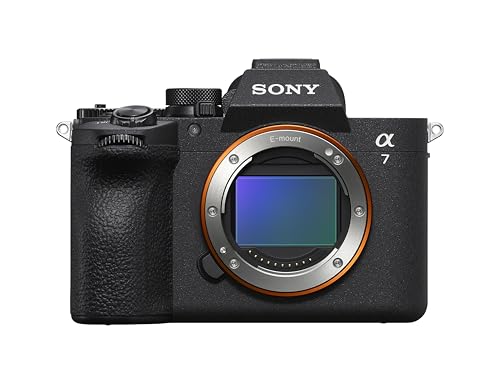
The a7 V suits the portraitist who buys the current generation for its autofocus intelligence. Its title is the most feature-forward of the mainstream bodies here: a full-frame mirrorless camera body with AI autofocus, a stated 30fps, and 5-axis in-body stabilisation. For portraiture, the AI autofocus is the headline — subject recognition that finds and holds eyes is the feature that converts directly into kept frames.
Environmental portraiture is where this generation’s pairing of AI focus and stabilisation compounds. The photographer working in a subject’s own space — a workshop, a kitchen, a rehearsal room — moves constantly, frames quickly and shoots in light that was never arranged for them. A body that holds eyes through that movement and steadies the frame at portrait focal lengths turns a documentary scramble into a portrait session, and the sitter’s environment stays in the photographs as context rather than being blurred into apology.
Consider what AI-driven eye focus does to a session’s rhythm. The traditional portrait workflow interrupts itself constantly: focus, recompose, check, reshoot. A body that locks onto the near eye and stays there through the sitter’s movement lets the photographer work continuously — talking, directing, shooting through expressions as they arrive. The portraits that result are the unguarded ones, and they come from the photographer’s attention being freed, not from any single frame’s sharpness.
Video-adjacent portrait work benefits quietly here too. Many portraitists now deliver a short motion portrait or behind-the-scenes reel with the stills, and a current-generation body with AI focus tracking handles that hybrid demand without a second camera. The title does not print a video specification, so filmmakers should verify formats on the product page — but the autofocus generation stated is the one hybrid shooters ask about first.
The 5-axis in-body stabilisation in the title serves the handheld portraitist specifically. Studio strobes freeze motion; natural-light portraiture in window light and shade does not, and stabilisation is what lets a photographer work at slower shutter speeds with longer portrait lenses without a tripod’s formality. Sessions stay fluid, locations stay flexible, and the sitter never watches their photographer assemble furniture.
The 30fps figure exceeds portraiture’s needs — nobody shoots a headshot at thirty frames a second — but it signals the processing headroom of the generation, and it serves the expressive-sitter problem: children, actors mid-laugh, the blink-prone. As the newest mainstream body in the guide, check the a7 V on Amazon if autofocus intelligence is your buying reason.
- Format: Full-frame, per the listing title
- Autofocus: AI autofocus, per the listing title
- Burst: 30fps, per the listing title
- Stabilisation: 5-axis in-body stabilisation, per the listing title
- Kit lens: Body only, per the listing title
- Resolution: Not stated in the listing title — verify with the manufacturer documentation
Strengths
- AI autofocus targets the portraitist’s core task: holding focus on a moving eye.
- 5-axis in-body stabilisation supports handheld natural-light sessions.
- Current generation carries the line’s longest support and accessory future.
Trade-offs
- 30fps burst is processing headroom portraiture rarely uses.
- Body-only purchase; portrait lenses are a separate budget line.
- Resolution unstated in the title for print-size planners.
Best for: natural-light portraitists who shoot handheld and want the newest autofocus generation working for them.
Not suited for: a strobe-lit studio specialist on a fixed tripod, where stabilisation and burst headroom sit unused behind flash duration.
There is a learning dividend to buying the current autofocus generation early in a portrait career: the photographer’s own skill develops around directing and seeing, rather than around focus management, because the camera absorbs the mechanical half of the craft. Purists debate whether that is good for photography; working portraitists with rent to pay have largely stopped debating it.

Sony a7R VI Bundle — Best flagship bundle
The a7R VI bundle suits the portraitist buying the top of the R line as a package. Its title describes a mirrorless camera and bag bundle for photo and video creators, with 8K recording, AI subject tracking and hybrid shooting, plus a 64GB UHS-II memory card and a camera bag in the box. The bundle framing matters: a flagship body that arrives with fast media and a bag is a kit assembled for immediate professional work.
Flagship bundles also speak to how the purchase will be financed in a working practice: as a single capital item, expensed and insured as a unit, rather than as a body plus a scatter of accessories bought across months. The bag in the box is not a triviality in that reading — it is the difference between a camera that travels protected from its first job and one that spends its first month riding in a tote while its owner researches cases. Professional tools are bought as systems, and this bundle is packaged by someone who knows it.
AI subject tracking is the portrait-relevant headline. In the R line’s context it means the resolution flagship also carries the generation’s subject recognition — the camera finds the person, holds the eye, and lets the photographer compose for the crop they intend to print. Resolution and tracking together answer the two failure modes of ambitious portraiture: the frame that was not sharp enough to enlarge, and the frame whose focus sat an eyelash behind the eye.
Generational position deserves a plain statement: an R VI succeeds an R V in this guide’s own list, and the honest differences a buyer can verify from these titles are the bundle’s completeness and the stated 8K and tracking features, not an invented specification gap. Portraitists choosing between the two R bodies should compare the full product pages figure by figure; the titles alone argue package and positioning, and this guide will not pretend otherwise.
The 8K recording figure belongs to the hybrid creator the title names — the portraitist who also films, whose clients ask for a session film alongside the stills. For pure stills work it is headroom; for the hybrid practice it is a deliverable. The UHS-II card in the bundle is the quietly correct inclusion, because high-resolution stills and 8K video both punish slow media, and a flagship throttled by a bargain card is a common first-week disappointment this bundle pre-empts.
Buyers should note the title does not print the body’s megapixel count — the R line’s defining figure is, again, a product-page verification. What the bundle guarantees in print is the package: body, fast card, bag, tracking, 8K. Check the a7R VI bundle on Amazon if the flagship-as-kit shape matches how you buy professional tools.
- Line: Alpha 7R — the high-resolution R line, per the listing title
- Video: 8K recording, per the listing title
- Tracking: AI subject tracking, hybrid shooting, per the listing title
- Included: 64GB UHS-II memory card and camera bag, per the listing title
- Resolution: Not stated in the listing title — verify with the manufacturer documentation
- Kit lens: No lens stated in the listing title — body and accessories bundle
Strengths
- AI subject tracking pairs the R line’s detail brief with modern eye-holding focus.
- UHS-II card included — the media speed this class of body actually requires.
- 8K recording serves the hybrid photo-and-video practice the title names.
Trade-offs
- No lens in the bundle; portrait glass remains a major separate purchase.
- Megapixel figure unstated in the title despite being the line’s identity.
- Flagship tier pricing for capability many portraitists will not use weekly.
Best for: hybrid photo-and-video portraitists buying the R line’s top as a ready-to-work package.
Not suited for: a stills-only beginner, since the bundle’s 8K and flagship positioning price in a practice they have not built yet.
Bundles reveal a maker’s theory of the buyer, and this one’s theory is a working creator: card fast enough for the files, bag sized for the body, tracking for the subject. A portraitist who recognises their own working week in that theory is the bundle’s intended owner, and the convenience is real rather than decorative.
Sony a6400 — Best APS-C starter
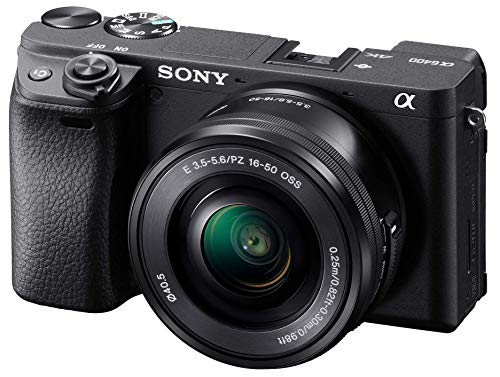
The a6400 suits the beginner portraitist entering Sony’s system at its most accessible rung — with one structural fact understood from the start: this is an APS-C camera, not full-frame. Its title describes a compact APS-C interchangeable lens camera with real-time Eye Auto Focus, 4K video, a flip screen and the 16-50mm kit lens included, E-mount compatible. That is a remarkably complete beginner brief, and the eye autofocus headline is the most portrait-specific claim in this entire guide.
The flip screen in the title deserves more respect than portrait traditionalists usually give it. A generation of photographers learned the craft alone — self-portraits as practice, timer and flip screen as the only assistants — and for them the screen is not a vlogging accessory but the studio mirror. It also serves the working portraitist shooting from low or high angles at events, where an eye-level finder is a contortion. Tools that widen who can practise, and from what positions, shape the portraits that get made.
The crop factor must be explained plainly, because it governs every portrait this camera makes. An APS-C sensor is smaller than full-frame, so it records the central portion of the image a lens projects — the crop. The practical effect is a narrower field of view: the included 16-50mm zoom frames scenes roughly as a 24-75mm lens would on the full-frame bodies above. For portraits that narrowing is partly a gift — more working magnification from modest glass — and partly a tax: at the same aperture and framing, the smaller sensor delivers deeper depth of field, so the creamy background dissolution of full-frame portraiture needs a faster lens or a longer distance to the background to achieve.
Parents photographing children are this camera’s sleeper constituency. Children are portraiture’s hardest subjects — fast, unposed, allergic to instruction — and a compact body with eye focus that simply works, carried in a jacket rather than a camera bag, captures the unrepeatable frames that staged sessions miss. The a6400’s size is not a compromise for this use; it is the entire qualification, because the camera present at breakfast outranks the superior camera in the cupboard.
Real-time Eye Auto Focus is why beginners succeed with this camera anyway. Learning portraiture involves a dozen simultaneous skills — light, posing, expression, exposure — and a camera that removes focus from that list, holding the sitter’s eye while the beginner thinks about everything else, shortens the road to presentable portraits dramatically. The flip screen adds the self-portrait and content-creation practice that many beginners actually start with.
Compactness completes the case: an APS-C body and its smaller lenses travel where full-frame kits stay home, and a camera that attends family life gets practised on. The ceiling is real — the crop’s depth-of-field tax and the format’s low-light limits are physics, not settings — but as the system’s doorway it is honestly built. Check the a6400 kit on Amazon if your portrait career starts this year and starts here.
- Format: APS-C compact interchangeable lens camera, per the listing title
- Autofocus: Real-time Eye Auto Focus, per the listing title
- Lens: 16-50mm lens included, E-mount, per the listing title
- Video: 4K video, per the listing title
- Screen: Flip screen, per the listing title
- Stabilisation: Not stated in the listing title — verify with the manufacturer documentation
Strengths
- Real-time Eye AF is the most portrait-specific feature stated in any title here.
- Lens included and system-compatible: E-mount glass bought later fits future bodies.
- Compact APS-C kit travels and gets practised on where full-frame stays home.
Trade-offs
- APS-C crop factor narrows the kit lens’s field of view versus full-frame equivalents.
- Smaller sensor yields deeper depth of field at equal settings — less background melt per aperture.
- Kit zoom’s speed limits low-light portraiture until a fast prime joins it.
Best for: beginners and content creators learning portraiture inside Sony’s system at its most portable size.
Not suited for: a portraitist whose signature look is extremely shallow depth of field at wide apertures, since the APS-C crop works against that rendering at every setting.
The upgrade path from this camera is unusually kind. Every E-mount lens bought for the a6400 mounts on the full-frame bodies above — full-frame lenses work natively, and even APS-C lenses mount with a crop mode — so the beginner’s glass budget is never stranded. Start here, learn eyes and light, and let the format decision ripen on evidence from your own sessions.
Comparison Table
| Camera | Format | Stated resolution | Stated focus feature | In the box |
|---|---|---|---|---|
| Sony a7 IV | Full-frame | Not stated in the listing title | Not stated in the listing title | Body only |
| Sony a7R V | Full-frame, R line | Not stated in the listing title | Not stated in the listing title | Body only |
| Sony a7 III Kit | Full-frame | 24.2MP | Not stated in the listing title | Kit lens included |
| Sony a7 V | Full-frame | Not stated in the listing title | AI autofocus, 30fps | Body only |
| Sony a7R VI Bundle | R line | Not stated in the listing title | AI subject tracking | 64GB UHS-II card, bag |
| Sony a6400 | APS-C | Not stated in the listing title | Real-time Eye Auto Focus | 16-50mm lens included |
How to Choose
Start with the work, not the line. Ask what your portraits are for: social sharing and family walls reward the a6400’s completeness and the a7 III kit’s balance; gallery prints and beauty retouching reward the R line’s resolution brief; client sessions reward the mainstream bodies’ reliability and the a7 V’s autofocus intelligence. The camera that matches the destination of the files is the right camera, whatever its generation.
Budget the lens before the body. Every body-only listing in this guide is half a purchase, and the portrait prime you pair with it will influence your photographs more than the difference between adjacent bodies. A sensible allocation buys the body one rung lower than ambition suggests and puts the difference into glass — the a7 III kit plus a fast prime is a more capable portrait outfit than a flagship body behind a kit zoom.
Consider renting or borrowing before committing the largest sums, particularly between the two R bodies and between the a7 IV and a7 V. A weekend with each candidate, shooting your own sitters in your own light, converts specification arguments into preferences you can trust. The differences that survive contact with your actual sessions are the differences worth paying for; the rest is brochure weather.
Decide the format question on the crop arithmetic, not on prestige. Full-frame gives shallower depth of field at equal settings and the classic portrait rendering; APS-C gives size, price and a crop that effectively lengthens your lenses while deepening focus. Photographers who shoot environmental portraits — people in places, both sharp enough to read — sometimes prefer the crop’s behaviour outright.
Finally, read the titles the way this guide did. Sony’s listings range from the a7 III kit’s full figures to the a7 IV’s bare name. Where a title is silent, the product page holds the specification, and a purchase this size deserves the ten minutes of verification the spec boxes above keep pointing to.
Does Full-Frame Really Matter for Portraits, or Is It Habit?
It matters in one specific, physical way: depth of field. At the same framing and aperture, a full-frame sensor renders a shallower zone of sharpness than APS-C, so backgrounds behind a sitter dissolve more completely. For the classic headshot — face sharp, world melted — that is a genuine tool, and it is why five of these six picks are full-frame. It is not a quality verdict on the photographs themselves: composition, light and expression are format-blind, and a well-lit APS-C portrait defeats a careless full-frame one every day of the week.
Working distance is the under-discussed variable in that equation. A portraitist who can step back — longer lens, more space between sitter and background — manufactures shallow-looking depth of field on any format, because background blur grows with the geometry, not only with the sensor. Studio and outdoor portraitists with room to work exploit this constantly, which is why their APS-C work is so often mistaken for full-frame. The format gap is real but narrower than the forums claim, and it closes further every time the photographer uses distance deliberately.
The honest middle position is that format sets the rendering’s starting point and the photographer does the rest. Distance to the background, focal length and aperture can push either format toward the other’s look across most of the practical range. Buy full-frame for the headroom in the shallow direction; buy APS-C for size and price; do not buy either believing the sensor takes the portrait.
Which Lens Should a New Sony Portraitist Buy First?
A fast prime in the classic portrait focal range — the short-telephoto territory that flatters faces by standing back from them. On full-frame that means the 85mm class; on the a6400’s APS-C crop, a 50mm-class lens frames similarly, which is the crop factor working in the beginner’s favour, since the shorter lens is smaller and usually less expensive. The prime’s wide aperture buys two things a kit zoom cannot: background separation at portrait distances, and shutter speed in window light.
Second-hand glass deserves a mention in the same breath, because portrait primes hold their value and their performance unusually well. A used fast prime from a reputable seller, checked for fungus and focus accuracy, delivers the identical rendering to a new one at a fraction of the commitment — and for beginners on the a6400 or the a7 III kit, that arithmetic often funds the lens a full season earlier. Portraiture’s classic focal lengths have been stable for decades, so the used market is deep in exactly the lenses this genre wants.
Buy it after the kit lens has taught you your distances, not before. A month of portraits on the included zoom reveals whether you compose tight or wide, near or far, and that evidence should choose the prime’s focal length. Glass bought on evidence stays in the bag for a decade; glass bought on fashion gets sold within the year.
How Should a Portrait Session Actually Run on Any of These Bodies?
The first ten frames are for the sitter, not the portfolio. Nervous subjects photograph as nervous subjects until the shutter’s sound becomes furniture, so experienced portraitists shoot early and obviously, talk through the throwaway frames, and let the sitter watch themselves relax across the session’s arc. The cameras in this guide support that rhythm in their different dialects — Eye AF that removes focus anxiety, stabilisation that removes tripod formality, resolution that forgives reframing — but the rhythm itself is the photographer’s, and no body supplies it.
Wardrobe and background repay the same foresight as any setting on these bodies. A sitter’s clothing that fights the background’s colour will defeat the finest sensor in this guide, while a plain backdrop and a considered palette let even the a6400’s files look deliberate. Portraitists keep a small rail of neutral garments and a collapsible background for exactly this reason — the cheapest image-quality upgrade in the genre is the one that happens before the camera is raised.
Review together, briefly, at the session’s midpoint. Showing a sitter one strong frame converts them from subject to collaborator; the second half of every good session is visibly better than the first for exactly this reason. Then put the screen away and work. The portraits clients frame are almost never the technically perfect ones — they are the frames where the person recognised themselves, and those arrive after trust, not after settings.
Common Mistakes
Buying the flagship body and starving the lens is the classic allocation error in this system. Portraits are made by glass and light; the body records them. A mid-line body behind a fast portrait prime out-photographs a flagship behind a slow kit zoom in every session condition that matters, and the price difference often covers the prime outright.
Ignoring the crop factor when moving between formats wastes money in both directions. An APS-C owner who buys lenses by their printed focal length without the crop arithmetic ends up with fields of view they did not intend; a full-frame owner who assumes APS-C habits transfer unchanged rediscovers depth of field the hard way, in a client’s session.
Chasing resolution for its own sake is the third trap. Resolution beyond your print sizes and cropping habits buys storage costs and retouching honesty you may not want — high-resolution portraiture shows every pore, and not every sitter commissions that truth. Match the R line’s brief to work that uses it.
Shooting every portrait at the widest aperture is a subtler beginner error that fast primes invite. A face has depth — nose to ear is a landscape in miniature — and at the widest settings the far eye and the ear dissolve whether or not the photograph wanted them to. The classic portrait apertures exist because generations of photographers learned where sharpness should stop; the new owner’s job is to learn that the lens’s maximum is a tool for darkness and distance, not a default.
Finally, many beginners blame the body for portraits that light was responsible for. A window, a reflector and an hour of practice improve a portrait more than any upgrade in this guide. Buy the camera that removes your real obstacle — focus, format, completeness — and spend the savings on learning light.
Final Recommendation
For most portraitists, the Sony a7 IV is the balanced buy: the full-frame mainstream body around which a serious lens kit accretes, without a specialism’s tax. Step up to the a7 V if autofocus intelligence and handheld stabilisation match your natural-light practice, or to the R line — a7R V for the body, a7R VI bundle for the ready-made flagship package — if your work is printed large and examined closely. The a7 III kit is the value door into full-frame, complete and honestly specified, and the a6400 remains the right first Sony for beginners, its Eye AF teaching the craft while its crop factor teaches the arithmetic. A portrait succeeds when the sitter forgets the camera entirely, and the best body in this guide is simply the one whose stated strengths remove your obstacles to that moment — for the majority of working portraitists, that body is the a7 IV.
FAQ
Which Sony camera is best for a beginner portrait photographer? The a6400 kit: its title states real-time Eye Auto Focus, it includes the 16-50mm lens, and its APS-C size keeps the whole outfit portable. Photographers certain they want full-frame should start with the a7 III kit instead.
What does the APS-C crop factor do to portraits? It narrows the field of view — the a6400’s 16-50mm frames roughly like a 24-75mm on full-frame — and it deepens depth of field at equal settings, so backgrounds melt less unless you use a faster lens or more distance behind the sitter.
Do I need the R line’s resolution for portraits? Only if your work is printed large, cropped aggressively or retouched at beauty level. For typical client prints and sharing, the a7 III kit’s stated 24.2MP is a working balance, and resolution beyond need costs storage on every frame.
Are these cameras sold with lenses? Two are: the a7 III kit and the a6400 with its 16-50mm. The a7 IV, a7R V and a7 V are body-only listings, and the a7R VI bundle adds a card and bag rather than a lens — price your portrait prime into those purchases.
Can APS-C lenses and full-frame lenses be mixed? All six cameras share the E-mount. Full-frame lenses mount and work fully on the a6400, with the crop applied; APS-C lenses on the full-frame bodies mount with the camera recording a cropped area. Glass bought for either format stays useful across the line, which is the system’s kindest property.
Why does Eye AF matter so much for portraits? Because a portrait lives or dies on the near eye being sharp, and sitters move. The a6400 states real-time Eye Auto Focus outright, the a7 V states AI autofocus and the a7R VI states AI subject tracking — three printed versions of the same portrait-first idea.
Related Guides
Panasonic’s rival system gets its own treatment in our Lumix landscape camera guide, where several bodies here reappear in scenery service. When the subject performs rather than poses, the small concert camera guide covers the fixed-lens compacts that venues actually allow. And for cameras as workplace tools, the meeting room camera guide examines the 360 units and video bars that furnish hybrid rooms.


