What's inside
- Where to Buy
- Key Takeaways
- Quick Picks
- How We Chose These Picks
- Comparison Table
- How to Choose
- Will the Venue Actually Let a Compact Camera In?
- How Do You Photograph a Stage Without Annoying the Whole Row?
- What Should You Practise Before the Headliner’s Set?
- Common Mistakes
- Final Recommendation
- FAQ
- Related Guides
As an Amazon Associate I earn from qualifying purchases. This post may contain affiliate links at no extra cost to you.
[SITE_DOMAIN] is reader-supported. When you buy through links on our site, we may earn an affiliate commission.
Where to Buy
All six cameras in this guide are sold on Amazon, and the bundle details matter more than usual here. The Panasonic Lumix ZS99 listing includes a case and a 64GB SD card, and the Canon PowerShot SX740 HS bundle adds a 64GB card and a bag, so compare what actually ships rather than headline model names. The Canon PowerShot G7 X Mark III, the Canon PowerShot G7 X Mark II, the Panasonic Lumix ZS300 and the KODAK PIXPRO FZ55 are listed as cameras without those bundle extras named in their titles, so budget for a card and a small pouch separately where the title stays silent.
Finding the best small cameras for concerts starts with a rule that has nothing to do with image quality: many venues ban cameras with detachable lenses at the door, no matter how small the body or how innocent the owner. Security staff work from the silhouette, and a mirrorless body with a prime reads as professional kit even when it cost less than the ticket. Every camera in this guide is a fixed-lens compact, which is precisely the category that door policies are written around. They slip through bag checks that stop interchangeable-lens bodies, they ride in a jacket pocket, and they raise no argument at the barrier.
Ticket prices have a way of sharpening this decision. A seat close enough to make any camera look good now costs serious money at most tours, which pushes ordinary fans toward the distant rows where equipment earns its keep. The cameras below are, in effect, a way of buying back some of that lost proximity — not all of it, and never the front row’s intimacy, but enough that the photographs stop being evidence you attended and start being pictures worth keeping.
Once inside, the physics of a gig take over. Stage lighting swings from near-darkness to strobe-bright within a single chorus. The artist may be eight metres away or eighty. Your neighbours paid for the show too, so a glowing screen held high and a popping flash are social failures even when they are technical successes. A concert camera earns its place by zooming quietly from your seat, gathering light without flash, and staying discreet enough that nobody around you remembers it was there.
A word about why a dedicated camera at all, when the phone in the same pocket films in high resolution and never gets stopped at doors. The phone’s weakness at gigs is reach: its zoom is a crop dressed as a lens, and from row thirty the performer dissolves into pixels long before the frame tightens. Its second weakness is manners — a phone raised to film glows brighter, rings, buzzes and invites reply. A compact camera is a single-purpose, silent tool that does the one job better and then disappears. That is the whole case for carrying one, and it is enough.
The six picks divide along two axes. Zoom reach runs from the Kodak’s modest 5x to the Canon SX740 HS bundle’s 40x, with the two Panasonics in between at 30x and 15x. Sensor ambition runs the other way: the G7 X Mark II and the ZS300 state 1-inch sensors in their titles, the class of sensor that drinks in stage light, while the long-zoom models trade sensor claims for reach. Which axis matters more depends on your seat, and the reviews below argue each case on the evidence its own listing title provides.
Key Takeaways
- Venue door policies are the first filter: all six picks are fixed-lens compacts, the shape that detachable-lens bans are not aimed at.
- The Panasonic Lumix ZS99 states the longest concert-ready reach here, a 30x zoom covering 24-720mm, and its title names concerts outright.
- The Canon G7 X Mark II and Panasonic ZS300 state 1-inch sensors, the low-light axis of this guide.
- The Canon SX740 HS bundle claims 40x optical zoom and 4K UHD video, the reach champion for arena seats.
- The KODAK PIXPRO FZ55 is the simple, inexpensive-feeling end: 16MP, 5x zoom, 1080p video and a 2.7-inch screen.
- Check your venue’s published camera policy before the night; rules vary by artist as well as by building.
Quick Picks
| Pick | Badge | Why it made the cut |
|---|---|---|
| Canon PowerShot G7 X Mark III | Best current Canon compact | The newest G7 X generation, in black, for buyers who want Canon’s current compact line. |
| Canon PowerShot G7 X Mark II | Best stated low-light spec | Its title states a 1-inch sensor plus Wi-Fi and NFC for getting shots to a phone fast. |
| Panasonic Lumix ZS99 | Best concert zoom | 30x zoom over 24-720mm, 4K video and photo, with case and 64GB card in the listing. |
| Panasonic Lumix ZS300 | Best sensor-and-zoom balance | 20.1MP 1-inch sensor with a 15x optical zoom spanning 24-360mm and 4K video. |
| Canon PowerShot SX740 HS | Best arena reach | 40x optical zoom, 20.3MP and 4K UHD video in a bundle with card and bag. |
| KODAK PIXPRO FZ55 | Best simple starter | 16MP, 5x optical zoom, 1080p video and a rechargeable Li-Ion battery in a point-and-shoot body. |
How We Chose These Picks
Door policy came first. We limited the field to fixed-lens compacts because that is the camera class concert venues write their rules around, and a technically superior camera confiscated at the barrier takes no photographs at all. Any interchangeable-lens body, however compact, was excluded before image quality entered the discussion.
Stated zoom came second, read straight from the listing titles. A concert seat is a fixed position, so optical reach is the difference between a performer filling the frame and a distant figure in a sea of heads. We recorded the zoom figure and, where the title gives one, the focal range, and we treated digital zoom claims as no evidence at all.
Low-light evidence came third, and we were strict about it: a sensor size counts when the title states it. Two picks state 1-inch sensors. Where a title says nothing about the sensor, the spec box below says so plainly rather than borrowing figures from other sources, because a buying decision should rest on what the seller actually promises.
Finally we weighed the practical kit around the camera: cards and cases named in bundle titles, connectivity for moving a shot to a phone before the encore ends, and video ceilings from 1080p to 4K for the songs you film rather than photograph.
One more filter deserves stating, because readers ask: we did not rank these cameras by review scores, sales rank or brand prestige. A concert camera succeeds or fails against a specific seat, a specific lighting rig and a specific door policy, and none of those appear in a star average. The evidence used here is narrower and more useful — what each manufacturer commits to print in its own listing title, weighed against the geometry of real venues.

Canon PowerShot G7 X Mark III — Best current Canon compact
The G7 X Mark III suits the concertgoer who already trusts Canon’s compact line and wants its current generation rather than a predecessor. The listing title is strikingly plain — Canon PowerShot G7 X Mark III Digital Camera, in black — and that plainness shapes this review: we judge the camera on its place in the line and on the concert use case, and we decline to invent the specification the title withholds.
What that place in the line means at a gig is a pocketable fixed-lens body from a series Canon has refined across three generations for exactly the carry-everywhere role a concert demands. It passes the door test by shape. It asks nothing of your outfit beyond a pocket or a small bag. During the show it is a camera you operate by feel and habit, which matters when the house lights are down and the song you waited for has just started.
Buyers comparing generations should notice what the title does not do: unlike its Mark II sibling below, this listing states no sensor size, no zoom figure and no video resolution. That silence is not evidence the hardware lacks those things; it is evidence that this particular listing does not promise them in writing. Shoppers who buy on stated specification should read the Mark II and ZS300 reviews next, where the titles commit numbers to print, and treat this camera as the choice for people whose confidence comes from the model line itself.
If the current-generation Canon is the one you want, look over the G7 X Mark III listing on Amazon and read its full product description carefully, since the short title leaves the detailed specification to the page below it.
- Model: Canon PowerShot G7 X Mark III digital camera, per the listing title
- Colour: Black, per the listing title
- Lens type: Fixed-lens compact (PowerShot line), per the listing title
- Sensor size: Not stated in the listing title — verify with the manufacturer documentation
- Zoom range: Not stated in the listing title — verify with the manufacturer documentation
- Video resolution: Not stated in the listing title — verify with the manufacturer documentation
Strengths
- Current generation of a long-running compact line, so handling and menus follow a mature design.
- Fixed-lens compact shape that venue detachable-lens bans are not written against.
- Plain, unambiguous listing: model and colour are exactly what the title promises.
Trade-offs
- The title states no zoom figure, so reach from a distant seat cannot be judged from the listing headline.
- No sensor size is stated, so low-light expectations rest on the product page, not the title.
- No card or case is named in the title; allow separately for both.
Best for: a Canon loyalist who wants the current G7 X generation as an every-show pocket camera.
Not suited for: arena seats demanding 300mm or more of stated reach, since this title promises no zoom figure at all.
One habit makes any compact better at gigs, and this Canon is no exception: arrive during the support act and learn the camera’s exposure behaviour on a set you care less about. By the headliner’s first chorus you will know how it reacts when the lighting rig swings from red wash to white strobe, and the shots that matter will not be your experiments.
Handling in the dark is the unlisted specification that decides whether a compact gets used at all. Buttons must be findable by thumb, the zoom must answer without a glance, and the screen must wake to the scene rather than to a menu. A mature line like this one has had those ergonomics argued over for years by owners who shoot one-handed in crowds, and the current generation inherits the settlement. You will feel that inheritance most in the songs where you never look down.
Consider also where this camera sits in a household rather than at a single show. A current-generation compact becomes the default camera for birthdays, holidays and school performances as well, because it is the device that is always charged and always near. The concert brief — pocketable, fixed lens, quick to raise and quiet to use — is the same brief those occasions set, which is why buyers often find the gig camera they chose carefully ends up doing more work than any other camera they own. The Mark III’s plain title gives no bundle to lean on, so treat the first accessory purchase as part of the decision: a card fast enough for your filming habits and a case that fits the pocket you actually carry.

Canon PowerShot G7 X Mark II — Best stated low-light spec
The Mark II is the pick for the concertgoer whose seats sit in the difficult middle: close enough that a huge zoom is wasted, dark enough that sensor quality decides whether the photograph survives. Its title states the fact that matters most in that territory — a 1-inch sensor — alongside Wi-Fi, NFC and an LCD screen, in a black body. Among small sensors, the 1-inch class collects meaningfully more light per frame, and stage light is the scarcest resource at any gig.
Think of a club show, standing room, the performer lit by two coloured spots and a haze machine. A small-sensor compact renders that scene as noise with a silhouette in it. A 1-inch sensor gives the camera’s processing something real to work with: skin tones under magenta light, the grain of a guitar body, the drummer visible behind the kit rather than implied by cymbal flashes. The Mark II’s stated sensor is why it anchors the low-light end of this guide.
The connectivity in the title earns its mention on the night itself. Wi-Fi and NFC exist to move a photograph from camera to phone without a cable or a laptop, and at a concert that transfer is the difference between posting the shot while the encore is still ringing and finding it in a folder three weeks later. The LCD screen is the framing tool in a crowd where raising a camera to your eye is neither practical nor welcome.
Street price behaviour is the practical upside of an older generation, stated carefully because this guide prints no prices: superseded models are the ones retailers discount, bundle and clear, so the Mark II’s position in the line is frequently its second-best feature after the sensor. A buyer who checks the listing will often find the stated 1-inch sensor attached to the most negotiable Canon in this guide, and for a camera bought to be risked in crowds and weather, that combination of capability and replaceability is its own kind of wisdom.
Age is the honest caveat. The Mark II is the older generation beside the Mark III above, and its title states no zoom range and no video resolution, so reach and filming specs must be confirmed on the product page. Concertgoers whose seats are far from the stage should weigh the Panasonics below. Those who shoot from the floor of a small venue can check the G7 X Mark II on Amazon, where its 1-inch sensor is the headline fact worth paying for.
- Sensor: 1-inch sensor, per the listing title
- Connectivity: Wi-Fi and NFC, per the listing title
- Display: LCD screen, per the listing title
- Colour: Black, per the listing title
- Zoom range: Not stated in the listing title — verify with the manufacturer documentation
- Video resolution: Not stated in the listing title — verify with the manufacturer documentation
Strengths
- Stated 1-inch sensor, the strongest low-light evidence in the Canon half of this guide.
- Wi-Fi and NFC move shots to a phone during the show, not days later.
- Fixed-lens compact body passes the venue door test by shape.
Trade-offs
- Older generation than the Mark III listed above it.
- No zoom figure in the title, so distant-seat framing is unproven on paper.
- No video resolution stated for buyers who film whole songs.
Best for: club and theatre shows from the floor, where light is scarce and distance is short.
Not suited for: a seat 60 metres from the stage, where an unstated zoom range leaves the performer a small figure no matter how clean the sensor renders it.
There is a second, quieter reason the stated sensor matters at gigs: colour. Stage lighting is rarely white, and small sensors under magenta or deep blue light tend to surrender skin tones first, leaving faces grey or waxy. A 1-inch sensor holds more colour information per pixel for the camera’s processing to work with, so the singer’s face stays a face instead of becoming a bright patch between two coloured gels. Anyone who has culled a card of club photographs knows this failure mode intimately, and it is the failure the Mark II’s headline specification is built to resist.
Pair this camera with a simple discipline: shoot the verses, watch the choruses. A 1-inch sensor rewards the moments you choose, and the person next to you did not pay to watch the show through your LCD. The photographs improve when the camera spends half the night in your pocket, because you start waiting for light worth recording.

Panasonic Lumix ZS99 — Best concert zoom
The ZS99 is the pick whose title argues its own case: a compact camera for travel with a 30x zoom and a 24-720mm zoom lens, 4K video and photo, described by Panasonic itself as great for travel and concerts. That last phrase is rare honesty in a listing title, and the numbers behind it are the right numbers for the job. A 24mm wide end frames the whole stage and the crowd around you; 720mm at the long end pulls a guitarist’s hands into frame from the back of a theatre.
Picture the seat this camera is built for: row thirty of a seated arena show, the stage a bright island across a dark floor. Phones around you produce wide shots of a distant glow. The ZS99’s stated zoom range turns that same seat into a working position — full-stage frames at the wide end for the production numbers, tight frames at the long end for the solos, and 4K video for the one song you want to keep whole.
The bundle contents deserve attention because they remove the two purchases buyers forget. A case is named in the title, and a 64GB SD card is included, so the camera can travel protected and shoot on its first night without a second order. For a camera bought against a specific concert date, that completeness is worth real money and real peace of mind.
Seated venues are also where this camera’s travel heritage pays off socially. A long-zoom compact reads to ushers and neighbours as a holiday camera, because that is what it is; it attracts none of the attention a big lens draws in a quiet auditorium. Between songs it goes back into its included case, and during them it works from your lap rather than from above your head. Discretion is a specification no title can print, and the ZS99’s whole shape argues for it.
Reach this long has a cost the title leaves you to infer: at 720mm, hand shake magnifies and stage light thins out, so the long end rewards braced elbows and short bursts. The title states no sensor size, so judge its low-light ceiling cautiously and lean on the wide and middle zoom range in the darkest clubs. From a distant seat, though, nothing else here states this combination of range and readiness — check the ZS99 bundle on Amazon if your tickets put the stage far away.
- Zoom: 30x zoom with 24-720mm zoom lens, per the listing title
- Video: 4K video and photo, per the listing title
- Stated use: Travel and concerts, per the listing title
- Included: Case and 64GB SD card, per the listing title
- Colour: Black, per the listing title
- Sensor size: Not stated in the listing title — verify with the manufacturer documentation
Strengths
- 24-720mm stated range covers full-stage frames and tight solos from one seat.
- The manufacturer names concerts in the title — the use case is the pitch.
- Case and 64GB card included, so it is gig-ready out of the box.
Trade-offs
- 720mm hand-held in stage light demands braced technique and burst shooting.
- No sensor size stated, so the darkest club shows are a gamble on paper.
- Long-zoom compacts are thicker than shirt-pocket cameras; plan a jacket pocket or the included case.
Best for: seated arena and theatre shows where the stage sits far away and one camera must cover wide and tight frames.
Not suited for: front-row club work, where a 24-720mm zoom spends the night at its wide end and the unstated sensor size matters more than reach.
The 4K video in the title deserves a word about memory and heat rather than resolution. Filming whole songs at 4K fills cards quickly, which is precisely why the included 64GB card matters on night one and why a second card belongs in the case for festival days. Short clips of choruses and solos are the sustainable habit: they keep the camera’s buffer and battery ahead of the show, and they leave you watching most of the performance with your own eyes. The ZS99’s bundle anticipates the stills side of that bargain well; the filming side is yours to ration.
Learn the zoom in two halves. Below roughly 200mm equivalent, this camera behaves like any good compact and forgives casual handling. Beyond that, it becomes a small telescope that happens to record photographs, and it rewards the astronomer’s virtues: steady support, patience, and waiting for the moment the subject crosses the light.
Panasonic Lumix ZS300 — Best sensor-and-zoom balance
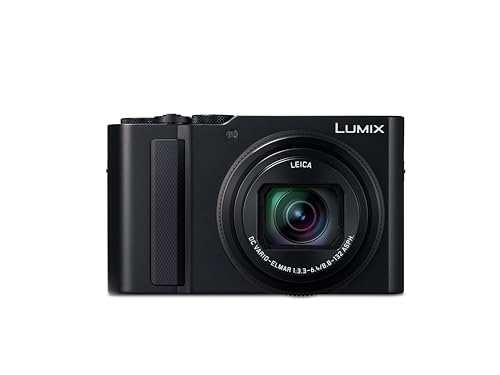
Read as a landscape of compromises, most travel zooms surrender one axis to feed the other. The ZS300 is the pick that refuses to: its title states a 20.1MP 1-inch sensor and a 15x optical zoom spanning 24-360mm, with 4K video, in a compact travel zoom body. That pairing is the thoughtful middle of this guide — a sensor from the low-light class and a zoom long enough for real seats, in one camera.
Translate those figures into a show. The 1-inch sensor handles the lighting designer’s darker moods, the verses sung under a single blue spot. The 360mm long end reaches from the back of a theatre to a face at the microphone without digital cropping. The 24mm wide end takes in the full production when the whole band lights up. A concertgoer whose seats wander — club one month, arena the next — gets one camera that argues for itself in both buildings.
Video shooters should note the 4K in this title for a reason beyond sharpness: a 4K frame of a whole stage can be reframed in editing into a closer shot of one performer, which is the closest thing a fixed-seat videographer gets to a second camera angle. Filmed wide and finished tight, a single ZS300 covers the acoustic number twice — once as the room saw it, once as the chorus deserves. That trick depends on resolution the title actually states, which is why it belongs to this pick and not to the 1080p Kodak below.
The 20.1MP resolution in the title matters for a specific concert habit: cropping. From a fixed seat, even 360mm may leave the performer smaller than the frame you imagined, and a 20.1MP file gives you honest room to tighten the composition at home without the result dissolving. Cropping is the second zoom every fixed-seat photographer owns, and this title states the pixel count that makes it usable.
Against its ZS99 sibling, the trade is explicit: half the zoom figure, in exchange for a stated 1-inch sensor and a stated megapixel count. Against the G7 X Mark II, it answers the older Canon’s unstated reach with a printed 24-360mm range. If your gigs mix distances and darkness in equal measure, check the ZS300 on Amazon — it is the pick whose title promises the fewest apologies.
- Sensor: 1-inch sensor, per the listing title
- Resolution: 20.1MP, per the listing title
- Zoom: 15x optical zoom, 24-360mm, per the listing title
- Video: 4K video, per the listing title
- Form: Compact travel zoom camera, per the listing title
- Included accessories: Not stated in the listing title — verify with the manufacturer documentation
Strengths
- Only pick here stating both a 1-inch sensor and a full focal range in its title.
- 20.1MP files leave genuine room to crop from fixed seats.
- 24-360mm covers club wide shots and theatre close-ups without a second camera.
Trade-offs
- 360mm is half the ZS99’s reach; the farthest arena seats will still crop hard.
- No card or case named in the title, unlike the ZS99 bundle.
- Buyers wanting maximum zoom per purchase should look at the SX740 HS bundle below.
Best for: mixed concert calendars — clubs, theatres and mid-size arenas — where darkness and distance both show up.
Not suited for: the back rows of stadium shows, where 360mm leaves the headliner small and only the 40x Canon below states the reach those seats demand.
Travel is the ZS300’s other stated job, and it explains the design’s balance better than any single concert can. A travel zoom lives in a jacket for a fortnight, shoots cathedrals at dawn and street musicians at dusk, and never gets the chance to swap lenses. The concert brief is a compressed version of the same demands — one body, whatever light the evening provides, whatever distance the ticket bought. A camera specified for that fortnight is specified for your gig calendar too, and the title’s pairing of sensor and zoom reads like a packing list written by someone who has done both.
Treat this camera as the default recommendation of the guide for a reason: it is the one whose compromises are printed on the box. A buyer can disagree with the balance Panasonic struck, but nobody can claim the balance was hidden, and at a concert that honesty is what survives contact with the lighting rig.

Canon PowerShot SX740 HS — Best arena reach
Stadium and arena seats rewrite the priorities. From the upper tier, the stage is a bright rectangle and the performers are animated figures inside it; light is plentiful because the production is enormous, and distance is the entire problem. The SX740 HS bundle answers with the longest stated reach in this guide: a 40x optical zoom on a 20.3MP compact, with 4K UHD video, Wi-Fi and Bluetooth, sold with a 64GB card and a bag in the listing.
Forty times zoom is a figure worth pausing over — not for the number itself, but for what it does to composition from a cheap seat. It converts a wide shot of a stage into a frame around a single performer. It lets the encore’s acoustic segment, one musician and a spotlight at centre stage, fill your photograph from sixty rows back. The 20.3MP sensor count in the title then supports the crop you will still apply at home.
Daylight festivals are this camera’s second home, and the title’s numbers explain why. Outdoor stages sit even farther from the crowd than arena stages, across a field of heads and flags, and the same 40x reach that isolates a singer indoors picks out a guitarist across a festival bowl. Bright daylight removes the low-light question entirely, leaving reach as the only contest — the one contest this Canon’s title wins outright in this guide. The included bag matters out there too, against dust and the walk between stages.
The bundle shape suits the buyer it is aimed at. Card and bag are in the box per the title, Wi-Fi and Bluetooth handle the trip from camera to phone, and 4K UHD video covers the songs you film. Nothing in the title claims a large sensor, and in a floodlit arena that omission matters less than it would in a basement club: the production lighting does the work that a 1-inch sensor does in darker rooms.
Technique is the tax on all that reach. At the long end of a 40x zoom, the frame swims with every heartbeat, so brace against the seat back, shoot in bursts, and expect to keep a fraction of frames. Buyers in small rooms should pass this by for the 1-inch picks above. Buyers whose concert life happens in big sheds can check the SX740 HS bundle on Amazon, card and bag already counted in.
- Zoom: 40x optical zoom, per the listing title
- Resolution: 20.3MP, per the listing title
- Video: 4K UHD video, per the listing title
- Connectivity: Wi-Fi and Bluetooth, per the listing title
- Included: 64GB card and bag, per the listing title
- Sensor size: Not stated in the listing title — verify with the manufacturer documentation
Strengths
- 40x optical zoom is the longest stated reach here — the arena-seat answer.
- Bundle includes the 64GB card and bag that other listings leave as extras.
- 4K UHD video plus Wi-Fi and Bluetooth cover filming and phone transfer.
Trade-offs
- No sensor size stated; dark club shows are outside its evidence.
- Full-zoom frames demand bracing and bursts to stay sharp.
- Long-zoom body is bulkier than the G7 X compacts for pocket carry.
Best for: arena and stadium regulars whose seats sit far from a brightly lit stage.
Not suited for: dim club photography, where reach is irrelevant and the title’s silence on sensor size leaves low-light performance unproven.
Battery planning is the unglamorous half of arena photography with a long zoom. Driving a 40x lens in and out, holding stabilisation against a moving frame and reviewing shots on a bright screen all draw power faster than casual daytime shooting, and a stadium day that starts with tailgate photographs can end with a tired battery before the encore. The bundle’s included card solves the storage half of that equation; the power half is the owner’s to plan, with a charged spare or a small power bank in the bag the bundle provides.
One more arena habit suits this Canon: photograph the production, not only the performers. At 40x you can isolate a lighting truss, a confetti cannon, the drummer’s riser — the machinery of a big show that wide phone shots flatten into glow. The bundle’s bag earns its place on the walk back to the car, when the camera is one more thing in tired hands.
KODAK PIXPRO FZ55 — Best simple starter
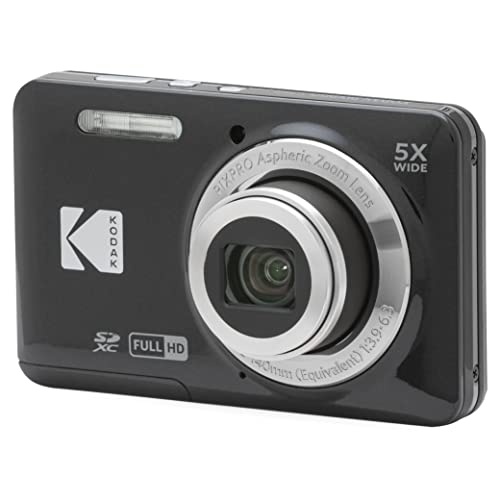
The FZ55 suits the concertgoer who wants a real camera between their phone and the stage without learning a new hobby. Its title describes a 16MP compact with a 5x optical zoom, 1080p Full HD video, a 28mm wide-angle lens, a 2.7-inch LCD and a rechargeable Li-Ion battery, pitched as a point-and-shoot and vlogging camera. Every one of those phrases points the same direction: simple, light, forgiving.
Five times zoom is a modest figure in this company, and honesty requires placing it. From the back of an arena, the FZ55 will not isolate a performer; it frames the stage, the screens and the crowd — the atmosphere shot rather than the portrait. From the floor of a club or the front rows of a small theatre, that same range is entirely workable, and the 28mm wide end is genuinely useful for the selfie with the stage behind you and the wide shot of your friends in front of the marquee.
Parents buying for a teenager’s first concert will recognise the calculation this camera invites. It costs a fraction of the interchangeable-lens kits that door staff would refuse anyway, it survives being dropped into a tote bag, and its photographs are good enough to be the ones the family actually keeps from the night. The vlogging label in its title points at the other half of that teenager’s life — school projects, skate clips, holiday diaries — where a simple camera with a real zoom outclasses a phone the moment the subject stands across a room.
The details in the title suit a first camera. A Li-Ion rechargeable battery beats feeding a camera disposable cells across a festival weekend. The 2.7-inch LCD is the whole interface, uncomplicated by viewfinders or dials. 1080p Full HD video records the singalong songs at a resolution that looks fine on a phone and a television, even if it is not the 4K the Panasonics and the SX740 state.
Buy it as a starter and a spare: the camera a teenager takes to a first gig, the second body in the bag when the main camera’s card fills, the one you lend without anxiety. Its ceiling is low and printed plainly in its own title, which is a virtue in a category full of inflated claims. Check the PIXPRO FZ55 on Amazon if your shows are small-room shows and your demands are honest ones.
- Resolution: 16MP, per the listing title
- Zoom: 5x optical zoom, 28mm wide-angle lens, per the listing title
- Video: 1080p Full HD video, per the listing title
- Display: 2.7-inch LCD, per the listing title
- Battery: Rechargeable Li-Ion battery, per the listing title
- Sensor size: Not stated in the listing title — verify with the manufacturer documentation
Strengths
- Point-and-shoot simplicity: the shortest learning curve in this guide.
- Rechargeable Li-Ion battery suits festival weekends better than disposable cells.
- 28mm wide end is right for crowd, marquee and stage-atmosphere frames.
Trade-offs
- 5x zoom cannot isolate performers from distant seats.
- 1080p video ceiling sits below the 4K stated by four rivals here.
- 2.7-inch screen is the smallest display figure in any title in this guide.
Best for: first gigs, small clubs and front-row general admission, where the stage is close and simplicity wins.
Not suited for: arena seats beyond the sound desk, where a 5x zoom tops out long before the performer fills the frame.
Festival days are where this Kodak’s simplicity compounds. A multi-stage day involves dust, spilled drinks, sudden rain and long hours on your feet, and a light point-and-shoot that nobody treats as precious gets carried into all of it while a costlier camera stays in the tent. The rechargeable battery named in the title charges overnight alongside a phone, the 2.7-inch screen is enough for framing in daylight between sets, and the photographs it makes are the day’s documentary record — friends, food stalls, the long walk back — with the headline set as the backdrop rather than the whole story.
There is a real argument that a camera like this teaches concert photography better than the zooms above it. With reach capped, the photographer learns timing, light and position — the skills that survive every equipment upgrade. The FZ55’s photographs will be made by its owner, not by its lens, and some owners discover that is the part they enjoy.
Comparison Table
| Camera | Stated zoom | Stated sensor / resolution | Stated video | Named extras |
|---|---|---|---|---|
| Canon PowerShot G7 X Mark III | Not stated in the listing title | Not stated in the listing title | Not stated in the listing title | None named |
| Canon PowerShot G7 X Mark II | Not stated in the listing title | 1-inch sensor | Not stated in the listing title | Wi-Fi and NFC |
| Panasonic Lumix ZS99 | 30x, 24-720mm | Not stated in the listing title | 4K | Case, 64GB SD card |
| Panasonic Lumix ZS300 | 15x optical, 24-360mm | 1-inch sensor, 20.1MP | 4K | None named |
| Canon PowerShot SX740 HS | 40x optical | 20.3MP | 4K UHD | 64GB card, bag, Wi-Fi, Bluetooth |
| KODAK PIXPRO FZ55 | 5x optical, 28mm wide | 16MP | 1080p Full HD | Li-Ion battery, 2.7-inch LCD |
How to Choose
Start with your seat, not with a spec sheet. Measure your typical show honestly: the distance from your usual ticket to the stage decides how much of the stated zoom ranges above you will actually use. Floor-of-the-club buyers can ignore reach entirely and shop the sensor column. Upper-tier arena buyers should invert that and shop the zoom column first, because no sensor recovers a performer who occupies forty pixels.
Next, weigh the darkness of your venues. Club circuits and theatre residencies run dim, with light designed for mood rather than cameras; there, the two titles stating 1-inch sensors — the G7 X Mark II and the ZS300 — carry the strongest evidence. Arena productions run bright enough that reach dominates, which is the SX740 HS bundle’s whole argument.
Then decide how you will use the photographs. If the point is a phone post before the house lights come up, connectivity stated in the title — Wi-Fi on the Mark II, Wi-Fi and Bluetooth on the SX740 HS — shortens that path. If the point is a framed print from the acoustic set, stated resolution and cropping room matter more, favouring the 20.1MP ZS300 and 20.3MP SX740 HS.
Do not overlook the walk in and out. A concert camera travels through crowds, cloakrooms, rain at the taxi rank and the occasional spilled drink, which argues for the included cases where titles offer them and for a wrist strap everywhere else. The camera that survives the journey home in working order is the one that shoots next month’s show as well; more concert cameras die on pavements than on stages, and the humble case is the accessory that prevents it.
Finally, read the venue’s own rules for your specific date. Artist-level bans override building policy at some shows, and a camera allowed last month can be refused on a no-photography tour. The fixed-lens shape of all six picks is the best general protection available, but the venue’s published page for your night is the only ruling that counts.
Will the Venue Actually Let a Compact Camera In?
Most published venue policies draw their line at detachable lenses, professional recording equipment and, at some shows, any camera at all. A fixed-lens compact sits on the permitted side of the first two lines by construction: nothing unscrews, nothing mounts, and the silhouette in a bag search is a holiday camera. That is the entire reason this guide contains no small mirrorless body, however pocketable — the door decision is made on shape in seconds, by staff who will not debate sensor sizes.
Artist policy is the moving part. Some tours impose a total photography ban that ushers enforce from the first song; others allow phones but single out dedicated cameras. Check the venue page and the artist’s own notices in the week of the show, and treat a clear ban as final. No photograph in this guide is worth an ejection, and the compact in your pocket makes compliance painless when the answer is no.
How Do You Photograph a Stage Without Annoying the Whole Row?
Darken the screen before the house lights drop, and turn off any focus-assist light or beep the menus offer. A glowing rectangle at full brightness in a dark auditorium is the single most resented object at any concert, and it is entirely optional. Shoot in short, deliberate bursts during loud passages rather than holding the camera aloft through quiet ones, and keep the camera at chest height instead of above your head — the frame loses little and your neighbours keep their sightline.
Flash deserves its own sentence: do not use it. From any real seat it lights the heads in front of you and nothing on stage, while announcing you to security and the artist alike. The cameras in this guide were chosen partly so that flash stays unnecessary — stated zoom for distance, stated sensor class for darkness, and patience for the lighting rig’s bright moments, which arrive in every chorus.
What Should You Practise Before the Headliner’s Set?
Use the support act as a rehearsal in the literal sense. The lighting designer runs the same rig, the room is the same darkness, and the photographs cost you nothing. Work through three things. First, find the exposure behaviour: shoot the support singer under the dimmest verse lighting and the brightest chorus, then review both frames at full magnification on the camera’s screen to see where noise and motion blur begin. Second, find your zoom discipline: if your camera states a long range, practise bracing at its longest setting until the frame steadies, because that skill cannot be improvised during the song you bought the ticket for. Third, set the camera’s manners — screen brightness down, sounds off, flash disabled — while the room is still forgiving.
Sound checks, when doors open early enough to catch one, are a gift of a different kind: full lighting at low stakes, the band in daylight clothes, and ushers not yet watching for raised cameras. Some of the most honest concert photographs ever made were taken in those twenty minutes, and a compact that is already configured from the support act is ready for them without a single menu dive.
Then put the camera away for the first two headliner songs. The opening of a set is when the production spends its best lighting and the crowd spends its best energy, and both are worth witnessing directly before you start mediating them through a screen. By the third song you will know the room, the rig and your camera, and the photographs you take from that point carry the confidence of someone who has already made their mistakes on the warm-up act.
Common Mistakes
Buying reach you will never use is the quiet budget error in this category. A club photographer carrying a 40x zoom owns a lens that spends its life at the wide end and a body bulkier than the job needs; match the zoom figure to the rooms you actually attend, using the stated ranges above as the map.
Trusting digital zoom figures is a second trap. Only optical zoom moves real glass; digital zoom crops and enlarges, which you can do better at home from a full-resolution file. Every zoom number quoted in this guide is optical and printed in its listing title.
A third failure arrives at the door: assuming last month’s policy governs tonight’s show. Tours change rules, and support acts sometimes play under different terms than headliners. Re-read the venue page on the day, and leave the camera in the car rather than arguing with the barrier.
Finally, many buyers shoot the entire show and experience none of it. Decide in advance which songs are for the camera and which are for you. The photographs from a chosen three songs, taken attentively, beat three hundred frames of distracted coverage every time.
Final Recommendation
For most concertgoers, the Panasonic Lumix ZS300 is the balanced buy: a stated 1-inch sensor for dark rooms, a stated 24-360mm zoom for real seats, 4K video and 20.1MP files that forgive cropping. Arena regulars should step up to the Canon SX740 HS bundle’s stated 40x reach, and club devotees who shoot close and dark will be served by the G7 X Mark II’s stated 1-inch sensor at the older generation’s position in the line. The ZS99 is the specialist for distant seated shows with its 24-720mm range and gig-ready bundle, the G7 X Mark III serves Canon loyalists who want the current model, and the FZ55 remains the honest starter for small rooms. When the encore ends and the lights rise over a hall full of phone screens, the camera that earned its ticket is the one whose stated strengths matched your seat — and for the mixed calendars most of us actually keep, that is the ZS300.
FAQ
Are compact cameras allowed at concerts? Usually, yes — most venue policies ban detachable-lens cameras and professional rigs, and all six cameras here are fixed-lens compacts. Artist-specific bans still override building policy, so check the venue page for your date.
How much zoom do I need for an arena show? From upper-tier seats, reach decides everything: the SX740 HS bundle states 40x optical zoom and the ZS99 states a 24-720mm range. Theatre and club distances are covered comfortably by the ZS300’s stated 24-360mm.
Does a 1-inch sensor really help at concerts? It is the strongest low-light evidence a title can offer in this class. Two picks state one — the G7 X Mark II and the ZS300 — and both are aimed at the darker rooms where small sensors struggle.
Can these cameras record video of songs? Four titles state 4K video: the ZS99, ZS300 and SX740 HS in stills-camera form. The FZ55 states 1080p Full HD. Venue rules on recording vary more than rules on photography, so check before filming whole sets.
Should I film whole concerts or just photograph? Photograph most of it. Filming fills cards, drains batteries and holds a glowing screen up for entire songs, while a still photographer can work in short bursts and watch the rest. If you film, film the one or two songs that matter most to you, on the picks whose titles state 4K, and keep clips short enough to stay mannerly.
Why is there no small mirrorless camera in this guide? Because door policy is the first concert filter. A detachable-lens body reads as professional kit to security staff regardless of size, and a camera refused at the barrier takes no photographs at all.
Related Guides
Water changes the camera brief completely, and our waterproof camera guide for beginners covers the sealed compacts built for pools and beaches. When the subject sits still and poses instead of performing, the Sony portrait camera guide takes up the interchangeable-lens systems this category had to exclude.


