What's inside
- Where to Buy
- Key Takeaways
- Quick Picks
- How We Chose These Picks
- Comparison Table
- How to Choose
- What Makes Dawn Light So Demanding of a Landscape Camera?
- Do Landscape Photographers Still Need a Tripod?
- How Should You Expose a Landscape When the Sky and Land Disagree?
- Common Mistakes
- Final Recommendation
- FAQ
- Related Guides
As an Amazon Associate I earn from qualifying purchases. This post may contain affiliate links at no extra cost to you.
[SITE_DOMAIN] is reader-supported. When you buy through links on our site, we may earn an affiliate commission.
Where to Buy
Amazon’s Lumix listings divide by system, and landscape buyers should note which system each body belongs to before comparing anything else. The Panasonic Lumix S5II and the Panasonic Lumix S5IIX are full-frame L-mount bodies. The Panasonic Lumix G100 is a Micro Four Thirds body sold with a 12-32mm lens. The Panasonic Lumix FZ80D bundle is a fixed-lens bridge camera with a 64GB card in the listing, and the Panasonic Lumix ZS50 and Panasonic Lumix ZS300 are pocket travel zooms. Lenses bought for one system do not fit the others, so the body decision is also a lens-system decision.
The best Lumix cameras for landscapes are judged by the light landscape photographers actually work in: the twenty minutes around dawn and dusk when the land separates into colour and shadow, and the long bright middle of a hiking day when a scene must be carried home in a single frame. The virtues that matter follow from that light — resolution for prints and crops, a wide end that takes in a valley, stabilisation for the tripod left in the car, and a body small enough that it is present at the viewpoint rather than back at the trailhead.
Panasonic’s range covers that brief at three scales. The full-frame S bodies offer the largest sensors and the L-mount lens system for photographers whose landscapes are printed and sold. The Micro Four Thirds G100 trades sensor size for a kit that vanishes into a daypack. The fixed-lens trio — a bridge camera with an enormous stated zoom range and two pocket travel zooms — serve the hiker who refuses interchangeable lenses entirely. Each scale is a legitimate answer; the reviews below argue them on the evidence of their titles.
Weather deserves its honest sentence before the reviews: no title in this guide claims weather sealing, so none is promised here. Landscape photographers work in drizzle, sea spray and dust as a matter of course, and the practical defences — a cover, a cloth, a dry bag, a camera that lives under a jacket between frames — belong to the owner’s kit list regardless of which pick they choose. Buy the camera for its stated optics and format; carry it like the weather is real.
A discipline note, because landscape buyers are specification shoppers by nature: where a title states a figure — 24.2MP, a 20-1200mm range, a 12-32mm kit lens — the review uses it, and where a title is silent about resolution, sealing or dynamic range, the spec box records the silence. Landscape photography punishes assumed specifications at altitude, in weather, far from a returns desk.
Key Takeaways
- The Lumix S5II states the landscape full-frame brief plainly: 24.2MP, Phase Hybrid AF and Active I.S. in an L-mount body.
- The S5IIX adds a stated 6K video capability to the same full-frame platform for hybrid landscape-and-film work.
- The FZ80D bundle states a 20-1200mm zoom range — the widest-to-longest span in this guide — with a 64GB card included.
- The G100 is the Micro Four Thirds option: a 12-32mm kit lens and 5-axis hybrid stabilisation in the smallest system here.
- The ZS300 pairs a stated 1-inch sensor and 20.1MP with a 24-360mm range in a pocket body for trail landscapes.
- The ZS50 is the elder pocket zoom: 12.1MP, a 24mm Leica-branded travel zoom lens and a low-light sensor claim in its title.
Quick Picks
| Pick | Badge | Why it made the cut |
|---|---|---|
| Panasonic Lumix S5II | Best full-frame landscape body | 24.2MP full-frame with Phase Hybrid AF and Active I.S. on the L-mount system. |
| Panasonic Lumix S5IIX | Best hybrid landscape body | Full-frame with stated 6K video plus photo, Active I.S. and Phase Hybrid AF. |
| Panasonic Lumix FZ80D Bundle | Best all-in-one zoom range | Fixed-lens bridge camera stating a 20-1200mm range, bundled with a 64GB card. |
| Panasonic Lumix G100 | Best light hiking system | Micro Four Thirds body with 12-32mm lens and 5-axis hybrid stabilisation. |
| Panasonic Lumix ZS50 | Best pocket classic | 12.1MP pocket camera with 24mm Leica travel zoom and a low-light sensor claim. |
| Panasonic Lumix ZS300 | Best pocket landscape quality | 20.1MP 1-inch sensor and a 24-360mm range in a compact travel body. |
How We Chose These Picks
Landscape evidence came first: stated resolution, stated focal ranges and sensor format, because those three decide what a landscape file can become — a wall print, a cropped composition, a dawn frame with shadow detail worth lifting. Figures were taken only from the titles, and formats were kept distinct: full-frame, Micro Four Thirds and the fixed-lens compacts are different tools, not a single ladder.
Carry came second, because landscape photography is an outdoor pursuit before it is a photographic one. A system that stays in the car photographs nothing, so the guide deliberately spans from the full-frame bodies a photographer plans a trip around, down to pocket cameras that attend every walk uninvited. Both ends have produced great landscape work; the honest variable is the owner’s legs and patience.
Stabilisation was weighed for the handheld reality of viewpoints: titles stating Active I.S. or hybrid stabilisation were credited, because dawn light at a windy overlook is where tripods get left behind and frames get lost. Video capability was treated as a bonus for hybrid creators rather than a landscape core virtue, and ranked accordingly.
We also kept the two pocket zooms deliberately apart in intent. The ZS50 and ZS300 share a silhouette and a maker, but their titles describe different generations of ambition — one a 12.1MP classic with branded optics, the other a 20.1MP 1-inch camera with a fully stated range — and landscape buyers deserve that difference argued rather than averaged, which the paired reviews below attempt.
Finally, bundle completeness was noted where titles state it — the FZ80D’s included card — because a camera bought for a trip departing Friday has no patience for a second delivery.

Panasonic Lumix S5II — Best full-frame landscape body
The S5II suits the landscape photographer building a serious full-frame kit on Panasonic’s L-mount. Its title states the core brief without decoration: a mirrorless camera with a 24.2MP full-frame sensor, Phase Hybrid AF, new Active I.S. technology and unlimited 4:2:2 10-bit recording, as a body. For stills-led landscape work, the first and third of those claims do the heavy lifting — resolution sized for prints, and stabilisation for the field.
Panorama work deserves a word in this body’s favour, because stitched landscapes are where working resolution and reliable handling multiply. A dawn panorama is a sequence of overlapping frames that must match in exposure and focus discipline; a body whose autofocus and stabilisation behave predictably, and whose files carry enough detail for the stitch’s overlaps to be cropped away, produces panoramas that print at sizes no single frame in this guide could reach. The S5II’s stated feature set is precisely the panorama photographer’s checklist, whether or not Panasonic wrote it with that in mind.
24.2MP is the landscape working resolution for a reason this guide has argued in other systems and repeats here without embarrassment: it prints large, crops moderately, and keeps file sizes civilised across a trip’s thousands of frames. A dawn shoot produces brackets and panoramas in volume; a sensor in this class lets the photographer work generously in the field and edit ruthlessly at home, without a storage crisis by day three.
L-mount’s alliance structure is a landscape consideration in its own right: the mount is shared across makers, so the lens catalogue available to an S body extends beyond Panasonic’s own glass to a wider alliance range, including wide zooms and primes from partner brands. A landscape system is a decade-long accumulation of lenses, and a mount with several manufacturers feeding it gives the buyer more price points and more optical philosophies to grow into than a single-maker mount of the same age.
Active I.S. matters to landscape work in the specific places tripods fail: the scramble to a viewpoint as the light breaks, the boat deck, the boardwalk vibrating under other visitors’ feet, the windy ridge where a tripod is a sail. Stabilisation does not replace the tripod for the deliberate long exposure — the waterfall, the star field — but it rescues the unplanned frame, and landscape archives are full of unplanned frames that became favourites.
Phase Hybrid AF is the stills-relevant modernity in the title: reliable autofocus for the photographer composing on a screen at arm’s length, in gloves, at dawn. The unlimited 10-bit recording belongs to the hybrid shooter and is noted for them. As a body-only purchase, the L-mount lens budget rides on top — plan the wide zoom first, since landscapes are built from the wide end. Check the Lumix S5II on Amazon if a full-frame landscape system is the project.
- Sensor: 24.2MP full frame, per the listing title
- Autofocus: Phase Hybrid AF, per the listing title
- Stabilisation: Active I.S. technology, per the listing title
- Video: Unlimited 4:2:2 10-bit recording, per the listing title
- Mount: L-mount system (S series body), per the listing title
- Kit lens: Body-only listing; no lens stated in the listing title
Strengths
- 24.2MP full-frame sensor is the proven working resolution for printed landscapes.
- Active I.S. rescues handheld frames at viewpoints where tripods fail.
- Phase Hybrid AF modernises field handling for screen-based composition.
Trade-offs
- Body-only: the L-mount wide zoom is a major second purchase.
- No weather-sealing claim in the title for a camera aimed at outdoor work.
- Full-frame kit weight commits the photographer to carrying it deliberately.
Best for: landscape photographers building a full-frame L-mount system for printed work.
Not suited for: a hiker counting grams on multi-day trails, since a full-frame body and its wide zoom are a deliberate load, not a pocket passenger.
Fieldcraft completes the body’s landscape case: batteries for a dawn are planned the night before, cards are formatted in the camera rather than the computer, and the wide zoom is the lens mounted before leaving — because the first viewpoint of the day rarely announces itself, and fumbling a lens change in half-light with cold fingers is how front elements meet granite. A body that anchors a disciplined routine like that is doing landscape work even while it is still in the bag.
The S5II also marks Panasonic’s full-frame line reaching maturity — the generation where autofocus and stabilisation stop being the system’s caveats and become its selling points. Landscape buyers who dismissed the S line’s first iteration on those grounds should re-examine it on this title’s evidence.

Panasonic Lumix S5IIX — Best hybrid landscape body
The S5IIX suits the landscape creator whose stills share a hard drive with films: the dawn timelapse, the location documentary, the print series with a companion video. Its title describes a mirrorless full-frame camera with 6K video plus photo, featuring full-frame capture, Active I.S. and Phase Hybrid AF, in black. The X variant’s identity in Panasonic’s line is the video-leaning sibling, and the 6K figure in the title is its stated headline.
Location filmmakers will recognise the working pattern this body suits: one creator, one tripod, a valley at dawn, and a deliverable list that includes a hero still for the poster, a motion sequence for the opening titles and a timelapse for the transition. Hauling separate stills and cinema bodies up a mountain for that list is a two-person job; a hybrid full-frame body collapses it into one person’s rucksack, and the S5IIX’s title is written directly at that arithmetic.
For the landscape stills photographer, the relevant reading is that the X gives nothing up on the evidence printed: the same full-frame format, the same stabilisation and autofocus claims as the S5II above. The choice between the siblings is therefore not about landscape capability but about the second craft. A photographer who will never shoot a frame of video pays for headroom they will not use; a creator whose landscapes fund themselves partly through footage uses that headroom weekly.
Colour and monitoring tools are the unlisted half of the hybrid landscape workflow, and buyers serious about motion should interrogate the product page for the X’s monitoring and recording options in detail, since Panasonic’s video-leaning bodies historically carry the deeper toolkit. This guide confines itself to the title’s printed claims — 6K, Active I.S., Phase Hybrid AF — and notes only that the variant’s existence signals where the line’s video investment concentrates.
6K video has a stills dividend worth naming: frame grabs and timelapse sequences at that resolution feed print-sized stills and high-quality motion work from the same dawn session, which suits the landscape workflow where the light justifies one setup and several outputs. A tripod planted for the sunrise can harvest a photograph, a timelapse and a slow pan before the colours fade, and a body specified for all three collapses the kit list.
The title does not state a megapixel figure for stills, and this guide records that silence rather than assuming parity with the S5II’s printed 24.2MP — a buyer for whom the stills resolution is decisive should confirm it on the product page. Hybrid creators who already know the platform can check the Lumix S5IIX on Amazon as the line’s motion-leaning full-frame option.
- Sensor format: Full frame, per the listing title
- Video: 6K video plus photo, per the listing title
- Stabilisation: Active I.S., per the listing title
- Autofocus: Phase Hybrid AF, per the listing title
- Colour: Black, per the listing title
- Stills resolution: Not stated in the listing title — verify with the manufacturer documentation
Strengths
- Stated 6K video serves timelapse and location-film work alongside stills.
- Full-frame format with the same AF and stabilisation claims as the S5II.
- One body covers the hybrid creator’s stills and motion kit list.
Trade-offs
- No stills megapixel figure in the title to plan prints against.
- Video-leaning premium is wasted on a stills-only landscape practice.
- Body purchase still leaves the L-mount lens budget entirely ahead.
Best for: landscape creators who sell or publish motion work from the same trips as their stills.
Not suited for: a pure stills photographer, since the X’s stated distinction is a 6K video capability their practice never opens.
There is a discipline the hybrid body imposes that pure stills bodies do not: card and battery budgets must serve two crafts at once, and a dawn spent filming is a dawn not bracketed for stills. The S5IIX rewards creators who plan a session’s outputs in advance — and quietly taxes those who improvise both at once.

Panasonic Lumix FZ80D Bundle — Best all-in-one zoom range
The FZ80D bundle suits the landscape traveller who wants one fixed-lens camera that frames everything from the valley floor to the eagle on the far ridge. Its title states the extraordinary figure plainly: a compact camera spanning 20 to 1200mm, bundled with a 64GB Extreme Pro SDXC UHS-I memory card. That range — twenty millimetres of sweeping wide angle to a 1200mm super-telephoto in one lens that never comes off — is a proposition no interchangeable system in this guide attempts.
Road-trip landscapes are this camera’s native country. The scenic overlook gives the photographer ninety seconds of family patience; the bridge camera answers with every focal length in one twist of the zoom ring, no lens swap while the light cools and the children drift back to the car. Photographers who sneer at that use case have usually never tried to make a serious photograph inside it — the FZ80D’s stated range is a direct answer to the way travel actually happens.
Landscape photography uses both ends of that span, which is what separates this camera from a mere wildlife toy. The 20mm wide end takes in the grand vista, foreground interest and all. The long end performs the landscape photographer’s second art: compression, stacking ridge behind ridge into layered silhouettes, isolating a lit summit from a shadowed valley, cropping the world by focal length rather than by footwork. A bridge camera that travels from one to the other without a lens change catches the light while it lasts.
Wildlife encounters are the bridge camera’s bonus dividend on landscape trips: the eagle, the mountain goat, the whale spouting beyond the headland all sit inside a 1200mm reach that no system in this guide carries up a trail. Landscape photographers are opportunists by necessity — the land provides the subjects it provides — and a camera whose long end converts interruptions into photographs earns its space in the pack on trips where the landscape itself refuses to perform.
The bundle’s included 64GB card is a fast, named card rather than a token — the listing specifies an Extreme Pro UHS-I card — which suits a camera whose owner will shoot in bursts and volume across a trip. Fixed-lens ownership has its own economics: no lens fund, no sensor dust, no mount decisions, and a camera that is a single object to insure, carry and learn completely.
The honest limits are the class’s own: the title states no sensor size or megapixel figure, and small-sensor bridge cameras are understood to trade ultimate file quality for their reach — dawn light at the long end will test any such design. Landscape buyers whose priority is the largest print should look at the full-frame bodies above. Travellers whose priority is never missing the frame can check the FZ80D bundle on Amazon.
- Zoom range: 20 to 1200mm, per the listing title
- Type: Compact bridge camera with fixed zoom lens, per the listing title
- Included: 64GB Extreme Pro SDXC UHS-I memory card, per the listing title
- Bundle: 2 items, per the listing title
- Sensor size: Not stated in the listing title — verify with the manufacturer documentation
- Resolution: Not stated in the listing title — verify with the manufacturer documentation
Strengths
- 20-1200mm stated range covers grand vistas and compressed ridge layers in one lens.
- Fixed-lens design ends lens budgets, mount decisions and sensor dust.
- Named fast 64GB card included in the bundle.
Trade-offs
- No sensor or resolution figure in the title for print-size planning.
- Long-end image quality in dawn light is the bridge class’s known compromise.
- Fixed lens means the camera’s range is its ceiling forever.
Best for: travelling landscape photographers who frame wide vistas and telephoto compressions on the same walk.
Not suited for: a gallery-print specialist, since the title offers no sensor or resolution evidence to plan large prints against.
Learning one camera completely is an underrated landscape skill, and the bridge format forces it: with no lenses to swap, the photographer’s decisions collapse to position, focal length and light — which were always the decisions that mattered. Owners of cameras like this often develop a recognisable fluency, reframing by zoom the way other photographers reframe by walking.

Panasonic Lumix G100 — Best light hiking system
The G100 suits the hiker who wants a real interchangeable-lens system at a weight their knees forgive. Its title describes a 4K mirrorless camera for photo and video with a built-in microphone with tracking, a Micro Four Thirds interchangeable lens system, a 12-32mm lens included and 5-axis hybrid I.S. For landscape purposes the kit lens is the headline: 12-32mm on Micro Four Thirds frames like a 24-64mm range on full-frame, which puts the wide end exactly where landscapes live.
Backpacking arithmetic makes the case in numbers any hiker can feel: a Micro Four Thirds body and two compact lenses can weigh less than a single full-frame wide zoom, and the difference is carried on the knees for every one of a trail’s ten thousand steps. Landscape photographers who work from summits rather than car parks have made this trade knowingly for years, accepting the format’s ceiling in exchange for arriving at the light with legs and patience intact. The G100 kit is that trade in its most accessible current form.
Micro Four Thirds’ landscape bargain deserves a fair statement. The smaller sensor’s deeper depth of field at a given aperture is, for much landscape work, an advantage rather than a tax: front-to-back sharpness — the foreground flowers and the far summit in one frame — arrives at wider apertures and lower ISOs than full-frame demands for the same depth. Landscape photographers stop down anyway; a system that reaches their depth sooner, with smaller lenses, is a system designed around their actual settings.
The system’s lens catalogue is the G100’s long game. Micro Four Thirds is the oldest mirrorless mount in this guide, and its decades of lenses — compact wides, travel zooms, fast primes, all sized for the format — mean a hiker’s kit can grow in any direction without leaving the weight class. A landscape specialist can assemble a three-lens trail kit, wide to telephoto, that a full-frame owner would measure against a single one of their zooms.
The 5-axis hybrid stabilisation in the title supports the hiking reality: viewpoints reached breathless, light fading, no tripod on multi-day routes where its weight was traded for water. A stabilised kit this light turns the golden-hour scramble into photographs instead of regrets, and the system’s compact lenses mean the second lens — a longer zoom for ridge detail — rides along without a second thought.
The built-in microphone with tracking belongs to the vlogging brief the G100 was designed around, and landscape buyers should read it as a bonus for trip films rather than a stills feature. The title states no megapixel figure, so print planners should verify resolution on the product page. As the lightest system in this guide with a proper wide kit lens, check the Lumix G100 on Amazon if your landscapes are earned on foot.
- System: Micro Four Thirds interchangeable lens, per the listing title
- Kit lens: 12-32mm lens included, per the listing title
- Stabilisation: 5-axis hybrid I.S., per the listing title
- Video: 4K, per the listing title
- Audio: Built-in microphone with tracking, per the listing title
- Resolution: Not stated in the listing title — verify with the manufacturer documentation
Strengths
- 12-32mm kit lens starts at a true wide angle for landscapes, in the box.
- Micro Four Thirds depth of field suits front-to-back landscape sharpness.
- Lightest interchangeable system here — the one that attends every hike.
Trade-offs
- Smaller sensor concedes the low-light and print ceiling to the full-frame bodies.
- No resolution figure stated in the title.
- Its design brief leans toward video creators; stills specialists should verify handling.
Best for: hikers and travellers who want interchangeable lenses at daypack weight.
Not suited for: a photographer whose income is dawn prints at exhibition size, since the format’s ceiling sits below the full-frame S bodies’ stated class.
The G100’s deepest landscape virtue is attendance. Landscape photography’s statistics are brutal: most great light happens to whoever is standing there, and a system light enough to be carried speculatively — on the walk that might clear, to the viewpoint that might open — collects light that heavier systems miss at home. Presence is this camera’s specification, and it compounds across a season.

Panasonic Lumix ZS50 — Best pocket classic
The ZS50 suits the walker who wants a pocket camera with a proper wide end and no system attached. Its title describes a 12.1-megapixel pocket-size camera with a 24mm travel zoom Leica lens and a low-light sensor, in black, under the older DMC-ZS50K model name. The 24mm starting point is the landscape figure in that list: a pocket camera that begins wide enough for valleys, rather than at the narrower angles phone-era compacts often chose.
Coastal walking is a fair test of this camera’s whole proposition: salt air, bright haze, a path that alternates between cliff-top vistas and harbour detail, and no desire whatsoever to carry a system. A pocket camera with a 24mm start frames the headland; the travel zoom reaches the lighthouse; the low-light sensor claim covers the harbour at dusk when the boats come in. The ZS50’s title reads like the packing list for exactly that day, written before the category learned to be complicated.
A Leica-branded lens on a pocket camera is a statement about where the money went. Travel zooms live or die by their optics, because the small sensor behind them forgives nothing; a lens designed to a serious standard is what separates a travel zoom’s files from a phone’s at print sizes. The low-light sensor claim in the title speaks to the same seriousness — dawn and dusk are the landscape hours, and a pocket camera that holds together as light falls earns its place in the jacket.
Gift and inheritance patterns follow cameras like this in a way worth acknowledging: the ZS50 is the sort of camera that gets handed to a teenager, lent to a parent, rediscovered in a drawer for a holiday — and keeps working through all of it, because its proposition never depended on an ecosystem, an app or a subscription. Landscape photography at the walking scale is often a family’s shared record rather than a solo art, and a camera that circulates serves that record better than a system that stays in one person’s bag.
12.1MP is the honest number to plan around. It prints respectably at moderate sizes, shares beautifully, and will not support the aggressive cropping the ZS300’s stated 20.1MP allows. Buyers should also note the title describes the camera as a 4K digital camera in its opening words; this guide records the title’s wording as printed and directs specification shoppers to the product page for the camera’s confirmed video capability, since the model predates the current generation.
Age is both its caveat and its charm: an established model with a long ownership record, no system to buy into, and a pocketable shape that predates — and arguably perfected — the travel zoom idea. Check the Lumix ZS50 on Amazon if your landscapes are found on walks rather than expeditions.
- Resolution: 12.1 megapixel, per the listing title
- Lens: 24mm travel zoom Leica lens, per the listing title
- Sensor: Low-light sensor, per the listing title
- Form: Pocket-size camera, per the listing title
- Colour: Black, per the listing title
- Zoom range (long end): Not stated in the listing title — verify with the manufacturer documentation
Strengths
- 24mm wide end suits landscapes straight from a pocket.
- Leica-branded optics put the budget where travel zooms need it.
- Established model with a long, knowable ownership record.
Trade-offs
- 12.1MP limits cropping and large printing versus the ZS300’s stated 20.1MP.
- Older generation; handling and screens predate current models.
- Long-end zoom figure not stated in the title.
Best for: walkers and travellers who want a wide-starting pocket camera with serious optics and no system attached.
Not suited for: a photographer planning large prints from cropped compositions, since 12.1MP is the tightest resolution budget in this guide.
There is a philosophy in the pocket camera that expedition gear forgets: the landscape does not schedule itself around your equipment. The viewpoint on the ordinary Tuesday walk, the light breaking over a familiar hill — a camera that is simply there, wide enough and ready, collects a body of work across years that dwarfs the expedition camera’s annual fortnight. The ZS50 is that philosophy with a Leica lens on it.
Panasonic Lumix ZS300 — Best pocket landscape quality
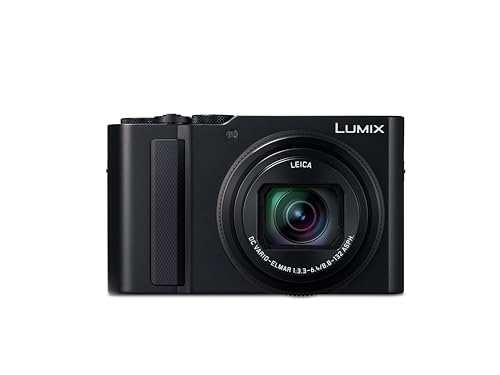
Seen through a landscape photographer’s eyes, the ZS300 is a different camera from the one a concertgoer would describe: a pocket instrument for dawn ridges and coastal paths, whose title states a 20.1MP 1-inch sensor, a 15x optical zoom spanning 24-360mm and 4K video in a compact travel body. The figures that matter out on a trail are the sensor and the two ends of that range — and they are the right figures.
City landscapes belong in this camera’s portfolio too, and they explain the range from the other direction. Urban viewpoints — the bridge at blue hour, the rooftop, the hill above the harbour — alternate between wide architectural frames and compressed details across the water, and they are reached on foot, in crowds, where a system bag is a liability. A pocket camera with this sensor and this span is the urban landscape photographer’s weekday instrument, carried on the commute against the evening the light breaks over the skyline.
Start with the 24mm wide end at first light. A landscape composition is built from foreground — the frost-heaved stone, the pool reflecting the sky — and a 24mm field of view is wide enough to place that foreground large while the ridge behind it still reads as a backdrop rather than a postcard. Many pocket cameras start too narrow for this grammar; the ZS300’s stated range starts where landscape grammar begins.
Seasonal work flatters this camera’s balance in a particular way. Winter ridges and summer coasts ask opposite things — low raking light and long shadows in one, bright haze and hard contrast in the other — and a 1-inch sensor with a wide-to-telephoto span handles both without the photographer re-equipping between trips. The ZS300’s landscape identity is consistency: the same pocket instrument, four seasons of viewpoints, and files uniform enough to sit together in one body of work.
The 360mm long end serves the mountains’ second composition: compression. Layered ridges at dawn, each paler than the last, are a telephoto subject — the long lens stacks them into the frame and excludes the messy foreground entirely. A pocket camera that reaches 360mm lets a walker alternate between the grand vista and the compressed abstraction within the same ten minutes of light, without a lens change, a tripod rebuild or a second body.
The 1-inch sensor and 20.1MP are the quality argument underneath both. At dawn’s low light the larger sensor class holds shadow detail that smaller pocket sensors surrender, and twenty megapixels leave honest room to straighten a horizon or reframe a composition at home — the two edits trail photography always needs. This is the pocket camera for walkers who print what they find. Check the Lumix ZS300 on Amazon if your landscapes are discovered on foot and finished on a wall.
- Sensor: 1-inch sensor, per the listing title
- Resolution: 20.1MP, per the listing title
- Zoom: 15x optical zoom, 24-360mm, per the listing title
- Video: 4K video, per the listing title
- Form: Compact travel zoom camera, per the listing title
- Stabilisation: Not stated in the listing title — verify with the manufacturer documentation
Strengths
- 1-inch sensor is the strongest file-quality evidence among the pocket cameras here.
- 24-360mm spans landscape’s two grammars: the wide vista and the compressed ridge.
- 20.1MP supports the horizon-straightening and reframing trail files always need.
Trade-offs
- Fixed lens: no path to a wider-than-24mm view or a specialist landscape prime.
- Pocket format concedes ultimate dawn quality to the full-frame bodies above.
- No stabilisation figure stated in the title for handheld dusk work.
Best for: walkers and travellers who print their landscapes and want one pocket camera spanning wide and telephoto compositions.
Not suited for: a system builder, since the fixed lens closes the upgrade path that the S and G bodies keep open.
Prints are where this pocket camera’s argument closes. A 20.1MP file from a 1-inch sensor, exposed carefully at dawn, hangs convincingly at the sizes home walls actually take, and a walker who returns from a season of trails with a dozen such frames owns a body of work no phone album matches. The ZS300 does not pretend to the full-frame bodies’ ceiling; it claims the walker’s wall, and on the evidence of its title, the claim is fairly made.
Weather patience is the final trail virtue this camera rewards. A pocket body comes out in the squall’s aftermath — the rainbow, the clearing storm light — because it was never packed away in a dry bag at the rucksack’s bottom. Landscape photographers call those minutes the best light of the year, and they belong disproportionately to cameras that were simply at hand.
Comparison Table
| Camera | System / format | Stated resolution | Stated range or lens | Stated stabilisation |
|---|---|---|---|---|
| Panasonic Lumix S5II | Full-frame L-mount | 24.2MP | Body only | Active I.S. |
| Panasonic Lumix S5IIX | Full-frame L-mount | Not stated in the listing title | Body; 6K video stated | Active I.S. |
| Panasonic Lumix FZ80D | Fixed-lens bridge | Not stated in the listing title | 20-1200mm | Not stated in the listing title |
| Panasonic Lumix G100 | Micro Four Thirds | Not stated in the listing title | 12-32mm kit lens | 5-axis hybrid I.S. |
| Panasonic Lumix ZS50 | Pocket compact | 12.1MP | 24mm Leica travel zoom | Not stated in the listing title |
| Panasonic Lumix ZS300 | Pocket compact, 1-inch sensor | 20.1MP | 15x optical, 24-360mm | Not stated in the listing title |
How to Choose
Decide first whether you are building a system or buying a camera. The S5II, S5IIX and G100 are beginnings — mounts that future lenses will serve — while the FZ80D, ZS50 and ZS300 are complete answers whose capabilities are fixed at purchase. Neither is superior; they suit photographers at different points of commitment, and confusing the two is how buyers end up with a bridge camera they resent or a system they never feed.
Match the sensor to the destination of the files. Exhibition prints and dawn shadow detail argue for the full-frame bodies; web galleries, books and moderate prints are served honestly by the G100’s system and the ZS300’s stated 1-inch sensor; the ZS50’s 12.1MP suits sharing and modest sizes. Resolution bought beyond your print sizes is storage spent, not quality gained.
Filters and field accessories belong in the same calculation, sized by system. A full-frame wide zoom takes large, costly filters; the G100’s small lenses take small ones; the fixed-lens cameras take whatever their threads allow or none at all. Landscape photographers who work with polarisers and graduated filters — most serious ones — should price the filter system their chosen format implies, because it recurs with every lens and quietly shapes which compositions are practical.
Weigh the walk honestly. Multi-day trails tax every gram, and the G100 kit or a pocket zoom will attend viewpoints a full-frame system gets left below. Single-viewpoint trips — the driven overlook, the short dawn walk — reverse the arithmetic and let the S bodies’ quality dominate. Your itinerary, not your ambition, should pick the format.
Finally, spend the lens money where landscapes spend it: the wide end. System buyers should secure a quality wide zoom before any telephoto, because the genre’s grammar is written wide, and the telephoto compressions can be learned later on whatever long lens the budget then allows.
What Makes Dawn Light So Demanding of a Landscape Camera?
Range. A dawn scene holds detail in a brightening sky and in shadowed foreground simultaneously, across a brightness span that tests any sensor’s ability to record both without surrendering one. Photographers answer with graduated filters, bracketed exposures and patience, but the file’s underlying quality — set by sensor size and resolution, the figures this guide takes only from titles — decides how much of that span survives to the print.
Seasoned landscape photographers plan around this by arriving in the dark and composing by headtorch, accepting that the first frames are scaffolding. The camera’s job in that hour is to not argue — to focus, to hold the exposure the photographer chose, to keep the histogram honest. Every body and compact in this guide can do that job at its level; the differences emerge in how much of the scene’s range the file brings home afterwards.
Dawn also punishes handling. Cold hands, gloves, a headtorch’s red glow and a composition that must be finished before the light turns: cameras that compose well on a rear screen, focus reliably without hunting and stabilise the unplanned frame earn their place in the first hour. It is no accident that the titles in this guide stating stabilisation and modern autofocus belong to the bodies aimed at serious field work.
Do Landscape Photographers Still Need a Tripod?
For the deliberate landscape — the long exposure that turns a waterfall to glass, the blue-hour frame at slow shutter speeds, the panorama sequence that must not wander — yes, and no stabilisation claim in any title here changes that physics. The tripod is also a compositional discipline: it slows the photographer into noticing the frame’s edges, which is where landscape photographs are most often lost.
There is a middle path most field photographers actually live on: the monopod, the beanbag on a wall, the camera braced against a gatepost or a rucksack. Stabilisation multiplies all of these, turning a braced position into something approaching tripod steadiness for the shutter speeds dawn usually demands. Judged that way, the stabilisation claims in these titles are worth more in the field than their laboratory figures suggest, because they cooperate with improvisation.
What stabilisation has genuinely changed is the unplanned landscape: the light that breaks during a walk, the viewpoint reached without the tripod, the travel day when the tripod stayed at the hotel. Active I.S. and hybrid stabilisation convert those moments from souvenirs into keepers. The modern landscape kit carries both tools and knows which hour belongs to which.
How Should You Expose a Landscape When the Sky and Land Disagree?
Decide which one the photograph is about, and expose for that one honestly. A frame exposed for a dramatic sky will silhouette the land — sometimes gloriously, sometimes as an accident the photographer pretends was intent. A frame exposed for the land will blow the sky to white, which suits high, bright, minimalist compositions and ruins dawn colour. The craft answer is to shoot both exposures in the field — bracketing costs nothing but card space on every camera in this guide — and to make the decision at the desk, where both versions exist, rather than on the ridge, where only one will.
Composition at dawn has a timing cruelty the exposure question sits inside: the best ninety seconds often arrive before the photographer feels ready, while the tripod is still being levelled and the composition still being searched. Experienced hands pre-compose in the dark on prediction — the gap in the ridge where the sun will clear, the pool that will catch it — so that when the light arrives the work is execution rather than discovery. Cameras that wake fast and hold their settings between frames serve that method; all six here are single-shot instruments that reward a photographer who arrives decided.
Foreground shadow is the other half of the same lesson. Dawn landscapes live in their foregrounds — the dark pool, the unlit stones — and a file whose shadows hold detail can be lifted in editing into the photograph the eye saw. That is the practical meaning of the sensor classes ranked in this guide: the larger formats and the 1-inch pocket sensor hold more of that shadow information, and the landscape photographer’s editing room is where the difference is finally spent.
Common Mistakes
Buying a system for a trip that a complete camera would have served better is the expensive confusion in this category. A body bought in haste still needs its wide lens, its bag, its cards and its learning curve; a fixed-lens camera bought for the same trip is mastered by the second dawn. Match the purchase to the calendar as well as to the ambition.
Judging a landscape camera by its telephoto end alone inverts the genre’s priorities. Most landscape frames are made at the wide half of any range; a camera whose wide end is compromised — too narrow, too soft at the edges — fails daily, while a modest long end merely fails occasionally. Read ranges from the left, as the titles print them.
Skipping the horizon check wastes more landscape files than any sensor limitation. A degree of tilt that a building photograph forgives becomes glaring across a sea horizon or a ridge line, and it is cheapest to fix with the camera level in the field — grid display on, tripod head adjusted — rather than by cropping away resolution at home.
Chasing only the famous viewpoints narrows a landscape portfolio into a set of postcards other photographers have already taken better. The cameras in this guide all share the ability to work the unfamous mile — the lane, the reservoir, the ordinary hill in extraordinary light — and a photographer’s development is usually hiding there. Buy for range and reliability, then spend the real budget on mornings.
Finally, many photographers upgrade bodies when their landscapes are actually limited by returning too rarely. Light is a local and seasonal phenomenon; the photographer who revisits one valley across a year with a ZS300 will out-produce the visitor who crosses it once with a flagship. Presence, again, is the specification that compounds.
Final Recommendation
For the landscape photographer building a serious kit, the Lumix S5II is the balanced buy: a stated 24.2MP full-frame sensor, Phase Hybrid AF and Active I.S. on a maturing L-mount system. Its S5IIX sibling serves the hybrid creator whose dawns produce films as well as prints. The G100 is the hiker’s system — interchangeable lenses at a weight that attends every trail — while the FZ80D bundle answers the traveller who wants one fixed lens spanning 20 to 1200mm. Among the pockets, the ZS300’s stated 1-inch sensor and 24-360mm range make it the quality choice for walkers who print, and the ZS50 remains the wide-starting classic for those who do not. Landscapes reward the photographer who is standing in the light when it breaks, and the best Lumix for the genre is the one whose stated format, range and weight match the way you actually reach your viewpoints — which is why this guide ends where the trail does, with the camera you will genuinely carry.
FAQ
Is full-frame necessary for landscape photography? No — it helps dawn dynamic range and large prints, which is why the S5II and S5IIX lead this guide, but the G100’s Micro Four Thirds kit and the ZS300’s 1-inch sensor produce excellent landscape files at their sizes. Format should follow your print sizes and your walking, not prestige.
What focal lengths do landscapes actually use? Mostly the wide end: the ZS300 and ZS50 start at 24mm, the G100’s kit at a 24mm-equivalent field of view, and the FZ80D at 20mm. Telephoto ends — 360mm, or the FZ80D’s remarkable 1200mm — serve compressed ridge compositions as the second grammar.
What is the difference between the S5II and S5IIX for a landscape photographer? On title evidence, the X is the video-leaning sibling with a stated 6K capability, sharing the full-frame format, Active I.S. and Phase Hybrid AF. The S5II states its 24.2MP stills resolution in its title; the S5IIX title does not state a megapixel figure, so stills-first buyers should verify it on the product page.
Can a pocket camera really do landscapes? Yes, within its print ceiling. The ZS300’s stated 1-inch sensor and 20.1MP are a genuine landscape specification for moderate prints, and its 24-360mm range covers the genre’s two main compositions. What it cannot do is grow — the lens is fixed.
Which of these cameras is best for a road trip? The FZ80D bundle, for most travellers: one fixed lens from 20mm to 1200mm, a fast 64GB card in the box, and no system to pack around. Walkers who print should take the ZS300 instead; drivers building a portfolio should take the S5II and accept the packing.
Does the G100’s smaller sensor hurt landscape depth of field? It helps the landscape default: deeper depth of field at a given aperture means front-to-back sharpness arrives sooner, which is what most landscape compositions want. The trade appears in low light and ultimate print size, not in depth.
Related Guides
Sony’s competing full-frame line is examined in our Sony portrait camera guide, where the same bodies are judged by faces rather than valleys. For cameras that go into the water instead of photographing it from the shore, the waterproof camera guide for beginners covers the sealed compacts rated for pools and reefs.


