Our Top Picks
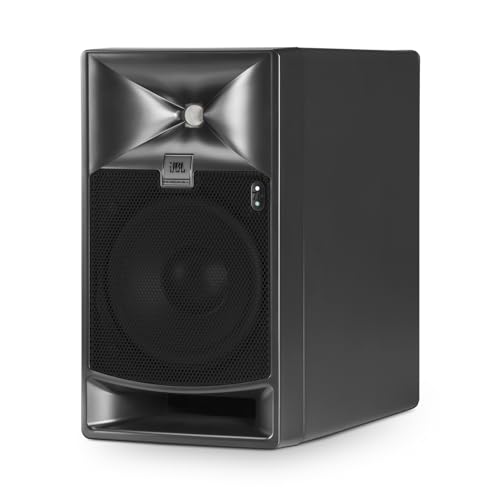
 JBL Professional 305P MkII 5-Inch 2-Way Powered5-inch Speaker14 x 12.2 x 13.93 inches10.43 poundsCheck on Amazon
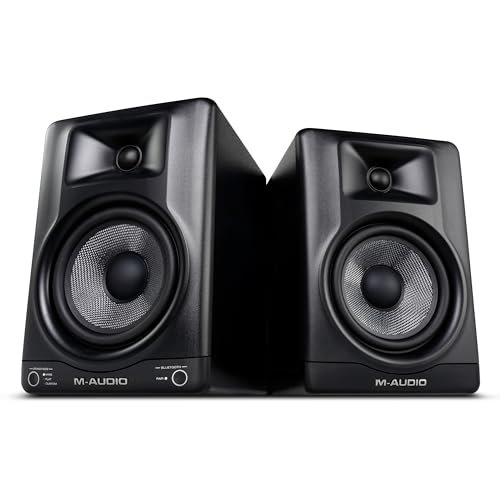
 PreSonus Eris 5 Bluetooth Powered Desktop Studio Monitors5" Bluetooth Monitor10.2 x 7.9 x 7 inches16.1 poundsCheck on Amazon

What's inside
- Why the five-inch nearfield became the small room default
- The bass ceiling: what a five-inch cone cannot move
- When a subwoofer becomes necessary, and when it becomes a nuisance
- Ports and walls: the placement physics of small enclosures
- Power and headroom at the distances that matter
- DSP room correction and boundary switches: two philosophies
- Desk or stands: a decision with acoustic and human stakes
- Listening distance and the shape of the stereo triangle
- Balanced inputs: XLR and TRS against the RCA alternative
- Midrange honesty, stereo imaging and the work these monitors actually do
- Room treatment priorities for spaces that cannot change shape
- Buying criteria arranged in the order they actually matter
- Daily operation: the habits that keep a small system honest
- Questions that surface after the first month
- Genres and tasks: matching the format to the work
- Pair matching, centre stability and quality control in this class
- Check prices on Amazon
- The bottom line for small rooms
As an Amazon Associate I earn from qualifying purchases. This post may contain affiliate links at no extra cost to you.
Why the five-inch nearfield became the small room default
Walk into enough bedroom studios, podcast corners and video editing nooks and a pattern emerges: pairs of loudspeakers built around five-inch woofers, sitting roughly a metre from the listener, doing serious work without dominating the furniture. That convergence is not fashion. The format sits at a physical sweet spot where cone area, cabinet volume and listening distance align with the dimensions of ordinary domestic rooms. Smaller designs surrender too much low frequency information for confident music decisions, while larger ones pour energy into spaces that cannot absorb it, and the room starts composing alongside the recording.
The word professional attached to this class deserves unpacking, because it describes intent rather than a certification. A professional five-inch monitor aims for an honest, repeatable presentation: controlled dispersion, low cabinet resonance, amplification matched to the drivers, and controls that adapt output to boundaries. A consumer speaker of identical size aims for flattery, often lifting bass and treble to impress during brief comparisons. Over a long editing session the honest tool proves kinder, because decisions made on it survive translation to earbuds, car systems and televisions instead of collapsing outside the room where they were made.
Small rooms impose their own curriculum. Parallel walls a few metres apart generate standing waves that exaggerate some bass notes and erase others. Desks crowd loudspeakers against boundaries. Neighbours through thin partitions cap the usable volume. A five-inch nearfield answers each constraint with moderation: enough output for near distances, limited deep bass to excite the worst modes, and a footprint that leaves room for treatment, screens and the human being. Understanding those compromises in detail is the difference between buying a tool and buying a hope.
This guide works through the format’s real boundaries, starting with the low frequency ceiling that physics imposes, then covering ports and wall distance, amplifier headroom, digital correction and boundary switches, the desk versus stands decision, listening geometry, and the balanced connections that keep noise out of quiet rooms. Every section connects back to a single question a small room owner actually faces: what will this pair let me judge reliably, and what will it hide?
The bass ceiling: what a five-inch cone cannot move
Low frequency reproduction is an air moving exercise. A note at fifty hertz demands either a large radiating surface sweeping a long distance or a smaller surface working far harder, and a five-inch cone is, by the standards of bass, a small surface. Its diameter, once the surround is subtracted, leaves an effective piston closer to four inches across. At modest listening levels in the near field that piston produces satisfying weight because the listener sits close and room gain lends assistance. Ask for cinema scale impact at three metres and the same cone runs out of travel, its suspension reaching mechanical limits while distortion climbs sharply.
Manufacturers quote low frequency extension for this class in a band that typically reaches somewhere in the fifties or low sixties of hertz before output falls away, with ported enclosures bending that roll off into a steeper cliff below tuning. The number alone conceals the level at which it was captured. A specification conceding a ten decibel tolerance at the bottom endpoint describes a loudspeaker whispering its lowest note, not stating it. Reading the tolerance, or the published curve when one exists, converts a marketing figure into an engineering one.
Musically, what lives below that reach? The fundamental of a low E on a bass guitar sits near the bottom of what these cabinets reproduce, kick drum weight straddles the boundary, and the subsonic content of film effects, electronic dance production and pipe organ repertoire falls entirely outside it. A mixer working without that region is effectively proofreading a document with the last line of every page covered: most of the sense survives, and the occasional disaster slips through, usually an uncontrolled rumble from a microphone stand knock or an air conditioning thump that nobody noticed during recording.
Judging bass you can only partially hear
Experienced small room engineers develop compensating habits. They check low frequency decisions on headphones with known extension, not as a replacement for loudspeaker judgement but as a spot check on the octave the room system cannot present. They watch meters and spectrum displays for energy below the audible threshold of their monitors, because a mix can carry enormous inaudible power that steals headroom downstream. They reference commercial releases in the same genre, whose low end balance they know, to calibrate how much weight their own material should show at the listening position.
Harmonic structure helps more than novices expect. A bass note whose fundamental escapes the loudspeaker still presents its overtones, and the auditory system reconstructs a sense of pitch and much of the weight from those harmonics. That reconstruction is precisely why small monitors remain usable for music at all. It is also why they mislead about level: the perceived bass reflects overtone balance, while the true fundamental level, audible on larger systems in listeners’ homes, may sit far higher or lower than the mix engineer believed.
When a subwoofer becomes necessary, and when it becomes a nuisance
A subwoofer earns its place when the material genuinely contains content below the satellites’ reach and the room can support reproducing it. Film sound editors, electronic producers and anyone restoring recordings with significant low frequency information fall into that camp. The subwoofer also relieves the little woofers of their hardest labour when a high pass filter redirects deep bass away from them, and the midrange often clears noticeably as a result, like a singer no longer asked to carry a heavy box while performing.
The nuisance scenario is equally common. In a small untreated room, adding a subwoofer frequently means adding a powerful exciter of the very standing waves that made bass judgement difficult in the first place. One listening position gains thunder while the chair beside it loses an entire octave. Neighbours acquire a new relationship with the ceiling. Without measurement tools, placement patience and some treatment, the extra octave can reduce mix accuracy even as it increases enjoyment, and enjoyment is a seductive but unreliable metric when the goal is work that travels.
Timing matters too. Many owners buy the subwoofer later, after learning their room and their monitors, and that sequence produces better outcomes than purchasing a full system on day one. The months spent understanding where the five-inch pair runs out of information teach exactly which problems a subwoofer must solve, which crossover facilities matter, and whether the room’s nulls sit at frequencies a single subwoofer can address. Delayed gratification, in this corner of audio, is simply good engineering process.
Alternatives that postpone the subwoofer decision
Nearfield distance itself is a bass strategy. Halving the distance to the loudspeakers raises direct sound relative to room sound, so the notes the cabinets do reproduce arrive cleaner and the missing depth matters less. Raising monitoring quality at low volume has a similar effect, because the ear’s sensitivity to bass falls at quiet levels and expectations adjust. Some engineers also keep a tactile reference, resting fingertips lightly on a desk edge during playback of familiar material, learning the physical signature of a well balanced low end through vibration. None of these tricks manufacture missing hertz; all of them sharpen judgement within the available range.
Ports and walls: the placement physics of small enclosures
Most five-inch monitors vent through a bass reflex port, and the port’s address on the cabinet shapes the entire placement conversation. A front facing port fires its output toward the listener alongside the woofer’s direct radiation. The enclosure can then stand close to a wall without the port choking against the boundary, and the air movement stays visible, audible at extreme levels as chuffing that warns the owner to back off. Desks jammed against walls, the default in spare bedrooms, favour this arrangement strongly.
Rear ported cabinets exchange that convenience for design freedom elsewhere; the back panel offers a larger uninterrupted surface for the opening, and the front baffle stays clean around the drivers. The cost arrives during installation. A rear port needs space behind it to function as tuned, and squeezing the cabinet against plaster couples the port output to the wall, inflating bass in a narrow, uneven band. The result is the classic one note boom that follows the listener around the room, attached to whichever pitch the boundary emphasises.
Slot ports, flared openings and passive radiator variants complicate the taxonomy without repealing the physics. A flared slot along the bottom edge can behave courteously near boundaries because its output spreads across a wide area. A passive radiator, a diaphragm without a motor, eliminates port noise entirely and permits sealed box placement manners with reflex like extension, at the cost of additional parts and price. Reading a candidate’s manual for its maker’s own clearance guidance remains the most reliable shortcut, since designers know where their tuning misbehaves.
Wall distance translated into what the ear receives
Boundary reinforcement follows a rough script. Each nearby surface donates low frequency support, so a monitor in a corner, touching floor, wall and side wall influences, can receive contributions from three boundaries that stack into a heavy, blurred bottom end. Pulling the pair forward onto stands, away from the rear wall, thins that support toward honesty. The cancellation notch caused by the rear wall reflection also moves upward in frequency as distance shrinks and downward as it grows, which explains why sliding a cabinet fifteen centimetres can fix one mix problem while creating another in the lower midrange.
Desk bound setups add the desktop as a boundary in its own right, arriving from below instead of behind. The reflection off that surface reaches the ears a fraction after the direct sound, combing out a band of frequencies and smearing transient detail on drums and consonants. Raising cabinets on isolating supports and tilting them toward ear height shortens the geometry of that bounce and reduces its level, one of the cheapest accuracy gains available to a small room.
Power and headroom at the distances that matter
Amplifier ratings in this class look modest on paper and prove adequate in practice because nearfield geometry is forgiving. Sound pressure falls with distance, so a listener at one metre receives far more level from a given watt than a listener across a lounge. The professional question is therefore not raw loudness but clean loudness: how much reserve exists above the working level before the limiter intervenes or the woofer’s distortion becomes audible on dense passages. Headroom is the margin that keeps a fortissimo chorus or an unmastered transient from collapsing into harshness.
Specifications express that reserve imperfectly. Peak ratings describe momentary capability, continuous ratings describe sustained output, and the gap between them varies by design philosophy. A loudspeaker quoting generous peak figures with a small power supply may handle drum transients beautifully while sagging during synth pads that hold full level for seconds. Programme material decides which limitation surfaces, which is why two owners can report opposite impressions of the same model’s power and both be describing their rooms truthfully.
Limiter behaviour is the hidden character trait. Well tuned protection trims level gracefully, sacrificing a decibel of impact to preserve clarity, while crude circuits pump audibly or clamp asymmetrically and announce themselves on every loud passage. Manuals rarely describe this behaviour, but aggregated user reports across forums and owner communities tend to surface repeat offenders. A monitor that protects itself politely encourages confident work at sensible levels; one that misbehaves trains its owner to monitor timidly and guess at dynamics.
Sensitivity, gain staging and the volume knob’s useful range
Input sensitivity determines where the volume control lives during normal work. Feed a sensitive monitor from a hot professional interface and the knob may spend its life near the bottom, where left and right channels track imperfectly and tiny adjustments jump. Feed an insensitive model from a quiet consumer output and the opposite frustration appears, full rotation yielding barely adequate level. Switchable sensitivity, offered on many professional designs, aligns the chain so the control operates in its accurate middle region. That alignment is a daily quality of life feature disguised as a technical footnote.
Gain staging extends beyond the loudspeaker. Interfaces, monitor controllers and software faders each contribute a stage, and noise accumulates wherever a stage runs too quiet and a later one amplifies the result. The hiss audible from tweeters at idle in a silent room usually originates upstream, in a chain asking the monitors to amplify a whisper. Setting the loudspeakers’ own gain moderately and driving them with a healthy signal from the source cures more hiss complaints than any cable upgrade.
best 200 dollar studio monitors
DSP room correction and boundary switches: two philosophies
Digital signal processing has entered this class from the top down, bringing parametric equalisation, delay and sometimes automated measurement into cabinets that once offered a single treble knob. The promise is seductive: place the loudspeakers where the room demands, measure the result, and let mathematics sand down the room’s worst habits. Used within its limits, that promise holds. A few decibels of cut at a dominant room mode, a shelf adjustment compensating for desk loading, and a delay tweak aligning a subwoofer can transform a compromised position into a workable one.
The limits are physical, not computational. Equalisation cannot restore a frequency the room cancels at the listening position, because boosting into a null pours power into a hole that geometry keeps digging; the null merely moves its misery to other seats and stresses the woofer. Correction also operates at one measured location, and aggressive curves tuned to a microphone’s exact spot can degrade the sound everywhere else in the room. Responsible systems constrain their own authority, limiting boost, focusing on broad trends, and inviting the user to prefer partial correction over a ruler flat graph that listens worse than it measures.
Analogue boundary switches embody the older philosophy: a handful of fixed, designer chosen compensations. A bass trim for wall proximity, a desk filter addressing the desktop bounce region, a treble shelf for bright or dull rooms. Their coarseness is also their honesty, since each setting corresponds to a placement the designer anticipated and voiced. Many professionals run a hybrid approach, switches handling the predictable boundary effects and a light touch of external equalisation addressing the room’s individual modal signature.
Setting controls without chasing your own tail
Discipline prevents control twiddling from becoming a hobby that replaces listening. Change one parameter, live with it across several familiar recordings, and only then judge. Document the starting positions photographically so a baseline always exists to return to. Resist stacking corrections: a boundary switch engaged, a software equaliser curve loaded and an interface tone control active can sum into a response nobody intended, with each layer added to fix the previous one’s side effects. The flattest looking graph is not the goal; consistent translation of work to other systems is.
Room correction microphones and applications have democratised measurement, but a measurement is an argument, not a verdict. Microphone placement, smoothing choices and target curve selection all bend the conclusion. Owners who treat the graph as one witness among several, cross examined against familiar recordings and headphone checks, extract the genuine value of these tools without surrendering judgement to them.
Desk or stands: a decision with acoustic and human stakes
Desks win on convenience. The loudspeakers arrive, they sit beside the screen, work begins. That simplicity conceals three costs. The desktop reflection already discussed combs the lower midrange. Cabinet vibration couples into the furniture, which reradiates its own resonances and can buzz sympathetically on particular notes, an effect owners often blame on the recording. And desk real estate is finite: every centimetre surrendered to a loudspeaker footprint is a centimetre denied to notebooks, controllers and elbows.
Stands answer all three costs while introducing their own. A rigid, mass loaded stand decouples the cabinet from furniture, lets the pair stand at a distance from the rear wall that the desk position forbids, and frees the work surface entirely. Tweeters can be set precisely at ear height for the owner’s actual chair rather than approximated by stacking books. Against that, stands consume floor area in rooms that may not spare it, create trip hazards for cables, and place expensive equipment where passing hips and chair castors can find it. In a genuinely tiny room, wall mounting on articulated brackets sometimes threads the needle, though bracket resonance and limited angle adjustment demand careful selection.
Isolation pads and desktop risers form the middle path most owners actually adopt. A dense foam wedge or an elastomer platform lifts the cabinet a few centimetres, tilts the axis toward the ears, and breaks the direct vibration path. The desktop reflection persists in altered form, because the surface is still there, but its angle changes and its level drops. For renters, shared rooms and anyone whose desk must remain a desk, that compromise delivers most of the available improvement at a fraction of the disruption.
Height, tilt and the tweeter’s line of fire
Whatever the support, geometry rules the result. Tweeters should aim at the listener’s ears when seated in the working posture, not the posture imagined while standing beside the desk during installation. Many owners discover their cabinets have been firing at their foreheads or chests for months. A small tilt, a taller pad, or a lower chair corrects the axis, and the treble clarity that returns often feels like an equipment upgrade. Vertical dispersion in two way designs narrows around the crossover, so being off axis vertically dulls exactly the presence region where vocal intelligibility lives.
Horizontal toe in follows a similar logic of degree. Angling cabinets so their axes cross slightly behind the head produces a wide, forgiving stereo field; crossing them in front sharpens the centre image at the cost of a narrower sweet spot. Personal preference and programme type arbitrate. Spoken word editors often favour the sharper centre, mix engineers the wider field, and neither is wrong because their judgement tasks differ.
best 1000 1500 studio monitors
Listening distance and the shape of the stereo triangle
Nearfield listening conventionally arranges listener and loudspeakers at the corners of a triangle with sides between roughly eighty centimetres and a metre and a half for this class. Within that range, direct sound dominates room sound, which is the entire point of the nearfield concept: the smaller the room’s contribution, the less its flaws matter. Stretch the triangle to two metres in a reflective box room and the room reasserts itself, imaging softens, and the five-inch pair’s output limits approach sooner.
Closer is not automatically better. Inside about seventy centimetres, the outputs of woofer and tweeter may fail to blend before reaching the ears, because the drivers’ physical separation becomes significant relative to the listening distance. The listener also starts hearing each cabinet as a distinct localised source rather than a contributor to a shared image. Manufacturers sometimes state a minimum distance for exactly this reason, and respecting it costs nothing.
The centre image deserves a practical check. A mono recording, or a familiar voice panned centrally, should appear as a compact phantom floating between the cabinets, stable when the head moves a few centimetres. A smeared or wandering centre points to asymmetry: unequal distances, one cabinet nearer a side wall, differing control settings, or a desk object reflecting one channel more than the other. Symmetry is the cheapest acoustic treatment ever devised, and small rooms punish its absence disproportionately because every surface is close enough to matter.
Sharing the sweet spot and working with others
Collaborative rooms complicate the geometry. A client chair behind the engineer sits outside the triangle, hearing a bass heavier, image narrower version of the mix. Professionals manage expectations accordingly, inviting collaborators into the main seat for critical judgements. Video calls add another listener who hears the room through a laptop microphone, a perspective so degraded that playing mixes over calls for approval is a ritual best replaced by sending files. The five-inch nearfield serves one listener superbly and groups approximately, and planning workflow around that truth avoids disappointment.
Balanced inputs: XLR and TRS against the RCA alternative
Connection standards on the rear panel tell a story about a monitor’s intended environment. Balanced inputs on XLR or quarter inch TRS sockets carry the signal as a pair of opposing voltages, and the receiving circuit responds to the difference between them. Interference picked up equally by both conductors along the cable run cancels at the input, which is why balanced lines dominate studios where cables pass computers, power supplies and lighting dimmers. In a quiet small room the benefit may seem theoretical until the day a ground loop hum appears and balanced cabling is the difference between silence and a permanent low buzz under every recording.
XLR connectors latch, resist accidental disconnection when a chair catches a cable, and have become the default expectation at the professional end of this class. TRS jacks carry the identical balanced signal in a slimmer format and share sockets, on some models, with unbalanced TS plugs, a flexibility that suits hybrid setups. Neither balanced format sounds inherently superior; their electrical behaviour matches, and the choice between them is mechanical and practical rather than sonic.
RCA inputs serve the consumer side of the market and appear on five-inch models aimed at desktop listeners connecting phones, turntables with built in preamplifiers, or budget interfaces. Over a short, tidy run in an electrically calm room, unbalanced RCA performs perfectly respectably. Its weaknesses emerge with length and hostile environments: no interference cancellation, greater susceptibility to hum when equipment grounds differ, and connectors that pull free easily. A buyer whose chain is unbalanced today but who expects a professional interface tomorrow should favour a monitor offering both input families, because that flexibility outlives several source upgrades.
Cabling practice that keeps quiet rooms quiet
Balanced cables only deliver their immunity when the whole chain honours the scheme; inserting an unbalanced adaptor mid run discards the protection at that point. Routing signal leads away from mains bricks and crossing power cables at right angles when crossing is unavoidable reduces induced noise further. Cable length should suit the layout without coils of spare wire acting as antennas beside the desk. These habits cost nothing, apply to every system in this guide, and resolve the majority of noise complaints that owners initially attribute to defective loudspeakers.
Digital inputs, appearing on DSP equipped models, sidestep analogue noise entirely by converting inside the cabinet, though they introduce their own considerations around sample rate handling and volume control location. A digital feed locked to a computer’s output keeps level control in software, which can reduce bit depth at low listening volumes depending on implementation. Analogue balanced remains the lingua franca of this category for good reason: universal, predictable and repairable with a spare cable from a drawer.
best 10 inch powered pa speakers
Midrange honesty, stereo imaging and the work these monitors actually do
Ask owners what converted them to professional nearfields and few mention bass or treble extremes. They describe hearing a vocal’s double tracked layer separate for the first time, or noticing a reverb tail’s shape instead of its mere presence. That revelation lives in the midrange, where a five-inch two way design holds a structural advantage: the single woofer covers the region without a crossover interruption through the heart of the voice, and the handover to the tweeter happens above the frequencies where pitch and articulation concentrate. When designers voice this class well, coherence is the reward.
Imaging precision follows from pair matching and controlled dispersion. Tolerances in driver production mean two cabinets are never identical, and reputable makers grade and match pairs so the stereo field does not lean. Waveguides around the tweeter align its dispersion with the woofer’s at the crossover, preventing the off axis tonal lurch that makes mixes translate unpredictably to other rooms. A listener moving across the sweet spot should hear the image shift gracefully, not hear the tonal balance itself change costume.
Transient response, the ability to start and stop cleanly on drum hits and plucked strings, depends on amplifier control and cabinet discipline as much as driver material. A rigid, well braced enclosure that refuses to sing along keeps stored energy low, so notes end when the recording says they end. Lightweight cabinets with audible panel talk blur that precision and add a sameness to everything played through them, a fingerprint owners learn to recognise and then cannot unhear.
Fatigue, honesty and learning to trust a pair
An honest monitor can feel underwhelming during the first week because it declines to flatter flawed material. Familiar songs reveal recording shortcuts; the owner’s own mixes reveal balance errors. That discomfort is the product working. Over subsequent weeks, mixes made on the unforgiving pair begin surviving playback elsewhere, and trust accumulates. Fatigue, meanwhile, should decline rather than grow: a well behaved treble and freedom from distortion at working levels let ears stay fresh across long sessions, which is a professional feature as real as any connector.
Reference material accelerates the trust building. A small set of recordings whose sound the owner knows intimately, spanning voice, acoustic instruments and dense production, becomes a calibration standard carried mentally from system to system. Playing those tracks after any placement change, control adjustment or room rearrangement reveals within minutes whether the change helped or merely altered. Owners who skip this habit end up adjusting their monitors to suit each day’s mood, and consistency, the actual product being bought, evaporates.
Room treatment priorities for spaces that cannot change shape
Small rooms tempt owners toward either despair or overcorrection. The productive middle begins with the first reflection points: the patches of side wall, ceiling and desk where sound from each loudspeaker bounces once before reaching the listener. Treating the side wall points with modest absorption panels sharpens imaging more reliably than scattering treatment randomly. A rug under the desk zone calms floor bounce and chair noise together. Heavy curtains over a window behind the listening position tame the rear reflection that otherwise returns late and loud in short rooms.
Bass trapping in miniature rooms is a negotiation with physics and floor area. Corners accumulate low frequency energy, and porous traps need depth to work at long wavelengths, depth that a box room begrudges. Even partial measures help: tall corner pieces behind the loudspeakers, a thick panel on the front wall, or furniture with genuine mass placed where modes build. Expectations should stay calibrated. Treatment in this context aims to shrink the worst peaks and nulls into a range where judgement is possible, not to conjure the neutrality of a purpose built facility.
Diffusion, often marketed enthusiastically to small room owners, needs distance to develop its scattering pattern, and most box rooms lack that distance behind the listener. Absorption usually serves better at the rear wall when the chair sits close to it. Saving the diffusion budget for a later, larger room is unfashionable advice that happens to be correct, and it redirects money toward the monitors themselves or toward measurement tools that reveal what the room is actually doing.
Measuring without surrendering to the graph
A measurement microphone and free analysis software have put laboratory style feedback within reach of any owner. A single sweep at the listening position exposes the room’s modal fingerprint: which bass notes boom, which vanish, and how ragged the midrange remains after placement is optimised. Moving the loudspeakers in small increments while watching the response change teaches more about a specific room in an afternoon than months of general advice, because every room’s fingerprint is its own.
The graph’s authority ends where perception begins. Smoothing settings can make the same measurement look calm or catastrophic. Averaging several positions around the listening chair gives a fairer picture than worshipping a single microphone point no human head occupies permanently. Owners who measure to guide placement and switch settings, then verify with familiar recordings, use the tool as intended. Owners who equalise until the line looks flat often discover their mixes have become strange everywhere except on that line.
Buying criteria arranged in the order they actually matter
Placement compatibility comes first. Port location, cabinet dimensions and available controls must suit the wall distances and desk geometry the room imposes, because no specification triumph survives a position the loudspeaker hates. A front ported model with boundary compensation fits the wall hugging desk; a rear ported model with none belongs on stands in a room that can spare the depth.
Second comes the control set’s match to the owner’s chain. Balanced inputs for professional interfaces, sensitivity switching for level sanity, and standby behaviour compatible with the working day all belong on the checklist before driver material or finish. Third comes headroom appropriate to the listening distance and material, judged by continuous capability and limiter reputation rather than headline wattage. Fourth, and only then, the finer voicing preferences: treble character, midrange emphasis, imaging style. Those preferences are legitimate and personal, and they should arbitrate between candidates that have already passed the practical gates.
- Confirm the port arrangement suits the distance between cabinet and wall in the real room.
- Check that boundary and desk compensation controls exist when placement is compromised.
- Match input type and sensitivity range to the interface or source already owned.
- Compare published response with its tolerance stated, not the endpoints alone.
- Verify tweeter height can reach ear level on the intended supports.
- Read the manual’s standby and limiter descriptions before ordering, not after.
- Plan how low frequency content below the cabinet’s reach will be checked.
That sequence feels austere beside the romance of unboxing photographs, yet it mirrors how professionals specify tools: constraints first, character second. A five-inch monitor chosen this way rarely disappoints, because its compromises were selected knowingly to fit the room rather than discovered one frustration at a time.
Budget allocation across the whole chain
The loudspeakers deserve the largest share of a small room budget, but not all of it. A sensible reserve covers isolation or stands, cabling in the correct format, and at least basic treatment for the first reflection points. Skimping on those supporting elements to climb one rung higher in monitor ranges usually nets less accuracy than buying the rung below and installing it properly. Interfaces matter too: a noisy source feeding excellent monitors faithfully reproduces its own noise, and the owner ends up troubleshooting the wrong component.
Second hand professional models circulate widely, since studios upgrade and project rooms dissolve. Buying used demands checks a new purchase does not: hiss at idle, scratchy controls, cone damage, mismatched pairs assembled from separate sales, and limiter behaviour at level. A used pair that passes those checks can outperform a new budget pair comfortably. A used pair that fails them is an expensive lesson in why the discount existed.
Daily operation: the habits that keep a small system honest
Consistency is a practice before it is a specification. Marking a reference volume position, and returning to it for critical judgements, removes one wandering variable from every session. The ear’s perception of tonal balance shifts with level, hearing more bass and treble as loudness rises, so decisions made at scattered volumes scatter in consequence. Professionals pick a working level, calibrate it loosely with a phone meter if nothing better exists, and defend that habit against the temptation to keep nudging upward as fatigue dulls perception.
Warm up myths deserve a brief burial. Solid state amplifiers and modern drivers reach stable behaviour within moments of switch on; the component that genuinely changes during the first hour of a session is the listener. Ears fresh from a noisy commute judge treble differently than ears settled into a quiet room. Building a short settling ritual, playing familiar material while making tea and arranging the session, aligns the human instrument before judgements begin.
Standby circuits, input switching and auto sensing features should be configured once, deliberately, rather than discovered accidentally. A monitor that sleeps during quiet passages and wakes with a clipped syllable will eventually be blamed for edits that never happened. A unit whose input priority silently prefers a connected but idle source can mute the intended feed. Reading the relevant manual pages during installation, when patience exists, prevents these gremlins from colonising the working week.
Maintenance and the long view
Five-inch professional monitors ask for little upkeep: dust kept off cones and ports, controls exercised occasionally to keep contacts clean, ventilation paths unblocked, and firmware updated on DSP models when makers publish meaningful revisions. Cabinets parked in sunlit rooms benefit from the same ultraviolet awareness discussed for finishes generally, since driver surrounds and adhesives also age under sustained exposure. A pair treated this way commonly serves through several computer and interface generations, which reframes the purchase as infrastructure rather than gadgetry.
Resale and hand me down value follow from that longevity. Project studios expand, students inherit capable pairs, and a documented, clean, matched set with its packaging intact finds a second home readily. Owners who anticipate that path keep receipts and note control settings that worked in their room, a small courtesy that helps the next listener start from evidence instead of folklore.
Questions that surface after the first month
Why does bass sound different in the doorway than at the desk?
Standing waves distribute energy unevenly through the room, piling pressure at boundaries and cancelling at nodes between them. The doorway often sits near a pressure maximum for the room’s longest dimension, so bass blooms there while the carefully positioned desk chair hears the balanced version. That contrast is the room behaving normally, and it is why judgements belong at the calibrated seat rather than wherever the sound happens to feel most exciting.
Should both cabinets use identical switch settings?
Identical settings are the correct starting point, and symmetry argues for keeping them matched. The exception arises when the room itself is asymmetric, one loudspeaker near a side wall or corner while its partner stands in open space. Then a boundary trim on the loaded side alone can restore balance, and measurement or careful listening to mono material confirms whether the asymmetry helped. Deliberate, documented asymmetry in service of a symmetric result is good practice; random differences from careless installation are not.
Is a larger amplifier rating always safer for the drivers?
Within an active monitor the amplification is fixed by the designer and protected accordingly, so the question belongs to passive systems. The durable principle is that distortion injures drivers more readily than clean power does: an underpowered amplifier driven into clipping generates harsh high frequency energy, while a capable one coasting at the same level stays clean. In the active world of this guide, the equivalent wisdom is choosing a model whose headroom suits the room so its limiters stay spectators rather than participants.
How long should a pair last before replacement beckons?
Absent abuse, the electronics and drivers in a professional five-inch monitor commonly remain serviceable for well over a decade. Replacement urges usually stem from changed circumstances, a bigger room, a new need for deeper extension, or features such as digital correction that older units lack, rather than from audible decay. Recognising that distinction keeps upgrade money pointed at genuine capability instead of novelty.
Genres and tasks: matching the format to the work
Podcast and voiceover production may be this format’s most natural home. The human voice lives squarely in the range these cabinets reproduce best, room imperfections matter less when the source is a close microphone, and the missing bottom octave contains mostly the rumble a voice editor removes anyway. A five-inch pair reveals plosives, sibilance and mouth noise with forensic clarity, letting editors clean dialogue efficiently and judge loudness consistency across episodes without fatigue.
Rock, pop and acoustic production sit comfortably within reach, provided the engineer respects the low end caveats already covered and cross checks the bottom octave by other means. Guitars, snares, vocals and keyboards all present their essential information where these monitors are strongest. Hip hop and electronic genres push harder against the format’s boundary, because the kick and sub bass relationship is the record’s foundation rather than its decoration; producers there either integrate a subwoofer carefully or accept that final low end decisions happen elsewhere, in a treated room or a mastering stage.
Classical and jazz editing rewards the format’s dynamic honesty. Natural recordings carry wide level swings and delicate low level detail, ambience tails, page turns, hall tone, that flattering loudspeakers smear. A professional five-inch pair at close distance preserves those subtleties at modest volumes, which suits late night editing in shared housing. Video sound design occupies mixed ground: dialogue and effects editing thrive, while the cinematic low frequency effects channel ultimately demands the subwoofer conversation again.
Learning a pair deliberately instead of accidentally
Owners who invest a fortnight in structured familiarity get more from this class than owners who simply accumulate hours. Play the reference set daily. Make a small mix, play it in a car and on earbuds, return and annotate what misled. Adjust placement once, repeat the cycle, and notice how the errors shrink. That loop converts a loudspeaker from a purchase into a known instrument, and the knowledge transfers: when the room changes or the pair is eventually replaced, the engineer recognises what accuracy feels like and can find it again quickly.
It also inoculates against upgrade fever. Much dissatisfaction blamed on five-inch monitors traces to placement, room modes or gain staging, all curable without spending. An owner who has run the learning loop knows the difference between a loudspeaker’s ceiling and a setup’s shortcomings, because they have hit the real ceiling a few times and learned its sound: the hardening on loud low passages, the missing fundamental that headphones confirm. Everything short of that is fixable in the room.
Pair matching, centre stability and quality control in this class
A stereo pair is an instrument built from two nominally identical halves, and the tolerance between those halves decides how solidly phantom images hold. Drivers leave production lines with small variations in sensitivity and response; responsible makers measure, grade and pair units so the left and right cabinets behave as siblings rather than cousins. When a pair is poorly matched, a centred voice leans toward the louder side, equalisation applied to the mix bus chases a problem that lives in the hardware, and the listener’s head must stay unnaturally still to preserve the illusion.
Owners can audit matching without instruments. Play a mono source, swap the left and right cables at the source end, and listen for whether the image stays put or wanders with the swap. A wandering image implicates the loudspeakers or their settings; a stationary lean implicates the room or the source. Checking that both cabinets carry identical switch positions and gain settings sounds insultingly basic, yet asymmetric settings explain a large share of imaging complaints in support forums, because rear panels are hard to see once a desk is loaded.
Quality control in this class also shows in the small hardware: connectors that grip firmly, controls that turn without grit, cabinets free of buzz when swept with a low tone at moderate level. A resonance that appears on one note, traced to a loose panel or an internal cable resting against a wall, is a warranty conversation worth having immediately rather than a character trait to accommodate. Professional tools should disappear into the work; any unit that keeps reminding its owner of its construction has failed at its primary job.
Burn in claims and what actually settles over time
Folklore insists that new loudspeakers need dozens of hours before they sound correct. Driver suspensions do loosen marginally during early use, a measurable but small effect that completes quickly, while the larger change happens in the listener, whose expectations recalibrate across the first weeks with a new reference. Attributing that adaptation to the hardware leads owners to tolerate genuine problems, a misplaced cabinet or a wrong switch, on the theory that time will cure them. Time cures unfamiliarity only. Placement errors are as wrong on day thirty as on day one, which is why the geometry and control checks in this guide belong at installation, not after a waiting period.
Check prices on Amazon
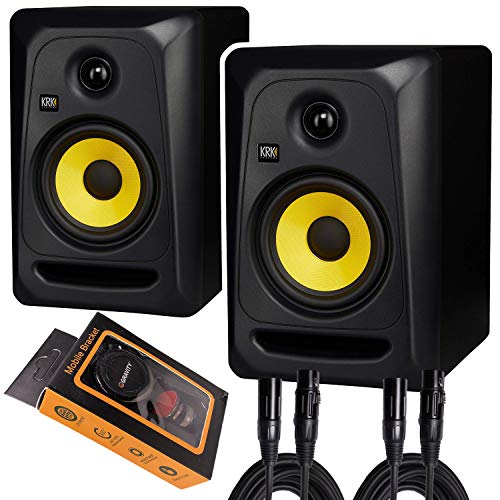
Live listings for the shortlist in this guide are pulled from Amazon below, so prices and availability are always current at the moment you look.



The bottom line for small rooms
A professional five-inch monitor is a wager that honesty at close range beats spectacle at a distance, and in small rooms that wager wins consistently. Its bass ceiling is real and should be planned around, with headphone checks, reference material or a carefully integrated subwoofer covering the octave below. Its port behaviour, boundary controls and input options decide how gracefully it inhabits the desk and walls available. Its midrange coherence and imaging are why the format endures while trendier categories rotate.
Buy for the room that exists, set the pair up with geometric care, give the controls one deliberate afternoon, and then leave them alone while the work accumulates. Consistency compounds: every hour spent listening through an unchanged, understood system sharpens the judgement that listeners ultimately pay for, whether the product is a podcast episode, a song or a film’s dialogue track.
One further consideration rarely appears in buying advice because it concerns temperament rather than technology. A revealing monitor rewards patience and punishes haste; engineers who enjoy diagnosing why a recording sounds the way it does tend to thrive with this class, while those who want every playback to feel finished may find honesty abrasive. Knowing which temperament you bring to the desk predicts satisfaction more reliably than any single specification, and borrowing time on a colleague’s pair, or ordering from a seller with a sane returns policy, lets that self knowledge form before the commitment hardens. Treat the first weeks as an audition in both directions: the loudspeakers are being evaluated, and so is the working relationship they create.
Placement experiments repay a notebook. Recording each configuration tried, the distance from the wall, the switch positions and the subjective result on two familiar tracks, turns random shuffling into cumulative knowledge about one specific room. Weeks later, when a rearranged bookshelf or a new desk changes the acoustics, that notebook shortens the path back to a trustworthy setup from days of guessing to a single afternoon of guided adjustments.
Readers who buy through links on this site support its work through a commission paid by the seller, and that support never adds anything to the amount the reader pays. These recommendations are assembled from published manufacturer data, standard acoustics literature and synthesised owner experience across the category, with no maker involvement in the conclusions.
In a small room, the best five-inch pair is the one whose limits you have mapped so thoroughly that your mixes stop carrying surprises into every other room they enter.


