What's inside
- Key Takeaways
- Quick Picks
- How did we choose these picks?
- Comparison table
- How should you split a four-figure monitor budget between speakers and room?
- How do you set up and calibrate a new monitor pair in a home room?
- What are the most common mistakes buyers make here?
- Final Recommendation
- What does translation actually mean, and how do you test it at home?
- Which pair fits which kind of producer, room by room?
- How do stands, cables and interfaces change what these speakers deliver?
- What should you listen for during the first week with a new pair?
- How long should a pair at this level last, and what wears out first?
- Should you add a studio subwoofer to a pair in this bracket?
- What is the shortest honest answer for a buyer who cannot decide?
- One last check before you pay: the pair-price audit
- A closing word on confidence: choosing the best 1000 1500 studio monitors
- Frequently Asked Questions
- Related Guides
As an Amazon Associate I earn from qualifying purchases. This post may contain affiliate links at no extra cost to you.
widgetverdict.com is reader-supported. When you buy through links on our site, we may earn an affiliate commission.
Where to buy: every linked pair below routes to its Amazon listing, while the one prose-only model is flagged clearly so you can hunt it down through a dealer instead. Keep the pair price, not the single-speaker price, in view the whole time you shop.
Searching for the best 1000 1500 studio monitors means accepting one awkward truth early: at this level, most serious nearfields are priced per single speaker, so the real purchase is always a pair, plus the stands and isolation that let a pair perform. This roundup does the honest arithmetic for you. It compares five verifiable pairs and one dealer-only alternative across small-room behaviour, low-end honesty, tuning tools and translation, because a monitor’s job is not to sound impressive in a demo playlist. Its job is to make your mixing decisions survive contact with earbuds, cars, club systems and phones.
The bracket itself is a sweet spot worth understanding. Below it, compromises in cabinet rigidity and amplifier control are easy to hear. Above it, you mostly pay for larger rooms, higher maximum levels and refinements that a bedroom studio may never expose. Inside this window sit genuine professional tools from Neumann, Genelec and ADAM, and the differences between them are about room fit and working style far more than about one being simply better than another.
Key Takeaways
- Most picks here are priced per speaker; a stereo pair is the real unit of purchase.
- DSP correction helps small rooms, but placement and basic treatment still matter more.
- Five-inch pairs suit desks and small rooms; seven-inch pairs need space to breathe.
- The Genelec 8020D pair is the budget-friendly exception that leaves money for treatment.
- Translation, not demo wow-factor, is the test every pair here was judged against.
- Buy matched pairs together; a single premium speaker is not half a monitoring system.
Quick Picks
| Pick | Badge | Why it earns its place |
|---|---|---|
| Neumann KH 120 II | Measurement-first reference | DSP alignment and ruthless honesty for small rooms. |
| Genelec 8030C | Compact all-rounder | Aluminium build and low-volume clarity that editors love. |
| ADAM Audio A7V | Modern seven-inch | Ribbon detail plus software tuning for mid-sized rooms. |
| Genelec 8020D (Pair) | Tiny travelling pair | True pair pricing and a midrange magnifying glass. |
| ADAM Audio T7V | Value seven-inch | Leaves bracket headroom for stands and treatment. |
| Focal Shape 65 | Analogue alternative | Port-free lows and furniture-grade looks, dealer permitting. |
How did we choose these picks?
We weighted translation above everything else. A monitor pair earns a place here if mixes made on it hold up on consumer systems, which in practice means an even midrange, controlled low mids and no treble trickery that flatters harsh recordings. Published measurement behaviour, where brands provide it, counted heavily, because a speaker that measures evenly in anechoic conditions gives its room-correction tools a sane starting point instead of a rescue mission.
Room fit came second. The typical buyer at this budget works in a spare room, a bedroom corner or a shared living space, so every pick was assessed at nearfield distances and realistic desk placements, including the dreaded against-the-wall setup. Speakers with credible boundary compensation, DSP alignment or port behaviour that tolerates tight placement scored accordingly, and cabinet size was treated as a genuine constraint rather than a spec-sheet bragging right.
Finally, we did the pair arithmetic openly. Where a model is sold singly, the analysis says so and judges the pair cost against the bracket. Where a listing genuinely bundles two speakers, that convenience is credited. Availability was verified for five of the six picks at checking time; the sixth is labelled prose-only rather than dressed up with a link we could not stand behind.

Neumann KH 120 II — The measurement-first reference
A pair of KH 120 II monitors is where this entire budget bracket starts to feel serious, because Neumann built this speaker around published measurements rather than around a house sound. The enclosure is compact, the woofer is modest in size, yet the response stays composed at distances where a bedroom producer actually sits, roughly an arm’s length to a metre and a half away. Mixes checked on this pair tend to reveal themselves honestly elsewhere: if the low mids feel crowded here, they really are crowded, and if a vocal sits forward here it usually survives a car check without embarrassment.
The onboard DSP is the practical headline. Neumann’s alignment tools let the pair correct for the boundary effects that plague desks pushed against walls, which describes most home studios chasing the best 1000 1500 studio monitors rather than a treated commercial room. That correction does not manufacture bass the cabinet cannot produce, but it stops a desk bounce from masquerading as mix weight. Engineers who print a mix, walk away, and return the next morning often describe this speaker as boring in the best possible sense: nothing flatters, nothing hides.
One honest accounting point belongs in any discussion of this model: it is priced per single speaker, so the pair consumes most of the bracket on its own before stands, isolation pads or an interface enter the conversation. Budget for two units from the start and the purchase makes sense; budget for one and the shortlist collapses. Within a true pair budget, though, few speakers at any size give a small room this much trustworthy information per cubic inch of cabinet.
- Format: two-way active nearfield, sold singly
- Woofer: compact composite cone in a sealed-feel controlled cabinet
- Amplification: internal, DSP-managed
- Best working distance: nearfield, roughly 0.75 to 1.5 metres
- Alignment: DSP room correction via Neumann’s alignment ecosystem
Strengths
- Exceptionally even response that makes EQ decisions stick
- DSP alignment genuinely helps desks trapped against walls
- Compact footprint suits small rooms without sounding small
Trade-offs
- Pair pricing consumes nearly the whole stated budget alone
- Deep sub-bass still needs a subwoofer or headphones to judge
- Neutral presentation can feel unexciting for casual listening
Best for: producers mixing in small, imperfect rooms who want decisions that translate to other systems without second-guessing
Not suited for: anyone hoping one purchase covers speakers, stands and interface with money left over, or listeners who want a warm, flattering presentation
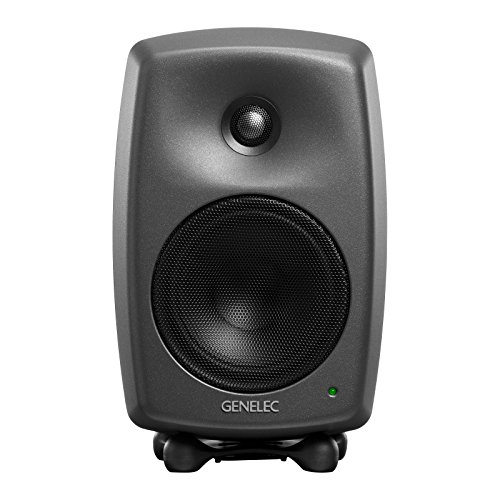
Genelec 8030C — The compact aluminium all-rounder
Genelec’s 8030C has been the default recommendation in this class for years, and sitting with a pair explains why the reputation persists. The die-cast aluminium cabinet is not a styling exercise; the curved enclosure suppresses edge diffraction and feels almost indestructible, which matters in rooms that double as offices, spare bedrooms and occasional rehearsal spaces. Tonally the 8030C leans clean and slightly forward in the upper mids, so vocal intelligibility and editing flaws announce themselves early in a session.
What separates the 8030C from cheaper five-inch rivals is behaviour at the edges of its range. Turn it down for late-night editing and the balance holds together instead of collapsing into muffled politeness. Push it during an arrangement pass and it stays tidy far longer than its size suggests. The rear controls for boundary and desk compensation are simple switches rather than full DSP, yet they cover the placement problems most small rooms actually present.
Like the Neumann above, this speaker is sold one at a time, so a stereo pair sits inside the bracket only if the rest of the chain already exists. Owners upgrading from entry-level monitors usually feel the difference most in reverb tails and low-mid mud, two areas where this Genelec simply reports more detail. It is the pair to shortlist when a room is small, a desk is shallow, and reliability over a decade matters more than fashionable features.
- Format: two-way active nearfield, sold singly
- Cabinet: die-cast aluminium, front ported
- Amplification: internal bi-amplified design
- Controls: rear DIP switches for room and desk compensation
- Best working distance: nearfield in compact rooms
Strengths
- Superb low-volume clarity for editing and late sessions
- Cabinet build quality is a class above MDF rivals
- Placement switches tame most small-room problems quickly
Trade-offs
- Sold singly, so pair maths needs care from the outset
- Bass extension is honest but limited by cabinet size
- Slight upper-mid presence can fatigue during very long days
Best for: editor-producers and mixers in compact rooms who value durability and detail at modest listening levels
Not suited for: producers scoring bass-heavy electronic music without a subwoofer to check the lowest octave

ADAM Audio A7V — The modern seven-inch with networked tuning
The A7V is ADAM’s answer for producers whose rooms grew up: a seven-inch woofer for genuine low-mid authority, the folded-ribbon tweeter the company is known for, and DSP tuning that can be driven from software when the speakers live somewhere awkward to reach. That ribbon tweeter deserves its reputation. Cymbal decay, string rosin and the air around a close-miked voice all resolve with a smoothness that dome tweeters at this level rarely match, and the detail arrives without the spitty edge that makes long sessions miserable.
Size is the negotiation here. A pair of A7V cabinets needs a desk with real depth or proper stands behind it, and in a tiny room the extra low-end energy can excite the very modes the DSP then has to fight. Given space to breathe, though, the larger woofer changes mixing decisions: kick and bass guitar separate more clearly, and the temptation to over-boost lows just to feel them largely disappears.
Priced per speaker like its Neumann and Genelec rivals, a pair lands squarely inside this bracket and arguably delivers the most raw capability of the three for mid-sized rooms. The rotatable tweeter waveguide also makes vertical or awkward placements less of a compromise. Choose this pair when the room can support seven-inch cabinets and the music demands low-mid information that smaller monitors only hint at.
- Format: two-way active nearfield, sold singly
- Tweeter: folded-ribbon X-ART design
- Woofer: seven-inch class for extended low mids
- Tuning: DSP with software control options
- Placement: rotatable waveguide for flexible orientation
Strengths
- Ribbon tweeter resolves top-end detail without harshness
- Seven-inch woofer gives kick and bass real separation
- Software-driven tuning suits hard-to-reach placements
Trade-offs
- Cabinet size overwhelms shallow desks and tiny rooms
- Extra low-end energy can excite untreated room modes
- Per-speaker pricing still applies despite the value feel
Best for: producers in mid-sized rooms working on bass-aware genres who can give larger cabinets proper space
Not suited for: desktop setups on shallow desks where a seven-inch cabinet would sit almost against the wall
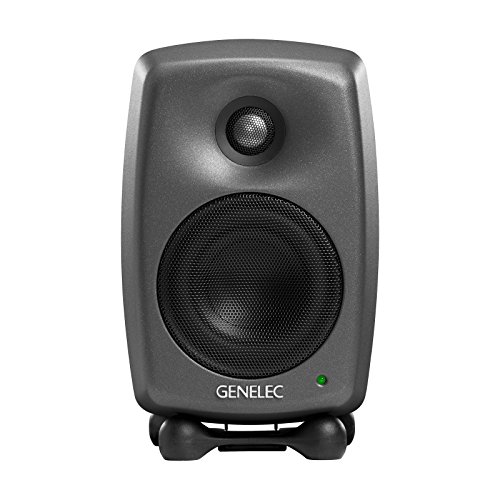
Genelec 8020D (Pair) — The tiny pair that travels
The 8020D listing in our pool is the convenient exception in this roundup: a matched pair of Genelec’s smallest serious monitors, which removes the per-speaker arithmetic entirely. Each cabinet is genuinely small, small enough to disappear on a crowded desk or pack into a case for location work, yet the family voicing means mixes started here still make sense when checked on bigger Genelec systems in other rooms.
Expectations need calibrating around physics. A four-inch-class woofer cannot move air like the bigger pairs above, and the 8020D does not pretend otherwise. What it offers instead is startling midrange honesty at close distances: dialogue editing, podcast production, acoustic instruments and vocal tracking all play to its strengths. Sit within a metre, keep levels sensible, and the pair behaves like a magnifying glass for the part of the spectrum where most amateur mixes go wrong.
As the second pair in a studio that already owns something larger, the 8020D earns its keep as a translation check, the small-speaker reality test that streaming-era listeners effectively apply. As a main pair it suits editors and spoken-word producers better than beatmakers. Within the bracket, buying this pair also leaves genuine headroom for treatment, stands and a better interface, which can matter more than woofer diameter.
- Format: two-way active nearfield, sold as a pair in this listing
- Cabinet: die-cast aluminium, very compact
- Amplification: internal, per cabinet
- Best working distance: very nearfield, under a metre ideally
- Role: main pair for speech, or translation-check pair
Strengths
- True pair pricing simplifies the budget conversation
- Tiny cabinets fit desks no other pick here can
- Midrange honesty flatters nothing in dialogue or vocals
Trade-offs
- Lowest-octave content simply is not reproduced
- Maximum level is modest in larger rooms
- Beatmakers will outgrow the bass quickly
Best for: podcast and dialogue editors, or owners of larger monitors wanting a small translation-check pair
Not suited for: anyone producing bass-led music as their only monitoring in a mid-sized room

ADAM Audio T7V — The value seven-inch, priced per speaker
The T7V occupies the strategic middle of this list: ADAM’s ribbon tweeter and a seven-inch woofer at a per-speaker cost low enough that a pair leaves real money inside the bracket for treatment and stands. That leftover budget is not a footnote. In an untreated room, the difference between a bare premium pair and a T7V pair plus basic panels and proper isolation is audible within minutes, and it usually favours the balanced spend.
Sonically the T7V shares family traits with the A7V, including that smooth, extended top end, but the cabinet, amplifiers and tuning are simpler, and dense mixes at higher levels expose the gap. The rear port also demands a little clearance from walls, so placement discipline matters more here than with the front-ported Genelec designs. Give it twenty or thirty centimetres of breathing room and the low end tightens up considerably.
For a first serious pair bought with growth in mind, this is the pragmatic centre of the bracket. It is sold singly, so confirm quantities at checkout, and resist the temptation to buy one premium speaker now and a partner later; stereo monitoring bought in halves is just mono with extra steps. As a matched pair bought together, the T7V delivers most of the experience this budget promises at the lowest total outlay here.
- Format: two-way active nearfield, sold singly
- Tweeter: folded-ribbon U-ART design
- Woofer: seven-inch class, rear ported
- Amplification: internal, simpler than the A-series
- Pair cost position: lowest total outlay in this roundup
Strengths
- Ribbon top end at a pair price that leaves treatment money
- Seven-inch woofer covers most home-studio genres credibly
- Simple controls keep setup quick for first-time owners
Trade-offs
- Rear port needs wall clearance to stay tidy
- Dense, loud mixes reveal its simpler amplification
- No DSP room correction to rescue bad placement
Best for: first-time serious buyers who want to split the budget between speakers and room treatment
Not suited for: producers with speakers forced flush against a wall, where the rear port will boom
Focal Shape 65 — The analogue French alternative (prose-only)
Focal’s Shape 65 earns a prose-only mention for listeners who prefer an analogue signal path and a slightly different presentation of the midrange. The passive radiators on the cabinet sides let this design produce controlled lows without a port, which helps in rooms where port behaviour has caused trouble before, and the walnut finish makes it the one pair here that looks like furniture rather than equipment.
We could not verify a current pool listing for it during this roundup’s checks, so it carries no purchase link; treat it as a model to audition rather than a click-and-buy recommendation. Studios that track a lot of acoustic instruments often praise how this speaker handles the body of guitars and the weight of a piano. If a local dealer can demo a pair against the Genelec and Neumann above, the comparison is genuinely instructive, because the three brands disagree about presentation in ways specifications never capture.
- Format: two-way active nearfield with passive radiators
- Tweeter: inverted dome design
- Cabinet: finished wood veneer options
- Signal path: analogue, no DSP correction
- Availability note: no verified pool listing at checking time
Strengths
- Port-free low end behaves well in tricky rooms
- Acoustic instruments carry convincing body and weight
- Cabinet finish suits living-space studios
Trade-offs
- No purchase link here because availability was unverified
- Analogue path means room problems stay your problem
- Dealer demos may be necessary before committing
Best for: acoustic-focused producers who can audition locally and prefer an analogue monitoring path
Not suited for: buyers who need verified online availability and DSP help for a difficult room
Comparison table
Use this table for the structural differences first, then read the detailed sections for the tonal judgements that a spec column cannot carry.
| Pick | Format | Standout trait | Watch out for |
|---|---|---|---|
| Neumann KH 120 II | Two-way, sold singly | DSP alignment, even response | Pair cost tops the bracket |
| Genelec 8030C | Two-way, sold singly | Low-volume clarity, aluminium cab | Limited bass extension |
| ADAM Audio A7V | Two-way, sold singly | Ribbon detail, software tuning | Needs desk depth and space |
| Genelec 8020D | Two-way, sold as pair | Tiny footprint, midrange focus | Modest maximum level |
| ADAM Audio T7V | Two-way, sold singly | Value with ribbon tweeter | Rear port needs clearance |
| Focal Shape 65 | Two-way, passive radiators | Port-free lows, elegant finish | No verified listing found |
How should you split a four-figure monitor budget between speakers and room?
Start with the pair, then protect the purchase. A sensible split inside this bracket puts roughly two-thirds to three-quarters of the money into the speakers themselves and reserves the remainder for the unglamorous items that decide whether those speakers perform: sturdy stands or quality isolation pads, balanced cables, and at least basic absorption at the first reflection points. Buyers who spend the entire amount on cabinets and then perch them on a resonant desk, flanking a monitor screen, routinely end up with a worse result than a cheaper pair mounted properly.
Placement geometry deserves an afternoon before any correction software runs. Aim for an equilateral triangle between the two tweeters and your head, tweeters at ear height, and the pair pulled as far from the front wall as the room allows. Symmetry matters more than exotic tweaks: if one speaker sits near a corner and the other beside an open doorway, their low ends will disagree no matter what the DSP promises, and stereo imaging will smear toward the reinforced side.
Only after geometry is settled should correction enter the picture. DSP-equipped pairs like the Neumann and the A7V can trim boundary boosts and tame a desk reflection, but no system can fill a genuine room null or fix a speaker exciting a strong mode from a bad position. Treat correction as the final ten percent. Measure or listen, adjust placement, then let the electronics polish what physics already got mostly right.
Woofer size should follow room size and listening distance, not genre ambition. In a small room, a well-controlled five-inch pair at a metre will tell you more truth than a seven-inch pair exciting every mode the space owns. The exception is the producer who regularly checks mixes at lower levels on headphones and simply needs midrange truth from the speakers; for that workflow even the tiny 8020D pair can be the main tool, with sub-bass decisions deferred to cans.
Interfaces and conversion are the quiet part of the budget. Monitors at this level will happily reveal a noisy onboard output or a ground loop from an unbalanced cable, so balanced connections from a competent interface belong in the plan from day one. If the current interface only offers an unbalanced consumer output, upgrading that link may improve the whole system more than stepping up one speaker tier.
How do you set up and calibrate a new monitor pair in a home room?
Begin with the room empty of opinions: place the speakers, sit in the listening position, and play reference tracks you know intimately at a moderate, repeatable level. Mark the position with tape. Most setup failures trace back to drifting geometry, where one session’s chair position differs from the next and the mixer chases tonal changes that were really positional. Consistency of the listening spot is the cheapest accuracy upgrade available.
Set gain staging so the interface’s main output sits in a healthy range while the speakers’ own input sensitivity keeps their amplifiers quiet at idle. Hiss at the listening position means the chain is mismatched, not that the speakers are revealing. Work through the manufacturer’s guidance for input trim, and confirm both cabinets share identical settings before judging stereo balance; a single mismatched switch has launched a thousand unnecessary returns.
Run whatever alignment the pair offers only after a day or two of listening without it. That baseline teaches your ears what the room does, so the correction’s changes register as improvements rather than mysteries. Save the pre-correction settings if the system allows it, and compare on familiar material at matched loudness, because louder almost always wins an unfair comparison and correction often reduces overall level slightly.
Finish with translation checks on a schedule, not as a panic ritual. Print a mix, listen in a car and on earbuds the following morning, and note one or two specific discrepancies rather than a general feeling. Over several mixes, patterns emerge that point back to placement or a consistent tonal blind spot. Adjust the setup for the pattern, not for a single song, and the room slowly becomes a tool instead of an adversary.
What are the most common mistakes buyers make here?
The costliest mistake is buying one speaker. It sounds absurd, yet per-speaker pricing catches buyers every season: a single premium nearfield arrives, and its partner waits months for a restock or a price change, during which every mix decision is mono guesswork. Confirm the quantity in the basket represents two cabinets before paying, every time.
Oversizing for the room runs a close second. A seven-inch pair in a nine-square-metre bedroom does not deliver more truth; it delivers more modal energy and a narrower usable volume range. Match cabinet size to the space first and let genre preferences argue afterwards.
Skipping isolation is the silent error. Expensive speakers resting directly on a hollow desk inherit the desk’s resonances, which smear low mids in ways no EQ setting separates from the mix itself. Pads or stands are not accessories at this level; they are part of the speaker system.
Finally, buyers often judge monitors with unfamiliar demo playlists and chase the pair that makes other people’s records sound biggest. That test selects for flattery. Bring recordings you have mixed, including their known flaws, and choose the pair that shows you those flaws most clearly.
Final Recommendation
If the room is small and the goal is mixes that travel, the Neumann KH 120 II pair is the reference point of this bracket, with the Genelec 8030C close behind for editors who prize low-volume clarity and bombproof cabinets. Larger rooms that can support seven-inch cabinets should look hard at the A7V, while the T7V pair plus treatment is the smartest total spend for first-time buyers. The 8020D pair remains the specialist’s small-speaker check, and the Focal is the audition-first alternative.
Whichever pair you choose, spend the leftover money on stands, symmetry and one free afternoon of careful placement, because in this bracket the room is always the second speaker. Get those foundations right and any of these pairs will tell you the truth for a decade; the pair that fits your room will be obvious the first time a mix survives the car test unchanged.
What does translation actually mean, and how do you test it at home?
Translation is the word engineers use for a simple, brutal question: does the mix you approved in your room still make sense everywhere else? A kick drum balanced against a bass line on your monitors might vanish on a phone speaker, dominate in a car, or turn to fog on a cheap soundbar, and each failure points back to a frequency region your room or your speakers misreported. Monitors in this bracket earn their money by shrinking those surprises. They cannot eliminate them, because no two playback systems agree completely, but a pair that reports the midrange honestly and keeps the low mids uncluttered removes the largest category of amateur mixing errors, the ones caused by compensating for problems that existed only in the monitoring chain itself.
You can test translation without any measurement equipment, using references and patience. Take three commercial recordings you know intimately, in the genre you mix, and learn how they sound on your new pair at your exact listening position: where the vocal sits, how much weight the kick carries, how wide the reverbs feel. Then mix your own material until it produces the same relationships, not the same loudness or the same thrill, but the same internal balance. Play the result in a car and on earbuds the next morning, with fresh ears, and write down the discrepancies in concrete terms, a sentence each, rather than a mood. Over a month of that discipline, your room stops being an opponent and becomes a known quantity with known habits.
The pairs in this roundup differ in how much help they give that process. DSP-equipped models attack the room’s contribution directly, flattening the boundary boosts that make home mixes chronically bass-light elsewhere, because the mixer kept cutting lows the room had invented. Analogue pairs leave the room entirely to you, which rewards treated spaces and punishes bare ones. Neither approach changes the underlying requirement, which is a reference habit. The most expensive pair here will still produce bad translation for a mixer who never checks work anywhere else, and the cheapest pair will serve a disciplined mixer surprisingly far.
Listening level is the hidden variable in every translation story. Human hearing perceives bass and treble differently as volume changes, so a mix balanced loudly will feel thin at the levels most listeners actually use, while a mix balanced quietly can turn boomy when a listener turns it up. Professionals manage this by working at a consistent, moderate level and checking briefly at lower and higher extremes. In a home room, pick a reference level you can repeat, mark it on your interface, and make most decisions there. The monitors in this bracket hold their balance across levels better than budget pairs do, which is one of the less advertised reasons they cost what they cost.
Stereo imaging deserves its own test, because small rooms corrupt it quietly. Play a mono recording and confirm it sits dead centre, stable and focused; then play a wide stereo mix and check that elements placed at the edges stay put when you move your head slightly. If the centre wanders or the image collapses with small movements, suspect placement asymmetry before suspecting the speakers. One cabinet nearer a side wall than the other, or a desk surface reflecting into one ear’s path, will bend an image that the speakers themselves reproduce perfectly. Fixing geometry is free, and in this bracket it routinely outperforms upgrading cabinets.
Finally, give any new pair a probation period measured in finished mixes, not in hours of admiring favourite records. Judge the purchase by whether clients, collaborators and your own next-morning ears stop reporting surprises. That is the only review that matters, and it is why this roundup keeps returning to translation rather than to the pleasure of listening. Pleasure is easy to buy at this price. Predictability is the professional product, and it is what separates the pairs above from the merely enjoyable ones below the bracket.
Which pair fits which kind of producer, room by room?
Consider the bedroom producer working at a desk against a wall, in a room that is also a bedroom, with neighbours below. That room argues for the Neumann pair or the smaller Genelec, because DSP or boundary switches directly address the wall’s bass reinforcement, cabinet size respects the space, and maximum level is irrelevant where a landlord sets the ceiling. It also argues against seven-inch cabinets of any brand, whose low-end energy will excite the room’s modes and the neighbour’s patience in equal measure. Matching the speaker to the lease is not a compromise; it is the actual engineering brief.
The dedicated spare-room studio, treated with at least basic panels and free to place speakers on stands away from walls, unlocks the seven-inch options. There the A7V’s extra low-mid authority becomes information rather than trouble, and its software tuning refines a setup that placement already got mostly right. The same room is where the T7V plus treatment argument weakens slightly, because a treated room rewards the better cabinet more than it forgives the simpler one. Budget logic is room logic: spend on the bottleneck, and in a good room the bottleneck is the speaker.
The editor and spoken-word producer should read this list almost in reverse. For dialogue, podcasts and audiobooks, the decisive range is the midrange where voices live, maximum level is nearly irrelevant, and sub-bass content barely exists. The little 8020D pair, dismissed by beatmakers, becomes arguably the smartest purchase on the page, especially since the money it saves buys the microphone and room treatment that spoken-word quality actually depends on. Genre is a specification. A roundup that ignores it would rank these pairs identically for a film composer and a podcaster, which would be nonsense wearing a lab coat.
The travelling producer, mixing in short-let apartments and collaborators’ rooms, faces a different equation again: consistency across unknown spaces. Compact Genelec cabinets with their predictable behaviour and near-indestructible build suit that life, and a familiar pair in a strange room beats a superior pair you do not know. This is also the one workflow where buying the same model a collaborator owns has genuine technical value, because shared references remove a whole category of mix disagreements before they start.
The producer planning to grow into surround or immersive work should think about the ecosystem behind the pair. Brands with matched larger and smaller models, coherent voicing across a range and established calibration tools make the stereo pair the first instalment of a system rather than a dead end. Both Neumann and Genelec play that long game explicitly, which is part of what a buyer at this level is purchasing: not only two cabinets, but a road that continues if the work does.
Everyone, regardless of room, should reserve a slice of the budget for the unglamorous measurement of their own habits: a sound level app for consistent monitoring levels, a tape measure for geometry, and time. The pairs above differ by hundreds in price and by clear margins in capability, yet the distance between a well-placed mid-priced pair and a badly placed flagship remains larger than the distance between the pairs themselves. That sentence is the most useful one in this entire guide, and the cheapest to act on.
How do stands, cables and interfaces change what these speakers deliver?
A studio monitor is a system pretending to be a product, and the parts around the cabinet routinely decide which of these pairs sounds like the flagship its price suggests. Start with what the speakers stand on. A hollow desk is a resonant box that joins in enthusiastically at low-mid frequencies, colouring every kick and bass note with its own opinion, and the effect is worst exactly where home mixes already struggle. Proper stands filled or braced for mass, or quality isolation pads that decouple the cabinet from the surface, remove that collaborator from the music. Buyers routinely report that isolating a mid-priced pair improved clarity more than upgrading the pair itself would have, which is either depressing or wonderful news depending on whether the stands were already in the budget.
Balanced cabling is the second silent partner. Every pair here accepts balanced inputs for a reason: unbalanced runs from a consumer output invite hum, buzz and the faint digital chatter of a computer’s internals into speakers resolving enough to display all of it proudly. A competent interface with balanced outputs, connected with ordinary balanced leads, deletes an entire category of noise complaints that owners otherwise chase through forums for weeks. If your current chain hisses at idle, the new monitors will not fix it; they will exhibit it. Budget for the chain as one purchase, because the speakers are merely its loudest reporter.
Gain staging ties the system together. Set the interface output to a healthy working level, trim the speakers so that level lands at your chosen monitoring volume, and confirm both cabinets match exactly, in input sensitivity and in every rear or software setting. A half-step difference between left and right controls will pull the stereo image sideways and send you chasing phantom mix problems for days. This ten-minute discipline, repeated whenever anything in the chain changes, is the cheapest accuracy available in the whole bracket and the one most often skipped by buyers eager to press play.
Power and placement interact in small rooms in ways worth planning before the boxes arrive. Each active cabinet needs its own mains socket near its position, and extension arrangements that drape cables across walkways have ended more monitors than electricity ever has. Think through where two powered speakers, an interface and a computer will actually plug in, and whether the only available wall forces the asymmetric placement your DSP will then spend its life compensating for. Sometimes moving a bookcase is the highest-value studio upgrade in the entire budget, and it costs nothing but an afternoon.
What should you listen for during the first week with a new pair?
Begin with speech. A well-recorded voice, a podcast or an audiobook chapter you know well, exposes midrange honesty faster than any produced track, because every listener carries a lifetime reference for how a human voice should sound. Sibilance that stabs, chestiness that bloats, or a hollowness that suggests the speaker is performing from inside furniture all announce themselves within minutes on speech, and they predict exactly how vocal mixes will mislead you later. All the pairs here pass this test respectably, which is part of why they cost what they cost, but their characters differ enough that your own ears should arbitrate with material this revealing.
Move next to a recording with genuine dynamic range, an orchestral piece or an unmastered live recording, and listen at your marked reference level for whether quiet detail survives without turning the volume up. Low-level resolution, the audibility of reverb tails, room tone and the decay of a piano note into silence, separates serious monitors from loud ones, and it is the quality that editing work consumes all day. The Genelec and Neumann pairs are particularly composed in this exercise, while the larger ADAM cabinets answer with authority when the same recording swells to its peaks.
Test the low end with a sine sweep or with familiar tracks whose bass lines you can hum, and walk the room while they play. You will find positions where the bass doubles and corners where it vanishes, and mapping those tells you where your chair must never drift and why your first mixes came back light or heavy. The speakers are not malfunctioning in those spots; the room is performing its physics. Knowing the map converts mysterious mix failures into a known tax you can route around with placement, checks on headphones and, where fitted, the pair’s own correction tools.
Finish the week by remixing one old song, a track whose translation failures you already know from cars and earbuds. If the new pair shows you, in the room, the specific flaw that used to ambush you outside it, the purchase has done its job and the probation is over. If the same ambush survives, the problem lives in placement or habit rather than in the cabinets, and the honest next step is geometry and reference discipline, not a return label. That experiment, more than any specification in this guide, tells you what you actually bought.
How long should a pair at this level last, and what wears out first?
A serious nearfield pair is closer to a musical instrument purchase than to a phone upgrade, and its economics only make sense across a long horizon. The cabinets and drivers in this bracket are built for studio duty cycles, daily hours at working levels in rooms that are not always gentle, and a decade of service is a reasonable expectation rather than a hopeful one. That longevity reframes the price argument completely: the difference between the cheapest and the most expensive pair here, spread across ten years of daily work, costs less per month than the streaming subscriptions the mixes are made for. Buyers who flinch at the bracket should divide by years before they divide by features.
What actually ages in an active monitor is rarely the part people imagine. Drivers in this class seldom fail from honest use; the electronics around them, capacitors in amplifiers and power supplies, live harder lives, especially in warm rooms and in cabinets left powered around the clock. Switching the pair off at the wall or through a single accessible power strip when the studio sleeps is the simplest longevity habit available, and it also deletes the idle hiss and the standby glow that bedrooms do not need. Dust is the other slow enemy: ports, heatsinks and controls all collect it, and a soft brush twice a year is genuine maintenance, not fussiness.
The second-hand market around these brands tells the longevity story from the other side. Used examples of the Genelec and Neumann families change hands briskly at strong prices because buyers trust the survival rate, which means a careful first owner recovers a meaningful share of the purchase when upgrading to a larger system. That resale reality quietly lowers the true cost of the premium pairs relative to obscure alternatives that become worthless the day their box opens. It also creates a legitimate buying route: a verified used pair from a working studio, auditioned and checked for driver damage and amplifier noise, can deliver this bracket’s performance for the price of the tier below.
Support ecosystems matter across that lifespan. Manufacturers who publish measurements, stock spare parts, maintain calibration software and answer service enquiries make a pair maintainable rather than merely durable. Both major names in this roundup operate that way, and ADAM’s growing software platform suggests similar intent. When two pairs tie on sound, the one whose maker will still recognise it in eight years is the better purchase, because a monitor you cannot service is a monitor with an expiry date printed in invisible ink.
Plan the upgrade path with the same long view. A pair bought for a bedroom may move to a treated room, gain a subwoofer, or become the nearfield reference beside larger mains, and the models here all have plausible second acts of exactly those kinds. The purchase fails only when it must be replaced outright, which is why this guide keeps steering buyers away from oversizing for today’s room and away from single-speaker bargains that strand the budget. Buy the pair that fits the room you have and the work you actually do, keep it powered sensibly and dusted occasionally, and this bracket’s promise, a decade of trustworthy decisions, is realistic rather than romantic.
There is a final, unfashionable longevity factor: your own hearing. Monitors this revealing invite higher levels because detail feels good, and a decade of enthusiastic volume is a cost no warranty covers. Work at the marked reference level, take breaks in long sessions, and let the pairs’ low-volume clarity, a quality this guide praised in the Genelec especially, do the late-night work. The best monitor purchase is the one whose owner can still hear what it is saying in year ten.
Should you add a studio subwoofer to a pair in this bracket?
The honest answer begins with the room, because a subwoofer in an untreated small space usually manufactures more problems than information. Below the frequencies where a room’s dimensions take over, every position in the space hears a different bass level, and adding a powerful low-frequency source excites that chaos energetically. Producers then mix against a low end that exists only in their chair, which is worse than mixing against a small pair’s honest absence, because absence at least sends you to headphones for a check while false presence sends you confidently wrong. For most rooms shopping in this bracket, the subwoofer conversation should wait until placement and basic treatment are settled.
There are real exceptions. The integration is the product: level matched by measurement or by careful reference listening, crossover set where the mains naturally fade, and a bypass habit for checking mixes both ways. A subwoofer dropped into a corner and turned up until it feels impressive is not monitoring; it is a second, louder opinion with no credentials.
Headphones remain the pragmatic low-end check for this bracket’s typical buyer, and the pairs here cooperate with that workflow by keeping their own low mids clean enough that the headphone check becomes a confirmation rather than a rescue. Spend the subwoofer money first on the stands, the interface and the treatment this guide keeps returning to.
What is the shortest honest answer for a buyer who cannot decide?
If reading this far has produced analysis paralysis, the decision compresses into three questions. How big is the room, honestly measured? Small rooms take the five-inch pairs, larger treated rooms take the sevens. Does the work live in the midrange or in the bass? Voices and editing take the little Genelec seriously, bass-led production takes woofer size seriously. And will the leftover money be spent on placement and treatment, or absorbed elsewhere? The remaining differences are character, and character is what demos and return windows exist to arbitrate.
One last check before you pay: the pair-price audit
Before any money moves, perform the audit this entire category depends on: open the basket, confirm the quantity reads two for every per-speaker model, confirm the stands or pads and the balanced cables are in the same order, and confirm the interface you own actually offers the balanced outputs these cabinets expect. Buyers who run that five-minute audit almost never join the forums asking what went wrong, which is the least glamorous and most reliable statistic in this whole guide.
A closing word on confidence: choosing the best 1000 1500 studio monitors
Every pair in this bracket will, within a month, stop sounding like equipment and start sounding like your room’s opinion of the truth. Choose the pair your room describes, set it up like you mean it, and then make records. The monitors will handle the rest, quietly, for years, which is all that professional tools have ever promised anyone.
Frequently Asked Questions
Are studio monitors at this level really sold one at a time?
Yes. Always budget for two cabinets, and check the basket quantity before paying.
Do I need a subwoofer with five-inch monitors?
For most mixing you need a way to check the lowest octave, not necessarily a sub. Good headphones cover that check cheaply.
Is DSP room correction worth paying for?
In small, untreated or asymmetric rooms it usually is, because boundary boosts and desk reflections are exactly what DSP handles well. It cannot repair deep nulls or bad geometry, so placement still comes first.
How far should I sit from nearfield monitors?
Roughly between seventy-five centimetres and a metre and a half for the five-inch pairs here, in an equilateral triangle with your head. The seven-inch models stay coherent a little farther back.
Can these monitors double as everyday listening speakers?
They can, and many owners use them that way, but their honesty is the point: poor recordings sound poor. If casual enjoyment is the main job, the smaller Genelec pair is the friendliest compromise.
Should beginners spend this much on a first pair?
Only if the room and interface are ready for them. A mid-priced pair in a treated corner will outperform a premium pair on a bare desk, so sequence the spending: basics first, then the flagship cabinets.
Related Guides
Keep exploring with these companion guides: best studio monitors for small rooms best monitor stands and isolation pads how to treat a home studio on a budget.



[…] exploring with our companion guides: best 10 bit monitors, best gaming monitors for esports and best monitor arms for […]