Our Top Picks


What's inside
- What weatherproof really has to survive outdoors
- Decoding the IP rating: what the two digits promise
- IP65, IP66, and IP67 in real rain, not laboratory rain
- Operating temperature ranges and what happens at the edges
- Metal housings, plastic housings, and the honest trade-offs
- IK10 and protection against deliberate damage
- Power over Ethernet versus Wi-Fi in outdoor positions
- Night performance: infrared, white light, and large sensors
- Cable glands, junction boxes, and the entry points where water wins
- Coastal air, salt fog, and corrosion that arrives slowly
- Condensation inside the lens and how good designs prevent it
- Mounting choices that quietly decide reliability
- Resolution, lenses, and coverage planning for outdoor areas
- Smart detection outdoors: false alarms from rain, spiders, and shadows
- Audio, sirens, and two-way talk in exposed positions
- Firmware, standards, and keeping an outdoor camera supported
- Seasonal maintenance that keeps the rating honest
- Choosing between bullet, dome, turret, and PTZ bodies outdoors
- Cold snaps, heatwaves, and the extremes between the averages
- What to check on the specification sheet, in order
- Matching the camera to houses, farms, shops, and rentals
- Common installation mistakes that void the weatherproof promise
- Storage and recorders: the indoor half of an outdoor system
- Wildlife, insects, and the small tenants of outdoor housings
- Warranty language and the fine print behind the ratings
- A short pre-purchase walk around the property
- Check prices on Amazon
- Bringing the decision together
As an Amazon Associate I earn from qualifying purchases. This post may contain affiliate links at no extra cost to you.
Weatherproofing claims are easy to print on a box and harder to earn on a wall through four seasons, so this guide reads the ratings carefully before recommending anything. As an Amazon Associate we earn from qualifying purchases.
What weatherproof really has to survive outdoors
An outdoor camera does not face a single hazard called weather. It faces wind-driven rain arriving sideways, dust that works into seams over months, summer heat radiating off a sunlit wall, frost that stiffens cables, insects that nest in warm housings, and condensation that forms inside the lens on cool mornings. A camera described as weatherproof has been designed and rated against some of those forces, but the rating system only covers part of the story, and the installation decides much of the rest.
The useful way to judge a model is to picture its actual mounting place. A camera tucked under a deep porch roof lives a sheltered life even outdoors, while the same unit on a gable end takes the full force of every storm. Coastal homes add salt-laden air that corrodes quietly all year. Farms and workshops add fine dust and chemical vapours. Matching the camera’s protection level to the exposure of its position, rather than to a generic idea of outdoors, is the first decision that separates a lasting installation from a warranty claim.
This guide works through the rating codes, the housing materials, the power and connection choices, and the installation details that keep water out of cable entries, which is where most outdoor cameras actually fail. Resolution and smart features matter, of course, but a brilliant sensor inside a housing that fogs internally by October is a poor purchase. Durability first, then electronics, is the order that experience outdoors tends to teach.
Decoding the IP rating: what the two digits promise
The ingress protection code, written as IP followed by two digits, is the closest thing the industry has to a common language for sealing. The first digit rates protection against solid objects and dust, running from zero up to six, where six means dust-tight construction that keeps fine particles out during prolonged exposure in a dust chamber. The second digit rates protection against water, climbing from dripping and spraying through to immersion. Both digits come from standardised laboratory procedures defined in the IEC 60529 standard, performed on new equipment under controlled conditions.
For outdoor cameras, the realistic starting point is a first digit of five or six. A five means dust ingress is limited enough not to interfere with operation, which suffices for most sheltered suburban mounts. Six is the safer choice for exposed sites, workshops, agricultural buildings, and anywhere wind carries grit. A camera with no published first digit, or one marketed with vague splash-resistant language instead of a code, is telling you something about the confidence behind its sealing.
The water digit deserves equally close reading because the differences between adjacent numbers are practical, not cosmetic. Ratings are also not automatically cumulative in the way buyers assume: a device rated for immersion has not necessarily passed the powerful jet procedures, because the jet and immersion procedures stress seals in different ways. Some manufacturers therefore publish dual ratings, such as IP66 and IP67 together, when a housing has genuinely passed both families of procedures. A single immersion rating on a camera that will live in driving rain deserves a follow-up question.
IP65, IP66, and IP67 in real rain, not laboratory rain
IP65 certifies protection against water jets from any direction, the equivalent of a nozzle spraying the enclosure from a few metres away. In everyday terms that covers heavy rain, including the wind-pushed sort that finds upward-facing surfaces, plus the occasional careless hose splash during garden work. For a camera mounted under eaves or on a wall with ordinary exposure, IP65 has a long and respectable record, provided the cable entry is sealed with equal care.
IP66 raises the water procedure to powerful jets, a substantially greater volume driven with more force, simulating the kind of storm seas and exposed ridges deliver. This is the rating to prefer for unsheltered positions: gable ends, fence posts, pole mounts, and walls facing the prevailing weather with nothing above them. The stronger rating also implies seals and gaskets built to resist pressure trying to push water past them, which pays off year after year as materials age and lose some elasticity.
IP67 certifies immersion, typically thirty minutes at a depth of one metre in still water. That sounds superior to everything, and for a camera that might sit in a flooded area, a basement entrance, or a low mounting near a water feature, it is genuinely valuable. For a wall-mounted camera it answers a question nobody asked, since the unit will never be submerged, while the jet resistance that storms demand may or may not accompany it. Buyers should treat IP67 as a useful extra on top of a jet rating, not as a replacement for one.
Beyond the digits, remember that laboratory procedures use clean water at moderate temperatures on fresh seals. Real rain arrives with grit, temperature swings stress gaskets between procedures, and ultraviolet light slowly embrittles exposed rubber. A rating is therefore a starting credential, and build quality, gasket design, and installation determine how much of that credential survives into the third and fourth winters of service.
Operating temperature ranges and what happens at the edges
Every outdoor camera carries an operating temperature range, and the numbers deserve comparison against your climate rather than a quick glance. A typical range might run from minus thirty to plus sixty degrees Celsius, which covers most temperate regions comfortably. Cold-climate buyers should look at the lower figure and at whether the rating describes starting the camera from cold or merely running it once warm, because a unit that survives a frosty night while powered may still refuse to boot after a power cut in a freeze.
Cold attacks a camera in several ways at once. Lubricants in pan-and-tilt mechanisms thicken, gaskets stiffen and seal less forgivingly, and any moisture that entered the housing can freeze where it sits. Fixed bullet and turret cameras, with no moving parts, tolerate deep cold more gracefully than motorised models. Some cold-rated designs include a small internal heater that keeps the electronics and the front window above the dew point, drawing extra power that a PoE budget must accommodate.
Heat is the quieter long-term enemy. A dark housing in direct sun on a south-facing wall can run far hotter inside than the surrounding air, and sustained high temperatures accelerate the ageing of image sensors and capacitors while sometimes triggering thermal shutdowns on the hottest afternoons. Light-coloured housings, sunshields, and mounting positions that catch a little shade all extend service life. The stated upper limit should be read with that solar loading in mind: a camera rated to sixty degrees mounted in blazing sun on black render is working closer to its edge than the weather report suggests.
Metal housings, plastic housings, and the honest trade-offs
Die-cast aluminium housings dominate the serious end of the outdoor market for good reasons. Metal resists impact, conducts heat away from the electronics, holds screw threads securely through repeated servicing, and gives gaskets a rigid, stable surface to seal against. A metal body also feels reassuringly dense in the hand, which is not mere vanity: stiffness in the housing keeps the lens aligned with the sensor when the mounting arm flexes in wind or the unit takes a knock from a ladder.
Polycarbonate and other engineering plastics have improved enough that dismissing them outright would be a mistake. A well-moulded plastic housing never rusts, shrugs off coastal air that pits painted metal, weighs less on weak mounting surfaces, and costs less to produce. Quality varies enormously, though. Thin, glossy shells with crude seams belong on sheltered porches only, while thick, UV-stabilised housings with proper gasket channels serve exposed positions respectably. The specification to seek is UV stabilisation, because unstabilised plastic chalks, yellows, and turns brittle under sunlight within a few seasons.
Hybrid designs split the difference, using a metal chassis or mounting neck with a plastic sunshield and outer covers. Whatever the material, examine how the front window is retained and whether the housing opens for service without destroying a seal. A camera that must be discarded when a gasket perishes is a poorer long-term proposition than one whose seals and desiccant can be renewed during a maintenance visit.
IK10 and protection against deliberate damage
Where the IP code measures weather, the IK code measures violence. IK ratings describe how much impact energy an enclosure can absorb without damage, and IK10, the top of the common scale, corresponds to a five-kilogram mass dropped from forty centimetres, delivering twenty joules to the housing. In practical terms that is protection against a thrown stone, a swung tool, or a determined attempt to knock the camera off its aim with a stick.
Vandal resistance matters in proportion to reachability. A camera mounted four metres up a wall is protected by height, and an IK08 housing is ample. The same camera watching a car park at head height, covering a school entrance, or guarding a loading bay where tempers and forklifts both circulate needs the full IK10 treatment, ideally with a recessed lens behind a tough polycarbonate window and tamper-resistant fixings that an ordinary screwdriver cannot undo.
Buyers comparing across the wider surveillance market will find IK and IP figures quoted together throughout roundups such as best 10 security ip cameras, and the pairing is the right habit: sealing without strength invites tampering, while strength without sealing invites the weather. Check also whether the impact rating applies to the whole unit or only to a dome cover, since a strong window on a fragile body protects the view but not the camera.
Power over Ethernet versus Wi-Fi in outdoor positions
Power over Ethernet, defined by the IEEE 802.3af and 802.3at standards, sends power and data along one network cable. For outdoor use its virtues compound: a single sealed cable run, no outdoor electrical socket to protect, centralised backup power at the switch or recorder, and a wired data path indifferent to walls, weather, and neighbouring networks. A camera that reboots when its switch reboots, and never drops off because a signal faded, is simply easier to trust at three in the morning.
The costs of PoE are installation effort and cable discipline. Runs must respect the hundred-metre Ethernet limit, outdoor-rated cable with UV-resistant jacket is required where sun reaches it, and every entry into the building needs weather sealing. Voltage drop on long runs matters for cameras with heaters or powerful infrared arrays, which is where the higher-power 802.3at variant earns its place. Planning the cable route, ideally in conduit for exposed sections, is most of the real work of a PoE installation.
Wi-Fi cameras trade that effort for flexibility and a different set of weaknesses. Outdoor wireless signals must cross the exterior wall, which often contains foil-backed insulation or dense masonry that eats signal strength, and a connection that works on a calm day can falter when rain wets the wall. Power still has to arrive somehow: an outdoor-rated supply and socket, or a battery that needs periodic charging and loses capacity in cold weather. Solar accessories help in sunny climates but complicate the weatherproofing picture with extra panels and cables.
For a single camera over a front door, wireless convenience is understandable. For several cameras expected to record reliably for years, wired PoE remains the professional default, and many buyers browsing best 1080p wireless security cameras comparisons end up mixing the two: wired units for the important approaches, wireless for a genuinely awkward outbuilding where trenching a cable is out of proportion to the benefit.
Night performance: infrared, white light, and large sensors
Darkness is when outdoor cameras earn their keep, and three different technologies compete to light the scene. Conventional infrared illuminators, usually 850-nanometre diodes that glow faintly red or 940-nanometre versions that stay invisible at the cost of range, let the camera record monochrome footage without visible light. Quoted infrared ranges assume open ground and reflective surfaces; a realistic working distance is often half to two-thirds of the brochure figure, especially where vegetation absorbs the light.
White-light cameras take the opposite approach, switching on visible LEDs to record in colour and to signal to anyone present that the area is watched. The deterrent value is real, and colour footage identifies clothing and vehicle colours that monochrome cannot. The costs are light spill toward neighbours, attraction of insects to the lit lens area, and a scene that goes dark beyond the LEDs’ reach. Models with adjustable intensity and schedules soften those drawbacks considerably.
The third route relies on sensor sensitivity rather than illumination: large sensors with wide apertures that gather enough ambient light from street lamps, moonlight, and porch lights to hold a colour image deep into the night. These designs, often marketed with starlight or similar language, avoid the spider-web problem that plagues infrared domes, because webs near the lens reflect illuminator light brilliantly while staying nearly invisible without it. In genuinely dark rural locations, though, no sensor conjures light from nothing, and some infrared support remains necessary.
Whichever approach a camera takes, judge night footage by identification distance rather than by whether the garden is visible. Recognising that a person is present takes little light; reading a face or a number plate at the gate takes much more, delivered at the right angle. Comparisons of outdoor models, including roundups like best 1080p outdoor security cameras, are most useful when they state the distance at which detail survives, and buyers should apply the same standard to any footage samples a manufacturer publishes.
Cable glands, junction boxes, and the entry points where water wins
Ask a installer where outdoor cameras fail and the answer is rarely the lens. Water enters at the cable entry: the pigtail of connectors hanging behind the camera, the gland where the network lead passes into a junction box, or the hole drilled through the wall for the cable. The camera body may carry an honest IP66 rating while its supplied connector boot, loosely fitted on a windy afternoon, admits the rain that corrodes the contacts over the following winter.
The tidy professional solution is a weatherproof junction box matched to the camera’s mounting base. The camera’s pigtail and the building’s cable meet inside the box, the network connection is made with a waterproof coupler or sealed inside the enclosure, and cable glands compress around each lead as it passes through the box wall. Boxes rated IP65 or better, with a gasketed lid and stainless fixings, keep that vulnerable junction in a dry microclimate for years. Mounting the camera directly over its box also hides the cabling from tampering hands.
Where a cable must run exposed, a drip loop is the oldest trick in the trade and still one of the best: the lead dips below the entry point before rising into it, so water travelling along the jacket drips off the bottom of the loop instead of following the cable indoors. Self-amalgamating tape over outdoor connections adds a further layer, moulding into a rubberised seal that tolerates movement and temperature swings. Dielectric grease inside outdoor network couplers keeps corrosion off the contact pins even if a little moisture eventually arrives.
The reset button and memory card slot deserve a mention, because on many models they hide under a small screwed cover on the camera body. That cover’s tiny gasket is easy to pinch or lose during installation, silently downgrading the whole unit’s sealing. After any service that opens it, reseat the gasket carefully and tighten the screws evenly. A camera that records to a local card as backup to its network feed is valuable, but only while that little door keeps the weather outside.
Coastal air, salt fog, and corrosion that arrives slowly
Properties near the sea subject cameras to an aggressor that inland ratings barely consider: airborne salt. Salt mist deposits on every surface, draws moisture from the air, and creates an electrolyte film that attacks aluminium housings, galvanised brackets, and connector pins with patience. A camera can pass every water-jet procedure in the standard and still look ten years old after two winters on a seafront, its picture fine but its fixings seized and its housing pitted.
For coastal installations, material choice shifts in importance. Marine-grade stainless fixings, powder-coated or anodised housings, and plastic bodies all resist salt better than painted mild steel brackets, which are usually the first component to rust and stain the wall beneath. Some manufacturers publish salt-fog procedure results or offer coastal variants with additional coatings; where those exist for a property within a few streets of the shore, they are worth the modest premium.
Maintenance intervals shorten by the sea. A twice-yearly routine of rinsing the housing with fresh water, checking gland tightness, inspecting for the white bloom of aluminium corrosion, and renewing any cracked sealant keeps a coastal camera honest. Conformal coatings on internal boards, which some makers apply as standard, protect the electronics if salt air does reach them, and their presence in a specification is a good sign for any exposed location, coastal or not.
Condensation inside the lens and how good designs prevent it
A camera can be perfectly sealed against rain and still fog from the inside. Air trapped in the housing during manufacture or servicing carries humidity, and when the front window cools faster than the body at dusk, that moisture condenses exactly where it does the most harm. The picture develops a soft, milky patch in the centre that no amount of external wiping will shift, and it may come and go with the weather for months.
Manufacturers fight internal fogging with desiccant packs sealed inside the housing, with membranes that let water vapour escape while blocking liquid water, and with assembly in dry conditions. Better designs make the desiccant replaceable, because its capacity is finite: after a few humid summers, or after any opening of the housing for repair, a saturated desiccant stops protecting. A specification or manual that mentions desiccant renewal is quietly advertising a camera designed for a long service life.
Installers can help by avoiding opening a camera outdoors on a damp day, by fitting the sunshield that keeps the window temperature steadier, and by not mounting the unit directly above a heat source such as a boiler flue, whose warm moist exhaust guarantees condensation cycles. If a new camera fogs internally during its first cold night, that is a warranty conversation, not an installation failure, and it should be raised promptly while the evidence is fresh.
Mounting choices that quietly decide reliability
The strongest housing cannot compensate for a mount that flexes, leaks, or points the camera at the wrong slice of the world. Wall mounts should fix into masonry or solid timber with appropriate plugs, never into render or cladding alone, because wind load on a camera and bracket works fixings loose over seasons. Pole mounts need clamps sized to the pole and, on tall poles, an awareness that sway at the top translates into picture movement that triggers false motion alerts.
Orientation interacts with weather in ways brochures skip. A bullet camera mounted with its sunshield level sheds water from its window; the same camera tilted steeply down can collect a droplet film on the glass after rain. Dome cameras pointed near-horizontally under an open sky suffer when rain dries on the bubble, leaving spots in the view, which is why domes outdoors usually belong under cover or aimed well downward. Turret designs, with their flat window and separate ball, shed water and resist spider webs better than domes in exposed spots.
Surge protection belongs in the mounting conversation for any camera on a tall or isolated structure. A nearby lightning strike can send a transient down a long network cable and destroy the camera, the switch port, or both. Outdoor-rated surge protectors at the building entry, proper earthing, and fibre links for runs between separate buildings are standard professional defences in storm-prone regions, and they protect the whole network rather than a single device.
Resolution, lenses, and coverage planning for outdoor areas
Weatherproofing gets a camera surviving outdoors; optics decide whether its footage is useful. Wide lenses cover a yard in one view but spread their pixels thinly, so a face at the far fence may occupy too few pixels to recognise. Narrower lenses concentrate detail on a gate or driveway at the price of seeing nothing outside that corridor. Planning coverage means deciding, for each position, whether the job is detection, observation, recognition, or identification, and choosing focal length accordingly rather than defaulting to the widest view.
Motorised varifocal lenses earn their cost at installation time, letting the installer fine-tune the frame from the ground after the camera is mounted, then lock it. Fixed lenses are cheaper and have nothing to drift, but demand that the buyer choose the field of view correctly in advance. For larger properties with several positions to fill, system roundups such as best 12 camera high definition security cameras show how mixed focal lengths are combined across a site, a pattern worth copying at any scale: wide views for awareness, tight views for evidence at doors and gates.
Resolution interacts with weather in one more subtle way. Rain streaks, fog, and insects near the lens all degrade the effective detail a sensor can deliver, whatever its megapixel count. A moderate-resolution camera with a clean, well-lit, well-aimed view routinely produces more usable evidence than a high-resolution unit staring through a rain-spotted window at an angle. Spending on mounting, lighting, and sealing before spending on extra pixels is the ordering that outdoor results tend to reward.
Smart detection outdoors: false alarms from rain, spiders, and shadows
Motion detection behaves differently outside than in a hallway. Rain crossing the frame, headlights sweeping a wall, branches moving in gusts, and spiders building across the lens all present as movement, and a naive pixel-change algorithm will report every one of them. Modern cameras increasingly analyse shapes on the device itself, distinguishing people and vehicles from background commotion, which transforms outdoor alerting from a nuisance into something a phone owner can leave switched on.
The quality of that analysis varies and is worth weighing alongside the sealing. Detection zones, sensitivity scheduling, and the ability to require a person-shaped target before alerting all reduce the noise. Weather still interferes honestly: heavy rain genuinely looks like movement, and fog compresses the contrast that classification relies on. Positioning helps as much as software, since a camera aimed away from busy roads, overhanging branches, and its own infrared reflections starts with a calmer scene to judge.
Recording strategy should assume detection will sometimes miss or misread. Continuous recording to a recorder or a generous local card, with smart events flagged for quick review, preserves evidence that an events-only setup might discard. Outdoor cameras that support both, and that keep recording locally through a network outage, suit exposed properties where the connection itself is part of the weather risk.
Audio, sirens, and two-way talk in exposed positions
Microphones and speakers appear on many outdoor models, and weather tests them harshly. A microphone port is a hole in the sealing by definition, protected by a membrane that must pass sound while blocking water; over time, that membrane and the cavity behind it collect moisture and grime, and audio quality declines before the picture does. Cameras intended for silent surveillance can omit audio entirely and seal more completely, which is one reason some professional outdoor lines treat sound as an option rather than a standard fitting.
Built-in sirens and spoken warnings serve deterrence, and their effectiveness depends on placement more than volume. A camera watching a side gate can challenge an intruder at the boundary, long before a door is tried, and a custom recorded message in a familiar voice carries more weight than a generic alarm tone. Check that such features can be scheduled and zoned, because a siren triggered by the postman’s morning visit will be disabled within a week, taking its protective value with it.
Privacy obligations travel outdoors with the microphone. Recording audio beyond your own boundary raises legal and neighbourly questions that video alone may not, and many jurisdictions treat sound recording more strictly. A weatherproof camera purchase is a good moment to review where each unit points and listens, to angle views away from neighbouring windows, and to use privacy masking where the software offers it.
Firmware, standards, and keeping an outdoor camera supported
An outdoor camera is a small computer nailed to a wall, and its software lifespan matters as much as its gaskets. Manufacturers that publish firmware updates for several years, fixing vulnerabilities and improving detection, protect the investment; abandoned models become the weakest point of a home network. Before buying, check the maker’s update history for the product line and whether updates install automatically or demand a ladder, a laptop, and a dry afternoon.
Open standards widen the options. Cameras conforming to ONVIF profiles can record to many brands of recorder and software, so the camera is not orphaned if an app is discontinued. RTSP streaming support serves the same insurance purpose for technically inclined owners. Proprietary ecosystems can be polished and simple, but the weatherproofing will likely outlast the business decisions behind an app, and a camera that only speaks to one service is a gamble measured in winters.
Account security deserves the same seriousness as physical sealing. Default passwords must be changed at installation, accounts deserve strong unique credentials and two-step verification where offered, and cameras should sit on a separated network segment when the router allows it. A vandal-resistant housing guards against the person in the garden; sensible credentials guard against everyone else on the internet.
Seasonal maintenance that keeps the rating honest
Weatherproof is a condition to be maintained, not a permanent state conferred at the factory. A sensible routine runs twice a year, ideally in spring and before the worst of winter. It begins with cleaning the window using a soft cloth and clean water, because gritty deposits wiped dry will scratch coatings, and it continues with checking that the sunshield still shades the glass and that no insect nest or leaf dam is holding water against a seam.
Gaskets and glands come next. Rubber seals that have flattened, cracked, or grown a pale bloom of age deserve replacement while they are still a cheap spare part rather than a failed camera. Cable glands should be snug, junction box lids tight, and any external sealant renewed where it has split. On articulated mounts, confirm the camera still points where it was aimed; brackets creep under wind load and thermal cycling, and a view that has drifted five degrees may no longer cover the gate it was installed to watch.
Finally, review the footage itself during maintenance, at day and at night. Internal fogging, infrared reflections from a new cobweb, a neighbour’s new security light flooding the frame, or vegetation grown into the view all announce themselves in recordings before they announce themselves as missing evidence. Ten minutes of review per camera, twice a year, is the cheapest reliability upgrade in the entire system.
Choosing between bullet, dome, turret, and PTZ bodies outdoors
Form factor is a weather decision as much as a viewing one. Bullet cameras wear their direction openly, which deters, and their cylindrical bodies with sunshields shed rain from the window effectively. Their weakness is leverage: a long body on a small bracket invites being knocked askew, and their cable often exits visibly at the rear, needing a junction box or conduit to stay protected and tidy.
Domes conceal where the lens points and resist casual interference, since there is no obvious barrel to grab, and their smooth shape discourages tampering. Outdoors, though, the curved cover collects raindrops and dirt in the field of view, infrared reflects inside the bubble when it gets dirty, and opening the dome for service disturbs the main environmental seal. Domes earn their place under canopies, soffits, and porch ceilings, where the sky cannot deposit weather directly onto the cover.
Turret cameras, sometimes called eyeball designs, separate the lens ball from its base so the window stays flat and small. Rain runs off rather than pooling in view, spiders find fewer anchor points near the glass, and the infrared or white-light emitters sit beside the lens instead of behind a shared cover, avoiding internal reflections. For unsheltered walls this shape has quietly become the default recommendation of many installers, combining dome-like tamper resistance with bullet-like weather manners.
Pan-tilt-zoom models add moving parts to the weather problem. Their seals must flex, their motors must work in cold and heat, and their larger housings present more surface to wind and ice. A quality outdoor PTZ from a serious maker handles all of that, at a corresponding price, and suits large open areas where one camera patrols several zones. For most homes, two fixed cameras covering the same zones from different angles deliver steadier evidence with fewer mechanisms to maintain.
Cold snaps, heatwaves, and the extremes between the averages
Ratings describe steady conditions, while real damage often happens during transitions. A hard frost following a wet week tests every seal that admitted a trace of vapour, because that vapour becomes ice expanding inside seams. A sudden spring storm after a hot spell drives rain against housings whose gaskets have spent hours expanded by heat. Cameras that survive for years outdoors are usually those whose owners also gave them small advantages: a position out of the prevailing wind, a drip edge above the mount, a cable route that never channels water toward the body.
Snow and ice bring mechanical loads as well. Ice forming on a bracket or a cable adds weight and lever force, and icicles falling from a roof edge can strike a camera mounted below with surprising energy. In snowy regions, mounting under the eaves rather than on an exposed fascia, and avoiding positions directly beneath rooflines where slides occur, prevents the kind of impact no IK rating was designed around. Heated-window models also clear their own view in freezing fog, a feature that sounds luxurious until the first morning the entire system records nothing but white.
Heatwaves test the electronics and the owner simultaneously. Cameras may throttle performance, reboot, or drop their streams during the hottest hours if their thermal design is marginal, and the failure pattern, always at midday, can be mistaken for a network fault. Reviewing whether a problem correlates with temperature is a useful diagnostic habit for any outdoor installation, and shading a chronically hot camera often cures what firmware updates cannot.
What to check on the specification sheet, in order
Begin with the two codes: an IP rating whose water digit matches your exposure, jet-tested for unsheltered walls, and an IK rating proportionate to how reachable the camera will be. Continue with the operating temperature range measured against your region’s recorded extremes rather than its averages, and note whether a heater or a higher-power PoE class is involved at the cold end. Then examine the housing material and finish, looking for UV stabilisation in plastics and corrosion-resistant coatings in metals, especially anywhere near the coast.
Move next to the connection plan. PoE class, cable entry design, the availability of a matching junction box, and waterproof couplers for the pigtail all predict installation quality more reliably than any imaging feature. For wireless candidates, scrutinise the power arrangement and the realistic signal path through your exterior wall. After that, assess night technology against the actual darkness of the site, and the detection features against the movement clutter the scene contains.
Finish with the ownership questions: firmware support history, ONVIF or RTSP compatibility, desiccant and gasket availability, warranty length, and whether the manual explains outdoor installation in genuine detail, including glands, loops, and sealing. A manufacturer whose documentation respects the realities of weather usually builds cameras that respect them too. That stack of checks, worked through calmly, identifies the models that will still be earning their place after several winters of storms.
Matching the camera to houses, farms, shops, and rentals
Different properties stress weatherproofing in different proportions. A suburban house mainly needs honest rain sealing, decent night range, and housings that will not embarrass the brickwork, so mid-range IP66 turrets with wired power cover most positions admirably. The priorities shift for a rental property, where the system must survive tenants who will never clean a lens or report a fault: choose the simplest, hardiest configuration, with recording centralised somewhere the landlord controls and cameras that need no local interaction at all.
Farms and smallholdings stretch every specification. Distances exceed comfortable cable runs, dust is constant, machinery vibrates mountings, and outbuildings may lack power entirely. Here the buying emphasis falls on dust-tight sealing, wide temperature tolerance, and practical power strategies such as PoE extenders, point-to-point wireless bridges between buildings, or solar with generous battery capacity for low-traffic positions. A camera guarding a fuel store or a lambing shed must work in February darkness and August dust with equal indifference.
Small commercial premises add public exposure to the weather problem. Cameras over a shopfront or a yard gate sit within reach of strangers, so vandal resistance climbs the priority list, while recording obligations and signage duties enter the picture as well. Business buyers should also weigh serviceability during opening hours: a camera that can be swapped in minutes on a standard mount, with its configuration restored from the recorder, keeps a failure from becoming a project.
Common installation mistakes that void the weatherproof promise
The most frequent error is mounting the camera and leaving its connector pigtail dangling in the open, sometimes with the factory cap loosely pushed on. Rain finds the network socket, corrosion begins inside the pins, and the camera develops intermittent faults that come and go with humidity until it fails outright. Every connection belongs inside a sealed box or a properly fitted waterproof coupler, without exception, no matter how sheltered the position appears on installation day.
Drilling upward into a soffit or wall and feeding the cable down into the camera creates a funnel that delivers water straight to the entry point. Cables should approach from below or from the side with a loop, and any hole through a wall should slope slightly downward toward the outside so incidental moisture drains away from the interior. Sealant belongs around the penetration, renewed when it ages, and never as the only defence where a gland or box could do the job mechanically.
Over-tightening and under-tightening both cause leaks. A junction box lid cranked down unevenly can pinch its gasket out of place, while a gland left merely snug lets capillary action draw water along the cable jacket. Following the manufacturer’s torque guidance, tightening lid screws in a cross pattern, and giving every finished connection a firm hand-check are unglamorous habits that decide whether the IP rating on the box survives contact with a real wall.
A subtler mistake is aiming a camera so its own infrared reflects back from a nearby wall, fence, or soffit edge. The reflected glare washes out the centre of the night image and attracts insects and webs to exactly the wrong place. A slight repositioning, or choosing a mount that holds the camera clear of adjacent surfaces, fixes the geometry. Reviewing the night view on the first evening, rather than the first incident, catches this while the ladder is still out.
Storage and recorders: the indoor half of an outdoor system
Weatherproof cameras usually record to equipment that lives indoors, and that half of the system has its own environmental needs. A recorder in a loft experiences temperature swings nearly as wide as the garden’s, and hard drives dislike both heat and condensation. Placing recording equipment in a ventilated, lived-in part of the building, on a small uninterruptible power supply that rides out the brief outages storms cause, protects the footage that the outdoor hardware worked to capture.
Local recording on the camera’s own memory card serves as a useful second layer, particularly for wireless units whose connection may dip during heavy weather. Cards intended for continuous surveillance duty, rated for high write endurance and wide temperature ranges, belong in outdoor cameras; an ordinary card in a freezing, sun-baked housing is a predictable failure. Check how the camera behaves when the card fills, and whether it overwrites the oldest footage gracefully rather than stopping.
Cloud recording removes the premises equipment from the equation but depends entirely on the internet connection surviving the same storm the camera is filming. For most homes a hybrid arrangement works best: continuous local recording as the foundation, cloud clips of detected events as the convenient copy. That way the weather can interrupt the upload without erasing the evidence, and the subscription remains an enhancement rather than a single point of failure.
Wildlife, insects, and the small tenants of outdoor housings
Any warm, sheltered object outdoors becomes real estate for small creatures, and cameras are no exception. Spiders favour the space in front of the lens precisely because infrared light attracts the insects they hunt, and a single web strand across the glass can fill the night picture with a glowing blur. Wasps occasionally investigate junction boxes and mounting cavities in spring, birds perch on convenient housings and leave predictable deposits on upward-facing surfaces, and ants have been known to colonise a warm enclosure in numbers that eventually bridge electrical contacts.
Design and placement reduce most of this. Cameras whose illuminators sit apart from the lens, or sensitive models that need little added light, draw fewer webs into the critical area. Mounting away from exterior lights, which concentrate insect traffic, calms the whole scene. During maintenance, clearing webs with a soft brush rather than a spray keeps the window clean, and checking that ventilation membranes and drainage paths are unobstructed keeps the housing’s own defences working as designed.
None of this is a reason to avoid outdoor cameras; it is simply the texture of owning electronics in a garden. Owners who expect a small amount of wildlife interference, and fold its management into the twice-yearly routine described earlier, keep their footage clear. Owners who expect a sealed box to be maintenance-free forever are the ones surprised by a web at the worst possible moment.
Warranty language and the fine print behind the ratings
Outdoor products reveal their makers’ confidence in the warranty document. Look for explicit statements that the warranty covers water ingress when the camera is installed according to the manual, and read what that manual demands: which glands, which boxes, which orientations. Some warranties quietly exclude damage from condensation, corrosion, or improper cable termination, which are precisely the failures outdoor cameras actually suffer. A maker who warrants the whole installed system, camera and mounting accessories together, is making a stronger promise than one who warrants a bare unit on a bench.
Certification marks deserve the same scrutiny as the digits. A rating claimed by the manufacturer without reference to the standard’s procedures is weaker than one issued or verified by an independent laboratory, and reputable makers name the standard plainly in their documentation. Where a datasheet lists different ratings for different parts of the product, such as a higher figure for the body than for an included power adapter, the lower figure governs the installation unless the weaker part lives indoors.
Finally, treat phrases such as all-weather, storm-proof, and outdoor-ready as advertising until a code backs them. The industry owns a precise vocabulary for sealing and impact, and a manufacturer with genuine results to report will print IP66 and IK10 in the specification table rather than poetry on the box. Insisting on the codes, and on the installation hardware that lets a camera live up to them, filters the catalogue faster than any other single habit a buyer can adopt.
A short pre-purchase walk around the property
Before ordering anything, walk the intended camera positions with the weather in mind. Stand where each camera will sit and look at what the sky can reach: the drip line of the roof, the direction storms arrive from, the surfaces that will reflect light back at night, and the routes a cable could take to reach the building’s interior. Photograph each position with a phone, because the view from the mount, rather than from the ground, often reveals a branch, a downpipe, or a neighbour’s window that changes the plan.
Note the sun’s path while you walk. A camera facing low western sun will lose its picture to glare on bright evenings whatever its sealing, and a position in permanent shadow stays damp longer after rain. Shifting a mount by a single metre along the wall sometimes solves both problems at once. That unhurried circuit of the garden, done before money moves, prevents more outdoor camera disappointments than any specification comparison performed indoors. While walking, also decide where the cables will enter the building and whether an existing route, such as a vent, a conduit, or a previously drilled penetration, can be reused, because every new hole is another place the weather will eventually interrogate. Finish the circuit after dark if you can, noting which areas fall into true darkness and which borrow light from street lamps or neighbouring properties, since that single observation settles the night-technology question more honestly than any catalogue description of infrared range.
Check prices on Amazon
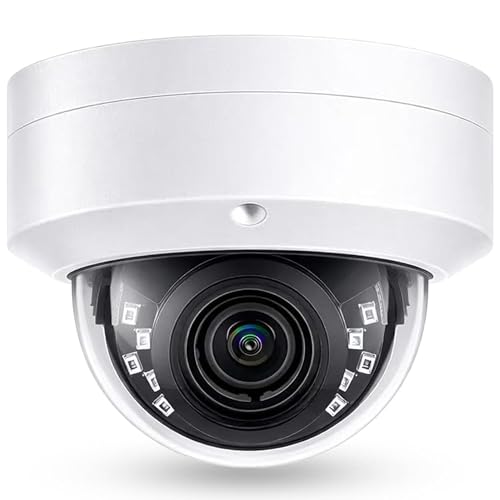
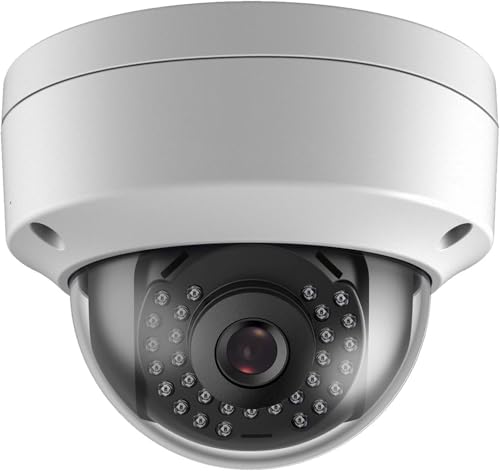
Live listings for the shortlist in this guide are pulled from Amazon below, so prices and availability are always current at the moment you look.


Bringing the decision together
The weatherproof camera market separates into products engineered for the outdoors and indoor products wearing an outdoor costume. The difference shows in the details this guide has walked through: a jet-tested IP rating rather than a splash claim, a temperature range with margin at both ends, a housing material chosen for the air it will breathe, sealed cable entries supported by proper boxes and glands, and a maker whose documentation treats installation as part of the product. Cameras that satisfy those tests rarely disappoint, whatever their badge.
For most houses, the dependable recipe is an IP66 turret or bullet with an IK rating matched to its mounting height, powered by PoE through outdoor-rated cable, seated on a gasketed junction box with a drip loop below, and aimed so its night lighting never reflects off its own surroundings. Add a coastal specification if the sea air reaches your street, a heater if your winters bite hard, and detection analytics tuned to people and vehicles, and the system is complete in every way that matters.
Resist the temptation to judge this category by resolution charts and feature counts alone, because the footage that protects a home is the footage recorded on the worst night of the year, through rain, in darkness, by a camera whose seals were fitted with care. Buy the camera that will still be awake for that night, install it as though the storm is already scheduled, and it will repay the diligence quietly for years.


