What's inside
- Key Takeaways
- Quick Picks
- How Did We Choose These Chargers?
- What Actually Separates MagSafe, Qi2 and a Merely Magnetic Pad?
- Which Wall Adapter Brings Out the Best in a Magnetic Pad?
- How Should You Set Up a Magnetic Charging Spot That Stays Fast?
- When Does a Cable Still Beat Every Pad in This Guide?
- Which Rooms Gain the Most From Magnetic Charging?
- How Do Cases, Stands and Car Mounts Fit the Same System?
- How Do the Six Pads Compare Side by Side?
- How Long Should a Good Magnetic Charger Last?
- What Should You Check in the First Week of Ownership?
- Should You Buy One Premium Pad or Two Modest Ones?
- What Mistakes Do Magnetic Charger Buyers Keep Making?
- Final Recommendation
- Frequently Asked Questions
- Related Guides
As an Amazon Associate I earn from qualifying purchases. This post may contain affiliate links at no extra cost to you.
widgetverdict.com is reader-supported. When you buy through links on our site, we may earn an affiliate commission.
Where to buy: the six pads and stands below are sold through Amazon, and the sensible order is to settle your wattage and format first, then pick the listing that matches. Apple’s two pucks sit at the top for a reason, the Qi2 and certified options follow, and the multi-device stand closes the set.
Shopping for the best magsafe chargers starts with a vocabulary problem, because the word MagSafe now gets printed on boxes that contain three quite different technologies. Genuine MagSafe is Apple’s own system: a ring of magnets plus a negotiated charging profile that lets compatible iPhones draw fifteen watts, and twenty-five on the newest models with the right adapter. Qi2 is the open standard built on the same magnetic idea, certified by the Wireless Power Consortium, and capped at fifteen watts. Then there is the third crowd, plain magnetic pads with no certification at all, which often charge an iPhone at half speed while wearing the vocabulary of the first two.
This guide keeps those layers separate on purpose. Two picks are Apple’s own chargers, one is a properly certified Qi2 pad, one carries Apple’s MFi licensing, one chases the higher wattage class as a slim travel pad, and one is a three-device stand for people whose nightstand hosts a whole ecosystem. Every pick snaps magnetically and centres itself; what differs is how fast your particular iPhone will actually drink, and how much trust the maker’s certification trail earns.
One more distinction is worth drawing before the picks themselves, because it decides returns more than any other: the difference between a charger and a charging system. A puck is a component. It presumes an adapter, a case that cooperates, and a spot where the phone rests. Buyers who assemble those pieces consciously end up delighted; buyers who expect the puck alone to be the whole product end up writing the angry reviews you will see attached to perfectly good hardware. Read each pick below as the centre of a small system, check that your adapter and case complete it, and every recommendation in this guide will behave the way its section describes.
Price tiers in this category map unusually closely to verifiable substance. The expensive end buys certification, support and the fastest negotiated rates; the middle buys certification at the standard rate; the risky end buys a magnet and a promise. There are bargains, but they hide in the middle tier, among certified pads from makers with reputations to lose, not at the very bottom of the price ladder.
Key Takeaways
- Real MagSafe comes from Apple: only Apple’s pucks unlock the full rate on the newest iPhones.
- Qi2 is the legitimate open alternative, matching the long-standing 15W experience with audited certification.
- A magnetic pad with no certification behind it usually charges an iPhone far slower than its box implies.
- Your wall adapter sets the ceiling for every pad here, so an old low-output brick sabotages any upgrade.
- Stand formats and three-in-one docks trade raw speed for viewing angle and consolidation.
- Cable length is a genuine feature: one metre tidies a desk, two metres reach a sofa, six feet cross a room.
Quick Picks
| Pick | Badge | Why it earns its place |
|---|---|---|
| Apple MagSafe Charger (2 m) | The genuine article, longest lead | Apple’s own puck on a two-metre cable, delivering full MagSafe speed with zero guesswork about alignment or certification. |
| Apple MagSafe Charger (1 m) | The tidy-desk original | The same genuine MagSafe puck in a shorter one-metre form that stays neat on a nightstand or a crowded workstation. |
| Anker Zolo MagSafe-Compatible Wireless Charger | Qi2 speed without the Apple tax | A Qi2-certified pad that gives Android and iPhone alike a proper 15W magnetic charge, with Anker’s build quality behind it. |
| MagSafe 25W Wireless Charger Pad | High-wattage slim pad | A slim magnetic pad advertising the 25W class for recent iPhones, aimed at buyers who want top-rate charging in the flattest possible form. |
| 3 in 1 MagSafe Wireless Charger Stand | Whole Apple kit on one stand | A stand that charges an iPhone magnetically while giving an Apple Watch and AirPods their own spots, clearing the three-cable tangle from a nightstand. |
| MFi Certified Magnetic Wireless Charger (15W, 6 ft) | Certified reach on a budget lead | An MFi-certified magnetic pad with an unusually long six-foot cable, built for charging spots that sit far from the nearest socket. |
How Did We Choose These Chargers?
Certification came first. Each candidate had to show a defensible claim: Apple’s own manufacture, a Qi2 logo programme listing, or MFi licensing. Pads that merely glued magnets around an ordinary coil and borrowed the MagSafe name were cut, however glossy their photography. That single filter removed most of the marketplace noise before any other quality was weighed.
Charging behaviour came second. We separated the picks by the rate they can actually deliver to the phones people own now: the higher class for recent iPhones, the fifteen-watt band that defined MagSafe for years, and the stand format where overnight pace matters less than consolidation. Cable length, case tolerance and thermal behaviour under a long charge rounded out the scoring, because a pad lives or dies by those unglamorous details.
Finally, we weighted the maker’s staying power. A charger is mains electricity meeting a lithium battery while you sleep, and the brands behind these picks have support channels, warranty processes and reputations that anonymous shell sellers do not. Where a pick’s claim rests on a listing rather than a programme database, the pick section says so plainly.
What Actually Separates MagSafe, Qi2 and a Merely Magnetic Pad?
Alignment is the shared idea: a ring of magnets pulls the coil in the pad into register with the coil in the phone, removing the placement lottery of old Qi charging. Where the three layers diverge is the electrical conversation that follows. MagSafe identifies itself to the iPhone and unlocks the rates Apple reserves for it. Qi2 performs the same magnetic registration under an open certification regime at fifteen watts. An uncertified magnetic pad aligns just as sweetly, then charges at whatever generic profile the phone grants a stranger, commonly half the speed or less.
The practical consequence shows up in a thirty-minute top-up. On a genuine or Qi2 pad, a recent iPhone recovers a large share of its battery while you make coffee and answer messages. On an uncertified pad the same half hour buys noticeably less, and the gap widens in a warm room or through a thick case. Buyers who only charge overnight may never notice; buyers who top up between commitments feel it immediately.
Which Wall Adapter Brings Out the Best in a Magnetic Pad?
Every pad in this guide is sold without the wall adapter it needs, and that omission causes more disappointment than any other in the category. A pad rated for fifteen or twenty-five watts can only pass along what the adapter supplies, minus conversion losses. Feed a flagship puck from a decade-old five-watt brick and you have built a slow charger out of fast parts.
The safe rule is headroom: choose a USB-C adapter rated clearly above your pad’s ceiling, from a maker you can name. That same adapter doubles as a wired fast charger on the days a cable is quicker, which softens the extra purchase. Multi-port adapters split their rating between sockets, so read the per-port figure when the phone shares with a tablet.
Apple MagSafe Charger (2 m) — The genuine article, longest lead
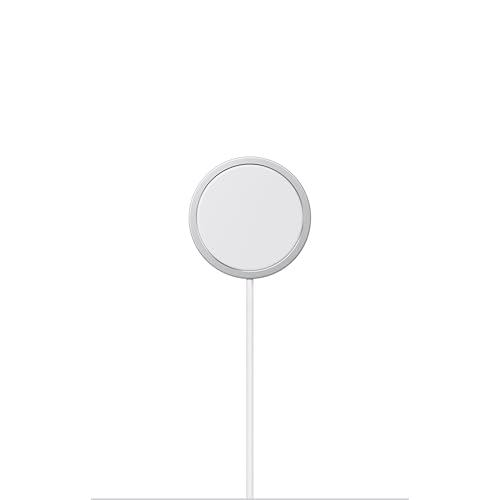
Start with the puck Apple designed alongside the magnets inside the iPhone itself. The two-metre MagSafe Charger is the baseline product for this entire category: a slim aluminium disc that snaps onto the back of any iPhone from the 12 series onward, centres itself without you looking, and negotiates the fastest wireless rate the phone supports. Paired with a USB-C adapter of sufficient output, recent iPhones draw up to 25 watts through it; earlier MagSafe generations draw 15 watts. Nothing about that behaviour is approximated or emulated, which is precisely why it anchors this list.
The extra metre of cable is the real reason to choose this version over its shorter sibling. On a nightstand the difference is trivial, but at a desk with the adapter plugged into a floor-level socket, or on a sofa where the nearest outlet sits behind the armrest, two metres means the phone rests where you want it instead of hovering at the cable’s limit. The woven jacket resists the fraying that killed earlier rubber Apple leads, and the puck end is light enough that it never drags the phone toward the edge of a table.
Ownership is deliberately boring. There is no fan, no indicator beyond the phone’s own display, and no firmware conversation to have. Heat stays within the range every MagSafe puck produces during the first fast phase of a charge, then settles as the phone tapers. If you use a MagSafe-compatible case the snap remains firm; thick wallet cases and metal plates weaken it, as they do with every magnetic pad in this roundup. Buy this one when you want the behaviour Apple documents, in the room where the phone spends most nights.
- Output: up to 25W with a suitably rated USB-C adapter on recent iPhones, 15W on earlier MagSafe models
- Cable: 2 m woven USB-C lead, permanently attached
- Connection: USB-C plug at the supply end
- Compatibility: iPhone 12 series and later, AirPods cases with magnetic charging
Strengths
- True MagSafe handshake, so the phone draws the fastest rate Apple allows rather than a negotiated fallback
- The two-metre reach suits a sofa arm, a deep desk or a hotel nightstand without dragging the adapter along
- Magnets register with a positive seat that stays put when you nudge the phone to check the time
Trade-offs
- Needs a USB-C adapter bought separately, and a low-output brick quietly caps the speed you paid for
- The longer cable tangles more readily in a travel pouch than the one-metre version
- White finish shows scuffs from bag hardware faster than darker third-party braids
One practical note separates happy owners from frustrated ones: the puck is only half of the charging system. Pair it with a tired five-watt brick rescued from a drawer and the phone will sip rather than gulp, and the pad will get blamed for a bottleneck that lives in the wall adapter. A modern USB-C adapter rated well above the puck’s ceiling keeps the negotiation honest, and it leaves headroom for the same adapter to fast-charge the phone over a cable on days when wireless simply will not do.
Consider where this puck sits in a two-charger life, because most owners end up owning a pair. The two-metre version belongs at the primary station, the place with awkward geometry, while a shorter pad handles travel. Buying the long one first is the safer sequence: excess cable can be coiled and hidden, but a short cable in a long-reach room cannot be stretched by optimism.
Temperature behaviour deserves a sentence of its own. During the early, fastest phase the puck grows warm to the touch, which is normal energy conversion rather than a fault. It should never become uncomfortable to hold. If it does, suspect the case, the adapter or a misaligned wallet attachment before suspecting the puck, and give the phone a bare-backed charge to establish a baseline.
Resale and hand-me-down value quietly favour the genuine puck as well. A genuine Apple charger in a drawer remains useful to the next iPhone in the family, and its behaviour with future models is the least speculative bet in this entire category, because Apple designs the phones and the puck in the same building.
Best for: Owners of recent iPhones who charge in one main spot and want the reference behaviour every other pad is judged against.
Not suited for: Anyone who wants one charger to serve a watch and earbuds as well, or who charges in several rooms on rotation.
Apple MagSafe Charger (1 m) — The tidy-desk original
Everything said about Apple’s puck design applies here, because this is the same charger wearing a shorter lead. The one-metre MagSafe Charger snaps on with the same authority, negotiates the same rates with the same phones, and differs only in where it lets you put things. That single variable matters more than spec sheets suggest: a metre is generous on a nightstand beside a bed-level socket, adequate at a desk with a hub within arm’s reach, and hopelessly short almost everywhere else in a typical house.
Choose it deliberately for the tidy scenario. The cable drops straight from puck to adapter without pooling on the desk, nothing trails across a keyboard tray, and the whole arrangement looks intentional rather than improvised. In a travel kit the shorter coil is the one that untangles itself, and paired with a compact dual-port adapter it covers a phone overnight in a hotel room without commandeering both sockets.
Flat-lying charging is the honest limitation, and it applies to both Apple pucks. The phone faces upward, notifications light the ceiling, and a video call while charging means propping the handset against a mug. If your charging spot doubles as a viewing spot, a stand-format pick further down this list serves you better. If the phone simply sleeps beside you and wakes full, this is the cleanest way to feed it.
- Output: up to 25W with a suitably rated USB-C adapter on recent iPhones, 15W on earlier MagSafe models
- Cable: 1 m woven USB-C lead, permanently attached
- Connection: USB-C plug at the supply end
- Compatibility: iPhone 12 series and later, AirPods cases with magnetic charging
Strengths
- Identical charging behaviour to the long version, so nothing about speed or alignment is traded away
- Short lead stays off the floor and out of the cable nest behind a monitor
- Travel weight is negligible and the puck slips into a case pocket without a coil of spare cable
Trade-offs
- One metre disappears quickly if the socket sits low and the desk surface sits high
- No stand geometry, so the phone lies flat and the screen faces the ceiling
- Shares the family requirement for a separate, adequately rated USB-C adapter
A small behavioural detail worth knowing: both Apple pucks hold their grip through a MagSafe-compatible case but lose confidence through cases with raised camera surrounds that tilt the phone, or through magnetic wallet attachments stacked underneath. Strip the wallet before the overnight charge and the connection is as reliable as the category gets. Owners who charge an AirPods case on the same puck should centre it by feel, since the case magnets are weaker and a careless placement can leave the buds warm and underfed by morning.
Desk workers should note how the short puck changes cable geography under a monitor. With the adapter in a desktop hub, the lead runs in a single clean drop, the phone parks beside the keyboard, and nothing drapes across the mousepad. That tidiness is the entire product proposition, and in that narrow theatre it outperforms every longer rival in this guide.
The one-metre puck is also the better spare. It lives happily in a laptop bag’s accessory pocket, pairs with any hotel adapter, and asks for no coiling ritual when you repack in a hurry. Owners who buy it as the second charger, after the long version anchors the home station, rarely regret the duplication.
There is a small delight in how the short puck handles AirPods. The case centres with a soft click, charges without ceremony, and lifts away cleanly in the morning. Owners who rotate between phone and buds on one pad will find the one-metre version’s tidiness makes that swapping feel effortless rather than fiddly.
Best for: Nightstand and desk charging where the outlet is close and cable clutter is the enemy.
Not suited for: Reading-in-bed charging, couch use, or any spot where you routinely pull the phone toward you while it charges.

Anker Zolo MagSafe-Compatible Wireless Charger — Qi2 speed without the Apple tax
Qi2 is the plot twist that reorganised this category. The Wireless Power Consortium built the standard using Apple’s magnetic alignment idea, which means a Qi2 pad snaps onto an iPhone with the same centred confidence as MagSafe and delivers a certified 15 watts. The Anker Zolo is the cleanest expression of that idea in this roundup: a compact pad, an attached cable, no decorative nonsense, and certification that can be verified rather than merely asserted on a box.
The honest framing matters. This is not MagSafe, and Anker does not pretend otherwise; it is MagSafe-compatible through Qi2, which for iPhones from the 12 to the 15 generations delivers exactly the same 15-watt experience as Apple’s puck. Owners of the newest iPhones give up the extra headroom Apple’s own charger unlocks, and in exchange they gain a pad that also serves Qi2 Android phones at full magnetic speed. In a two-phone household that trade is frequently the right one.
Build quality is where the Zolo separates itself from the anonymous pads crowding the lower shelves. The shell stays cool-headed through long charges, the cable strain reliefs look engineered rather than moulded as an afterthought, and the magnet strength sits in the sensible middle: firm enough to trust, gentle enough that the pad does not lift off the desk when you pick the phone up one-handed.
- Standard: Qi2 certified magnetic wireless charging
- Output: 15W for Qi2 and MagSafe-compatible phones
- Cable: attached USB-C lead
- Compatibility: iPhone 12 series and later, Qi2-ready Android handsets, magnetic cases
Strengths
- Qi2 certification means the magnetic alignment and 15W profile are audited against an open standard, not a marketing label
- Works across ecosystems, so a household split between iPhone and Qi2 Android needs one pad rather than two
- Anker’s support and warranty network is a genuine step above no-name pad sellers
Trade-offs
- Caps at 15W where Apple’s own puck reaches higher on the newest iPhones
- The flat pad format still leaves the phone face-up and stand-less
- Qi2 Android phones remain a minority, so older Android handsets charge slowly or not at all through it
Placement discipline still applies. Qi2 alignment forgives a few millimetres, not a centimetre, and a phone dropped carelessly half-off the pad will charge at a fraction of its rate while generating the difference as heat. The Zolo’s magnet ring makes correct placement the path of least resistance, which is most of the battle. Pair it with an adapter comfortably above fifteen watts so the pad, not the brick, sets the ceiling, and it becomes the pad you stop thinking about entirely.
Cross-shopping against Apple’s puck clarifies the Zolo’s value. You surrender the newest iPhones’ top wireless rate and gain a pad that treats a Qi2 Android phone as a first-class citizen rather than a tolerated guest. Households are ecosystems, not single devices, and a pad that serves both halves of a couple’s nightstand solves a nightly negotiation that spec sheets never mention.
Longevity also favours the certified route. Qi2 is a maintained standard with a growing device list, so this pad’s usefulness expands as phones refresh, instead of expiring with one model’s quirks. Anker’s habit of publishing clear compatibility notes, rather than burying limits in footnotes, makes planning those upgrades considerably easier.
Support after the sale is the least glamorous line in any review and the one that matters when a pad misbehaves at month nine. Anker answers messages, honours warranties and publishes firmware guidance where relevant. That infrastructure is part of what the price buys, and it is entirely absent from the anonymous end of the marketplace.
Best for: Mixed-device households and iPhone owners content with 15W who prefer an open standard over a proprietary one.
Not suited for: Buyers chasing the absolute fastest wireless rate on a current-generation iPhone, who should take Apple’s puck instead.

MagSafe 25W Wireless Charger Pad — High-wattage slim pad
This slim pad exists for buyers who read Apple’s 25-watt figure, looked at their ageing 15-watt pad, and wanted the newer ceiling without buying Apple’s puck. The listing pitches it squarely at recent iPhones in the Pro Max class down through the 12, and the magnetic ring handles the alignment half of the bargain. Fed by a strong USB-C adapter, it aims to hold phones in the faster charging band that older pads never reach.
Treat the wattage claim with the respect and suspicion it deserves. Wireless charging rates are negotiated continuously between pad, adapter and phone, and the phone tapers aggressively once its battery passes the early phase or its temperature climbs. A pad in the 25W class gives the phone permission to draw more during that early window; it does not pin the needle there for an hour. The practical gain is a faster top-up from low battery, which is when most people actually care about speed.
What you are buying, then, is headroom plus portability. The pad is thin enough to live permanently in a work bag, the snap is positive, and as a second charger for the office or the spare room it makes a sensible case for itself. As your one and only charger, it asks you to trust a lesser-known seller’s electronics over Apple’s or a certified Qi2 programme, and that judgement call belongs to you rather than to this guide.
- Output: marketed in the 25W class for recent iPhones, lower on earlier models
- Format: slim flat magnetic pad
- Connection: USB-C
- Compatibility: iPhone 12 series and later per seller listing, AirPods cases
Strengths
- Targets the higher wattage that recent iPhones can accept, rather than settling for the older 15W ceiling
- Slim body disappears into a laptop sleeve or a jacket pocket for travel
- Magnetic snap gives the centred placement that plain Qi pads leave to chance
Trade-offs
- A third-party pad’s headline wattage depends heavily on the adapter feeding it and the phone’s own thermal taper
- No certification pedigree comparable to Apple’s own puck or a Qi2 logo programme
- Flat format offers no viewing angle and no secondary charging spots
Two habits protect your experience with any high-wattage third-party pad. First, feed it from an adapter with clear headroom and a reputable name, because an underpowered brick turns the pad’s promise into fiction. Second, charge with the phone out of heavy cases and out of direct sun on a windowsill desk; heat is the silent governor on every wireless charger ever made, and slim pads have the least thermal mass to absorb it. Respect those two variables and the pad delivers the quick top-ups it advertises.
Slim pads live or die by their grip on real furniture. This one’s magnet ring is assertive enough to hold a phone on a smooth laminate desk through a vibrating notification buzz, yet it releases without dragging the pad across the surface. That balance sounds minor until a weaker pad has skated off a nightstand at three in the morning, taking the phone with it.
Judge its value against your charging pattern rather than its headline. If your phone spends its charging life in short daytime top-ups between meetings, the higher wattage class earns its keep repeatedly. If it charges once, overnight, the extra headroom buys you almost nothing, and the certified fifteen-watt picks become the rational money.
A note on expectations for the higher wattage class: the phone’s battery percentage climbs quickly early, then the curve flattens by design. Lithium cells charge in phases, and no pad can negotiate its way past the phone’s own battery protection. Measure this pick by the first half hour, where its advantage honestly lives.
Best for: Travellers and minimalists who want the fastest class of magnetic charging in a pad that packs flat.
Not suited for: Anyone who values verified certification and long-track-record support over a headline wattage figure.

3 in 1 MagSafe Wireless Charger Stand — Whole Apple kit on one stand
Count the cables on the average Apple owner’s nightstand and you will find three: phone, watch, earbuds, each with its own adapter elbow fighting for socket space. This stand is the consolidation play. The iPhone rides upright on a magnetic pad at a natural reading angle, the watch hangs on its own charging position, and the AirPods case rests on a pad in the base. One power feed runs the whole arrangement, and the surface underneath becomes visible floor again.
The upright format changes how the phone behaves overnight. StandBy mode turns it into a clock with widgets, alarms are readable without lifting the handset, and a morning reach finds the phone exactly where muscle memory expects it. The 15-watt phone pad is not the fastest in this roundup, but overnight charging has never been a race; the watch and earbuds sip alongside without stealing meaningful capacity from the phone’s share.
The adjustable blue ambient light is the feature you will either love or disable once. As a low nightlight for a hallway-facing bedroom it is genuinely handy, and it dims rather than forcing a binary choice. Judge the stand as furniture as much as electronics: it claims a permanent footprint, it will gather dust in its angles, and it travels badly. For a settled bedside, those are acceptable terms.
- Layout: upright magnetic phone pad, watch puck position, earbud pad on the base
- Phone output: 15W magnetic charging
- Extras: adjustable blue ambient light on the stand
- Compatibility: MagSafe iPhones, Apple Watch models, AirPods with wireless charging cases
Strengths
- One adapter and one footprint replace three separate chargers and their cables
- The upright phone angle suits StandBy mode, alarm clocks and glanceable notifications
- Watch and earbud spots end the nightly hunt for the right cable in the dark
Trade-offs
- Total convenience depends on every device landing on its spot correctly, every single night
- The ambient light feature will delight some bedrooms and annoy others, even adjustable
- Bulkiest pick here by a wide margin, and the least suited to travel
Setup discipline decides whether a three-in-one stand feels magical or fiddly. Run its supplied or recommended adapter rather than a random spare, because three devices negotiating at once will expose a weak brick immediately. Give the watch strap a consistent drape so the puck seats the same way nightly, and wipe the base pad occasionally, since earbud cases slide on dusty surfaces and a slid case is an uncharged case by morning. Two minutes of arrangement on day one buys you a year of thoughtless docking.
Families should think about the stand as shared infrastructure. A partner’s watch can borrow the puck position on nights yours charges elsewhere, and the earbud pad doubles as a landing zone for a second set of buds. The stand’s generosity scales with the household in a way single-device pucks cannot imitate.
Placement within the room matters more than buyers expect. Put the stand where the phone goes the moment you enter the bedroom, not across the room out of habit, because a dock that requires a special trip becomes a dock that gets skipped. The ambient light then doubles as a marker: see the glow, dock the kit, done.
Guests change the stand’s maths in its favour. A visiting relative with a watch and buds can be offered the full dock instead of a scavenger hunt through your cable drawer, and the spare spots stop looking like surplus the first time they rescue a traveller’s dead earbuds before a flight.
Best for: Apple-complete households whose nightstand currently hosts a bird’s nest of three cables.
Not suited for: Single-device owners paying for watch and earbud hardware they will never dock.
MFi Certified Magnetic Wireless Charger (15W, 6 ft) — Certified reach on a budget lead
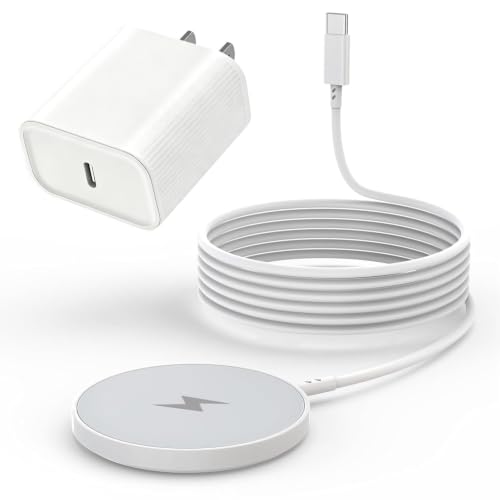
Certification is this pad’s opening argument. The listing carries Apple’s MFi badge, the programme through which Apple licenses accessory makers and audits their use of its technology and branding. In a category flooded with pads that print the word MagSafe on boxes containing ordinary magnets and a 7.5-watt coil, an MFi badge is a verifiable claim rather than a vibe, and it is the first thing to check if you are shopping beyond Apple’s own storefront.
The second argument is length. Six feet of cable rewrites where a charger can live: the far end of a sectional sofa, a workbench whose only socket hides behind a tool cabinet, a guest bed in a room wired by optimists. Most pads assume the socket is near; this one assumes nothing. The 15-watt magnetic output matches the rate that defined MagSafe for most of its life, so the phone charges at the pace its designers originally intended.
Nothing here pretends to be a stand, a dock or a travel jewel. It is a pad on a long leash, and its virtues are reach and legitimacy. The coil of spare cable behind a tidy desk will bother neatness-first buyers, and the newest iPhones can accept more than fifteen watts from Apple’s own puck. Within its brief, though, it solves two real problems at once: distance, and doubt about what is inside the plastic.
- Certification: Apple MFi programme per seller listing
- Output: 15W magnetic fast charging for compatible iPhones
- Cable: 6 ft attached lead
- Compatibility: iPhone 12 series and later per seller listing
Strengths
- MFi certification signals the product passed through Apple’s licensing programme rather than borrowing the vocabulary
- Six feet of cable reaches across sofas, workshop benches and awkward rental layouts
- 15W magnetic charging matches the long-standing MagSafe rate most iPhones were designed around
Trade-offs
- Still a flat pad, so the phone lies face-up with no stand geometry
- Certification claims on marketplace listings deserve a quick check against the seller’s documentation
- A very long fixed cable is surplus coiled clutter in compact setups
Verify before you commit: MFi products appear in Apple’s public accessory database, and a two-minute search of the brand or model is the most worthwhile two minutes in this entire guide. Once the pad is home, route the long cable deliberately rather than letting it pool where chair castors and vacuum heads roam, because a six-foot lead offers six feet of opportunities to be run over. Treated as fixed infrastructure instead of a portable, it will quietly outlast several phones.
Renters and older houses are this pad’s natural constituency, since both ration sockets in inconvenient places. Six feet bridges the gap between a socket behind a wardrobe and a bedside that actually suits a human. The certification then removes the second worry, that a long-cable bargain pad might be bargain in its electronics as well.
One caution travels with the length: a cable this long invites being pinched in recliner mechanisms and chewed by enthusiastic pets. Route it along skirting or under a rug edge rather than across open floor, and the pad will reward the care with years of unremarkable service, which is the highest praise a charger can earn.
Finally, weigh the pad’s plainness as a virtue. It does one job, at a certified rate, over an unusually generous distance, and asks for no app, no account and no attention. Chargers are infrastructure, and infrastructure succeeds precisely when nobody in the house ever talks about it.
Best for: Charging spots separated from their sockets by real distance, where certified behaviour matters more than peak wattage.
Not suited for: Minimalists with a socket beside the pillow, who gain nothing from the extra cable and inherit its coil.
How Should You Set Up a Magnetic Charging Spot That Stays Fast?
Begin at the wall. Plug the adapter directly into the socket rather than a tired power strip shared with a lamp and a fan, and give the charger the adapter’s full rating instead of a split multi-port ration. Route the cable so the pad rests flat and unstressed; a pad hanging half off a nightstand edge by its own cable will migrate a few millimetres nightly until the phone is charging on a slant.
Then audit the phone’s side of the partnership. Remove magnetic wallets for the main charge, keep metal plates out of the case entirely, and if the phone wakes warm and undercharged, test one night bare-backed to isolate the case as a variable. Finally, place the pad where the phone naturally lands when you enter the room. Convenience compounds: a charger that fits the routine gets used at low battery, when fast charging actually happens, instead of at bedtime when any pace would do.
When Does a Cable Still Beat Every Pad in This Guide?
Honesty requires the admission: a plain USB-C cable fast-charges a recent iPhone faster than any magnetic pad sold today, with less heat and no alignment to manage. When the battery is nearly empty and the taxi is coming, plug in. Wireless charging wins on friction, not physics, and its kingdom is the routine top-up, the nightstand and the desk, where the phone would otherwise sit idle and undocked.
That framing should set your budget. Spend pad money on the places where you linger, and let a good cable cover emergencies. Buyers who grasp that division stop chasing the last few watts of wireless speed and start enjoying the genuine convenience the technology was built to sell.
Which Rooms Gain the Most From Magnetic Charging?
The kitchen counter is the unsung hero location. A pad beside the kettle catches the phone during cooking, recipe videos play propped against a stand elsewhere in this guide’s logic, and the battery quietly recovers during the exact hour it would otherwise drain. Because the phone lands there daily without a decision, the top-ups accumulate into a battery that rarely visits the red zone at all.
The home office runs a close second, for a different reason: dwell time. A phone parked for three working hours needs no speed whatsoever, only presence on a pad, and it leaves at full charge having never once been plugged in by a human hand. Bedrooms, by contrast, reward reliability over everything, since a failed overnight charge announces itself at the worst possible moment. Match the pick to the room’s rhythm and the technology disappears into the furniture, which was always the point.
Entryways and hall tables suit the household pad model, one charger serving whoever passes. The magnetic snap matters most here, because a charger used by several people in a hurry must align itself; nobody centres a phone carefully on a hall table. That self-aligning quality, more than any wattage figure, is what separates this generation of wireless charging from the fiddly pads that gave the category its early reputation.
How Do Cases, Stands and Car Mounts Fit the Same System?
The magnet ring in the phone is a platform, not just a charging feature. A case carrying its own aligned magnets passes charging through and also grips mounts, wallets and stands built for the same geometry. Buying into that ecosystem deliberately, case first and chargers second, prevents the common muddle of accessories that each work alone and fight in combination.
Car mounts deserve a specific mention because they expose weak magnets mercilessly. A pad that holds a phone on a desk may surrender it over a pothole, which is why vehicle duty belongs to mounts designed for vibration. Keep the chargers in this guide on furniture, let proper mounts handle the road, and each tool plays to its strength.
How Do the Six Pads Compare Side by Side?
| Pick | Class | Phone rate | Format |
|---|---|---|---|
| Apple MagSafe Charger (2 m) | Genuine MagSafe | Up to 25W on recent iPhones | Flat puck, long cable |
| Apple MagSafe Charger (1 m) | Genuine MagSafe | Up to 25W on recent iPhones | Flat puck, short cable |
| Anker Zolo | Qi2 certified | 15W | Flat pad |
| 25W Wireless Charger Pad | Third-party magnetic | 25W class per listing | Slim flat pad |
| 3 in 1 Charger Stand | Magnetic stand system | 15W phone pad | Upright multi-device stand |
| MFi Magnetic Charger | MFi certified | 15W | Flat pad, 6 ft cable |
Read the class column before the rate column. A certified fifteen watts that arrives every time outperforms a speculative figure that depends on the adapter, the weather and the phone’s mood, and the table is organised to make that hierarchy impossible to miss.
How Long Should a Good Magnetic Charger Last?
A well-made pad has no moving parts, no battery of its own and nothing to wear out except its cable and its connector. The failure modes are mundane: a frayed lead, a USB-C plug loosened by years of side-pulls, a magnet ring that slowly gathers metallic grit from a workshop bench. Buyers who route cables kindly and keep the pad’s face clean routinely get half a decade from a quality unit, which is why the certified end of this market justifies itself over a sequence of disposable bargains.
Phone upgrades reset the calculation less than people fear. MagSafe has survived multiple iPhone generations with its geometry intact, and Qi2 was designed as a durable open standard rather than a seasonal experiment. A pad bought today around either system should serve the next phone and probably the one after, provided its cable survives the drawer years.
What Should You Check in the First Week of Ownership?
Run three simple trials. First, a thirty-minute top-up from a low battery, timed against your old charger, tells you whether the new pad delivers its class. Second, an overnight charge in your thickest case reveals whether alignment survives your real-world setup. Third, a morning touch test, palm flat on the phone’s back, gauges whether heat stays in the comfortably warm band. A pad that passes all three in your house, with your adapter, has proven itself where it counts.
Failures in that first week are information, not verdicts on the category. Swap the adapter before returning the pad, test without the case before blaming the magnets, and only then conclude the unit itself is at fault. Most disappointing chargers turn out to be decent pads betrayed by their supporting cast.
Should You Buy One Premium Pad or Two Modest Ones?
Charging is a location problem disguised as a product problem. One superb pad in the wrong room loses to two decent pads where life actually happens, which is why many households end up happiest with a flagship at the bedside and a certified workhorse at the desk or sofa. The picks in this guide were chosen to mix well in exactly those pairings: an Apple puck plus a Zolo, or a stand plus a long-cable pad, cover a whole home without a weak link.
Budget accordingly. The adapter rule applies per station, so each pad needs its own properly rated brick, and the true cost of a two-station setup is two pads plus two adapters. Bought in that order, station by station, the expense spreads painlessly and each addition is judged by whether the household actually uses it, which is a fairer test than any review can run.
Gifting follows the same logic. A certified pad with a generous cable suits almost any iPhone owner whose habits you do not know, while a stand presumes a nightstand layout you cannot see. When in doubt, give reach and certification; they offend nobody and fit everywhere.
What Mistakes Do Magnetic Charger Buyers Keep Making?
Trusting the box vocabulary is the original sin of this category. The word magnetic describes how a pad attaches, not how fast it charges, and the two facts are independent. Check for Apple manufacture, a Qi2 logo or an MFi badge before believing any wattage printed beside a magnet ring.
Starving the pad is the second error. Buyers pair a capable pad with whatever adapter surfaces from a drawer, then conclude wireless charging is slow. It is, at five watts. Give the pad the supply it was designed around and the same hardware transforms.
Charging through obstacles completes the trio: metal plates, thick wallets, loose pop grips and misaligned cases all tax the connection. The magnets forgive millimetres, not millimetres-plus-a-credit-card-stack. Strip the phone to its MagSafe-compatible case, or accept the slower, warmer charge as the price of the wallet.
Final Recommendation
Most iPhone owners should simply buy Apple’s puck in the cable length their room demands, pair it with a strong adapter, and stop thinking about wireless charging altogether. The Qi2 Zolo is the smarter purchase for mixed households and the stand earns its footprint when a watch and earbuds share your nights. Whichever route you take, buy the certification before you buy the wattage.
Hang the laundry, set the phone on its puck, and let the magnets do the one job they were hired for.
Travellers should think in kits rather than single items. A pad, a compact adapter with headroom, and a short cable for the wired emergencies form a trio that covers hotel rooms, airport delays and borrowed desks without drama. Every pick in this guide can anchor such a kit, but the slim pad and the short Apple puck pack flattest, while the stand should stay home where its bulk is a feature rather than a burden.
Students in shared houses deserve a footnote of their own: label your pad. Identical-looking pucks migrate between rooms with cheerful dishonesty, and the certified pad you researched deserves to remain yours. A dot of nail polish on the cable near the plug has preserved more charger ownership than any house meeting ever held.
Frequently Asked Questions
Will a MagSafe pad charge an Android phone?
Physically it will sit on the pad, and Qi2-ready Android phones charge magnetically at full Qi2 speed. Older Android handsets without magnets charge slowly and off-centre, which makes a standard Qi pad or a cable the better tool for them.
Does wireless charging wear an iPhone battery faster?
Heat is the variable that matters, and aligned magnetic charging generates less waste heat than a misaligned old-style pad. Overnight charging on any pick here stays within the behaviour Apple’s own battery management expects.
Can I charge through my phone case?
MagSafe-compatible cases with their own magnet ring pass the connection through cleanly. Thick cases, metal plates and wallet attachments weaken the snap and slow the charge, sometimes to the point of failure.
Why does my pad charge slowly despite its rating?
The usual culprit is the wall adapter feeding it, followed by heat and case interference. Swap in a higher-rated adapter, remove the case for one charge, and the difference will identify the bottleneck.
Is Qi2 as good as MagSafe?
For iPhones up to the 15 generation the delivered experience is effectively identical at fifteen watts. The newest iPhones reserve their highest wireless rate for Apple’s own charger, which is the one gap Qi2 cannot close.
Do magnetic pads interfere with cards or medical devices nearby?
Keep bank cards with magnetic stripes away from any charging pad, since the magnets can affect the stripe over time; chip and contactless cards are far less vulnerable. Anyone with an implanted medical device should follow their clinician’s guidance about magnets and keep the sensible distance manufacturers recommend.
Can one pad serve two phones in a household?
Yes, in sequence rather than simultaneously. A shared hallway or kitchen pad becomes a topping-up station both owners use opportunistically, while each keeps a personal charger at their own bedside for the overnight charge.
How do I know whether my iPhone supports the faster rate?
Every iPhone from the 12 series onward carries the magnet ring and charges magnetically. The highest wireless rate belongs to the newest generations on Apple’s own charger with a strong adapter; earlier models charge at the long-established fifteen-watt pace, which the Qi2 and certified picks here match exactly.
Related Guides
If your charging questions run beyond the nightstand, three neighbouring guides pick up where this one stops: the car, the desk and the road each impose their own rules on a battery.
Best Car Chargers for Phones and Tablets
Best Wireless Chargers for a Clutter-Free Desk
Best Portable Chargers for Travel Days
Related guide: Best MagSafe Portable Chargers


