What's inside
- Key Takeaways
- Quick Picks
- How Were These Alternative Chargers Chosen?
- Why Does the Dock Care So Much About Voltage?
- What Should You Test When a Third-Party Adapter Arrives?
- How Should You Pack a Switch Charging Kit for Travel?
- What Does a Power Bank Need to Charge a Switch Properly?
- What Changes When the Console Mostly Lives Handheld?
- How Do the Six Adapters Compare at a Glance?
- How Long Should a Switch Adapter Last, and What Kills Them?
- Which Buying Mistakes Put a Dock at Risk?
- Final Recommendation
- Frequently Asked Questions
- Related Guides
As an Amazon Associate I earn from qualifying purchases. This post may contain affiliate links at no extra cost to you.
widgetverdict.com is reader-supported. When you buy through links on our site, we may earn an affiliate commission.
Where to buy: Amazon carries all six adapters below, from Nintendo’s own unit down to the budget spare. Read the dock warning in the next section before choosing on price, because with Switch power the cheapest mistake is an underfed dock.
The best alternative nintendo switch chargers exist because the adapter Nintendo bundles has a habit of staying behind the television forever, while the console travels. A spare for the bag, a second unit for the spare room, a replacement for the one a puppy reclassified as a chew toy: the need is ordinary, but the specification is not. The Switch dock expects fifteen volts at 2.6 amps, and adapters that cannot hold that profile under load are the recurring villains of Switch troubleshooting threads.
Two honesty rules govern this guide. First, Nintendo’s own adapter leads the list as the benchmark, the reference against which every alternative is judged, because pretending otherwise would help nobody. Second, the dock warning is stated plainly: poorly regulated bargain adapters with sloppy USB-C negotiation have damaged Switch docks, so every third-party pick here was chosen for a correct dock profile from a listing with a track record, and each pick section repeats the home-test discipline that keeps a cheap spare from becoming an expensive lesson. The newer Switch 2 uses a different, higher specification again, and its pick is labelled as such rather than blended into the older family.
Key Takeaways
- Nintendo’s official adapter is the benchmark pick, present so every alternative can be judged against the real thing.
- The dock wants 15V at 2.6A; adapters that cannot sustain that profile belong in handheld-only duty.
- Unregulated bargain adapters are a documented dock risk, so track record and home testing matter more than small savings.
- The Switch 2 generation uses a separate 20V/3A specification, covered by its own pick rather than the 45W class.
- A detachable cable is a longevity feature, because cables are how chargers usually die.
- Buy one genuine adapter for the main dock even if third-party units handle travel and spares.
Quick Picks
| Pick | Badge | Why it earns its place |
|---|---|---|
| Nintendo Switch AC Adapter | The official benchmark | Nintendo’s own adapter, included here as the reference every alternative must match for dock safety and charging pace. |
| MARSDOCK 45W Switch Charger | Dock-ready travel brick | A 45W third-party adapter built to the dock’s 15V/2.6A profile with a five-foot cord, aimed squarely at TV-mode use away from home. |
| 45W Charger for Nintendo Switch (5FT Cable) | Straightforward dock-spec spare | A long-listed 45W adapter with a five-foot cable that covers Switch, Lite and OLED charging plus dock duty at a wallet-friendly tier. |
| YCCSKY 45W Switch Charger | Budget dock-capable adapter | A 45W adapter with a five-foot USB-C cable covering the Switch family, positioned for buyers who need dock-capable power at the gentlest tier. |
| 45W Switch Charger with Detachable Cable | Replaceable-cable flexibility | A 45W dock-capable adapter whose detachable five-foot USB-C cable can be swapped for length or replaced when it wears, unlike captive-cable rivals. |
| Switch 2 Charger 60W | Next-generation 20V spec | A 60W adapter built to the Switch 2’s newer 20V/3A specification, for owners of Nintendo’s newer console who need a spare or travel unit. |
How Were These Alternative Chargers Chosen?
The filter was electrical before it was commercial. Candidates had to state the dock’s profile, fifteen volts at 2.6 amps or the Switch 2’s twenty-volt specification, rather than hiding behind a wattage total assembled from phone-friendly voltages. A forty-watt adapter that peaks at nine volts is a phone charger in a costume, and several popular listings were cut for exactly that disguise.
Track record came next. Listings with years of Switch-specific sales behind them outranked newer, shinier rivals, because dock compatibility is proven by accumulated console-hours rather than by launch copy. Cable length, detachable design and generational coverage then separated the survivors into the roles you see below: benchmark, travel brick, second-room spare, budget backup, longevity play and next-generation unit.
Nothing in this guide carries Nintendo’s certification, because Nintendo does not run a public licensing programme for these adapters comparable to Apple’s. That absence is precisely why the benchmark pick matters and why each third-party section repeats its testing advice instead of offering a blanket blessing.
Why Does the Dock Care So Much About Voltage?
Undocked, a Switch is a modest handheld that sips power politely. Docked, it becomes a small home console: the processor clocks up, the dock’s electronics wake, a video signal leaves over HDMI, USB ports feed controllers, and the battery is expected to charge through all of it. The fifteen-volt rail is what lets the system do that arithmetic without raiding the battery, which is why the console ships with a thirty-nine-watt adapter rather than the phone brick it could technically sip from on a desk.
An adapter that falls short does not usually fail dramatically. It fails as a slow battery drain during long docked sessions, a flickering picture under load, or a console that wakes at eighty percent. Those symptoms send owners troubleshooting televisions and docks for weeks, which is why this guide treats the adapter’s sustained profile, not its peak marketing wattage, as the number that counts.
What Should You Test When a Third-Party Adapter Arrives?
Give any new alternative an evening of supervised docked play at home. The picture should stay stable, the console’s battery should hold or climb, and the brick should finish the session warm at most, never hot enough to make you withdraw your hand. Read the output ratings printed on the unit itself and confirm they match the listing that persuaded you, because marketplace substitutions are a mundane and documented hazard.
Pass those tests and the adapter has earned its role. Fail any of them and return it inside the window, without the sunk-cost reasoning that keeps questionable power supplies in service. A dock costs far more than any saving a dubious adapter offers, and the return window is the most generous protection window you will ever be offered on electronics.
Nintendo Switch AC Adapter — The official benchmark
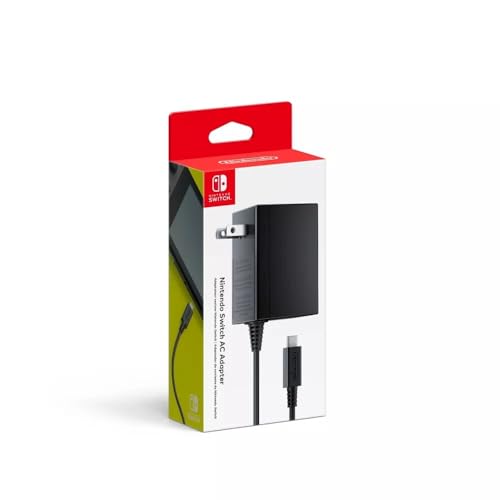
Every comparison in this guide is measured against this adapter, so it comes first by design. The Nintendo Switch AC Adapter is the unit Nintendo ships in the box and sells separately, rated at fifteen volts and 2.6 amps for thirty-nine watts. That specification is not a suggestion: the Switch dock draws against it to feed the console, the HDMI output and the USB ports simultaneously, and the console’s own charging circuitry expects its behaviour in handheld mode too.
Owning the genuine article buys certainty in the one place certainty matters. Third-party power and the Switch dock have a documented, unhappy history from the console’s early years, when some bargain adapters damaged docks through sloppy USB-C power negotiation. Nintendo’s adapter cannot eliminate every risk in a setup, but it removes the adapter itself from the list of suspects, which matters if you ever need Nintendo’s help with a dock fault.
As a travel piece it is merely adequate. The cable is captive, the prongs do not fold on many regional versions, and the brick is larger than modern gallium-nitride rivals. None of that matters behind a television, where the official adapter belongs as the permanent installation, freeing smaller third-party units to live in the travel pouch where their size actually earns its keep.
Buy it as the benchmark even if you also buy an alternative. When a dock behaves oddly, swapping in the official adapter is the fastest diagnostic in the Switch owner’s toolkit: if the fault vanishes, the third-party brick was the problem; if it persists, you have learned something real about the dock. That troubleshooting value alone justifies one genuine unit in the house.
Charging pace in handheld mode matches the best alternatives here, because all of them are ultimately limited by what the console accepts. The official adapter’s advantage is not speed but provenance. For a console that may spend a decade in service, provenance is a perfectly rational thing to pay for once.
- Output: 15V at 2.6A, 39W, matching the dock’s design specification
- Connector: USB-C, captive cable
- Role: original equipment for Switch, Switch Lite and OLED model
- Use: docked TV mode and direct handheld charging
Strengths
- Electrical behaviour the dock was designed around, with no negotiation surprises
- Charges at full pace in handheld mode and sustains TV mode indefinitely
- Nintendo support stands behind it if a dock problem ever needs diagnosing
Trade-offs
- Costs more than every third-party option in this roundup
- One fixed cable and one job, with no spare port for a phone
- Stock comes and goes, which is the entire reason alternatives exist
Treat this adapter as fixed infrastructure. Coil its cable loosely behind the dock, keep its vents unburied, and resist lending it to the travel bag, because the day it goes missing is the day the dock gets fed by whatever charger surfaces first, which is precisely the scenario this purchase exists to prevent.
Households upgrading from the launch-era console to the OLED model sometimes ask whether a new adapter must follow the new screen. It must not: the dock specification stayed constant across the original family, so this unit serves both generations of the older hardware without distinction. That continuity is a small mercy of Nintendo’s design and worth exploiting before spending on duplicates.
Storage habits matter for any adapter that lives behind furniture. Dust accumulates on warm electronics, and a brick buried under a media unit in a nest of cables runs hotter than its designer assumed. Leave a hand’s width of air around it, vacuum the nest occasionally, and the official unit will repay the housekeeping with a decade of silence.
There is also a warranty conversation worth having before you need it. When a dock fails and Nintendo asks what powered it, answering with their own adapter ends that line of questioning instantly. Owners who value painless support processes, and who among us does not, should weigh that administrative comfort alongside the electrical kind.
Long sessions reveal the official adapter’s other quiet virtue: consistency. Hour five of a docked marathon looks electrically identical to hour one, with no thermal sag or negotiation oddities creeping in. Alternatives aspire to that flat line; the benchmark simply is it.
If you buy only one spare and intend it for the dock behind the main television, buy this one and assign a third-party unit to travel instead. Risk should live in the pouch, where a failure is an inconvenience, not behind the furniture, where a failure becomes a project.
Best for: Dock-first owners who want the reference adapter as their primary or as the spare kept permanently behind the television.
Not suited for: Travellers hunting the smallest possible bag footprint, who will prefer a compact third-party brick.

MARSDOCK 45W Switch Charger — Dock-ready travel brick
The MARSDOCK unit starts from the right question: not how little power a Switch can survive on, but what the dock actually wants. Its headline forty-five watts resolves into the profile that matters, fifteen volts at 2.6 amps, which is the dock’s native diet. An adapter that can hold that profile under the combined load of console, dock electronics and a charging controller is an adapter you can leave plugged into a travel dock without supervising it.
The five-foot cord is the second half of the design brief. Hotel televisions and rental living rooms place their sockets by architectural whim, and a short cable turns a travel dock into a furniture-rearranging exercise. Five feet lets the dock sit on the media unit while the brick hunts for power behind it, which is exactly how the official adapter behaves at home and how travel gear should behave everywhere.
Steam Deck compatibility is more than a bonus line. Both consoles share a USB-C power culture, and a brick that serves either machine simplifies the shared travel pouch considerably. The Deck’s own appetite is well within this unit’s envelope, so one adapter can cover a two-handheld trip without negotiation at packing time.
The honest caveat belongs to the whole third-party class, and this pick does not escape it: Nintendo did not design or certify this unit, and its safety case rests on the maker’s component choices and your inspection of its behaviour. It should run cool, hold voltage without the dock flickering, and be retired without sentiment if it ever starts running hot or intermittent.
Within those terms, this is the alternative to buy when the alternative will actually feed a dock. Handheld-only chargers can be smaller and cheaper, but they answer a different question, and confusing the two questions is how docks get underfed and trips get spoiled.
- Output: 45W class with 15V/2.6A Switch profile
- Cable: 5 ft USB-C cord included
- Compatibility per listing: Switch, Switch Lite, OLED model, Steam Deck
- Use: docked TV mode and handheld charging
Strengths
- Rated to feed a dock, not merely to trickle a handheld console
- Five-foot cord reaches hotel sockets that hide behind furniture
- Steam Deck compatibility gives the brick a second job in mixed handheld households
Trade-offs
- Third-party provenance means the dock-safety judgement rests on the maker’s engineering, not Nintendo’s
- Bulkier than phone-class bricks despite the travel pitch
- No second port, so a phone still needs its own charger on the same trip
Set it up once at home before trusting it on the road. Run a full evening of docked play, check the brick’s temperature with a palm at the end, and confirm the console’s battery holds or climbs during play. A travel charger proven at home is a known quantity; one unboxed at the destination is a gamble wearing a itinerary.
A detail frequent travellers will appreciate: the brick’s rating makes it a competent emergency laptop charger for modest USB-C notebooks on trips where the console stayed home. It will not thrill a workstation, but it rescues a presentation, and dual-purpose weight is the only weight a carry-on forgives.
Compare its cord honestly with the official unit’s before a long trip. Both reach five feet in spirit, but hotel rooms punish assumptions; a compact extension lead in the same pouch has saved more docked evenings than any adapter upgrade. The MARSDOCK plus that humble accessory is a genuinely robust travel system.
Owners running a dock in a child’s room should value this unit’s set-and-forget character. Once home-tested, it asks for no mode switches, no negotiation, no supervision beyond the ordinary. Chargers in family spaces succeed by being boring at scale, and boring is this brick’s native language.
Families sharing one travel dock between two houses will find this unit’s temperament ideal. It tolerates being unplugged, bagged and reinstalled weekly without complaint, and its cable survives the coiling habits of teenagers better than most. That durability under domestic chaos is a specification no datasheet prints.
One more audience deserves naming: grandparents hosting a dock for visiting grandchildren. They need an adapter that works without a grandchild on tech support, and this unit’s plug-and-forget behaviour, once installed by family, keeps the visits about games rather than troubleshooting.
Best for: Players who dock away from home, at family houses, rentals or a second television, and want a dedicated adapter for that bag.
Not suited for: Owners whose only need is handheld top-ups, for whom a smaller general-purpose brick is easier to carry.
45W Charger for Nintendo Switch (5FT Cable) — Straightforward dock-spec spare
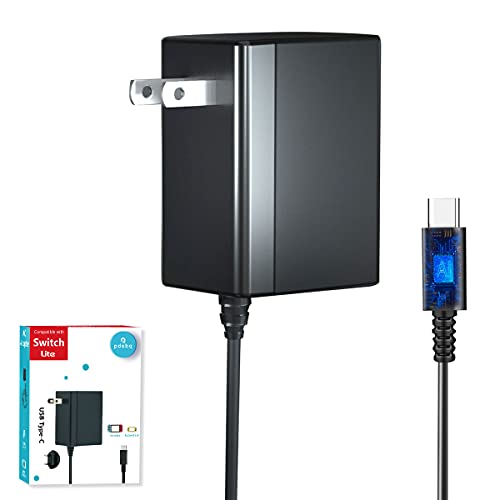
Some products earn their place by surviving. This 45W adapter has been listed since the Switch’s earlier years, through several waves of cheaper rivals, and it persists because its specification is right: fifteen volts at 2.6 amps, a five-foot cable, and no attempt to be anything other than a Switch power supply. In a category where listings vanish quarterly, that continuity is evidence of a sort, the marketplace equivalent of a restaurant that outlives its street.
The use case it serves best is the permanent second installation. Many households run one dock in the living room and discover the console migrating to a bedroom or a child’s room on weekends. A dock-spec spare at the second television ends the cable safari, and its unglamorous build is no drawback in a socket it will occupy for years.
Handheld charging is full pace, as it should be at this rating, and the same brick moonlights for a Steam Deck or a phone in a pinch. Versatility was not the design brief, but USB-C power at this level is inherently promiscuous, and the adapter does not object to feeding whatever negotiates politely with it.
Apply the standard third-party discipline. Inspect the cable ends for strain damage every few months, because a five-foot lead in a family room lives a harder life than its travel-bag cousins, and retire the unit if the dock’s picture ever flickers under load. Power faults announce themselves subtly before they announce themselves permanently.
What you will not get is delight. The shell is plain, the prongs are fixed, and nothing about it photographs well. What you get is the correct electrical answer at a fair tier, delivered by a listing with a history, and for a spare adapter that is the whole assignment.
- Output: 45W class, 15V/2.6A profile for Switch family
- Cable: 5 ft attached charging cable
- Compatibility per listing: Switch, Switch Lite, OLED model, Steam Deck, PlayStation controllers
- Use: docked TV mode and direct charging
Strengths
- Listing history stretches back years, which in this category counts as a track record
- Full dock profile rather than a handheld-only ration
- Long cable suits a permanent second-room installation as well as travel
Trade-offs
- Design and finish are utilitarian rather than delightful
- Single-purpose brick with no extra ports or folding-prong elegance
- Seller ecosystem is crowded with lookalikes, so buy the exact listing, not a visual twin
Buy the exact listing rather than a lookalike with a similar photograph. This corner of the marketplace breeds visual clones with lesser internals, and the protection offered by a long-listed product evaporates if a different seller ships you a different brick in similar plastic. The link in this guide points at the listing whose history the recommendation rests on.
Second installations have a way of becoming primary ones. The spare-room dock hosts the sleepover, the office dock hosts the lunch break, and this adapter ends up powering more console hours than its humble billing suggests. That is an argument for its dock-correct specification rather than a handheld-only cheap unit in the same socket.
Its age on the marketplace cuts both ways and deserves an honest sentence. The design predates the gallium-nitride miniaturisation wave, so it is larger than modern equivalents; in exchange, its behaviour across years of Switch firmware updates is a matter of record rather than projection. For a fixed installation, record beats novelty.
Cable care is the whole maintenance regime. The five-foot lead will be stepped on, chair-castored and vacuum-nudged in a family room, so inspect the ends seasonally and route it along the skirting where feet rarely go. A charger this inexpensive earns a long life only if its cable is granted one.
Offices are an underrated habitat for this spare. A dock beside a work desk, fed by this adapter, turns lunch breaks into legitimate console time without borrowing the home setup. Its plainness is an asset there; nobody covets or borrows the unglamorous brick.
When the household eventually upgrades consoles, this adapter should follow the older Switch to its next home rather than the parts drawer. Bundled with the console it served, it keeps a hand-me-down system complete and safe, which is the proper retirement for honest equipment.
Best for: A second adapter for the spare room, the kids’ dock or the office drawer, where dock-spec output matters and frills do not.
Not suited for: Minimalist travellers counting every gram, who will find slimmer modern bricks elsewhere in this guide.

YCCSKY 45W Switch Charger — Budget dock-capable adapter
The YCCSKY adapter occupies the value end of the dock-capable class, and its review should be read with that framing firmly in place. The specification promises what matters, a forty-five-watt class supply delivering the fifteen-volt profile the Switch family expects, with a five-foot USB-C cable in the box. On paper it answers the same question as the pricier alternatives; the savings live in finish, quality control spread and support, not in the headline numbers.
That makes it a rational spare and a questionable primary. As the adapter that lives in a drawer against the day the main brick is left at a relative’s house, it is perfectly judged: cheap enough to own speculatively, capable enough to run a dock properly while the replacement ships. As the only adapter feeding a family’s dock every night, its thinner support structure asks more faith than the saving justifies.
Verification on arrival is part of the deal at this tier. Read the output ratings printed on the brick itself rather than trusting the listing’s prose, run it through a docked evening at home, and feel for abnormal heat. A good unit will pass those tests uneventfully, and you will own a proven spare; a bad unit reveals itself while returning it is still easy.
The Lite compatibility deserves a line, because Lite owners are often told any phone charger will do. For handheld-only charging that is broadly true, yet a dock-profile adapter charges the Lite at its full accepted pace and doubles as the household’s universal Switch brick, which is tidier than maintaining separate classes of charger per console.
Buy it with clear eyes and it will not disappoint you. The disappointment in this category almost always comes from expecting a budget brick to carry a premium one’s assurance, and that is a mismatch of expectations rather than of electronics.
- Output: 45W class, listing cites 15V supply for Switch
- Cable: 5 ft USB-C cable
- Compatibility per listing: Switch, Switch Lite, OLED model
- Use: travel wall charging and dock supply
Strengths
- Dock-capable specification at the most accessible tier in this roundup
- Five-foot cable included rather than sold as an accessory
- Covers the whole original Switch family including the Lite
Trade-offs
- Budget tier means fit, finish and quality control vary more between units
- Listing specifications are worded loosely, so verify the output printed on the brick itself on arrival
- Support channels are thinner than the bigger accessory brands
Write the purchase date on the brick with a paint pen. Budget adapters fail quietly and get swapped between drawers, and knowing a unit’s age turns a future fault-finding session from archaeology into arithmetic. It is a small habit that separates organised spares from mystery cables.
Drawers of spares benefit from a testing ritual. When this adapter arrives, do not file it untested: an untested spare is a hypothesis, and hypotheses fail at midnight before a school holiday. One docked evening converts it into a proven asset, and the paint-pen date on its shell records when that proof was earned.
The Lite-only household gets particular value here. Lite owners are underserved by dock-focused advice, yet their console charges fastest from exactly this class of supply, and the same brick covers a future full-size Switch if the household upgrades. Buying the dock-profile spare now is a small hedge against that upgrade.
Do not let the gentle price invite rough treatment of the safety basics. The same rules about heat, flicker and printed ratings apply with full force; budget describes the finish of this adapter, not the standard of care it deserves from its owner.
Treat the first month as a probation period and this adapter will usually graduate without incident. Note its behaviour across a few long sessions, keep the receipt until probation ends, and then file it as proven. Spares that graduate earn their drawer; spares that do not go back while the paperwork is still simple.
There is a psychological dividend to a proven budget spare: it gets lent. Friends facing a dead adapter before a trip can borrow yours without anyone’s heart rate rising, because its replacement cost would sting rather than wound. Generosity is easier at this tier, and households run on such small generosities.
Best for: A backup adapter bought deliberately as a spare, tested at home, and kept for the day the main charger goes missing.
Not suited for: Anyone buying their only dock adapter, who should spend up to the benchmark or the stronger third-party names.

45W Switch Charger with Detachable Cable — Replaceable-cable flexibility
Captive cables fail first. Ask anyone who has retired a healthy charger and the autopsy is monotonous: the brick works, the cable frayed at the strain relief, and the whole unit went to landfill for a ten-centimetre fault. This adapter’s detachable five-foot USB-C cable attacks that failure mode directly. When the lead wears, you replace the lead, and the brick, which contains all the expensive electronics, carries on.
Flexibility follows from the same decision. Five feet suits the living room; a shorter lead suits a desk dock; a longer one suits the rental with the socket in the wrong postcode. One brick with two cables covers all three without duplicating the power supply, and packing for travel becomes a matter of choosing a coil rather than committing to a charger.
The specification underneath the convenience is the correct one: a forty-five-watt class supply that supports TV mode, covering the Switch, OLED model and Lite, with Steam Deck compatibility for mixed handheld bags. Detachable design sometimes signals a general-purpose phone brick wearing a gaming costume, but the dock profile here is the genuine article on paper, subject to the usual home test before you trust it abroad.
The trade-offs are physical rather than electrical. A detachable connector can work loose if the cable is repeatedly side-loaded, and pocket grit in a USB-C port is a real if unglamorous enemy. Seat the cable firmly, keep the spare coiled rather than crushed, and the design’s advantages comfortably outrun its risks.
For organisers and maintainers, this is the thinking person’s alternative: the only pick here designed around the way chargers actually die. It asks a little more care in exchange for a much longer service life, which is the sort of bargain this guide exists to surface.
- Output: 45W class supporting TV mode per listing
- Cable: 5 ft detachable USB-C cable included
- Compatibility per listing: Switch, OLED model, Lite, Steam Deck
- Use: docked play and handheld charging
Strengths
- A worn or damaged cable can be replaced without discarding a healthy brick
- Cable length can be changed for different rooms or travel setups
- Detachable design packs flatter and untangles faster in a travel pouch
Trade-offs
- The brick-to-cable connection is one more point that can loosen or collect pocket grit
- Cable quality now matters twice, since a poor replacement cable can bottleneck a good brick
- TV-mode support rests on the maker’s rating, so home testing before travel remains wise
Buy the spare cable at the same time as the charger, from a reputable maker, rated for the power involved. A spare bought later, in a hurry, at an airport, will be whatever the airport sells. The whole point of a replaceable-cable system is that the replacement is already in the drawer when the original gives up.
Think of the detachable design as an insurance policy with a tiny premium. The first time a cable frays, and cables always fray eventually, the replacement costs a fraction of a new charger and generates no electronic waste worth mentioning. Multiplied across a household’s worth of Switch accessories, that arithmetic becomes genuinely significant.
The connector itself deserves a moment of respect in daily handling. Support the cable near the plug when disconnecting rather than hauling on the lead from across the room, a habit that protects both the port in the brick and the port in any console the cable also serves. Mechanical kindness is the cheapest reliability programme in consumer electronics.
Renters who move yearly will feel the benefit most. Each new home rearranges the socket geography, and a charger whose reach can be re-specified with a different cable adapts to each floor plan without a fresh purchase. It is the only pick here that treats your next address as a design input.
Cable length experiments are cheaper than charger experiments, which is the detachable model’s hidden curriculum. Owners learn their rooms’ true socket geography by trying two lengths, knowledge that transfers to every future charging decision in the house. The brick teaches the home its own electrical map.
For the desk-bound, pair this brick with a short lead and the dock becomes a tidy satellite of the workstation, charged and ready without a cable crossing the keyboard tray. The same brick, re-cabled long, then handles the living room on console night. One supply, two postures, no duplication.
Best for: Owners who have killed captive cables before and want the failure point of their charger to be cheap and replaceable.
Not suited for: Households with small children or chaotic cable drawers, where detachable parts separate and vanish.

Switch 2 Charger 60W — Next-generation 20V spec
Nintendo changed the power conversation with its newer console, and this charger exists because of that change. The Switch 2’s adapter specification moves to twenty volts at three amps, a sixty-watt class supply feeding a more powerful machine and its dock. Feeding the new console from an old fifteen-volt adapter invites exactly the underpowered behaviour, slow charging under load and dock grumbles, that this guide has been warning about in the other direction.
So the first virtue here is simple correctness for the new hardware. The listing states the OEM-matching specification plainly, includes a five-foot cable, and claims docked support including the console’s higher-resolution TV output. Switch 2 owners assembling a travel kit or a second-room dock should start from adapters that speak the new console’s language natively, and this is the pick in the roundup built to do so.
Backward compatibility softens the generational split. The same brick charges the older Switch family and the Steam Deck at the rates those machines accept, because USB-C power delivery negotiates down as readily as up. A household mid-transition, one new console and one old, can standardise on this class of adapter for travel without orphaning either machine.
Youth is the caveat. The Switch 2 accessory ecosystem is young, every maker in it has a short track record by definition, and listings will evolve as the console’s installed base grows. Apply the home-test discipline with extra care: a weekend of docked play, a palm on the brick, a battery percentage that behaves, before the unit earns a place in the travel bag.
If your household has made the generational jump, this is your alternative pick and the older forty-five-watt units are the ones to hand down with the older console. Power specifications are generational facts, not marketing tiers, and matching them is the cheapest reliability you can buy.
- Output: 60W, 20V at 3A per listing, matching Switch 2 OEM specification
- Cable: 5 ft (1.5 m) cable included
- Compatibility per listing: Switch 2, plus OLED, Lite and Steam Deck at their accepted rates
- Use: docked 4K TV mode per listing and direct charging
Strengths
- Matches the newer console’s distinct power specification rather than assuming the old one carries over
- Headroom in the rating covers docked play with accessories attached
- Backward compatibility means one brick can serve both console generations in a household
Trade-offs
- Owners of only the original Switch gain little over the cheaper 45W picks
- A newer accessory class means a shorter track record for every maker in it
- Confirm the specification printed on the unit, since the two Nintendo generations use different profiles
Keep the generations’ adapters labelled if both live in one house. The bricks look alike at a glance, their plugs are identical, and their specifications are not. A strip of coloured tape on each has prevented more dock confusion than any manual ever written, and it costs nothing but ten seconds.
Early Switch 2 households face a documentation problem this adapter helps solve: two consoles, two specifications, one drawer. Dedicate this unit to the new console’s dock and travel kit, and let the older adapters retire with the older machine’s accessories. Generational clarity prevents the slow, confusing failures that mixed drawers breed.
The sixty-watt rating also future-proofs the travel pouch beyond Nintendo. Modern handheld PCs, tablets and slim notebooks all drink from the same USB-C well at similar rates, so the brick earns its space on trips where the Switch 2 stays home. Versatility at this wattage class is no longer a bonus; it is the expectation.
Watch this accessory class mature with a buyer’s patience. If your need is a second dock station today, this unit answers it; if your need is speculative, the class will only improve and clarify. Either way, verify the printed specification on arrival, because generational transitions are exactly when marketplace listings blur.
Label discipline deserves repeating for this pick specifically, because its sixty-watt class overlaps with laptop adapters that look similar and behave differently. A band of bright tape and a written console name end the resemblance where it matters, in a dim room behind a television.
Households keeping both console generations on one dock shelf should assign each its own adapter permanently rather than sharing. Sharing invites the wrong brick at the wrong dock during a hurried setup, and the resulting underpowered evening is nobody’s idea of a good trade for one saved purchase.
Best for: Switch 2 owners building a travel kit or a second dock station for the newer console.
Not suited for: Original Switch households with no upgrade planned, whose consoles cannot use the newer profile’s headroom.
How Should You Pack a Switch Charging Kit for Travel?
Build the kit around the dock question first. If docked play is planned, the adapter must be dock-profile, the cable long enough for a stranger’s living room, and a compact extension lead earns its pouch space more honestly than a second brick. Add the console’s own USB-C cable for handheld top-ups from whatever power the journey offers, including power banks and laptop ports.
Then rehearse the setup at home once. Travellers discover missing adapters in airport light, but they discover incompatible ones in a rental at midnight, which is worse. A kit that has run your own dock for an evening travels as proven equipment, and the holiday version of you will be grateful for the home version’s diligence.
What Does a Power Bank Need to Charge a Switch Properly?
Handheld owners often extend play with a power bank, and the same voltage literacy applies. A bank that offers the fifteen-volt class output can charge the console while you play demanding games; lesser banks slow the drain rather than reversing it, which may still be all a train journey requires. Judge banks by their sustained output at the console’s voltages, not by capacity numbers alone, because a huge reservoir behind a narrow tap fills nothing quickly.
What Changes When the Console Mostly Lives Handheld?
Handheld-first households can relax half of this guide’s warnings and should keep the other half. Without a dock to feed, the adapter’s job shrinks to charging a battery at the pace the console accepts, and many competent USB-C supplies can do it. The dock-risk conversation recedes, because the failure mode that made bargain adapters notorious involved dock negotiation specifically.
What does not recede is basic electrical hygiene. A supply that runs painfully hot, crackles, or charges in fits deserves retirement whatever it feeds, and the printed-ratings check still separates honest listings from optimistic ones. Handheld owners should also protect the console’s own port, the one component no spare adapter can replace: support the cable, avoid playing with a stiff lead levering against the socket, and let the console rest while it drinks on long sessions.
For these households the picks reorder themselves. The detachable-cable model and the budget spare rise in value, the benchmark becomes a luxury rather than a necessity, and the travel brick’s dock credentials matter less than its size. The guide’s electrical facts stay fixed; only the household’s weighting of them changes, which is how a good shortlist should behave.
How Do the Six Adapters Compare at a Glance?
| Pick | Profile | Cable | Role |
|---|---|---|---|
| Nintendo Switch AC Adapter | 15V/2.6A official | Captive | Benchmark, main dock |
| MARSDOCK 45W | 15V/2.6A class | 5 ft included | Travel dock duty |
| 45W Charger (5FT Cable) | 15V/2.6A class | 5 ft attached | Second-room spare |
| YCCSKY 45W | 15V class | 5 ft included | Budget backup |
| 45W Detachable Cable Charger | 15V/2.6A class | 5 ft detachable | Longevity pick |
| Switch 2 Charger 60W | 20V/3A | 5 ft included | New-generation consoles |
Match the profile column to your console generation first and the role column to your household second. Every error in this category comes from reversing that order, buying for a role with an adapter whose electrical profile belongs to another machine.
How Long Should a Switch Adapter Last, and What Kills Them?
A quality adapter should outlive the console generation it serves. The electronics are solid-state and unstressed at these wattages, so mortality concentrates in the mechanical margins: cable ends flexed thousands of times, prongs bent in luggage, ports worn by gritty insertions. Every premature adapter death in a normal household is a story about one of those three, which is why this guide keeps returning to cables, routing and handling rather than to exotic electrical fears.
Heat is the slow accomplice. An adapter entombed in a cable nest behind a dock runs its whole life warmer than designed, and warmth ages capacitors the way sunlight ages paint. The remedy costs nothing: air around the brick, a nest vacuumed twice a year, and no blankets of dust. Owners who grant their adapters that modest dignity rarely shop for replacements at all.
When an adapter does begin to fail, it usually whispers first: a dock that needs reseating, a charge that pauses, a brick warmer than its history. Treat whispers as instructions. Retire the unit to handheld-only duty or to the recycling, and promote the tested spare. Power supplies are among the few products where suspicion alone is sufficient grounds for demotion.
Which Buying Mistakes Put a Dock at Risk?
Judging by wattage alone leads the list. A big number assembled from phone voltages tells you nothing about the fifteen-volt rail the dock actually drinks from, and listings know it. Read for the voltage and current pair, and treat its absence from a listing as an answer in itself.
Buying the visual twin is the second trap. Popular adapter listings accumulate near-identical imitators with lesser internals, and the photographs will not warn you. Purchase through the exact listing you researched, and check the printed ratings on the unit that arrives against the ones you researched.
Skipping the home test completes the set. A third-party adapter’s first dock session should happen where you can watch it, not in a holiday rental on Christmas Eve. Ten supervised minutes at home have retired more bad adapters than any review programme ever will.
Final Recommendation
Anchor the main dock with Nintendo’s own adapter, then let the alternatives do what they are good at: the MARSDOCK for the travel dock, the long-listed 45W unit for the second room, the detachable-cable model for anyone tired of replacing chargers, and the 60W unit if the newer console has joined the house. The budget YCCSKY earns its drawer space as a tested spare rather than a primary.
Label the bricks, test the newcomers, and the dock will outlive the arguments about it.
Regional travel adds one more wrinkle worth planning around. These adapters are built for the sockets and voltage of their home market, and while the Switch family travels widely, the prudent traveller confirms the input range printed on the brick before an international trip and packs a passive plug adapter rather than a voltage converter for modern dual-voltage units. Checking that single line of print at packing time prevents the only power surprise a holiday cannot laugh off.
Finally, a word about the console’s own battery, since chargers get blamed for its ageing. Lithium batteries lose capacity across years of cycles regardless of which quality adapter feeds them, and a five-year-old Switch that plays for fewer hours is exhibiting chemistry, not charger failure. Judge an adapter by dock behaviour and charging stability, and judge the battery by its years, and you will replace the right component when the time comes.
Multi-console households, where a Switch shares shelf space with other systems, should resist the temptation of one mega-brick for everything. Dedicated adapters, each matched to its console’s expectations and labelled accordingly, fail less confusingly than a shared supply that migrates nightly. The modest extra cost buys a household where any family member can set up any console without a consultation, and that independence is worth more than the saving.
One last scenario deserves a plan: the adapter that dies mid-holiday with no game shop in reach. The console can sip from a laptop’s USB-C port or a decent power bank slowly enough to keep handheld play alive, and knowing that fallback in advance converts a small disaster into a shrug. Pack the tested spare on any trip where docked play is the entertainment plan, and let the fallback remain a story you never have to tell.
Collectors keeping a launch console in service should be especially conservative. Ageing docks and first-generation hardware deserve the benchmark adapter’s known behaviour, and the modest premium reads differently against a machine you intend to keep for another decade. Sentiment is a legitimate specification when the hardware has earned it.
Frequently Asked Questions
Can a phone charger power my Switch?
Handheld, mostly yes, at whatever pace the phone brick can offer. Docked, treat it as a no unless the adapter sustains the fifteen-volt, 2.6-amp profile, because the dock’s combined load is where underpowered adapters cause their quiet damage.
Why does my battery drain while I play docked?
That symptom usually indicts the adapter before the console. If the supply cannot cover the docked system’s draw, the battery makes up the difference. Swap in the official adapter and replay the same session to confirm the diagnosis.
Does the Switch 2 need a different charger?
Yes. The newer console’s specification moves to twenty volts at three amps, and its pick in this guide is built to that profile. Older adapters can charge it gently in handheld use, but docked duty belongs to the newer class.
Are third-party adapters safe for the dock?
Well-made ones with the correct profile have powered docks for years without incident, while the documented damage cases cluster around poorly regulated bargain units. The protection is selection and testing: a tracked listing, verified printed ratings, and a supervised first session.
How many spare adapters does a household need?
One per dock location plus one for travel covers most homes. Beyond that, adapters multiply faster than consoles, and the drawer of mystery bricks becomes its own household hazard.
Will these adapters charge a Steam Deck or a phone?
Most will, at whatever rate the device negotiates, because USB-C power delivery is a shared language. The Switch-specific virtue of these picks is their dock profile; their general competence with other USB-C hardware is a welcome side effect rather than the reason they were chosen.
Related Guides
Power questions follow Nintendo’s consoles into every corner of a setup, and the guides below continue from the dock outward: storage, screens and the handhelds that share the same travel bag.
Best Travel Cases and Accessories for Switch
Best Portable Chargers for Handheld Consoles
Best USB-C Chargers for Multiple Devices


