What's inside
- Where to Buy
- Key Takeaways
- Quick Picks
- How We Chose These Picks
- The Six at a Glance
- How to Choose a Laptop for Elden Ring
- Is Elden Ring Harder on a Laptop Than Other Big Games?
- Do You Need an RTX 5080 to Enjoy the Lands Between?
- What Should You Do in the First Session to Set the Game Up Well?
- What Does Co-op Change About the Hardware You Need?
- How Long Will a Laptop Bought for Elden Ring Stay Relevant?
- Misjudgements Elden Ring Buyers Keep Making
- Final Recommendation
- Frequently Asked Questions
- Related Guides
As an Amazon Associate I earn from qualifying purchases. This post may contain affiliate links at no extra cost to you.
widgetverdict.com is reader-supported. When you buy through links on our site, we may earn an affiliate commission.
Where to Buy
Each of the six machines below is sold through its own Amazon page, and the pages are where the money facts live. The flagship ASUS ROG Strix G18 listing shows what the 64GB, 4TB configuration costs today, so check price on Amazon there before anything else. Its sibling, the second Strix G18 RTX 5070 listing, keeps its own figure on its own page, and that page matters doubly because its short title leaves configuration details to confirm. MSI’s Raider A16 HX publishes the RTX 5080 build’s cost on its product page. The MSI Cyborg 15 and the MSI Thin A15 likewise display their delivered prices only on their listings. Finally, the TVEPGZD 16-inch page is where that smaller brand’s figure sits, alongside the full title a buyer should re-read before ordering.
Anyone shopping for the best laptops for elden ring is really shopping for two different games wearing one name. There is the Elden Ring of torchlit catacombs and duels in courtyards, which almost any modern gaming laptop handles gracefully, and there is the Elden Ring of the open world — galloping across a rain-swept plateau while the engine streams in a landscape, a dragon and a weather system at once — which separates hardware into tiers with unusual honesty. The Lands Between reward graphics muscle and memory headroom, punish thin storage when the game shares a drive with a library, and expose every weakness in a machine’s cooling during the long boss attempts the game is famous for. A laptop for this title is bought for its worst hour, not its average one.
The discipline of this guide is the same as its evidence. No listing title below mentions Elden Ring, and none prints a frame rate for any game, so no machine here is assigned a performance number it did not earn in print. What the titles do give is a rich spread of hardware to reason from: an RTX 5080 at the summit, RTX 5070 machines below it, an RTX 5060 and an RTX 4050 in the middle distance, and one RTX 4060 from a brand most readers will not have heard of. Memory runs from 16GB to an extraordinary 64GB. Storage runs from 512GB to a cavernous 4TB. Those printed facts, read against how this game is known to load a system, are enough to build honest verdicts.
Two of the six are frankly more laptop than Elden Ring alone can justify, and the guide says so in their reviews rather than hiding it. The 64GB Strix G18 and the RTX 5080 Raider are halo machines — purchases made once, for this game and everything after it. Two are the sensible centre: the Cyborg 15 with its Ryzen 9 and RTX 5060, and the second Strix G18 whose bare title demands a careful buyer. Two are the value edge: the Thin A15, a genuinely thin RTX 4050 design, and the TVEPGZD, whose RTX 4060 sits beside a much older processor and a brand with almost no footprint. Six machines, three philosophies, one very demanding game.
Key Takeaways
- The graphics ladder here runs RTX 5080, RTX 5070 twice, RTX 5060, RTX 4060 and RTX 4050 — the widest spread in this series of game guides.
- Memory spans 16GB to 64GB; the 64GB Strix G18 holds four times the RAM of the value picks, far beyond this game’s needs and aimed at a decade of others.
- Storage spans 512GB to 4TB, and for a game of Elden Ring’s size installed beside a modern library, that spread is a lifestyle difference, not a footnote.
- Two titles print 240Hz panels and one prints 165Hz, though this game’s demands make graphics tier and cooling matter more than refresh bragging.
- The TVEPGZD pairs a respectable RTX 4060 with a much older Core i7-11370H and an unknown brand — the most lopsided specification in the guide.
- One Strix G18 listing’s title names almost nothing beyond the RTX 5070, so its review treats configuration as a listing-page verification task.
Quick Picks
| Pick | Badge | Why it is here |
|---|---|---|
| ASUS ROG Strix G18 64GB | Buy Once, Cry Once | 64GB of RAM, 4TB of storage and an RTX 5070 behind an 18-inch 240Hz screen. |
| ASUS ROG Strix G18 RTX 5070 | Verify-Me Pick | The same badge and graphics tier, with a title so short that the listing page must do the talking. |
| MSI Raider A16 HX | Halo Graphics | An RTX 5080 and a Ryzen 9 HX chip — the strongest rendering specification in the guide. |
| MSI Cyborg 15 Ryzen 9 | Sensible Centre | Ryzen 9 power, RTX 5060 graphics and Windows 11 Pro in a 15.6-inch frame. |
| MSI Thin A15 | Thin and Honest | An RTX 4050 in a slim chassis, pitched at players who carry their machine daily. |
| TVEPGZD 16 Inch | Outsider Bet | RTX 4060 graphics and a 2.5K 165Hz screen from a no-name brand with an ageing processor. |
How We Chose These Picks
Elden Ring’s hardware appetite was translated into title evidence in a specific order. Graphics came first, because the game’s open world, dense effects and high-resolution ambitions load the GPU harder and longer than most titles, and because its most demanding scenes arrive without warning in the middle of exploration. Memory came second: the game itself is not the heaviest RAM consumer in modern gaming, but it runs inside an ecosystem — launcher, capture tools, guides in a browser, voice with a co-op partner — and 16GB was set as the comfortable floor, with everything above it treated as longevity rather than necessity. Storage came third, because this is a large install that players keep for years and return to with each new character, and a 512GB drive shared with other modern titles becomes a negotiation.
Processor strength was read with the game’s streaming behaviour in mind. Traversal at speed asks the CPU to prepare new areas constantly, and the HX-class chips in the two flagships and the Ryzen 9 in the Cyborg are the strongest answers in this guide. The TVEPGZD’s i7-11370H, a much older four-core design, is the weakest answer, and its review weighs that mismatch openly instead of letting the RTX 4060 badge speak alone.
Panel claims were recorded exactly as printed and weighted modestly. Elden Ring is a game of deliberate combat and scenery, not of competitive tracking, so a 240Hz screen is a luxury here rather than the instrument it becomes in a shooter. Resolution mattered more: the 2560×1600 and QHD+ panels on the flagships suit the game’s painterly vistas, provided the graphics card behind them is strong enough to feed them — which, in those two cases, it plainly is.
Cooling was the one criterion applied by class rather than by print, because titles rarely quantify it and this game punishes its absence slowly and surely. A boss learned across forty attempts is a thermal endurance event disguised as a duel; machines whose chassis give their cooling room to work — the flagship lines above all — hold their performance across that event, while thin designs trade some of that stubbornness for portability. The guide did not exclude the thin machine for this; it priced the trade into its review, which is where such reasoning belongs.
The final filter was informational honesty. One listing, the second Strix G18, arrived with a title that names a model family and a graphics card and almost nothing else. Rather than exclude a machine from a major brand whose wider configuration range is well known, the guide includes it with its poverty of print treated as the central fact of its review: a pick for buyers willing to verify everything on the listing page itself. Every other machine here earned its place by printing enough to judge.

ASUS ROG Strix G18 64GB — Buy Once, Cry Once
Begin with the confession this pick demands: Elden Ring does not need 64GB of memory or 4TB of storage, and no honest review should imply otherwise. What this Strix G18 offers is not necessity but finality. Its title specifies an 18-inch 2560×1600 panel at 240Hz with full DCI-P3 coverage, a 24-core Intel Ultra 9 275HX, an RTX 5070, and those two enormous capacity figures, running Windows 11 Pro. A player who buys it for Elden Ring is buying the machine that ends laptop shopping for years — the game, its successors, every other title in the library, all installed at once, all held in memory headroom that current games barely touch.
For the game itself, the meaningful rows are the RTX 5070 and the big screen. The Lands Between are a colourist’s game — golden plains, scarlet rot, moonlit academies — and a wide-gamut 2560×1600 panel at 18 inches is the most cinematic canvas in this guide, fed by a graphics card with the muscle to render it at native resolution with ambition. The Ultra 9’s core count is mostly idle in this title, but its fast cores serve the streaming traversal well, and the Pro operating system suits owners whose laptop also runs a working life.
The ownership caveats are physical and financial rather than technical. An 18-inch gaming laptop is a desk that folds, not a companion for café tables, and its title prints no weight — a figure the manufacturer documentation will supply and a daily carrier must read. Its price lives on the listing, and it will be the guide’s summit or near it. Buyers who play only Elden Ring and one or two other titles are overbuying, knowingly. Buyers building a five-year gaming life around one machine are simply buying once.
Live with this machine in the imagination for a moment, because scale changes routines. It does not get carried to the sofa; the sofa session happens because the machine was already where the good chair is. It does not get packed for a weekend; it anchors a desk that other devices visit. Within that life, its virtues compound: the huge screen makes co-op sessions spectate-able, the storage abolishes the uninstall ritual entirely, and the memory means the game, a browser of build planners, a capture suite and a video call can coexist without a single act of triage. Elden Ring is a game people inhabit for a year or more across multiple characters, and a machine that removes every small friction from that inhabitation is not overkill in the way a spec sheet suggests — it is hospitality, extended by hardware to a very long guest.
- Display: 18-inch 2560×1600, 240Hz, 100% DCI-P3 as stated
- Processor: Intel Ultra 9 275HX, 24 cores
- Graphics: NVIDIA GeForce RTX 5070
- Memory: 64GB RAM
- Storage: 4TB SSD
- Operating system: Windows 11 Pro
- Weight: Not stated in the listing title — verify with the manufacturer documentation
Strengths
- Capacity figures end storage and memory management for years
- Large wide-gamut high-resolution panel suits the game’s scenery
- RTX 5070 has genuine headroom for native-resolution play
Trade-offs
- Specification far exceeds this one game’s requirements
- 18-inch chassis is desk-bound in practice
- 24-core processor is mostly surplus for gaming alone
Best for: a player buying one flagship machine for Elden Ring and the next several years of games.
Not suited for: a commuter or student carrying a laptop daily, because an 18-inch gaming chassis with unstated weight is a desk fixture first.

ASUS ROG Strix G18 RTX 5070 — Verify-Me Pick
This is the most unusual review in the guide, because its subject’s title is seven words long: ASUS ROG Strix G18 RTX 5070 Gaming AI Laptop. From those words a buyer learns the brand, the line, the 18-inch family implied by the G18 name, and the graphics card — and nothing else. No processor. No memory figure. No storage figure. No panel specification beyond what the model name suggests. This guide does not fill those silences from the sibling listing above, because configurations within a model family vary precisely in those rows, and borrowing the 64GB machine’s numbers for this one would be a fabrication dressed as research.
So the review becomes a method. The Strix G18 family is ASUS’s flagship 18-inch line, and the RTX 5070 is a known, strong graphics tier for a game like Elden Ring — that much the badge and the card genuinely establish. Everything that decides whether this specific listing is a bargain or a trap lives on its Amazon page: the processor model, the RAM, the drive, the panel’s resolution and refresh. A buyer should read that page the way this guide reads titles, line by line, and compare the discovered configuration against the fully specified sibling above before paying. If the page reveals a close match at a friendlier figure, this is the smart buy of the guide. If it reveals a lean configuration trading on the family name, the sibling is the honest one.
Including a pick that requires this much homework is a deliberate editorial choice. Real shopping is full of short-titled listings from big brands, and a guide that only handled perfectly documented machines would abandon readers exactly where they most need a method. The method is the review: badge plus graphics card is a starting point, never a specification.
There is a second discipline this pick teaches, about variation selectors. Marketplace listings for flagship families often gather several configurations under one page, and the title shown can describe the family while the selector quietly changes the machine. A buyer of this Strix should therefore verify twice: once on the page, reading the full specification block for the exact configuration selected, and once on arrival, in the operating system’s own information panels, against the order confirmation. That double-check costs ten minutes across the whole purchase and is the difference between shopping and gambling. If the configuration proves strong, write the discovery down for the next buyer in a review — short-titled listings survive on the diligence of strangers.
- Display: 18-inch class by model name; resolution and refresh not stated in the listing title — verify with the manufacturer documentation
- Processor: Not stated in the listing title — verify with the manufacturer documentation
- Graphics: NVIDIA GeForce RTX 5070
- Memory: Not stated in the listing title — verify with the manufacturer documentation
- Storage: Not stated in the listing title — verify with the manufacturer documentation
- Operating system: Not stated in the listing title — verify with the manufacturer documentation
Strengths
- Flagship ASUS line with the guide’s joint-second graphics tier confirmed in print
- 18-inch format suits a cinematic game when the panel details check out
- May undercut the fully specified sibling if its configuration proves close
Trade-offs
- Title omits processor, memory, storage and panel facts entirely
- Value cannot be judged until the listing page is read in full
- Risk of a lean configuration hiding behind a flagship family name
Best for: a meticulous buyer who enjoys verification and may be rewarded for it on the listing page.
Not suited for: a one-click purchaser, because every deciding specification of this machine lives outside its title.
MSI Raider A16 HX — Halo Graphics
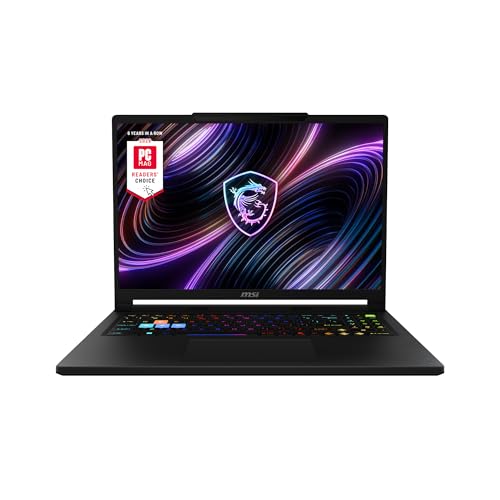
If the 64GB Strix is the guide’s capacity king, the Raider is its rendering king. MSI’s title specifies a 16-inch QHD+ panel at 240Hz, an AMD Ryzen 9-8940HX, 32GB of DDR5, a 2TB NVMe SSD and an RTX 5080 — the strongest graphics card in this guide by a clear tier. For Elden Ring, that card is the difference between admiring the Lands Between and inhabiting them at native resolution with the settings ambition the artists intended. The Raider line is MSI’s flagship series, built without the thinness compromises of its sibling below, and the specification reads like it.
The supporting rows are chosen like a flagship’s should be. Thirty-two gigabytes is the memory figure that ends multitasking anxiety for a gaming-plus-everything machine without tipping into the Strix’s excess. Two terabytes holds Elden Ring, a shelf of other large titles and a capture folder of boss attempts without rotation rituals. Wi-Fi 7 and USB-C appear in the title, small modernities that matter across years. Windows 11 Home rather than Pro is the one ordinary note in an otherwise maximal list.
Who should buy the guide’s strongest graphics card for a game that does not strictly demand it? The player who plays at native high resolution and refuses to negotiate settings downward, the player whose library extends to the most demanding current titles, and the player who keeps laptops longest — because graphics headroom is the form of future-proofing that ages slowest. Who should not is equally clear: anyone whose gaming is mostly this one game at sensible settings is paying for a summit they will visit rarely, and the Cyborg below exists for them.
The Raider’s case strengthens when the library widens. Elden Ring may be the occasion for the purchase, but a machine at this tier becomes the household’s answer to every demanding title that follows — the sprawling RPGs, the simulation epics, the VR-curious experiments. An RTX 5080 bought today is, in effect, several future upgrades prepaid, and its cost should be divided by the years and titles it will serve rather than charged entirely to one game, however magnificent. Judged per-game across a realistic five-year library, the halo machines in this guide often stop looking extravagant and start looking merely early. That is the Raider’s true pitch: not that Elden Ring needs it, but that time will keep presenting games that do, and it will already be sitting on the desk.
- Display: 16-inch QHD+ 240Hz as stated
- Processor: AMD Ryzen 9-8940HX
- Graphics: NVIDIA GeForce RTX 5080
- Memory: 32GB DDR5
- Storage: 2TB NVMe SSD
- Wireless: Wi-Fi 7
- Ports named in title: USB Type-C
- Operating system: Windows 11 Home
Strengths
- RTX 5080 is the strongest graphics tier in the guide
- 32GB and 2TB are the balanced flagship capacities
- HX-class Ryzen 9 matches the card for streaming-heavy open worlds
Trade-offs
- Graphics power exceeds this game’s ceiling by a wide margin
- Windows 11 Home on an otherwise flagship specification
- Flagship gaming chassis are built for desks, not shoulder bags
Best for: a native-resolution player who wants the game’s world rendered without compromise, for years.
Not suited for: a value-led buyer whose library is mostly Elden Ring, because the RTX 5060 Cyborg covers that game at a saner tier.

MSI Cyborg 15 Ryzen 9 — Sensible Centre
Every halo guide needs its centre of gravity, and this Cyborg is Elden Ring’s. The title specifies a 15.6-inch FHD IPS panel at 144Hz, an eight-core AMD Ryzen 9 270 — which MSI’s listing itself benchmarks against a former Intel flagship — 16GB of DDR5, a 512GB SSD and an RTX 5060, running Windows 11 Pro with a four-zone RGB keyboard. Read against the game’s demands, that is the specification of a machine with no apology to make: strong modern graphics, a genuinely powerful processor, the comfortable memory floor, and a panel resolution the card can feed with headroom to spare.
FHD deserves defending here, because flagship talk can make it sound like a consolation. At 15.6 inches, FHD is sharp in practice, and for a graphics card it is freedom: the RTX 5060 at FHD can prioritise the frame stability that boss fights reward instead of spending its budget on pixels. Elden Ring’s art direction — painterly, atmospheric, fog-friendly — survives FHD beautifully. The player who chooses this machine is choosing smoothness and settings over raw pixel count, which for this game is the connoisseur’s trade, not the miser’s.
The compromises are storage and screen size. Five hundred and twelve gigabytes holds Elden Ring and a rotation of other titles, not a permanent library, and 15.6 inches is intimate beside the 18-inch flagships. Windows 11 Pro, Wi-Fi details aside, gives the machine a working life beyond the game. For the majority of readers — one demanding game, a normal library, a normal desk — this is the pick the guide would defend in an argument, and its position in the middle of the price ladder, wherever the listings settle today, is unlikely to embarrass it.
The Cyborg also benefits from a quiet virtue of the middle: replaceability of expectations. Flagship owners notice every stutter as a betrayal of the premium; value-machine owners forgive theirs as the price of admission. The centre machine is judged by the fairest standard — does it do the job well — and on the evidence of its title, this one does the job well in every row that matters for this game. Its Ryzen 9 badge deserves emphasis once more, because processors are where mid-tier laptops usually hide their savings, and MSI conspicuously did not hide any here. A strong chip ages gracefully, feeds future graphics workloads, and keeps the desktop life around the game feeling expensive long after the graphics tier has become ordinary.
- Display: 15.6-inch FHD IPS, 144Hz as stated
- Processor: AMD Ryzen 9 270, eight cores
- Graphics: NVIDIA GeForce RTX 5060, GDDR7 as stated
- Memory: 16GB DDR5
- Storage: 512GB SSD
- Keyboard: Four-zone RGB backlit
- Operating system: Windows 11 Pro
Strengths
- Ryzen 9 processor is unusually strong for this tier of machine
- RTX 5060 at FHD prioritises the stability boss fights reward
- Windows 11 Pro widens the machine’s life beyond gaming
Trade-offs
- 512GB storage is the guide’s joint-smallest figure
- FHD panel gives up the flagships’ cinematic resolution
- Graphics memory capacity is not stated in the listing title — verify with the manufacturer documentation
Best for: the typical Elden Ring player who wants flagship manners without flagship excess.
Not suited for: a library hoarder, because 512GB will force install rotation within a year of normal buying.

MSI Thin A15 — Thin and Honest
The Thin A15 asks a different question from everything above it: what if the Elden Ring laptop also has to be carried to work, class or a friend’s house every day? MSI’s answer pairs a Ryzen 7-7735HS with an RTX 4050, 16GB of DDR5 and a 512GB NVMe SSD behind a 15.6-inch FHD panel at 144Hz, in the line whose name is its design brief. Cooler Boost 5, MSI’s named thermal system, appears in the title — a relevant claim in a thin chassis playing a game that generates sustained loads in boss attempts that can stretch past an hour of retries.
Set expectations by tier and the machine is respectable. The RTX 4050 is the guide’s entry graphics card, and Elden Ring at FHD with sensible settings is within its honest competence; the game’s scalability, built for a wide range of hardware, works in this pick’s favour. The Ryzen 7 is a proven mobile chip with strong efficiency manners, which suits a thin machine’s power budget. Sixteen gigabytes of memory matches the flagships’ floor, so the ecosystem around the game — co-op voice, a wiki, capture — runs without the triage an 8GB machine demands.
The trade is the eternal thin-machine trade: less thermal volume means fans work harder and clocks hold less stubbornly than in the Raider’s bulk, and the 4050 sets a settings ceiling the player will meet in the game’s most demanding vistas. Neither is a flaw; both are the price of the portability that is this pick’s entire reason to exist. For the player whose life genuinely moves, it is the right price. For the player whose laptop never leaves one desk, it is a price paid for nothing.
Portability reframes even the game’s social side. Elden Ring’s co-op and message culture means the game is often played where other people are — a partner’s flat, a friend’s spare room, a family holiday house — and a laptop that travels without ceremony gets played in those places, while a desk-bound flagship watches from home. The Thin A15’s owner will simply have more Elden Ring evenings in more rooms than the Strix owner’s calendar allows, and for a game built on shared discovery, that is a feature no benchmark prints. Thinness is this pick’s graphics card, in a sense: the specification that decides how much of the game you actually get to play.
- Display: 15.6-inch FHD, 144Hz as stated
- Processor: AMD Ryzen 7-7735HS
- Graphics: NVIDIA GeForce RTX 4050
- Memory: 16GB DDR5
- Storage: 512GB NVMe SSD
- Cooling named in title: Cooler Boost 5
- Operating system: Windows 11
Strengths
- Thin design serves players who genuinely carry their machine
- Full 16GB of memory keeps the play ecosystem comfortable
- 144Hz panel keeps motion clear for a fast-reading combat game
Trade-offs
- RTX 4050 is the entry graphics tier in this guide
- Thin chassis gives cooling less headroom for marathon sessions
- 512GB storage is the joint-smallest figure here
Best for: a mobile player who wants Elden Ring to travel with the rest of their life.
Not suited for: a desk-bound settings maximalist, because the RTX 4050 and thin thermals cap the game’s visual ambition.

TVEPGZD 16 Inch — Outsider Bet
Every guide in this series keeps one seat for the outsider, and TVEPGZD occupies it with the strangest specification of the six. The printed positives are real: an RTX 4060 with 8GB of GDDR6 memory stated, a 16-inch 2.5K panel at 165Hz, 16GB of RAM, Wi-Fi 6E, an HDMI port, a webcam and Windows 11 Pro. On a spec sheet sorted by graphics card, this machine would sit mid-table, above the Thin A15. But a laptop is a system, and the rest of this system is a Core i7-11370H — a four-core processor from a much older generation, with a fraction of the multi-core strength of the Ryzen 9s and HX chips above — sold by a brand with no meaningful service footprint, retail history or owner community that a buyer can consult.
For Elden Ring specifically, the mismatch cuts both ways. The game’s graphics load will enjoy the RTX 4060, and its 2.5K panel is a genuinely attractive canvas. But open-world streaming leans on the processor, and a four-core chip of that vintage is the component most likely to make traversal feel less composed than the graphics card promises. The honest summary is a machine whose best component is undermined by its weakest, wrapped in an ownership experience — warranty, support, parts, resale — that no title can describe and no guide can vouch for.
Who is it for, then? The tinkerer. The buyer who reads spec sheets for sport, prices risk knowingly, keeps their own spares and treats a bargain outsider as a hobby rather than a gamble. That buyer exists, and for them this listing’s combination of a real RTX 4060 and a high-refresh 2.5K screen at an outsider’s price — check the listing for the figure — is a rational flutter. For a reader buying a family’s main gaming laptop, the Cyborg’s boring respectability is worth more than this machine’s interesting edges.
A word about that processor’s vintage, because the model number hides it politely. The i7-11370H belongs to an era when four fast cores were a respectable gaming specification, and for older or lighter titles it still performs its duties. The problem is trajectory: games have spent the intervening years learning to use more cores, and Elden Ring’s streaming world is exactly the kind of workload that exposes a core-count ceiling. A buyer of this machine is therefore buying its best year first — the RTX 4060 will not age as quickly as the chip feeding it — and should price it as a shorter-horizon purchase than the Cyborg, whatever the graphics badge suggests. Understood that way, as a two-or-three-year instrument rather than a five-year one, the outsider’s arithmetic can still close.
- Display: 16-inch 2.5K, 165Hz as stated
- Processor: Intel Core i7-11370H (older four-core generation)
- Graphics: NVIDIA GeForce RTX 4060, 8GB GDDR6 as stated
- Memory: 16GB RAM
- Storage: 512GB SSD
- Wireless: Wi-Fi 6E
- Ports and extras in title: HDMI, webcam, backlit keyboard
- Operating system: Windows 11 Pro
Strengths
- RTX 4060 with stated 8GB memory outranks the Thin A15’s graphics
- 2.5K 165Hz panel is a specification the big brands reserve for costlier machines
- Full 16GB of memory and modern Wi-Fi 6E keep the supporting rows current
Trade-offs
- Ageing four-core processor is the system’s obvious bottleneck
- Brand has no established support network or owner community
- Long-term parts and warranty experience is unknowable from the listing
Best for: a confident tinkerer who prices brand risk knowingly and enjoys an outsider specification.
Not suited for: a family’s main gaming laptop, because support, warranty handling and resale all rest on an unknown brand.
The Six at a Glance
| Pick | Panel | Graphics | Processor | Memory | Storage |
|---|---|---|---|---|---|
| ASUS ROG Strix G18 64GB | 18″ 2560×1600 240Hz | RTX 5070 | Ultra 9 275HX | 64GB | 4TB SSD |
| ASUS ROG Strix G18 RTX 5070 | 18″ class, details not stated | RTX 5070 | Not stated in the listing title | Not stated in the listing title | Not stated in the listing title |
| MSI Raider A16 HX | 16″ QHD+ 240Hz | RTX 5080 | Ryzen 9-8940HX | 32GB DDR5 | 2TB NVMe SSD |
| MSI Cyborg 15 | 15.6″ FHD IPS 144Hz | RTX 5060 | Ryzen 9 270 | 16GB DDR5 | 512GB SSD |
| MSI Thin A15 | 15.6″ FHD 144Hz | RTX 4050 | Ryzen 7-7735HS | 16GB DDR5 | 512GB NVMe SSD |
| TVEPGZD 16 Inch | 16″ 2.5K 165Hz | RTX 4060 8GB | Core i7-11370H | 16GB | 512GB SSD |
Read the table by its extremes and the guide’s argument appears. The top two rows buy certainty and spectacle. The middle rows buy balance. The bottom rows buy mobility and intrigue, respectively. Elden Ring itself sits closer to the middle than the marketing suggests: it is a demanding game, but a scalable one, and the distance between playing it well and playing it at maximum spectacle is where most of the money in this table lives. Knowing which side of that distance your habits occupy is the whole decision.
How to Choose a Laptop for Elden Ring
Rank graphics first, but rank it against resolution, because the two are one decision. An RTX 5080 behind a QHD+ panel and an RTX 5060 behind an FHD panel can deliver surprisingly similar experiences of this game, one through spectacle and the other through stability. Decide which experience you are buying — the painterly vista at native resolution, or the composed boss fight at FHD — and the graphics tier follows from the panel, not the other way round.
Rank memory by honesty about your habits. Sixteen gigabytes serves the game and its usual companions. Thirty-two serves the game, the companions, the capture software and the browser full of boss guides you will absolutely open. Sixty-four serves a person building a machine for a decade of everything, and should be bought as that, not as an Elden Ring requirement. Storage follows the same logic: this game is a long-term resident, so count the whole library it will live beside, not the game alone.
Sound and control deserve a line in the choosing, because this game communicates through both. Its combat timing is taught by audio cues as much as by animation, and a laptop’s speakers are the weakest link in most of these machines regardless of tier — plan on a headset, and the panel and graphics decisions return to centre stage where they belong. Similarly, many players will attach a controller, which every Windows machine here accepts as a matter of course; the keyboard debates that dominate shooter guides barely apply. What remains genuinely laptop-specific is the trackpad-and-keyboard life around the game — inventory management, messaging, build planning — and there the larger machines’ keyboards and screens quietly earn their keep across hundreds of hours.
Where the machine will live while it plays matters more than buyers expect. A flagship on a desk with a monitor attached becomes a different instrument from the same flagship on a kitchen table; docking, external screens and cooling stands all interact with the choice. The 16 and 18-inch machines reward a settled setup, the Thin A15 rewards a bag, and the Cyborg splits the difference. Picture the actual room, the actual chair and the actual hours before ranking the six — Elden Ring is a game of long residence, and the laptop that fits the residence will be loved longer than the one that merely wins the table above.
Finally, weigh the unprintable things with your eyes open. Cooling under a two-hour boss session, fan behaviour in a quiet room, the service network behind the badge — titles gesture at these at best. The flagship lines earn part of their premium there, the thin machine spends it on portability, and the outsider asks you to self-insure. None of those is the wrong answer; each is the wrong answer for somebody, and the reviews above tried to name whom.
Is Elden Ring Harder on a Laptop Than Other Big Games?
In specific ways, yes. Its open world streams constantly during traversal, so processor and storage stay busy in a way corridor games never demand. Its boss encounters are long and retry-heavy, so a machine’s cooling is tested by endurance rather than by peaks — a laptop that is fast for ten minutes and throttled by the fortieth attempt is, for this game, a slow laptop. And its art direction rewards resolution and colour more than frame-chasing, which is why this guide weighted panels by resolution and gamut ahead of refresh bragging. A machine chosen for Elden Ring should be chosen like a marathoner, not a sprinter: sustained pace, deep reserves, nothing that fades.
Do You Need an RTX 5080 to Enjoy the Lands Between?
No, and the guide’s own ordering proves it by placing a sensible RTX 5060 machine at its centre. The 5080 buys native high resolution, maximum settings ambition and years of headroom for whatever FromSoftware and everyone else does next. Those are luxuries with real value, and the Raider is recommended warmly to the buyer who wants them. But the game’s soul — its exploration, its duels, its terrible beauty — is fully present on the Cyborg, and present respectably on the Thin A15 at adjusted settings. Spend on the tier that matches your panel and your patience for settings menus, not on the tier that wins a spec-sheet argument at work.
What Should You Do in the First Session to Set the Game Up Well?
Play plugged in, on a hard surface, with the laptop’s performance power profile engaged, because gaming laptops ration themselves on battery and balanced modes in ways that masquerade as hardware weakness. Set the game’s resolution to the panel’s native figure first, play through an early area and a boss, and only then adjust — downwards in resolution or effects if the experience stutters, upwards in ambition if it glides. Keep drivers current through the manufacturer’s own channels. And back up your save habitually; a game that can consume hundreds of hours deserves the same backup respect as a photo library, on any of these six machines.
What Does Co-op Change About the Hardware You Need?
Elden Ring is a solitary game with a social skeleton, and the skeleton has hardware implications players overlook. Summoning a co-op partner, invading or being invaded, and reading the game’s famous message system all run through an online layer that sits beside the game rather than inside it — voice chat with a regular partner, a wiki open for the dungeon you are both lost in, perhaps a stream so a third friend can watch. None of that is heavy alone; together it is exactly the multitasking halo that separates the 16GB machines from smaller pools and rewards the stronger processors in this guide. The player who intends to tour the Lands Between alone can buy closer to the game’s own demands. The player whose evenings are a party of three should buy for the party, because the party is what the laptop will actually be running.
There is a subtler co-op point about screens. Watching a partner’s ghost, reading a bloodstain’s story, spotting the faint shimmer of a summon sign — this game’s social information is visual and often small. The larger, higher-resolution panels on the Strix G18 and the Raider render that information with a legibility the 15.6-inch FHD machines approach but do not match. It will never appear on a requirements list, and experienced players will recognise it instantly: in this game, screen real estate is lore, warning and company, all rendered in pixels.
How Long Will a Laptop Bought for Elden Ring Stay Relevant?
Longer than for almost any other genre, because this game’s demands are heavy but stable. Elden Ring is a finished world that grows by expansion rather than by weekly reinvention, so a machine that runs it well today will run the same world well in three years — the target does not move the way a live-service shooter’s does. Relevance is instead decided by the rest of your library. The RTX 5080 and 5070 machines will absorb whatever the next wave of single-player epics asks; the RTX 5060 centre will negotiate with that wave from a position of strength at FHD; the RTX 4050 and the outsider’s ageing processor will meet it soonest. Buy relevance by deciding how much of the future library you intend to play at full ambition, and let Elden Ring — the constant in the equation — simply enjoy the ride on whichever tier that decision lands.
Misjudgements Elden Ring Buyers Keep Making
Buying refresh rate for a game that rewards resolution is the fashionable error. A 240Hz panel is a fine thing, and two machines here have one, but Elden Ring’s deliberate combat and capped internal pacing mean the money that buys extreme refresh often serves the buyer better as graphics tier or storage. Let the shooters in your library argue for refresh; let this game argue for pixels and power.
Ignoring the processor behind a famous graphics card is the outsider error, and the TVEPGZD exists in this guide partly as its illustration. An RTX badge cannot stream an open world by itself. Read the whole title — card, chip, memory, drive — as one machine, because that is what arrives in the box.
Underbuying storage is the slow error. Elden Ring settles in for years, its downloadable content adds weight, and the modern library around it grows heavier every season. The 512GB machines are honest picks for focused players; for everyone else they are a countdown to the first painful uninstall. And the final misjudgement is skipping the listing page on a short-titled flagship — the second Strix G18 may be the guide’s best value or its worst, and the only way to know is the five minutes of reading its review prescribed.
Final Recommendation
For most players, the Cyborg 15 is the answer this guide would give across a shop counter: Ryzen 9 strength, RTX 5060 graphics, FHD stability and Pro software, with storage as its only real asterisk. Above it, choose your flagship by appetite — the Raider for rendering supremacy in a 16-inch frame, the 64GB Strix for the 18-inch buy-once monument, the short-titled Strix for the verifier who enjoys an audit. Below the centre, the Thin A15 serves the mobile player honestly, and the TVEPGZD serves the tinkerer knowingly.
Elden Ring will still be being played, discussed and returned to when all six of these laptops are old. Buy the one whose compromises you will still be content with on your third character, in your second home, in the game’s next era — because that, and not the launch-week benchmark, is the purchase you are actually making.
And run the arrival ritual this guide has modelled throughout: read the delivered machine against the title you ordered from, panel and processor and memory and drive, inside the return window, while the paperwork is still warm. On the fully specified five, that ritual is a formality. On the short-titled Strix, it is the purchase itself. Either way, it ends with the same reward — a machine whose paperwork and whose performance agree, in front of a game that will test both for a hundred hours and then ask, politely, whether you would like to start again with a different build. Most players say yes. Buy the laptop that makes saying yes effortless.
One last choosing principle, offered because this guide’s spread invites it: do not let the flagship rows redefine your sense of normal. Sixty-four gigabytes of memory is not the new standard that makes 16GB feel poor; it is an enthusiast configuration that makes 16GB feel what it is — the figure the entire industry builds mainstream gaming around. Read the table from the centre outward. The Cyborg is normal, done well. Everything above it is appetite, everything below it is compromise, and appetite and compromise are both respectable reasons to buy — provided you know which one you are acting on.
Frequently Asked Questions
Do any of these laptops promise a frame rate for Elden Ring?
None. No title here mentions the game or quotes performance figures for it, so the guide reasons from printed hardware — graphics tier, processor class, memory, storage and panel — against the game’s known character as a demanding, scalable open-world title.
How much RAM does Elden Ring actually need?
The comfortable figure for the game plus its usual companions — launcher, voice, a browser of guides — is 16GB, which four of these machines meet or exceed. The 32GB and 64GB configurations are longevity and multitasking purchases, valuable for everything around the game rather than required by it.
Is a 240Hz screen wasted on this game?
Mostly, for this game alone — its combat is deliberate rather than twitch-based. But the Strix G18 and Raider panels pair their refresh with high resolution and wide colour, which serve the game directly, and the refresh serves every faster game in the same library.
Why does one Strix G18 have almost no specifications in its review?
Because its listing title prints almost none. The guide refused to borrow the fully specified sibling’s numbers, since configurations within a family differ exactly in those rows. Its review explains how to verify the machine on its listing page instead.
Can the RTX 4050 Thin A15 really handle a game this size?
At FHD with sensible settings, the pairing of an RTX 4050 and a Ryzen 7 sits within the game’s scalable range — it was a mainstream combination of its generation. Expect to trade visual ambition for stability in the most demanding areas, and expect the thin chassis to work its fans hard on long sessions.
Does screen size change how this game feels?
Profoundly, and the guide spans the range from 15.6 to 18 inches for that reason. Elden Ring’s vistas and its tiny, crucial combat tells — a glinting weapon, a shifting stance — both reward physical screen size, which is why the 18-inch Strix machines feel cinematic in a way their specifications only half explain. The counterweight is portability: the 15.6-inch picks travel, the 18-inch picks reside. Choose by where your sessions actually happen.
Is Windows 11 Pro worth anything to a gamer?
For the game itself, nothing — Elden Ring runs identically on Home and Pro. The Pro machines in this guide, the 64GB Strix and the Cyborg, earn the edition’s value elsewhere: drive encryption, remote desktop hosting and update control for owners whose gaming laptop doubles as a work machine. Treat Pro as a life feature that happens to ride along, never as a reason to choose a gaming tier.
Should I worry that the TVEPGZD brand is unknown?
You should price it, which is different. The hardware printed is real and partly impressive, but warranty handling, parts and support have no track record to consult. Confident self-supporters may accept that trade; a household’s main machine deserves a badge with a network behind it.
So the guide ends where the game begins: at a site of grace, with a long road visible and a machine humming quietly beneath it. Whether that machine is a flagship monument or a thin traveller matters less than whether its compromises were chosen rather than discovered. The six reviews above were written to make every compromise in this category visible before money moved — the halo excess, the silent title, the thin trade, the outsider’s gamble. Choose yours with both eyes open, and the Lands Between will do the rest.
Related Guides
Players who split their time between the Lands Between and the battle bus should compare notes with our guide to the best laptops for heavily modded Minecraft, where memory and storage become the whole argument. The sandbox classic in its original form is covered by our best laptops to run Minecraft Java roundup, which explains why that edition prizes processor speed over graphics glamour. And for the younger crowd’s favourite world-builder, our best Roblox laptops guide separates real Windows machines from the toy laptops that cannot run the game properly.


