What's inside
- Key Takeaways
- Quick Picks
- How We Chose These Picks
- Why Is Bass So Hard to Shop for in a Gaming Headset?
- How Should You Weigh Drivers, Surround and Tactile Bass Against Each Other?
- What Should You Know About Each of These Gaming Headsets For Bass Picks?
- Which of These Six Headsets Actually Emphasises Low End?
- How Can You Test a Headset’s Bass Properly Before Committing?
- How Does Bass Behaviour Differ Between Game Genres?
- What Ownership Trade-Offs Hide Behind the Bass Headlines?
- How Should You EQ and Position a Headset for Better Low End?
- What Is a Sensible Buying Order for a Bass-First Shopper?
- How Do Rooms and Setups Change What Bass You Actually Hear?
- How Should Bass Lovers Protect Their Hearing While Chasing Impact?
- Which of These Headsets Handles Films and Music Best?
- A Final Word on Buying Bass With Your Eyes Open
- What Else Is Worth Knowing Before You Decide?
- Where Do Bass Shoppers Usually Go Wrong?
- Final Recommendation
- Frequently Asked Questions
- Related Guides
As an Amazon Associate I earn from qualifying purchases. This post may contain affiliate links at no extra cost to you.
widgetverdict.com is reader-supported. When you buy through links on our site, we may earn an affiliate commission.
Where to buy: bass is the easiest quality to exaggerate in a product photo and the hardest to judge from one, so every headset below links to its checked Amazon listing where the full specification lives; only one model in this guide was designed around bass as its headline act.
Every gaming headset produces bass; very few are honest about how. Shoppers chasing the best gaming headsets for bass face a shelf of oversized drivers and aggressive styling that imply low-end power without ever stating it, which is why this guide reads listing titles like contracts and separates the one headset engineered around tactile bass from five well-regarded models whose headlines talk about drivers, surround formats and comfort instead. That separation is the most useful thing these pages can do for you.
The star witness is the Skullcandy Crusher PLYR 720, whose title names Multi-Sensory Crusher Bass outright, a haptic approach that lets you feel low frequencies physically rather than merely hearing them, wrapped in an open-back wireless design with THX Spatial Audio. Around it sit the Logitech G432 with 50mm drivers and DTS Headphone:X 2.0, two 50mm surround headsets from EKSA and BENGOO, Razer’s titanium-driver BlackShark V2 X, and JBL’s compact Quantum 100M2. Each can sound full and satisfying; only one promises bass as its identity.
Brand-led shoppers can cross-check ecosystems in best headsets corsair and best gaming headsets razer, where several of these driver philosophies appear in other forms. Readers whose real need is dialogue loudness for an older listener, rather than explosion weight, belong in best bluetooth headsets for hard of hearing, because bass emphasis and voice clarity pull a headset’s tuning in opposite directions.
Key Takeaways
- Only the Skullcandy Crusher PLYR 720 states a bass feature in its title: Multi-Sensory Crusher Bass, a tactile system you feel as well as hear.
- Driver size is not a bass guarantee: the G432, EKSA E900 Pro and BlackShark V2 X all use 50mm drivers with different tuning intentions.
- Titles that stay silent on bass tuning get an explicit not-stated line in their spec boxes throughout this guide.
- Open-back design on the Crusher PLYR 720 trades isolation for staging, so its bass performance belongs to quiet rooms.
- Surround formats here span DTS Headphone:X 2.0 on the G432 and 7.1 claims on the EKSA and BENGOO models.
- The JBL Quantum 100M2 competes on memory foam comfort and a detachable mic, not on any stated low-end feature.
Quick Picks
| Pick | Badge | Why it earns its place |
|---|---|---|
| Logitech G432 Wired Gaming Headset | The DTS all-rounder | 50mm drivers and DTS Headphone:X 2.0 over USB or 3.5mm, with a flip-to-mute mic and a PC focus. |
| EKSA E900 Pro USB Gaming Headset | The detachable-mic surround pick | 7.1 surround and a 50mm driver over USB, with a detachable noise-cancelling mic and wide console naming. |
| BENGOO G9000 Stereo Gaming Headset | The LED multi-console staple | Noise-cancelling over-ear design with LED light, 7.1 surround wording and soft memory earmuffs across many consoles. |
| Skullcandy Crusher PLYR 720 Wireless Gaming Headset | The tactile bass flagship | Multi-Sensory Crusher Bass you can feel, THX Spatial Audio and an open-back wireless design across PC, PlayStation and Nintendo. |
| Razer BlackShark V2 X Gaming Headset | The titanium-driver competitor | TriForce Titanium 50mm drivers in a 240g wired frame, voiced for competitive clarity with a cardioid mic. |
| JBL Quantum 100M2 Wired Gaming Headset | The comfort-first compact | Memory foam cushions and a detachable mic over 3.5mm, spanning PC, PlayStation, Xbox and Switch. |
How We Chose These Picks
The selection rule for this guide was stricter than usual: a headset could enter on the strength of its gaming reputation, its driver hardware or its surround specification, but its review could only claim bass behaviour that its listing title supports. That is why the Crusher PLYR 720 is described in tactile terms its rivals are not, and why the spec boxes for the G432, EKSA, BENGOO, BlackShark and JBL models carry a plain not-stated line on bass tuning. Anything else would be inventing the very quality you came here to shop for.
The six still cover the real ways people buy for low end. Some players want cinematic weight in single-player games, some want 50mm drivers that keep engines and footsteps full without overwhelming callouts, and some simply want a comfortable headset that never sounds thin. The reviews grade each model against the job its own title describes, then the comparison section gathers the bass evidence in one place so the honest hierarchy is visible at a glance.
Why Is Bass So Hard to Shop for in a Gaming Headset?
Bass lives at the awkward intersection of physics and taste. Physically, low frequencies need air movement, which is why driver diameter gets printed on boxes: the 50mm units in the G432, EKSA E900 Pro and BlackShark V2 X can move more air than the smaller units in compact headsets. But tuning decides where that energy lands, and a 50mm driver voiced for competitive clarity may deliberately restrain its low end so footsteps stay readable, while a smaller driver voiced for cinema may feel heavier.
Marketing deepens the fog by using bass-adjacent language that promises nothing measurable: words like powerful, deep and immersive describe an intention, not a specification. This guide’s response is procedural rather than cynical. When a title names a bass system, as the Crusher PLYR 720 does with its multi-sensory design, the claim is quoted and explored.
Taste is the final complication, because the right amount of bass depends on the game. Competitive shooters punish excess low end, which masks the midrange details that carry positional information, while racing games, flight sims and cinematic adventures reward weight that makes machinery feel massive.
How Should You Weigh Drivers, Surround and Tactile Bass Against Each Other?
Treat the three technologies as different instruments. Large drivers, like the 50mm sets in the G432 and EKSA, provide the raw capacity for full low end and serve listeners who want weight delivered acoustically, through the ear alone. Surround processing, whether DTS Headphone:X 2.0 on the G432 or the 7.
Tactile bass is the third instrument and the Crusher PLYR 720 is its only player here. A multi-sensory design adds physical sensation to low frequencies, which changes explosions, engines and drops from sounds into events. Players who chase immersion in single-player games often describe it as the difference between watching a film and sitting in the cinema seat that rumbles.
Microphones and comfort decide whether any of this gets used. The EKSA’s detachable noise-cancelling mic, the BENGOO’s noise-cancelling over-ear design, the BlackShark’s cardioid capsule and the JBL’s detachable mic with memory foam all represent evenings that extend beyond a first impressive explosion.
What Should You Know About Each of These Gaming Headsets For Bass Picks?
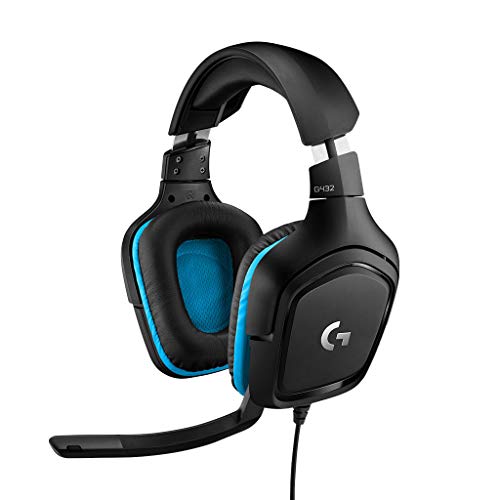
Logitech G432 Wired Gaming Headset — The DTS all-rounder
The Logitech G432 opens this guide as the balanced reference point: 50mm drivers with the physical capacity for full low end, DTS Headphone:X 2.0 handling the spatial layer, and a wired design that reaches a PC by USB or 3.5mm. Logitech’s title makes no bass-tuning claim, and this review honours that silence; what the G432 documentedly offers is a large-driver foundation with respected surround processing, a combination that serves cinematic games handsomely without promising a specialised bass system it never mentions.
The flip-to-mute microphone suits players who drift between solo sessions and squad nights, since muting becomes a physical gesture rather than a menu dive, and the dual connection paths mean the same headset serves a PC properly and a controller adequately. PC is the platform the title names, so console-first buyers should note that framing. As a bass purchase, the G432 is the rational middle: big drivers, honest paperwork, and surround that makes low end feel placed rather than merely loud.
- Connection: wired, USB and 3.5mm jack
- Drivers: 50mm
- Surround: DTS Headphone:X 2.0
- Microphone: flip-to-mute
- Bass tuning: not stated in the listing title
Strengths
- 50mm drivers give low frequencies real physical capacity
- DTS Headphone:X 2.0 is a stated, respected surround format
- USB and 3.5mm paths cover PC and controller use
Trade-offs
- No bass-specific tuning is claimed in the listing title
- Title names PC, leaving console coverage unstated
- Wired design ties play to the desk or controller
Best for: PC players wanting large drivers and stated DTS surround for cinematic games without paying for a specialised bass system
Not suited for: bass-first listeners requiring a documented bass feature, since the G432 headline leaves low-end tuning undescribed
Balanced buyers can check the Logitech G432 on Amazon to confirm the DTS and connection details.

EKSA E900 Pro USB Gaming Headset — The detachable-mic surround pick
The EKSA E900 Pro builds its case on completeness at the practical end of the market: a 50mm driver, stated 7.1 surround, a USB connection and a detachable noise-cancelling microphone, with a platform list that reaches from PC to PS4, PS5 and Xbox One plus laptops and office use. That last phrase matters, because the E900 Pro is plainly designed to work a double shift, gaming at night and calls by day, with the microphone removing entirely when it is not needed.
On the bass question this guide stays strict: the title describes surround and driver size, not low-end tuning, so the spec box records the silence. What a buyer can bank on is the acoustic headroom a 50mm driver provides and a surround presentation that gives explosions a place to live. Players who want a documented bass system should keep reading to the Crusher; players who want one affordable USB headset that covers consoles, computers and the occasional meeting will find the E900 Pro unusually willing.
- Connection: USB
- Drivers: 50mm
- Surround: 7.1 Surround Sound
- Microphone: detachable, noise cancelling
- Bass tuning: not mentioned in the listing headline
Strengths
- Detachable noise-cancelling mic suits work and play
- 7.1 surround is stated outright in the title
- Platform naming spans PlayStation, Xbox One and PC
Trade-offs
- Bass tuning is not covered by the listing headline
- USB connection excludes pure 3.5mm devices
- Office-friendly design prioritises versatility over specialisation
Best for: households wanting one USB headset shared between a console, a gaming PC and weekday video calls
Not suited for: listeners shopping specifically for a stated bass feature, because this headline documents surround and drivers instead
Versatility seekers can check the EKSA E900 Pro on Amazon for its console and PC requirements.

BENGOO G9000 Stereo Gaming Headset — The LED multi-console staple
The BENGOO G9000 is one of those headsets that seems to live in every second household with a console, and its title explains the ubiquity: a noise-cancelling over-ear design, LED light, 7.1 surround wording, soft memory earmuffs and a platform list long enough to cover PS4, PS5, Xbox One, Xbox Series X|S, PC and Nintendo in a single breath. It is the headset bought for teenagers, spare rooms and second controllers, and it has held that role for years because it asks very little of the buyer.
Bass documentation is where this guide must be plain: the G9000 headline talks about surround, cancellation and comfort, not low-end tuning, so no bass claim is made here on its behalf. Its low-end reputation among owners is a matter of experience rather than paperwork, and experience varies with fit and seal. Buy it for what its title guarantees, which is broad compatibility, presentable surround and cushions that forgive long sessions, and it will rarely disappoint; buy it as a certified bass instrument and you are shopping on hope.
- Connection: wired
- Platforms named: PS4, PC, Xbox One, PS5, Nintendo, Xbox Series X|S
- Surround: 7.1 Surround Sound
- Design: noise cancelling over ear, LED light
- Bass tuning: not specified in the product headline
Strengths
- Platform list is the broadest in this guide
- Memory earmuffs and over-ear seal suit long sessions
- LED styling appeals to younger console players
Trade-offs
- Bass tuning is not covered by the listing headline
- Wired connection only, with no wireless path
- Surround wording depends on platform and connection route
Best for: families needing one inexpensive wired headset that plugs into nearly every console a household owns
Not suited for: audiophile-leaning players wanting documented driver and tuning data, since this title leads with compatibility and comfort
Family buyers can check the BENGOO G9000 on Amazon to confirm the connector for their console generation.

Skullcandy Crusher PLYR 720 Wireless Gaming Headset — The tactile bass flagship
Here is the headset this entire guide exists to contextualise. The Crusher PLYR 720 names its bass system in its title, Multi-Sensory Crusher Bass, and the words describe a genuinely different technology: low frequencies delivered as physical sensation alongside sound, so a dropship’s descent or an engine’s idle registers in the body, not just the ears. Layer THX Spatial Audio over that foundation and the result is the most immersion-obsessed specification in this guide by a considerable distance.
The design choices around the bass are coherent. Open-back cups give the spatial audio room to stage itself, a removable microphone keeps the headset clean for film and music, and wireless multi-platform support spans PC, PlayStation and Nintendo. The costs are the open-back costs: sound leaks, rooms intrude, and competitive players who need isolation and restraint should look elsewhere in this guide. But for the single-player immersion seeker, the Crusher PLYR 720 is the only pick here whose bass promise is printed in its own headline, and that documentation is exactly what this category usually lacks.
- Connection: wireless, multi-platform
- Bass system: Multi-Sensory Crusher Bass
- Spatial audio: THX Spatial Audio
- Design: open-back
- Microphone: removable; platforms named: PC, PlayStation, Nintendo
Strengths
- Only stated bass system in the guide, and it is tactile
- THX Spatial Audio pairs staging with the low-end impact
- Removable mic converts it cleanly to film and music duty
Trade-offs
- Open-back design leaks sound and admits room noise
- Tactile bass is wasted on restrained competitive play
- Xbox is not named among the platforms in the title
Best for: single-player immersion fans playing cinematic games in a private room who want to feel machinery, weather and explosions
Not suited for: competitive players in shared spaces requiring isolation and a restrained low end for positional clarity
Immersion hunters can check the Crusher PLYR 720 on Amazon to confirm the Crusher Bass controls and platform support.

Razer BlackShark V2 X Gaming Headset — The titanium-driver competitor
The BlackShark V2 X appears in this guide as the control group: a headset whose 50mm titanium drivers certainly can produce bass, but whose entire design language speaks about competitive clarity instead. TriForce architecture separates the frequency ranges for tuning precision, the HyperClear Cardioid microphone rejects the room, and the 240-gram frame with noise-isolating earcups serves players who measure a headset by whether it disappears during a match. Its title, predictably, makes no bass claim, and the spec box records that.
Including it is a deliberate act of guidance. Many shoppers who type a bass query actually want fullness, the sense that games sound expensive and complete, and the V2 X delivers that sensation through driver quality and isolation while keeping the midrange discipline competitive players need. What it will not do is emphasise low end as an effect. Players who know the difference, and know which side of it they live on, will either choose the BlackShark with confidence or pass it for the Crusher with equal confidence, and both decisions are wins for honest shopping.
- Connection: wired 3.5mm
- Drivers: TriForce Titanium 50mm
- Microphone: HyperClear Cardioid
- Weight: 240g; noise-isolating earcups
- Bass tuning: left unstated in the listing headline
Strengths
- Titanium 50mm drivers deliver full, controlled low end
- 240g frame and isolation suit marathon competitive sessions
- Cardioid mic keeps callouts clean in untreated rooms
Trade-offs
- Bass emphasis is not covered by the listing headline
- Wired 3.5mm connection only
- Tuning favours clarity, which bass seekers may find restrained
Best for: competitive players who want full-sounding games without sacrificing the midrange detail that carries positional cues
Not suited for: immersion seekers wanting a stated bass system, because this headset’s documented talents point at clarity instead
Competitive players can check the BlackShark V2 X listing on Amazon for its console jack compatibility.

JBL Quantum 100M2 Wired Gaming Headset — The comfort-first compact
The JBL Quantum 100M2 closes the guide at the comfort end, carrying a famous audio surname into a compact wired design. Its title promises memory foam ear cushions, a detachable microphone and a 3.5mm jack that works across PC, PlayStation, Xbox and Nintendo Switch, a platform spread that quietly out-covers several pricier models here. JBL describes the sessions it targets as immersive PC gaming, and the review takes the hint: this is a headset for long, ordinary, enjoyable evenings rather than specification contests.
On bass, the paperwork is silent and the spec box says so without embarrassment. The Quantum 100M2’s documented virtues are fit, flexibility and brand-grade tuning restraint, which in practice means games sound balanced rather than thin, a quality many bass hunters actually want once the novelty of exaggerated low end fades. Buyers who need the promise in writing should choose the Crusher; buyers who need a comfortable, detachable-mic headset that plugs into everything they own may find this the most livable purchase in the guide.
- Connection: wired 3.5mm jack
- Platforms named: PC, PlayStation, Xbox, Nintendo Switch
- Microphone: detachable
- Cushions: memory foam ear cushions
- Bass tuning: not stated in the listing title
Strengths
- Memory foam cushions prioritise long-session comfort
- Detachable mic and 3.5mm jack maximise device reach
- Platform list covers all three console families plus PC
Trade-offs
- Bass tuning is not covered by the listing headline
- Wired only, with no surround format stated
- Compact design will not match 50mm models for sheer scale
Best for: comfort-led players wanting one detachable-mic wired headset that serves every console and the PC equally
Not suited for: shoppers needing a documented bass feature in the listing, since this headline documents comfort and compatibility instead
Comfort seekers can check the JBL Quantum 100M2 on Amazon to confirm its jack and cushion details.
Which of These Six Headsets Actually Emphasises Low End?
Time to gather the evidence in one place. The bass column below records only what each title states, which produces a shorter list than marketing departments would prefer and a far more useful one.
| Pick | Connection | Coverage / focus | Headline figure | Signature trait |
|---|---|---|---|---|
| Logitech G432 Wired Gaming Headset | Wired USB + 3.5mm | 50mm | DTS Headphone:X 2.0 | Not stated in title |
| EKSA E900 Pro USB Gaming Headset | USB | 50mm | 7.1 stated | Not stated in title |
| BENGOO G9000 Stereo Gaming Headset | Wired | Not stated in title | 7.1 stated | Not stated in title |
| Skullcandy Crusher PLYR 720 Wireless Gaming Headset | Wireless | Not stated in title | THX Spatial Audio | Multi-Sensory Crusher Bass |
| Razer BlackShark V2 X Gaming Headset | Wired 3.5mm | TriForce Titanium 50mm | Not stated in title | Not stated in title |
| JBL Quantum 100M2 Wired Gaming Headset | Wired 3.5mm | Not stated in title | Not stated in title | Not stated in title |
One stated bass system against five honest silences is the true shape of this market, and it should recalibrate how you shop it. If a documented bass feature is your requirement, the Crusher PLYR 720 is not merely the best pick in this guide; it is close to the only pick, and its open-back, tactile design should be evaluated as the specialised instrument it is.
The driver column tells the secondary story. Three 50mm implementations, from Logitech, EKSA and Razer, give buyers a choice of surround ecosystems and microphone styles on similarly capable hardware, while the BENGOO and JBL compete on compatibility and comfort with driver details unstated.
How Can You Test a Headset’s Bass Properly Before Committing?
Use content you already know by heart. A familiar game’s opening level, a film scene you have watched repeatedly, or a track whose low notes you can sing from memory gives your ears a reference that no demo playlist can match. Listen first at your normal volume for whether bass sits inside the mix or on top of it, then push the volume briefly to check whether low notes stay composed or turn to rumble.
Test the competitive cost explicitly if you play shooters. Load a busy multiplayer scene and ask whether footsteps, reloads and distant callouts remain separable while explosions roll underneath. On the clarity-voiced models here, like the BlackShark V2 X, they will; on an immersion-first design, some masking is the accepted price of spectacle.
Finally, test the fit with the bass, because seal is half the low end on sealed headsets. Wear your glasses if you use them, move your head as you would mid-game, and notice whether the bottom frequencies thin out as the cushions shift. Memory foam designs like the JBL Quantum 100M2 and the BENGOO’s memory earmuffs exist partly to stabilise that seal. The open-back Crusher plays by different rules, trading seal for staging, which is why its bass is tactile rather than pressure-based.
Seal deserves more respect than it gets in bass discussions. On closed headsets, the cushion’s seal against the head is what allows low frequencies to build pressure, which is why the memory foam on the JBL Quantum 100M2 and the soft memory earmuffs on the BENGOO G9000 are quietly bass-relevant features even though neither title says the word. Glasses, hair and a rushed fit all leak that pressure away, and many a headset has been returned as bass-light when the real fault was a cushion sitting on a spectacle frame.
There is also a volume honesty worth practising: bass perception rises with loudness, so a headset auditioned loudly in a shop will sound thinner at home at sane levels, whatever its drivers. The models that satisfy long-term owners tend to be those whose balance holds at moderate volume, which is a trait of tuning discipline rather than driver drama. Test at your real listening level, with your real content, and the category’s fog thins considerably.
How Does Bass Behaviour Differ Between Game Genres?
Role-playing and adventure games are where generous low end earns its keep most honestly. Weather systems, caverns, machinery and orchestral scores all live partly in the frequencies that smaller or restrained headsets underplay, and a full low register turns those worlds from pictures into places. The G432’s 50mm drivers with DTS processing serve this genre well on paper, giving scale a spatial address, while the Crusher PLYR 720 turns the same moments physical, which is why single-player immersion fans speak about it with an enthusiasm that puzzles competitive players.
Racing and flight titles form the second bass-friendly genre, because engines are bass instruments. A headset that renders a V8’s idle as a suggestion rather than a presence has failed the genre’s central pleasure, and here driver capacity matters plainly: the 50mm sets in this guide have the physical headroom, while the compact JBL asks its tuning to compensate for size. Simulation players should also consider session length, since engine drone at high volume fatigues faster than varied game audio, and comfort features like memory foam decide whether the third hour happens at all.
Competitive shooters invert every one of those values. Excess low end masks the midrange transients that carry footsteps and reloads, crowds the soundscape during explosions exactly when information matters most, and flatters the player while quietly taxing their awareness. The BlackShark V2 X’s clarity-first tuning is the genre’s correct answer, and its presence in a bass guide is a standing reminder that the best bass for a shooter is bass that knows its place. Players who split genres should choose balance and adjust per game, not maximise one register globally.
Rhythm and music games occupy the thoughtful middle: bass is content here, not atmosphere, and it must be tight and timed rather than huge. A booming, slow low end smears the very transients the gameplay judges, which is why tactile spectacle and cinematic weight both miss this genre’s point. The balanced models in this guide, the G432 and the Quantum 100M2, serve rhythm play most honestly, another small proof that the category rewards matching over maximising.
What Ownership Trade-Offs Hide Behind the Bass Headlines?
The Crusher PLYR 720’s trade-offs deserve a fuller airing than a bullet list allows, because they are the price of the guide’s only stated bass system. Open-back construction means a partner hears your game, the television competes with your audio, and the tactile effect that thrills in a private room becomes antisocial in a shared one. None of that diminishes the product; it defines its habitat with unusual clarity, and buyers who respect the habitat get a genuinely distinctive instrument while buyers who ignore it get an expensive misunderstanding.
The wired majority here carry the opposite trade: no spectacle, no battery, no freedom, and a reliability that borders on the boring. The G432, EKSA, BENGOO, BlackShark and JBL will all work in five years with the same cable they shipped with, on devices not yet announced, because a 3.5mm jack and a USB plug are the closest thing audio has to permanent infrastructure. Bass shoppers dazzled by one headline feature should weigh that permanence honestly, since a headset’s second year matters more than its first evening.
Microphone ownership is the third hidden trade. Detachable designs on the EKSA and JBL, the G432’s flip-to-mute and the BlackShark’s fixed cardioid boom each imply a different social life for the headset: pure listening, squad play, or both by turns. A bass-first purchase that ignores the microphone tends to be followed within months by a second purchase that fixes it, which is the most expensive way to shop this category. Read the mic lines in the spec boxes as seriously as the driver lines.
Finally, there is the trade between stated and unstated quality that this whole guide is built on. Five of these headsets may sound wonderful in the low end; only one documents a bass system. Buyers comfortable trusting their own ears during a return window can shop the five freely, while buyers purchasing a gift, or shopping where returns are painful, should let documentation carry more weight. Knowing which kind of buyer you are is worth more than any single recommendation printed here.
How Should You EQ and Position a Headset for Better Low End?
Start with fit before touching a single slider, because seal is the cheapest bass upgrade in existence. Seat the cushions fully around the ears rather than on them, check that hair and glasses frames are not breaking the contact, and replay a familiar bass-heavy moment; the difference a clean seal makes on the sealed models here routinely exceeds anything an equaliser can add later. Open-back owners skip this step by design, since their low end arrives through a tactile system and an open stage rather than through pressure.
When you do reach the equaliser, work in small shelves rather than dramatic boosts. A gentle lift in the low shelf, two or three decibels in spirit, warms a balanced headset like the G432 or Quantum 100M2 without drowning its midrange, while aggressive boosts invite distortion and listener fatigue in equal measure. Make one change, live with it across a full session and a second genre, and only then decide; ears adapt quickly, and settings judged in thirty seconds are usually settings regretted by the weekend.
Volume discipline completes the technique. Bass perception climbs with loudness, so a headset tuned at high volume sounds thin at the level you will actually use at midnight, and owners chase the difference with ever more EQ. Set your working volume first, at the level your household and your hearing prefer, and tune at that level. The headset that satisfies there, unforced, is the one that will still satisfy in a year, and that principle outranks every specification in this guide.
What Is a Sensible Buying Order for a Bass-First Shopper?
Decide the habitat first, before any model enters the conversation. A private room with a door licenses the open-back Crusher and its tactile theatre; a shared room disqualifies it more completely than any specification could, and the sealed, balanced models take over the shortlist by default. Habitat is the one variable no equaliser can change after purchase, which is why this guide returns to it in nearly every review, and why honest shoppers should answer it in writing before opening a single product page.
Decide the evidence standard second. Some buyers trust their ears inside a return window and happily audition the undocumented five; others, buying a gift or shopping far from easy returns, need the promise printed. The Crusher is the only documented bass system here, and for the second kind of buyer that fact ends the search quickly and correctly. Neither standard is more sophisticated; they are different risk postures, and confusing them produces most of this category’s disappointed reviews.
Decide the second job third, because every headset here moonlights. The EKSA moonlights in meetings with its detachable mic, the G432 moonlights across PC connections, the BENGOO moonlights across a house full of consoles, the JBL moonlights as the comfortable everyday set, and the BlackShark moonlights as a competitive instrument. A bass purchase that ignores the moonlighting will be followed by a second purchase that performs it, and the pair together always costs more than choosing the dual-purpose model first.
Only then compare the survivors on sound, in your own content, at your own volume. By that point the shortlist usually holds two models, and the decision between them is a pleasure rather than a research project. This ordering, habitat, evidence, second job, sound, is the distilled method of the entire guide, and it generalises to any category where one loud feature threatens to shout down the quieter virtues that decide ownership.
How Do Rooms and Setups Change What Bass You Actually Hear?
The room is an unlisted component in every headset purchase, even though headphones seem to bypass it. Sealed models carry their room with them in the form of seal and isolation, which is why the same G432 can sound full at a quiet desk and thinner on a train where low-frequency detail drowns under ambient rumble. Bass judged in one environment and used in another is bass misjudged, and shoppers should audition in the noisiest room the headset will honestly inhabit.
The source chain matters more than bass shoppers expect. A console controller’s output, a motherboard’s front jack and a USB connection deliver different levels of cleanliness and drive, and the models here span all three paths: USB on the G432 and EKSA, 3.5mm on the BlackShark and JBL, a hybrid life for the BENGOO across consoles. Low end is where weak outputs confess first, turning controlled weight into mush, so the connection line in each spec box deserves a bass shopper’s attention as much as the driver line does.
Seating and posture finish the environmental picture. A headset worn slouched on a sofa seals differently from one worn upright at a desk, and glasses, hats and hair all tax the seal that sealed bass depends on. The memory foam on the JBL and the BENGOO’s memory earmuffs are quiet defences against exactly this variability. None of it is glamorous, and all of it explains why two owners of the same headset can file opposite reports about its low end with complete sincerity.
The Crusher stands apart from this entire discussion, which is part of its appeal. A tactile system does not ask the room’s permission or the seal’s cooperation to deliver its effect, trading those dependencies for the open-back requirement of a quiet, private space instead. Buyers exhausted by environmental variables may find that trade liberating; buyers in lively households will find it disqualifying, and both are reading the same specification correctly.
How Should Bass Lovers Protect Their Hearing While Chasing Impact?
Impact tempts volume, and volume is where enthusiasm becomes expensive in the long term. The safest bass habit is to achieve weight through design rather than through loudness: a tactile system felt at moderate volume, a sealed headset whose isolation lets it play quieter against the room, an equaliser shelf that adds warmth without raising the whole mix. Every model in this guide can be enjoyed at sane levels when its strengths are used as intended, and the listeners who keep their hearing are the ones who let the hardware do the heavy lifting.
Session length is the second variable, because exposure is volume multiplied by time. Marathon players should build genuine breaks into long sessions, not as a concession but as part of the ritual, and should treat the creeping urge to raise volume across an evening as information: it usually means fatigue or a worsening seal, not a headset that has grown quieter. Fix the seal, take the break, and the level you started with will sound generous again.
Parents buying from this guide for younger players carry a particular version of this responsibility. The BENGOO’s household ubiquity makes it the model most likely to land on a young head, and its volume habits will be set by whoever configures the console. Use the platform’s own level limits where they exist, agree the maximum together, and remember that a headset bought for fun should still be fun, and safe, at year five. This is comfort guidance, plainly offered, and it applies to every pick in the guide equally.
Finally, distrust the demo volume. Shops and unboxing videos play loud because loud impresses in ninety seconds, and bass impresses most of all at levels nobody sustains at home. Judge every model here at the volume of your real midnight session, and the category’s fog, which this guide has spent its length dispersing, stays dispersed at the moment of purchase too.
Which of These Headsets Handles Films and Music Best?
Films reward the same qualities as cinematic games, with dialogue clarity riding on top. The G432’s DTS presentation gives film soundtracks a placed, spacious quality that flatters both explosions and conversation, while the Crusher turns action cinema into a physical event in a private room, its tactile system doing for a film’s climax what it does for a game’s set piece. Film-first buyers should nonetheless test a dialogue-heavy scene before committing, because spectacle is easy to audition and intelligibility is not.
Music separates the field differently again. The BlackShark’s disciplined tuning flatters recordings that value separation and pace, the G432 offers scale, and the JBL offers an easy, balanced listen that asks nothing of the owner. The Crusher’s tactile layer divides musical opinion precisely as it divides gaming opinion: some listeners find bass they can feel revelatory on electronic music, others find it a special effect in search of a purpose, and both reactions are legitimate data about taste rather than about quality.
The practical conclusion is that a headset bought for games will spend a third of its life on films and music whether its owner plans it or not. The detachable microphones on the EKSA, JBL and Crusher exist for that third, converting a gaming tool into a listening one in seconds. Buyers should perform that conversion during the trial period and live the headset’s whole life for a few evenings, because a purchase judged only on its loudest hour is a purchase half judged.
A Final Word on Buying Bass With Your Eyes Open
This category’s fog is not an accident; vague language sells more headsets than precise language does, because every listener can project their own ideal low end onto an unspecified promise. The defence is procedural, and this guide has practised it on every page: quote the claim where a title makes one, mark the silence where it does not, and grade each headset on the job its own paperwork describes. A shopper armed with that procedure can walk into any bass marketing ever written and walk out with the truth in about ninety seconds.
The truth, in this guide, turned out to be interesting rather than disappointing. One genuine tactile bass instrument exists here, and it is genuinely distinctive. Around it stand five headsets whose documented virtues, surround ecosystems, driver capacity, compatibility, comfort and competitive clarity, are the things most owners will actually live on after the first evening’s low-end impressions fade. A category that looked like a bass contest resolved, under honest reading, into a set of different and defensible answers to different evenings.
That resolution is worth trusting beyond this page. The best purchase in a foggy category is rarely the loudest claim; it is the claim that survives being written down. Buyers who internalise that standard will find the Crusher’s printed promise more valuable, not less, for the company it keeps here, because the five honest silences around it prove what documentation is worth when a maker actually offers it.
So decide your habitat, decide your evidence standard, and let the second job cast its vote before the first impression casts its spell. The headset chosen that way will still thrill on the right evening, and it will keep satisfying on all the ordinary ones, which is where ownership is actually lived and where this guide has tried, throughout, to keep its attention.
If the decision still feels balanced on a knife edge between the documented spectacle and the balanced all-rounder, choose for the room you have rather than the room you imagine, and for the library you play rather than the one you admire. Those two honesties settle more purchases than any tiebreaker a review can invent.
Then go and play something with weather in it, at your own volume, in your own chair, and let the low end you chose do its work unreviewed.
What Else Is Worth Knowing Before You Decide?
A note on gifts belongs in this category more than most, because bass is the feature least transferable between tastes. The headset that thrills the giver can overwhelm the recipient, and the balanced model that bores the giver may be the recipient’s perfect evening. Gift buyers should weight documentation and return flexibility over personal enthusiasm, and should include the recipient’s room and library in the decision as faithfully as their own. The BENGOO and JBL exist in this guide partly as the safe pair of hands for exactly that occasion.
Recipients, for their part, should judge a gifted headset across the full trial the giver’s receipt allows, in their own content, before pronouncing on its low end. First impressions in this category are the least reliable data in audio, and more than one household contains a headset that was nearly returned on day one and would not be surrendered on day thirty.
That patience, practised by givers and recipients alike, is the category’s final lesson in miniature: bass reveals itself across evenings, not moments, and every wise process in this guide is built to give it those evenings.
One sentence of summary, then, for the shopper who reads nothing else: buy the documented bass system if bass is truly the mission, buy the balanced large-driver sets if fullness is the honest word for what you want, and never let a driver diameter sign a promise that only a stated feature can keep.
Where Do Bass Shoppers Usually Go Wrong?
Reading driver size as a bass promise. Three headsets here share 50mm drivers with three different tuning intentions. Size grants capacity; only a stated bass system, like the Crusher’s, documents intent.
Cranking bass until callouts drown. Low end that masks the midrange costs competitive information. If your settings bury footsteps, the headset is not badly tuned; the balance is badly set for the game you are playing.
Buying an open-back headset for a shared room. The Crusher PLYR 720 leaks by design. Its tactile bass deserves a private space, and in a living room both you and everyone else will hear the compromise.
Judging bass in the first ten minutes. Novelty exaggerates low end. Live with a headset across a film, a shooter and a quiet dialogue-heavy game before deciding its balance is wrong for you.
Ignoring the microphone while chasing low end. The EKSA, BlackShark and JBL detachable or cardioid designs exist because most players also talk. A bass triumph with a miserable mic is a headset you will replace early.
Final Recommendation
The honest recommendation splits by definition of the word bass. If you mean a documented, physical low-end experience, buy the Skullcandy Crusher PLYR 720 and give it the quiet room its open-back design requires; nothing else in this guide, and little beyond it, states its bass intentions so plainly. Its THX staging and removable mic make it a complete immersion instrument rather than a one-effect novelty.
If you mean fullness, the satisfying sense that games sound weighty and complete, the Logitech G432 and Razer BlackShark V2 X deliver it through large, well-voiced drivers with surround or clarity as their respective bonuses, while the EKSA, BENGOO and JBL serve households that rank compatibility and comfort alongside sound. Choose by the claim you need in writing, and this confusing category becomes a short, confident decision.
Frequently Asked Questions
Which headset here has the strongest bass?
By documented claim, the Skullcandy Crusher PLYR 720 stands alone: its title names Multi-Sensory Crusher Bass, a tactile system that adds physical sensation to low frequencies, and no rival in this guide states any bass feature at all. The 50mm models from Logitech, EKSA and Razer have the driver capacity for full low end, but their titles describe surround, clarity or versatility instead. If the promise must be in writing, the Crusher is the answer.
Does a 50mm driver always mean more bass than a 40mm driver?
No. Diameter sets the capacity to move air, while tuning decides how that capacity is used, and competitive headsets often restrain low end deliberately so midrange cues stay clear. The BlackShark V2 X uses titanium 50mm drivers voiced for clarity, while the Crusher achieves its bass identity through a dedicated tactile system rather than diameter bragging. Treat size as one clue among several, and a stated bass feature as the only real evidence.
Will heavy bass hurt my performance in shooters?
It can, when low frequencies swell over the midrange sounds that carry footsteps, reloads and directional information. That is why clarity-voiced models like the BlackShark V2 X exist and why immersion designs like the open-back Crusher suit single-player games better. Players who split their time should favour balance, or use game-specific equaliser profiles, rather than maximising bass globally and wondering why their awareness dulled.
What is tactile bass, and is it a gimmick?
Tactile bass delivers low-frequency energy as physical sensation alongside audible sound, so impacts and engines are felt as well as heard. In the Crusher PLYR 720 it is the headline system, named in the listing title, and owners of cinematic games tend to describe the effect as cinema-seat rumble rather than louder volume. It is a genuine design choice with real trade-offs, including an open-back build, rather than a software preset wearing a costume.
Why do several spec boxes say bass is not stated?
Because those listing titles genuinely do not describe low-end tuning: they talk about surround formats, microphones, cushions and platforms instead. This guide only repeats claims the titles make, and marks the gap explicitly so you can verify through manufacturer documentation if bass is your deciding factor. A not-stated line is information, not a criticism; several of those headsets sound full and satisfying in practice.
Can I add bass later with an equaliser?
Within limits, yes. Modest low-shelf boosts can warm up a balanced headset like the G432 or Quantum 100M2, and most platforms offer some EQ control. What EQ cannot do is create tactile sensation, rescue a driver that distorts when pushed, or restore midrange clarity once the boost swamps it. Buy the documented behaviour closest to your taste first, then let equalisation polish rather than perform rescue work.
Related Guides
Low-end shoppers who want context beyond this bass-first shortlist should explore best headsets corsair for Corsair’s contrasting catalogue, compare the Razer contenders gathered in best gaming headsets razer, or switch priorities entirely with the hearing-access picks at best bluetooth headsets for hard of hearing.
Related guide: Best Gaming Headsets For First Person Shooters
Related guide: Best Competitive Gaming Headsets


